
Gorgeous Backyard Pond Ideas to Turn Any Outdoor Space Into a Tranquil Escape
There’s something instantly calming about the sound of water and the shimmer of sunlight on a pond. With the right design, a backyard pond can transform a simple yard into a serene oasis, boost curb appeal, and invite birds, butterflies, and beneficial wildlife to visit.
From koi ponds with gentle waterfalls to sleek reflecting pools and petite container ponds perfect for patios, there’s a water feature for every style, size, and budget. Whether you want a naturalistic, rock-edged pond or a modern, minimalist bowl with aquatic plants, the possibilities are as flexible as your space.
Get the Fail-Safe Paint Color Playbook (Free PDF)
36 proven colors • 8 ready palettes • trim & sheen guide • printable testing cards.
In the ideas ahead, you’ll discover smart tips on placement, scale, and materials, plus how to use liners, pumps, and filtration for crystal-clear water. We’ll also cover edging, lighting, and plant picks so your pond looks great day and night. Use the inspiration to plan a low-maintenance, high-impact water feature that fits your yard and lifestyle.
Small Backyard Pond Ideas: Space-Savvy Designs, DIY Builds, and Natural Aesthetics
Start by mapping sun, shade, and sightlines so your water feature becomes a relaxing focal point from patios or windows. In tight yards, curve edges to soften boundaries and visually expand space. Keep circulation in mind; even compact basins need a pump and discreet return to prevent stagnation. Use GFCI-protected power and route conduits under edging stones to keep cables invisible. Before digging, call utility locators, confirm setbacks, and consider kid-safe shelves and slip-resistant pathways.
For DIY construction, decide between a preformed shell for speed or a flexible EPDM liner for custom shapes and shelves. Install geotextile underlayment to protect the liner from roots and sharp stones. Carve planting terraces 6–12 inches deep for marginals, and a central well 18–24 inches for overwintering hardy fish. Dry-stack weathered fieldstone or basalt coping for a natural rim, staggering joints for stability. Add a slim spillway or bubble rock for sound masking and gentle aeration without overpowering small spaces.
- Choose a corner kidney shape with a narrow land bridge to create intimate viewing spots, frame seating, and make a compact patio feel layered, immersive, and surprisingly generous.
- Use a reflective black liner, dark gravel, and charcoal pebbles to deepen the mirror effect, hide algae films, and make small ponds read larger from indoor sightlines.
- Tuck a sheet-style mini spillway into a low retaining wall; the linear fall produces tranquil white noise while keeping splash contained and pump sizes efficient.
- Try a whiskey-barrel or trough container pond for balconies and decks, adding a tiny pump, dwarf waterlilies, and LED uplights for instant, portable ambiance.
Plant with purpose to balance beauty and maintenance in compact footprints. Combine oxygenators like hornwort with floaters such as water lettuce to shade surfaces and starve algae. Marginal stars—pickerel rush, dwarf cattail, sweet flag—add height and pollinator interest along shelves. Control mosquitoes by ensuring continuous movement and, if desired, adding Bti dunks or a few native mosquito fish where permitted. Skim leaves weekly, backflush small filters monthly, and net in autumn to keep debris out.
Rock-Edged Waterfall Pond That Looks Lifted From Nature
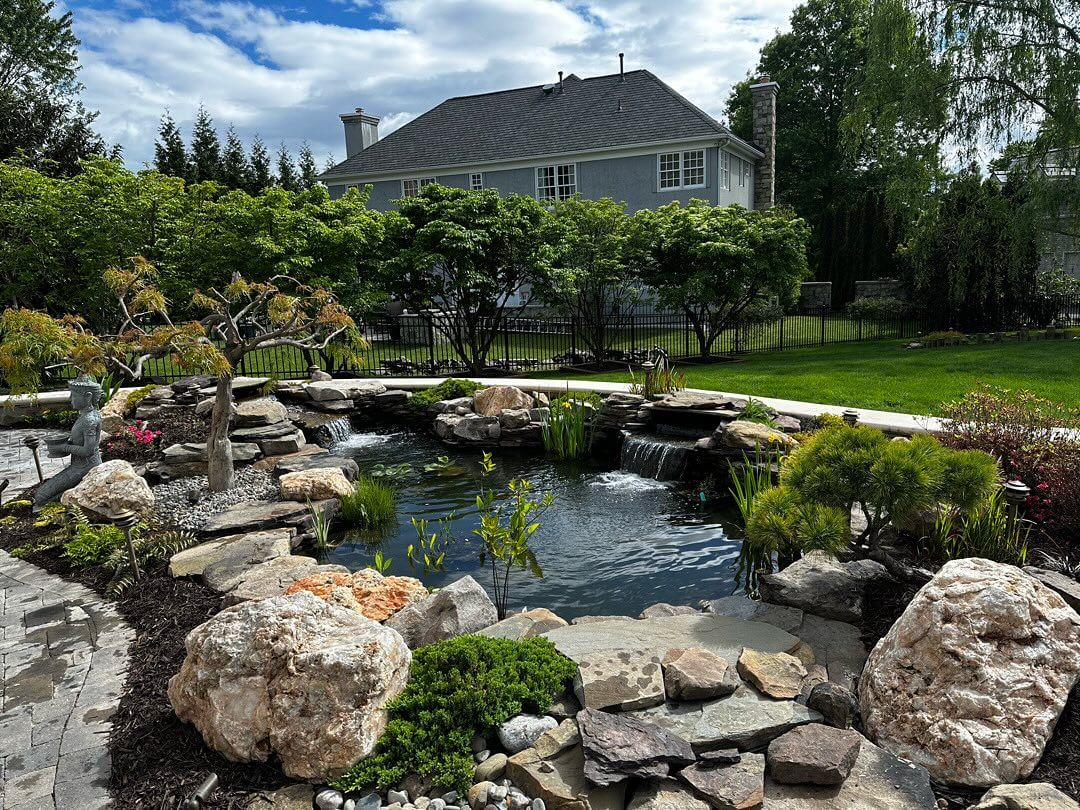
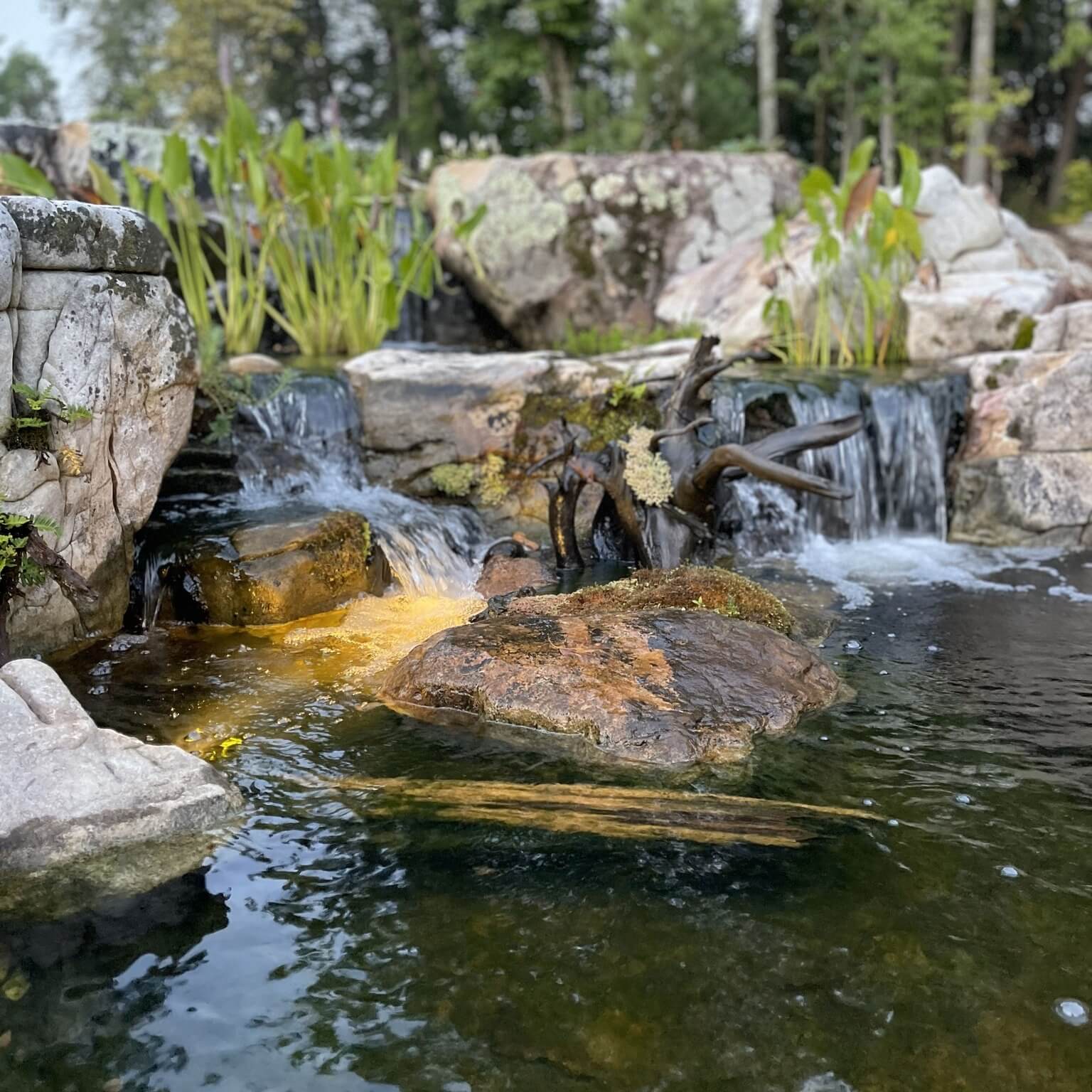
Want the most soothing, immersive backyard pond idea? Build a rock-edged basin with a short, wide waterfall that sounds like a mountain stream. Start by shaping gentle shelves: a shallow beach for wildlife, a mid-shelf for marginals, and a deeper pocket for fish. Layer a flexible EPDM liner over underlayment, then dry-stack weathered boulders and cobbles so the stone overlaps the liner’s edge, concealing it. A pump in the deepest zone returns water to a spillway box or natural weir; keep the weir broad (18–36 inches) for a mellow, sheeted sound rather than a splashy roar. Tuck planting pockets between rocks for pickerel rush, dwarf sweet flag, and marsh marigold to soften edges. Add a small cave or arching stone for fish refuge and wintering depth where climate requires it. Finish with pea gravel on shelves to anchor rhizomes and keep water clear. This classic, naturalistic approach blends into most landscapes, masks neighborhood noise, and invites birds and dragonflies. Pro tip: size your pump to turn the pond volume at least once per hour and add a skimmer for leaf control—your water will stay clearer and maintenance will drop dramatically.
Sleek Reflecting Pool for a Modern, Minimalist Backyard
If your style is clean lines and calm geometry, consider a narrow reflecting pool along a path or patio. Keep the footprint simple—rectangular or linear—with straight coping stones in concrete, large-format pavers, or steel. A dark interior (charcoal plaster, black liner, or dark EPDM-lined trays) enhances the mirror effect, reflecting sky, architecture, and night lighting. Circulate gently via a hidden slot spillway or a discreet return to prevent stagnation without disturbing the glassy surface. Plant sparingly: architectural clumps of horsetail reed, dwarf papyrus, or linear grasses in corten or concrete planters echo the pool’s geometry. A flush perimeter grate can double as an overflow in heavy rain, and an auto-fill keeps levels consistent. Under-coping LED strips and a few low-glare bollards frame the water after dusk. Maintenance stays simple with a skimmer and fine filter pad; add a UV clarifier if you want ultra-clear water in sunny sites. This is a high-impact, low-clutter pond idea that pairs beautifully with modern facades, sculpture, and symmetrical planting plans.
Petite Container Pond for Patios, Balconies, and Renters
No yard? No problem. A glazed ceramic bowl, whiskey barrel, or galvanized trough becomes a micro-pond in an afternoon. Choose a container 18–24 inches wide (larger holds temperatures steadier) and seal wood barrels with a fitted liner. Raise a small, quiet pump on a brick to keep debris out and create gentle circulation; a bamboo spout or mini spillway adds a soft trickle that masks street noise. Plant smart: dwarf water lily for blooms and shade, miniature rushes for vertical texture, and oxygenators like hornwort submerged for water clarity. Use mosquito control dunks with BTI where needed; avoid invasive plants that escape into local waterways. In hot climates, partial shade preserves water temperature while still allowing lilies to flower. A discreet GFCI outlet and outdoor-rated smart plug make scheduling easy. This portable pond idea brings life to small spaces, attracts pollinators, and doubles as a sculptural focal point. Group with pots of scented herbs and a bistro chair to create an instant, sit-and-sip oasis with the gentle sparkle of water at arm’s reach.
Koi Pond Essentials: Depth, Filtration, and Crystal-Clear Flow
If koi are your dream, design the pond around their health first. Target 3–4+ feet deep for stable temperatures and predator protection, with smooth walls and a bottom drain or two leading to a prefilter or sieve. Pair a skimmer to catch leaves before they sink, then route water through a biofilter (moving bed or bead filter) and a UV clarifier to curb green water. Aeration is vital—add an air stone at depth and a separate airline to each bottom drain to boost oxygen and sweep fines toward the drain. Keep the footprint generous and resist overstocking; koi grow fast and need swimming room. Build safe in-and-out edges and cover with a net during leaf-drop or spring heron visits. Plants can be in a separate bog or upper pool to protect roots from nibbling. Use smooth coping and a viewing window or shallow “tea shelf” for feeding and interaction. With robust filtration, consistent water changes, and patient stocking, a koi pond delivers year-round color, mesmerizing movement, and that meditative, living art vibe koi-keepers love.
Upflow Bog Filter: The Low-Maintenance Secret to Clear Water
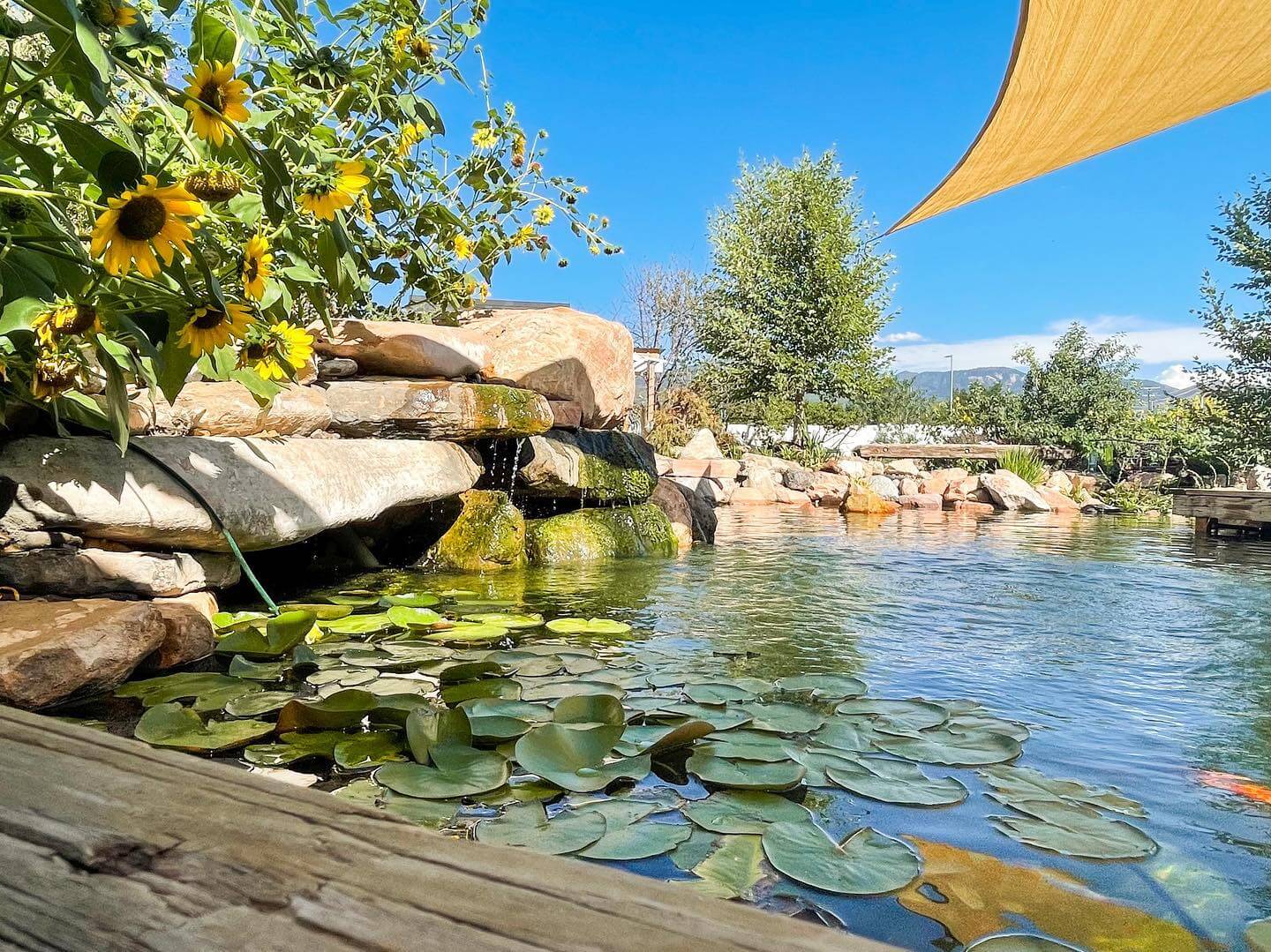
For near-natural clarity with minimal fuss, add an upflow bog filter beside your pond. Build a shallow chamber lined with EPDM, plumb a perforated distribution manifold at the base, then fill with 8–12 inches of pea gravel. Pump pond water up through the gravel where beneficial bacteria and plant roots strip out nutrients and trap fines. Plant densely with vigorous, noninvasive marginals: pickerelweed (Pontederia cordata), blue flag iris (Iris versicolor), sweet flag (Acorus), soft rush (Juncus effusus), and marsh marigold (Caltha palustris). A simple overflow weir lets polished water spill back like a gentle creek. Maintenance is easy—vacuum the manifold once or twice a year through a cleanout and thin plants seasonally. Pairing a skimmer + bog can outperform many traditional filters while looking like a lush wetland border. Bonus: it expands habitat for pollinators and birds, reduces algae pressure, and keeps the pond’s edge green even in midsummer. If you want beautiful water with a “barely there” equipment footprint, a planted bog is the backbone upgrade your pond deserves.
Glow After Dark: Pond Lighting That Sets the Mood
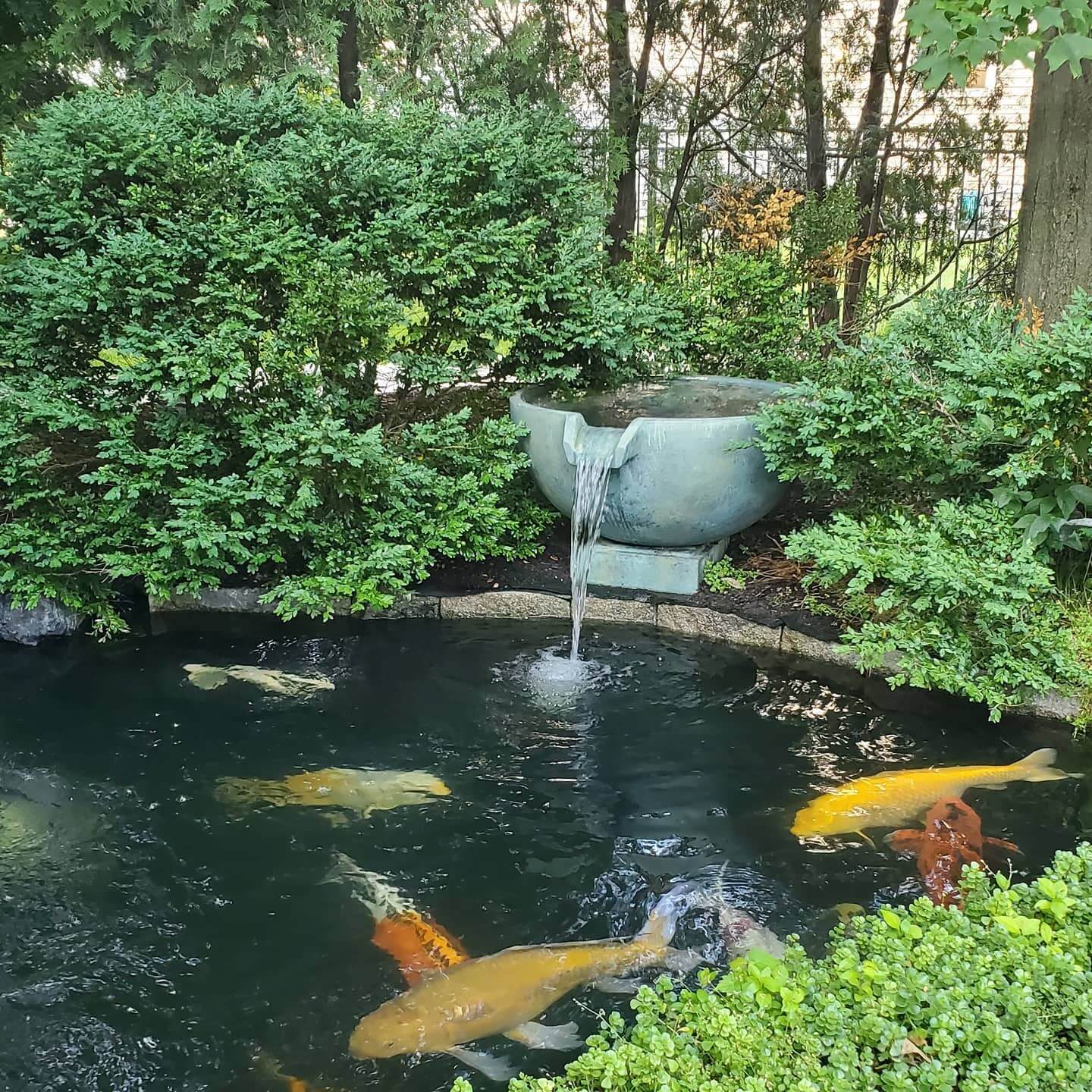
Water truly comes alive at night. Blend layered lighting to make your backyard pond safe and spellbinding. Use warm-white (2700–3000K) low-voltage path lights to trace approaches, then tuck submersible LEDs to graze across rock faces and highlight a waterfall’s veil. A couple of pinpoint spots can uplight specimen grasses or a Japanese maple, while under-cap strip lighting along coping stones defines the water’s edge without glare. Aim fixtures away from neighbors and seating to keep sightlines comfortable. Smart transformers and dimmers let you shift from dinner-party glow to quiet stargazing with a tap. In wildlife ponds, concentrate lights on features rather than the entire surface to preserve dark zones for frogs and moths. Always use GFCI-protected outlets and outdoor-rated connections, and keep cables accessible for service. Thoughtful lighting adds depth, extends use into the evening, and turns reflections into art—so your tranquil pond reads as a luxurious destination 24/7.
Wildlife-Friendly Ponds: Shallows, Shelves, and Native Plants
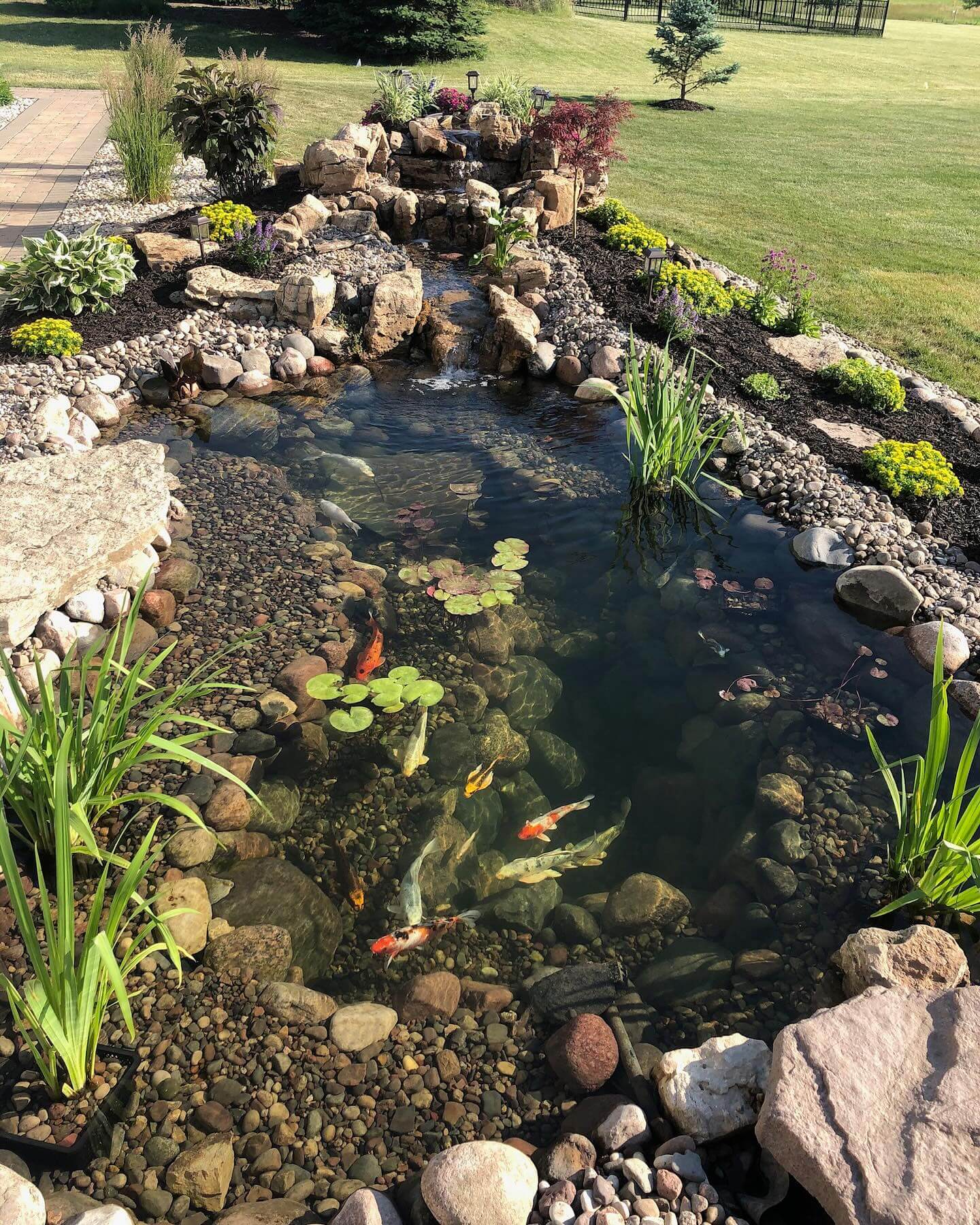
If inviting songbirds, butterflies, and amphibians is part of your pond plan, design with habitat in mind. Create a gently sloped “beach” entry of gravel so bees and birds can sip safely, and add a few flat landing stones at the waterline. Build tiered shelves 6–12 inches deep for emergent natives—think cardinal flower (Lobelia cardinalis), sedges (Carex), swamp milkweed (Asclepias incarnata), and blue pickerelweed. Submerged oxygenators help clarity, while floating leaves provide shade for tadpoles and resting pads for dragonflies. Avoid pesticides and fast-release fertilizers nearby; a ring of mulch and dense planting will suppress weeds naturally. Include an escape ramp if you have wildlife-prone fencing, and keep at least one quiet, fish-free zone for amphibians to breed. A small dripper or rill keeps water oxygenated without disturbing nests. With these gentle design moves, your backyard pond becomes a dynamic micro-ecosystem—alive with birdsong at breakfast and firefly glimmers at dusk—proving beauty and biodiversity can thrive together in even modest spaces.
Seamless Edging, Decks, and Seating That Invite You Closer
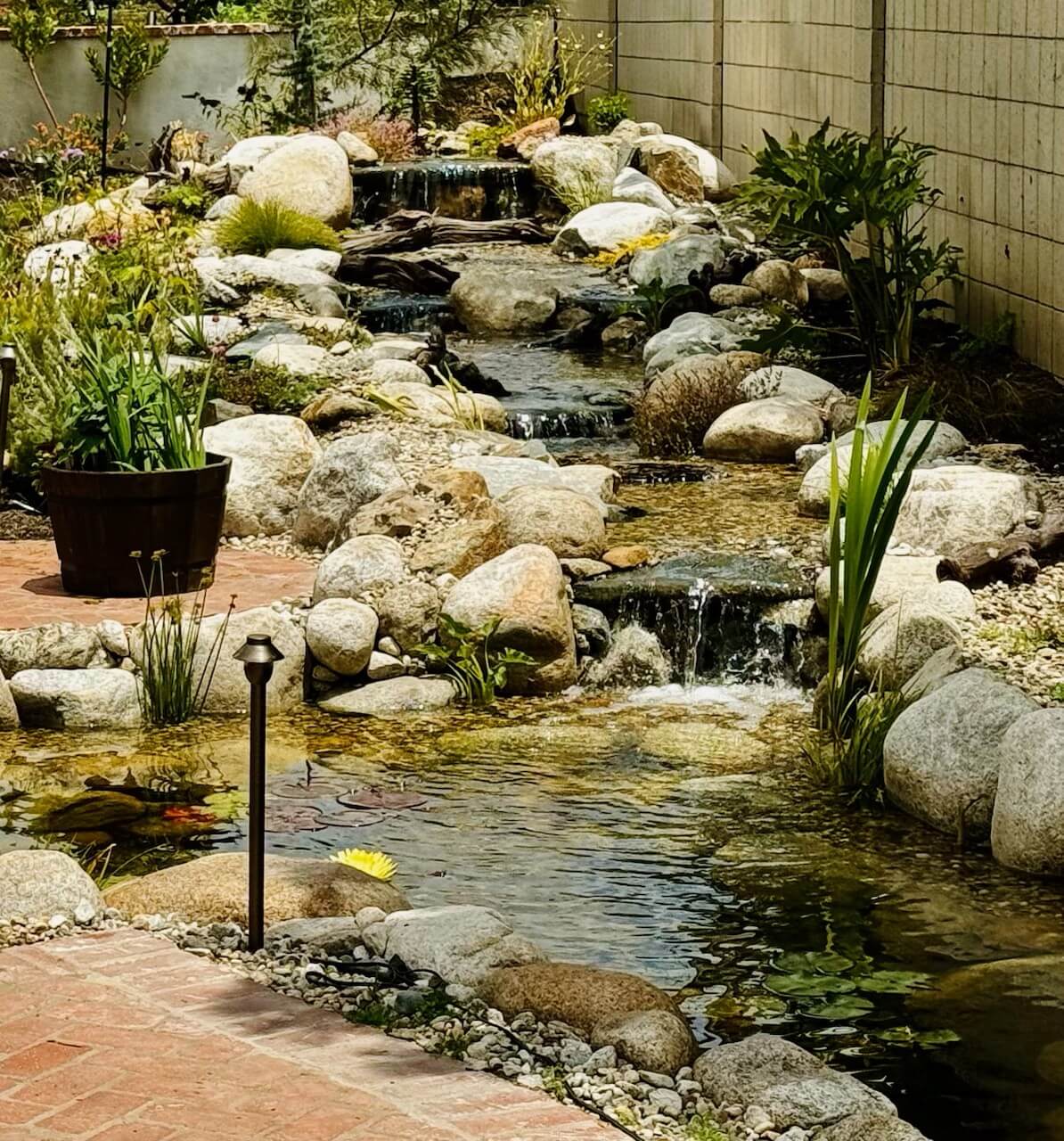
The best backyard pond ideas don’t stop at the water’s edge—they pull your seating into the experience. Float a cedar or composite deck slightly overhanging the pond to create a toe-dip terrace, or set broad coping stones level with pavers for a clean, sit-friendly rim. A curved bench nestled in planting pockets gives multiple vantage points for waterfall views. Use consistent materials—stone, wood, or corten accents—to tie the water feature to your patio and path network. Where kids play, specify grippy textures and gentle transitions from hardscape to gravel to prevent slips. Plant low, layered borders (thyme, mondo grass, dwarf iris) to soften edges while keeping sightlines open. Consider a small footbridge over a narrow rill to connect zones and add movement to your circulation plan. Integrating structure with the pond doesn’t just look polished; it increases daily use, guides drainage away from the liner, and makes maintenance like skimming and trimming a comfortable, reach-in task.
Meandering Stream or Rill to Connect Garden Rooms
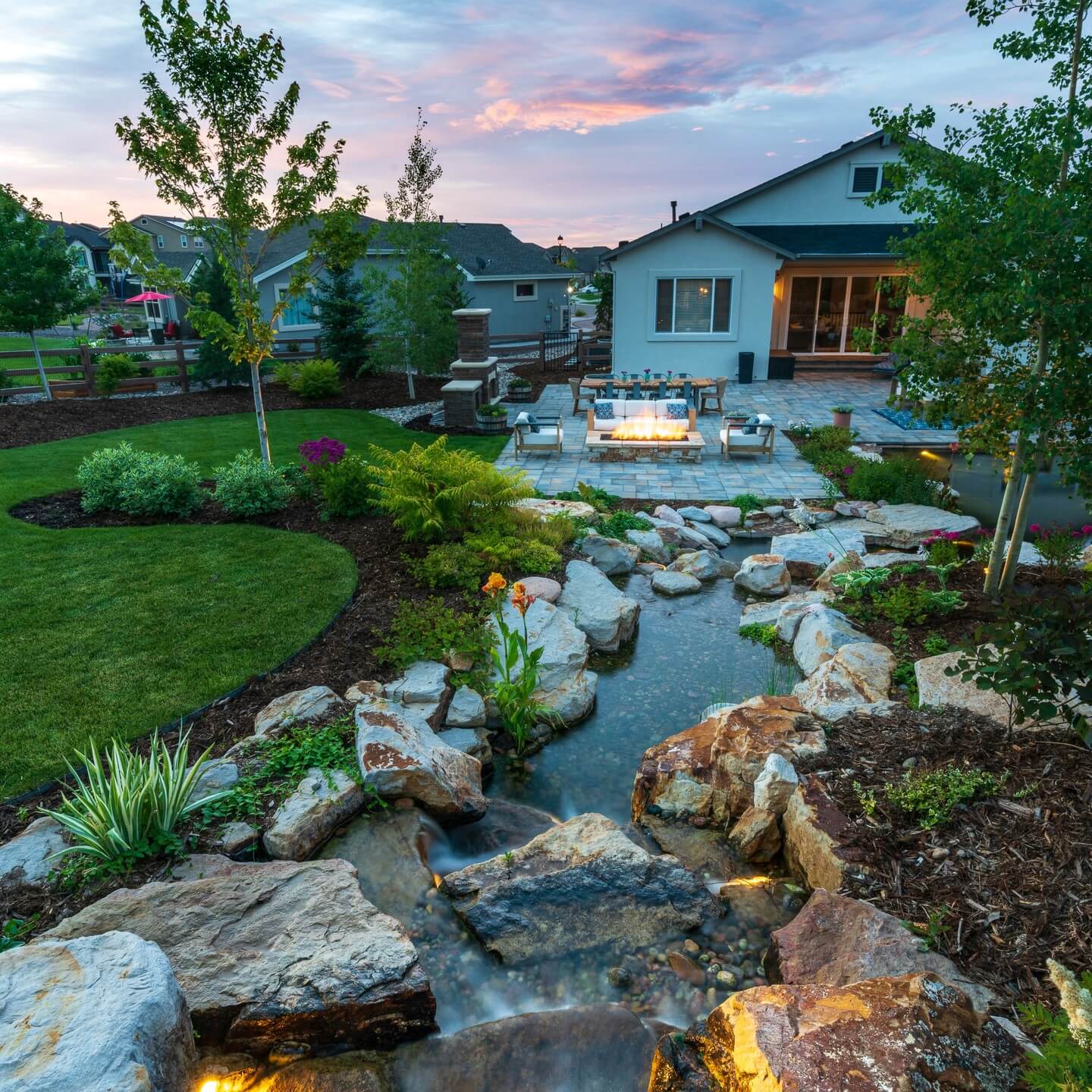
A narrow stream is a powerful design tool: it carries sound through the garden, links spaces, and creates multiple micro-habitats. Start with a gentle grade (1–3% slope) and alternate shallow riffles with small pools for oxygen and visual rhythm. Use underlayment plus liner, then top with rounded river rock so water kisses rather than crashes over stones. Hidden check dams help maintain depth in flatter areas, while a spillway bowl or scupper at the headwaters makes a striking source. Plant creeping jenny and dwarf mondo to knit the banks, and tuck mini irises or marsh marigold into sunny bends. Keep debris out with a skimmer at the main pond and size the pump to overcome elevation plus friction in the long run. A stream invites stepping stones, bridges, and moments to pause—turning a simple yard into a journey where each bend offers a new perspective and photo-worthy vignette.
Get the Fail-Safe Paint Color Playbook (Free PDF)
36 proven colors • 8 ready palettes • trim & sheen guide • printable testing cards.
Budget-Friendly Stock Tank and Preformed Shell Ponds
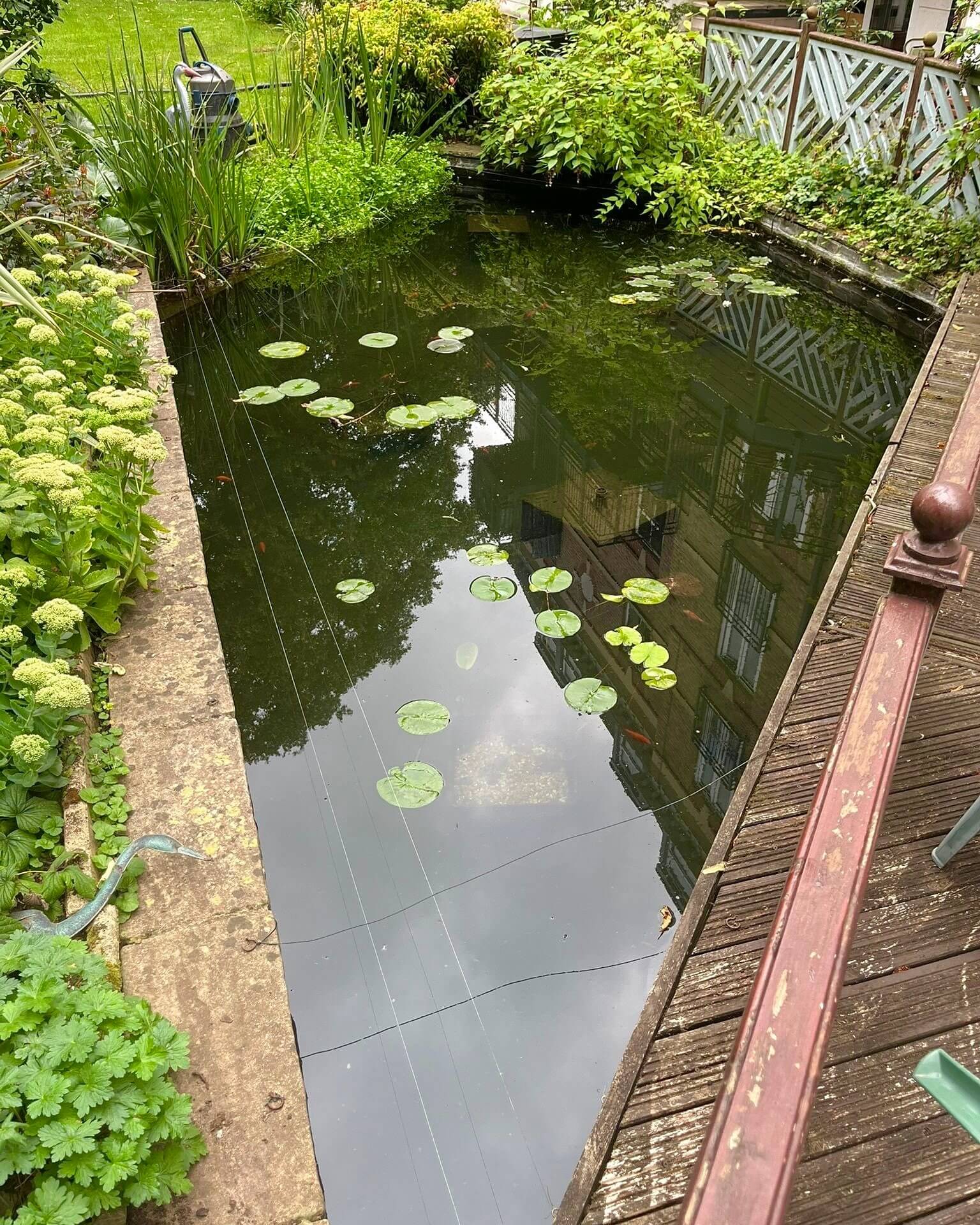
Beautiful water features don’t have to be complex or costly. Galvanized stock tanks, resin troughs, and preformed pond shells create fast, reliable builds for patios and small yards. Place on a level, compacted base with a cushioning sand layer; shim carefully to get the rim dead level so reflections look right. A compact pump with a foam prefilter feeding a simple spillway or bubbler provides circulation and that gentle, relaxing sound. For edging, wrap the rim with cedar, corten trim, or stone veneer to elevate the look. Plant dwarf water lilies, sweet flag, and water mint in baskets for easy seasonal swaps. In cold climates, drain or add a de-icer to prevent ice from stressing seams; in hot zones, provide afternoon shade and top up weekly. These plug-and-play ponds are perfect test beds for learning water care, trying out lighting, or building a wildlife micro-habitat—proof that a serene, stylish pond is within reach on weekend timelines and real-world budgets.
Raised Steel-Edged Pond That Doubles as a Modern Planter
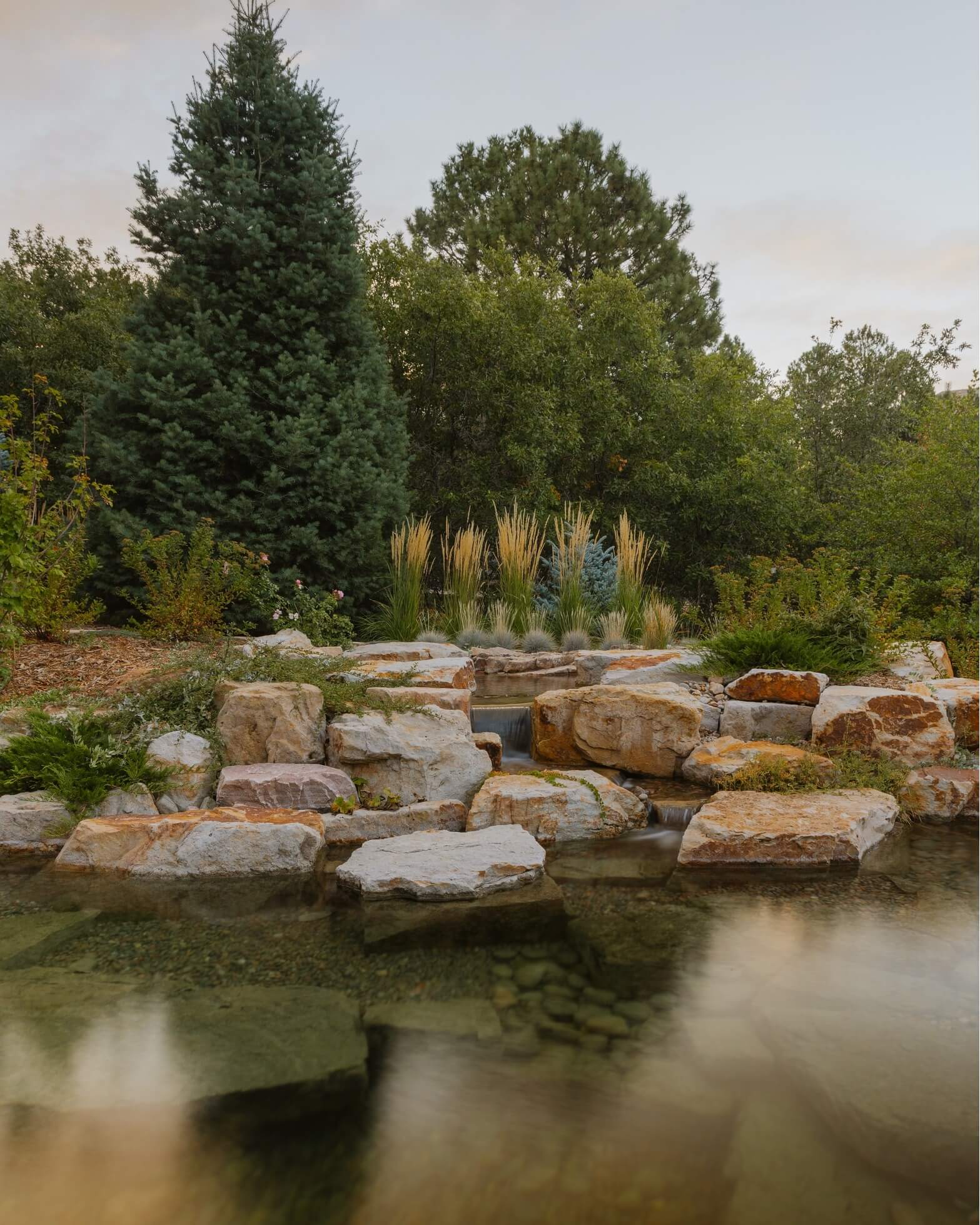
If you want a sleek, low-maintenance water feature that still teems with life, a raised, steel-edged pond is a standout backyard pond idea. At seat height, the wall becomes instant informal seating and a safe barrier for kids and pets. The clean lines pair beautifully with grasses, iris, and dwarf papyrus, while a simple spillway creates gentle movement for oxygen and clarity. Build with a rigid frame (corten steel, block with stucco, or brick), add underlayment plus 45-mil EPDM liner, and cap with stone for a finished look. A compact skimmer and pump keep the surface clear; a hidden UV clarifier can polish water in sunny locations. Because the water is elevated, you can place this pond right off the patio to mirror firelight and string lights at night. Bonus: the thermal mass keeps water more stable through seasonal swings, and the integrated ledge lets you showcase potted succulents or culinary herbs for a lush, modern courtyard vibe.
Natural Swimming Pond: A Chemical-Free Dip in Your Backyard
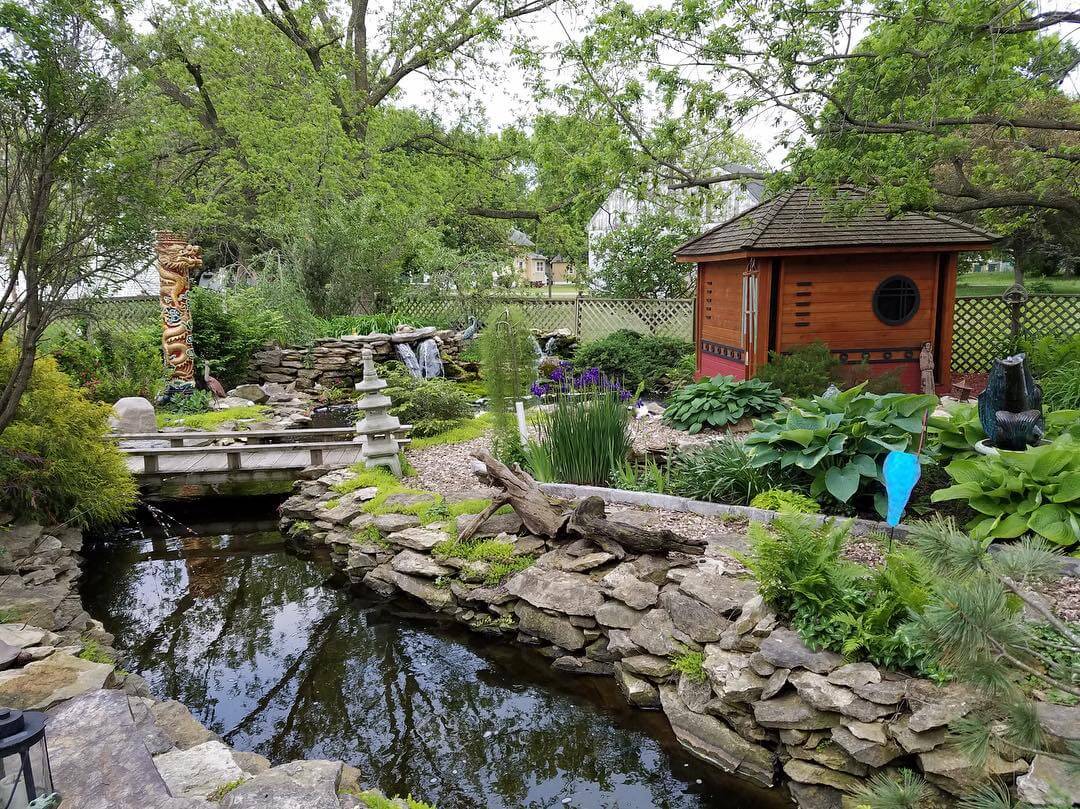
Trade chlorine for water lilies and a glassy swim zone with a natural swimming pond. This hybrid water garden uses a planted “regeneration zone” to filter the swim area, delivering a resort feel with ecological benefits. Aim for 50–70% of total surface as planted shelves stocked with oxygenators (hornwort), emergents (pickerel rush, iris), and bioactive gravel. Keep the swimming zone 5–7 feet deep for comfort and temperature stability, with skimmers and bottom drains feeding a low-energy pump loop. Circulate the entire volume every 2–4 hours; add a discreet UV clarifier during the first season as biology establishes. Include a shallow beach entry for kids, stone steps, and a timber or stone deck for lounging. The result is a crystal-clear, chemical-free pool that invites dragonflies, birds, and beneficial microbes while staying remarkably low maintenance once balanced. It’s a showpiece water feature that brings wellness, biodiversity, and year-round beauty to your landscape.
Rain Chain to Runnel: Harvest Downspouts to Feed Your Pond
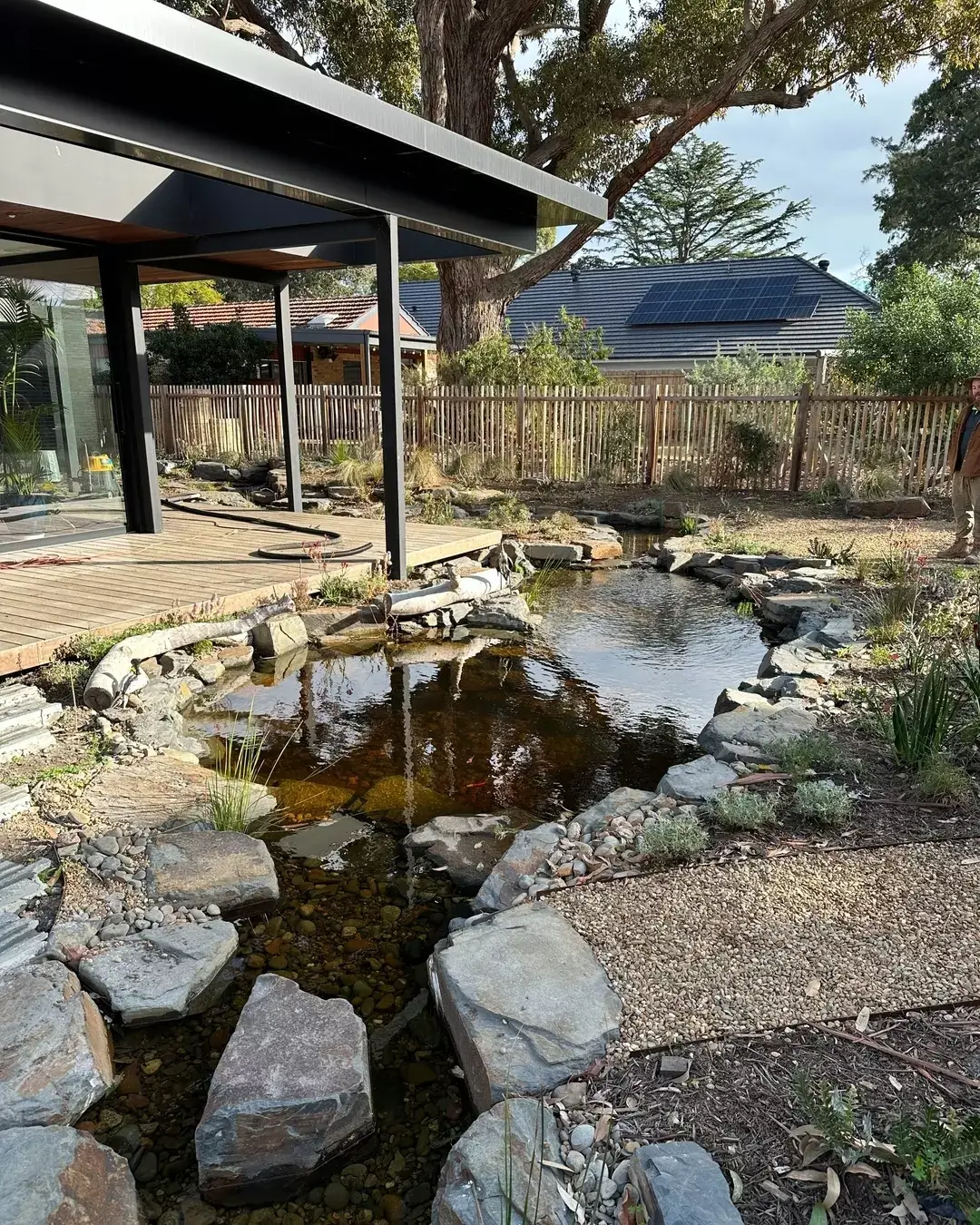
Let your backyard pond do double duty as stormwater management by capturing roof runoff. A rain chain or scupper drops water into a gravel forebay with a simple leaf screen and first-flush diverter, then a lined runnel carries it to the pond or upflow bog. This transforms heavy rains into a soothing cascade while filtering sediment and nutrients that cause algae. Armor the flow path with rounded river rock over geotextile and EPDM liner; add a level spreader or sheet weir for an even, photogenic sheet of water. Always include an overflow: pipe excess to a rain garden or dry well away from foundations. Aquatic iris, water mint, and soft rush thrive in the runnel’s periodic wetting, stitching the system into your planting design. Besides reducing your water bill, this approach helps keep ponds topped off naturally, improves water clarity, and turns a utilitarian downspout into a landscape feature that sings during storms.
Tranquil Tsukubai Corner with Bamboo Spout and Stone Basin
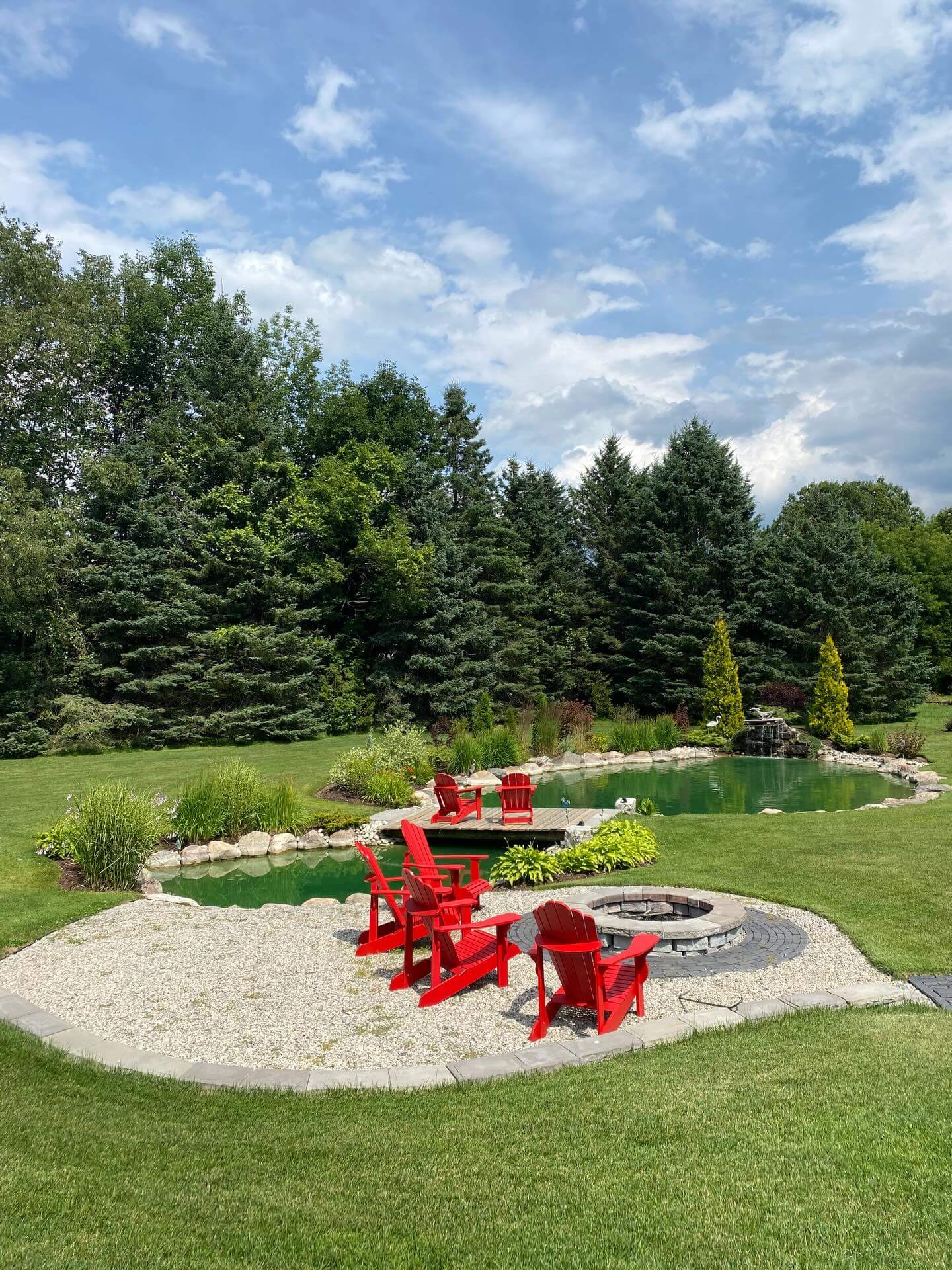
For compact spaces, a Japanese-inspired tsukubai creates a meditative focal point with minimal footprint. A bamboo spout (kakei) pours into a carved stone basin, the sound tuned by fall height and flow rate for that soft, rhythmic note that calms the whole garden. Nestle the basin into gravel with moss, ferns, and a dwarf Japanese maple; a lantern or subtle path light completes the scene after dark. Hide a small recirculating pump in a reservoir beneath river stones, using a ball valve to fine-tune the trickle. While petite, this water feature still supports pollinators and songbirds, and it’s a brilliant way to bring the essence of a pond to balconies, entries, and courtyards. For authenticity and durability, pair natural stone with weathered wood and avoid overly bright finishes. The result is a timeless water accent that layers beautifully with larger ponds, streams, or dry gardens elsewhere on the property.
Terraced Cascading Pools for Sloped Yards
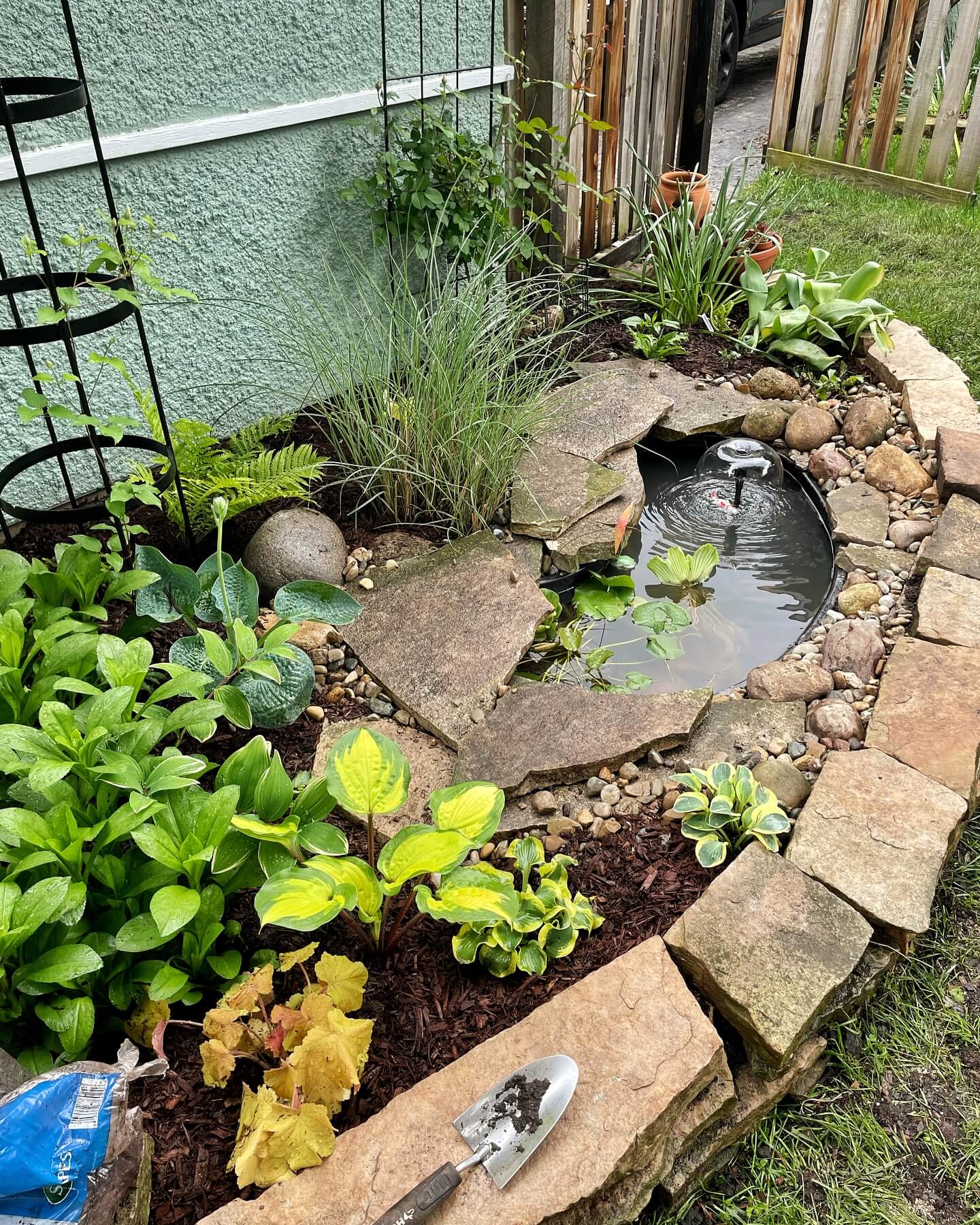
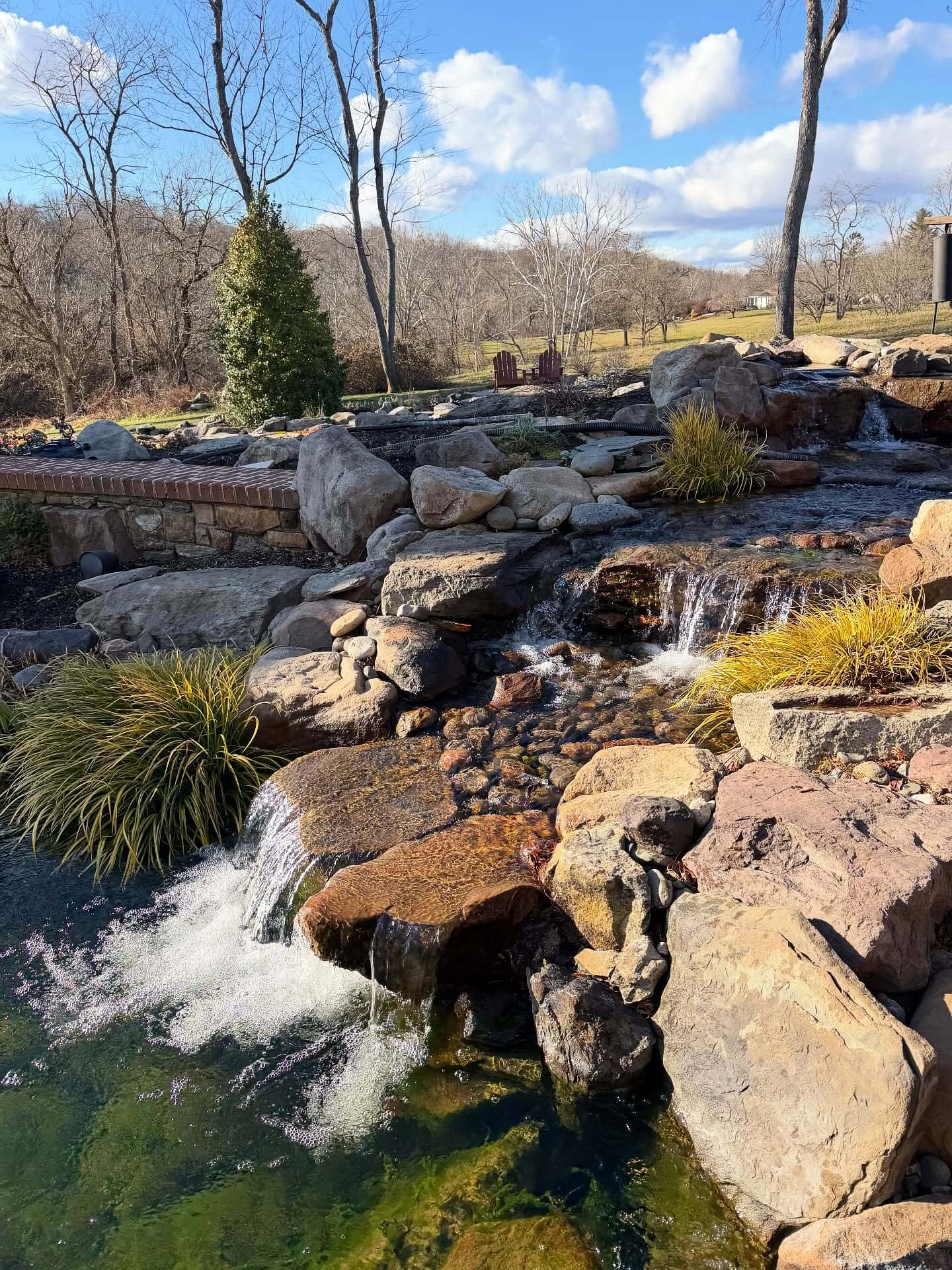
If your yard slopes, let gravity be your designer. Step the grade with a chain of small, shallow basins connected by stone weirs for a musical, oxygen-rich stream that reads as natural as it sounds. Each terrace slows water, traps sediment, and doubles as a microhabitat for marginal plants like creeping jenny, dwarf cattail, and sweet flag. Start with a robust underlayment and a continuous EPDM liner up the slope; use level spill stones to control each drop and minimize splash loss. A compact biofalls or header pond at the top feeds the system, while a vault and pump at the bottom return water quietly. Include a check valve and winter bypass for freeze protection. Terracing makes maintenance easy—drain one tier at a time—and creates multiple “moments” for seating, stepping stones, and lighting. It’s a dynamic backyard pond idea that turns a challenging hillside into your favorite place to linger.
Solar-Powered Pumps for Quiet, Cord-Free Circulation
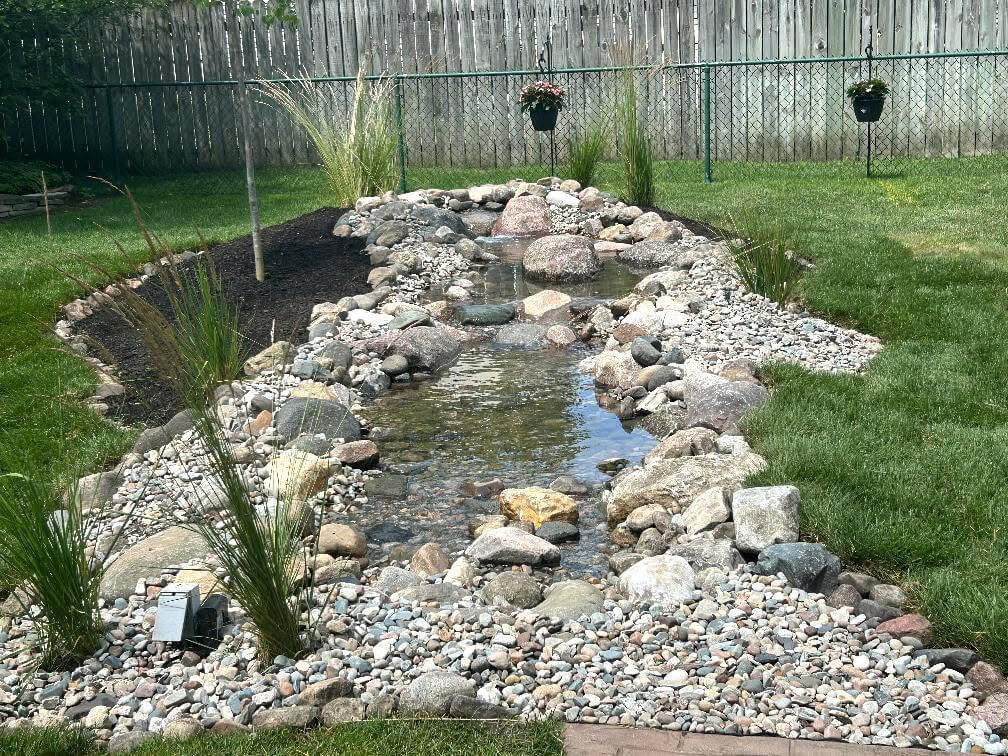
Skip trenching and tap the sun to power small ponds, rills, and spillways. Modern DC solar pumps paired with a right-sized panel and battery give reliable circulation without grid tie-in. Size by head height and desired turnover: a 300–600 GPH pump suits container ponds and short cascades; go larger for multi-tier features. Place panels in full sun, south-facing, on a tilt matched to your latitude, and use a controller with MPPT and variable speed to hold a steady flow during passing clouds. A small AGM or LiFePO4 battery bridges evenings and overcast spells; add a dusk sensor to run lights separately. Keep plumbing runs short and use smooth flex PVC to reduce head loss. Solar won’t replace a big koi system, but for bird-friendly basins, wall scuppers, and patio water bowls, it’s efficient, quiet, and nearly maintenance-free—an elegant sustainable upgrade to your backyard water feature.
Garden Bridge and Stepping Stones to Invite Exploration
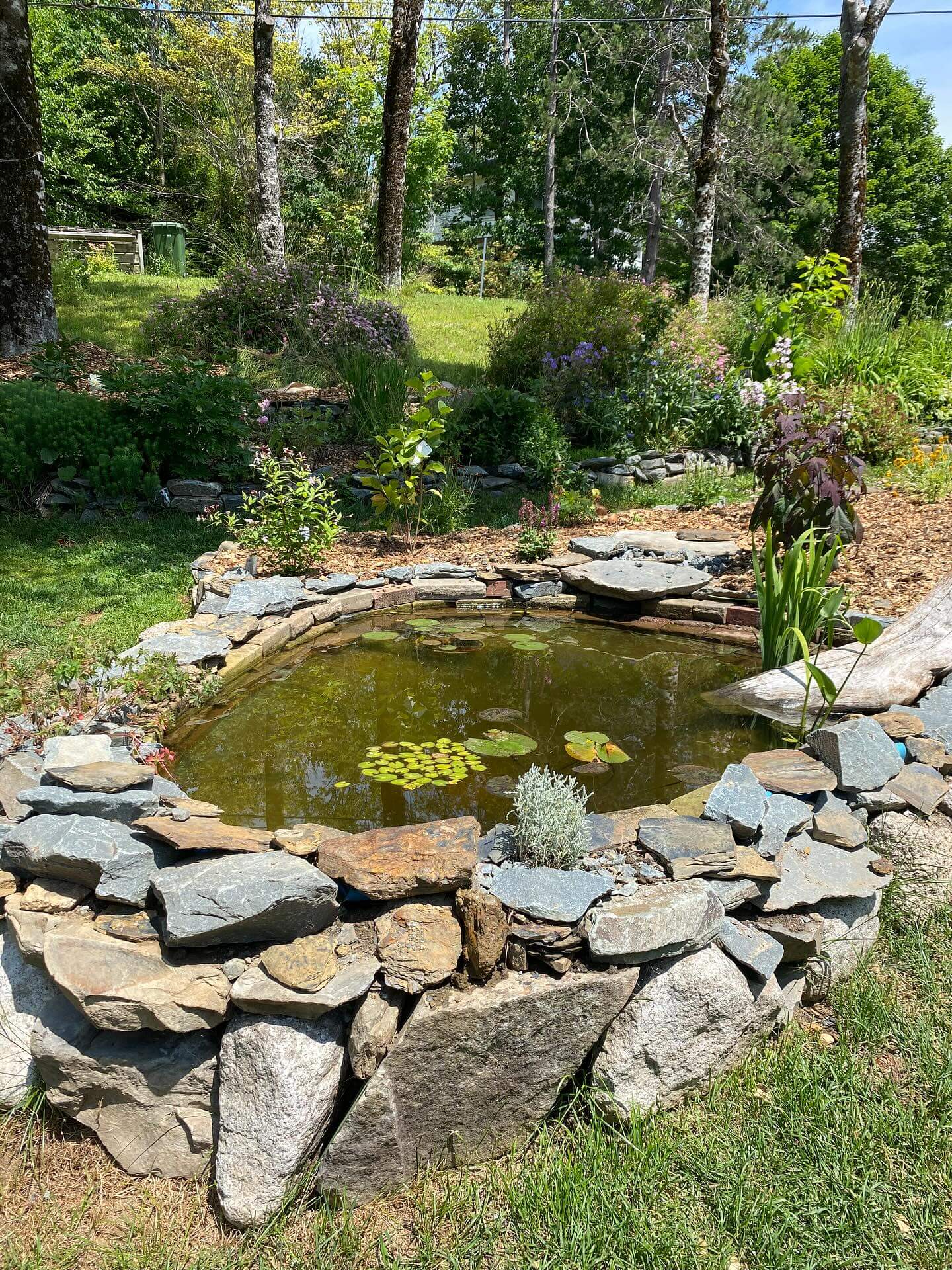
A simple bridge or stepping-stone crossing transforms your pond from backdrop to immersive experience. Span a narrow point with a low-profile timber or steel bridge, or place broad, flat boulders 18–24 inches apart for a playful path across the water. The crossing becomes prime viewing for fish and lilies, frames reflections for photography, and provides maintenance access to islands and waterfalls. Ensure footings are stable below frost depth; add non-slip treads or textured stones that stand 1–2 inches above typical water level. Tuck grasses and creeping groundcovers at the edges to soften transitions, and light the approach with low-glare path lights or recessed step LEDs. This small addition reshapes circulation through the garden, connecting patios, decks, and seating nooks while enhancing safety. It’s a high-impact, moderate-cost way to elevate both landscape design and daily enjoyment of your backyard pond.
Four-Season Pond: Ice, Fall Color, and Spring Emergence
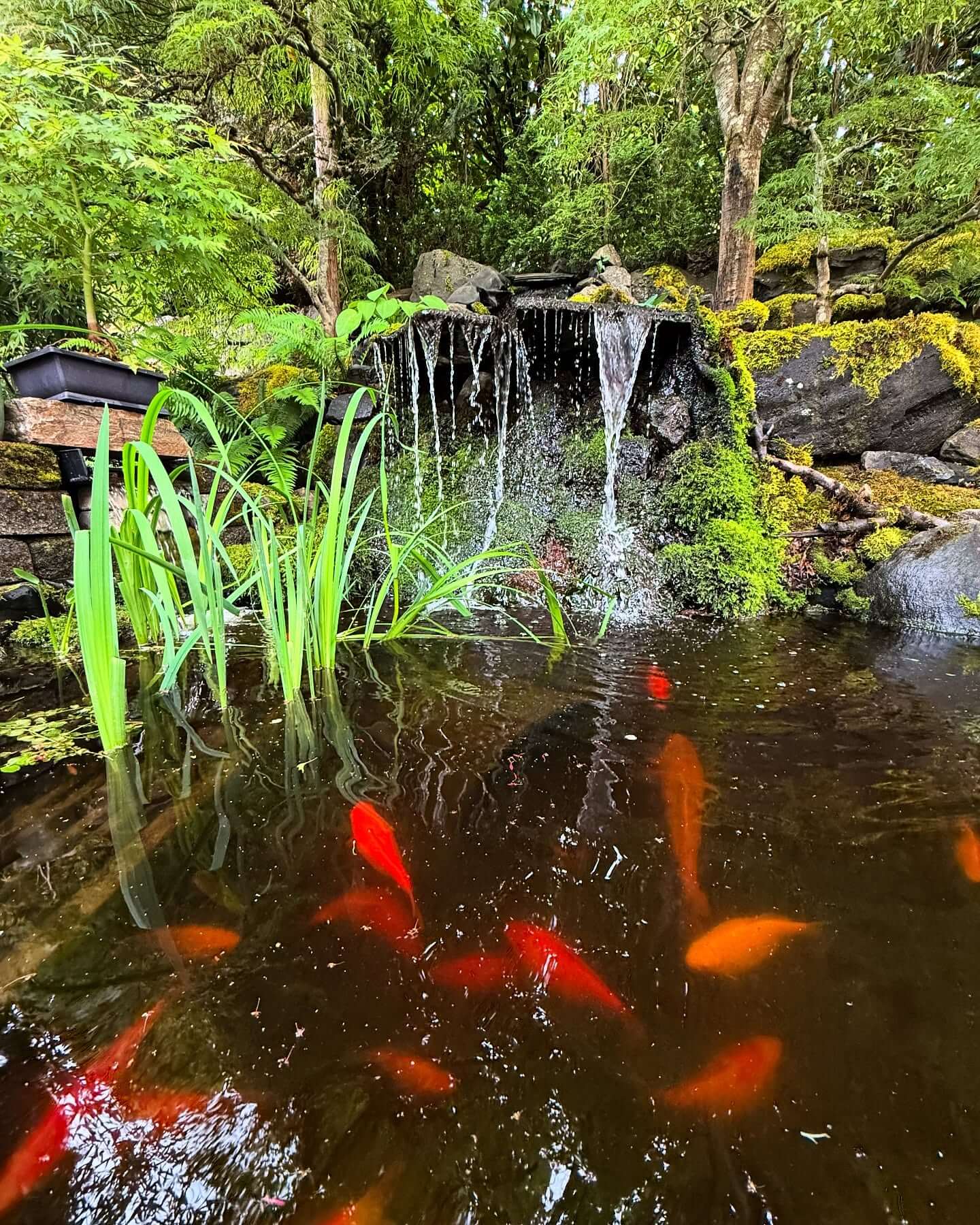
Design your pond to look magical in every month, not just midsummer. Structure is key: layered boulders, driftwood, and sculptural evergreens read beautifully in winter, while redtwig dogwood, winterberry, and sedges add color and texture. Plan a de-icer (100–300W) or aerator to keep a gas exchange hole in freezing climates, and net leaves in autumn to reduce nutrient spikes. In shoulder seasons, a low-watt pump bypass protects waterfalls from ice dams while maintaining subsurface circulation for fish. Choose hardy lilies, iris, and pickerel rush for reliable return, and add underwater lights aimed across—not into—waterfalls for a warm glow on frosty evenings. With smart plant choices and a simple seasonal checklist, your backyard water feature becomes a year-round focal point: sparkling with ice in January, echoing bird songs in April, and gilded by foliage in October—all with minimal extra work.
Get the Fail-Safe Paint Color Playbook (Free PDF)
36 proven colors • 8 ready palettes • trim & sheen guide • printable testing cards.
Pondless Waterfall: All the Sound, None of the Open Water
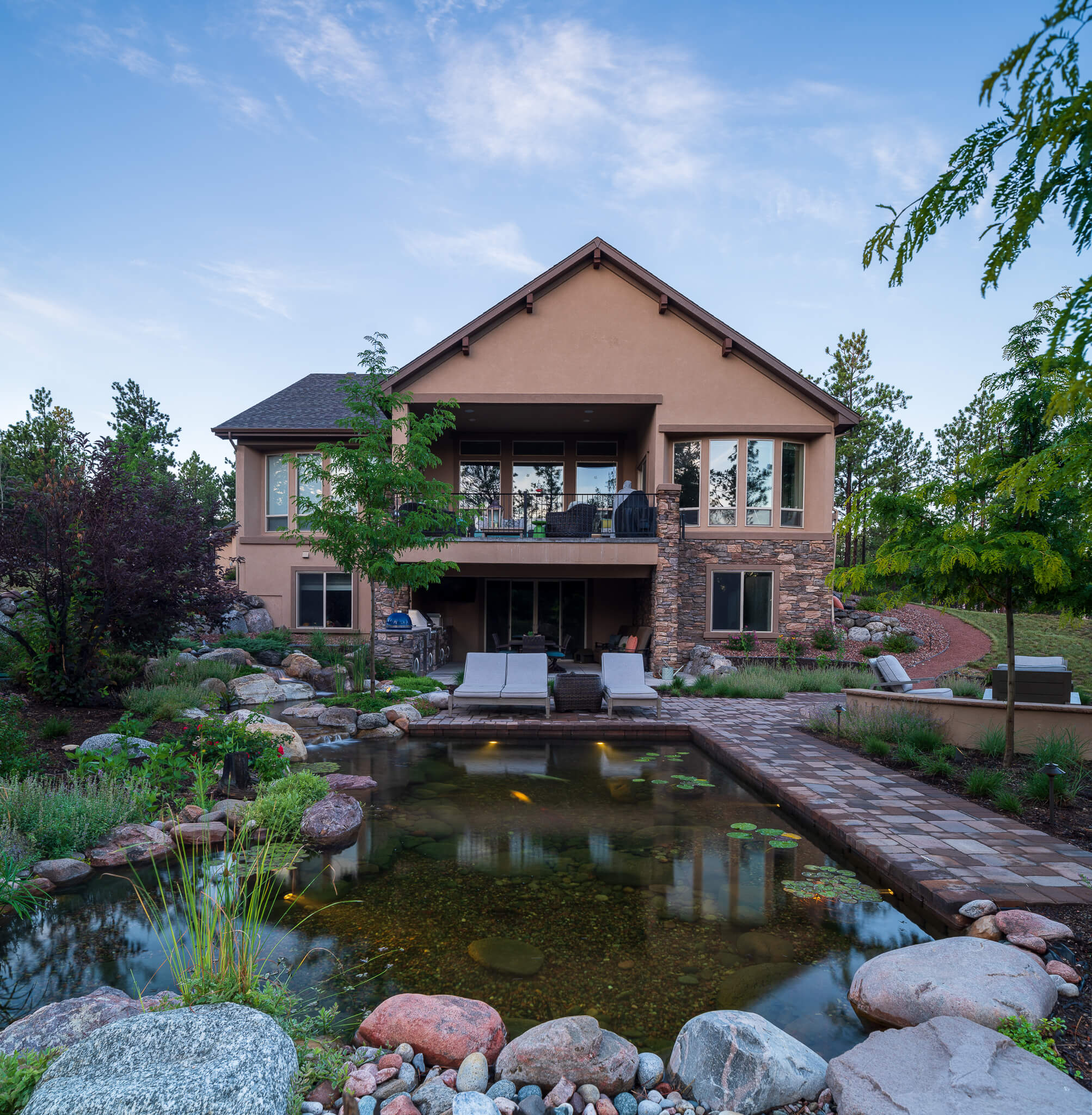
Love the music of moving water but need a kid- and pet-safe option? A pondless waterfall hides its reservoir underground, delivering the same soothing sound and natural stone look without standing water. Build a lined basin filled with structural matrix blocks and a pump vault; water spills down boulders into decorative gravel, then percolates back to the reservoir. Size the storage to hold splash and surge (typically 2–3 times the stream volume), and include an auto-fill for worry-free top-offs. Plant ferns, hostas, and mossy groundcovers in wetter pockets, with evergreen grasses for winter interest. Maintenance is a breeze—just clear the intake screen and top up seasonally—while the compact footprint fits side yards and entry gardens. It’s an ideal first water feature, and you can always convert to a full pond later by adding a small basin at the bottom for fish and lilies.
Slim Wall Fountain Basin for Tight Side Yards
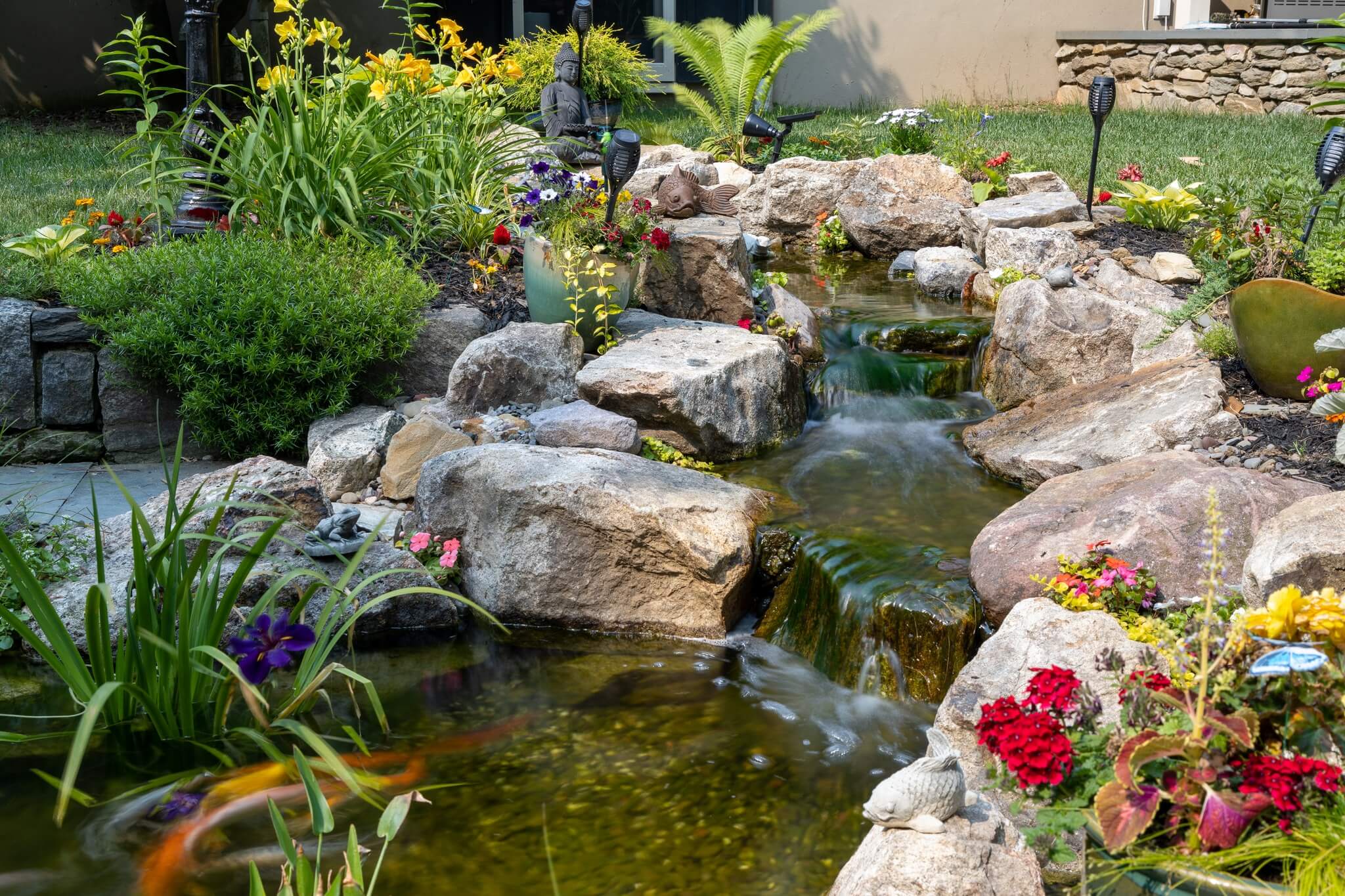
When space is narrow, go vertical with a wall-mounted spout pouring into a slim reflecting basin. A bronze scupper or modern stainless weir delivers a crisp sheet of water that reads luxurious yet fits alongside a fence or path only 24 inches wide. Line the trough with EPDM under tile or stone, hide a compact pump and inline filter in one end, and route a discreet return behind the wall. The hardscape doubles as edging, keeping pathways clean while giving you mirror-like reflections of sky and foliage. Add uplights to graze the wall texture and a dimmer to tune both brightness and sound after dark. Plant fragrant herbs and low grasses along the run to soften the geometry. This elegant, low-evaporation water feature is perfect for courtyards and side yards where a full pond won’t fit—yet it delivers the same calming ambience and designer finish.
Get the Fail-Safe Paint Color Playbook (Free PDF)
36 proven colors • 8 ready palettes • trim & sheen guide • printable testing cards.
Curved Patio-Edge Pond with Built-In Bench
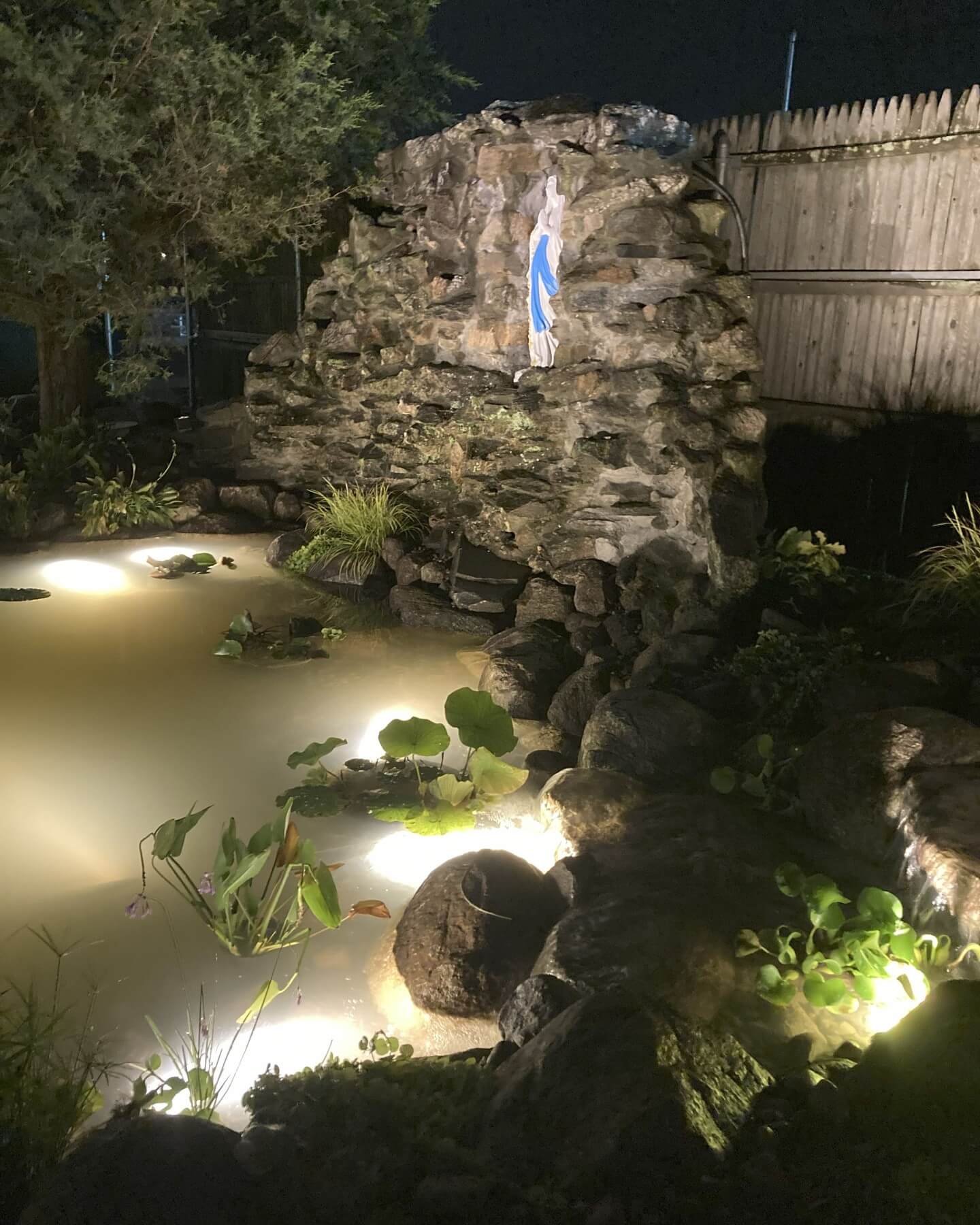
Pull water right into your daily life by curving a backyard pond along the edge of your patio and tucking a built-in bench into the arc. This layout softens hardscape lines and maximizes seating while keeping the water garden close enough to hear every ripple. Use a sturdy coping—thermal bluestone, poured concrete, or kiln-fired brick—set flush with the bench for comfortable perching and safe footing. Circulation is key when ponds snuggle up to living spaces: place a skimmer opposite a low spill or return jet to create a gentle, debris-clearing current. Plant the near edge with low-profile marginals—dwarf sweet flag, water forget-me-not, and mini papyrus—to keep sightlines open, and reserve taller reeds for the far side to create depth. Add dimmable, warm-white under-bench strip lighting and a couple of submersible spots to make evening lounging magical. Keep mosquitoes at bay with constant movement from a small pump, and include a clean-out port hidden under the bench for easy maintenance. The result is an intimate, sound-rich backyard pond idea that turns the patio into a true outdoor room.
Inky Reflecting Pool for a Sleek, Modern Backyard Pond
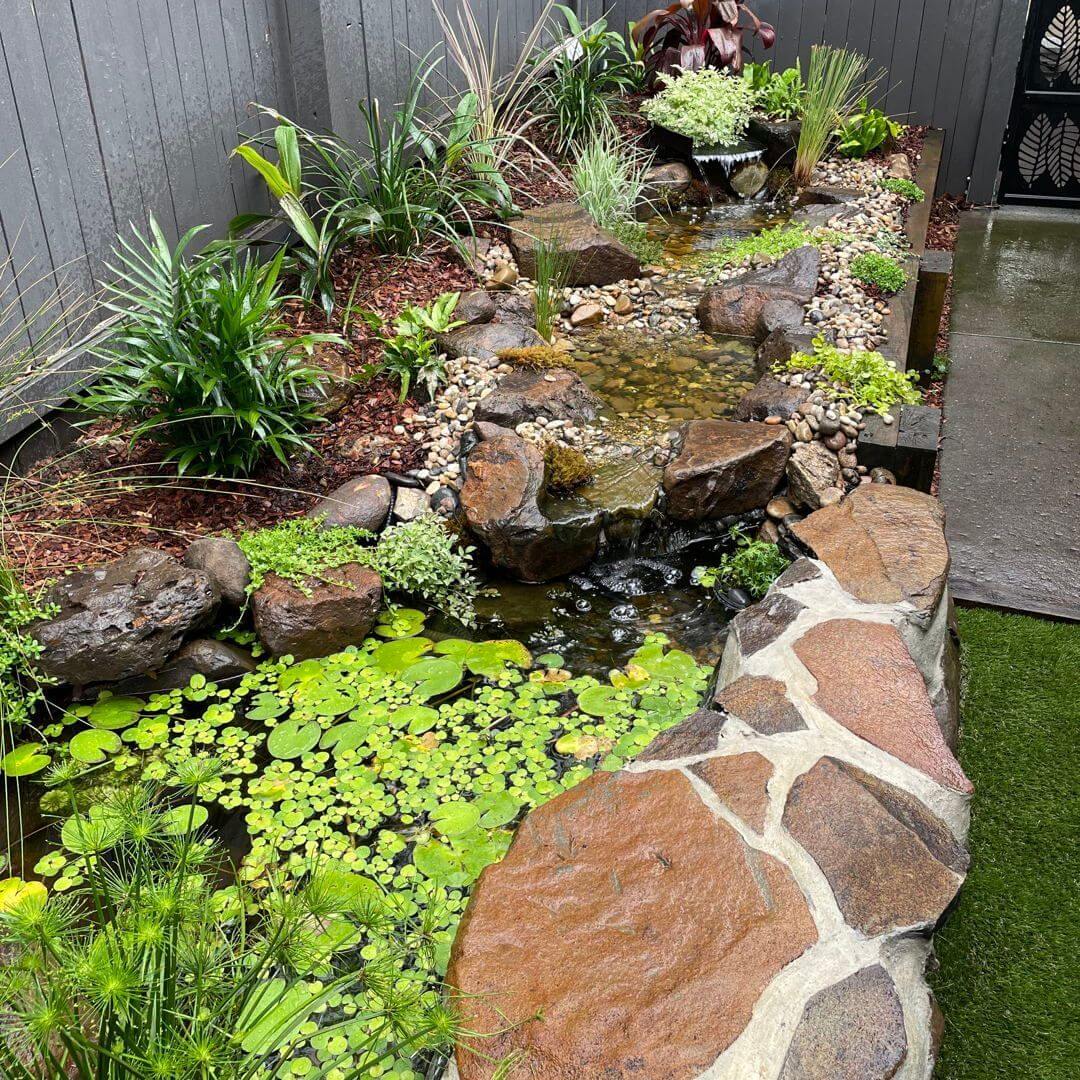
If your style skews minimalist, an inky reflecting pond delivers drama with almost no visual clutter. Choose a dark interior—black EPDM liner, charred wood cladding, or porcelain tile—to boost mirror-like reflections of sky, trees, and architecture. Keep the footprint rectilinear and the water plane calm; a hidden slot overflow or perimeter weir quietly skims the surface without disturbing the glassy finish. For crisp edges, use powder-coated steel, cast-in-place concrete, or large-format pavers with a 2–3 inch reveal. Restraint with planting is part of the look: one sculptural specimen (lotus, horsetail, or a single clump of pickerel rush) reads as intentional while leaving the surface open. Because still water can warm quickly, place the pool where it catches morning light and afternoon shade, and consider a low-profile aerator to support water clarity without spoiling the reflection. A programmable top-off valve maintains the precise water level that makes the effect sing. This contemporary backyard pond idea doubles as a living mirror, anchoring courtyards and entry gardens with serene simplicity.
Bog Filter Margins for Crystal-Clear, Low-Maintenance Water
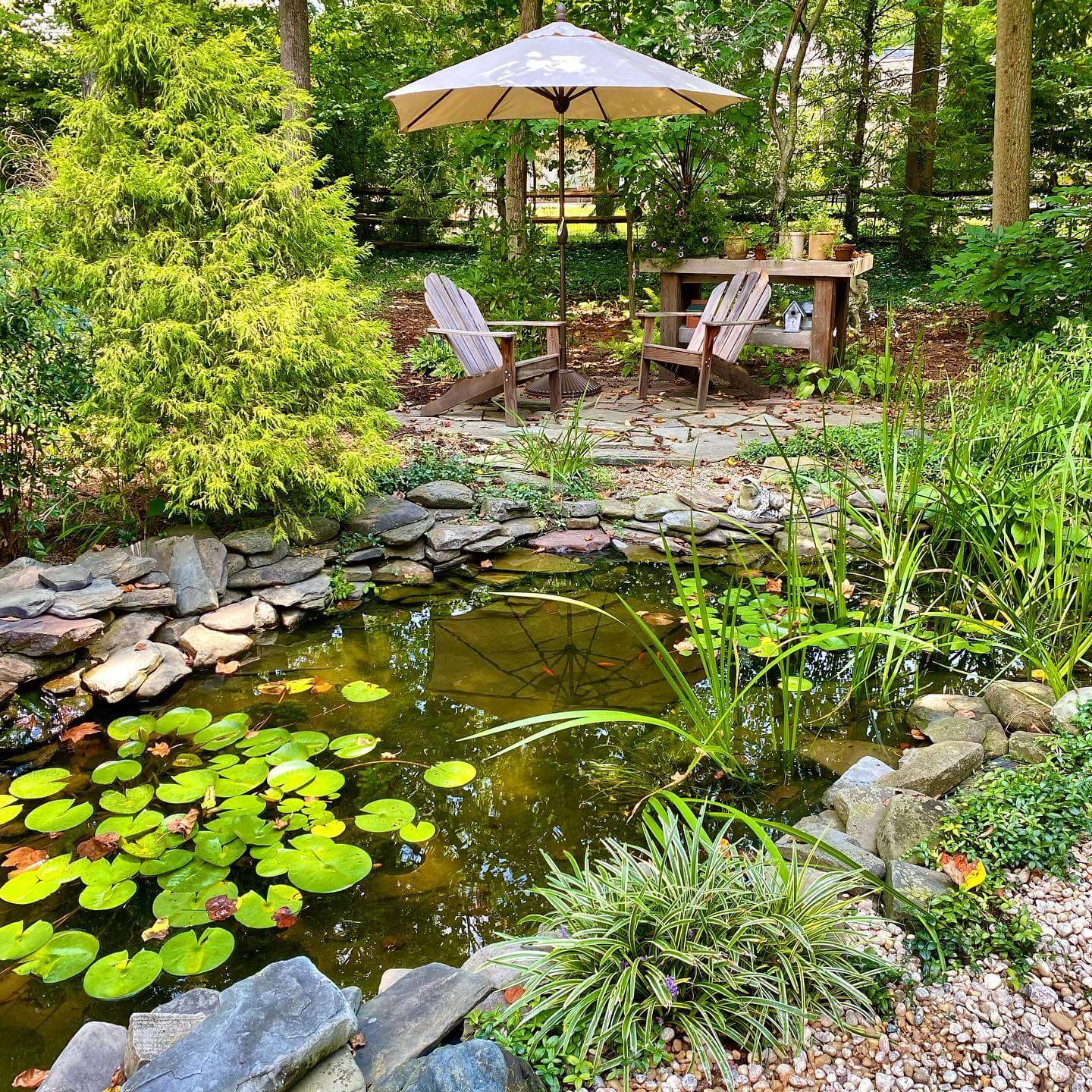
Want pond water that stays clear without constant tinkering? Build an integrated bog filter along one edge. A bog is a planted, gravel-filled bed where water is pumped up from the pond and evenly distributed beneath the media, then pushed up through roots that strip out nutrients and fine particulates. Size the bog at roughly 25–40% of your pond’s surface area for best results. Construct a shallow cell with a waterproof liner, add 10–12 inches of 3/8–3/4 inch rounded pea gravel, and lay a perforated manifold at the bottom wrapped in geotextile. Plant densely with nutrient-hungry marginals—iris, marsh marigold, pickerel rush, dwarf cattail, and sedges—to outcompete algae. The outflow can return as a gentle rill or spillway for soothing sound. Maintenance is delightfully simple: once or twice a year, throttle the pump to burp detritus from clean-out ports, and thin plants seasonally. Paired with a skimmer on the main pond, this natural biofilter sharpens clarity, oxygenates the system, and supports dragonflies, frogs, and pollinators. It’s a smart, sustainable backyard pond idea that trades chemicals for plants and physics.
Aquaponics Pond: Grow Greens with Your Goldfish
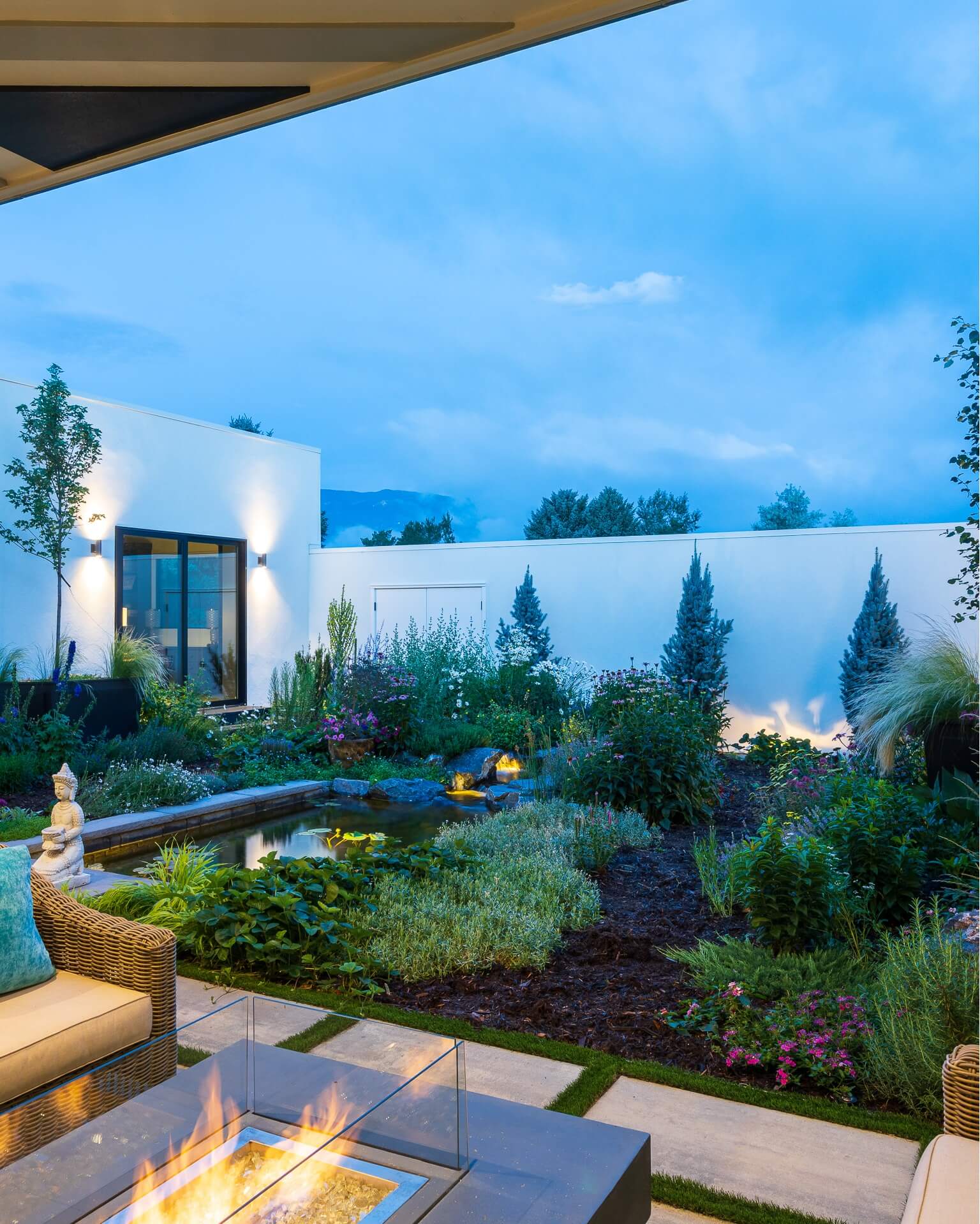
Turn your backyard pond into a productive ecosystem by integrating a compact aquaponics loop. Fish waste becomes plant food; plants return clean water to the pond. Start with a modest fish load—hardy goldfish or legally permitted species—and pump pond water into a media-filled grow bed (expanded clay or lava rock). Beneficial bacteria convert ammonia to nitrates, which leafy greens, basil, mint, and even strawberries devour. Gravity returns filtered water to the pond via a small spillway. Keep the system balanced: test for ammonia, nitrite, and nitrate weekly at first, feed fish lightly, and size filtration for at least the pond’s full volume per hour. A shade cloth over the grow bed prevents lettuce from bolting in summer, while a simple auto-siphon creates flood-and-drain cycles that boost oxygen at the roots. Add a mechanical prefilter (brushes or a settlement chamber) before the grow bed to capture solids, making maintenance quicker. Beyond fresh harvests, this hybrid water garden showcases closed-loop design—an eco-forward backyard pond idea that’s as tasty as it is beautiful.
Rock Grotto Waterfall with Fish Cave and Predator Protection
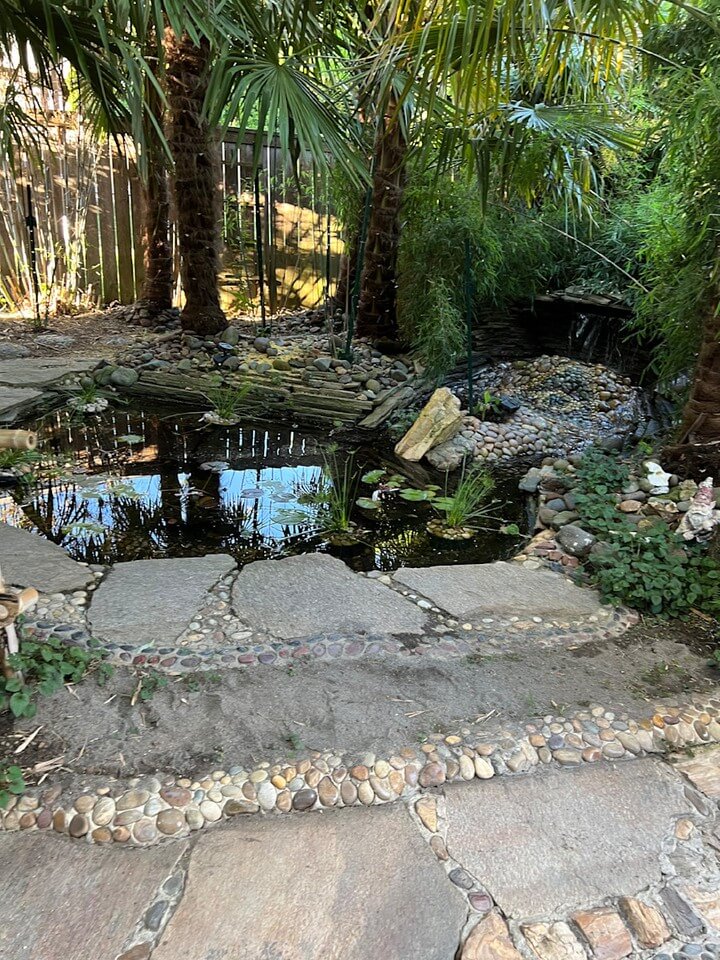
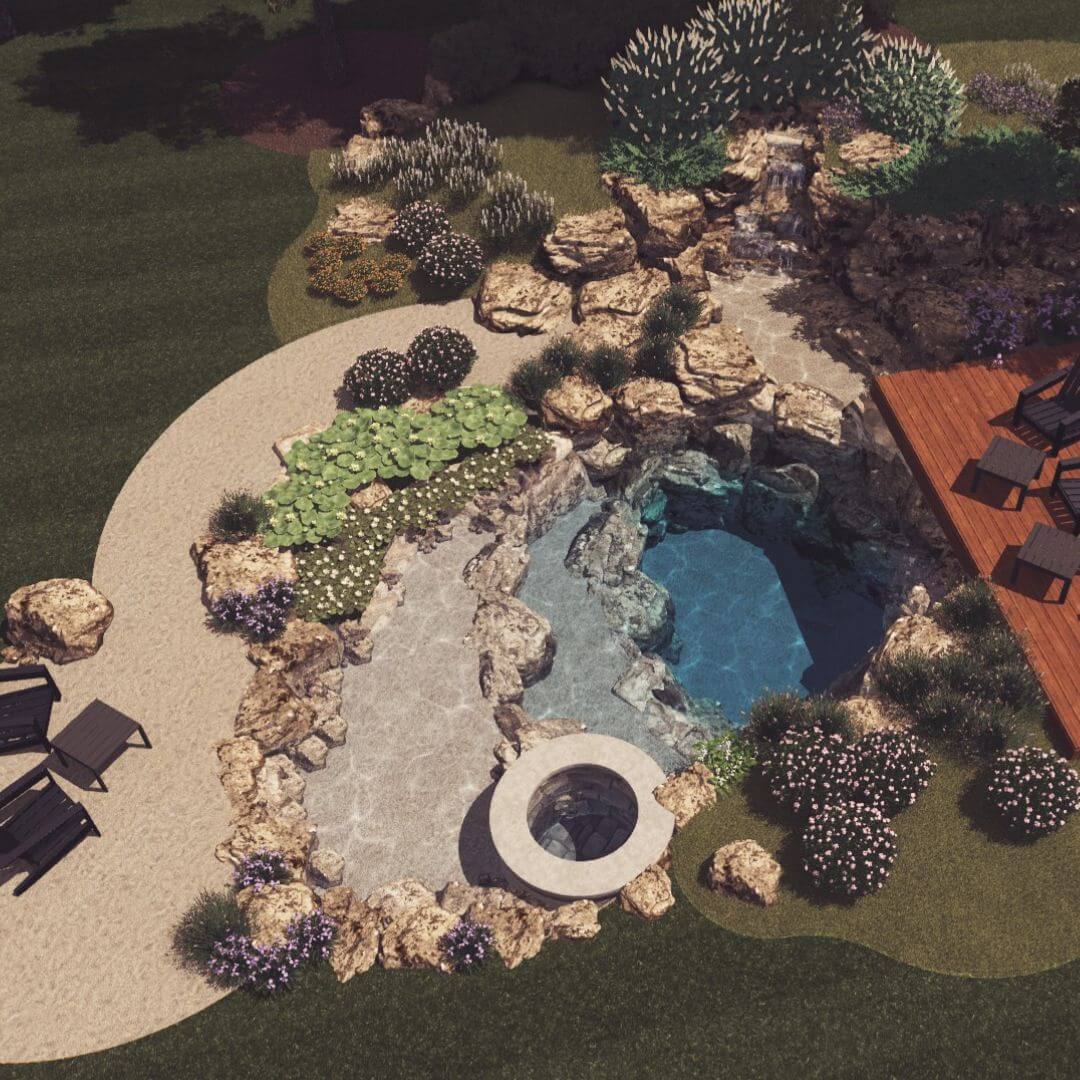
If you keep koi or shubunkins, design your waterfall as both a showpiece and a safe haven. A rock grotto—a stacked-boulder cascade with shaded recesses—creates aeration, white noise, and year-round visual interest while concealing a fish cave beneath. Build the grotto on solid footing with overlapping stone courses foamed and pinned for stability. Tuck a large-diameter PVC or concrete pipe under the falls and disguise its ends with cobbles; this becomes your predator-proof cave, giving fish a fast retreat from herons, raccoons, and overhead shadows. Aim for at least 3 feet of depth in the main pond and keep shelves narrow to discourage wading birds. A prefilter or skimmer feeding the falls reduces leaf debris and makes pump access easy. Vary the spill height and lip widths to tune sound from gentle burble to lively cascade, and flank the grotto with moisture-loving ferns and creeping jenny to soften the stonework. This backyard pond idea marries form and function—lush, layered rockwork that protects your fish and delivers that classic waterfall soundtrack.
Pergola-Shaded Pond Lounge for Dappled Light and Cooler Water
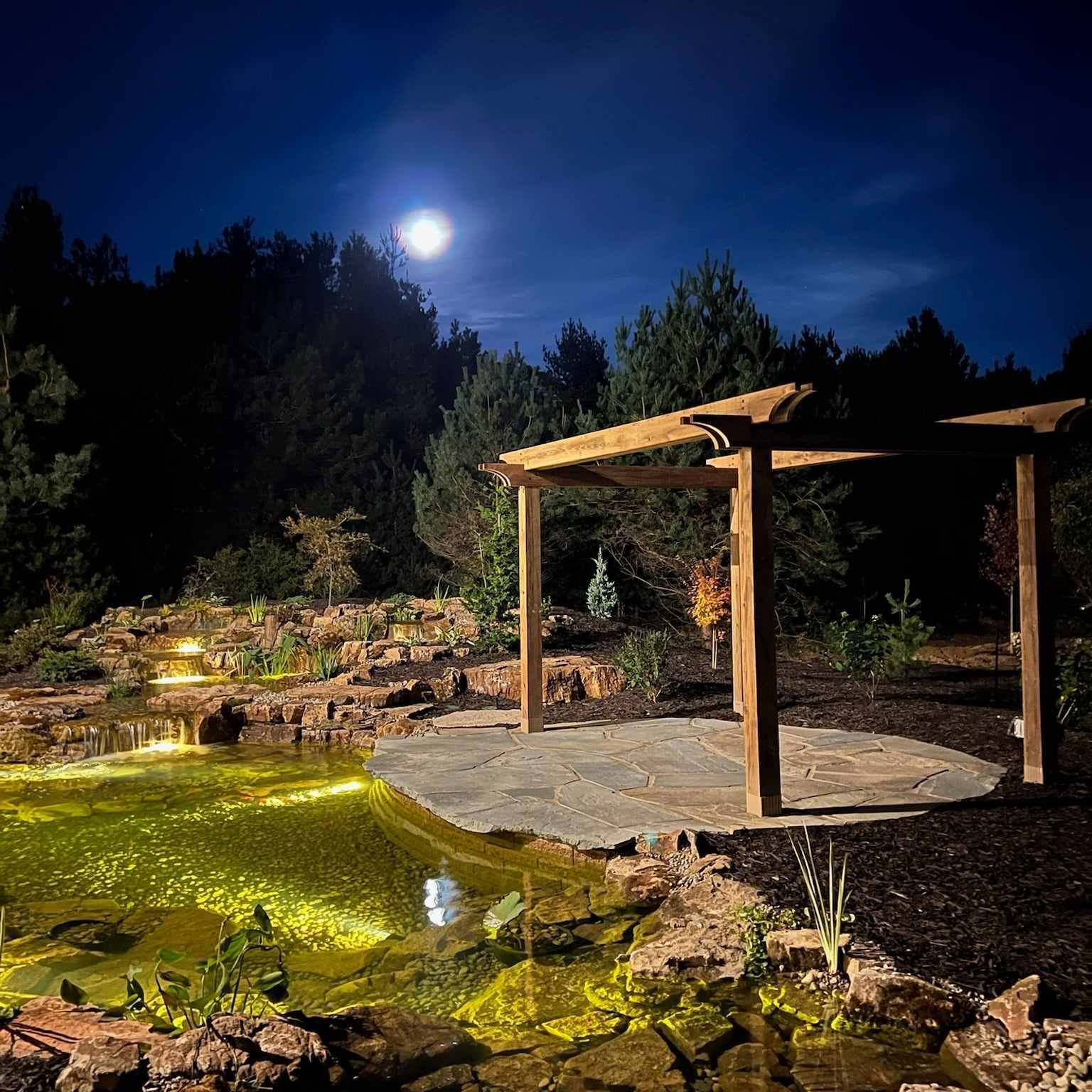
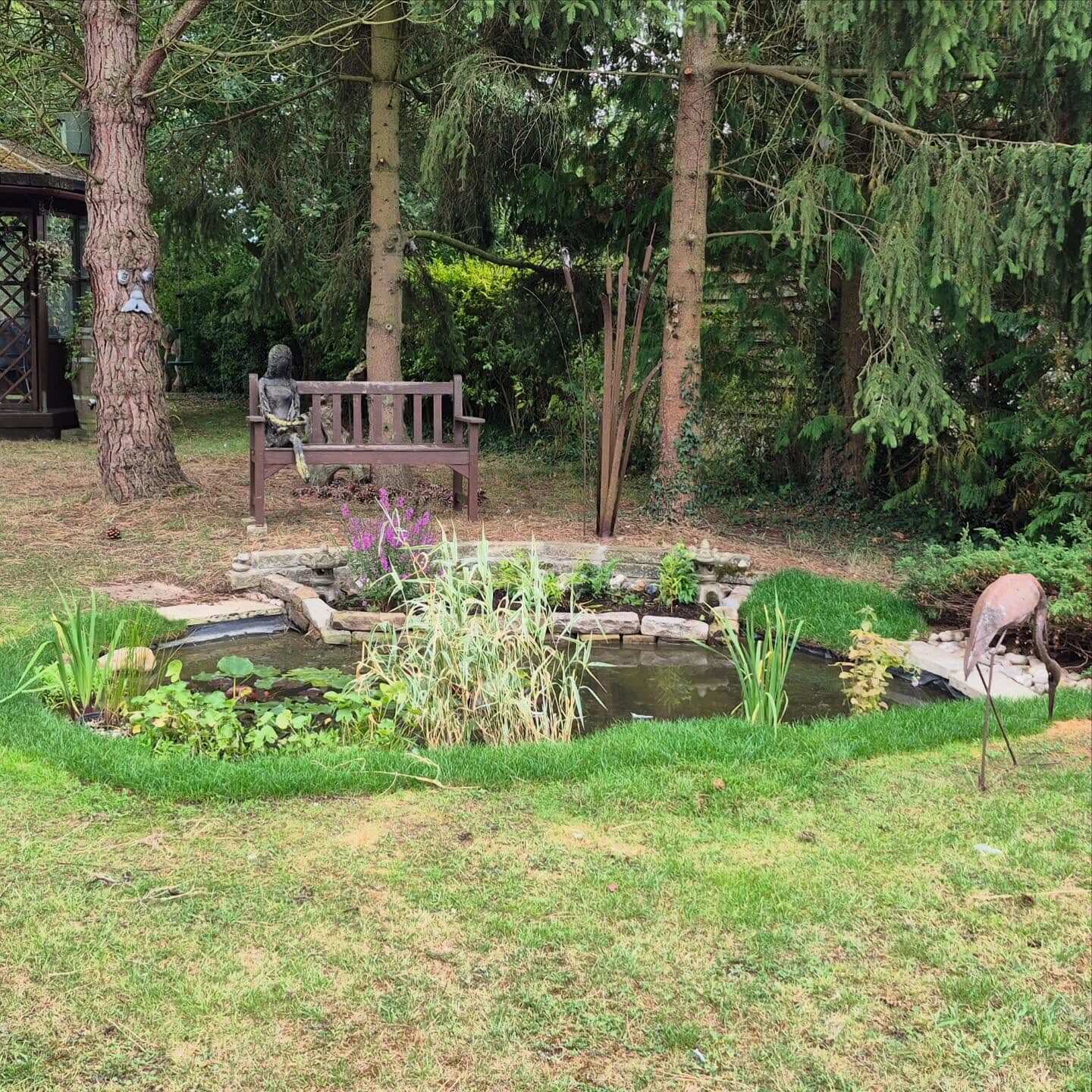
Combine shade, seating, and sound by spanning part of your water garden with a light pergola. Dappled shade keeps pond temperatures lower, slows algae growth, and makes midday lounging comfortable. Train fragrant climbers—jasmine, wisteria, or hardy grape—over the rafters, and position a small spill or bamboo spout nearby to amplify tranquility. Build smart around water: set pergola footings outside the liner envelope or use a cantilevered deck frame so you never puncture waterproofing. Stainless hardware, rot-resistant lumber, and a hidden gutter along one beam help manage splash and rain. For a cohesive feel, echo pond coping materials in the pergola posts or bench bases. Layer in textures with pendant lanterns, outdoor cushions, and a slim edge planter of bog-friendly sedges. At night, gentle downlights from the overhead beams create moonlit shimmer without glare. This shaded retreat adds a resort vibe to any backyard pond, extending the time you’ll actually sit, sip, and soak in the view.
Night Lighting Plan: Underwater LEDs, Downlights, and Path Glow
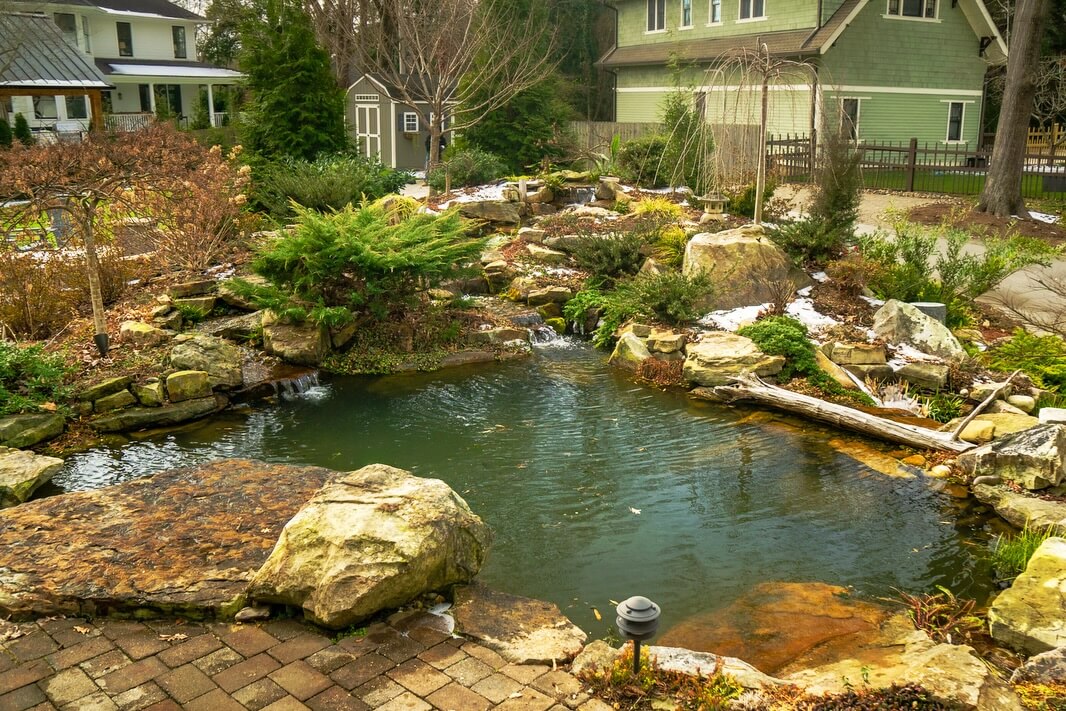
A thoughtful lighting plan turns a backyard pond into a twilight showpiece. Start with warm-white (2700–3000K) low-voltage LEDs for a natural look. Place one or two submersible fixtures to graze across your waterfall lip and highlight fish without blasting them with light. Tuck shielded downlights high in a tree or pergola to “moonlight” the water surface and create gentle, moving shadows on plants. Edge safety matters, so add low, glare-free path lights along approach routes and steps. Use cross-lighting sparingly to reveal depth; a single accent on a sculptural reed or rock is more effective than flooding everything. Keep fixtures accessible—mount underwater lights on weighted bases rather than burying them in stone—and route cables through conduit sleeves beneath coping. A smart transformer with astronomical timer and zones lets you dim the waterfall after bedtime while keeping paths lit. If you prefer off-grid, pair low-draw fixtures with a dedicated solar kit and battery. The right mix delivers ambiance, safety, and dramatic reflections without disturbing wildlife.
Safe Gravel Beach Entry and Shallow Shelf for Kids, Pets, and Pollinators
Create a welcoming, low-risk edge by shaping one side of your pond into a gentle beach entry that also doubles as prime wildlife habitat. Excavate a broad shelf with a 3:1 slope, line with underlayment and EPDM, then add a capillary block (a buried edging or cap stone) to keep surrounding soil from wicking water. Top with 2–3 inches of rounded river gravel—no sharp crushed stone—for barefoot comfort. This shallow zone invites birds, butterflies, and bees to sip safely while giving kids and dogs an easy place to splash. Plant in layers: water forget-me-not and creeping jenny for the wet gravel, with dwarf rushes and blue-eyed grass on the outer margins. Keep the beach opposite your skimmer to funnel floating debris across open water. For clarity, vacuum or rake detritus seasonally and refresh the top layer of gravel as needed. This universally accessible backyard pond idea adds sparkle, softens hard edges, and turns the shoreline into a living, dynamic transition.
Rain Garden Overflow and Dry Creek to Manage Storm Surges
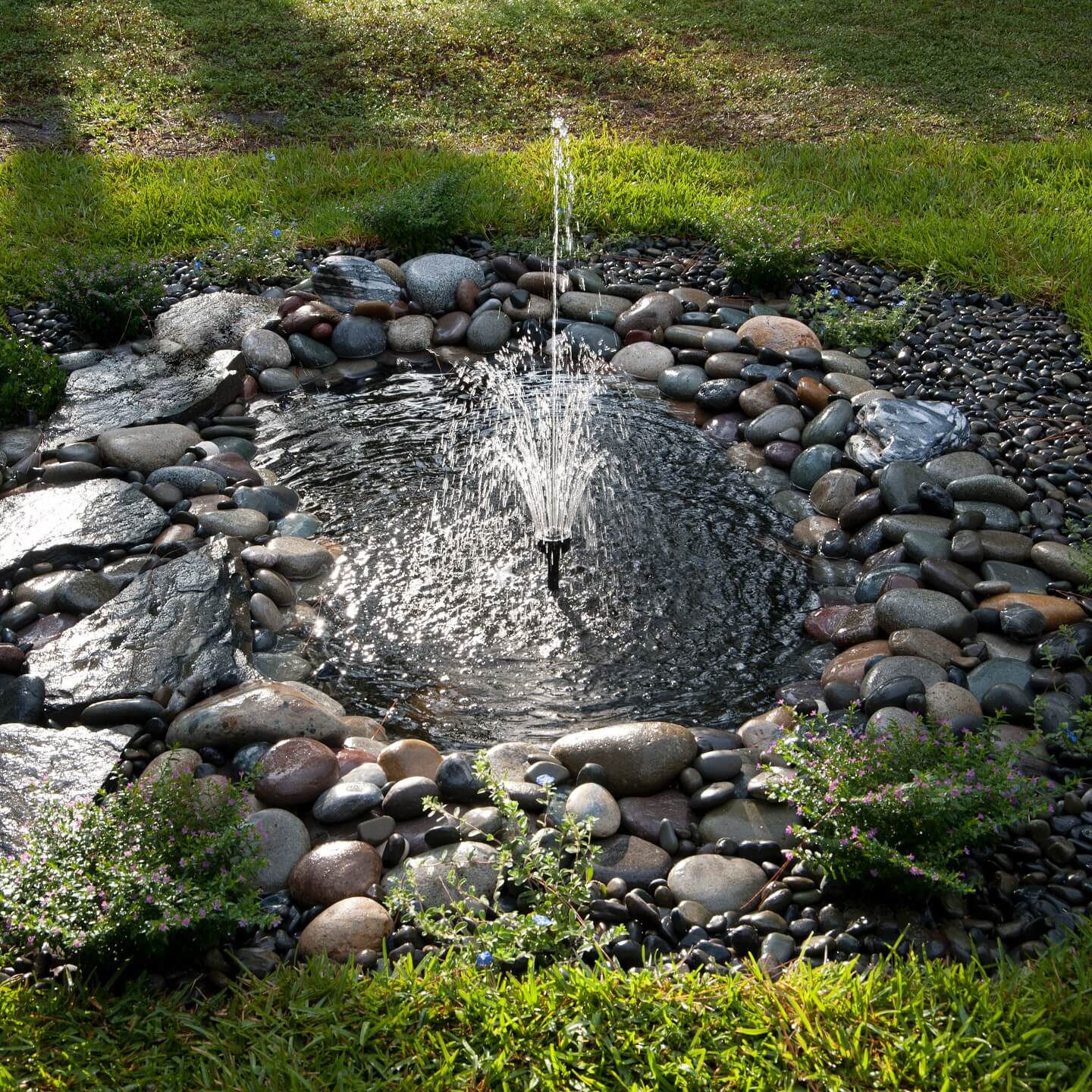
Pair your pond with a planted rain garden and dry creek to handle heavy downpours gracefully. Every water feature needs a safe overflow path; shaping a shallow swale lined with river rock creates an “armored spillway” that carries excess water away from structures. Direct that flow into a rain garden basin amended with compost and sand for quick infiltration. Plant the bowl with tough natives—blue flag iris, swamp milkweed, joe-pye weed, and sedges—that thrive in both wet and dry cycles, boosting biodiversity and pollinator support. Hide a perforated drainpipe beneath the dry creek to move extreme flows without erosion, and size the spillway for your local design storm. A discreet check dam or two slows water, and a level spreader at the basin edge prevents gully formation. This hydrology-smart backyard pond idea protects your landscape, recycles roof runoff, and keeps your main pond level and clear after storms—beauty with built-in resilience.
Get the Fail-Safe Paint Color Playbook (Free PDF)
36 proven colors • 8 ready palettes • trim & sheen guide • printable testing cards.
Pond Window or Viewing Panel for Immersive Fish Watching
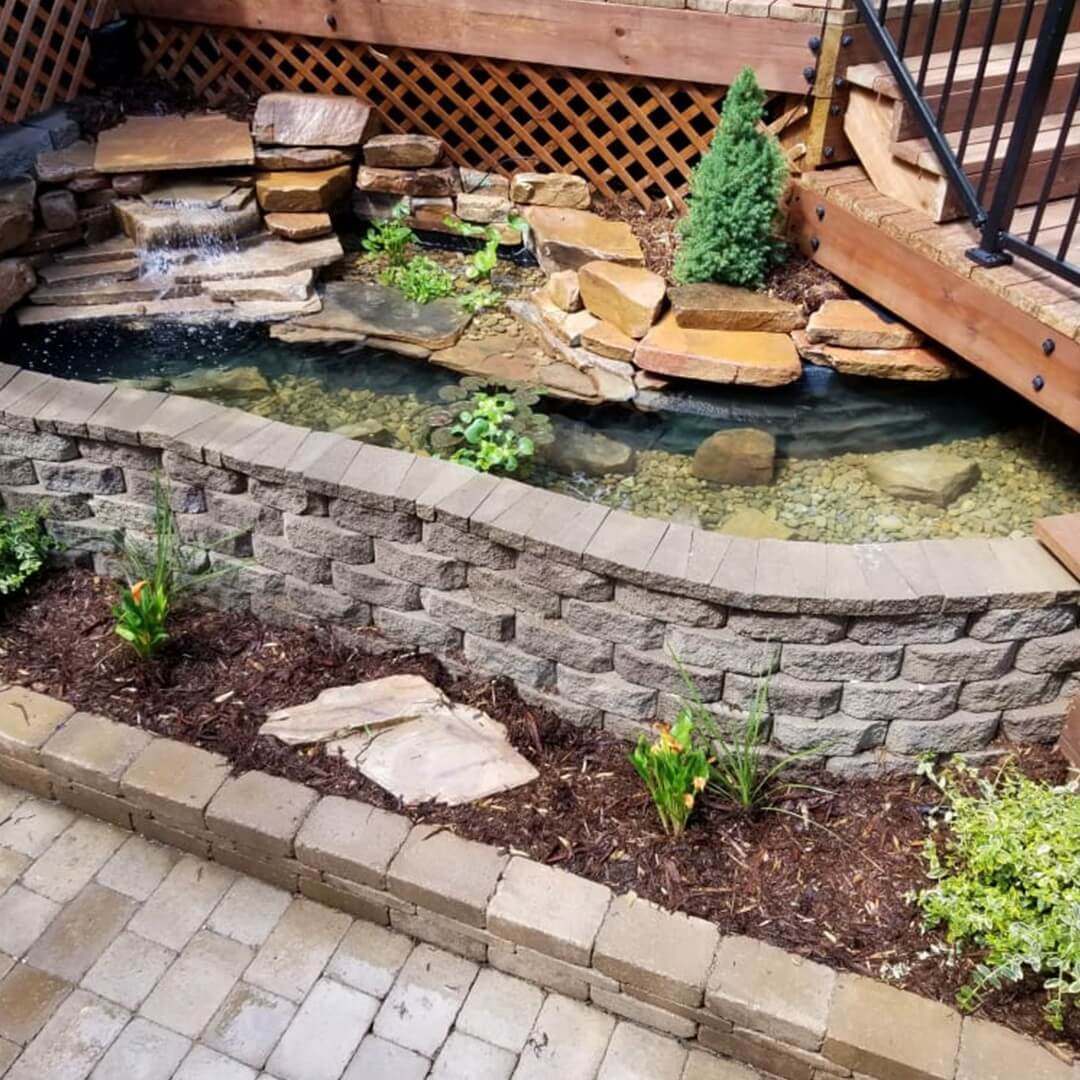
Add an unforgettable twist to your backyard pond with a built-in viewing window. A tempered, laminated glass or thick acrylic panel set into a reinforced frame lets you watch fish glide by at eye level—especially fun beside seating or along a path. Engineer the opening carefully: support vertical loads with steel or concrete, compress a marine-grade gasket around the pane, and use pond-safe sealant on the wet side. Keep the bottom of the window below the typical ice line in cold climates, and position a return jet nearby to prevent debris from settling against the glass. A slim ledge outside the panel makes cleaning easy with a magnetic scraper. For aesthetics, hide the frame with stone cladding and plant low marginals to avoid blocking the view. Combine with soft lighting under the sill for night viewing. This feature turns a simple water garden into a living gallery, deepening your connection to the aquatic world without disturbing the pond’s natural vibe.
Floating Plant Islands and Lily Canopy for Natural Shade and Algae Control
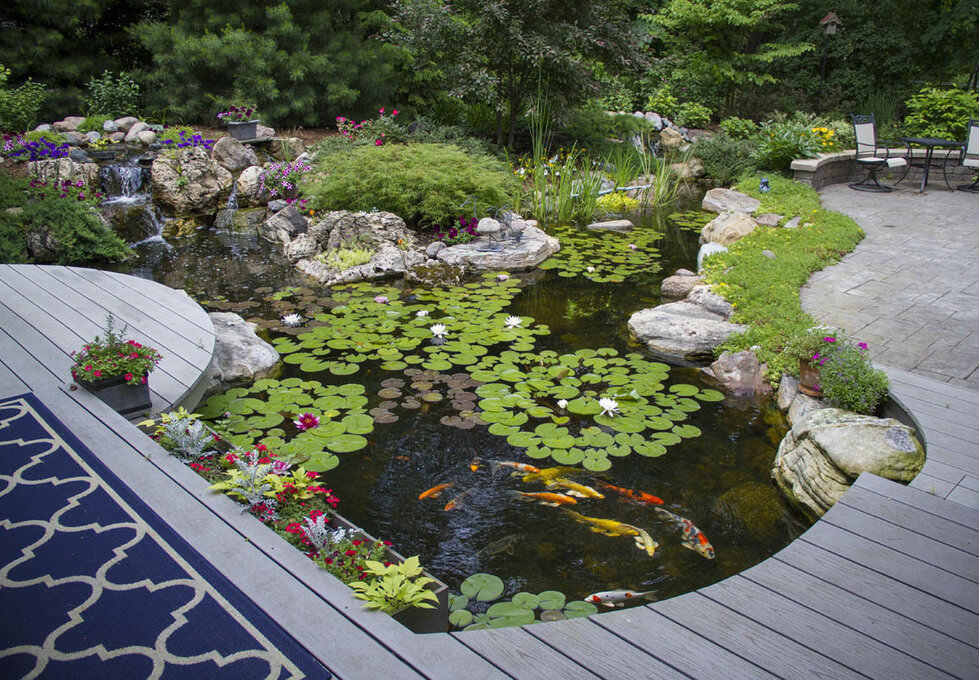
If your pond bakes in full sun, a living canopy is your most beautiful algae control. Hardy water lilies spread broad pads that cool the surface, while modular floating plant islands sip excess nutrients before algae can. Aim to shade 40–60% of the surface at summer peak; this sweet spot keeps oxygen levels healthy and water crystal-clear without smothering circulation. Build islands with coir baskets or perforated planters wrapped in burlap and supported by closed-cell foam. Plant with regionally appropriate, non-invasive choices such as pickerel rush, blue flag iris, marsh marigold, dwarf sweet flag, and swamp milkweed for pollinators. For fish ponds, protect roots in mesh pots so koi can graze foliage without uprooting entire clumps. Tether islands with clear line so they drift but stay clear of the skimmer intake and waterfall spillway. Pair the canopy with steady aeration and a right-sized pump to keep water moving. The payoff is multifold: cooler, calmer water; fewer string algae blooms; refuge for fry and dragonflies; and a painterly surface that reflects sky and leaves. It’s an elegant, low-tech upgrade that aligns with a naturalistic backyard pond design.
Hidden Equipment Hub: Skimmer, Biofalls, and Auto-Fill for Effortless Clarity
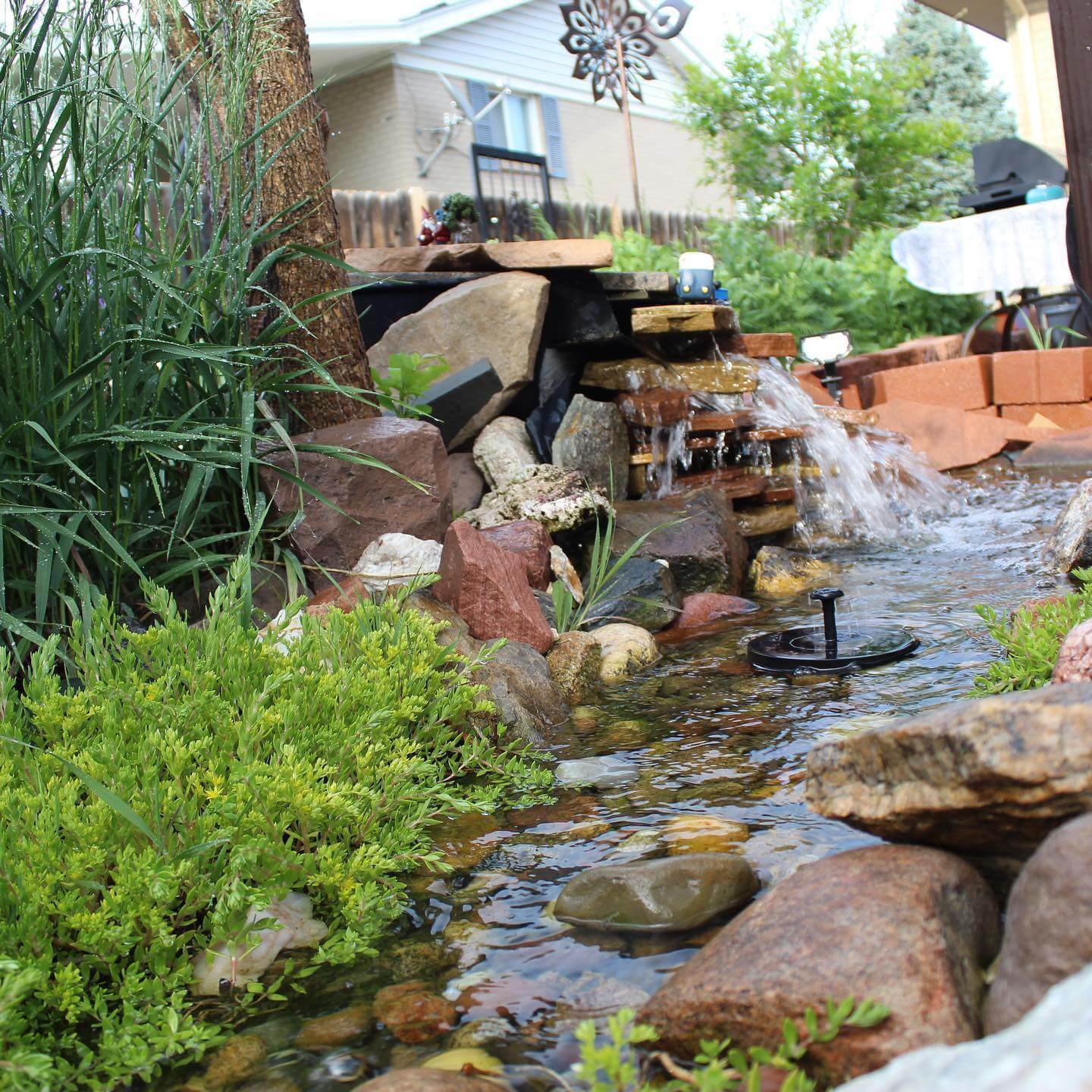
Picture-perfect ponds look “set-and-forget” because the hard-working gear is tucked away and thoughtfully sized. Place a skimmer on the downwind edge and a biofalls or filter weir opposite to establish a gentle, circular current that sweeps leaves off the surface. Use 2-inch flex PVC to minimize friction loss, a check valve to prevent drain-back, and a ball valve to fine-tune flow. As a rule of thumb, turn the pond volume 1–2 times per hour, adjusting for head height and waterfall width. House valves, unions, and an energy-efficient asynchronous pump in a discreet equipment vault beneath decking or behind a boulder, and run power on a GFCI-protected circuit. Add an auto-fill tied to your irrigation line with a pressure regulator and backflow preventer, plus an overflow to your rain garden so storm surges don’t muddy the water. Weekly, empty the skimmer basket and rinse filter mats; seasonally, flush lines and inspect fittings. In cold climates, add an aerator 18–24 inches deep to keep a gas-exchange hole through ice. By hiding the mechanics and planning service access, you’ll enjoy a clear, low-maintenance backyard water feature that sounds great and stays balanced through the seasons.
Backyard Koi Pond Ideas: Deep-Water Design, Reliable Filtration, and Low-Maintenance Upgrades
Koi thrive in deeper water, so aim for at least 3–4 feet in mild climates and 4–6 feet where winters are harsh. Include varied depths, with calm zones and sweeping currents for exercise. A bottom drain and surface skimmer working together remove heavy and floating debris before it rots. Route plumbing to an accessible filter bay with dry footing and weather protection for year-round maintenance. Keep hardscape edges slightly raised to prevent runoff contamination during storms.
Design for a full turnover every 60–90 minutes using an energy-efficient pump sized to real-world head height. Pair mechanical pre-filtration—sieve, drum, or brushes—with biological stages such as moving-bed media or a planted bog. Add a UV clarifier to control green-water blooms without chemicals. Return flow via a broad waterfall or low-velocity jets to eliminate dead spots and boost oxygen. Include an air pump for redundancy and temperature resilience during summer heat or winter icing.
Feature Checklist:
- Install an aerated bottom drain that sweeps debris toward pre-filtration, reducing mulm buildup, improving oxygenation at depth, and significantly cutting manual vacuuming time on busy weeks.
- Add a raised viewing window in one wall to enjoy underwater behavior, encourage gentle interaction from a seated bench, and create a showpiece for guests without leaning over edges.
- Use an automatic top-off with a float valve and an overflow routed to a rain garden, stabilizing water level, protecting pumps, and managing storm surges sustainably.
- Combine rock overhangs, fish caves, and nearly invisible low-profile netting to deter herons and raccoons while maintaining clean sightlines and a refined garden aesthetic.
Keep koi health front-and-center with consistent routines and clear metrics. Test ammonia, nitrite, nitrate, KH, and pH weekly, logging results to spot trends before problems appear. Feed high-quality, seasonally appropriate diets, tapering in cool weather as metabolism slows. Perform small, frequent water changes and rinse mechanical filters with pond water to preserve biofilms. In winter, maintain an opening in the ice with an aerator or de-icer, and always quarantine new fish before introduction.
Quick Answers for Your Water-Garden Game Plan
How much does a backyard pond cost to build?
Small DIY liner ponds often start around a few hundred dollars in materials, while professionally built koi systems can reach several thousand. Depth, filtration complexity, rockwork, and lighting drive most cost differences.
Will a pond attract mosquitoes?
Proper circulation and aeration drastically reduce mosquito breeding. Add mosquito dunks with Bti or a few appropriate fish where allowed, and avoid stagnant plant containers nearby to keep populations down.
Get the Fail-Safe Paint Color Playbook (Free PDF)
36 proven colors • 8 ready palettes • trim & sheen guide • printable testing cards.
What size pump do I need?
Target a complete water turnover every 60–90 minutes, accounting for head height and filter resistance. Choose an efficient variable-speed pump and verify real flow using manufacturer curves, not just nominal ratings.
Are ponds safe for kids and pets?
Design with shallow shelves, grippy pathways, and clear sightlines from the house. Consider a perimeter fence, locking gate, or a raised/container pond if supervision is limited or space is exceptionally tight.
Final Verdict: Your Blueprint for a Peaceful, Low-Maintenance Backyard Pond
Whether you’re dreaming of a rock-edged cascade, a mirror-still reflecting pool, or a compact container feature on the patio, the best backyard pond ideas work because they match your space, budget, and maintenance goals. Prioritize scale and placement first, then layer on edges, planting, and sound. From koi-ready depths to pondless waterfalls and stock tank builds, there’s a solution for tight side yards, sunny lawns, and shaded garden rooms alike.
Turn inspiration into action by sketching the footprint, testing sun and sightlines, and choosing a liner or preformed shell that fits your plan. Size the pump to your feature, tuck a skimmer and biofalls or an upflow bog filter out of sight, and use aquatic plants, lily shade, and marginal shelves to keep water clear and living. Finish with subtle lighting and comfortable seating so the feature invites you out morning to night—and feels effortless to enjoy.
Think in phases if needed: start with a simple basin and quiet spillway, then add a stream runnel, rain-chain feed, or pergola shade as time and budget allow. Build for resilience with a rain garden overflow, safe shallow entries for kids and pets, and seasonal care that keeps your pond thriving year-round. Choose one idea that fits your yard today, break ground, and let water, light, and movement turn your outdoor space into a calm, enduring retreat.