
25+ Dining Room Mirror Ideas to Double the Light, Open Up Space, and Elevate Every Meal
Want an instant dining room glow-up? A well-placed mirror can bounce natural light, make a small dining room feel larger, and add a polished focal point that ties your decor together—no remodel required. Whether you host big dinner parties or intimate weeknight meals, the right mirror transforms the mood.
In this guide to dining room mirror ideas, you’ll find smart ways to use oversized statement mirrors, round mirrors, antique-gilt frames, sleek black metal designs, and windowpane styles to suit modern, farmhouse, coastal, and classic interiors. We’ll cover placement tricks—from centering a mirror over a sideboard to positioning it opposite a window or chandelier for maximum sparkle.
Get the Fail-Safe Paint Color Playbook (Free PDF)
36 proven colors • 8 ready palettes • trim & sheen guide • printable testing cards.
You’ll also get practical tips on scale, proportion, and mounting height, plus how to layer mirrors with sconces, art, and console styling. Expect ideas for gallery walls, pairs of mirrors flanking a buffet, and leaners that add depth without clutter. Ready to reflect more style, light, and ambiance in your dining room? Let’s begin.
Dining Room Wall Mirrors: Frame Styles, Shapes, and Sizing Guide
Choosing the right dining room wall mirror starts with frame style, which should coordinate with hardware, lighting finishes, and chair legs for a refined, intentional mix. Shapes set the mood: round encourages softness and conversation, rectangles provide structure, and arches introduce architectural grace. Materials matter, too; wood warms modern rooms, metal sharpens traditional settings, and acrylic frames keep small spaces visually light. Consider visual weight as much as dimensions; a chunky frame reads larger than a slim profile of the same size. Finally, match the mirror’s vibe to your tablescape—sleek bevels for crystal and chrome, or hand-carved details for linens, brass, and heirloom china.
- Ornate brass frame: Introduce old-world glamour with a beveled, gilded frame that echoes chandelier finishes and elevates traditional tablescapes without overpowering contemporary chairs or minimalist place settings.
- Black metal grid: Channel industrial-luxe vibes; its windowpane pattern adds structure, balances rustic woods, and repeats linear lines from mullions, shelving, or paneled walls for cohesive, architectural rhythm.
- Oversized round mirror: Soften sharp dining angles, echo circular tabletops, and distribute light evenly; a slim frame keeps focus on reflection while maintaining visual breathing room in compact spaces.
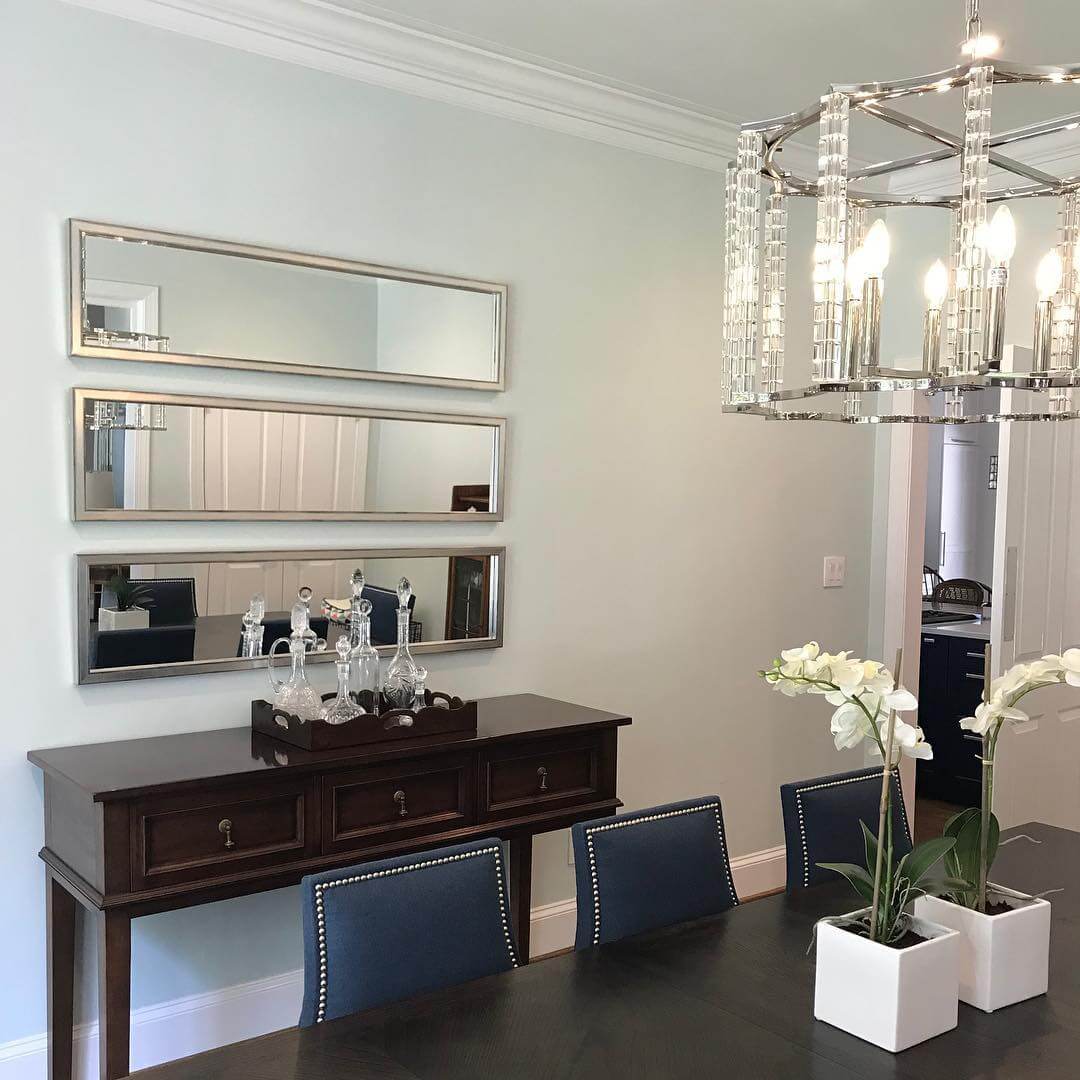
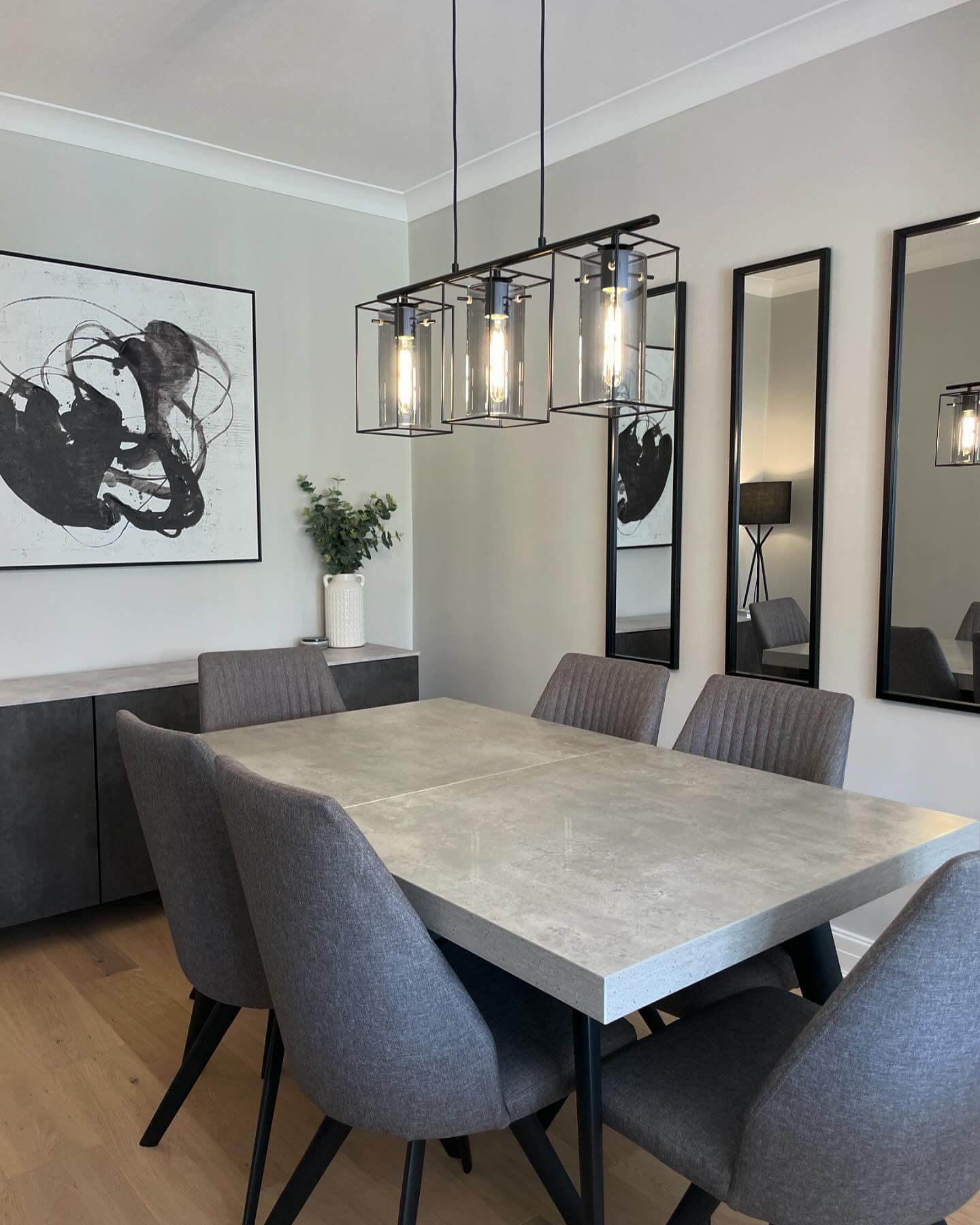
- Triptych panels: Hang three slim mirrors above a buffet to extend sightlines, reduce wall heaviness, and create rhythmic repetition that complements chair backs and chandelier arms beautifully.
- Organic asymmetrical shape: Introduce movement with a freeform silhouette that breaks up strict geometry, ideal over rectilinear sideboards and perfect for modern, Scandinavian, or Japandi dining schemes.
- Antiqued patina glass: Add depth with subtle foxing that mutes reflections, softens glare, and lends vintage character while still brightening the room when paired with candles or sconces.
Use proportion rules to nail scale: a mirror above a sideboard should measure about two-thirds to three-quarters the furniture width. For round mirrors, 30 to 42 inches suits most dining walls without crowding moldings. Hang 6 to 8 inches above the buffet top so serving space feels open while the reflection remains useful. Keep the mirror’s top around 72 to 78 inches from the floor to align with typical sightlines and adjacent artwork. When mixing with art, maintain consistent spacing and shared finishes so the wall reads as a curated composition, not a collage.
Go Big: An Oversized Mirror That Doubles the Daylight
If your dining room needs more light and presence, a single oversized mirror delivers both in one move. Choose the largest scale your wall can support—ideally two-thirds to three-quarters the width of your table or sideboard—so the mirror reads as architecture, not an accessory. Mount it to capture a window’s view or your chandelier’s sparkle, and you’ll instantly brighten mealtimes while adding luxurious depth.
Keep the sightline clean: center the mirror at eye level (around 57–60 inches from the floor to the middle) so reflections feel intentional, not accidental. A simple frame in wood, brass, or slim black metal prevents visual clutter and plays nicely with mixed finishes. For narrow rooms, a tall rectangular profile visually raises the ceiling; in wider spaces, a generous horizontal shape stretches the room.
Finish the vignette with balanced styling on the console—low florals, a pair of lamps, and textural trays—so the reflection looks styled from every angle. Use a French cleat or safety anchors to secure heavy mirrors, especially in high-traffic dining zones.
Center a Round Mirror Over the Sideboard
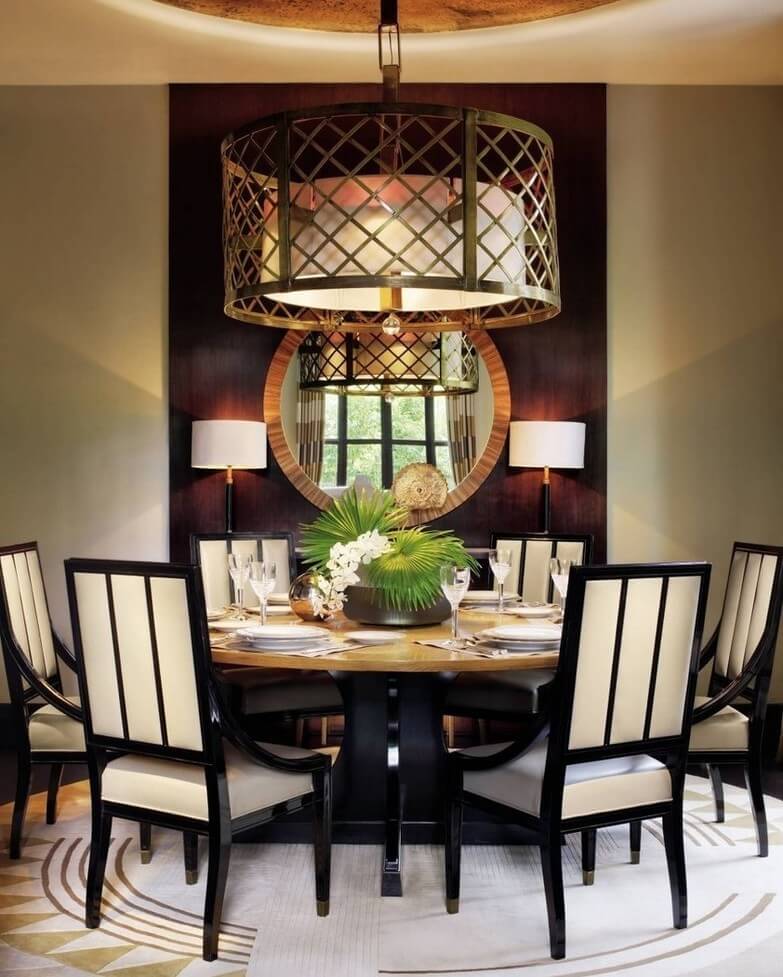
A round dining room mirror softens straight architectural lines and instantly creates a polished focal point above a buffet or console. Aim for a diameter that’s roughly half to two-thirds the width of your furniture piece; that scale keeps the composition grounded and elegant. Rounded forms also complement curved-back dining chairs and drum-shade pendants, creating a cohesive rhythm.
To maximize light, position the mirror to catch a pendant or chandelier glow. Layer a pair of slender candlesticks or buffet lamps on either side for symmetrical sparkle, and keep center styling low—think a bowl, runner, or stacked books—so the circular silhouette shines. If your palette leans warm, brass or champagne frames add welcoming warmth; for a cooler, modern edge, choose matte black or pewter.
Round mirrors are forgiving in mixed-style rooms: they bridge rustic woods, modern metal chairs, and classic wainscoting with ease. Hang the mirror a few inches above the console to create breathing room, and keep the overall vignette within the wall’s center third so it feels purposeful, not floating. The result is a timeless, photo-ready dining moment.
Add Architecture with a Windowpane Mirror
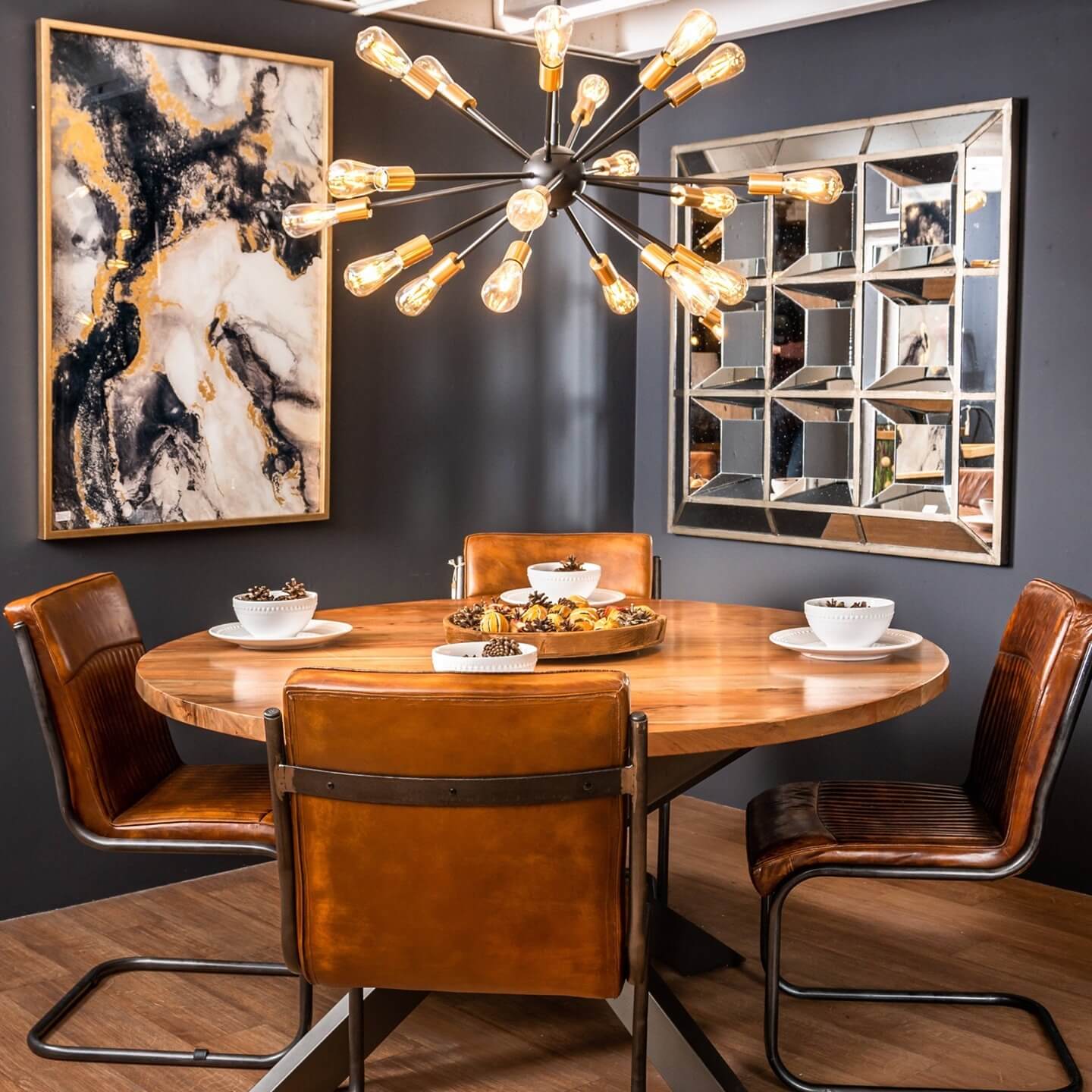
Windowpane mirrors bring instant structure to a dining room, introducing the look of mullions without a renovation. Their gridded lines amplify natural light while giving farmhouse, industrial, or Parisian vibes—depending on frame finish. Use one above a sideboard to echo nearby windows, or lean an extra-tall version to elongate a short wall.
Let proportion guide placement: if your ceiling is high, a taller grid enhances the verticals; in wider spaces, a broader multi-pane mirror balances long tables. Align the “mullions” with real window heights when possible—this trick helps the mirror read as an architectural element rather than decor.
For styling, keep the surface below clean and linear: low greenery, linen runners, and stackable serveware reinforce the crisp geometry. Black metal frames create striking contrast with light walls and linen upholstery; distressed white or natural wood softens the look for cottage or coastal dining rooms. At night, the panes double candlelight and chandelier shimmer, turning simple suppers into atmospheric gatherings. Bonus: a windowpane mirror subtly disguises visual clutter by breaking reflections into smaller, more artful segments.
Layer Patina with an Antique Gilt or Trumeau Mirror
If you crave timeless character, a gilt or trumeau-style dining room mirror adds history and glow in one piece. The warm, mellow sheen of aged gold flatters candlelight and brass flatware alike, while carved details or painted panels bring Old World charm to even the newest build. Hang it above a console with marble or wood grain to contrast textures and elevate everyday tablescapes.
Get the Fail-Safe Paint Color Playbook (Free PDF)
36 proven colors • 8 ready palettes • trim & sheen guide • printable testing cards.
Scale smartly: traditional trumeau mirrors are tall, making them ideal for rooms with crown molding or wainscoting—they accentuate vertical lines and create balance. Let the patina lead your metal mix; pair with antique brass sconces or a muted chandelier finish so nothing feels too shiny or new. Keep tabletop elements refined and edited: a linen runner, a single urn, or a pair of crystal lamps to refract gentle light.
These mirrors thrive on layered backdrops—grasscloth, moody paint, or paneling—where their depth reads beautifully. The effect is refined but inviting, perfect for slow dinners and special occasions. With one piece, you gain a focal point, a conversation starter, and an elegant way to bounce warm light across the room.
Modern Contrast with a Black-Arched Mirror
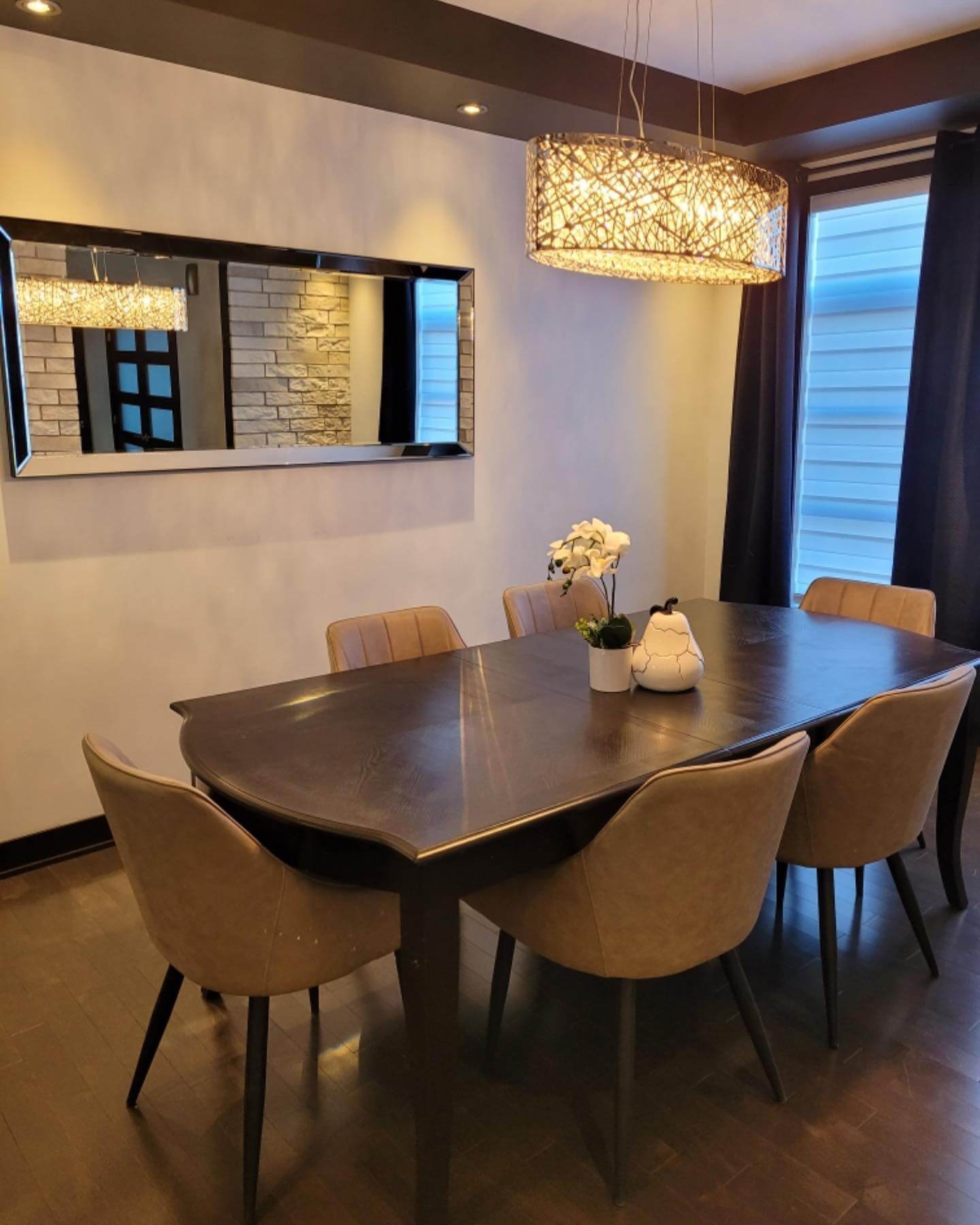
A black-arched dining room mirror strikes that sweet spot between modern minimal and classic curve. The arch softens angular furniture and doorways, while the matte black frame outlines the reflection like artwork—especially effective on light walls or plaster finishes. Use it to anchor a contemporary dining set, or to sharpen a traditional room with fresh contrast.
Mind the curve’s echo: pair with rounded-back chairs, a dome pendant, or arched millwork to create visual harmony. For balance, style the console in horizontal layers—books, trays, or a low sculptural bowl—so the eye reads a composed vignette beneath the arc. If your dining room is narrow, an extra-tall arch draws the gaze upward, making ceilings feel higher.
Black metal integrates seamlessly with mixed metals; just repeat the tone once or twice (cabinet pulls, lamp bases) so it feels intentional. At night, an arched mirror neatly frames a chandelier’s reflection, concentrating sparkle in a way a rectangle can’t. The net effect is refined yet approachable—an elegant touch that grounds the room while brightening it.
Double Up: Flank the Buffet with a Symmetrical Pair
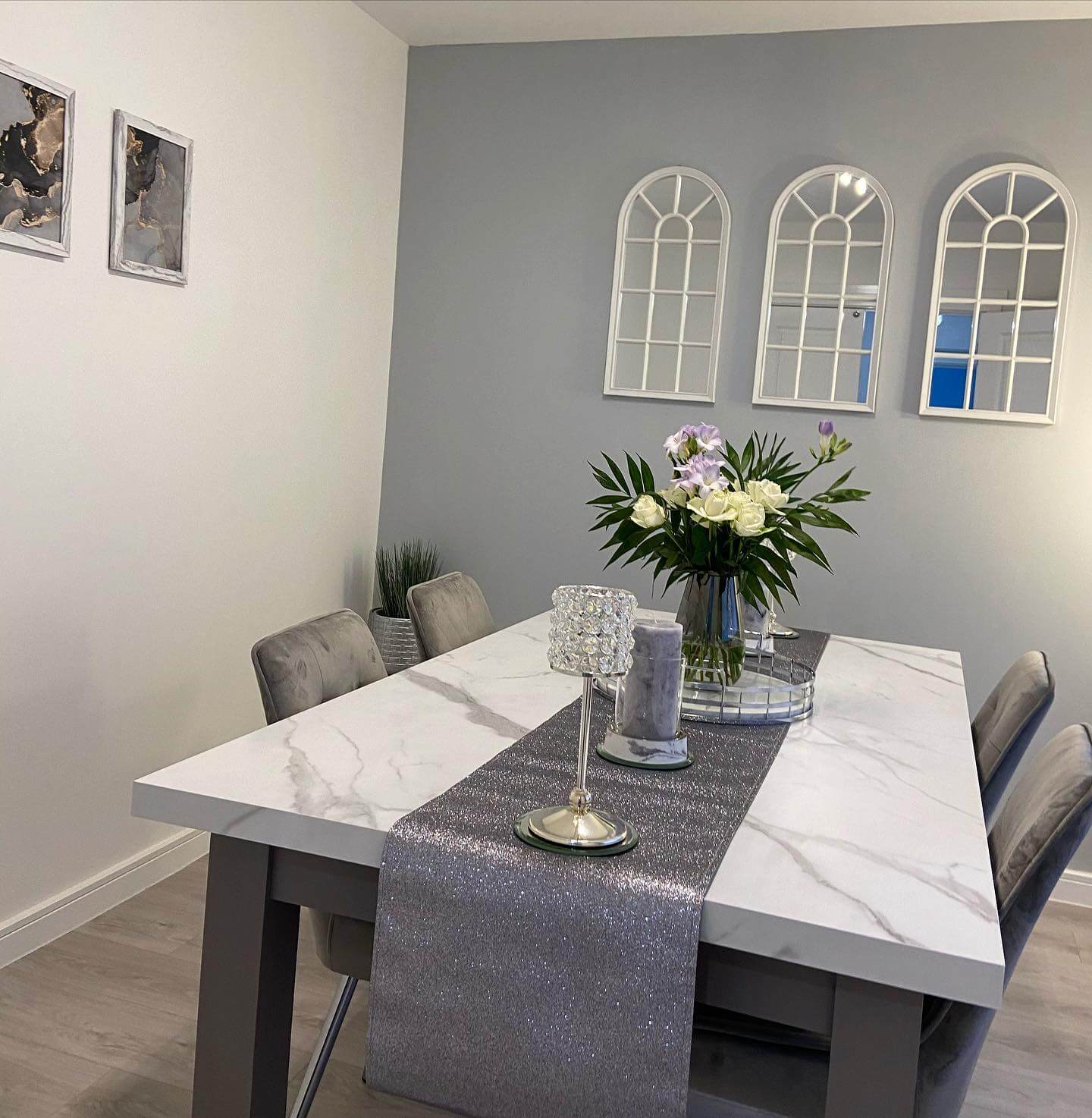
Two mirrors flanking a buffet create a stately rhythm that rivals built-in paneling. This symmetrical approach widens the visual footprint of your dining room and evenly distributes light from sconces, candles, or a chandelier. Choose pairs with matching frames for a tailored look, or vary finishes subtly (e.g., brass next to wood) to layer interest without noise.
Spacing matters: align each mirror’s center with the outer thirds of the console or buffet so the composition breathes. Keep a low centerpiece—a bowl, a floral arrangement, or stacked platters—between them to reinforce the axis. If ceilings are tall, opt for elongated mirrors to emphasize verticals; in standard-height rooms, medium rectangles keep sightlines open.
This setup is especially effective opposite a window or French doors—the reflections multiply greenery and natural light for an indoor-outdoor feel. It’s also hosting-friendly: surfaces stay functional while the wall treatment feels styled and complete. Add dimmers for evening glow and you’ll have a dining zone that feels thoughtful from every seat at the table.
Bounce Sunlight: Position a Mirror Opposite a Window
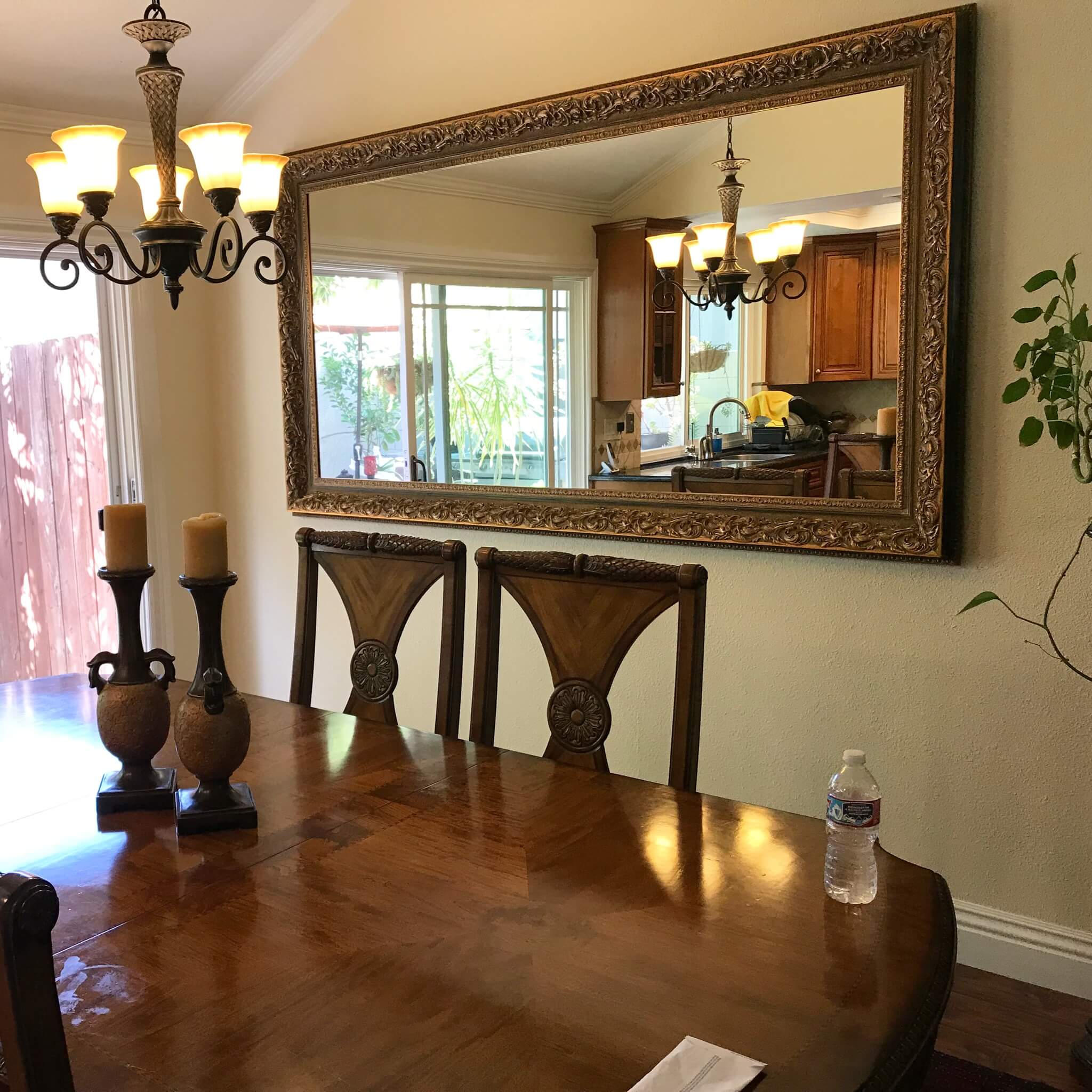
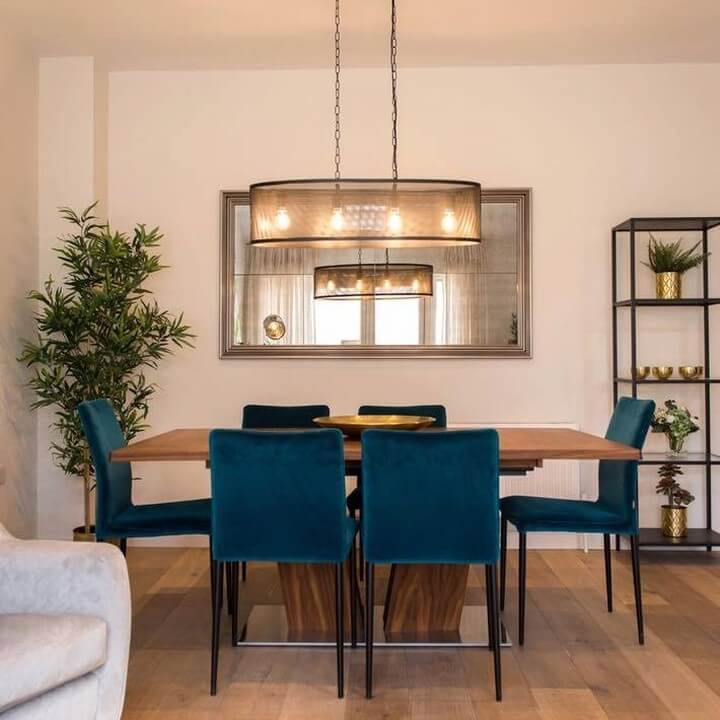
One of the most impactful dining room mirror ideas is deceptively simple: place a mirror directly across from a window. This doubles daylight, softens shadows, and extends views—especially helpful in urban spaces or rooms with limited natural light. Choose a frame that blends with your trim or furnishings so the “borrowed” vista reads as part of the architecture.
Angle the mirror slightly if glare is an issue, and layer sheer curtains on the window to diffuse harsh light while keeping the glow. If privacy is a concern, a lightly antiqued mirror blurs details but still amplifies brightness. At night, that same mirror captures candlelight and chandelier sparkle, creating a cozy, jewel-box mood.
Complement the reflection with organic textures underfoot or on the table—linen, rattan, wood grain—so the brightened room still feels grounded. Keep nearby art simple to avoid visual competition, and watch your centerpiece height; you want the reflected window to remain visible above florals. This is a low-lift, high-return placement strategy you can implement in minutes.
Get the Fail-Safe Paint Color Playbook (Free PDF)
36 proven colors • 8 ready palettes • trim & sheen guide • printable testing cards.
Hotel-Level Ambience: Mirror + Sconce Layering
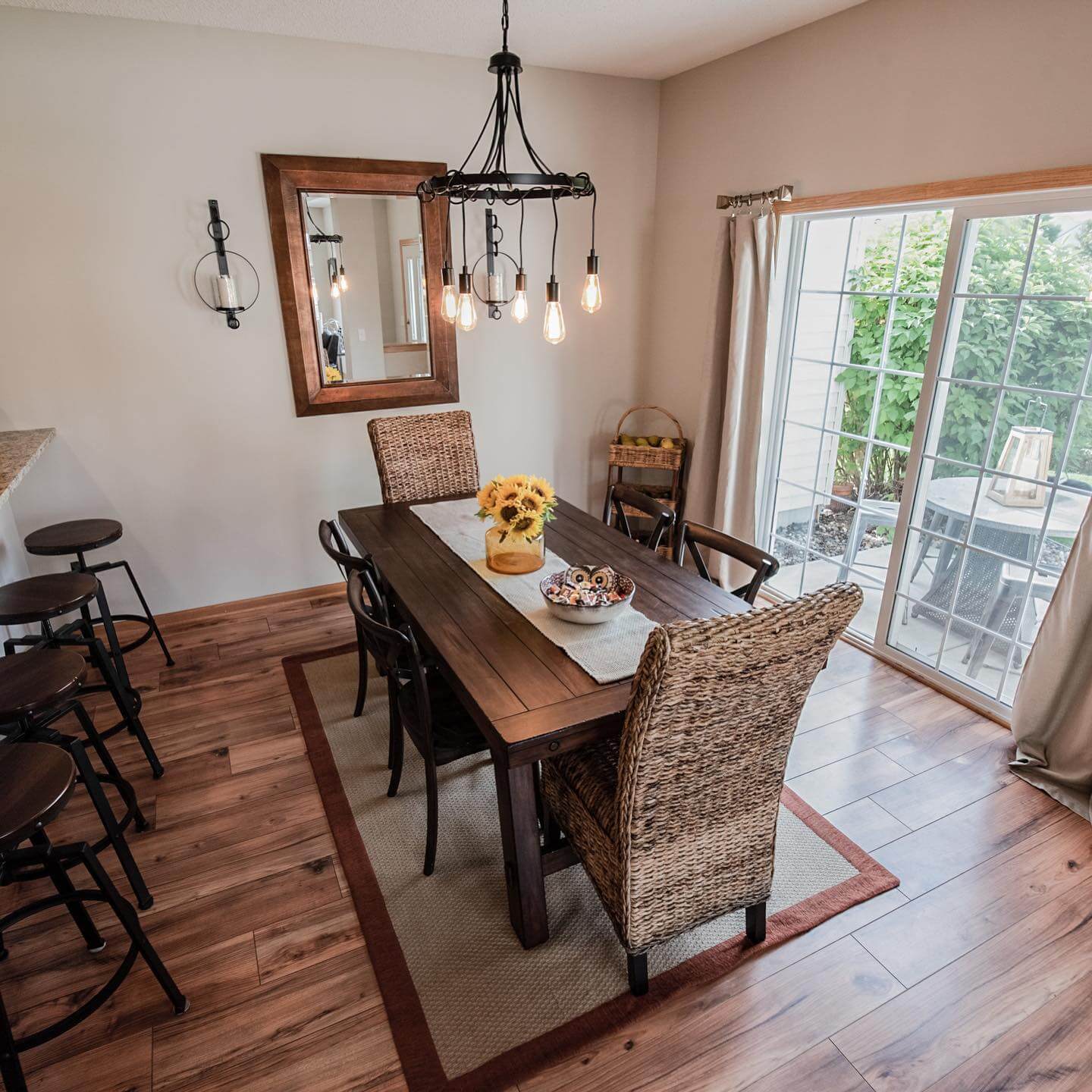
For a dining room that feels boutique-hotel chic, flank your mirror with wall sconces. This layered lighting plan adds flattering, face-level illumination and frames the mirror like a refined piece of art. Opt for slim, upward-facing sconces beside a rectangular mirror, or globe sconces to echo a round one; either way, keep the spacing even and the backplates aligned with the mirror’s midpoint.
Dimmers are non-negotiable—soft light elevates every meal—and warm white bulbs (2700–3000K) keep tones inviting. Repeat one metal finish from the sconces on the mirror frame or console hardware for cohesion. On the surface below, stay low and textural so the layered light can dance: a fluted vase, linen runner, or stacked ceramics.
This technique is especially effective on moody paint or patterned wallpaper, where illumination creates shadow play and depth. It also solves a common problem: bright overheads that flatten the room. With sconces and a mirror sharing the wall, you add dimension, enhance sparkle, and frame a focal point that feels intentional from entry to dessert.
Let Pattern Sing: Simple Mirror on a Wallpapered Wall
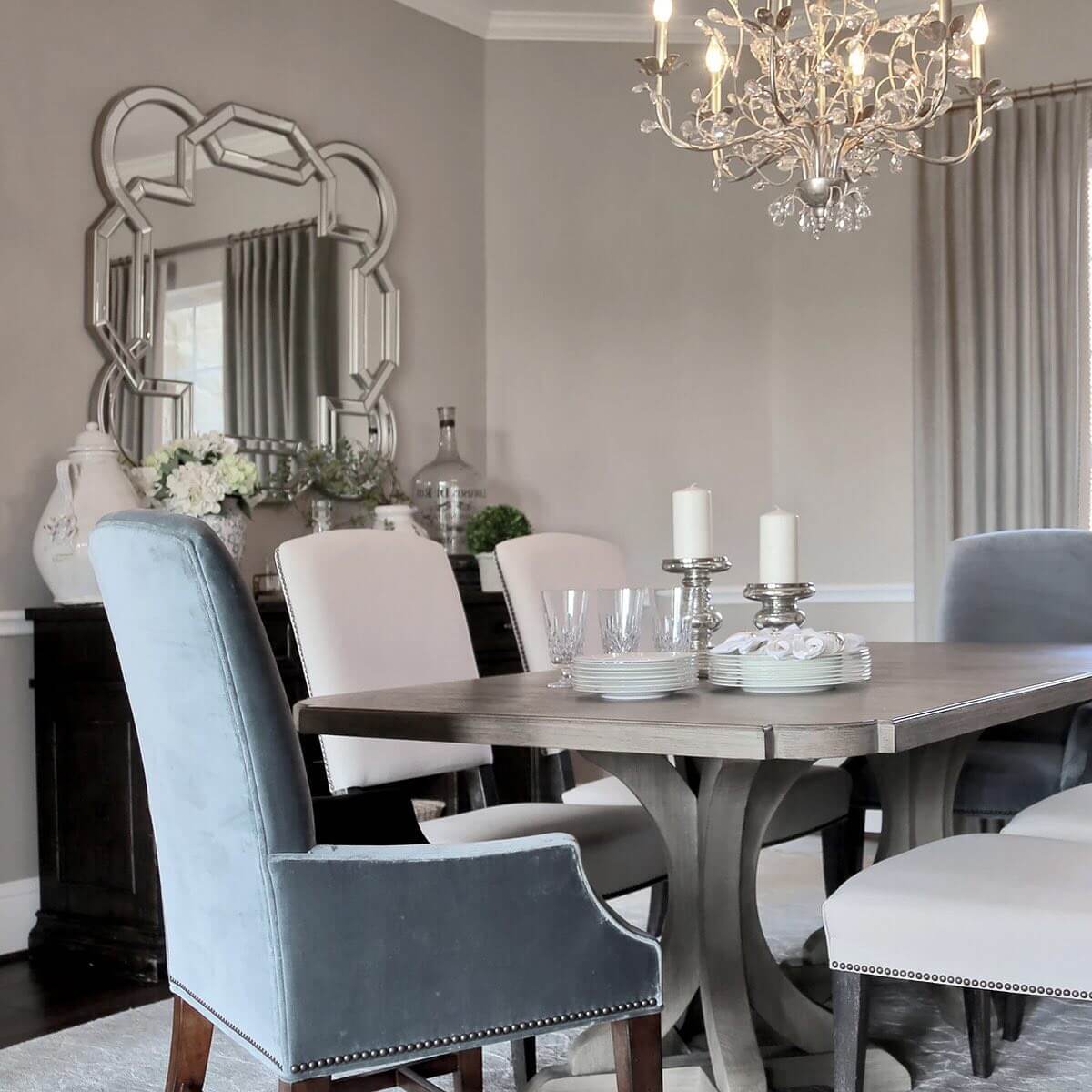
When your dining room sports statement wallpaper, a clean-lined mirror becomes the perfect chorus partner—amplifying pattern and light without stealing the solo. Choose slim frames in wood, black, or unlacquered brass so the wall treatment remains the focus. Rectangular silhouettes play nicely with stripes or grasscloth; a round or oval softens florals and chinoiserie.
Center the mirror relative to architectural features first—chair rail, paneling, or window mullions—then fine-tune to your console. Keeping styling minimal lets the pattern breathe: a single vase, a low ikebana bowl, or a petite lamp pair is enough. If your paper is bold, consider lightly antiqued glass to diffuse reflections and avoid visual overload.
This setup multiplies the wallpaper’s impact in daylight and adds delicious depth at night as the mirror catches candlelight and fixture glow. It’s also renter-friendly: one anchored mirror reads custom without touching the paper. The result is layered but calm—a sophisticated dining backdrop where pattern and reflection create an immersive, welcoming ambiance.
Small Space Hero: Lean a Floor Mirror in a Dining Nook
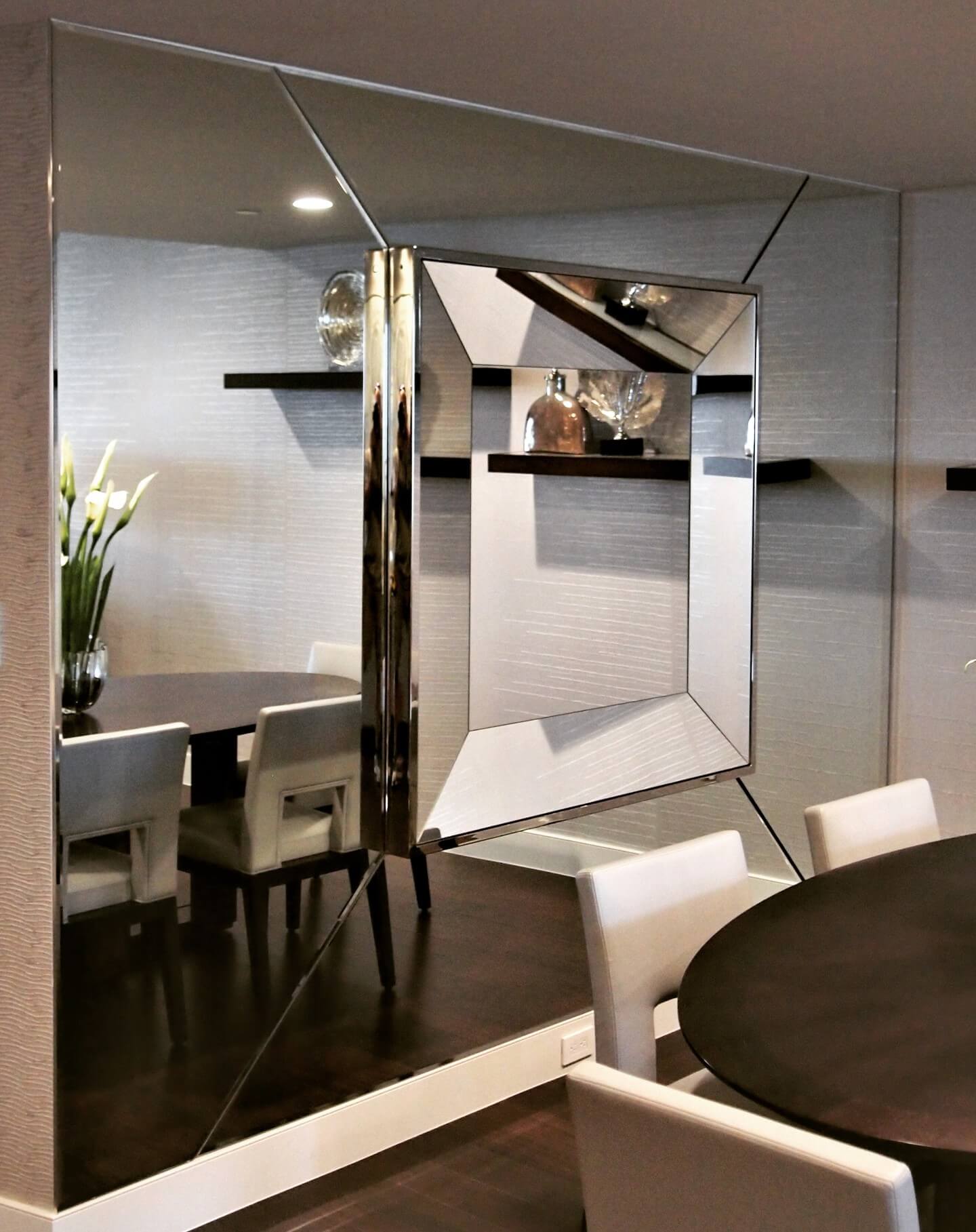
In compact dining rooms or breakfast nooks, a leaning floor mirror works like an extra window—no contractor required. Place it adjacent to a banquette or at the end of a narrow room to elongate sightlines and bounce precious light across the table. An arched or gently rounded top lends softness to tight quarters; a slim black or wood frame keeps things airy.
Safety first: use anti-tip hardware to secure the mirror to the wall while preserving the relaxed, leaner look. Keep nearby furniture low-profile and legs visible—transparent bases and open silhouettes help the room feel spacious. Style with restraint: a single cushion color story, a petite pendant, and a small-scale centerpiece won’t compete with the mirror’s visual depth.
This move is especially impactful opposite a window or under a skylight, where daylight can ricochet into every corner. Come evening, the mirror doubles candlelight for instant ambience. With one piece, your nook graduates from purely practical to polished, proving small dining spaces can feel generous and elevated.
Get the Fail-Safe Paint Color Playbook (Free PDF)
36 proven colors • 8 ready palettes • trim & sheen guide • printable testing cards.
Anchor a Dining Fireplace with a Mantel Mirror
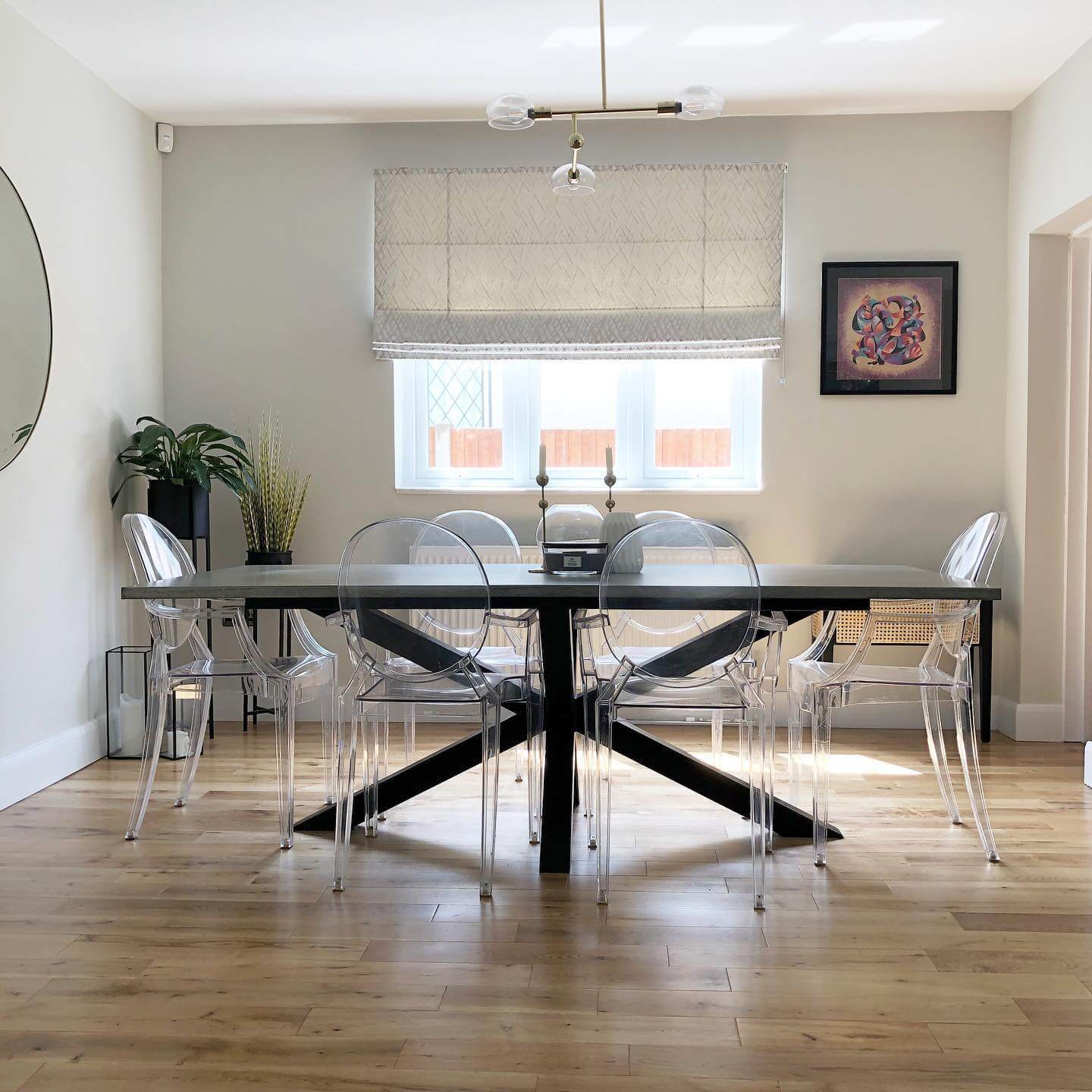
If your dining room boasts a fireplace, let a mirror above the mantel become the anchor that unifies architecture and tablescape. Choose a mirror that’s slightly narrower than the mantel (about 70–80% of its width) so it feels intentional, not top-heavy. An arched or softly rounded rectangle will echo the curve of a chandelier and soften all the straight dining-table lines. Hang it 3–6 inches above the mantel or lean it slightly for a relaxed, layered look; either way, aim its reflection toward something worth amplifying—pendant glow, candlelight, or a window’s greenery. Flank with slim sconces or candlesticks to multiply warmth. If your room skews formal, a beveled frame adds sparkle; in casual spaces, wood or plaster frames keep things grounded. Pro tip: mind what’s opposite—skip reflecting doorways and clutter, and instead align sightlines with art, drapery, or a styled sideboard vignette. This mantel-mirror move adds height, doubles the ambience, and visually stretches the hearth into a statement backdrop for every meal.
Wrap a Wall in Antiqued Mirror Panels
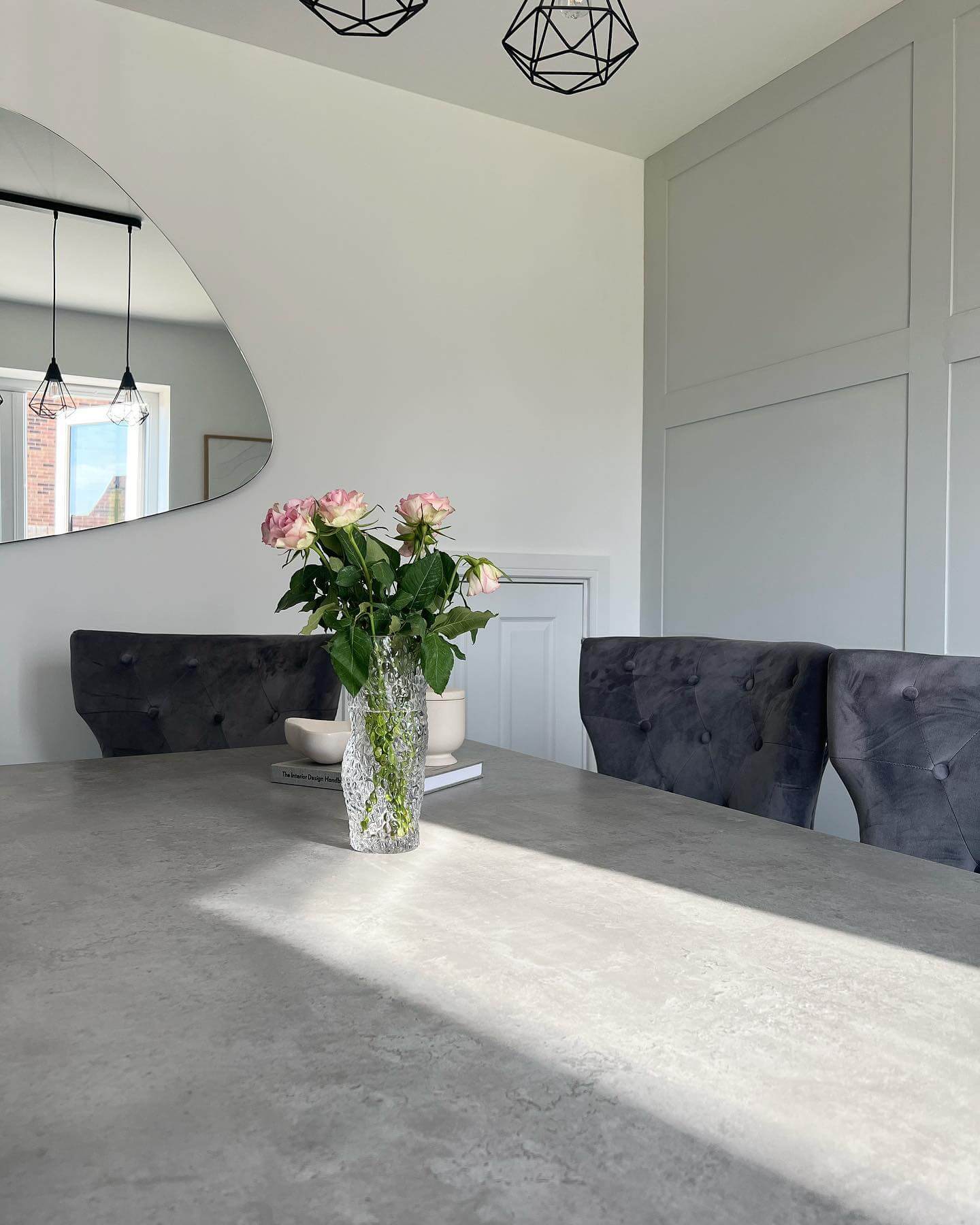
For small or dim dining rooms, an antiqued mirror wall is a design sleight of hand that looks custom without shouting. Tiled panels—either gridded like subtle windowpanes or in larger sheets—bounce light while the foxed finish softens reflections, preventing a “dance-studio” vibe. Install behind a buffet or along the longest wall to widen the room; integrate millwork or picture-frame molding for tailored architecture. Pair with dimmers so your chandelier and sconces shimmer rather than glare. Because antiqued glass blurs edges, it’s forgiving of the everyday—no need to obsess over perfect styling. Keep the vignette in front of it low and textural: a marble lamp, branches, woven chargers, or a sculptural bowl. If you love art, hang a single large piece over the panels to create depth without bulk. Safety note: ask for tempered or backed mirror panels in dining zones. The result is an upscale, light-layering backdrop that elevates dinner parties and weekday suppers alike.
Loosen the Lines with a Wavy, Organic Mirror
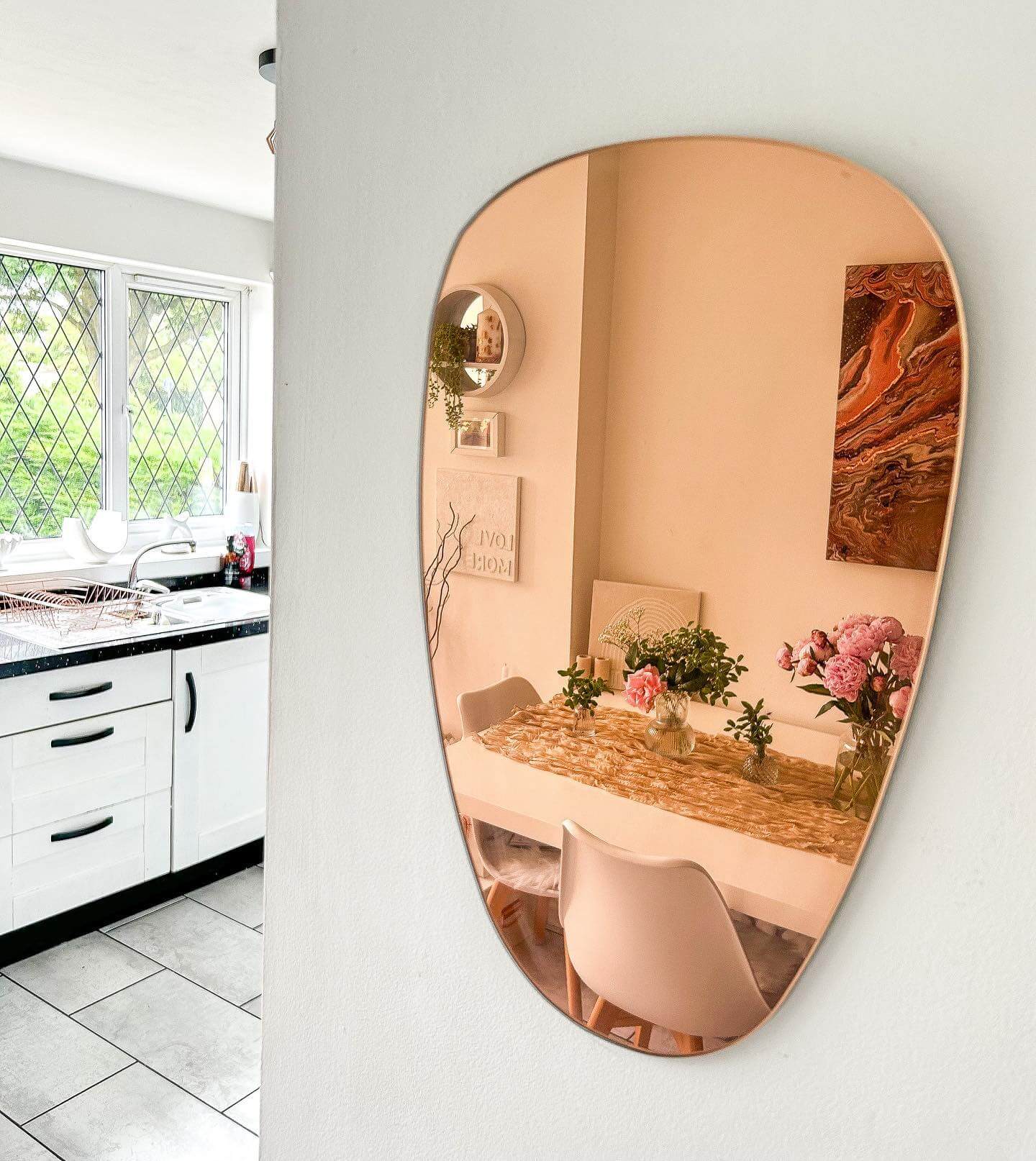
A dining room often skews rectangular—table, rug, wainscot, console. Introduce a wavy or freeform mirror to break the grid and add an artful wink. These organic silhouettes soften traditional spaces and bring motion to minimalist rooms. Position one above a slender console or between two windows to ripple light across the walls; the irregular edge will catch glints from candles and glassware, making the table feel more intimate. Keep frames slim (think lacquer or polished metal) so the shape does the talking. Style the surface beneath with asymmetric foliage—olive branches, eucalyptus, or a single bough—to echo the mirror’s movement. Balance the playfulness with tailored elements elsewhere: a crisp linen runner, straight-lined chairs, or a simple drum pendant. This is a modern dining room mirror idea that telegraphs confidence—less matchy, more curated—while still delivering on the core function of amplifying space and glow.
Warm It Up with a Rattan- or Cane-Framed Mirror
If your dining room reads cool or formal, a rattan- or cane-framed mirror adds instant warmth and touchable texture. The natural weave picks up tones from oak floors, rush-seat chairs, and woven placemats, creating a cohesive, coastal-to-casual vibe. Choose a rounded rectangle or porthole silhouette to bring softness to straight table edges; hang it over a wood sideboard or at the end of a narrow room to pull the eye through. Keep the color palette sunlit—creamy walls, pale woods, and linen drapery—to let the mirror’s organic texture shine. For evening glow, flank with brass or matte-black sconces; the interplay of metal and fiber feels sophisticated rather than beachy. Style the surface below with ceramics, sea grass baskets, or a vase of grasses for layered depth. This textural mirror doesn’t just reflect light—it grounds your dining zone with warmth, making even weeknight pasta feel like a relaxed retreat.
Strap-Hung Round Mirror for Tailored Contrast
A strap-hung round mirror is a crisp, tailored move that works across modern, Scandinavian, and transitional dining rooms. The leather or fabric strap adds a subtle fashion note, while the circle counters the linearity of table, art, and molding. Mount it above a banquette or petite console, securing the top peg into a stud for safety; the visual “suspension” reads lighter than a standard hanger and keeps the composition airy. Opt for a thin metal rim in black or brass to echo your chandelier finish and dining chair legs. Because the strap draws the eye up, keep tabletop styling low—books, a bowl, or a petite lamp—so the mirror remains the focal point. Aim its reflection toward a window or pendant cluster for layered, ambient light. This dining room mirror idea adds design detail without clutter, delivering both function and polish in one smart circle.
Add Character with a Convex ‘Bullseye’ Mirror
Small but mighty, a convex “bullseye” mirror can inject heritage charm and sparkle into a dining room without overwhelming the walls. The dome-like surface gathers a wide-angle reflection—perfect for amplifying candlelight and chandelier twinkle—while the classic beaded or ebonized frame nods to Regency and Federal styles. Center one above a fireplace or between sconces, or repeat a trio over a buffet for collected appeal. Because convex mirrors miniaturize reflections, they flatter busy tabletops and soften visual noise. Keep surrounding art simple so the mirror reads like jewelry rather than clutter. For a modern twist, choose a pared-back frame in matte black; in traditional rooms, go gilt or tortoiseshell. Either way, this is a high-impact, low-footprint dining mirror idea that layers history, depth, and atmosphere—especially magical after dusk.
Stretch the Room with a Slim Triptych
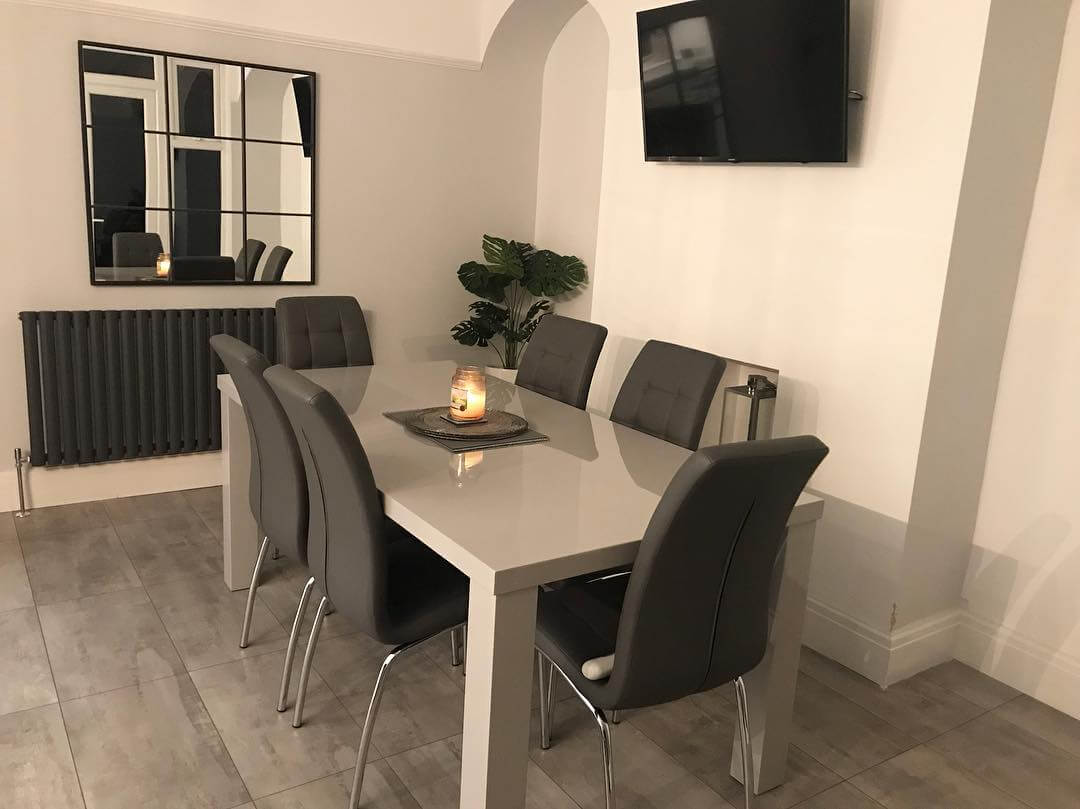
When you have a long dining wall but don’t want one massive mirror, try a slim triptych: three vertically oriented mirrors hung in a tight row. This elongates the room, creates rhythmic architecture, and offers generous reflection without a single heavy piece. Choose identical frames in the same finish as your chandelier or cabinet hardware for cohesion. Space them 2–3 inches apart and hang the center at eye level, about 8–10 inches above a buffet or bench. The verticality draws the eye up, making ceilings read taller, while multiple panes create a refined gallery effect. Style the surface below with three simple anchors—lamp, greenery, sculptural bowl—mirroring the cadence above. Tip: place the triptych opposite drapery or a window so each panel catches a slightly different slice of light, adding movement across the wall. It’s a designer trick that feels bespoke and scales beautifully in apartments and expansive dining rooms alike.
Angle a Mirror Adjacent to the Window
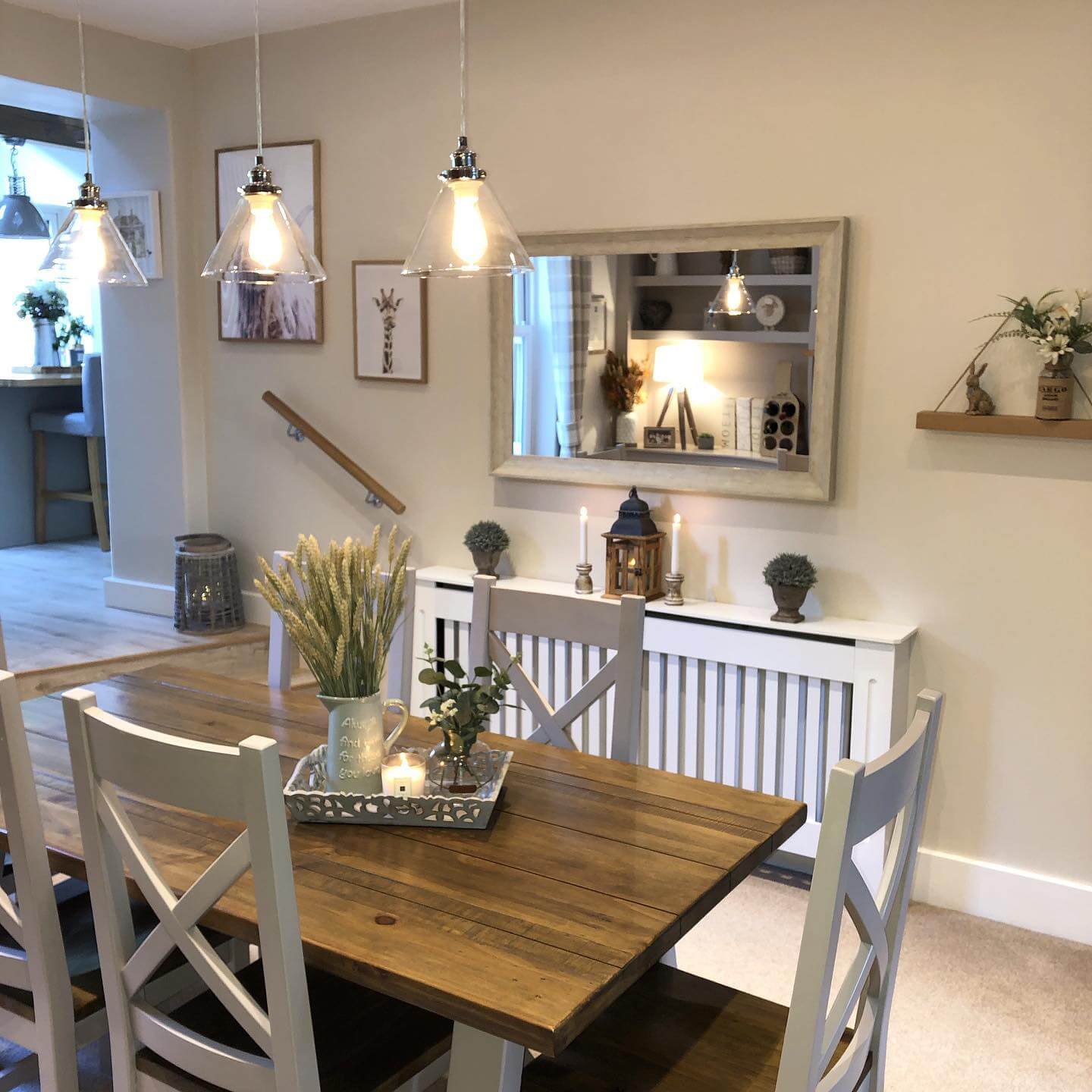
You already know placing a mirror opposite a window boosts daylight. Another pro move is hanging a mirror adjacent to the window at 90 degrees. This side-angle placement captures oblique sky light and greenery without harsh glare, washing the dining room in softer, more even illumination. It’s especially useful if your best wall is perpendicular to the view or if direct bounce-back would spotlight a doorway. Choose a tall, narrow mirror to catch the full height of the window and draw the eye along the wall; a gentle arch softens the transition between window trim and plaster. Keep the frame finish in dialogue with your curtain hardware or chair legs for a quiet, considered look. The result is nuanced brightness, dynamic reflections that change with the day, and a dining zone that feels bigger without shouting “mirror trick.”
Mirror-Backed Drinks Zone to Elevate Cocktail Hour
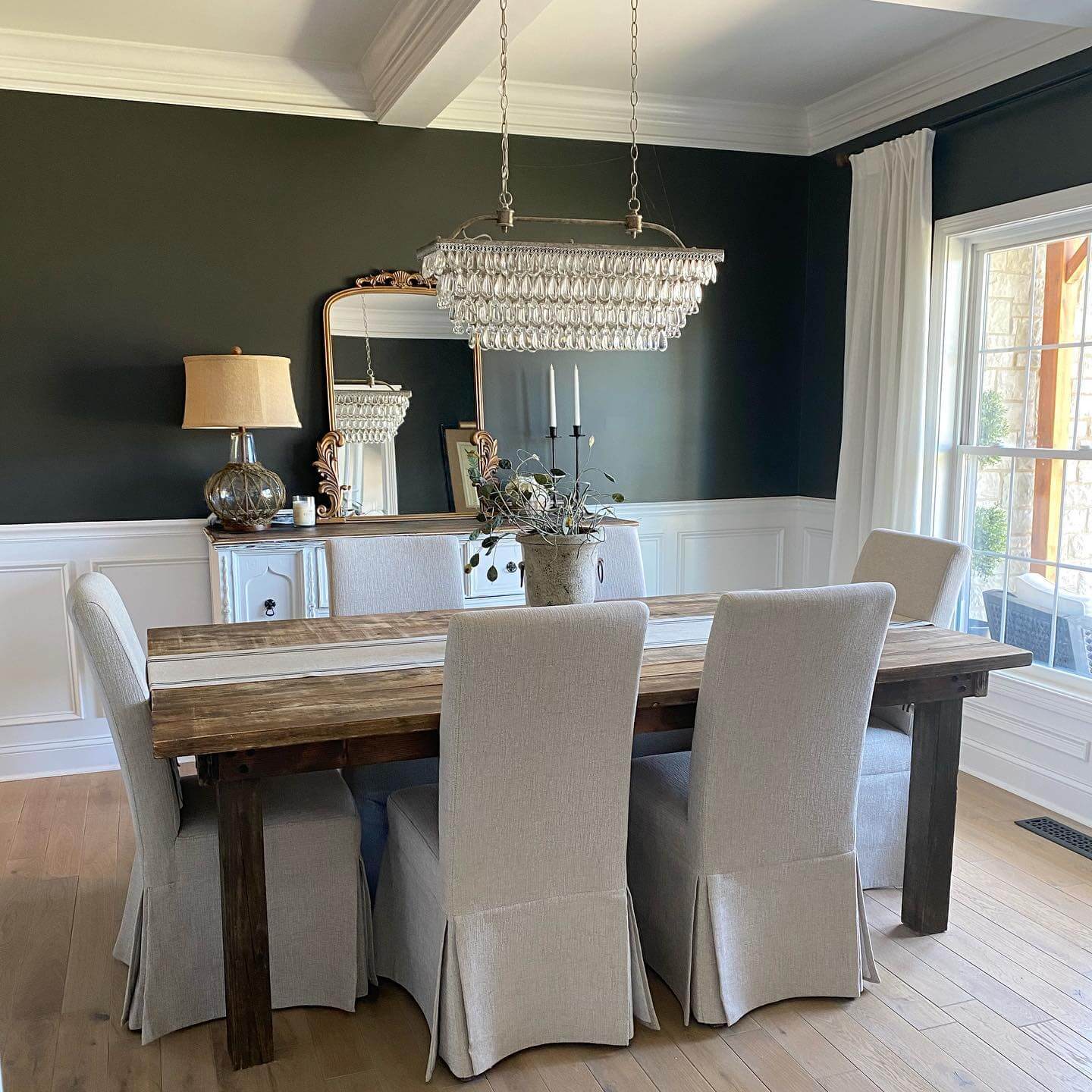
A mirror behind a bar cabinet or drinks console turns a small dining room corner into a destination. The reflective surface multiplies glassware sparkle and bottle labels, adding depth and a sense of abundance—great for entertaining. Opt for antiqued or smoked glass if you prefer a softer look, or clear for crisp modernity. Keep shelving minimal so the reflection remains clean; decant spirits into simple bottles and corral tools on a tray to avoid visual clutter. Position a petite table lamp or sconce nearby so the mirror throws ambient glow across the dining table at night. If space is tight, a narrow vertical mirror above a bar cart pulls the eye up and protects the wall from splashes. This mirror move marries form and function, elevating the practicalities of pouring with the polish of a considered vignette.
Get the Fail-Safe Paint Color Playbook (Free PDF)
36 proven colors • 8 ready palettes • trim & sheen guide • printable testing cards.
Seasonal Layering: Tie a Wreath or Garland Over Your Mirror
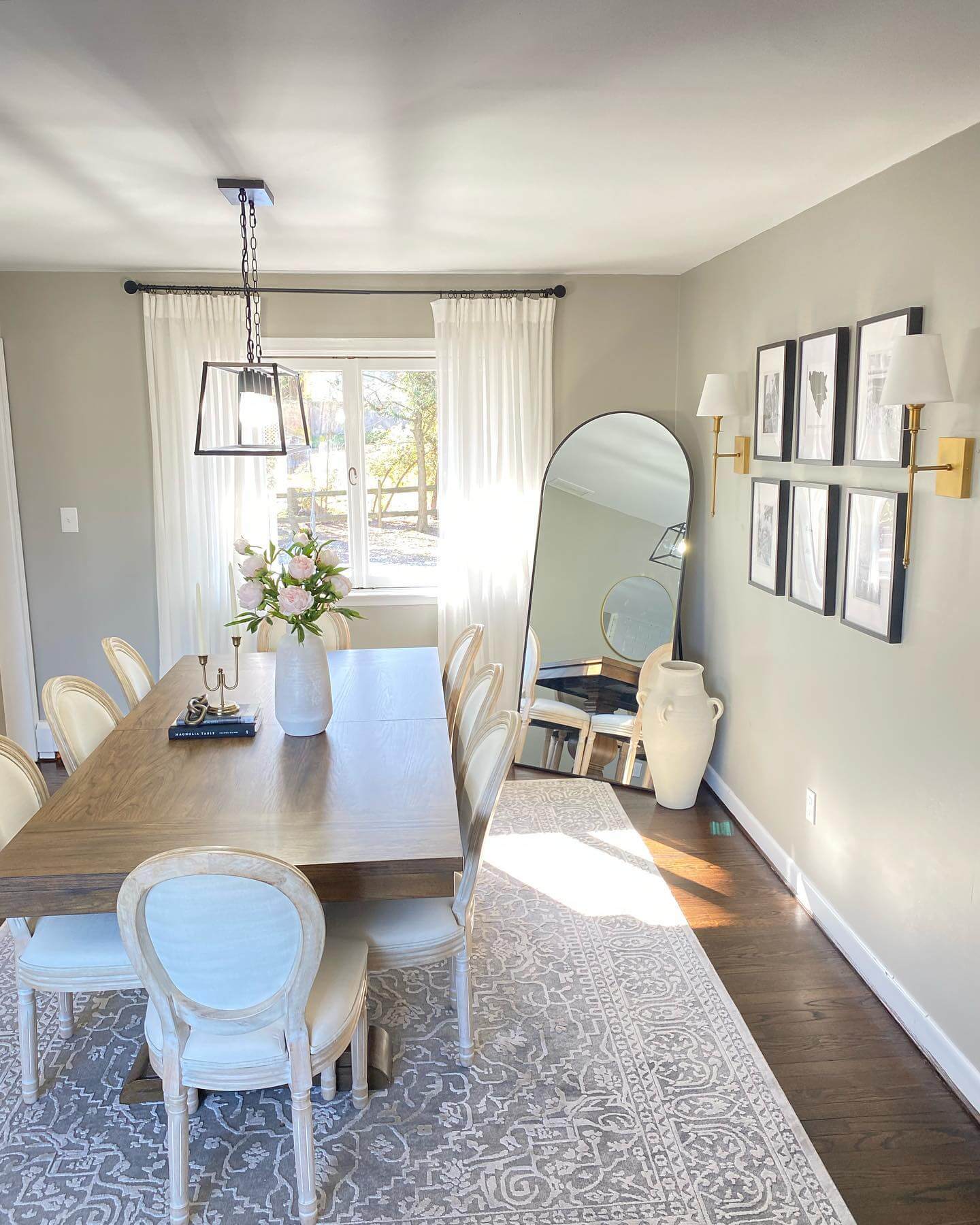
For effortless dining room updates, layer the season right onto your mirror. In fall, a foraged wreath brings warmth; in winter, evergreen and ribbon feel festive; come spring, try eucalyptus or blossoms. Use a removable hook or loop ribbon over the top of the frame to avoid damage, and keep the scale proportional—about one-third to one-half the mirror’s width. This trick adds depth to the wall, softens hard surfaces, and gives your dining zone fresh personality without a full re-style. Keep the surrounding vignette understated so the layered mirror sings: taper candles, a low bowl of fruit, or a single arrangement that echoes the wreath’s palette. Because a mirror multiplies whatever you place in front of it, a little goes a long way—especially at night when candlelight flickers across glass and greenery. It’s a simple, budget-friendly dining room mirror idea that shifts with the calendar and keeps your space feeling considered year-round.
Echo the Architecture with an Arched Windowpane Mirror
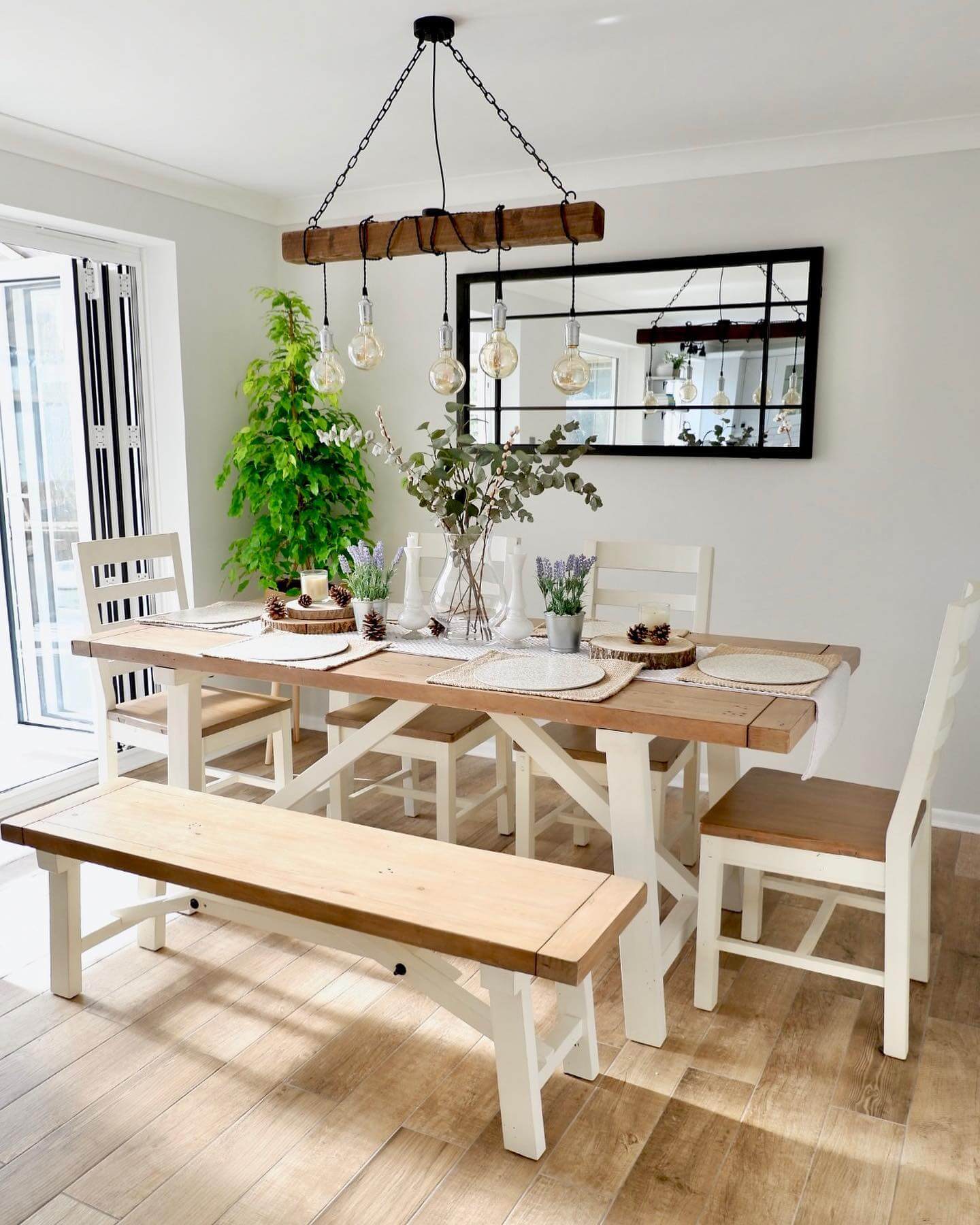
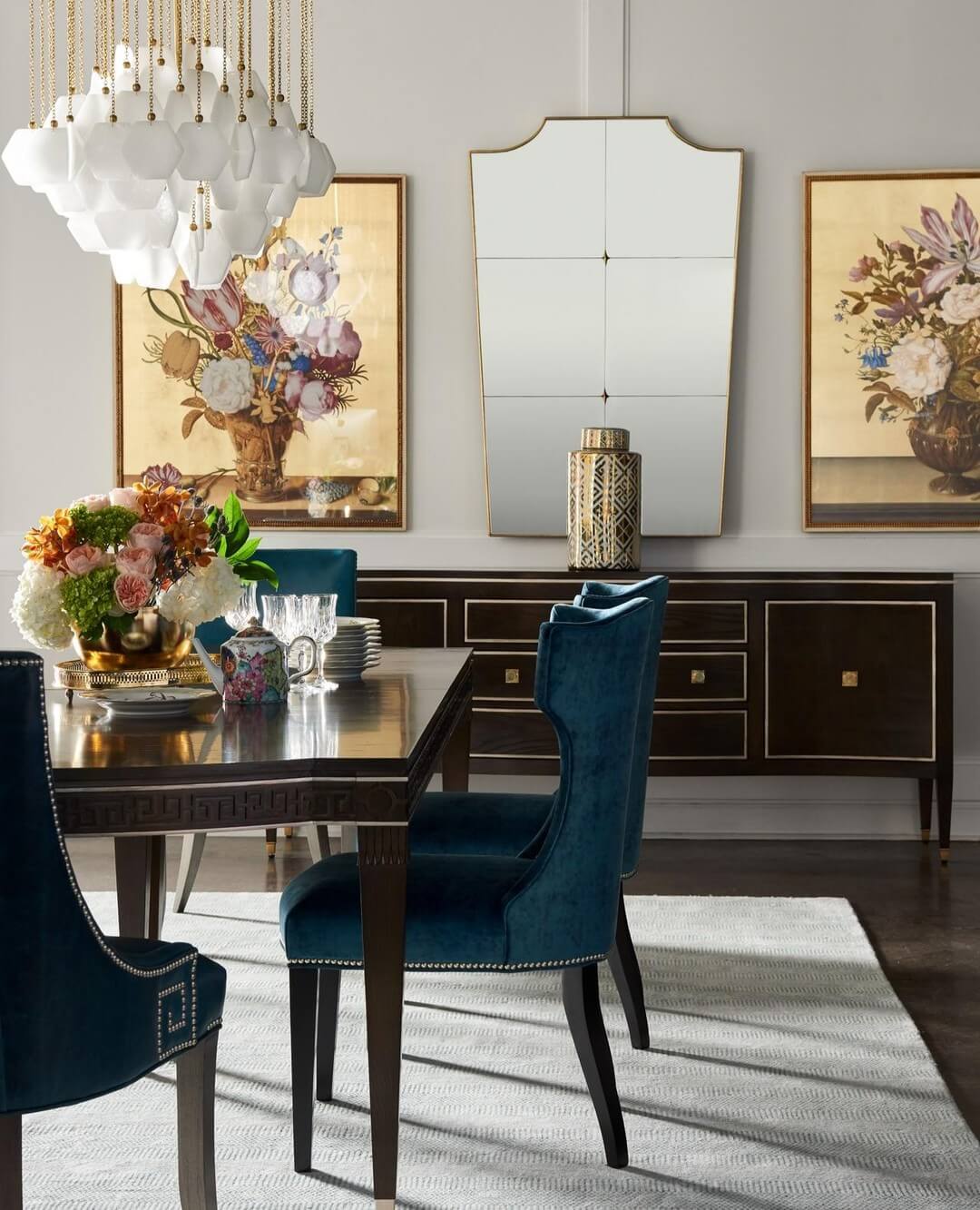
An arched, windowpane-style mirror is a perennial favorite for dining rooms because it mimics architecture and multiplies daylight in one move. The gentle curve softens straight-backed chairs and linear buffets, while the grid adds crisp rhythm that suits modern farmhouse, French-inspired, and transitional interiors. Position it over a sideboard so the mirror’s width lands at about two-thirds to three-quarters of the furniture below; leave 6–8 inches of breathing room between the top of the buffet and the frame. If you have a statement chandelier, angle the mirror to catch its sparkle—those repeated facets create instant ambiance at dinner.
Finish matters. A black metal frame sharpens a contemporary scheme; antique brass warms traditional rooms; white or driftwood frames lean coastal. If the dining room faces a garden or patio, line up the mirror to “borrow” that greenery and pull the outdoors in. Layer slim sconces or a pair of candlesticks in front for twinkle, and keep styling restrained so the grid remains the star. Mount securely with a French cleat and confirm the reflection is intentional—no direct view of the kitchen sink. The result: a light-lifting focal point that feels built in, not just added on.
Pair Up: Twin Mirrors Over a Long Buffet
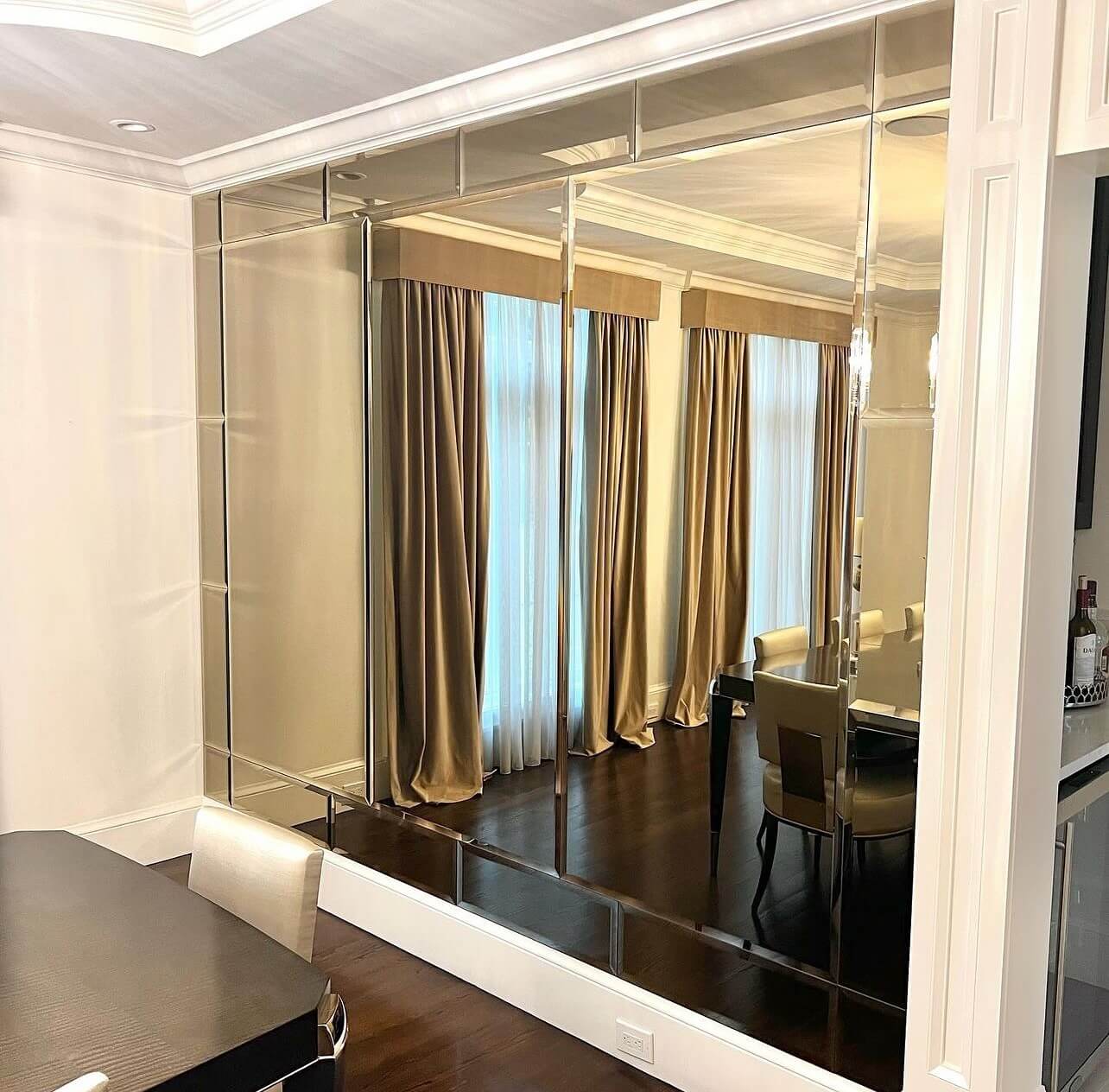
When your dining wall and buffet stretch long, a symmetrical pair of mirrors can be more elegant—and more balanced—than one oversized piece. Doubling up brings pleasing repetition, expands perceived width, and creates a strong visual anchor for place settings and serveware. Choose matching frames that echo your hardware or chandelier finish, and size each mirror to be slightly narrower than the lamp or sconce spacing so the composition reads intentional. Leave 2–4 inches between the two mirrors; that sliver of negative space keeps the arrangement airy.
This approach is ideal for formal dining rooms because it reinforces symmetry without feeling stiff. Aim to hang the mirrors so their centers fall around 57–60 inches from the floor, or align their bottoms 6–8 inches above the buffet to keep sightlines clean while seated. Style the surface with a low floral and a tray to avoid blocking reflections. If you have transom windows or a coffered ceiling, position the mirrors to capture those details—guests will notice the architecture twice. For evening gatherings, dim overheads and let the doubled candlelight do the work; the paired mirrors amplify glow for instant atmosphere.
Dial Up Drama with a Smoked or Bronze-Tinted Mirror
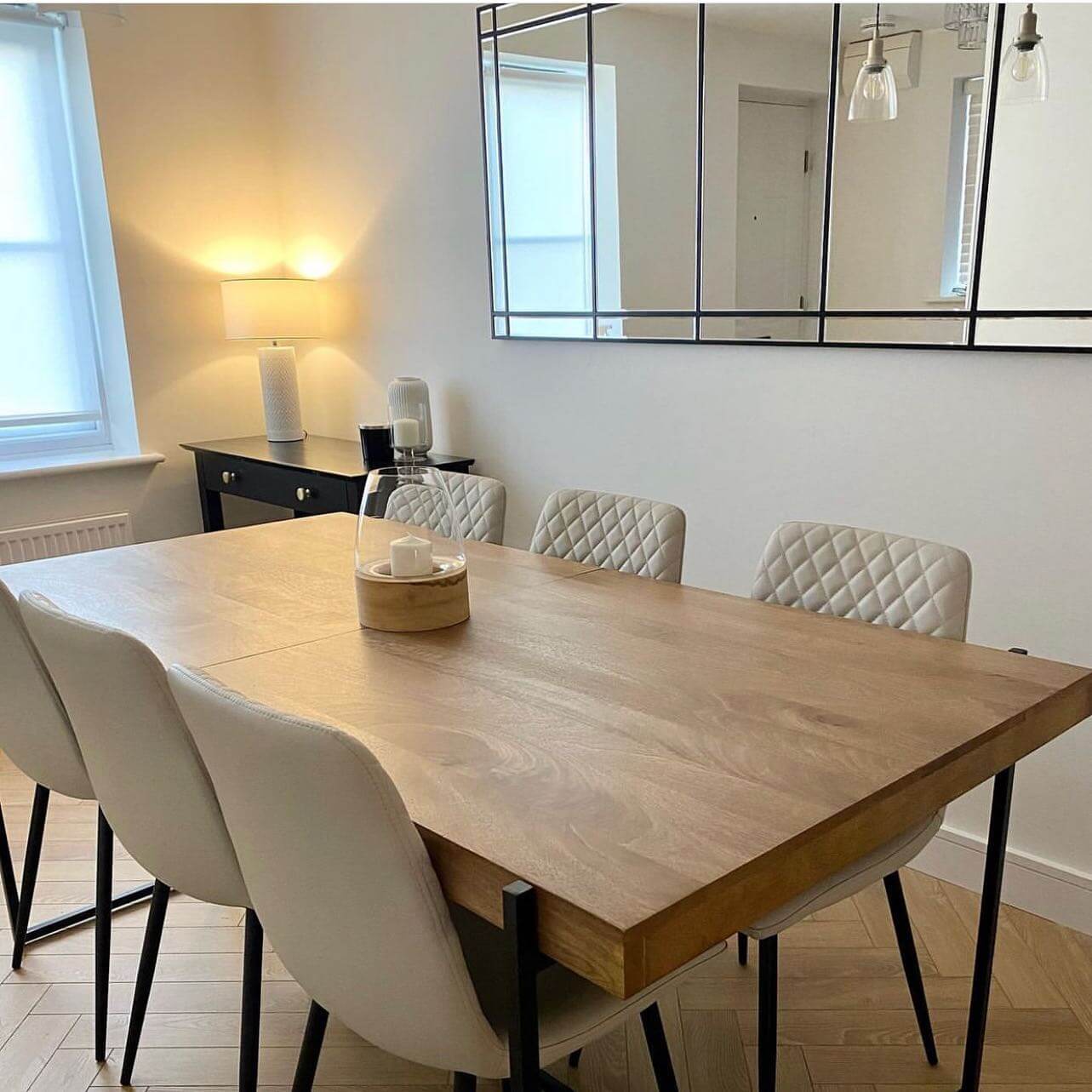
Not every dining room needs a crystal-clear reflection. A smoked or bronze-tinted mirror adds mood, depth, and a flattering filter that’s perfect for evening entertaining. The gentle tint softens glare, warms candlelight, and disguises busy reflections from an adjoining kitchen. It’s a smart way to bring reflective surface to dark paint colors, lacquered walls, or richly grained woods without going high-gloss everywhere. Try a clean-lined rectangular frame in oil-rubbed bronze or black to keep the palette cohesive.
Placement is key: hang a tinted mirror opposite a chandelier or sconces so the warm sheen multiplies ambient light without turning harsh. If your room leans modern, consider a frameless beveled edge; for traditional dining rooms, a thin antique-brass frame ties in flatware and gallery lighting. Because darker mirrors reflect subtler images, curate what’s opposite—art, florals, or a window view read beautifully. Keep scale generous so the mirror still functions as a focal point; two-thirds the width of your buffet remains a useful rule. Finish with dimmers and tapers to let the glass glow. The overall effect? Sophisticated, cocooning atmosphere that flatters both the room and your guests.
Stretch a Banquette with a Low, Long Mirror
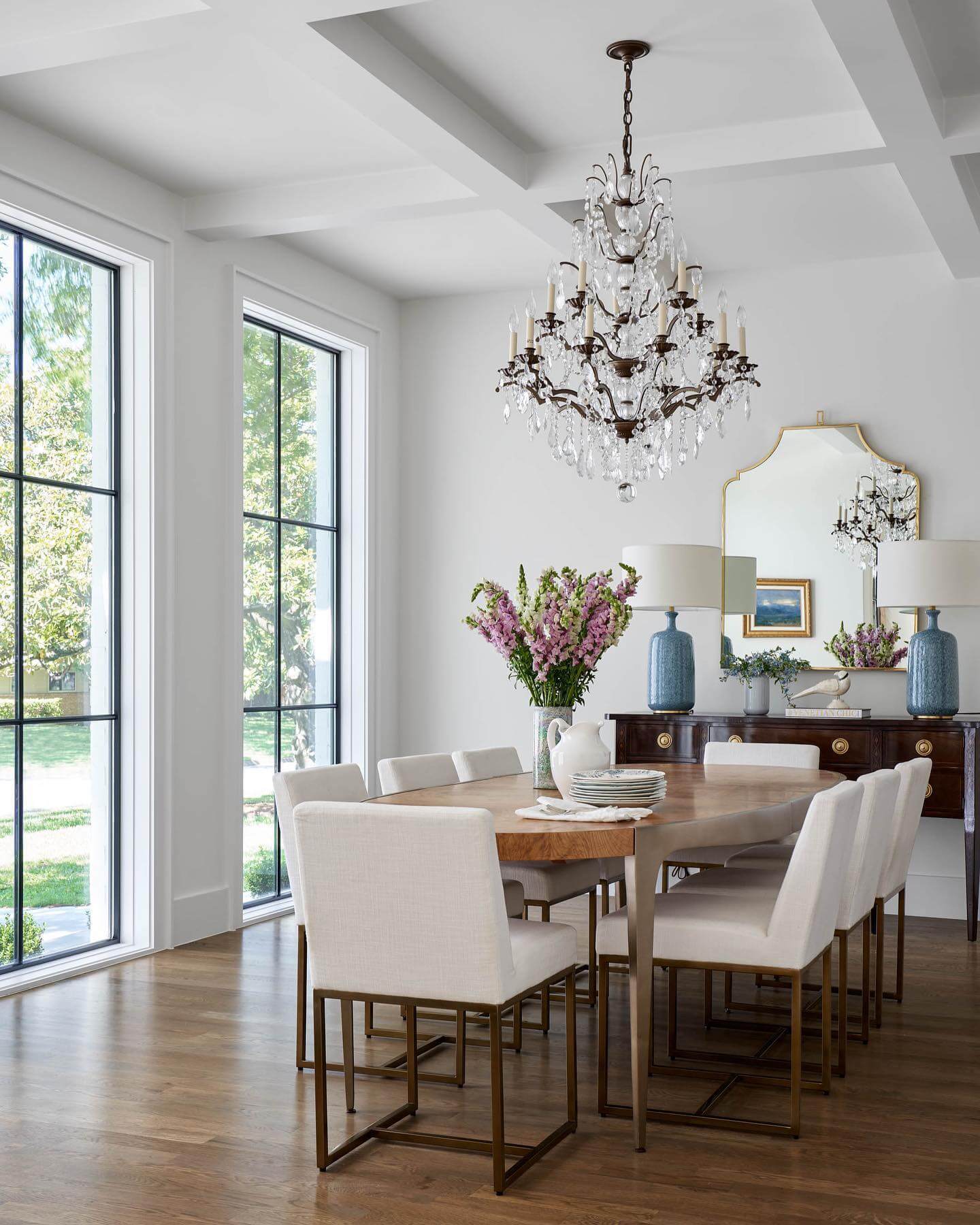
If your dining zone includes a bench or built-in banquette, run a low, landscape mirror along its length to visually expand the nook and bounce light back to the table. A wide horizontal mirror elongates sightlines, making compact corners feel generous, while the lower placement puts reflections at seated eye level—ideal for intimate dinners. Choose a frame that can handle everyday use: sealed wood, lacquer, or metal resist nicks; consider a small ledge or picture rail beneath to protect the glass from chair backs.
Keep height modest so the top edge aligns with the bottom of nearby windows or artwork, maintaining a continuous horizon. A simple rectangular profile works in modern spaces; a subtly arched top softens right angles in tighter alcoves. Flank the mirror with slim plug-in sconces or a petite swing-arm to layer task and ambient light without crowding. For family-friendly dining, use tempered glass and secure the mirror with French cleats and anti-tip anchors. Style the table with low centerpieces and textiles that echo the frame finish. The result is a cozy, restaurant-worthy banquette that feels deeper, brighter, and intentionally designed.
Treat the Mirror as Art with a Sculptural Frame
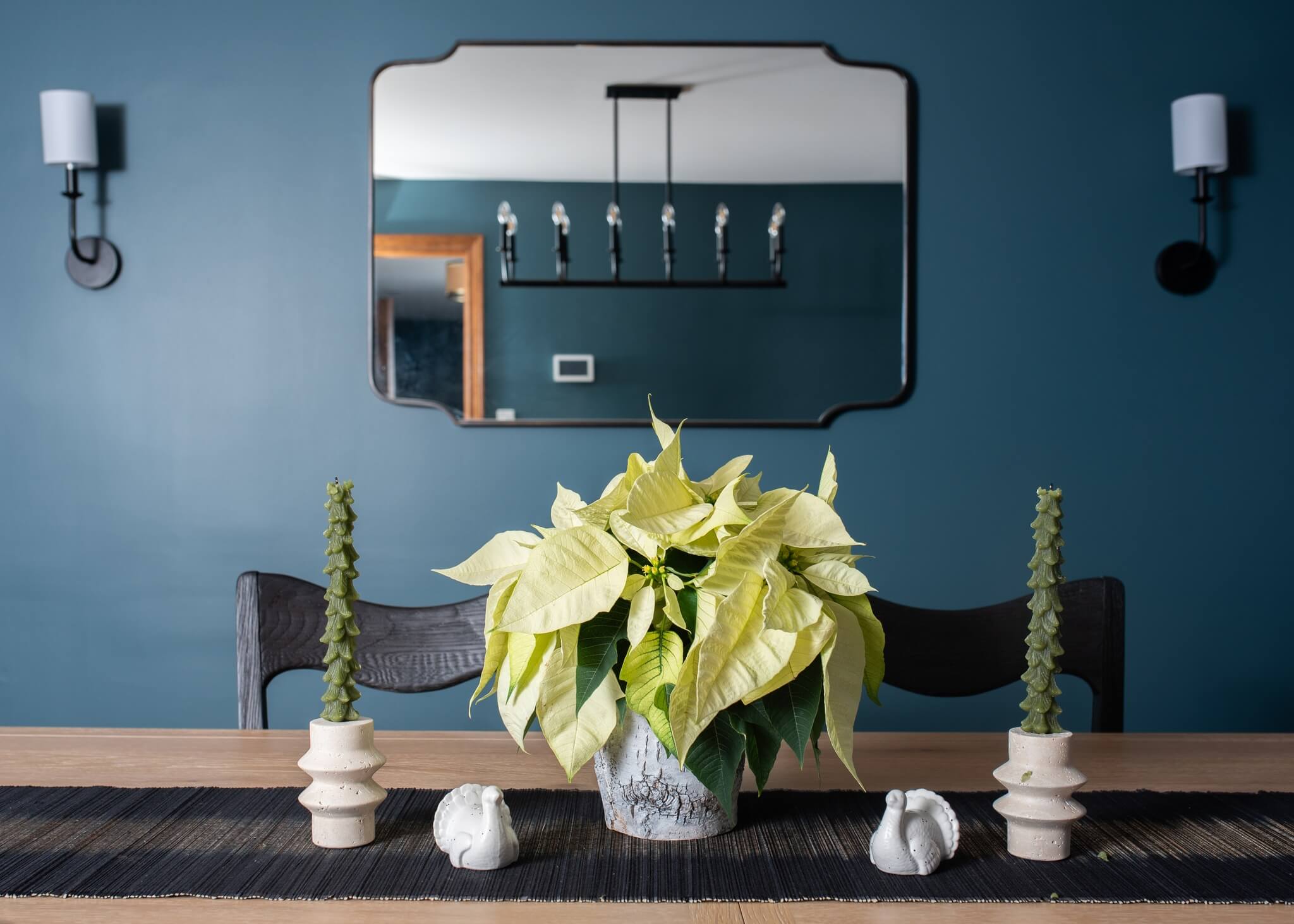
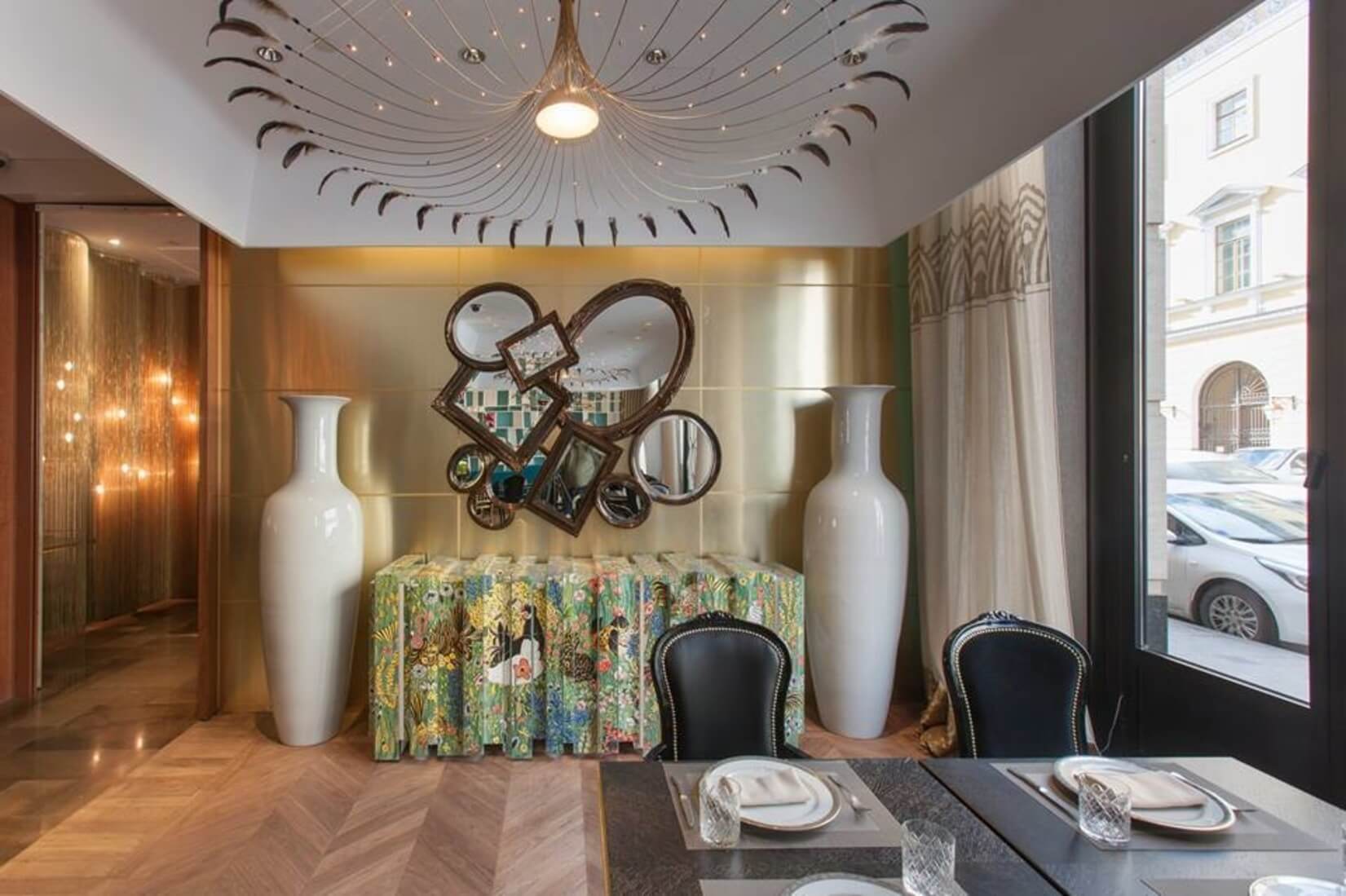
Sometimes the best dining room mirror isn’t about perfect symmetry—it’s about personality. A sculptural frame—think scalloped plaster, hand-carved wood, hammered metal, or a ribboned silhouette—turns reflective glass into art. This approach brings texture to walls dominated by flat paint or smooth millwork and adds a curated note over a console or fireplace. Keep the mirror’s overall footprint substantial (roughly two-thirds the width of the furniture below) so the shape reads as a statement, not a trinket.
Because the frame is the star, edit surrounding decor: pair with a slim picture light for gallery polish, choose a single vase or a stack of linen-bound cookbooks, and let negative space outline the silhouette. A white plaster frame pops against moody paint; warm woods complement woven seating or a cane-backed chair; antiqued brass nods to classic flatware. Ensure the reflection is equally considered—position to capture your chandelier or a floral arrangement for depth. Mount securely through studs, as sculptural frames can be weighty. The payoff is high-impact style that still delivers the mirror’s functional perks: more light, more dimension, and a focal point guests won’t forget.
Balance the Wall: Mirror Centered Between Windows and Sconces
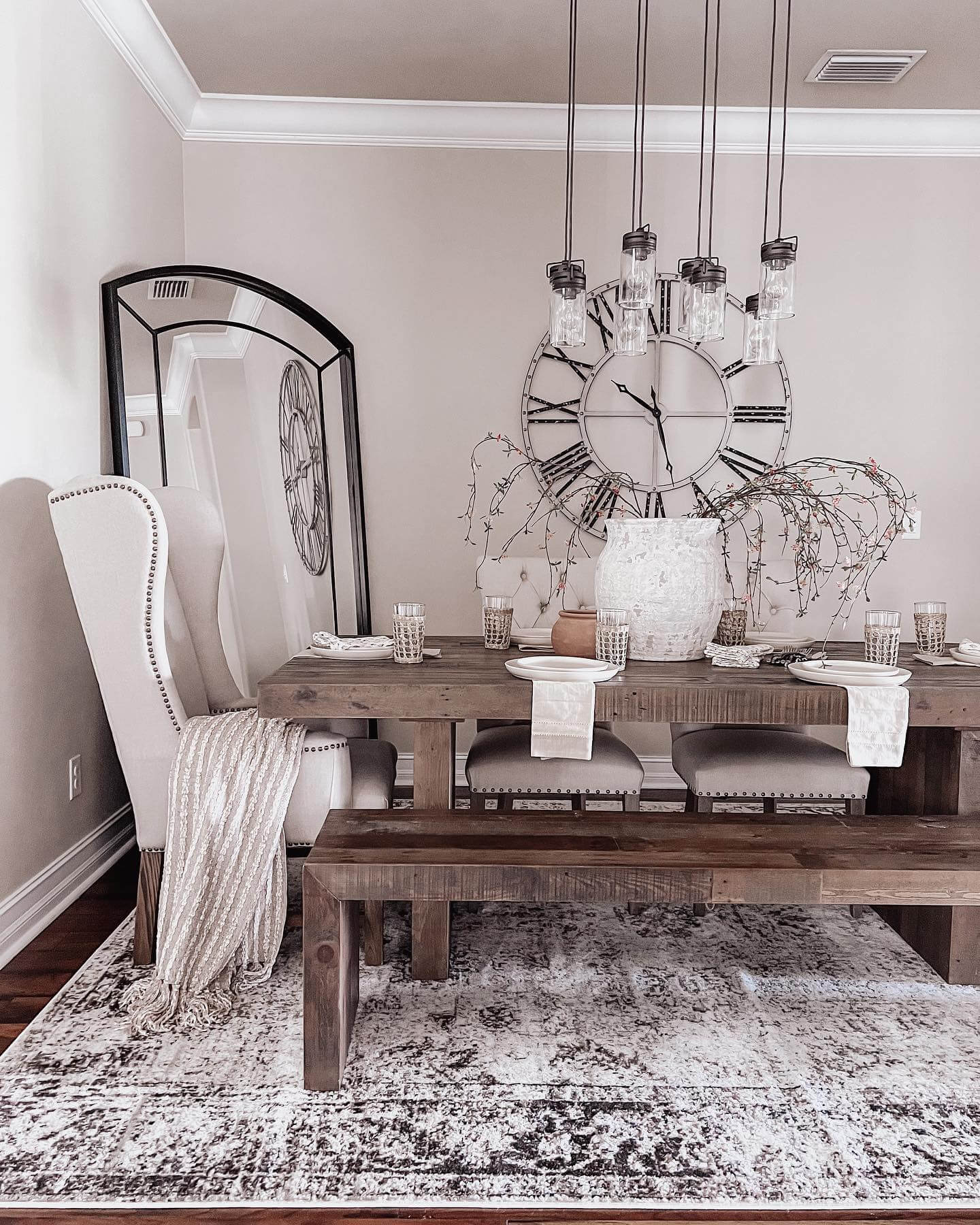
Dining rooms often have tricky negative space—narrow stretches between windows, or an expanse above a console flanked by sconces. A vertically oriented mirror centered between architectural elements brings harmony and height. Choose a proportion that echoes what’s around it: if windows are tall and slim, mirror those dimensions so the trio reads cohesive. Align the mirror’s top with nearby window headers or sconce backplates for a clean visual datum; keep the bottom 6–8 inches above a buffet to maintain surface function.
This strategy shines in both classic and modern rooms because it respects existing symmetry while correcting awkward gaps. A thin black or brass frame disappears enough to highlight reflections—coffered ceilings, crown molding, or a pendant’s geometry. If wall space is limited, a beveled edge or delicate ribbed frame adds just enough detail. Layer with dimmable sconces so the mirror captures soft, lateral light at night; by day, it bounces natural brightness deeper into the dining zone. Use a French cleat for precise centering and to keep the mirror perfectly plumb—a small detail that reads as designer-level polish.
Refresh a Hutch with a Mirrored Back Panel
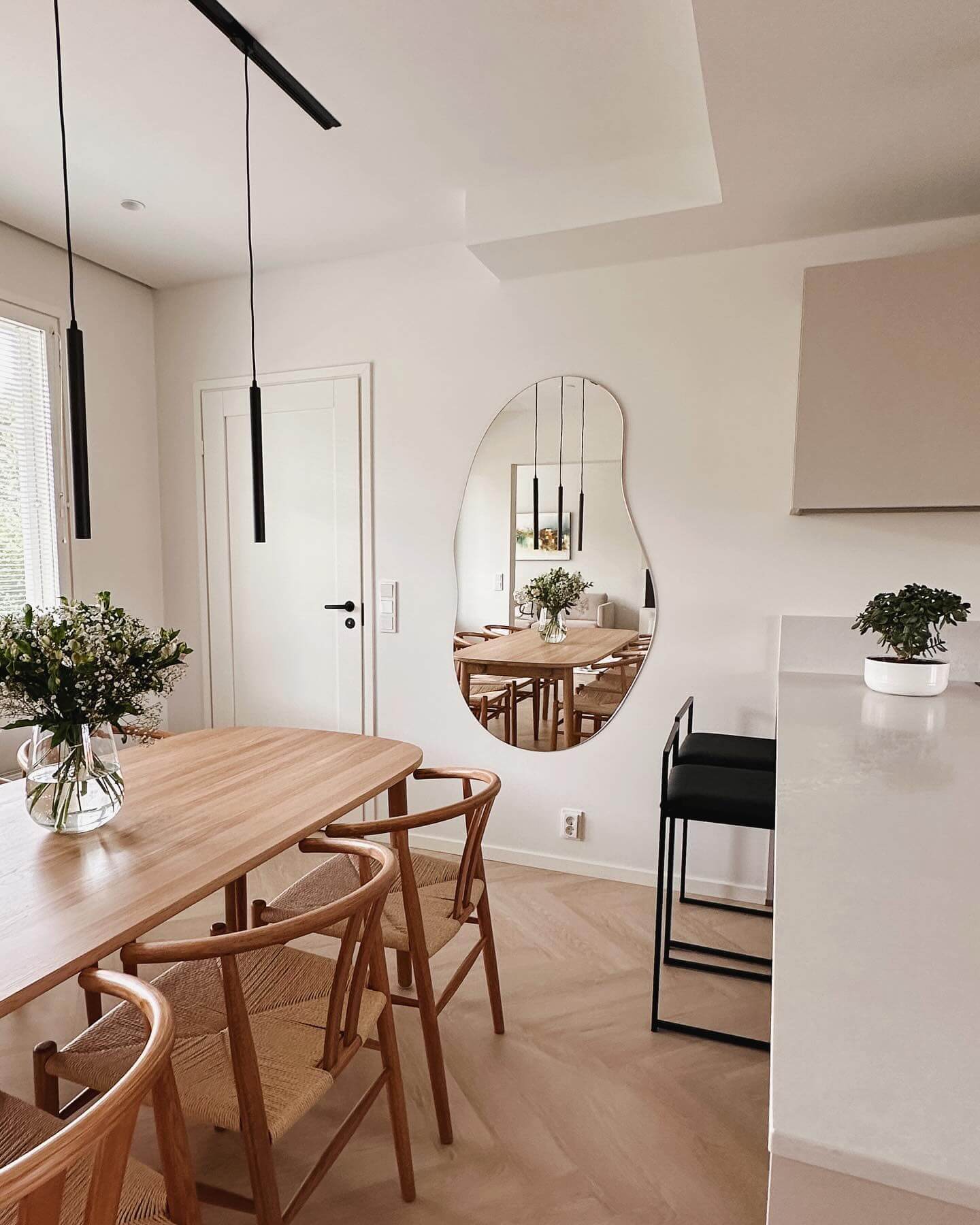
You don’t need a blank wall to leverage mirrors—use them inside a china cabinet or built-in hutch to turn stored pieces into a sparkling display. A mirrored back panel doubles the visual volume of glassware and ceramics, reflects candlelight during dinners, and adds depth to cabinetry that might otherwise feel heavy. Choose antiqued mirror for a softened, vintage vibe, or clear glass for crisp modernity. If you’re renting or hesitant to commit, apply peel-and-stick mirrored film to removable back boards for an easy, reversible upgrade.
Mind shelf styling: vary heights, stack plates, and leave breathing room so reflections don’t feel cluttered. Warm metals—brass hardware, bronze latches—play beautifully with mirrored backs; under-cabinet puck lights or LED strips create a gentle glow that the mirror amplifies. Keep adjacent wall art simple so the cabinet remains the focal point. For safety, use tempered mirror and secure shelves properly. This subtle tweak carries major impact: the dining room feels brighter and more layered, and your collected pieces become part of the room’s lighting plan and visual story.
Dining Room Mirror Placement and Lighting Strategies for Maximum Glow
Strategic mirror placement multiplies natural light and highlights your dining room’s best features, from a statement chandelier to curated art. Aim to reflect a window, greenery, or a sculptural pendant rather than blank walls or busy kitchens. Centerlines matter; position the mirror’s midpoint near 57 to 60 inches from the floor for comfortable seated and standing sightlines. Anchor into studs or use heavy-duty anchors for safety, especially with oversized pieces above buffets. To prevent glare, avoid pointing the mirror directly at intense daylight or bare bulbs, and favor opal shades or dimmers for control.
- Position a mirror opposite, but offset from, a window to double daylight without harsh glare, keeping angles around ninety degrees to avoid beaming sun directly into diners’ eyes.
- Angle the mirror slightly downward to capture chandelier sparkle and your centerpiece, producing flattering ambient bounce that enriches wood tones and shimmers across glassware, flatware, and porcelain.
- In narrow dining rooms, mount a long horizontal mirror to visually widen the space, aligning its center with average seated eye level for maximum comfort and conversational eye-contact continuity.
- Pair mirrors with dimmable sconces on either side to sculpt light layers, ensuring shades sit slightly above the mirror’s top edge to prevent hot spots and distracting bulb reflections.
- In open-plan layouts, orient the mirror to reflect art, greenery, or architectural details rather than televisions or cluttered kitchens, reinforcing your dining zone’s purpose and sense of occasion.
- For feng shui harmony, avoid aiming the mirror at the head chair or sharp corners, and reflect abundance symbols like fruit bowls, fresh flowers, or a generously set table.
Layer lighting to enhance reflections: a dimmable chandelier at 2700–3000K sets warmth, while sconces and candles create sparkle the mirror can amplify. Choose low-iron glass for truer color and reduced green cast if photographing tablescapes. Beveled edges refract light attractively but can accentuate glare near bright bulbs; use fabric shades to soften. Wipe prints with microfiber and vinegar-water solution to maintain crisp reflections without streaks. Finally, add anti-tip hardware and felt bumpers to protect walls, keep frames level, and ensure long-term stability.
Mirror Mastery for Memorable Dining Moments
What size mirror works best above a dining room sideboard?
Aim for a mirror that’s two-thirds to three-quarters the width of your sideboard. This proportion feels balanced, leaves room for sconces, and prevents the wall from feeling top-heavy.
Is it okay to place a dining room mirror directly across from a window?
Yes, but offset or angle it slightly to avoid harsh glare and squinting diners. You’ll still capture abundant daylight while keeping the reflection soft and comfortable.
Get the Fail-Safe Paint Color Playbook (Free PDF)
36 proven colors • 8 ready palettes • trim & sheen guide • printable testing cards.
Should I choose a round or rectangular dining room mirror?
Round mirrors soften edges and echo circular tables, promoting a relaxed, social feel. Rectangular mirrors add structure and suit long walls or sideboards, emphasizing order and architectural lines.
How high should I hang a dining room mirror?
Keep the mirror’s center around 57–60 inches from the floor for natural sightlines. If it’s above a buffet, leave 6–8 inches of space between the surface and the frame.
Final Verdict: Bringing It All Together
A thoughtfully chosen dining room mirror does more than reflect—it edits the view, amplifies daylight, and sets the tone for every meal. Whether you favor a grand oversized statement, a round mirror centered over the sideboard, a gridded windowpane, or a sleek black-arched silhouette, success comes down to scale and sightlines. Aim to reflect something worth seeing—windows, a chandelier, art—not clutter. Test placement with painter’s tape, keep the mirror’s midpoint around eye level when seated, and anchor it securely with appropriate hardware or a French cleat.
From pairs flanking a buffet to a low, long mirror that stretches a banquette, consider how proportion elongates or lifts the room. Layer sconces for hotel-caliber ambiance, style the console with balanced heights, and don’t overlook character pieces like convex or gilded trumeau frames for patina. In compact spaces, a leaner or slim triptych can visually widen the footprint without adding bulk; smoked or bronze-tinted glass tempers glare for moodier settings. Rotate seasonal accents—a wreath, garland, or ribbon—to refresh the vignette without redoing the wall.
The bottom line: choose a mirror that reinforces your architecture and decor era, place it where it will bounce light and beauty, and treat it like functional art. With smart placement and a frame that fits your style—modern, coastal, classic, or farmhouse—your dining room mirror will brighten the space, open it up, and elevate everyday dinners and special occasions alike.