
Japandi & Wabi Sabi Bedroom Ideas for Calm Living
Craving calm in your sleep space? Japandi blends the warmth of Scandinavian design with the quiet minimalism of Japanese aesthetics, while Wabi-Sabi celebrates the beauty of simplicity, patina, and imperfection. Together, they create bedrooms that feel effortless, grounded, and deeply restorative.
This approach favors natural materials, a soft neutral palette, and unfussy silhouettes—think low-profile beds, tactile linens, sculptural lighting, and handcrafted accents. Every element serves a purpose, letting negative space, soft light, and subtle texture do the heavy lifting.
Get the Fail-Safe Paint Color Playbook (Free PDF)
36 proven colors • 8 ready palettes • trim & sheen guide • printable testing cards.
Whether you’re refreshing a small studio or curating a master suite, these ideas will help you declutter with intention, layer organic textures, and highlight authentic materials for a look that’s timeless, tranquil, and inviting. Get ready to design a sanctuary that supports slow living and better sleep.
Japandi Bedroom Ideas: Minimalist Warmth, Natural Materials, and Calm Neutral Palettes
Japandi bedrooms balance Scandinavian simplicity with Japanese restraint, prioritizing harmony, light, and essential comfort. Start with a warm neutral palette—soft whites, mushroom greige, oat, and muted charcoal accents. Choose natural materials like oak, ash, bamboo, rattan, wool, and nubby linen to layer subtle texture. Keep silhouettes low, clean, and rounded to soften lines and promote flow around the bed. Embrace negative space as a design element, leaving breathing room on walls and floors for visual clarity. Illuminate with dimmable, warm LEDs (2200–2700K) and diffuse light through gauzy curtains or shoji-inspired panels.
Foundational Japandi moves for balance and function
- Low platform bed: Choose a low, wood platform bed with rounded corners to heighten grounded calm, encourage visual spaciousness, and nod to Japanese tatami-inspired proportions without feeling austere.
- Neutral greige palette: Layer warm white walls with greige bedding, mushroom-toned throw, and charcoal linen pillow for gentle contrast that remains soothing, cohesive, and easy to update seasonally.
- Oak + ash mix: Combine pale oak flooring with an ash headboard to subtly vary grain and tone, adding depth without clutter—finish in matte oil to honor tactile character.
- Linen and cotton layers: Use washed linen duvet, percale sheets, and a waffle blanket for breathable texture that looks relaxed, inviting, and quietly luxurious in everyday light.
- Shoji-inspired screens: Introduce a rice-paper or linen panel as a window screen or room divider to diffuse glare, soften edges, and create a tranquil, filtered glow.
Soothing details and hidden storage that preserve negative space
- Hidden underbed storage: Opt for a platform with slim drawers to keep seasonal linens and reading within reach, maintaining clutter-free sightlines and protecting the calm, open floor.
- Sculptural reading sconce: Mount a single matte black or brass arm sconce with dimmer to free nightstand space and spotlight texture on bedding, books, and wood grain.
- Rounded-edge nightstand: Select a compact nightstand with bullnose edges, one drawer, and open shelf, balancing soft geometry with practical stow-and-show storage for nightly essentials.
- Woven jute rug: Anchor the bed with a flatweave jute or sisal rug extending at least 24 inches beyond sides, adding earthy grip, warmth, and tactile contrast underfoot.
- Ceramic catchall tray: Use a handmade stoneware tray for jewelry and glasses, introducing subtle irregularity and glaze variation that complements the room’s natural, understated palette.
Keep décor edited and purposeful, favoring quality over quantity to avoid busy surfaces. Plants should be structural rather than frilly—think rubber plant, olive tree, or bonsai-style ficus. Prioritize breathable bedding and a seasonally adaptable throw for everyday comfort. Unify metals across hardware and lighting to reduce visual noise; matte black or aged brass work beautifully. Finally, curate art sparingly—one large, abstract piece in ink or charcoal can ground the space without competing with texture.
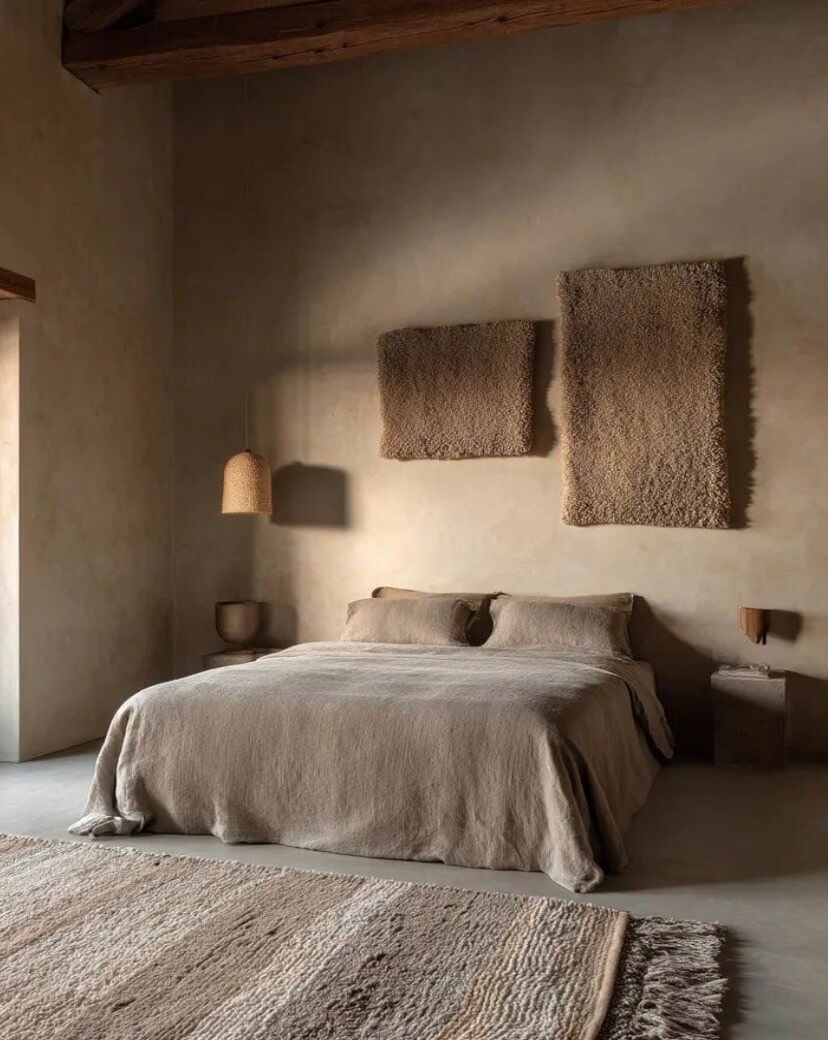
Ground the Room with a Low Platform Bed
Start your Japandi and Wabi-Sabi bedroom with a low-profile platform bed to create instant calm. Lower furniture visually widens the room, emphasizes negative space, and nods to Japanese tatami traditions while echoing Scandinavian restraint. Choose a simple wood frame—oak, ash, or walnut—with soft, rounded edges and a matte, soap, or oil finish that allows the grain to breathe. Keep bedding unfussy: a breathable linen duvet, two pillows, a light quilt, and a wool throw to add tactile depth without visual noise. The low silhouette encourages a soothing, grounded flow; it also places lighting, art, and windows at a more intimate eye level, making the entire space feel quieter. If you need storage, opt for shallow under-bed drawers or a skirted platform that keeps clutter out of sight. Finish with a neutral rug that peeks out on three sides to anchor the bed like a stone set in sand. This restrained foundation sets the tone for mindful minimalism: every piece is intentional, materials are honest, and the room feels calm even before you add accents. In a Japandi bedroom, the bed isn’t a statement—it’s a serene starting point.
Quiet Neutrals and Warm Wood for Effortless Harmony

A Japandi and Wabi-Sabi palette is less about “color” and more about tone. Build your bedroom with layered neutrals—ecru, warm white, mushroom, greige—then ground the scheme with warm wood furniture and accents. Soap-finished oak nightstands, a walnut bench, or ash shelving deliver a gentle contrast that feels both cozy and clean. Aim for three to five tones across walls, textiles, and accessories for a cohesive look that avoids flatness. Add natural stone, clay, or paper to introduce subtle shifts in texture that catch light softly. Skip stark high-contrast black-and-white; instead, use soft charcoal or bronze hardware for quiet definition. The result is a restful spectrum that reads like a foggy landscape—calm, nuanced, and timeless. This approach makes it easy to rotate seasonal layers (a wool blanket in winter, a gauzy throw in summer) without disrupting the whole room. In Japandi bedrooms, neutrality is not boring; it’s a strategy that lets form, texture, and light do the talking. The harmony between pale pigments and warm wood evokes the serenity of a Scandinavian cabin and the humility of a Japanese tea room—balanced, livable, and deeply restorative.
Limewash and Clay Paint for Soft, Wabi-Sabi Walls
If you crave depth without pattern, finish the walls with limewash, mineral paint, or clay plaster. These breathable coatings create a cloud-like movement that instantly softens a room and introduces the Wabi-Sabi quality of beautiful imperfection. Unlike flat latex, lime and clay reflect light in a velvety, diffused way that calms visual clutter and complements Japandi furniture silhouettes. Choose a warm off-white, putty, or pale taupe for a cocooning effect, and let the gentle brushstrokes remain visible—those subtle tonal shifts are the feature. For renters or small budgets, a textured paint technique on one wall behind the bed delivers similar depth. Pair these finishes with natural woods, linen drapery, and handmade ceramics to reinforce the artisanal story. Don’t overfill the space; negative wall area is part of the composition, giving the eye room to rest. The result reads serene by day and intimate by night, making it ideal for a bedroom. In a design language that celebrates patina and restraint, a softly mottled wall is the quiet hero—timeless, tactile, and grounding.
Shoji-Inspired Lighting and Paper Lantern Glow

Lighting sets the mood in a Japandi bedroom. Swap harsh overheads for diffused, layered illumination that mimics shoji-filtered daylight. Paper lanterns, washi pendants, or fabric drum shades cast a warm, even glow that flattens shadows and soothes the nervous system. On nightstands, choose lamps with linen or rice-paper shades and dimmable bulbs in a warm temperature (around 2700K) to support circadian rhythms. Consider a low, sculptural floor lamp to balance the visual weight of a low bed. If privacy is a concern, sliding panels or shoji-inspired screens can filter sunlight while maintaining a clean, architectural line. Keep metal finishes soft—brushed brass, bronze, or blackened steel—to avoid glare. Use three layers of light: ambient (pendant), task (bedside), and accent (a discreet sconce or under-shelf strip) to create depth without clutter. The effect is less “decorative lighting” and more “atmosphere,” reinforcing the meditative calm that defines Japandi and Wabi-Sabi interiors. With soft edges and even diffusion, light becomes another natural material in the room—like wood, clay, or linen—quiet, functional, and comforting.
Curate a Mindful Nightstand Ritual
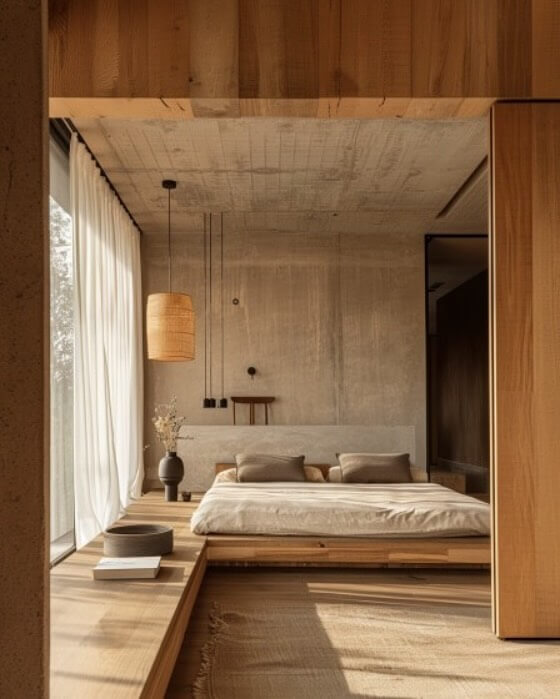
A Japandi nightstand is more than storage—it’s a small altar to daily rhythm. Keep the surface open and intentional: a low bowl or tray to corral essentials, a carafe and glass for evening hydration, a single book, and a hand-thrown ceramic for texture. Add one sensory element—an essential oil, incense, or a stone diffuser—to mark the transition from day to rest. Choose a lamp with a tactile base (wood or clay) and a fabric shade for gentle light. Consider drawers to hide tech, cords, and remotes; out of sight equals out of mind. A small branch or seasonal stem in a narrow vase introduces quiet life without crowding the surface. When everything has a place, you’ll resist the urge to pile mail, receipts, and random objects. This mindful curation turns bedtime into a calming ritual and keeps the aesthetic aligned with slow living. The principle is simple: subtract until what remains feels meaningful. In Wabi-Sabi terms, the patina of a well-used cup or the worn edge of a favorite book only enriches the vignette—authentic, personal, and serene.
Get the Fail-Safe Paint Color Playbook (Free PDF)
36 proven colors • 8 ready palettes • trim & sheen guide • printable testing cards.
Add an Organic Rug or Tatami Layer Underfoot

Soften your bedroom with an organic rug that grounds the furniture and adds barefoot comfort. Jute, sisal, seagrass, or undyed wool deliver the earthy texture central to Japandi and Wabi-Sabi style. For a traditional nod, layer tatami-inspired mats or a large flatweave with a subtle rib that echoes shoji lines. Size matters: choose a rug large enough to extend at least 18–24 inches beyond the sides and foot of the bed so the composition feels intentional. Keep patterns minimal—a faint stripe, herringbone, or tone-on-tone weave is plenty. Rugs don’t just warm the eye; they soften acoustics, reduce echo, and enhance the cocooning effect. If you prefer layered looks, combine a large neutral foundation with a smaller sheepskin or handwoven runner on one side for asymmetrical balance. Stick to natural fibers with matte finishes; glossy synthetics break the serene mood. The result is a tactile base that complements wood furniture, linen bedding, and plastery walls—quiet luxury underfoot that invites slow mornings and grounded evenings.
Showcase Handmade Ceramics and Kintsugi Details
Bring soulful character to a minimalist bedroom with handcrafted objects. A hand-thrown vase, tea bowl, or stoneware lamp introduces organic form and subtle irregularities that embody Wabi-Sabi. Group two or three pieces with varied heights and glazes—matte chalk, earthy iron, soft celadon—to create a calm focal point atop a dresser, shelf, or window ledge. If you have a repaired vessel, celebrate it: kintsugi (gold- or lacquer-mended ceramics) turns breakage into a story of resilience, aligning perfectly with the philosophy of beauty in imperfection. Balance these tactile accents with negative space; let each object breathe so its texture and silhouette can be appreciated. The aim is not cluttered “shelf styling” but quiet punctuation marks within the room’s composition. These small, sincere details pair beautifully with Japandi furniture’s clean lines and a neutral color scheme, adding warmth without visual noise. Over time, the patina of use—fingerprints on clay, softened edges on wood—becomes part of the decor, making the bedroom feel personal, authentic, and enduring.
Discreet, Built-In Storage that Lets Calm Lead
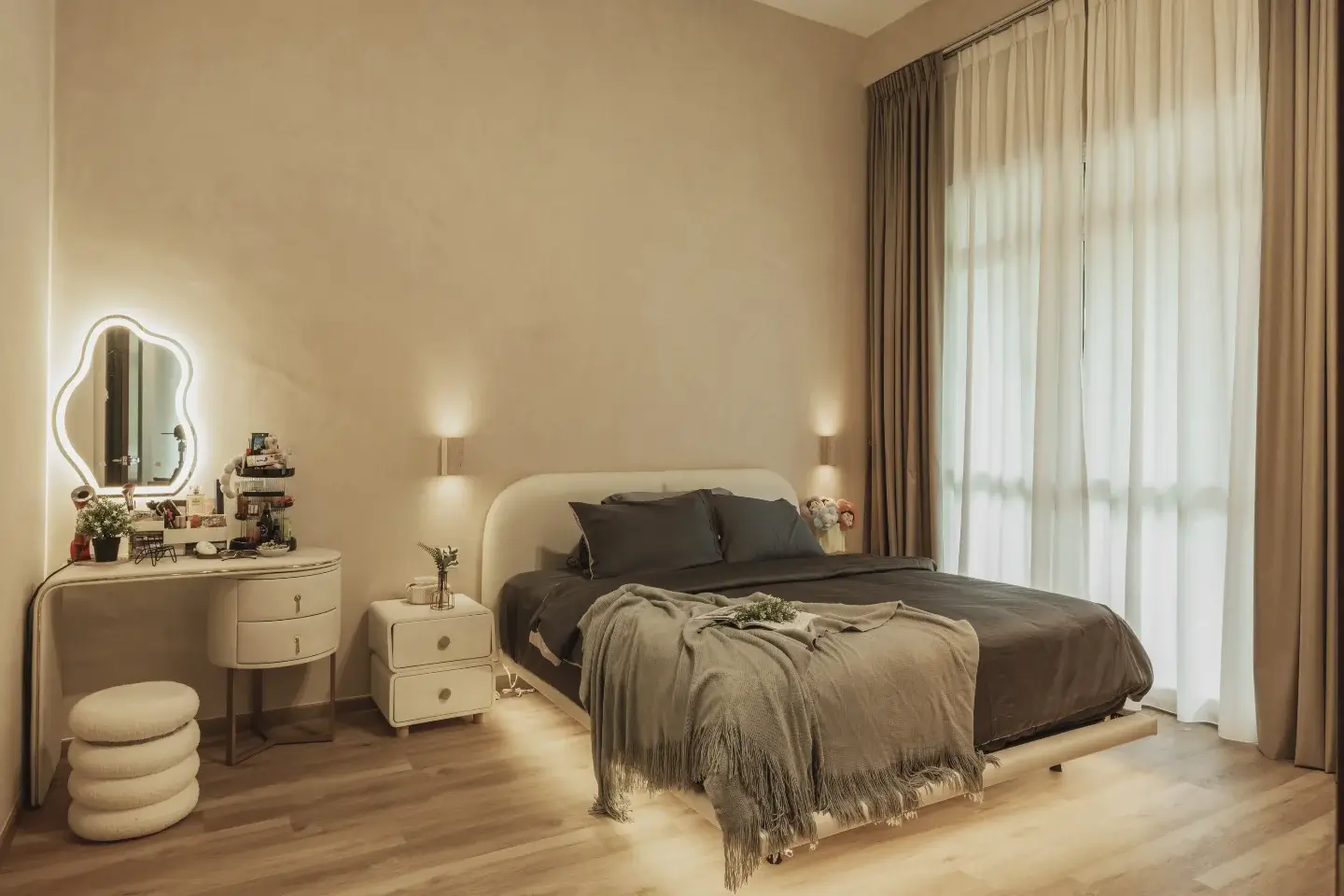
Visual quiet is nonnegotiable in a Japandi and Wabi-Sabi bedroom. Prioritize storage that disappears: flat-front built-ins with integrated pulls, frameless wardrobes, or low dressers that align with the bed’s height to maintain a serene horizon line. Consider linen-front cabinet doors or a simple curtain panel in place of closet doors for a softer, tactile touch. Use under-bed drawers for off-season linens, and a peg rail for robes or a favorite bag—functional and easy on the eyes. Keep finishes consistent across pieces (same wood tone or paint color) so the room reads as one calm volume. Inside, rely on baskets, trays, and dividers to keep categories contained; a tidy interior prevents surface clutter from returning. This approach ensures the star elements—wood grain, textured walls, soft lighting—aren’t overshadowed by visual noise. When storage solutions are quiet and efficient, you gain more negative space and better sleep, which is the true goal of Japandi design: a sanctuary rooted in simplicity, utility, and ease.
Style Seasonal Branches for Biophilic Tranquility
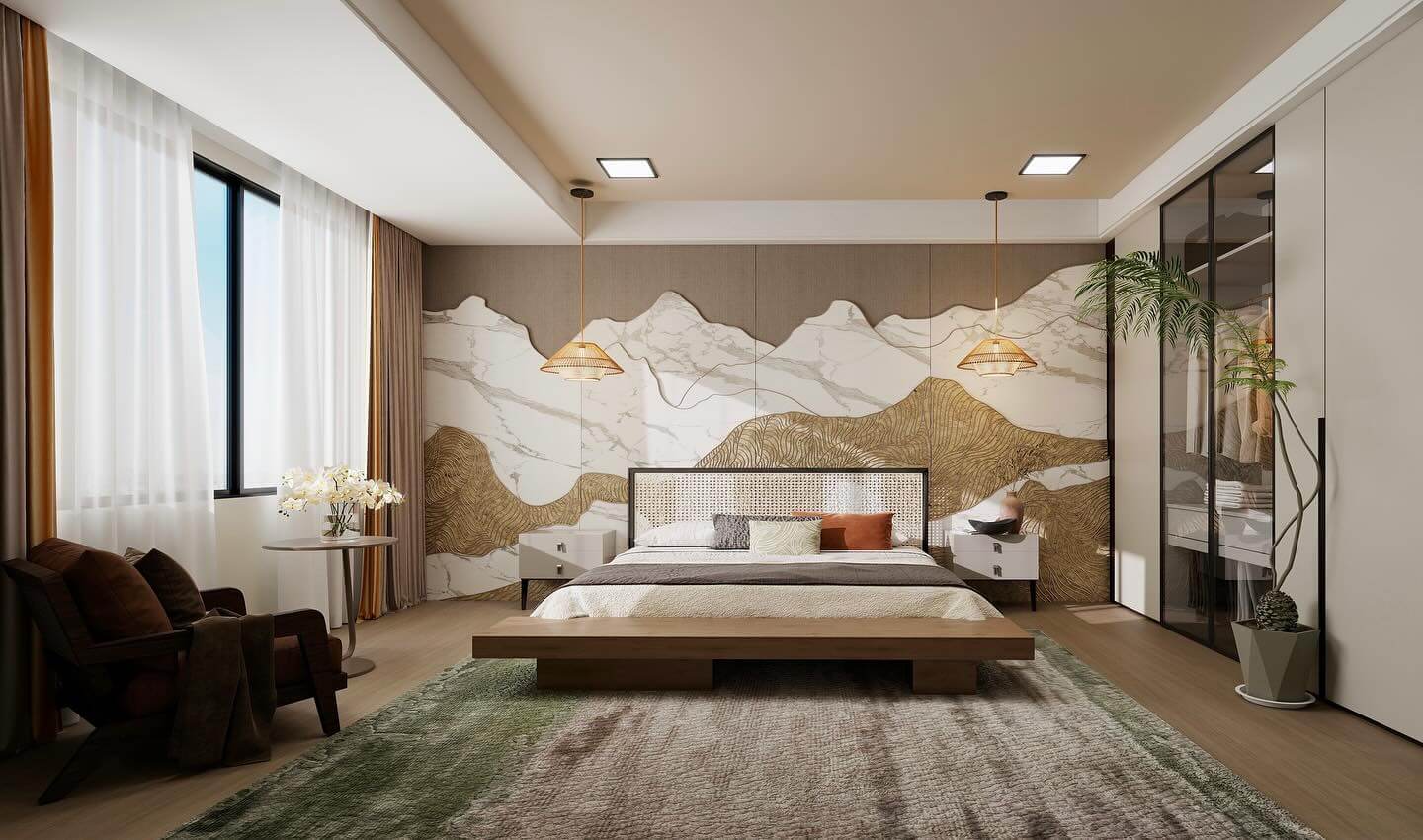
Nature is the most honest decor. In a Japandi bedroom, a single branch in a tall vase can do more than a wall of art. Rotate with the seasons—blossoming quince in spring, olive or eucalyptus in summer, golden leaves in autumn, bare twigs or pine in winter. This subtle change keeps the room alive without introducing clutter or color chaos. Choose a vessel with presence: a textured ceramic, a raw stoneware jug, or a simple glass cylinder. Place it where it can catch light—a corner by the window, on a bench at the foot of the bed, or a low cabinet—to create a living silhouette against your neutral palette. Keep the composition asymmetrical and let a few leaves or bends remain imperfect; Wabi-Sabi embraces the poetry of irregular form. The effect is biophilic and deeply calming, connecting your sleep space to the rhythms outside. Pair with diffused lighting and organic textiles to reinforce the sanctuary mood—quiet, grounded, and restorative.
Light, Layered Linen Drapery for Better Sleep
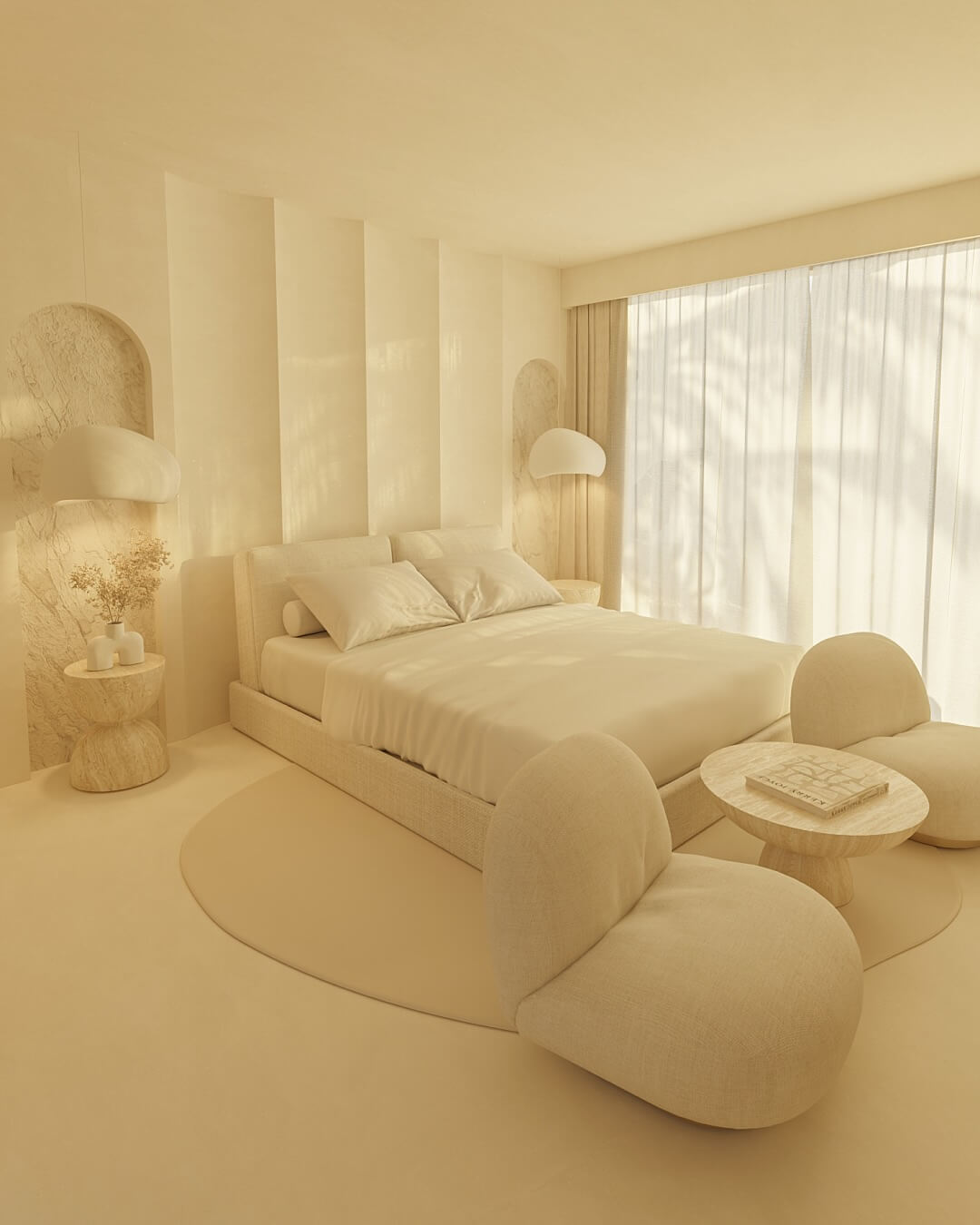
Window treatments can make or break a serene bedroom. Layer sheer linen panels for daytime privacy and soft light, then add a heavier blackout curtain or shade for restful sleep. Mount drapery high and wide to elongate the room and ensure the fabric “kisses” the floor for an elegant, unfussy line. Choose natural fibers—linen, cotton, or bamboo—with a matte finish to complement Japandi materials. If you prefer structure, pair sheers with wood blinds or a textured roller shade in a warm, oat tone. Keep hardware minimal: slim black or bronze rods, or even a discreet ceiling track for a clean architectural look. Stick to neutral drapery that blends with your wall color, allowing texture and light to lead. The result is functional minimalism—privacy, light control, and thermal comfort—without visual bulk. In a Wabi-Sabi spirit, slight slubs and weave variations are a feature, not a flaw, adding life to an otherwise quiet envelope and supporting deeper, more restorative sleep.
Get the Fail-Safe Paint Color Playbook (Free PDF)
36 proven colors • 8 ready palettes • trim & sheen guide • printable testing cards.
Live-Edge Wood Accents for Organic Warmth
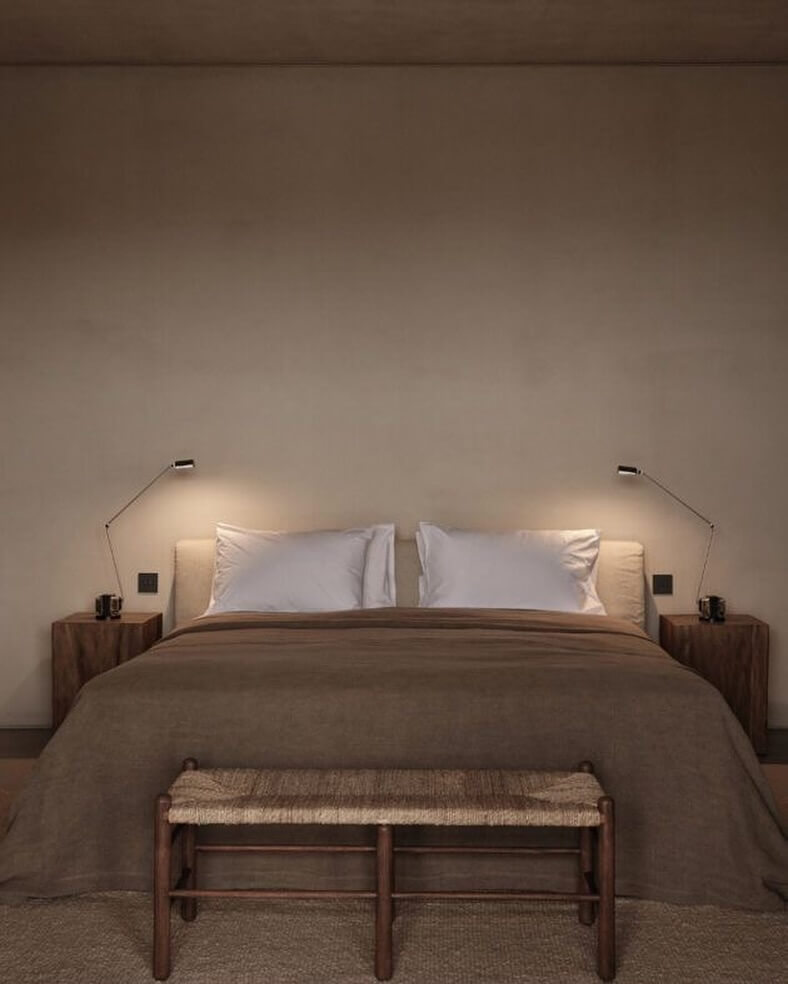
Lean into the soul of Wabi-Sabi by showcasing wood in its most honest form. A live-edge headboard, a low bench at the foot of the bed, or a slim floating shelf brings the forest’s quiet rhythm into a Japandi bedroom without visual noise. The soft, irregular profile breaks up straight lines and adds organic movement to a neutral palette. Choose sustainably sourced oak, ash, or walnut and keep the silhouette minimal so the grain and tactility take the lead. Pair with linen bedding, limewash walls, and a paper lantern for a serene, textural triad. A matte oil finish enhances patina over time—embracing use, not hiding it. Balance the piece with negative space: one handcrafted ceramic, a single branch, or a small stone tray is plenty. This approach blends Scandinavian craftsmanship with Japanese restraint, creating a focal point that’s warm, grounding, and timeless. In small rooms, a narrow live-edge shelf can double as a ledge-style headboard to save space while adding depth and softness to your sleep sanctuary.
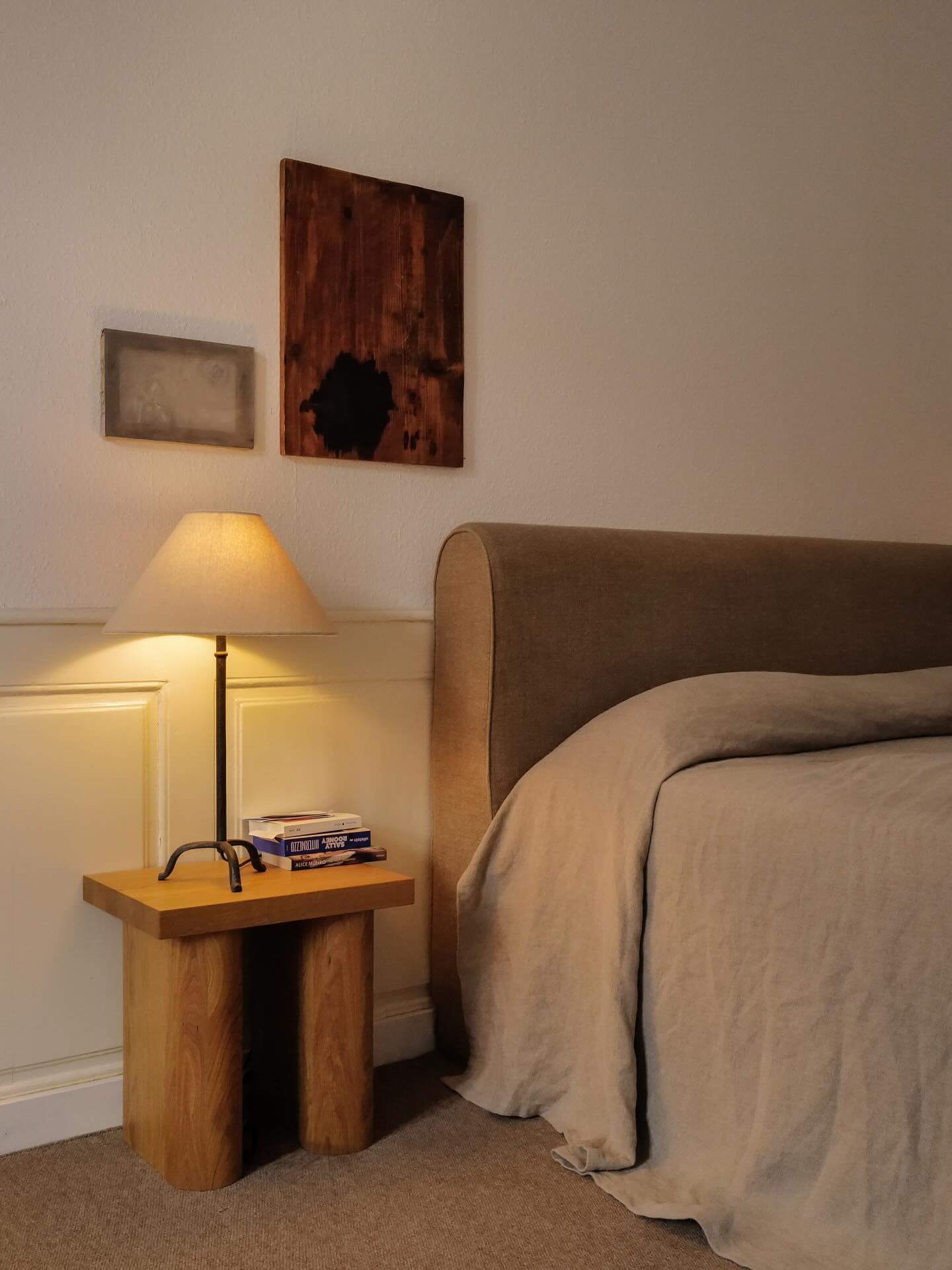
Stone and Plaster Nightstands for Earthy Balance
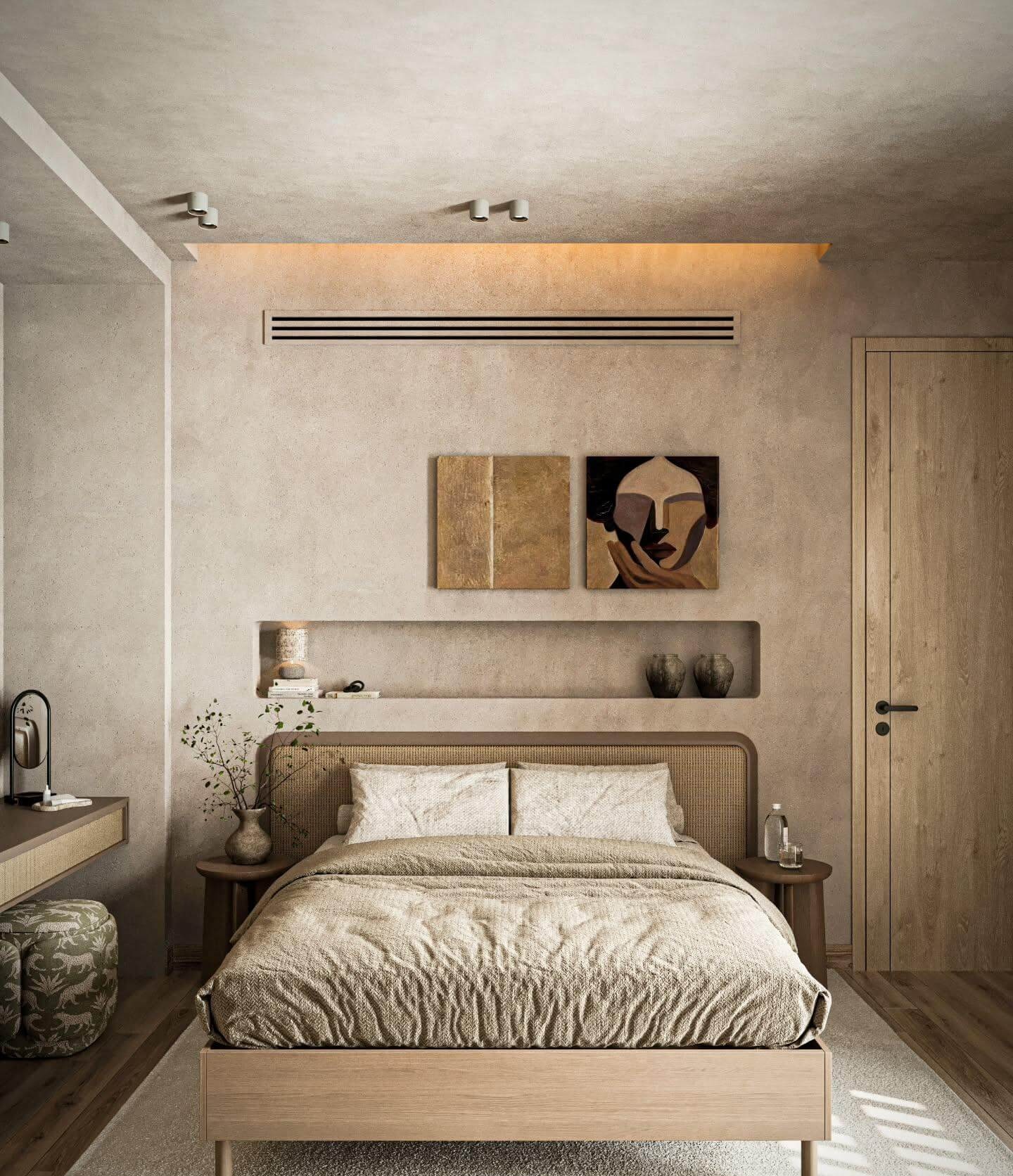
When wood sets the tone, stone steadying the space completes the picture. A petite travertine pedestal, tadelakt (Moroccan plaster) ledge, or honed limestone cube reads calm and elemental in a Japandi bedroom. These mineral surfaces introduce cool weight against warm timber, amplifying the Wabi-Sabi dialogue of contrast and harmony. Keep forms simple and edges softly eased; stone should feel quiet, not showy. Style sparingly: a tea cup, a linen-bound book, a ribbed carafe—useful objects with tactile presence. If you’re working with a small footprint, a built-in plaster shelf “nightstand” keeps the floor clear and sightlines open. Layer a rice-paper sconce above to wash stone with diffused light, and choose a low-color palette—beige travertine, chalky clay, ecru linen—so the materials do the talking. Over time, water rings and micro scuffs will tell a story; that evolving surface is the essence of Wabi-Sabi beauty and a subtle reminder to slow down.
Embrace Asymmetry and Negative Space
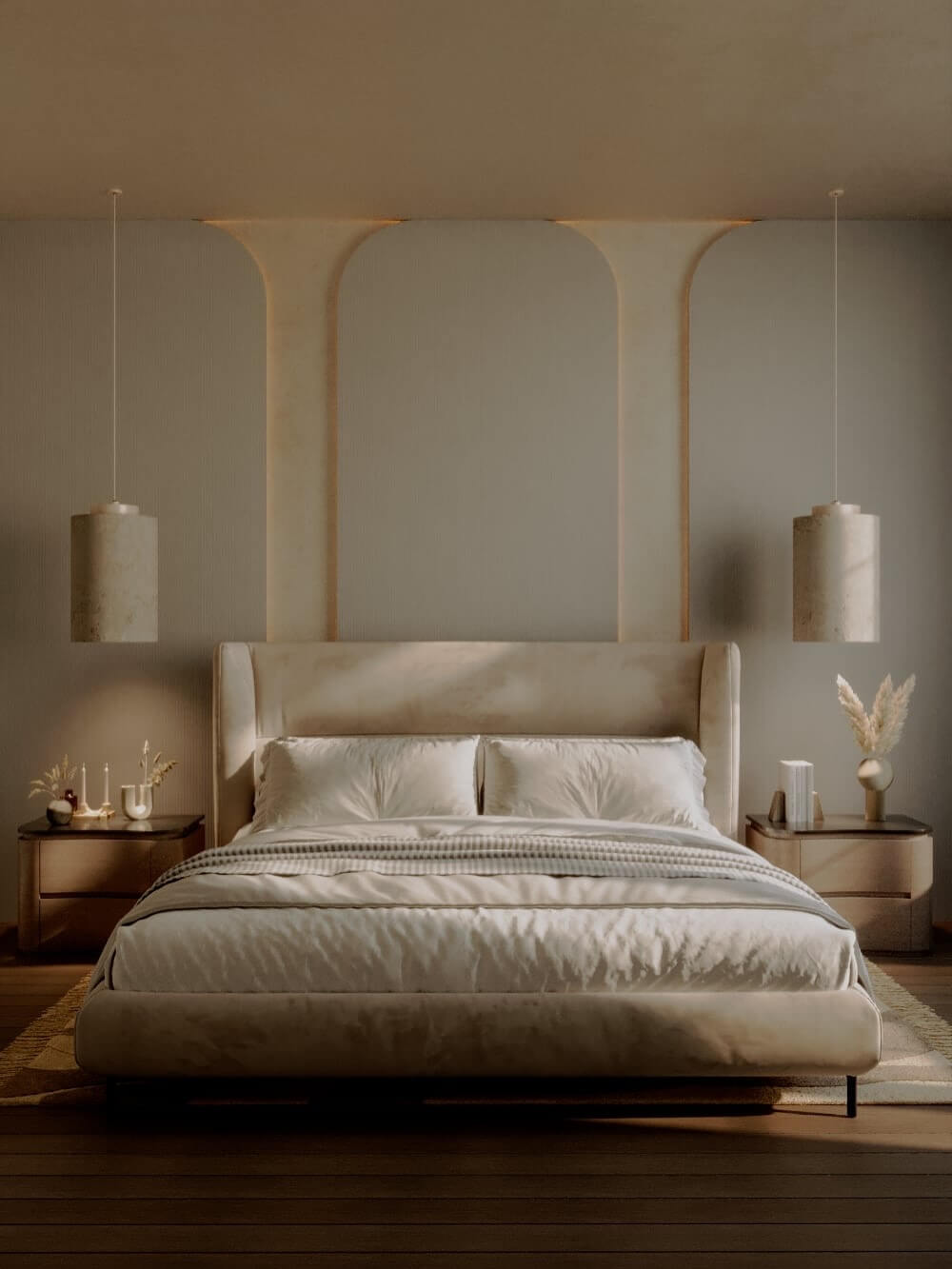
Japandi and Wabi-Sabi interiors feel calm because they breathe. Instead of perfect pairs and over-styling, compose your bedroom with purposeful asymmetry. Offset the bed slightly from center, hang a single pendant on one side, and use a stool or stone block as the only nightstand. Leave a stretch of wall art-free to let limewash texture or grain-rich wood become quiet “art.” This controlled imbalance, rooted in Japanese aesthetics, brings gentle movement without clutter. Apply the rule of thirds to guide placement, and anchor compositions with one substantial element—a live-edge bench, a slatted headboard, or a large ceramic—so the eye rests easily. Maintain low profiles and generous margins around furniture to protect negative space; emptiness is a design tool here, not a gap to fill. The result is a bedroom that feels curated yet effortless—soft, grounded, and naturally human—where every object has room to resonate and your nervous system has room to exhale.
Layer Linen and Cotton for Breathable Texture
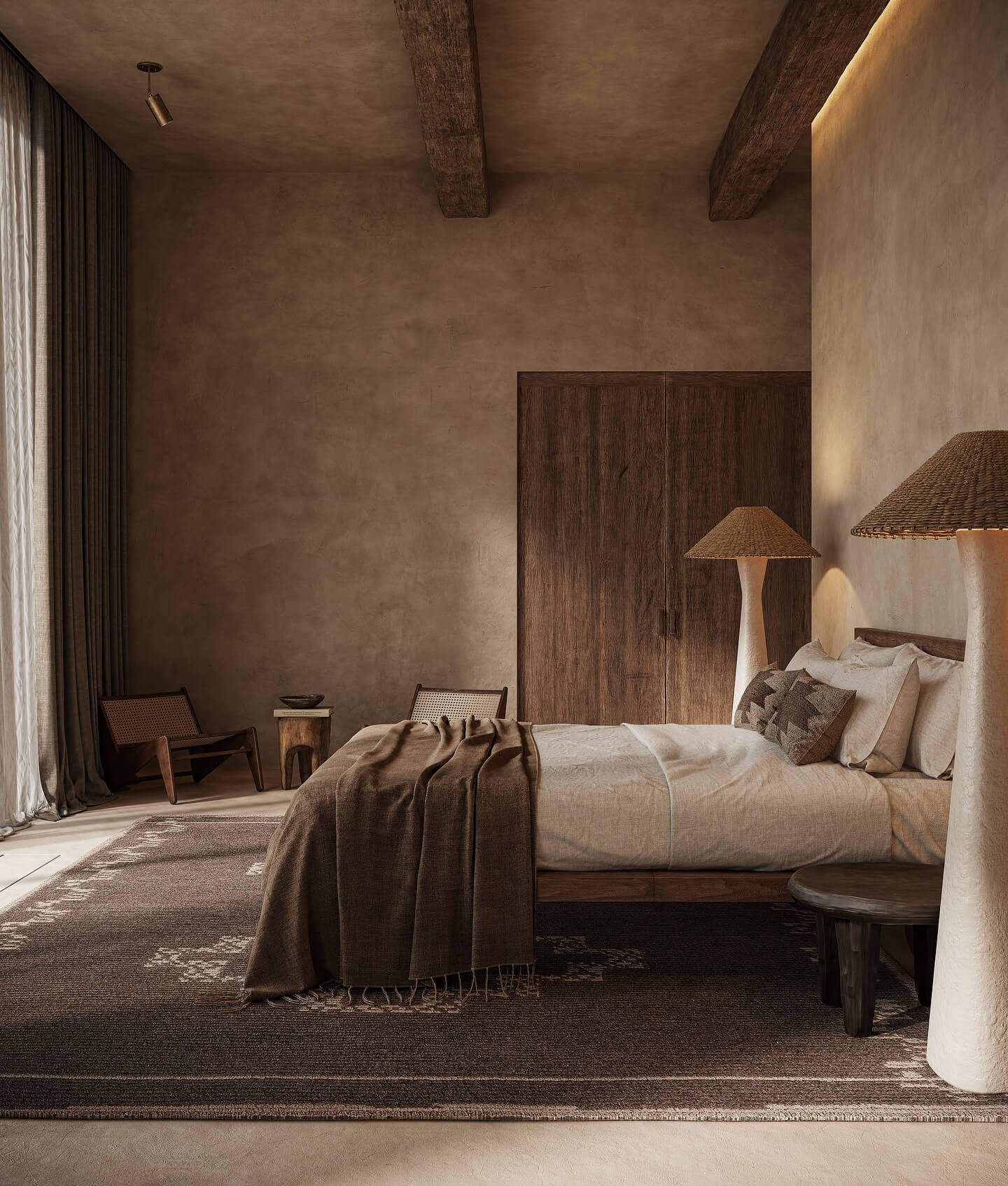
Textile layering is where comfort meets restraint. Build a Japandi bedscape with washed linen sheets, a medium-weight cotton percale, and a gauzy matelassé or flax throw for tactile nuance without bulk. Keep tones tonal—oat, stone, mushroom, warm white—so shadows, not color, create depth. In cooler months, add a thin wool blanket for loft; in summer, swap to a lightweight coverlet and let the weave do the talking. Mix subtle patterns (herringbone, narrow stripe) with solids to keep the look lively but calm. Embrace creases and slubs; the lived-in texture embodies Wabi-Sabi and invites daily ease. For proportion, drape the blanket with 8–10 inches overhang and tuck minimally to keep silhouettes unfussy and low. Finish with two sleeping pillows and one lumbar cushion rather than a pile, preserving the bedroom’s minimalism and sleep-first ethos. Breathable, natural fibers regulate temperature, support better rest, and age beautifully—a quiet luxury you feel every night.
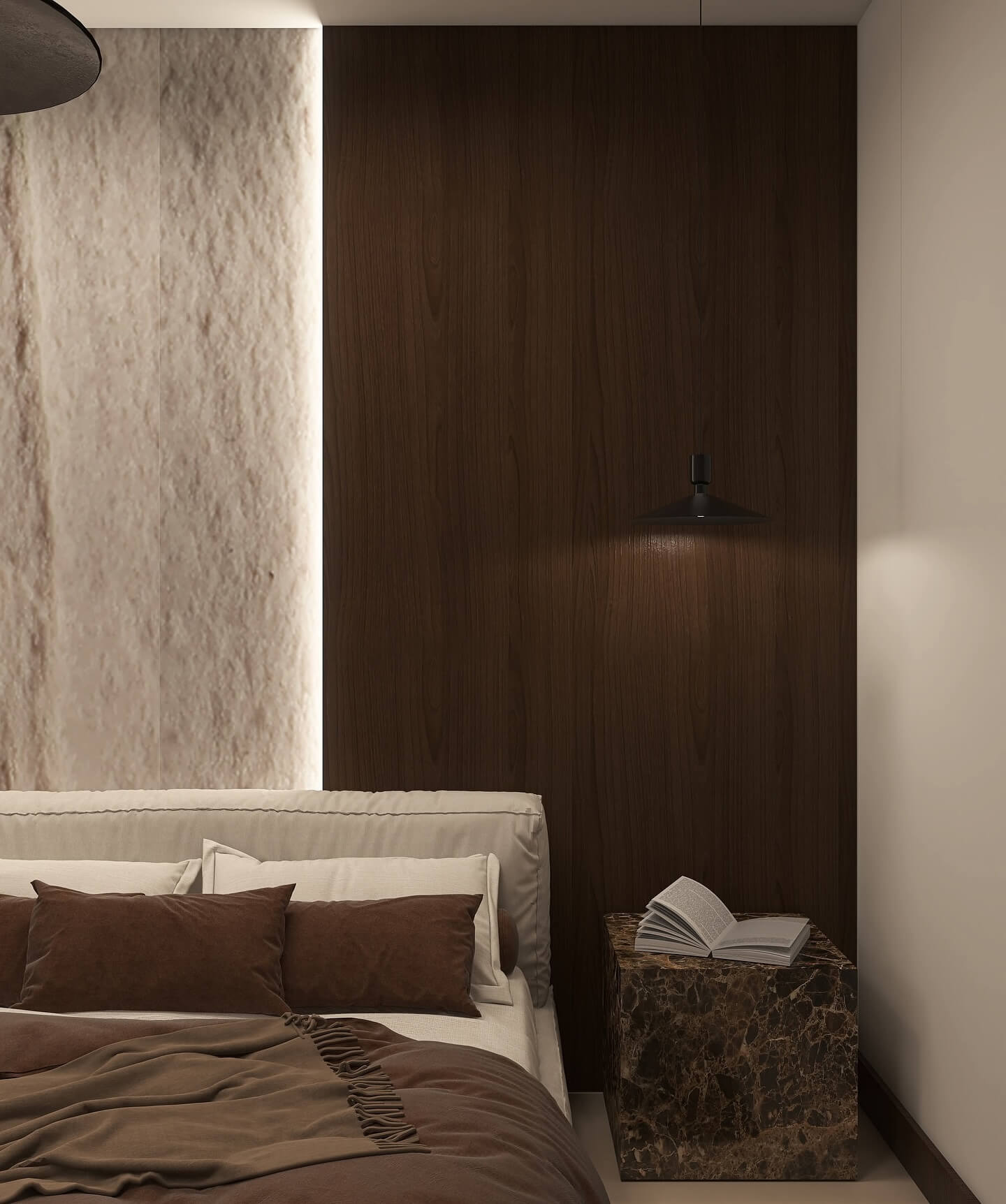
Slatted Wood Headboard for Quiet Rhythm
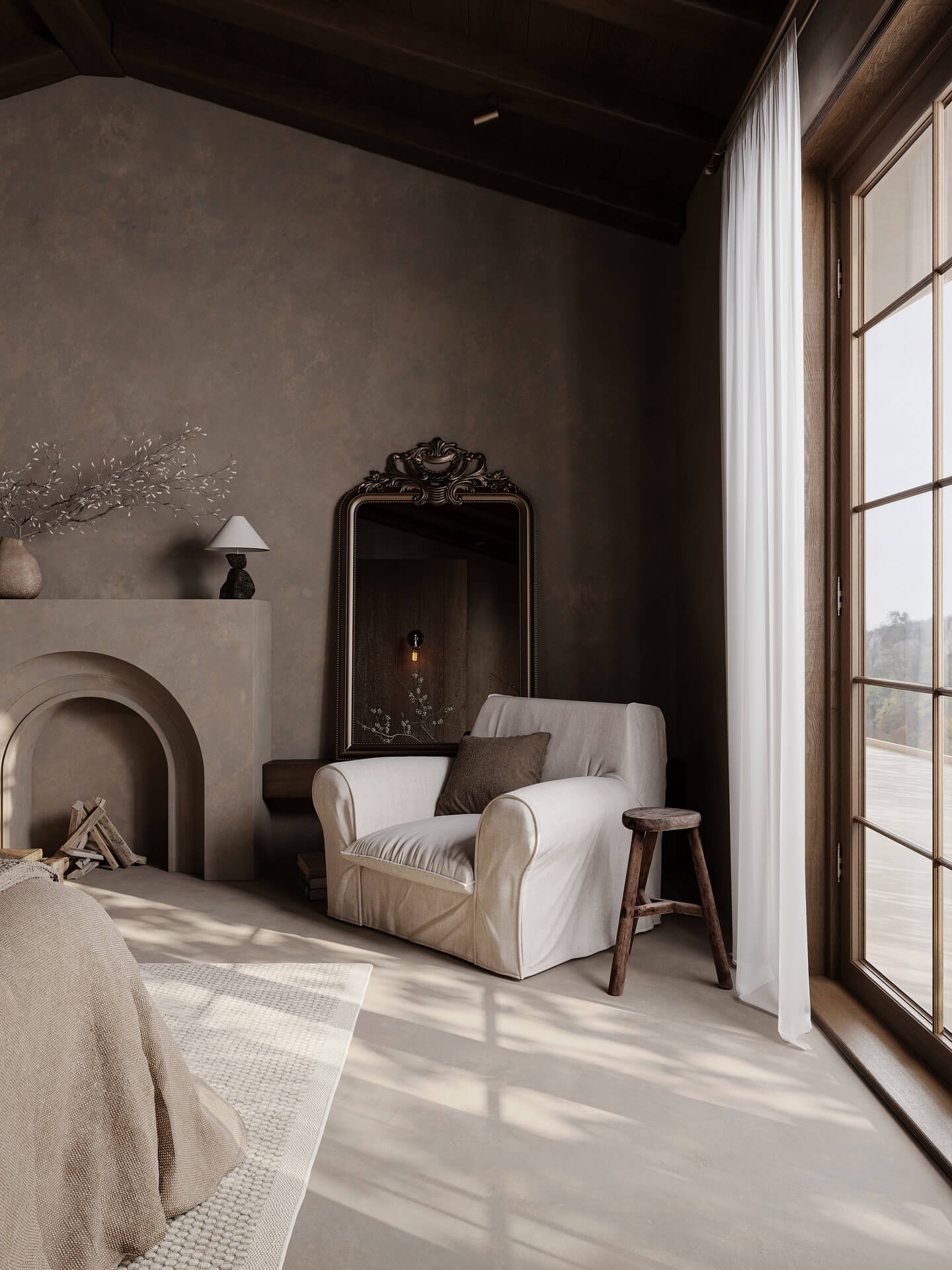
A slatted headboard or accent wall adds gentle cadence without shouting. Vertical oak or ash slats, spaced evenly and finished in matte oil, create a soft shadow play that reads both Scandinavian and Japanese. The linear texture introduces acoustic comfort and visual structure while keeping the palette neutral and calm. Let the slats rise just above pillow height in small rooms, or run them full-height for a cocooning effect behind a low platform bed. Integrate a narrow ledge for books and ceramics, and consider hidden cord routes to keep tech discreet. Warm, 2700K lighting grazed across the slats enhances depth at night, pairing beautifully with paper lanterns elsewhere in the room. Balance the rhythm with smooth elements—stone side tables, linen drapery, and a plain-woven rug—to avoid over-patterning. As the wood patinates, slight color shifts and micro dents will enrich the Wabi-Sabi story, proving that quiet materials can shape-shift gracefully with daily life.
Ikebana and Bonsai Moments with Intention
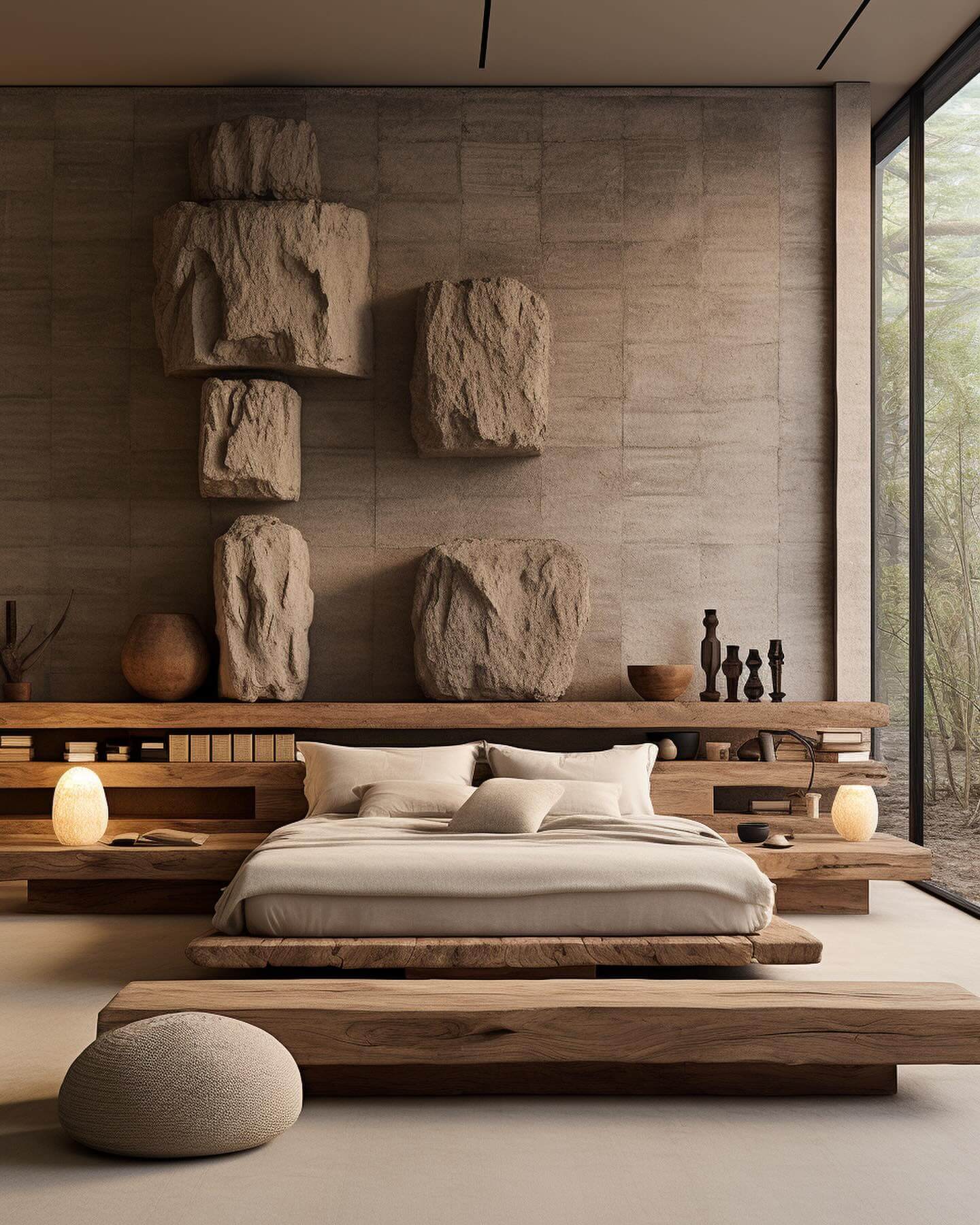
While seasonal branches bring scale, ikebana and bonsai offer intimacy. A single stem arranged in a shallow kenzan bowl or a small bonsai on a windowsill adds mindful presence and sculptural line to a Japandi bedroom. Choose varieties with graceful movement—willow, quince, or pine—and let negative space around the arrangement amplify its form. Place compositions where you can see them from bed or a meditation cushion; design is most powerful when it meets ritual. Pair with a handmade ceramic vessel and a linen runner on a low dresser to anchor the vignette. Keep care simple: weekly water checks, gentle pruning, and bright, indirect light. This small-scale biophilic touch complements, rather than competes with, larger greenery or textural walls. It’s a humble practice that celebrates impermanence—the bloom that fades, the branch that dries—an elegant expression of Wabi-Sabi that softens minimal decor and deepens your sanctuary’s sense of life.
A Floor-Level Meditation Nook

Design a quiet corner that supports slow living: a tatami mat, a zabuton cushion, and a low shikibuton or rattan chair invite daily pause in a Japandi bedroom. Keep the palette tone-on-tone and the forms unfussy so the nook feels like an extension of your bed’s calm. A slim paper screen or linen panel can define the area without heavy walls, and a small tray with incense, a sand timer, and a stone or two sets an easy ritual. Store everything in a woven basket when not in use to preserve negative space. Situate the nook near natural light, but use a dimmable lantern for evening wind-down. The goal isn’t a styled corner; it’s a functional refuge that quiets the mind. This purposeful zone brings the ethos of Wabi-Sabi to life—presence over perfection, process over display—and helps your bedroom operate as a true sanctuary from morning stretch to evening reflection.
Natural Aroma Rituals: Hinoki, Incense, and Beeswax
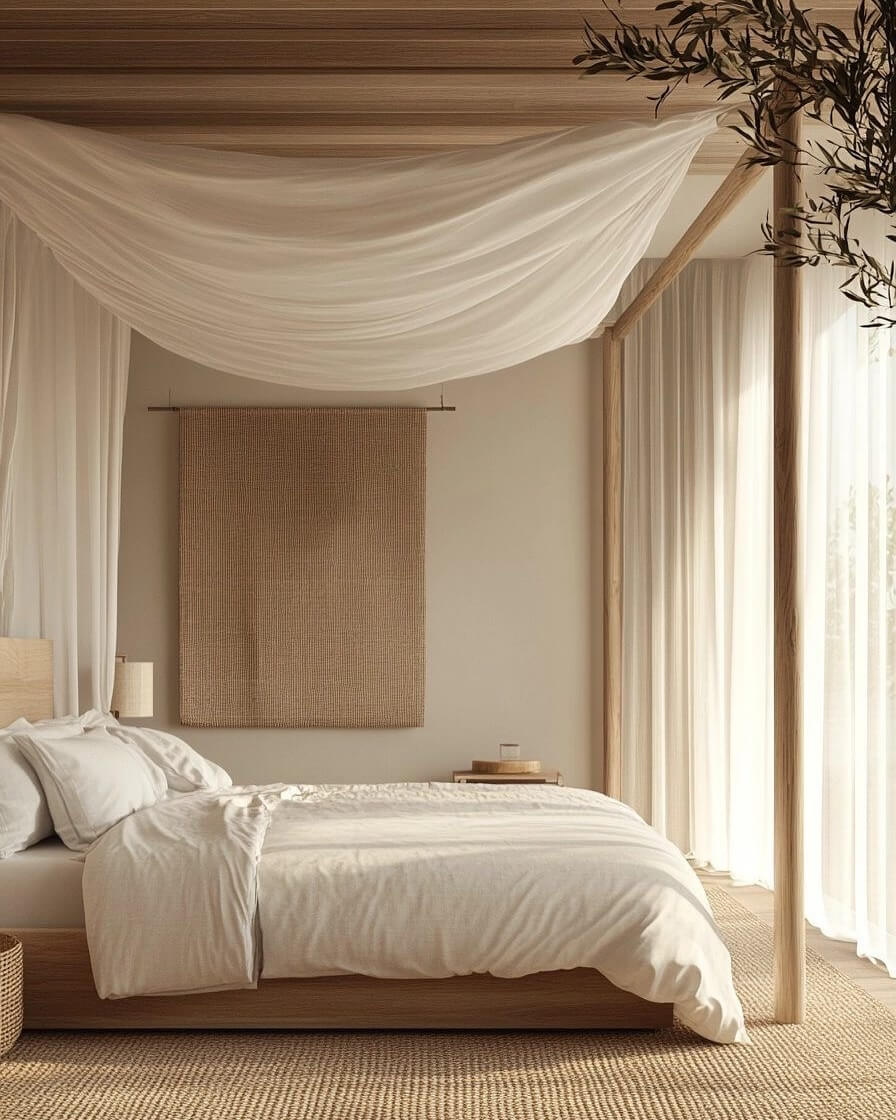
Scent is the invisible layer of a serene bedroom. Choose natural aromas that echo Japandi materials: hinoki or cedar for clarity, rice powder and white tea for softness, and beeswax candles for a honey-warm glow. A stone or ceramic diffuser keeps the palette tactile and the silhouette minimal; place it on a plaster ledge or stone nightstand for earthy harmony. Try a single Japanese incense stick in the evening to mark the shift to rest—subtle, not smoky. Rotate scents seasonally so the room feels alive but never overstimulating. Keep vessels simple and reusable, and store refills in a lidded basket to avoid visual clutter. Ventilate gently and practice fire safety: extinguish before sleep and keep flames away from textiles. This quiet ritual turns bedtime into a sensory decompression, complementing linen bedding, paper lantern light, and negative space to deepen the Wabi-Sabi experience of calm, lived-in beauty.
Woven Storage: Seagrass, Paper Cord, and Peg Rails
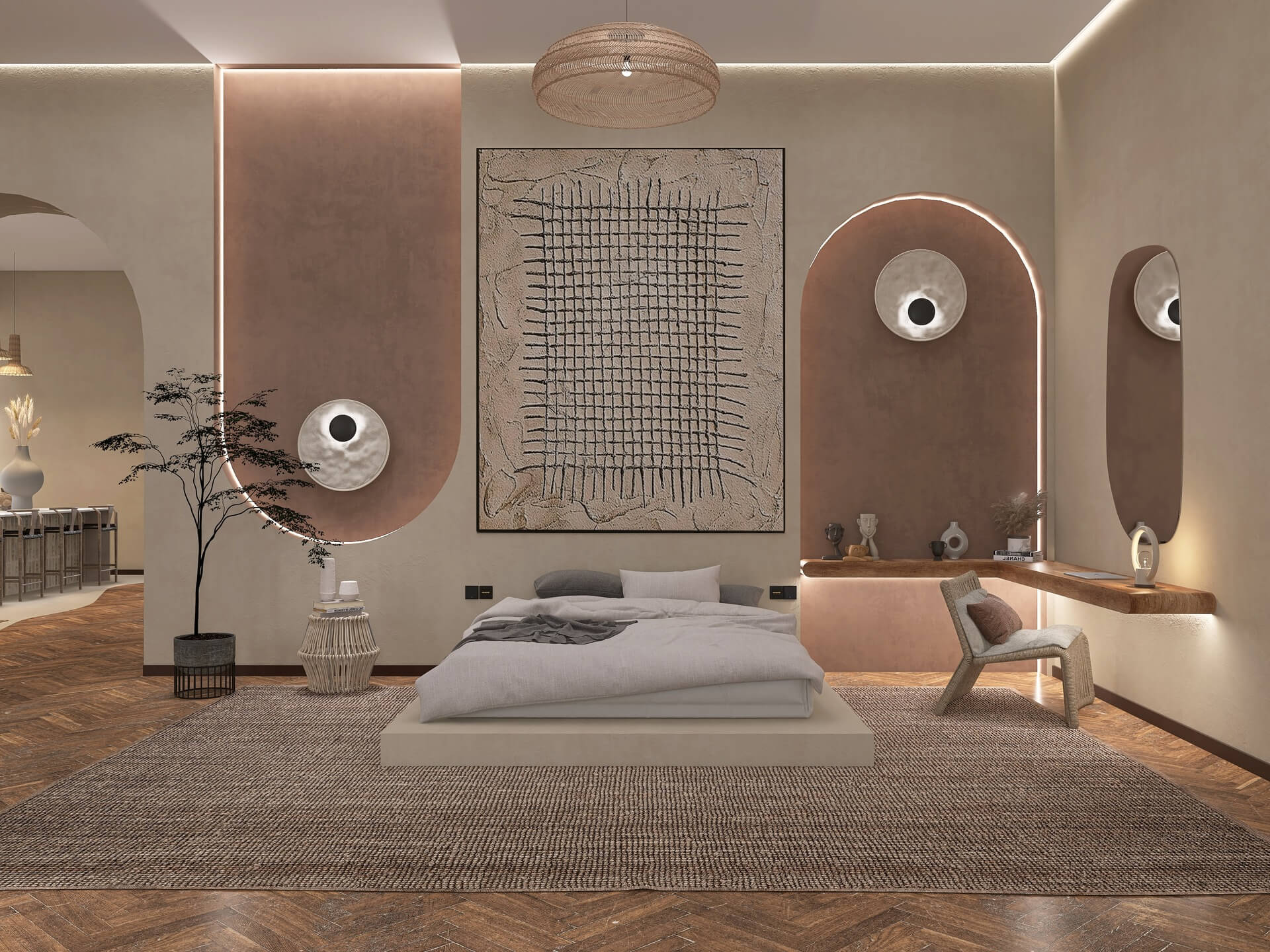
Decluttering is easier when storage is beautiful. Introduce woven baskets under a platform bed, a paper-cord bench at the foot, and a simple peg rail to keep essentials tidy yet tactile. These natural fibers add subtle pattern and warmth to a Japandi bedroom while preserving the minimal aesthetic. Choose lidded baskets for off-season linens and open totes for nightly rotation—throw, book, diffuser oil—so routines stay intuitive. A Shaker-style peg rail doubles as decor: hang a linen robe, a straw broom, or a small bundle of branches to keep surfaces clear and the room breathable. Keep finishes cohesive—oiled oak, ecru cord, and soft white walls—so storage blends in rather than shouts. Over time, sun-kissed fibers and gentle fray enhance Wabi-Sabi charm, making organization feel less like management and more like a natural part of daily life. The result is visual quiet, better sleep hygiene, and a sanctuary that stays effortlessly ordered.
Textural Wall Art: Washi Scrolls and Ink Wash
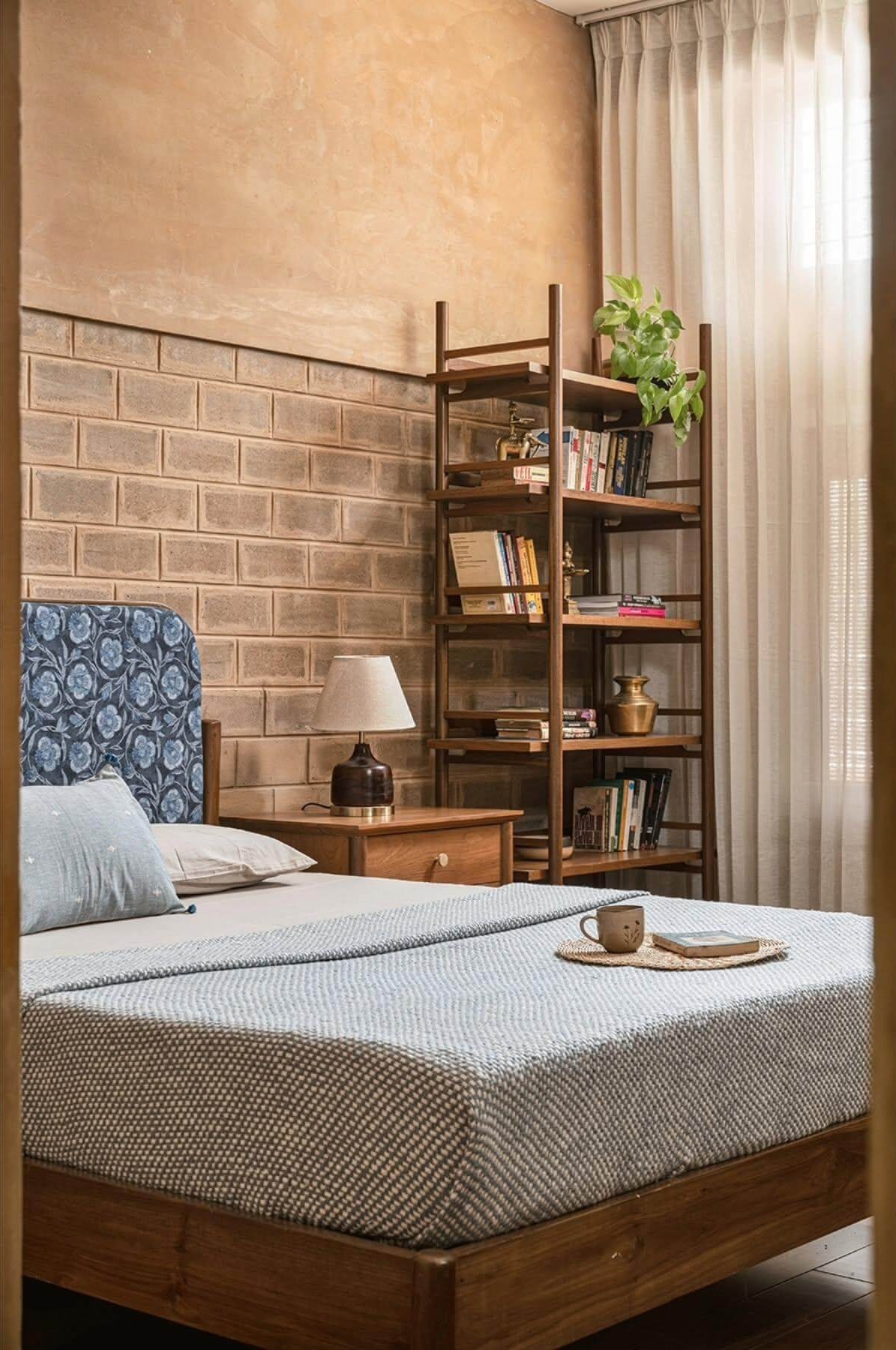
Art in a Japandi bedroom should soothe, not stimulate. Opt for a washi paper scroll, a sumi-e ink wash, or a handwoven textile panel that reads as texture before image. These pieces carry Japanese lineage and Scandinavian restraint, introducing soft movement and shadow play without bright color. Hang low above a slatted headboard or bench to keep the room’s visual weight grounded. Use slim wood rails, linen tape, or discreet clips instead of heavy frames to maintain lightness. Pair one large piece with surrounding negative space, or create an asymmetrical duo to echo Wabi-Sabi balance. When possible, commission or source handmade works—the slight inconsistency of brushstroke or weave tells a human story that deepens the room’s calm. Keep the palette tight—charcoal, warm grey, tea-stained cream—so art harmonizes with limewash walls, linen drapery, and paper lantern light. The result is a serene focal point that whispers, not shouts.
Wabi Sabi Bedroom Ideas: Embracing Imperfection, Organic Texture, and Timeworn Beauty
Wabi Sabi celebrates imperfect, handmade, and timeworn elements that feel honest, soulful, and serenely lived-in. Favor earthy hues—clay, sand, stone, and soot—over crisp brights, allowing patina to read as character. Limewash or clay-plaster walls add movement, depth, and a soft chalky matte that gently catches light. Choose furniture with knots, visible joinery, tool marks, and irregular edges to convey human touch. Let textiles look naturally rumpled rather than overly styled, communicating ease and authenticity. Light should be low, layered, and warm, with paper shades and ceramic lamps casting quiet, forgiving shadows.
Get the Fail-Safe Paint Color Playbook (Free PDF)
36 proven colors • 8 ready palettes • trim & sheen guide • printable testing cards.
Textured, imperfect accents to try:
- Limewashed walls introduce softly variegated color and texture, masking minor imperfections while reflecting light in a diffuse, calming way that pairs beautifully with raw wood and stone accents.
- A reclaimed wood headboard with visible knots, checks, and uneven edges adds storied character, anchoring the bed with tactile warmth that deepens over time.
- Hand-thrown ceramic lamps showcase subtle warping, drippy glazes, and thumbprints, delivering intimate glow and human presence instead of factory-perfect symmetry.
- Rumpled linen bedding in clay or flax tones welcomes honest creases, inviting rest and reducing the pressure of pristine styling that fights natural rhythms.
- A kintsugi-style bowl on the nightstand highlights repaired cracks with gold pigment, transforming breakage into beauty and reinforcing acceptance of imperfection.
- A branch arrangement in a rough vase provides sculptural asymmetry, casting gentle shadows that shift throughout the day, echoing seasonal changes without fuss.
- A stone or plaster stool doubles as a bedside table, its irregular surface adding tactility while keeping forms simple, grounded, and visually quiet.
- A timeworn wool rug with faded pattern softens acoustics and introduces muted color, letting age and abrash tell a subtle story underfoot.
- Layered throws—nubby alpaca and chunky cotton—offer tactile variation without ornament, encouraging touch and incremental warmth through cooler months.
- Patinated metal hardware in darkened brass or iron complements raw wood, adding depth and a sense of permanence that improves as finish wears naturally.
Keep arrangements asymmetrical and intuitive—two different bedside solutions often feel more soulful than a matched pair. Let blank wall sections remain blank to preserve breathing room and visual rest. Choose fewer objects with more meaning, such as a handwoven basket or a vintage stool with visible repairs. Avoid high-gloss finishes; matte and eggshell sheens flatter texture and reduce glare. Finally, embrace slow layering—add one well-loved piece at a time so the room evolves with your life.
Ask the Aesthetic: Practical Japandi + Wabi Sabi Bedroom Guidance
How do I combine Japandi and Wabi Sabi without clashing?
Lead with shared values: restraint, natural materials, and warmth. Use Japandi for structure—low profiles, neutral palette—and weave Wabi Sabi through imperfect textures, handmade lighting, and a few storied, timeworn accents.
What colors work best for these styles in a bedroom?
Choose warm neutrals: soft white, oat, greige, clay, and muted charcoal. Layer two to three tones across walls, bedding, and rugs for depth without visual clutter or contrast fatigue.
Get the Fail-Safe Paint Color Playbook (Free PDF)
36 proven colors • 8 ready palettes • trim & sheen guide • printable testing cards.
How can I keep the room minimalist yet cozy?
Prioritize tactile layers—linen, wool, jute—over decorative clutter. Use dimmable warm lighting, a plush yet simple rug, and one meaningful object per surface to maintain calm and comfort.
Are there budget-friendly ways to get the look?
Yes. Limewash paint, secondhand solid-wood pieces, handmade ceramics from local makers, and simple linen bedding deliver major impact. Edit ruthlessly, buy fewer items, and favor quality finishes over quantity.
Final Verdict: Craft a Quiet Bedroom That Breathes
Japandi and Wabi-Sabi aren’t trends—they’re timeless mindsets that favor restraint, authenticity, and nature as the true designer. By paring back to a neutral palette, choosing honest materials like wood, linen, stone, and paper, and letting negative space speak, you create a bedroom that calms the eye and settles the nervous system. The result is a serene retreat where soft lighting, tactile layers, and considered silhouettes work in harmony for better rest.
Start small and intentional: clear visual clutter, add a low-slung bed or slatted headboard, introduce layered linens, and bring in one organic focal point—perhaps a live-edge accent, ikebana moment, or handmade ceramic. From there, let the room evolve with the seasons through branches, aroma rituals, and subtle texture shifts. Prioritize quality over quantity, welcoming patina and imperfection as part of the story rather than flaws to hide.
When your bedroom reflects mindful living—quiet storage, gentle illumination, breathable fabrics, and nature-forward details—it becomes more than stylish; it becomes restorative. Lean into what feels grounding, keep only what’s useful or beautiful, and allow space for stillness. That’s the essence of a Japandi and Wabi-Sabi sanctuary.