
Moody Bedroom Aesthetic Ideas | Dark & Cozy Vibes
A moody bedroom isn’t just dark paint—it’s an atmosphere. Think shadowy corners, soft glows, and rich textures that make your space feel intimate, elevated, and instantly calming. By embracing deeper hues and intentional contrast, you’ll create a retreat that feels both cozy and cinematic.
In this list, you’ll find smart ways to layer lighting, curate color palettes, and mix textures—linen with velvet, matte with gloss, wood with metal—for depth and dimension. We’ll also explore wall treatments, art placement, window drapery, and styling moves that add drama without overwhelming the room.
Get the Fail-Safe Paint Color Playbook (Free PDF)
36 proven colors • 8 ready palettes • trim & sheen guide • printable testing cards.
Whether you lean modern, boho, industrial, or luxe, these ideas are practical and adaptable. From renter-friendly tweaks to full-on transformations, you’ll get precise, doable tips for building a moody bedroom aesthetic that looks stunning by day and glows beautifully at night.
Color Palettes and Lighting Layers for Moody Bedroom Aesthetics
Moody bedrooms begin with saturated, low-LRV paints that absorb light and quiet visual chatter. Choose complex hues like charcoal, midnight navy, forest green, or aubergine with grayed undertones for sophistication. A matte or eggshell finish mutes glare, while color-drenching walls, trim, and ceilings creates an enveloping cocoon. Consider two-tone schemes or wainscot to preserve architectural interest without bright contrast. Limewash and textured paints add movement that reads romantic instead of flat. Always sample in different corners to judge undertones under daylight and amber night lighting.
- Charcoal Envelope: Saturated charcoal on walls and ceiling compresses the room pleasantly, amplifying intimacy while showcasing warm wood tones and brass accents.
- Midnight Navy Walls: Deep navy with gray undertones calms visual noise, pairing beautifully with bone linen curtains and smoked oak furniture.
- Forest Green Cocoon: Moss-to-forest gradient adds depth without black, working with leather, rattan, and aged bronze for biophilic warmth.
- Aubergine Accent: A single plum wall behind the headboard anchors the bed, flattering skin tones and velvet textures.
- Two-Tone Wainscot: Paint the lower third darker than the upper for grounded contrast that’s cozy, practical, and sophisticated.
- Smoked Taupe Ceiling: A darker ceiling lowers the visual lid, improving sleep cues and spotlighting softly glowing pendants.
- Matte Black Trim: Low-sheen black casings and baseboards frame views and art, sharpening silhouettes.
- Cocoa Limewash: Mineral limewash in cocoa-brown creates cloudy movement that feels artisanal and diffuses light beautifully.
- Shadowy Mural: Tonal botanical or mountain mural introduces depth without brightness, acting like a window to nightfall.
- Blackout Drapery: Floor-to-ceiling blackout panels in inky fabric deepen the mood and enhance sleep quality.
Lighting should layer ambient, task, and accent sources to sculpt shadows rather than fight them. Choose dimmable bulbs at 2200–2700K for warmth, and prioritize opaque shades that cast downward pools. Use wall washers, picture lights, and LED strips behind headboards to graze texture without glare. Swap overhead cans for shaded pendants or a low-lumen chandelier that glows, not blasts. Place lamps asymmetrically to avoid hotel stiffness and to create cinematic vignettes at night. Finish with candles or flameless tapers to introduce flicker that flatters color and skin tone.
Paint It Deep: Charcoal Walls for Instant Atmosphere
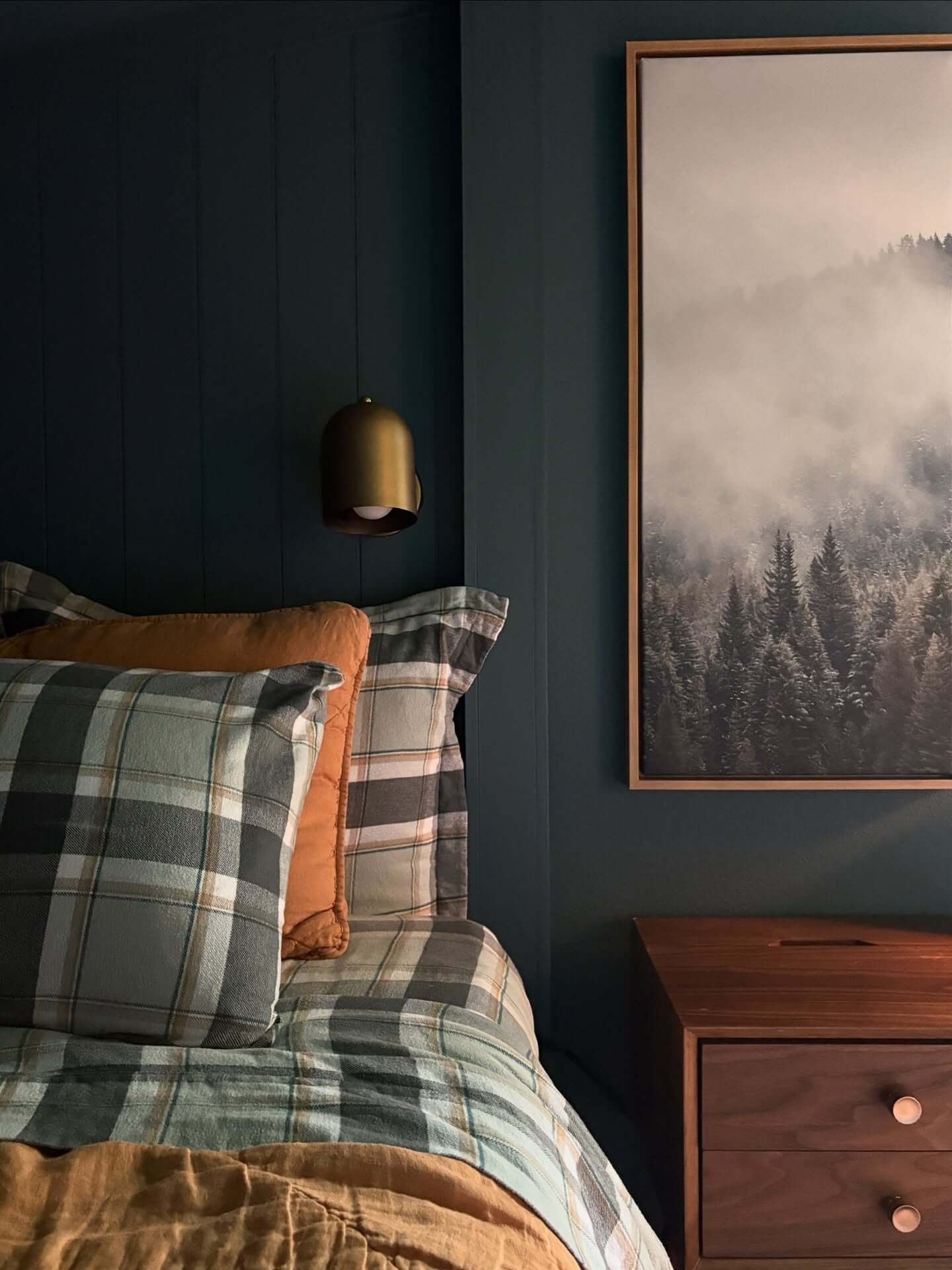
If you want a true moody bedroom aesthetic, begin with color that absorbs light rather than reflects it. A deep charcoal, inky navy, forest green, or espresso brown instantly compresses visual noise and makes everything else feel more intentional. Test undertones first: cool charcoals can skew blue; warm blacks pick up brown or plum. Opt for matte or eggshell walls to soften glare and keep the mood cinematic, then consider color-drenching the trim, doors, and even the ceiling for a cocoon effect. If you’re hesitant, paint just the headboard wall in a slightly darker value than the others. Elevate contrast with warm metals (antiqued brass, bronze) and creamy textiles that glow against the darkness. At night, 2200–2700K bulbs will warm the paint beautifully; by day, sheer drapery will keep shadows velvety instead of flat. For renters, removable paint or rich wallpaper in a tonal pattern (pinstripe, micro-floral, grasscloth) delivers depth without permanence. Don’t forget finish interplay: pair matte walls with a satin or semi-gloss trim for subtle sheen that frames the room, and use a sample board to view how the shade shifts from morning to midnight. Your space will feel instantly grounded, intimate, and serene.
Layered Lighting: Sconces, Lamps, and a Dimmer-First Mindset
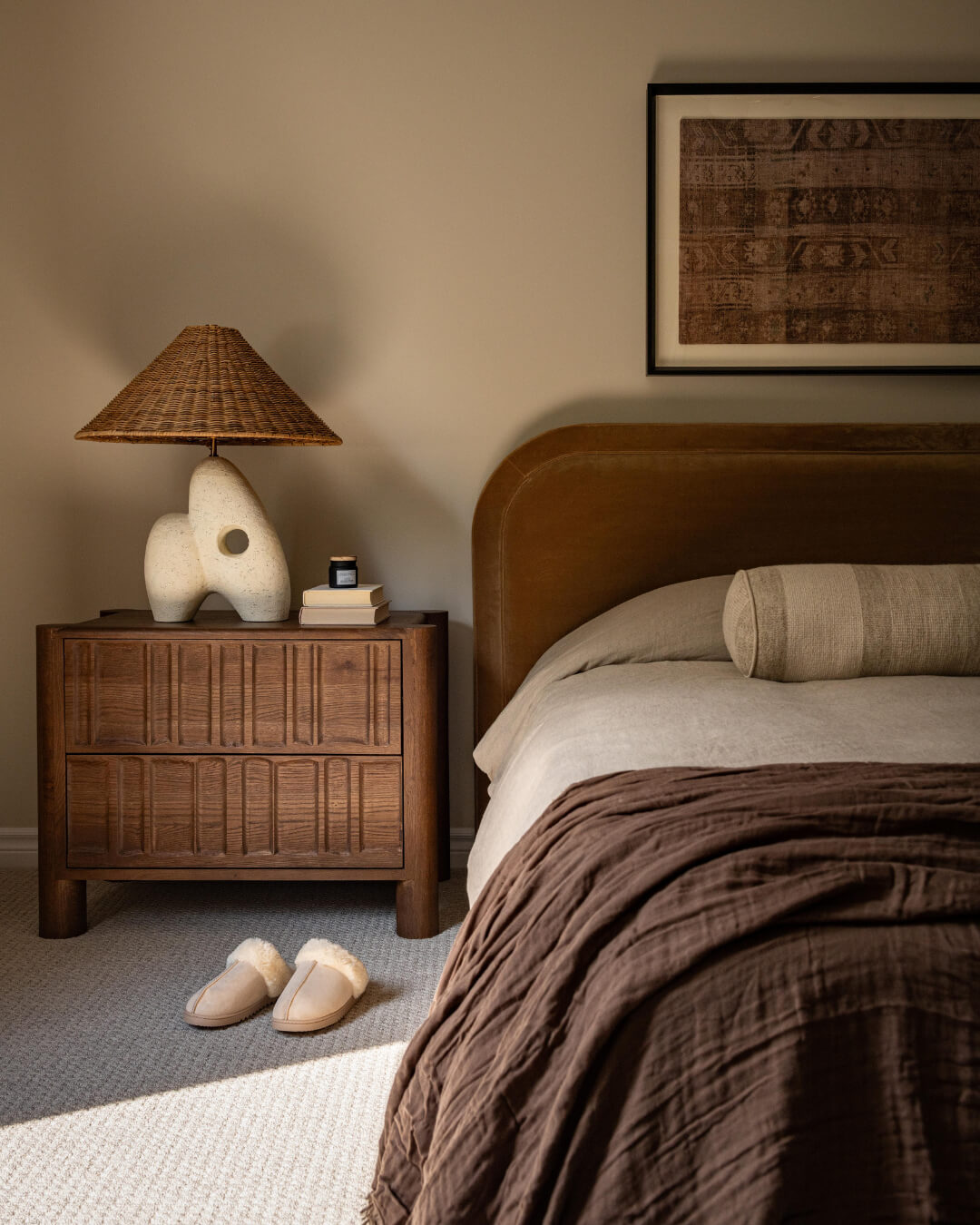
Moody bedrooms rely on shadows as much as light, so think in layers, not lumens. Aim for three types: ambient (a shaded pendant or flush mount on a dimmer), task (swing-arm sconces or articulated lamps for reading), and accent (picture lights, cove lighting, or a petite uplight grazing textured walls). Swap stark daylight bulbs for warm 2200–2700K LEDs to create candlelike glow; dimmers are non-negotiable. Plug-in sconces are renter-friendly and free up nightstand space, while alabaster or linen shades diffuse light into soft halos that flatter deep paint. Place a small uplight behind a plant or between the wall and curtains to add mysterious depth. If you love drama, a smoked-glass pendant or blackened-brass chandelier can anchor the ceiling without feeling shiny. Keep shade fabrics dense to control spill and direct light downward. Layer candles or an oil diffuser on a tray to shift the mood on demand, and aim for pools of illumination instead of even brightness across the room. This sculpted lighting approach brings out texture—velvet, boucle, limewash—so the space reads cozy, cinematic, and restful rather than simply “dark.”
Tonal Bedding: Mix Matte Linen with Velvety Depth
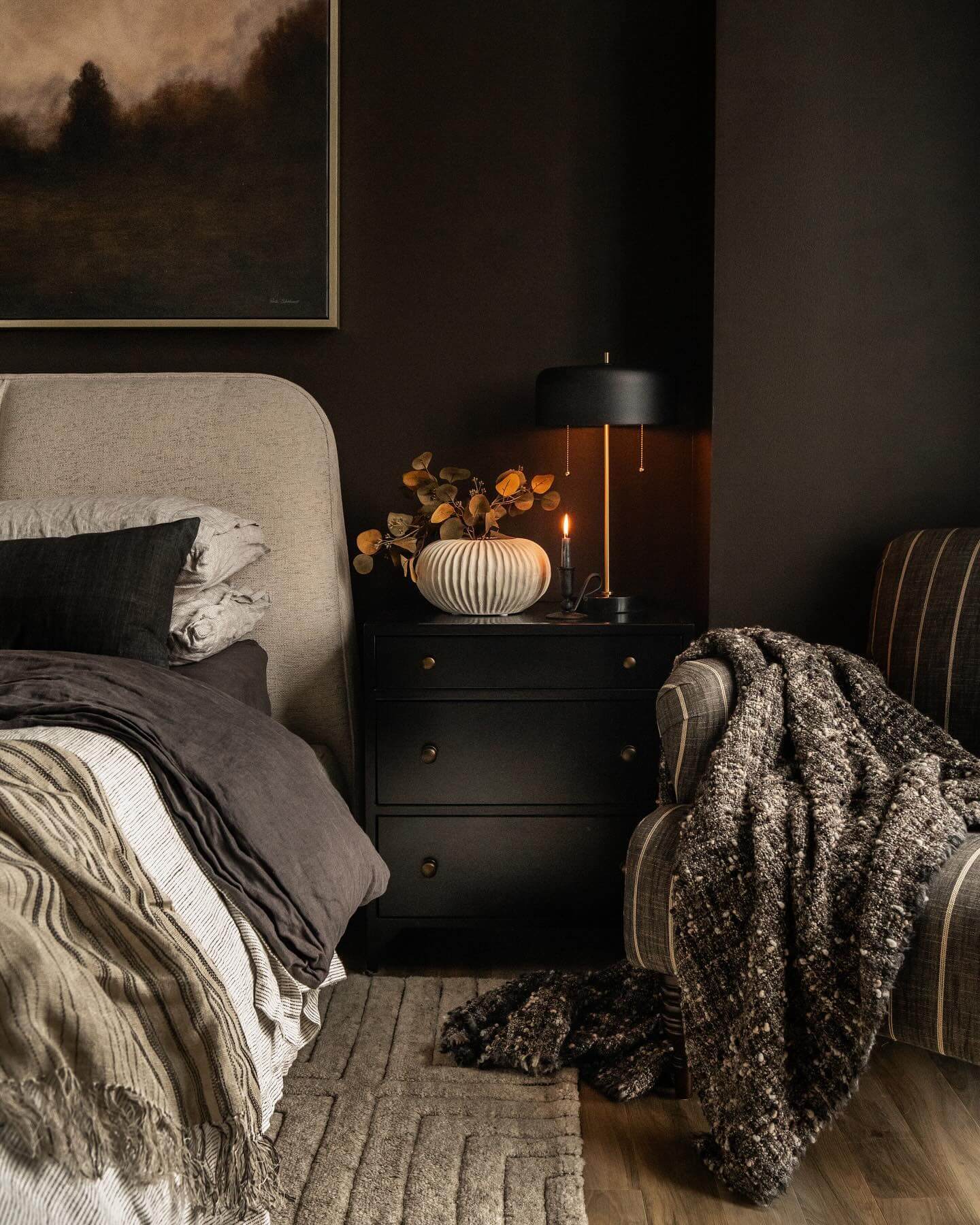
Bedding is where the moody bedroom becomes tactile. Start with a breathable, matte linen duvet in graphite, espresso, or deep olive to set the tone. Layer a velvet quilt or matelassé coverlet in a slightly richer value—oxblood, aubergine, or ink—to introduce subtle sheen that catches low light. Sheets in sateen or percale offer contrasting handfeel; ivory, stone, or mushroom keeps the palette sophisticated and adds relief against darker layers. Add two Euro pillows to raise the eye line, then a lumbar in a patterned textile—herringbone, pinstripe, or block print—to inject personality without breaking the tonal story. Consider seasonal swaps: lofty wool or cashmere throws in winter, washed cotton in summer. Keep patterns minimal and scale considered; big, moody stripes or micro-prints work better than mid-scale chaos. If your bed is platform, a tailored bed skirt is unnecessary; otherwise, a shadowy, floor-grazing skirt can visually ground the frame. Finish with a textural throw at the foot to cue warmth and offer an easy styling moment. The result feels layered, dimensional, and irresistibly inviting under lamplight.
Dramatic Drapery: Floor-to-Ceiling Blackout with Weight
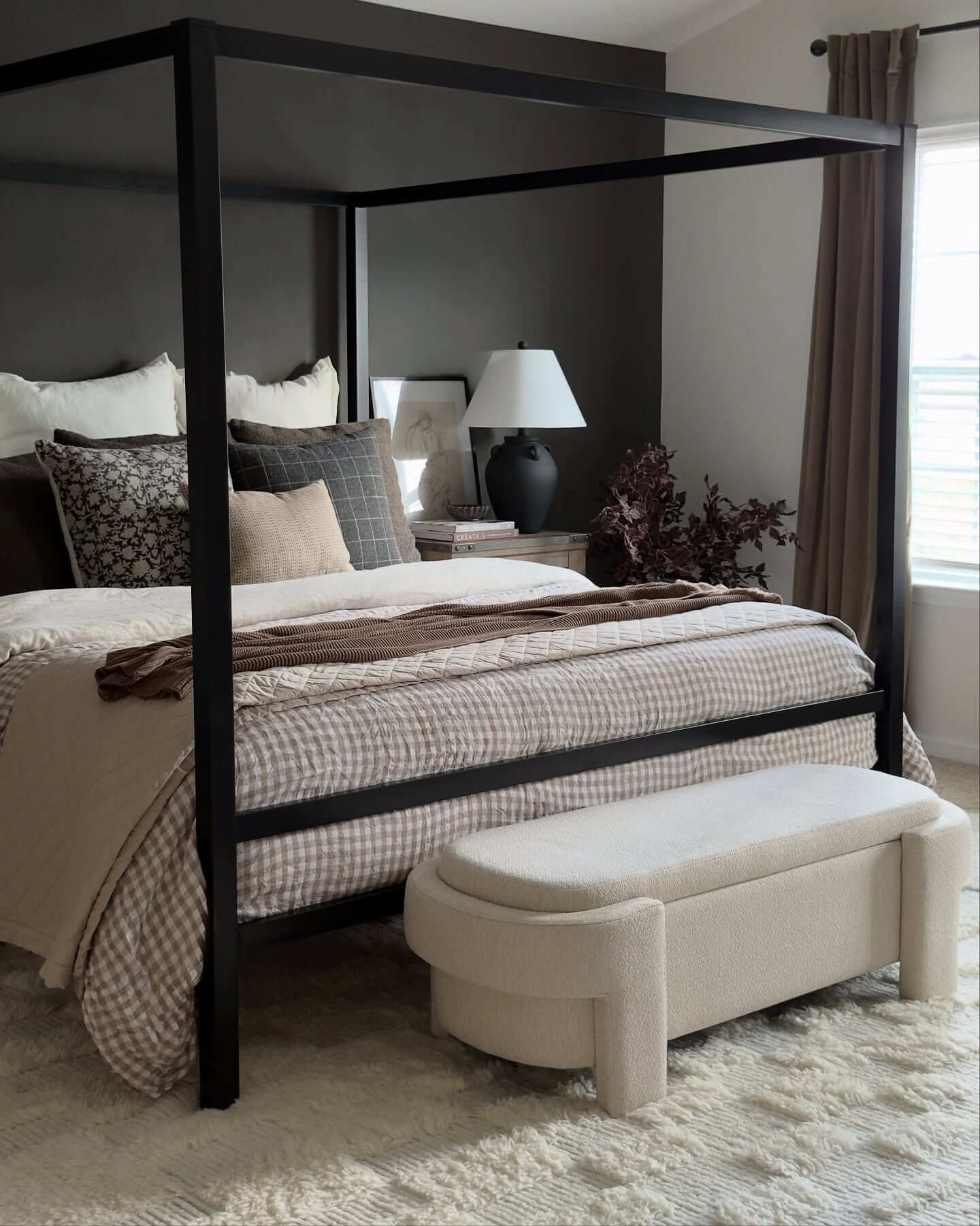
Nothing shifts a bedroom’s mood like generous, weighted drapery. Ceiling-mounted tracks or high-set rods elongate the walls and wrap the room in softness. Choose blackout-lined panels to deepen the palette and control morning light; pair them with whispery sheers on a second track for daytime privacy that still lets shadows breathe. Go full width—1.5–2x the span—for lush folds, and kiss or lightly puddle the floor for that boutique-hotel gravity. Fabrics like heavy linen, cotton twill, or wool melton fall beautifully and slightly muffle sound for a cocooned feel. In a dark scheme, tone-on-tone works wonders: espresso panels against charcoal walls read sophisticated and seamless. Hardware matters too—antiqued brass, gunmetal, or matte black rods and rings echo the moody metal story elsewhere. Renters can use no-drill tracks or tension rods for lighter sheers and add blackout roman shades for function. Consider banding or contrasting leading edges to frame the window like art. When the lamps are low, drapery becomes a shadowy backdrop that amplifies glow, making the entire space feel anchored and quietly dramatic.
Statement Headboard: Overscaled, Upholstered, and Framed in Shadow
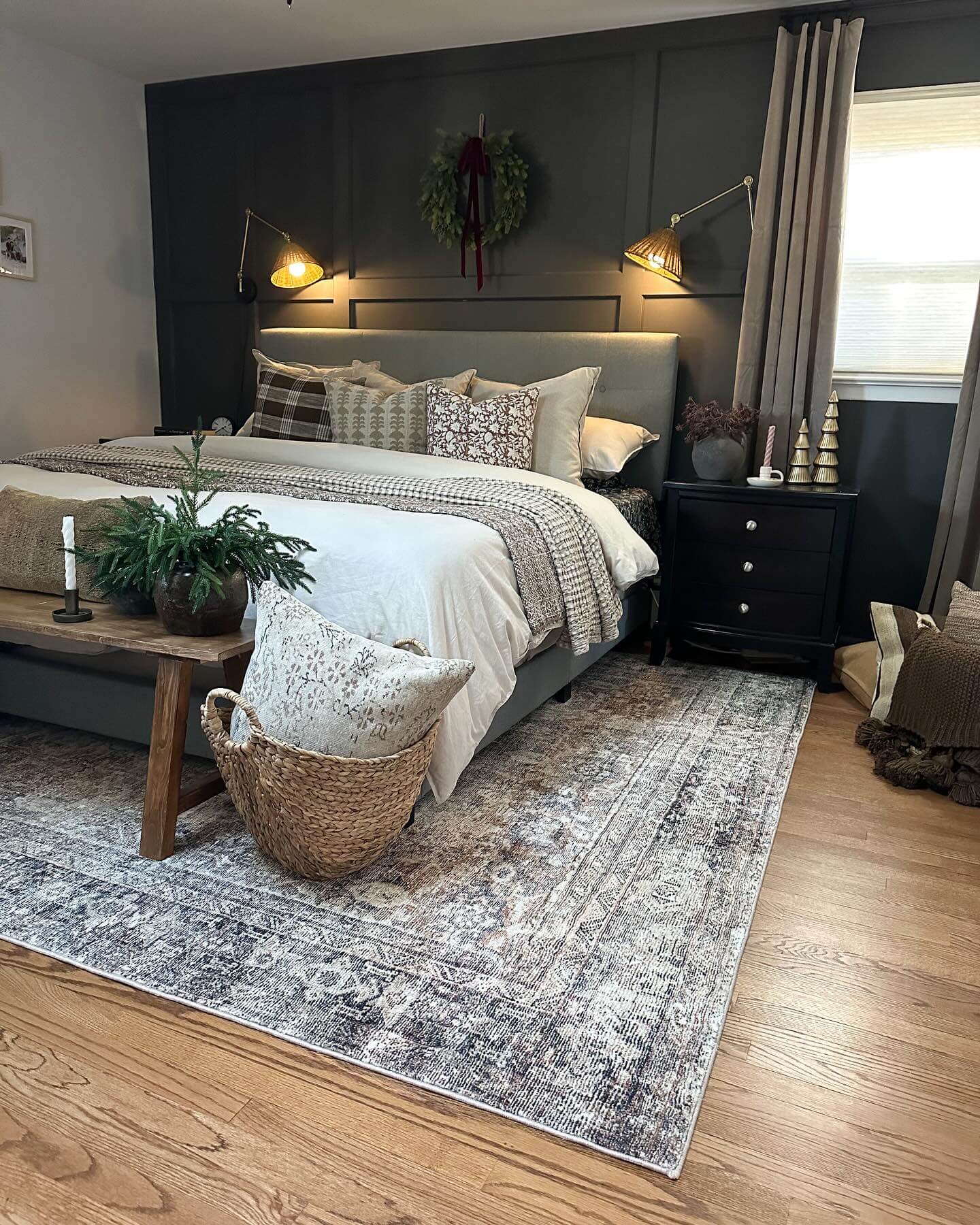
In a moody bedroom, the headboard is your hero silhouette. Overscale proportions instantly feel luxe: aim for 54–72 inches high or consider a wall-spanning design that visually widens the room. Upholstered options in mohair, velvet, or boucle absorb light beautifully, while channel tufting or subtle fluting adds linear shadow play. Prefer wood? Smoked oak, walnut, or black-stained ash with softly rounded edges offers warmth without glare. Paint or limewash the wall behind a touch darker to “sink” the bed into the space, and flank with slim plug-in sconces to keep nightstands clear. If you lack a headboard, install a panel of acoustic felt, cork, or upholstered squares for a custom, renter-friendly solution. Keep bedding tonal so the headboard remains the star, and integrate a shelf-ledge or narrow ledge moulding for leaning art. The goal is an enveloping focal point that reads as architecture—structured, grounded, and quietly opulent—perfect under dim light and dense drapery.
Get the Fail-Safe Paint Color Playbook (Free PDF)
36 proven colors • 8 ready palettes • trim & sheen guide • printable testing cards.
Moody Materials: Walnut, Smoked Oak, and Antiqued Metals
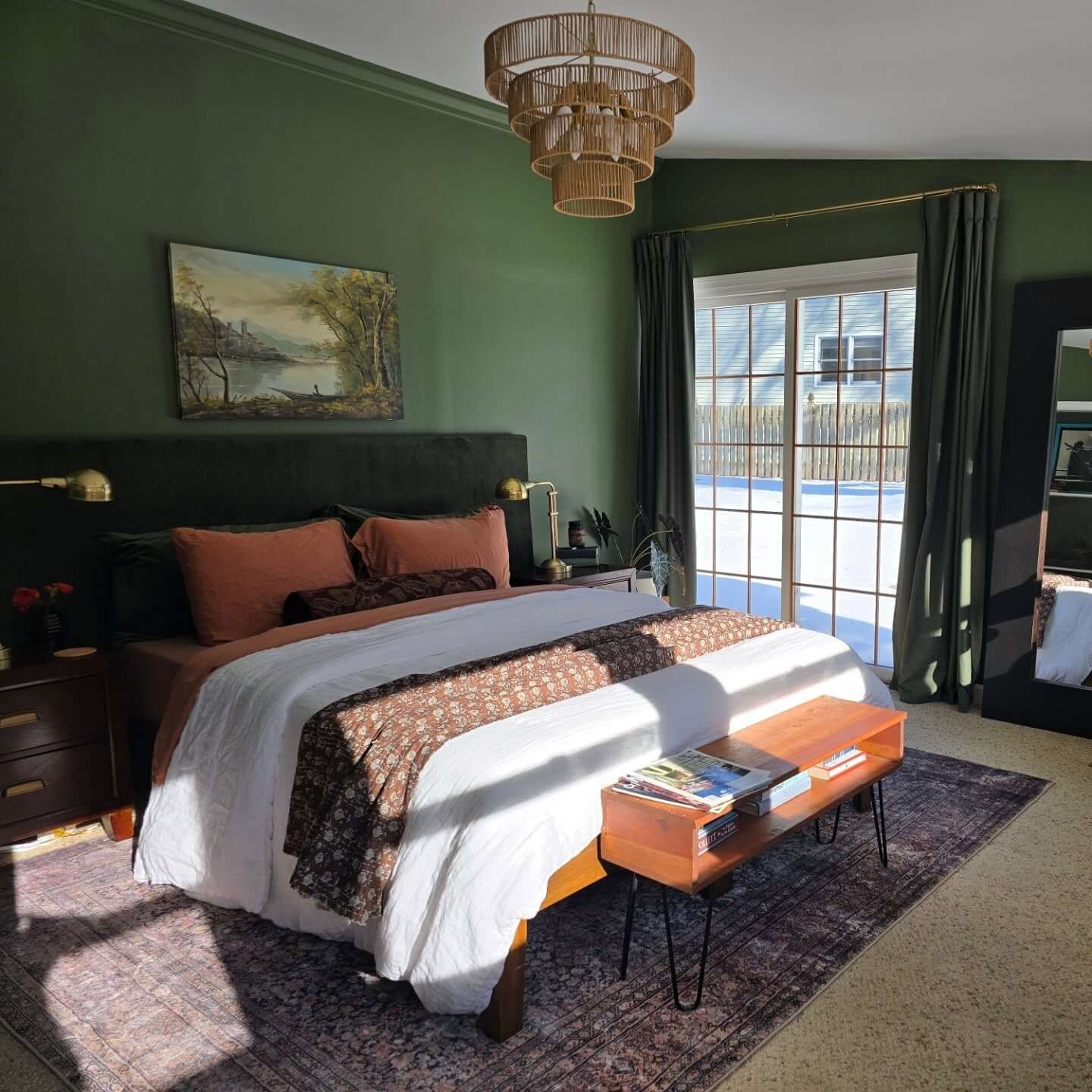
Materials carry mood as much as color. Choose woods with visible grain and depth—walnut, smoked oak, or ebonized ash—and finish them in oil or low-sheen wax for a soft, light-absorbing surface. Balance with stone accents: honed marble, soapstone, or travertine side tables bring cool weight and contrast. For metals, skip mirror shine; blackened steel, oil-rubbed bronze, and antiqued brass deliver warmth without glare. Leather details—strapped pulls, a valet tray, or a stitched bench—build patina and scent that deepen the sensory experience. Keep silhouettes simple and proportionally hefty; chunky nightstands or thick tabletops look intentional in darker rooms. Then soften the scene with rich textiles: a wool rug, velvet lumbar, and a nubby boucle chair to round off all the structure. The interplay of matte and muted sheen creates that cinematic, lived-in aura where shadows feel purposeful. Maintenance matters—oiled wood can be refreshed seasonally, and honed stone hides etches better than polished. The result is a layered, timeless palette that grows better with age and nighttime glow.
Artful Negative Space: One Bold Piece or a Curated Grid
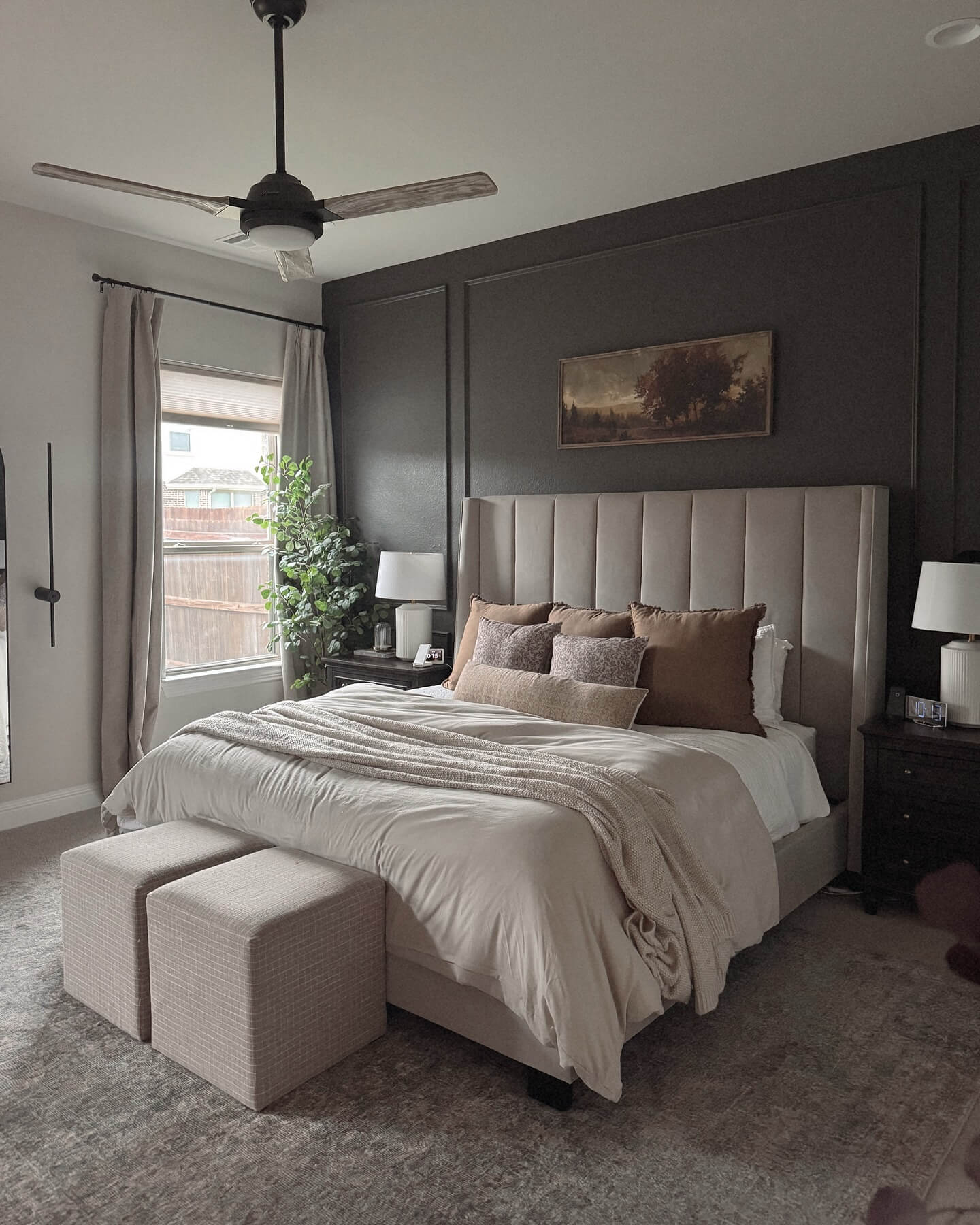
Art in a moody bedroom should direct the eye, not fight for attention. Two strategies excel: one oversized piece above the headboard (a brooding landscape, abstract in deep tones, or soft charcoal sketch) or a restrained gallery grid with generous matting. Large-scale art anchors the room and looks stunning under a warm picture light in aged brass; a symmetrical grid introduces rhythm and polish. Choose dark frames—walnut, black, or bronze—to echo your furniture, and use off-white mats to create breathing room within a dark palette. If you prefer a collected feel, lean art on a shallow shelf ledge instead of drilling multiple holes—perfect for renters and easy refreshes. Consider scale: art should relate to bed width (about two-thirds to full width) and hang low enough to feel connected. The negative space around art is as important as the piece itself; let shadows pool to amplify drama. Keep colors moody and textured so they harmonize with deep walls, layered lighting, and sumptuous textiles.
Underfoot Comfort: Layered Rugs in Shadowy Neutrals
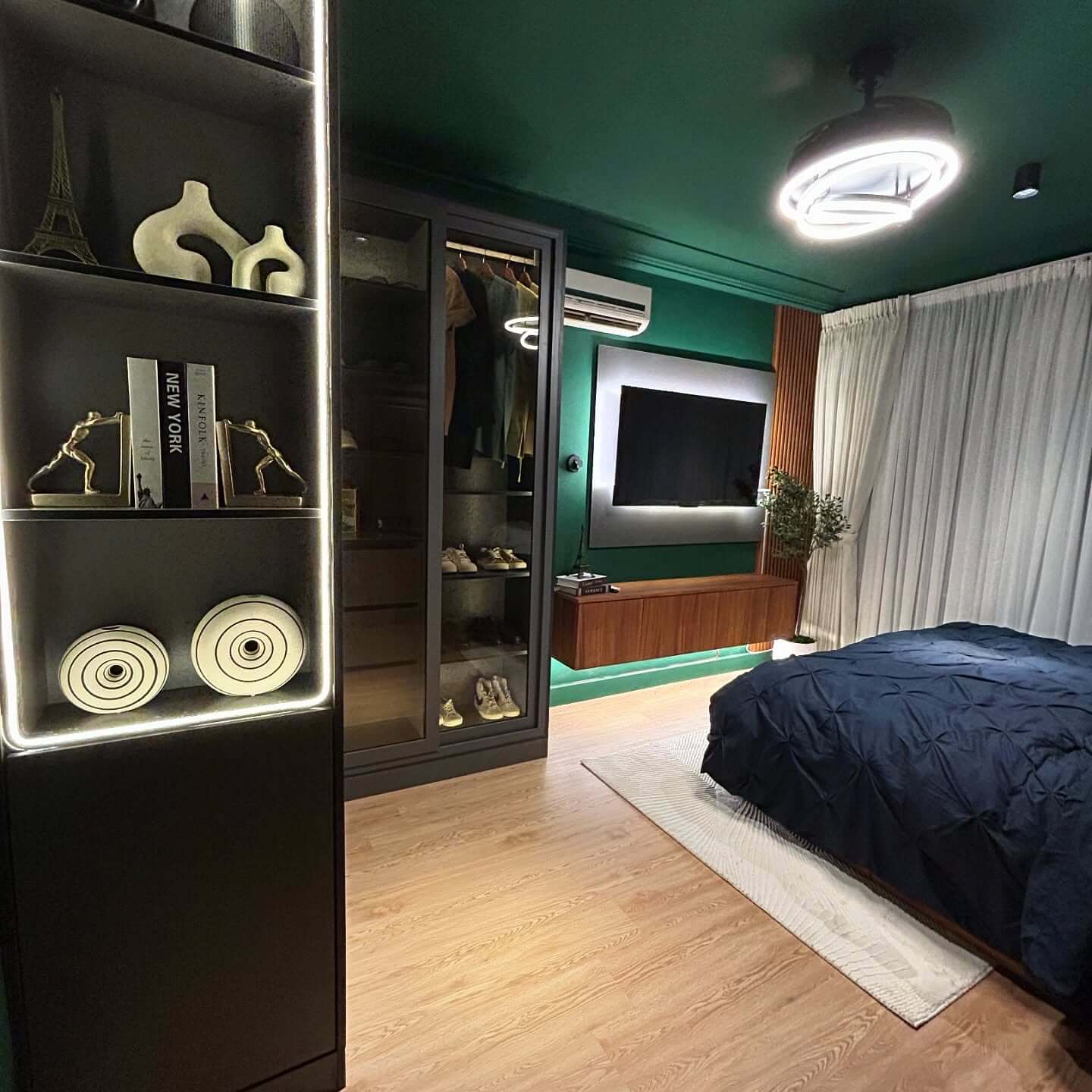
Rugs are acoustic and visual softeners that make a dark palette feel intimate rather than heavy. Size correctly first: for a queen bed, an 8×10 typically allows 18–24 inches on three sides; for a king, aim for 9×12. Layer a durable flatweave or jute base with a plush overdyed Persian, Moroccan, or charcoal wool to add depth and pattern without brightness. Keep tones within your scheme—graphite, espresso, slate, or inky blues—so the floor reads rich and continuous. Place smaller sheepskins or faux-fur hides at each bedside for a cozy first step in the morning. If your flooring is light, a darker rug visually grounds the bed; if floors are dark, choose a slightly lighter, mottled rug to keep the look dimensional. Texture matters under warm lamplight—hand-knotted highs and lows catch shadows beautifully. Rugs also reduce echo, enhancing the cocooning effect created by drapery and upholstered elements. Finish with rug pads for plushness and to keep layers from shifting. The result is quiet luxury every time your feet hit the ground.
Scent, Sound, and Shadow: Sensory Styling for Nightfall
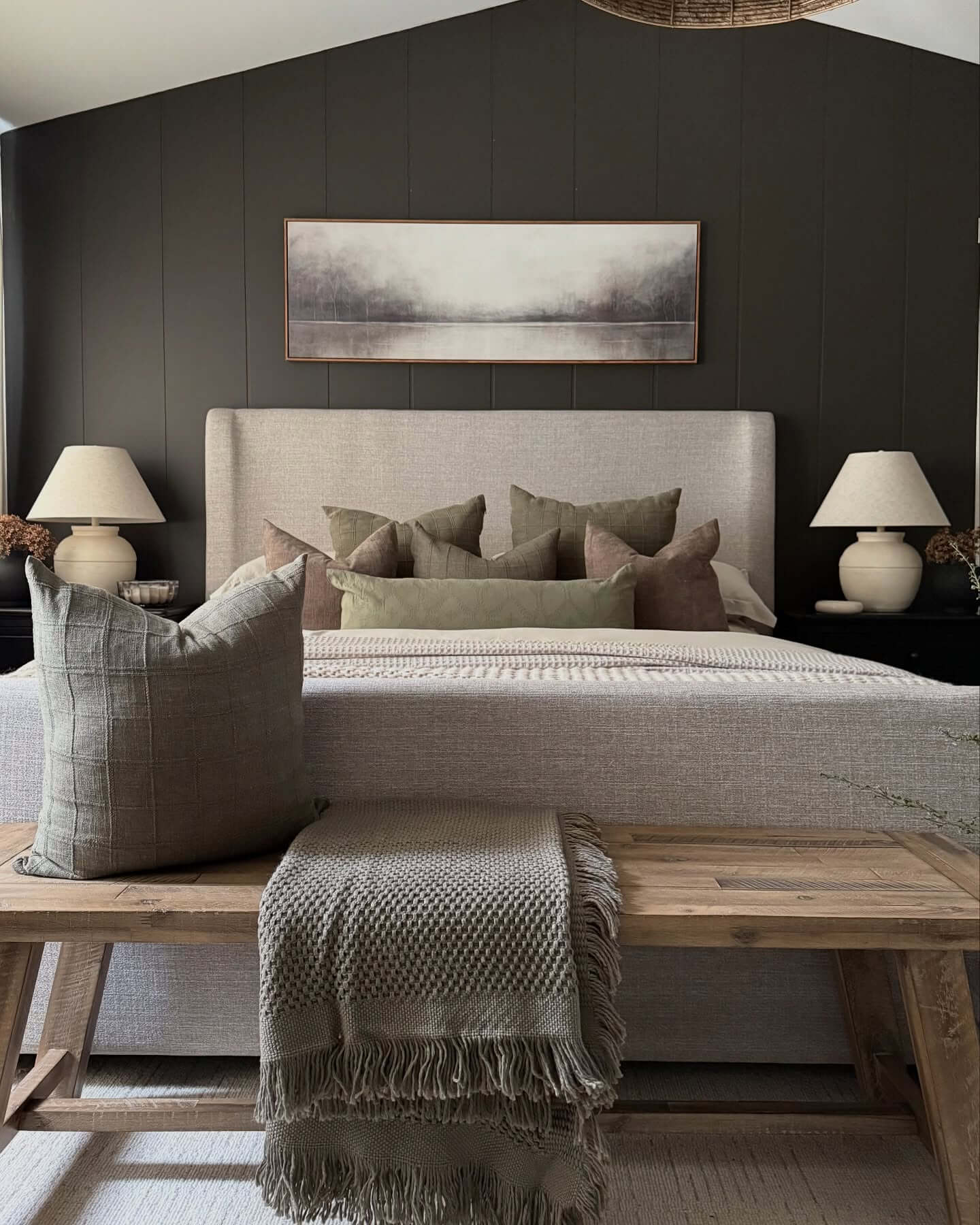
A moody bedroom is an atmosphere you feel. Layer scent with candles, incense, or an essential oil diffuser—notes like cedar, vetiver, black tea, tobacco, and smoke complement dark palettes. Stage these on a low tray with safety in mind, letting flicker echo in mirrors and metallic accents. Curate sound with a soft playlist, analog radio, or a small speaker set to low frequencies; a gentle fan or white-noise machine can add hush and privacy. Dim lights an hour before bed to cue your circadian rhythm, using lamps and sconces rather than overheads. Keep a carafe and glass bedside for a ritual touch, and edit surfaces: a few beautiful objects read luxe; clutter breaks the mood. Consider a weighted throw for added calm, and use a linen or cashmere robe on a wall peg to extend the tactile story. This sensory approach transforms “dark paint” into an immersive retreat that restores you nightly.
Reflective Drama: Mirrors, Gloss, and Glimmers of Light
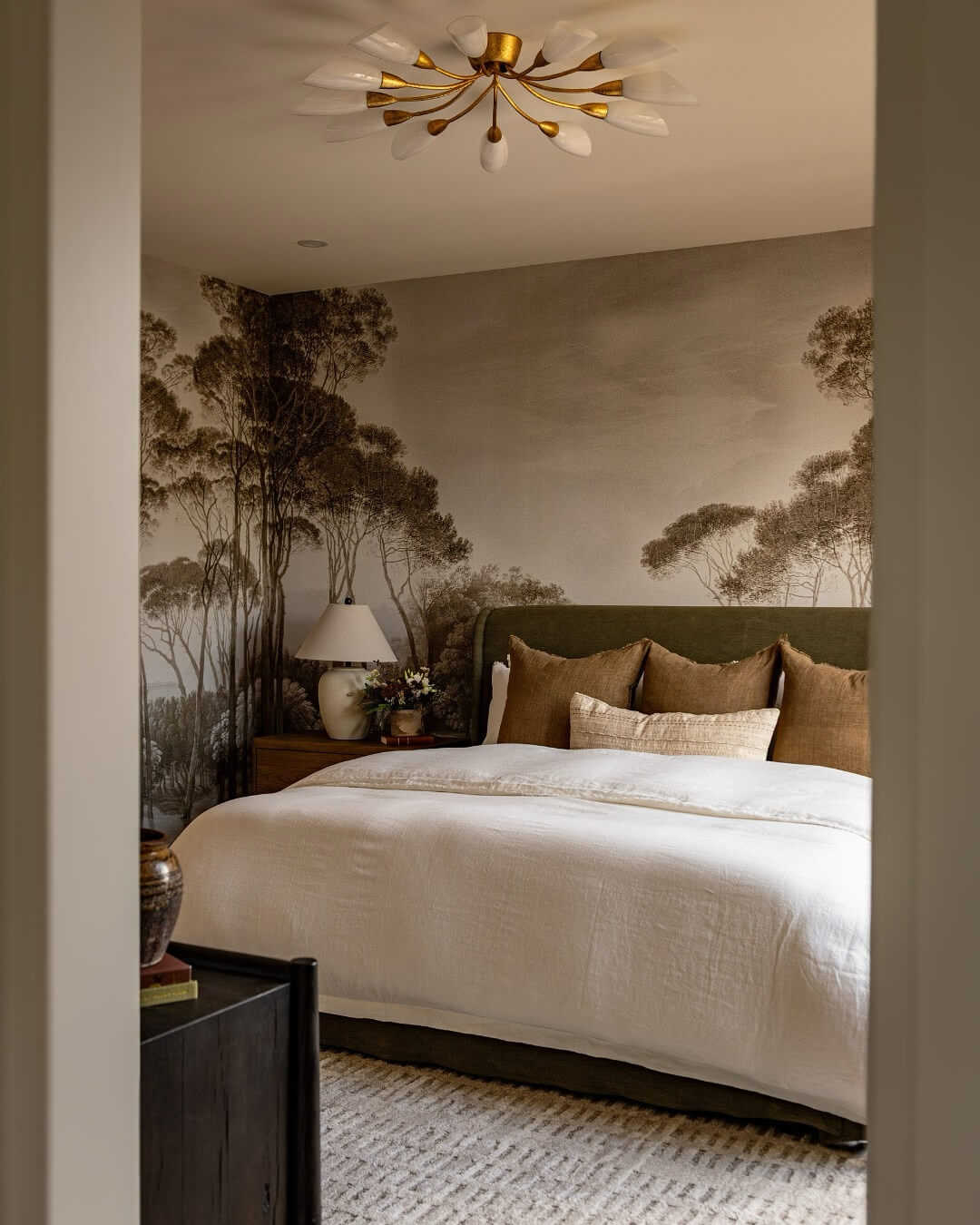
In a moody bedroom, reflections should glimmer—not glare. Introduce a smoked or antiqued mirror to bounce candlelight and lamplight softly, avoiding the harshness of clear, full-strength reflections. Position mirrors to capture warm pools of light or art rather than direct windows, which can flatten the atmosphere. Dot in small, strategic gloss: a lacquer tray on the nightstand, a ceramic lamp base with a satin glaze, or mercury-glass votives. Metallics—antiqued brass, bronze, black nickel—act like jewelry, catching light in tiny flashes that animate deep palettes. Consider a lamp with a metallic-lined shade to project golden glow onto walls, and add a slim picture light over artwork for a museum-like hush. Balance reflective notes with plenty of matte surfaces—velvet, limewash, wool—so the room stays cocooned. The aim is contrast and chiaroscuro: highlights that guide the eye through shadow, creating that cozy, cinematic quality you can dial up at night and let smolder by day.
Get the Fail-Safe Paint Color Playbook (Free PDF)
36 proven colors • 8 ready palettes • trim & sheen guide • printable testing cards.
Color-Drenched Ceilings: Treat the Fifth Wall Like a Shadowy Cocoon
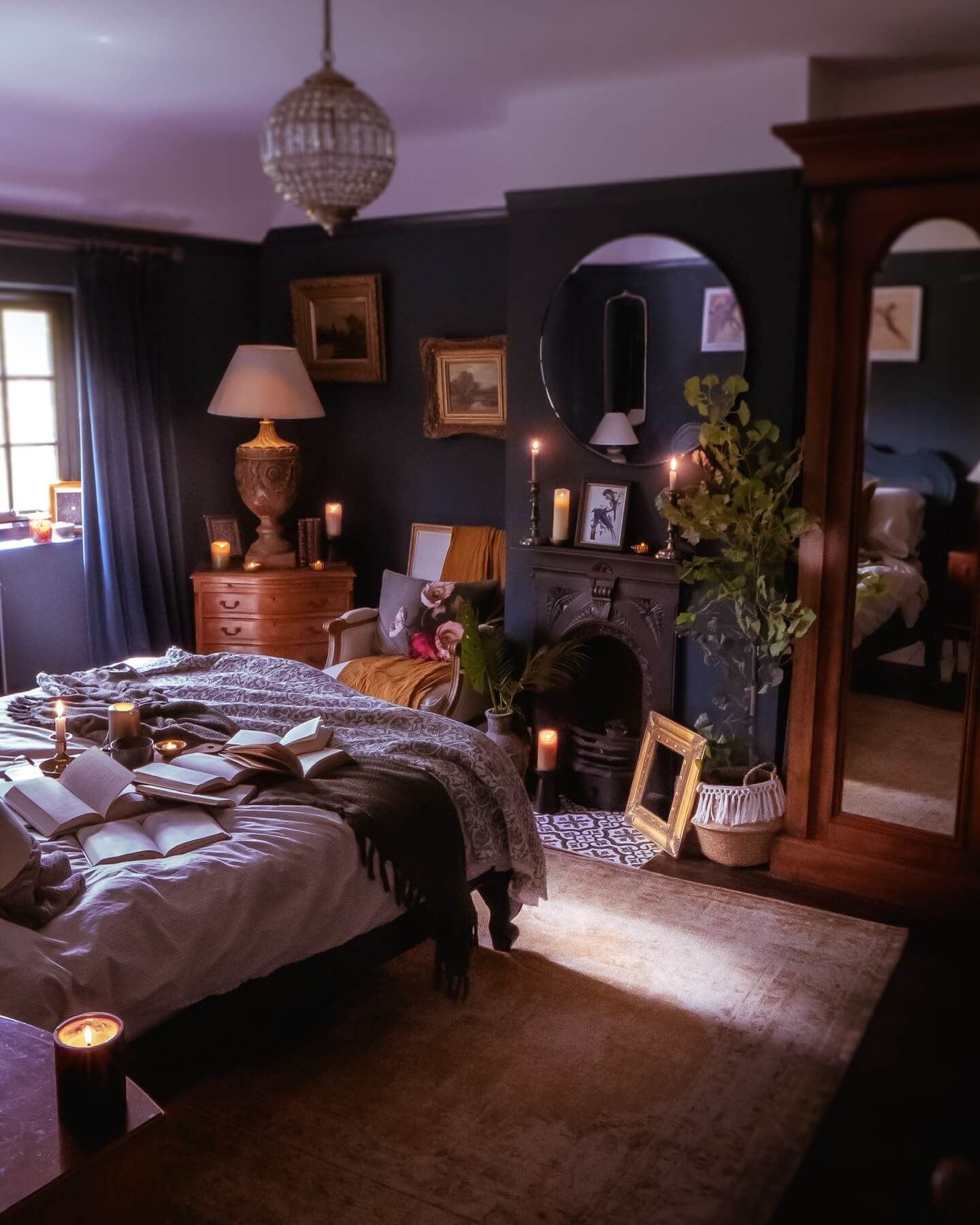
If you’ve already committed to deep walls, finish the envelope by taking the same tone onto the ceiling. A color-drenched ceiling compresses visual noise and creates that cocooned, cinematic mood moody bedrooms are known for. Go matte or ultra–low sheen to keep light diffusion soft and flattering; in low-ceiling rooms, shift the ceiling just 10–15% lighter in the same hue to maintain height while preserving depth. Wrap baseboards and crown in the wall color too—when trim disappears, the room reads calmer, richer, and more intentional. For renters, consider removable paintable wallpaper or ceiling panels painted to match, then install with damage-free strips. Pair this move with warm-dim bulbs (2200–2700K) so highlights glide across surfaces instead of glaring. Dark drapery and a substantial headboard will anchor the bottom half, while the saturated ceiling visually settles the top—balancing the composition. The result is immersive and quietly luxe: a moody bedroom that feels like a private theater at night and a sophisticated sanctuary by day.
Canopy Framing: Soft Sheers and Shadow to Elevate the Bed
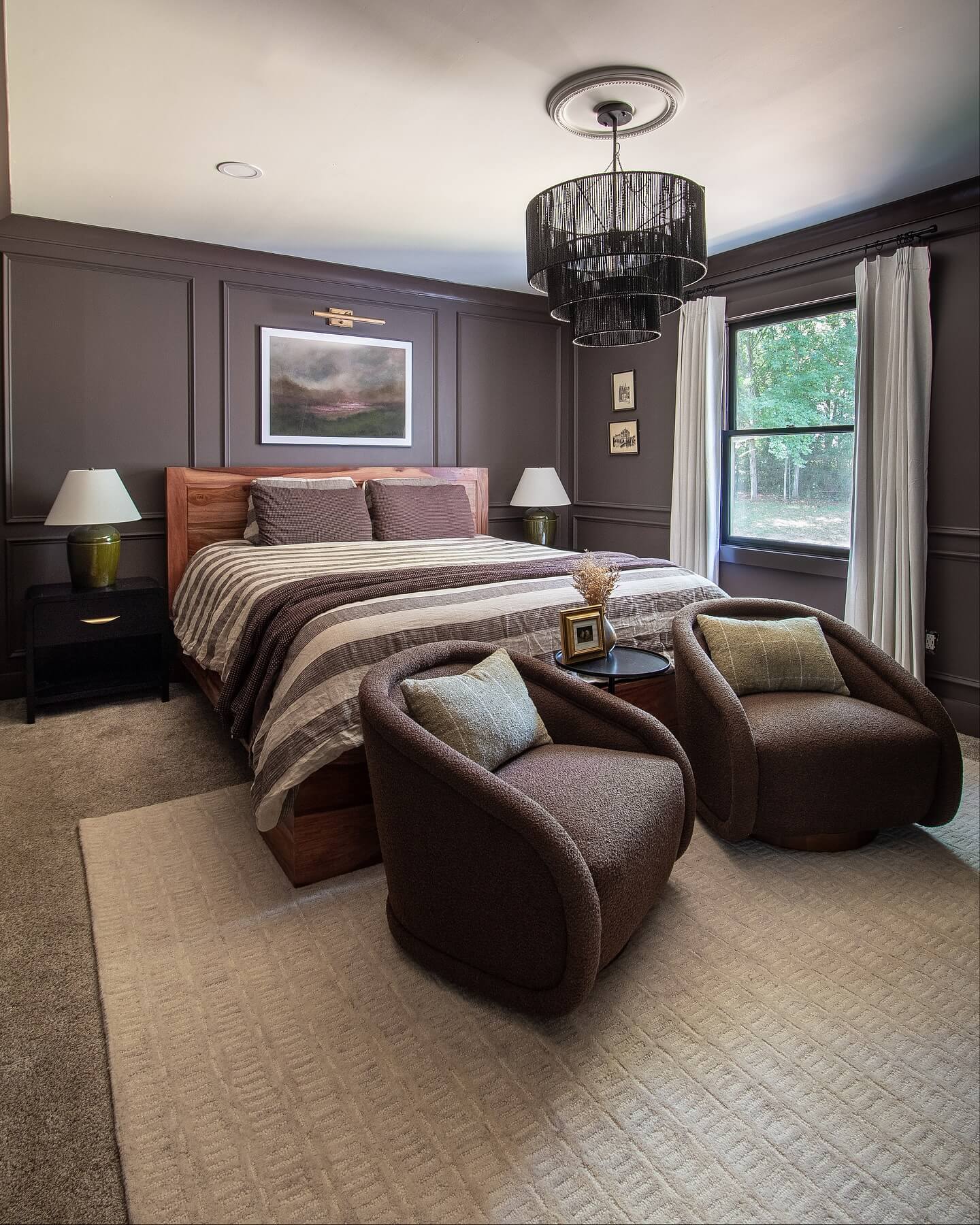
A canopy isn’t just romantic—it’s a structure that organizes negative space and deepens the mood. Use a slim four-poster or ceiling-mounted rails to drop sheer panels in charcoal, ink, or warm tobacco. The translucent layer blurs edges, filters light, and creates a soft-focus frame for your tonal bedding. Keep fabric weight consistent with your drapery for cohesion; open-weave linen or voile adds movement without heaviness. To avoid visual clutter, limit to two panels pulled back or one panel pooling at the head to act as a textural “headboard extension.” Hide a micro LED strip along the canopy rail at a very warm CCT; the glow will read like candlelight and bounce off the sheers for a cinematic halo. This vertical gesture brings height in small rooms and instantly makes a platform bed feel custom. Pair with walnut nightstands and a velvety throw to tie the palette together. The bed becomes a destination—quietly dramatic, cocooned, and unmistakably moody.
Textured Walls: Limewash, Plaster, and Microcement for Depth
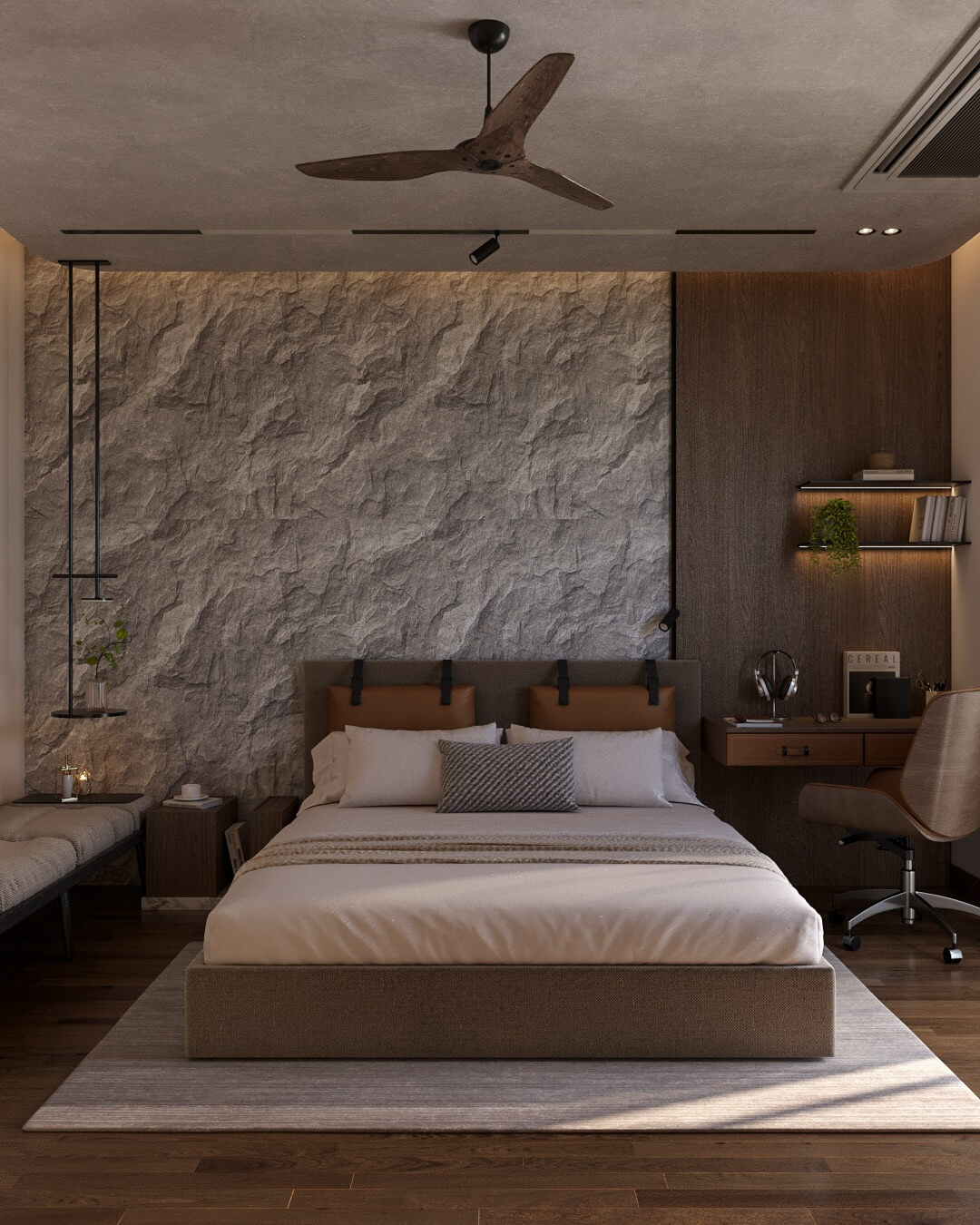
Flat color is elegant, but texture makes a moody bedroom breathe. Limewash, troweled plaster, or microcement introduces tonal variation—those soft “clouds” that catch lamplight and make shadows feel layered instead of flat. Choose a near-black green, smoked plum, or carbon gray in a mineral finish; the matte, velvety surface absorbs glare and delivers that gallery-like calm. For DIY, a limewash concentrate and wide brush yield organic movement with directional strokes; go vertical behind the headboard to elongate, horizontal elsewhere for balance. Renters can mimic the effect with textured paint rollers or peel-and-stick plaster-look panels in deep neutrals. Style minimally against these walls: oversized upholstered headboard, tonal bedding, and one substantial art piece. The micro variations will do the visual heavy lifting, and your lighting plan (sconces, shaded lamps, dimmers) will “read” the texture for a soft, cinematic gradient. It’s sophistication without fuss—rich, tactile, and timeless.
Night Garden Mood: Dark Botanical Wallpaper with Modern Restraint
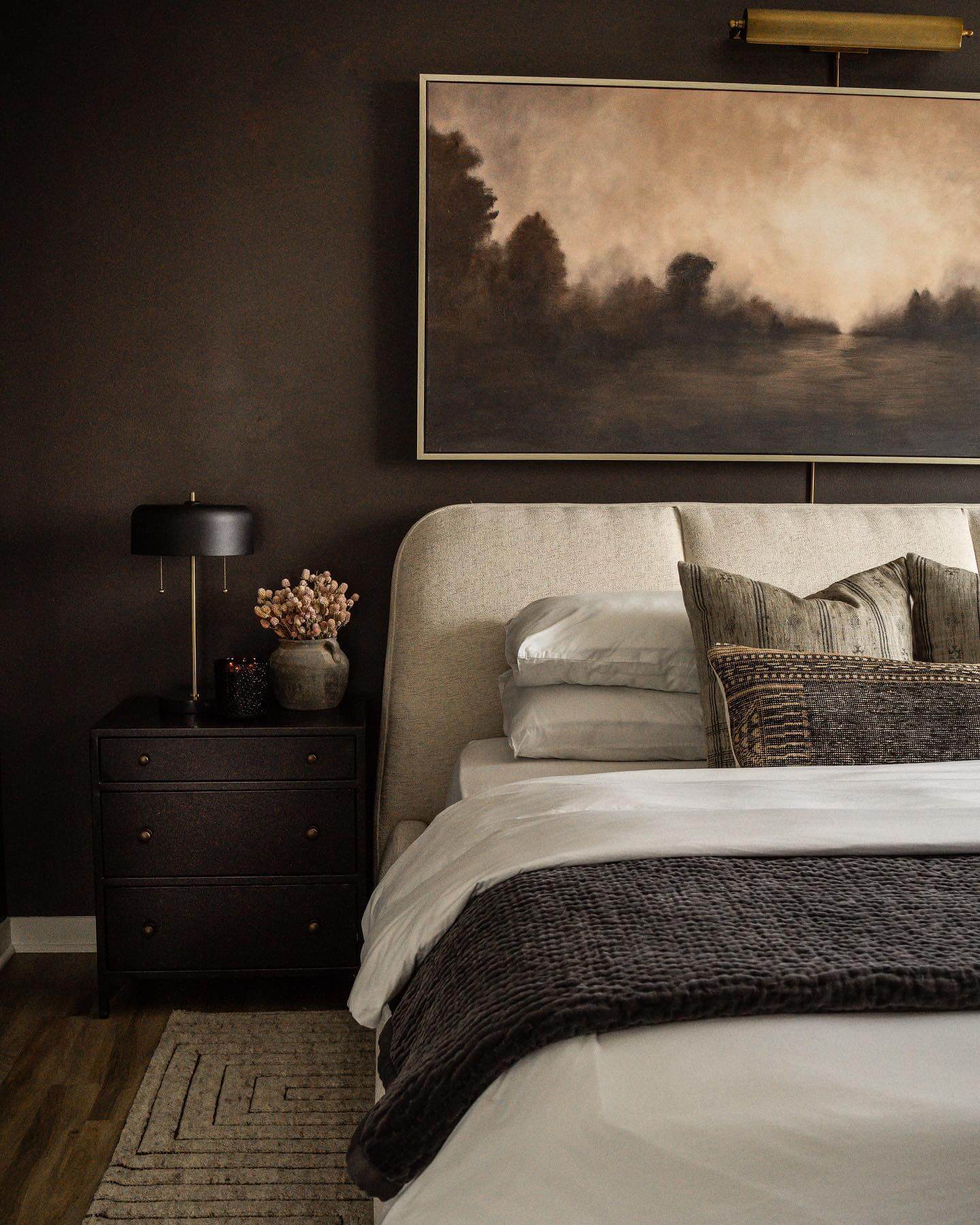
Brooding florals and shadowy botanicals bring life to a moody bedroom without breaking the palette. Choose a mural or wallpaper with an inky ground—charcoal, midnight blue, or black—with botanicals in dusky greens, oxblood, or antique gold. Limit the print to one wall (behind the bed or in a niche) and keep adjoining walls color-drenched to prevent visual noise. Balance complexity with solids: matte linen sheets, a velvet quilt, and smooth walnut to ground the pattern. Brass or blackened bronze hardware echoes stems and leaf outlines for subtle continuity. Light the wall indirectly—picture lights, offset sconces, or under-shelf LEDs—to graze the print, not blast it. If you’re wary of commitment, try peel-and-stick panels or a framed wallpaper “tapestry” above the headboard. The effect is lush yet controlled: a night garden that feels sensual, mature, and perfectly aligned with a cozy, cinematic bedroom aesthetic.
Shadowed Storage: Bedside Niches and Floating Ledges that Disappear
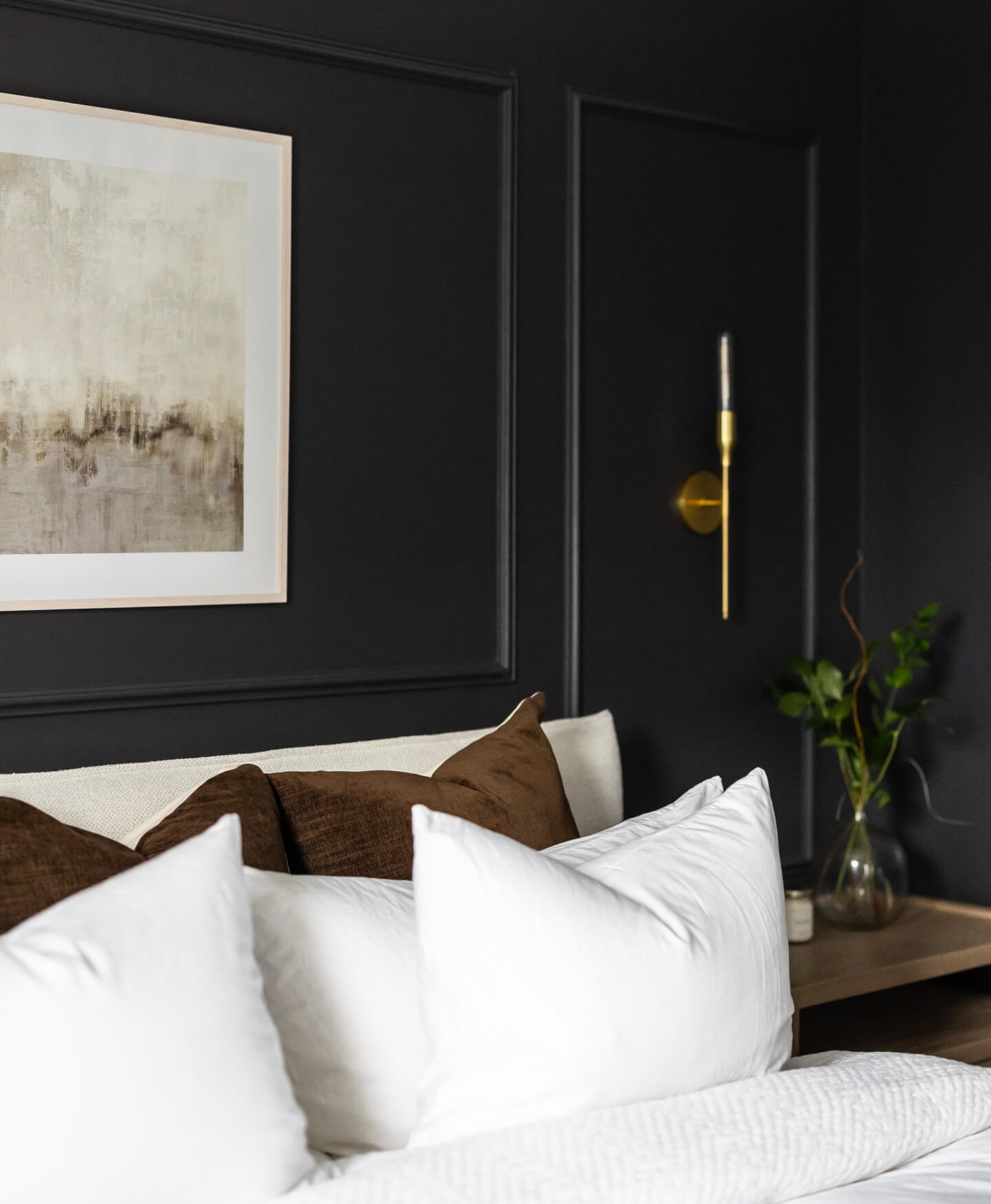
In moody bedrooms, clutter reads extra bright. Swap bulky nightstands for recessed niches or slim floating ledges that visually recede into dark walls. Paint built-ins the wall color (inside and out) so objects float in shadow, then wire for low-glare puck lights or a concealed LED strip at 2200K. Keep styling disciplined: one lidded catchall, one sculptural lamp, and a single book or small vase. Add an integrated lip to corral tech and a cable pass-through that keeps chargers invisible. For renters, use wall-mounted shelves with hidden brackets and a cord raceway painted to match the wall. A shallow headboard shelf—upholstered or wood—can replace both nightstands in tight rooms and keep the floor clear for that layered rug moment. With storage that disappears, the space feels calmer and more intentional; all eyes return to what matters: texture, tone, and that enveloping, moody glow.
Perimeter Glow: Cove, Baseboard, and Under-Bed Lighting
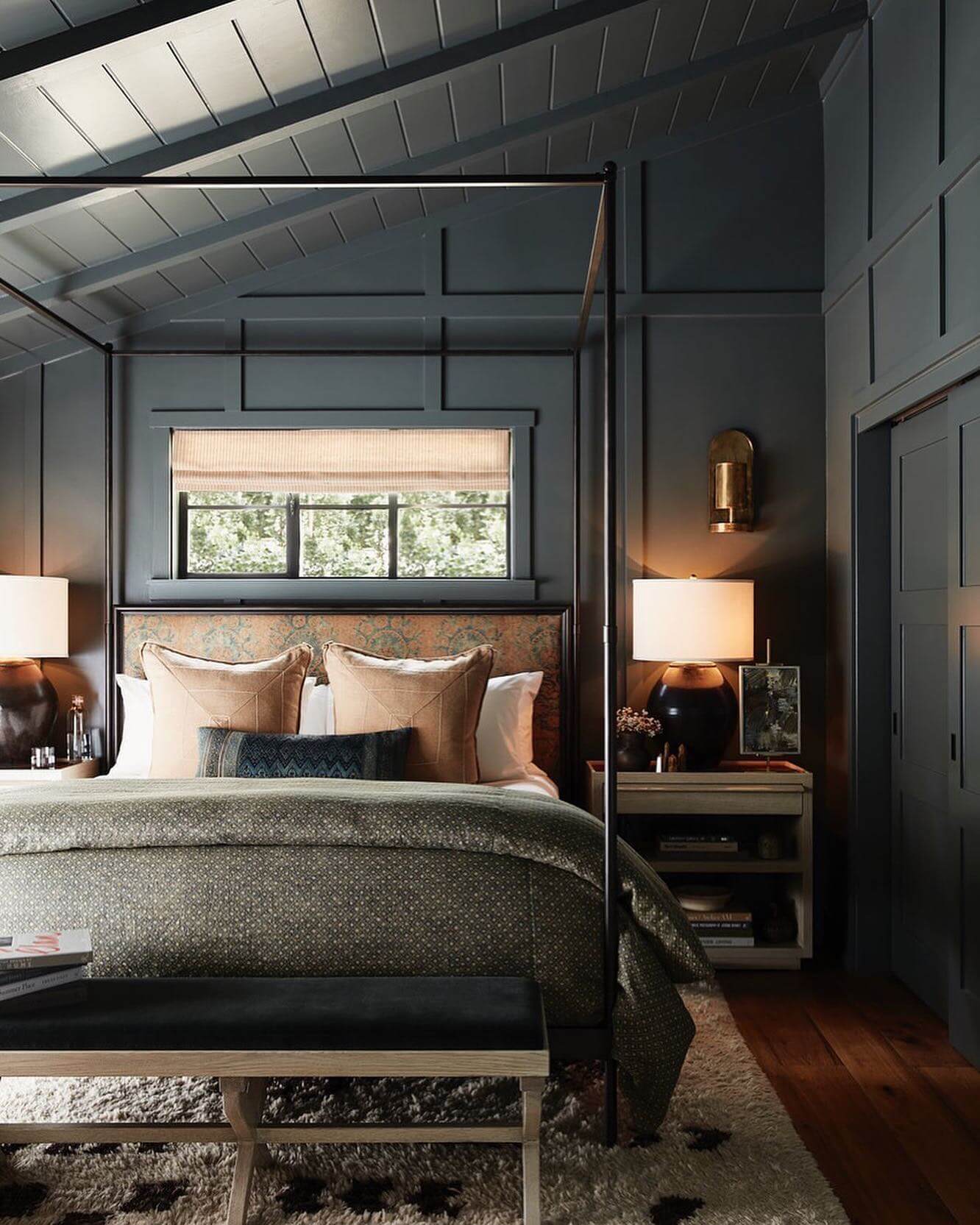
Beyond lamps and sconces, hidden perimeter lighting creates the softest, most cinematic gradients. Tuck warm LED strips into a shallow ceiling cove, behind the headboard, along baseboards, or under the bed frame to float the silhouette. Keep color temperature warm (2000–2700K) and CRI high for authentic hues; choose low-lumen density for a hush rather than a halo. Program scenes—“Evening Read,” “Night Walk,” “Dawn”—so you can navigate without blasting overhead light. Pair with blackout drapery to control exterior spill, and use a smart dimmer for sunrise-simulating fades that feel natural. This glow outlines architecture, amplifies textured walls, and adds depth to dark palettes without cluttering surfaces. It’s atmosphere-first lighting—what a moody bedroom needs to feel luxurious, calm, and thoroughly considered.
Sculptural Silhouettes: Low Profiles and Curves that Love Shadow
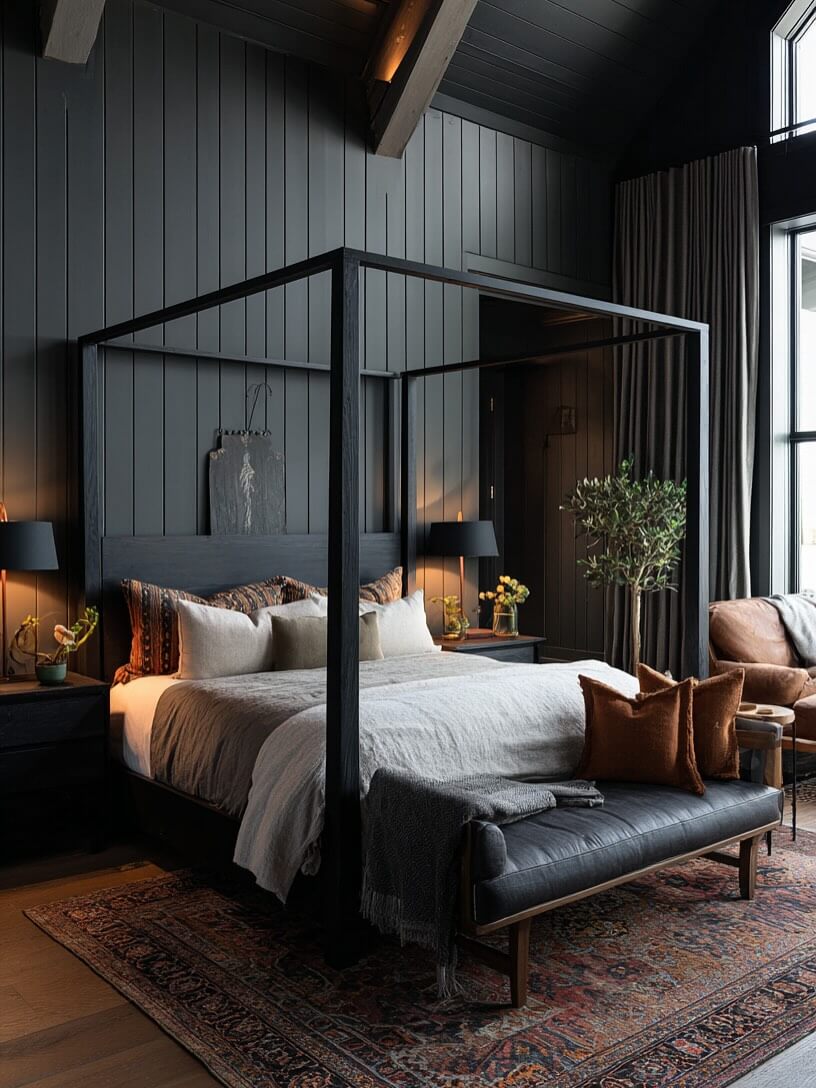
Furniture shape matters in a shadow-rich room. Low-profile platform beds elongate the sightline and let deep drapery and art dominate; rounded corners and soft edges catch light beautifully, reading as highlights rather than hard lines. Choose substantial nightstands with simple geometry or a single statement curve; in dark spaces, fewer, larger shapes look cleaner and more elevated. Mix finishes for subtle contrast—smoked oak against matte linen, pebble leather beside a velvety headboard—so form stays legible without turning bright. Ground with a thick rug that extends generously beyond the bed to float the vignette. Then keep hardware minimal and darkened (oil-rubbed bronze, blackened brass) so silhouettes remain the focus. The result is sculptural calm—an elevated moody bedroom where shape, shadow, and negative space do the talking.
Nightstand Vignettes: Fewer, Bigger, Moodier
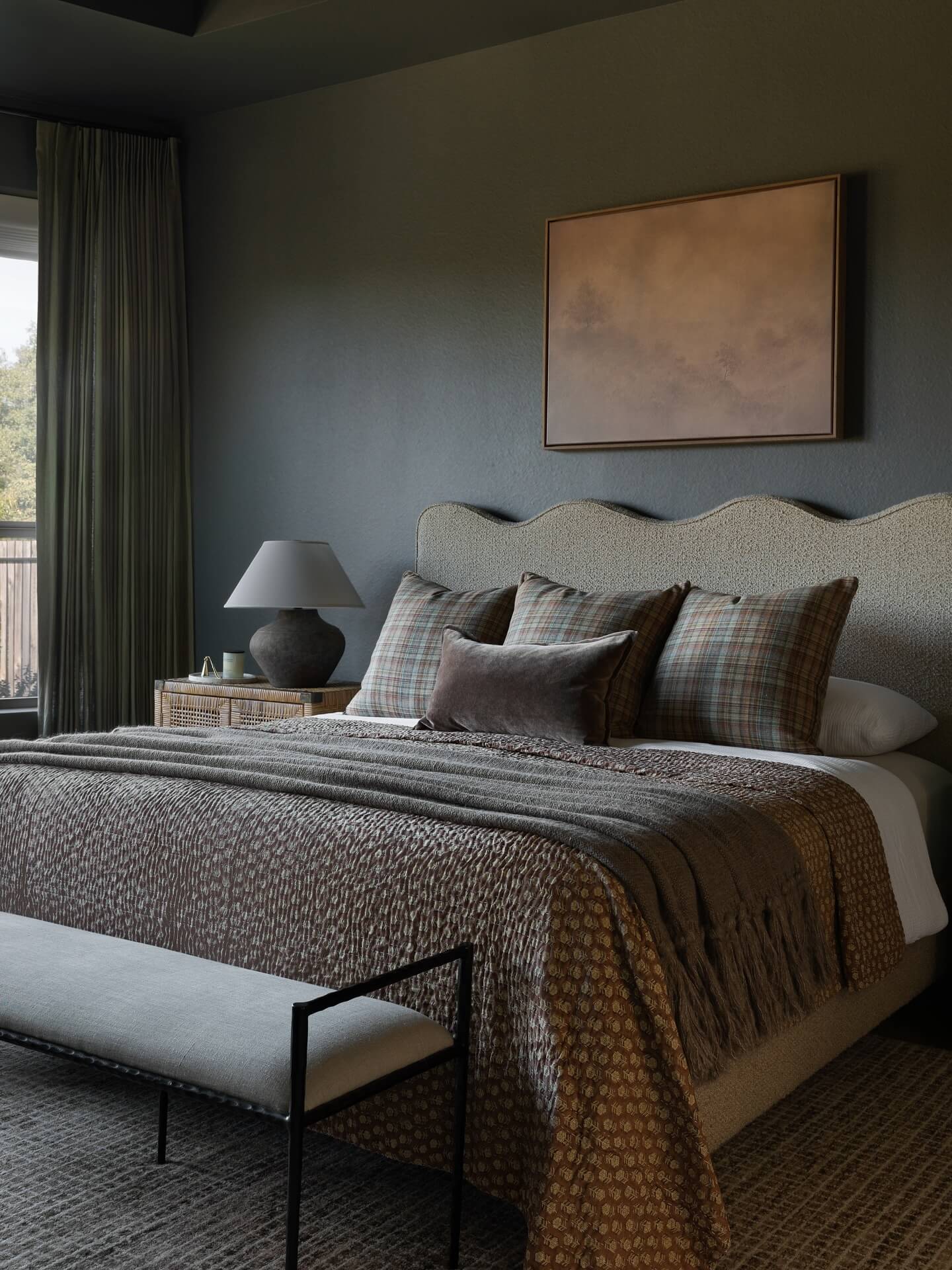
In a moody bedroom, micro clutter steals attention. Style nightstands with a “fewer, bigger” rule: one substantial lamp with a fabric shade, one grounding object (stone bowl, ceramic vessel), and one personal layer (book, framed photo). Keep a strict materials palette—walnut + linen + aged brass, or smoked oak + ceramic + black metal—so the vignette reads cohesive under warm light. Use trays to corral small essentials and slim, fabric-wrapped cords to avoid visual noise. If you love scent, choose a dark glass diffuser over an array of candles to keep the line clean. Place objects off-center to introduce asymmetry and visual ease, and leave 40–60% of the surface empty to preserve negative space. With this edit, your lighting and wall texture can breathe, and the moody aesthetic feels intentional—not heavy.
Color Accents with Restraint: Oxblood, Aubergine, and Petrol Blue
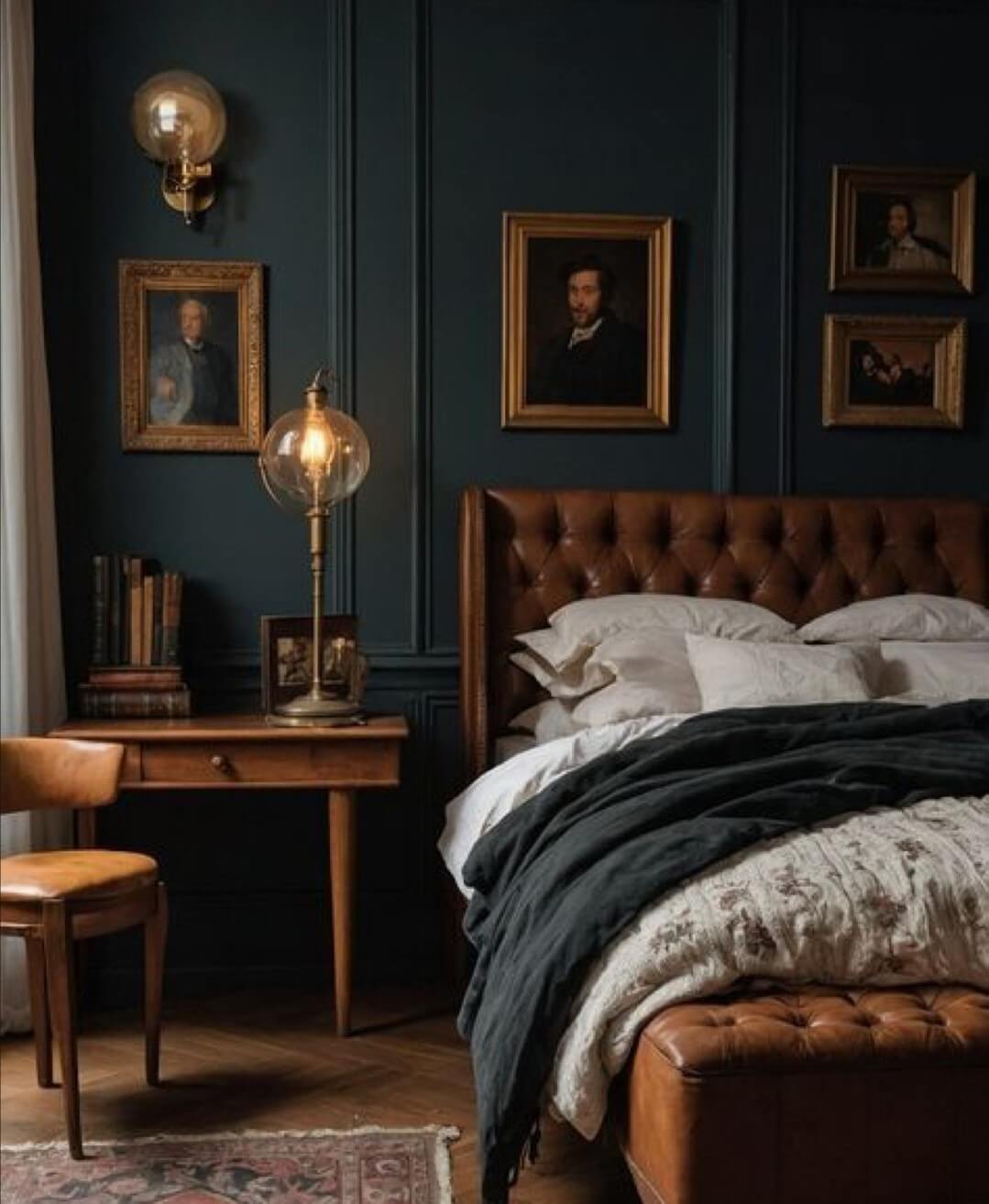
A dark palette doesn’t mean monochrome monotony. Introduce one saturated accent—oxblood, aubergine, petrol blue, or deep forest—through a velvet throw, lumbar pillow, or small upholstered stool. The key is restraint: keep undertones aligned with your wall color (cool ink with petrol, warm charcoal with oxblood) and echo the hue once more in art or a ceramic piece for cohesion. Avoid metallics that shout; instead, use antiqued brass or blackened steel to complement rather than compete. In daylight, the accent adds visual nuance; at night, it deepens, blending with shadows for that cinematic, moody bedroom vibe. If you’re commitment-shy, test with a single cushion and a color-matched book stack—easy swaps that still feel curated.
Tech Quiet: Hidden Wires, No-Glow Modes, and Smarter Sleep
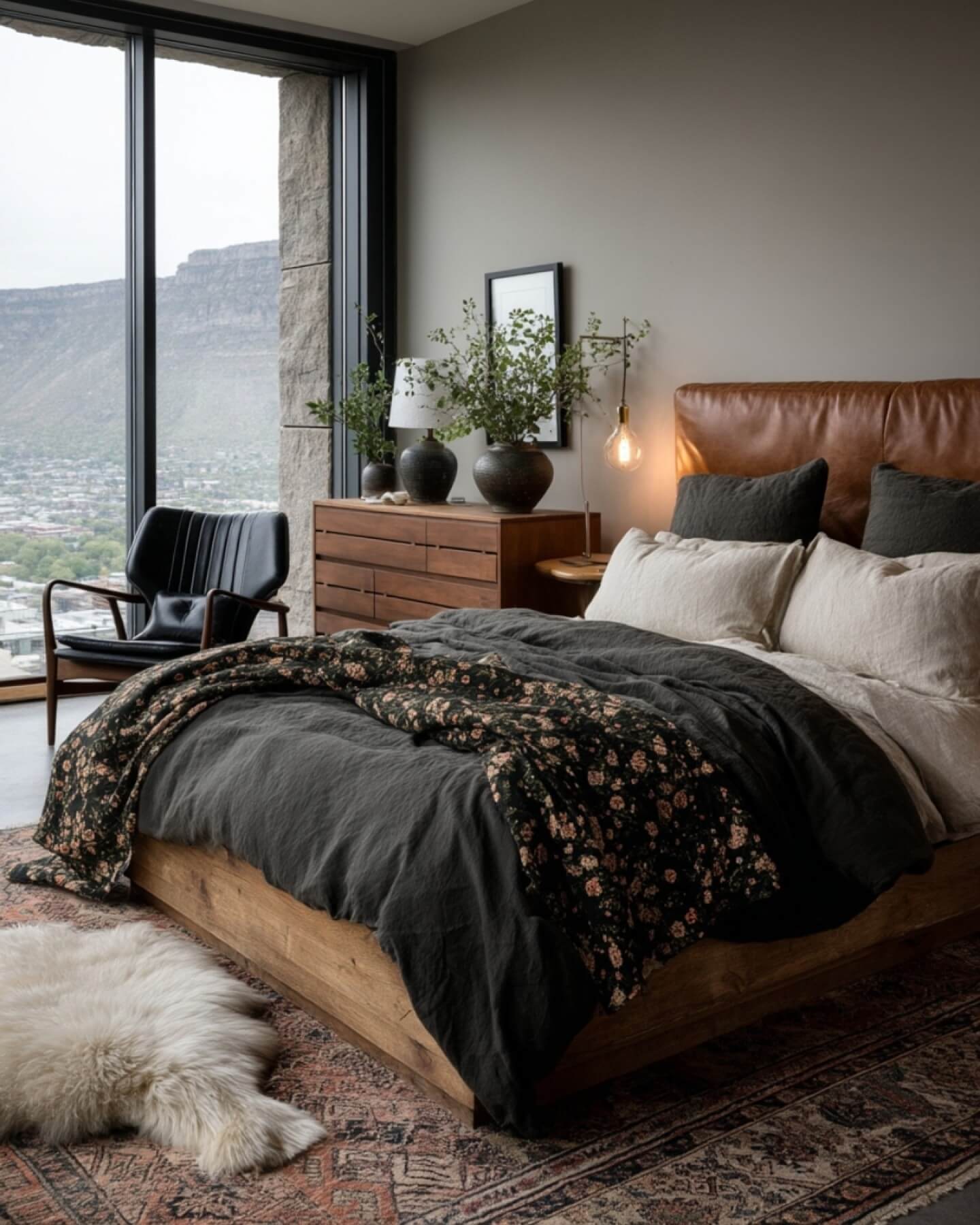
Nothing kills a moody bedroom faster than blue LEDs and cable clutter. Go “tech quiet”: use switchable outlet covers, cable raceways painted to match the wall, and a drawer or under-bed caddy with a power strip to charge devices out of sight. Choose bulbs, clocks, and purifiers with display-off or amber night modes; if unavoidable, cover indicator lights with blackout dots. Smart shades and dimmers let you control light without leaving bed—and prevent bright phone screens from becoming the room’s focal point. Sound matters, too: a low-profile fabric-wrapped speaker blends into the palette and preserves that sensory hush you’ve built with drapery and rugs. When tech disappears, the atmosphere you worked for—rich color, soft light, and layered texture—takes center stage. That’s the essence of a refined, moody bedroom aesthetic.
Textures, Furniture, and Styling Tips for Moody Bedroom Design
Depth in a moody bedroom comes from tactile contrast: velvet, bouclé, linen, mohair, leather, and raw wood. Start with a thick rug to dampen sound, then layer textiles in close tonal steps. A generously scaled upholstered headboard or canopy adds vertical drama and softness. Balance substantial pieces with negative space so the room feels intentional, not crowded. Choose finishes with patina—oiled oak, honed stone, antiqued brass—to keep reflections warm and quiet. Limit mirrors to small accents or smoked glass so the palette remains hushed.
Get the Fail-Safe Paint Color Playbook (Free PDF)
36 proven colors • 8 ready palettes • trim & sheen guide • printable testing cards.
Textural and Styling Moves to Try:
- Layer a dense wool rug over a flatweave jute base to dampen echoes, warm bare feet, and add contrast without introducing any bright or reflective surfaces.
- Swap a low-slung platform bed for an upholstered, tall headboard to create a dramatic focal point that absorbs light and invites layered pillows and throws.
- Introduce a velvet blackout canopy or tester rail that frames the mattress, softens acoustics, and emphasizes verticality while leaving the center of the room open and breathable.
- Balance heavy casegoods with slender, open nightstands, mixing wood grain with smoked glass tops so light pools feel intentional and clutter remains visually recessed rather than spotlighted.
- Use ribbed or fluted paneling behind the bed to catch shadows, then echo the texture through pleated lampshades, reeded glass, or corduroy accent pillows for cohesive, subtle rhythm.
- Lean large-scale moody art with matte frames on a picture ledge instead of hanging, encouraging relaxed, gallery-like layering and eliminating bright reflections from glazing or nearby fixtures.
- Trade chrome hardware for aged brass, oil-rubbed bronze, or blackened steel to keep highlights warm and muted, complementing candlelight, parchment shades, and deep, cocooning paint colors.
- Style the bed with a linen duvet, quilted coverlet, and wool throw in close tonal steps, letting tactile contrast replace color contrast for a calm, layered composition.
- Hide charging docks inside nightstand drawers and corral remotes in leather trays so surfaces stay nearly empty, allowing shadow, negative space, and texture to carry the design.
- Place a sound-absorbing tapestry opposite the headboard to calm flutter echo, then ground corners with a floor plant or pedestal sculpture for moody, contemplative balance.
Choose a low-glow reading sconce with a swivel arm and shade that blocks glare from a partner’s side. Opt for nightstands with drawers and cord cutouts to keep tech invisible. A bench or trunk in nubuck or wool at the foot of the bed adds function and tactile richness. Select art that leans dark and atmospheric—ink washes, charcoal sketches, nocturnes—framed in thin black or oak. Keep accessories few but substantial: a stone bowl, a ceramic lamp, a single branch. Finish the mood with scent and sound, using cedar, amber, or vetiver and a quiet diffuser or soft speaker.
Your Moody Bedroom Questions, Answered in the Dark
What paint finish works best for a moody bedroom?
Matte and eggshell finishes are ideal because they reduce glare and deepen color. Use satin sparingly on trim if you want a subtle outline without reflective hotspots.
How do I prevent a dark bedroom from feeling cave-like?
Layer lighting at multiple heights, keep lamp shades opaque, and prioritize dimmers. Add textural contrast—bouclé, linen, and wood—to reflect soft shadows and maintain visual interest.
Get the Fail-Safe Paint Color Playbook (Free PDF)
36 proven colors • 8 ready palettes • trim & sheen guide • printable testing cards.
Which bulb temperature creates the best sleep-friendly ambiance?
Choose warm bulbs between 2200K and 2700K for evening use, with dimming to 10–30% output. Reserve cooler temperatures for morning task lighting, if needed, at a separate switch.
Can small bedrooms pull off dark colors?
Absolutely—color-drenching can blur boundaries and make edges disappear, feeling larger. Balance with strategic lighting, minimal clutter, and tonal textiles to keep the space cozy, not cramped.
Final Verdict: Build a Dark, Dreamy Retreat You’ll Love Night and Day
At its best, a moody bedroom aesthetic is intentional, not accidental. Choose a rich base—charcoal, inky navy, or deep espresso—and commit to tone-on-tone layers across walls, ceiling, and bedding. Anchor the bed with an overscaled headboard, add weighty blackout drapery, and mix tactile materials—matte linen, plush velvet, walnut, smoked oak, and antiqued metals—for depth that feels enveloping rather than heavy.
Let lighting do the storytelling. Start with dimmers, then stagger sconces, table lamps, and low-level glow—cove, baseboard, or under-bed—to sculpt gentle shadows. Use mirrors and selective gloss to bounce light without losing mood; keep nightstand vignettes edited and bold; and lean into negative space so art and objects read as deliberate. Fold in sensory cues—soft soundscapes, subtle fragrance, and hidden tech—to protect sleep and heighten ambience.
Work in phases if you’re unsure where to begin. Paint or color-drench first, then update drapery and lamps, layer two rugs in shadowy neutrals, and add a restrained accent—oxblood, aubergine, or petrol blue—to warm the palette. Renters can pivot to removable wallpaper, plug-in sconces, and fabric panels for instant depth. Choose three moves to implement this week, observe the room at night, and keep refining—your space will evolve into an atmospheric haven that feels calm, polished, and unmistakably yours.