
Genius Office Shelving Ideas to Maximize Space, Tame Clutter, and Elevate Your Workday
Shelves do more than hold stuff—they free up desk space, sharpen focus, and express your style. Whether you’re outfitting a compact home office or revamping a corporate suite, the right shelving plan turns empty walls into hardworking storage and a polished backdrop for video calls.
In this guide, we’ll explore wall-mounted and floating systems, built-ins, modular grids, ladder and corner units, credenzas with uppers, and smart vertical solutions for files, peripherals, and decor. You’ll learn how to zone your workspace, hide cables, color-code materials, and curate displays that look intentional—not cluttered.
Get the Fail-Safe Paint Color Playbook (Free PDF)
36 proven colors • 8 ready palettes • trim & sheen guide • printable testing cards.
From minimalist and Scandinavian to industrial and mid-century, these office shelving ideas balance form and function at every budget. Expect small-space strategies, renter-friendly installs, sustainable materials, and styling tips that keep your shelves productive, flexible, and camera-ready.
Floating Shelves and Modular Systems for Home Office Storage
Floating shelves instantly open floor space while keeping daily tools visible and reachable. Choose thick, engineered wood or metal shelves rated for your load, and anchor into studs or masonry. Balance spans to avoid sagging; shorter runs look crisp and carry more weight safely. Combine floating slabs above the desk with modular cubes beside it to mix display and concealed storage. Use consistent finishes to unify the composition, then vary depths subtly to create a functional, layered wall. Plan clearances for monitors, task lights, and camera lines if you attend frequent video calls.
- Stud-Savvy Mounting: Find studs with a reliable detector, use long structural screws, and add hidden brackets to boost load capacity while maintaining the clean, floating aesthetic.
- Layered Depths: Stagger shelf depths—shallow above the monitor, deeper near seating—to hold peripherals and bins without crowding sightlines or bumping elbows during focused tasks.
- Material Mix: Pair warm wood veneer with matte black steel uprights for durability and contrast, then reserve one acrylic shelf for plants to amplify light reflection and biophilic vibes.
- Cable-Conscious Layout: Route chargers through grommeted boxes, clip excess length beneath shelves, and leave a rear gap so power strips breathe and cords drop cleanly to outlets.
- Zoned Storage: Dedicate upper shelves to archives, keep eye-level for daily references, and place heavy gear at waist height to reduce strain and maintain quick, ergonomic access.
- Display with Purpose: Interleave framed certifications, one sculptural object, and a living plant between work materials to humanize the room without distracting from core productivity zones.
Integrate dimmable LED strips under shelves to brighten documents without glare, and choose warm-to-neutral temperatures for skin-friendly video. Verify bracket shear strength and keep heaviest items between hip and chest height to protect joints. If you share the office, assign color-coded bins per person and label shelf edges for easy resets. Maintain a tidy charging zone using a ventilated box on a lower shelf to prevent heat buildup and cable spaghetti. Finish by rotating a small plant and a single art piece seasonally, keeping focus objects intentional rather than cluttered.
Modular Wall Grid Shelving That Grows With Your Work
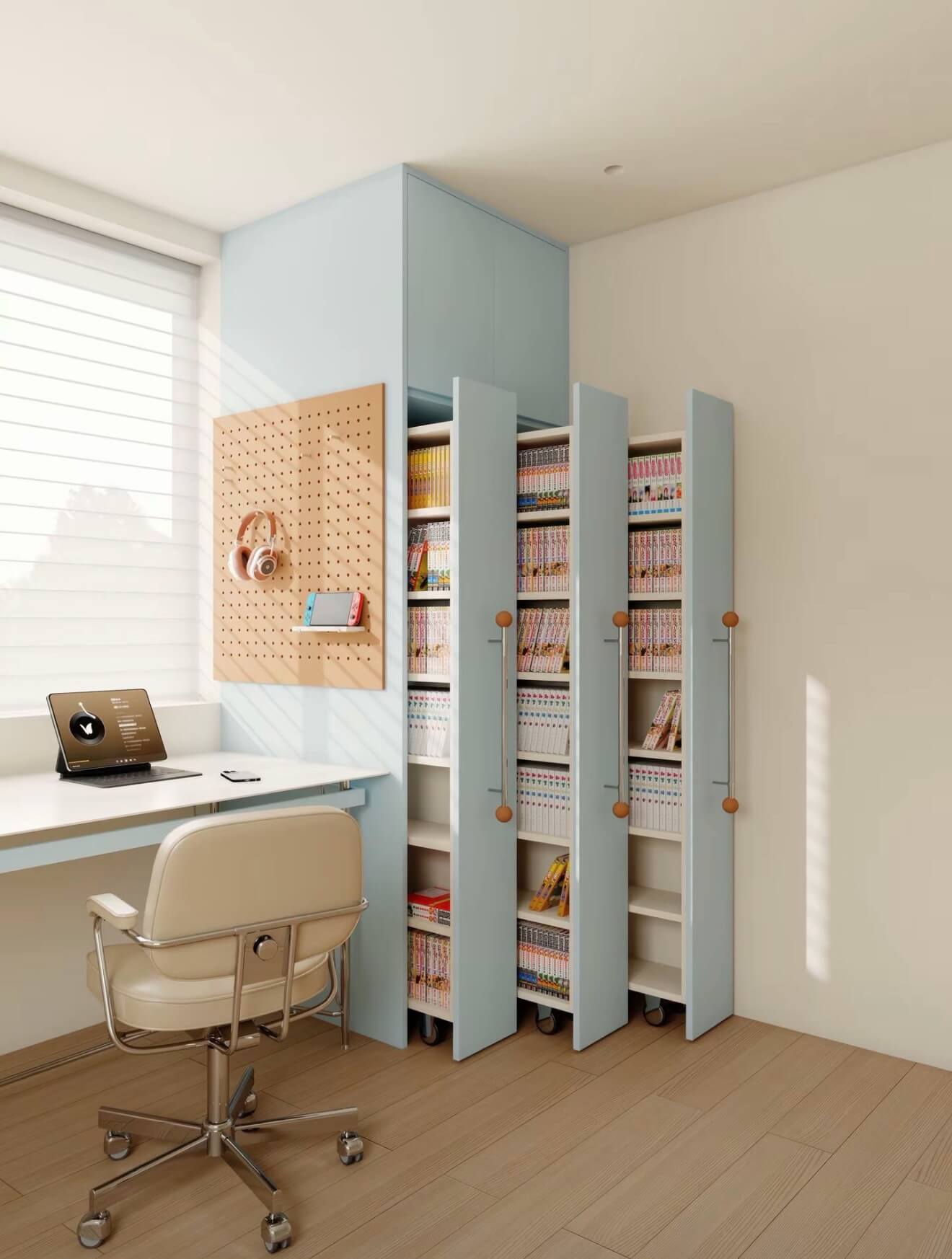
Start with a modular wall grid or rail system if your workload evolves throughout the year. Track standards, slotted uprights, and clip-in shelves let you reconfigure height and spacing in minutes—ideal for switching from tax season binders to prototype bins. Add wire baskets, pegboard panels, and cup hooks to corral peripherals and cables; a small whiteboard or pin rail can slot in for quick notes and mood boards. For ergonomics, keep daily-use items in the “golden zone,” roughly 20–50 inches above your desk surface, and reserve top tiers for archive boxes and seldom-used gear. Mount into studs where possible and check shelf span vs. weight limits to prevent sagging. If you use a sit-stand desk, align one shelf just above monitor height to frame your camera view without visual clutter. Color-code bins and spine labels to speed retrieval, and use identical containers for a cleaner, calmer backdrop. Borrow from 5S: sort, set in order, shine, standardize, sustain—then schedule a 10-minute weekly reset. A modular wall grid keeps your office shelving nimble, scalable, and renter-friendly if you opt for minimal anchors and lightweight accessories.
Floating Shelf Backdrops That Look Sharp on Video Calls
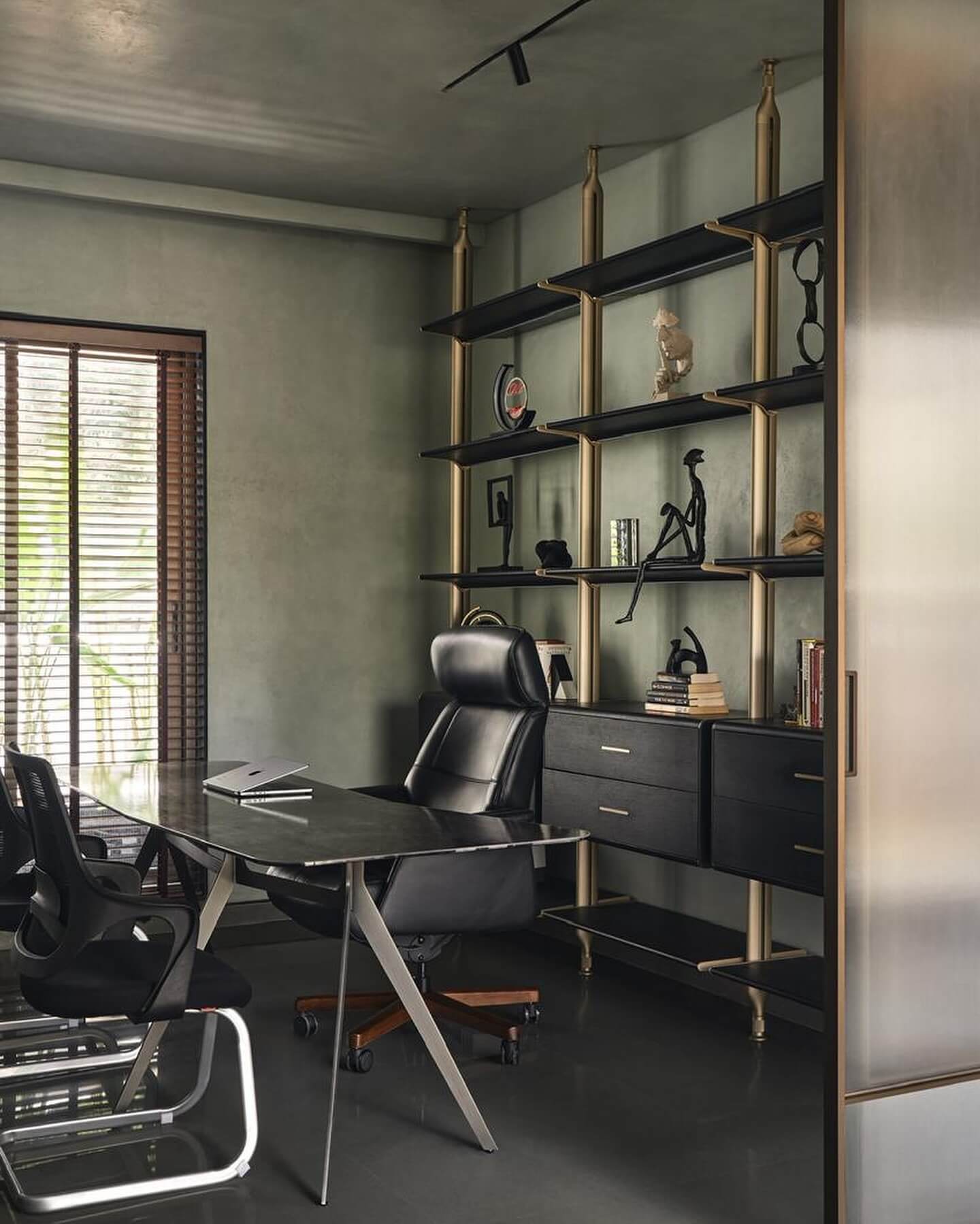
Floating shelves deliver a tidy, modern look and a polished video-call backdrop. Keep the composition clean: install shelves in symmetrical stacks or a gentle offset and style with the rule of thirds—functional items, reference books, and a few sculptural pieces for rhythm. Use odd-numbered groupings, leave negative space between clusters, and stick to a tight color palette so the background doesn’t compete with your face on camera. Opt for shelves at least 1–1.5 inches thick with concealed brackets for a solid, shadow-free line; span shorter lengths to minimize sag and mount into studs whenever possible. Thread LED strips on the underside (3000–3500K for warmth without yellowing), dimmable to prevent glare on glossy book jackets. Hide routers, hubs, and drives in lidded boxes with cable pass-throughs, and route cords down the wall in paintable raceways. Keep high-contrast items—like white binders and black tech—clustered to create visual order. With a few intentional choices, floating office shelving can store what you need while projecting authority and calm on every call.
Credenza + Upper Shelving: The High–Low Storage Combo
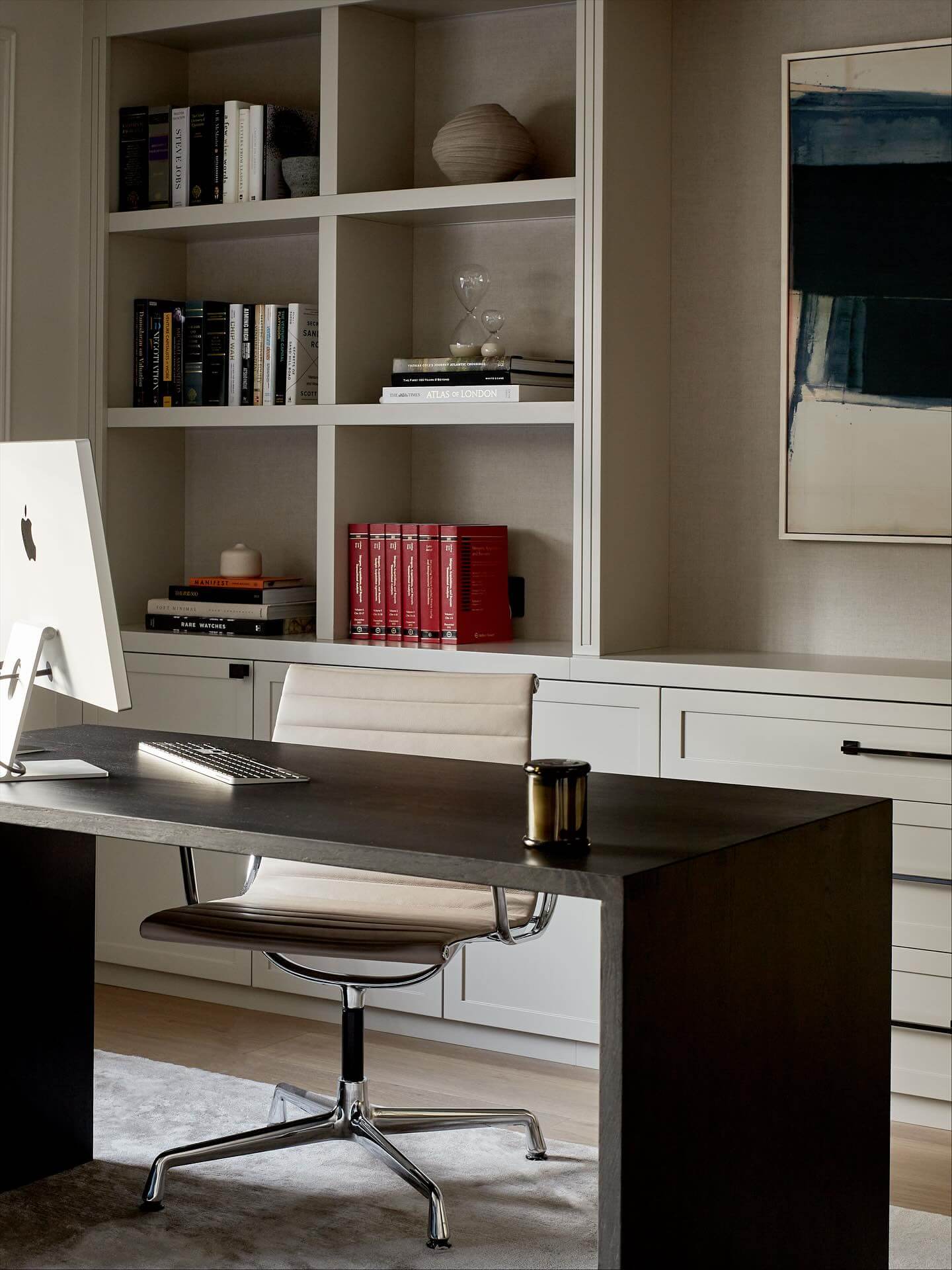
Pair a low credenza with upper shelves to balance concealed storage and accessible display. The base handles the heavy lifting—paper stock, backup drives, labelers, even a printer on full-extension slides—while the open shelves keep reference binders, awards, and greenery within reach. Aim for 10–12 inches of depth up top for books and decor; go 13–15 inches if you regularly store binders. Add grommets or a cable trough behind the credenza so devices can stay plugged in but out of sight, and ventilate any compartment housing a printer or modem. Visually, align the lowest shelf with window trim or door headers to create a strong horizontal that ties the room together. Use matching storage boxes to hide small peripherals, and repeat one or two finishes (wood tone, matte black, or brushed metal) for cohesion. A narrow pinboard or rail between the credenza and shelving becomes a landing strip for to-dos and swatches. This high–low configuration anchors the room, boosts capacity, and keeps your office shelving looking intentionally curated, not crowded.
Slim Ladder Shelves for Compact and Flexible Workspaces
When square footage is tight, ladder shelves earn their keep. Their small footprint and tapering profile create vertical storage without overwhelming the room, making them perfect beside a desk, in a hallway office niche, or flanking a window. Designate the middle rungs for daily-use supplies—journals, charging trays, a small in-and-out box—and reserve the top tier for plants or lightweight decor that softens the frame on video. Use handled baskets on lower tiers to collect cables and chargers; label them for quick swaps between devices. For stability, secure the unit with an anti-tip kit or choose a model with a discreet wall bracket. Felt pads protect floors and make micro-adjustments easy. Because the shelves get shallower toward the top, think in layers: vertical file stands at mid-height, slim book stacks above, and a small light or diffuser to warm the scene. A ladder shelf adds vertical capacity, zones your essentials, and introduces texture—proof that office shelving can be airy, affordable, and highly productive.
Corner Shelving That Unlocks Dead Space
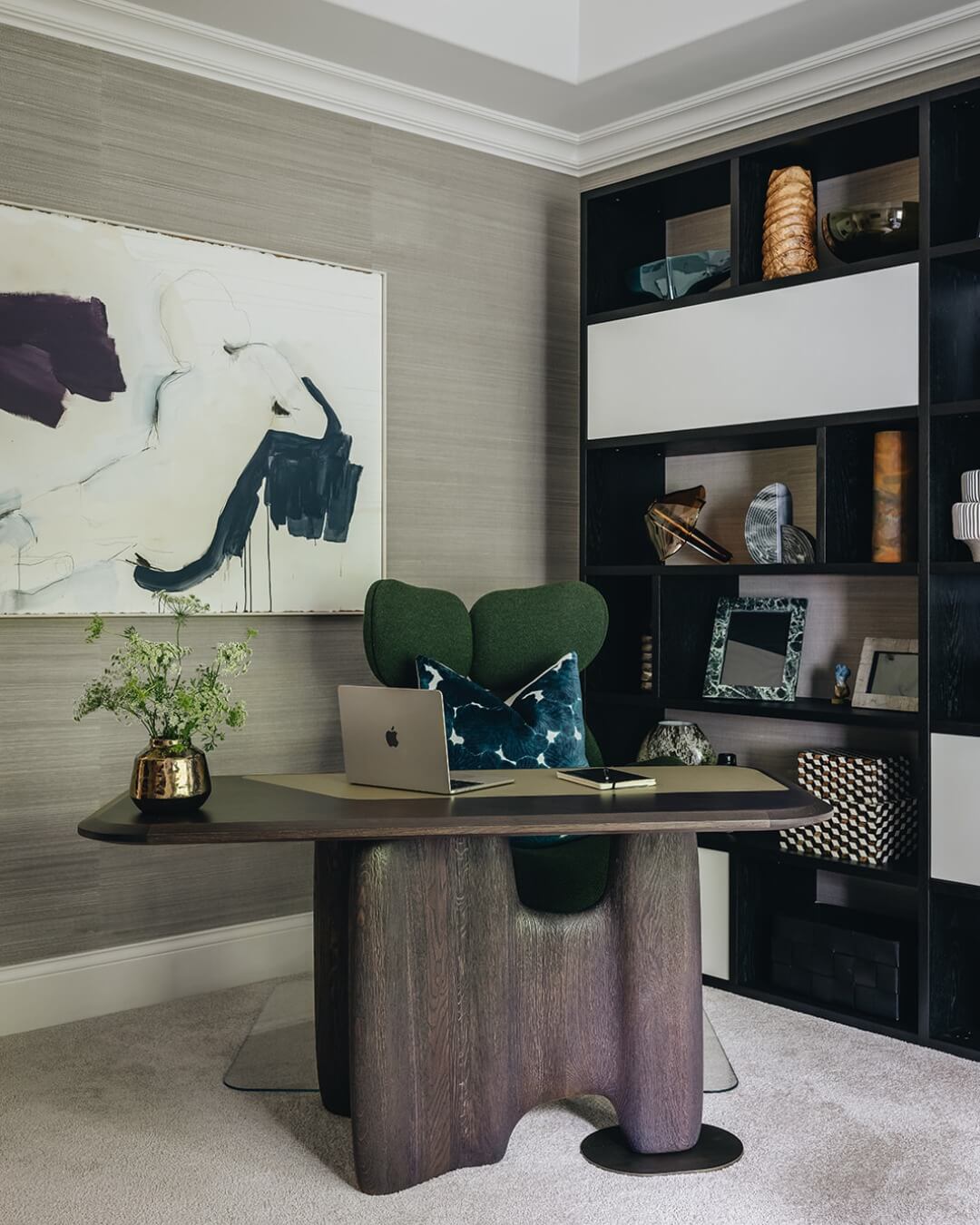
Corners are storage goldmines when planned with intention. Install floating L-shelves or a neat stack of quarter-rounds to capture volume that usually goes to waste, then assign each tier a purpose: networking gear and smart-home hubs on a ventilated shelf, reference binders at chest height, display items above. Add a small turntable for routers or label printers so cables don’t tangle, and route wires along the wall with paintable raceways that blend into your trim color. Keep depth to 10–12 inches to avoid elbow bumps near an L-shaped desk and to maintain sightlines for video. If your office echoes, tuck an acoustic panel or corkboard on the adjacent wall; it subtly improves call quality while doubling as pin-up space. Corners also handle vertical plants beautifully—choose trailing greenery to soften the geometry without stealing workspace. By turning a hard angle into a hardworking zone, corner shelving expands capacity, clarifies zones, and keeps the flow of your office calm and efficient.
Open Metal Shelving for Heavy-Duty, Adjustable Storage
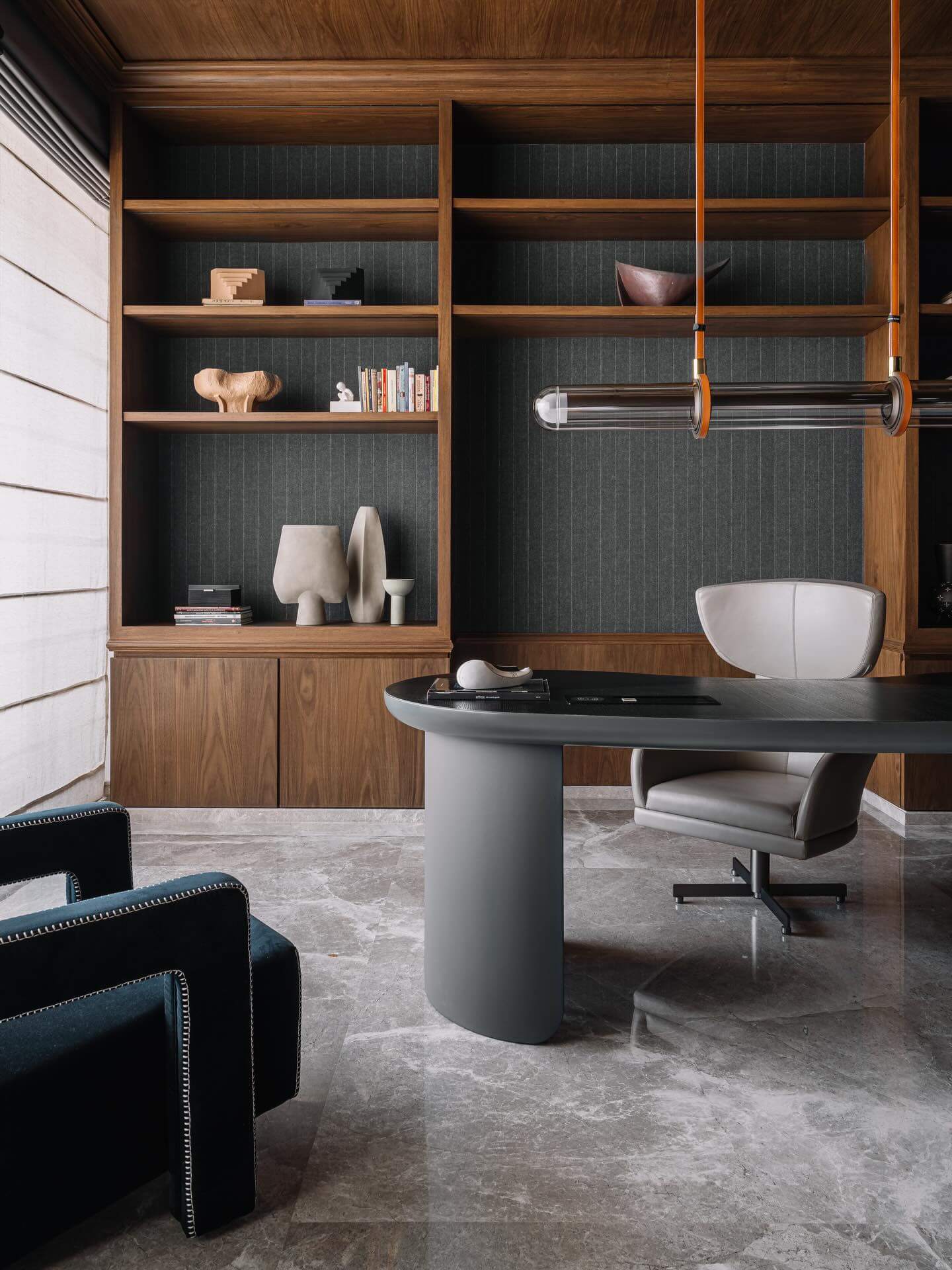
For gear-intensive work—camera kits, sample libraries, or inventory—open metal shelving is a powerhouse. Adjustable steel uprights and wire or solid shelves handle high loads while staying easy to re-slot as needs change. Place the bulkiest items at waist-to-shoulder height for safer lifting; archive boxes and rarely used equipment live up top, clearly labeled on two sides. Use lidded bins to cut dust and stack neatly; pick one container style to maximize shelf density and keep the visual noise down. If your region is quake-prone or your floor is uneven, add wall straps and leveling feet. Casters turn the unit into a mobile station for photo shoots or packing; just remember to lock wheels before loading. Cable-heavy gear benefits from a power strip mounted to an inside post with Velcro ties for quick swaps. A simple bin map taped to the side and a quarterly audit keep chaos in check. This kind of office shelving is industrial by nature but can still look polished with consistent labels and a restrained color palette.
Light the Shelves: LEDs That Work as Hard as You Do
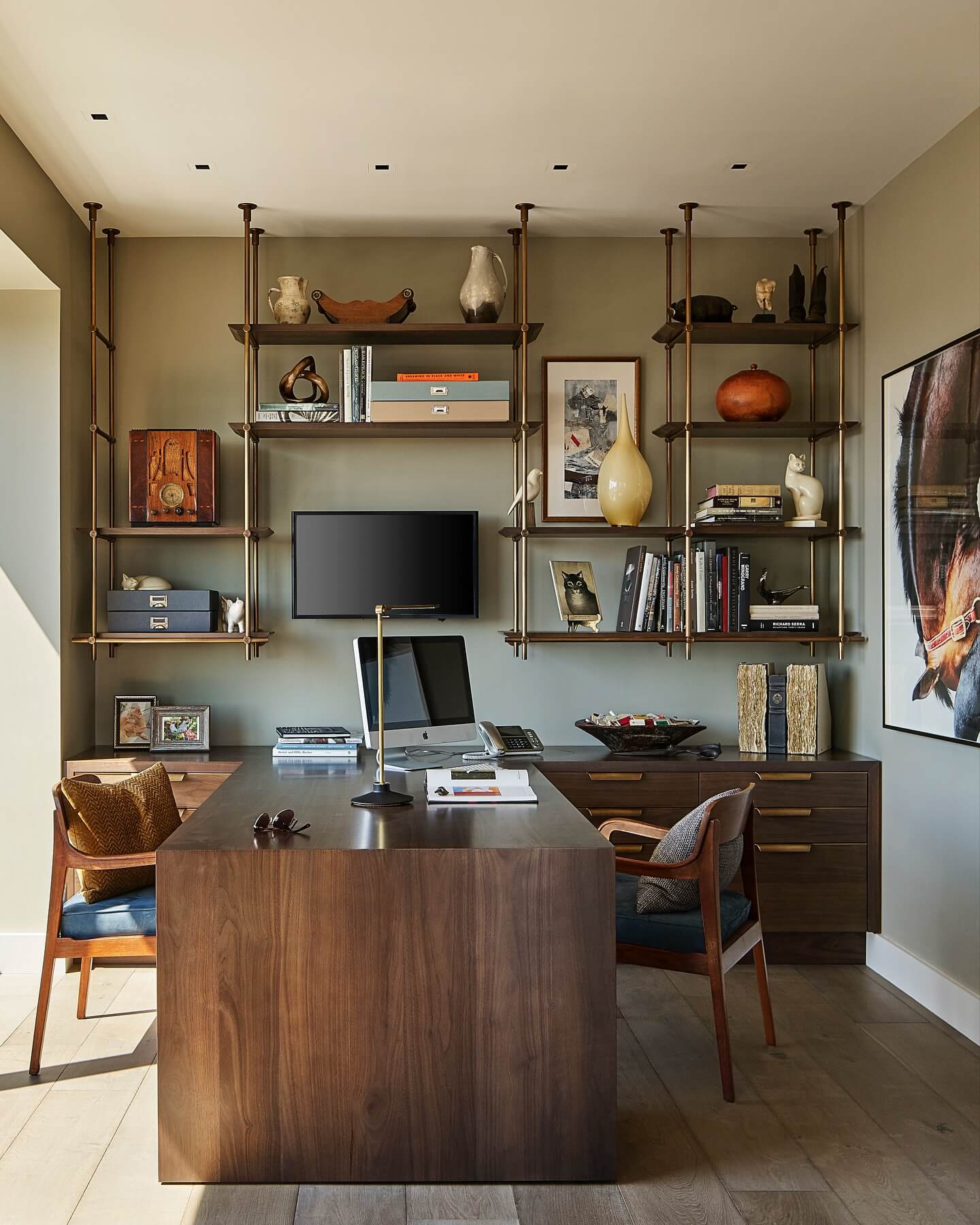
Lighting can make or break your office shelving. Integrated LED strips or pucks under each shelf brighten task zones, reduce eye strain, and elevate displays without adding desk clutter. Choose 3000–4000K color temperature and 90+ CRI for accurate color on samples and print proofs; pair with diffusers to eliminate hotspots on glossy objects. Run low-voltage leads through cable channels or routed grooves along the shelf underside, then drop a single, tidy cord into a raceway to the outlet. Smart plugs or scenes let you set “Focus,” “Call,” and “After Hours” modes—dim the backlighting during video calls to keep the camera exposed for your face, not the shelves. Magnetic LED bars are great for renter-friendly installs and can reposition as layouts evolve. If you add a charging shelf, embed a flush-mount USB-C/AC grommet and a heat-vent gap at the rear. Good shelf lighting increases usability, heightens perceived quality, and keeps your office looking crisp from 7 a.m. briefs to late-night sprints.
File Walls: Vertical Binders, Magazine Holders, and Color Codes
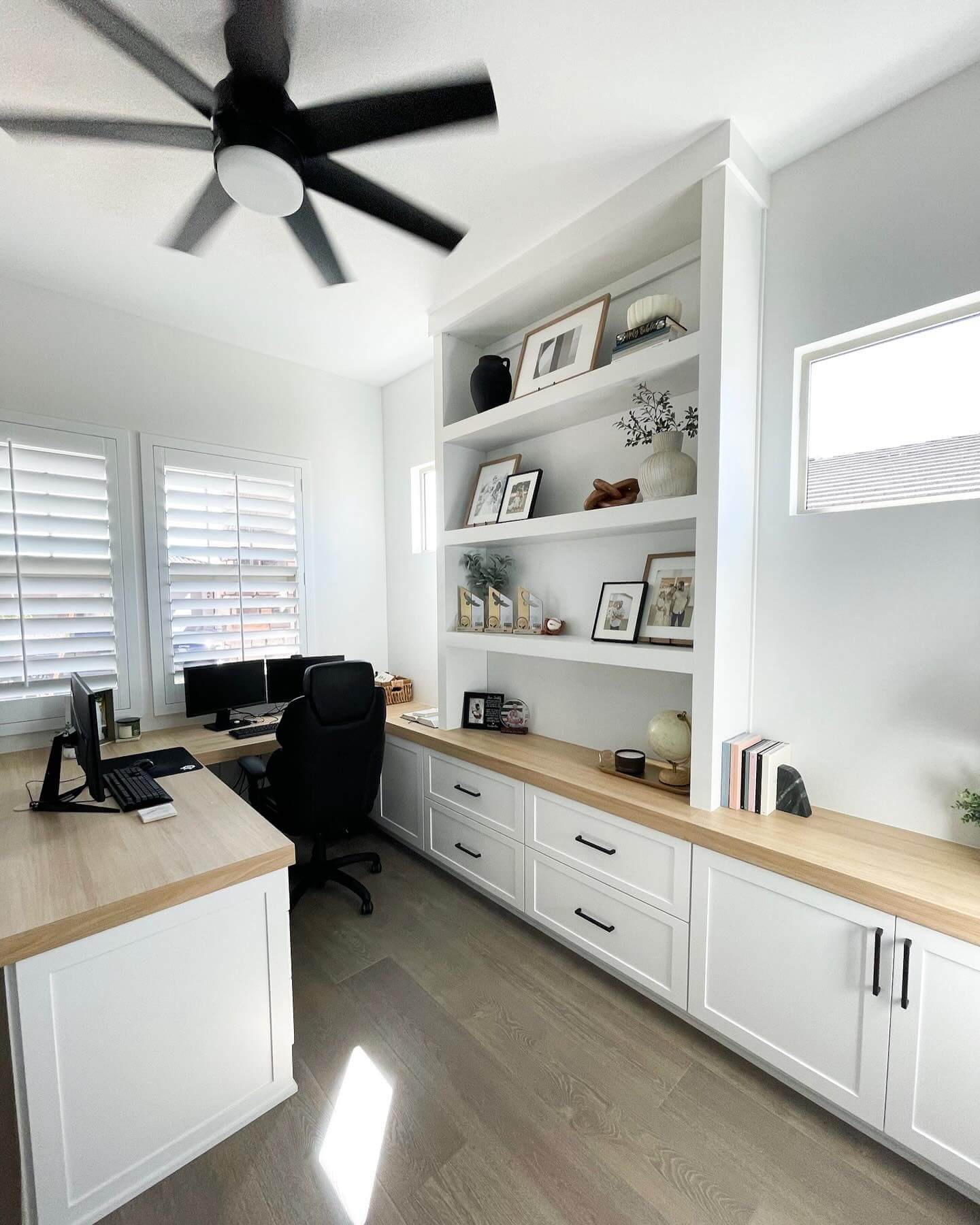
Turn a length of shelving into a fast, visual filing system. Magazine holders corral loose papers and slim project folders while keeping spines label-ready. For binders, stick to 1–1.5-inch widths—thicker spines waste space and get unwieldy; 12-inch-deep shelves handle them perfectly. Organize top-down: current quarter at eye level, upcoming work below, archives above. Choose a color code that fits your brand or temperament—calm neutrals for focus, brights for quick scanning—and pair with clear, consistent labeling (category, date range, owner). A slim tray for “inbox today” prevents piles from creeping onto the desk, and a “Friday file reset” habit resets order before the weekend. Consider QR codes on spines that link to a shared index in your project management tool; when a binder moves, the system still knows where the content lives. The result is office shelving that acts like a physical kanban: visible, flexible, and refreshingly low-friction.
Renter-Friendly Shelving That Won’t Wreck Walls
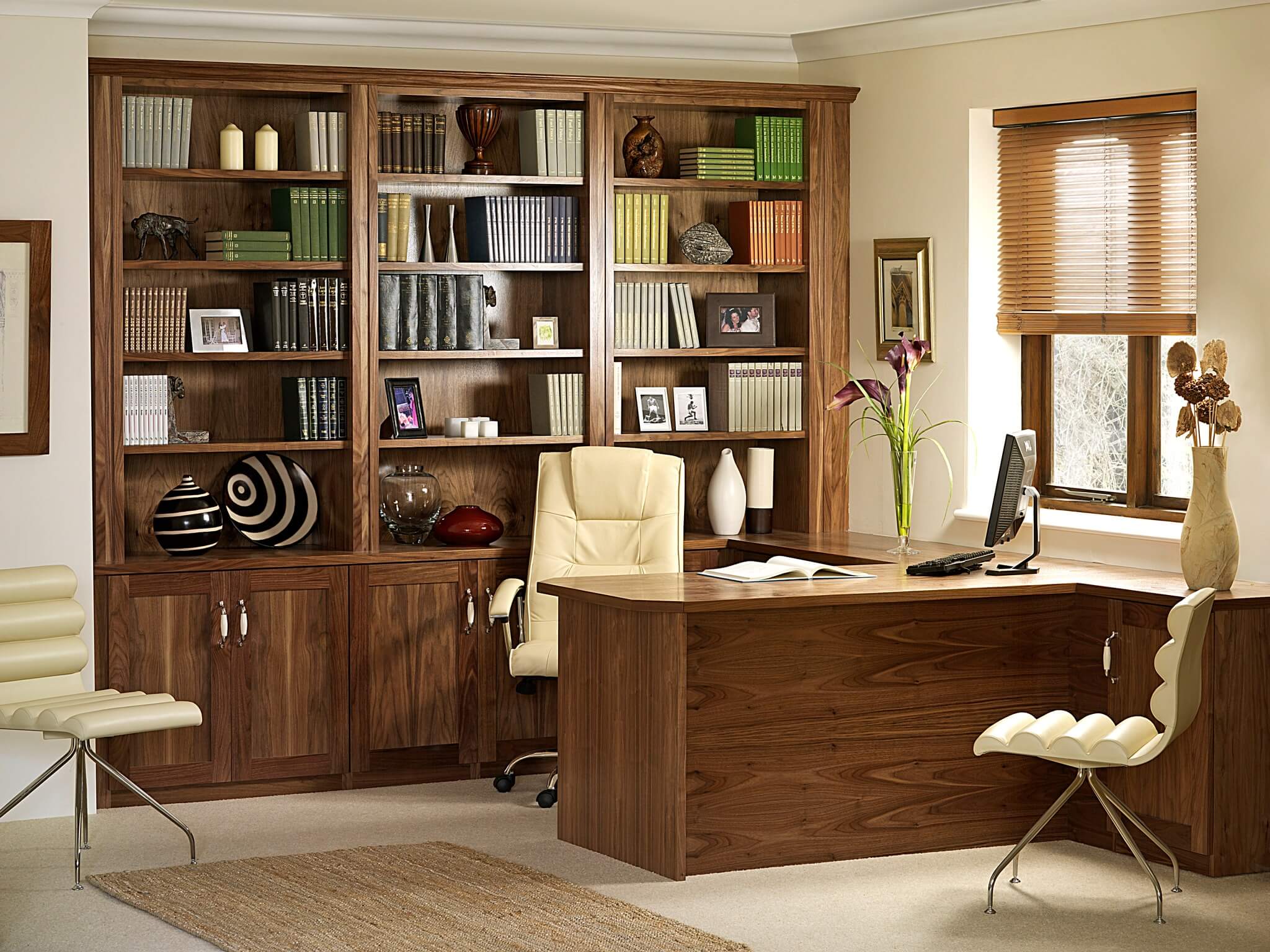
You don’t need a workshop—or your landlord’s blessing—to build great office shelving. Leaning ladders, freestanding cubes, and tension-pole systems create vertical storage with minimal or no drilling. For wall-mounted looks, use a rail system anchored into just two studs, then hang standards and shelves anywhere along the track—fewer holes, maximum flexibility. Command-style hooks hold light decor or cable clips; adhesive raceways keep wires straight and discreet. If you stack bookcases, connect units with anti-tip straps into a single stud and add felt pads to protect floors and fine-tune alignment. To fake a built-in, run a pair of identical units wall-to-wall and bridge them with a painted, cut-to-size top. Keep container colors consistent and echo hardware finishes for cohesion. These strategies deliver professional-grade storage, renter peace of mind, and a clean upgrade path when your needs or address change.
The 60/30/10 Styling Rule for Productive, Beautiful Shelves
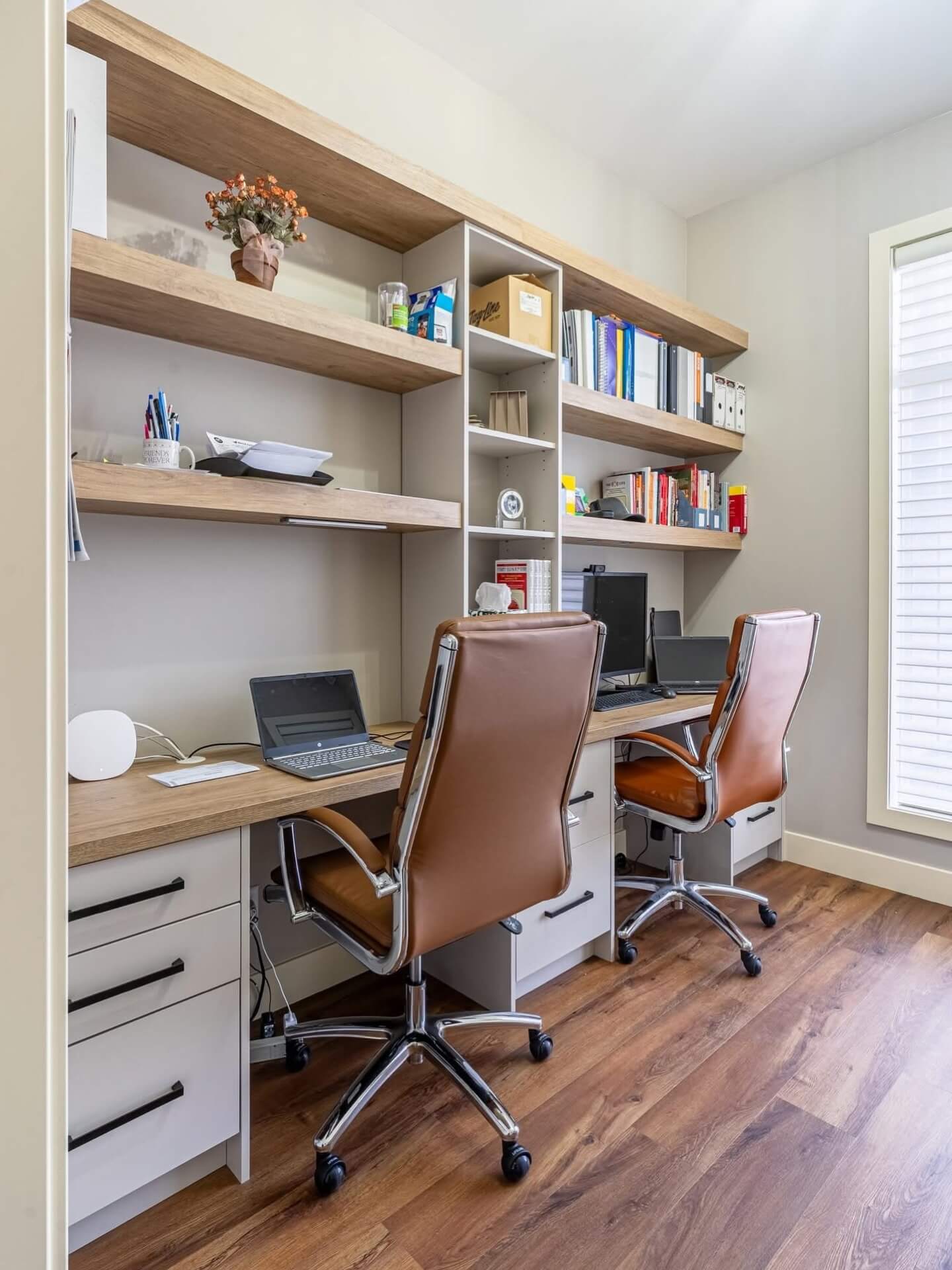
Use the 60/30/10 rule to keep office shelving purposeful and photogenic: 60% functional storage (binders, boxes, bins), 30% reference and tools (books, trays, tech), 10% personality (art, plants, objects). Mix vertical book rows with horizontal stacks to vary rhythm; slide a small tray onto a stack to hold clips or SD cards. Repeat materials—wood, linen, matte metal—to unify the scene, and leave intentional breathing room so every shelf doesn’t read as “full.” Plants add life and improve acoustics; choose trailing or upright forms that won’t block grabs. Keep cables invisible with pass-through boxes and label everything on the spine-facing side. Build a seasonal rotation bin so decor refreshes without buying more. Finally, maintenance is the secret sauce: dust weekly, archive quarterly, and audit annually. With a simple styling framework and light upkeep, your office shelving will stay balanced, camera-ready, and genuinely helpful to how you work.
Get the Fail-Safe Paint Color Playbook (Free PDF)
36 proven colors • 8 ready palettes • trim & sheen guide • printable testing cards.
Wall-to-Wall Built‑Ins That Turn a Spare Wall into a Power Wall
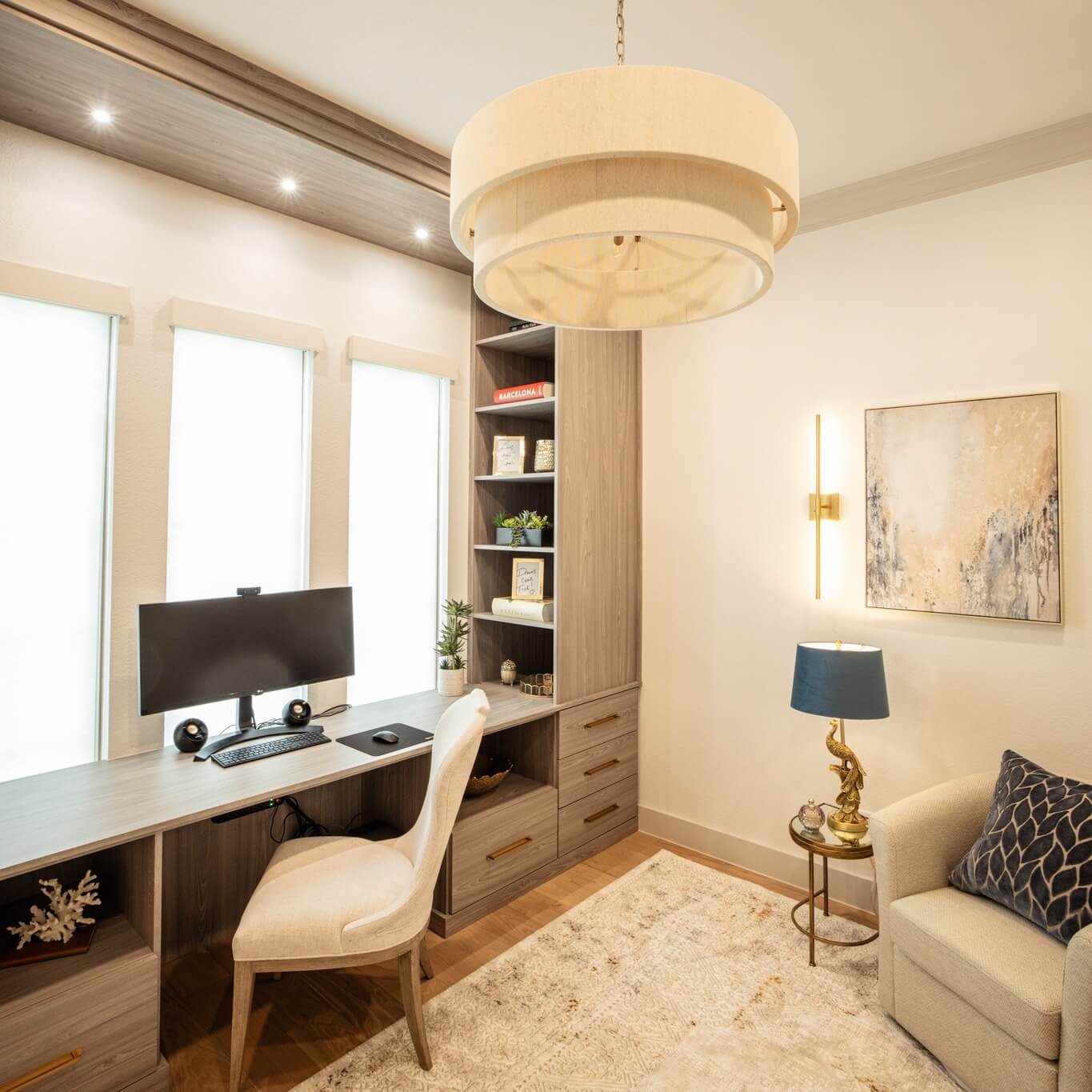
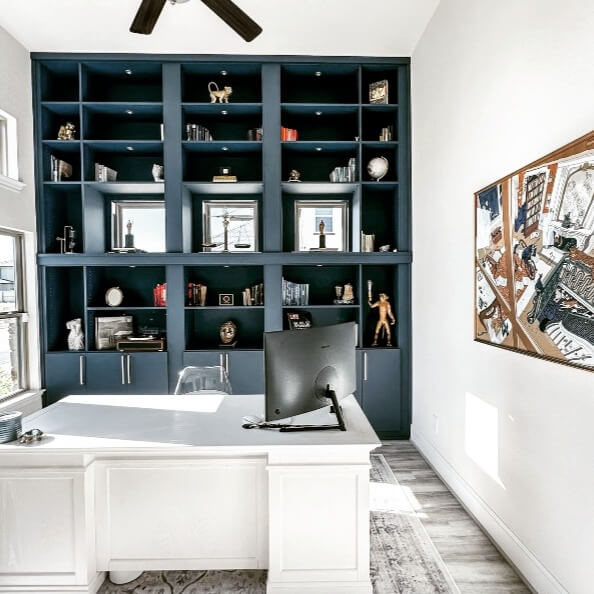
When your to-do list outgrows a few floating shelves, commit to wall-to-wall built-ins that convert a blank expanse into a high-performance “power wall.” Design your office shelving with a layered mix: closed base cabinets for printers, paper reams, and charging drawers; adjustable open shelves at eye level for books and reference binders; and a top display tier for awards and brand objects. Add a counter-depth work surface to create a secondary touchdown desk or a staging zone for packing, scanning, and sorting.
Plan the grid first, then style it. Standardize shelf heights (10–12 inches for books, 14–16 inches for storage boxes), integrate vertical dividers for files, and leave negative space so your wall reads intentional on video calls. Run a wire chase behind the backs or use grommets to keep power invisible. Matte finishes mute glare; wood accents warm up tech-heavy setups. The result: a single, seamless installation that consolidates storage, reduces visual noise, and gives your workspace a commanding focal point.
Over-the-Door and Ceiling-High Shelves That Claim Untapped Vertical Space
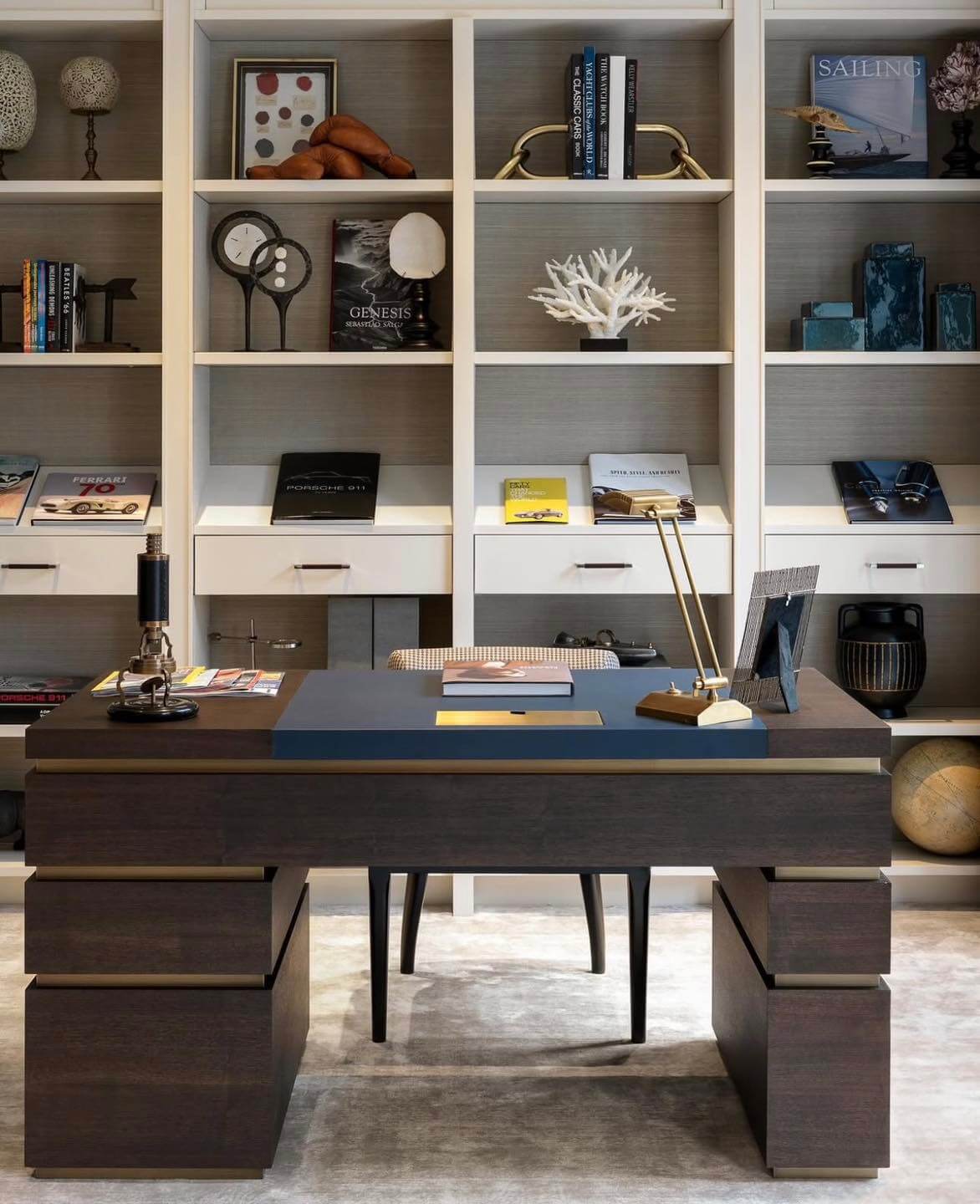
If floor and mid-wall real estate are maxed out, look up. A continuous run of ceiling-high shelving and over-the-door bridges captures “airspace” that usually goes to waste. Reserve this top tier for low-access items—archival binders, labeled document boxes, seasonal supplies—so your daily workflow stays ergonomic while your office shelving ideas scale vertically.
For a built-in look, align the upper shelf with the top of your door casing and carry the line across. Use 10–12 inch depths to avoid crowding the room and mount to studs or a ledger board for proper load. Choose matching boxes with bold spine labels so retrieval is fast even from a step stool. Add a slim picture light or integrated LED strip to lift shadows under the run. This move frees up eye-level space for inspiration boards and monitors while giving your room a crisp architectural frame. Vertical storage isn’t just practical; it visually heightens the ceiling and makes compact offices feel intentional and finished.
Mix Open Shelves with Closed Cabinets to Hide Visual Noise
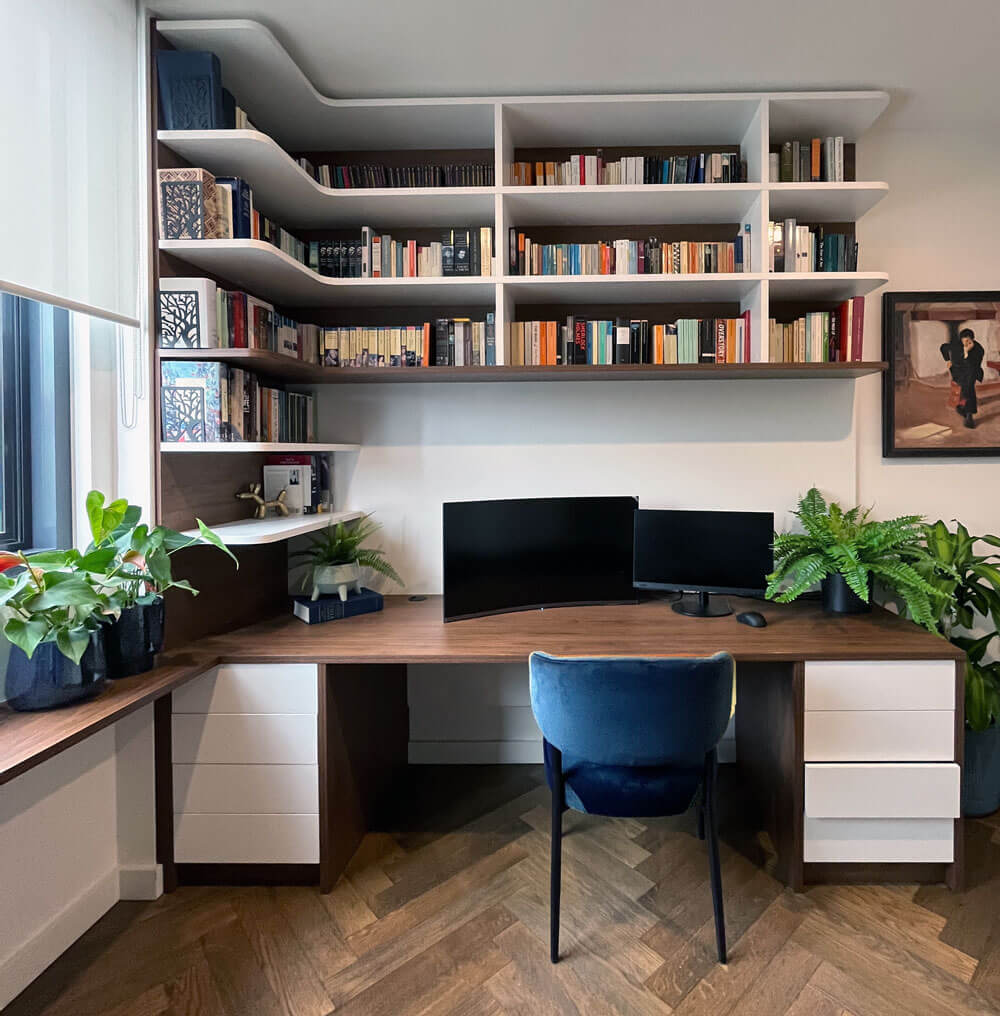
The most productive offices balance display with discretion. Pair open shelving for books and accolades with closed fronts—slab doors, fluted glass, or tambour panels—to conceal cables, routers, shipping supplies, and the “messy middle.” This open-closed rhythm lets your workspace read polished on camera while giving you fast access to everyday tools.
Plan by category. Keep quick-grab items behind ribbed or reeded glass so you can see silhouettes without visual clutter; hide peripherals behind solid doors with cutouts for airflow and cord pass-throughs. Use identical hardware and a single finish to unify the elevation, then vary interior fittings: pull-out trays for labelers, vertical file dividers, shallow drawers for pens and adapters. A 70/30 mix—mostly closed, selectively open—keeps cognitive load low and maintenance effortless. Add soft-close hinges and cable raceways to elevate the experience. The payoff is a shelf wall that communicates credibility, supports deep work, and still leaves room for personality.
Under-Shelf Add‑Ons That Double Capacity Without Adding Clutter
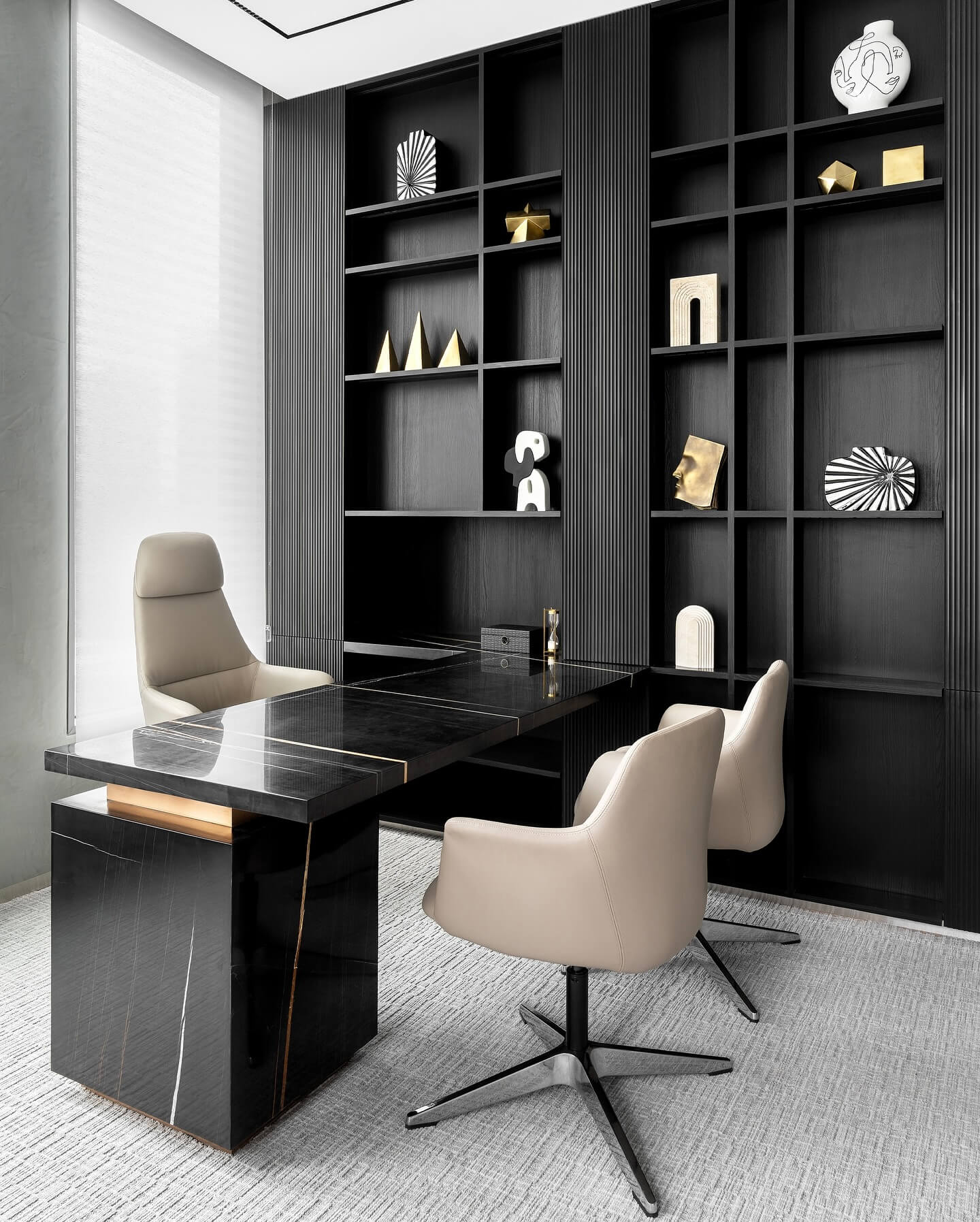
When you can’t add more shelves, make the ones you have work harder. Under-shelf add-ons—clip-on baskets, slide-out trays, peg hooks, and magnetic bars—create a hidden “second layer” for slim items that otherwise sprawl across desktops. Think label tape, notepads, chargers, and mailers tucked neatly beneath your primary shelf plane.
Start with structure: choose under-shelf baskets that match your shelf thickness (most fit 0.75–1 inch) and measure clearance so your contents glide without rubbing spines or decor. Add a slim pull-out for stationery or a drop-in filing rail to park active folders within arm’s reach. Mount a cable tray under the back edge to corral power strips and adapters; finish with adhesive cord clips to guide leads to the desk. Keep the underside clean by limiting add-ons to two or three consistent finishes—matte black or brushed aluminum—to avoid visual busyness. This micro-optimization clears surfaces, shortens reach time, and gives your office shelving a custom, built-in intelligence.
Symmetrical Shelving for Shared or Hybrid Work Zones
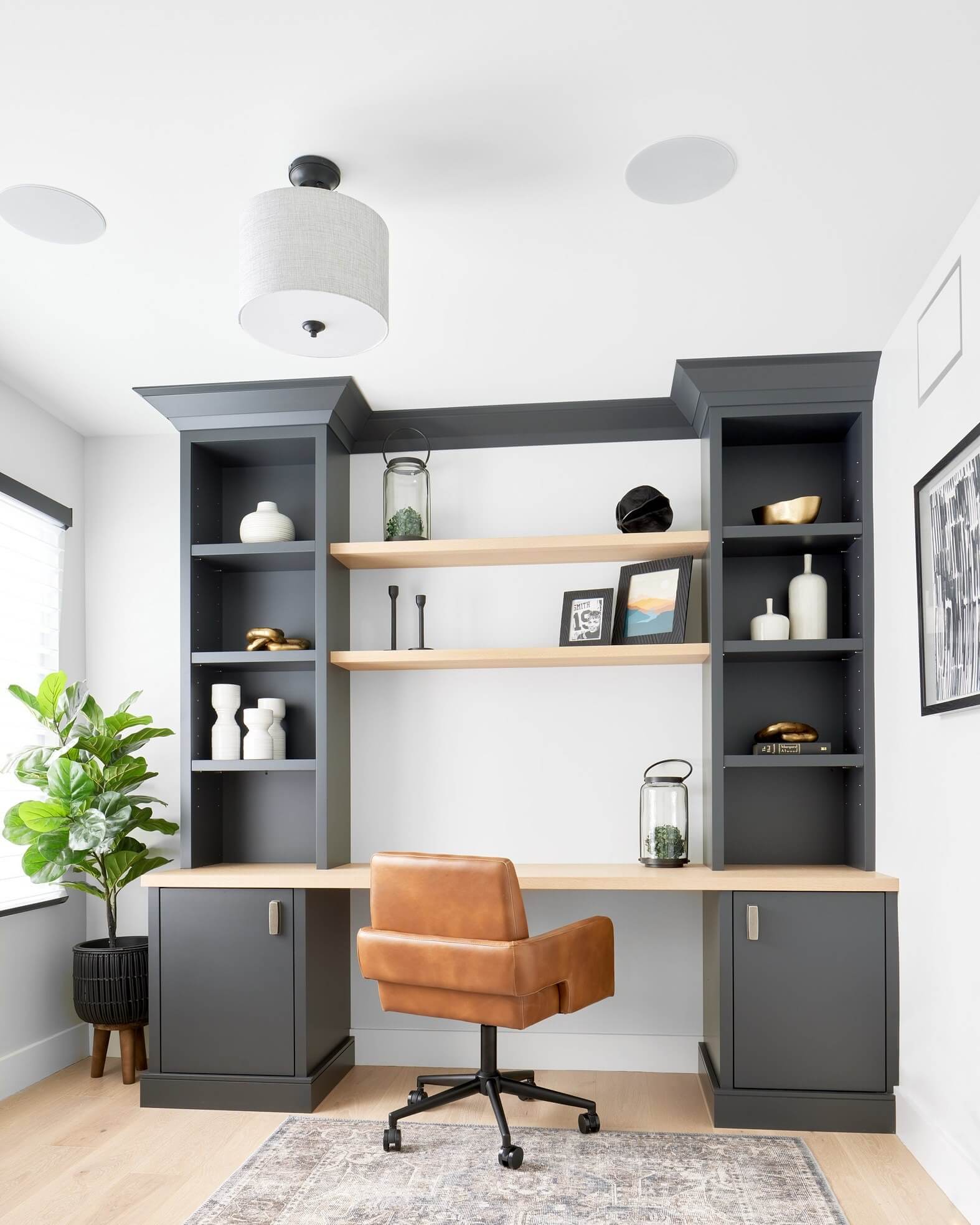
Design shelving like you’d design schedules for a hybrid team: clear, fair, and flexible. Symmetrical shelving—mirrored bays on left and right with a shared center—creates natural boundaries for two users without sacrificing cohesion. Each side gets identical shelf counts, bins, and file zones; the middle houses a communal printer shelf, reference library, or charging station.
Start with the centerline: anchor it with a taller cabinet or pinboard to visually balance the composition. Repeat finishes and box labels on both sides so switching desks is seamless on in-office days. Use adjustable shelves to accommodate personal gear (laptops, headsets) while keeping heights synchronized for a tidy backdrop. Color-code by person (subtle spine labels or tray liners) rather than mixing objects on the same shelf. Add task lighting under the center shelf to brighten shared tools and schedule a weekly five-minute reset to return items to their “home.” The symmetry calms the eye, reduces territorial friction, and ensures your office shelving ideas support both focused solo work and fluid collaboration.
Plant‑Forward Shelving That Boosts Focus and Air Quality
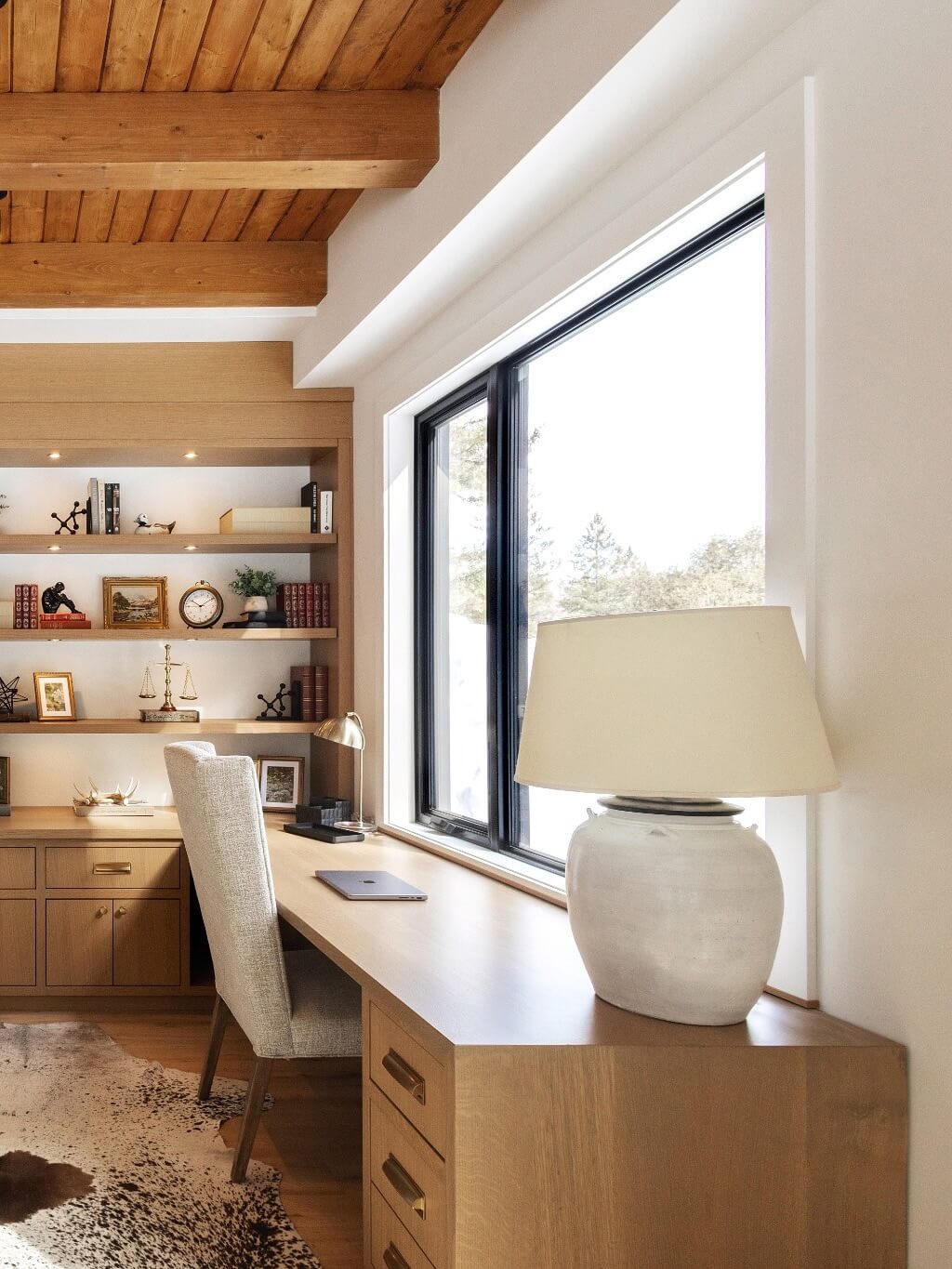
Biophilic design belongs on your shelves, not just your windowsill. A plant-forward approach softens lines, dampens echo, and improves attention—all while giving your office shelving a lived-in, camera-ready vibe. Use trailing varieties on top shelves (pothos, philodendron) to introduce gentle movement; reserve mid-shelves for upright, low-light performers (ZZ, snake plant) in uniform matte planters.
Get the Fail-Safe Paint Color Playbook (Free PDF)
36 proven colors • 8 ready palettes • trim & sheen guide • printable testing cards.
Protect your materials with saucers and consider lightweight cachepots so shelves aren’t overloaded. Group plants in odd numbers and repeat one or two species to avoid a chaotic, greenhouse look. If your office lacks natural light, tuck full-spectrum LED grow strips under the shelf lip and run them on a smart timer. Pair greenery with natural textures—cork boxes, linen binders, wood accents—to reinforce the theme and create visual breathing room between tech and text. The goal isn’t a jungle; it’s a curated rhythm of green that reduces stress, frames your on-camera presence, and turns everyday storage into a restorative micro-landscape.
Color‑Blocked Shelf Backs That Organize by Sightline
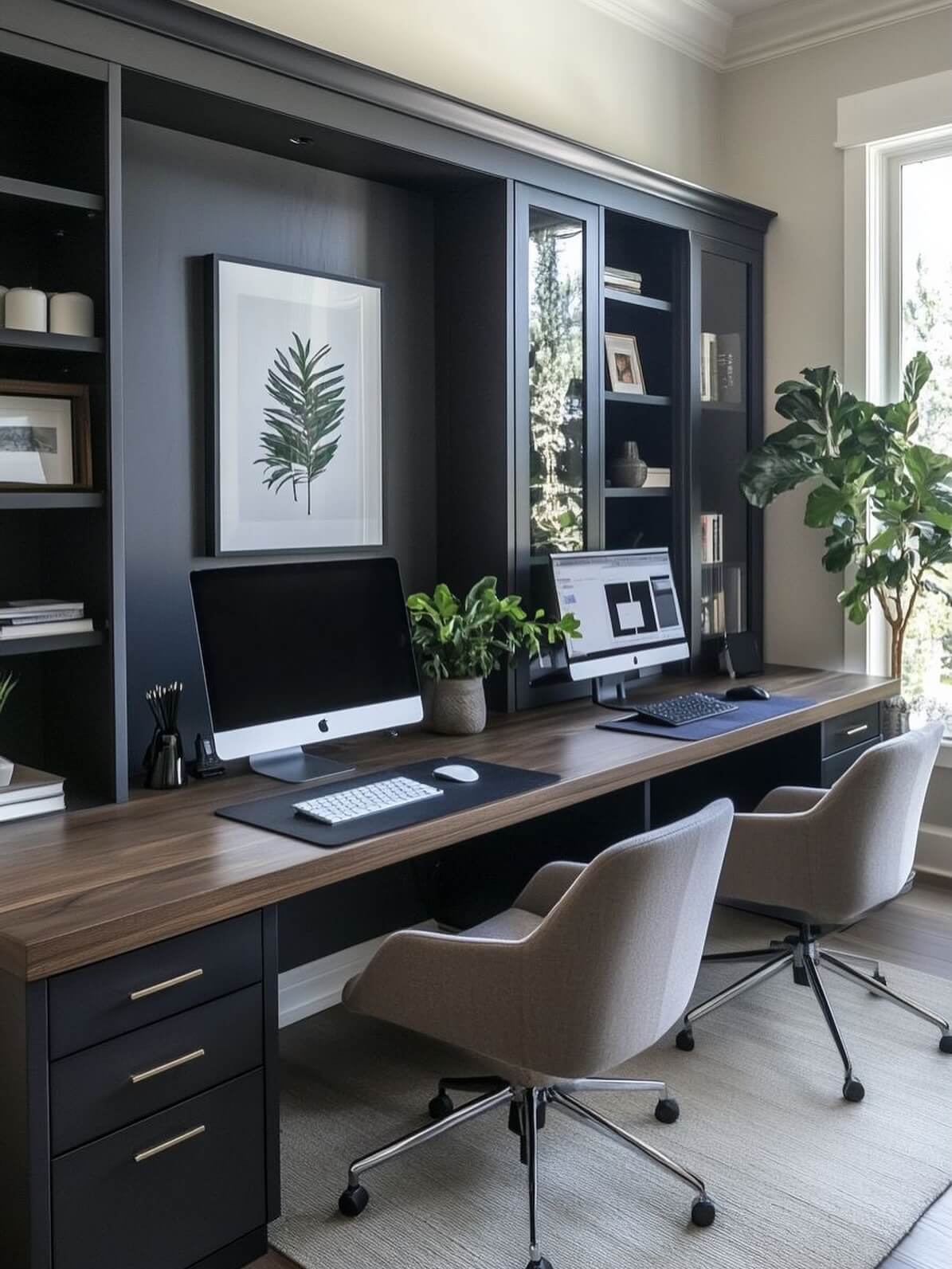
Color is a fast, low-cost way to make your shelving do cognitive work for you. Paint or wallpaper the backs of shelves in intentional blocks—one hue per category or workflow—so your eyes know where to land. Finance lives in deep navy, design references in clay, active project trays against moss green. You’ve just built a visual index that doubles as a striking backdrop.
Get the Fail-Safe Paint Color Playbook (Free PDF)
36 proven colors • 8 ready palettes • trim & sheen guide • printable testing cards.
Keep the palette tight (three to four colors) and repeat it across bins, spine labels, and desktop accessories for cohesion. In small offices, choose mid-tone, matte finishes to reduce glare on calls; in darker rooms, go lighter to bounce ambient light. For a premium feel, line backs with acoustic felt panels that both color-block and soften sound. As your needs change, swap shelf contents but keep the color logic—your system stays intuitive even as projects rotate. This is semantic shelving: the color tells a story at a glance, reduces hunt time, and elevates your office shelving ideas from storage to strategy.
Tech‑Ready Shelving with Concealed Power and Cable Paths
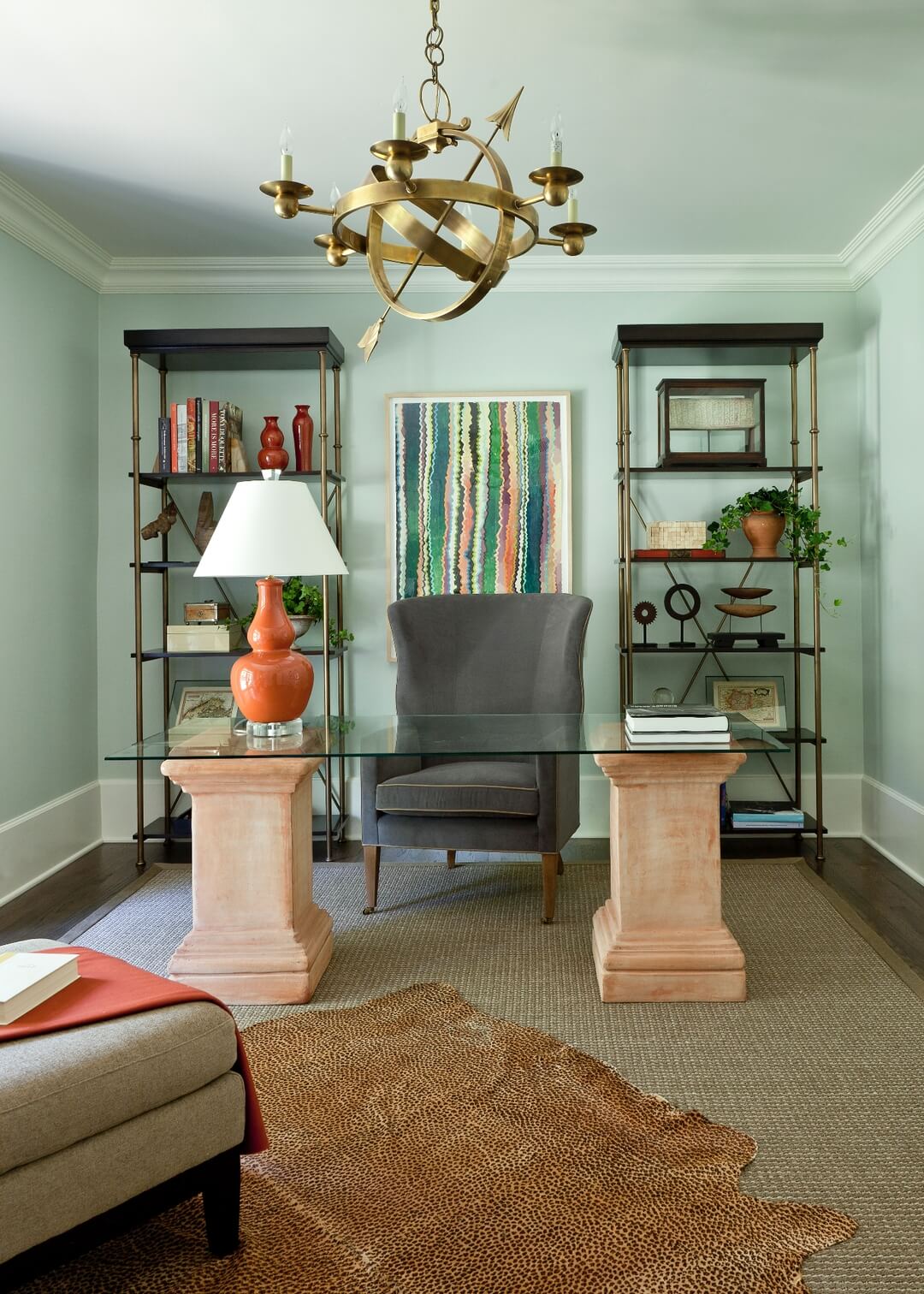
Modern offices run on silicon and copper—design shelves to match. Build tech-ready bays that hide power while keeping airflow and access top of mind. Route a dedicated power strip behind the back panel (or within a cable raceway), drill grommeted pass-throughs between shelves, and use Velcro ties plus labeled tags to tame adapters and USB-C leads.
Give every device a home: a ventilated cubby for the modem/router, a pull-out tray for the label printer, a padded drawer for external drives, and a charging dock zone with vertical phone and tablet stands. Add mesh backs or perforated doors to keep signals strong and heat low. Mount a master switch within reach to kill phantom draw after hours. If you share the space, print a simple wiring diagram and stick it inside a door—no more tracing mystery cords before a meeting. The result is a shelf system that looks serene on the outside and hums efficiently within, supporting uninterrupted work and a spotless backdrop.
Rolling Shelving and Carts for Agile, Project‑Based Teams
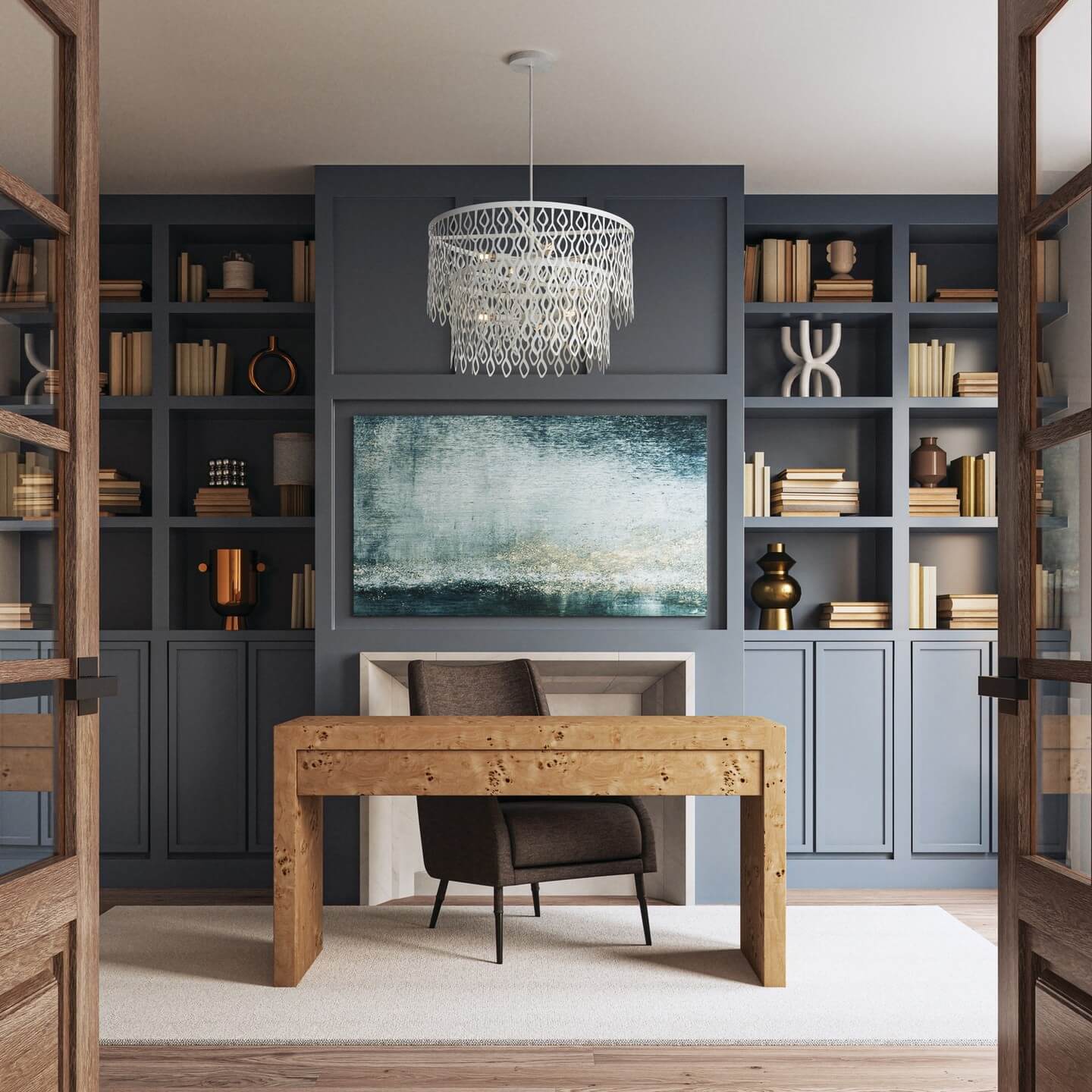
Static shelves are great for archives; rolling units and slim utility carts excel at projects with moving parts. Park a narrow cart under a counter-height shelf for active materials—prototype bins, client folders, mailing supplies—then wheel it to your desk when it’s sprint time. Library-style rolling shelving can divide zones during collaboration and slide aside for open-floor flexibility.
Choose lockable casters, a stable wide base, and shelf lips to prevent slides in motion. Standardize bin sizes so carts swap in and out without re-packing. Label the cart edge and assign each a “parking bay” to keep aisles clear. If floor space is tight, look for carts that nest or dock under a credenza. A weekly reset returns items to their home cart so your fixed shelves remain curated and calm. Mobility gives your office shelving ideas a dynamic layer: storage that follows the work, supports rapid context switches, and tucks away just as quickly.
Load‑Smart Shelving: Anchors, Spans, and Safe Capacity
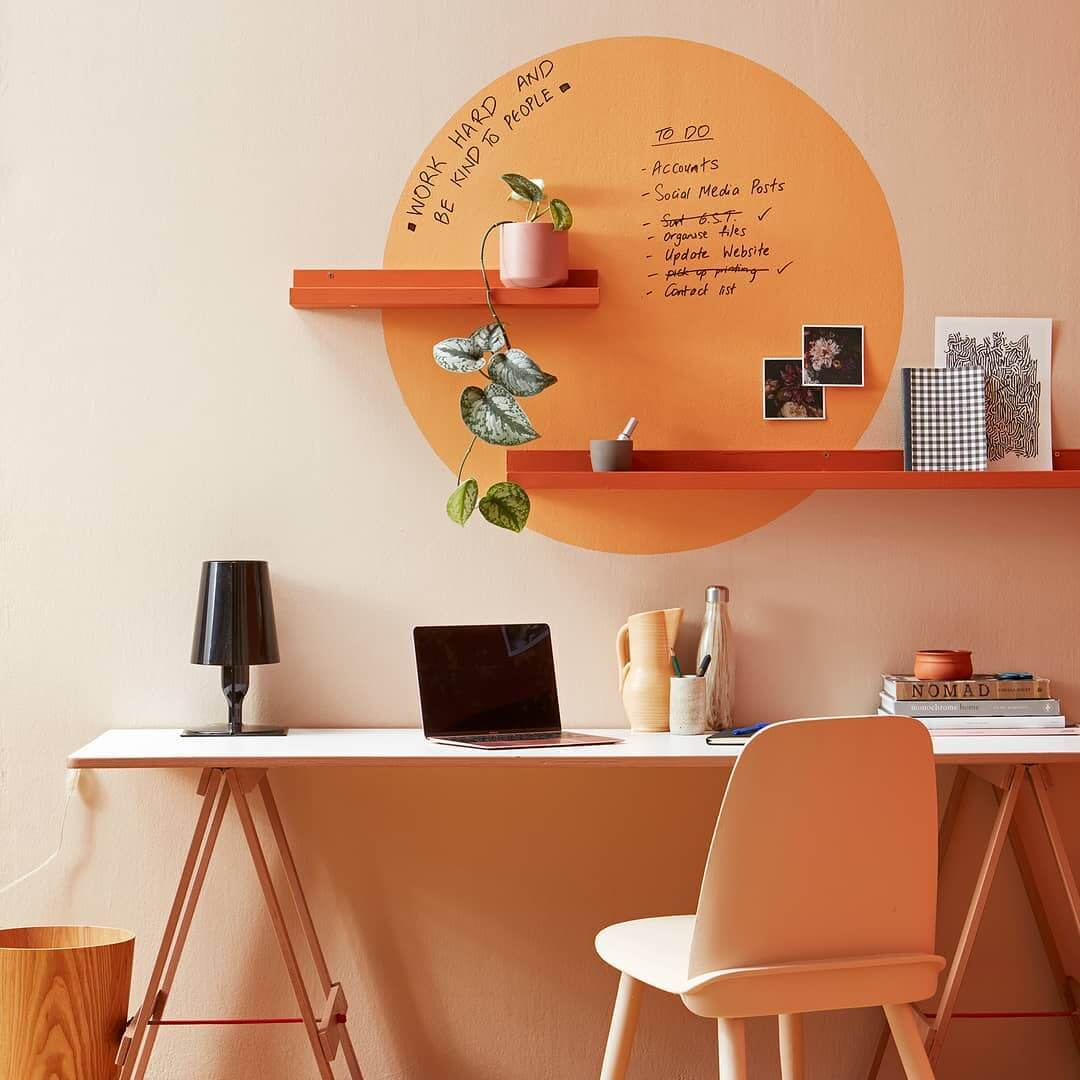
Great shelving is safe shelving. Before you style, engineer. Anchor uprights and brackets into studs or use rated wall anchors appropriate to your substrate (masonry, plaster, drywall). Mind spans: 3/4-inch plywood or solid wood typically holds better than particleboard; keep shelf lengths modest or add center supports to prevent sag under books and equipment.
Distribute weight with the “heavy low, light high” rule—file boxes and reference tomes on bottom shelves, decor and small tech up top—to lower the center of gravity. In seismic zones or homes with kids, add anti-tip straps to tall units and set a slight lip on upper shelves. Respect manufacturer load ratings and don’t forget cumulative loads across standards and brackets. Finally, leave finger clearance at the back for cables and airflow so devices don’t overheat against walls. These quiet decisions make your office shelving ideas durable, safe, and stress-free—letting you focus on work instead of worrying about what’s overhead.
Get the Fail-Safe Paint Color Playbook (Free PDF)
36 proven colors • 8 ready palettes • trim & sheen guide • printable testing cards.
Above-the-Desk Shelf Stack for Prime Reach and Clear Sightlines
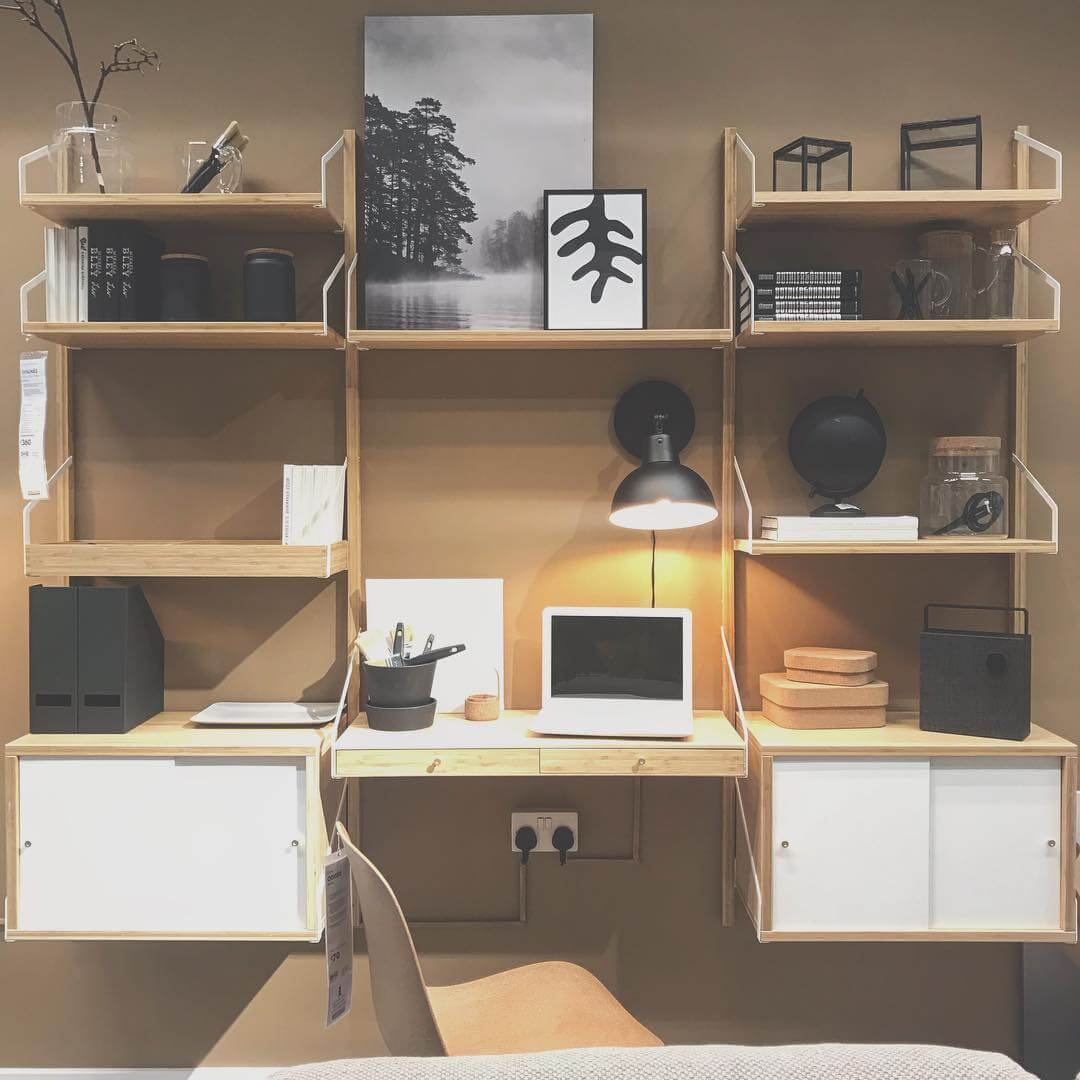
Think of the wall over your desk as your “prime reach” zone—ideal for the tools you touch daily without crowding your worksurface. Mount two to three floating shelves, starting 12–15 inches above the desk to clear monitors and task lamps, then stagger heights to fit notebooks, reference books, and labeled bins. Keep the lowest shelf for everyday grab-and-go items (inboxes, chargers, sticky notes), the middle for weekly resources (binders, trays, document stands), and the highest for decor that softens your Zoom background. To keep this office shelving idea ergonomic and camera-ready, add a slim under-shelf LED strip and a discreet cable raceway that routes power down the wall. Use uniform containers to reduce visual noise, and apply simple spine labels so your eye lands on what you need, fast. If you share the desk, color-code by person or project. This setup maintains clear sightlines, protects desk real estate for deep work, and builds a rhythm that’s easy to reset during end-of-day tidy-ups—small changes that result in a calmer, more productive home office shelving plan.
Modular Cube Shelving that Reconfigures with Your Career
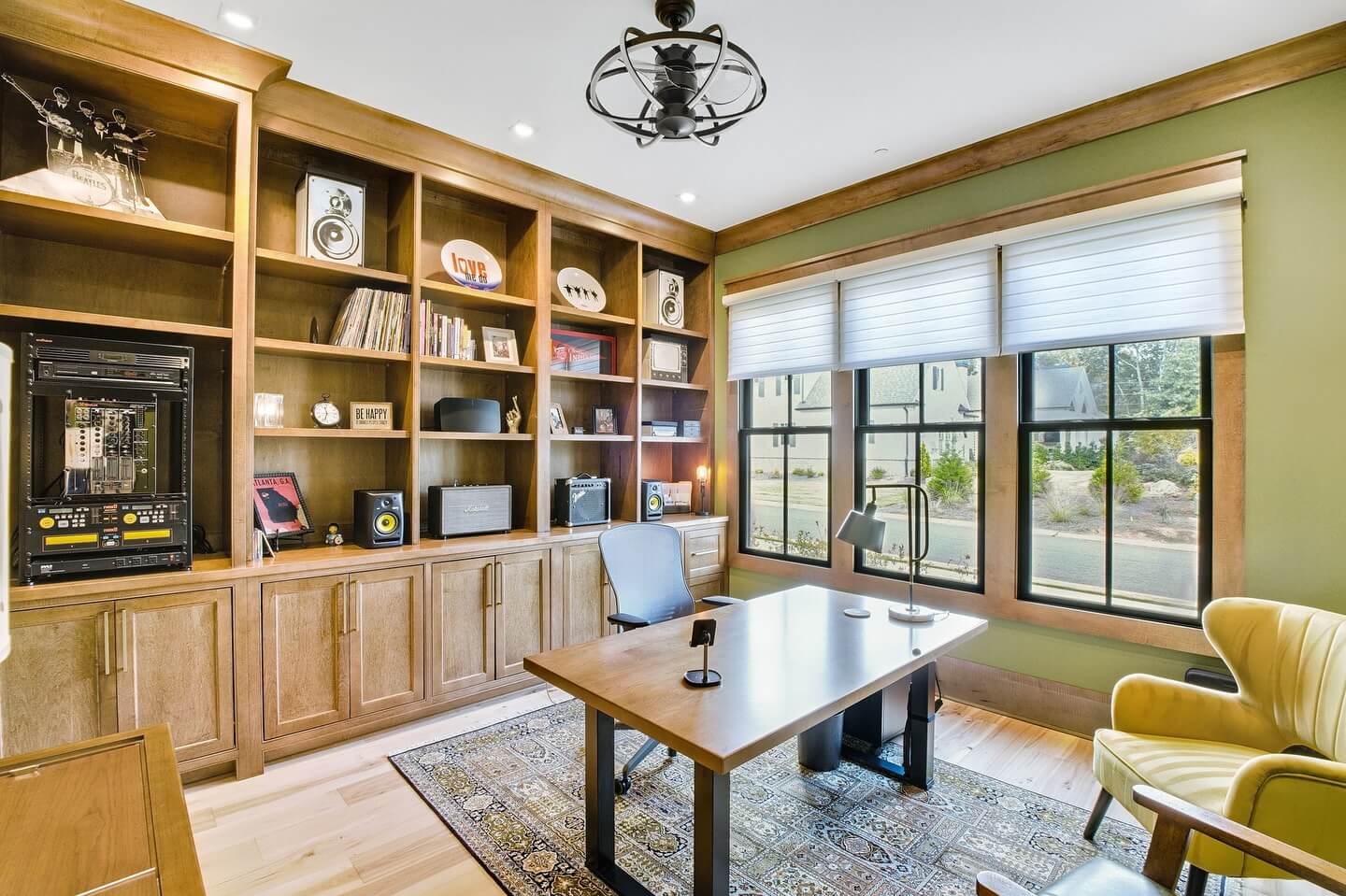
When your workload shifts, modular cube shelving keeps pace. Start with a grid—2×3 or 3×3 works in most offices—then mix open cubes, doors, and drawers to balance display and dust-free storage. Dedicate lower cubes to heavier gear (books, scanners, shipping supplies) and reserve eye-level for project bins, camera-ready decor, and quick-reference binders. Add a couple of pull-out trays for peripherals and a locking cube for sensitive documents. As teams grow, snap on additional columns or roll the entire unit on low-profile casters to rezone your workspace. For semantic clarity and speed, name each cube by function (Print, Ship, Archive, Ideas) and pair with color-coded bins aligned to your brand palette. This modular office shelving idea also doubles as a subtle room divider for hybrid spaces—turn a few cubes outward for styled backdrops while keeping work-in-progress hidden on the inward side. The best part: you can adjust heights, swap faces, and re-label in minutes, future-proofing storage without committing to built-ins or messy renovations.
Paper Workflow Shelving: From Inbox to Archive without Piles
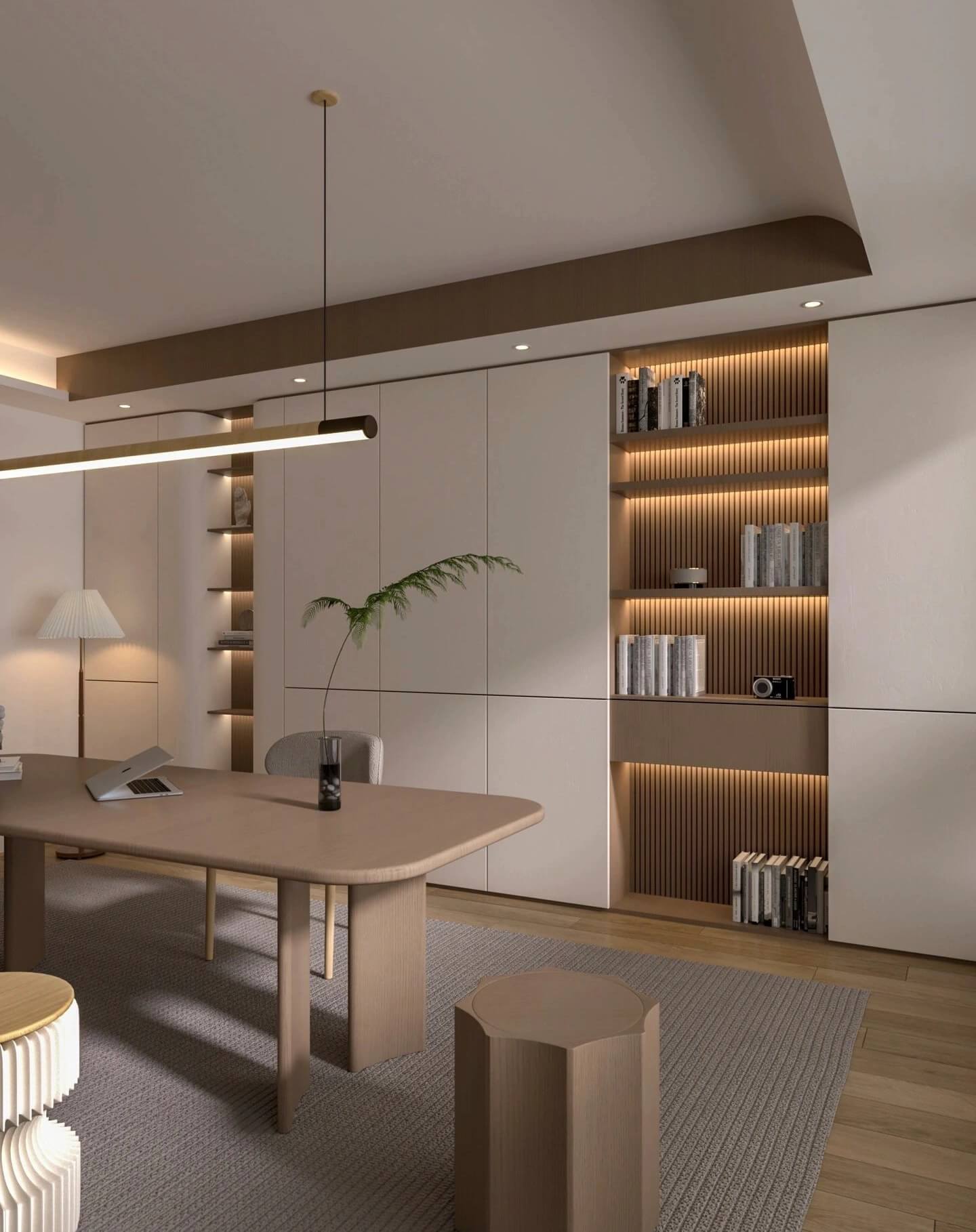
Paper may be lighter than ever, but invoices, contracts, and reference printouts still happen. Create a shelf-based workflow that moves documents from capture to completion without lingering piles. On your lowest reachable shelf, place three vertical sorters labeled Inbox, Action, and Waiting (for signatures, vendor replies). On the next shelf, use magazine files for Weekly, Monthly, and Archive/Year—color-coded to match your digital folders for frictionless cross-reference. Reserve the top shelf for bankers boxes or slim archival cases labeled by year and retention date. Add a simple “Friday Reset” checklist taped inside a door or on the shelf underside: clear the Inbox, zero Action, file Weekly, and review Waiting. For compliance-heavy roles, include a “Do Not Shred Until” label on every archive container. This office shelving idea blends visual management with tidy aesthetics, keeping only current paperwork in view while long-term records stay accessible but out of the way. Bonus: align spines and use uniform holders so the entire run reads clean on camera and calms your field of vision.
Credenza + Upper Shelves: Build a Two‑Tier Command Wall
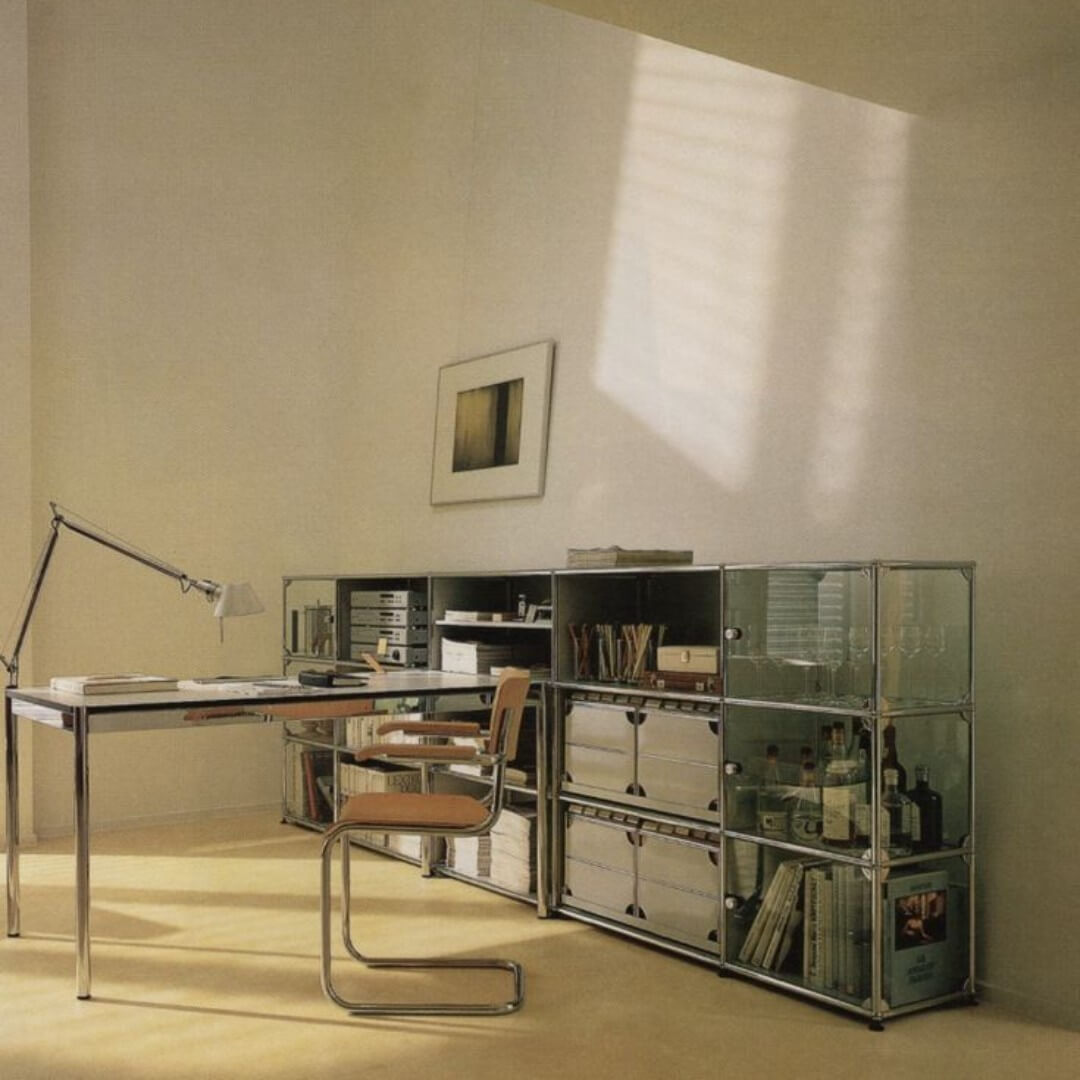
Pairing a closed credenza with open upper shelves gives you the best of both worlds—hidden bulk storage below, polished display and quick-grab tools above. Use the base unit for printers, reams, labelers, and charging drawers (with a ventilated back panel and a power strip mounted inside). Above, float two to three shelves to stage reference books, labeled project bins, and a few personal pieces that make your background memorable but uncluttered. Leave one open span for a pinboard or whiteboard to anchor meeting notes and weekly sprints. Establish zones across the width—Print + Pack at one end, Admin + Finance at center, and Strategy + Inspiration at the other—so everyone knows where to look. For extra refinement, repeat materials: matte black hardware with warm oak shelves, or powder-coated rails with pale maple for a Scandinavian office shelving look. This vertical stack becomes a “command wall” that simplifies routines, shortens search time, and elevates your space with a furniture-grade finish that feels intentional, not improvised.
Smart Corner Shelving that Wraps Your Desk without Bulk
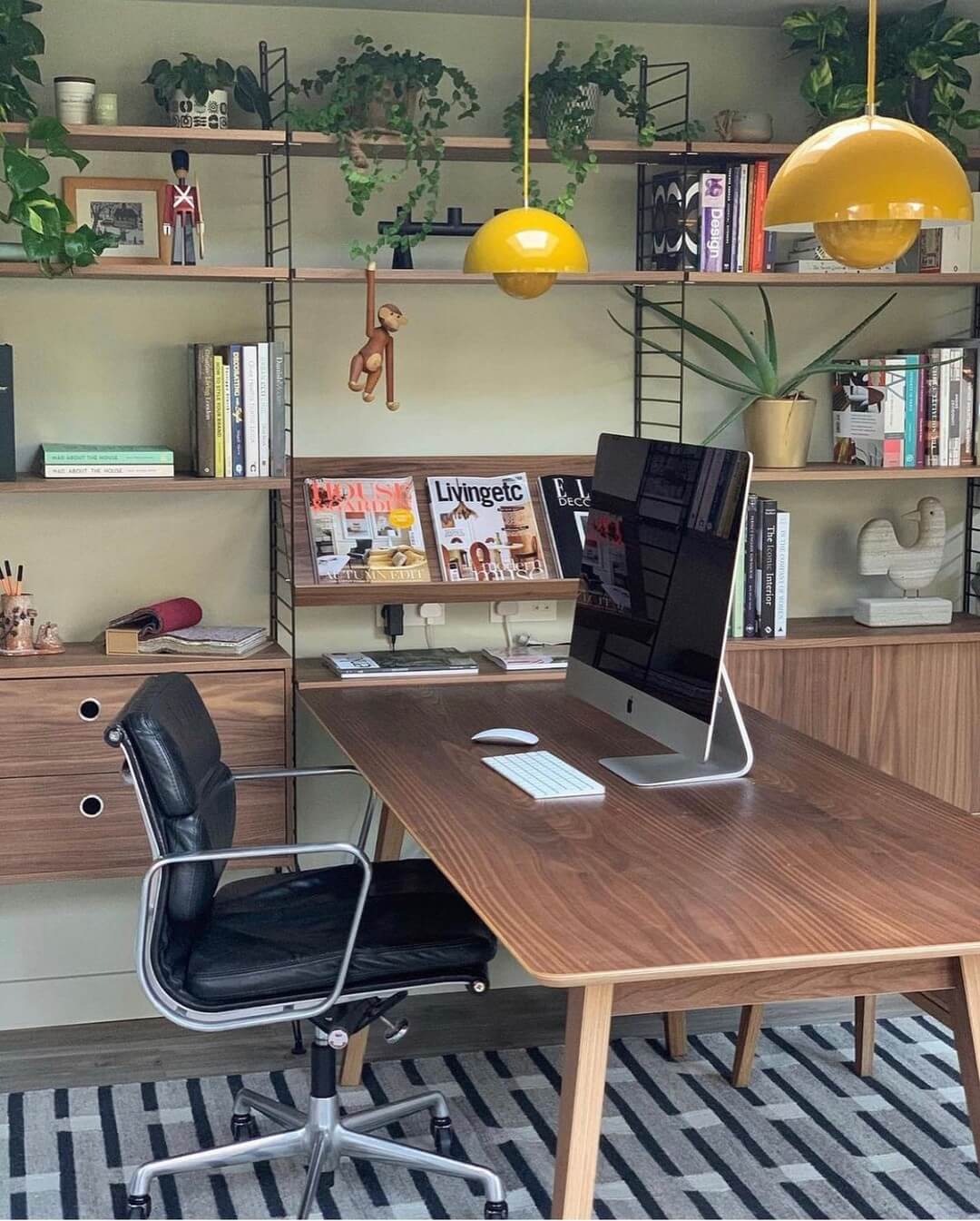
Corners are storage gold—if you plan them. Install L-shaped or gentle radius corner shelves that “wrap” your desk, turning dead space into a continuous, efficient reach zone. Taper depths from 12 inches near the wall to 8–10 inches along the return so you keep elbow room while gaining linear footage. Use the first corner shelf for daily references and a small catchall; the second for task-specific kits (client folders, camera gear, sketch sets); the highest for plants and acoustic-soft items that absorb echo. If studs are tricky, rely on a track-and-bracket system that spans both walls for even load distribution. Route a slim cable channel down the corner to power chargers or a compact router mounted under a shelf—no more spaghetti behind the desk. This office shelving idea is especially strong in small home offices: it adds storage where you sit, speeds up task switching, and frames your background with balanced, symmetrical lines that read well on-screen.
Picture Ledges for a Rotating Reference and Credibility Wall
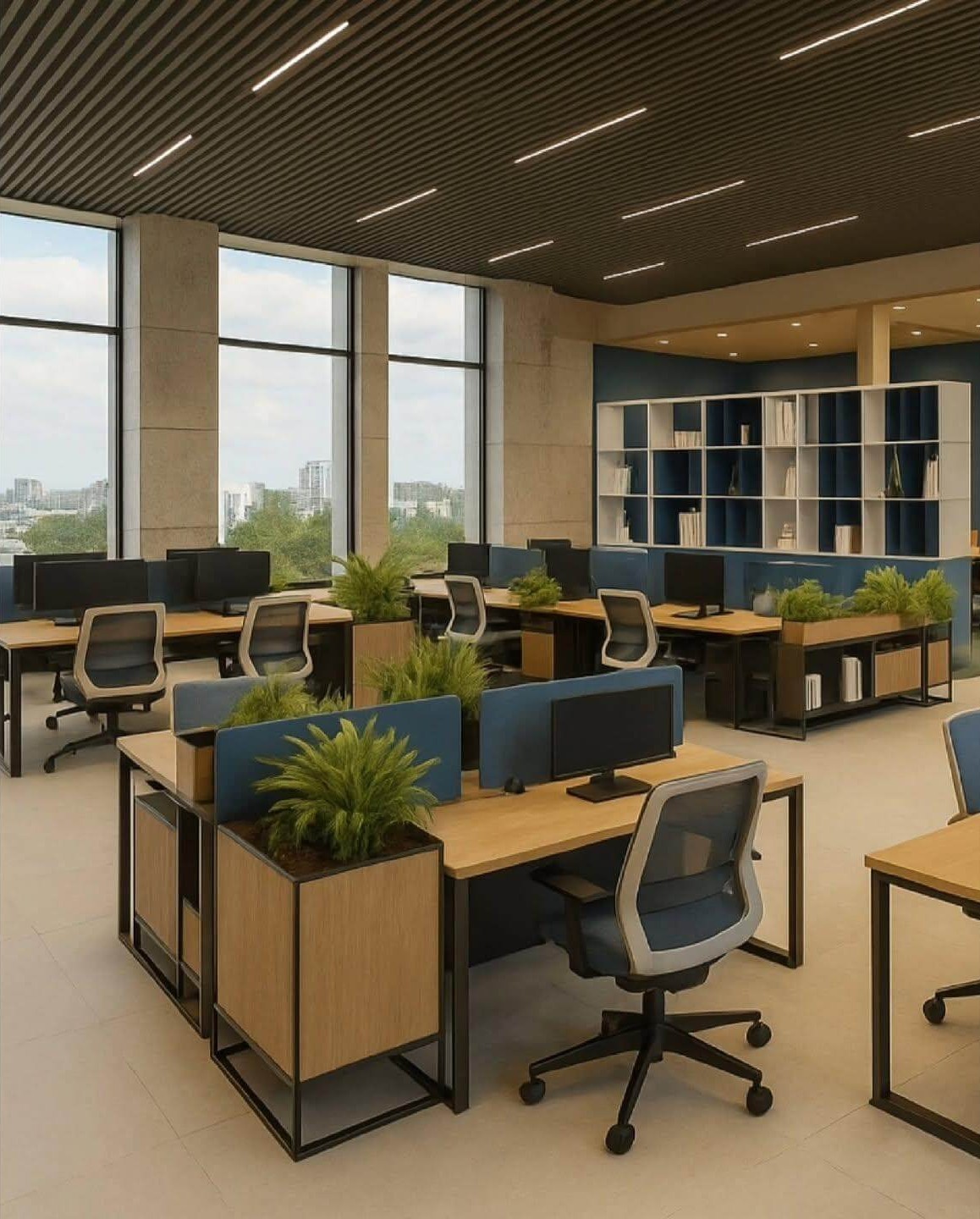
Shallow picture ledges earn their keep in an office because they invite rotation. At 3–4 inches deep with a safety lip, they’re perfect for framed certifications, slim books opened to key spreads, campaign tear sheets, and sample boards. Mount a trio above or beside your desk and treat them like a living mood board: current priorities at eye level, evergreen references just above, and wins (press, awards, testimonials) at the top. This office shelving idea supports brand storytelling on camera while keeping tactile inspiration within arm’s reach. Create a simple refresh cadence—swap items monthly or at major project milestones—to keep ideas fresh and prevent visual stagnation. For cohesive styling, limit palette to two frame finishes and one accent color that echoes your logo. Add a micro-LED strip above the highest ledge to backlight textures without glare. The result is a credible, curated wall that motivates you, informs collaborators, and elevates your workspace without the bulk of deep bookcases.
Sample Library Shelving for Designers, Marketers, and Makers
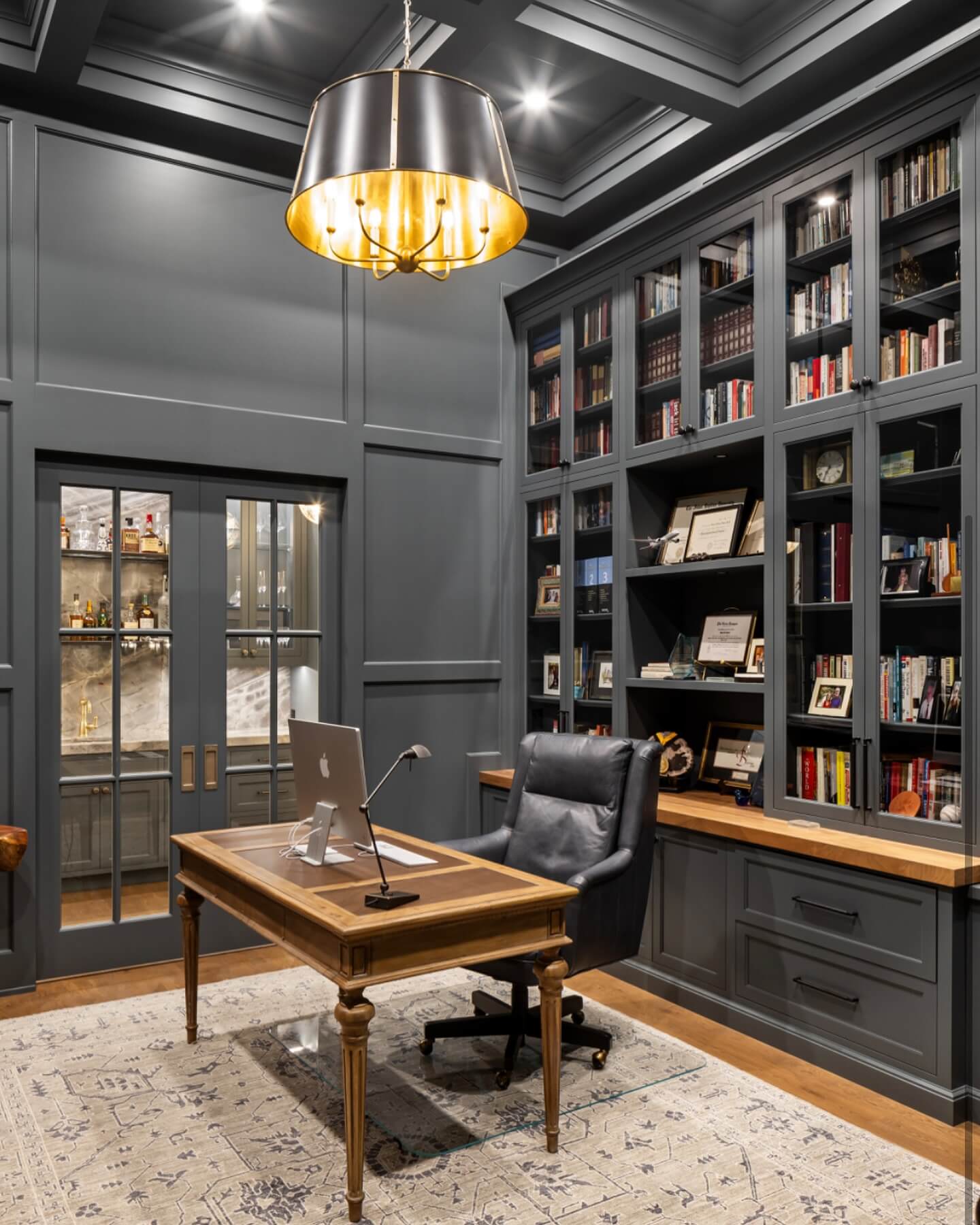
If your work revolves around materials—fabric, paper, finishes, packaging—dedicated sample library shelving keeps chaos at bay. Build a bay with adjustable shelves and mix clear bins, slim document cases, and labeled boxes sized to your most common swatches. Sort first by type (Textiles, Paper, Plastics, Finishes), then by color or client. Add a shallow hanging rail under one shelf for fabric rings and key tags; place A3/A4 flat files or portfolio drawers at the base for oversize sheets. Include a “New/To Review” bin and an “Out” card system so samples don’t vanish onto desks. For rapid retrieval, print QR codes on bin labels that link to spec sheets or supplier contacts. Dust is the enemy of tactile libraries, so choose doors or magnetic curtains for the messiest categories and schedule a quarterly purge. This office shelving idea creates a studio-grade reference zone that speeds decisions, protects assets, and looks sharp in creative backdrops.
Sound‑Savvy Shelving that Tames Echo and Polishes Your Calls
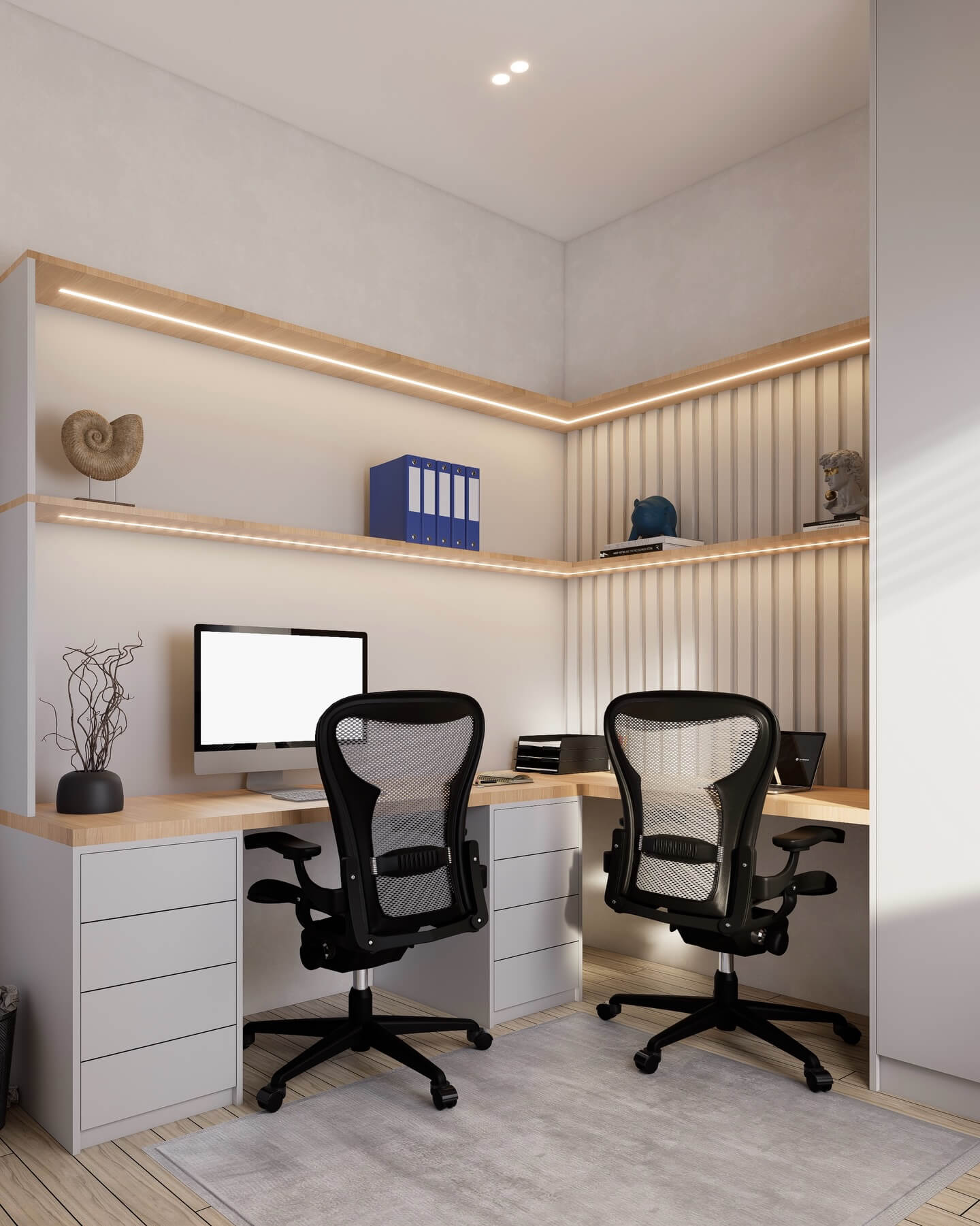
Open rooms and hard desks can make calls sound harsh. Use shelving strategically as acoustic treatment. A wall of mixed-density contents—books, felt bins, plants, and textured boxes—breaks up reflections and reduces flutter echo. Line the backs of a few shelves with cork or felt panels; reserve at least 30–50% of the unit for soft goods to meaningfully dampen reverb. Place this office shelving opposite your primary microphone position for maximum effect. Avoid glass doors; choose wood or fabric fronts where possible. If you’re building new, consider slatted shelves with mineral wool behind the uprights to absorb low-mid frequencies without looking like a studio. Add a small rug under rolling carts and rubber feet under credenzas to cut floor-borne reflections. The bonus: this sound-smart storage also photographs well—matte textures read rich on camera, and the reduced echo makes your voice clearer in every meeting, webinar, and recording.
Space-Saving Office Bookshelves and Filing Solutions for Small Workspaces
In compact rooms, vertical bookcases and slim filing towers deliver capacity without encroaching on circulation. Measure ceiling height, baseboard depth, and door swing so tall units align cleanly and open fully. Favor adjustable shelves to adapt from paperbacks to binders, and add anti-tip kits for safety. Consider ladder desks with integrated shelving when a single wall must host both computer work and archives. Reserve corners for specialty units that curve or angle, reclaiming awkward gaps without blocking windows or vents.
- Choose a slim, tall bookcase with adjustable shelves, then add anti-tip straps and leveling feet so uneven floors or enthusiastic page-turning never threaten stability or organization.
- Convert a closet niche into a filing alcove using rail-mounted shelves, a shallow lateral cabinet, and sliding bins, preserving floor area for a chair to pull close comfortably.
- Employ corner ladders or pie-cut shelves to bridge dead zones, keeping reference binders reachable while leaving the desk perimeter free for lighting, a keyboard tray, and elbow movement.
- Tuck a rolling file cart beneath the lowest shelf, installing a shallow lip above it so the cart parks securely yet slides out smoothly during end-of-month paperwork sprints.
- Cap wall-to-wall shelving with a shallow top ledge for art rails and indirect LED tape, balancing storage volume with eye-level negative space that visually lightens dense book runs.
- Group documents by workflow stage using color-coded spine labels, staggered magazine files, and divider tabs, making in-process items obvious while archived materials fade visually into calmer zones.
Mind shelf sag by limiting spans or selecting thicker materials; a 3/4-inch plywood shelf safely carries more than particleboard across the same distance. Space shelves 10–12 inches for books, 12–15 for binders, and 8–10 for display accessories. Keep the densest loads on lower levels for stability, rolling carts locked with two opposing casters. Provide breathing room around routers and backup drives, using perforated bins so electronics stay cool. Standardize label formats—project code, date, owner—so filing reads consistently across shelves and teammates adopt the same quick-scanning habits.
Shelf Smarts: Quick Answers for Organized Offices
How do I prevent sagging on long office shelves?
Shorten spans with additional uprights or choose thicker, stiffer materials like plywood or steel. Use bracket systems rated above your planned load and avoid overhanging heavy items near midspan.
What shelf depth works best behind a sit-stand desk?
Keep shelves 8–10 inches deep above eye level to protect sightlines and headroom. Use 10–12 inches at shoulder height for references, reserving deeper shelves for lower, reach-friendly zones.
Get the Fail-Safe Paint Color Playbook (Free PDF)
36 proven colors • 8 ready palettes • trim & sheen guide • printable testing cards.
Are floating shelves strong enough for printers?
Most floating shelves aren’t designed for dynamic, concentrated loads from printers. Mount a reinforced shelf on visible brackets or a modular unit tied to studs, and place printers between uprights.
How can I keep open shelves from looking messy?
Limit display categories to three: references, tools, and one decorative element. Use matching bins and spine labels, maintain negative space on each shelf, and schedule a five-minute weekly reset.
Final Verdict: Build a Smarter, Calmer Office Wall
The right shelving plan turns blank walls into a high-performance backdrop that clears your desk, speeds up retrieval, and looks polished on every call. Mix formats—floating shelves for visuals, credenza-plus-uppers for bulk storage, grids or cubes for modular growth, and corner or ladder units to capture tight spots. Layer in lighting and cable pathways from the start, and size spans and anchors to match the load so your setup stays safe and solid.
Start with a simple map: measure, inventory what you store, and zone by task—reference within arm’s reach, archives higher, equipment near power. Use closed cabinets to hide visual noise and open shelves for frequently used or display-worthy items. Style with a 60/30/10 balance (work essentials, reference/tools, personality), color-block to guide sightlines, and label lightly so anyone can find and file fast. Add under-shelf trays, hooks, and magazine files to multiply capacity without adding bulk, and weave in plants and acoustic elements for focus and sound control.
Future-proof with renter-friendly rails, truly adjustable hardware, and modular cubes or rolling carts that can reconfigure as your workload shifts. Choose durable, sustainable materials and low-glare finishes that read well on camera, and schedule a quick quarterly reset to keep systems honest. Do this, and your shelves won’t just store more—they’ll actively support better work, clearer thinking, and a workspace you’re proud to show.