
Cozy Outdoor Fire Pit Area Design Ideas
Few features elevate a backyard like a well-designed fire pit area. The right layout turns flickering flames into a four-season gathering spot—part sanctuary, part social hub—whether you’re hosting friends or savoring a quiet night under the stars.
In this guide, we’ll explore outdoor fire pit area designs across styles and sizes: rustic stone rings, sleek modern concrete bowls, sunken conversation pits, small-space patio nooks, and coastal-influenced lounges. You’ll get ideas for seating configurations, zoning, materials, and lighting that tighten the design and maximize comfort.
Get the Fail-Safe Paint Color Playbook (Free PDF)
36 proven colors • 8 ready palettes • trim & sheen guide • printable testing cards.
Expect actionable tips woven into each look—how to place the pit for wind and views, wood vs. gas considerations, safe clearances, and budget-friendly upgrades like gravel bases, pavers, built-in benches, and layered textures. Use these ideas to craft a backyard fire feature that’s beautiful, code-conscious, and undeniably cozy.
Backyard Seating Layouts for Outdoor Fire Pit Area Designs
Successful fire pit layouts start with circulation and sightlines that invite conversation while preventing crowding. Keep the fire feature at least ten feet from structures, and confirm local codes or HOA guidelines before placing it. Consider prevailing winds so smoke drifts away from doors and windows, and avoid overhead branches that trap heat. Target a comfortable viewing distance of 36–48 inches from seat front to flame, with seating heights at 16–18 inches and side tables within reach. Preserve 36–48-inch walkways around and through the zone so guests can pass behind seats without bumping elbows. Frame views toward gardens or water features, and place privacy screens beyond the heat radius to reduce glare while keeping air moving.
- Conversation Arc: Arrange seating in a 150-degree arc, eight to ten feet from the flame center, preserving 36-inch walkways and 18-inch seat height for relaxed, knee-friendly posture.
- Dual-Zone Deck: Separate lounging and cooking zones; position the pit downwind of the grill, and use stair lights to guide traffic, preventing smoke drift and tray collisions during parties.
- Kid-Safe Perimeter: Install a planting buffer and a 36-inch no-go ring around the fire area; add a spark screen and low benches to define edges without obstructing sightlines.
- Compact Courtyard: Choose a 30–36-inch gas bowl on compacted gravel; specify folding lounge chairs, wall-hung benches, and narrow planters to save space while keeping generous footpaths.
- Entertaining Extension: Align the fire zone with patio doors for indoor-outdoor flow; integrate matching pavers, 48-inch pathways, and movable stools to flex between intimate nights and larger gatherings.
Mix seating types to fit different bodies and occasions, combining deep lounge chairs with upright dining chairs for flexible posture and table use. Sectionals or L-shaped benches define edges, but leave at least 12 inches behind backs for comfortable circulation and cushion flop. Adirondack chairs feel iconic, yet their recline can push guests too far from heat; offset with ottomans and small tabletops. In compact spaces, three chairs and a backless bench produce balanced conversation sightlines without visual heaviness. If pets or kids are frequent, specify rounded table corners and soft-edged stone caps to prevent bruises in tight turns. Keep a stash of stackable stools for overflow seating that tucks beneath benches when not needed.
The Effortless Gravel-and-Adirondack Conversation Circle
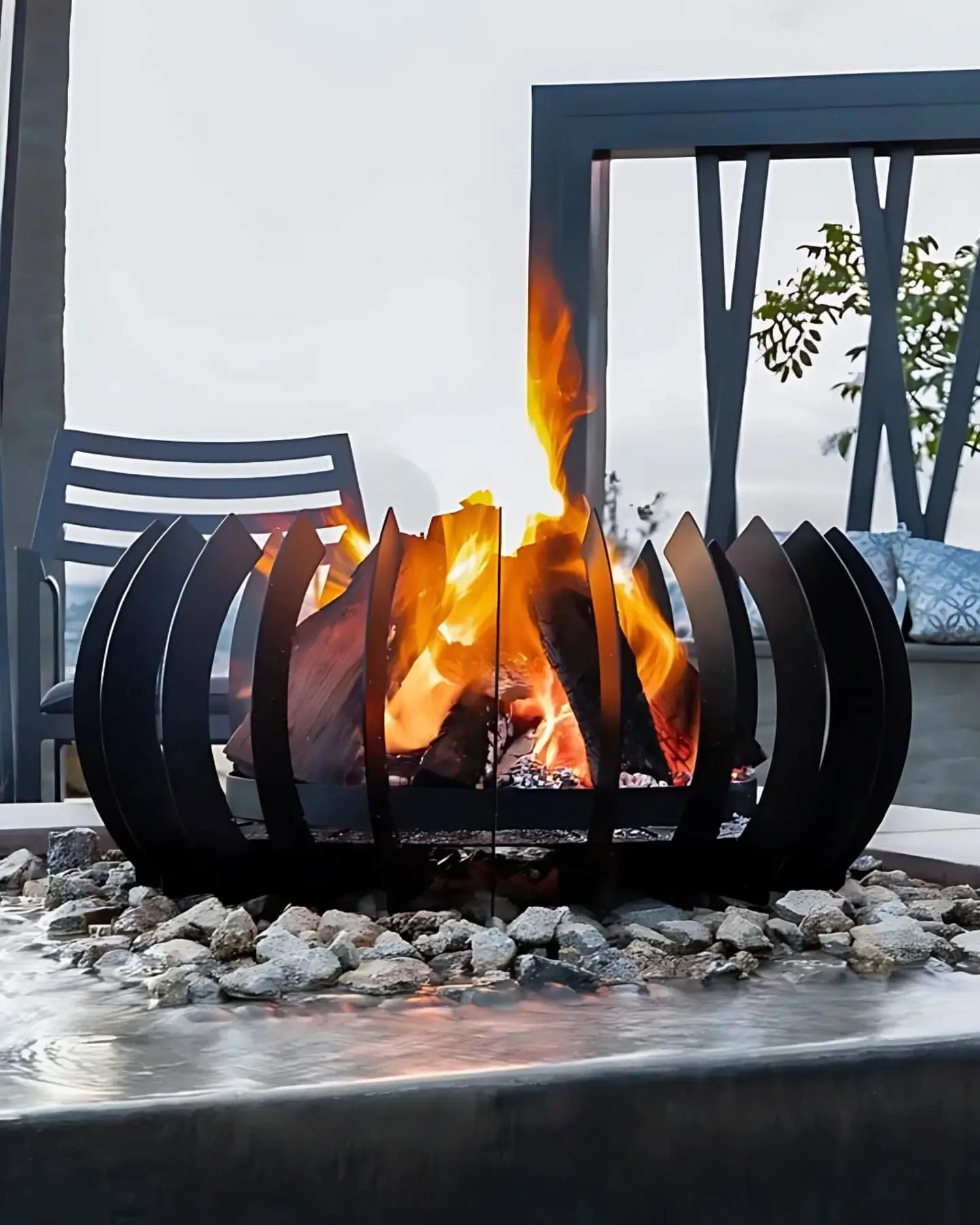
If you want instant charm without a full hardscape overhaul, create a simple gravel court with a centered fire pit and classic Adirondack chairs. A compact, circular layout (12–14 feet in diameter) feels intimate, drains well, and is budget-friendly. Start with a compacted base and 2–3 inches of pea gravel contained by steel edging so the surface stays tidy. Place the pit slightly off the wind’s direct path to minimize smoke drift and keep a safe buffer—at least 3 feet of clear space around the fire plus local code setbacks from structures and trees. Wood-burning steel bowls bring campfire energy; gas offers push-button ease and clean burn for close seating. Layer in low side tables, a log holder, and a weatherproof storage cube for throws. At night, soft string lights or solar path lights guide guests without overpowering the fire’s glow. Edge the seating ring with native grasses, herbs, or low shrubs to create a natural “room” that feels anchored year-round. The result is an easy-maintenance, four-season gathering spot that looks pulled together in a weekend but reads as timeless and intentional.
Modern Concrete Bowl on a Raised Deck
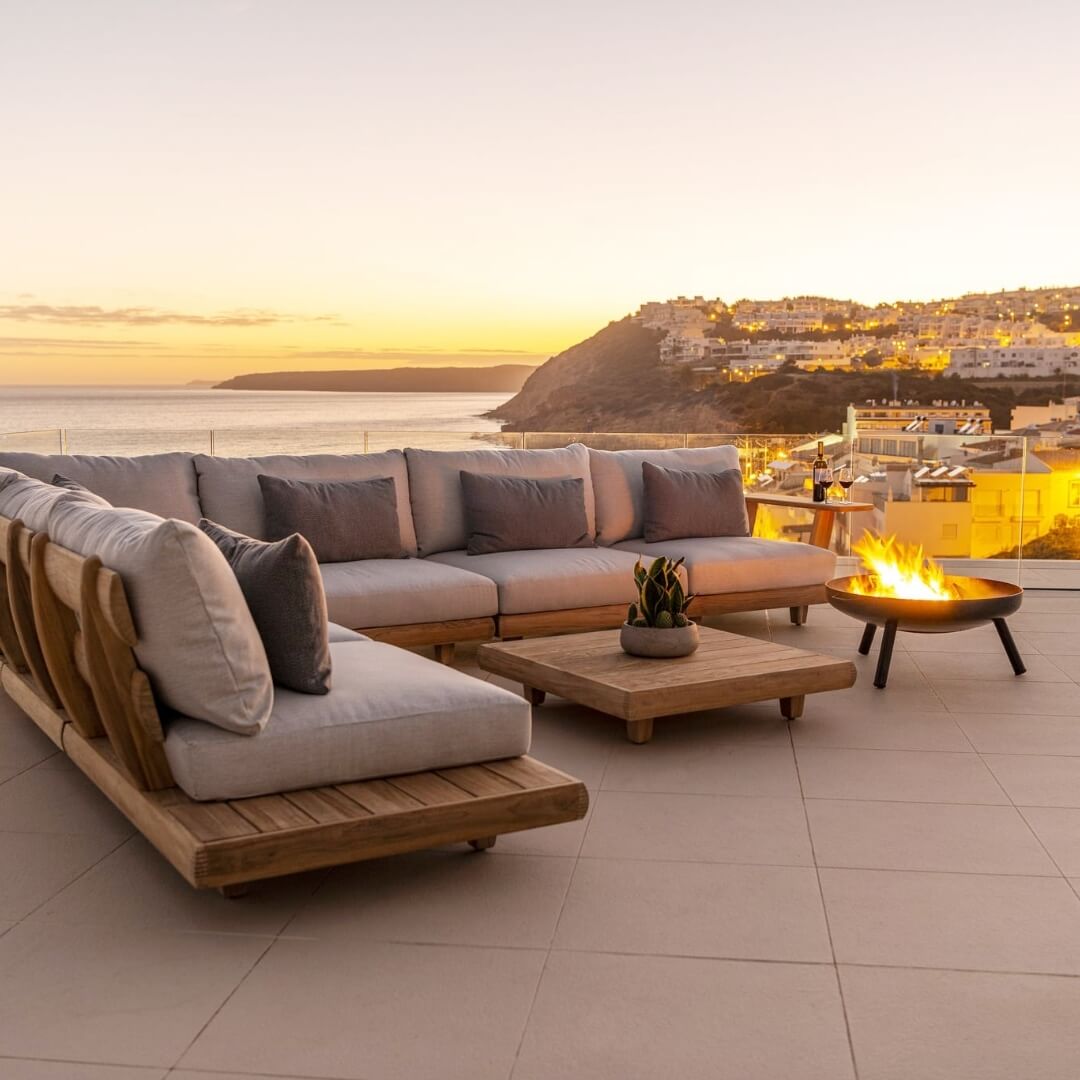
A minimal concrete fire bowl brings sculptural warmth to a deck while keeping the aesthetic clean and contemporary. On wood or composite decking, choose a gas unit with a manufacturer-approved heat barrier or paver pad beneath, and observe clearances to railings and walls. A built-in bench along the perimeter saves floor space and frames the fire as the focal point; pair with low-profile lounge chairs to keep sightlines open to the yard. Neutral textiles, black planters, and warm cedar or ipe tones balance the cool concrete, while slim LED step lights and downlights from the house create layered illumination that’s easy on the eyes. If wind is a factor, add a tempered-glass guard and orient the seating to the leeward side. Hide the propane tank in a matching side table, or hardline a gas connection with a shutoff valve placed outside the seating zone. Keep the palette restrained and repeat materials—powder-coated metal, smooth aggregate, matte stone—so the fire reads as an artful feature by day and a cozy anchor by night.
Sunken Lounge with a Curved Seat Wall
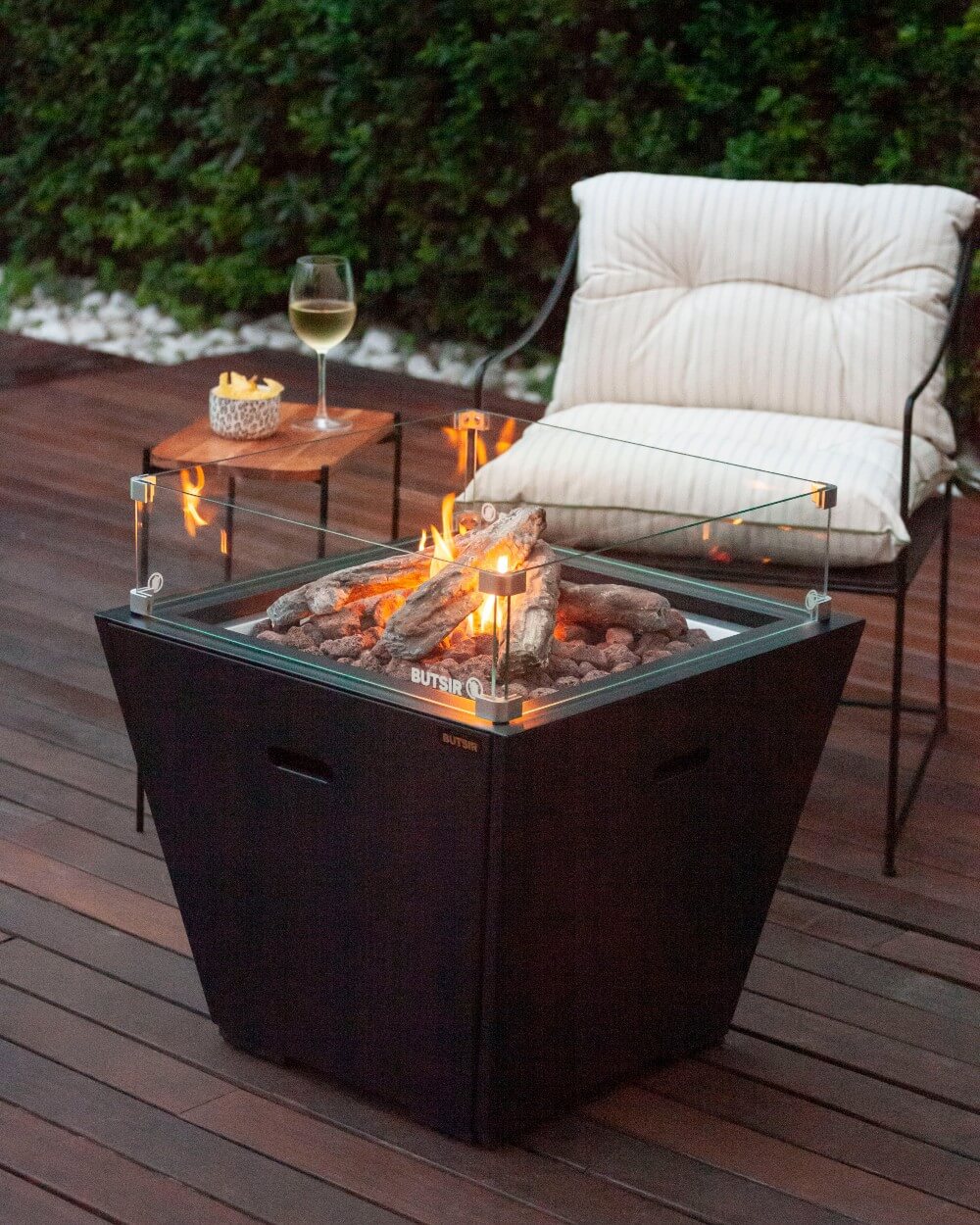
A sunken fire pit lounge drops you into the landscape and boosts the sense of intimacy, especially when wrapped by a curved seat wall. Step down one or two risers onto a paver or poured-concrete floor; the surrounding low wall (18–22 inches high) doubles as overflow seating and a wind buffer. Prioritize drainage—install a gravel sub-base and a hidden trench or French drain so stormwater doesn’t pool. For the fire feature, a central round pit keeps conversation democratic; gas simplifies maintenance and avoids smoke recirculating in the lowered space. Cap the wall with smooth stone for comfortable perches and add washable cushions in performance fabric for softness. A wide, code-compliant stair with subtle path lights ensures easy access; uplight a nearby specimen tree for depth. If space allows, underline the curve of the wall with groundcovers or ornamental grasses to soften edges. This amphitheater effect turns even a modest yard into a destination—one that feels immersive, sheltered from wind, and perfect for late-night storytelling.
Woodland-Edge Flagstone Hearth
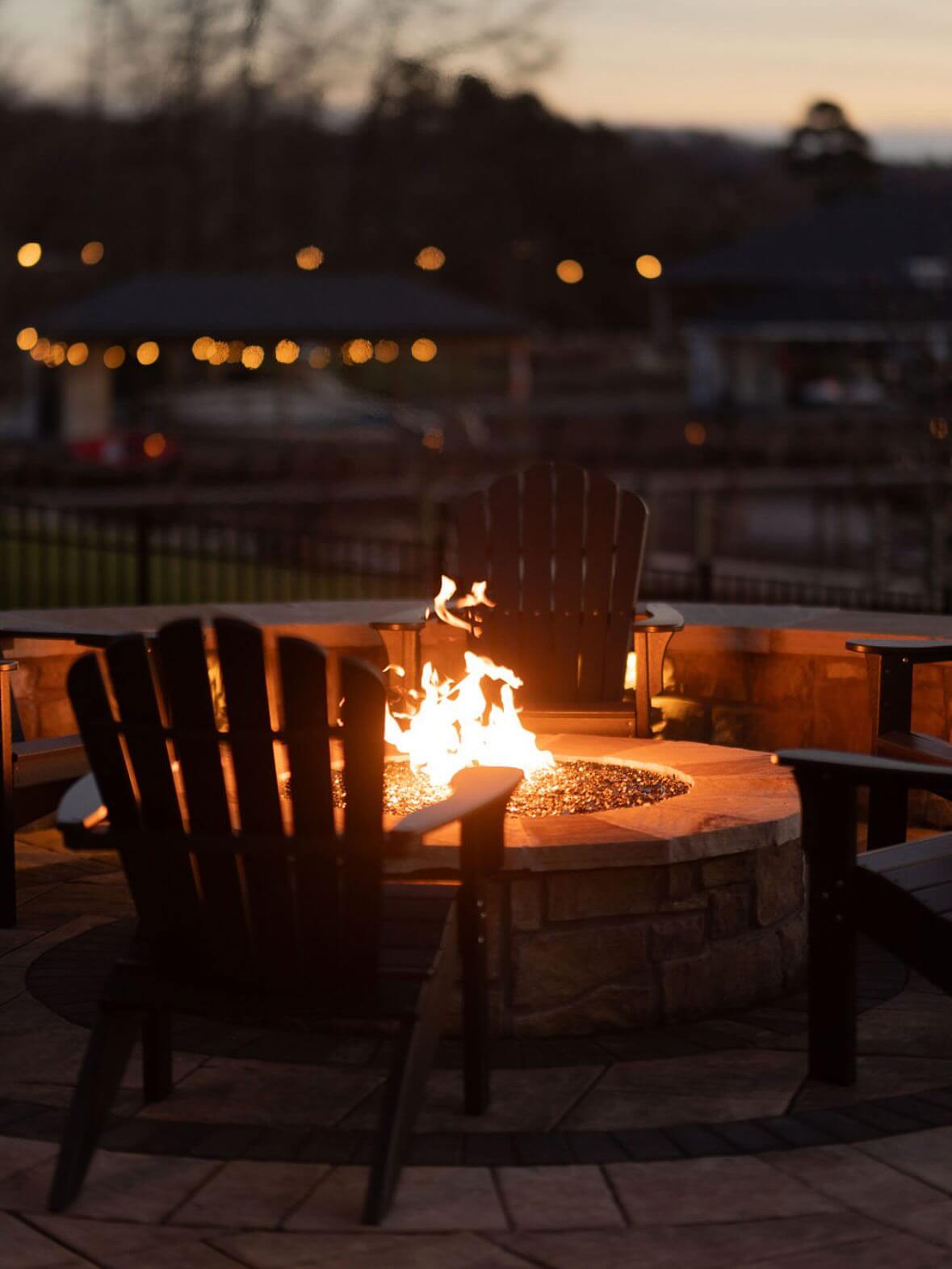
For a backyard that blurs into trees or a naturalized garden, a flagstone patio with a stone-ring fire pit feels rooted and enduring. Irregular slabs set on a compacted base and jointed with polymeric sand or fine gravel create a textured, slip-resistant floor that suits rustic furniture and log rounds as side tables. Nestle the zone near a woodland edge—but maintain safe clearances from overhanging branches—and treat the fire ring as a crafted detail: dry-stacked stone, a steel insert for longevity, and a spark screen when burning wood. Balance the ruggedness with soft layers: mossy groundcovers between stones, ferny borders, and lantern-style path lights for an old-world glow. Consider a low timber bench or cantilevered seat anchored into a boulder outcrop to turn natural features into functional seating. Store logs under a simple shed roof or tucked into a stone cubby to keep the area tidy. The overall effect is a hearth that feels discovered, not imposed—an inviting threshold between cultivated garden and wild backdrop.
The Entertainer’s Linear Gas Fire Table
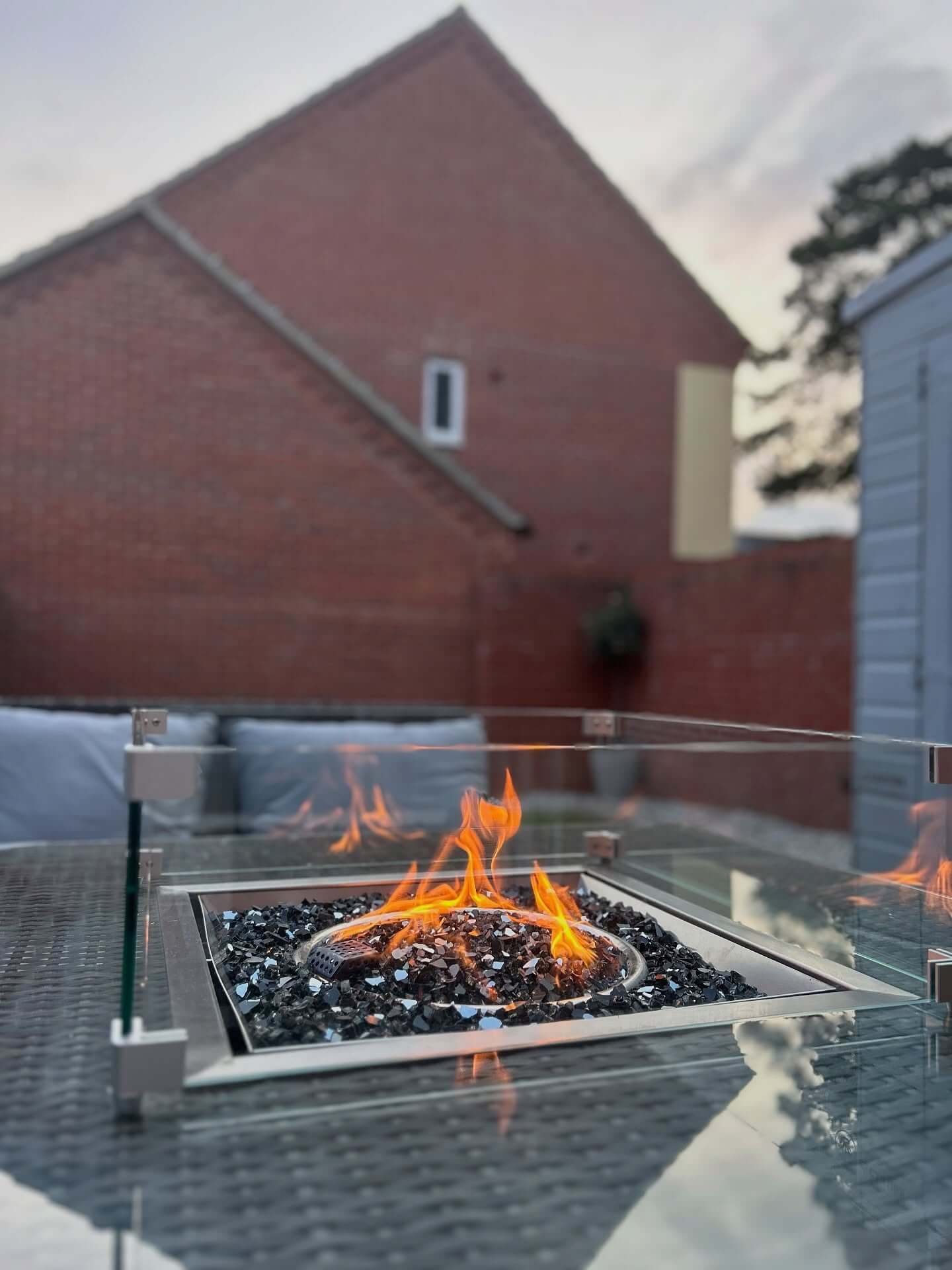
When gatherings revolve around grazing and conversation, a linear fire table organizes the space like a dining banquette for flames. Place the rectangular feature parallel to a sofa or sectional so every seat gets warmth and a view; flank with armless lounge chairs to keep circulation smooth. Hardline gas for a clean look and consistent output, adding a clearly labeled shutoff valve outside the seating area. Wind-prone sites benefit from a low-profile table with a tempered glass guard; swap lava rock for fire glass or tumbled stones to fine-tune the vibe. Tie the area to an outdoor kitchen or bar with matching cladding—stucco, stacked stone, or slatted wood—so the fire zone feels integrated with the rest of your entertaining program. Accent lighting matters: toe-kick LEDs under the table base and dimmable sconces on nearby walls layer in hospitality-grade ambiance. Size the burner to your zone (often 50,000–90,000 BTUs) and ensure a comfortable reach for drinks without overheating tabletops.
Get the Fail-Safe Paint Color Playbook (Free PDF)
36 proven colors • 8 ready palettes • trim & sheen guide • printable testing cards.
Small-Space Corner Fire Nook
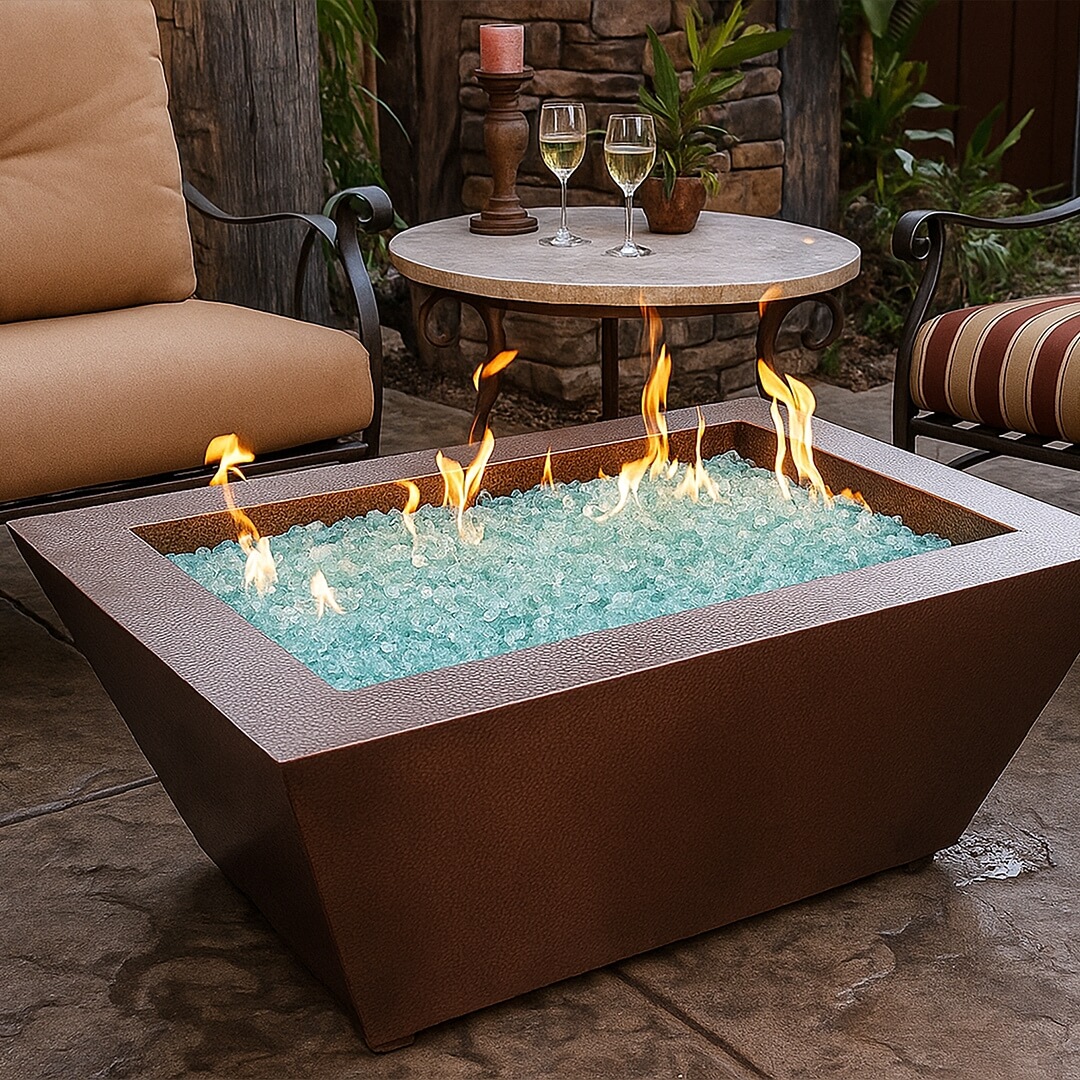
Tight patio? Tuck a fire nook into a corner to unlock a cozy lounge without sacrificing flow. An L-shaped built-in bench hugs two sides, freeing up floor space for a compact round or square pit centered on a paver inlay. Clad the bench base in stucco or vertical slats and top with stone or composite, then add boxy, wipeable cushions. Maintain generous clearances to fences and siding—check local code for setbacks and choose a gas unit where open-flame restrictions apply. A slim privacy screen with climbing jasmine or a perforated metal panel creates a backdrop and diffuses wind, while a wall-mounted shelf or narrow console handles s’more skewers, lanterns, and plants. Use a light, high-contrast paver field so the small area feels airy; a contrasting border defines the zone without adding clutter. Vertical moves are your friends: a tall planter, a wall sconce, and a single statement tree lead the eye up, making the nook read larger than it is.
Poolside Fire-and-Water Glow
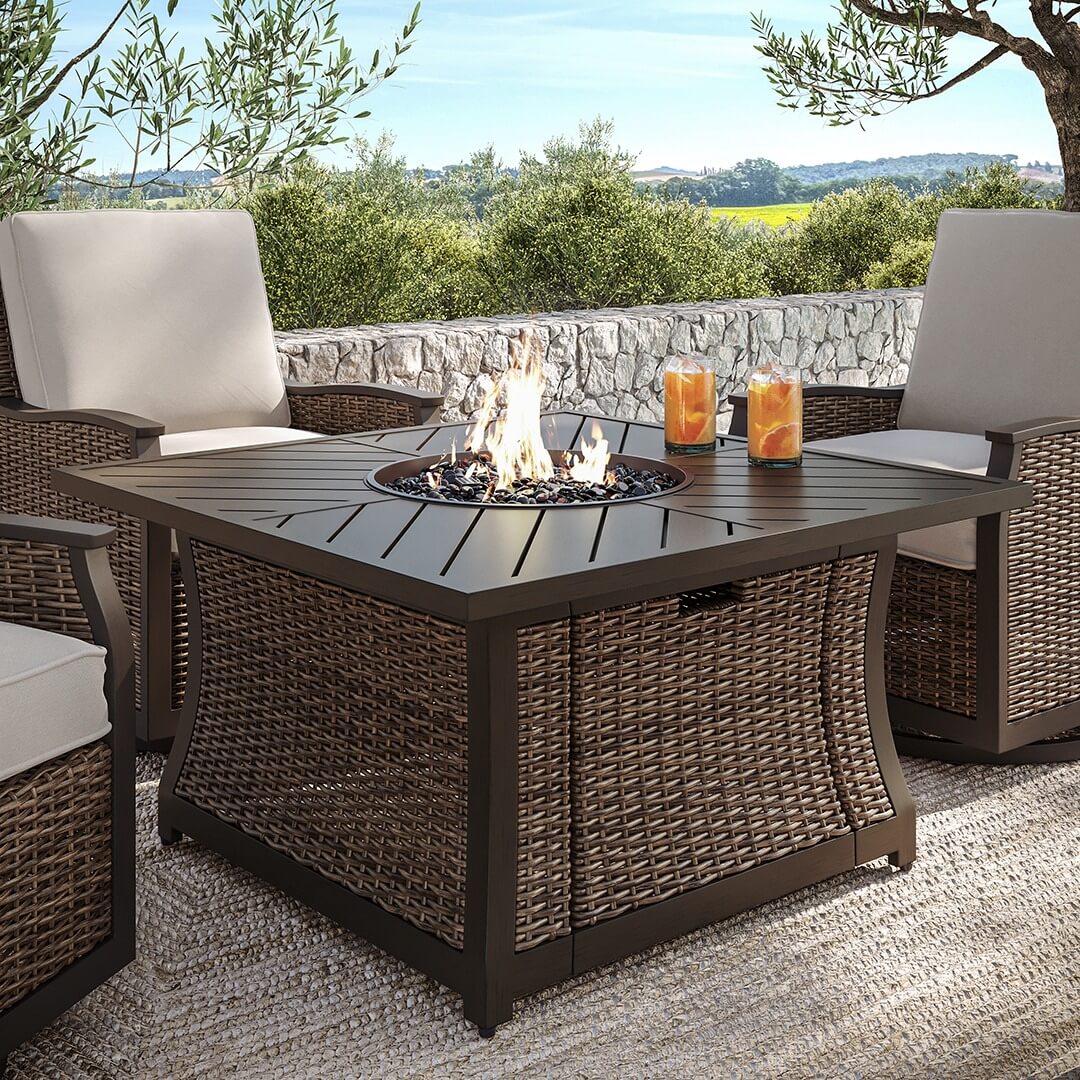
Pairing a fire feature with a pool multiplies the drama at dusk and extends swim season comfort. Situate a low fire element on a slip-resistant terrace, far enough from the water’s edge to avoid splashdowns extinguishing the flame and to maintain safe circulation around loungers. A trough-style linear burner or squat concrete bowl keeps sightlines open across the pool, while glass wind guards tame breezes that skim water surfaces. Coordinate hardscape finishes for cohesion—porcelain pavers, limestone, or textured concrete—and repeat metal accents in loungers and side tables for a resort feel. Lighting is key: integrate dimmable LEDs in coping, under-bench toe kicks, and in planters so the fire remains the brightest point. For coastal or chlorinated environments, choose marine-grade stainless components and quick-dry performance textiles. The result is a balanced contrast—cool blue water, warm firelight—that invites guests to linger after the last lap.
Coastal-Calm Fire Pit Lounge
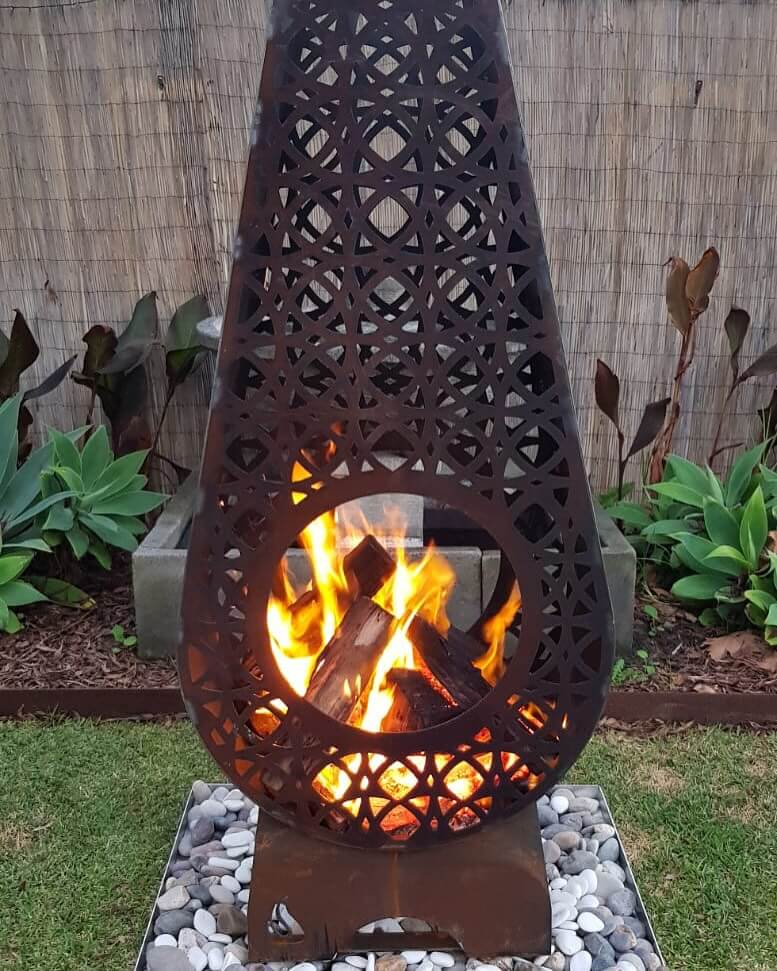
Channel a breezy coastal mood with pale gravel underfoot, teak or weathered-wood seating, and a low-profile fire bowl that won’t fight ocean or lake views. Light, reflective surfaces keep things fresh—white or oyster-toned stone, sand-hued cushions, and soft blue textiles—while dune grasses, rosemary, and lavender add motion and scent. In windy locales, select a burner with a reliable ignition, add a glass wind screen, and orient seating to the leeward side. Salt air demands durable choices: marine-grade stainless fasteners, UV-stable fabrics, and sealed concrete or ceramic fire media. A simple rope or slatted wood screen frames the zone without blocking breezes, and anchor the perimeter with stone or steel edging to keep gravel tidy. Layer lanterns and low bollard lights so the fire remains the hero as the sun sets. The palette is intentionally restrained, letting texture and light carry the design—easy, airy, and endlessly relaxing.
Corten Steel Ring with Layered Texture
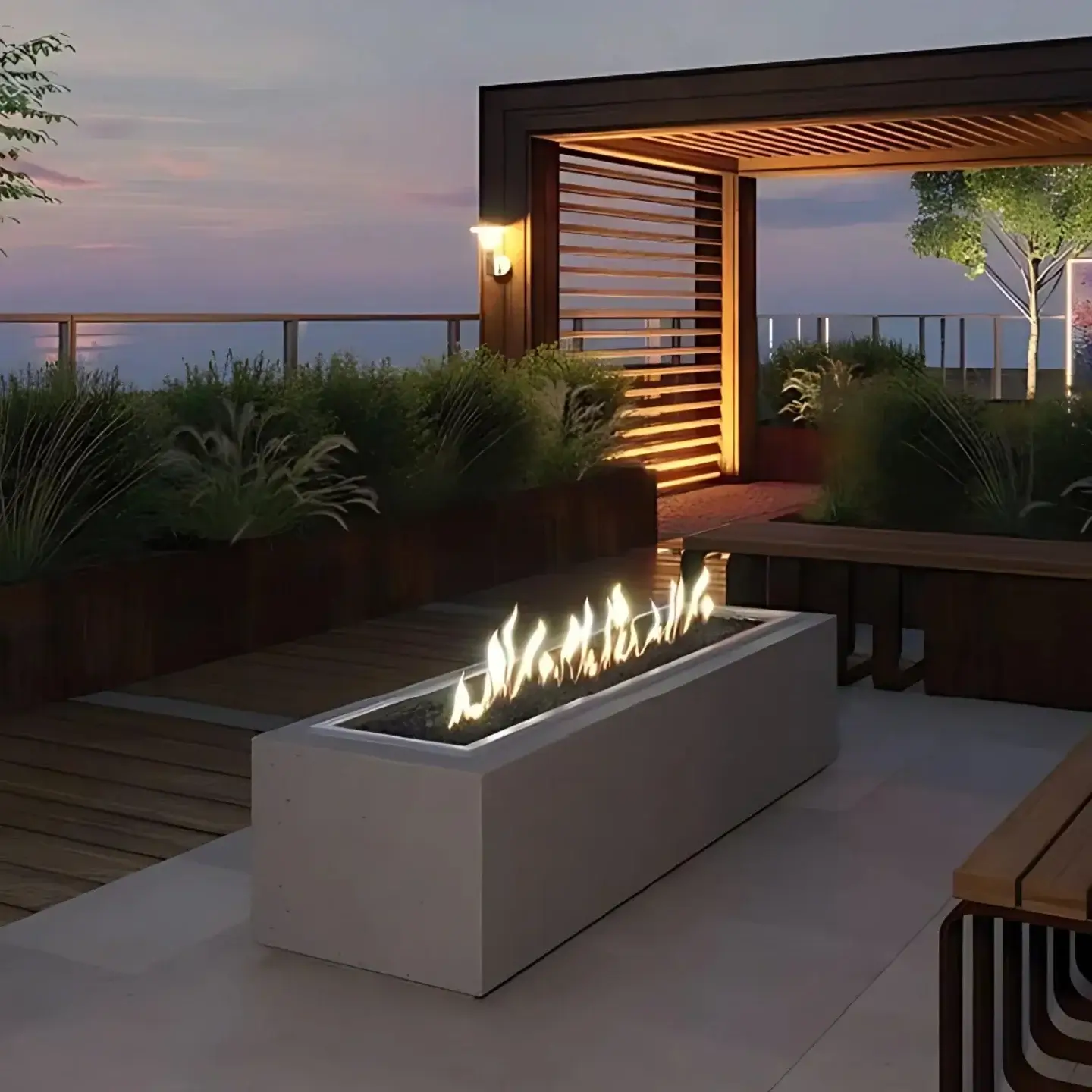
A corten steel fire ring brings warm, earthy patina that looks better with time, especially set in a crisp gravel court. Define the area with clean steel edging and a compacted base so chairs don’t wobble; add a rectangular paver “hearth” under the pit to catch embers and create a visual anchor. The design language here is modern and tactile: matte black planters, tumbled river rock, and slatted benches that echo the steel’s linearity. Wood-burning works beautifully with corten, but if you prefer gas, use a pan and burner designed for metal bowls and follow clearance specs to protect surrounding surfaces. Keep accessories minimal—stacked wood as sculpture, a powder-coated log hoop, and a single sculptural tree or grass mass—to let form and material lead. At night, a couple of low, warm path lights are enough; the steel’s glow and shadows do the rest.
All-Weather Pergola Lounge with an Offset Fire Feature

Create a four-season living room outdoors by pairing a pergola lounge with a nearby fire feature positioned outside the overhead footprint. This keeps open flame clear of shade fabric and rafters while preserving a cozy, room-like feel. Zone the space: lounge seating under the pergola with blankets and storage, then step to an adjacent patio pad for the fire pit—linear for sectionals, round to encourage circle seating. Use frost-proof pavers or textured concrete for the fire pad and continue the pergola’s materials palette—stained timber, black metal, or stucco—for cohesion. Add roll-down wind screens or exterior curtains on the pergola to cut gusts without trapping smoke, and layer lighting with dimmable string lights overhead, sconces on posts, and path lights between zones for safe transitions. Gas simplifies operation in shoulder seasons and pairs well with overhead heaters, while a wood-burning pit delivers ritual when weather is kinder. The separation reads intentional, safe, and stylish—comfort without compromise.
Get the Fail-Safe Paint Color Playbook (Free PDF)
36 proven colors • 8 ready palettes • trim & sheen guide • printable testing cards.
Scandi-Serene Gravel Court with a Smokeless Fire Pit
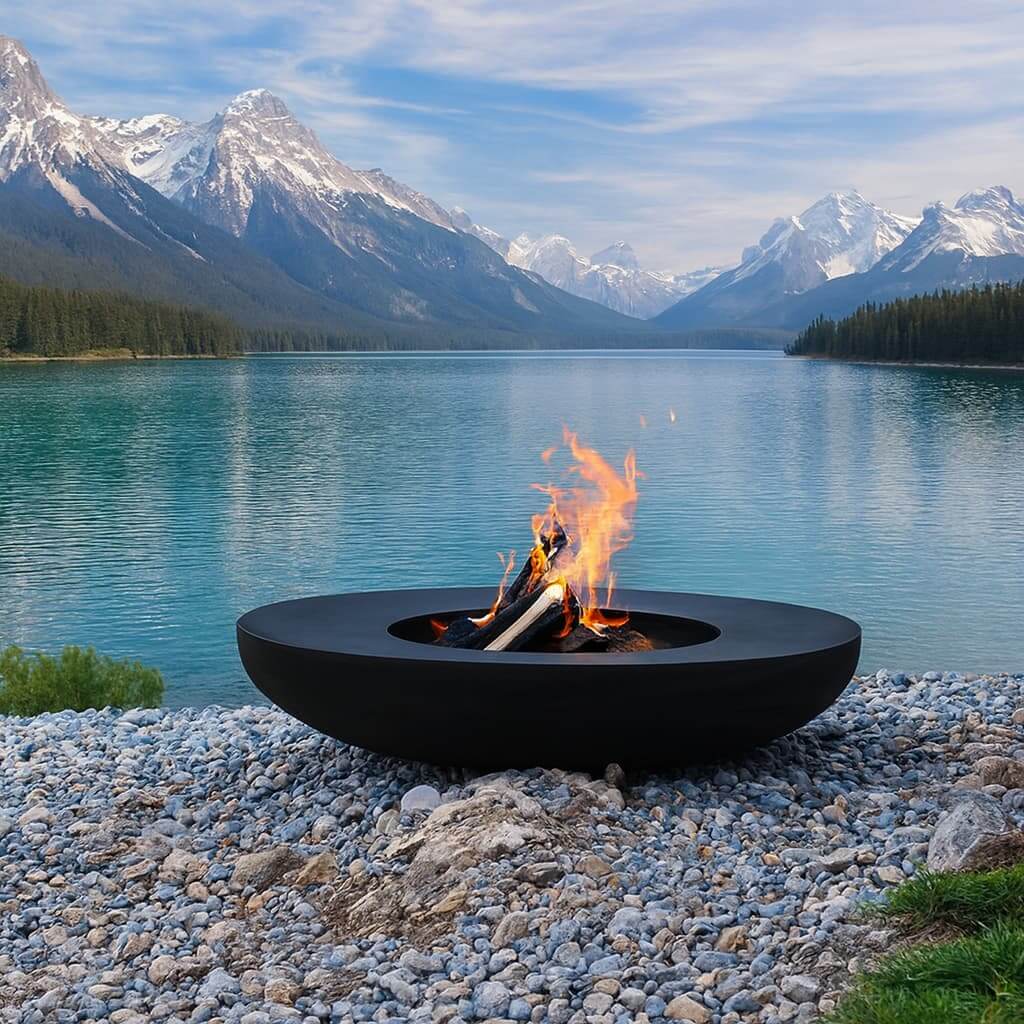
Lean into Nordic simplicity with a restrained palette, clean lines, and materials that make maintenance a breeze. A compact pea-gravel court instantly signals “fire zone,” improves drainage, and creates a noncombustible base—edge it with steel or pavers so the boundary stays crisp. Center a smokeless, double‑wall fire pit for better airflow and fewer smoky seat swaps, then ring it with low-profile sling chairs and a slim cedar bench to keep sightlines open. Layer tall grasses and evergreen shrubs as a natural wind break and to softly frame the glow.
Keep clearances code‑compliant: generous breathing room around the rim, no overhanging branches, and at least several feet from structures (always check local rules and your pit’s manual). Add tactile warmth with a wool-look outdoor rug over stone, lanterns at ankle height, and a dimmable stake light to define paths. If you’re tackling it DIY, lay 2–3 inches of washed gravel over compacted base, and set paver “landing pads” under chair legs for stability. The result is a quiet, modern backyard fire pit design that feels intentional year-round and costs less than most patios to build.
Heritage Herringbone Brick Patio with a Timeless Round Pit
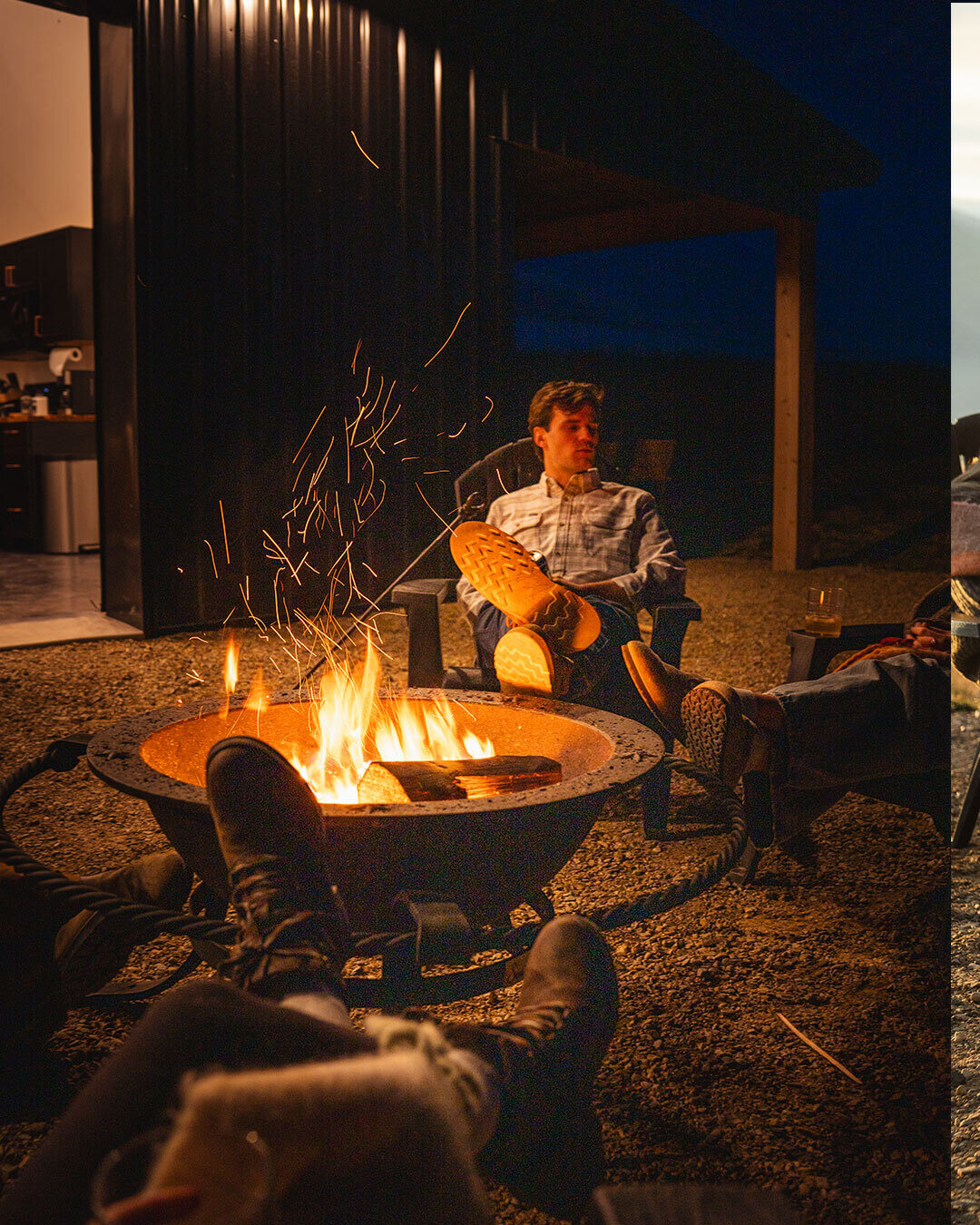
For classic curb appeal that ages beautifully, build your fire zone on a herringbone brick patio. The pattern adds energy without visual clutter, while a soldier-course border neatly defines the seating circle. Dry-lay clay pavers over a compacted base for easier repairs, or set on mortar for a formal look. Center a round wood-burning pit for that unmistakable crackle—or opt for a gas insert with faux logs if convenience and burn bans are concerns.
Dial in comfort with a curved bench plus two accent chairs; aim for 24–30 inches of elbow room per person. A spark screen and ember mat boost safety, and a small log rack doubles as a side table. Underfoot, bricks stay grippy when wet and disperse heat well; choose mid-tone reds or tumbled finishes to avoid glare. Elevate the scene with string lights on dimmers and low uplights to graze surrounding plantings. This backyard fire pit idea marries tradition and function, delivering a durable, code-conscious lounge that invites long conversations.
Desert-Modern Xeriscape with a Lava Rock Fire Bowl
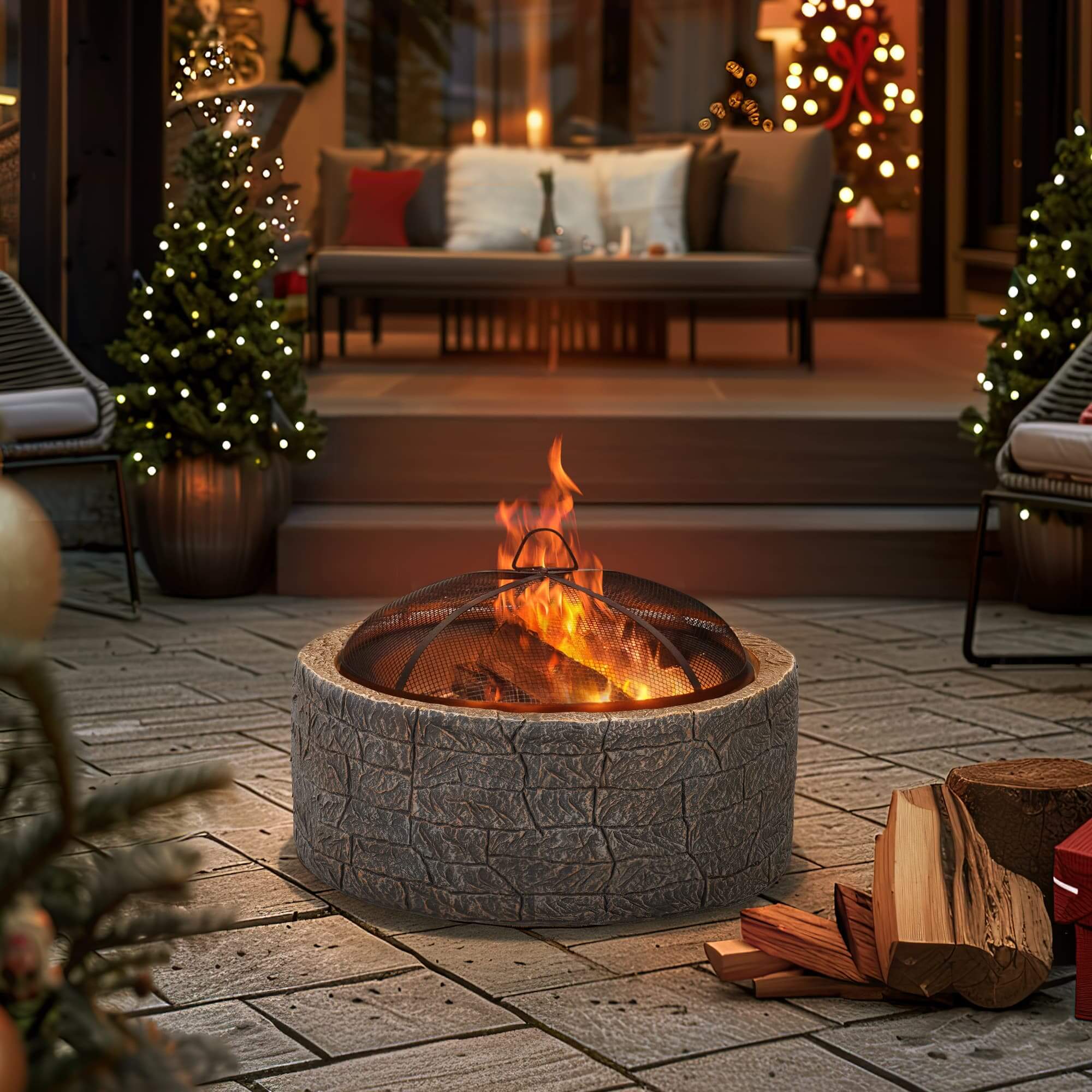
If water-wise is your mantra, pair a sculptural gas fire bowl with a xeriscape palette. Decomposed granite or compacted gravel sets a calm, matte stage, while lava rock media echoes the desert aesthetic and helps distribute heat. Keep the furniture profile low—think teak loungers and a streamlined bench—so the flame and horizon stay in view. Punctuate the space with boulders, textural succulents, and resilient grasses for movement in the evening breeze.
In windy regions, a clear glass wind guard maintains a steady flame and reduces wasted fuel. Run a concealed gas line with a shutoff in easy reach, and position seating just outside the heat halo so guests can lean in or out. Lighting should be subtle: in-ground markers at transitions and warm bollards to guide steps without competing with the firelight. This modern outdoor fire pit area design brings resort vibes home—minimal water, minimal fuss, maximum ambiance.
Built-In U-Shape Bench with Hidden Storage Around the Flame
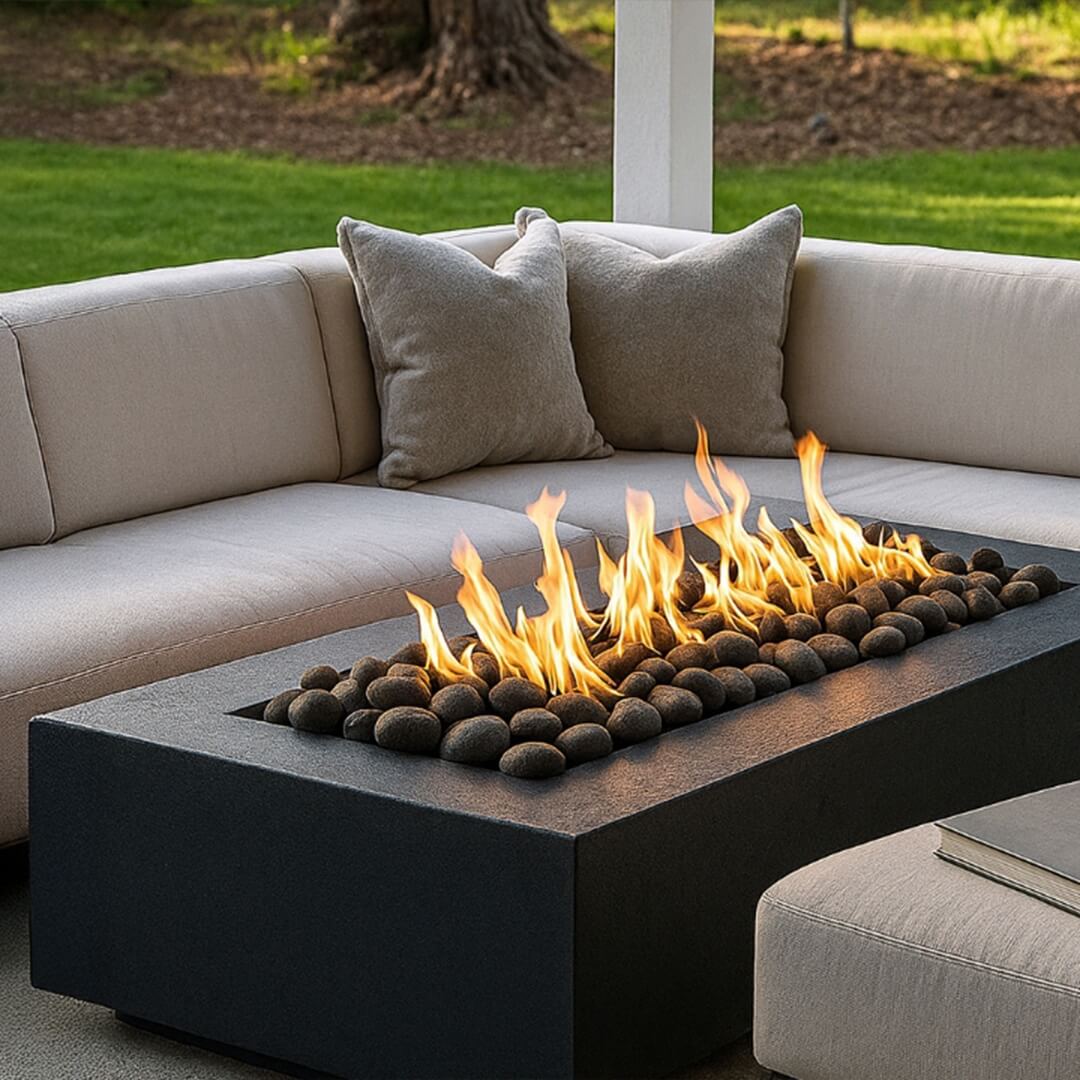
When seating and storage need to work harder, wrap the pit with a built-in U-shaped bench. Size the bench for comfort—about 16–18 inches seat height with a gentle 6–8 degree backrest—and hinge sections for hidden compartments that swallow cushions, throws, and even a compact spark screen. Clad the frame in cedar or composite for longevity, and cap with smooth, heat-tolerant tops that double as perch space for trays.
A circular or square pit nests neatly within the U; leave a generous front opening to maintain traffic flow and a safe approach path. Families often prefer gas here to minimize embers near upholstery, but a wood option works with a guard and ember mat. Layer cushions in performance fabrics and add a single outdoor rug to tie the zone to the rest of the patio. Downlights under the bench float the form at night and add just enough task lighting to see your s’mores kit. It’s a space-savvy outdoor fire pit layout that stays tidy between gatherings.
Wind-Smart Rooftop Fire Table Lounge
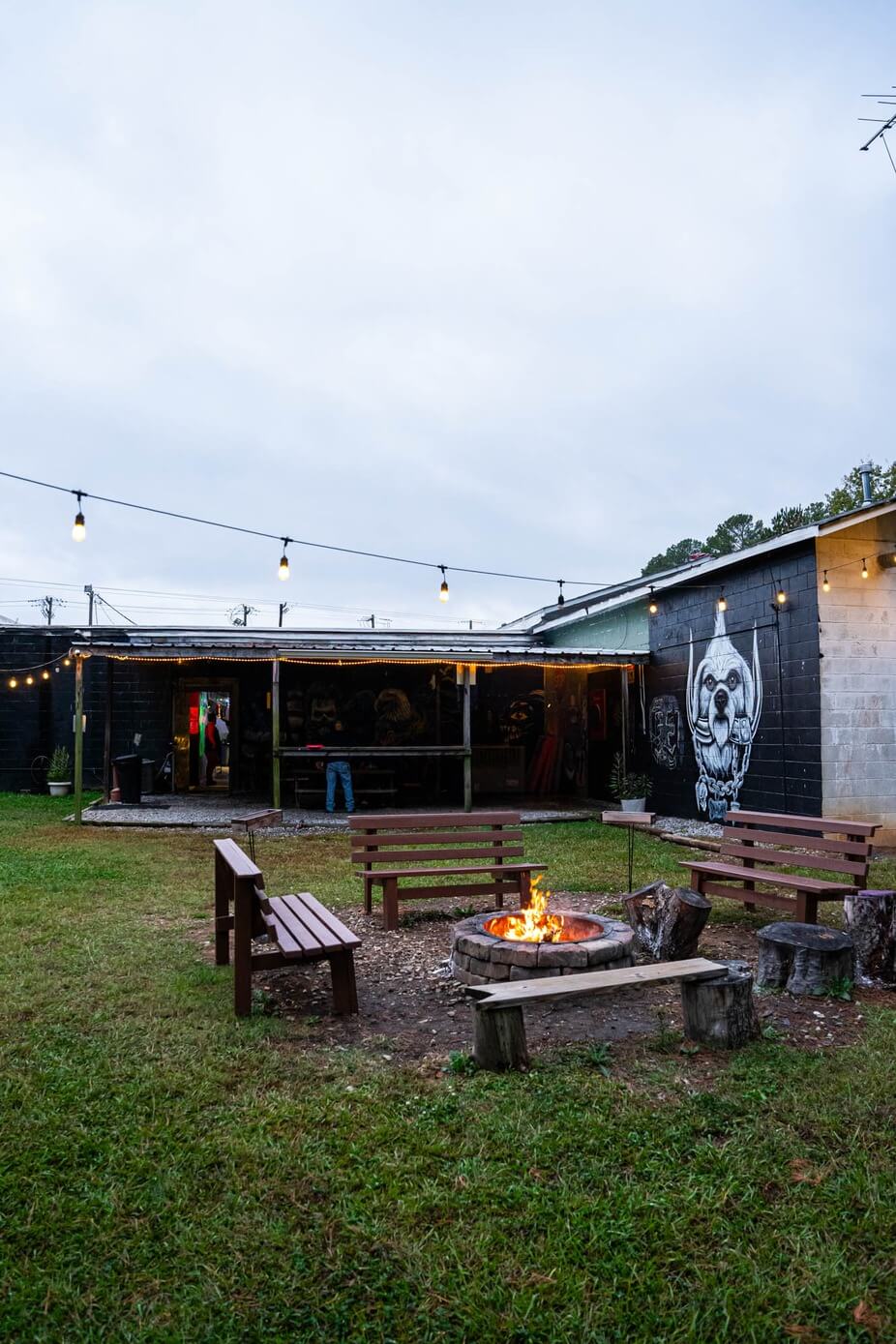
City decks and rooftop terraces can still score a cozy flame—just design with wind, weight, and codes in mind. A CSA-certified gas fire table is the go-to for elevated spaces; it lights cleanly, offers adjustable heat, and meets most building requirements where wood fires don’t. Place the table perpendicular to prevailing winds and add a tempered glass wind screen to stabilize the flame. Use planters with tall grasses as soft baffles that won’t block skyline views.
Underfoot, lay a noncombustible pad over composite decking or choose porcelain pavers on pedestals to manage drainage and load. Keep furniture low and modular to reconfigure around guest count while maintaining manufacturer clearances on all sides. LED step lights and rail-integrated sconces layer ambient glow without reflecting in windows. Always verify structural capacity and local rules before you build. The result is an urban outdoor fire pit area design that feels intimate, code-conscious, and tailor-made for golden-hour hangs.
Materials, Safety Codes, and Lighting for Outdoor Fire Pit Area Designs
Prioritize noncombustible surfaces such as concrete, natural stone, dense pavers, or textured porcelain tile to handle embers and seasonal temperature swings. For composite decks, use a tested heat shield or mat, follow the manufacturer’s clearance instructions, and strongly consider a gas unit approved for decking. Line masonry fire rings with steel or firebrick to protect veneers, and add through-venting for gas enclosures to dissipate heat. Follow the fire feature’s manual for lateral and overhead clearances to combustibles, using wind baffles and distance rather than tall nearby structures to control smoke. If running gas, include a dedicated shutoff and regulator sized to the burner’s BTU rating, and route lines with code-compliant depth and tracer wire. Edge heights between 12 and 16 inches create comfortable footrests and discourage accidental step-ins without blocking sightlines.
Get the Fail-Safe Paint Color Playbook (Free PDF)
36 proven colors • 8 ready palettes • trim & sheen guide • printable testing cards.
Planning Checklist:
- Verify municipal setbacks; keep at least ten feet from structures and low branches, and confirm HOA rules regarding smoke, propane tanks, and visible spark arrestors before finalizing the layout.
- For combustible decks, add a heat-resistant mat, double-flash the joists, and include a steel liner, ensuring ventilated clearances beneath and around the burner to prevent heat buildup.
- Choose dense, freeze-thaw rated pavers or porcelain with textured finishes; avoid slick surfaces, and specify polymeric sand plus proper pitch for drainage away from seating.
- Include a dedicated gas shutoff within six feet, a ventilation panel on two sides of the enclosure, and a keyed valve to limit tampering during gatherings.
- Plan for maintenance: removable lava rock or fire glass, a fitted cover, and concealed storage for screens, cushions, and blankets to extend the season without visual clutter.
Layer lighting to balance safety and mood: shielded path lights for approaches, step lights for risers, and low-glare downlights over seating to preserve starry views. Add under-cap LEDs beneath seat walls to gently graze paving without highlighting ash, and aim for 2700–3000K warmth that flatters skin tones. Keep fixtures outside the highest heat zones and use corrosion-resistant housings suitable for coastal or snowy regions. Place string lights well away from flames, and support them on pergola beams or poles to avoid sagging near heat. Tie the system to a dimmable smart switch or outdoor-rated hub with scenes for dining, stargazing, and cleanup. Finish with breathable covers, a storage deck box, and a gravel sub-base that drains quickly so the area remains usable after rain or snowmelt.
Smarter Fireside Planning: Quick Answers
What size fire pit works best for a small patio?
A 30–36-inch bowl balances heat and scale without crowding. Place seats so knees sit about 36–48 inches from the flame, preserving a clear 36-inch walkway behind chairs.
Is wood or gas better for my fire pit?
Gas delivers instant ignition, cleaner operation, and easier compliance on decks, but requires plumbing and venting. Wood offers aroma, crackle, and higher radiant warmth, though smoke management and ember control demand more space and maintenance.
Get the Fail-Safe Paint Color Playbook (Free PDF)
36 proven colors • 8 ready palettes • trim & sheen guide • printable testing cards.
Can I put a fire pit on a composite deck?
Yes, but choose a unit rated for combustible surfaces, add a tested heat shield, and follow clearances from the manufacturer and local code. Many homeowners opt for a paver platform or gas conversion for extra safety.
How much should I budget for a complete fire pit area?
DIY gravel pads with a steel bowl typically run $600–$2,500. Custom masonry with gas lines, lighting, and seating walls often ranges $6,000–$18,000, while premium finishes and automation can exceed $25,000.
Final Verdict: Design for Warmth, Safety, and Year-Round Ease
The best outdoor fire pit areas are equal parts atmosphere and intention. Whether you lean toward a gravel-and-Adirondack circle, a linear gas table for hosting, or a wind-savvy rooftop lounge, align the feature with your home’s architecture, climate, and daily rhythms. Scale the fire to the seating radius, choose fuel to match your maintenance style, and select materials that weather well together—stone, brick, corten, concrete, and gravel—so the space feels cohesive and durable.
Before you build, map prevailing winds and sightlines, confirm clearances and local codes, and mark utilities before digging. Mock up layouts with chalk or garden hose to test knee-to-fire distance and conversational flow. Then layer comfort: low-voltage path and step lighting, dimmable overhead glow, side tables for mugs, hidden storage in benches, and textural elements like lava rock, pea gravel, or herringbone brick for visual depth and drainage. Plan for upkeep—ash management for wood, protected gas runs and shutoff access for fuel-fired features—to keep the experience effortless.
If budget is a concern, phase the project: start with a safe gravel base and movable chairs, then add seat walls, integrated planters, a pergola, or smart controls over time. Prioritize shade in summer, wind management in the shoulder seasons, and weatherproof finishes that extend use across the year. Do that, and your fire pit becomes more than a focal point—it becomes a timeless outdoor room that invites people to linger, night after night.