
Warm Terracotta Bedroom Design Ideas
Craving a bedroom that feels instantly calm, cozy, and elevated? Terracotta is the warm neutral your sleep space has been missing. From sunbaked clay tones to soft rust and earthy blush, this grounded palette brings Mediterranean ease and desert-inspired serenity into everyday life—without sacrificing modern style.
Whether you lean boho, rustic, or minimalist, terracotta plays beautifully with natural textures like linen, rattan, oak, and plaster. It flatters every light level, adds depth to white walls, and pairs effortlessly with sage, cream, charcoal, and brass. Think tactile bedding, a limewashed accent wall, or pottery that anchors your nightstand with sculptural warmth.
Get the Fail-Safe Paint Color Playbook (Free PDF)
36 proven colors • 8 ready palettes • trim & sheen guide • printable testing cards.
In this guide, you’ll discover terracotta bedroom ideas that balance color, texture, and light for a truly restorative retreat. From renter-friendly upgrades to designer-level finishes, these inspirations show exactly how to layer earthy tones for a space that feels curated, timeless, and irresistibly cozy.
Terracotta Bedroom Color Palettes, Paint Finishes, and Accent Wall Ideas
Terracotta thrives on undertone accuracy, from rosier clay to burnt Sienna and earthy brown, so begin by studying how your bedroom’s daylight warms or cools color. North-facing rooms mute saturation, while south-facing amplify warmth, influencing which shades feel balanced rather than brassy. Compose a palette with sympathetic neutrals—ecru, warm greige, stone—and one anchor dark like soft black or charcoal for definition. If you prefer softness, limewash or Roman clay finishes deliver cloudlike movement versus the crisp uniformity of standard matte. Accent walls behind the headboard work beautifully, especially when the remaining walls shift to sandy off-whites that let terracotta lead. Always sample large swatches and view under morning, midday, and evening light to reveal undertone surprises.
Get the Fail-Safe Paint Color Playbook (Free PDF)
36 proven colors • 8 ready palettes • trim & sheen guide • printable testing cards.
- Undertone Mapping: Identify whether your terracotta skews red, orange, or brown by comparing against pure white printer paper; this helps prevent unexpected pinkness or rustiness once applied across larger surfaces.
- Finish Strategy: Choose matte or limewash for soft diffusion and historic depth; opt for eggshell where light is scarce so walls bounce illumination subtly without revealing roller marks or surface imperfections.
- Accent Wall Ideas: Create a soft painted arch behind the headboard, tried-and-true board-and-batten half walls, or geometric color blocking with sand and ivory to shape movement, depth, and architectural interest.
- Complementary Hues: Pair terracotta with ecru, stone, and warm greige for calm; add sage, muted indigo, or soft black in accents to temper heat and frame silhouettes without overpowering.
- Sampling Roadmap: Paint poster boards or primed sections on multiple walls, then observe beside flooring, bedding, and trim; photograph at different times because cameras expose glare, hotspots, and odd undertones humans overlook.
Tie the palette together with metals that reinforce the mood—aged brass warms, blackened steel sharpens, and brushed nickel cools overly spicy walls. Echo terracotta subtly on the ceiling cove or picture rail to create a cocooning halo without committing to a full-color ceiling. Art featuring charcoal sketches, sepia photography, or earth-pigment abstracts harmonizes with clay tones while supplying needed contrast. Keep trim creamy rather than stark bright white to avoid chalky clashes next to warm walls. Finally, use woven shades or linen drapery to soften light transitions and prevent glare from flattening your nuanced terracotta. These choices produce depth, rhythm, and a tailored calm that feels inviting year-round.
Limewashed Terracotta Accent Wall for Instant Warmth
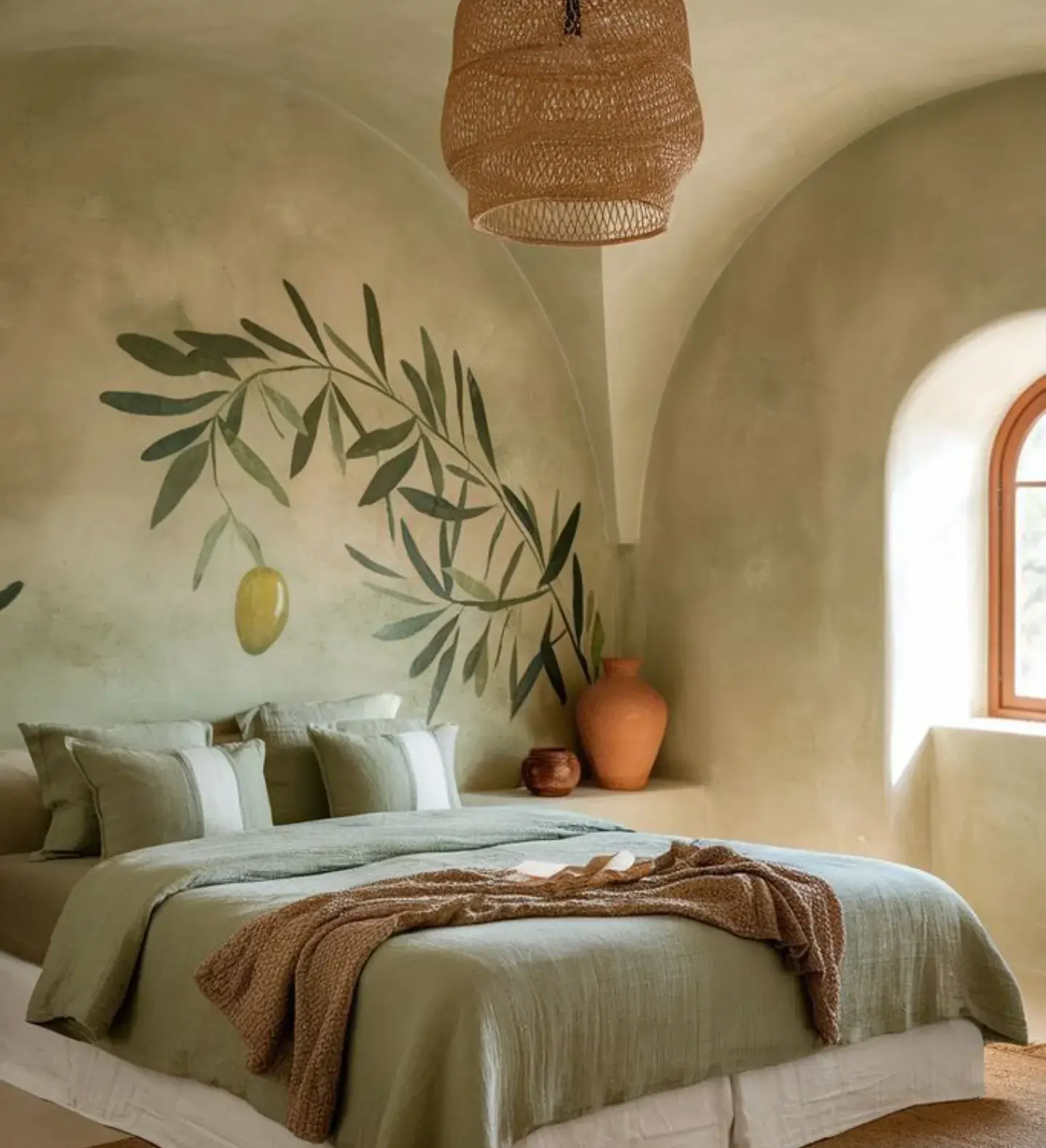
If you’re starting from scratch, begin with the walls. A limewashed terracotta accent instantly makes a bedroom feel sun-warmed and serene, adding depth without bold saturation. Choose a clay hue with a muted, earthy base—more brown than orange—for a timeless result. South-facing rooms can handle rosier terracottas; north-facing spaces benefit from warmer, sand-leaning tones to counter cool light. Apply limewash in cross-hatched strokes to create a soft, cloudlike movement that reads artisanal rather than faux-finished. Pair the wall with matte plaster, chalky ceramics, and raw wood to reinforce the natural tactility. Keep surrounding surfaces quiet: bone or oatmeal bedding, pale oak, and off-white curtains will let the wall glow. If you want contrast, bring in a charcoal linen throw or a blackened-iron sconce to sharpen the palette. Designer tip: color-match the baseboard and headboard wall for a subtle color-drench effect that makes the room feel taller and more cohesive. For paint inspiration, look to shades like Cavern Clay, Red Earth, or Adobe Dust—just sample in morning and evening light before you commit.
Layered Linen Bedding in Rust-on-Rust Tones
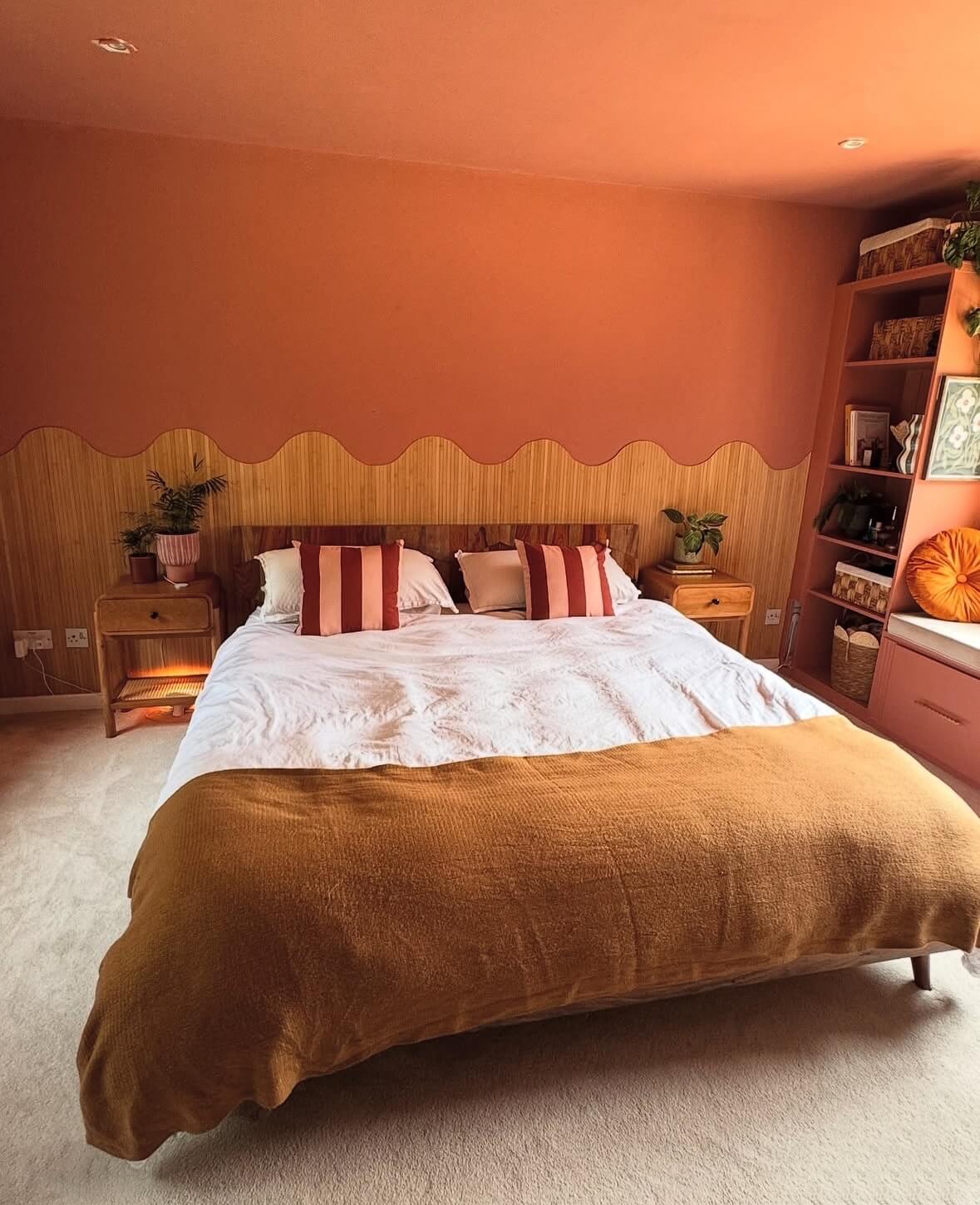
Next, build a bedscape that whispers luxury through touch. Layer linen in a tight terracotta spectrum—clay, rust, sienna, and blush—to create depth without visual noise. Start with a creamy percale or flax linen base sheet for brightness, add a rust duvet for warmth, then fold a clay-toned quilt or matelassé at the foot for structure. Mix smooth and nubby textures: washed linen shams, a chunky wool throw, and a velvet lumbar in burnt umber create a rich, collected look. Subtle pattern keeps the palette from feeling flat—think micro-stripes, pin-dots, or a tone-on-tone jacquard rather than loud prints. Anchor with a natural headboard (rattan, oak, or upholstered in bouclé) so the bedding feels intentional, not seasonal. Keep pillows edited—odd numbers read relaxed—and repeat one accent tone elsewhere, like a terracotta ceramic on the nightstand. The result is a bed that looks curated yet nap-ready, breathing with the relaxed crinkle of linen and the enveloping warmth of clay.
Sage + Terracotta: A Calming, Nature-Driven Palette
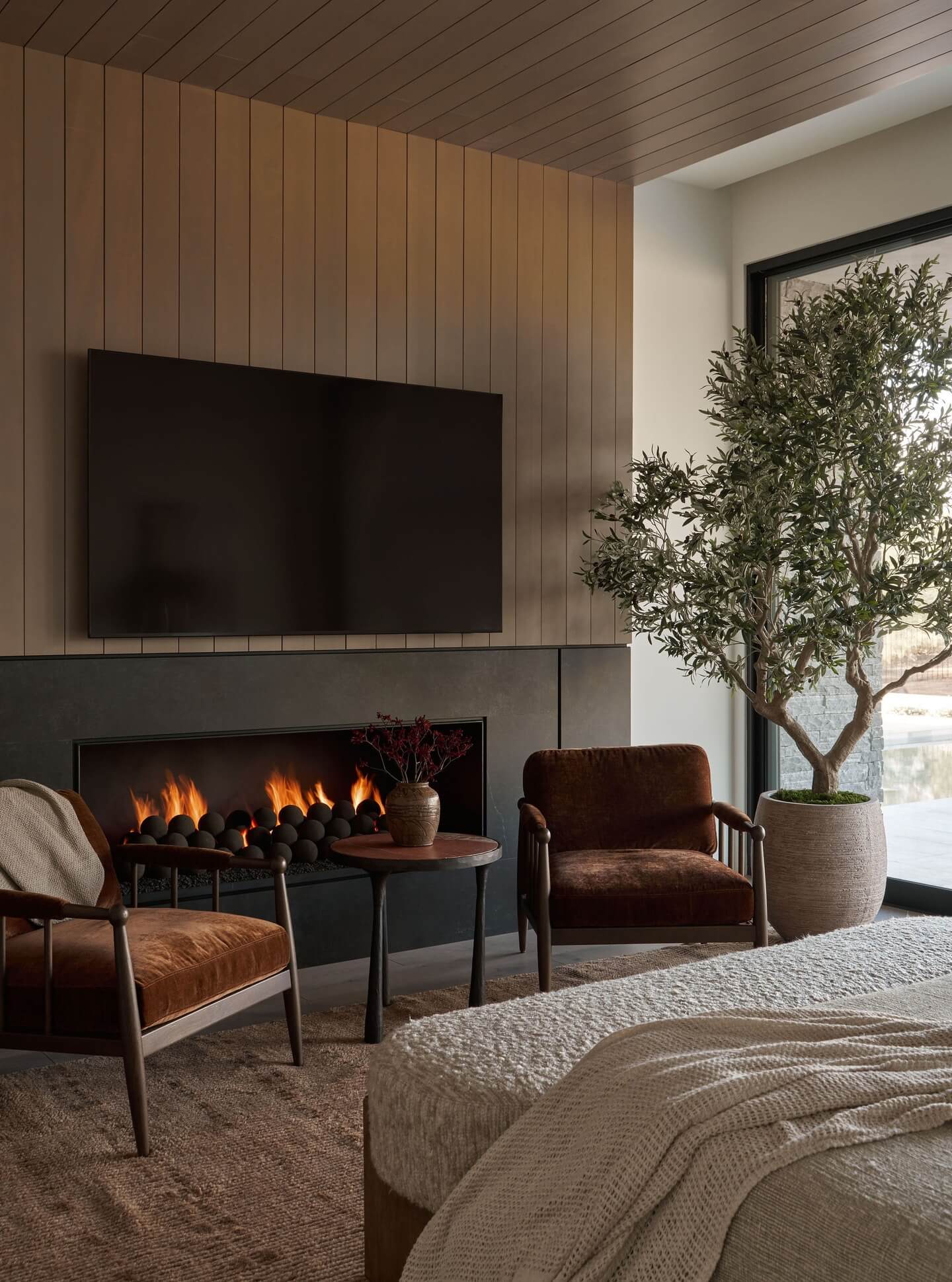
To keep terracotta grounded and fresh, pair it with sage. This nature-calibrated duo echoes canyon rock against soft greenery, delivering calm without veering neutral-only. Introduce sage through drapery, an upholstered bench, or a painted nightstand; the softness tempers terracotta’s heat while maintaining warmth. Layer creams and putty to bridge the two, then punctuate with bronzed metal or dark walnut for a sophisticated edge. Plants matter here—eucalyptus, olive, or rubber trees reinforce the palette and add organic height. Keep art simple: graphite sketches, botanical prints, or line drawings in warm white mats and thin oak frames. If your walls are white, weave the hues through textiles and accessories; if your walls are clay-toned, let sage land in larger swaths like bedding or a rug. The key is balance: roughly 60% neutrals, 30% terracotta, 10% sage accent yields harmony. This palette thrives under soft, diffused light, so opt for linen shades and sheer curtains that mellow glare into a gentle glow.
Rattan, Cane, and Oak: Textural Anchors for Clay Hues
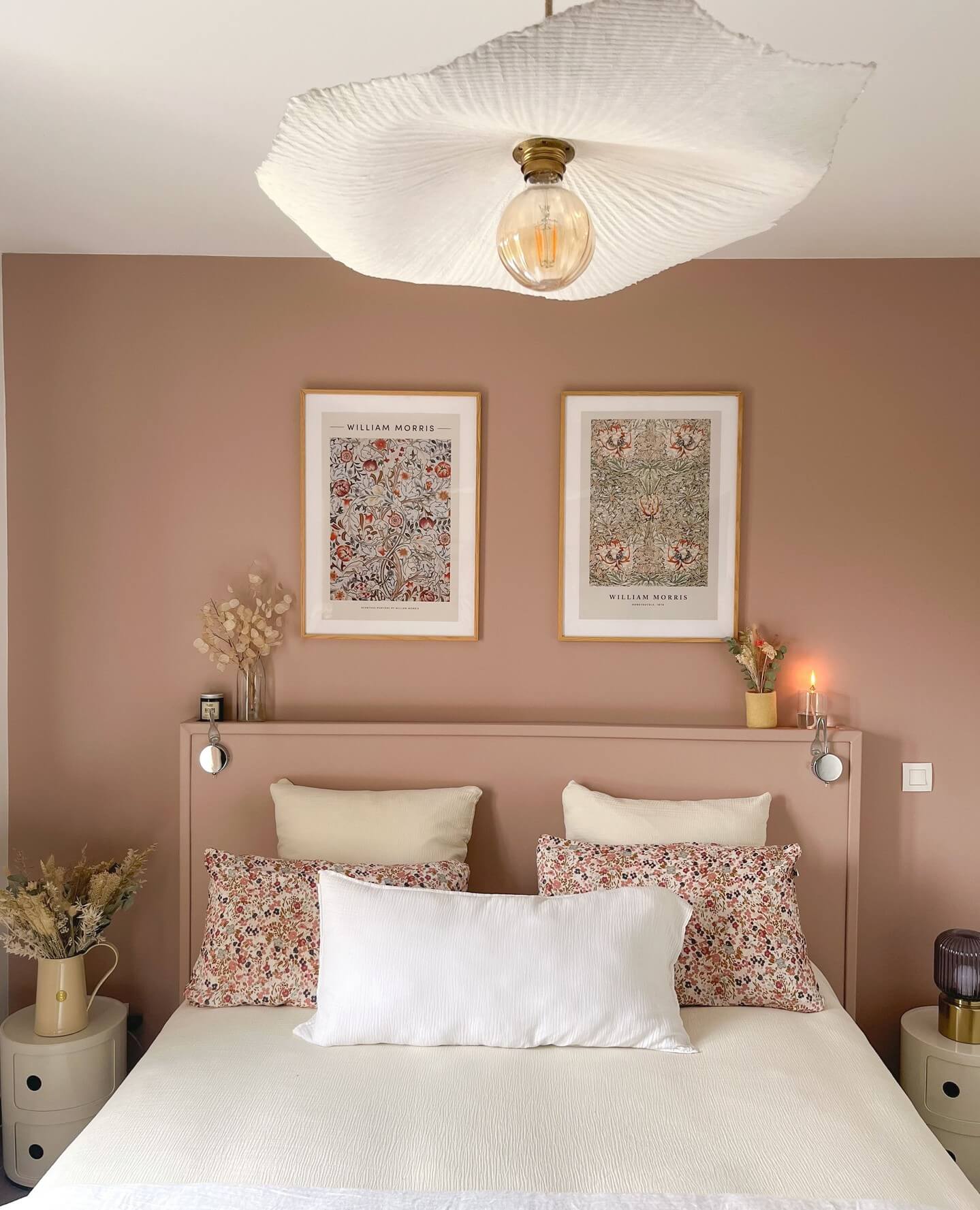
Terracotta looks its best when supported by honest materials. Rattan and cane bring breezy texture, oak adds warmth without heaviness, and plaster or limewash keeps everything quietly tactile. Choose a cane headboard or a rattan nightstand to introduce movement, then ground the vignette with an oak dresser in a natural (not yellow) finish. Repeat textures three times—cane on the headboard, a woven tray, and a jute rug—so they feel intentional. Keep shapes rounded; curved silhouettes echo pottery and soften rigid architecture. For modernity, counter the organic elements with a crisp cylinder lamp or a linear sconce in aged brass. If your space skews rustic, add a sleek accent like a black steel side table to sharpen the look. The magic is contrast: matte walls, open-weave furniture, and smooth ceramics create a layered, high-touch atmosphere where terracotta reads elevated, not theme-y. Finish with a low-pile rug in clay and cream to tie the materials together underfoot.
Golden Hour Lighting: Brass, Linen Shades, and Soft Shadows
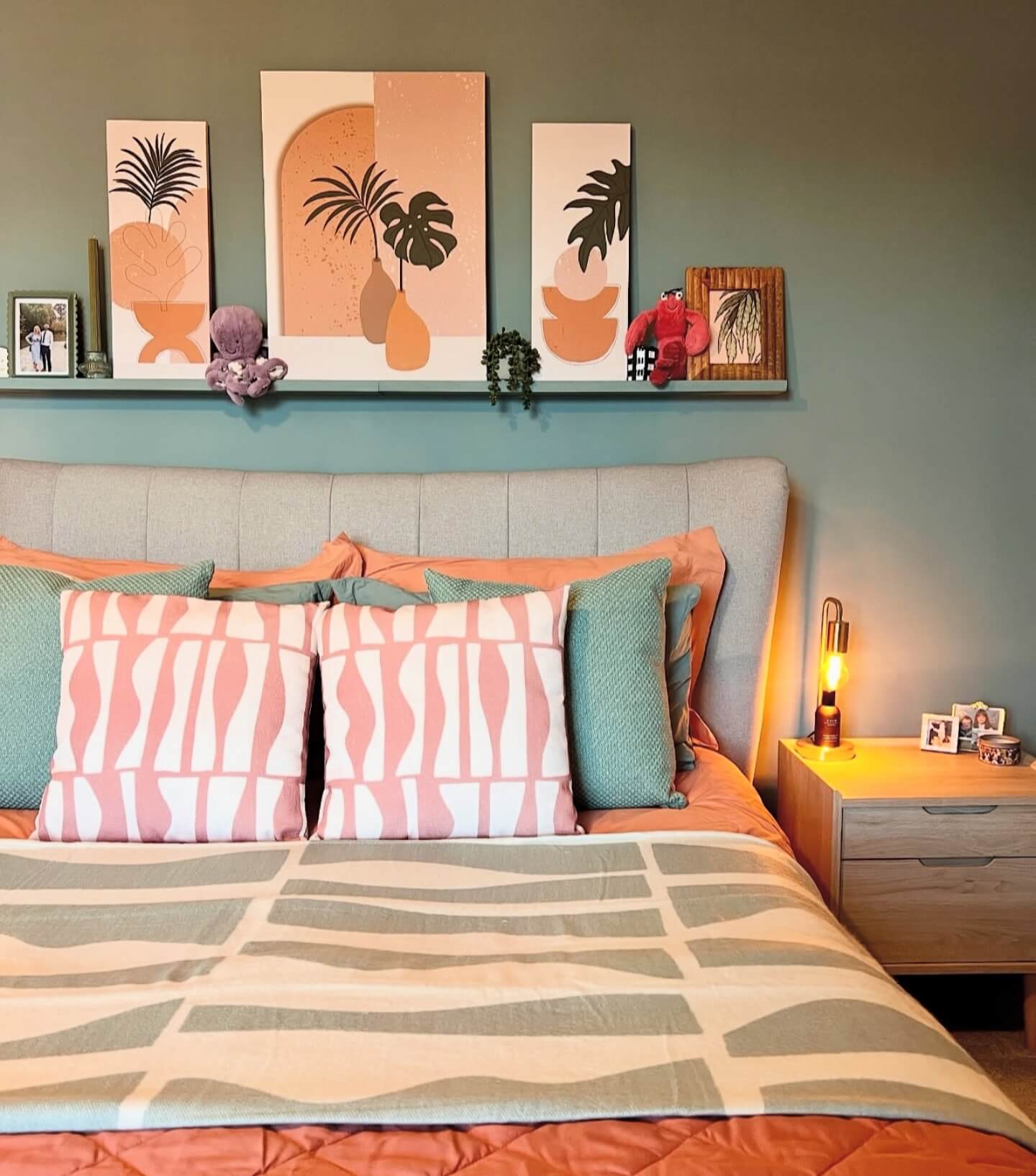
Lighting makes or breaks a terracotta bedroom. Aim for layered, golden illumination that flatters clay tones and skin alike. Start with warm-temperature bulbs (around 2700K) to avoid washing terracotta into orange. Add dimmers so you can shift from task to mood lighting. Bedside, choose aged brass or bronze lamps with linen shades to diffuse light into soft halos—this enhances the limewash movement and the grain of natural wood. If you love symmetry, match lamps; if you prefer collected charm, mix a ceramic lamp on one side with a pin-up sconce on the other. A small picture light over art or a plug-in sconce above the headboard is a low-commitment upgrade that looks custom. Keep ceiling fixtures matte (plaster, fabric drum, or woven rattan) to avoid glare. Finally, embrace shadows: terracotta deepens beautifully at night, so let corners fall moody while the bed glows. That interplay of light and shade is what gives a clay-toned room its cinematic calm.
Japandi Minimalism with Earth-Toned Restraint
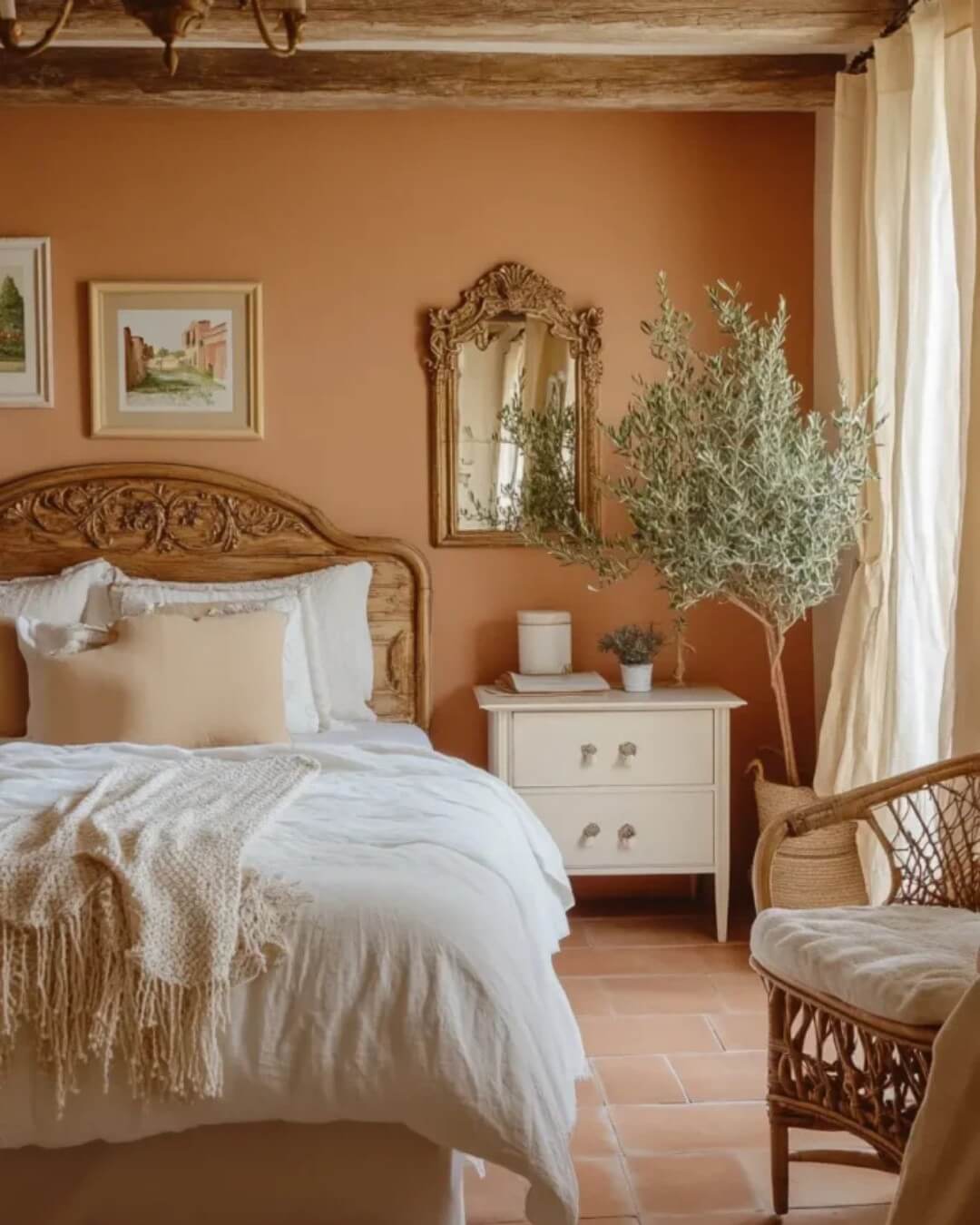
When less is more, let terracotta do quiet work in a Japandi-inspired space. Keep lines low and clean: a platform bed in pale oak, slim nightstands, and a single row of art. Use one hero terracotta element—a clay duvet, a plastered accent wall, or a woven rug—and surround it with balanced neutrals: warm white, mushroom, and taupe. Opt for tactile minimalism rather than visual abundance: stoneware vessels, paper lanterns, and slubbed linen curtains introduce depth without clutter. Negative space matters; leave breathing room around the bed and keep surfaces edited. Black accents in small doses (a thin-frame mirror, a charcoal throw) add graphic tension that sharpens the palette. Consider a soft micro-cement finish on the headboard wall to echo hand-troweled calm. The outcome is a restful, meditative bedroom that still feels layered because of texture, not stuff—terracotta becomes the quiet heart, warming the minimal canvas without stealing the narrative.
Pattern Play with Kilims, Block Prints, and Stripes

If your style leans global or boho, let pattern bridge terracotta with the rest of your palette. A flatweave kilim in clay, sand, and charcoal anchors the room and offers instant patina. Layer block-printed shams or a quilt in rust and cream for artisanal character, then add slender ticking or awning stripes to keep the eye moving. Keep the color story tight—two to three main hues—to avoid visual overload. Patterns should vary in scale: one large (the rug), one medium (the quilt), and one small (a pillow) for balance. Solid elements—linen curtains, a plaster lamp, a wood bench—give the patterns space to breathe. For cohesion, repeat a motif (chevrons, florals, or grids) at least twice. If you’re nervous about mixing, start with a patterned lumbar on a mostly solid bed and build from there. The beauty of terracotta is that it harmonizes effortlessly with heritage textiles, turning pattern play into a curated, story-rich layer rather than a clash.
Renter-Friendly Terracotta Swaps You Can Do in a Weekend

No paint? No problem. You can channel terracotta’s warmth with reversible upgrades. Start with textiles: a clay-toned duvet, rust throw, and a kilim rug instantly shift the mood. Add peel-and-stick options—linen-look wallpaper in a wheat tone, a faux-limewash mural behind the bed, or terracotta-hued window film for a soft, sunbaked glow. Swap hardware to aged brass for elevated warmth, and bring in ceramic bedside lamps to introduce sculptural clay. Style the nightstand with a stacked pair of terracotta planters, a travertine tray, and a small olive tree for life and height. For art, frame vintage botanical prints or abstract studies in oak. Use command hooks for a fabric wall hanging (mud cloth or block print) to mimic an upholstered headboard effect. Finally, scent the space with cedar and amber—an often-overlooked layer that completes the sensory palette. These quick switches create a cohesive terracotta bedroom without a single brushstroke.
Color-Drench the Trim or Ceiling for a Cozy Cocoon

Ready to go bolder? Extend terracotta beyond an accent wall. Color-drenching trim, doors, or even the ceiling creates a cocooning effect that feels custom and high-design. Choose a mid-tone clay and paint baseboards, window casings, and the headboard wall in the same finish for seamless sophistication. For rooms with high ceilings, a terracotta ceiling lowers the visual plane in a comforting way—balance it with lighter walls and bedding to keep the space airy. Conversely, in small rooms, painting just the door and trim can deliver a tailored hit of color without overwhelm. Consider sheen: matte or eggshell on walls, satin on trim for a subtle, light-catching contrast. Balance the saturated envelope with lots of texture—nubby linen, cane, travertine—and add strategic black accents to ground the warmth. The result is immersive yet measured, like sleeping inside a sun-baked villa where every surface hums with quiet depth.
Artful Pottery, Scent, and Styling to Ground the Bedscape
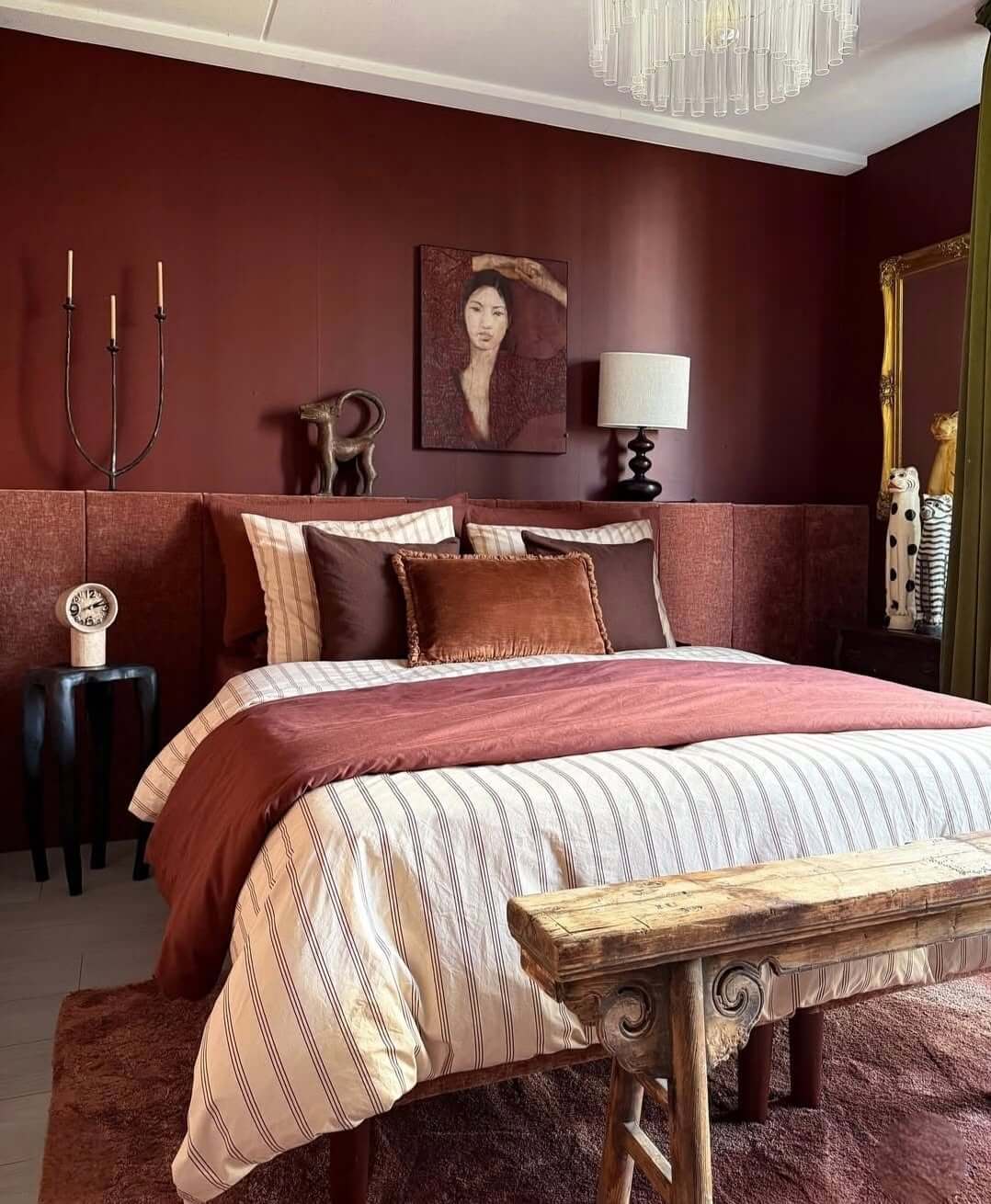
Finish with the details that make a bedroom feel lived-in and layered. Hand-thrown pottery—vases, catchalls, and sculptural lamps—echoes terracotta’s heritage and adds soulful irregularity. Style the nightstand with a simple rule: vertical (a vase or branch), horizontal (a book stack or tray), and glow (a candle or small lamp). Choose art that plays with negative space—charcoal sketches, minimalist abstracts, or landscape studies in sandstone tones—to prevent visual heaviness. Incorporate scent as a design layer: diffuse notes of cypress, cedar, sandalwood, or amber to reinforce the earthy palette. A woven basket at the foot of the bed corrals throws, while a travertine pedestal or stool doubles as a surface for tea or a book. Keep cords tidy and surfaces edited so the textures can shine. With these finishing gestures, your terracotta bedroom moves from styled to soulful—every object has purpose, and the space exudes quiet, restorative warmth.
Get the Fail-Safe Paint Color Playbook (Free PDF)
36 proven colors • 8 ready palettes • trim & sheen guide • printable testing cards.
Built-In Plaster Headboard Niche in Sunbaked Terracotta
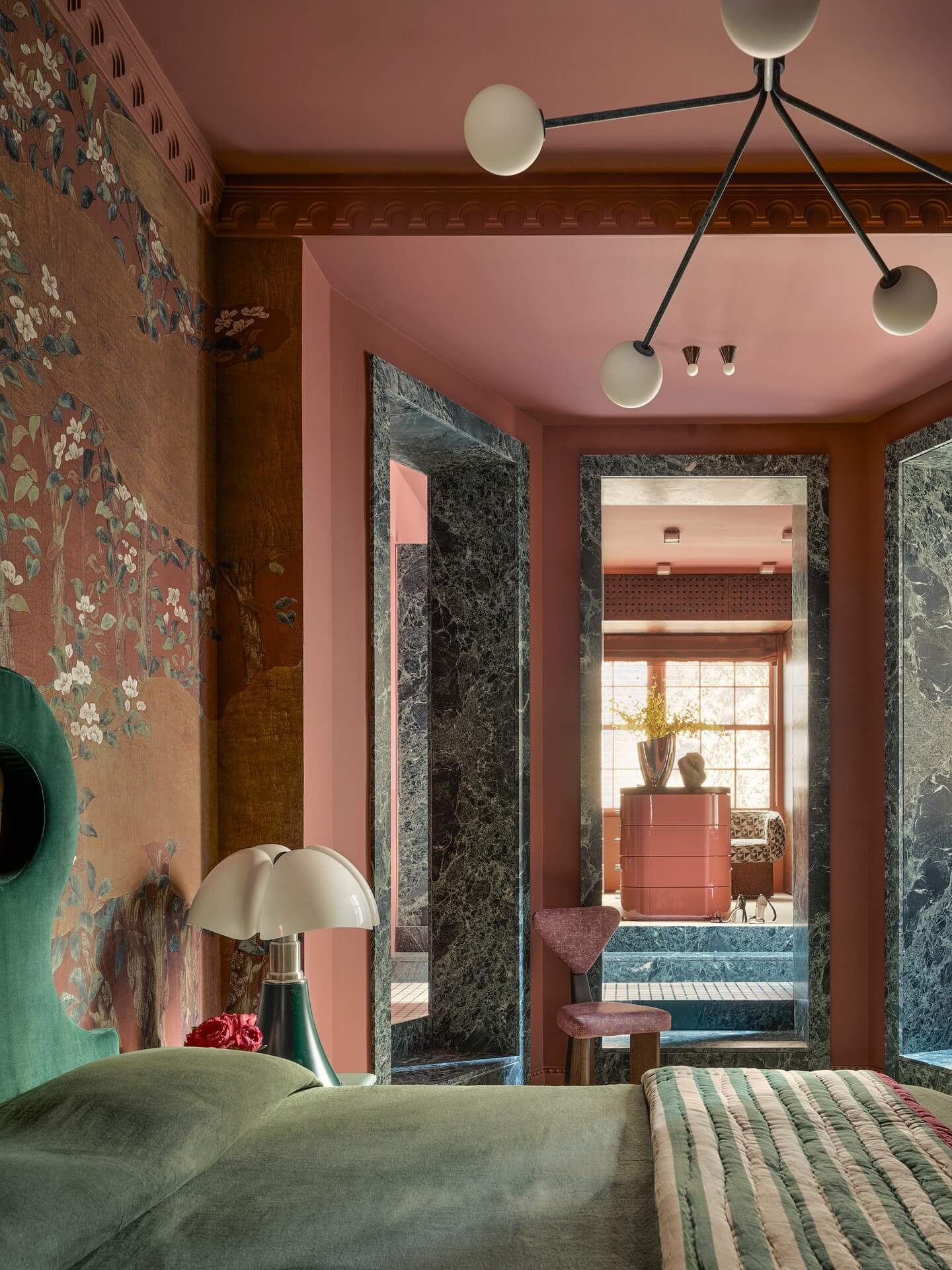
Give your terracotta bedroom a bespoke, Mediterranean moment with a built-in plaster headboard niche. A shallow, curved alcove finished in clay paint or microcement instantly reads custom, adds a sculptural focal point, and removes the need for a bulky headboard—perfect for small spaces seeking calm, airy proportion. Keep the tone a sunbaked terracotta that’s a shade deeper than your walls so the bed feels anchored without overwhelming the palette. Integrate a slim ledge for nighttime essentials, then wire in dimmable sconces to wash the plaster with soft shadows. Style with rust linen pillows, a cream coverlet, and oak or rattan nightstands to amplify texture and bring that grounded, wabi-sabi warmth. For balance, layer sage accents—an olive throw or a potted plant—to cool the clay tones and echo nature. Pro tip: sample your clay hue across the curve; terracotta shifts beautifully from dawn to dusk, and you’ll want that glow consistent above the pillows. The result is a serene, architectural backdrop that elevates even the simplest bedding into a restful, designer-level retreat.
Sun-Softened Terracotta Drapery That Warms the Light
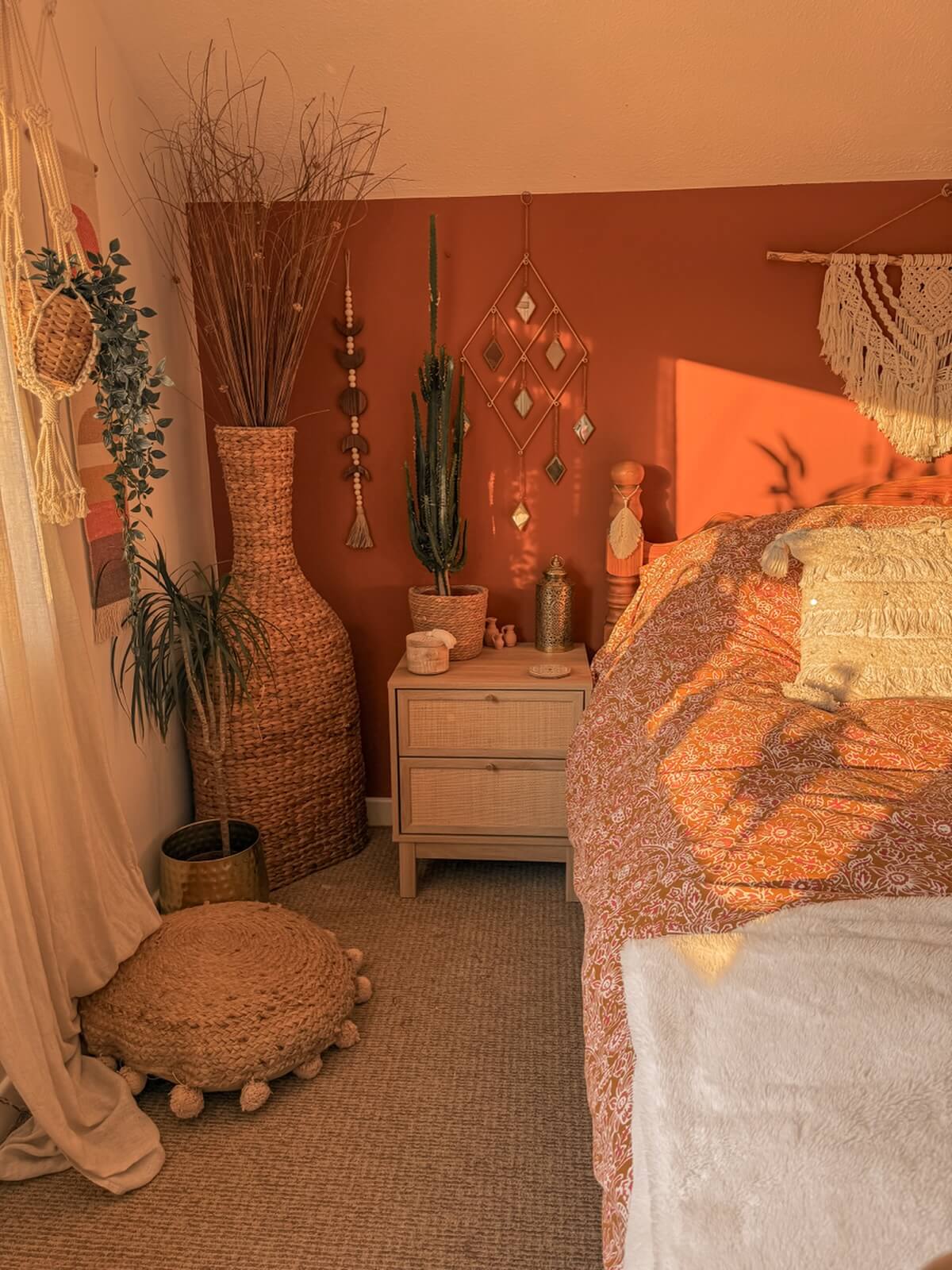
Terracotta drapery is the quiet luxury move that transforms a bedroom’s mood from morning to evening. Choose weighty linen or a linen-cotton slub in clay, rust, or earthy blush to tint incoming light a golden, cozy tone. Mount a ceiling-track or extra-high rod to elongate the room, then opt for wide, double-width panels so the pleats look full and tailored when closed. Layer a sheer underpanel for daytime privacy without sacrificing that sun-warmed glow; at night, a lined curtain improves insulation and deepens the color for cocoon-like calm. Hardware matters: brass rods enhance the warmth of terracotta, while charcoal or black metal crisps the edges for modern contrast. Let panels “kiss” the floor for a hotel finish, or puddle lightly if you’re going for relaxed Mediterranean vibes. Pair with neutral walls, a sage quilt, and oak furniture so the drapery becomes the palette’s bridge—linking light, texture, and tone. The payoff is a soothing, light-responsive envelope that makes your terracotta bedroom feel intimate, layered, and endlessly inviting.
Sculptural Terracotta Bedside Lamps for an Ambient Glow
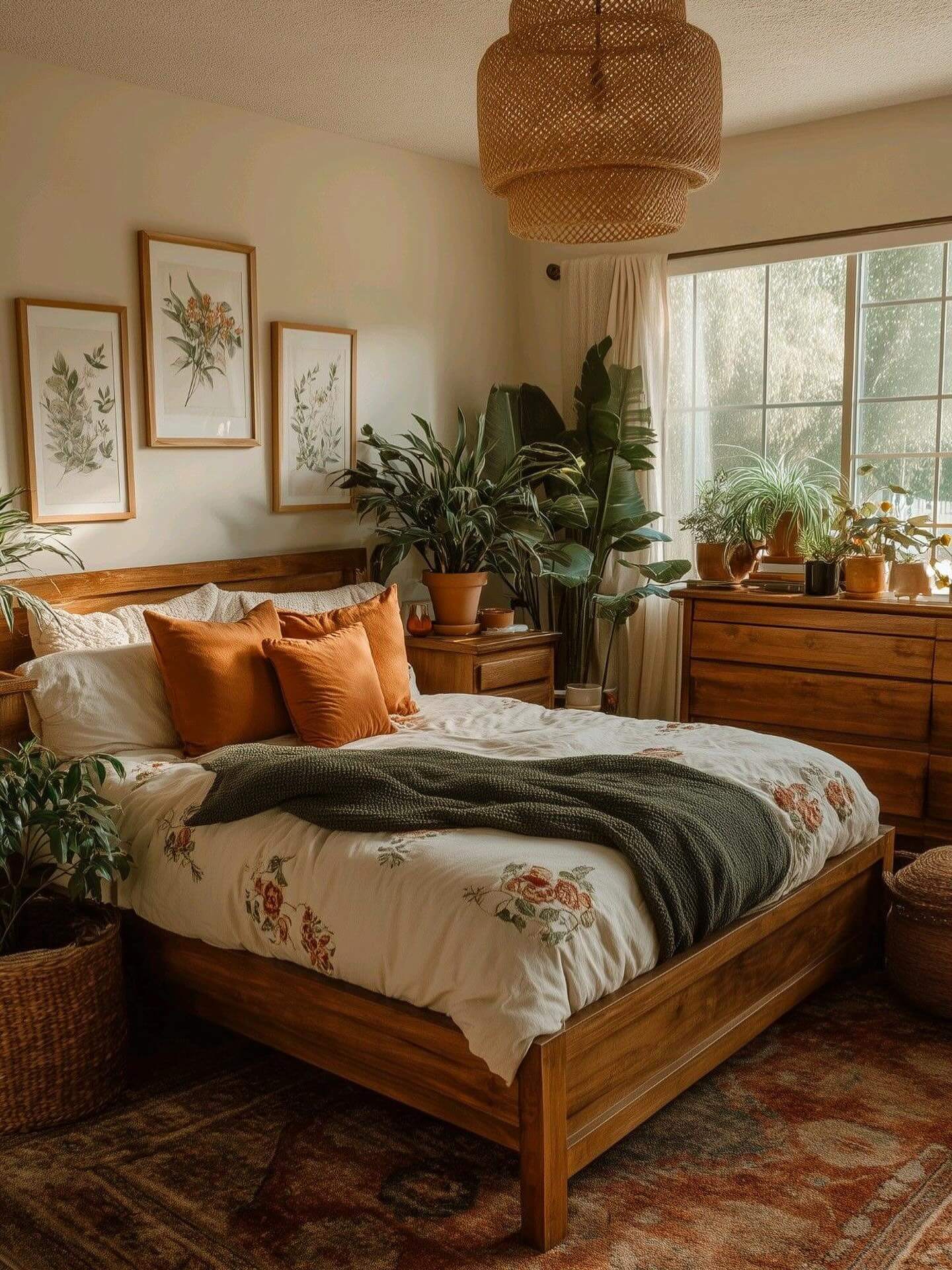
Swap generic lighting for sculptural, clay-bodied lamps that echo the soul of a terracotta bedroom. Look for handmade ceramic bases in russet, adobe, or clay blush with matte, tactile finishes; they add artisan character and visually “ground” a nightstand the way pottery anchors a console. Top them with natural linen shades to soften glare and cast flattering, golden-hour light—aim for warm bulbs around 2700K on a dimmer for mood control from reading to wind-down. If space is tight, consider plug-in ceramic sconces to free surfaces while keeping that earthen texture at eye level. Balance the warmth with a cream duvet and a striped lumbar pillow, then introduce a small sage plant or travertine tray to temper the clay tones with cool, mineral notes. Repeating terracotta in your lamp, a vase, or a small bowl creates a cohesive story without overwhelming the palette. The result is gentle, layered illumination that highlights plaster walls, accentuates linen textures, and turns your bedscape into a softly glowing focal point.
Grounded Contrast: Charcoal Accents Sharpen Terracotta
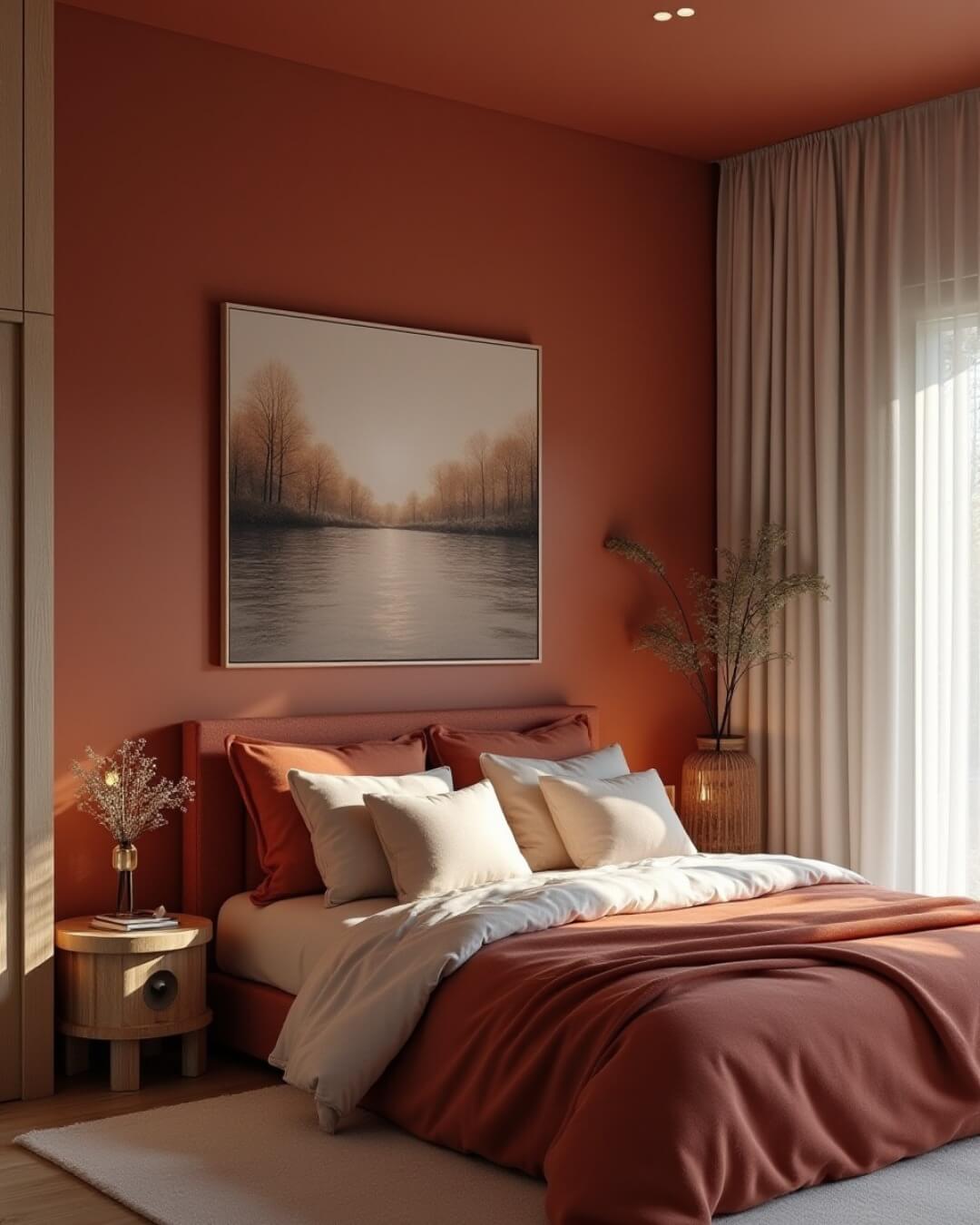
Terracotta sings when it has a foil, and charcoal is the chic counterpoint that sharpens the entire palette. Introduce a few well-placed dark notes—an iron bedframe, matte-black curtain hardware, charcoal linen shams, or slim black frames for artwork—to outline the clay tones without cooling the room. Think of charcoal as punctuation: keep it to roughly 10–15% of the scheme so it grounds rather than dominates. Layer these accents against cream sheets and rust-toned throws to preserve softness, then add a brass element—a pull, a picture light—for a nuanced, high-low sheen. On the floor, a natural jute or wool rug in warm neutrals keeps the eye on your hero hues while the dark pieces provide crisp definition. This calibrated contrast works across styles—boho, Japandi, or modern rustic—making terracotta feel intentional and elevated. The payoff is visual clarity: edges read cleaner, textures feel richer, and your clay-forward bedroom gains that gallery-like polish without losing its cozy, restorative heart.
Architectural Color-Blocking in Clay Tones
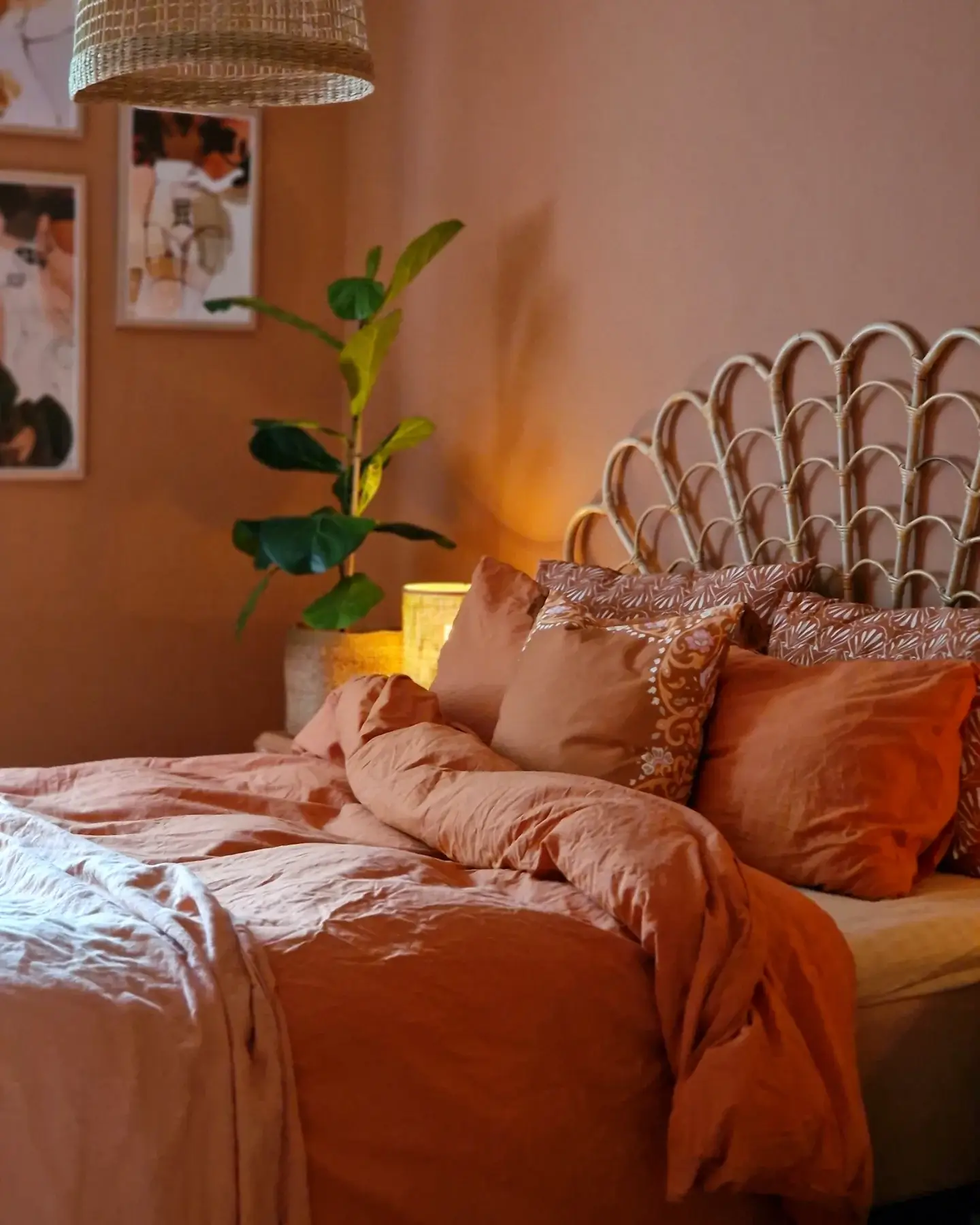
When a full terracotta wall feels too bold, architectural color-blocking delivers impact with restraint. Paint a horizontal clay band that spans the headboard wall—eyed at about two-thirds height—to elongate the room and create an instant “headboard” effect behind simple bedding. Alternatively, frame the bed with a soft arch in earthy blush or rust to echo Mediterranean doorways and add gentle movement above the pillows. Keep trims and adjacent walls in warm white or pale plaster to let the clay band read as built-in architecture. Tie the stripe to your textiles: match-pick a rust lumbar, a terracotta throw, or a kilim rug so the palette steps across surfaces seamlessly. For renters, use removable paint, fabric panels, or peel-and-stick decals to test scale before committing. The strategy is simple but transformative—color becomes structure, guiding the eye, grounding the bedscape, and reinforcing that curated, layered look central to a timeless terracotta bedroom.
Terracotta Bedroom Furniture, Textiles, Layering, and Lighting Design
In a terracotta bedroom, furniture should stabilize warmth while introducing contrast through shape, tone, and texture. Medium to dark woods—walnut, smoked oak, or acacia—anchor clay walls, whereas pale ash or oak lightens the composition for breezier moods. Upholstered headboards in linen, bouclé, or cotton velvet add tactile calm and buffer wall color behind pillows. Nightstands with open bases or cane panels keep silhouettes airy, preventing a heavy, all-wood lineup. Layer storage with woven baskets and a slim bench in leather or fabric to tighten function and soften edges. Underfoot, a wool or jute rug grounds the palette and quiets acoustics for restful sleep.
- Layer lighting in three tiers—ambient, task, and accent—with bulbs at 2200–2700K; dimmable controls preserve mood while flattering skin tones and enriching terracotta’s depth at night.
- Hang curtains high and wide to elongate walls; lined linen panels filter daylight gently, safeguarding pigments, while matte black or brass rods echo hardware and frame the window.
- Build bedding in breathable layers: percale or linen sheets, a cotton coverlet, and a quilt or kantha throw, finishing with mixed-scale pillows in ecru, taupe, and rust.
- Mix metals thoughtfully—aged brass for warmth, blackened steel for structure; repeat each finish at least twice so choices feel deliberate, not random, across lamps, drapery hardware, and frames.
- Select decor with earthen pigments—stoneware lamps, terracotta planters, and ceramic vessels—balancing with greenery or botanical prints to refresh warmth and introduce life without shifting the palette cold.
Choose an overhead fixture with generous shade diameter to visually counter strong wall color and ground the bed zone. If reading in bed, install plug-in or hardwired sconces about 5–7 inches above shoulder height when seated, angled to reduce glare. Linen or parchment shades mellow brightness, while frosted bulbs prevent harsh hotspots against warm walls. Add a dim nightlight or low-output LED strip behind the headboard to create a gentle halo that enhances terracotta’s depth. Maintain textiles with gentle detergents and sun-rotation of rugs to prevent uneven fading. With proportional fixtures, tactile layering, and controlled color temperature, the room feels intimate, balanced, and unmistakably elevated.
Design Clinic: Smart Answers for Terracotta Bedroom Lovers
What colors pair best with terracotta in a bedroom without making it feel heavy?
Choose ecru, warm greige, and stone for calm balance, then accent with sage, muted indigo, or soft black. These hues temper heat, add definition, and keep the palette sophisticated.
Get the Fail-Safe Paint Color Playbook (Free PDF)
36 proven colors • 8 ready palettes • trim & sheen guide • printable testing cards.
How do I choose the right terracotta shade for a north-facing room?
Opt for warmer, peachy or red-leaning terracottas that counter cool daylight. Test large swatches in morning and afternoon to confirm the color doesn’t drift dull or muddy.
Can terracotta work in small bedrooms or rentals where painting is limited?
Absolutely—use terracotta through textiles, art, lampshades, and planters if walls must stay neutral. A terracotta quilt or upholstered headboard delivers impact without permanent changes.
What lighting temperature makes terracotta look its best?
Stick to 2200–2700K bulbs for flattering warmth that enriches clay tones. Add dimmers so you can shift from energizing daytime levels to cozy evening ambience seamlessly.
Get the Fail-Safe Paint Color Playbook (Free PDF)
36 proven colors • 8 ready palettes • trim & sheen guide • printable testing cards.
Final Verdict: Terracotta Makes a Warm, Timeless Bedroom Feel Effortless
Terracotta is the throughline that ties calm, character, and comfort into one cohesive bedroom story. When you layer clay-inspired tones—think sunbaked terracotta, soft rust, and earthy blush—alongside tactile linen, rattan, cane, oak, and whispery plaster, the result is a space that feels curated yet inviting. Balance those warm notes with grounding partners like sage, creamy whites, inky charcoal, and a touch of brass. Then let lighting do the rest: linen shades, sculptural terracotta bedside lamps, and sun-softened drapery cast a flattering glow that flatters color and texture alike, while limewash and subtle color-blocking add depth without visual noise.
Whether you’re a renter or ready for a remodel, you can scale the look to your timeline. Start small with rust-on-rust bedding, a kilim or block-printed textile, a couple of pottery moments, and strategic charcoal accents for contrast. On weekends, elevate with a limewashed accent wall, color-drenched trim or ceiling, or peel-and-stick updates. For a lasting transformation, consider a plaster headboard niche or architectural color-blocking in clay tones. Keep edits intentional—Japandi restraint ensures airiness—so your terracotta bedroom reads as serene, modern, and endlessly cozy.