
Wood Driveway Gate Ideas You’ll Want to Copy: From Modern Slats to Timeless Farmhouse Charm
Your driveway gate is the first impression of your home—and the last line of privacy and security. The right wood gate blends beauty with function, upgrading curb appeal while shaping how you arrive and how others see your space.
From sleek horizontal slats and chevron patterns to arched farmhouse silhouettes and mixed wood-and-steel frames, there’s a style for every architecture and budget. Thoughtful details—stain color, hardware, spacing, and automation—turn a simple barrier into a statement.
Get the Fail-Safe Paint Color Playbook (Free PDF)
36 proven colors • 8 ready palettes • trim & sheen guide • printable testing cards.
We’ll explore smart choices by style and setup (swing vs. slide), wood species (cedar, redwood, white oak, ipe, Accoya), finishes, and climate-friendly maintenance. Use these ideas to match your gate to your slope, setback, and sensors so it looks incredible and works flawlessly every day.
Modern and Classic Wood Driveway Gate Ideas for Curb Appeal
Choosing the right style sets the tone for your facade and frames every arrival. From modern lines to rustic charm, Wood Driveway Gate Ideas can balance privacy, airflow, and visual drama. Consider your home’s architecture, fence height, and the approach angle from the street. Arched tops soften hard facades, while crisp rectangles emphasize contemporary geometry. Decide early between dual-swing, single-swing, or sliding layouts, because clearance, driveway slope, and panel weight strongly influence structure, hardware, and sightlines.
- Modern Horizontal Slats: Wide, even cedar or thermally modified ash boards create crisp lines; hidden steel subframe and matte-black hardware deliver rigidity, adjustable privacy gaps, and sleek sliding or swing automation.
- Craftsman Grid-Lite: Square upper lites with tempered glass or seeded acrylic lighten mass; stain-grade white oak, beveled rails, and true mortise-and-tenon joinery echo mission details and bungalow millwork.
- Farmhouse Crossbuck: Diagonal X-bracing over V-groove planks resists sag and shouts rustic charm; chunky posts, strap hinges, and a warm stain pair effortlessly with board-and-batten exteriors.
- Mediterranean Arched Plank: A gentle arch, tight planking, and a speakeasy grille complement stucco, clay tile, and wrought iron; dark walnut tones and clavos nails amplify Old World elegance.
Proportion matters: keep stile widths, rail placements, and slat spacing consistent with window mullions and garage doors. For privacy, staggered or louvered slats obscure views while preserving airflow and breeze. If wind exposure is high, reduce solid area or integrate discreet wind ports to protect operators. Sliding gates track cleanly on steep drives, while inward-swing pairs need level pads for safe operation. Coordinate stain color with soffits and trim, then repeat metal accents on house numbers, sconces, and mailbox for coherent curb appeal.
Sleek Horizontal Slats for Modern Curb Appeal
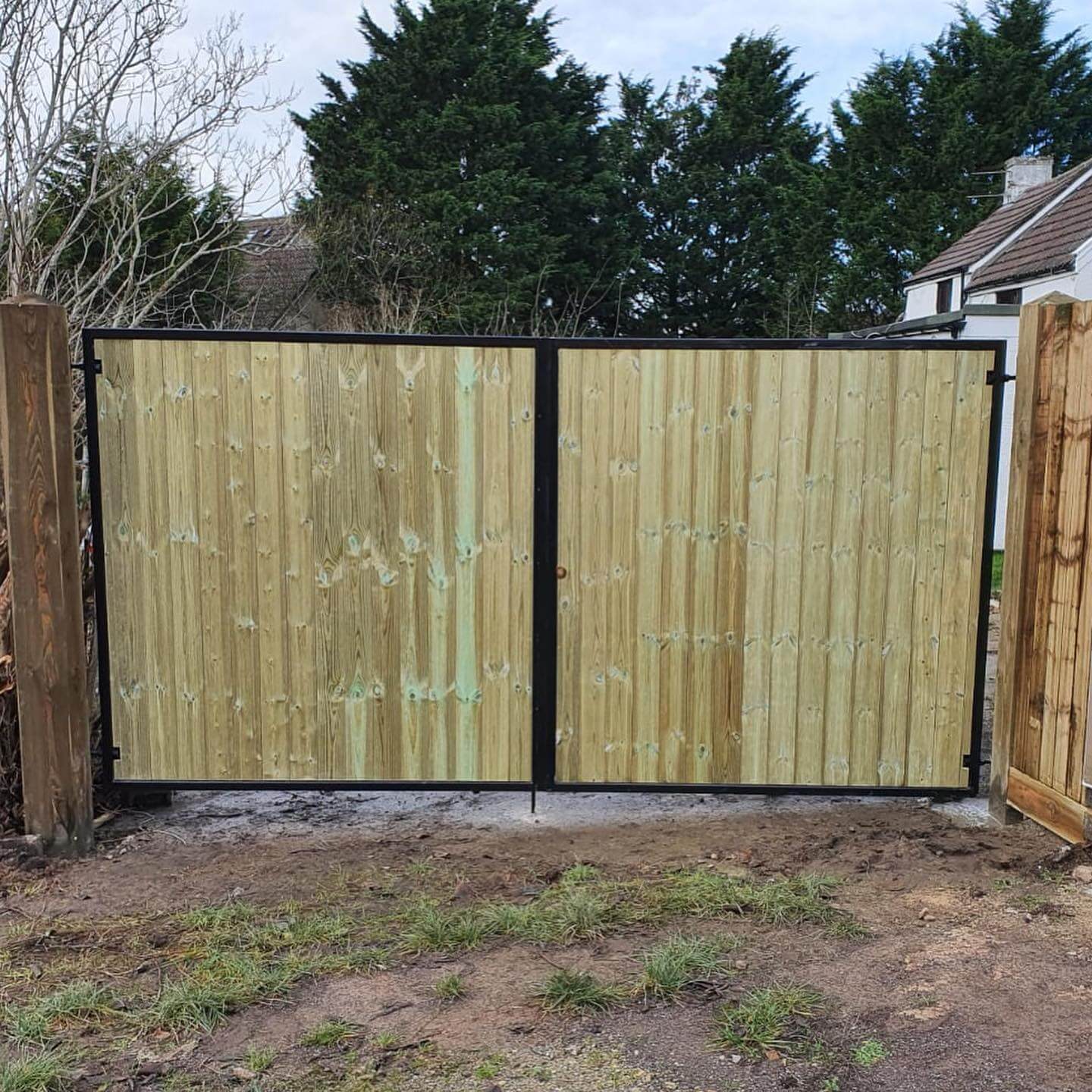
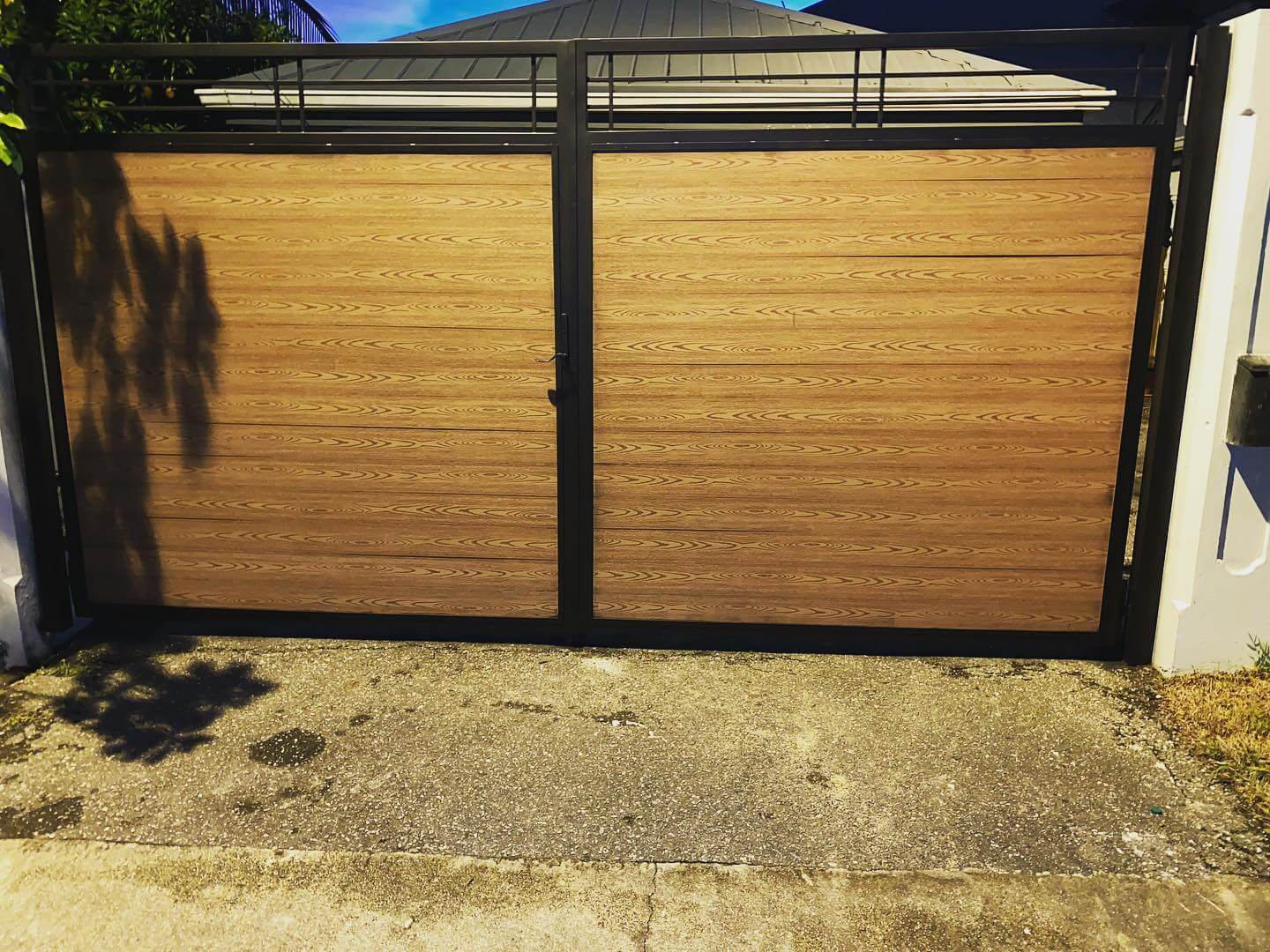
Clean, horizontal slats are the go-to move when you want modern lines without losing the warmth of wood. This layout stretches the eye width-wise, making a narrow driveway feel wider and the facade more composed. Choose board widths (1×4 or 1×6) and consistent reveals to dial privacy: tighter gaps (1/8–1/4 inch) read sleek and screen more, while 3/8–1/2 inch delivers airflow and shadow play. A powder-coated steel frame keeps long spans dead straight and resists sag; cedar, redwood, or thermally modified ash offer stability for the infill. Keep the bottom edge 2–3 inches above grade for drainage and snow clearance. For finishes, a neutral driftwood stain or warm walnut tone pairs well with matte-black posts and house numbers. If you’re automating, horizontal slats hide operators nicely—just pre-plan conduit, photocells, and a keypad pedestal so nothing looks tacked-on. The result is a wooden driveway gate that feels architectural, refined, and low-visual-noise—an instant curb appeal upgrade that plays well with stucco, brick, or contemporary siding.
Board-on-Board Privacy That Doesn’t Feel Heavy
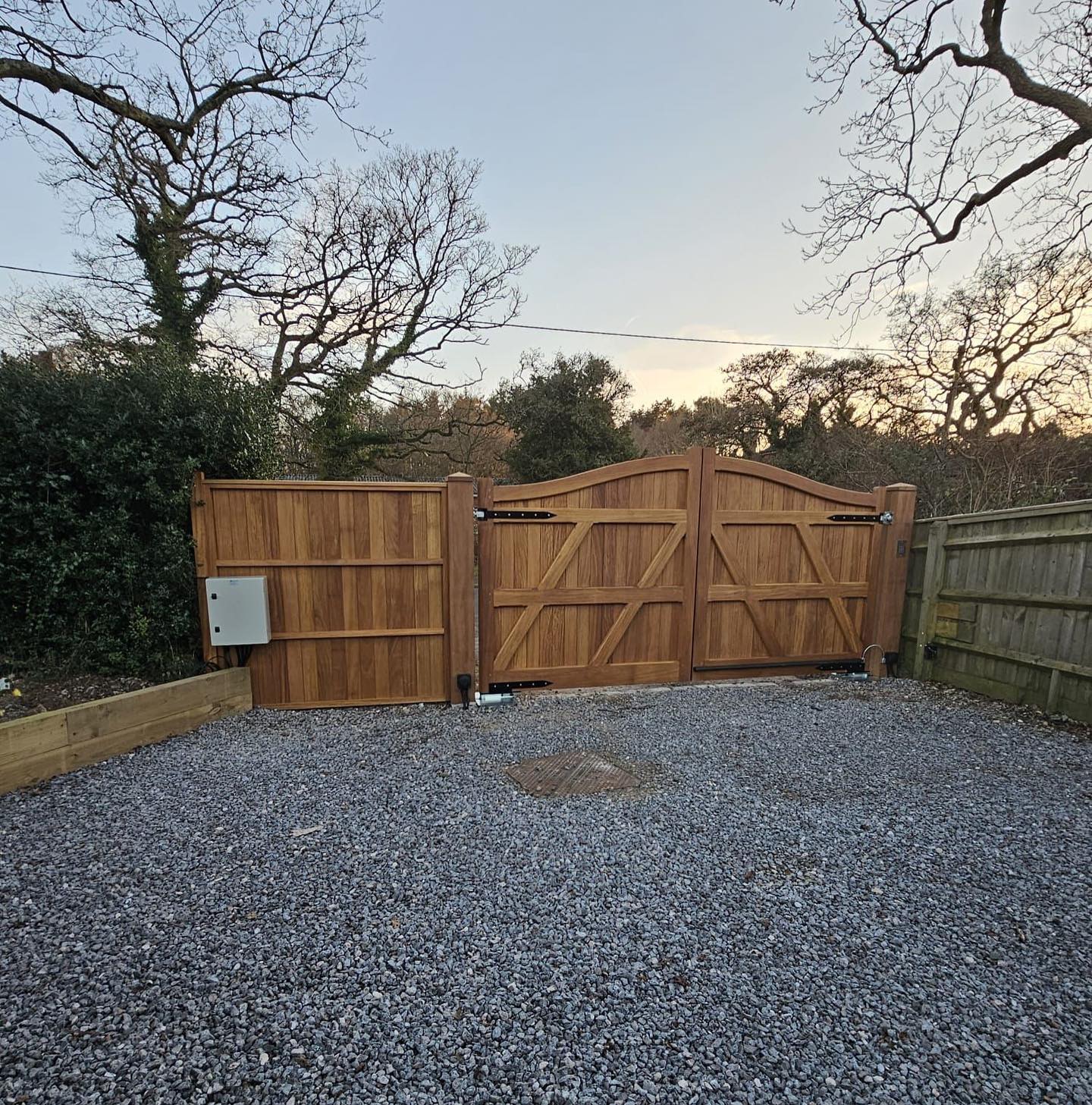
When you want true screening but fear a “blank wall,” go board-on-board. Alternating vertical boards over a tight base layer closes off sightlines while creating rhythmic shadow lines that feel crafted, not bulky. Use 1x4s over a tongue-and-groove or shiplap base, then add a slim cap rail and a low kick plate to protect end grain. This construction shrugs off seasonal gaps and looks tailored from both sides—ideal for corner lots or homes close to the street. Cedar or Accoya keep weight down; specify stainless or silicon-bronze fasteners to prevent stains. A mid-tone semitransparent stain softens the mass while letting grain show. To keep the gate quieter, add rubber stops and soft-close operators. If wind is a concern, integrate discreet vent slots near the hinge stile to relieve pressure without compromising privacy. The result is a serene, tactile wood driveway gate that screens the world but still feels light-handed and intentional instead of fortress-like.
Sliding Wood Gate for Short Aprons and Steep Drives
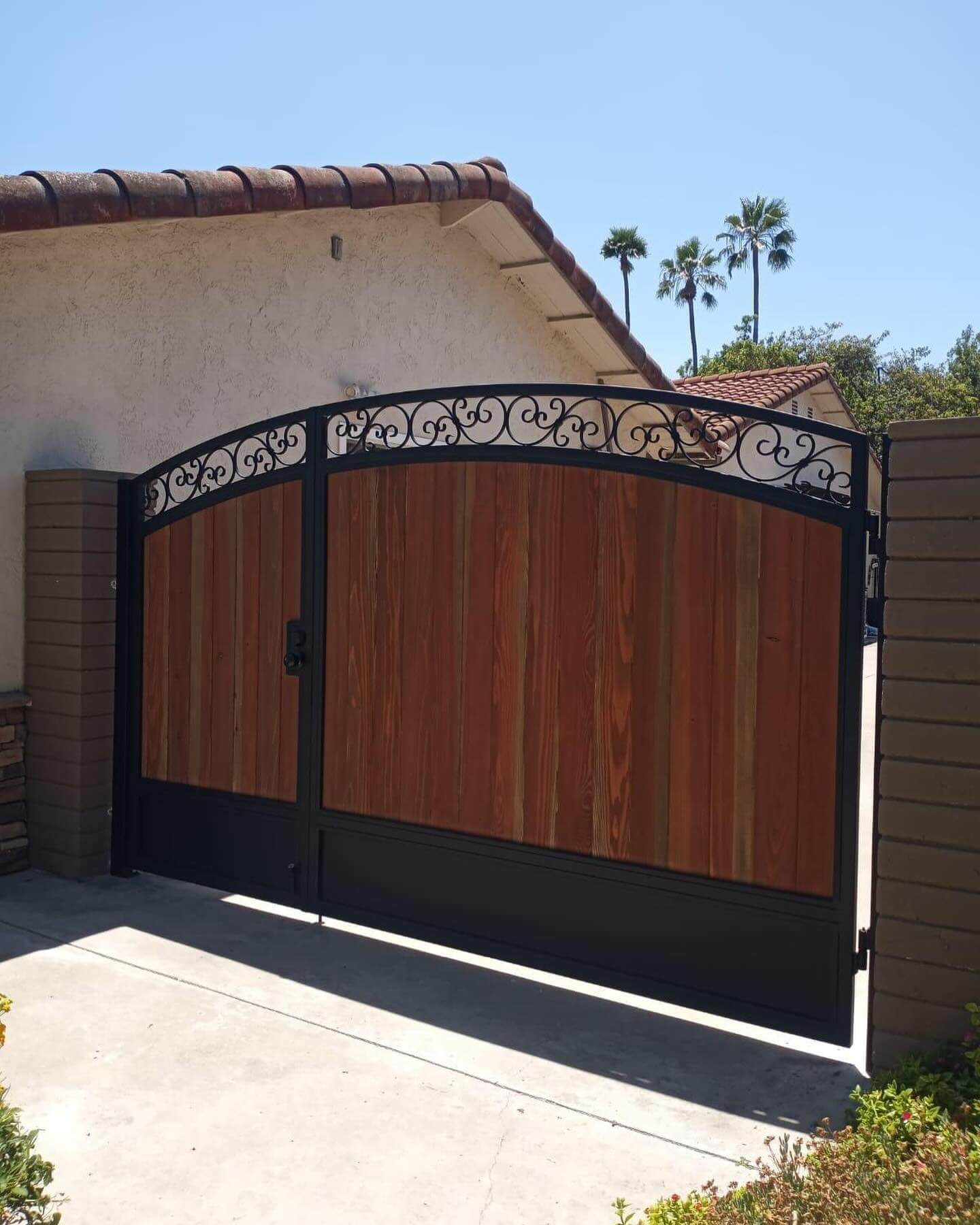
If your driveway is short, slopes up from the street, or backs into a sidewalk, a sliding gate solves what swing gates can’t. Choose between V-track (smooth concrete apron, regular sweeping) and cantilever (no track across the drive, better for gravel, snow, or tree litter). A slim, powder-coated steel frame with cedar, ipe, or Accoya infill keeps the panel rigid over a long run. Add nylon rollers and a closed-bottom design to avoid pebble jams. For look-and-feel, keep the face flush so the panel reads as one architectural plane; horizontal slats or wide tongue-and-groove feel especially cohesive on sliders. Plan a return fence that gives the panel somewhere to park without blocking sightlines. Safety matters: include photo eyes, edge sensors, and a beacon, and set the operator to soft start/stop to protect joinery. With the right hardware, a sliding wood driveway gate gives you maximum clearance, everyday reliability, and a crisp, modern silhouette tailored to tight urban lots.
Arched Farmhouse Double Gate with Heirloom Details
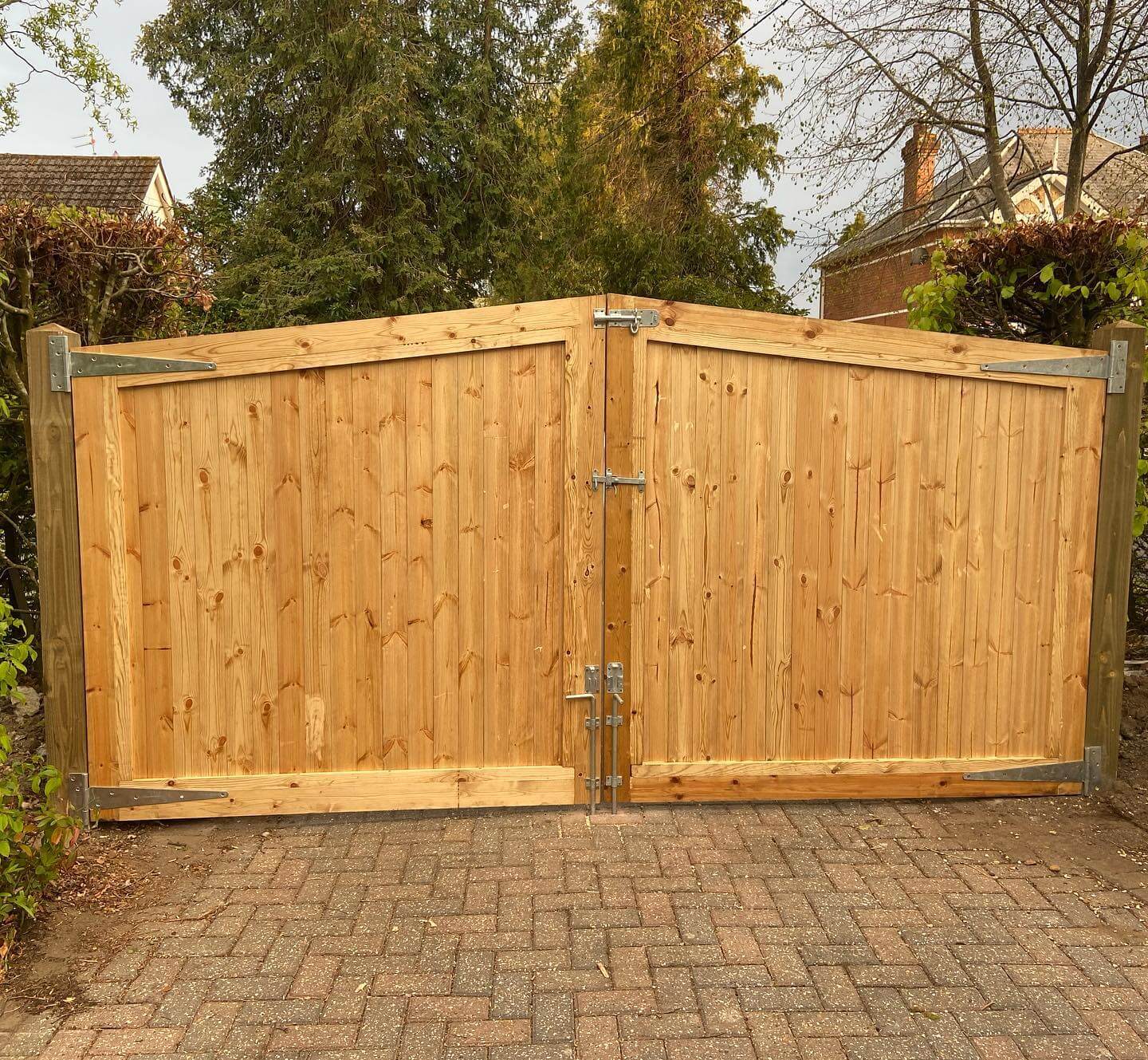
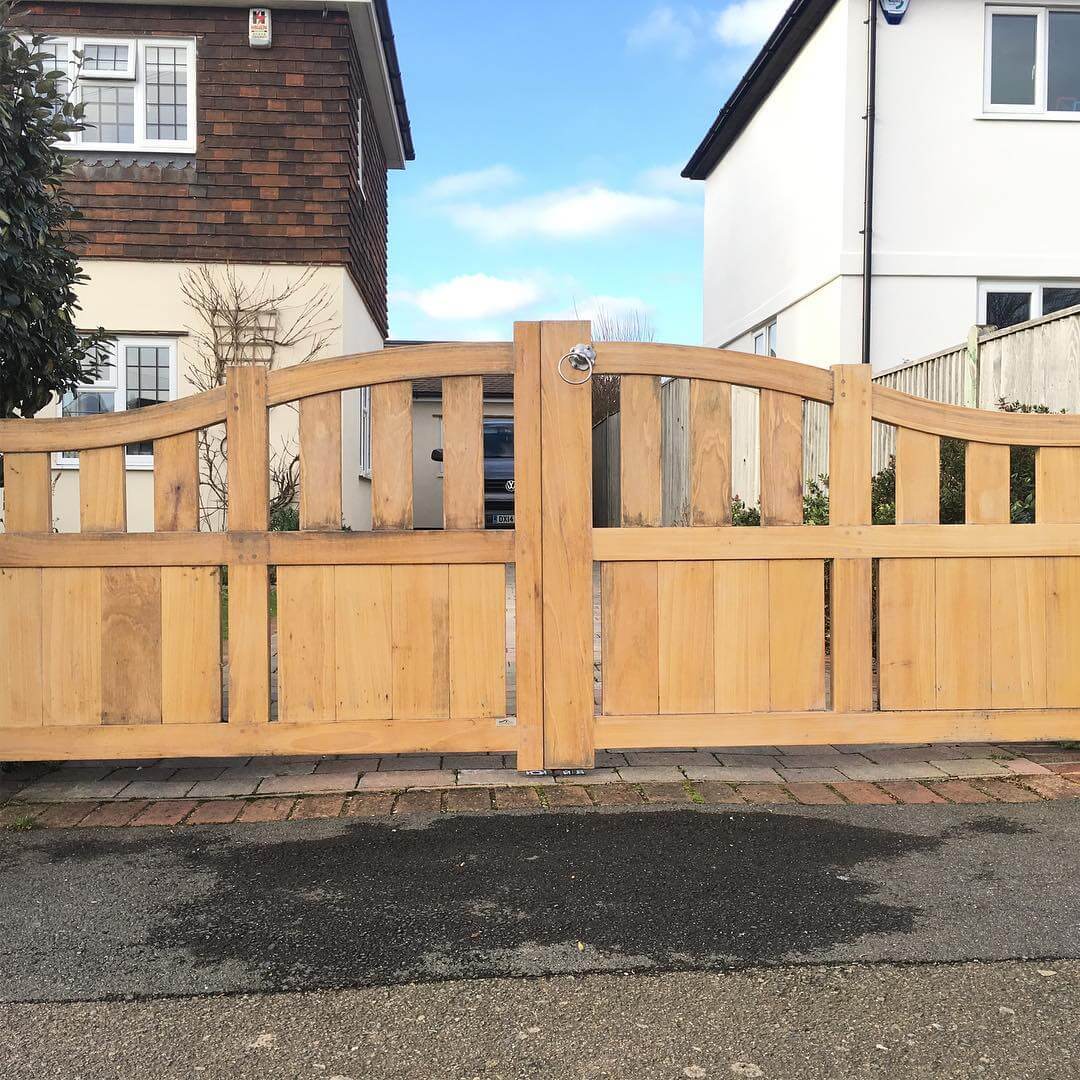
A gentle arch across a double-swing gate adds instant softness and timeless charm—perfect for modern farmhouse, cottage, or traditional architecture. Build it stile-and-rail with tongue-and-groove boards for dimension, then layer in subtle cross-bucks or v-grooves below the mid-rail for that carriage-house nod. Keep the arch shallow (2–6 inches rise) for elegance; too steep feels theme-y. Massive posts (6×6 or 8×8) set below frost line anchor the look and the loads. Upgrade to heavy strap hinges on gudgeons and ball-bearing pins for smooth travel and long life. A hand-rubbed light oak or natural cedar finish keeps it bright, while black ironmongery grounds the composition. For hills, use rising hinges or notch the grade to clear the swing. Automation can stay discreet with in-ground operators or low-profile arms mounted behind the rails. Add pathway lights and an address plaque to complete the arrival sequence. The result: a welcoming, heirloom wood driveway gate that’s as functional as it is nostalgic.
Wood-and-Steel Hybrid: Slim, Strong, and Built for Decades
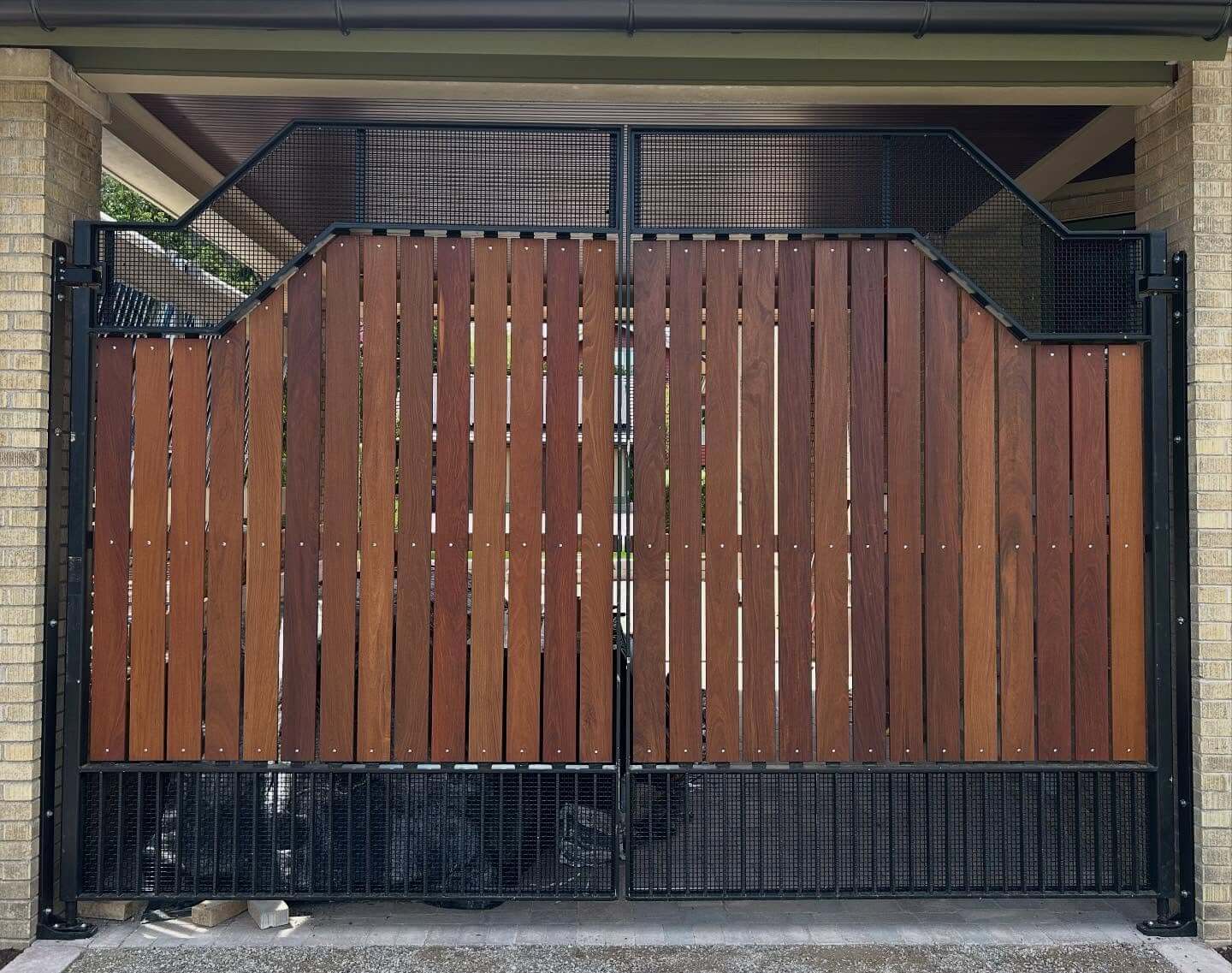
Mixed-material gates solve two big issues: sag and span. A welded, powder-coated steel frame carries the load while wood infill delivers warmth and texture. This combo allows slimmer profiles, tighter reveals, and longer, flatter panels that stay true. Float the wood within the frame with slotted holes and hidden clips so it can expand and contract without splitting. For species, Accoya or thermally modified pine keep movement minimal; ipe or garapa excel in tough climates. On the metal, a satin black or deep bronze powder coat hides dust and pairs with most stains. Choose a vertical infill for classic rhythm or a clean horizontal for contemporary lines; either way, the steel perimeter reads as an intentional shadow line. Pair with steel posts sleeved in wood to visually thicken the uprights without sacrificing strength. This hybrid approach makes automation easy, reduces maintenance cycles, and yields a wood driveway gate that looks artisanal yet runs like industrial equipment.
Chevron and Herringbone Patterns That Catch the Light
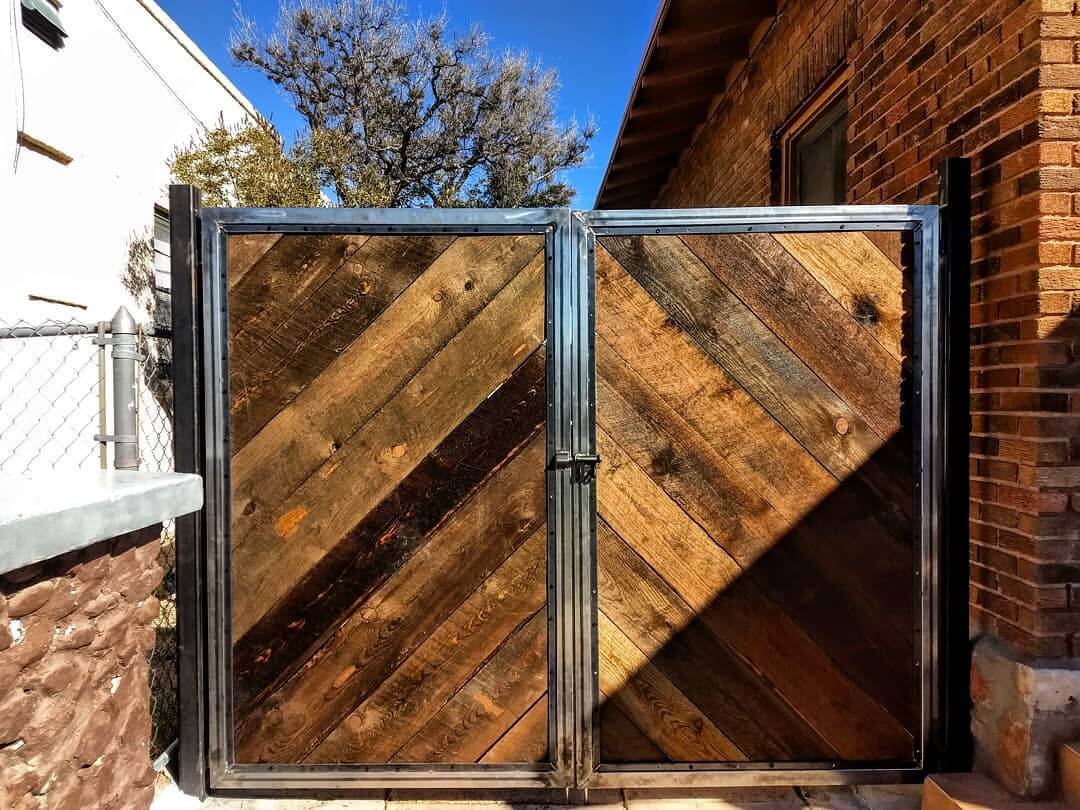
If you want a showpiece, chevron or herringbone turns a gate into custom millwork. The angled pattern throws highlights and shadows all day, making the entry feel dynamic without extra color or hardware. Keep miters tight with a center spine (steel or hardwood) to land your angles and resist cupping. Choose wider boards (1×5 or 1×6) for bold geometry on larger spans; go narrower for townhomes. A border frame cleans up edges and protects end grain; a slim steel reveal between border and field adds precision. Drainage matters—tip the top cap slightly and seal cut ends to prevent water intrusion at miters. Stain strategy: one tone for calm sophistication, two tones for subtle contrast that reads from the street. Because patterns add visual weight, balance them with simple posts and understated hinges. The payoff is a wooden driveway gate with couture vibes—tailored, light-catching, and unforgettable without shouting.
Coastal-Ready Cedar That Weathers to Silver
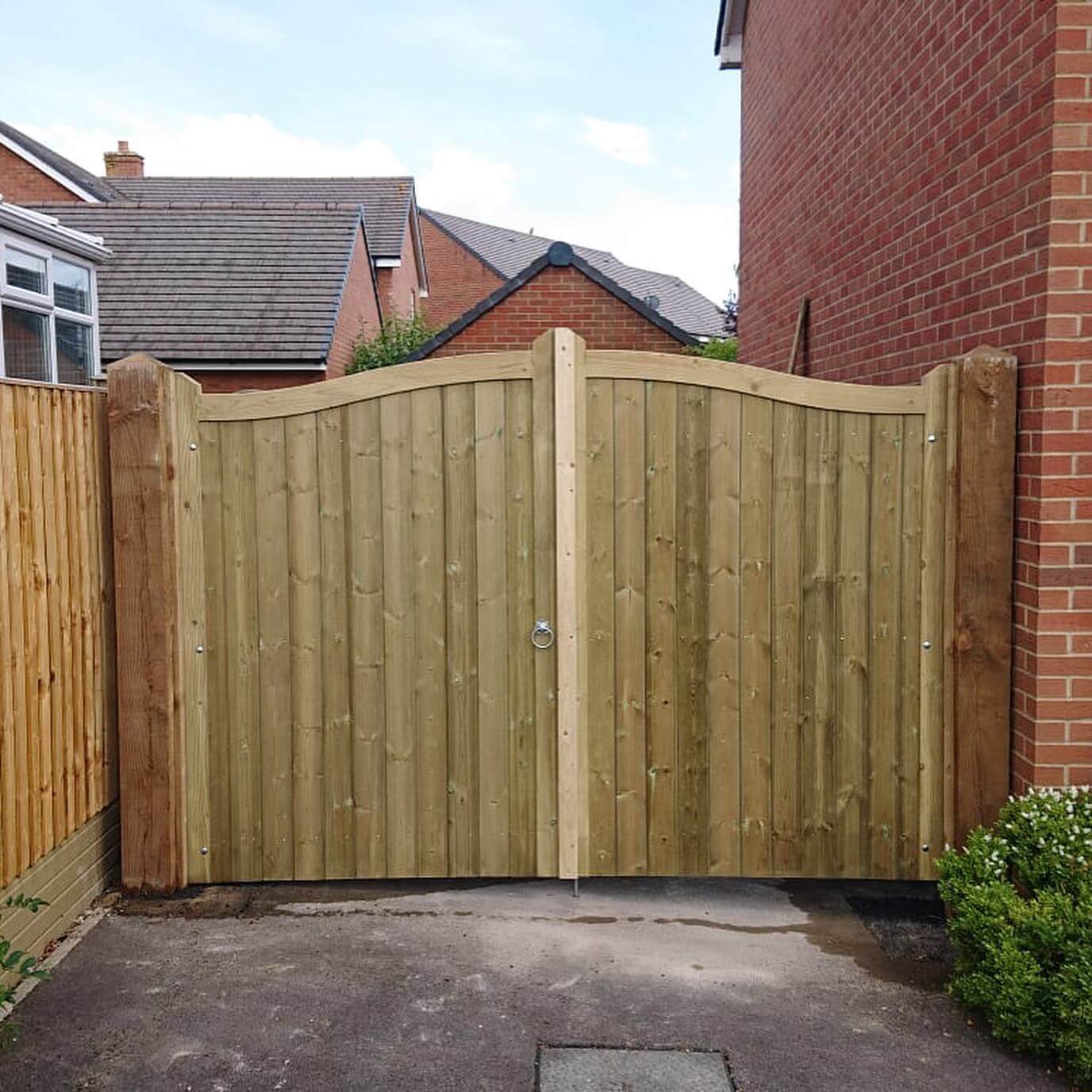
Near the coast—or anywhere with high sun and salt—let cedar be cedar. Designing for a natural gray patina means less maintenance and a gate that ages gracefully with shingle, stone, or white-painted trim. Start with vertical-grain western red cedar for stability, stainless or silicon-bronze fasteners to avoid black streaks, and marine-grade latches. Keep airflow with narrow reveals or a shadowbox layout to reduce wind load; add hidden steel to stiffen wide spans. If you prefer to steer the patina, apply a breathable oil with UV inhibitors annually for a more even silver; otherwise, leave it raw and detail good drip edges, cap rails, and 2–3 inches of ground clearance. Hardware in matte black or brushed stainless stays timeless; avoid shiny chrome. For automation, specify sealed operators and weatherproof enclosures. The result is a coastal wood driveway gate that looks better every season, trading high-gloss upkeep for honest, low-fuss character.
Moody, Dark-Stained Timber with Matte-Black Hardware
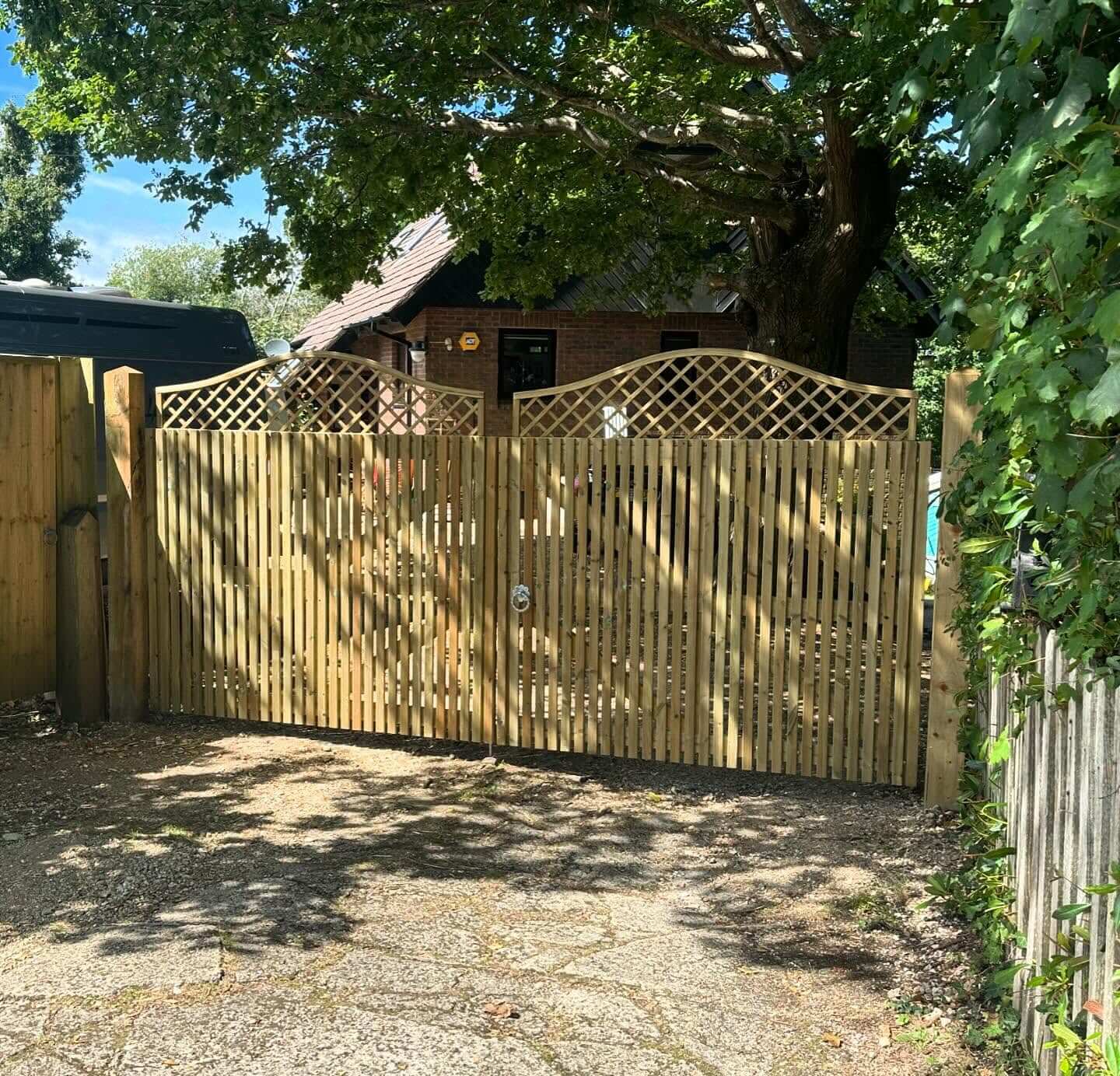
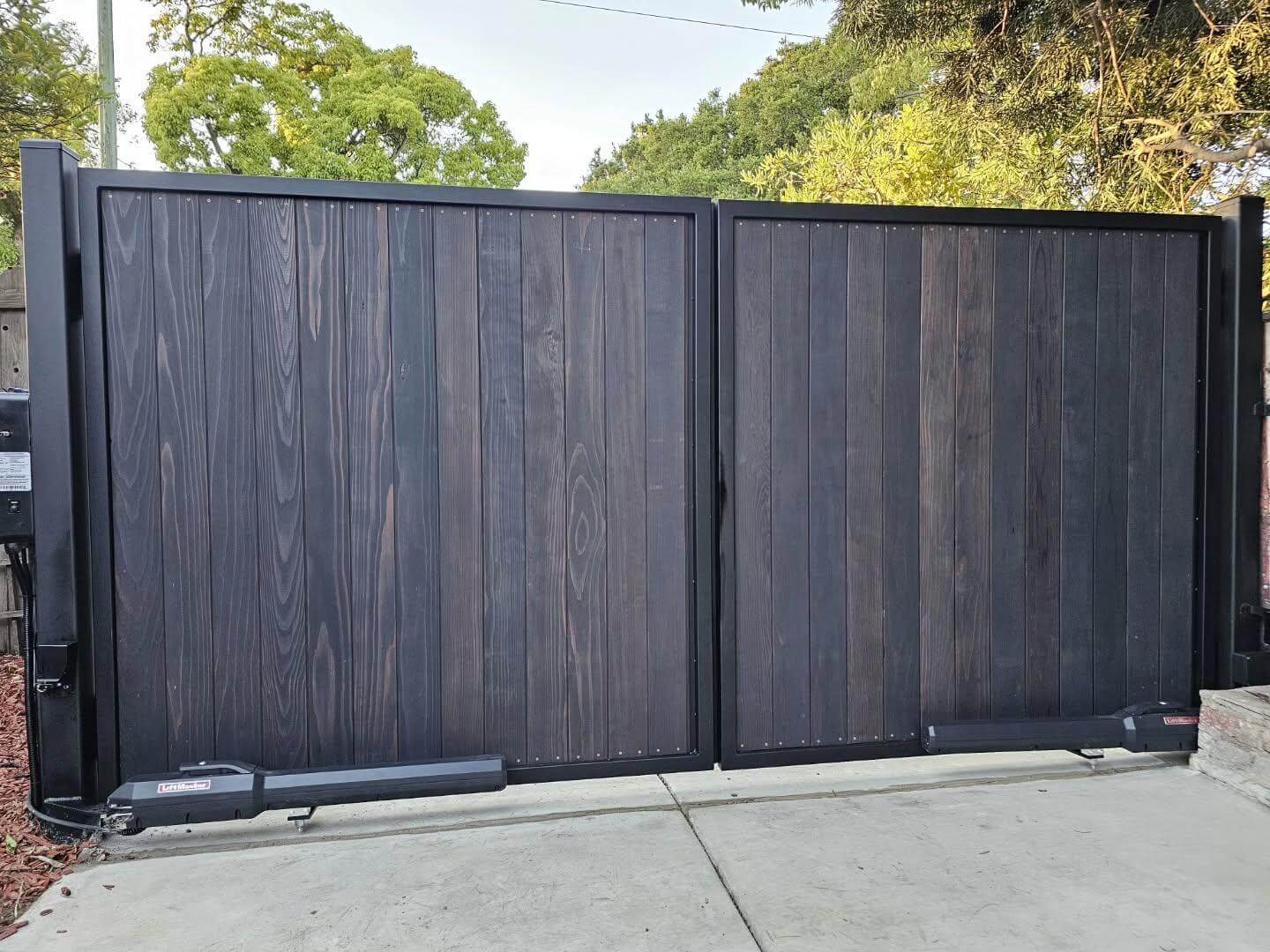
A deep espresso or near-black stain turns a simple profile into a luxe, modern statement. The trick is controlling sheen and depth. Pre-finish every face and cut edge in the shop with a penetrating, UV-blocking oil or hybrid stain; field-touch edges after drilling. Dark hues pair best with clean detailing: flush boards, concealed fasteners, and a minimal steel shadow frame. Matte-black hinges, drop bolts, and a discreet keypad pedestal disappear into the composition, keeping the read monolithic. Contrast the darkness with warm exterior lighting—2700K path lights and a soft backwash on flanking walls deepen the drama at dusk. Choose stable species (Accoya, thermally modified ash) so heat doesn’t telegraph movement. In sunny climates, schedule a light maintenance coat every 18–24 months to avoid chalking. This approach yields a modern wooden driveway gate that feels tailored and architectural—high-impact curb appeal with a surprisingly simple parts list.
One Seamless Line: Align the Drive Gate, Ped Gate, and Fence
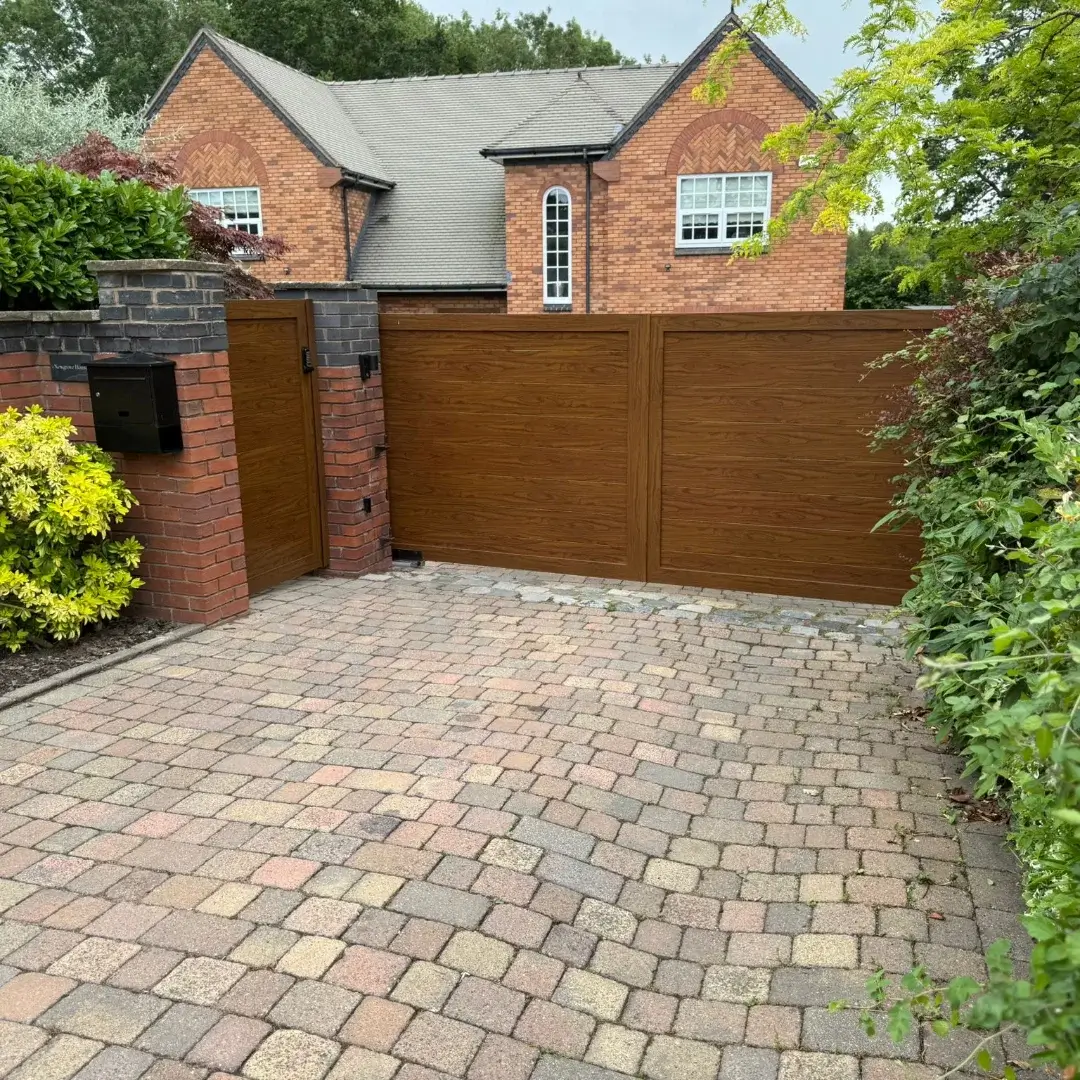
The most polished entrances read as one continuous elevation. Align top rails, slat spacing, and hardware finishes across the driveway gate, pedestrian gate, and adjacent fencing so the frontage feels designed, not pieced together. Keep a consistent datum (often 54–66 inches) and step the fence cleanly with grade. Mirror latch heights and hinge types for muscle memory, then cluster utilities—intercom, keypad, package box, and address numbers—into a tidy service bay near the walk gate. Sightlines matter: position the ped gate where visitors naturally approach, not as an afterthought. If security is key, add a mag lock and door closer to the ped gate and integrate camera views into the main operator. With thoughtful coordination, even a basic horizontal-slat wood driveway gate becomes part of a larger composition that’s efficient to use, easy to maintain, and quietly upscale from every angle.
Updated Ranch Split Gate: Country Roots, Modern Read
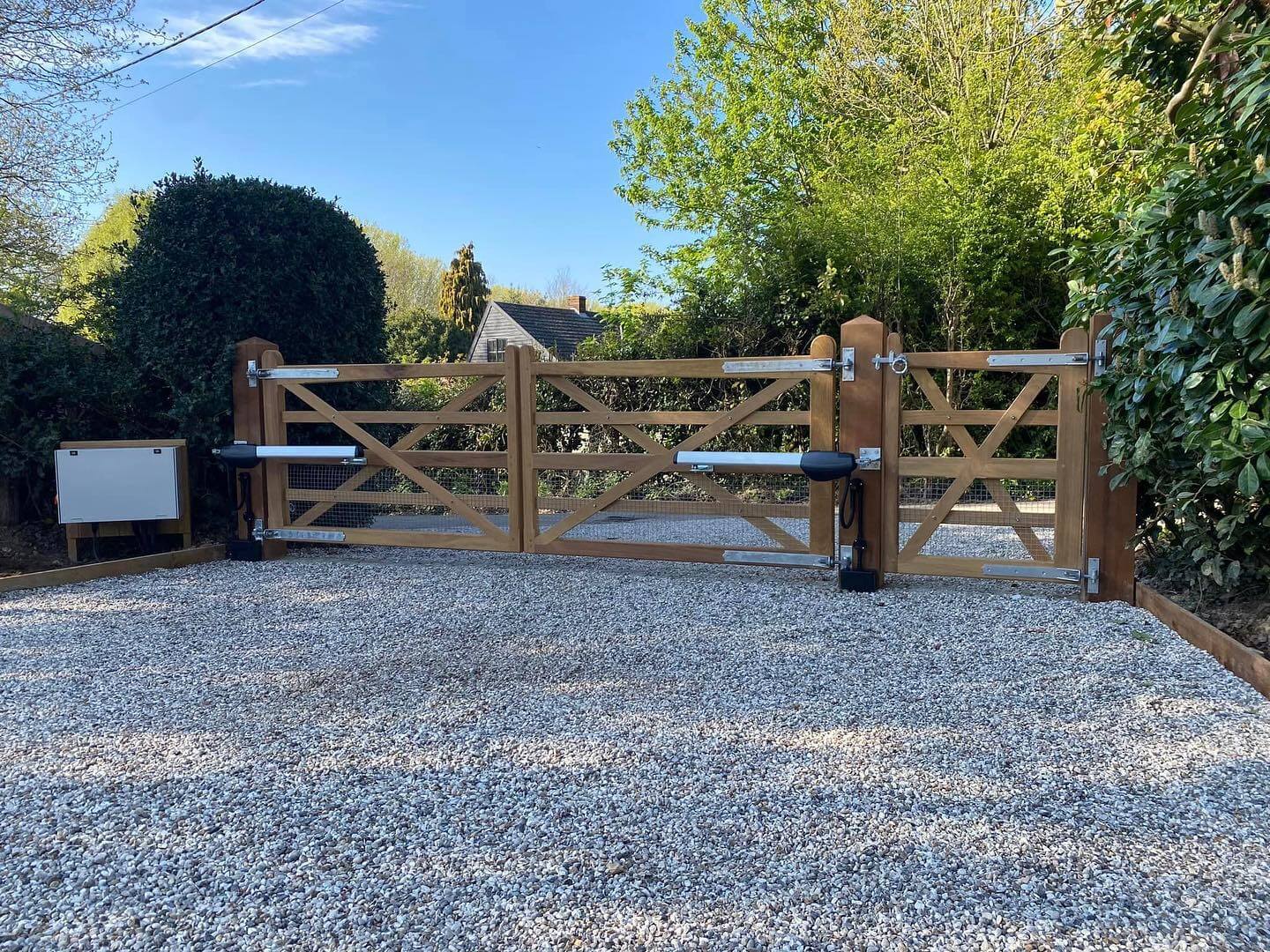
A split, three- or four-rail ranch gate can go from country to contemporary with sharper lines and upgraded materials. Square posts with flat caps, a crisp mid-rail, and tighter rail spacing feel current while still friendly and open. Swap round dowels for rectangular rails in clear cedar or white oak; add a lower kick rail to keep pets in without adding visual weight. If you need more security, line the inside with a discreet welded-wire panel painted black so it vanishes. For long drives, automate with underground operators or compact arms set behind the rails to preserve the open look. A light natural oil keeps the palette breezy; black hardware and a minimalist address plaque ground it. This is a budget-smart wood driveway gate idea that installs quickly, works on sloped rural entries, and nods to tradition without feeling rustic—perfect for modern farmhouse and transitional homes alike.
Get the Fail-Safe Paint Color Playbook (Free PDF)
36 proven colors • 8 ready palettes • trim & sheen guide • printable testing cards.
Vertical Battens with Shadow Gaps for Tall, Tailored Privacy
If you want privacy without the bulk, a vertical batten driveway gate with fine shadow gaps delivers a crisp, custom look that elongates the facade. Tight, even spacing—typically 1/4 to 3/8 inch—lets light breathe through while still screening the view at eye level. Use kiln-dried cedar, Accoya, or thermally modified ash for stability in tall runs, and size your structure accordingly: 6×6 or 8×8 posts set deep with proper drainage keep wind loads under control on automated swing gates. Cap the top with a slim drip-edge and seal all end grain to resist wicking and checking. Hidden stainless fasteners or back-screwing into a rigid frame preserves the clean face. A semi-transparent stain warms the tone and highlights vertical grain, while matte-black strap hinges or concealed hinges keep sightlines minimal. For automation, tune opener torque and add soft-start/soft-stop to reduce racking on slender boards. The result is a refined, architectural gate that reads modern yet complements traditional homes—and it scales beautifully across the driveway, pedestrian gate, and adjoining fence for a unified, high-end entry.
Angled Louver Slats: Airflow Without the Fishbowl
A louvered wood driveway gate solves the classic privacy-vs-breeze dilemma. Set the slats at a 35–45° angle to block sightlines from the street while channeling airflow across courtyards and garages. The angled blades reduce wind “sail” pressure compared to solid infill, which helps operators work smoother and quieter in gusty or coastal zones. Choose clear-grade cedar, sapele, or white oak and keep louvers consistently spaced with CNC-cut side rails or adjustable carriers for perfect reveal lines. A slim steel or engineered timber frame prevents creep and keeps the louvers true over the seasons. For sunny drives, aim the angle downward toward the street to limit glare and maintain privacy on slopes. Finish with UV-stable oil or a breathable exterior stain; louvers shed water quickly, so maintenance stays light. Pair with low-profile automation, photo eyes, and safety edges, since fingers love louvers—UL 325 compliance matters. Done right, louvers feel resort-level and pair naturally with stucco, stone, or wood-clad piers, giving your entry a cool, coastal calm without giving up seclusion.
Charred Wood (Shou Sugi Ban) for Drama and Durability
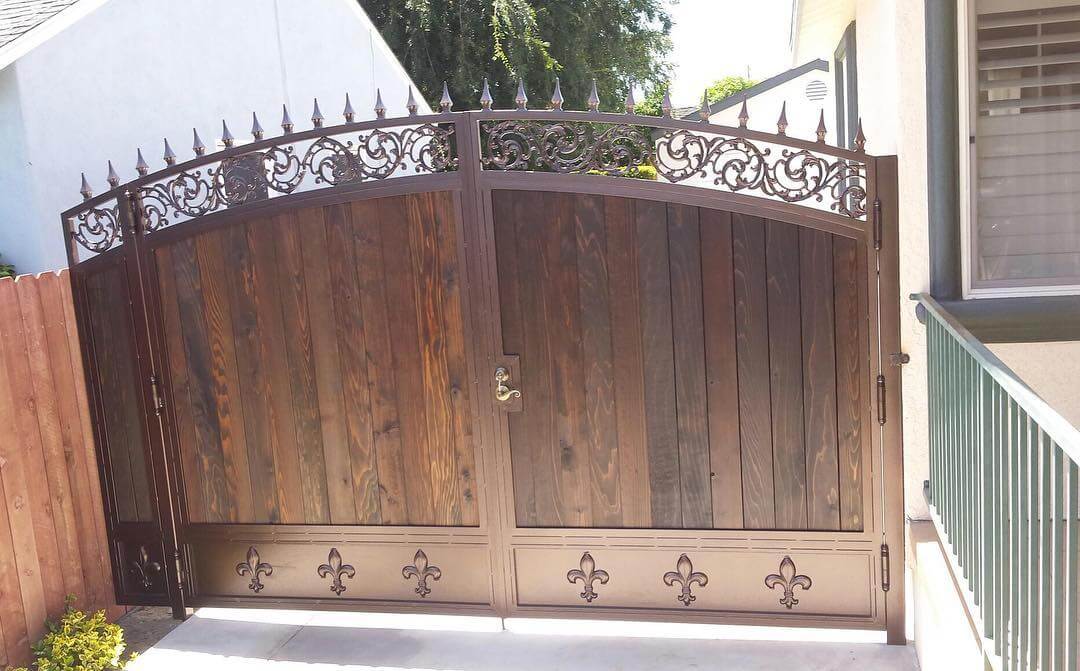
For a bold, low-maintenance statement, charred wood—often called shou sugi ban—turns your driveway gate into a sculpture. The controlled burn closes the wood’s cells, improving resistance to insects, rot, and UV while producing a deep graphite tone that plays beautifully with black hardware and warm landscape lighting. Choose cedar or cypress for a consistent char; specify your finish level from wire-brushed (visible grain) to alligator char (heavy texture). Seal with penetrating oil to lock in the soot and reduce rub-off, and prefinish all faces and edges before assembly to stabilize color. A rigid frame is essential: char is a surface treatment, so start with straight, properly dried stock and stainless fasteners. This approach excels on modern and Japandi homes, where the gate’s shadow-rich surface offsets stucco, concrete, and gravel. If you’re in a wildfire-prone area, consult local code and consider fire-retardant topcoats. Keep the rest of the design quiet—slim reveals, hidden latches, and a flush pedestrian gate—so the material can lead. Over time, the patina only gets better.
Bi-Fold Swing Panels That Clear Short Driveways
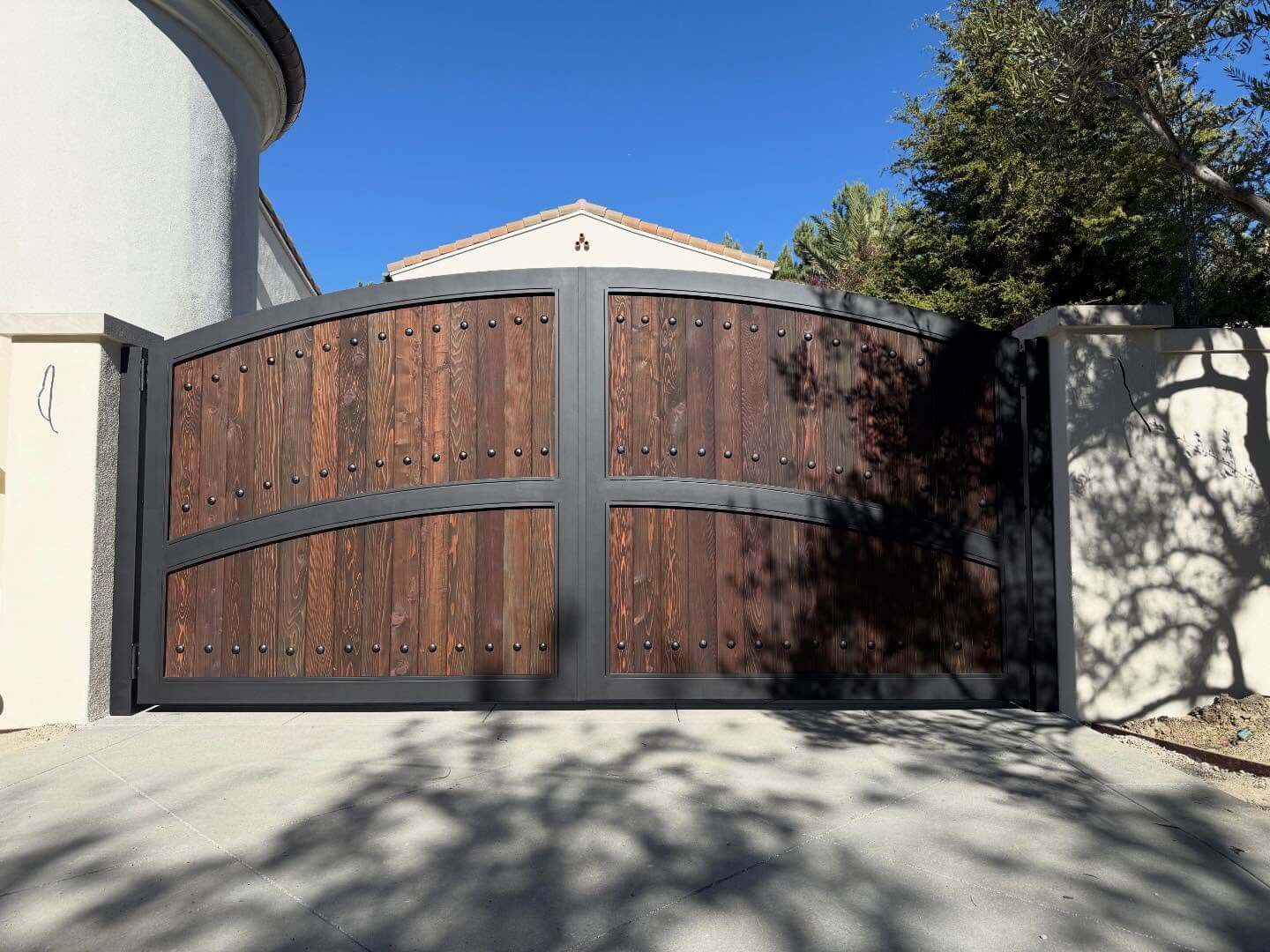
When your apron is short or the drive rises quickly from the street, a bi-fold wood driveway gate brings swing convenience without the wide arc. Each leaf folds in half, cutting the swing radius dramatically so cars aren’t forced to wait in traffic. Use a robust center hinge and offset pivots to keep panels aligned under load; concealed floor pins or magnetic hold-opens tame wind on breezy days. A continuous head rail or discreet ground track (where conditions allow) helps guide travel and protect against sag. For automation, choose an operator designed for bi-fold motion with soft-start/stop and integrated entrapment protection. Drop bolts, an astragal, and a positive latch keep leaves tight and rattle-free. Visually, bi-folds love vertical battens or narrow horizontal slats—the smaller panel width reads intentional, not compromised. Finish with a mid-tone stain to disguise joint lines, and match the fold rhythm to nearby fence bays for cohesion. It’s a smart, upscale solution when slope, setbacks, or HOA rules limit a standard swing.
Cantilever Wood‑Clad Slider: No Ground Track, No Clogs
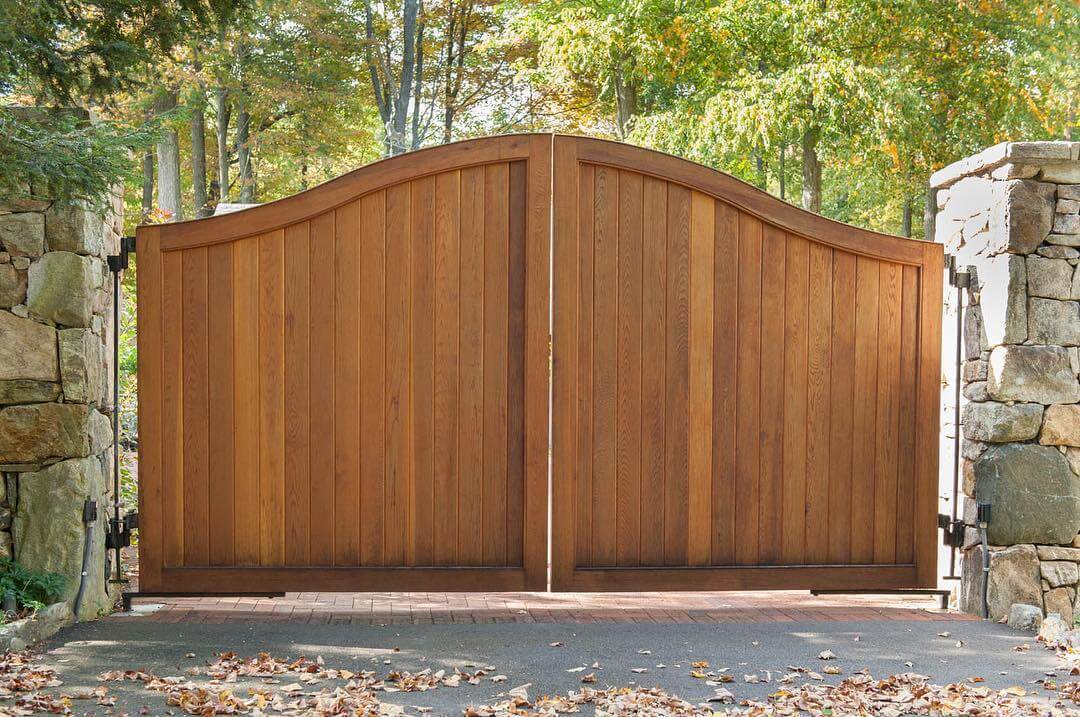
If snow, gravel, or oak leaves constantly jam ground tracks, a cantilever sliding driveway gate is the low-maintenance upgrade. The gate “floats” on hidden rollers anchored to stout posts, so nothing touches the driveway surface. That means fewer trip hazards, cleaner winter operation, and simpler drainage. Structurally, a cantilever needs a counterbalance tail—typically 40–50% of the clear opening—and a rigid internal spine to control deflection. Many builders use a slim steel subframe and then clad both faces in cedar, ipe, or Accoya for a warm, all-wood look. Keep board layout light to reduce weight; mixed-width planks or vertical battens maintain stiffness with less mass. Add a catch post, soft-close, safety photo eyes, and edges to meet UL 325. For sloped sites, grade the bottom rail to follow the driveway while holding the top line level for a tidy silhouette. A breathable oil or high-build exterior stain protects the cladding, and removable access panels keep rollers serviceable. The result feels effortless: modern, quiet, and immune to debris.
Discreet Pedestrian Door Built Into the Drive Gate
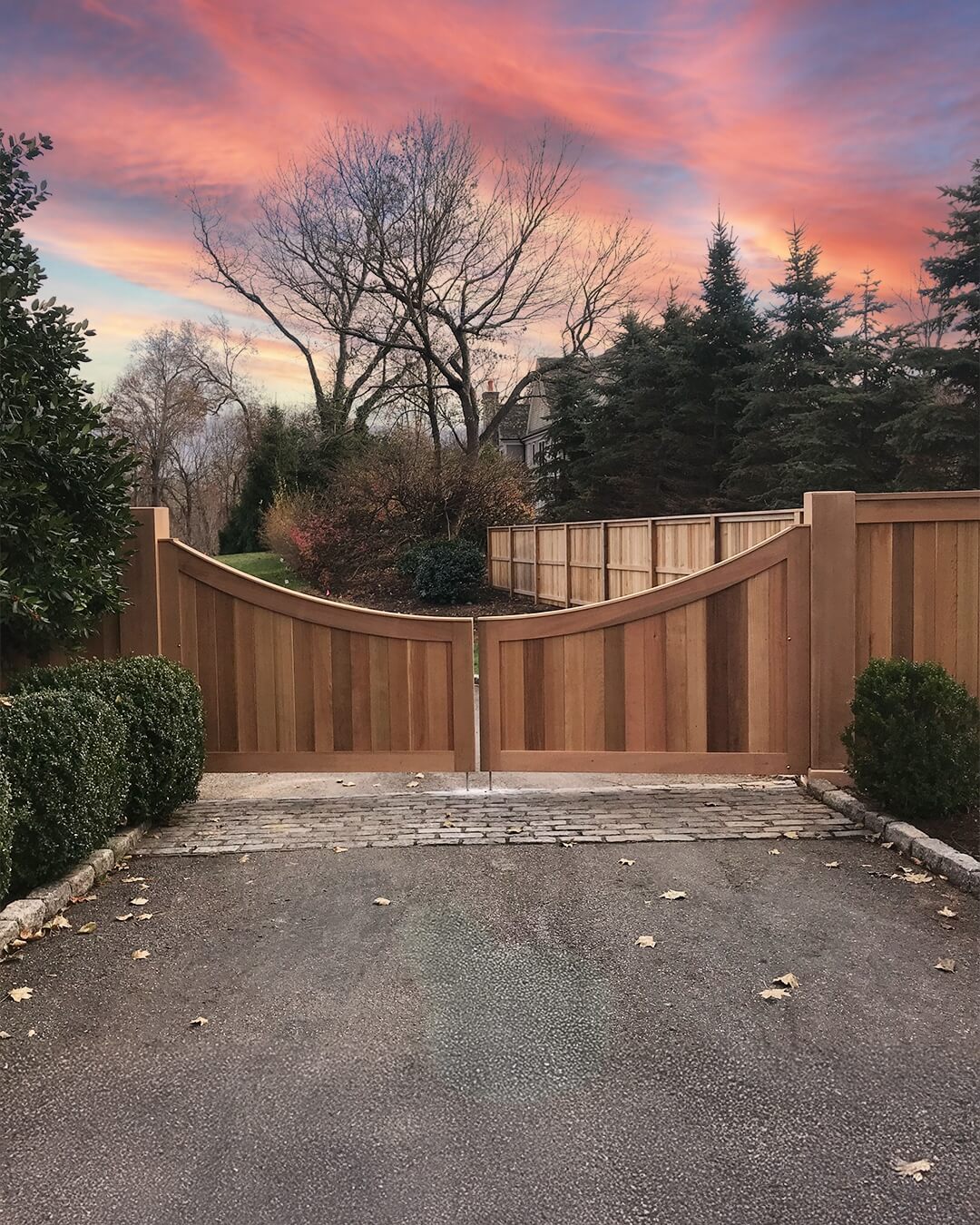
A concealed pedestrian gate (often called a wicket door) built into the main driveway leaf gives you daily convenience without cluttering the facade with extra openings. It lets packages, dog walks, and quick errands happen without cycling the operator or exposing the whole property. To execute cleanly, align the stile widths so the seam disappears into your plank pattern, and use a flush threshold with proper drainage to avoid toe-stubs and water intrusion. A multipoint lock, self-closer, and magnetic contact tie into your access control for secure, logged entry. Weather seals, a recessed pull, and a continuous hinge keep the panel quiet and tight. On the automation side, interlock the wicket so the drive gate won’t move if the pedestrian door is open. Lighting and a keypad at natural hand height finish the user experience. This strategy shines on narrow lots and modern elevations where one strong, uninterrupted plane of wood looks intentional—and still works beautifully for everyday life.
Mixed‑Width Planks for a Custom, Crafted Texture
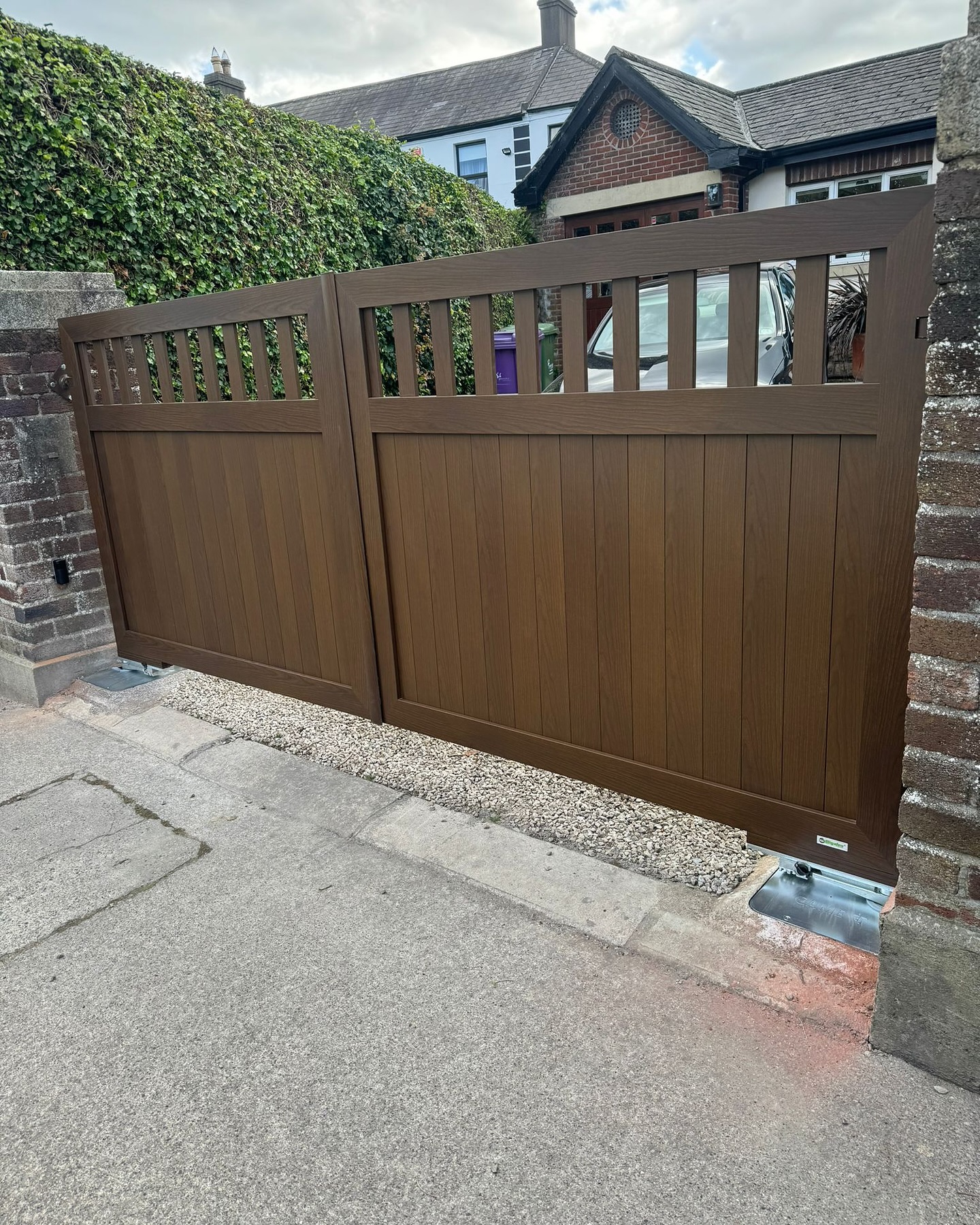
If uniform slats feel flat, vary board widths to add rhythm and craftsmanship to your wood driveway gate. Alternating 3-, 4-, 6-, and 8-inch planks creates a bespoke surface that catches light and disguises seams on wide spans. It’s also smart material economics: you can nest widths from standard stock to reduce waste while hand-selecting grain for feature boards. Keep reveals consistent with spacers, back-screw into a rigid frame, and stagger butt joints so no two align vertically—this prevents telegraphing and adds strength. For a refined finish, run a micro-bevel on edges to emphasize the pattern, or go tight shiplap for a near-seamless look that still moves with the seasons. Medium stains (teak, chestnut, or warm gray) balance color variation and resist UV fade. Pair with minimal hardware and a slim mail slot or intercom panel to keep the field of wood front-and-center. This is the “tailor-made suit” of gate faces—timeless, tactile, and unmistakably custom.
Frosted Clerestory Windows for Safer Sightlines
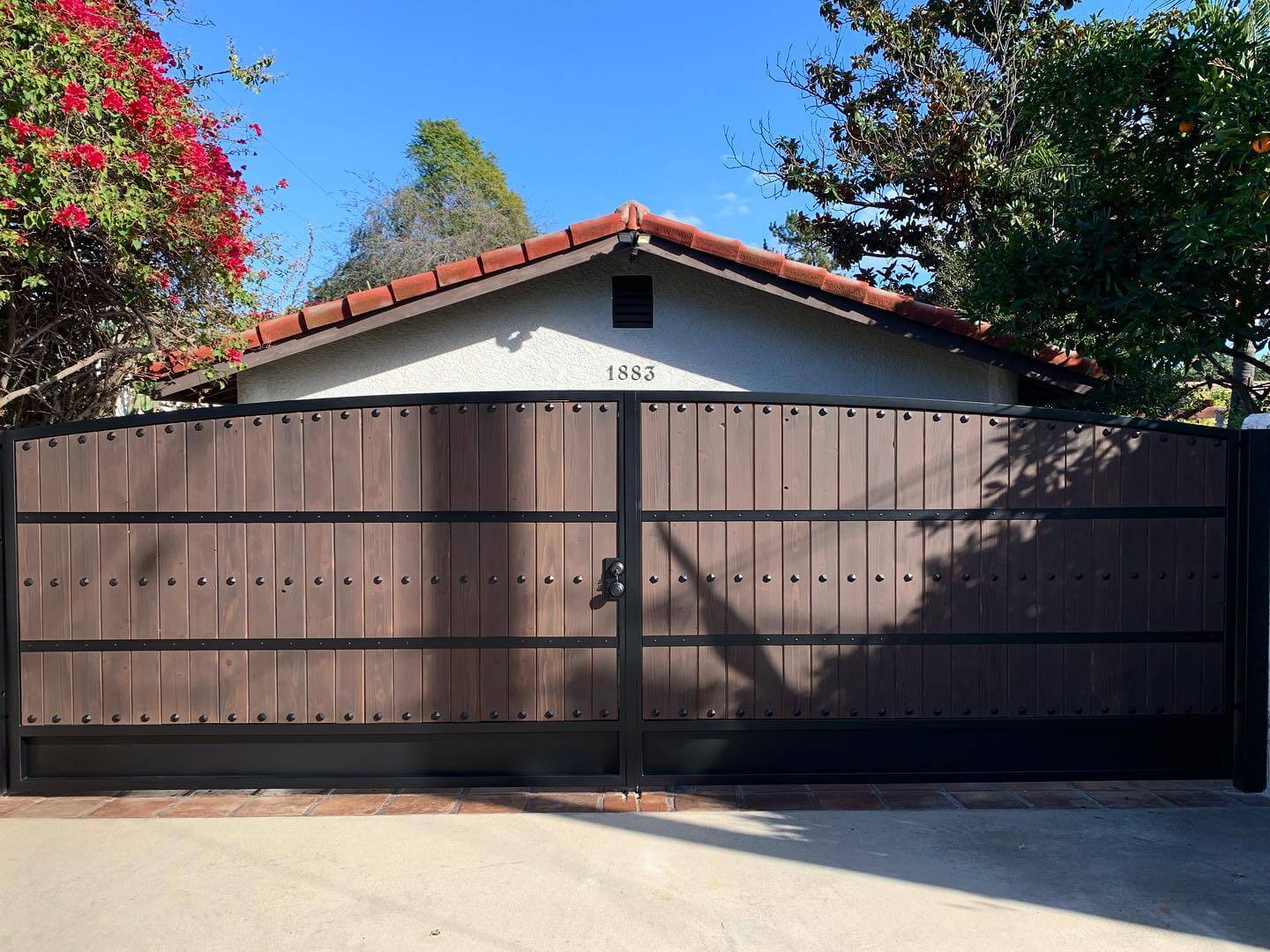
A wood gate with a narrow band of frosted or reeded glass at eye level gives you outgoing visibility without sacrificing privacy. The clerestory strip lets drivers see pedestrians, pets, and cross-traffic as they exit, a real safety upgrade on busy streets and hedged corners. Use laminated, tempered glass (or UV-stable acrylic) captured in weather-sealed muntins, and slope the sill for drainage. Keep the glazing tall enough to be useful—typically 6–10 inches—while maintaining a solid wood field below for security. The look cues contemporary architecture, but it also softens heavy timber gates by introducing light and a subtle sheen at dusk. Integrate address numbers or a backlit intercom panel along the same datum for a tidy, horizontal read. For finish, contrast is king: rich, mid- to dark-stained wood around a milky glass band and matte-black hardware yields instant curb appeal. Your operator’s soft-start helps keep the glass rattle-free, and periodic seal checks are the only extra maintenance.
Timber Portal: Gate, Beam, and Piers as One Architecture
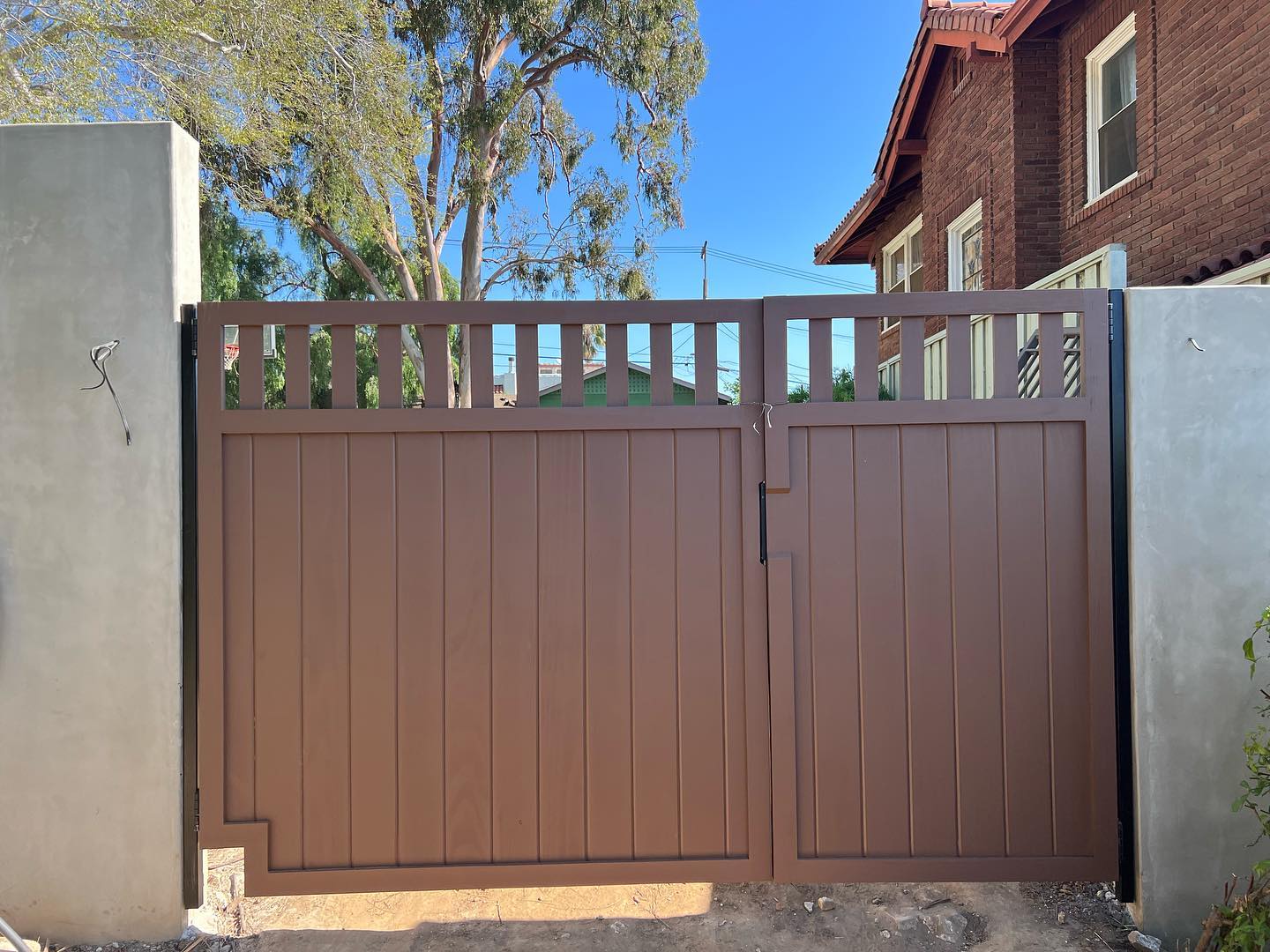
Turn the driveway into an arrival moment by framing your wood gate with a timber beam and substantial piers. This “portal” approach makes the entry feel intentional and tied to the home’s architecture—especially when you echo siding species, stone, or stucco textures. Glulam or reclaimed timbers span cleanly and resist twist; anchor into masonry or engineered wood posts with concealed knife plates for a floating effect. The portal neatly hides conduits for lighting, cameras, keypads, and mailbox power, keeping the gate face uncluttered. Scale matters: aim for a clear opening that matches your garage bay rhythm and a header height that clears SUVs with room for snow stacks or bike racks. Low-voltage, down-firing fixtures wash the wood at night without glare, and laser-etched numbers on a wood or metal plaque finish the composition. Beneath it all, frost-depth footings, drainage, and isolation from sprinkler overspray protect your investment. It’s architecture, not just hardware—and it elevates even simple slat designs.
Smarter Wood Gate Automation: Quiet, Safe, and Backup‑Ready
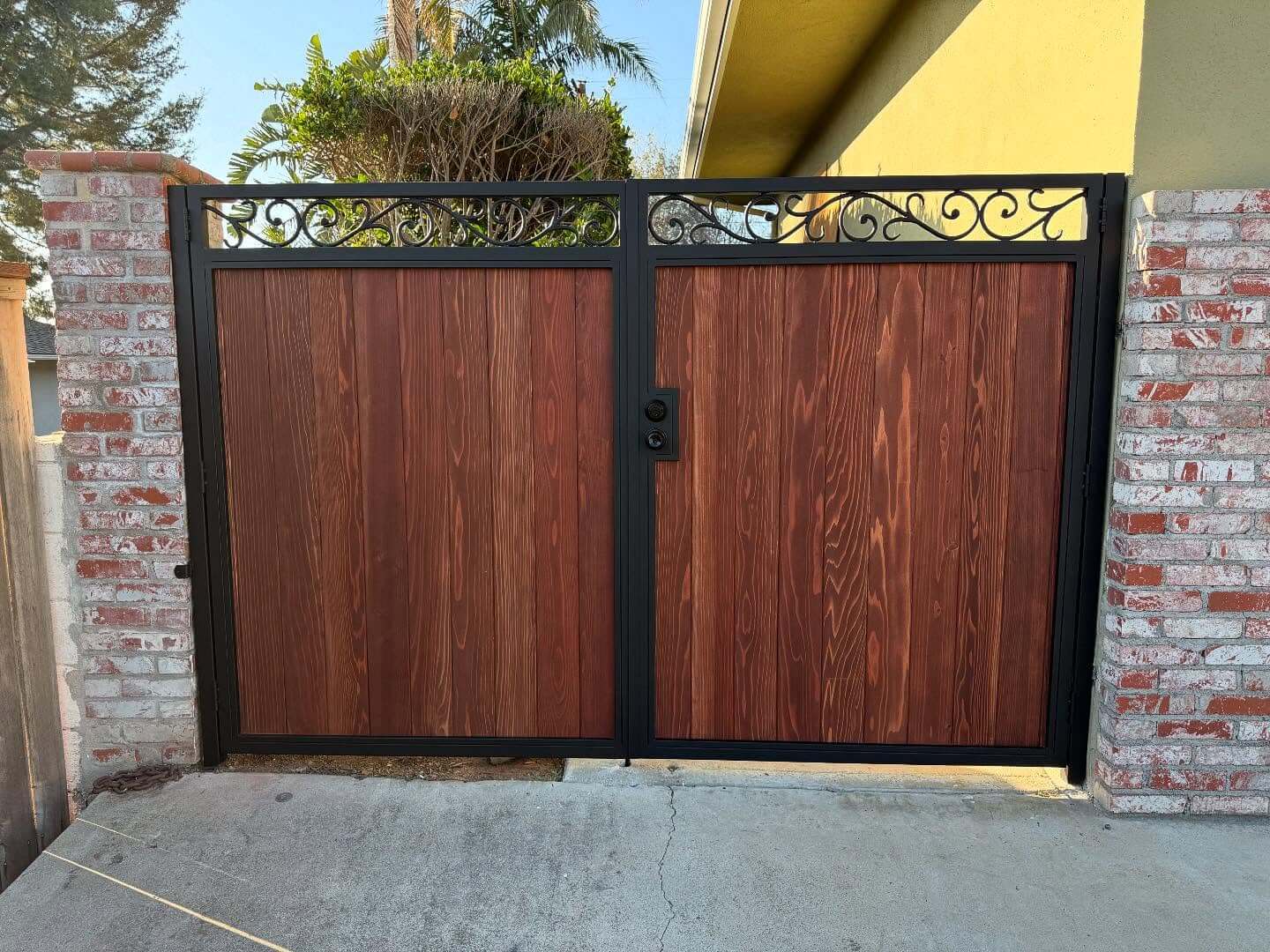
The best wood driveway gate is the one you love using. Quiet, dependable automation seals the deal. Choose DC operators with soft-start/soft-stop to reduce stress on timber frames, and add a battery backup (or solar kit with south exposure) to keep things moving during outages. Layer in safety: photo eyes, monitored edges, proper entrapment zones, and UL 325–compliant controls. Ground loops or slim surface-mount sensors open for outgoing cars without hunting for remotes; keypad, NFC, or app access handles guests. For real convenience, pair geofencing with a manual release you can reach from outside the property. Cold climate? Use low-temp lubricants and, for sliders, keep rollers above the snow line; for swing gates, prevent ice buildup at stops. Program partial opens for pedestrians, and tuck the control box where it’s serviceable but discreet. Finally, schedule annual service—hinge tension, fastener checks, finish touch-ups—to keep the wood looking sharp and the system whisper-quiet. Smart, safe, and seamless is the new curb appeal.
Radius‑Top Estate Gate: A Soft Curve with Serious Presence

An arched or radius‑top wood driveway gate adds instant stature without feeling severe. The subtle rise softens a wide entry, frames the view of your home, and reads “custom” from the curb. Aim for a gentle arc—often a 6–12 inch rise over each leaf—so the curve feels tailored, not cartoonish. Build the top rail as a laminated radius for strength, pair it with vertical tongue‑and‑groove or tight slats for privacy, and hide a steel subframe inside to prevent sag. Choose stable species like Accoya, sapele, or white oak if you love a clear finish; western red cedar excels under semi‑transparent stains. Automation matters with arches: low‑profile arms or in‑ground operators keep hardware discreet, while ball‑bearing hinges and adjustable stops protect the radius from racking. Finish the look with scaled posts, cap details, and side fences that echo the arc. Whether your architecture is traditional, modern farmhouse, or coastal cottage, a radius‑top gate delivers presence, security, and everyday ease—proof that a single graceful curve can elevate the entire facade.
Get the Fail-Safe Paint Color Playbook (Free PDF)
36 proven colors • 8 ready palettes • trim & sheen guide • printable testing cards.
Slim Steel Frame, Warm Wood Infill for Lasting Precision
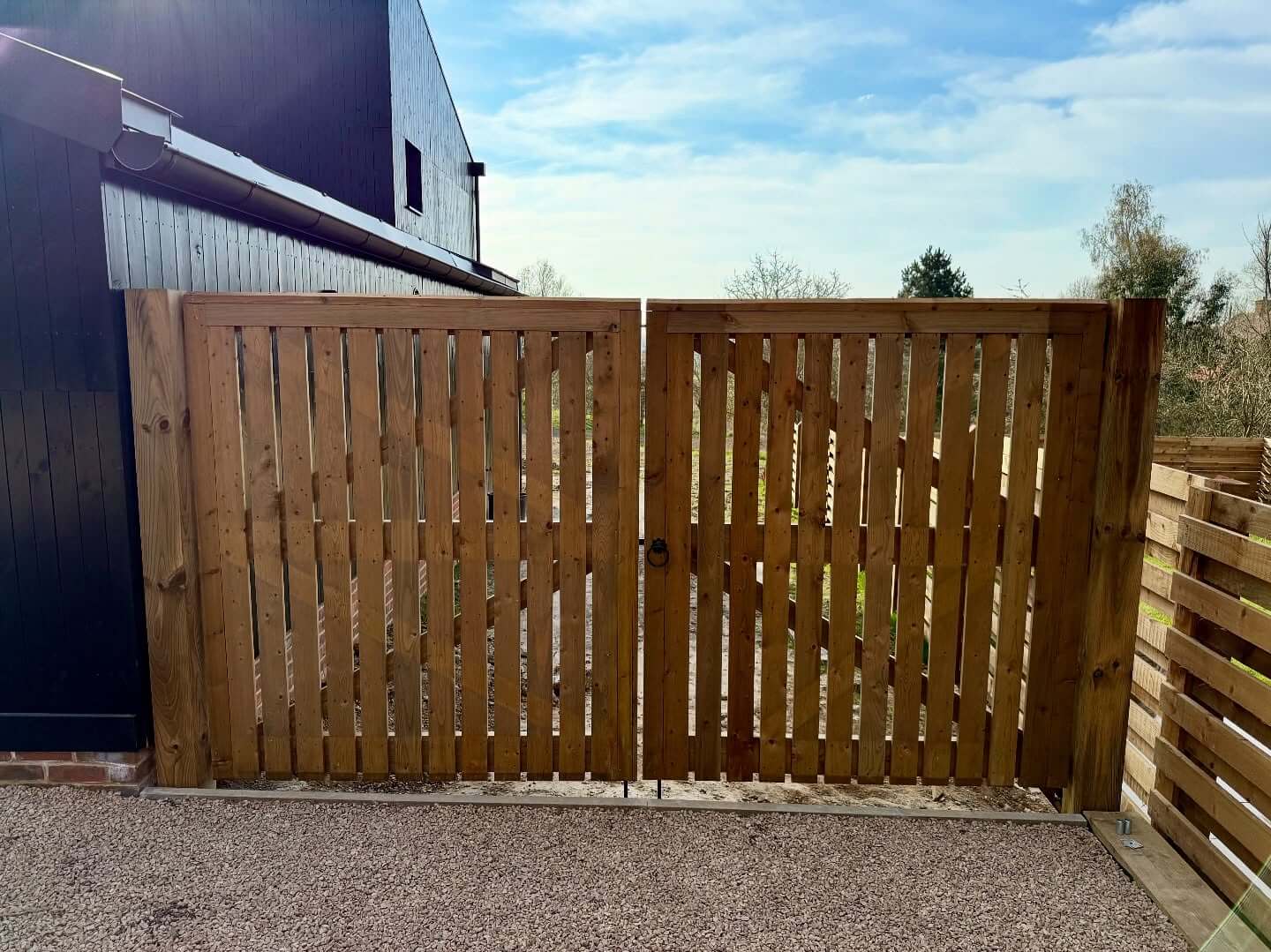
For a crisp modern profile that stays straight for decades, pair a slim powder‑coated steel frame with wood infill. The metal skeleton handles span, wind, and automation forces; the cedar, ipe, or Accoya planks deliver the warmth and texture you actually want to see. Keep the frame sightline minimal—think narrow perimeter reveals—so the wood reads continuous from the street. Fasten boards from the back with stainless screws and slotted holes to allow seasonal movement, and use hidden spacers for perfect, repeatable gaps. Galvanize, then powder‑coat the frame for corrosion resistance; spec 304/316 stainless hardware if you’re near the coast. This hybrid approach shines in both swing and sliding gates, especially on wider drives where pure wood can creep out of plane over time. Its clean geometry pairs beautifully with horizontal slats, mixed‑width patterns, or even chevron infill. The result: a wood driveway gate that feels bespoke and natural, yet operates with the precision of engineered steel—low maintenance, high curb appeal, and purpose‑built for daily use.
Chevron Centerpiece: Herringbone Planks with a Modern Edge
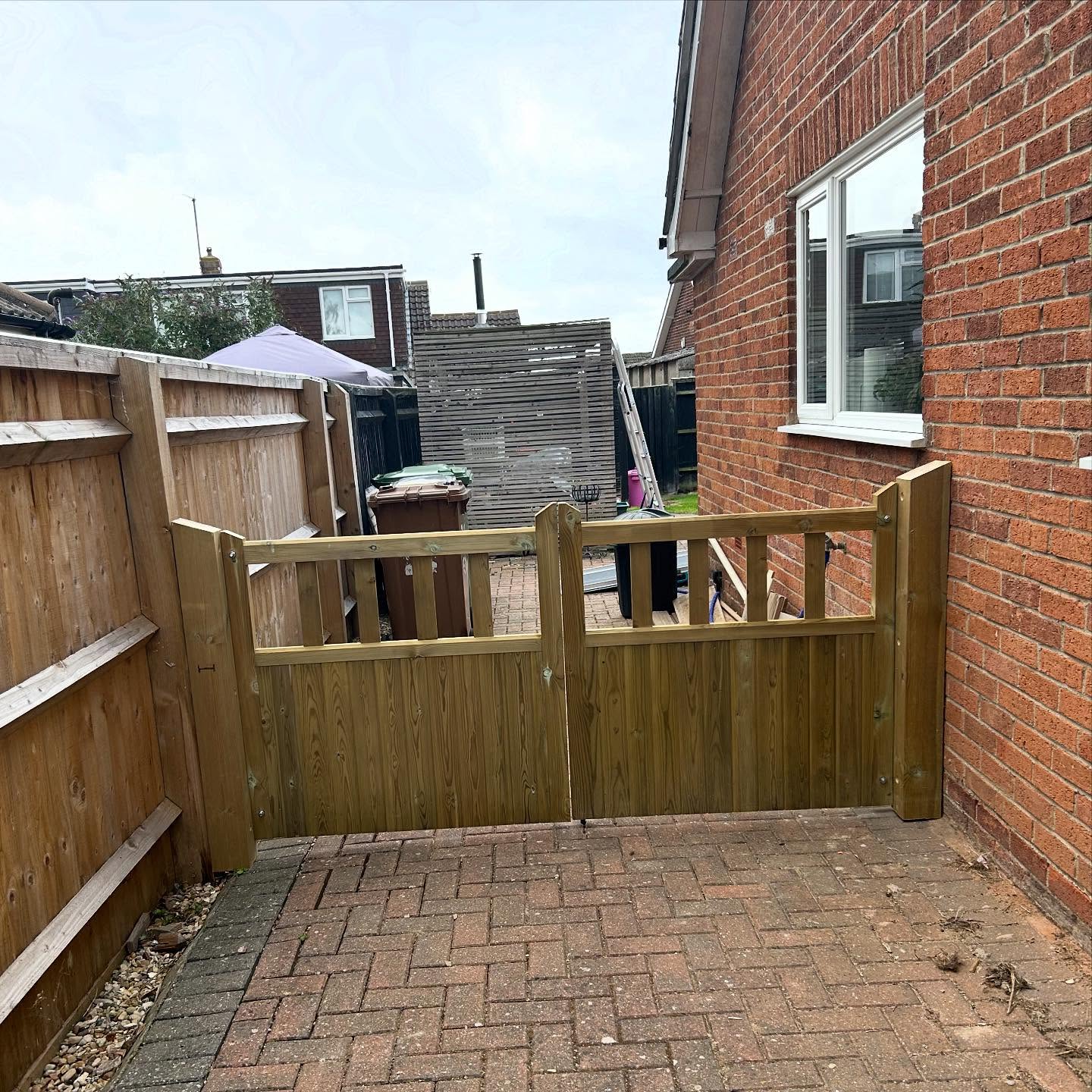
Chevron or herringbone planking turns your driveway gate into a graphic focal point that still reads classic. The “V” pattern pulls the eye inward—great for framing an entry—and can visually widen or heighten the gate depending on angle. Set your boards at 30–45 degrees for a dynamic look; mirror the pattern across double leaves so the apex lands on center. Use a continuous spline or steel center stile to keep seams tight and flat, and micro‑bevel the board edges to shed water rather than trap it. For a refined modern take, mix board widths or run a two‑tone stain—natural in the field, darker on the perimeter frame. Prefer more privacy? Choose tongue‑and‑groove or board‑on‑board at the angle. Chevron shines on sliders too, where the diagonal motion amplifies the pattern’s energy. With species like cedar or Accoya and a UV‑smart finish, the design stays crisp while the wood weathers gracefully. It’s geometry with a job: elevate curb appeal, hide the yard, and greet guests with craftsmanship.
Weathered Driftwood Gray: Coastal Calm, UV‑Smart Finish
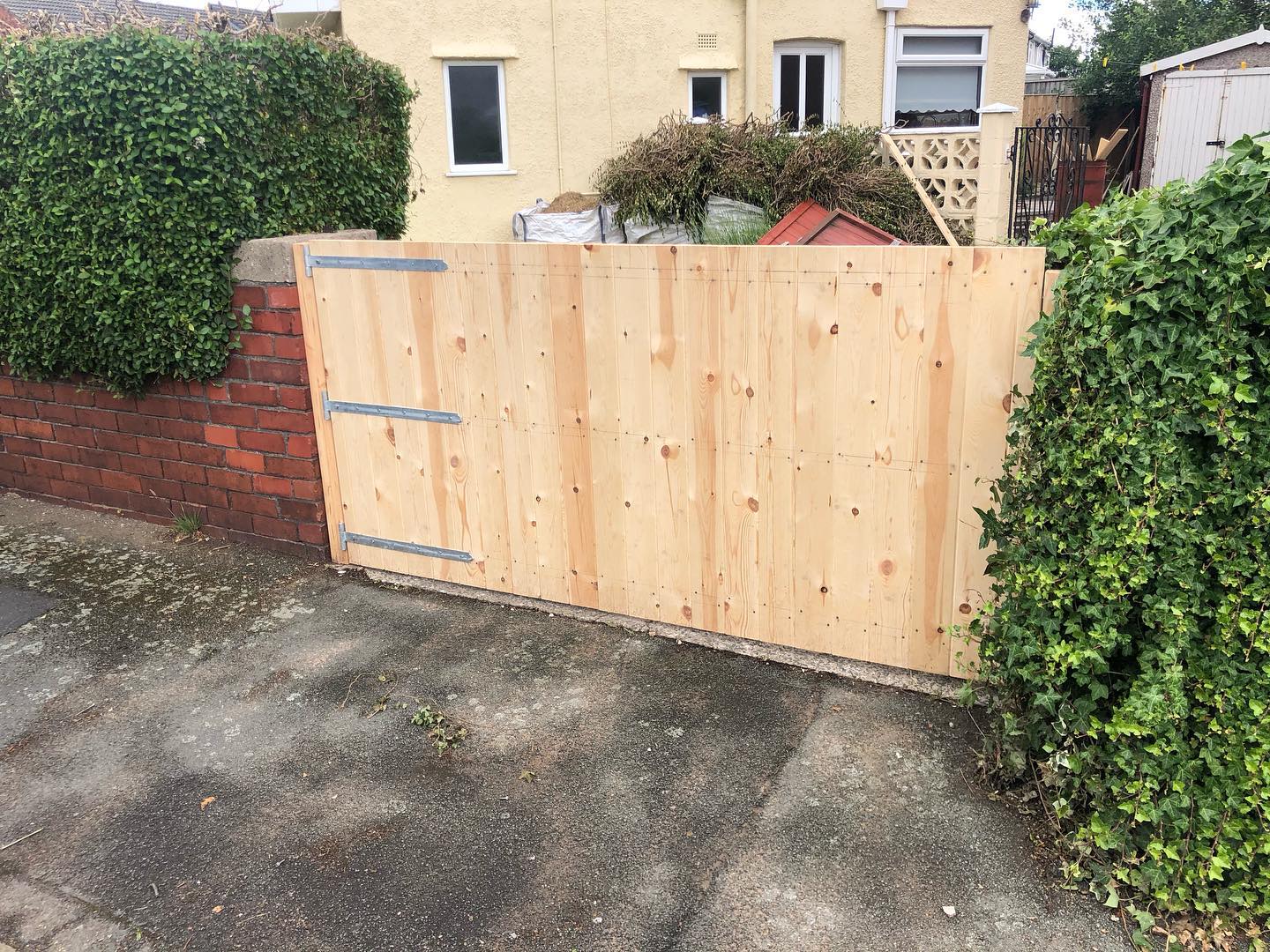
Love that sun‑washed, beach‑house vibe? You can get a driftwood‑gray wood driveway gate without waiting years—or sacrificing durability. Start with a naturally rot‑resistant species (cedar, redwood, Accoya), sand to an even grain, and back‑seal all faces. Then apply a controlled “pre‑weathered” system: gray‑toned penetrating stain, bleaching oil, or a reactive finish that neutralizes warm tannins while adding UV blockers. The trick is protection without plastic shine. Look for finishes with trans‑oxide pigments and re‑coat every 2–3 years in full sun. Near salt air, upgrade hardware to 316 stainless and choose hot‑dip‑galvanized, powder‑coated operators. Consider a blackened or pewter finish on hinges and latches to complement the gray, and keep slat spacing tight for privacy while allowing subtle airflow. Pair with native grasses, lime‑washed piers, or pale pavers to complete the coastal palette. You’ll get calming, contemporary curb appeal and a finish that stays handsome as it ages—proof that low‑contrast color can still make a high‑impact entrance.
Built‑In Address, Mail, and Intercom: A Gate That Greets
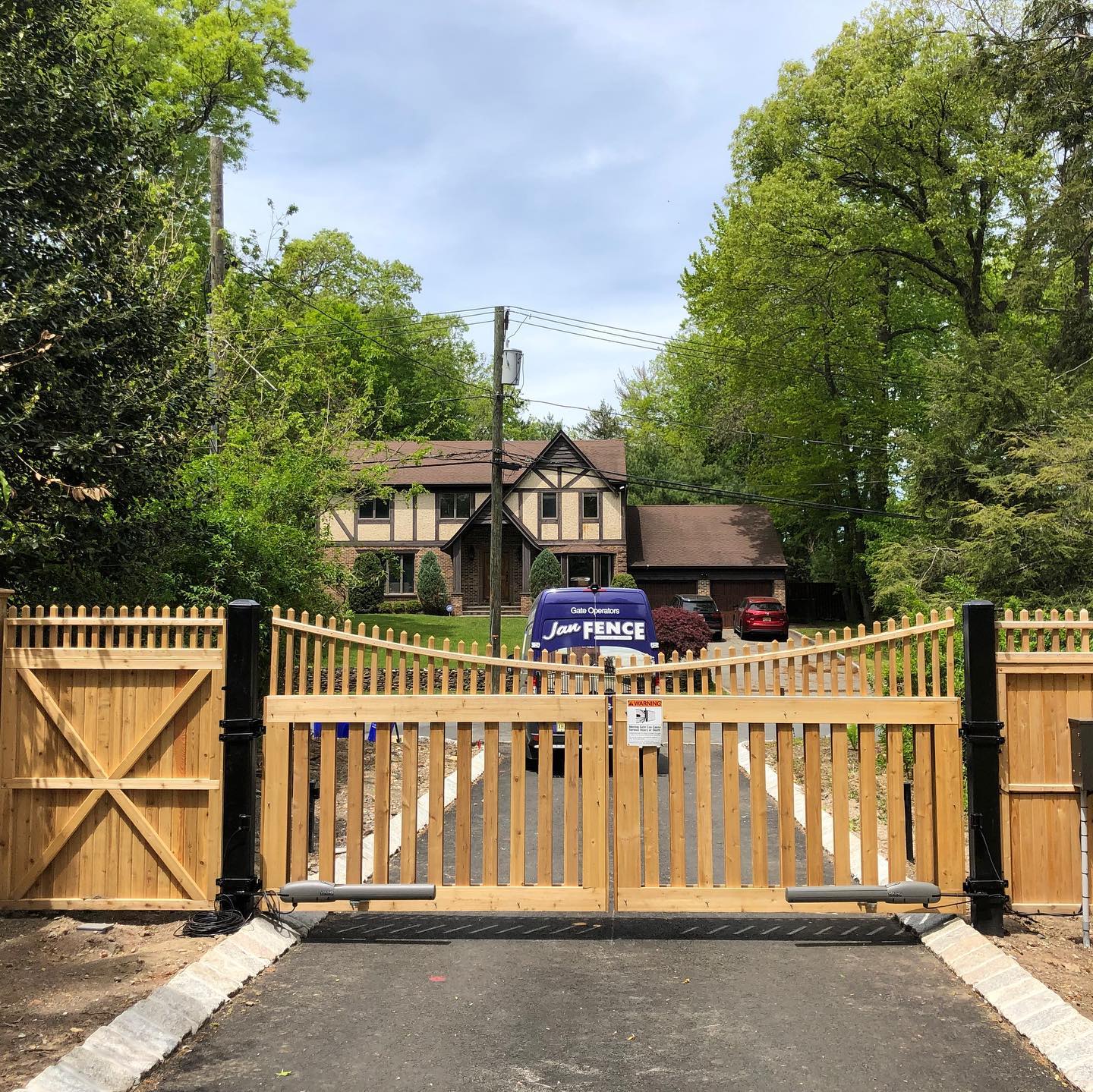
A great gate doesn’t just look good—it works hard. Integrate address numbers, mail, parcels, and access control into your entry so deliveries and guests have a seamless experience. Flank your wood driveway gate with coordinated piers or a timber‑clad module that houses: a locking mailbox/parcel cubby, video intercom, keypad, and low‑glare LED downlights. Run concealed conduits early for power, data, and future‑proof spares; add a battery backup and manual release for outages. In the U.S., set mailbox height to roughly 41–45 inches from grade for carrier reach, and position the intercom where drivers can stop safely. Choose finishes that echo the gate—oiled white oak with matte‑black hardware, or charred cedar with brushed stainless accents—for a cohesive facade. This integration keeps your wood gate closed more often (better security and pets contained) while making it easier to admit vendors remotely. It’s curb appeal that’s also curb intelligence—and it turns everyday arrivals into a smoother, safer routine.
Raked Bottom Edge for Sloped Drives: Clearance without Compromise
Have a driveway that rises or falls at the street? Shape the gate to the grade. A raked bottom rail (angled to match the slope) keeps sightlines tight and pets secure while giving swing leaves the ground clearance they need. Start by laser‑measuring the first 12–15 feet of apron; if the slope exceeds about 1 inch per foot, consider raking the gate or switching to a slider. On swing gates, maintain a level top rail for a clean read, then mirror the ground angle along the bottom—often 3–6 inches of differential across a leaf. Use adjustable hinges, robust stops, and a drop bolt on the low side to resist racking. For even steeper sites, split the span into asymmetrical leaves, or pair a short bi‑fold with a full leaf to clear vehicles while respecting setbacks. Weather‑seal the gap with a discreet brush only where needed so you don’t drag on gravel. The takeaway: design to the driveway you have, and your wood gate will look intentional and work flawlessly every day.
Materials, Finishes, and Hardware for Durable Wood Driveway Gate Performance
Material selection dictates longevity as much as design. Western red cedar, cypress, or thermally modified ash offer stability and approachable cost, while ipe, accoya, and white oak deliver exceptional hardness and abrasion resistance. Specify kiln-dried, vertical-grain stock to minimize cupping, then laminate wide members to control movement. A concealed, powder-coated steel subframe inside timber skins prevents sag and anchors hinges precisely. Where snow or salt is common, select hot-dip galvanized brackets and isolation gaskets between metal and wood to curb galvanic staining.
- For longevity, choose penetrating oil with UV blockers or marine-grade spar varnish; recoat every 12–24 months based on sun exposure, species density, and prevailing wind-driven rain.
- Specify stainless or hot-dip galvanized hinges, latches, and fasteners with nylon bushings; coastal air, road salt, and freeze–thaw cycles demand corrosion resistance, sealed bearings, and scheduled lubrication.
- Match operators to span and weight with soft-start DC motors, obstruction sensing, and battery backup; overspec torque for wind load, dense hardwoods, and winter drag across heaved gravel.
- Set 6×6 wood or steel posts in drained, reinforced footings below frost line; add sleeves, weep holes, and pea gravel to reduce rot, uplift, and puddling at the threshold.
Plan maintenance as deliberately as design. Wash annually with a gentle wood cleaner, spot-sand end grain, and recoat before finishes fail to avoid expensive restoration. Inspect hinge bolts, strike alignment, and operator limits after seasonal movement, especially following storms or heatwaves. For security, integrate smart deadlatches, low-voltage keypads, and closed-latch sensors tied to your automation controller. If sustainability matters, choose FSC-certified lumber, low-VOC finishes, and durable species that reduce replacement cycles while maintaining a refined, architectural presence.
Timber Gate Smarts: Answers for Design, Durability, and Daily Use
Which wood species offers the best balance of cost, durability, and appearance for driveway gates?
Western red cedar and cypress are excellent mid-tier choices with good stability and workability. For premium durability, consider accoya or ipe, though both require sharp tooling and thoughtful fastening strategies.
Get the Fail-Safe Paint Color Playbook (Free PDF)
36 proven colors • 8 ready palettes • trim & sheen guide • printable testing cards.
How wide should a residential wood driveway gate be?
Standard single-car openings run 10–12 feet, while double-car spans often measure 12–16 feet. Verify turning radius, emergency access, and local codes, then size operators and hinges to the final clear opening.
Get the Fail-Safe Paint Color Playbook (Free PDF)
36 proven colors • 8 ready palettes • trim & sheen guide • printable testing cards.
What finish lasts longest in harsh sun or coastal environments?
High-quality penetrating oils with UV absorbers simplify maintenance and resist peeling. In extreme sun or marine settings, marine-grade spar varnish offers superior protection, but it demands vigilant recoating to prevent cracking.
Can I automate an existing wooden gate, or should I rebuild?
Many existing gates can be automated if structure, posts, and hinges are sound. If the gate sags or lacks reinforcement, add a steel subframe or rebuild to protect the operator and ensure safe, quiet motion.
Final Verdict: Choose a Wood Gate That Works as Beautifully as It Looks
The best wood driveway gate is a design decision and a daily-use system in one. Start with your home’s architecture and the way you live, then pair it with the right build: modern horizontal slats, patterned chevron or herringbone, or a soft-arched farmhouse profile. Match species and climate—cedar and redwood for rot resistance, white oak for strength, ipe or Accoya for longevity—and lock in the look with a durable finish, from coastal-silver stains to deep, moody tones or charred textures. Balance privacy and light with board-on-board, louvers, shadow gaps, or frosted clerestory panes, and keep lines clean with a slim steel frame that carries wood infill precisely for years.
Equally important is fit and function. Measure apron length and slope to choose swing, sliding, cantilever, or bi-fold, and fine-tune clearance with raked bottoms and flush thresholds. Specify quality hardware, stainless fasteners, and weather-smart details, then add quiet automation with soft-start motors, photo-eyes, safety edges, and battery or solar backup. Align the drive gate, pedestrian gate, and fence into one seamless elevation; build in your address, intercom, and mail so arrivals feel intentional. Do this, maintain a simple wash-and-reseal schedule, and your wood gate will deliver security, curb appeal, and smooth operation—day after day, season after season.