
Eclectic Bedroom Designs | Bold, Creative Spaces
Eclectic bedroom design is the artful mix of eras, textures, and patterns—curated, not chaotic. It’s where vintage finds meet clean modern lines, global accents, and bold color stories to create a space that feels deeply personal and effortlessly stylish.
In this list, you’ll see how to blend mix-and-match furniture, layered textiles, and statement lighting without overwhelming a room. We’ll explore color palettes, pattern play, and texture stacking—plus renter-friendly swaps and small-space tricks—to nail that “collected over time” vibe.
Get the Fail-Safe Paint Color Playbook (Free PDF)
36 proven colors • 8 ready palettes • trim & sheen guide • printable testing cards.
Use these ideas as a blueprint: repeat a few colors, balance scale, and ground your look with natural materials and negative space. With the right mix of art, textiles, and thrifted treasures, your bedroom will feel cozy, elevated, and unmistakably you.
Layered Textures and Color Palettes in Eclectic Bedroom Designs
Eclectic bedrooms come alive when textures converse, creating depth before color even speaks. Start with tactile anchors like linen sheeting, a tufted velvet headboard, and a handwoven rug that set a layered foundation. Add contrast by pairing smooth lacquer trays with rough ceramics, cane or rattan with powder-coated metal, and leather with bouclé. The interplay of matte and gloss finishes bounces light differently, making vignettes feel dimensional at every hour. Mix vintage and contemporary textures, but keep touchpoints—like repeated natural fibers or repeated stitch details—to signal intention. When each surface invites touch, the entire room reads collected rather than cluttered.
Color in eclectic bedroom designs works best when governed by a deliberate palette, not a free-for-all. Pick one anchor hue, two supporting colors, and a flexible neutral, then repeat them across bedding, drapery, art, and accessories. Triadic schemes like terracotta, teal, and goldenrod feel lively, while analogous blues and greens evoke serenity without losing interest. Pattern mixing thrives when scales vary—broad stripes beside tiny florals—and undertones align, avoiding muddy collisions. Consider painting the ceiling a dusky tint to envelope the space, then punctuate with high-contrast piping or frames for crisp edges. If you crave change, keep walls neutral and rotate accent textiles seasonally to refresh the look affordably.
- Anchor bold textiles with a calm base: whitewashed walls, pale linen drapery, and natural wood create breathing room for saturated quilts, kilim rugs, and patterned cushions.
- Blend warm and cool hues by repeating one connector color—like cream or charcoal—so teal, rust, olive, and blush feel related rather than competing across bedding, drapery, and artwork.
- Contrast textures deliberately: pair nubby bouclé throws with sleek lacquer nightstands, rough jute rugs beneath velvet duvets, and matte clay lamps beside glossy framed prints for tactile tension.
- Use patterned wallpaper on a single accent wall, then echo its palette in micro ways—piping on pillows, book spines, planter glaze—to knit the room into one cohesive story.
- Vary scale intentionally: one oversized piece of art balances small repeated motifs in textiles, while a chunky knit blanket offsets delicate cane detailing for dimensional, eclectic harmony.
Before shopping, assemble a mood board that combines fabric swatches, paint chips, and finish samples to confirm harmony under natural and evening light. Use a modified 60-30-10 ratio, allowing the 10 percent slice to showcase eccentric pieces like a wild throw or neon artwork. Repeat signature elements—brass, cane, or indigo—at least three times to reinforce rhythm across the room. If something jars, assess whether it conflicts in value, undertone, or texture, then adjust rather than remove the personality entirely. Finally, edit mercilessly so moments breathe, because negative space is the unsung material in eclectic design. That quiet allows your boldest choices to resonate without visual fatigue.
Get the Fail-Safe Paint Color Playbook (Free PDF)
36 proven colors • 8 ready palettes • trim & sheen guide • printable testing cards.
Color-Confident Neutrals: Ground the Room, Let Accents Sing
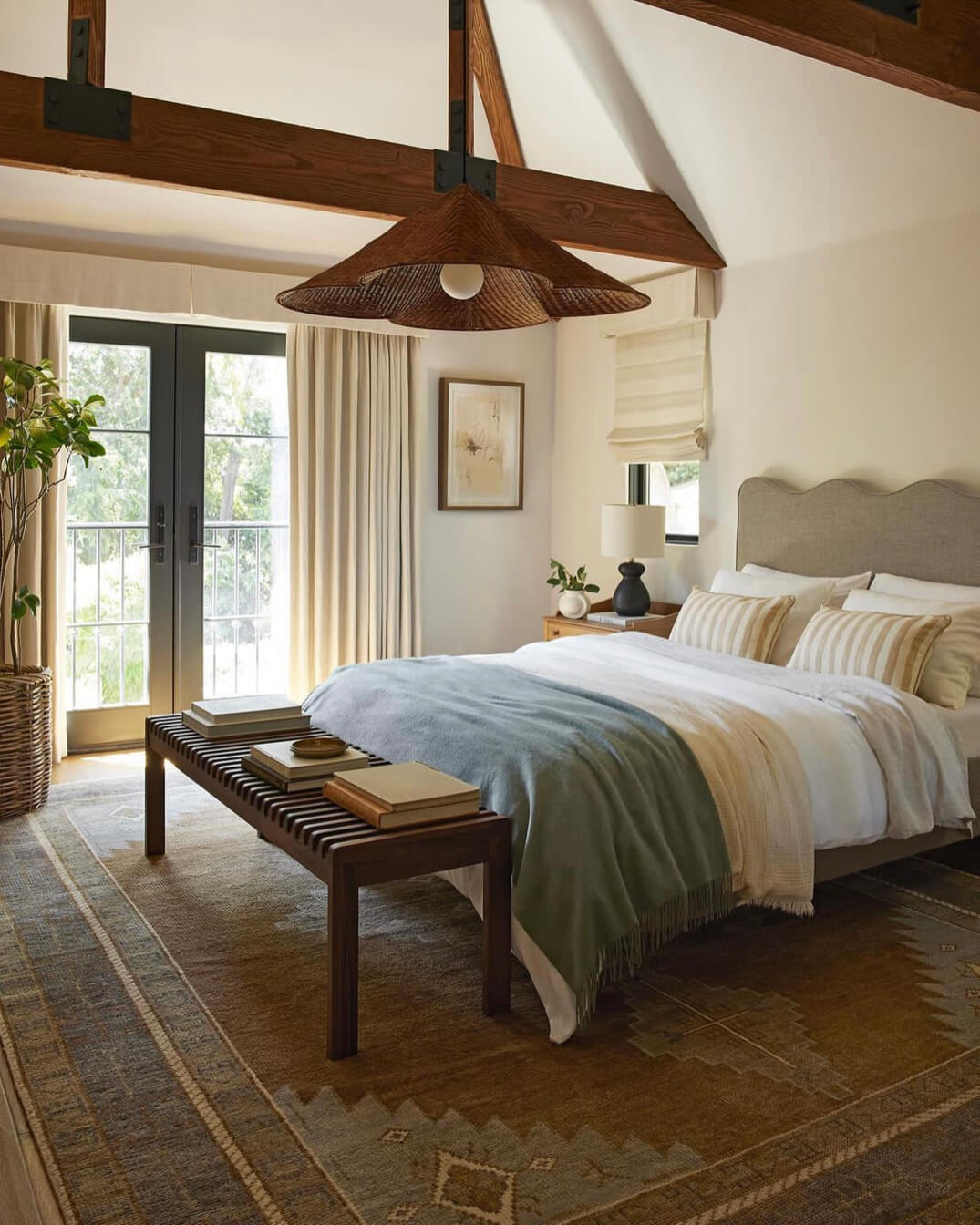
The most compelling eclectic bedrooms start with a calm canvas, then dial up personality through intentional color hits. Build your base with warm whites, oatmeal linens, and natural wood to create visual breathing room. Then choose one saturated hue—cobalt, rust, emerald, ochre—and repeat it three times across the space: a framed print, a pillow pair, and a ceramic lamp, for example. That repetition reads cohesive rather than random. Add a vintage or overdyed rug to bridge tones and introduce subtle pattern without stealing focus. Metallics act as quiet connectors; echo a brass finial in a picture frame and a sconce backplate. Keep surfaces edited so negative space does its job, and let one bold element—perhaps a lacquered side table or velvet throw—carry the drama. If you love multiple colors, cluster them in a single moment (artwork or blanket) and keep the rest restrained. This balance of grounded neutrals and strategic accents is the secret to a bedroom that feels curated, not crowded—proof you can be both color-confident and serene in eclectic design.
Global Textiles, Modern Silhouette
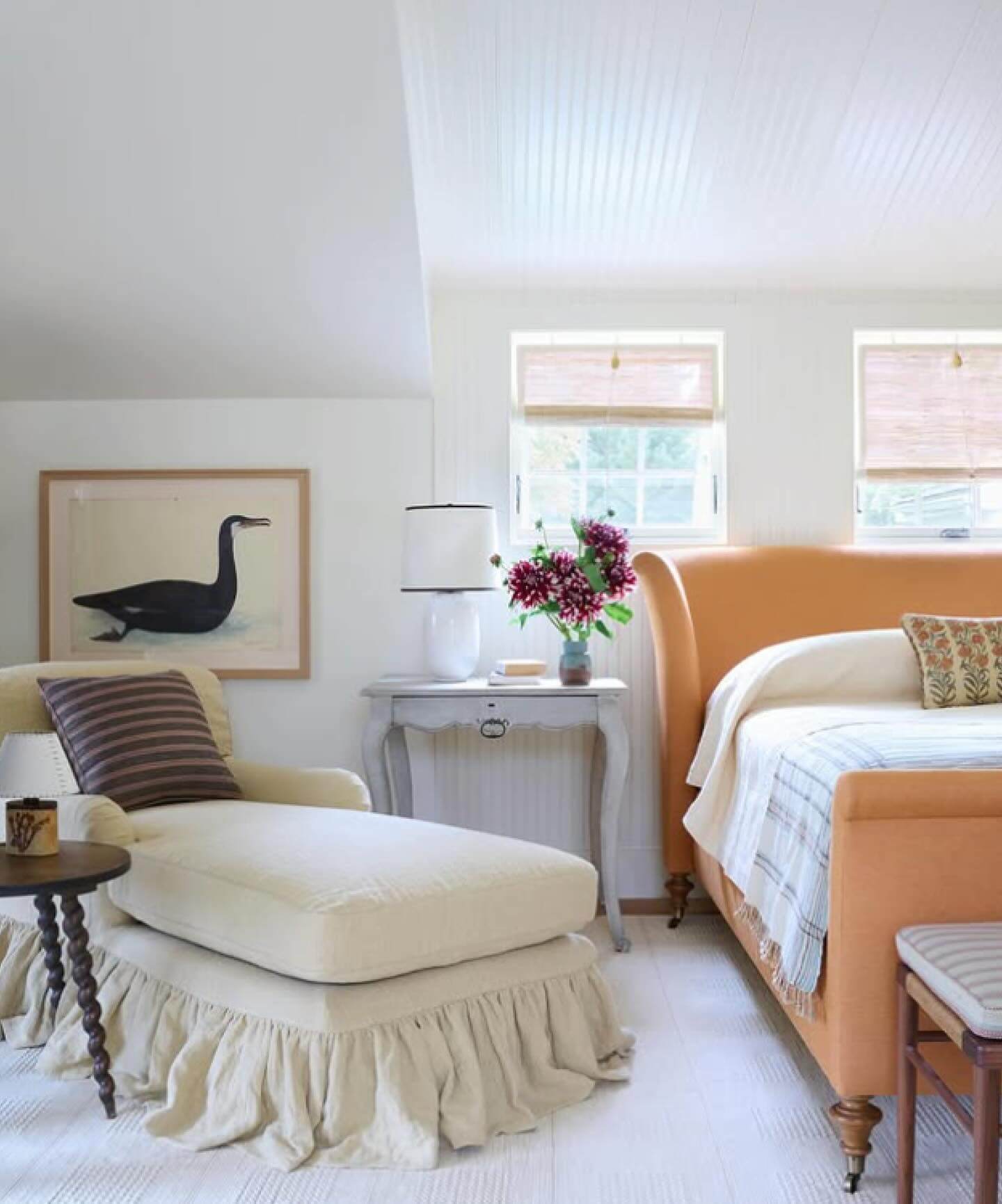
Eclectic bedrooms shine when travel-inspired textiles meet clean-lined furniture. Think a simple platform bed dressed with a kantha quilt, block-printed duvet, and two mudcloth pillows—each pattern distinct, all connected by a shared palette. A Beni or flatweave rug adds plushness underfoot while its motif anchors the bed zone. To keep the look sophisticated, let the bed frame, nightstands, and dresser stay streamlined—matte wood, powder-coated metal, or linen-wrapped pieces that read modern. Edit accessories to a few meaningful objects: a carved bowl, a stack of well-worn books, a hand-thrown vase. Echo colors from the textiles in the art above the bed to visually “stitch” the room together. If you’re mixing reds, indigos, and clay tones, introduce a grounding stripe or check to calm the composition. The result is layered and worldly without tipping into theme—global accents that feel collected over time, balanced by silhouettes that keep the space feeling fresh and current.
Thrifted Nightstands + Sleek Bed: The High/Low Formula
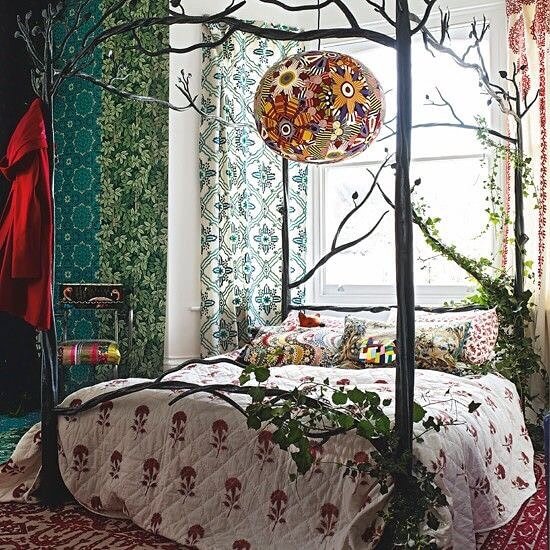
One of the easiest ways to nail eclectic style is pairing a crisp, modern bed with character-rich vintage nightstands. Don’t stress about matching—coordinate. Unify two thrifted tables through finish (both mid-tone woods), hardware (swap in similar knobs), or proportion (tops within an inch in height). Then let a tailored bed—slatted oak, channel-tufted upholstery, or a low-profile metal frame—bring clean lines that temper the patina. Layer lighting to tie the vignette together: twin lamps in the same silhouette even if finishes differ, or plug-in sconces to free tabletop space. Corral nightly essentials on a tray and add one sculptural piece per side (a stone object, a petite plant) to keep it intentional. This high/low mix stretches budget and style, delivering warmth and polish in equal measure. The contrast between sleek and storied sets that quintessential eclectic bedroom tone—inviting, personal, and effortlessly elevated.
Pattern Play That Feels Collected, Not Chaotic
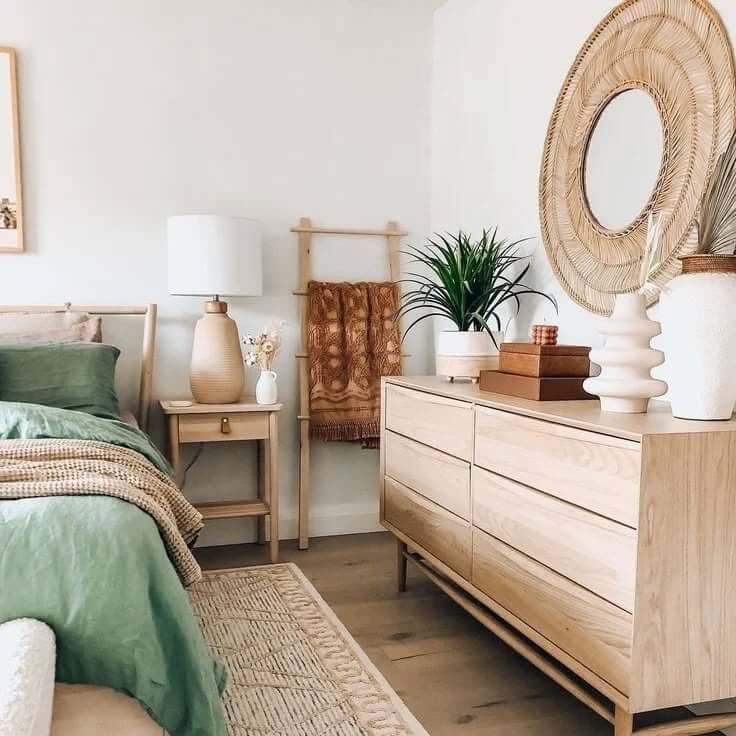
Successful eclectic pattern mixing follows two simple rules: scale and palette. Choose one large-scale print (floral, toile, or ikat), one medium geometric (checks, herringbone), and one small-scale accent (pin dot, tiny stripe). Keep all three within a cohesive color story—say, sage, sand, and charcoal—so they harmonize even when motifs differ. Stripes function as a “neutral” in eclectic bedrooms; use them on a bed skirt or pillow to bridge bolder prints. If you’re stacking wallpaper and textiles, echo one color from the wall in the bedding, then introduce a new texture—bouclé, velvet, slub linen—to add depth without more visual noise. Ground the whole scheme with a solid quilt or throw at the foot of the bed and let wood tones and woven baskets provide quiet moments. Edit shine to one or two touches (a brass lamp, a mirrored tray) so pattern, not glare, leads. The result is layered and lively, yet calm enough for rest.
Make the Headboard the Hero
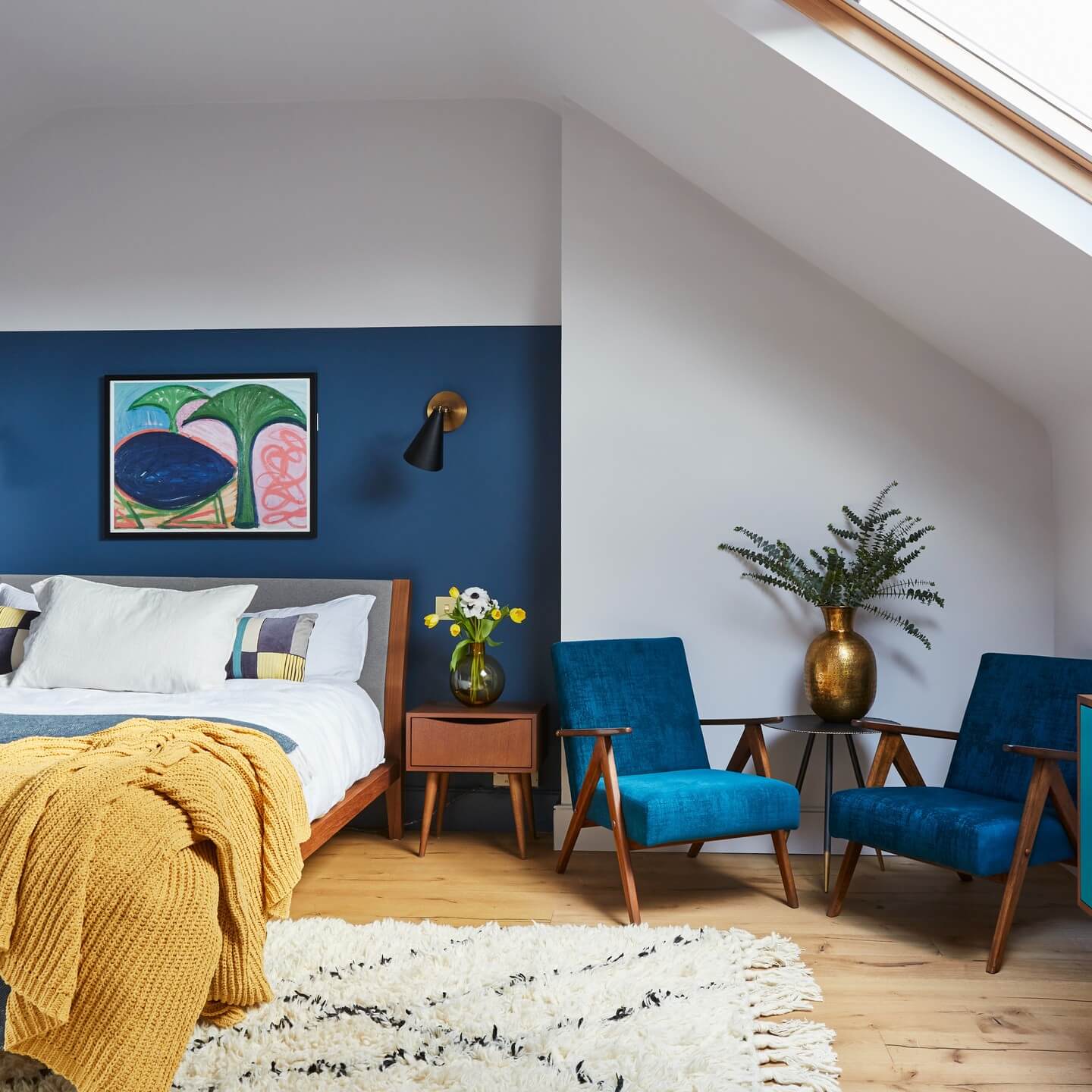
In eclectic bedrooms, a statement headboard functions like built-in art. Choose a silhouette with presence—arched rattan, sculptural wood, or channel-tufted upholstery in a confident hue—and let it dictate the room’s rhythm. Color-block the wall behind in a complementary tone or install a narrow panel of removable wallpaper to frame the headboard without committing to every surface. Keep bedding tactile but quiet: crisp percale sheets, a linen duvet, and a textured throw that nods to the headboard’s palette. If you prefer a softer approach, drape a vintage textile behind the bed as a pseudo headboard and layer cushions in varied sizes for a bedscape that feels collected. Balance the focal point with simple, linear nightstands and understated lighting so the eye rests on the hero piece. This strategy delivers instant eclectic impact while keeping the room cohesive and restful.
Eclectic Lighting Layers: From Glow to Spotlight
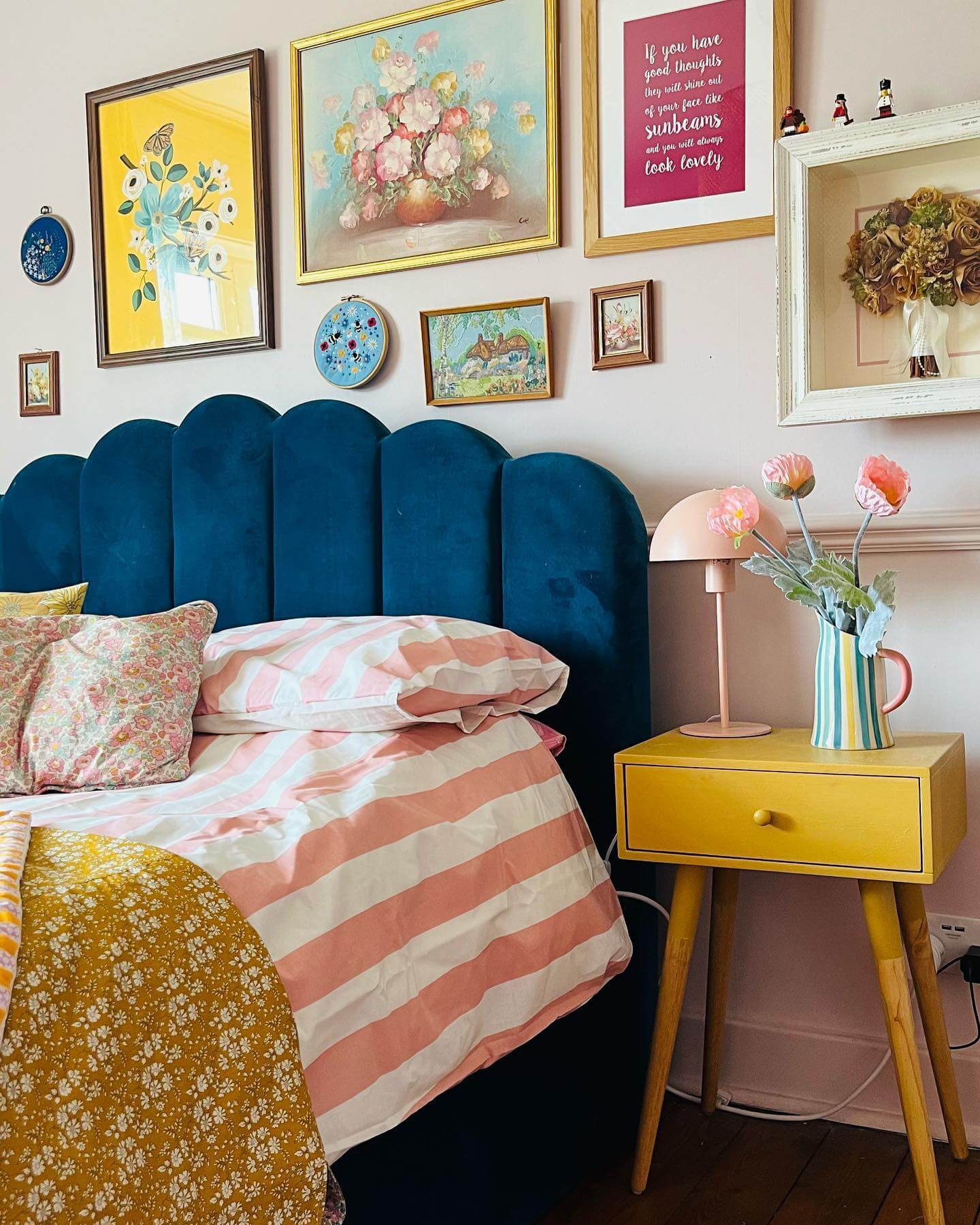
Lighting is where eclectic bedrooms truly come to life. Aim for three layers: ambient, task, and accent. Start with a ceiling fixture that brings personality—woven pendant, milk-glass flush mount, or sculptural chandelier—then add bedside task lighting via plug-in sconces or swing-arm lamps for reading. Finish with a small accent lamp on a dresser, LED strip inside a shelf, or candles for that warm, lived-in glow. Mix finishes thoughtfully: black iron with aged brass and alabaster feels collected yet cohesive if each finish repeats at least twice. Choose warm-white bulbs (2700K–3000K) and install dimmers to shift from energizing morning light to cozy evening mood. Lampshade shape and texture matter in eclectic design—pleated paper, linen, or rattan shades double as subtle pattern. Let light highlight what you love: a gallery wall, a textured headboard, or an heirloom rug. With layered illumination, your bedroom feels flattering, flexible, and unmistakably you.
Curated Gallery Wall, Calm Foundations
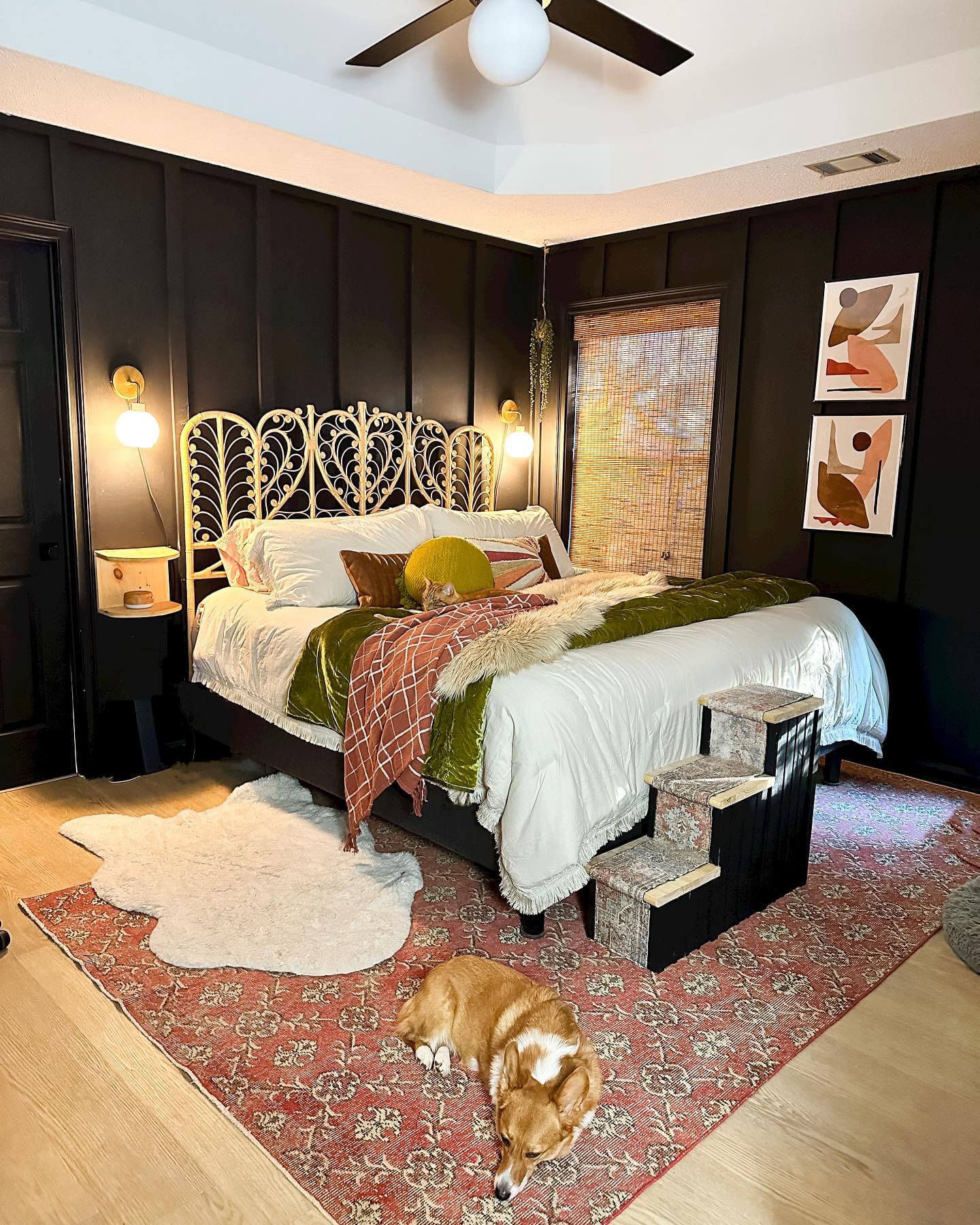
A salon-style gallery wall instantly injects eclectic character, but it sings best over calm foundations. Keep big pieces—bed, rug, and curtains—quiet and textural so the art can take center stage. Curate with intention: mix mediums (paintings, prints, textiles), play with mat sizes, and repeat two frame colors throughout to anchor the montage. Arrange on the floor first, then hang the heaviest piece slightly off-center for a collected feel. Echo art tones in small doses across the room—piping on pillows, a ceramic vase, or a throw—so the palette circulates. Maintain negative space below by choosing slim-profile nightstands and a low bench at the foot of the bed. Soft, even lighting keeps glare off glass; matte frames help too. The result is dynamic but restful—proof that maximalist art moments can thrive in minimalist layouts when color and repetition do the quiet binding work.
Earth-Toned Eclectic: Organic Textures with Crisp Contrast
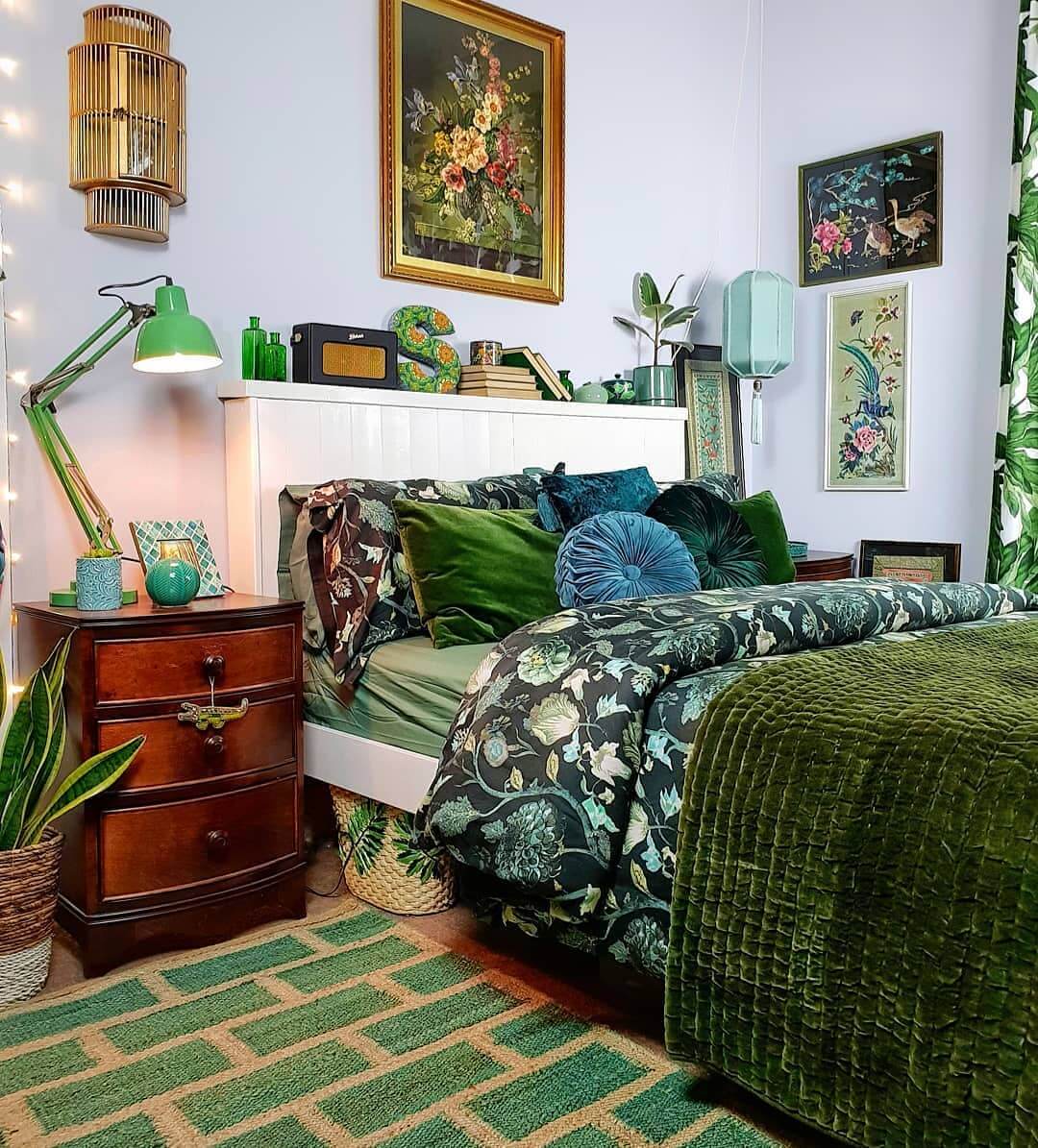
For an eclectic bedroom that reads elevated and grounded, build an earthy palette—clay, olive, sand, espresso—and layer organic textures. Start with linen or hemp bedding, a jute or wool rug, and a wood headboard that celebrates grain. Introduce terracotta and stone via planters or trays, then cut the warmth with strategic contrast: black iron hardware, a graphic stripe, or a charcoal lumbar pillow. Plants amplify the tactile mix; choose one tall sculptural species to balance the bed’s height and a trailing moment on a shelf. Keep metals matte or burnished to honor the natural vibe. If the room needs lift, add one glossy element—lacquered nightstand or ceramic lamp—to catch light without breaking the earthy spell. This tension between raw and refined is the heartbeat of eclectic style—rich, textural, and timeless.
Renter-Friendly, Landlord-Approved Eclectic Switches
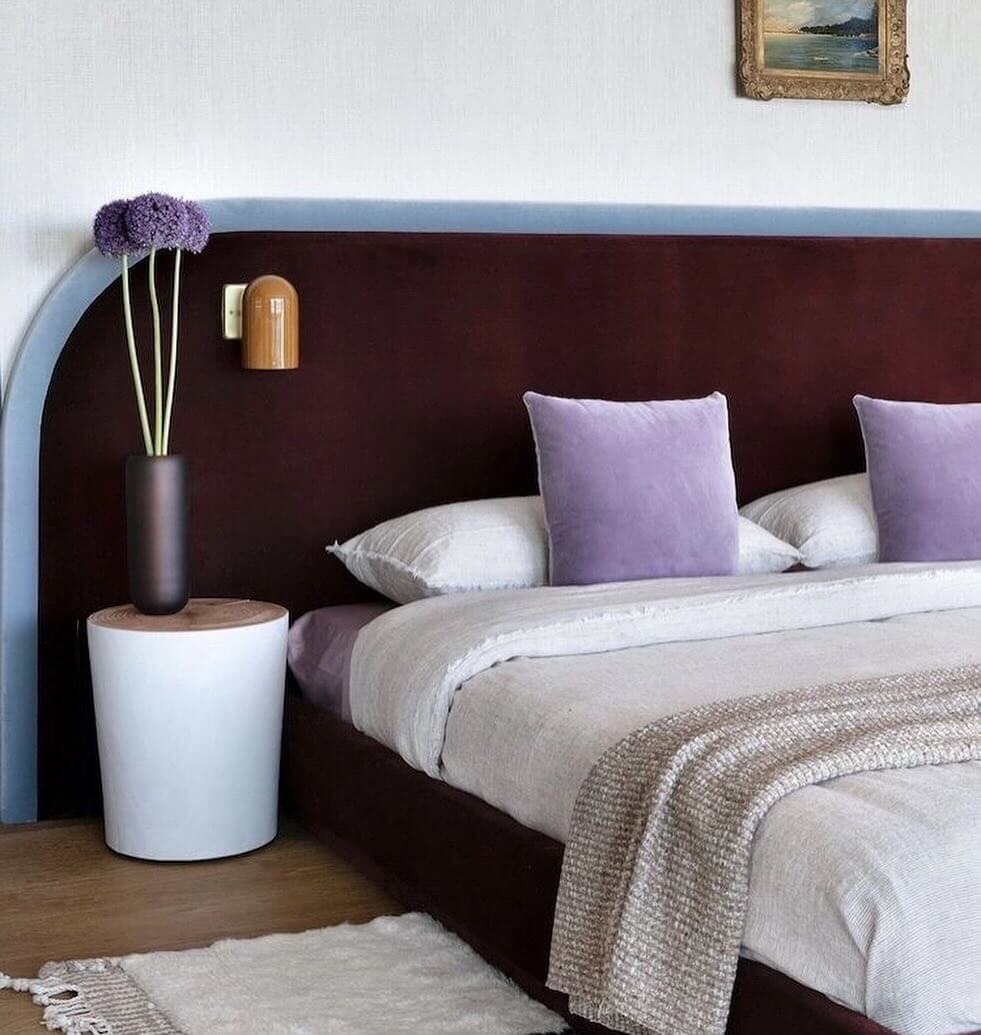
You don’t need a renovation to craft an eclectic bedroom with soul. Lean on removable upgrades: peel-and-stick wallpaper behind the bed, ceiling medallions with adhesive, and plug-in sconces to free nightstand space. Layer rugs to disguise bland carpet—start with a budget-friendly jute base and top with a vintage runner or patterned kilim. Swap basic knobs for character hardware (save the originals), slipcover a simple headboard, and drape a textile “canopy” from Command hooks for instant architecture. Create a gallery wall with washi tape or lightweight frames, and use removable window film for soft privacy. Color lives in linens—choose a hero duvet and echo its tones in two small accents. These reversible moves pack major eclectic impact while keeping your deposit intact.
Get the Fail-Safe Paint Color Playbook (Free PDF)
36 proven colors • 8 ready palettes • trim & sheen guide • printable testing cards.
Small Bedroom, Big Personality: Design Upward
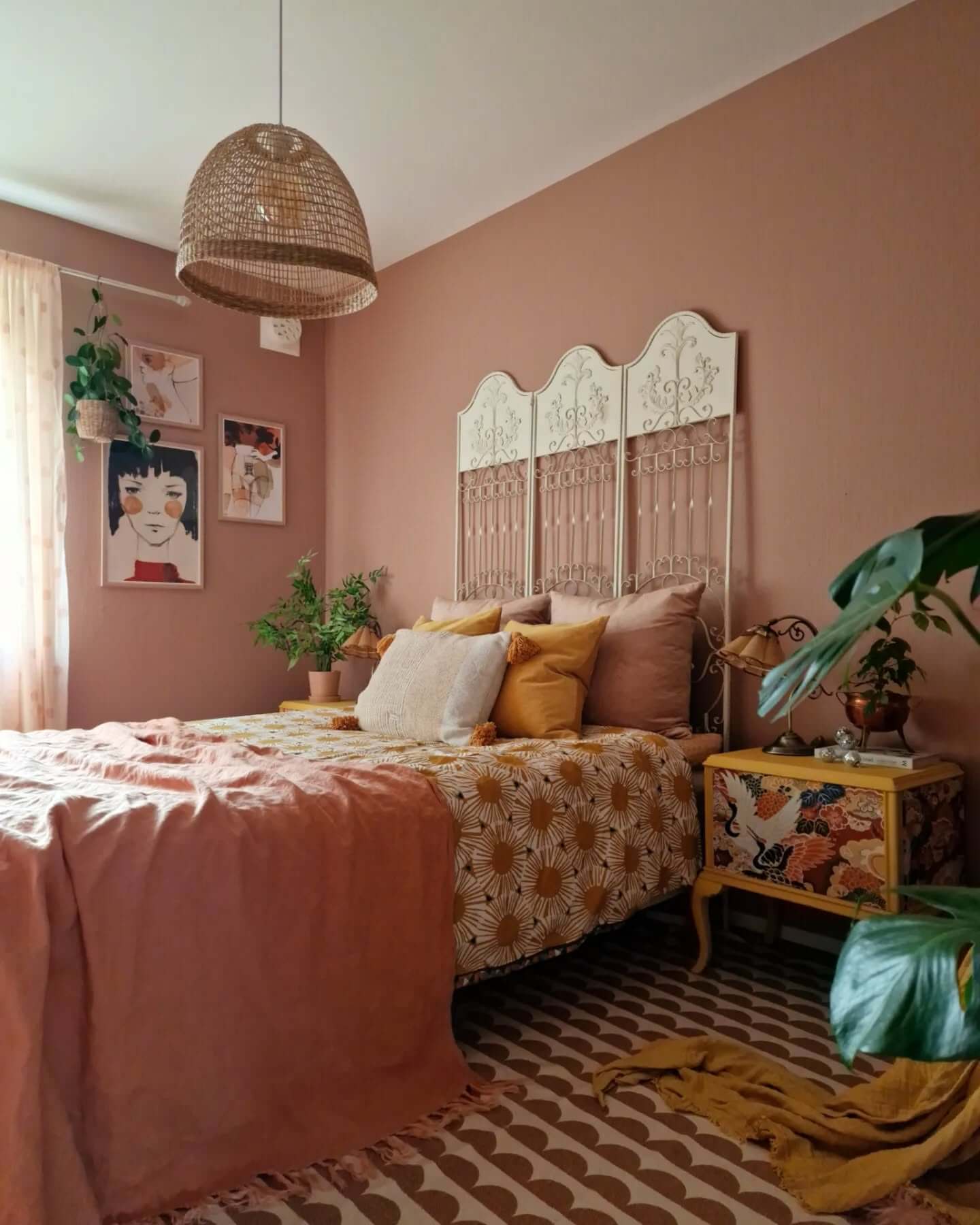
In compact eclectic bedrooms, think vertical. A tall, upholstered or arched headboard draws the eye up; ceiling-height curtains (mounted wide) visually expand the room. Vertical stripes—on wallpaper or a throw—elongate walls without crowding. Mount shelves or a narrow ledge above the bed for books and art, keeping surfaces clear. Opt for plug-in sconces to free nightstands, and choose a slender bench over a bulky chest at the foot of the bed. Mirrors opposite a window double light and make patterns feel airy. Keep the palette tight—two main neutrals and one deep accent—then layer texture for depth: quilted coverlet, velvet pillow, woven shade. Underbed drawers and lidded baskets corral clutter so the eclectic mix reads intentional. With smart vertical moves and a restrained color story, even the tiniest bedroom can feel collected, calm, and full of character.
Layer Rugs Like a Pro: Pattern Underfoot That Grounds the Mix
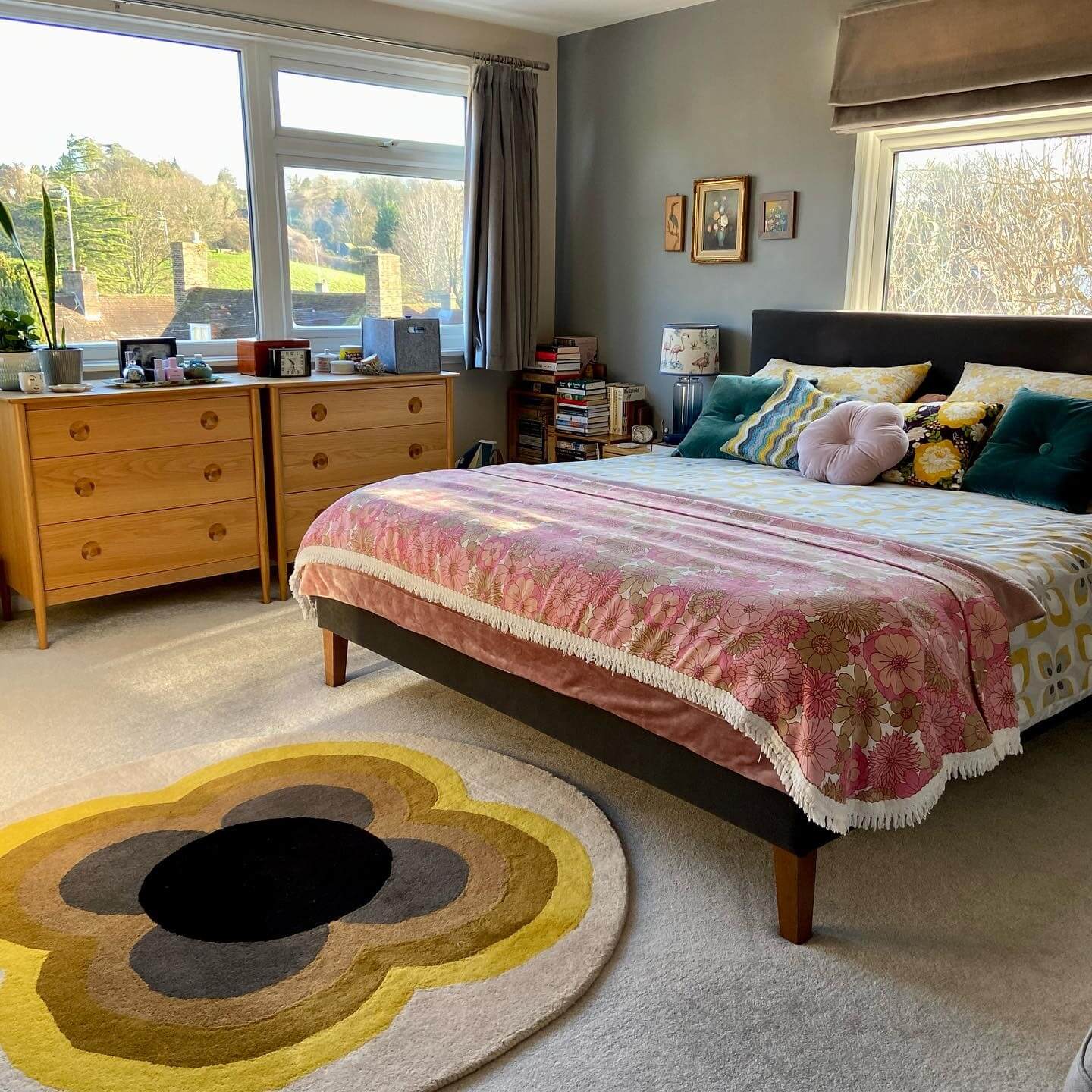
Once your color story is set, anchor the eclectic mix with layered rugs. A flatweave or jute base adds natural texture and negative space; then float a smaller vintage kilim or Persian on top to concentrate pattern where it matters—around the bed. Keep the palette cohesive by repeating two to three colors from your bedding or art, and let scale do the balancing: large-scale motifs on the base, tighter patterns on the top rug. This stack adds instant patina without overwhelming the room, especially when you echo rug tones in throw pillows or a bench cushion. If your space is small, offset the bed slightly so the top rug peeks from one side—an asymmetry that feels collected, not random. Add a rug pad for safety and crisp edges, and don’t forget texture contrast: wool over sisal, or tufted over flatweave. The result is a soft landing spot that visually zones the bed, ties disparate furniture styles together, and deepens the layered, traveled feel at the heart of eclectic bedroom design.
Mixed Metals, One Story: A Cohesive Shine
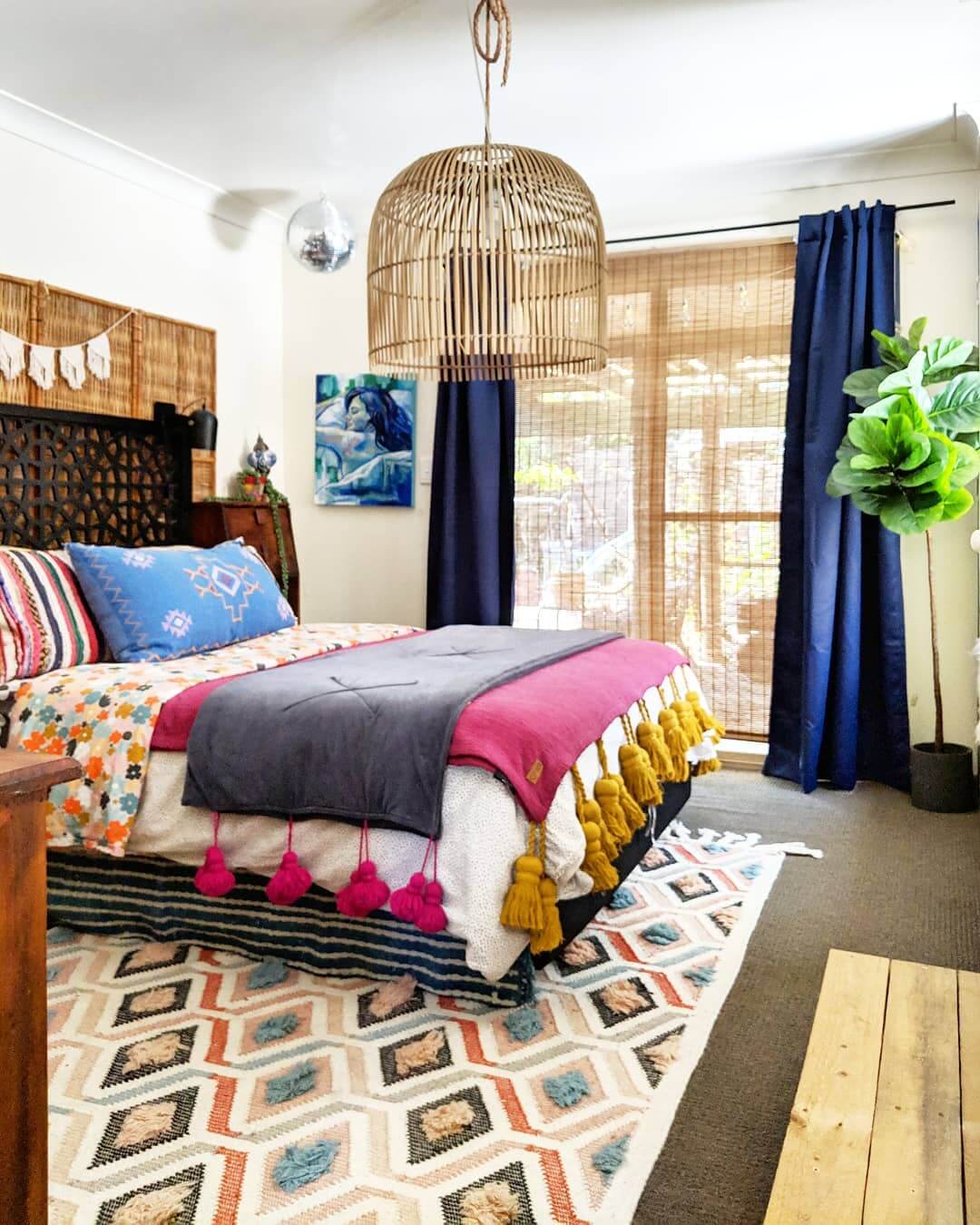
Eclectic bedrooms sing when finishes converse. Mix metals intentionally—think aged brass with blackened iron and a hint of polished nickel—but repeat each finish at least twice so it reads as a narrative, not noise. Let warm brass star in your lamps or frames, use dark iron for curtain rods or a mirror, and reserve chrome or nickel for small moments like knobs or a tray. Balance reflectivity by pairing high-shine accents with matte textures (linen, boucle, clay) to avoid a showroom vibe. If your palette is earthy, lean into bronzed tones; if your base is cool and modern, let chrome and black steel sharpen the look. Unify everything with one dominant finish that touches both sides of the bed. This mixed-metal strategy bridges eras—mid-century lines, antique finds, contemporary lighting—while the repetition rule keeps it cohesive. Bonus: metals bounce light, amplifying your layered lighting plan and adding subtle sparkle to evening routines.
Patterned Wall Moment: Mural, Wallpaper, or Color-Block
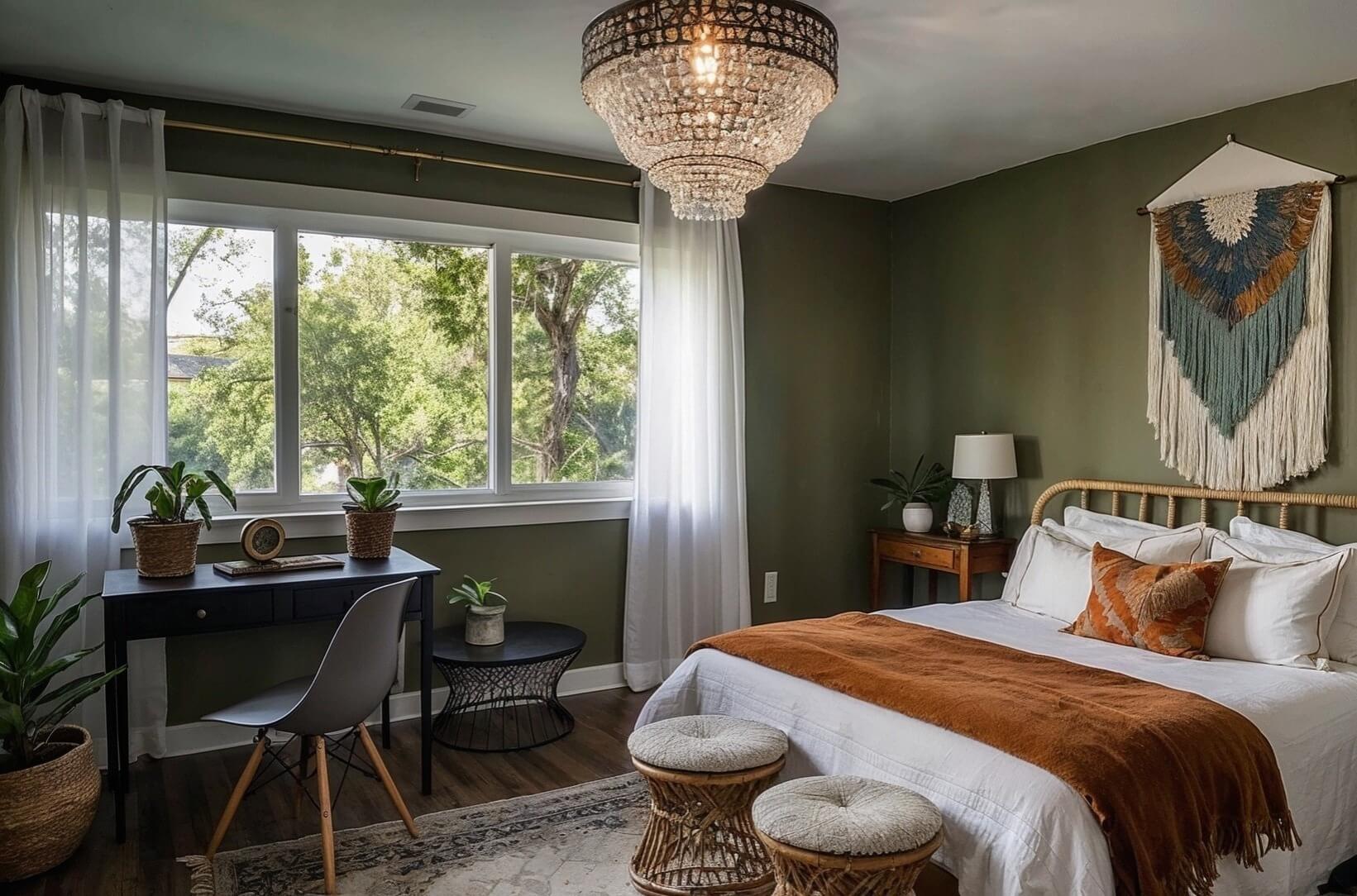
When you crave impact without clutter, create a single patterned wall to frame the bed. A botanical mural, geometric wallpaper, or a bold color-block arch instantly elevates the room’s envelope, letting simpler furniture feel intentional. Keep scale in check: larger repeats behind the headboard, smaller prints in textiles, and solids on the duvet to rest the eye. Tie the wall’s dominant hue to two other elements—a throw, lampshade, or rug border—for a looped palette that feels designed. Renters can opt for peel-and-stick or paint a crisp shape that “caps” the headboard and raises the ceilings visually. If your art collection is lively, let the wall be textural or tone-on-tone to avoid competition. Conversely, a graphic wall pairs beautifully with minimalist, modern bedding. Finish with slim picture lights or swing arms so the pattern glows rather than glares. The result: a statement backdrop that says eclectic on purpose, not by accident.
Plants That Sculpt the Space: Biophilic Layers with Soul
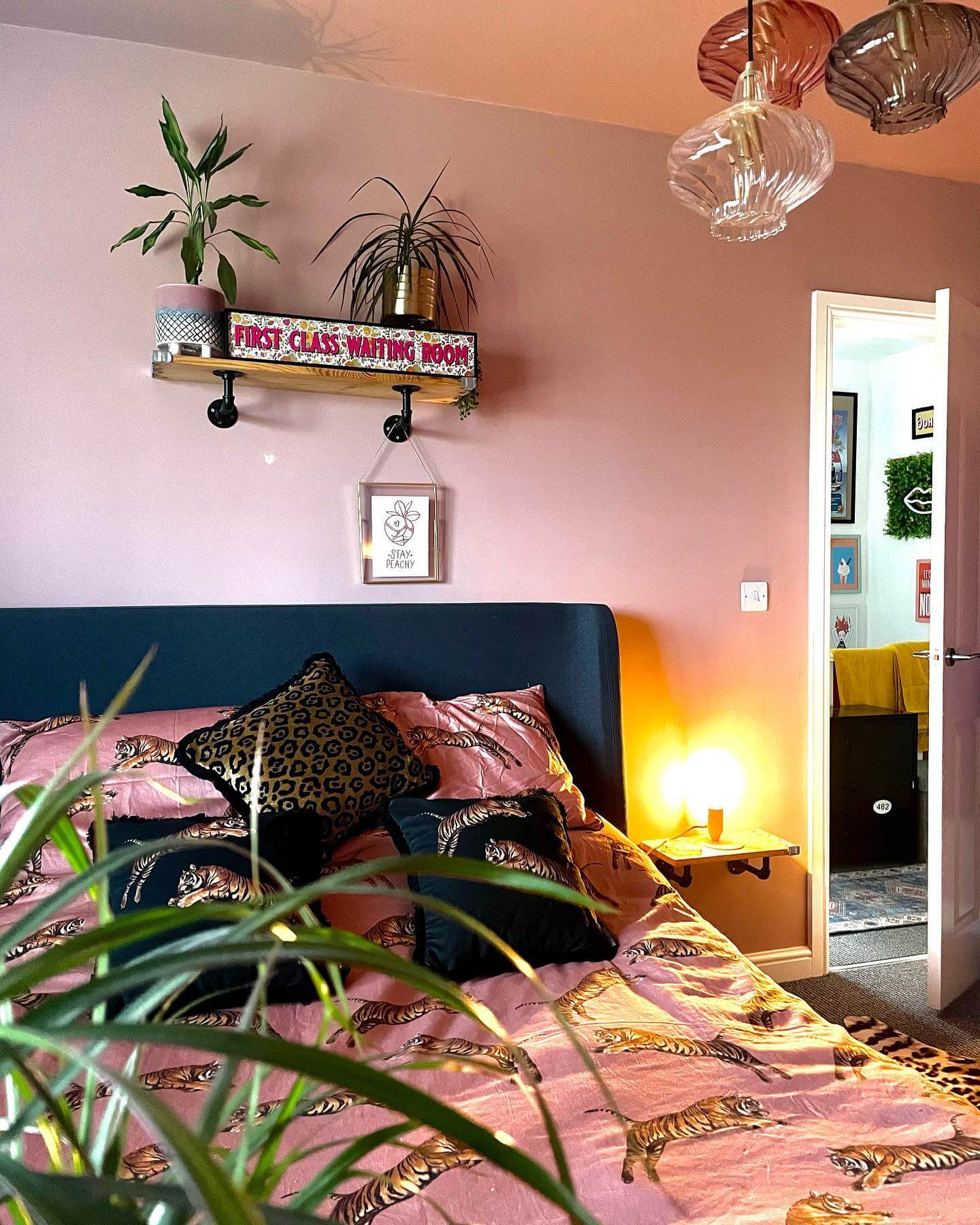
Greenery is the secret sauce that softens eclectic edges. Choose plants for silhouette as much as color: a tall ficus to lift the eye, trailing pothos to soften shelves, and a textured cactus or dried arrangement for sculptural contrast. Vary planter materials—terracotta, ribbed ceramic, woven baskets—to echo the room’s tactile story, and repeat a planter finish at least twice to keep things cohesive. Place a leafy moment near textiles so the organic forms play off pattern; position a tree by the window to create a natural vignette with curtains and light. If maintenance is a concern, mix live plants with high-quality faux or dried stems for longevity and height. Layer a small plant on the nightstand, a medium on a stool, and a large on the floor to create depth without clutter. This biophilic approach cleans up the palette, balances maximalist moments, and brings that fresh, lived-in energy every eclectic bedroom needs.
Collected Storage: Trunks, Peg Rails, and Open Shelves
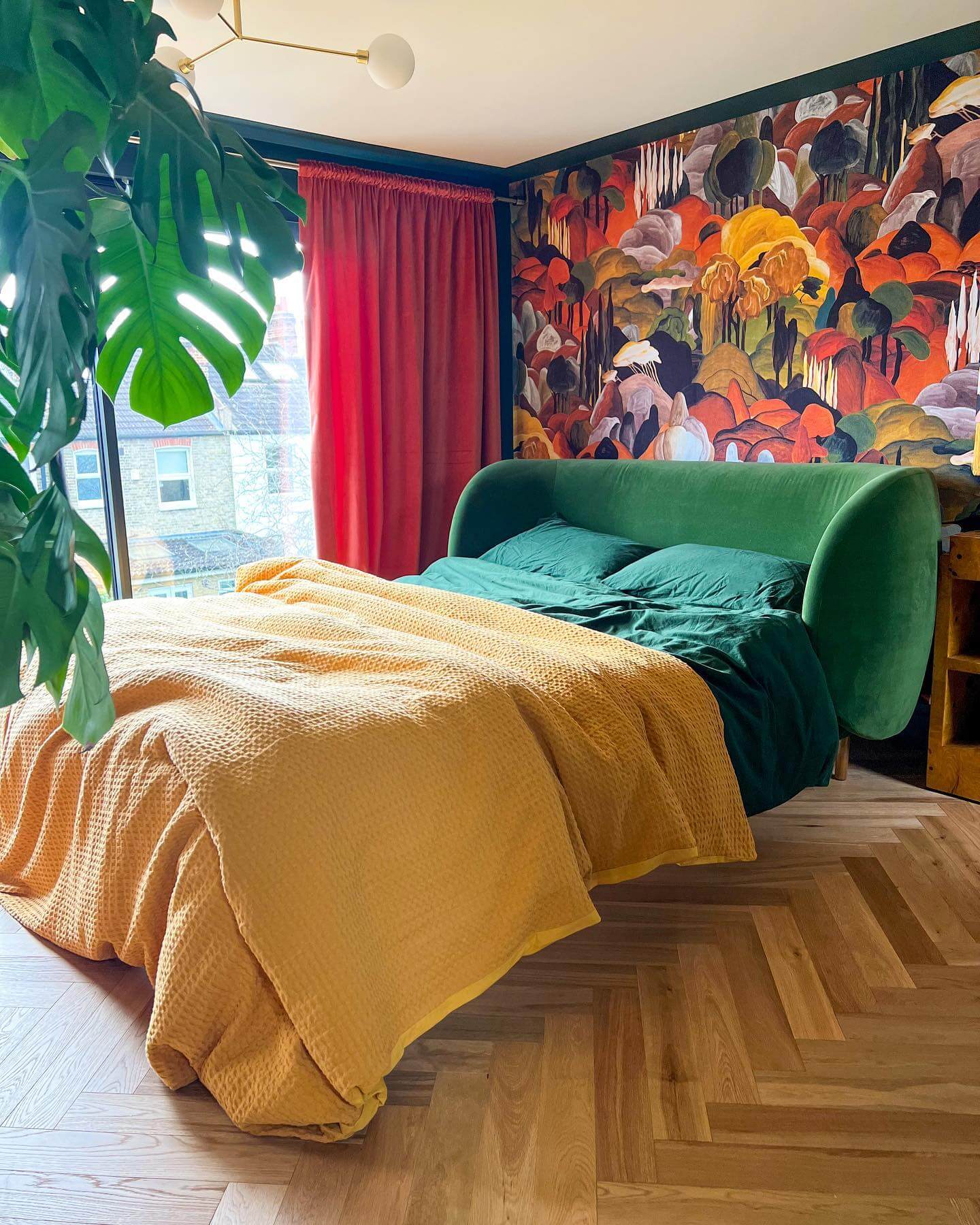
Eclectic bedrooms shine when storage doubles as decor. Swap a standard bench for a vintage trunk at the foot of the bed; it stashes quilts while adding character. Install a simple peg rail to display hats, woven bags, or robes—functional texture that reads as art. Float slim wood shelves above the dresser for books, ceramics, and a small lamp; vary heights for a curated, gallery feel. Use lidded baskets under the bed and a compact armoire for seasonal rotation so surfaces stay styled, not crowded. Keep the palette tight—repeat your woods and one metal finish—and group items by color or material so the display feels intentional. If you love maximalism, leave more negative space on the floor; if you’re minimalist-leaning, concentrate collections in one zone. This mix of closed and open storage supports everyday life while showcasing the objects that tell your story—the very essence of eclectic bedroom design.
Furniture, Lighting, and Art Curation for Eclectic Bedrooms
The most compelling eclectic bedrooms mingle eras, but they succeed by managing proportion, silhouette, and finish. Pair a low modern platform bed with a high-back antique chair to play heights, or offset a chunky dresser with slim, airy nightstands. Coordinate woods by temperature—cool walnut with blackened metal, warm oak with brass—so mixed species read intentional. Let one hero piece lead, such as a carved headboard or lacquered wardrobe, then echo its curve or sheen in two secondary accents. When shapes rhyme across the room, even disparate styles feel related and the eye glides rather than stutters. Always maintain generous circulation around the bed, allowing drawers and doors to open fully without collision.
Lighting is the secret spice of eclectic bedrooms, setting mood while highlighting layered textures. Combine a statement chandelier or rattan pendant with dimmable sconces and a focused reading lamp to create ambient, task, and accent layers. Keep color temperature consistent between 2700K and 3000K for warmth that flatters textiles and skin. Patterned or pleated lampshades introduce micro-pattern without commitment, while a sculptural floor lamp adds vertical punctuation. Smart switches and plug-in dimmers make vintage lamps adaptable, preserving charm while improving usability. Use spotlighting to graze textured walls or a gallery arrangement, amplifying depth without adding objects.
Curate With Purpose:
- Start with a hero furniture piece—vintage armoire, sculptural headboard, or painted dresser—then repeat its material or curve twice elsewhere to signal intention rather than randomness.
- Layer lighting at three heights: ceiling fixture for ambience, bedside sconces for tasks, and a low table lamp or LED strip for glow, drama, and nighttime calm.
- Group art in salon walls using consistent spacing and at least one unifying element—black frames, cream mats, or abstract theme—so eclectic compositions read polished instead of chaotic.
- Balance visual weight: a heavy wood dresser opposite the bed pairs well with airy metal nightstands, while a mirrored wardrobe can lighten corners without sacrificing storage.
- Style surfaces with odd-number groupings—stacked books, sculptural objects, a plant—varying height and finish, then leave negative space so the eye can rest between moments.
Plan layout with a focal wall for the bed, then balance weight with storage opposite, leaving pathways clear and sightlines to windows open. In small rooms, a tall armoire can replace multiple smaller pieces, uncluttering surfaces for artful styling. Mirrors opposite windows multiply natural light and echo shapes from statement pieces, while vintage trunks double as benches and hidden storage. Choose durable rugs large enough to frame the bed, ensuring feet land on softness and patterns scale appropriately. Source secondhand whenever possible to add patina and sustainability, then reupholster or repaint for continuity with your palette. The result is a soulful, functional retreat that feels collected over time yet perfectly cohesive.
Your Eclectic Bedroom, Demystified
How do I keep an eclectic bedroom cohesive without dulling its personality?
Choose a tight palette and repeat materials or shapes at least three times. Edit aggressively and leave negative space so standout pieces shine instead of competing.
Get the Fail-Safe Paint Color Playbook (Free PDF)
36 proven colors • 8 ready palettes • trim & sheen guide • printable testing cards.
What are budget-friendly ways to achieve an eclectic look?
Prioritize textiles, paint, and hardware swaps for maximum impact. Thrift solid-wood pieces for longevity, then refinish or reupholster to match your palette and add unified charm.
Get the Fail-Safe Paint Color Playbook (Free PDF)
36 proven colors • 8 ready palettes • trim & sheen guide • printable testing cards.
How many patterns can I mix in one bedroom?
Aim for three to five patterns, varying scale: one large, one medium, and one small. Bridge them with shared colors and add solids to calm the composition.
Can small bedrooms pull off eclectic design?
Absolutely—control visual weight and keep the floor plan open. Use multifunctional pieces, mirrors to expand light, and a consistent palette to reduce visual clutter.
Final Verdict: Make It Intentional, Make It Yours
Eclectic bedrooms work when every choice has a purpose. Repeat a tight palette, vary scale in your patterns, and let contrast do the heavy lifting: nubby linens against lacquer, handcrafted wood beside sleek metal, warm lighting over cool stone. Anchor the room with a hero element—headboard, rug, or art—then echo its colors and shapes through textiles, lamps, and accent furniture. Mix thrifted finds with streamlined pieces, layer rugs for depth, and keep sightlines calm with pockets of breathing room so the look feels curated rather than cluttered.
Start with small, high-impact upgrades: a new lampshade and bulb temperature, peel-and-stick wallpaper or a color-blocked wall, sculptural plants, and mismatched-but-related nightstands. Edit as you go—snap photos, remove one item, add texture where the eye stalls. Over time, you’ll build a bedroom that feels expertly layered, renter-friendly or not, and unmistakably personal—a space that’s stylish enough to show off and serene enough to sleep in.