
25 Cozy Farmhouse Living Room Decor Ideas Designers Swear By
Craving a living room that feels warm, relaxed, and beautifully lived-in? Farmhouse style blends rustic charm with modern comfort—think natural textures, soft neutrals, and vintage accents that tell a story. It’s effortless, inviting, and endlessly customizable for any size space.
In this guide, you’ll find farmhouse living room decor ideas that cover everything from furniture and layouts to textiles, wall finishes, and lighting. Whether your vibe is modern farmhouse, rustic cottage, or a touch of industrial, these tips work for apartments, family rooms, and open-plan spaces alike—on any budget.
Get the Fail-Safe Paint Color Playbook (Free PDF)
36 proven colors • 8 ready palettes • trim & sheen guide • printable testing cards.
We’ll focus on timeless materials like reclaimed wood, linen, leather, and jute; a cozy neutral color palette; layered textures; and meaningful styling details. From shiplap and slipcovers to woven baskets and patinaed metals, you’ll discover ways to create a space that feels grounded, welcoming, and uniquely yours.
Rustic Farmhouse Living Room Decor: Natural Materials, Neutrals, and Vintage Charm
Build your rustic farmhouse living room decor around honest materials and a calm, creamy palette. Choose warm whites, greige, and soft taupe on walls to reflect light and spotlight wood grain and woven textures. Layer a low-pile wool or jute rug over wide-plank floors to add quiet pattern and soften acoustics in open layouts. Opt for slipcovered seating with sturdy frames; removable linen covers handle kids, pets, and seasonal changes without drama. Mix timeworn antiques with practical new pieces so finishes vary—matte, brushed, and chalky—yet feel comfortably cohesive. Incorporate artisanal imperfections, from hand-thrown pottery to forged hardware, to deepen character without visual clutter.
- Reclaimed Wood Coffee Table: Choose a thick, matte-finished piece with visible grain and knots to ground the seating area and echo beams, mantels, and vintage picture frames.
- Neutral Linen Sofa: A slipcovered linen sofa in warm white or oatmeal offers casual structure, removable covers, and breathable comfort that pairs with buffalo-check pillows and striped throws.
- Antique Trunk Storage: Repurpose a timeworn trunk as a media console or blanket chest, adding hidden storage, iron hardware interest, and authentic patina that contrasts smooth walls and soft textiles.
- Woven Baskets Cluster: Group lidded seagrass baskets beside the sofa for toy, throw, and magazine organization, introducing organic texture that complements jute rugs and raw wood shelves.
Architectural texture sells the story; run vertical shiplap on a focal wall or add v-groove wainscoting to steady tall ceilings. Anchor the fireplace with a chunky reclaimed mantel and limewashed brick, then style with layered artwork and candlesticks in aged brass. For lighting, combine black-iron lanterns with linen drum shades and warm 2700K bulbs for flattering, evening-friendly glow. Bring life with hardy greenery—olive trees, rosemary, or eucalyptus stems—arranged in stoneware crocks or demijohns. Keep hardware consistent by family but not identical; mix oil-rubbed bronze with unlacquered brass to feel collected rather than matched. Finish with tactile throws, nubby pillows, and a subtle cedar or vanilla scent to invite lingering conversation.
Set the Tone with a Layered Neutral Palette
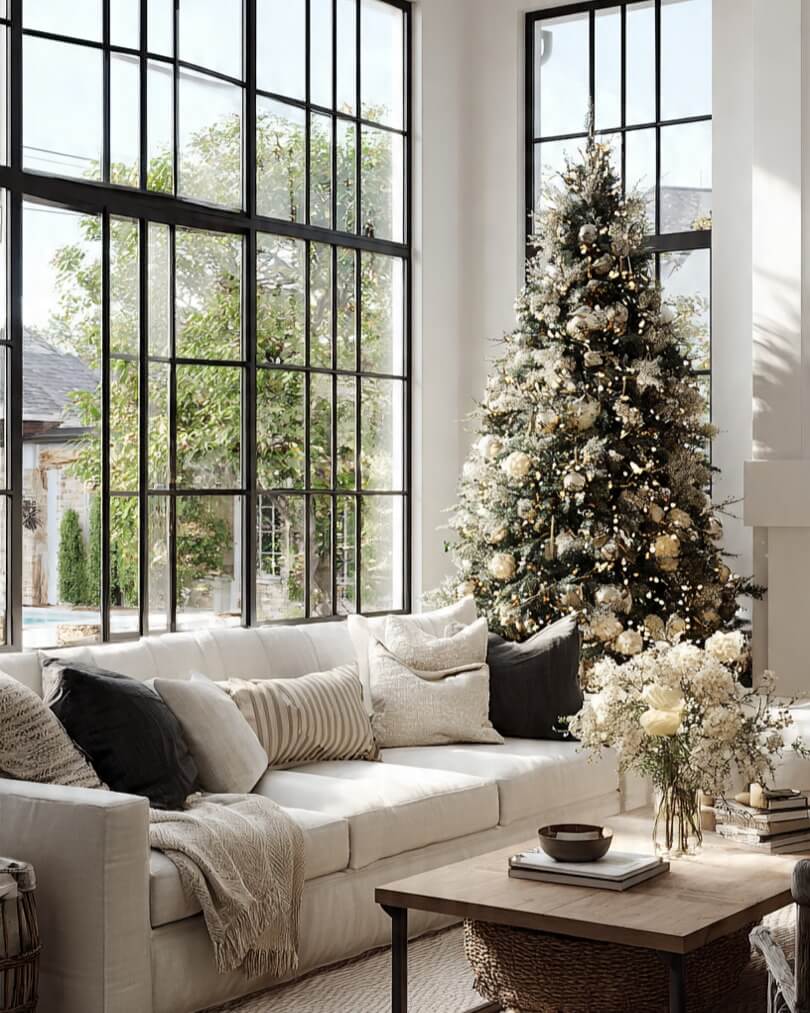
Every cozy farmhouse living room starts with a calm, collected color story. Build yours around soft whites, warm greige, mushroom taupe, and oat—hues that flatter natural light and make wood tones sing. The trick is to layer temperature and texture: pair a warm white on walls with creamy linen upholstery, then ground it with mid-tone woods and a few inky accents for contrast. If your space is open plan, keep one neutral running through all zones to create flow, then introduce depth with stone, woven rattan, jute, and vintage pottery. Test paint undertones at different times of day and choose a matte or eggshell finish for a velvety, farmhouse-friendly look. To avoid flatness, weave in subtle patterns—ticking stripes, petite checks, or a faded rug—and repeat them in small doses. A restrained, layered palette becomes the backdrop that lets patina, greenery, and collected finds shine. Once your neutrals are dialed in, it’s easy to swap seasonal accents without derailing the vibe—a hallmark of timeless farmhouse living room decor ideas that last.
Anchor the Room with a Comfortable Slipcovered Sofa

After setting the palette, choose a sofa that delivers comfort, clean lines, and kid-and-pet practicality. A slipcovered silhouette in performance linen or cotton duck is a farmhouse staple because you can launder or replace covers as life happens. Look for deep seats, generous cushions, and a relaxed skirt or understated turned legs to bridge rustic and refined. Keep the sofa neutral and let pillows do the storytelling—mix linen solids, subtle stripes, and a textured lumbar for dimension. Balance the softness with a leather club chair or wood-frame accent chair to introduce contrast and age. Scale matters: in small spaces, a two-cushion bench seat keeps things airy; in larger rooms, a long three-cushion model invites lounging. Float the sofa off the wall if you can, and park a narrow console behind it for lamps and baskets—instant farmhouse function. This single investment piece sets the tone for the rest of your farmhouse living room decor, welcoming layered rugs, a reclaimed coffee table, and warm lighting to follow.
Choose a Reclaimed Wood Coffee Table with Soul
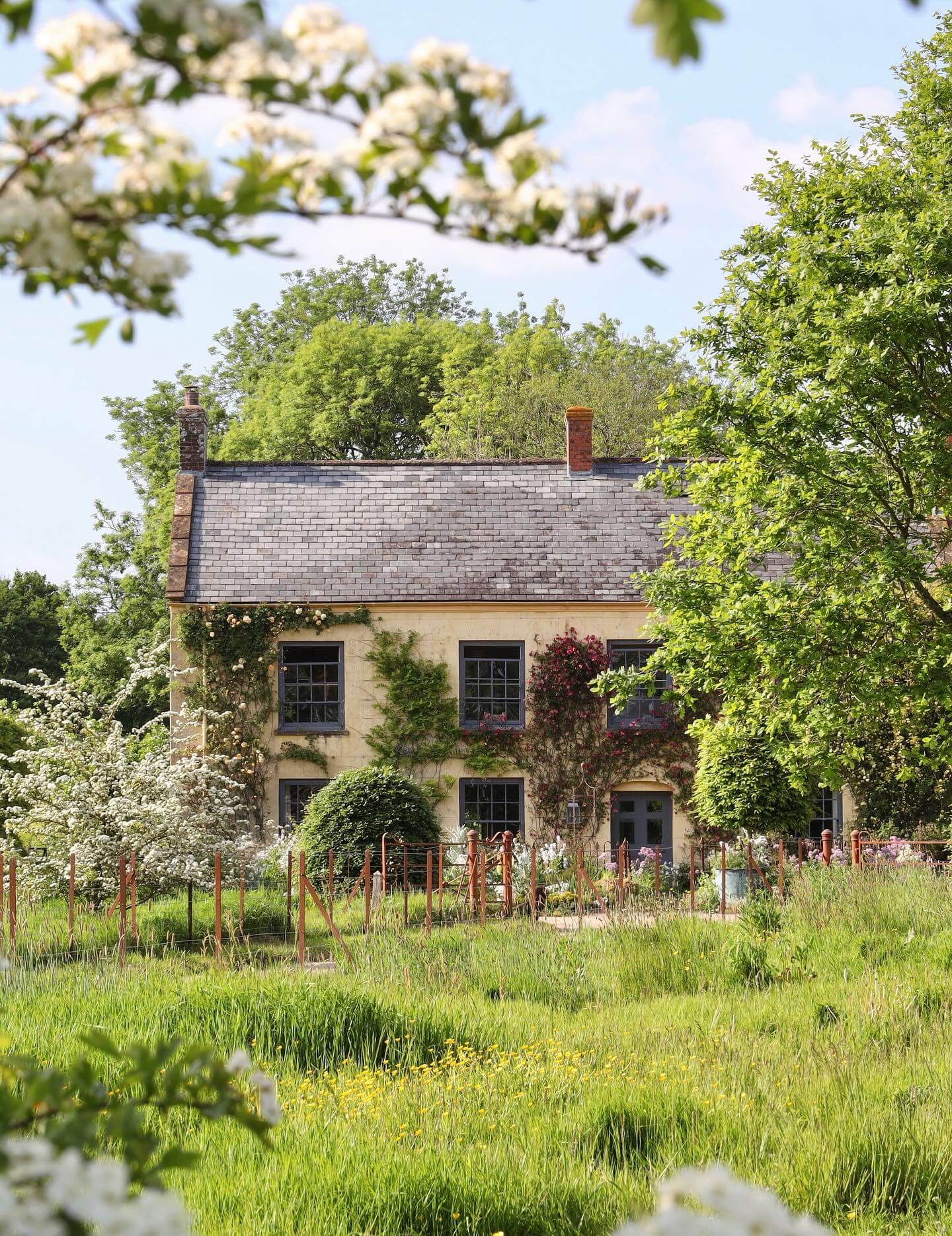
A reclaimed wood coffee table is the workhorse and conversation starter of a farmhouse living room. Its nicks, knots, and timeworn grain add authenticity modern pieces can’t fake. Aim for a table roughly two-thirds the width of your sofa, with 14–18 inches of breathing room around it. If your seating is bulky, consider a chunkier trestle or antique trunk; for airier sofas, a slimmer plank style keeps the look balanced. Style it simply: a woven tray for remotes, a stack of design books, a stoneware vase, and a candle or match striker. Combine round and rectangular objects to soften hard lines and leave negative space so the wood can shine. If your room leans modern farmhouse, introduce a touch of black metal in the base or pair it with an iron side table to tighten the palette. Layering this table over a jute rug instantly warms the room while giving everyday life—board games, coffee rings, and school projects—a beautiful, durable landing zone.
Add Quiet Architecture with Shiplap, Limewash, or Millwork
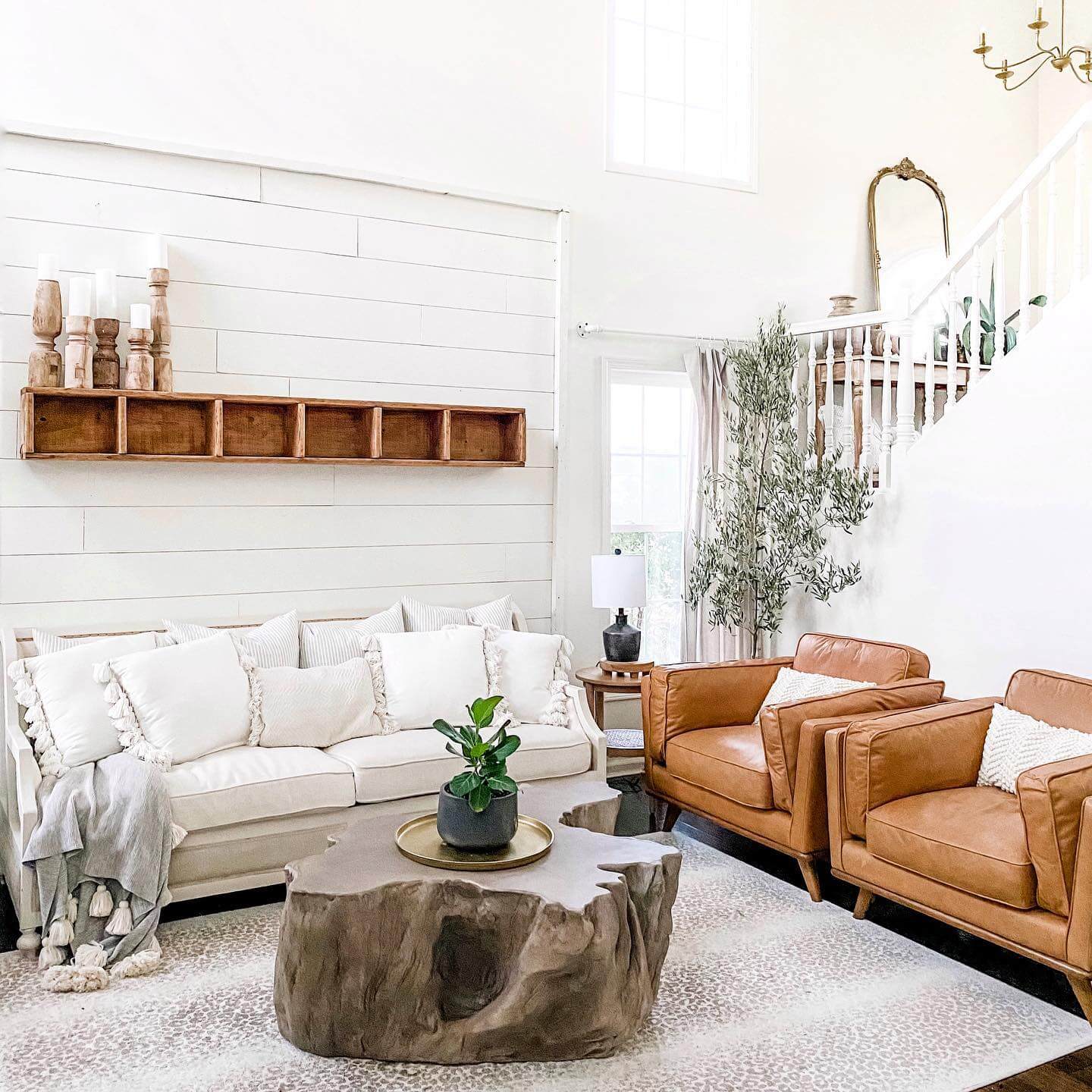
Farmhouse style thrives on subtle structure. If walls feel builder-basic, introduce gentle architecture to add character without clutter. Horizontal shiplap elongates a room and spotlights a fireplace or TV wall; vertical boards lift low ceilings and suit cottage-inspired spaces. Prefer softer texture? Limewash or mineral paint delivers a velvety, cloud-like finish that plays beautifully with natural light and vintage woods. In more tailored rooms, consider board-and-batten or a simple picture ledge to frame art and seasonal greenery. Keep finishes cohesive—paint trim, shiplap, and built-ins in the same warm white to create a seamless envelope, then let furniture and textiles layer in warmth. Even a single accent wall behind the sofa or around the entry to an open-plan living area can redefine the space. The goal isn’t trend-chasing; it’s adding depth and quiet interest so your farmhouse living room decor feels collected, architectural, and designed to age gracefully with your life.
Light the Room in Layers: Iron Fixtures and Linen Shades
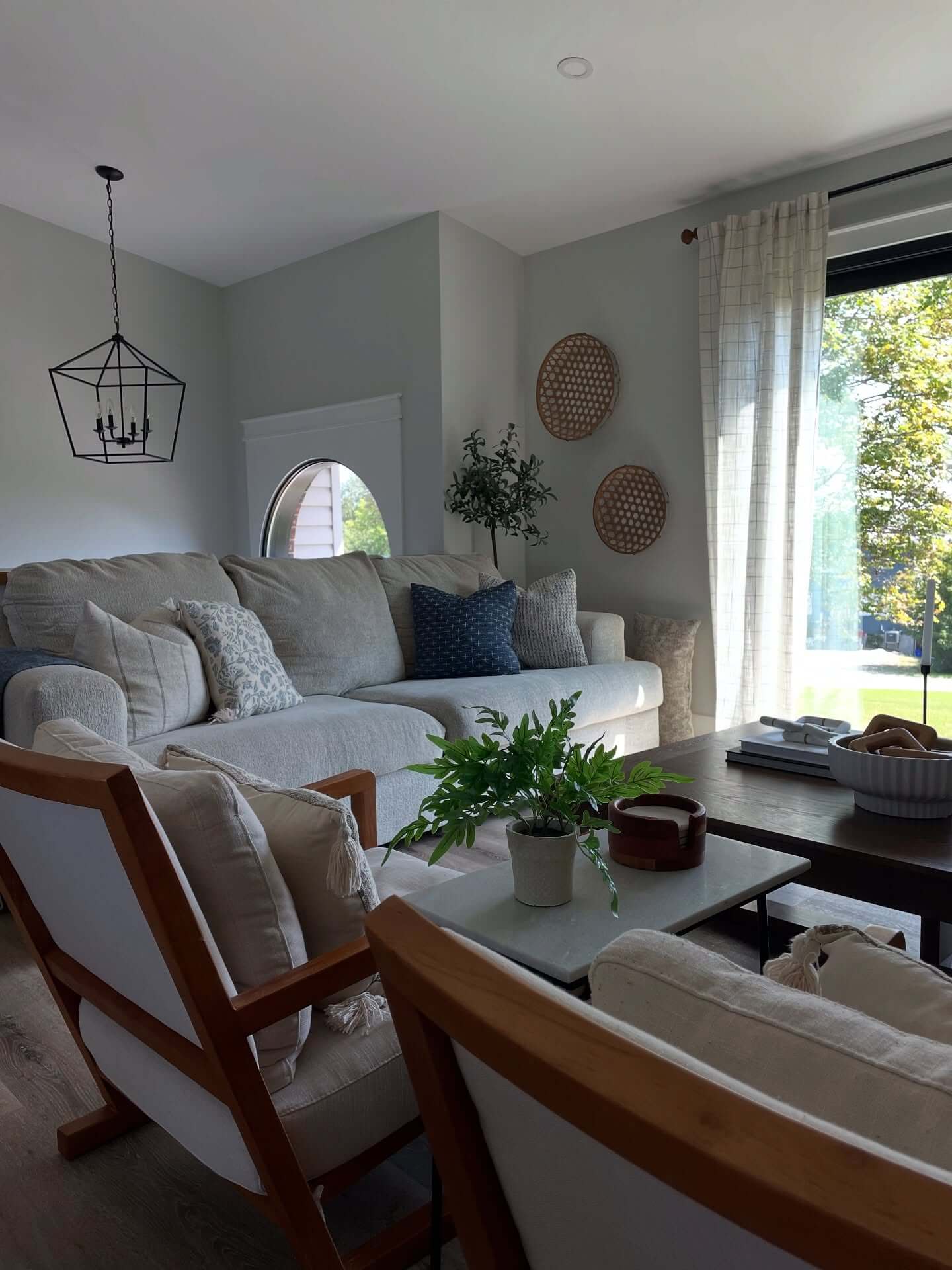
Lighting is the mood-maker in a farmhouse living room, and layers are everything. Start with a statement overhead—an iron chandelier, wood-bead pendant, or lantern fixture—to ground the room’s scale. Add table lamps with linen shades on a console or side tables for warm, diffused glow at eye level. Then sprinkle in a floor lamp by the reading chair and, if you have built-ins or a mantel, consider sconces to highlight texture and display moments. Dimmers and warm bulbs (2700K) are nonnegotiable; they shift the room from bright and functional to soft and cozy at twilight. Finish with candlelight or a vintage-inspired lantern on the coffee table for tactile ambiance. Mix metals thoughtfully: keep iron dominant, then layer a whisper of aged brass for warmth. This nuanced approach to illumination flatters neutrals, adds drama to shiplap or limewash, and spotlights your reclaimed wood accents—an essential layer in any modern farmhouse living room.
Mix Woods, Metals, Leather, and Stone for Authenticity
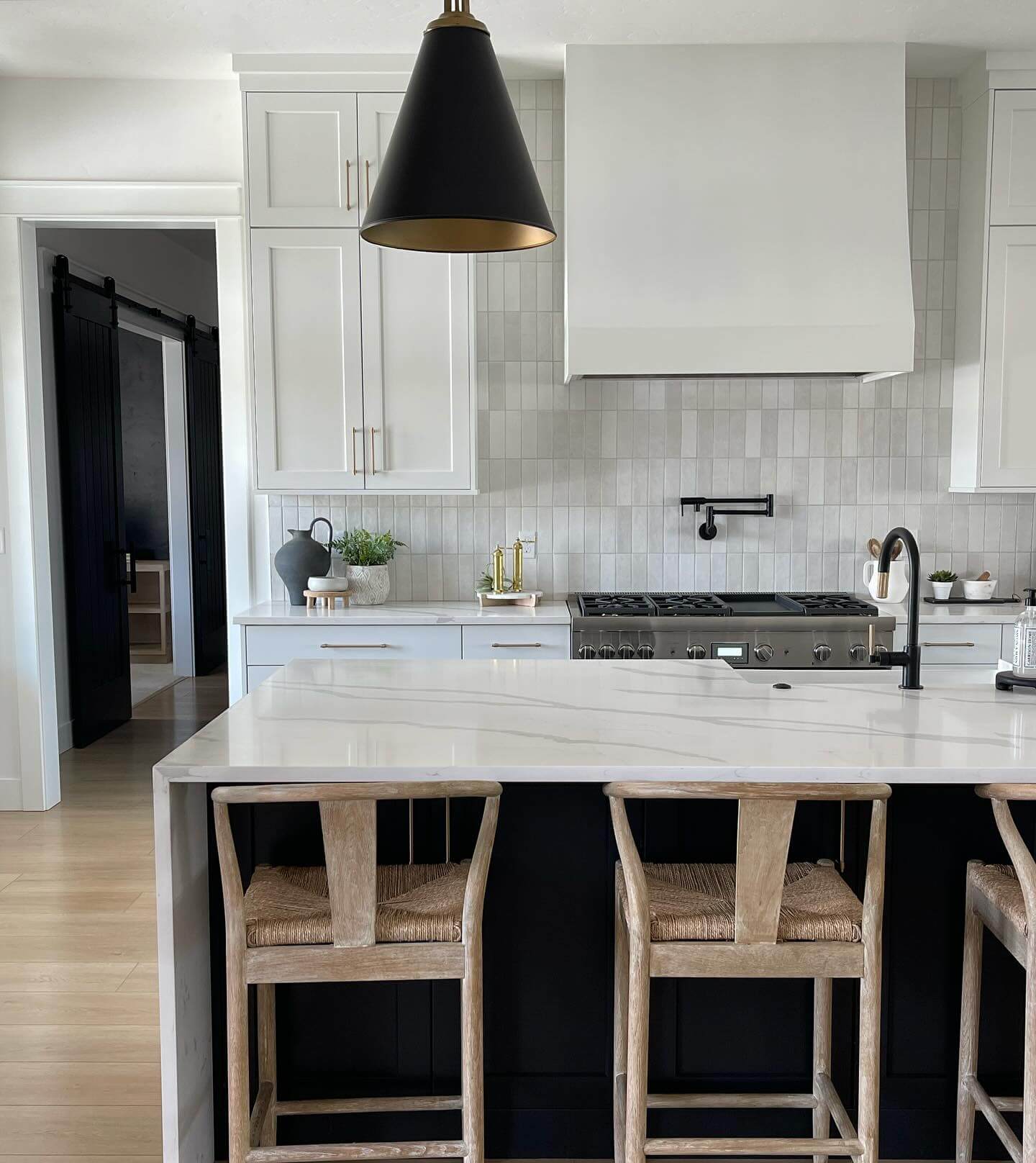
A collected farmhouse room avoids matchy-matchy sets and instead celebrates contrast. Pair honey oak with weathered pine, then punctuate with blackened iron for structure. Introduce a note of aged brass in a lamp base or picture frame to warm the palette without going shiny. Leather—especially in saddle or cognac—brings durability and depth; balance it with nubby linen and soft cotton throws. Add stone or ceramic in planters and vases to ground all that texture. The key is repeating each material at least twice so it feels intentional: two iron moments, two leather moments, multiple wood tones. Keep finishes matte or softly brushed to uphold the rustic-modern balance. If your space skews small, consolidate the mix—one hero wood tone, one supporting metal, and one organic textile—so the room reads calm, not cluttered. This thoughtful combination gives your farmhouse living room decor the layered, lived-in feel that looks like it’s evolved over time.
Layer Rugs: Jute Base with a Vintage or Oushak Accent
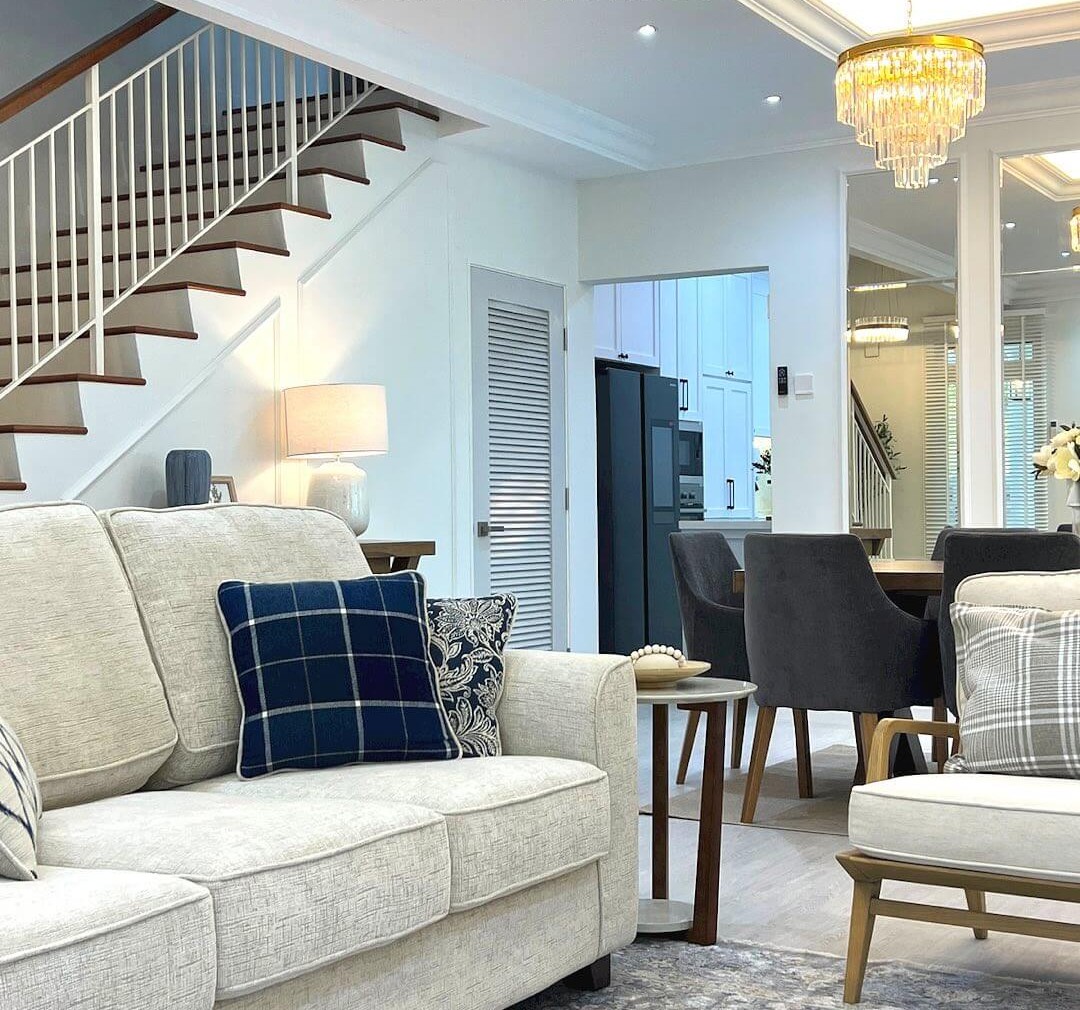
Rugs are where coziness and character collide. Start with a natural-fiber base—jute or sisal—to add texture and visually anchor the seating area. On top, float a vintage Persian or Oushak-style rug for color and softness underfoot. This two-rug strategy is budget-friendly (oversized vintage can be pricey) and helps define zones in open-plan living rooms. Scale matters: aim for the top rug to sit under the front legs of your sofa and chairs, leaving 8–12 inches of jute showing as a border. A quality rug pad prevents slipping and boosts comfort. Choose patterns with muted reds, indigos, or earthy sages to energize a neutral farmhouse palette without overpowering it; the patina hides everyday wear. For long rooms, echo the look with a skinny vintage runner by the fireplace or behind the sofa console. The result is layered texture that feels curated, cozy, and intentionally collected—hallmarks of elevated farmhouse living room decor ideas.
Elevate the Mantel and Built-ins with Collected Displays
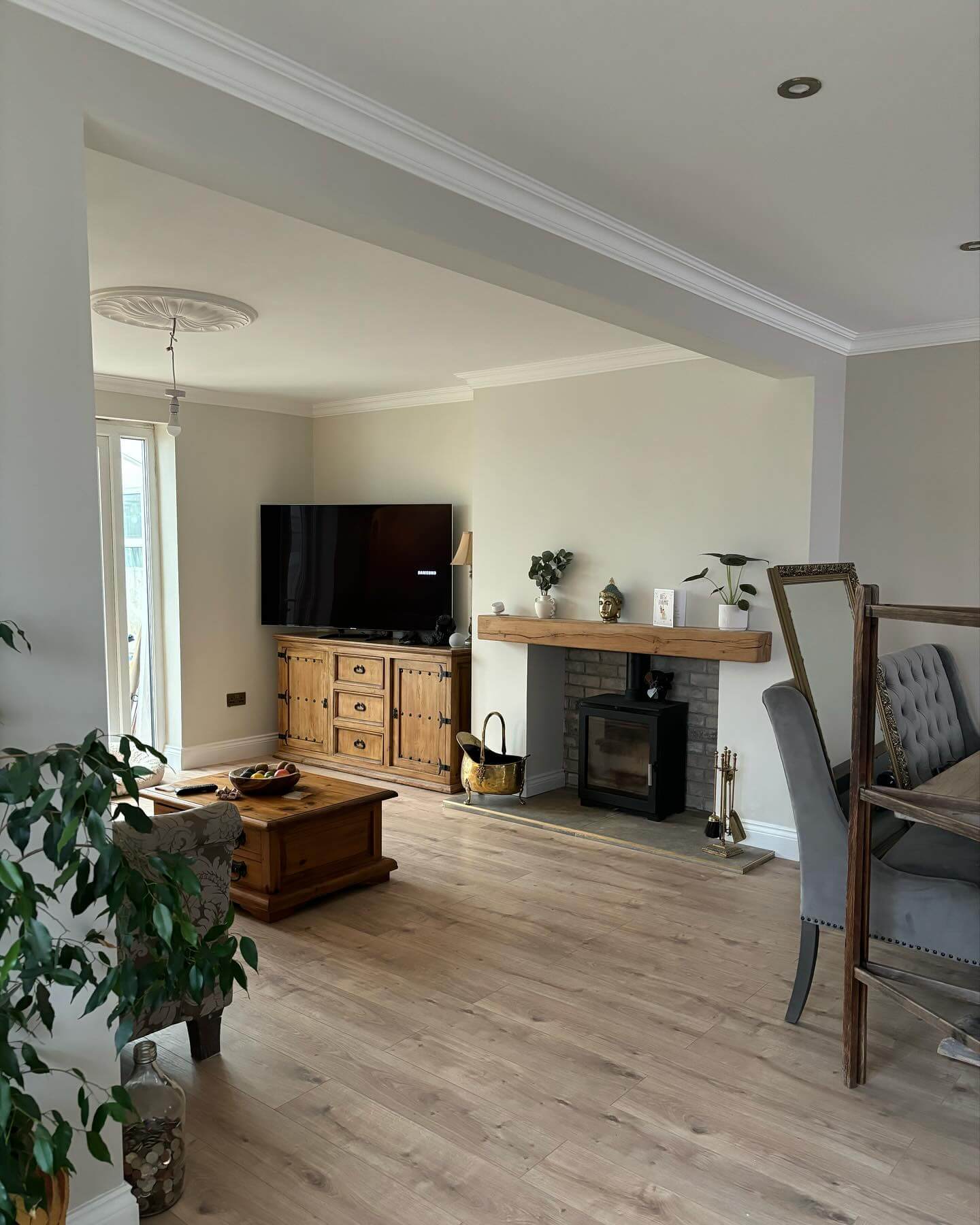
Your mantel and shelving are prime real estate for storytelling—not storage overload. Style them with a mix of heights and textures: an antique-inspired mirror or landscape print as the anchor, flanked by ceramic crocks, woven baskets, and a few timeworn books. Use the “triangle” rule to create visual rhythm: tallest at center or off-center, graduating down in layers. Lean art instead of always hanging it, and leave intentional negative space so the display can breathe. If a TV lives above the fireplace, soften the look with frame-style bezels and balance the tech with warm materials—candlesticks, terracotta, olive branches. Built-ins benefit from repetition: echo one element (like pottery glaze or woven texture) across shelves for cohesion. Swap in seasonal botanicals or small accents to keep things fresh without redoing the whole vignette. Thoughtful styling here spotlights the architectural bones you’ve added—shiplap, millwork—and cements the cozy, curated essence of modern farmhouse living rooms.
Hide the Clutter with Charming, Hardworking Storage
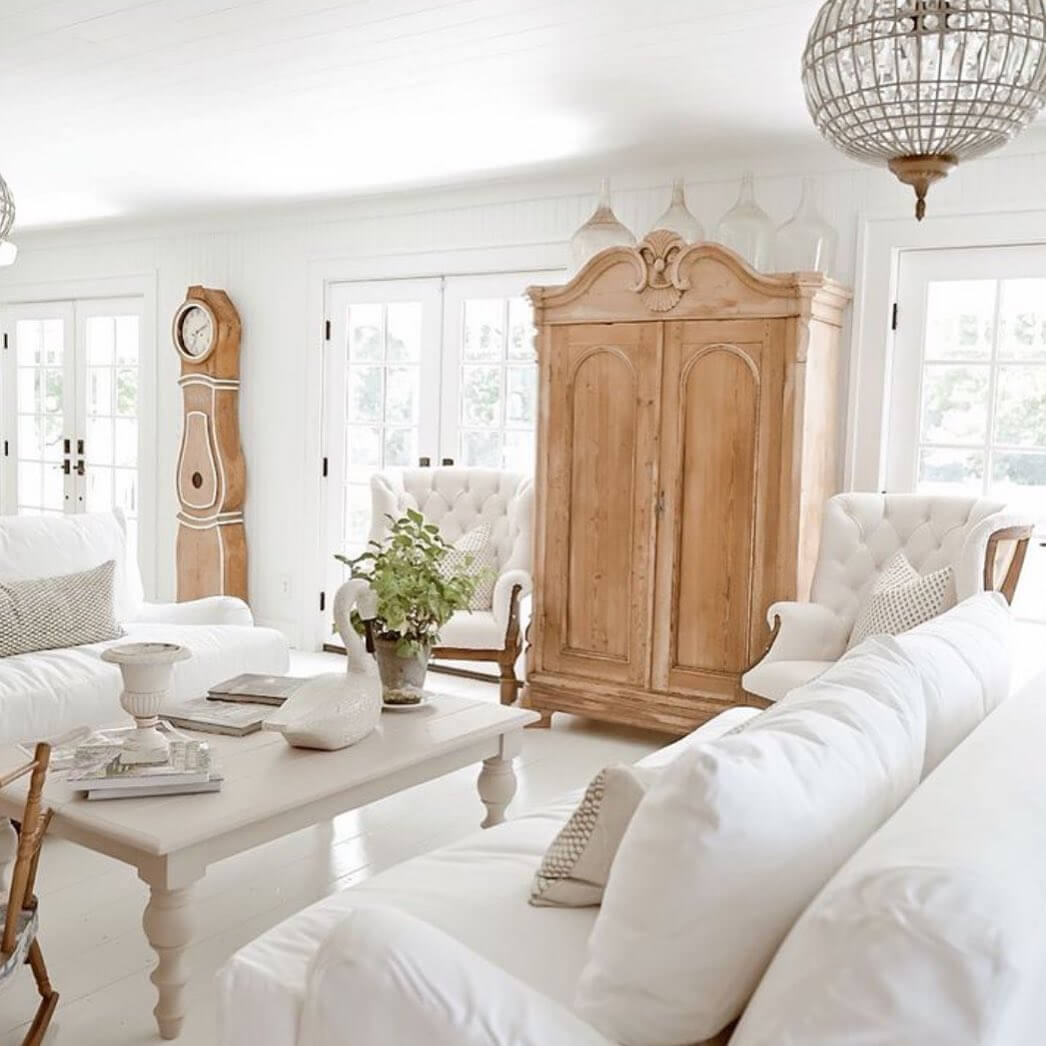
A serene farmhouse living room looks effortless because storage is doing heavy lifting behind the scenes. Incorporate a trunk-style coffee table for blankets and games, a media cabinet with reeded or glass fronts to tuck away devices, and a slim console with lidded baskets for remotes and kid gear. If you’re tight on space, double up: cube ottomans that store toys, a window bench with hidden compartments, or a ladder shelf to corral throws. Peg rails and hooks near the entry of an open-plan living room keep bags and hats off seating without killing the vibe. Choose natural materials—seagrass baskets, cane fronts, raw wood—so function supports the aesthetic. Label subtly and keep categories broad so tidying is fast. When necessities have a home, your slipcovered sofa, layered rugs, and styled shelves can take center stage—and your farmhouse living room decor reads calm, not chaotic.
Finish with Greenery and Cozy, Swappable Textiles
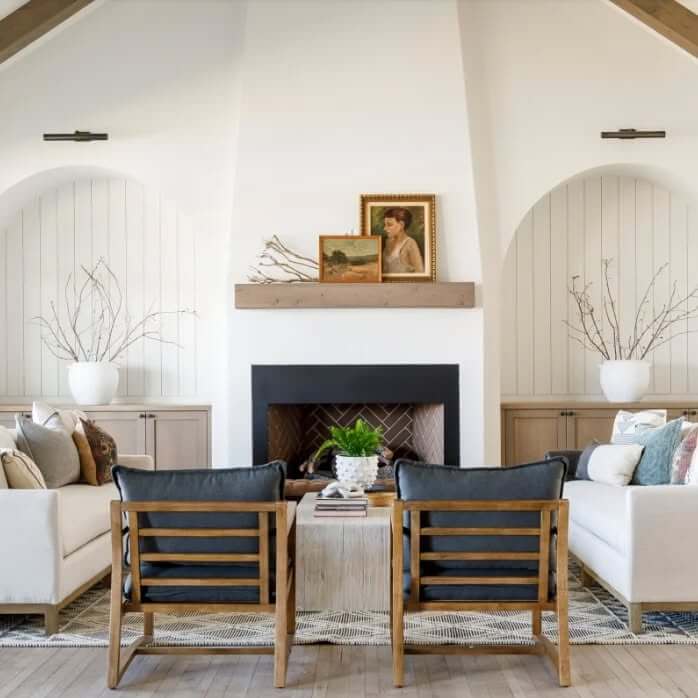
The final layer brings the room to life. Add an olive or fig tree in a vintage crock to introduce height and movement, then sprinkle smaller moments—eucalyptus in a stone vase, dried grasses in a demijohn, a trailing plant on the console. Greenery softens hard edges and animates neutrals without visual noise. Round it out with textiles you can rotate: start with two 22-inch linen pillows, add 20-inch stripes or checks, then a lumbar in a tactile weave. Drape a chunky knit or wool throw over the arm of the sofa and a thinner Turkish towel across a chair for effortless, grab-and-go comfort. Keep your palette within the neutral family, with one accent hue pulled from your vintage rug to tie everything together. These easy-to-swap layers make seasonality simple—think rust and olive in fall, soft blues in spring—so your farmhouse living room stays fresh, cozy, and personal year-round.
Get the Fail-Safe Paint Color Playbook (Free PDF)
36 proven colors • 8 ready palettes • trim & sheen guide • printable testing cards.
Style a Rustic Sofa Console for Warmth and Function
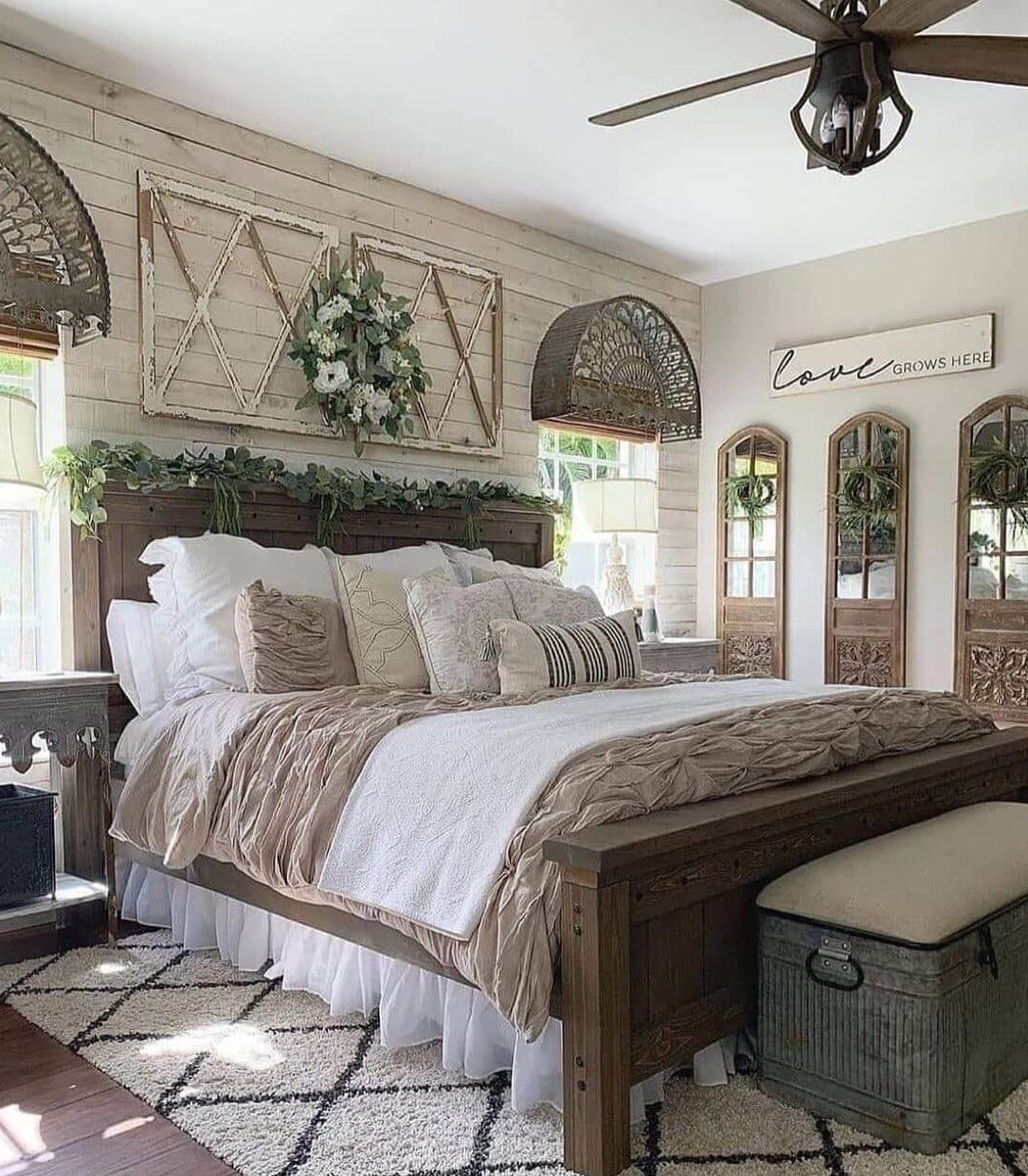
A narrow console table behind the sofa instantly adds farmhouse character and solves real-world living room needs. Choose a piece in reclaimed wood or timeworn pine and let the grain, knots, and imperfections shine. Flank it with matching lamps or a pair of iron task lights to create balanced glow and cozy evening ambiance. Underneath, tuck woven baskets for throw blankets, board games, or extra pillows—hardworking storage that still looks charming. On top, layer a runner, a stack of design books, a ceramic jug with greenery, and a small bowl for remotes to keep everyday clutter corralled. In open-plan spaces, the console doubles as a subtle room divider that defines the seating zone without blocking sightlines. Aim for a table height within a few inches of your sofa back, and keep the styling low and layered so the view stays airy. The result: a grounded, inviting focal point that ties lighting, storage, and display into one beautifully rustic moment.
Carve Out a Conversation Nook with Mismatched Accent Chairs
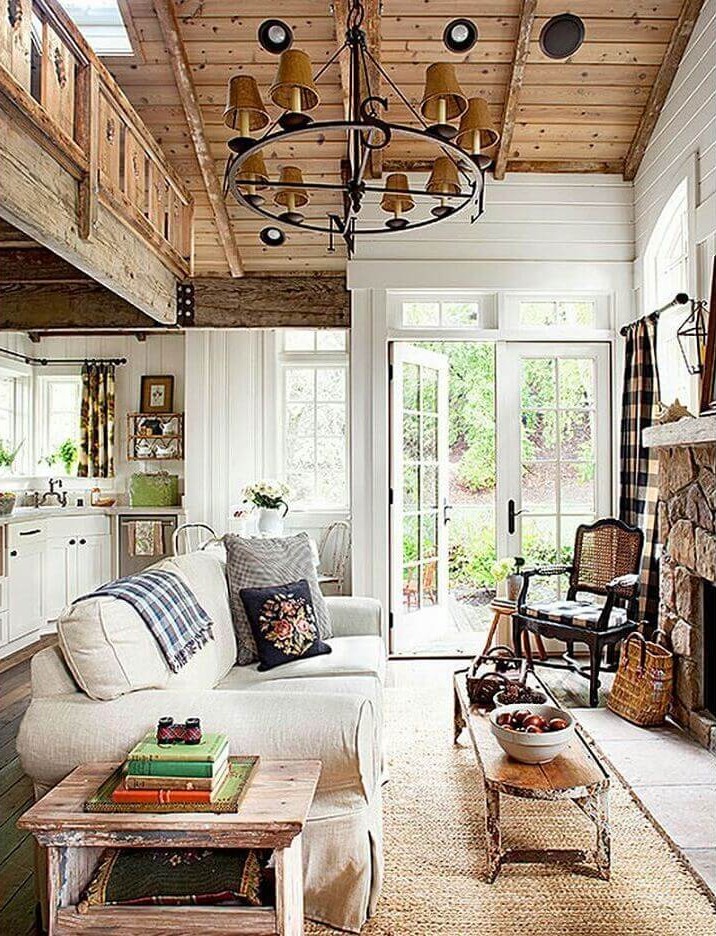
Farmhouse living rooms feel most welcoming when there’s an intimate spot for coffee, cards, or a lingering chat. Pair two mismatched chairs—think a linen slipcovered armchair with a leather club chair, or a spindle-back next to a wingback—to create effortless, collected balance. Anchor the duo with a small round table for a lamp and coasters, and add a low-pile vintage rug to define the zone. Keep seat heights within 1–2 inches of each other for comfort, and mix textures instead of loud colors: nubby linen, warm leather, and a striped lumbar pillow read calm yet dimensional. Position the nook by a window, fireplace, or built-ins to borrow architecture and warmth, then repeat one element (wood tone, metal finish, or stripe) elsewhere in the room to stitch the look together. This simple arrangement expands seating, encourages conversation, and brings that signature farmhouse charm—relaxed, personal, and perfectly lived-in.
Frame Sunlight with Breezy Linen Curtains (and Woven Shades)
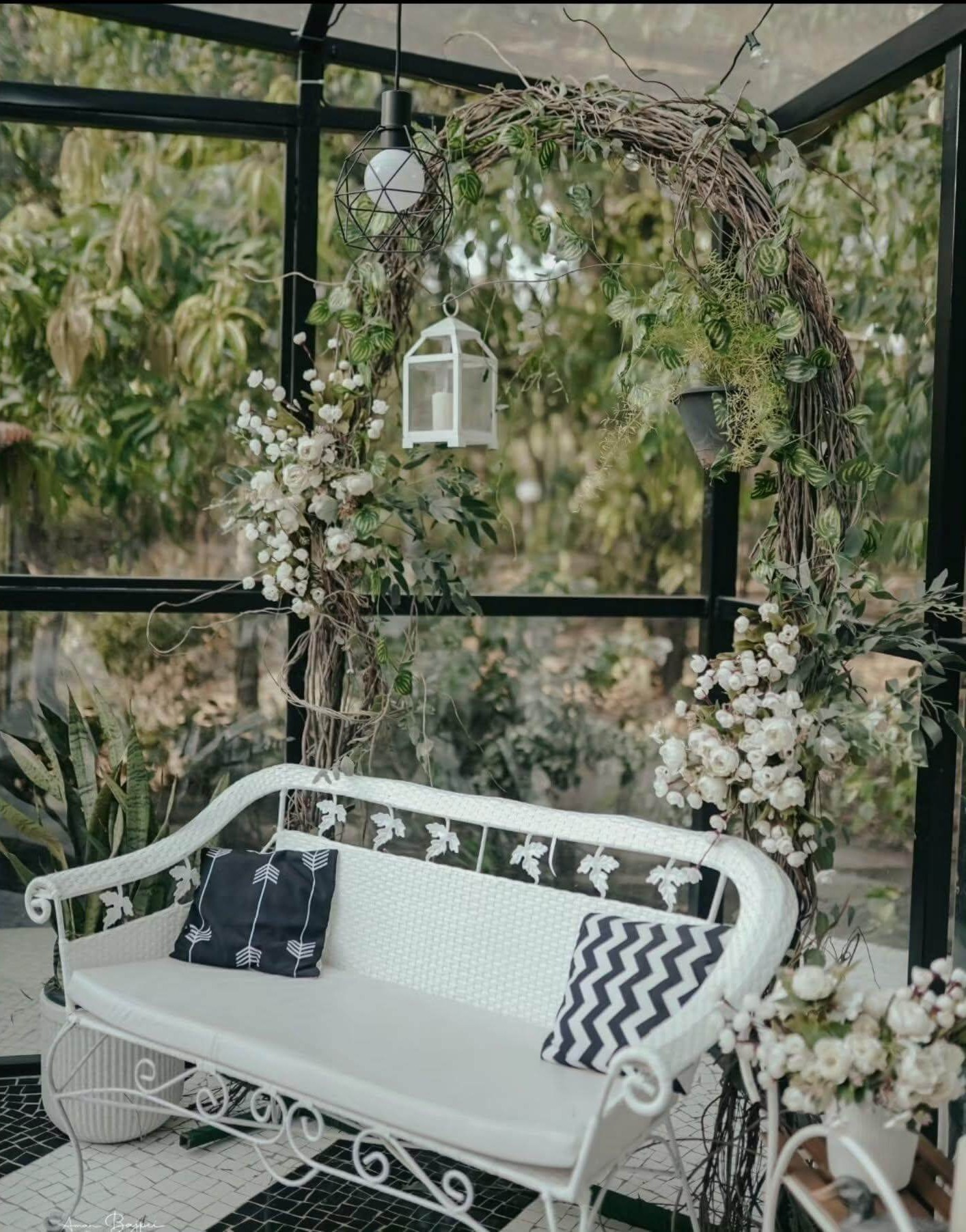
Window treatments make or break a cozy farmhouse living room. Opt for unlined or lightly lined linen panels in soft oat, ivory, or greige to keep the palette calm and the texture tactile. Hang them high and wide—rod 6–10 inches above the trim and extending past the frame—to elongate the room and maximize light. For privacy and layered depth, pair the drapery with natural woven shades in jute or bamboo; the duo feels custom and adds organic warmth that complements jute rugs and reclaimed wood. Use black or iron rods with ring clips for a subtle hit of contrast that echoes your lighting. Keep patterns gentle: ticking stripes or micro checks on a single roman shade can be all you need. The goal is soft movement, filtered light, and a tailored-but-easy finish that calms visual noise and lets your furniture, art, and greenery shine.
Bring in a Timeworn Hutch or Apothecary for Soulful Storage
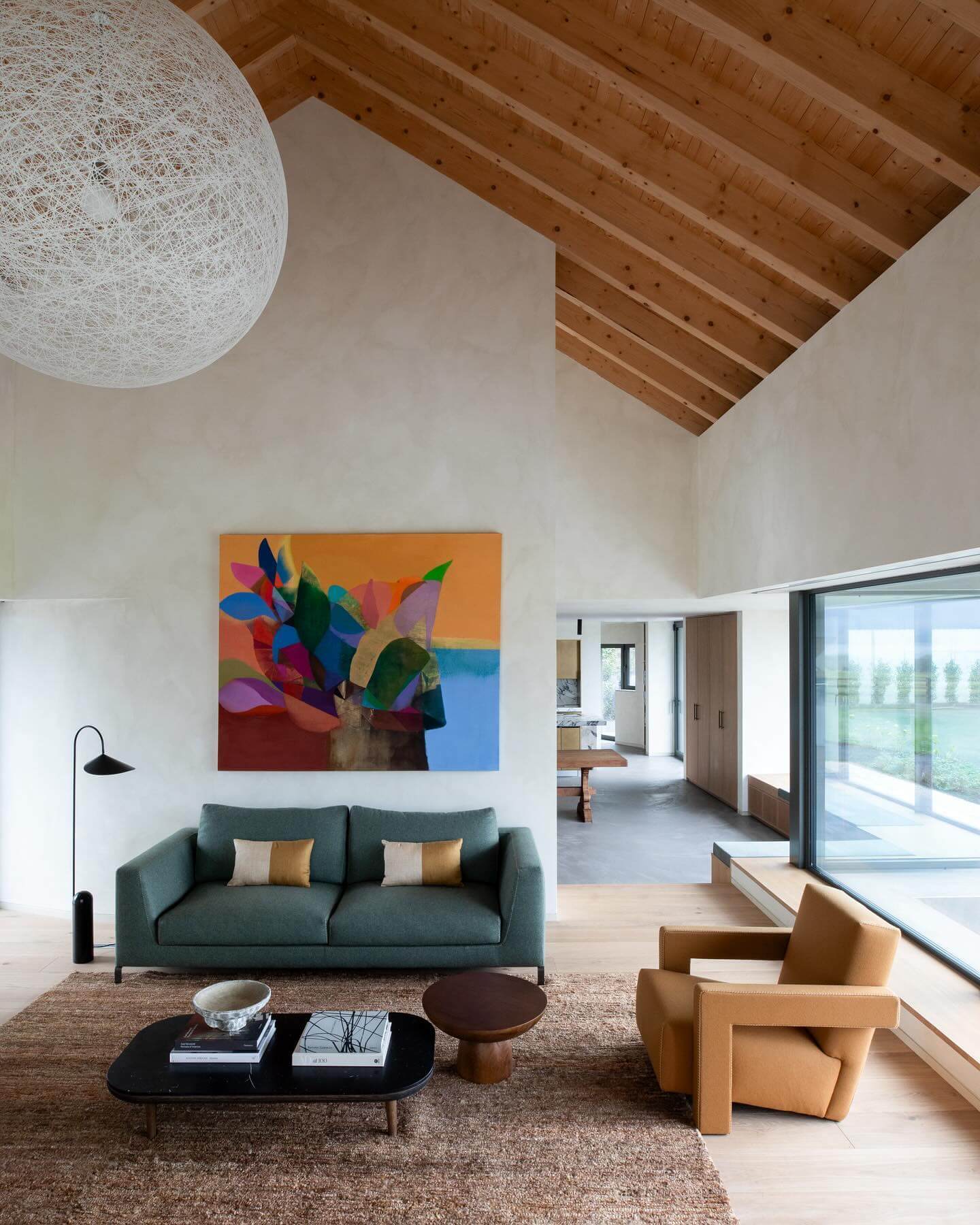
Nothing says farmhouse like a vintage cabinet that looks lifted from a country store. A glass-front hutch, antique apothecary, or pine cupboard adds gravitas and essential storage to a living room without feeling heavy. Use it to hide games and media in woven bins, and to display ironstone, crockery, stacked books, and framed family photos. The trick is editing: group by color and material, keep negative space, and vary heights for rhythm. Unsure on finish? Raw, waxed wood leans rustic; a soft painted tone (mushroom, putty, sage) reads modern farmhouse; a lightly distressed black anchors a neutral scheme. Fit matters—choose a piece that fills the wall proportionally and treat the top as a styling ledge for baskets or a trailing plant. This one investment instantly brings history, storage, and a “collected over time” story that elevates even the simplest sofa-and-rug setup.
Add Contrast with Matte Black Accents to Ground the Neutrals
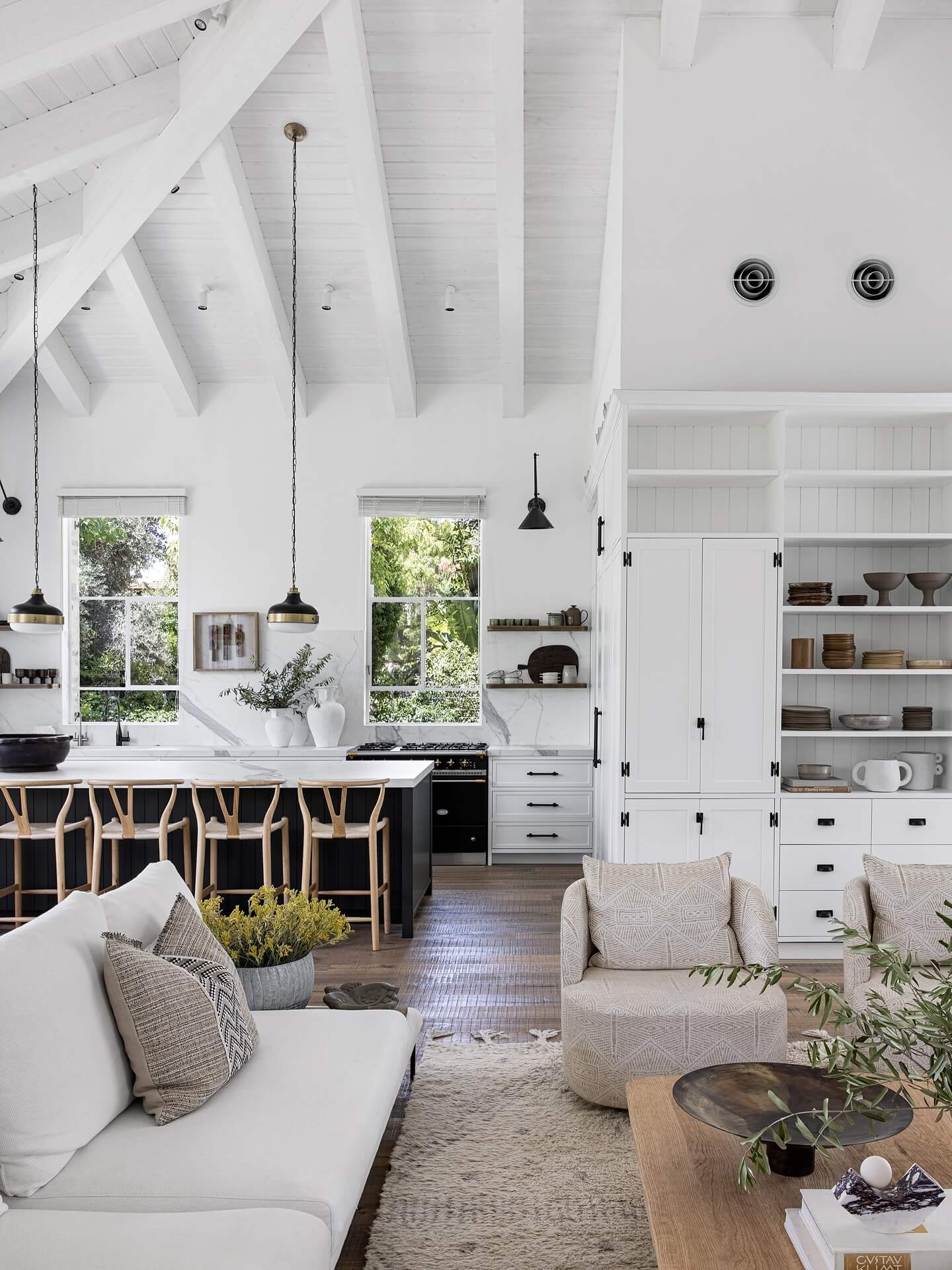
A neutral farmhouse palette sings when it has a little edge. Introduce matte black in measured doses—picture frames, curtain rods, lamp bases, cabinet hardware, and a slim metal side table—to ground light woods and creamy textiles. Aim for roughly 10–20% black in the room so it reads as intentional punctuation, not a theme. Echo the tone in your lighting (iron chandeliers, lantern pendants, or sconces with linen shades) and consider thin black window grids or an oversized black mirror to repeat the linework. This contrast sharpens silhouettes, highlights texture, and keeps beige-on-beige from feeling flat. Balance the darker hits with warm materials like leather, oak, aged brass, and woven baskets. The outcome is that modern farmhouse mix: soft and inviting, but visually confident and curated.
Bounce Light with an Oversized, Vintage-Style Mirror
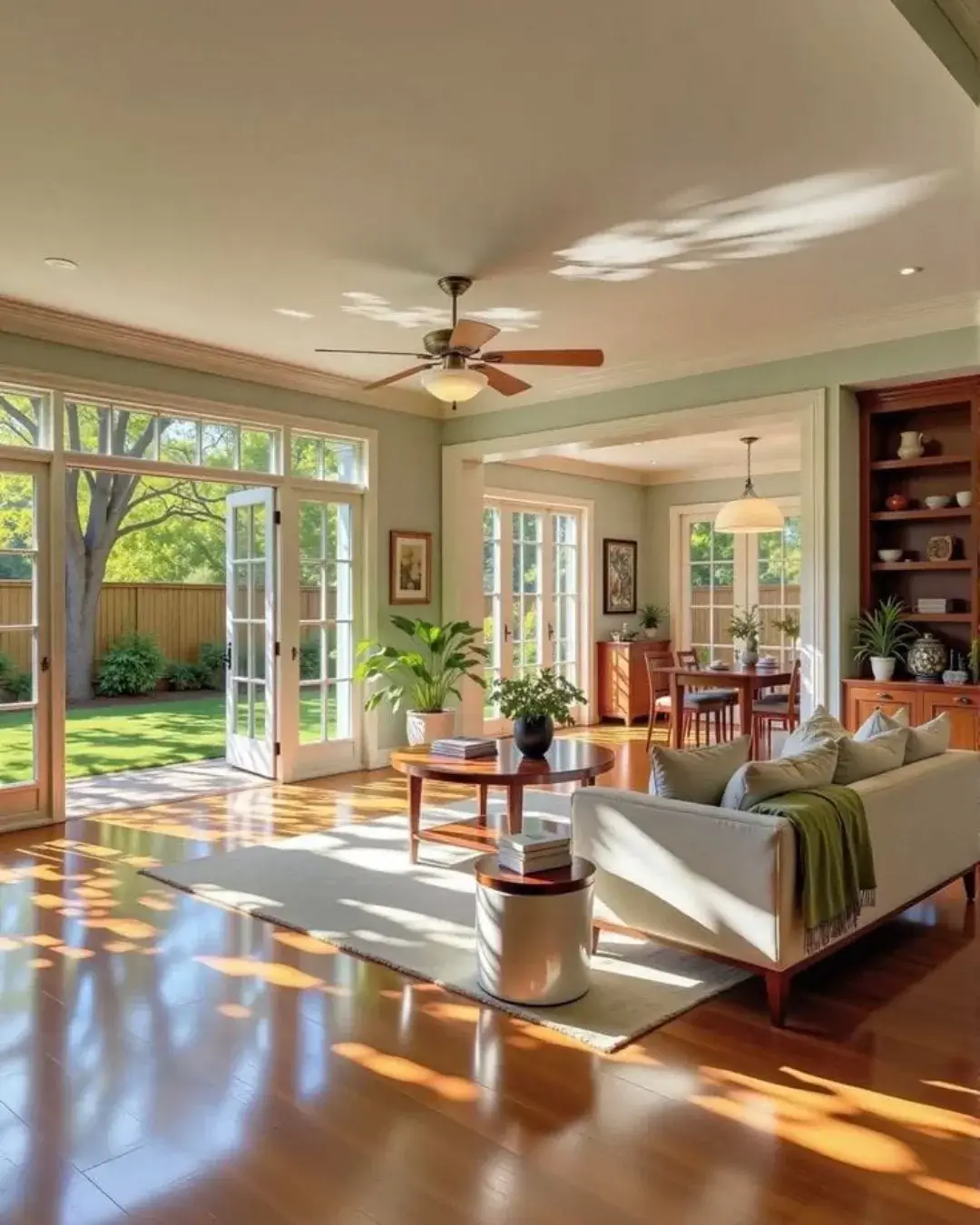
If your living room craves more light or a bigger feel, a large mirror delivers instant airiness without a renovation. Choose an antique-inspired shape—arched, windowpane, or gilded—and place it where it will reflect a window, greenery, or a favorite vignette. Across from a stone fireplace or layered over shiplap, a mirror adds patina while amplifying texture and glow from iron sconces or table lamps. Keep frames in finishes that echo existing metals: blackened steel for contrast, warm brass for softness, or rustic wood for cohesion with beams and coffee tables. Style the adjacent surface with staggered heights (a vase, candlesticks, a small stack of books) so the reflection feels intentional. Always anchor heavy mirrors to studs for safety. This single move makes small rooms feel larger, brightens cloudy days, and reinforces the layered, reflective quality that cozy farmhouse spaces are known for.
Choose a Tufted Ottoman + Tray for Family-Friendly Comfort
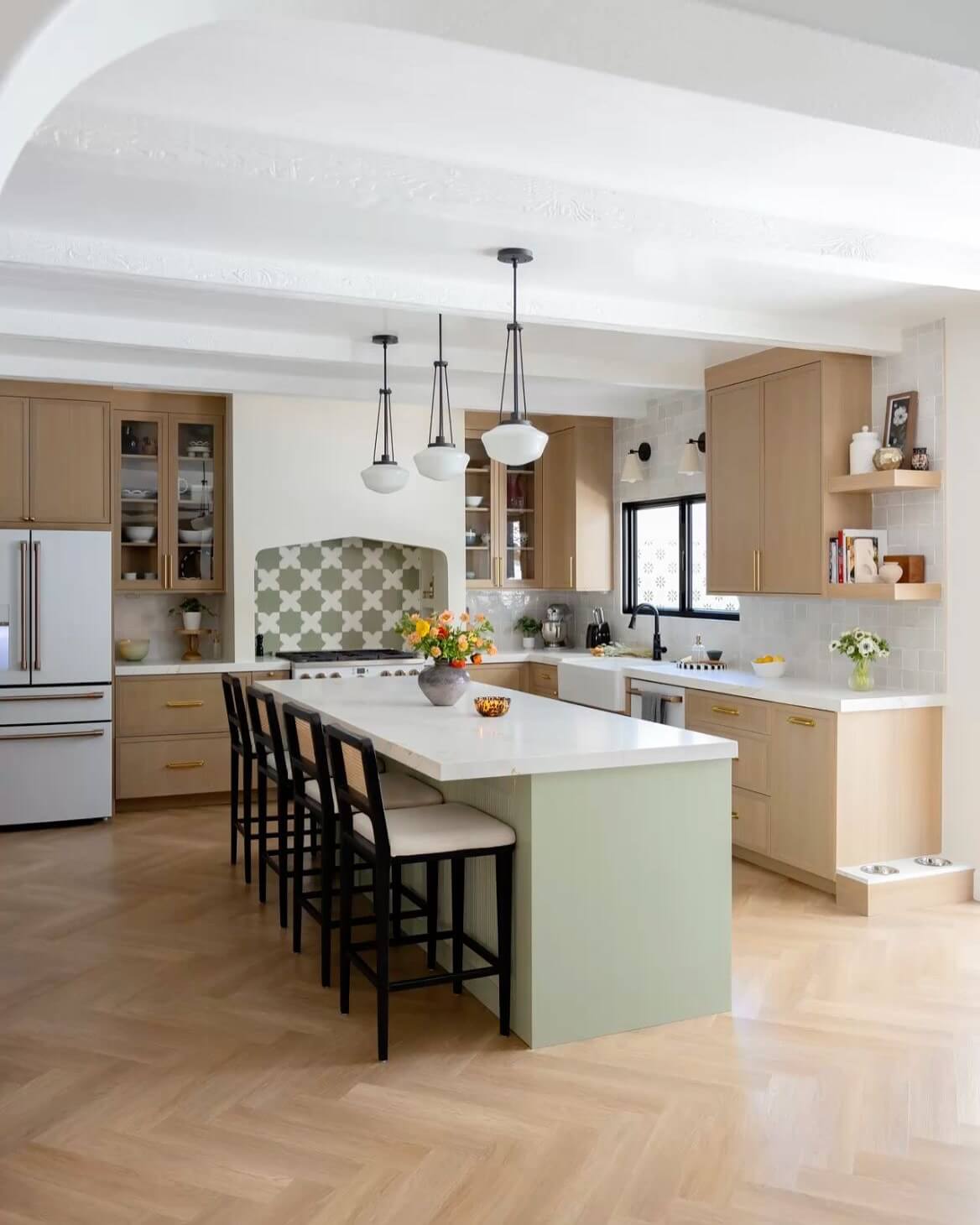
For a softer take on the coffee table, swap in a tufted ottoman. Upholstered in linen, leather, or a performance plaid, it brings plush texture and kid-friendly edges to a high-traffic farmhouse living room. A broad wood or rattan tray provides a stable surface for candles, coasters, and a bud vase while adding another tactile layer. Go round to ease flow in tight layouts or square/rectangular to echo a slipcovered sofa’s lines. Below, a jute rug with a vintage or Oushak accent (already layered in your scheme) grounds the grouping beautifully. Consider hidden-storage ottomans for throws and puzzles, and contrast the upholstery with your sofa—leather ottoman with linen sofa, or vice versa—to keep the mix dynamic. The effect is equal parts comfortable and collected, perfect for movie nights, weekend lounging, and the lived-in charm that defines modern farmhouse style.
Layer Classic Farmhouse Patterns: Ticking Stripes, Gingham, and Plaid
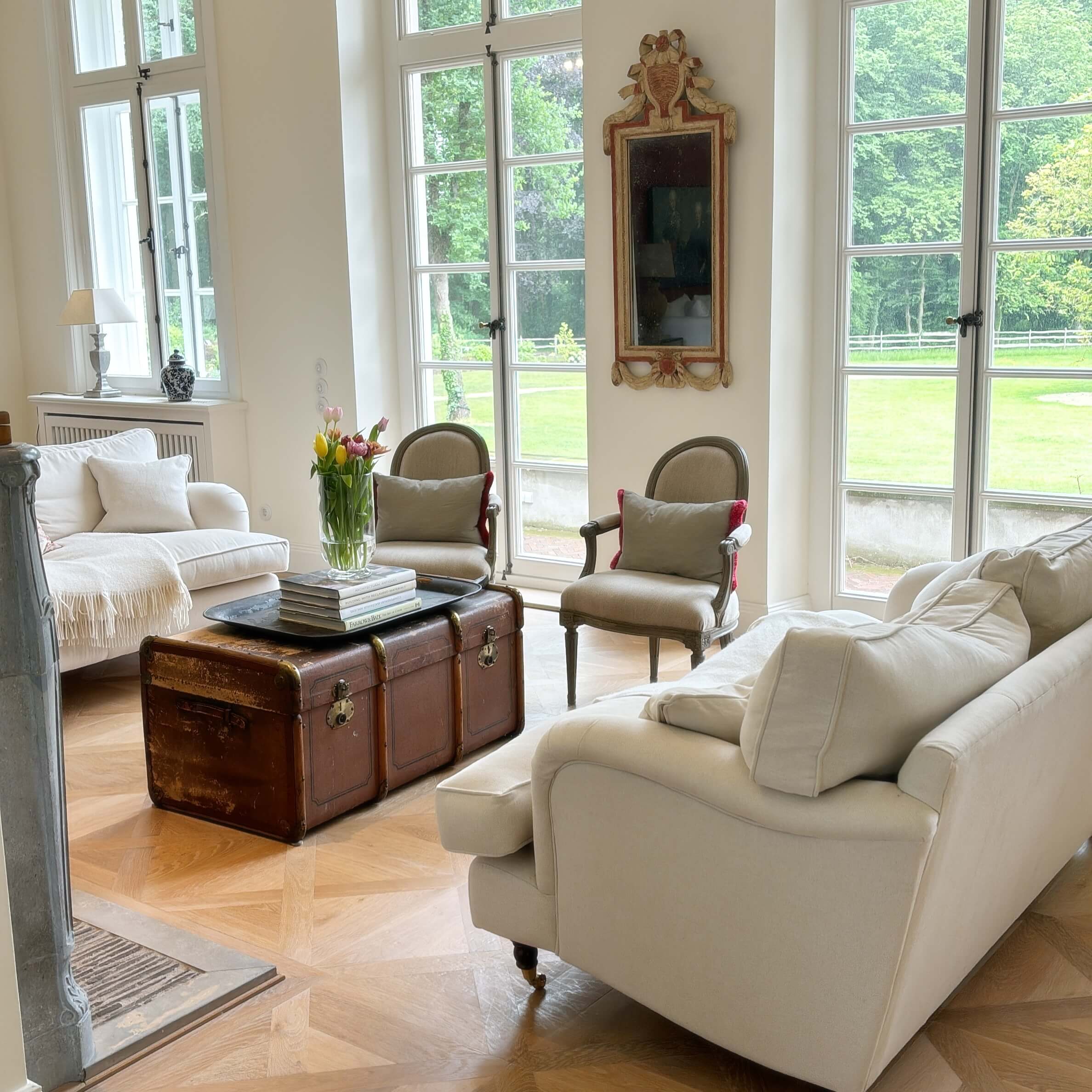
Pattern in a farmhouse living room should feel timeless, not trendy. Start with a quiet base—neutral slipcover, jute rug, limewashed walls—then add small-scale classics: ticking stripes on pillows, a gingham throw, or a subtle windowpane on an accent chair. Vary the scale (small stripe, medium check, larger plaid) within a tight palette of oatmeal, charcoal, denim blue, and muted sage so the room reads cohesive, not busy. Repeat each color at least twice—on drapery trim, artwork mats, or book spines—to knit the look together. If you’re mixing florals, keep them vintage and low-contrast so they hum in the background. These heritage patterns bring comfort, movement, and a sense of place, all while staying camera-friendly and easy to refresh seasonally.
Get the Fail-Safe Paint Color Playbook (Free PDF)
36 proven colors • 8 ready palettes • trim & sheen guide • printable testing cards.
Hang Architectural Salvage as Art for Instant Character
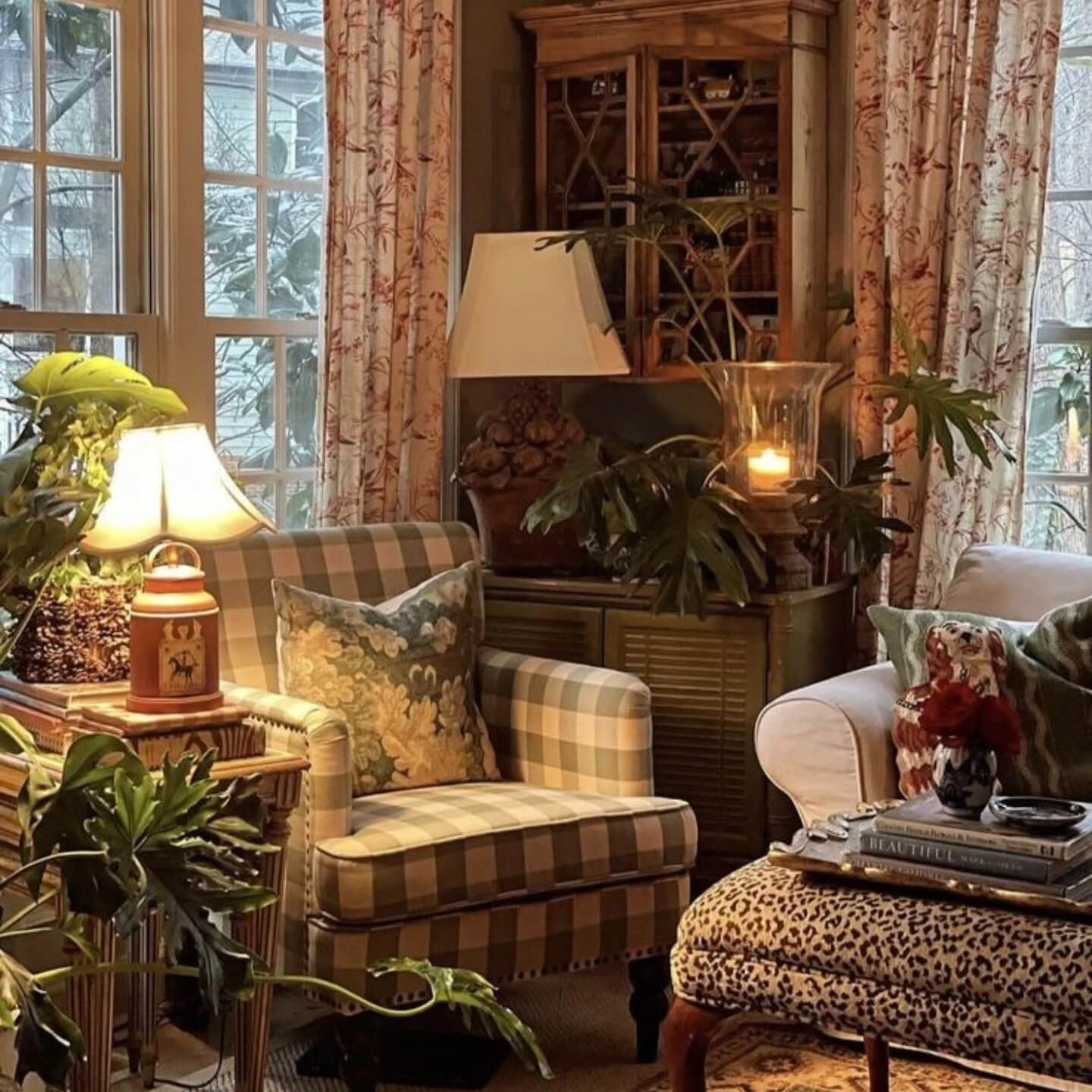
When walls need warmth but framed prints feel too polished, reach for architectural salvage. Old corbels, bread boards, shutter pairs, or a chippy transom instantly add age and texture to a farmhouse living room. Mount a set over the sofa, lean a pair of tall shutters behind a console, or cluster round bread boards for a sculptural, tone-on-tone gallery. Keep the palette quiet—natural wood, soft whites, and timeworn finishes—so the pieces read as texture more than “decor.” Balance the rustic with refined touches like linen lampshades, brass candlesticks, or a crisp stripe to avoid going overly primitive. This approach recycles history, introduces scale without heaviness, and tells a story that new mass-market art rarely can.
Define an Open-Plan Living Room with Rugs, Consoles, and Sightlines
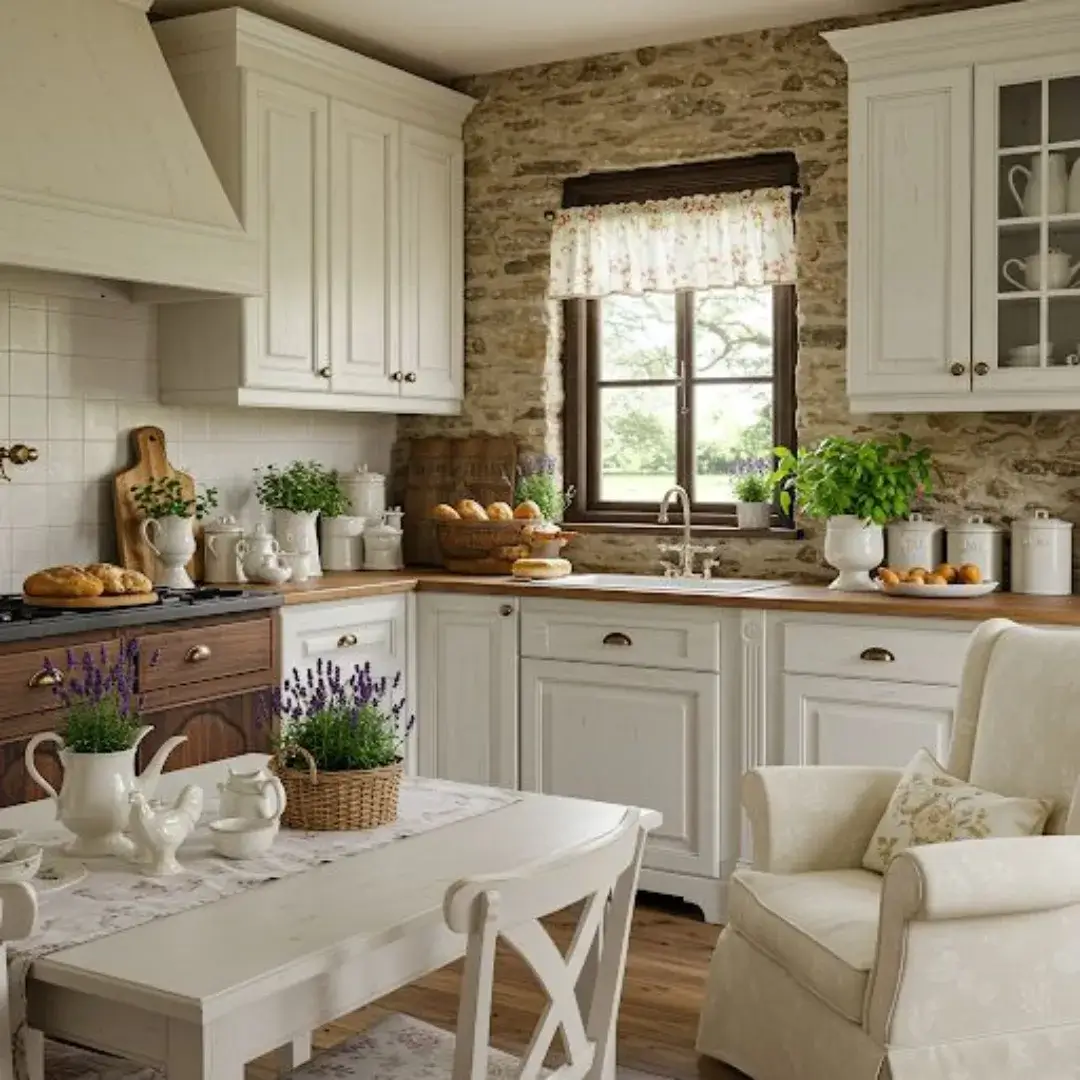
In open layouts, farmhouse style thrives when zones feel intentional yet relaxed. Start by anchoring the seating area with a generous jute rug layered under a vintage accent rug to set the living “island.” Float the slipcovered sofa perpendicular to the kitchen and back it with a rustic console (hello, lamps and baskets) to imply a gentle boundary. Use twin chairs to complete a conversation square, and align the coffee table with the room’s strongest axis—fireplace, window wall, or built-ins—to clarify flow. Repeat finishes across zones: iron pendants over the island, iron floor lamp in the living; oak stools, oak frame on a mirror. Keep pathways 36 inches clear, and let greenery or a tall cabinet act as soft screens without blocking light. The result is a cohesive, cozy modern farmhouse living room that breathes, functions, and welcomes a crowd.
Anchor Your Farmhouse Living Room with a Reclaimed Wood Coffee Table
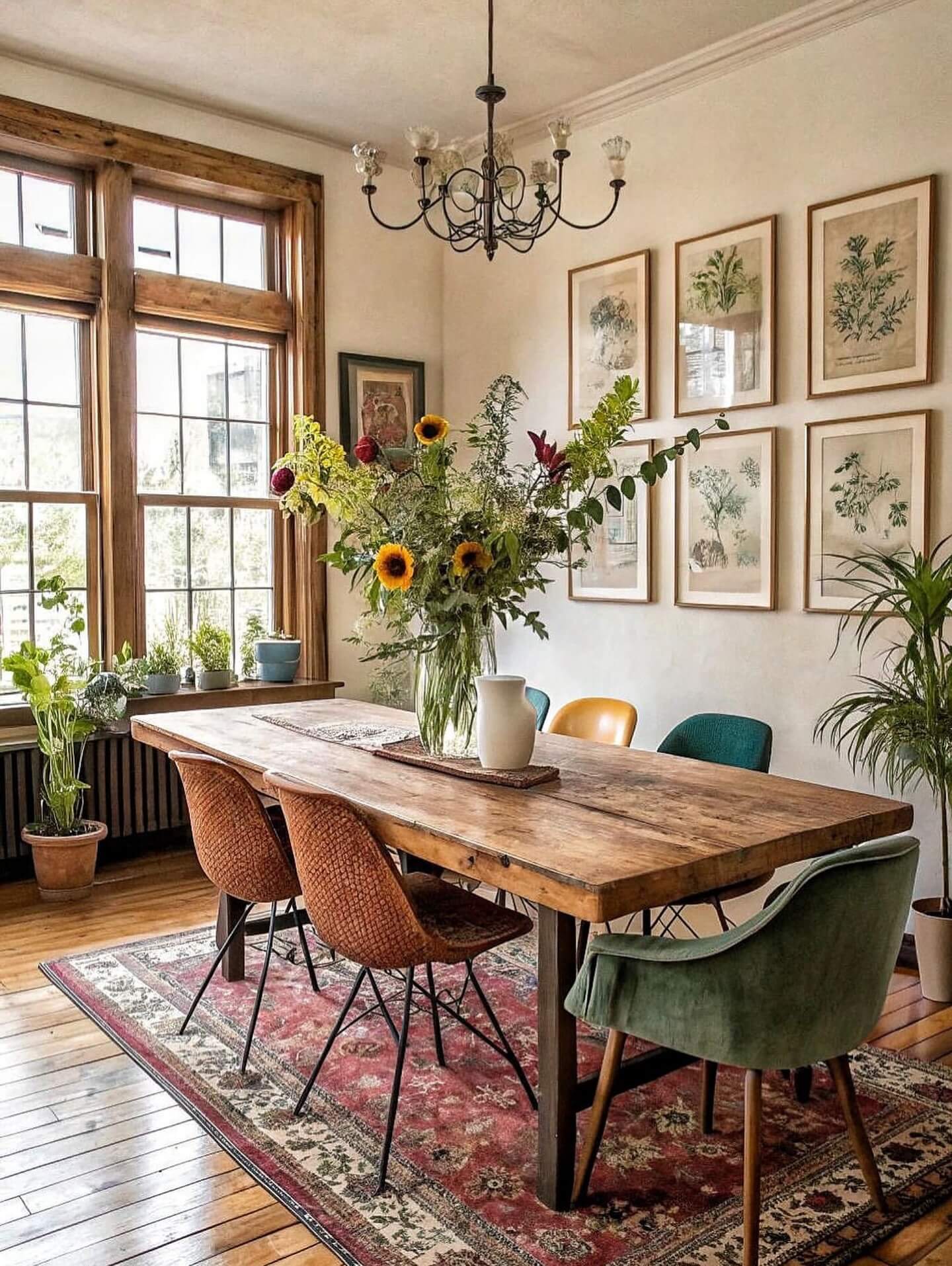
A weathered, real-wood coffee table is the heartbeat of a cozy farmhouse living room. Look for a chunky plank top with visible saw marks, breadboard ends, or a pedestal base to bring tactile authenticity to your seating area. The right scale matters: aim for two-thirds the length of your sofa and a height that sits within an inch or two of the seat cushion. Style it simply—a roomy tray corrals candles, a small crock with seasonal stems, and a couple of linen-bound design books—so the grain and patina shine. If you entertain or have kids, consider softened corners, a durable wax-oil finish, and a shelf or interior storage for remotes and games (vintage crates slide in beautifully). Pair the table with a jute or sisal rug for natural texture, a slipcovered linen sofa, and a patinaed leather chair for that lived-in balance farmhouse rooms do so well. Iron strap details or turned legs add subtle industrial and traditional notes without feeling fussy. The result is a warm, hardworking centerpiece that invites feet up, coffee mugs down, and everyday ease—exactly the farmhouse decor vibe you’re after.
Get the Fail-Safe Paint Color Playbook (Free PDF)
36 proven colors • 8 ready palettes • trim & sheen guide • printable testing cards.
Make the Fireplace and Mantel a Soulful Farmhouse Focal Point
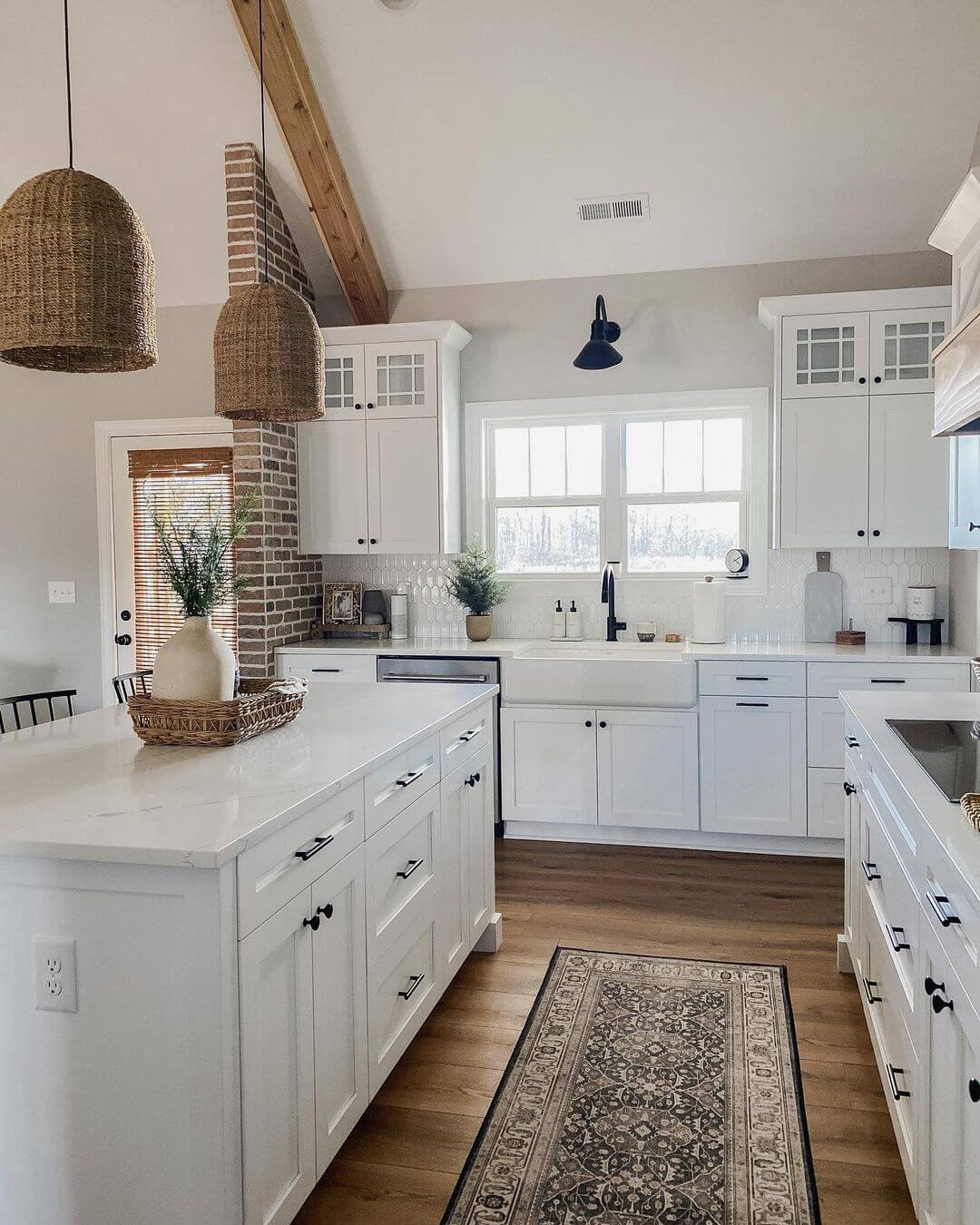
If you’re lucky enough to have a fireplace, let it define your farmhouse living room decor. Start by embracing honest materials—limewashed brick, stacked stone, or a plaster surround—then top it with a hefty reclaimed beam or chunkier painted mantel. Keep the palette soft (warm white, putty, or greige) so texture leads over color. Style is layered but restrained: lean a vintage landscape or charcoal sketch against the wall, flank with wood candlesticks or antique brass sconces, and tuck in a crock of olive branches or eucalyptus for organic height. Beneath, a woven basket of throws and a handled log carrier add utility and rustic charm. Consider a low hearth bench with linen cushions to turn the area into extra seating during gatherings. If your firebox is purely decorative, fill it with pillar candles, birch logs, or a stack of vintage books for a cozy, cottage look. Dimmers on nearby lamps and a mirror across the room will amplify the glow. This one move anchors the room, sets a timeless tone, and gives you a spot to refresh seasonally without redoing the whole space.
Mix Linen Slipcovers with Aged Leather for Lived-In Balance
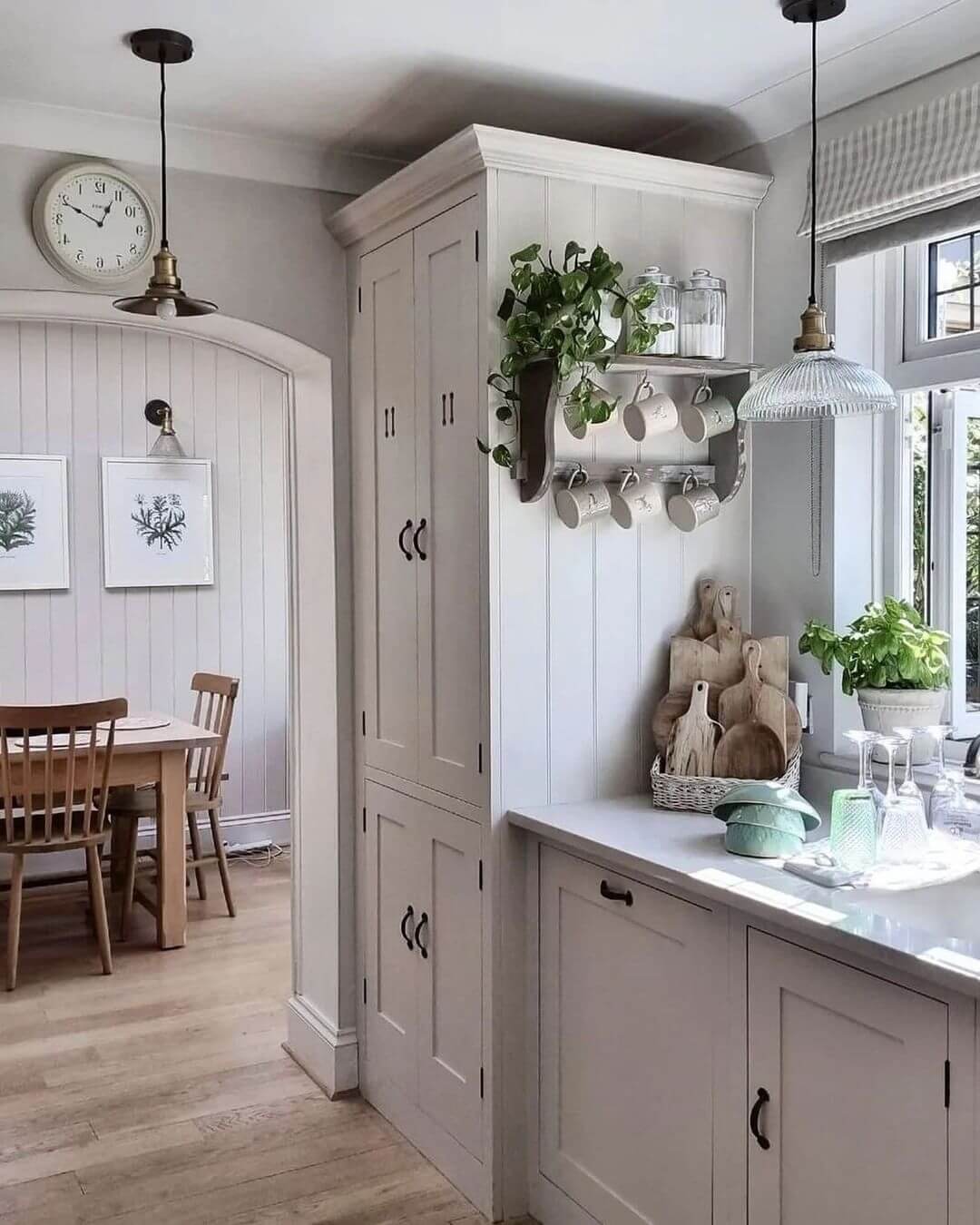
The most inviting modern farmhouse living rooms balance crisp with broken-in. Pair a slipcovered linen sofa—easy to wash, breezy, and textural—with an aged leather chair or two. The contrast does the heavy lifting: linen’s relaxed drape keeps the room light, while leather’s patina adds warmth and heritage. Stick to a grounded neutral palette (stone, oatmeal, camel, and saddle brown) so every piece layers effortlessly with your rugs and wood tones. Add a nubby throw, striped ticking pillows, and a lumbar in subtle plaid to echo classic farmhouse patterns without visual clutter. If you’re working with a smaller room, choose slimmer arms and elevated legs to keep the footprint airy; larger spaces can handle a deeper bench cushion and a beefier leather club chair. Performance fabrics extend longevity, and a beeswax conditioner keeps leather supple. Finish with a weathered-wood side table, a pottery lamp, and a jute rug underfoot to tie the mix together. This combination reads cozy yet elevated, photogenic yet family-friendly—exactly the lived-in balance that makes farmhouse decor feel both stylish and genuinely comfortable.
Add Beadboard or Shiplap to Quietly Elevate Plain Walls
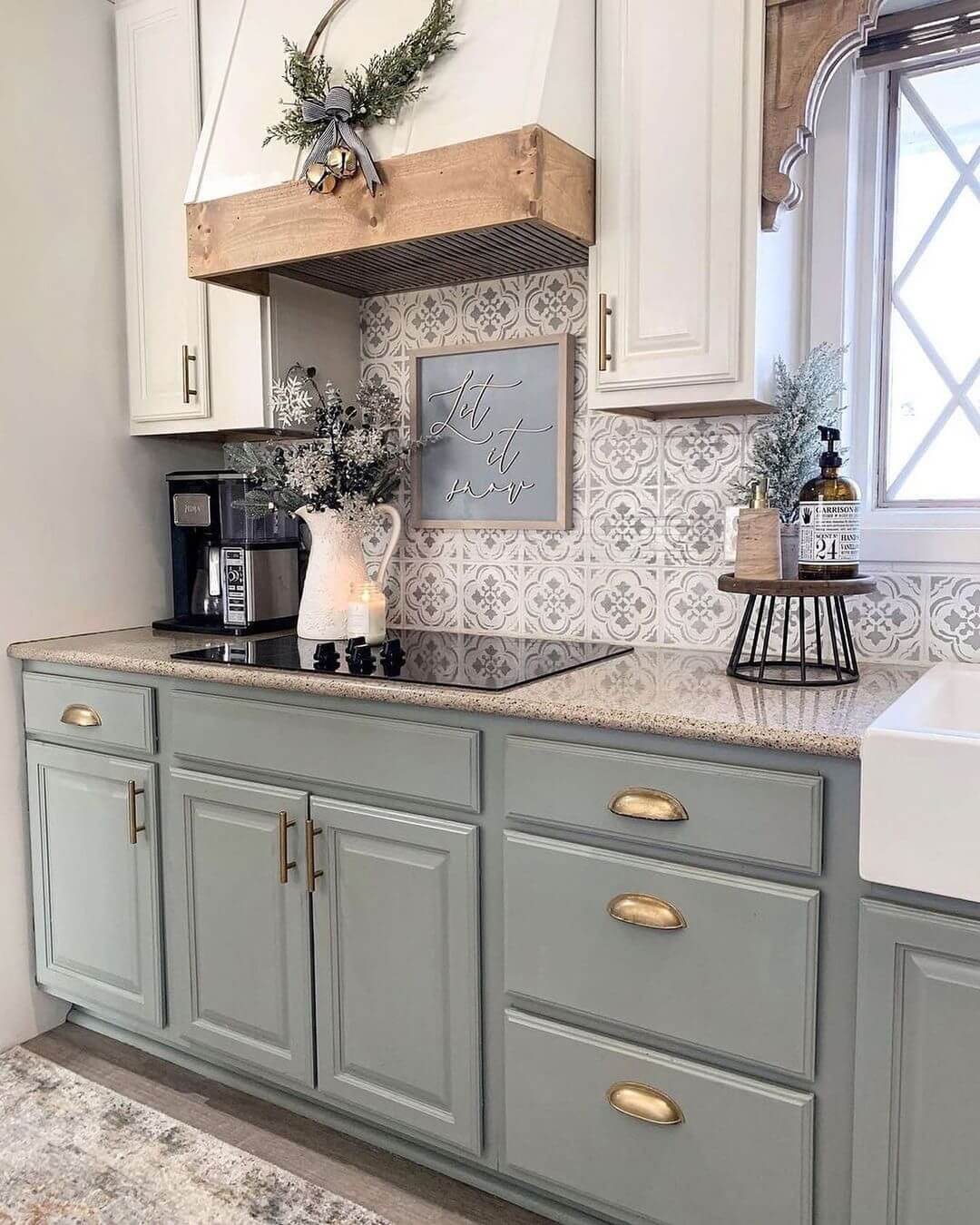
Textured millwork is a farmhouse living room secret weapon. Beadboard or shiplap adds depth, shadow lines, and heritage character without shouting for attention. Use it on a single focal wall (behind the sofa or around the fireplace), halfway up as wainscoting with a simple ledge for leaning art, or across the ceiling to draw the eye upward. Paint in a warm white or soft greige—think creamy rather than stark—so the profiles read subtle and the whole room feels brighter. Vertical boards visually lift lower ceilings; horizontal planks widen a narrow room. Pair with warm wood floors, woven accents, and matte-finish metals to keep things grounded. If your space is open-plan, use a millwork-clad pony wall or column wrap to define zones while maintaining flow. The beauty of this upgrade is its versatility: it flatters vintage rugs, slipcovers, and rustic consoles you already own, and it photographs beautifully, making everything else look more intentional. Finish the vignette with simple peg rails for baskets or hats, and you’ve added storage, styling, and architecture in one affordable, timeless move.
Swap Builder Lights for a Farmhouse Chandelier and Layered Lamps

Lighting can make or break a cozy farmhouse living room. Replace harsh builder-grade fixtures with a statement chandelier—wood-bead, lantern-style iron, or aged brass—and size it right: roughly the sum of the room’s length and width in feet equals your ideal diameter in inches. Then layer in warm pools of light with table and floor lamps (linen shades, pottery bases, or sculptural wood) to soften corners and highlight textures. Add sconces flanking art or built-ins for architectural polish and evening ambiance. Keep the color temperature warm (2700–3000K) and use dimmers to fine-tune mood from morning to movie night. A mix of finishes—matte black for contrast, antique brass for glow—plays well with reclaimed wood and natural fibers. Don’t forget reflection: place a lamp near a vintage mirror or glossy pottery to bounce light around the room. Even without changing furniture, thoughtful illumination instantly elevates your decor, enhances your neutral palette, and makes layered textiles and millwork sing. It’s the quickest path to that welcoming, candlelit farmhouse vibe you see in designer spaces.
Ground Your Seating with a Vintage-Style, Faded Rug
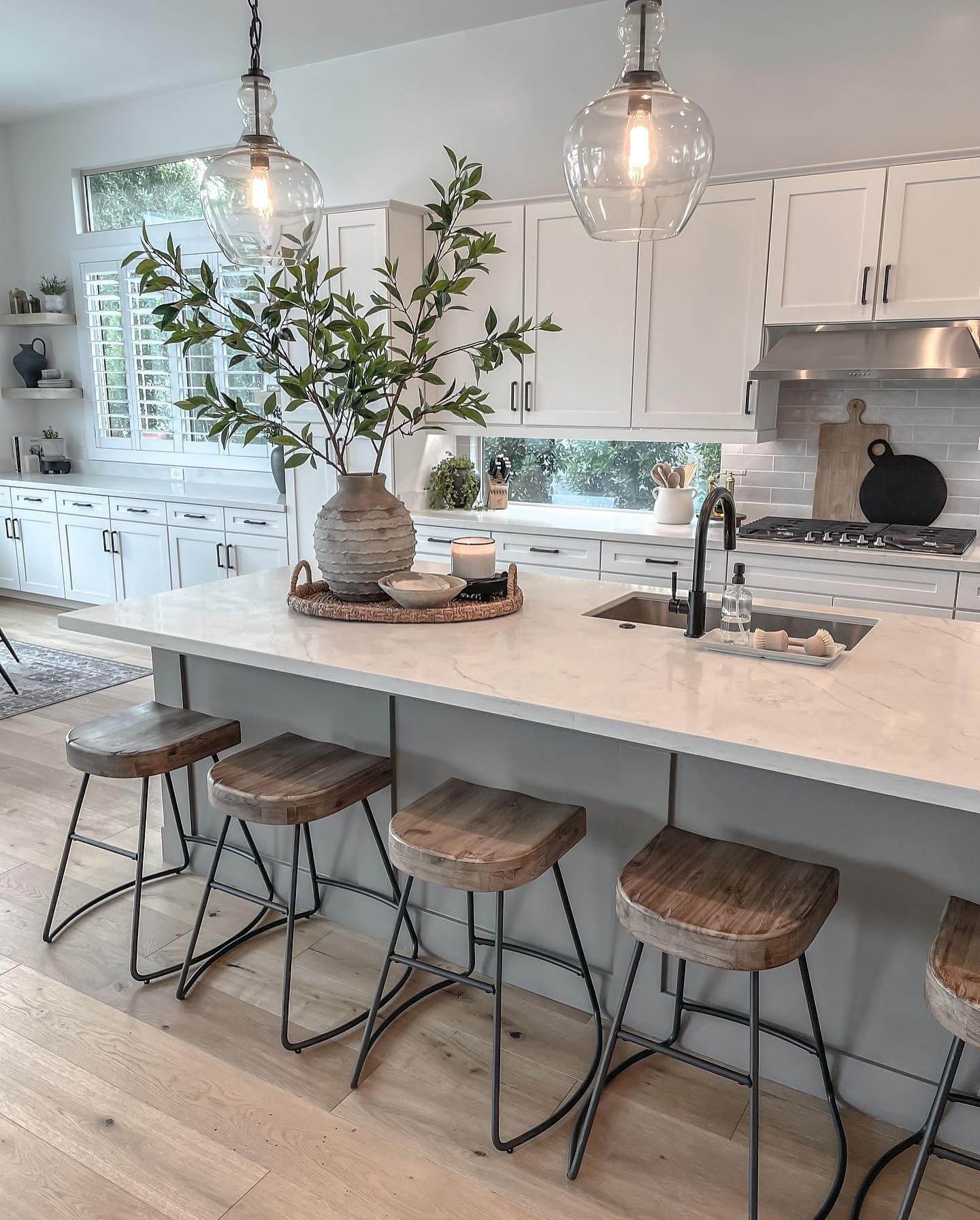
A softly faded rug pulls your farmhouse living room together, warming hard floors and defining the conversation zone. Look for vintage or vintage-inspired patterns—Oushak, Heriz, or floral medallions—in muted hues like clay, slate, sage, and sand that harmonize with warm woods and creamy walls. Size generously: front legs of all major pieces on the rug, with at least 8–12 inches of border on each side, keeps things cohesive. If you love texture, layer a low-pile printed rug over a chunky jute or seagrass base; the natural fiber adds organic structure while the top rug brings pattern and softness. This combo is durable for pets and kids, and it’s easy to refresh seasonally with different pillows or throws. Avoid ultra-saturated or high-contrast designs that fight your calm palette. A subtle, timeworn look lets your coffee table patina, pottery lamps, and slipcovers take center stage. Add rug pads to prevent shifting and enhance comfort underfoot. The result is a room that feels anchored, collected, and cozy—the essence of farmhouse decor done right.
Curate Open Shelves with Crocks, Baskets, and Timeworn Books
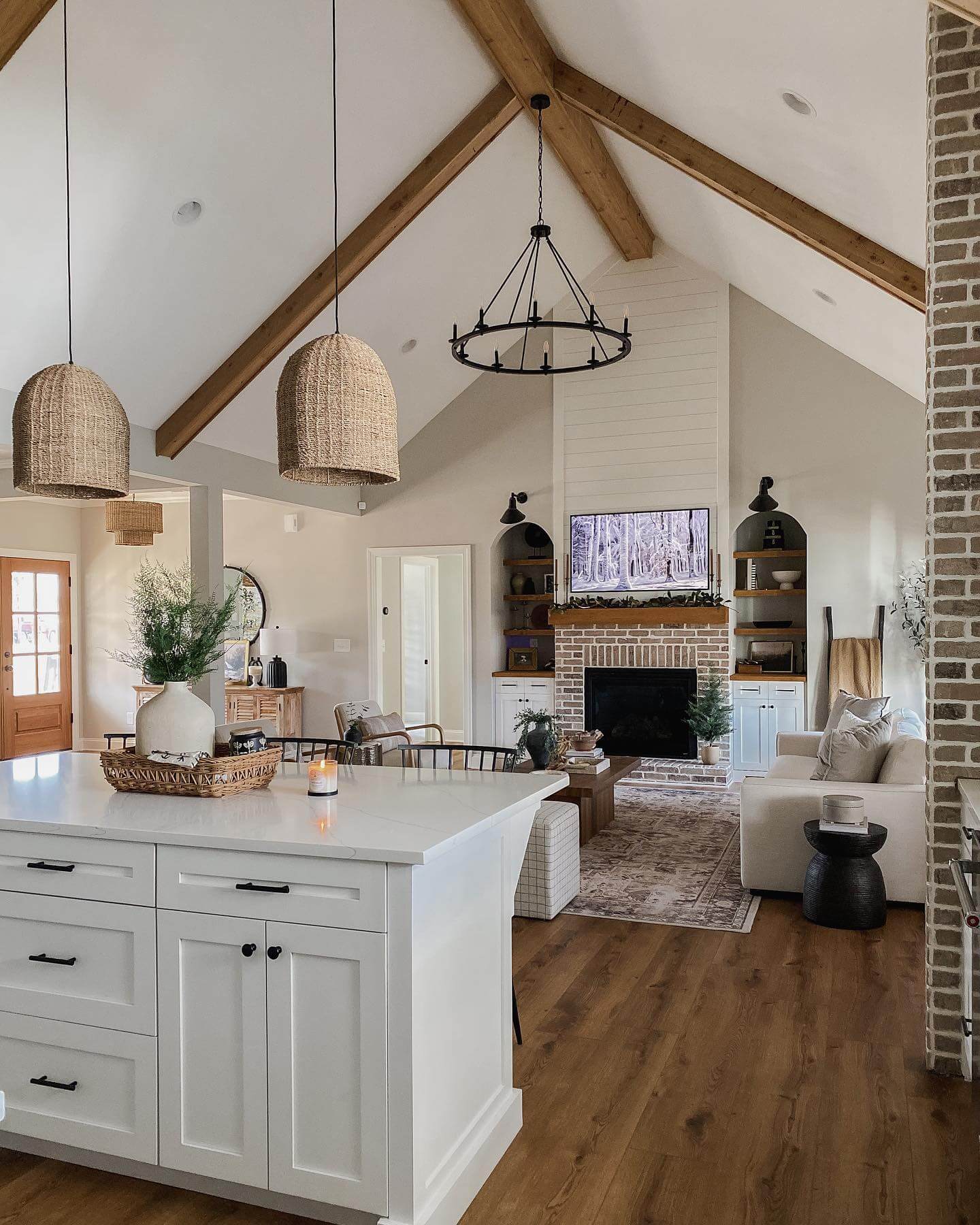
Styled shelving is where farmhouse living rooms show personality. Start with a restrained palette—cream, stone, and wood tones—so the composition feels calm. Mix heights and textures: vintage stoneware crocks, handled baskets, wooden boxes, iron bookends, and a few meaningful objects (a framed family photo, an antique clock, a found corbel). Stack linen-bound books horizontally to create pedestals, then top with small artifacts or a bud vase. Repeat materials in odd numbers to build rhythm, and leave breathing room so every piece reads. If your shelves are built-ins, paint the back panel a soft greige to warm the display; for open ladder shelves, keep the heaviest items lower for balance. A little greenery—olive branches in a jug or a trailing pothos—adds life without stealing focus. Swap elements with the seasons (brass bells in winter, seashells or woven fans in summer) to keep the room evolving. This curated approach supports semantic farmhouse style—natural materials, collected finds, and quiet neutrals—while avoiding clutter and keeping the overall living room relaxing and cohesive.
Warm Up Neutrals with Stone, Clay, and Terracotta Accents
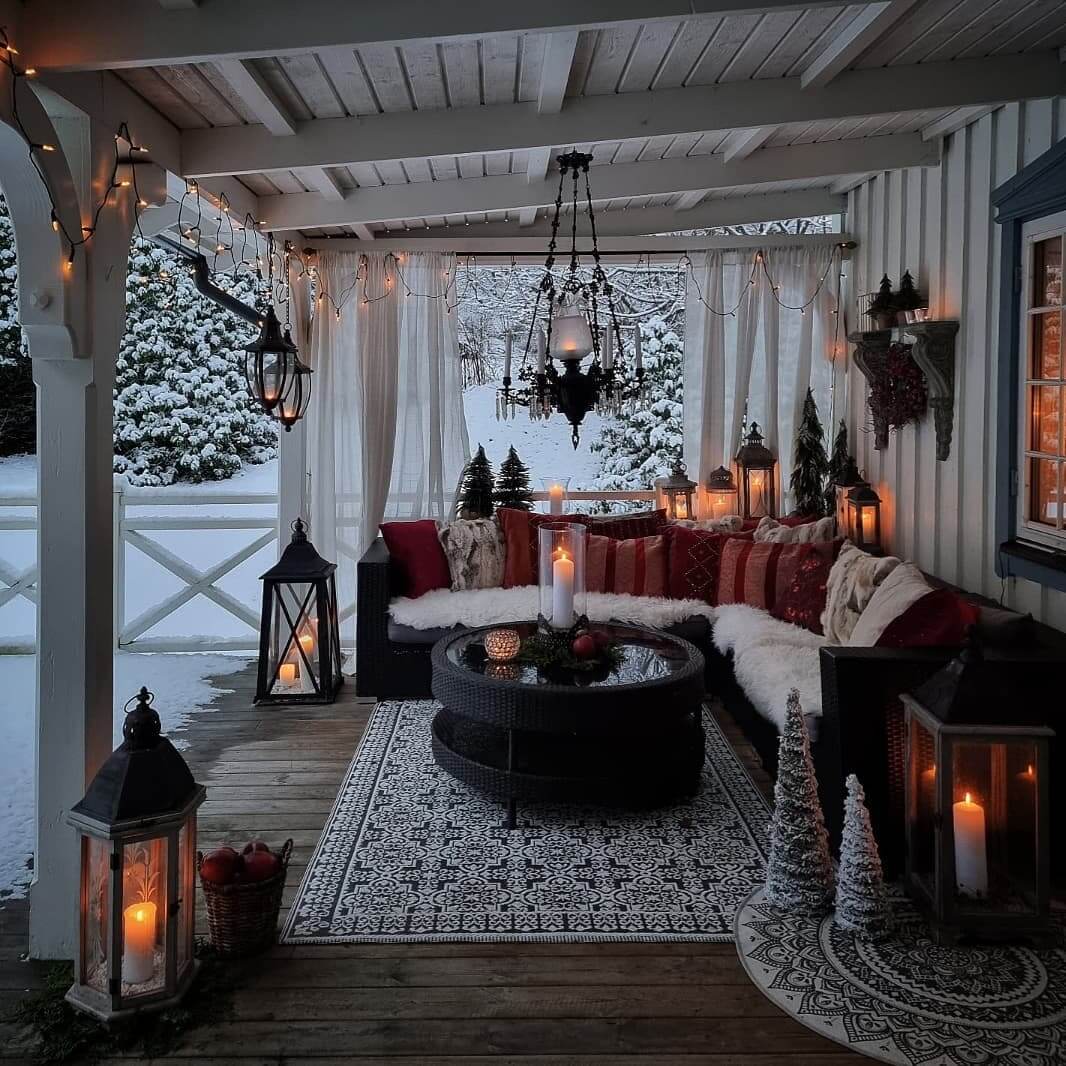
When your farmhouse living room skews light and airy, earthy accents bring it back to center. Introduce stone, clay, and terracotta through vases, crockery, candleholders, and planters to add weight, color variation, and tactile interest. The warm, mineral tones—ochre, cinnamon, chalky white, and charcoal—play beautifully with linen slipcovers and weathered oak. Cluster a pair of terracotta urns on the hearth, style a clay jug on the coffee table with dried stems, and tuck a shallow stone bowl on the console for keys or matches. These materials look better with age, and their matte finishes diffuse light for a soft, organic glow. Balance them with woven textures (jute, rattan) and a faded rug to avoid heaviness. If you love a touch of European farmhouse, mix in a limestone lamp or travertine side table for quiet elegance. The effect is layered and grounded—still neutral, but richer—so your space feels curated rather than plain. It’s an easy, affordable update that shifts the mood of the entire room without repainting or buying new furniture.
Choose Warm Whites and Greige for a Soft, Authentic Palette
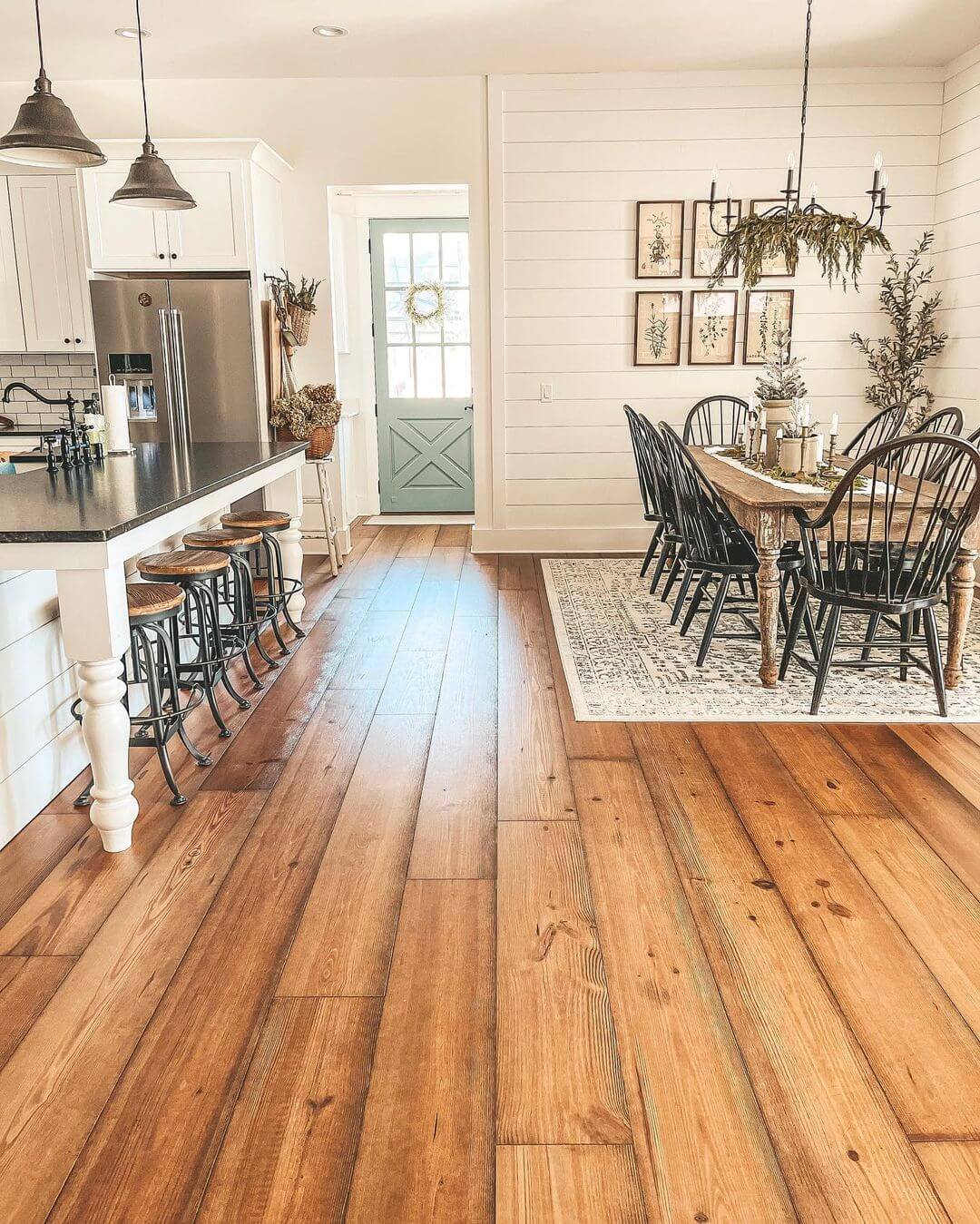
Color in a farmhouse living room is less about saturation and more about undertone. Opt for warm whites and greige—think creamy ivory, mushroom, and putty—that flatter natural light and make wood tones glow. Sample large swatches on multiple walls; observe them morning and evening to avoid surprises. Once you land on a main wall color, layer tonal variations in textiles and decor: off-white linen slipcovers, oatmeal throws, taupe pillows, and oak or pine furniture. Add depth with charcoal or espresso accents in small doses (frames, stools, lamp bases) to keep the palette from washing out. Greige also bridges cool elements like galvanized metal and warmer pieces like terracotta, helping the room feel cohesive. If your space is open-plan, carry the wall color through adjoining areas and let rugs, art, and millwork provide subtle shifts. The payoff is a room that feels bright yet cozy, calm but not flat—an authentic modern farmhouse canvas that elevates every other design choice you make.
Disguise the TV with Artful Styling and Built-Ins
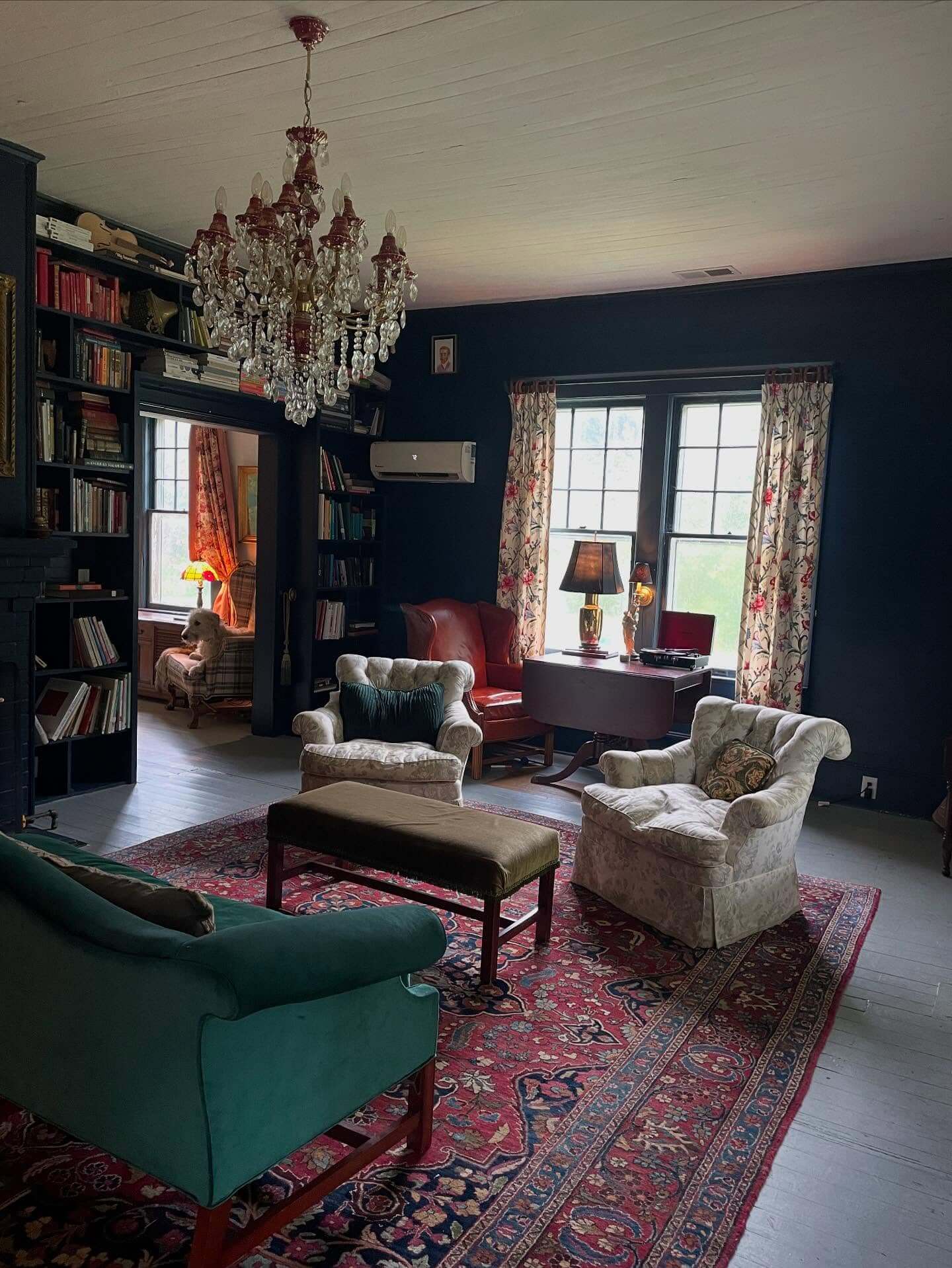
Technology can coexist with farmhouse living room decor when it’s treated thoughtfully. If you have a Frame-style TV, display a vintage landscape or still life when it’s idle to read as art. Otherwise, flank the screen with built-ins or picture ledges and layer complementary pieces—antique frames, botanical prints, ceramic jugs—so the TV becomes part of a larger vignette. Keep a consistent palette (warm woods, soft blacks, brass) for harmony. A narrow console beneath hides components in baskets or cane-front doors, while cord covers painted wall color keep things tidy. Mount sconces on either side for balance and evening ambiance, and place a low-profile soundbar beneath to avoid visual clutter. If you’re able, recess the TV into a millwork panel or install a sliding art screen for a handsome, cottage-inspired solution. The goal isn’t to pretend tech doesn’t exist; it’s to integrate it so your room still feels welcoming, layered, and timeless—true to the farmhouse ethos of beauty meeting everyday function.
Get the Fail-Safe Paint Color Playbook (Free PDF)
36 proven colors • 8 ready palettes • trim & sheen guide • printable testing cards.
Bring the Outdoors In with Oversized Branches and Greenery
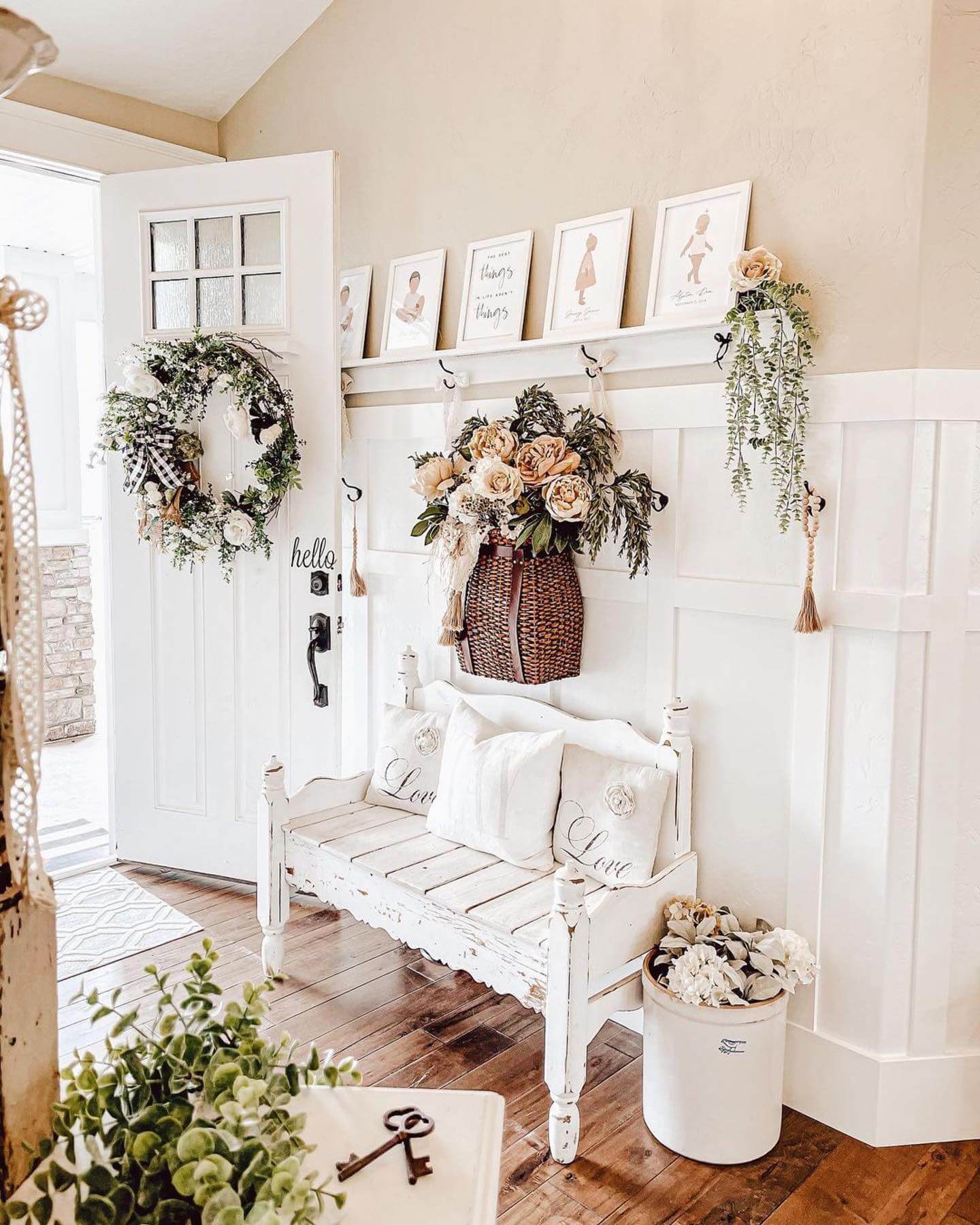
Nothing breathes life into a farmhouse living room faster than statement greenery. Go big with foraged branches—olive, quince, maple, or magnolia—in a weathered crock, tall demijohn, or handled earthenware jug. The generous scale adds sculptural height, softens hard lines, and instantly warms a neutral palette. Place a single, dramatic arrangement on a console, coffee table, or hearth to create an effortless focal point that feels collected, not contrived. Aim for airy silhouettes and uneven stems; farmhouse style thrives on natural imperfection. Repeat the green story with a smaller pot on a side table and a trailing plant on open shelves to create visual rhythm. If real clippings aren’t practical, choose high‑quality faux stems in muted, believable tones. For balance, layer nearby textures—linen, jute, aged leather—so the branches become part of a larger composition rather than a lone accent. Seasonal swaps keep the room feeling fresh: feathery spring blossoms, leafy summer stems, golden autumn branches, and wintry evergreens. This one styling move adds movement, texture, and authenticity—core to farmhouse living room decor—without overwhelming your space or your budget.
Layer Woven Shades with Linen Drapes for Organic Warmth
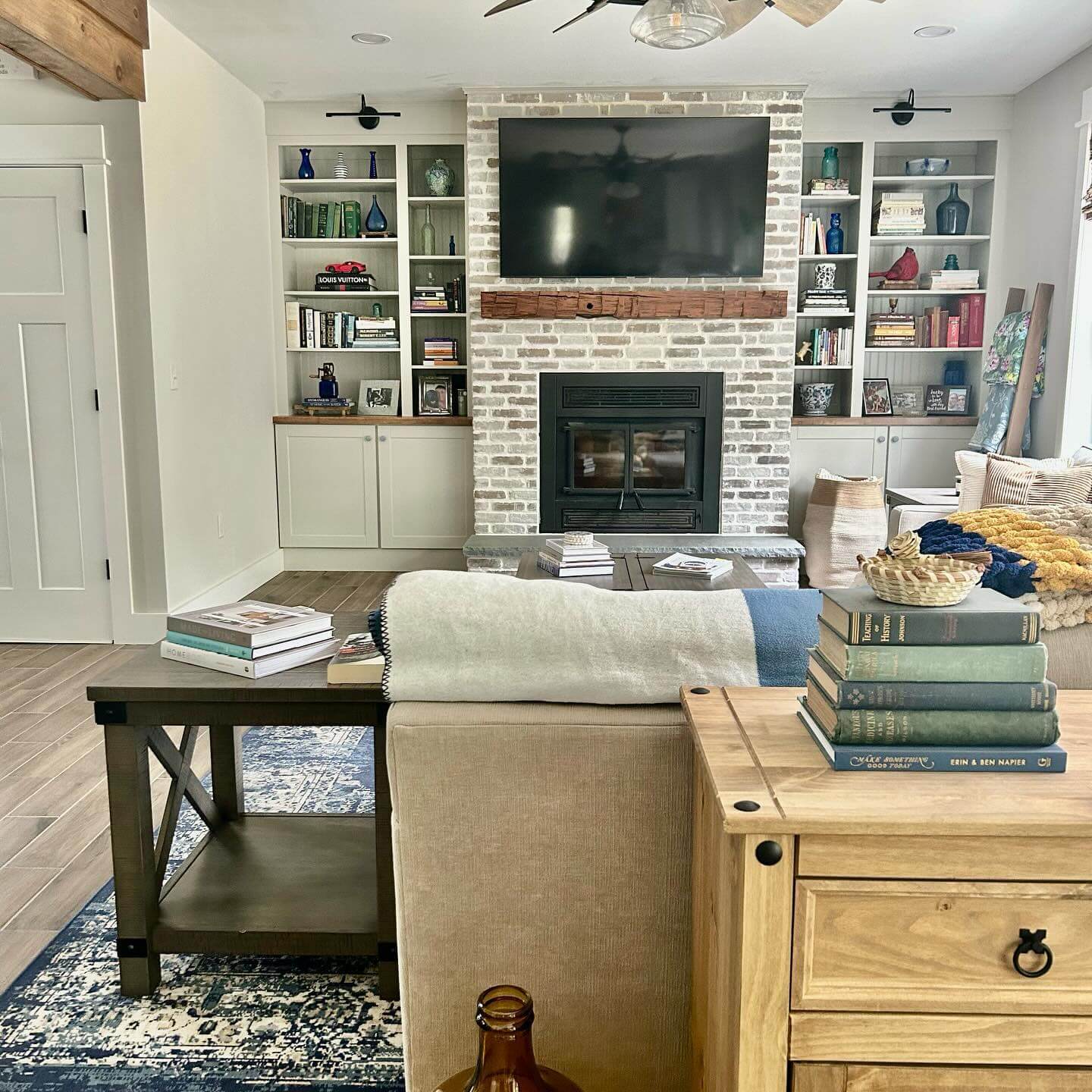
Window treatments are a quiet hero in farmhouse living rooms, delivering texture, softness, and light control in one thoughtful layer. Start with inside‑mount woven wood or seagrass Roman shades for that natural, hand‑hewn feel. Their sandy, variegated tones echo jute rugs and reclaimed wood, tying the whole palette together. Then frame the view with simple linen drapery panels on black iron rods—just kissing the floor for a relaxed, tailored finish. The contrast of nubby weave and airy linen reads cozy yet refined, and the double layer lets you dial brightness from sunlit to snug in seconds. Pick warm, undyed neutrals or soft greige to keep the look cohesive with farmhouse walls, and repeat the shade tone in a basket or tray to make the textures feel intentional. In open‑plan spaces, carry the same treatment across adjoining windows for flow. Add subtle details—ring clips, a blackout lining in TV zones, or a delicate tape trim—without tipping into fussy. The result is an elevated backdrop that flatters vintage finds, slipcovered seating, and patinaed metals while quietly anchoring the room’s farmhouse character.
Carve Out a Cozy Reading Nook with Slipcovers and Layered Light
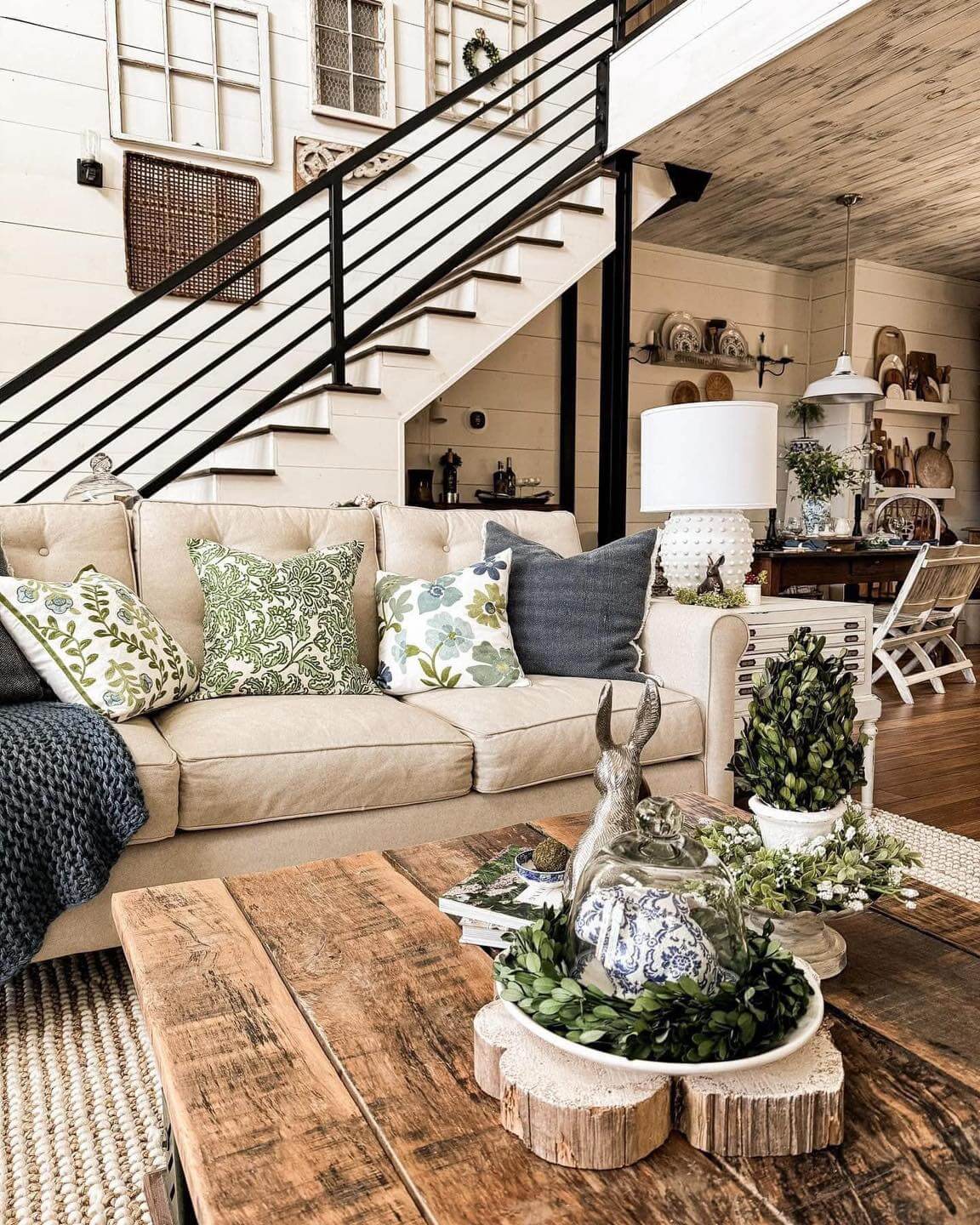
A dedicated reading nook makes your farmhouse living room feel personal and deeply livable. Start with a slipcovered swivel or club chair in washable linen—its relaxed drape invites lingering and balances any aged leather elsewhere in the room. Add a small wood side table for a mug and a stack of timeworn books, and ground the vignette with a petite, vintage‑style rug layered over jute for warmth underfoot. Lighting is everything: pair a shaded floor lamp with a directional library or sconce on a dimmer so you can move from ambient to task without harsh glare. A petite ottoman or kilim pouf adds comfort and pattern (think ticking stripes or windowpane checks), while a woven basket corrals throws and extra pillows. Tuck the nook near a window to borrow natural light and frame the view with those woven shades and linen panels for daytime glow. Keep the palette soft—warm whites, greige, oat—and repeat wood tones from your coffee table or mantel to connect the zone to the larger space. The nook becomes a sanctuary within the room, showcasing farmhouse practicality and coziness in equal measure.
Add Soft-Black Accents to Ground All Those Neutrals
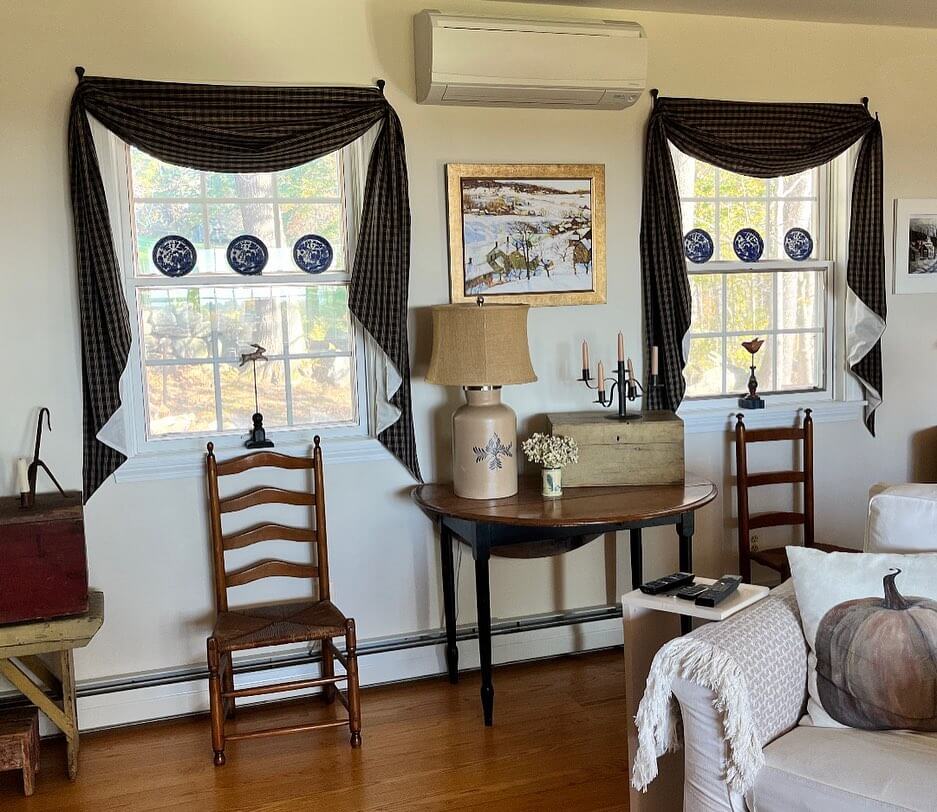
Farmhouse living rooms shine in layered neutrals, but they need a touch of contrast to feel intentional rather than washed out. Enter soft black. Think matte iron curtain rods, slim metal frames for vintage landscapes, lantern‑style lamps, a fireplace screen, or cabinet hardware in an oil‑rubbed finish. Repeat the tone three times around the room—on a lamp, a frame, and a rod—to create a subtle visual thread that organizes the space. Choose low‑sheen finishes over glossy to keep the look rustic and keep undertones warm so black feels cozy, not stark. For textiles, one charcoal pillow or a pinstripe throw can echo the metal accents without reading heavy. If you’re ready for a bigger statement, a soft‑black accent cabinet or Windsor chair adds timeless character and anchors lighter elements like slipcovers and shiplap. The key is balance: pair every dark moment with warm wood, stone, or linen to maintain that welcoming farmhouse vibe. This small shift modernizes your decor, sharpens sightlines, and makes your collected pieces pop—proof that contrast is as essential as texture in a well‑layered farmhouse living room.
Modern Farmhouse Living Room Ideas: Clean Lines, Cozy Textures, and Functional Styling
Modern farmhouse living room ideas balance crisp silhouettes with the warmth of handcrafted texture, ensuring the space reads fresh, not fussy. Start with a restrained base—soft white walls, charcoal accents, and black window grids—so wood tones and textiles become intentional highlights. Choose furniture with clean profiles, taller legs, and light visual weight to reveal more floor and feel spacious. Float seating off walls to create conversation zones, using a large area rug to unify pieces without crowding pathways. Introduce contrast through matte black hardware, galvanized accents in moderation, and streamlined plaid or ticking-stripe patterns. Prioritize storage that closes—doors, drawers, and lidded baskets—so daily life disappears and the architecture takes center stage.
- Select a streamlined sectional with tailored cushions and a visible oak base, pairing it with spindle accent chairs for contrast, balanced proportions, and comfortable family seating.
- Create an asymmetrical gallery wall using black metal frames, oversized mats, and sepia farmhouse photos, keeping spacing consistent to feel modern while honoring heritage.
- Layer dimmable floor lamps, picture lights, and caged pendants on separate switches to sculpt light, reduce glare, and highlight textures like limewash, boucle, and distressed wood.
- Hide devices in a slatted media console, route cables through grommets, and corral remotes in a tray so technology disappears without sacrificing streaming convenience.
Keep pattern scale deliberate: one large graphic, one medium stripe, and one small motif prevent visual noise while staying layered. Add color with grounded accents like rust, olive, or midnight blue, repeated at least three times across art, textiles, and florals. Mount curtain rods high and wide, brushing the floor with textured linen panels to lengthen windows and filter light beautifully. Swap seasonal textures—cable knits to cotton, heavy wool to light chambray—so the room stays inviting without a full redesign. Opt for performance fabrics and rug pads, which resist stains and slipping while preserving the tailored look modern farmhouse demands. Edit weekly; remove one item from surfaces to maintain that clean-lined charm while keeping warmth through organic materials and soft lighting.
Smart Styling Answers for Collected Farmhouse Spaces
How do I mix modern and rustic pieces without clashing?
Keep a consistent color palette and repeat each material at least twice. Pair one statement rustic item—like a reclaimed mantel—with cleaner-lined furniture so the contrast feels intentional, not chaotic.
Get the Fail-Safe Paint Color Playbook (Free PDF)
36 proven colors • 8 ready palettes • trim & sheen guide • printable testing cards.
What colors define farmhouse living rooms today?
Updated farmhouse leans warm and desaturated: creamy whites, soft greige, mushroom, and putty, with accents of black, rust, or olive. Use wood tones as a “color” to add depth naturally.
How can I achieve farmhouse charm on a budget?
Prioritize high-impact surfaces—paint, lighting, and one great rug—then thrift baskets, pottery, and frames. Swap hardware and add DIY shiplap or beadboard panels for architectural texture without major renovation.
Which textures make the room cozy but still refined?
Combine nubby linen, brushed cotton, bouclé, and wool with smooth counterpoints like iron, glass, and limewash. Limit to three or four textures per zone to avoid visual noise while staying inviting.
Final Verdict: Crafting a Cozy, Collected Farmhouse Living Room
A farmhouse living room succeeds when comfort meets character. Focus on a layered neutral palette, then build dimension with natural textures—reclaimed wood, linen slipcovers, jute underfoot, soft leather, and a touch of patinaed metal. Quiet architectural details like shiplap, beadboard, or limewash add depth without shouting, while layered lighting—iron pendants, table lamps with linen shades, and warm sconces—keeps the space welcoming from morning to night.
From there, make it personal. Anchor seating with a slipcovered sofa and a vintage-style rug, choose a soulful coffee table, and style mantels, shelves, and consoles with collected finds—crocks, baskets, timeworn books, and greenery. Ground all those neutrals with soft-black accents and bounce light with an oversized mirror. Whether you’re outfitting an apartment or an open-plan family room, these farmhouse décor ideas scale easily and suit any budget, delivering a warm, lived-in room that feels beautifully yours.