
Farmhouse Rug Ideas to Instantly Cozy Up Every Room
The right rug can transform a space from echoey to inviting in one roll. In farmhouse interiors—where warm woods, vintage finds, and clean lines meet—rugs add texture, soften the palette, and ground open layouts. Think jute, wool, and timeworn patterns that feel collected, not contrived.
In this guide, you’ll find farmhouse rug ideas that balance rustic charm with everyday durability: layered neutrals, ticking stripes, buffalo check, vintage-inspired Persian motifs, and braided textures. We’ll cover sizes, placements, and color stories that work from entryway to bedroom, dining room to long hallways.
Get the Fail-Safe Paint Color Playbook (Free PDF)
36 proven colors • 8 ready palettes • trim & sheen guide • printable testing cards.
You’ll also get tips for family-friendly living: low-pile performance rugs, washable runners for busy kitchens, and high–low mixes that make antique-look styles attainable. Whether your vibe is modern farmhouse or cottagecore cozy, these ideas help you anchor furniture, warm up floors, and create an effortless, lived-in feel.
Farmhouse Rug Ideas for Living Rooms: Layering Textures, Neutral Patterns, and Natural Materials
Living rooms set the tone for farmhouse comfort, so start with generous area rugs that define conversation zones without overwhelming airy, open layouts. Choose natural materials like wool, jute, and cotton to deliver inviting texture, subtle irregularities, and long-wearing performance under daily family traffic. A neutral palette—ivory, oatmeal, taupe, and charcoal—keeps surfaces calm and allows distressed woods, stone fireplaces, and vintage art to shine. Mix a flatweave base with a low-pile patterned topper to create depth while keeping maintenance manageable with regular vacuuming and quick spot cleaning. Subtle plaids, faded florals, and antique-inspired medallions read collected and timeless, especially when their motifs feel sun-washed rather than high-contrast. Prioritize size: aim for at least the front legs of sofas and chairs on the rug to visually connect seating and improve acoustics in echo-prone rooms.
- Layer jute over wool: Ground the room with a soft, low-shed wool base, then float a chunky jute layer on top, offsetting edges to add depth, warmth, and easy seasonal swaps.
- Neutral plaid anchors: Choose a taupe-and-gray plaid that calms visual noise, pairs with leather sofas and shiplap walls, disguises crumbs, and stays classic when trends shift toward bolder statements.
- Oversized vintage print: Use an oversized, distressed Persian-style pattern to visually expand the room, unite scattered seating, and introduce muted reds and indigos that suggest history without overpowering neutral furnishings.
- Round braided focal point: Place a round braided rug beneath a circular coffee table to soften straight architectural lines, spotlight the hearth, echo rustic beams, and add tactile interest under bare feet.
- Cowhide accent layer: Angle a genuine or faux cowhide over a flatweave to introduce organic shape contrast, pet-friendly durability, quick shake-clean maintenance, and a subtle Western note within classic farmhouse styling.
Keep sunlight in mind; rotate layered rugs every season to distribute fading and wear, especially near south-facing windows and high-traffic doorways. Use a felt-and-rubber pad under the base rug to prevent slipping and add plushness without raising furniture legs awkwardly high. When arranging, allow eight to ten inches of floor border around the rug so natural wood tones frame the vignette like molding frames art. If your sofa floats, position a runner behind it to visually tie the walkway to the sitting area without enlarging the main rug. Blend patterns thoughtfully by alternating scale—large, open medallions with tight ticking stripes—so each design reads clearly instead of vibrating. For homes with kids or pets, prioritize low-shed wool blends and tight flatweaves that release crumbs easily and tolerate frequent, gentle vacuuming.
Layer a Natural Jute Base with a Timeworn Persian Topper
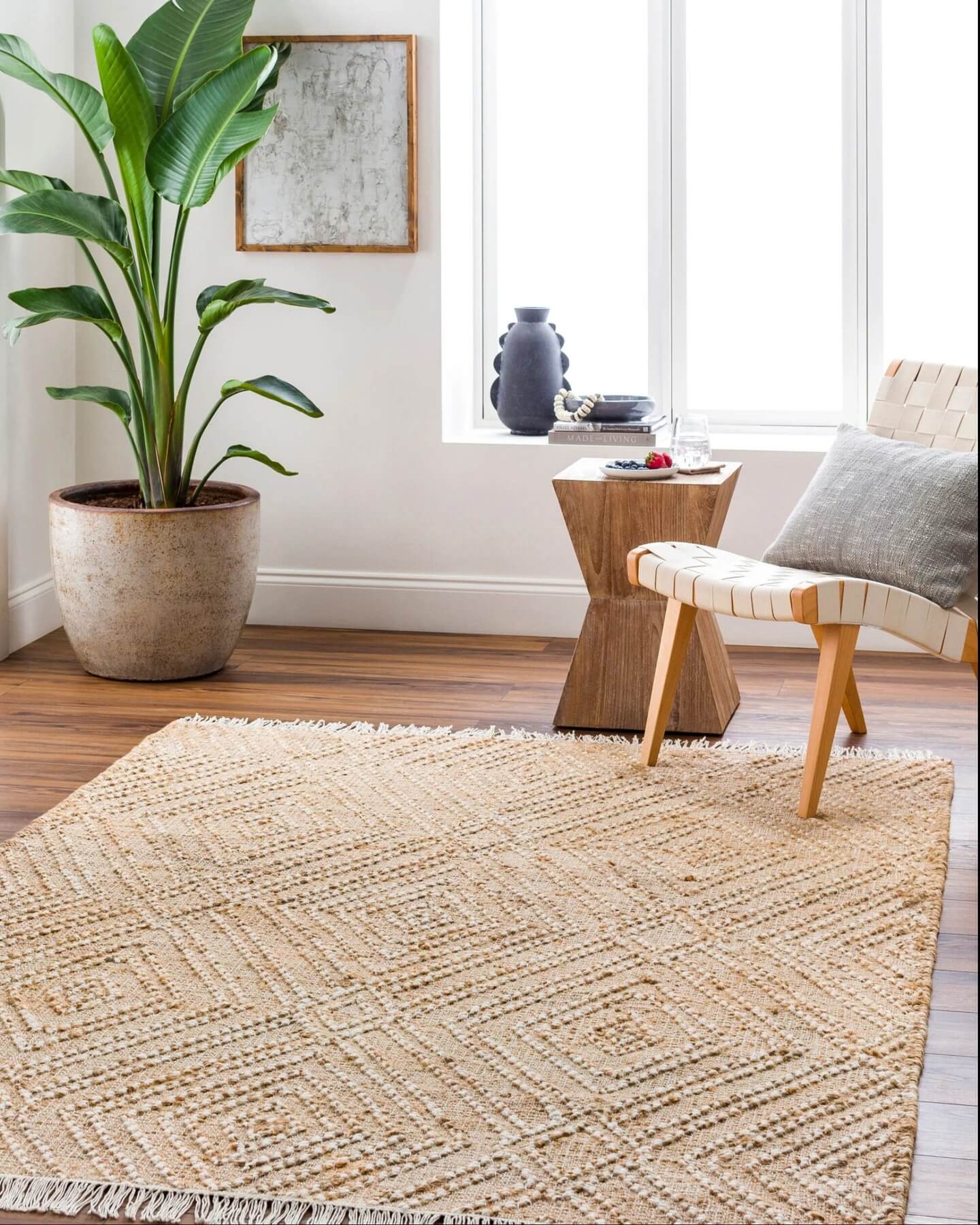
When you want instant depth and farmhouse charm, layer a chunky jute base rug under a vintage-inspired Persian. The natural fiber grounds the room with organic texture while the patterned topper adds story, color, and a sense of “collected over time.” Choose a tight-weave jute or sisal in a warm wheat tone, then add a flatweave or low-pile Persian in muted terracotta, indigo, or olive—classic hues that play well with reclaimed wood, slipcovered sofas, and black metal accents. For scale, let the jute carry the furniture (front legs on) and size the Persian 6–12 inches smaller on each side so the borders frame it. Angle or slightly offset the top rug to keep it relaxed and rustic. In family rooms, performance-wool or washable vintage-look rugs give you the patina without the preciousness. A felted rug pad under the jute and a thinner pad under the topper keeps layers smooth, safe, and cozy underfoot. This high–low mix is the farmhouse secret to making even brand-new spaces feel storied.
Make a Buffalo Check Moment in the Entry
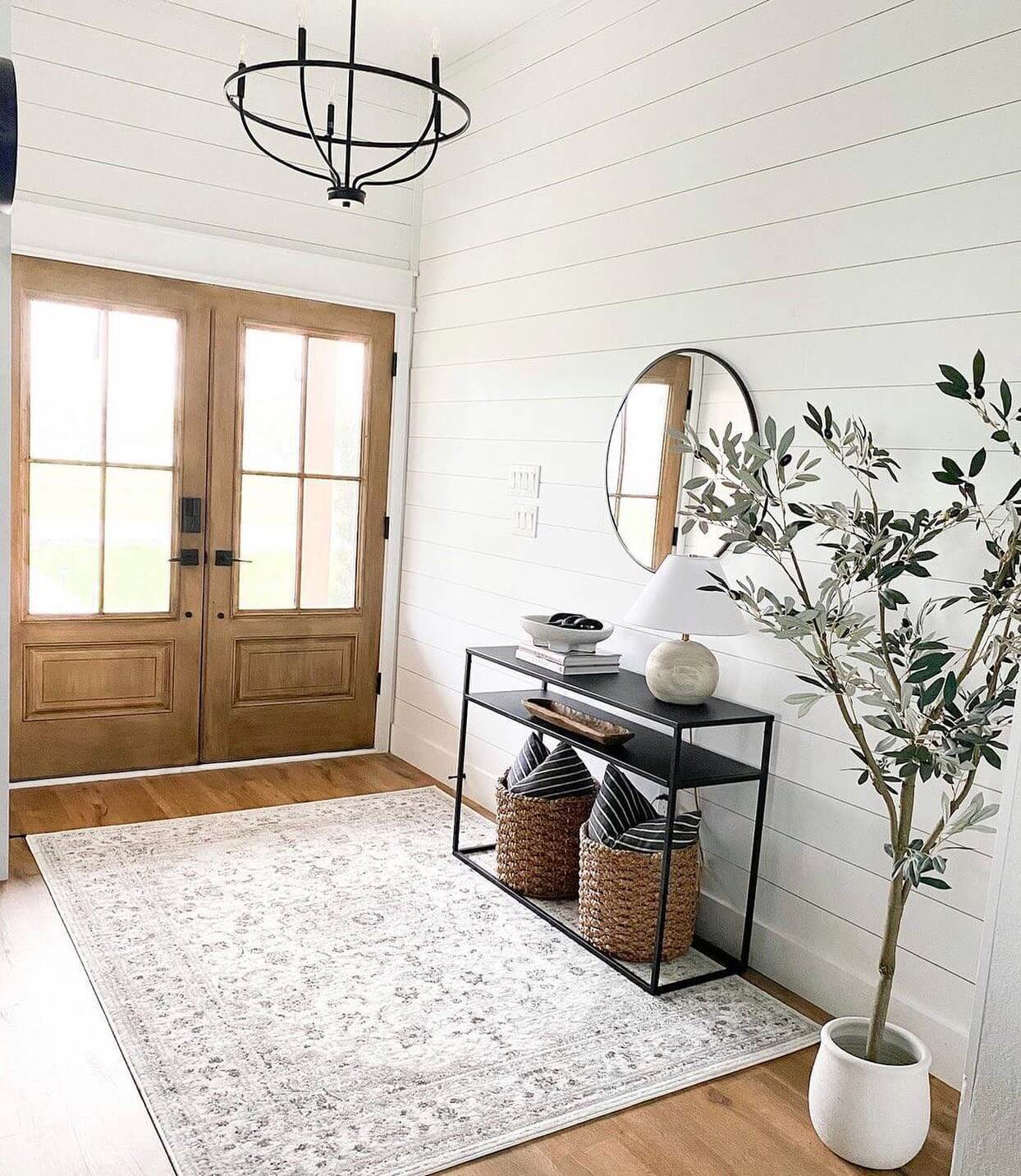
A buffalo check rug turns a pass-through foyer into a welcoming vignette that sets your farmhouse palette from the first step. The bold grid pattern plays beautifully with beadboard, shiplap, and blackened hooks, while the contrast hides scuffs and everyday mess. Choose a flatweave in black-and-ivory for a modern farmhouse edge, or go gray-and-tan for a softer country look. Size-wise, a 3×5 works for compact entries; long, narrow foyers love a runner that leaves 2–4 inches of floor reveal on each side. For serious foot traffic, pick a performance fiber or indoor–outdoor weave and layer a coir doormat on top at the door for grit control—both practical and charming. Keep the rest simple: a pine bench, a wicker basket for shoes, maybe a vintage mirror. The geometry of buffalo check anchors the scene, making even a small space feel intentional. Bonus: the pattern bridges seasons effortlessly, from plaid throws in winter to linen hats in summer.
Ticking-Stripe Runners That Work as Hard as Your Kitchen
In a farmhouse kitchen, a ticking-stripe runner brings function and familiar charm. The slim stripe elongates a galley, defines a cooking zone in an open plan, and echoes the classic textiles you already love—apron-front sinks, butcher block, and enamelware. Opt for a washable or stain-resistant runner; spills happen, and you want easy care. A low or flat pile won’t fight your toe-kicks and glides under stools and range doors. For length, stop 4–6 inches before thresholds; for width, leave a slim reveal of floor on both sides so the runner feels tailored, not wall-to-wall. Charcoal on natural, faded navy on flax, or wheat on ivory are timeless, mixable palettes that warm tile, stone, or painted floors. Add a cushioned, non-slip pad for comfort during long prep sessions. If the rest of your kitchen is quiet, consider a herringbone-stripe variation for subtle interest. The result: a runner that softens acoustics, brings in pattern, and turns everyday cooking into a cozy ritual.
Oversized Neutral Wool to Calm an Open-Plan Living Room
Open-plan living craves a rug that unifies seating and softens hard surfaces. An oversized neutral wool area rug does both, bringing warmth and a gentle color wash that lets your beams, baskets, and vintage tables shine. Look for a hand-tufted or hand-loomed piece with a subtle heathered tone or barely-there pattern—think oatmeal, greige, or warm sand. Size generously: aim for 9×12 or 10×14 so at least the front legs of sofas and chairs rest on the rug, visually pulling the conversation area together. A loop pile adds texture; a low cut pile is easier to clean with pets and kids. If you love contrast, layer a smaller patterned flatweave on top to define a coffee-table moment. Pair with linen slipcovers, leather accents, and matte black lighting to nail modern farmhouse balance. Don’t forget a premium felt pad; it improves comfort, protects floors, and helps with sound. The effect is calm, cohesive, and quietly elevated.
Braided Texture for Cottage-Cozy Corners
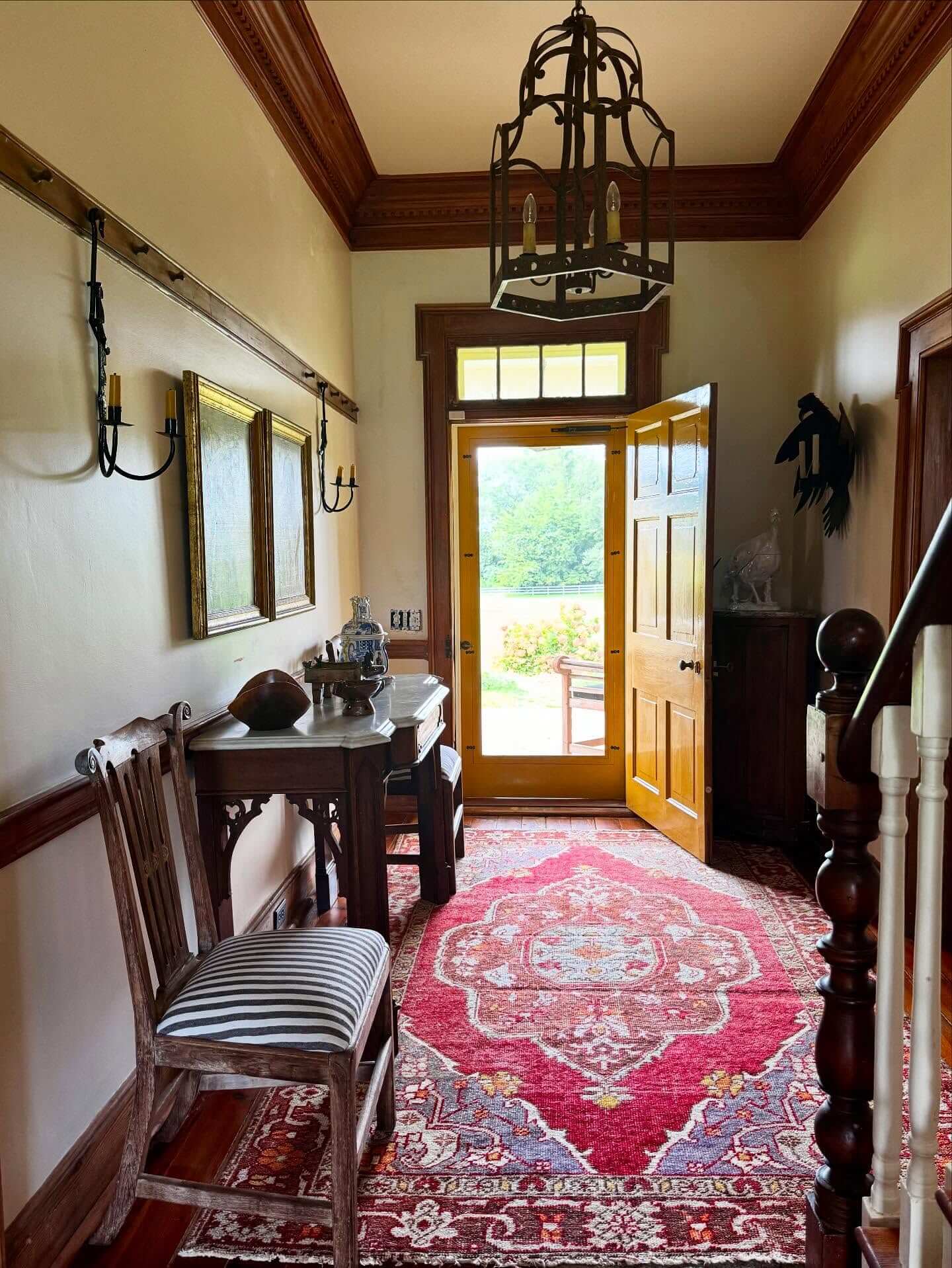
Nothing says cottage-meets-farmhouse like a braided rug. Its handworked texture brings a homey rhythm to small gathering spots—think a reading chair by the window, a breakfast nook, or a hearth. Round or oval shapes soften boxy rooms, and a jute–wool blend keeps the look rustic yet refined. Choose variegated neutrals that read as solid from afar but hide everyday wear up close. Under a pedestal table, size the rug so chairs stay fully on the braid when pulled out (typically 6–8 inches beyond chair legs). For living rooms, layer a braided round atop a larger flatweave to add dimension without busying the eye. Braids love company: spindle-back chairs, ticking cushions, and a quilt folded over a bench amplify that lived-in charm. Many are reversible, effectively doubling their life. Keep edges bound to prevent fray, and pair with a thin pad for grip. The result is effortless warmth with just the right pinch of nostalgia.
Muted Blues and Terracotta for a Restful Farmhouse Bedroom
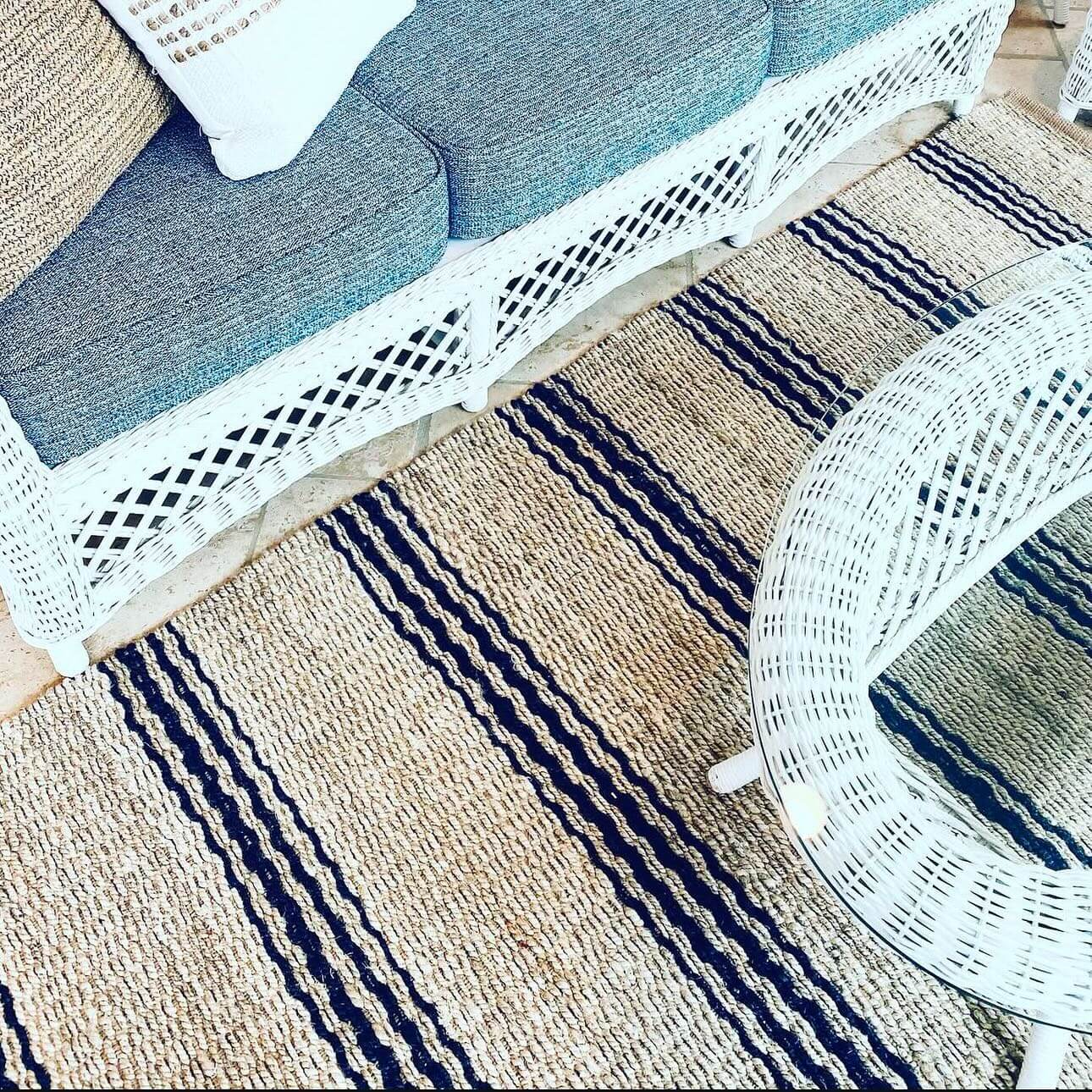
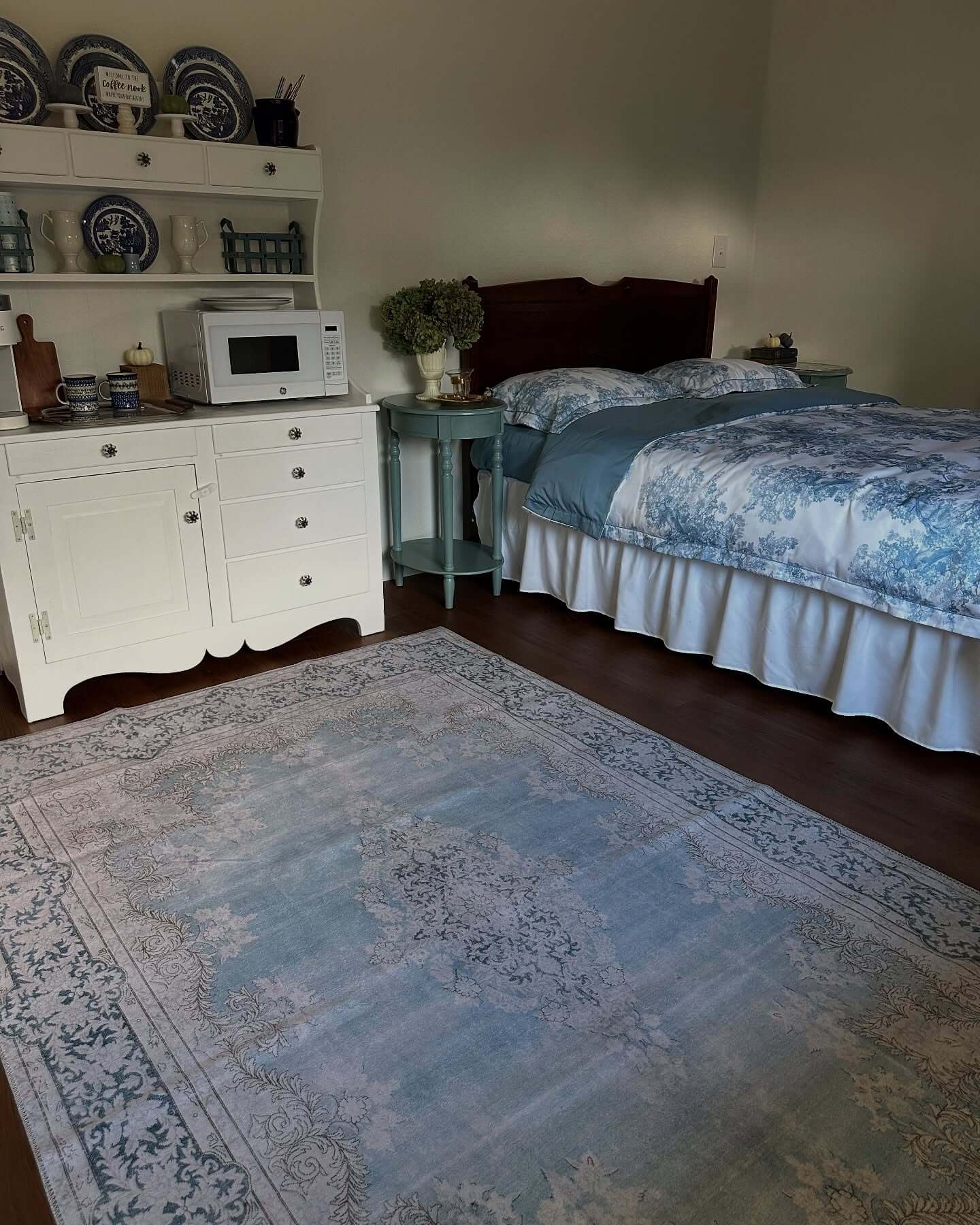
In the bedroom, a vintage-inspired rug in dusty blue, clay terracotta, and softened ivory sets a soothing farmhouse palette that still feels layered. These timeworn hues echo antique quilts, stoneware, and weathered pine, creating a restful backdrop for linen sheets and iron beds. For sizing, let the rug extend beyond the sides and foot of the bed—8×10 under a queen, 9×12 under a king—so feet land on softness each morning. If radiators or door swings complicate placement, try twin runners on either side and a smaller accent at the foot. Choose a low-pile or flatweave for easy vacuuming and to accommodate doors. Pattern is your friend: a faded medallion or broken border masks dust between cleanings and adds a hint of romance. Layer nubby throws, ticking pillows, and a woven bench to echo the rug’s texture. Finish with warm wood nightstands and soft brass lamps for a glow that complements those quiet, vintage tones.
Striped Stair Runners with Rustic Railings
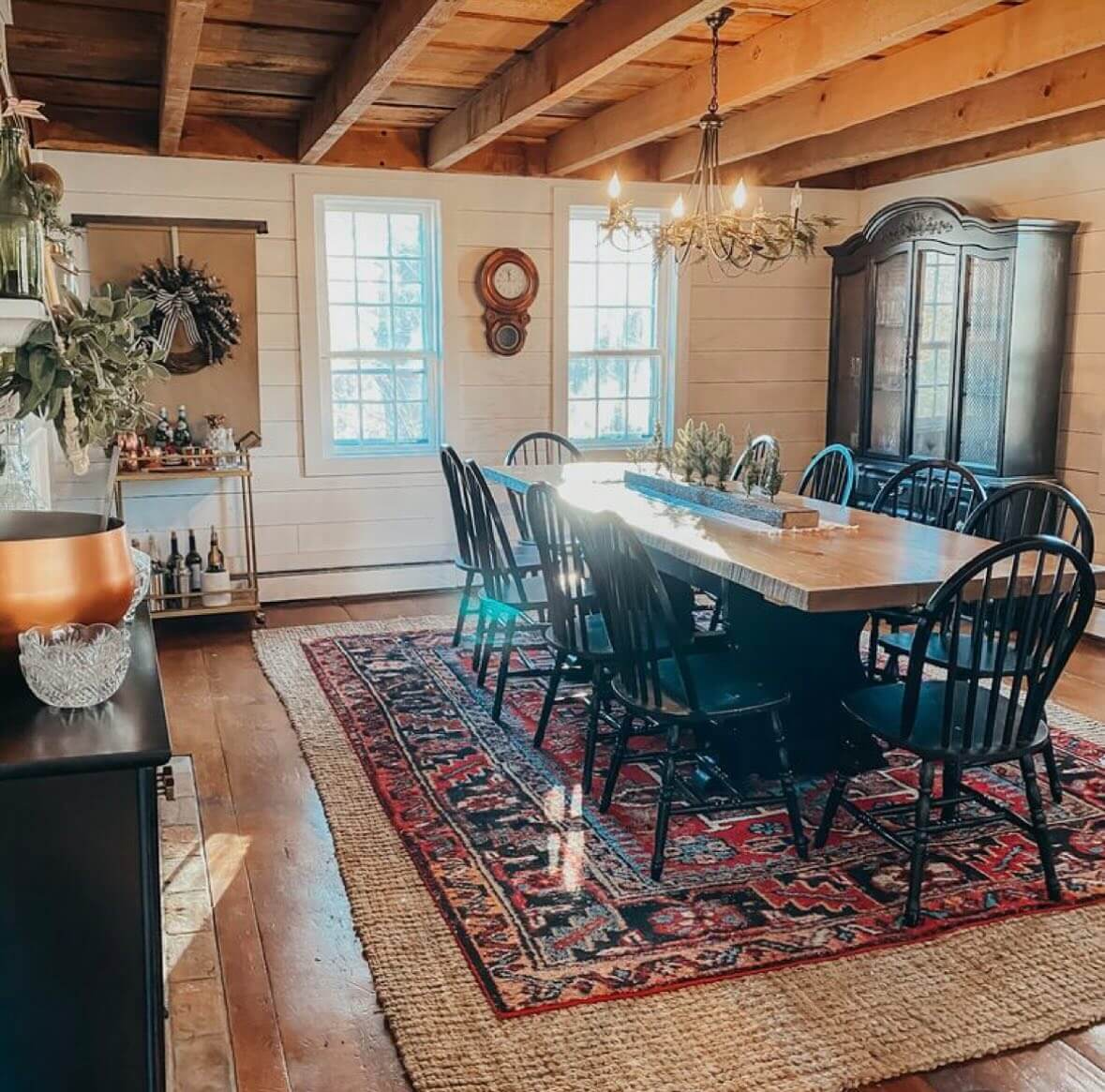
Farmhouse stairs come alive with a striped runner that adds traction, quiets footsteps, and introduces a vertical rhythm through your home. Narrow ticking or tailored herringbone stripes feel classic; a bold, two-tone stripe reads more modern farmhouse. Choose a durable flatweave wool or performance synthetic that resists wear on nosings. Install with a professional for crisp alignment—Hollywood style (wrapped around each tread) gives a tailored finish, while waterfall (straight drop) feels more relaxed. Oatmeal, charcoal, and flax stripes pair beautifully with black iron balusters and oak handrails. Consider bound edges in leather or cotton for a bespoke look, and add stair rods only if you want a touch of heritage formality. A quality pad beneath improves comfort and safety. Keep walls light and art simple so the runner’s pattern leads the eye upward. It’s a hardworking upgrade that delivers daily—function, warmth, and a dose of farmhouse character.
Double Up Runners for Long, Drafty Hallways

If your farmhouse hallway runs long, two matching runners aligned end-to-end look custom without the custom price. Choose a pattern with an easy repeat—subtle geometrics, micro-checks, or faded florals—so the seam reads seamless from a few steps away. Leave a finger’s width between rugs for a purposeful break, or slightly overlap for a continuous look if the pile is thin. Make sure each runner leaves 2–3 inches of flooring reveal along the sides to frame the path. Washable or indoor–outdoor fibers keep maintenance light in hardworking zones. Pair with simple gallery walls, shaker pegs, and warm sconces to echo the linear flow. A low-profile rug pad cut an inch short on all sides stops creep without creating a trip edge. The payoff is big: better acoustics, visual warmth, and a soft landing that guides you from room to room while keeping the farmhouse envelope airy and bright.
Dining Room Flatweave That Loves Chair Legs
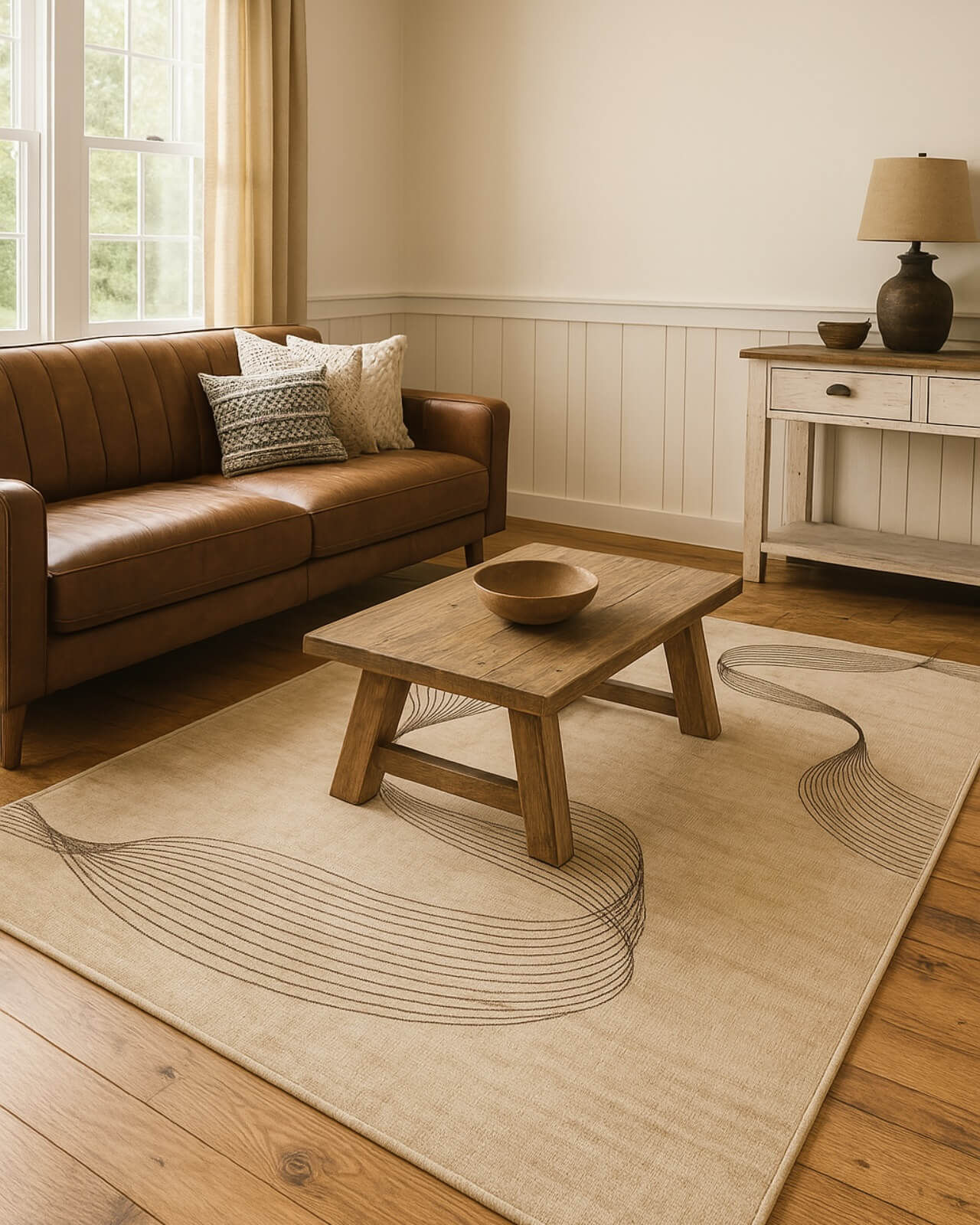
For farmhouse dining, pick a flatweave or tight low pile that plays nicely with chairs—no catching, no dents. Size is everything: aim for 24 inches beyond the table on all sides so chairs stay on the rug even when pulled out. For six chairs, 8×10 is a common sweet spot; for eight, 9×12 usually fits. Naturals like wool or performance fibers in heathered neutrals hide crumbs and vacuum marks, while a vintage-look pattern forgives spills between clean-ups. If you serve often, consider an indoor–outdoor blend that wipes clean but reads like a hand-loomed textile. Round table? Try a round rug for harmony, or go oversized rectangle to square off the room. Keep the color story gentle—oatmeal, slate blue, faded rust—so china, botanicals, and wood tones take center stage. A felt pad smooths the surface and protects floors, giving you everyday ease with special-occasion polish.
Porch-to-Mudroom Performance Rugs in Natural Tones
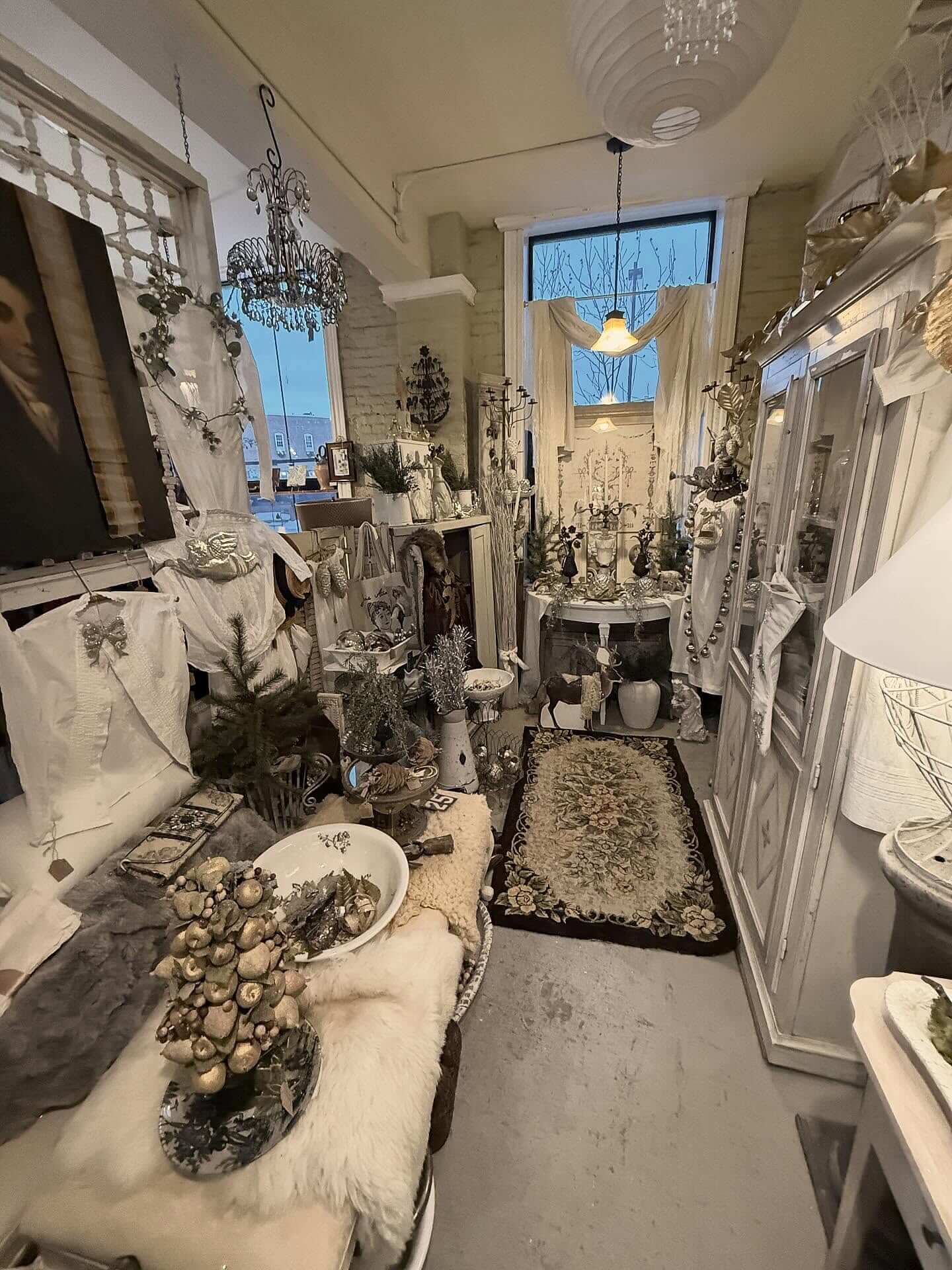
Extend your farmhouse welcome from porch to mudroom with performance rugs that look like naturals but laugh at mess. Recycled PET, polypropylene, or solution-dyed acrylic in herringbone, diamonds, or chunky basketweaves bring jute-like texture without the worry. Stick to warm neutrals—sand, driftwood, peppered gray—for a cohesive indoor–outdoor palette. Layer a coir mat at the threshold for grit, then follow with a flatweave runner to catch the rest. Low-profile weaves clear doors and shake out easily; many hose off for quick resets. In a mudroom, pair with black hooks, wire baskets, and a pine bench so the utilitarian vibe still feels styled. Use the same pattern in different sizes from exterior stoop to interior hall to guide the eye and tie spaces together. Durable, UV-stable, and kid-and-dog friendly, these rugs deliver the farmhouse look you love with true everyday durability.
Get the Fail-Safe Paint Color Playbook (Free PDF)
36 proven colors • 8 ready palettes • trim & sheen guide • printable testing cards.
Round Jute Under a Cozy Breakfast Nook
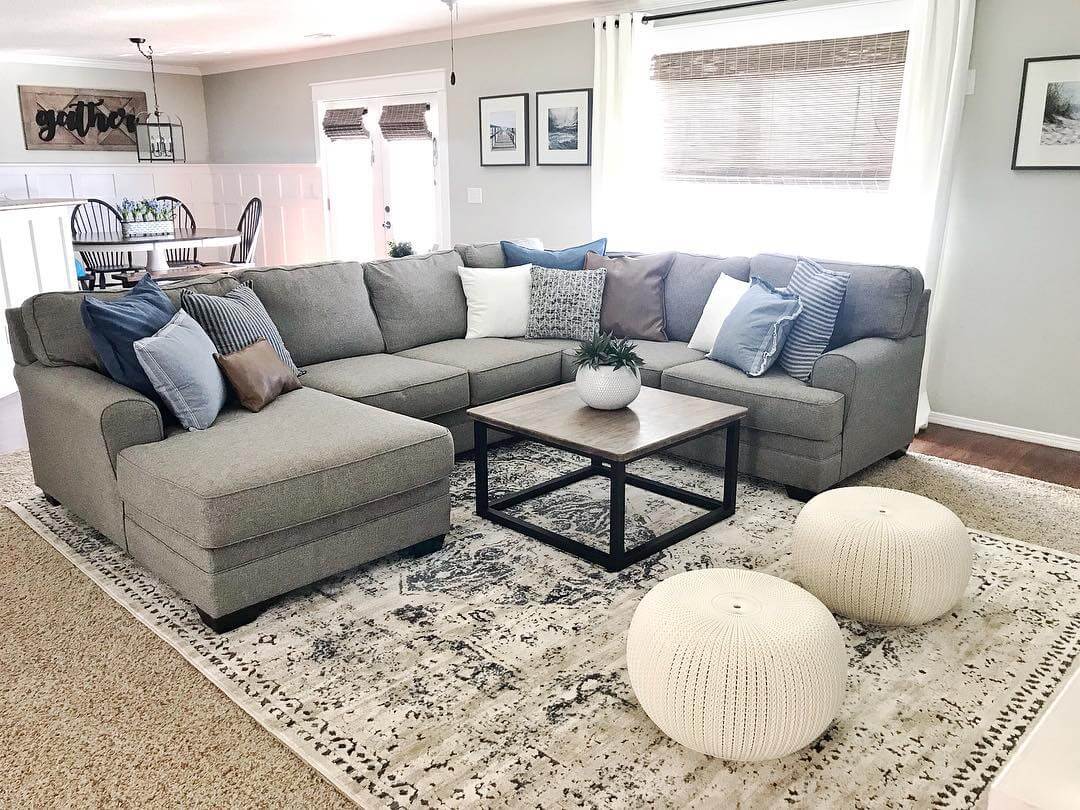
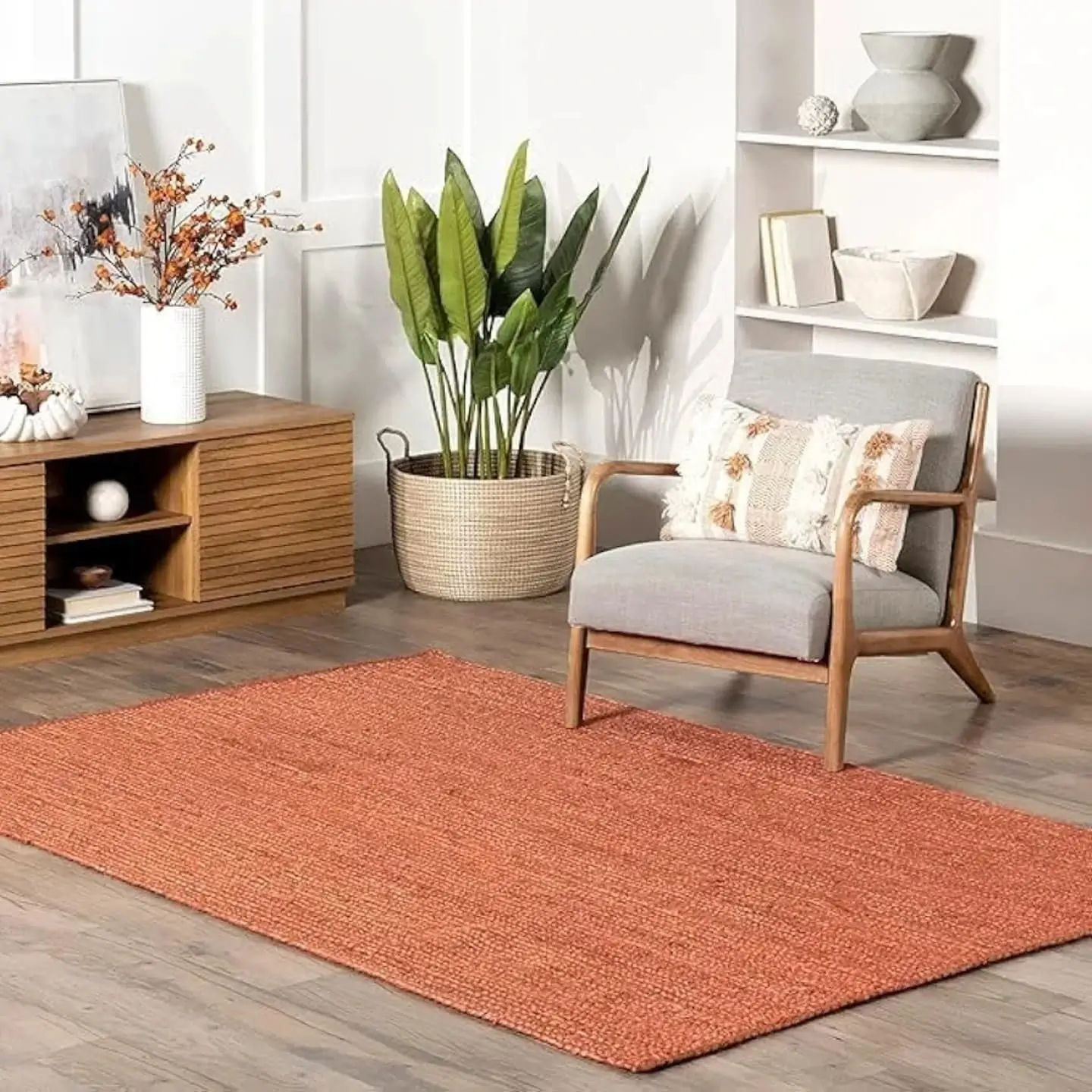
A round jute rug is the farmhouse MVP for a breakfast nook, gently softening all the right edges while standing up to daily traffic. Pair a 6’–8′ round jute or seagrass rug with a pedestal table to echo its curves and visually center the seating. Natural fiber’s sandy tone layers easily with painted chairs, spindle benches, and stoneware accents, amplifying that sunlit, collected charm. For chair scooting, choose a tightly woven jute or a jute-cotton blend; it sheds less and offers smoother movement than chunky weaves. Aim for 24″ of rug beyond the table’s edge on all sides so chairs stay stable when pulled out. If your floors are pine or oak, the rug’s warm, braided texture adds depth without stealing focus. Style tip: keep the palette light—oatmeal, cream, and warm white—then introduce seasonal color through linens or florals. A felted rug pad adds comfort, protects planks, and keeps edges flat. When layering, swap the table runner for a petite vintage-look mat or centerpiece trivet, letting the jute remain the grounding base. It’s an approachable, hardworking way to anchor a nook that feels equal parts rustic, tidy, and lived-in.
Hearth-Warming Rug to Frame a Farmhouse Fireplace
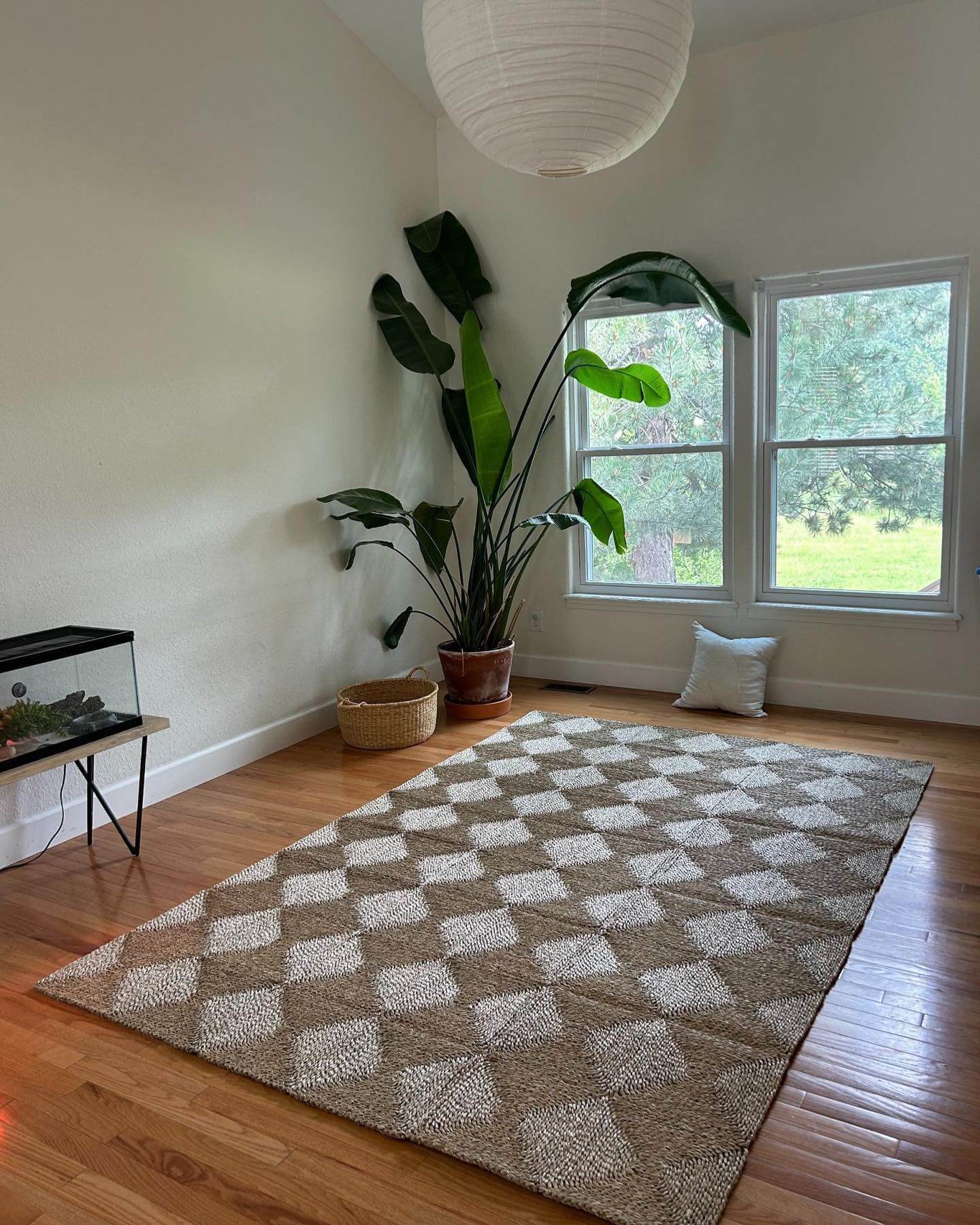
Nothing says “come sit” like a vintage-inspired rug pulled toward a stone or brick hearth. In a farmhouse living room, a low-pile wool or performance flatweave sets the scene: it reads elegant yet durable, hides ash and dust, and lets accent chairs glide easily. Choose an 8×10 or 9×12 that tucks under the sofa’s front legs and pulls the armchairs into the conversation zone. Keep a safe, manufacturer-recommended buffer from the firebox, and opt for dense fibers (wool is naturally flame-conscious and resilient). Muted palettes—charcoal, russet, denim blue—play beautifully with mortar tones and reclaimed mantels. Subtle abrash or distressed patterning delivers the timeworn patina farmhouse rooms love, without the upkeep of a true antique. A rug pad minimizes shifting when the room bustles on game nights. Styling note: repeat the rug’s secondary color on throw pillows or a wool blanket draped over a ladder near the hearth for an easy, cohesive story. With the right size and pile, your fireplace vignette turns into a grounded, generous landing spot that invites lingering long after the embers fade.
Washable Checkboard Runner for a Workhorse Laundry-Mud Combo
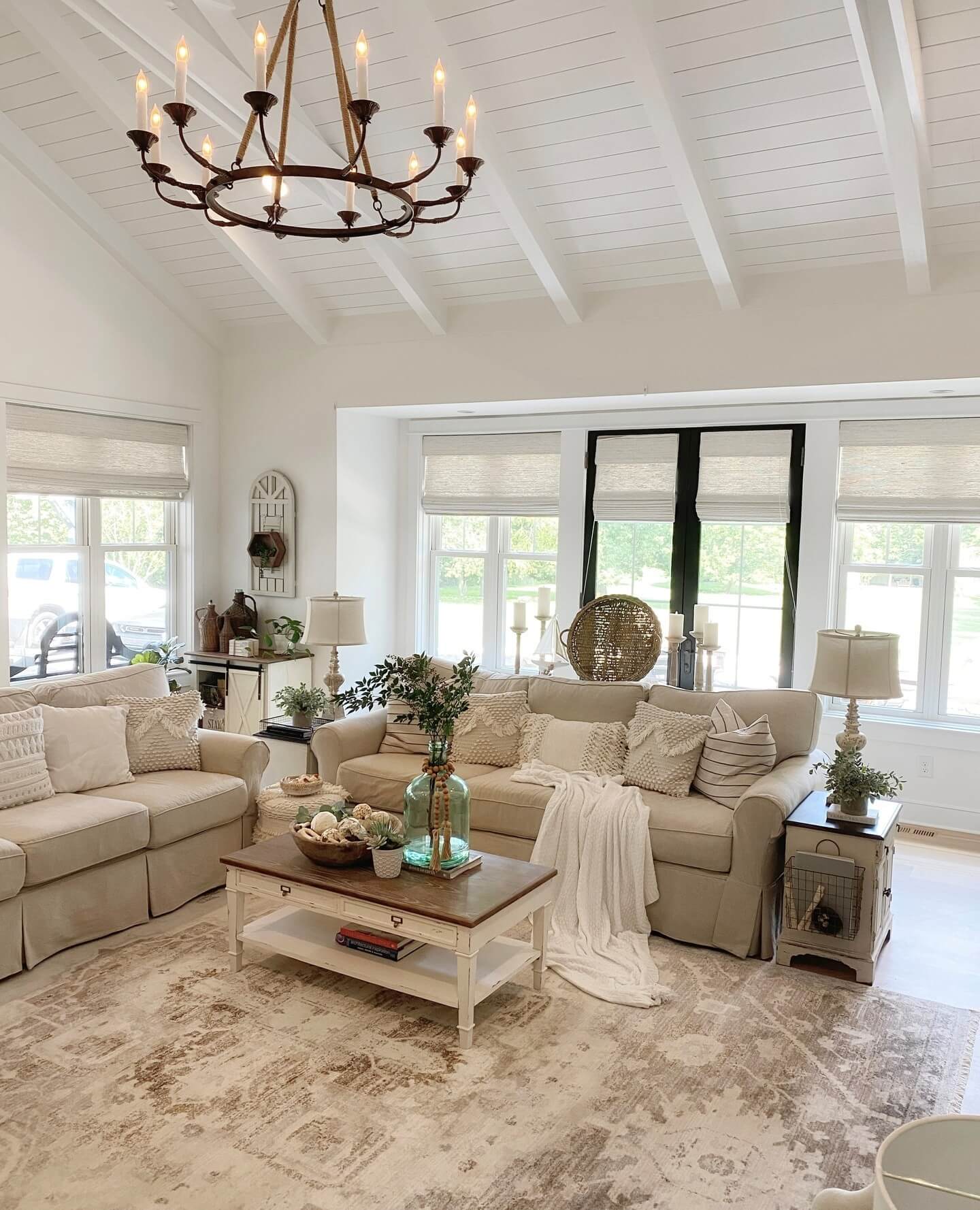
The checkerboard trend is tailor-made for farmhouse utility spaces: it’s classic, graphic, and forgiving. In a laundry or mudroom, lay a washable checkered runner (2’6″ x 8′ is a sweet spot) that echoes the look of old-fashioned tiled floors without the permanence. Choose a low-pile, machine-washable construction—cotton, chenille, or polyester—so lint, paw prints, and boot scuffs rinse right out. Neutral grids in oat/ivory or charcoal/stone keep the look calm and cohesive with shaker cabinetry and black hardware, while bolder cocoa or denim squares add friendly contrast to white beadboard. For slip resistance, pair the rug with a thin, ventilated pad or a washable rug base system; it stabilizes corners and speeds dry time. If the room doubles as a garden entry, consider solution-dyed fibers that shrug off moisture and UV. Style the zone with woven baskets and enamel hooks to repeat the rug’s tidy geometry. The result: a practical, pattern-forward moment that connects function and farmhouse form, proving the busiest paths can still feel beautiful—and easy to maintain.
Layer a Cowhide Over Jute for Rustic-Refined Contrast
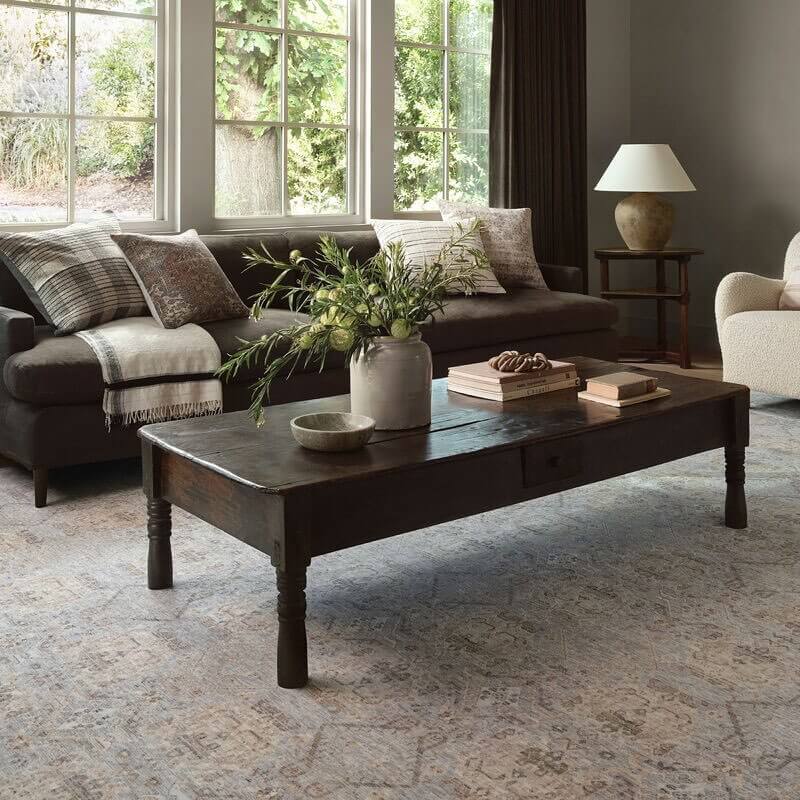
For a room that wants character fast, stack textures: start with a large, flat jute base and float an organic cowhide on top. The jute’s warm, even weave anchors sofas and case goods, while the hide’s irregular silhouette breaks up right angles and instantly reads collected. This rustic-refined pairing suits living rooms, offices, and even wide landings—anywhere you want movement without visual clutter. Keep the palette tonal (camel, tobacco, cream) to blend seamlessly with leather club chairs, iron accents, and raw wood beams. Scale matters: a generous 8×10 jute grounds the zone; then center a standard hide toward the coffee table so the edges peek naturally beneath. If you prefer animal-free, a faux-hide delivers the same curve and contrast. Cleanup is simple: shake the hide outdoors and spot-clean; vacuum the jute with a brushless setting. A felt pad under the jute adds cushioning and keeps layers crisp. This two-rug formula nails farmhouse sensibility—tactile, unfussy, and storied—without relying on heavy pattern, letting patinaed furniture and textured throws take a quiet bow.
Kilim Rug to Ground a Collected Farmhouse Office
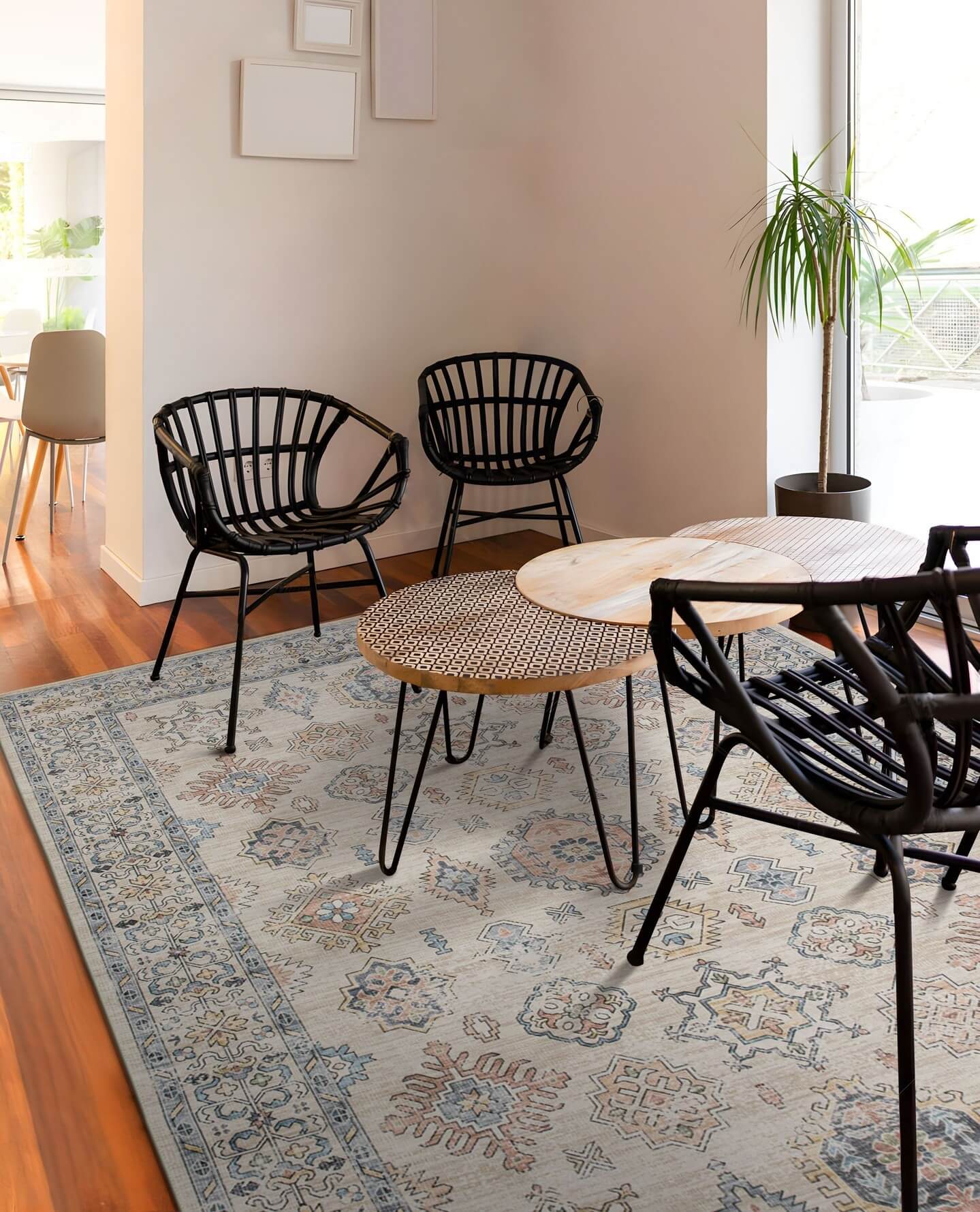
A flatwoven kilim is the farmhouse office workhorse: thin enough for rolling chairs, patterned enough to energize bookshelves and beadboard. Look for hand-loomed or vintage-inspired kilims with small-scale geometrics or faded florals in rust, indigo, and sage—hues that harmonize with wood desktops and aged brass. Size so that your chair remains fully on the rug when pulled back (usually 6×9 or 8×10) to prevent edge curl and snags. Kilims excel in layered, collected rooms because their crisp weave reads tailored, not fussy; they also disguise everyday wear and the occasional coffee drip. Add a natural rubber pad to prevent slippage and provide a touch of cushion without compromising chair mobility. If you’re pattern-shy, choose a kilim with a low-contrast palette—think clay on sand—to keep the room calm during long work sessions. Finish the story with linen curtains and a library lamp that echo the rug’s accent color. The effect is fit for heads-down focus yet welcoming enough for weekend letter-writing, proof that farmhouse style thrives where function and heritage meet.
Soft Checkerboard Wool for a Modern Farmhouse Twist
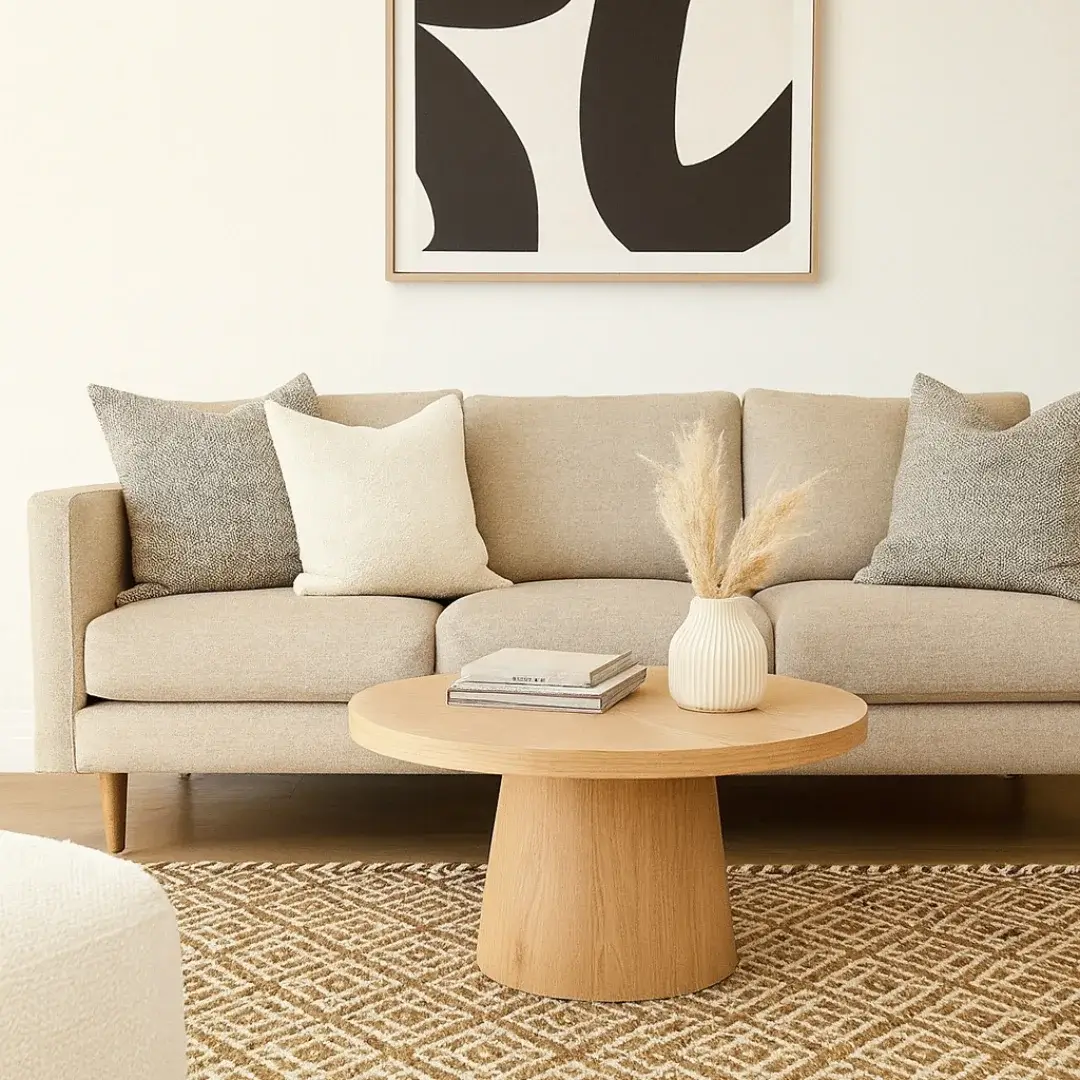
Checkerboard rugs—especially in hushed creams, taupes, and warm grays—thread a modern note through classic farmhouse rooms. In a living area or snug, a hand-tufted wool or wool-blend checkerboard adds plush underfoot comfort while lending quiet structure to slipcovered seating and shiplap walls. Keep the contrast gentle so the grid reads textured, not loud; tone-on-tone squares feel elegant and light-friendly. Size generously (8×10 or 9×12) so furniture front legs sit on the rug, which visually expands the room and reduces traffic wear. Wool naturally repels soil and rebounds from footprints—ideal for family spaces—just vacuum with a brushless setting to manage minimal shedding. Pair the rug with blackened metal lighting and oak side tables to balance softness with farmhouse grit. If you love the look in high-traffic zones, consider a performance-wool blend that’s spot-cleanable and colorfast. With its clean geometry and cozy pile, a checkerboard wool rug bridges rustic and refined, refreshing a room without overwriting its patina.
Sunroom-Friendly Faded Persian for Light-Layered Charm
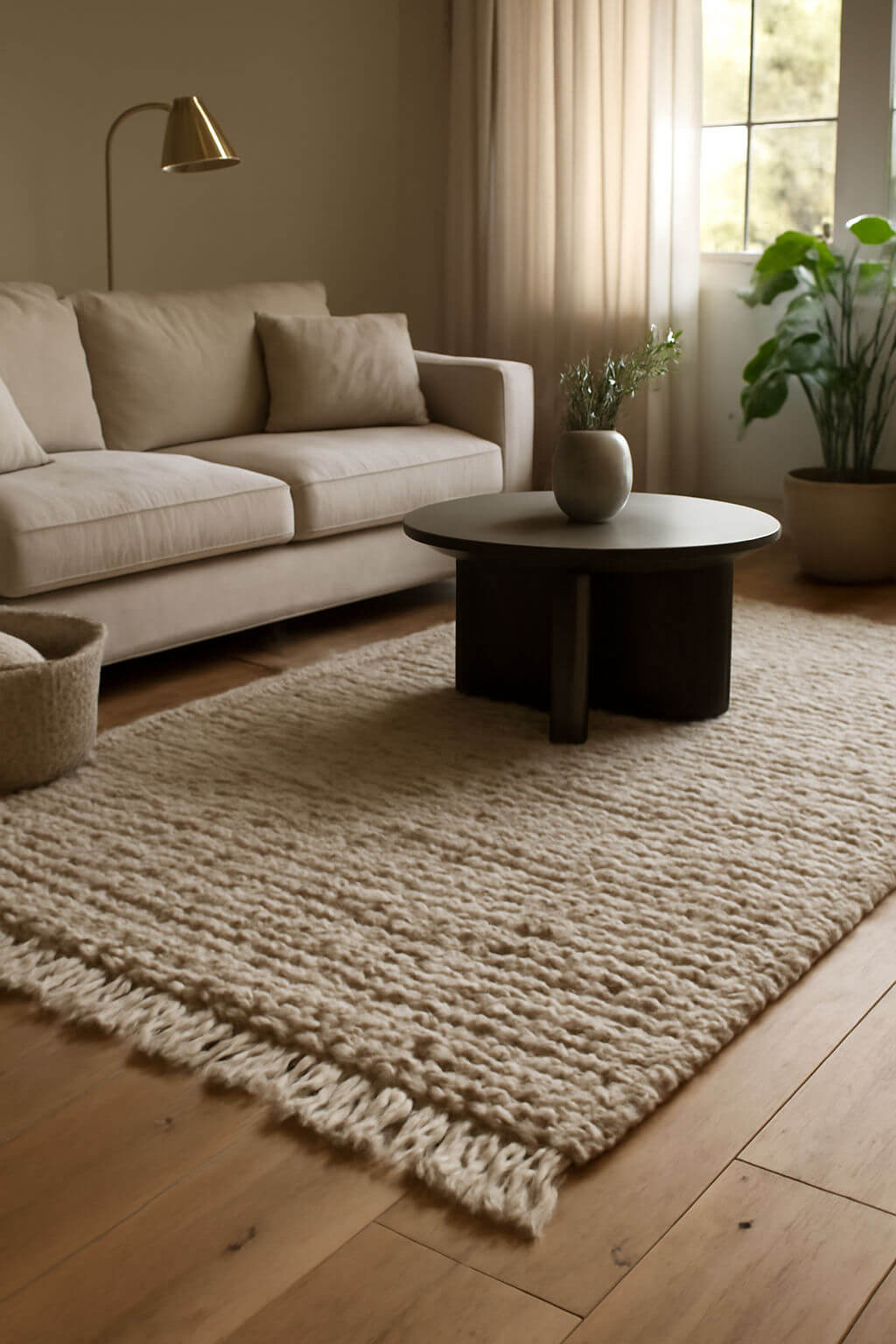
A sunroom begs for a rug that’s breezy by day and romantic by dusk. Enter a faded Persian-style flatweave: its low pile won’t trap grit from garden doors, and its timeworn pattern softens rattan, wicker, and linen slipcovers. Choose a palette of weathered clay, sage, and misty blue to echo the landscape and keep the space airy. If your room gets strong UV, opt for solution-dyed fibers or a wool blend known for colorfastness; rotate the rug seasonally to even sun exposure. Size so the front legs of lounge chairs and settees rest fully on the rug, creating a unified lounge zone that still feels light. A breathable felt pad adds comfort and prevents slipping on tile or painted floors. Style with terracotta pots, botanical prints, and woven shades to reinforce the indoor-outdoor dialogue. The result is an easy, sun-washed layer that reads heirloom without fuss—one that pulls the seating together and makes every coffee, seedling tray, and sunset chat feel intentionally placed.
Gingham Rug for a Sweet, Durable Farmhouse Nursery
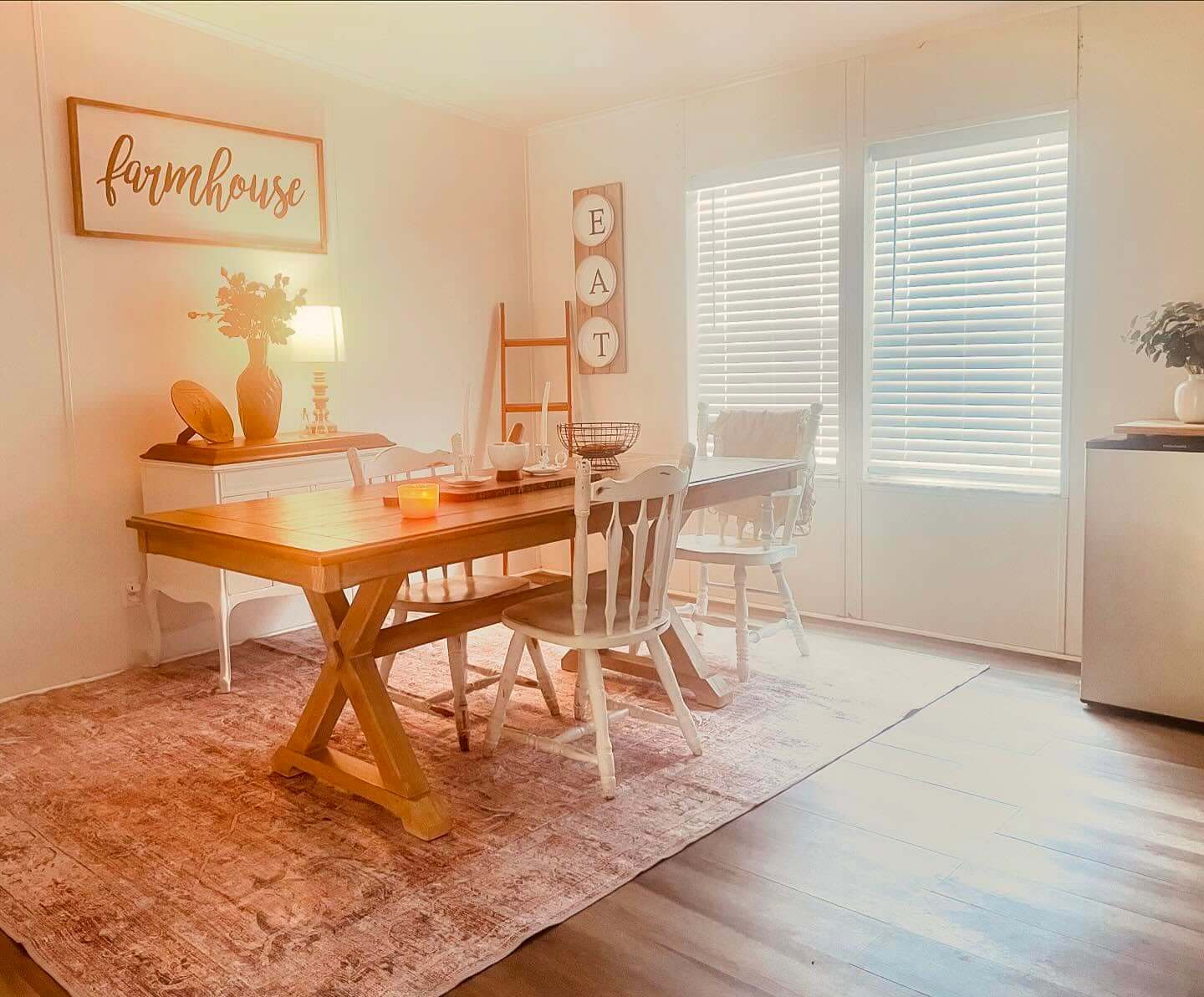
Gingham is farmhouse shorthand for calm, cheerful order—perfect for a nursery or play space. A low-pile, washable gingham rug in powder blue, sage, or wheat sets a soothing grid that pairs with beadboard, vintage quilts, and spindle cribs. Choose OEKO-TEX certified fibers or cotton-chenille blends for soft, nap-friendly comfort; if you prefer extra resilience, a machine-washable polyester weave handles spills and art projects with ease. Size so there’s a generous play zone beyond the crib and glider—typically 6×9 in smaller rooms—then add a non-slip pad to prevent bunching during tummy time. Keep fringes minimal for easy vacuuming, and select a medium-scale check so toys don’t visually clutter the floor. For cohesion, echo the rug’s secondary color in a lampshade or bookshelf bins. The gingham’s gentle rhythm supports a restful palette while hiding the day-to-day, making the space feel tidy, tender, and unmistakably farmhouse.
Get the Fail-Safe Paint Color Playbook (Free PDF)
36 proven colors • 8 ready palettes • trim & sheen guide • printable testing cards.
Vintage-Motif Bath Runner That Loves Splashes
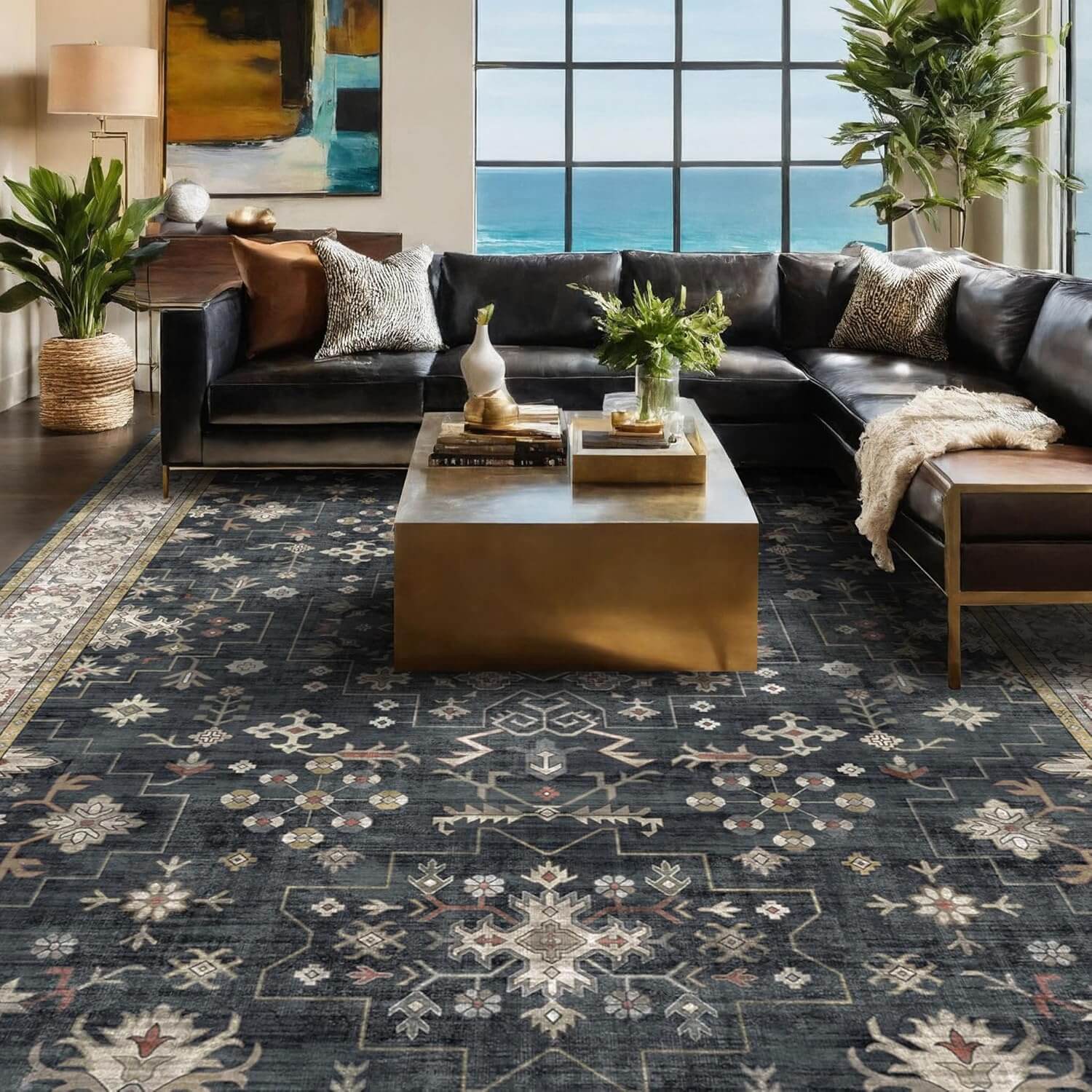
Farmhouse bathrooms benefit from a textile that warms tile and winks at the past. A vintage-inspired bath runner—think faded medallion or petite floral—adds instant character along a single or double vanity. Choose a quick-dry, washable construction (cotton, performance chenille, or indoor/outdoor polypropylene) and back it with a non-slip pad or integrated grip for safety. Earthy terracotta, slate, or dusty blue patterns camouflage drips and shed lines while complementing unlacquered brass, oil-rubbed bronze, or black hardware. Scale the runner to leave a few inches off each wall for a tailored fit; avoid heavy fringe that stays damp. In high-moisture spaces, look for mildew-resistant fibers and toss the rug into a gentle wash cycle as needed. Tie the look together with waffle towels and a wood stool to repeat the rug’s warmth. The outcome is a bathroom that keeps farmhouse soul intact—warm, practical, and layered—without sacrificing the real-life performance a busy morning routine demands.
Low-Contrast Pattern in a Farmhouse Guest Room
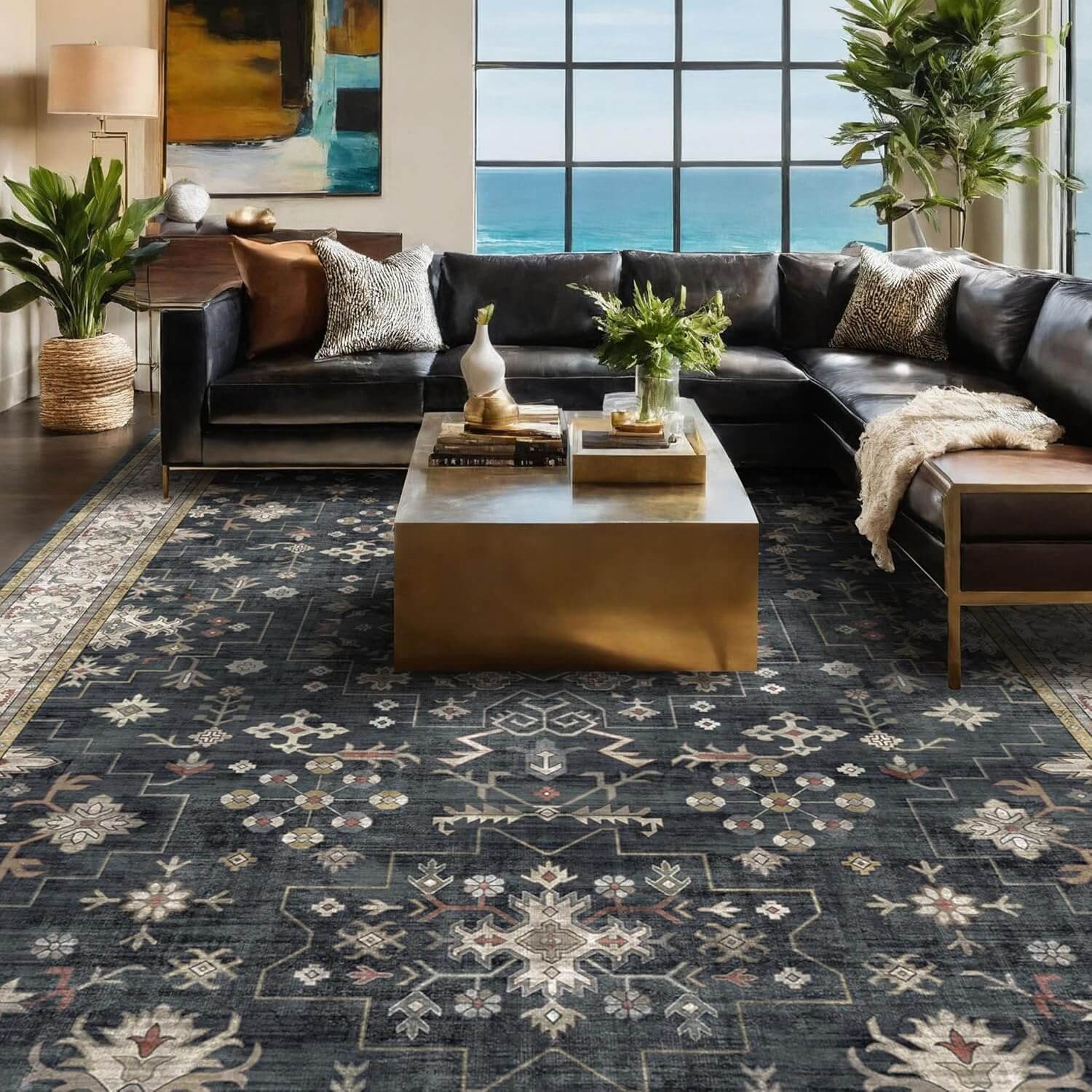
Guest rooms shine with subtlety. A low-contrast patterned rug—windowpane, petite vines, or block print in oatmeal and ivory—creates a cloud-soft base that feels boutique yet unfussy. Slide an 8×10 under a queen bed so 24″–36″ of rug extends on three sides; it’s generous under bare feet and visually calms painted floors or knotty pine. Choose a wool or washable low-pile construction: wool offers springy comfort and natural soil resistance, while washable blends simplify post-visit refreshes. Keep pattern scale modest so quilts, ticking pillows, and woven blinds remain the stars. If the bed has a wood or iron frame, the rug’s light contrast outlines it without shouting. Add a felt pad for a cushy step and to protect floors from luggage scuffs. Echo the rug’s softness with linen drapery and a vintage throw at the footboard. This quiet layer brings hospitality to the farmhouse guest suite—warm, tidy, and timeless, with enough texture to feel special the moment the suitcase lands.
Entryway Jute Runner That Sets a Rustic Welcome
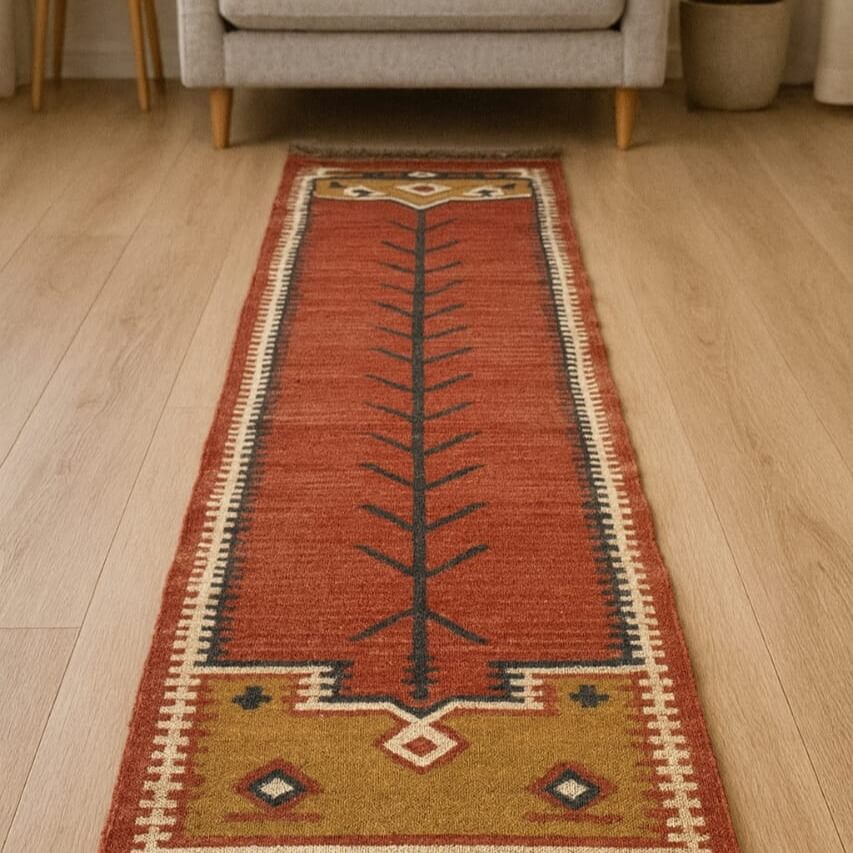
Start your farmhouse story at the front door with a jute or sisal runner that reads natural, hardworking, and warm. A 2.5×8 to 3×10 runner suits most entryways; if yours is wide, size up so at least 4–6 inches of floor shows on each side. Look for a heathered weave or a subtle border that echoes your trim color. Natural fiber brings grit-hiding texture and that sunbaked, barnwood-adjacent tone farmhouse lovers crave. To boost durability, place a washable doormat at the threshold and let the jute runner carry the eye to a bench, peg rail, or console. A thin, non-slip rug pad keeps corners flat and protects wood floors from shifting grit. Prefer softer underfoot? Choose a jute-wool blend or a faux-sisal performance runner that can handle wet boots and paws. Keep the palette simple—oatmeal, taupe, and soft charcoal—so baskets, black hooks, and a vintage mirror can sing. Bonus style points for a faint ticking stripe that nods to classic workwear. Vacuum weekly, rotate seasonally, and spot clean with mild soap to keep that welcoming texture looking fresh year-round.
Get the Fail-Safe Paint Color Playbook (Free PDF)
36 proven colors • 8 ready palettes • trim & sheen guide • printable testing cards.
9×12 Neutral Foundation for a Farmhouse Living Room
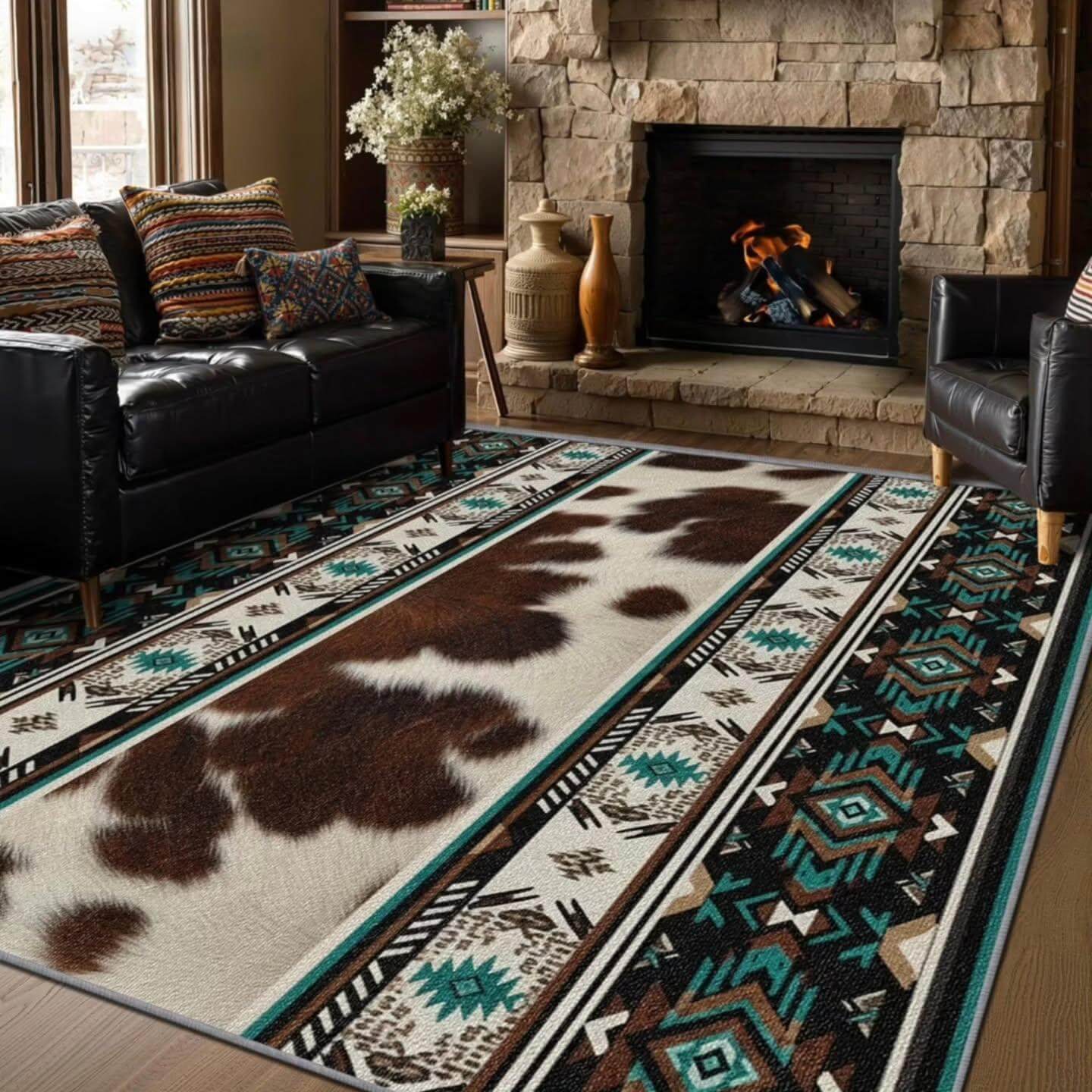
In a farmhouse living room, right-sizing the rug is everything. A 9×12 neutral anchors an 8-foot sofa, two accent chairs, and a generous coffee table so the entire seating plan feels connected—not floaty. Aim to land at least the front legs of all seating on the rug; in larger rooms, jump to a 10×14 for wall-to-wall coziness that still lets the floor breathe. Choose a low- to medium-pile wool or a soft, heathered flatweave in oat, flax, or greige to layer beautifully with slipcovered sofas, linen curtains, and blackened-iron accents. A whisper of pattern—a small-scale diamond, herringbone, or speckle—adds movement without stealing the show. Underneath, a quality felt-and-rubber pad adds plushness and protects wide-plank floors. Style with a textured throw, vintage trunk or pine coffee table, and woven baskets for remotes. If you love the look of antique rugs but need kid-and-dog durability, try a performance polypropylene or washable large-format rug in a neutral melange. The end result: a calm, cohesive foundation that spotlights your beams, brick, and collected finds while softening acoustics and footfall.
Ticking-Stripe Rug for a Timeless Farmhouse Bedroom
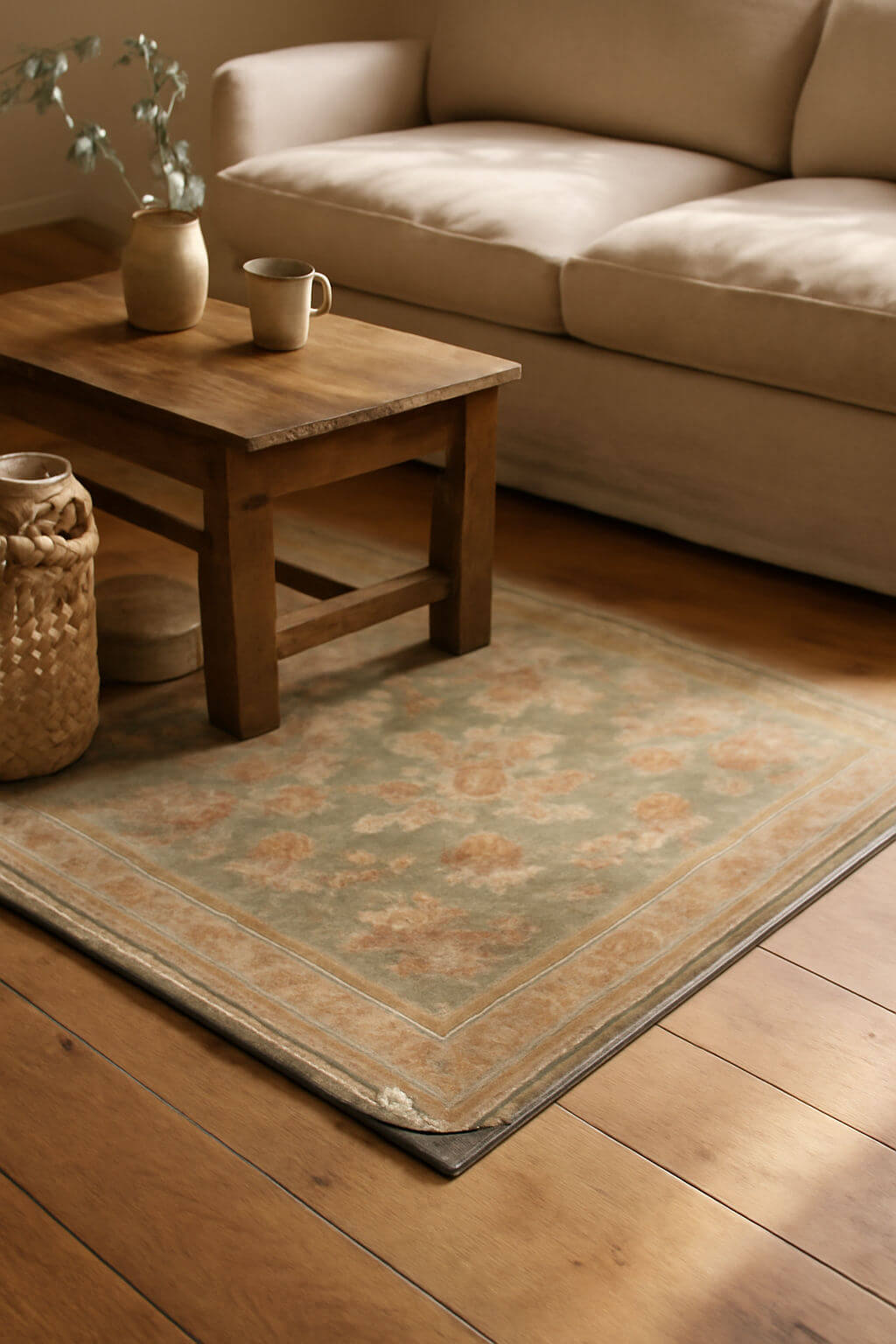
Ticking stripes are the definition of quiet character—tailored, easy, and forever farmhouse. In a bedroom, a ticking-stripe rug brings order and softness without overwhelming your quilt or shams. Run the stripes parallel with the bed to elongate the room, and size generously: 8×10 for a queen, 9×12 for a king, so your feet find warmth each morning. Colorways like ivory-and-slate, sand-and-ivory, or soft denim keep the palette restful and play well with shiplap walls and patinated wood nightstands. Materials matter here—choose wool for cushioned comfort and durability, or opt for a cotton-wool blend or washable construction if you’ve got pets. Balance the linear motif with rounded shapes—a scalloped lamp shade, curved headboard, or spindle bench. Layer in natural textures (linen duvet, woven hamper, gingham accent pillow) to echo the rug’s heritage vibe. A low-profile pad prevents ripples under rolling drawers. Finish with blackout-lined curtains and a vintage rug runner at the foot of the bed if you crave a little extra pattern layering. It’s a calm, classic base that makes the room feel made, not staged.
Oval Braided Rug to Soften a Country Kitchen
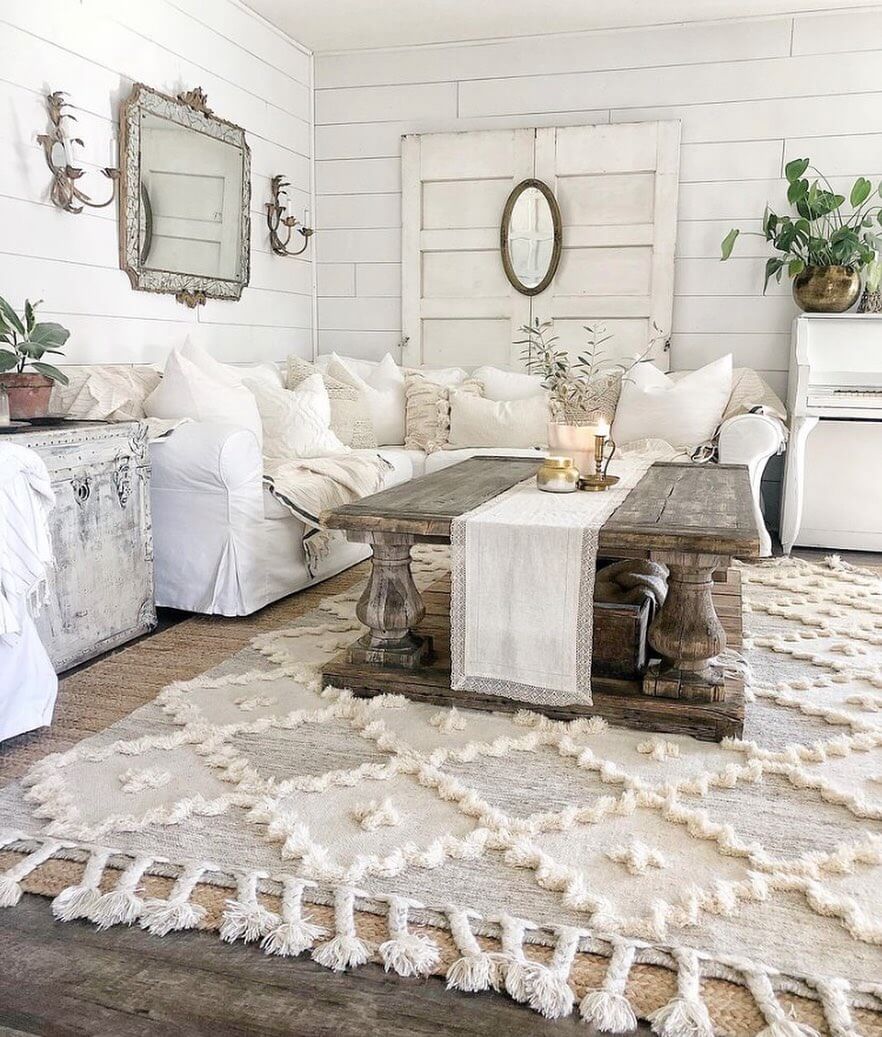
A braided rug brings pastoral warmth to the hardest-working room in the house. Choose an oval to echo the flow of a farmhouse kitchen—especially effective by the sink, range, or a center prep table—where curved edges won’t catch on cabinet corners. Color is your friend: flax, wheat, denim, and brick flecks disguise crumbs while nodding to pottery, copper, and crockery on open shelves. For zones where splashes happen, a reversible braided rug or indoor-outdoor fiber keeps maintenance simple—just shake, spot clean, and occasionally hose off if the construction allows. Size so it clears toe-kicks and appliance doors (think 3×5 or 4×6), and add a thin, water-resistant pad for grip without raising the profile too much. If you’ve got a breakfast table, an oversized oval centers chairs gracefully and reduces scuff patterns common with rectangles. Pair with a peg rail, striped tea towels, and a market basket for a collected, utilitarian feel. The texture softens tile underfoot and quiets clatter, delivering that “grandma’s kitchen” comfort in a way that still reads fresh and functional.
Faded Blue Persian Layered Over Jute for Collected Charm
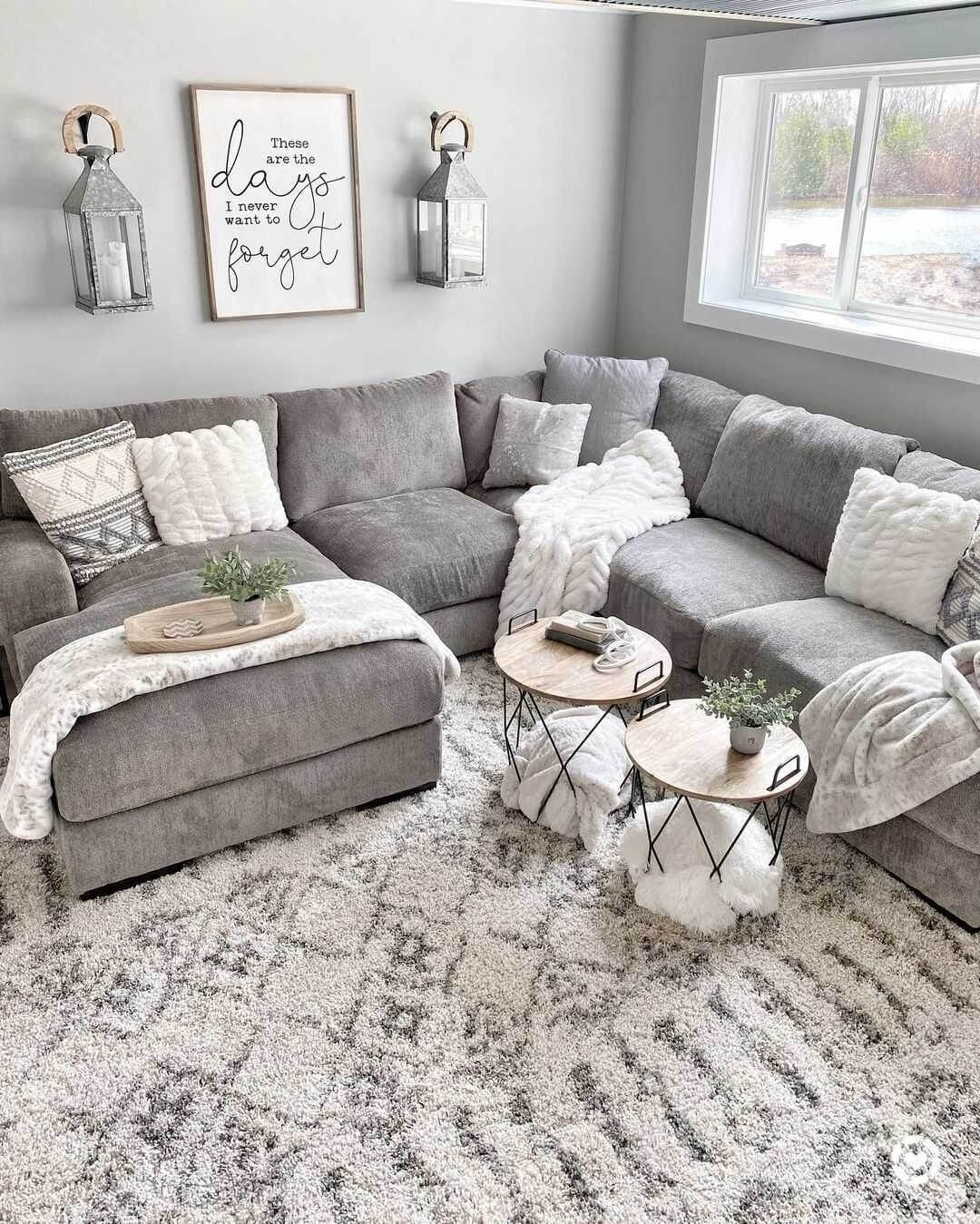
Layering is the farmhouse secret to making a new build feel storied. Start with an 8×10 natural fiber base—jute or sisal—for earthy texture and scale. Then add a smaller, faded blue Persian or Persian-inspired rug (think 5×8 or 6×9) on top to inject timeworn color, medallions, and a hint of romance. The combo brings depth without heaviness; the jute frames the pattern, while the Persian’s abrash blues, slate, and terracotta tie into denim, aged leather, and pottery glazes. Use a thin pad or corner grippers between layers to prevent shifting, and align the top rug with your coffee table or bed for a purposeful composition. In living rooms, this trick zones a conversation area within an open plan; in bedrooms, it draws the eye to the foot of the bed or a reading corner. Keep surrounding textiles simple—linen curtains, striped pillows, a wool throw—so the layered rugs can be the hero. It’s an approachable way to get that estate-sale energy even if your “vintage” is a modern, washable print.
Herringbone Stair Runner Built for Farmhouse Traffic
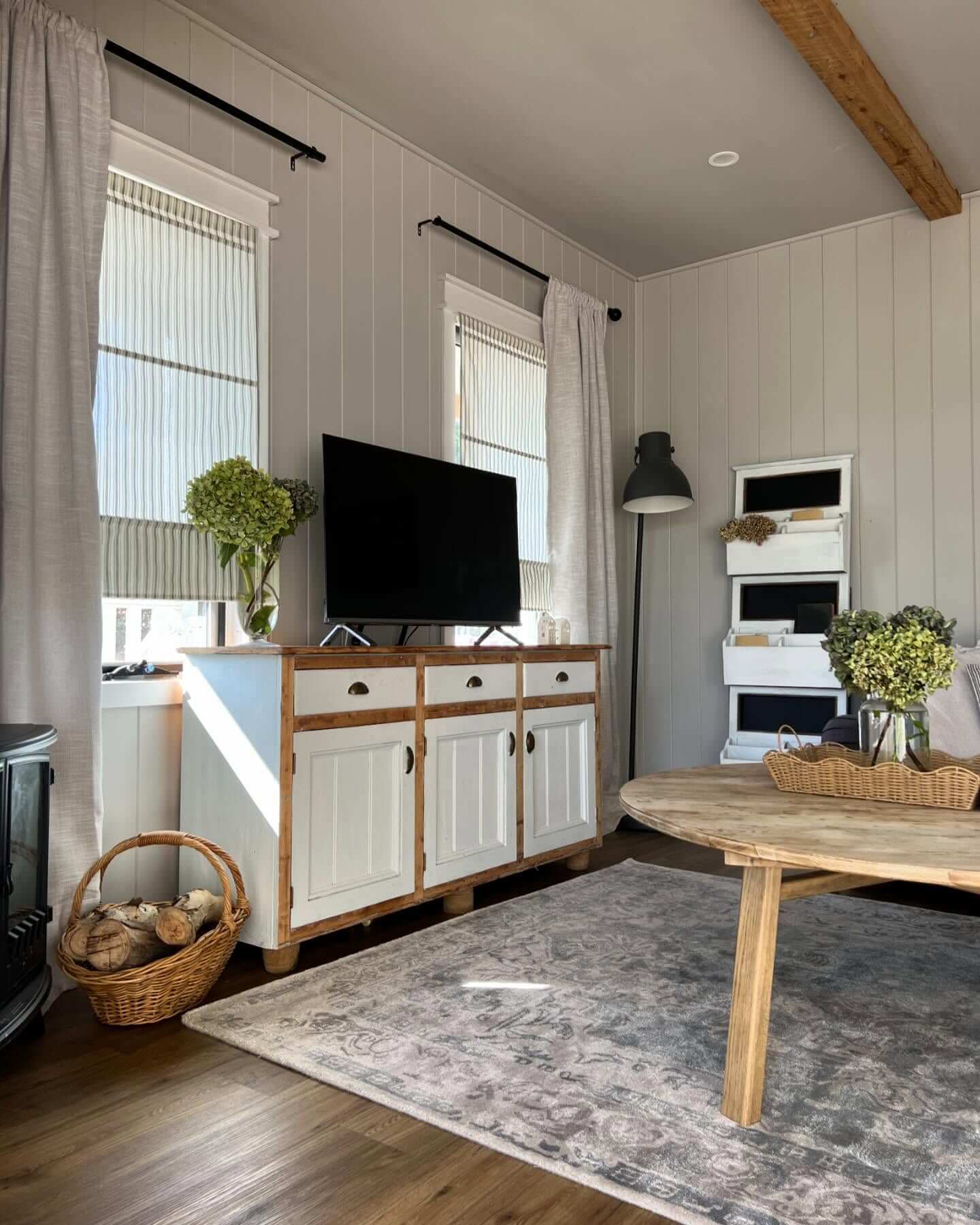
Stairways deserve the same farmhouse attention as rooms. A herringbone runner delivers grip, pattern, and polish in one pass. Choose a dense wool or performance polypropylene with a tight, low pile for durability; oatmeal toned with charcoal or chestnut flecks hides lint and dust between cleanings. Installation style matters: a “Hollywood” wrap over each tread reads tailored, while a “waterfall” drop feels relaxed—both work with shaker rails and painted spindles. Keep width consistent, leaving 3–5 inches of painted or stained stair on either side for a crisp border. If your home loves metal details, slim stair rods add subtle shine, but they’re optional with modern non-slip underlayment. Herringbone’s small-scale zigzag is ideal on stairs—dynamic without dizzying—and it pairs seamlessly with striped runners in adjacent halls or a check in the mudroom. Spot clean promptly, vacuum with the brush off, and consider scotchgard for extra stain resistance. The payoff: quieter steps, safer climbs, and a classic pattern that carries farmhouse character from one floor to the next.
Outdoor-Safe Buffalo Check for a Classic Farmhouse Porch
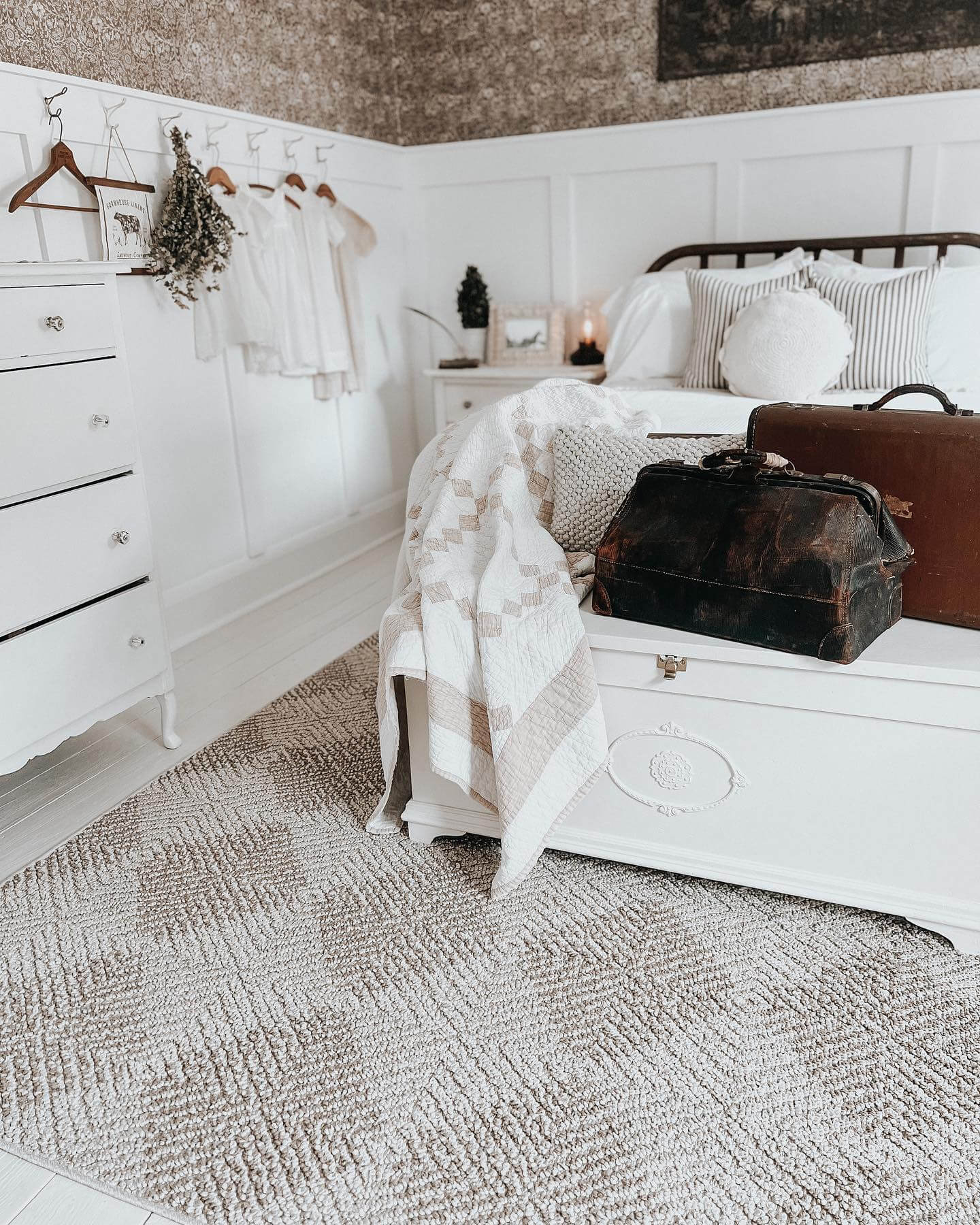
Extend your farmhouse rug story to the porch with an outdoor-safe buffalo check. The graphic grid—black and ivory, tan and cream, or slate and white—frames a seating area and makes rockers, a porch swing, or a galvanized coffee table feel intentional. Polypropylene or recycled PET constructions resist UV fading, mildew, and muddy paws; just shake, vacuum, or hose clean. Size up to define zones: a 6×9 for a pair of chairs and table, 8×10 under a full conversation set. Layer a coir welcome mat at the door over the rug for that high-low texture mix farmhouse loves. Keep the palette consistent with shutters and planters; echo the check with a gingham pillow or keep textiles solid so the rug pattern leads. In cooler months, roll and store to extend life, swapping in a natural jute-look indoor rug for a similar vibe inside. It’s an easy, budget-friendly move that ties exterior charm to your interior’s checks, stripes, and plaids for a cohesive, front-to-back farmhouse narrative.
Scalloped-Edge Natural Fiber for Cottagecore Charm
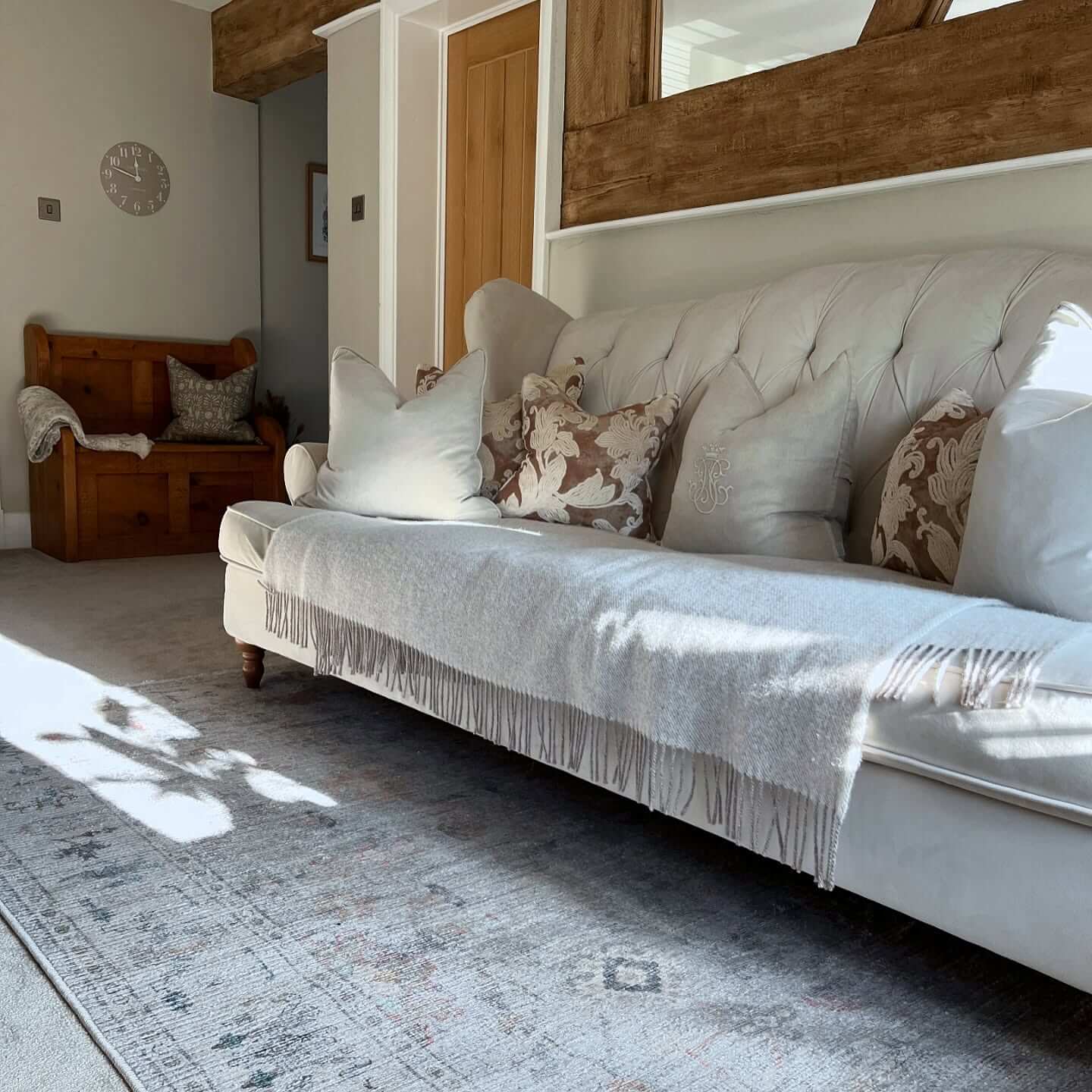
If your farmhouse leans cottagecore, try a scalloped-edge natural fiber rug to add softness and whimsy without veering precious. The gentle wave profile breaks up straight lines from beadboard, bookcases, and boxy slipcovers, while the jute or sisal weave keeps it grounded and grown-up. Use it in a reading nook, guest corner, or under a small writing desk where a rectangular rug might feel too strict. Choose a bound edge in tonal cotton—ivory, putty, or sage—for a tailored finish that echoes drapery trim or lamp shades. Because scalloped rugs tend to be smaller, a felt-rubber pad is key to prevent shifting and protect wood floors. Style the space with floral chintz, ticking stripes, wicker baskets, and a pleated shade to harmonize romantic and rustic elements. Keep the color story quiet so the silhouette shines. Maintenance is simple: frequent vacuuming, blotting spills fast, and rotating to distribute sun. It’s a small design flourish with big impact—an instant heirloom vibe that still stands up to daily life.
Plush Diamond-Woven Wool for a Cozy Farmhouse Family Room
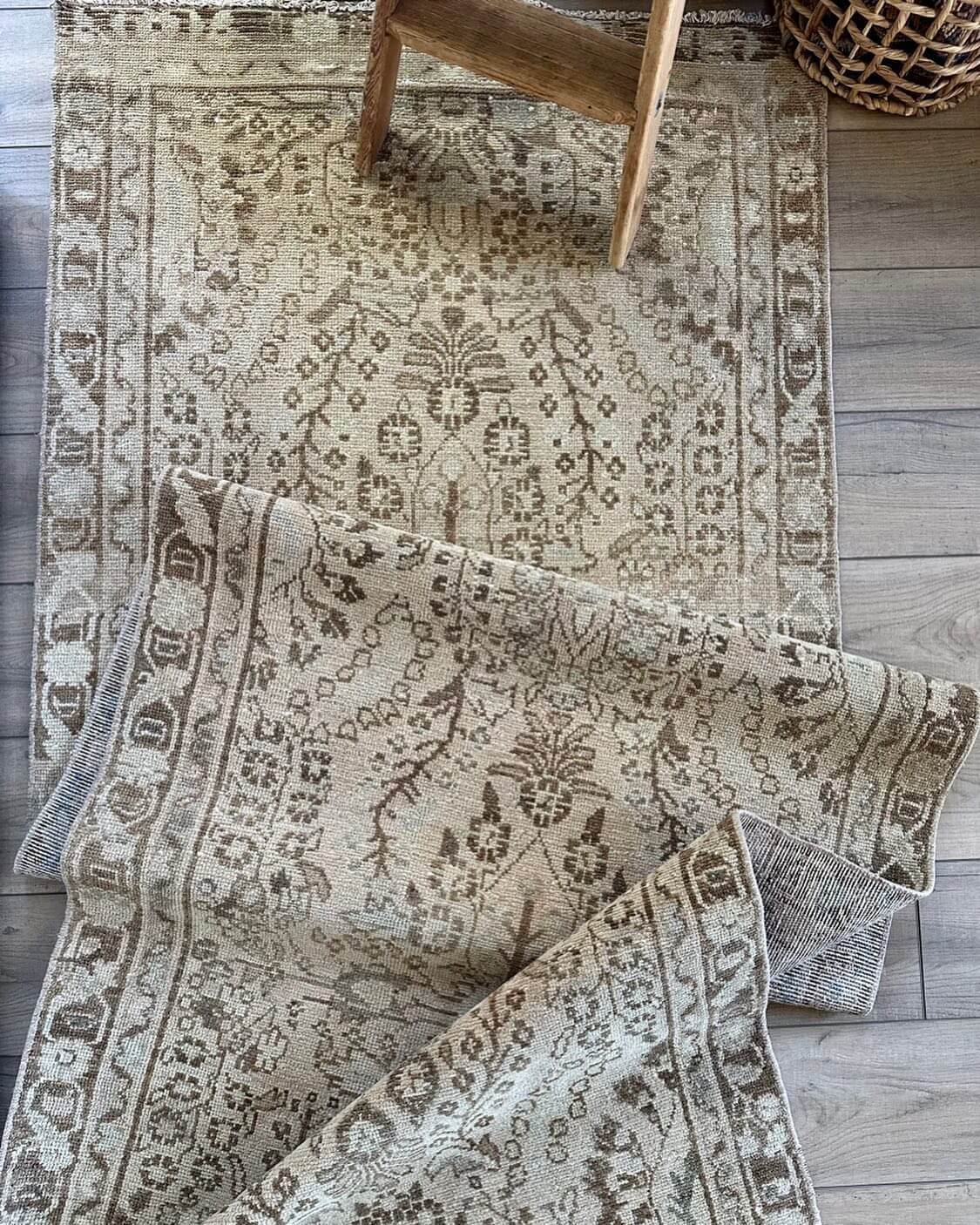
For movie nights and floor play, a diamond-woven wool rug (think Moroccan-inspired lattice) delivers cloudlike comfort within a modern farmhouse palette. Choose a low- to medium-pile hand-tufted or flatwoven-with-plush-highs construction so crumbs vacuum easily while toes still sink in. Ivory with soft gray or taupe lines keeps things light; reverse the scheme for a kid-proof look that still feels airy. Anchor a generous sectional by sizing up—9×12 or 10×14—so ottomans and floor cushions land entirely on the rug. Balance all that plush with tactile contrast: leather poufs, a reclaimed wood table, and nubby throws. Add a performance finish or fiber blend if spills are a reality, and rotate quarterly to even wear in high-traffic zones. This geometric works with checks, stripes, and florals elsewhere in the house, providing pattern continuity without repeating motifs. Skip it under a dining table; save the softness for lounging spaces where the texture can really shine and reinforce the home’s cozy, lived-in heart.
Layered Hallway Runners for a Collected, Lived-In Look
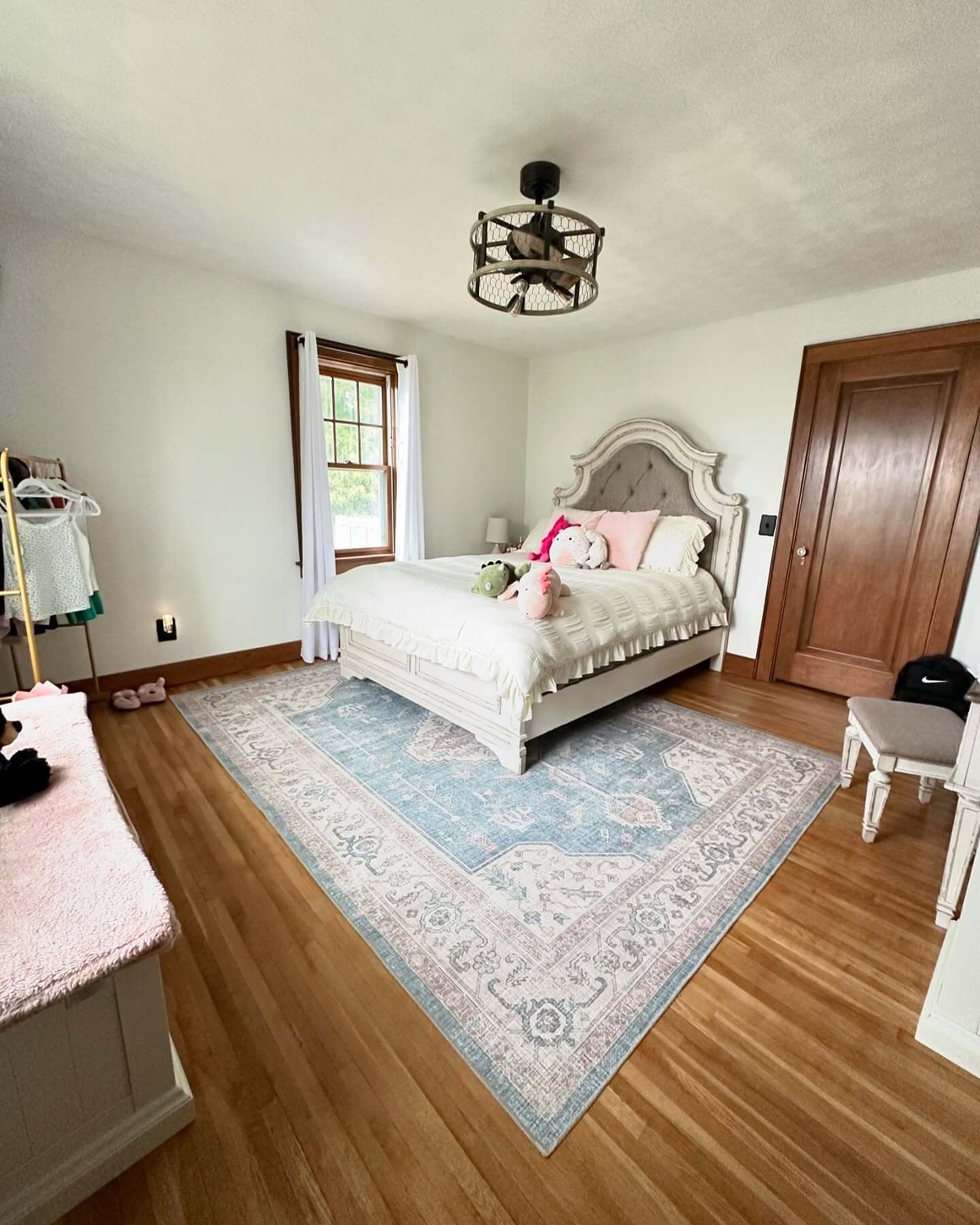
Long farmhouse halls can feel like runways unless you break them into vignettes. Use layered or sequenced runners to create rhythm and warmth. Start with a washable neutral runner for everyday grit control, then introduce a second, slightly shorter vintage-look runner—Persian, kilim, or stripe—offset a few inches for a relaxed, collected effect. Alternatively, repeat runners in coordinating patterns down the hall with small pauses at doorways to cue destinations. Keep widths consistent (2.5–3 feet) and leave 3–5 inches of floor reveal on each side for a custom look. Choose a cohesive palette—indigo, clay, and wheat—so transitions feel intentional, not chaotic. Low-profile pads are non-negotiable for safety, especially on slick finishes. Add character with sconce lighting, family photos, and peg rails; the rugs will draw the eye while softening footsteps and echo. Bonus: runners are budget-friendly places to test bolder color or motif without overwhelming a room. The net effect is a hallway that feels curated and welcoming—another chapter in your home’s farmhouse rug story.
Get the Fail-Safe Paint Color Playbook (Free PDF)
36 proven colors • 8 ready palettes • trim & sheen guide • printable testing cards.
Round Jute With Black Border to Anchor a Farmhouse Breakfast Nook
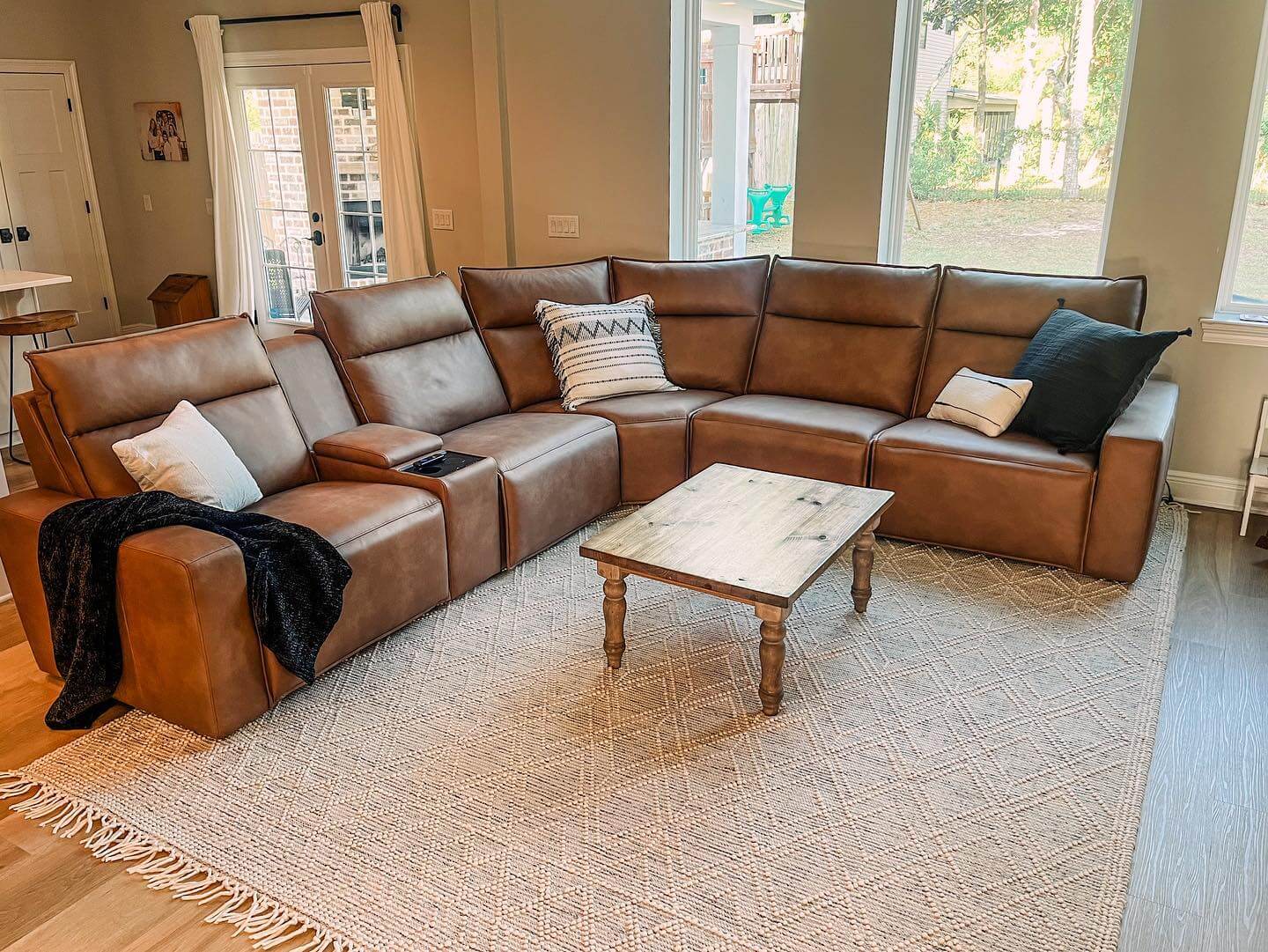
A round natural-fiber rug instantly makes a small dining corner feel intentional—especially in a farmhouse breakfast nook with a pedestal table and spindle chairs. Choose a jute or seagrass weave with a contrasting black border to echo iron lighting, window grids, or cabinet hardware. The circular shape softens straight lines and keeps chair legs comfortably on the rug, a key to preventing wobbles and scuffs. As a sizing rule, measure your table and add 24–30 inches all around so pulled-back chairs still sit on the rug; for most two- to four-seat nooks, a 6’–8′ round works well.
Texture is the secret sauce in farmhouse rug ideas, and jute delivers it in spades—warming tile or wood floors while hiding everyday crumbs. A felted rug pad will tame slippage and add just enough cushion without bulk. Keep the palette grounded with oatmeal and tan, then layer pattern at the table with ticking-stripe napkins or a gingham runner so the rug remains a quiet, hardworking base. For easy care, shake it out weekly and spot-clean with a mild soap solution. The result: a cozy, collected nook that invites slow mornings and second cups.
Washable Vintage-Style Runner for a Hardworking Farmhouse Mudroom
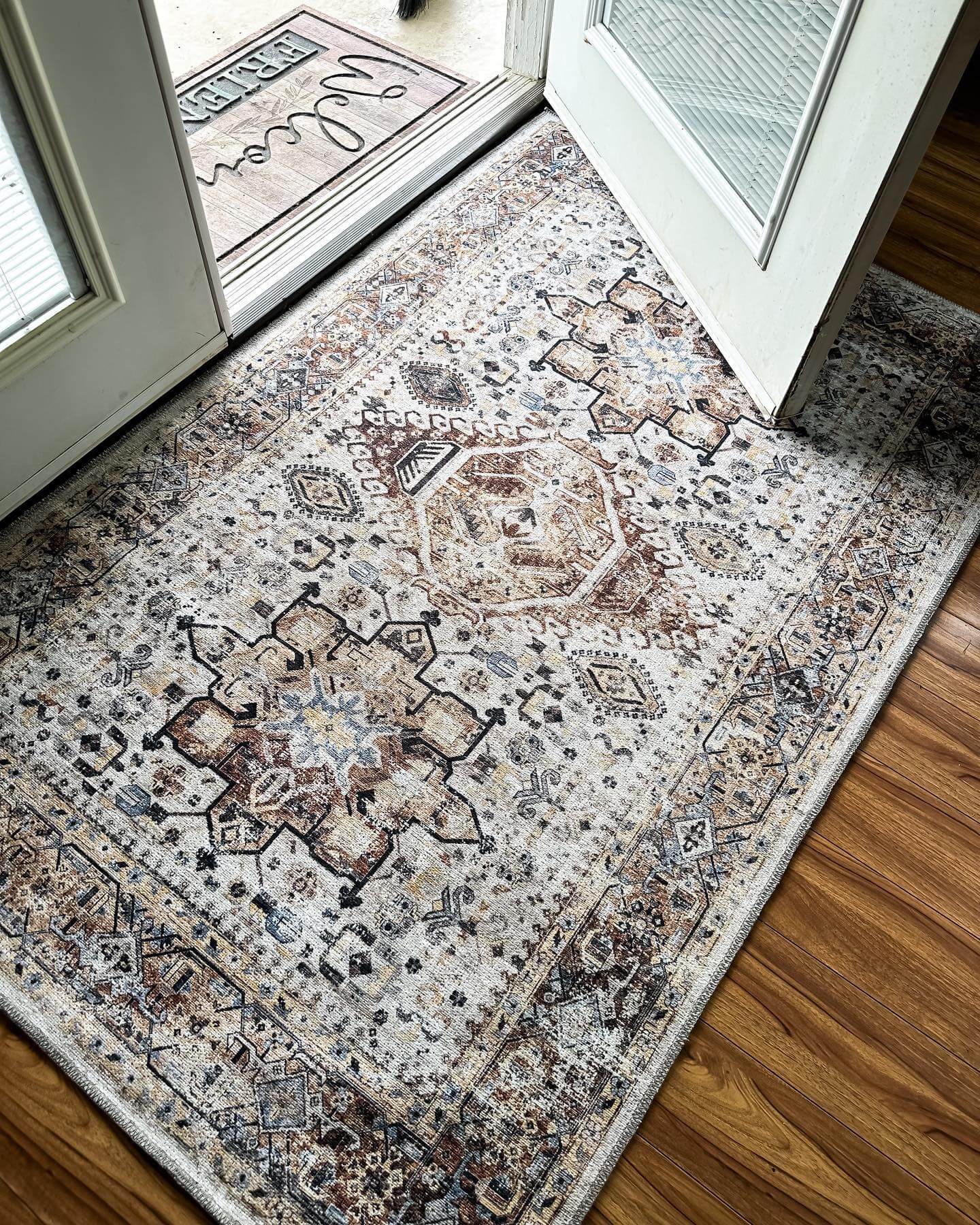
In high-traffic spaces where boots and backpacks land, a washable vintage-look runner is the farmhouse MVP. Opt for a low-pile, machine-washable weave or a performance flatweave that can be hosed off; both bring the patina of an antique rug without the stress. Timeworn patterns in terracotta, slate blue, or olive cleverly disguise dirt and paw prints while adding color to beadboard, shiplap, and natural wood benches. Size the runner to lead the eye from exterior door to interior hall, leaving a few inches of floor reveal on each side for a tailored fit.
Layer function like a pro: place a coarse coir mat outside to catch grit, then let your washable runner handle the rest inside. Use a low-profile, non-slip pad to keep corners flat and clear door swings—especially at thresholds. If your mudroom pulls double duty as a laundry zone, this style softens acoustics and warms tile underfoot without competing with appliances. Finish the vignette with black hooks, woven baskets, and a boot tray so the rug remains comfortably visible. It’s a practical, pretty bridge between outdoorsy living and the cozy heart of your farmhouse.
Budget-Friendly Farmhouse Rugs for Kitchens and Entryways: Durable Runners and Washable Styles
Kitchens and entryways demand farmhouse rugs that fight moisture, grit, and spills while still delivering charm through texture, ticking stripes, or buffalo checks. Prioritize low-pile washable rugs or indoor–outdoor polypropylene flatweaves that hose off outside, dry quickly, and resist staining from coffee, oil, and muddy boots. In galley kitchens, choose a runner two to three inches narrower than cabinet toe-kick clearance, leaving doorways unencumbered and toe spaces accessible. For long halls, connect spaces with two identical runners separated by a small gap, echoing stair runners and creating rhythm without feeling like a carpet seam. At the front door, a coarse coir doormat outside plus a soft, patterned indoor rug inside forms a dirt-trapping, style-forward double barrier. Neutral palettes are practical, but weaving in denim blues, sage greens, or rust accents hides everyday scuffs and complements galvanized metal, black hardware, and butcher-block counters.
- Choose machine-washable rugs with integrated pads to prevent shifting, checking manufacturer size limits so runners actually fit residential washers or laundromat machines without straining drum capacity.
- Opt for recycled PET flatweaves; they mimic wool’s matte texture, rinse clean after kitchen mishaps, and dry fast, making them ideal under sinks and pet feeding stations.
- Measure door swing clearance meticulously; low-profile rugs and thin pads keep thresholds smooth, eliminating tripping hazards and preventing corners from curling where traffic turns sharply into adjacent rooms.
- Plan a mudroom layering system: outdoor scraper mat, indoor absorbent rug, and boot tray, capturing debris progressively while preserving farmhouse charm with plaid or vintage-ledger-style prints.
- Stretch the budget with carpet remnants bound into custom runners; specify serged edges, natural rubber backing, and a muted micro-pattern that disguises grit between weekly cleanings.
Maintenance matters most in these utility zones, so blot spills immediately with white cloths and follow with a diluted dish-soap solution before rinsing and air-drying. For washable rugs, close hook-and-loop pads, zip covers, and use cold cycles with gentle spin to minimize fiber stress and pattern fading over time. Vacuum weekly with a hard-floor setting to protect serged edges, and groom fringes by hand to avoid tangles near beater bars. Replace saturated coir mats seasonally, but keep the indoor rug year-round, swapping patterns between plaid and vintage script to refresh style without overspending. If space narrows near appliances, rotate the runner ninety degrees to form a small standing pad while prepping, then return it lengthwise for traffic when hosting. Coordinate entryway rugs with stair runners by echoing stripe widths or color notes, creating a cohesive arrival sequence that feels curated and intentional.
Rug Wisdom for Rustic Homes
What size rug works best in a farmhouse living room?
Choose a rug large enough for at least the front legs of sofas and chairs to sit on it. This visually unifies seating and makes open plans feel grounded and intentional.
Get the Fail-Safe Paint Color Playbook (Free PDF)
36 proven colors • 8 ready palettes • trim & sheen guide • printable testing cards.
Are jute rugs practical with kids and pets?
Yes, but use tight-braided or blended jute and layer over a washable base for easier cleanup. Add a quality pad to reduce shifting and protect floors from abrasion.
How do I layer rugs without looking cluttered?
Vary scale and texture: a simple flatweave base with a patterned topper creates depth. Keep palettes related, offset edges slightly, and maintain a visible wood-floor border.
What’s the easiest farmhouse rug to clean in kitchens?
Washable low-pile rugs or indoor–outdoor polypropylene flatweaves are reliable. They rinse or machine-wash easily, dry quickly, and handle grease splatters and muddy traffic gracefully.
Final Verdict: Cozy, Collected Floors Start with the Right Farmhouse Rug
Farmhouse style thrives on texture, subtle pattern, and pieces that earn their keep. From a natural jute base topped with a timeworn Persian to entry-ready buffalo check and hardworking ticking-stripe runners, the goal is to anchor each zone with warmth and function. Prioritize fiber and pile for the job—flatweave for dining rooms, washable and performance options for mudrooms and kitchens, plush wool in living and bedrooms—and let a quiet palette of warm neutrals, muted blues, terracotta, and charcoal tie spaces together. Scale matters too: mix large checks with fine stripes and low-contrast motifs so rooms feel layered, not loud.
Measure with intent and style with purpose. In open plans, a 9×12 neutral grounds seating; in long hallways, double up runners for a collected, lived-in look; on stairs, a grippy herringbone runner softens sound and steps. Add a rug pad for safety and softness, rotate seasonally, and don’t be afraid to layer—cowhide over jute or a faded Persian over sisal—to bring rustic-refined depth. With the right mix of durability and charm, your rugs will quietly pull every farmhouse space together, from porch to nursery, office to bath, creating a home that feels timeless, relaxed, and beautifully real.