
Green Bedroom Design Ideas | Fresh & Calming Looks
Craving a calmer, fresher sanctuary? Green is the go-to bedroom color for instant tranquility—grounded, nature-forward, and endlessly versatile. From whisper-soft sage to dramatic emerald, the right shade sets the tone for better sleep and a more stylish space.
In this list, you’ll find green bedroom ideas for every style and size—modern, boho, coastal, traditional, and more. We’ll cover smart paint pairings, textiles (linen, velvet, boucle), metallic accents (brass, matte black), and pattern plays (botanical, plaid, stripe) so your palette looks curated, not chaotic.
Get the Fail-Safe Paint Color Playbook (Free PDF)
36 proven colors • 8 ready palettes • trim & sheen guide • printable testing cards.
Whether you’re renting, decorating on a budget, or planning a full makeover, these tips blend biophilic design, eco-friendly materials, and lighting tricks to maximize calm and character. Pick your mood—spa-soft, earthy olive, or luxe jewel tones—and let your bedroom breathe.
Sage, Olive, and Emerald Green Bedroom Color Palettes and Materials
Choosing the right green bedroom color palette starts with undertones and light levels. Soft sage with warm gray reads airy in north light, while olive deepens beautifully in south-facing rooms. Test swatches from matte to eggshell sheens to gauge texture, shadow, and nighttime hue shifts. Pair greens with natural materials—walnut, white oak, rattan, linen, and boucle—to emphasize warmth and biophilic comfort. Metals matter too; aged brass softens emerald, blackened steel grounds mint, and brushed nickel keeps pistachio crisp. For maximal calm, limit the palette to three shades and repeat them across paint, upholstery, art, and rugs.
- Sage + Warm White Walls: Balance soft sage walls with creamy warm white trim to brighten shadows, then echo sage in linen drapery, pinstripe sheets, and a jute rug for cohesive calm.
- Olive and Walnut Furniture: Use olive paint behind a walnut bed to highlight grain, adding leather pulls and woven caning nightstands that deliver vintage warmth without overwhelming a compact footprint.
- Emerald Velvet Headboard: Anchor the room with an emerald velvet channel-tufted headboard, pairing crisp percale bedding, brass sconces, and charcoal accents to prevent the jewel tone from feeling overly sweet.
- Board-and-Batten Accent: Create a forest-green board-and-batten accent wall at three-fifths height, topping with warm white and crown, for classic proportion and easy art layering that feels intentional.
- Grasscloth Texture: Install green grasscloth wallpaper behind the bed to add shadowy texture, then keep bedding tonal and lamps minimalist, letting the fibrous surface become the quiet, luxurious focal point.
- Pistachio + Terracotta: Temper sweet pistachio walls with terracotta linen curtains, clay lamps, and terra-cotta pots, introducing earthy contrast that reads Mediterranean yet soothing for year-round relaxation.
- Mint With Charcoal: Offset breezy mint paint with charcoal pinstripe bedding, black picture frames, and iron hardware, ensuring the palette remains grown-up, graphic, and resilient against natural daylight shifts.
- Brass Lighting Pop: Add antique brass swing-arm sconces over olive nightstands to warm the palette, echoing metal finishes through picture frames and curtain rods for polished repetition.
- Two-Tone Wainscoting: Paint lower wainscoting deep moss and upper walls soft ecru, aligning with door height, to elongate walls visually while protecting high-traffic areas from scuffs.
- Limewash Depth: Use a moss-limewash finish for variegated movement, then pair plaster-inspired lamps and nubby wool throws, embracing subtle tonal shifts that read cozy by night and organic by day.
Flooring influences perceived temperature, so combine green palettes with warm wood tones or sisal to counterbalance cooler hues. A subtly patterned wool rug in olive heather dampens echo while anchoring floating furniture groupings. If you prefer stone, green-veined marble nightstands echo the palette without additional paint, and honed finishes prevent glare. For windows, layer sheer linen panels beneath blackout curtains in complementary greens to manage privacy, softness, and circadian rhythms. Mix patterns deliberately—botanical print pillows, ticking stripes, and a geometric quilt—in a single saturation level to avoid visual noise. Prioritize healthy air with low-VOC paints and sealants, ensuring the relaxing color scheme feels as good as it looks after lights out.
Sage Serenity with Layered Linens
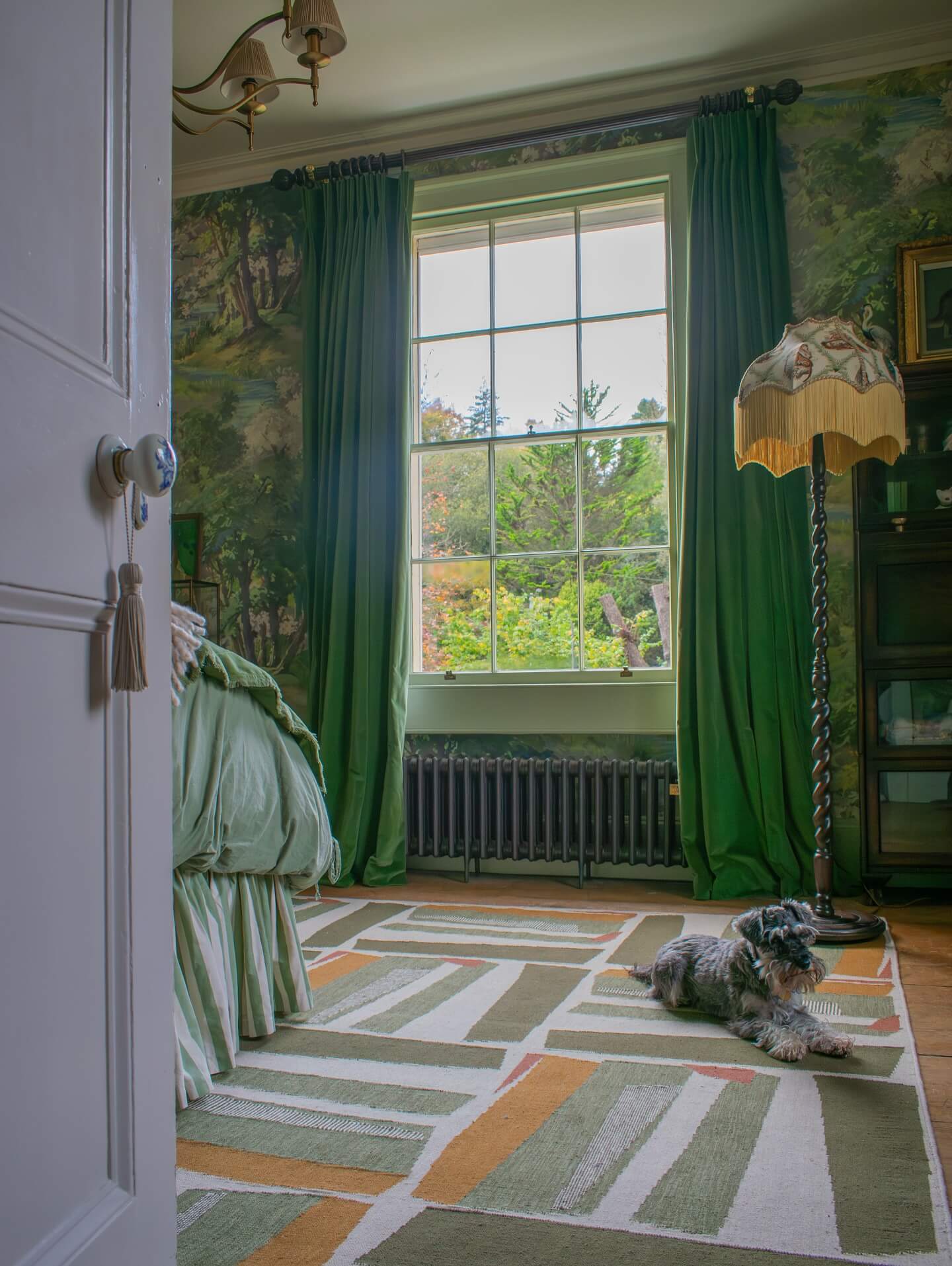
Start with a whisper of sage on the walls and build a calming, tactile story from the bed out. Linen duvet covers, stonewashed sheets, and a nubby throw add breezy softness that makes green feel spa-level serene instead of flat. Keep the palette tonal—sage, eucalyptus, soft gray, and warm white—then introduce warmth with honey oak or rattan nightstands and a jute or wool rug. For renters, bring in green through a tailored upholstered headboard or a bed blanket instead of paint. Layer lighting to deepen the mood: dimmable bedside sconces, a fabric drum pendant, and a petite task lamp for reading. Blackout linen drapes in a matching sage look luxe and help sleep. Finish with biophilic touches—a potted olive tree, eucalyptus stems, or a mossy bowl—to reinforce the nature-forward vibe. This green bedroom idea proves subtle color and breathable textures do the heavy lifting for rest, not clutter. If you crave a little definition, add slim matte-black frames or a stripe in the sheets for gentle contrast without disturbing the calm.
Emerald Glam with Brass Accents
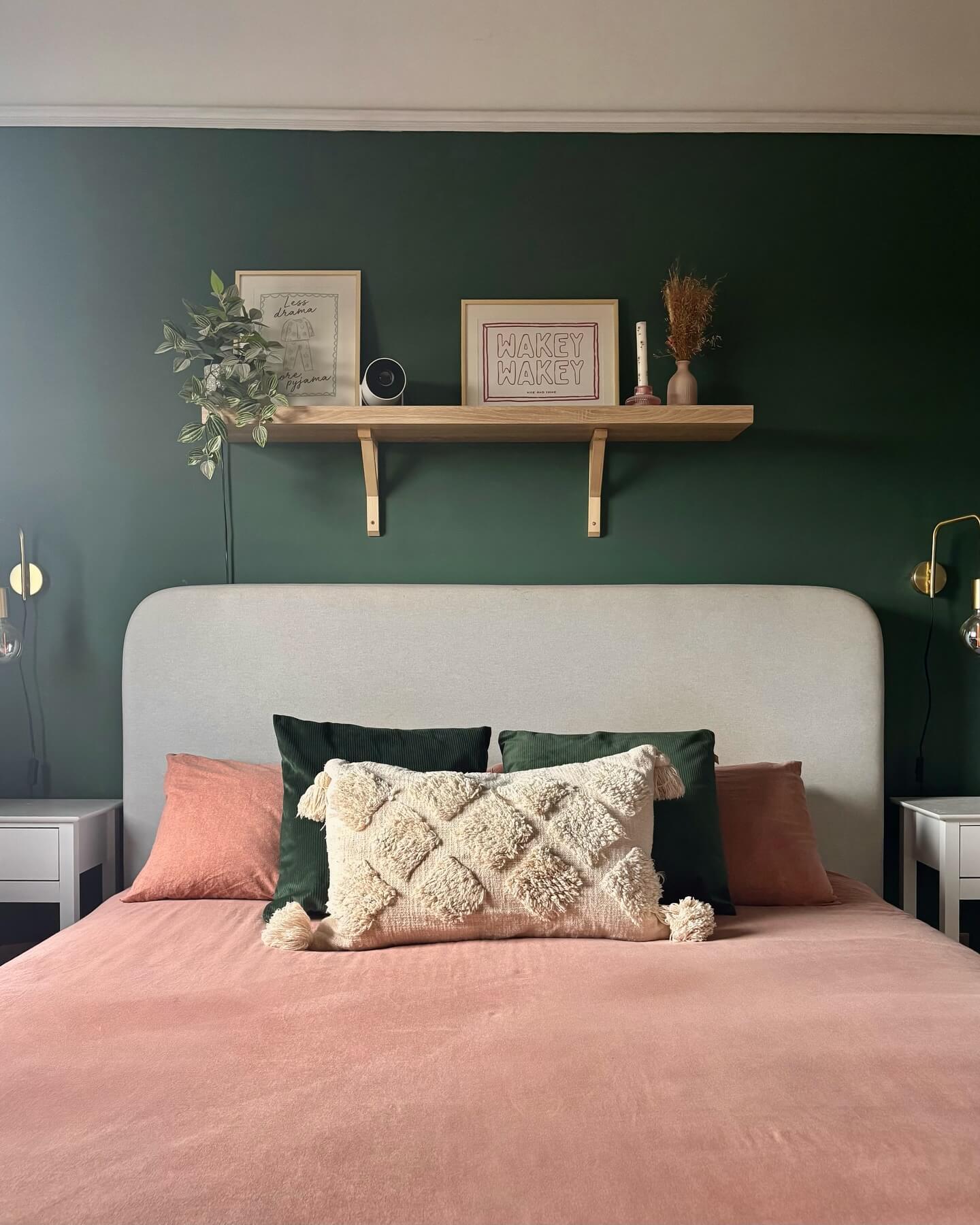
If your style leans luxe, go jewel-tone. Emerald instantly elevates a bedroom when paired with gleaming brass and plush materials. Try an emerald velvet headboard or quilt against creamy walls to keep the room from feeling too heavy, then echo the tone with pillows or a moody rug. Brass hardware, picture lights over artwork, and ribbed glass sconces add warmth and sparkle that flatter green’s depth. Balance the glamour with grounding pieces—walnut nightstands, marble-topped tables, or a tailored bench in bouclé. For color harmony, stick to an elegant trio: emerald, warm white, and brass with small hits of matte black for crisp edges. Mirrors or mirrored nightstands bounce light and make darker greens feel expansive. If you do paint, consider a satin or eggshell finish for a subtle glow; add simple wall moulding to create rhythm and a custom look. This green bedroom design idea delivers boutique-hotel polish while staying restful, thanks to soft lighting and a tight, high-contrast palette.
Olive + Terracotta Earth-Toned Retreat
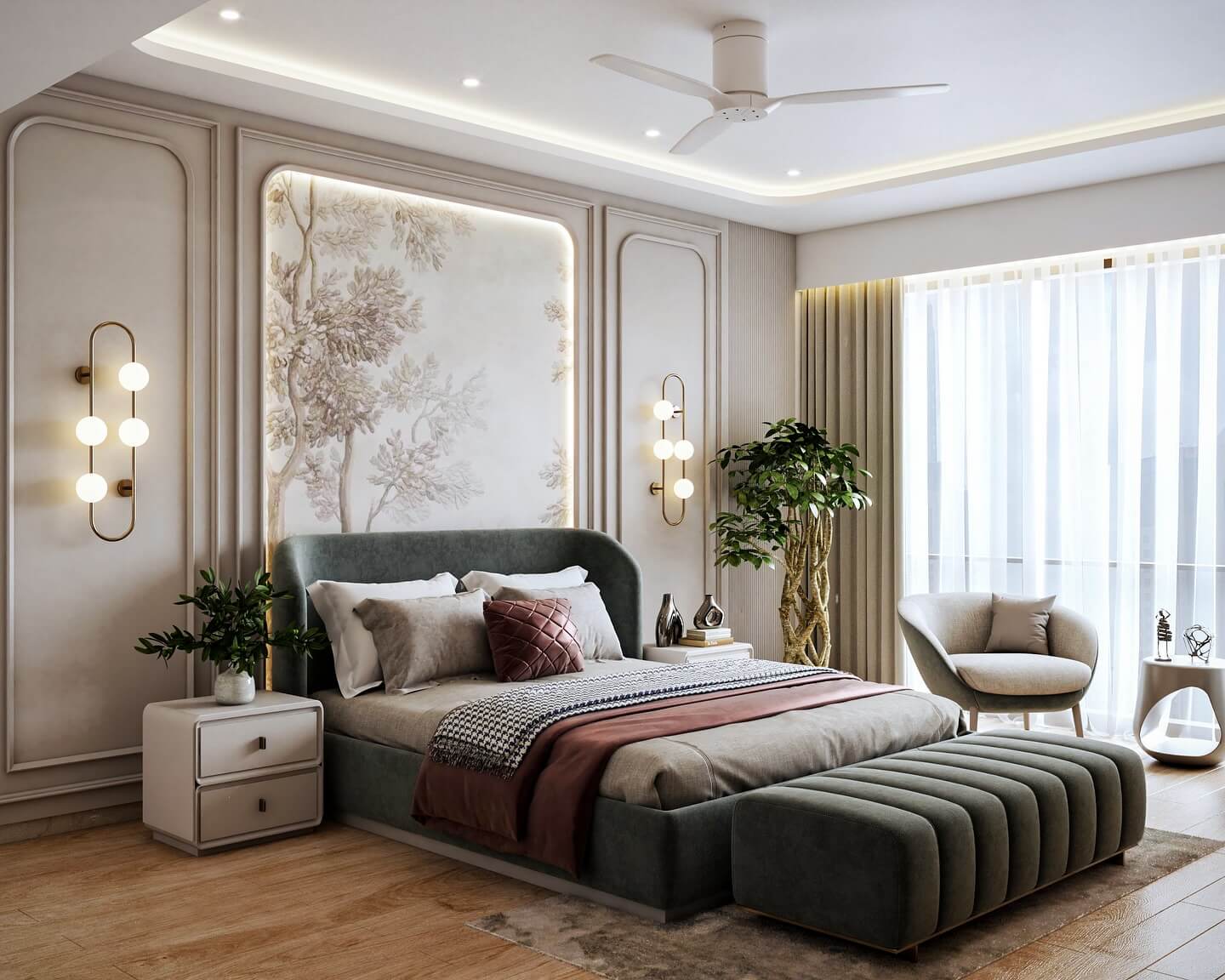
For an earthy, grounded mood, pair olive green with terracotta and clay. Olive reads sophisticated yet organic, especially on board-and-batten or wainscoting that wraps the room in quiet texture. Layer in terracotta through linen shams, a throw, or a vintage rug with brick and rust notes—these warm undertones keep green cozy year-round. Wood tones should skew natural: oak, elm, or reclaimed pine. Mix tactile textiles—bouclé, wool, and cotton matelassé—to make the bed feel layered without visual noise. Matte-black accents (curtain rods, a slim reading sconce, or drawer pulls) provide structure. For renters, peel-and-stick clay-hued wallpaper behind the bed creates an “installed” headboard effect that plays beautifully with olive bedding. Add pottery, stacked books, and a woven tray for collected charm. This duo is a biophilic design staple—think soil and leaves—so it’s easy to style with plants and woven baskets. The result is a restful, slow-living sanctuary that still feels intentional and styled.
Cocooning Forest Green Paneling
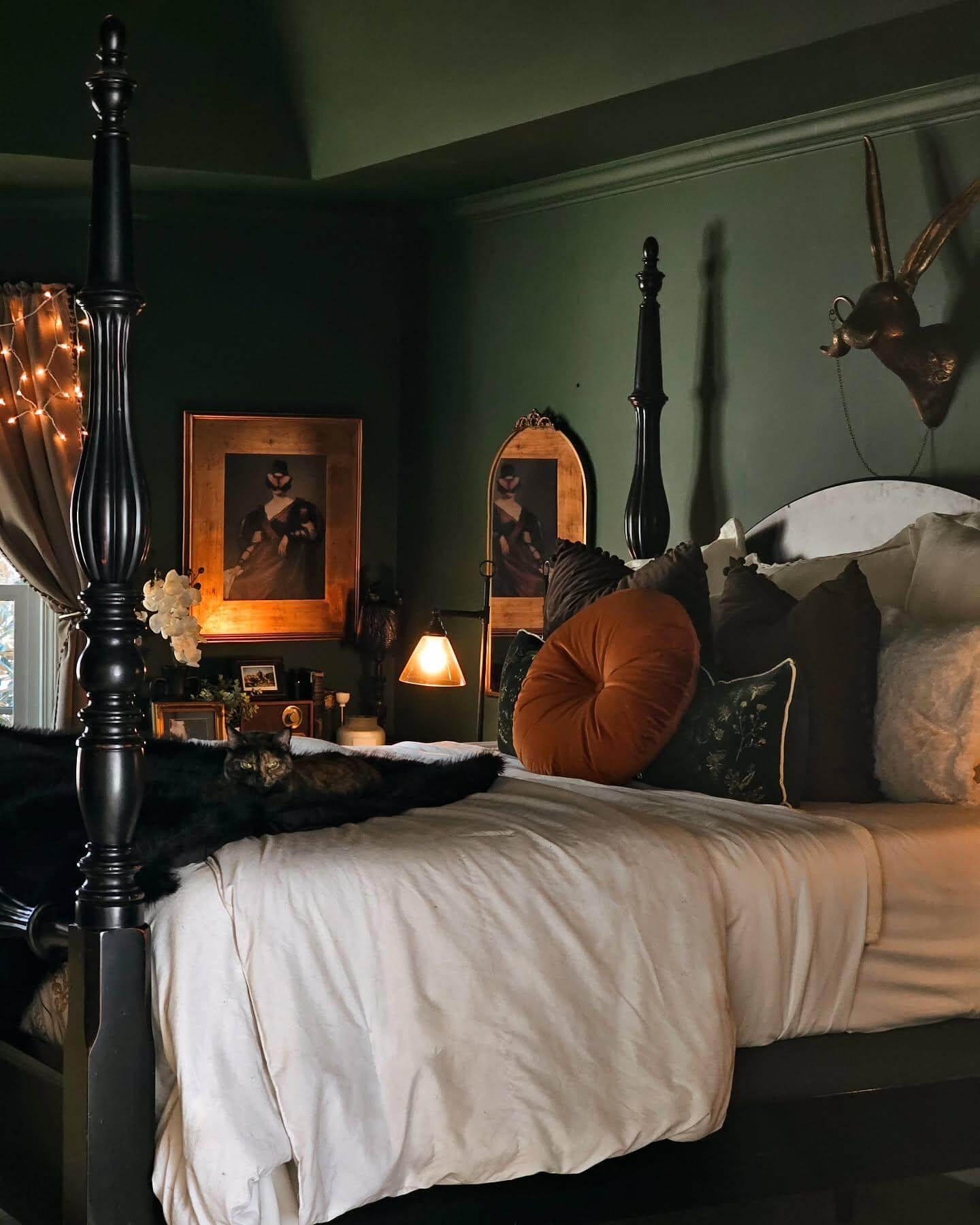
When you want a cocoon, go deeper. Forest green on paneling—beadboard, shiplap, or simple picture-frame moulding—wraps the room and instantly makes it feel intimate. Keep the bed tonal with moss or hunter green quilted layers, then punctuate with pinstripe sheets or a fine plaid to break up the solids. Warm metals and natural textures keep the palette from skewing cold: antiqued brass knobs, caramel leather, or a woven canopy detail. To balance the moodiness, add glow instead of glare: linen drum pendant, shaded bedside lamps, and candles in smokey glass. A wool rug underfoot quiets acoustics and adds softness. If you’re painting, choose a low-VOC, washable finish and test in varied light—forest greens can shift dramatically between day and night. Art in creamy mats or botanical studies offers contrast without stealing focus. This green bedroom idea is about atmosphere—layered, timeless, and perfect for deep sleep.
Limewash Green, Soft and Cloudy

Texture changes everything. A limewash or mineral paint in a soft sage-to-moss range creates a cloudy, light-catching backdrop that feels artisan and calming. The subtle tonal shifts make even a pared-back bedroom look custom, especially when paired with plaster-toned lamps, ceramic side tables, and gauzy curtains. Keep furnishings simple and sculptural: a low-profile wood bed, radius-edge nightstands, and rounded mirrors to echo the organic wall movement. Stick to a restrained palette—green, oat, and chalk—so the wall finish can breathe. For bedding, choose linen in a near-match green or warm ivory; the slight wrinkle complements limewash’s imperfect beauty. Add a single statement—an oversized branch in a stone vase or a textured canopy—to avoid visual clutter. This is a high-impact, low-decor approach ideal for minimalists who still want soul. Bonus: most limewash options are breathable and low-VOC, supporting healthier indoor air in your green bedroom retreat.
Modern Black-and-Green Contrast
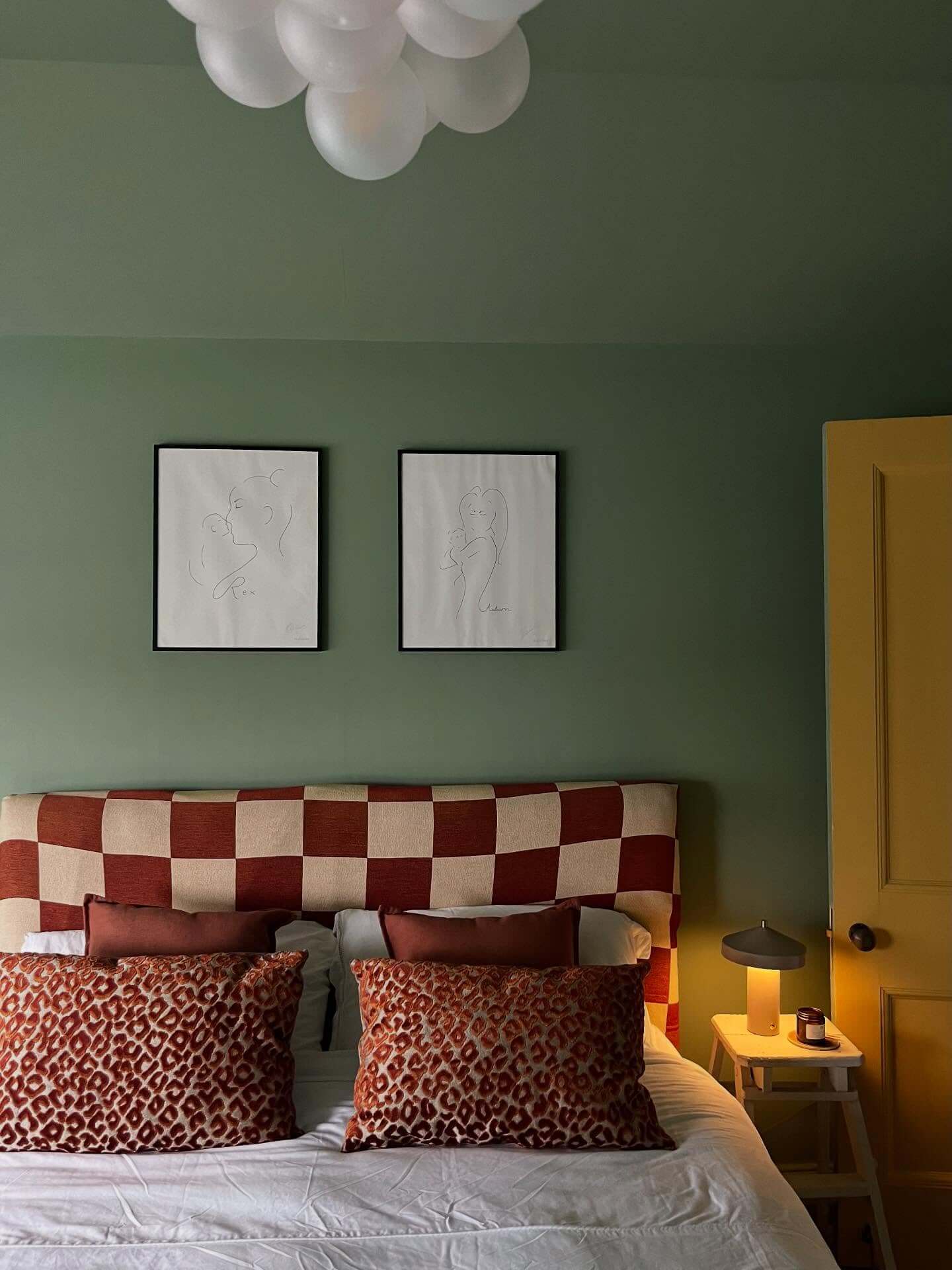
A crisp, modern take pairs green with matte black and clean lines. Think saturated sage or olive bedding against white walls, punctuated by black metal sconces, a slim platform bed, and geometric side tables. The high-contrast details sharpen green’s softness and give small bedrooms instant architecture. Keep patterns restrained—micro-stripe sheets, a grid pillow, or a tone-on-tone rug—to avoid visual clutter while adding depth. Use layered lighting: wall-mounted plug-in sconces save space, a low-glare pendant centers the room, and an LED strip behind the headboard adds soft halo light. Add one warm element—walnut, cane, or cognac leather—to prevent the palette from feeling stark. For renters, use black-framed art and a black picture ledge to echo the metal moments without drilling. This green bedroom idea hits the sweet spot between cozy and contemporary, proving you can have atmosphere and crispness in the same space.
Coastal Sage with Sea-Glass Layers
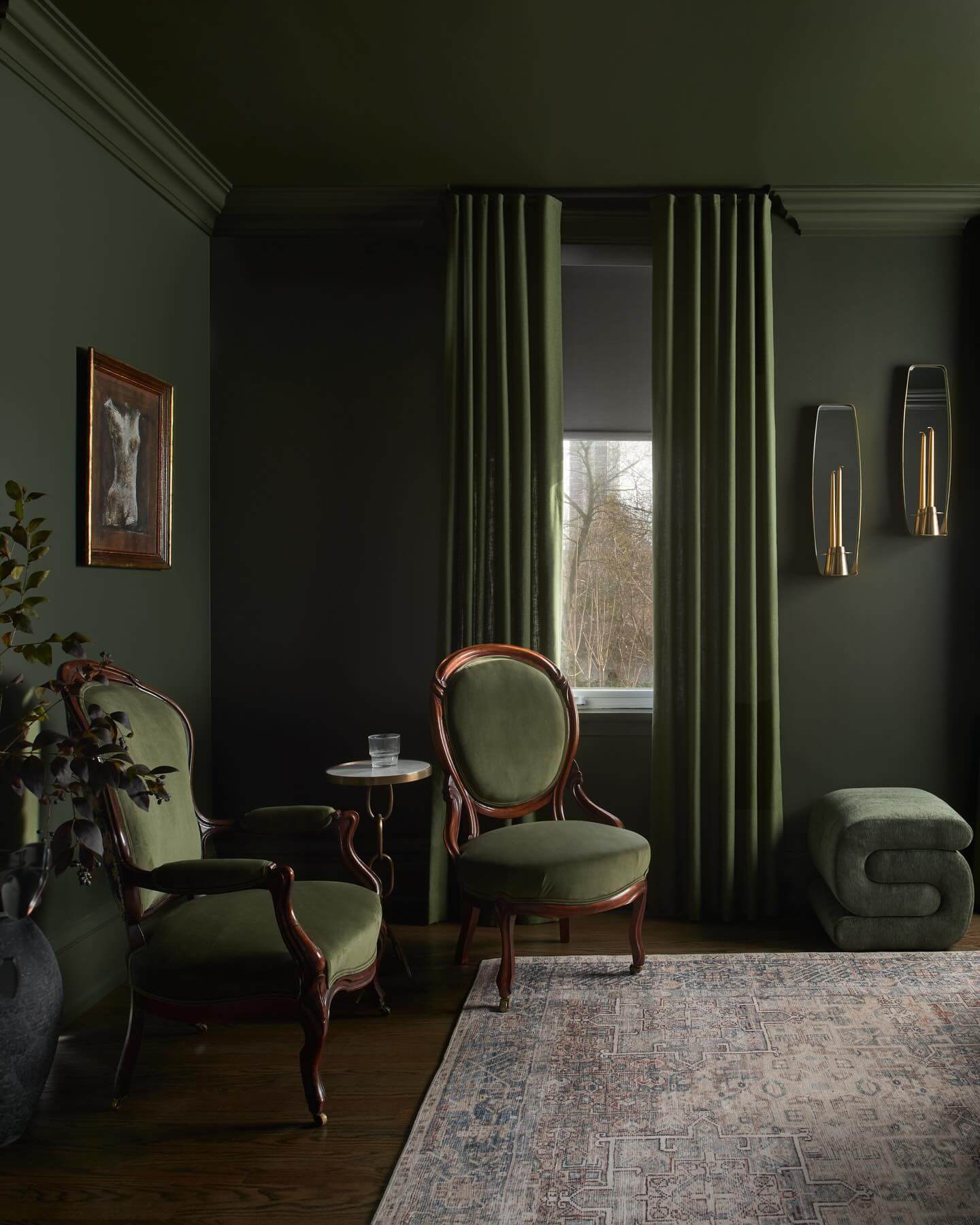
Channel a coastal, air-washed mood by blending sage with sea-glass blues and sandy neutrals. Start with pale green bedding or a headboard and keep walls soft white to maximize light. Layer in texture that nods to the shore: a seagrass or jute rug, white oak furniture, woven pendants, and gauzy, floor-skimming curtains that pool slightly. Choose a relaxed stripe or ticking for shams and add a sky-blue throw to bridge green and blue. Brass or polished nickel hardware keeps things fresh and nautical without theme-y clichés. Bring in organic decor—coral-inspired ceramics, driftwood bowls, or a stack of beachy photography—to reinforce the breezy palette. Prioritize airflow and softness: 100% linen sheets, breathable quilts, and warm-dim bulbs (2700K) for sunset ambience. This green bedroom idea is ideal for smaller rooms or rentals because it’s light, layered, and easy to update seasonally with only a few accessories.
Botanical Wallpaper Feature Wall
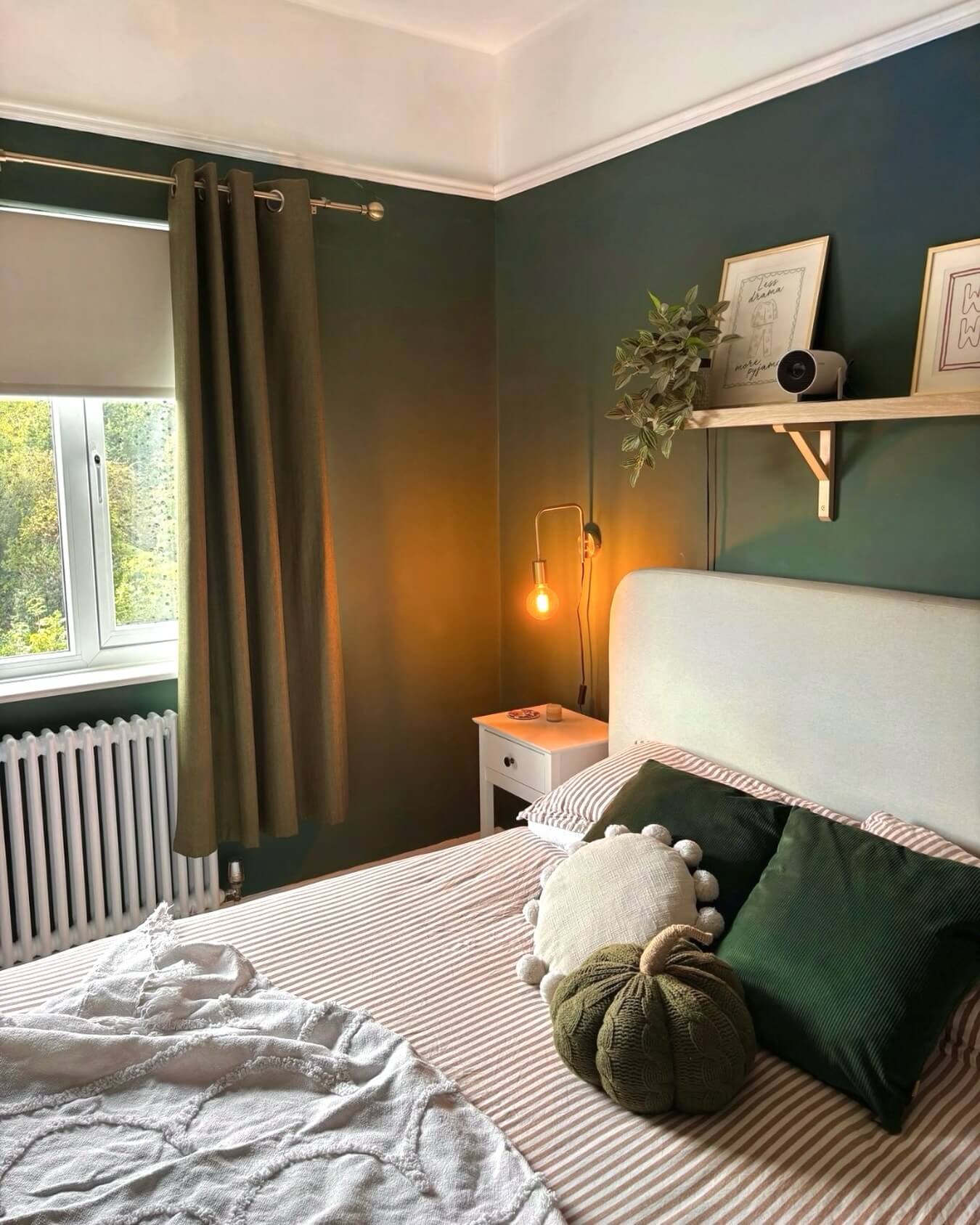
A botanical wallpaper—leafy vines, painterly palms, or abstract flora—can frame the bed and anchor your entire palette. Choose greens that echo your bedding and keep the scale proportional: larger prints suit taller headboards, while small repeats flatter low ceilings. For renters, peel-and-stick makes this look reversible; for permanence, wrap the wallpaper onto the adjacent wall for a boutique feel. Balance the print with solids—linen duvet, velvet pillows, or a boucle bench—so the eye can rest. Trim in soft white and add brass picture lights above art for a layered, collected look. If your wallpaper is busy, pick one accent color from the pattern (sage, fern, or mint) and repeat it in drapery or a throw for cohesion. Plants, even a single statement fiddle-leaf or olive tree, make the motif feel intentional rather than decorative. This green bedroom idea delivers instant character and editorial impact without overwhelming the room.
Monochrome Moss for Small Bedrooms

In compact rooms, a tone-on-tone moss palette visually simplifies and expands space. Paint walls, trim, and even the ceiling in the same soft green for a wrapped, boutique feel; keep finishes consistent (eggshell on walls, satin on trim) for subtle dimension. Choose a storage bed or drawers beneath to reduce furniture count, and swap table lamps for wall sconces to free nightstands. Wall-to-wall curtains in matching green—hung high and wide—hide visual clutter and make windows feel larger. Reflect light with a leaner mirror opposite the window and a low-profile rug in a slightly lighter green to ground the bed. Restrict metals to one finish (brushed brass or black) and patterns to a single micro motif for calm. This green bedroom idea proves less contrast equals more serenity; by removing visual breaks, the eye reads the room as larger, calmer, and more cohesive.
Preppy Plaids and Checks in Green

For character without chaos, weave in classic patterns—gingham, tattersall, or tartan—in disciplined doses. Start with solid green walls or bedding, then layer a plaid wool throw at the foot and a pair of gingham pillows for tailored charm. Keep the palette tight: two greens (e.g., sage and forest), one neutral (cream), and a single accent (navy or oxblood) for snap. Balance structure and softness: a channel-tufted headboard, pleated lampshades, and crisp pinch-pleat drapery. Wood tones can skew traditional (walnut, mahogany) to complement the preppy vibe; brass picture frames and a library sconce complete the look. Mix scales—large check with a micro-stripe sheet—to avoid pattern rivalry. This green bedroom idea skews timeless, reads polished in photos, and transitions seamlessly from fall to spring by swapping throws and pillow covers, not foundational pieces.
Get the Fail-Safe Paint Color Playbook (Free PDF)
36 proven colors • 8 ready palettes • trim & sheen guide • printable testing cards.
Pistachio + Walnut Mid-Century Calm

If you love the ease of mid-century lines but want a softer, more soothing palette, try pistachio walls paired with walnut furniture. The yellow-green undertone of pistachio warms up beautifully next to the reddish-brown depth of walnut, creating a calm, sunlit vibe that still feels tailored. Keep trim and ceilings a soft, warm white to prevent the green from skewing minty, and choose a flat or matte finish on walls for that velvety, restful look. A slatted or panel headboard, globe lamps, and tapered-leg nightstands nod to mid-century style without feeling theme-y. Layer white or natural linen bedding with an olive throw and a nubby boucle pillow for dimension. Add subtle brass or aged bronze hardware to bring a quiet gleam without going full glam. Ground the room with a wool flatweave rug in oatmeal or a micro-check pattern for low-key interest. If your space lacks light, test pistachio shades with slightly higher LRV so the color stays airy. Finish with a single graphic print or a botanical sketch—black frames sharpen the palette and keep the room feeling edited, not busy.
Deep-Green Built-Ins as a Headboard Wall
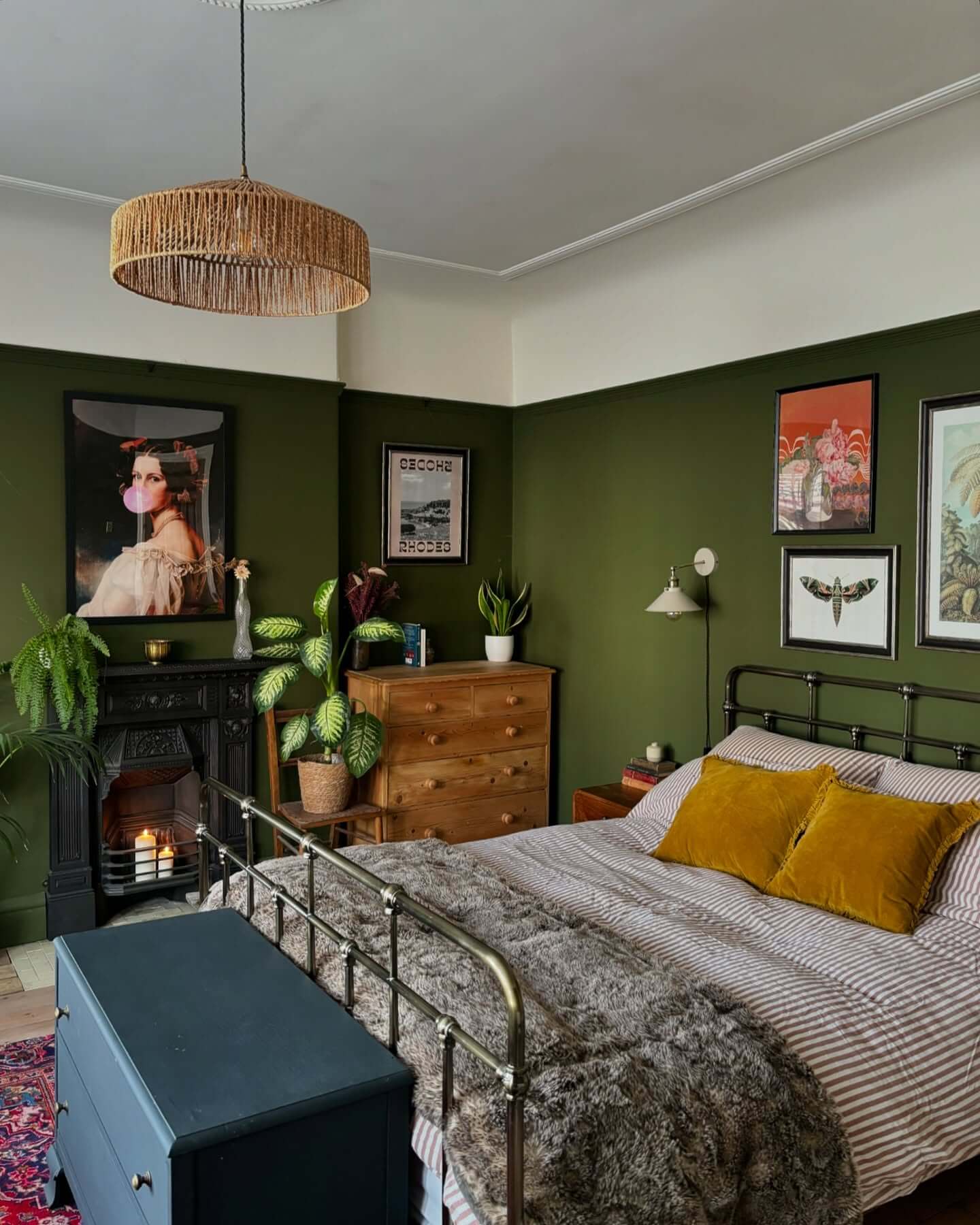
Turn storage into a statement by painting full-height built-ins behind the bed a saturated, deep green. This trick visually widens the room, acts like an architectural headboard, and swallows visual clutter—perfect for small bedrooms. Paint the cabinetry, wall, and trim in the same color and sheen (eggshell on wall, satin on millwork) for a seamless envelope. Add sconces or picture lights on dimmers to highlight shelves while freeing up nightstand real estate. Keep bedding tonal—stone, bone, or warm white sheets—then introduce one patterned element (stripe, ticking, or petite botanical) to keep it lively. Brass knobs warm the green; matte black reads more modern. If you rent, try freestanding bookcases or an IKEA hack with custom doors and color-matched paint. Style the shelves like art: stacks of books, a ceramic bowl, a small plant, and a single framed piece. This built-in headboard wall adds acoustical coziness, more storage, and rich color—no extra art needed. Bonus: choose a low-VOC, scrubbable paint so your investment stays crisp.
Cool Mint Minimalism with Chrome Highlights
For a breezy, modern green bedroom that still reads polished, go with a cool mint palette and punctuate it with chrome and glass. Mint’s blue undertone loves reflective materials; the combination amplifies daylight and delivers that clean, gallery-adjacent calm. Keep lines simple: a slim platform bed, track or globe lighting, and a single bench or acrylic side table. Restrain the palette to three values—mint, crisp white, and a dark anchor like charcoal or inky navy to avoid a washed-out feel. Mirrors or chrome bedside lamps double the light, while gauzy white drapery maintains softness. Instead of heavy art, consider a large-scale black-and-white photograph or a minimalist grid to balance the sweetness of mint. Choose low-sheen paint (matte or eggshell) and keep floors light—white oak or a pale rug—to enhance the airy effect. At night, warm bulbs (2700K) keep the mint from feeling clinical. For texture without visual noise, layer a piqué coverlet or matelassé blanket and a single eucalyptus-toned cushion to deepen the green story.
Hotel-Worthy Green Canopy Drapery
Create instant cocooning with a ceiling-mounted drapery canopy in a favorite green. Instead of a traditional four-poster, run a discreet track on the ceiling and wrap the head of the bed in floor-to-ceiling panels—olive linen for breathability, or forest velvet for drama. This move softens acoustics, frames the headboard, and adds privacy in studio layouts. If full enclosure feels heavy, flank the bed with two stationary panels and a matching upholstered headboard; you’ll still get the luxe, boutique-hotel vibe. Pair with pleated Roman shades in a coordinating stripe or solid to layer light control. Keep walls neutral to let the fabric sing, or echo the green on a lower wainscot for a cohesive envelope. Hardware matters: black for modern edge, antique brass for warmth. Use blackout lining for better sleep, and hem panels to barely kiss the floor for a tailored finish. The result is enveloping but breathable—an upscale tactic that turns any green bedroom into a retreat, no renovation required.
Chartreuse Pops that Energize, Not Overwhelm
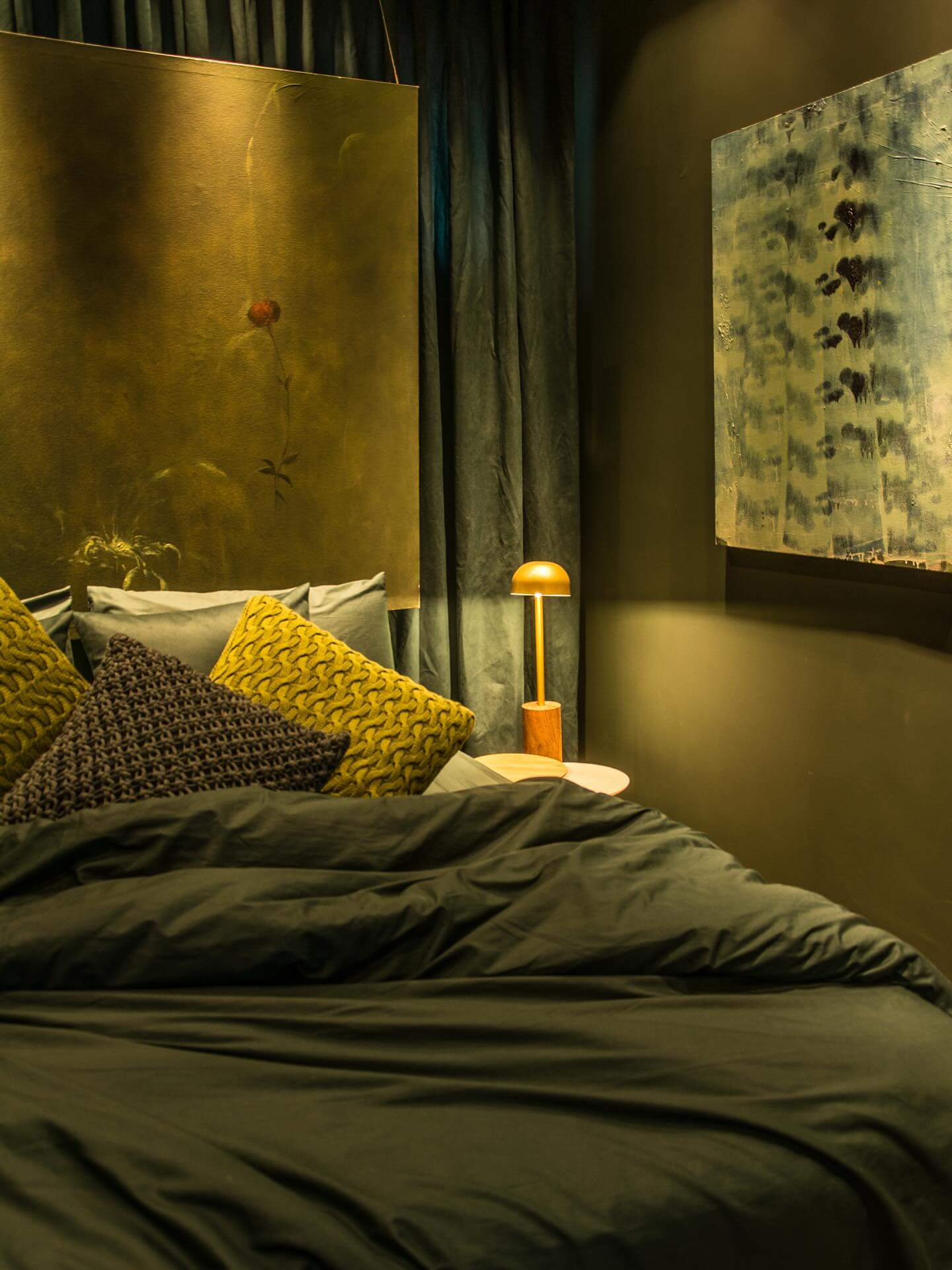
Craving energy without sacrificing rest? Introduce chartreuse in small, strategic hits against a grounded green palette. Start with a calm base—sage walls or olive bedding—then layer chartreuse through accent pillows, a lamp, or a single ottoman. Use the 60-30-10 rule: 60% soothing base, 30% complementary neutrals (stone, oatmeal, warm white), and 10% chartreuse for that lively spark. Because chartreuse is high-chroma, it works best with matte textures: linen, boucle, brushed cotton. Balance the brightness with wood (walnut or white oak) and a touch of black to keep the look sophisticated, not neon. Art is an easy vehicle—choose a piece with a sliver of chartreuse that ties back to your accents. Dimmers are essential; evening lighting softens the pop so the room still supports sleep. If you’re paint-curious, test chartreuse on the inner faces of a bookshelf or inside a closet niche—delightful, yet easy to dial back. This approach keeps your green bedroom serene while adding a fresh, creative edge.
Herb-Garden Layering: Sage, Basil, Eucalyptus
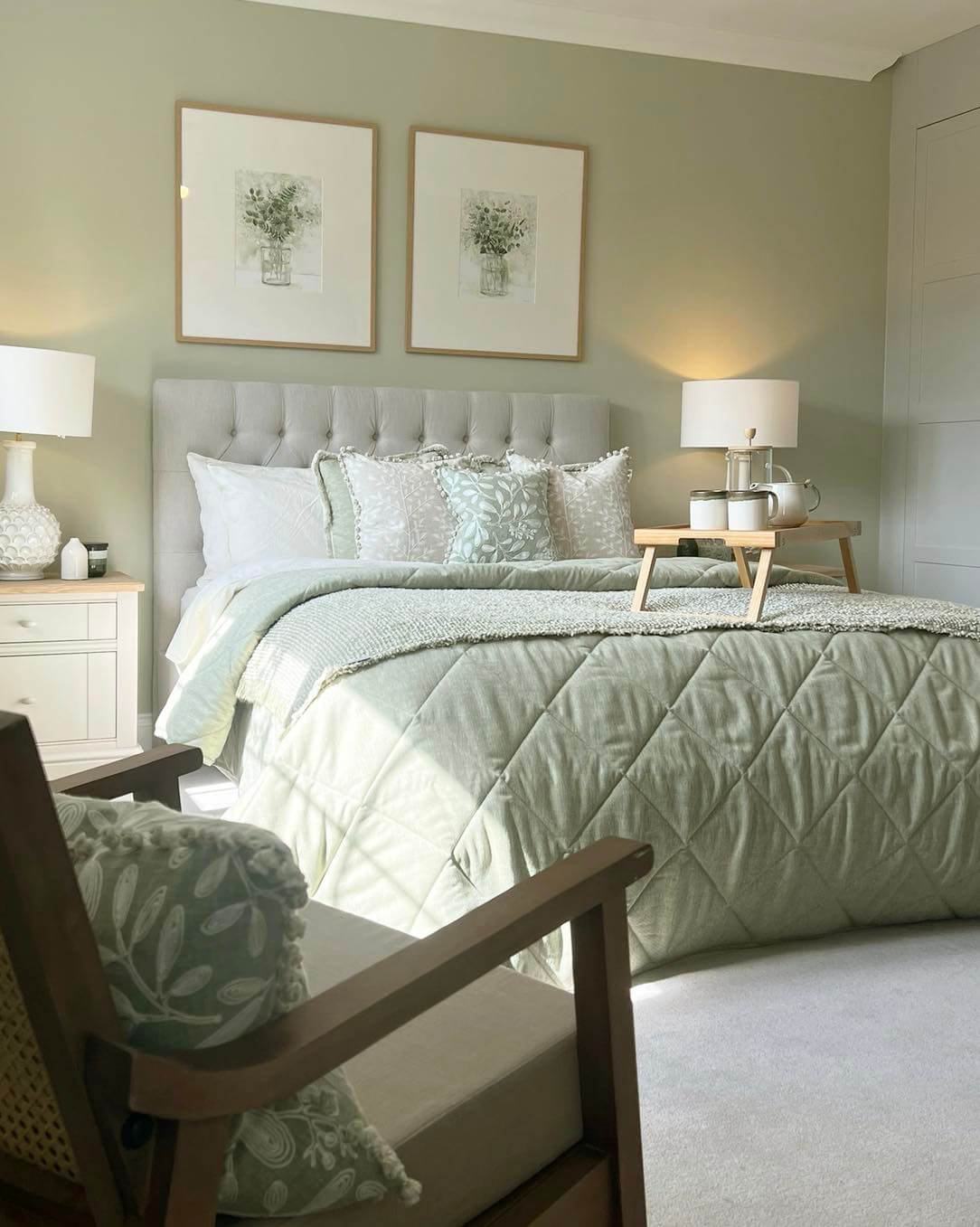
A nuanced green bedroom doesn’t have to pick one shade. Layer an herb-garden palette—sage, basil, and eucalyptus—for depth that still reads tranquil. Begin with a mid-tone sage on the walls, then introduce a eucalyptus velvet headboard for subtle sheen and a basil-toned quilt or throw at the foot of the bed. Keep sheets crisp in warm white to break up the tone-on-tone. Texture is the secret to avoiding flatness: pair linen curtains, a chunky knit pillow, and a raked-ceramic lamp. Metals should be soft—brushed nickel or aged brass—so they complement rather than compete. If pattern appeals, add a micro-stripe or ticking that harmonizes across the greens. Plants echo the palette naturally: a trailing pothos or eucalyptus stems in a ceramic vase ties everything together. Test swatches across daylight and lamplight; some sages skew blue, others yellow. Choose low-VOC paints and natural fibers to align with the biophilic feel. The result is a layered, lived-in calm—green on green that never overwhelms.
The Painted Green Ceiling (Your Fifth Wall)
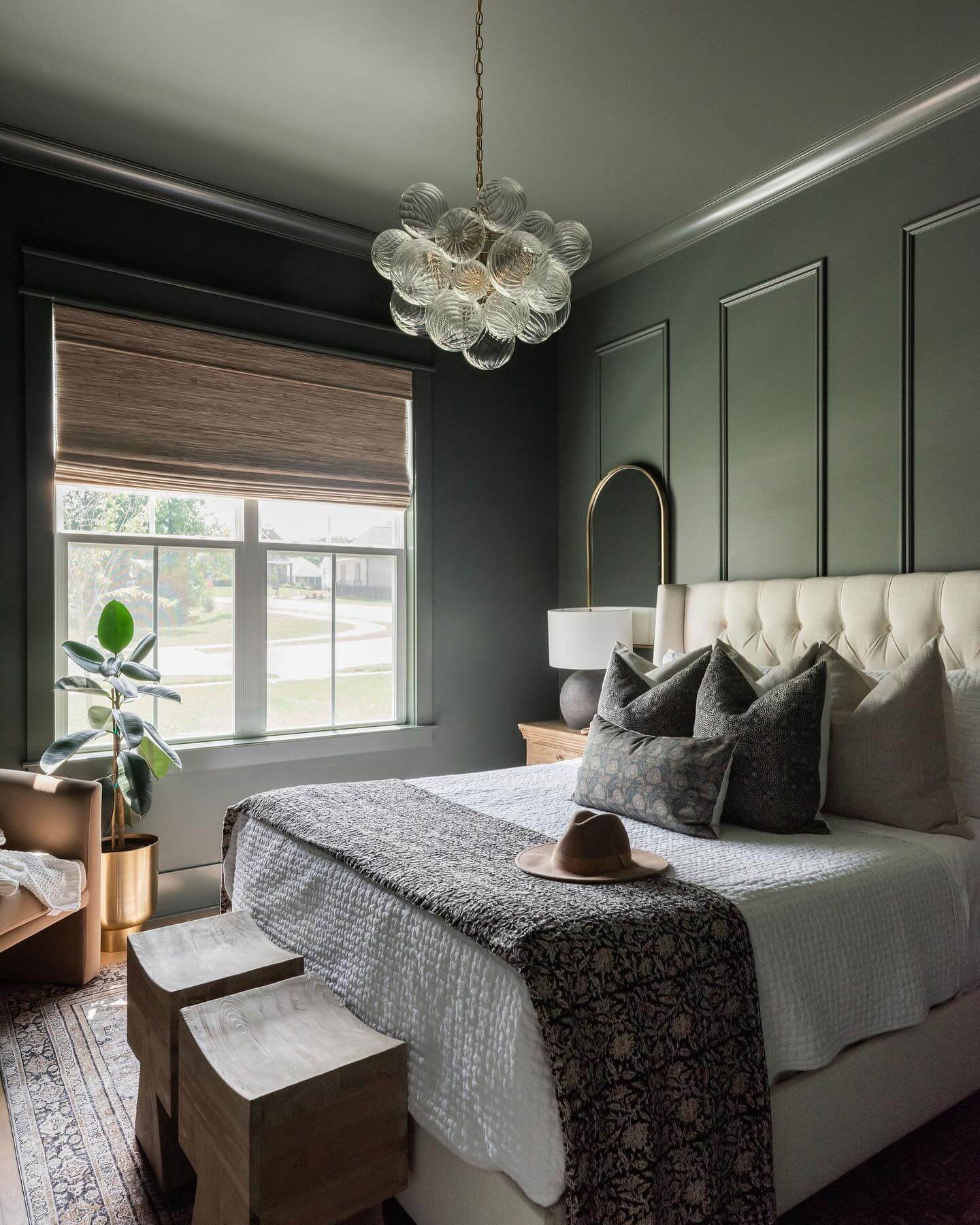
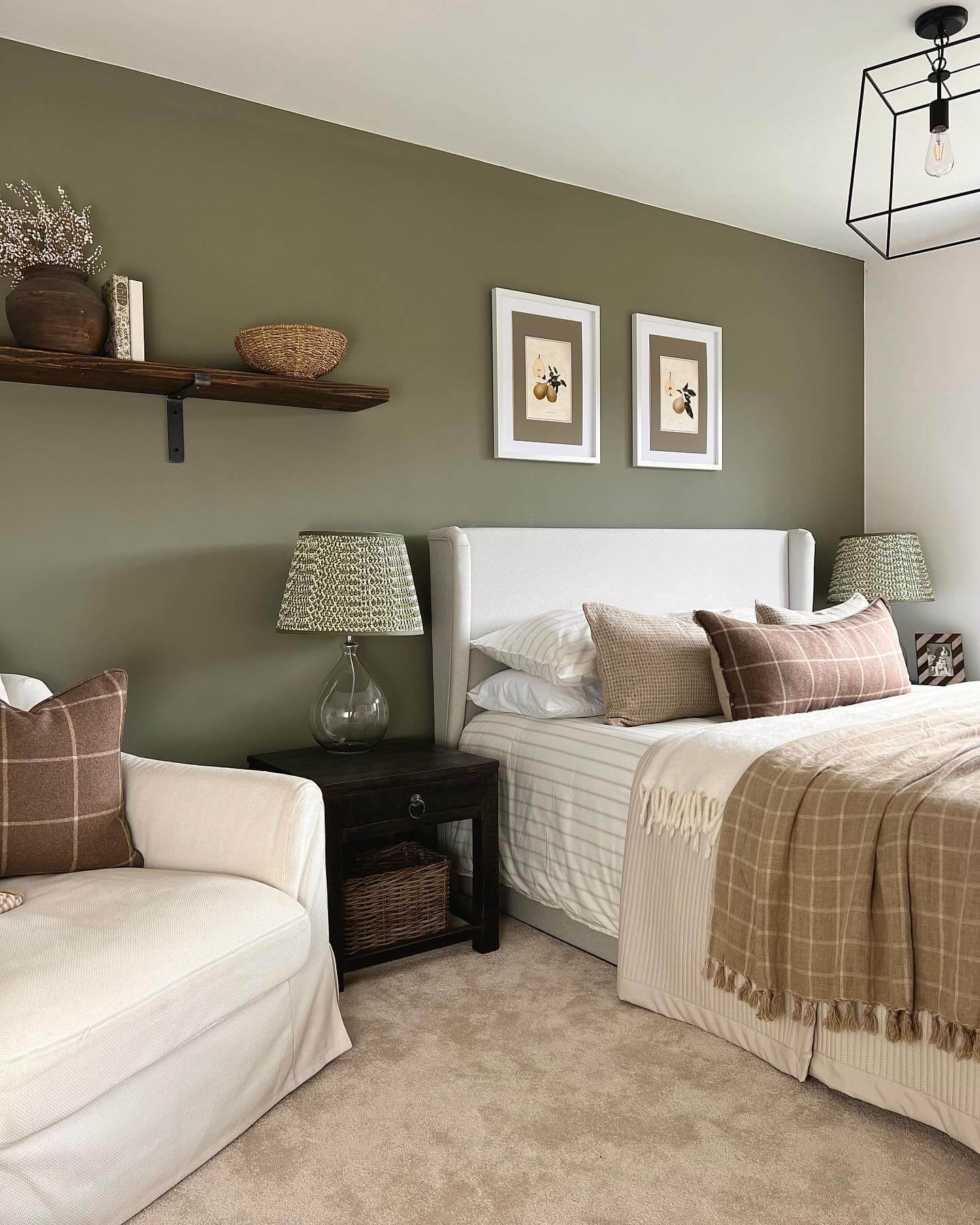
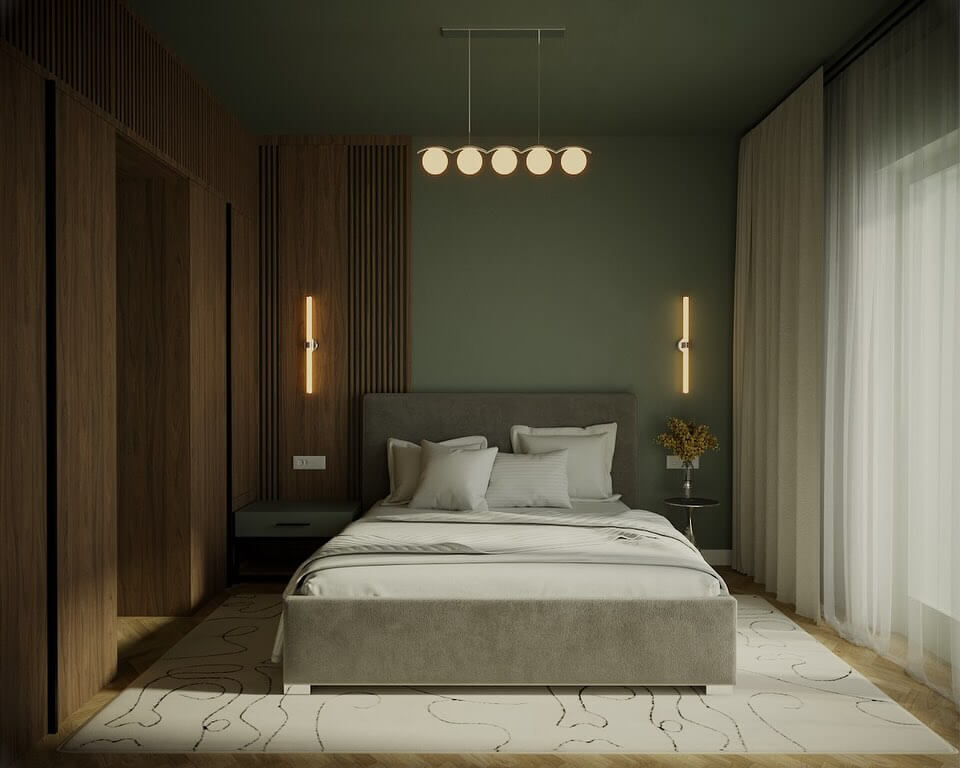
Shift the green to the ceiling for a cocooning effect without darkening the walls. A mossy or mid-tone olive overhead paired with warm white walls wraps the room subtly, drawing the eye up and making crown details feel intentional. Keep the ceiling finish matte to reduce glare, and consider bringing the color 2–6 inches down the wall as a band for a designer finish. If you have low ceilings, select a green with higher LRV and avoid very dark tones; in tall rooms, you can go deeper—think pine or bottle green—to cozy things up. Mirror the ceiling color in smaller moments: a throw, a lampshade, or a framed print for cohesion. Lighting matters here—recessed lights can create hotspots; opt for a fabric drum fixture or shaded sconces to wash the green evenly. This fifth-wall move works particularly well with natural wood nightstands and rattan textures, balancing the richness above with organic warmth below.
Japandi Ease: Olive, Rattan, and Linen
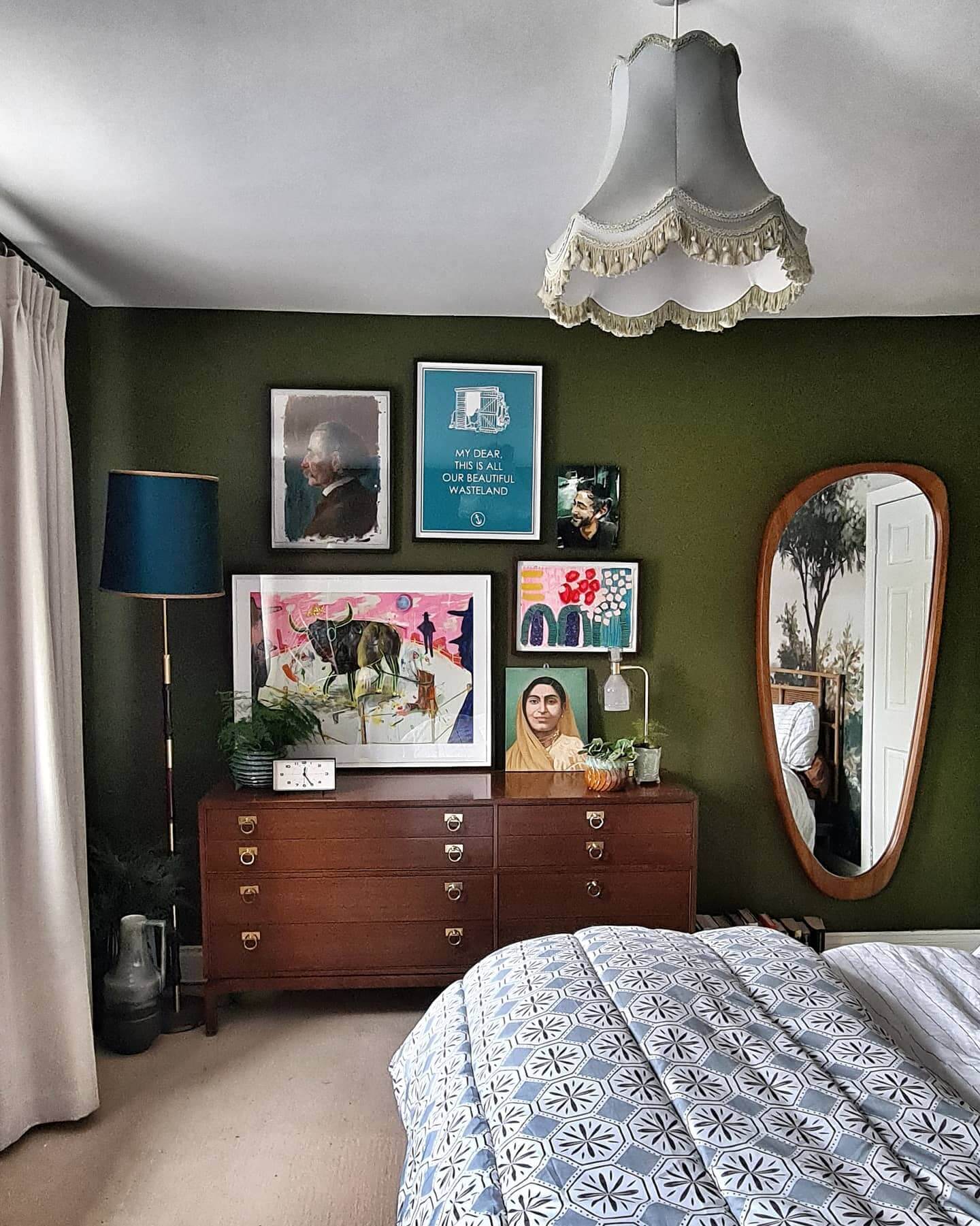
For a restful, design-forward green bedroom, blend Japandi restraint with earthy warmth. Anchor the space with an olive duvet or quilt, then add a low-profile platform bed and a rattan or cane headboard for lightness. Keep the walls soft—greige or plastery off-white—so the green reads intentional and calming. Choose functional, sculptural pieces: a paper lantern pendant, a single stoneware vase, and a slim bench in white oak. Fabrics should be tactile and breathable: stonewashed linen sheets, a wool throw for seasonal layering. Limit decorative objects and emphasize negative space; this lets the green take center stage. Bring in a single, asymmetric branch arrangement or a compact olive tree to echo the palette without clutter. Matte black details—drawer pulls, a frame, lamp trim—add quiet contrast. The result is serene and sustainable; opt for FSC-certified wood and natural fibers to complete the Japandi ethos. It’s a green bedroom idea that calms, not just in color, but in mind.
Emerald Velvet Bed as a Statement Piece
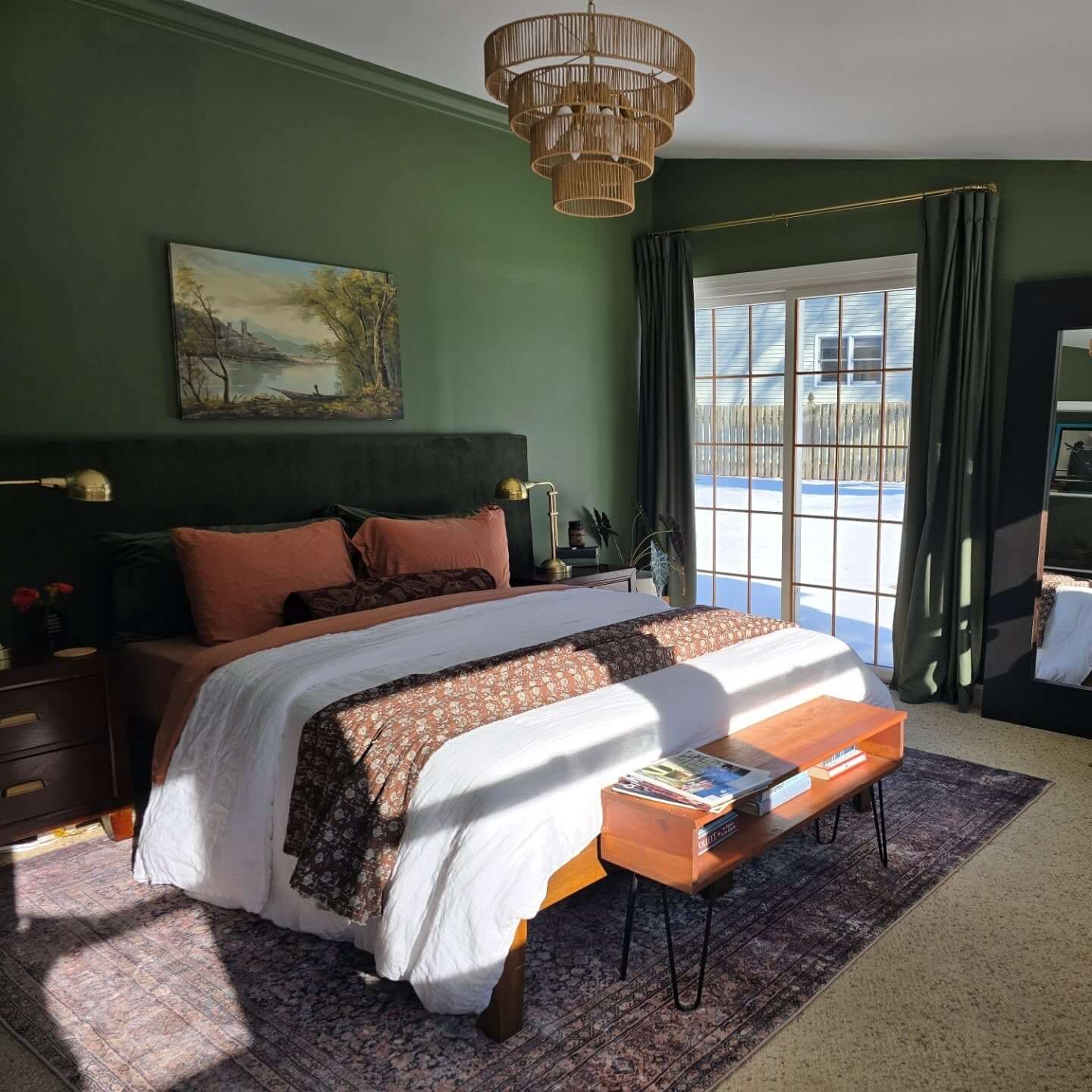
An emerald upholstered bed instantly elevates a green bedroom, giving you depth and luxury without painting a wall. Choose a performance velvet for durability, and decide on the silhouette: channel-tufted for art deco polish, wingback for classic comfort, or clean-lined for contemporary spaces. Let the bed do the talking by keeping bedding tonal—ivory sheets, a flax coverlet, and a single patterned lumbar in a coordinating green print. To prevent the look from skewing formal, contrast velvet with nubby textures: boucle pillows, a jute or wool rug, and cerused wood nightstands. Metals can vary; unlacquered brass warms emerald, while matte black keeps it graphic. In small rooms, a lower headboard height keeps sightlines open; in taller spaces, a high, vertical tuft emphasizes grandeur. Vacuum velvet with a soft brush and rotate cushions to maintain the pile. Finish with layered lighting—bedside sconces plus a fabric-shaded overhead—for hotel-level ambiance.
Renter-Friendly Green Plaid (Peel-and-Stick Win)
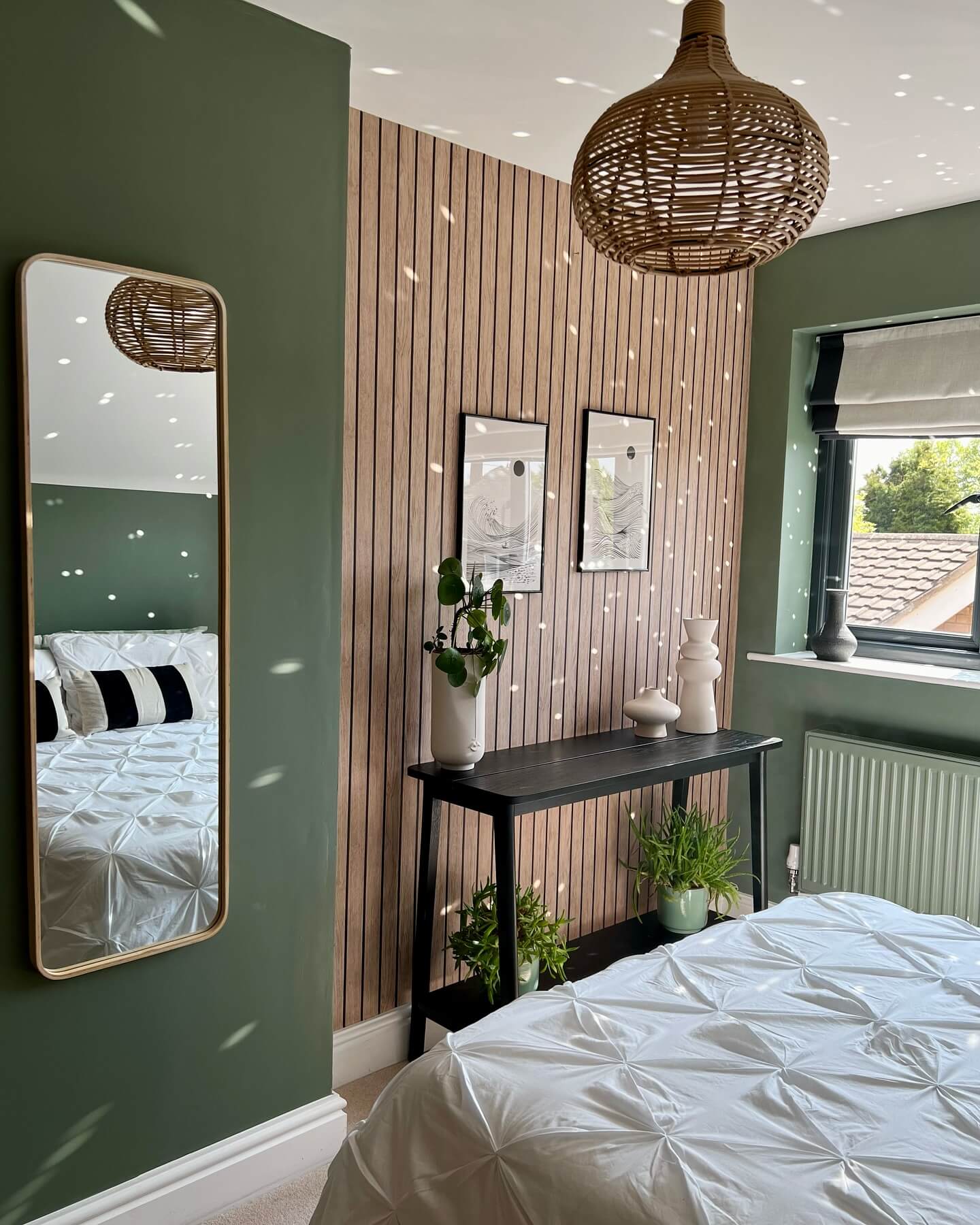
Get pattern and presence without commitment by using peel-and-stick wallpaper in a green plaid or stripe. Apply it on a single headboard wall, inside a niche, or above a simple white half-wall for instant character. Keep furnishings simple—light wood, black accents—so the plaid remains the star. Coordinate bedding with one solid green pulled from the pattern and a crisp white counterpoint; add a micro-stripe pillow to mix scales confidently. If you’re nervous about alignment, choose a breezy seersucker stripe or a painterly grid that’s more forgiving. Use a smoothing tool and sharp blade for clean seams, and keep leftovers to line drawers or frame as art for cohesion. Pair with blackout Roman shades in a complementary solid for visual rest. When it’s time to move, it peels off cleanly—no spackle required. This renter-safe upgrade delivers a heritage note to your green bedroom while staying budget-friendly and reversible.
Sage Limewash Walls for Organic Calm
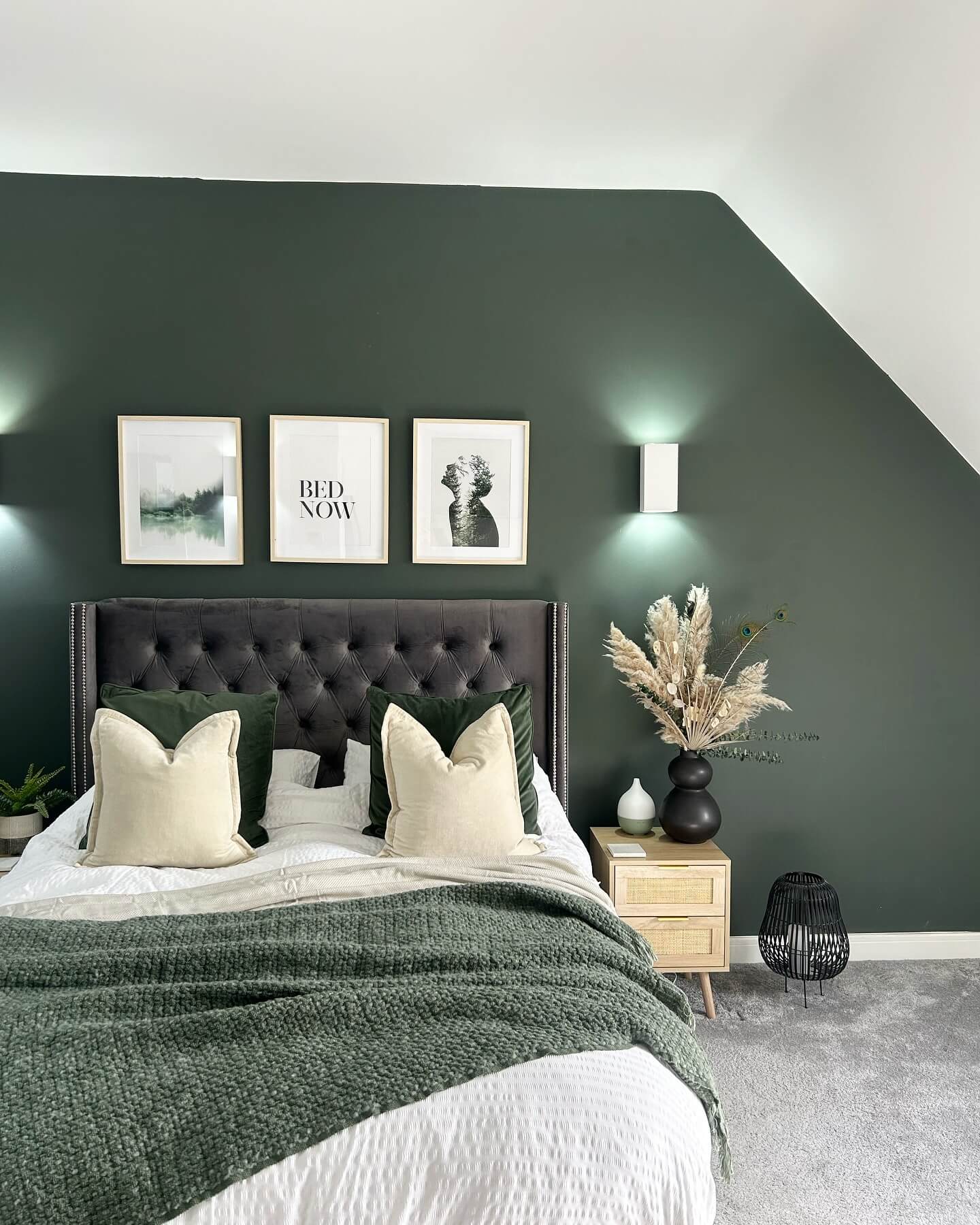
Want instant serenity without going sterile? Try a sage limewash on your bedroom walls. The soft, clouded movement adds depth that flat paint can’t, wrapping a green bedroom in quiet texture reminiscent of stone and moss. Keep the palette tonal: layer olive and eucalyptus bedding with nubby linen, a waffle-knit throw, and a boucle accent pillow to build touchable warmth. For trim, either color-drench it in the same sage (satin sheen for durability) or choose a warm off-white with a hint of beige to keep things earthy rather than stark. Natural finishes—cerused oak nightstands, travertine lamps, and woven rattan shades—bring biophilic balance without visual noise. Lighting matters: dim-to-warm bulbs (2700K–2200K) make green read luxe and restful, not chilly. If you’re renting, consider mineral-effect paint or removable textured panels to mimic limewash depth. Finish with a grounded rug in heathered jute or wool and a single botanical print for quiet character. The result: a spa-soft sage green bedroom that feels handmade, breathable, and beautifully imperfect.
Get the Fail-Safe Paint Color Playbook (Free PDF)
36 proven colors • 8 ready palettes • trim & sheen guide • printable testing cards.
Wraparound Forest Green Walls and Trim

For an enveloping cocoon, paint walls, doors, and trim the same deep forest green. Tone-on-tone coverage eliminates visual breaks, making even small green bedrooms feel intentional and luxe. Choose finishes strategically: matte on walls to diffuse light and satin on trim for subtle contrast and wipeability. Balance the mood with crisp white percale sheets, brass or patinated bronze sconces, and a walnut or dark oak bed frame. A vintage rug—rust, olive, and inky blue—adds pattern without diluting the palette. Layer lighting at three heights (ceiling, sconces, low lamp) to keep the dark scheme glow-y, not gloomy; dimmers are non-negotiable. If you love shine, introduce a single lacquered element (a nightstand or mirror frame) to reflect light. In north-facing rooms, warm the green with creamy drapery; in bright rooms, lean into drama with velvet curtains in a slightly darker green. This tone-on-tone strategy reads bespoke, photographically rich, and surprisingly soothing at night—perfect for deep rest.
Watercolor Botanical Mural as a Soft Focal Point
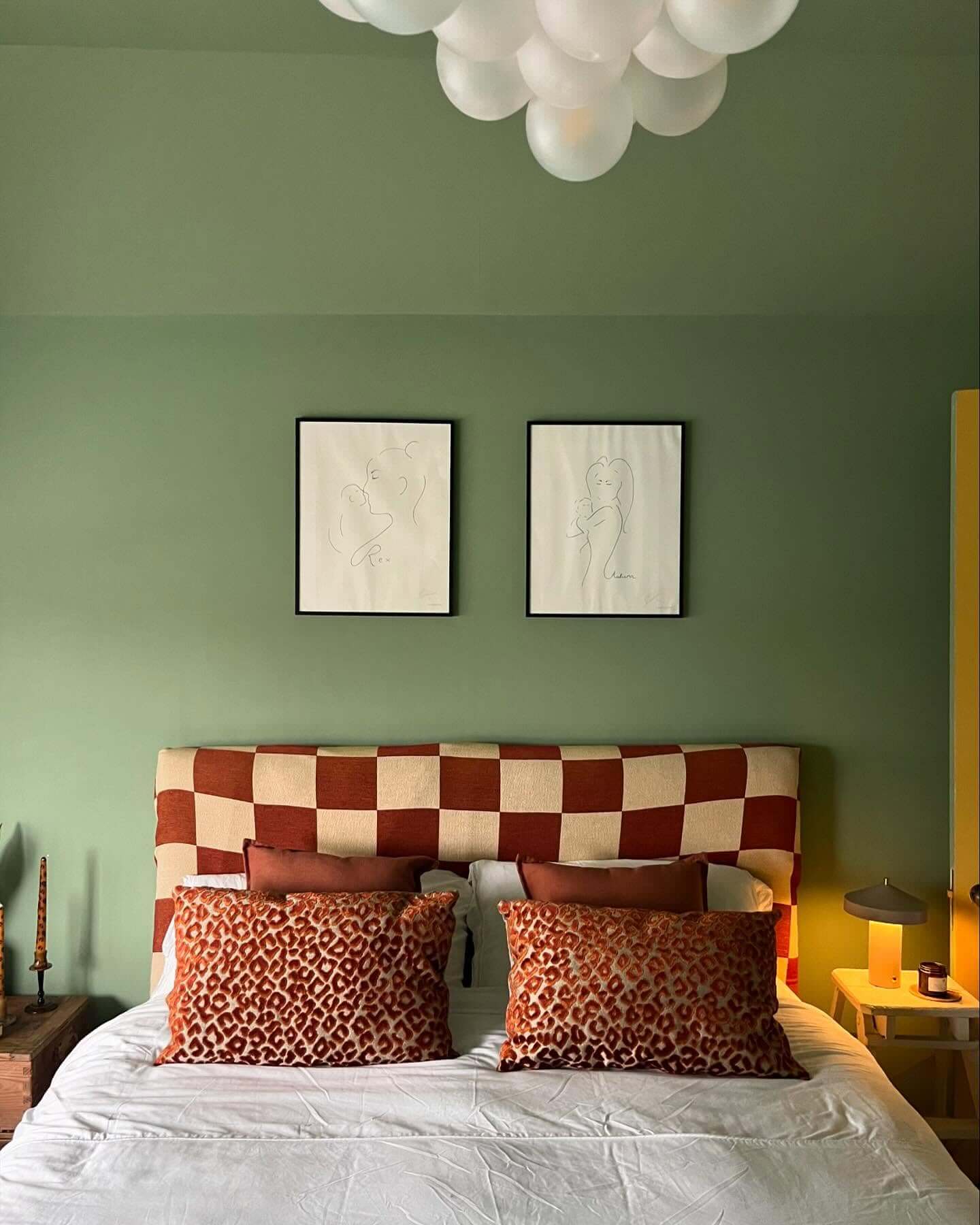
A watercolor botanical mural turns a green bedroom into a tranquil garden—no busy repeats, just gentle foliage that frames the bed like art. Keep the color story tight: two to three greens (sage, olive, eucalyptus) plus warm neutrals, so the mural leads without overwhelming. Let it be your headboard wall; paint adjacent walls a whisper-light green or warm white to give the artwork breathing room. Textures should feel natural and matte—linen duvet, stoneware lamps, cane or rattan accents—to echo the mural’s softness. If you rent, use panelized, peel-and-stick murals or hang framed mural sections for a gallery effect that’s removable. Anchor the scene with a low-profile bed and rounded shapes (curved bench, scalloped edge pillow) to mirror the organic leaves. Finish with botanical-inspired hardware or a leaf-motif sconce for a quiet nod. The result is a green bedroom idea that blends biophilic design with painterly calm, delivering impact without sacrificing serenity.
Olive and Terracotta: Earth-Toned Sanctuary
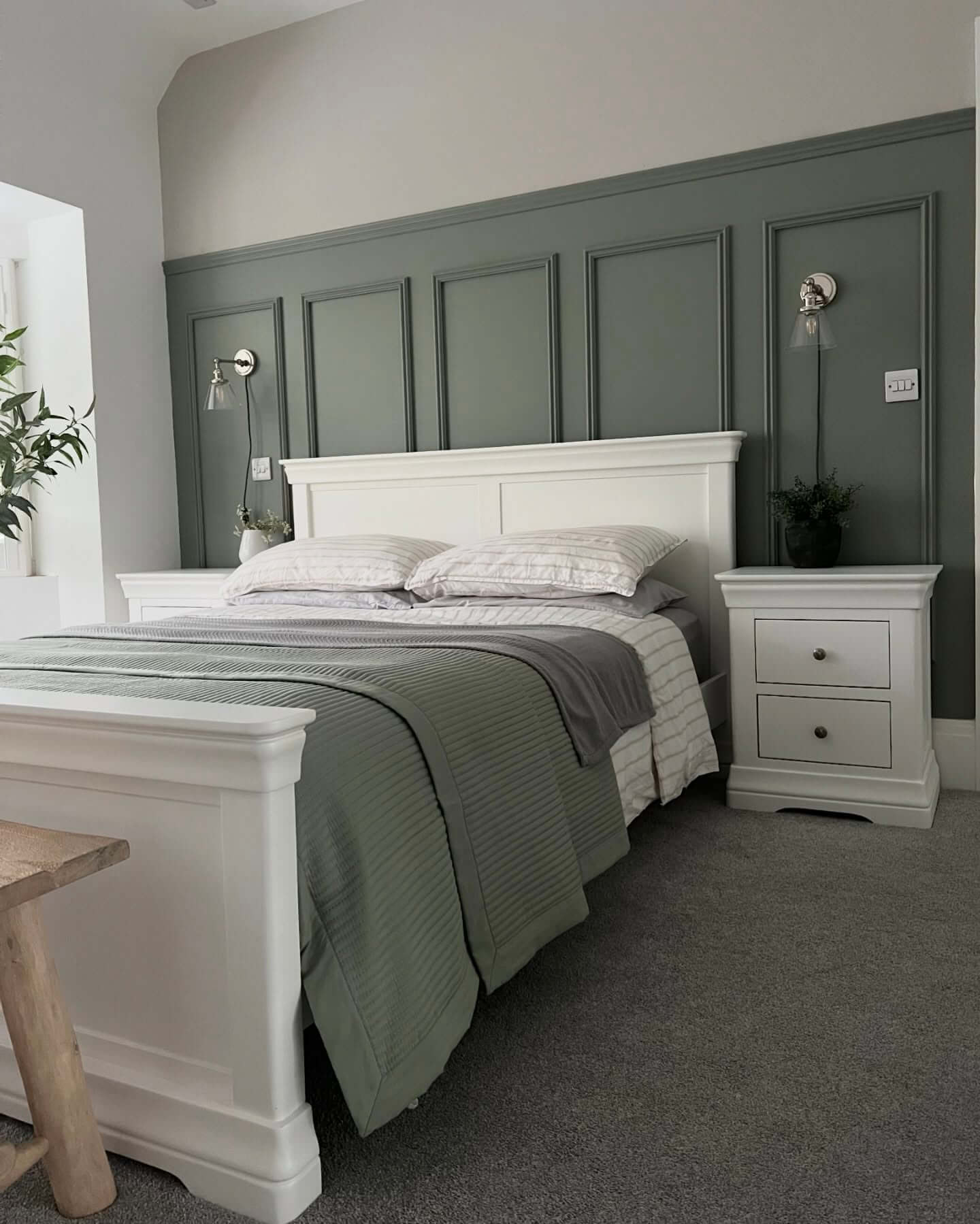
Pair olive green with terracotta for a grounded, sun-warmed bedroom that feels both chic and restorative. Start with olive walls or an upholstered olive headboard, then layer clay tones through linen duvet covers, pinstripe throws in rust, or a kilim rug with paprika accents. This earth-tone palette loves texture: stucco or limewash, raw linen, tumbled limestone or travertine on nightstands, and ceramic lamps with sandy glazes. Metals should skew warm—antique brass or aged bronze—so the greens read cozy, not cool. Add depth with charcoal details (matte black curtain rods, a slim reading lamp) and soften everything with ivory drapery for balance. Plants with rounded leaves (pilea, peperomia) echo the palette without competing. Keep light warm at 2700K and introduce a salt lamp or alabaster sconce for an amber glow. It’s an easy way to evolve a sage green bedroom into something more layered and European: rustic, refined, and unmistakably restful.
Coastal Sage with Stripes and Woven Shades
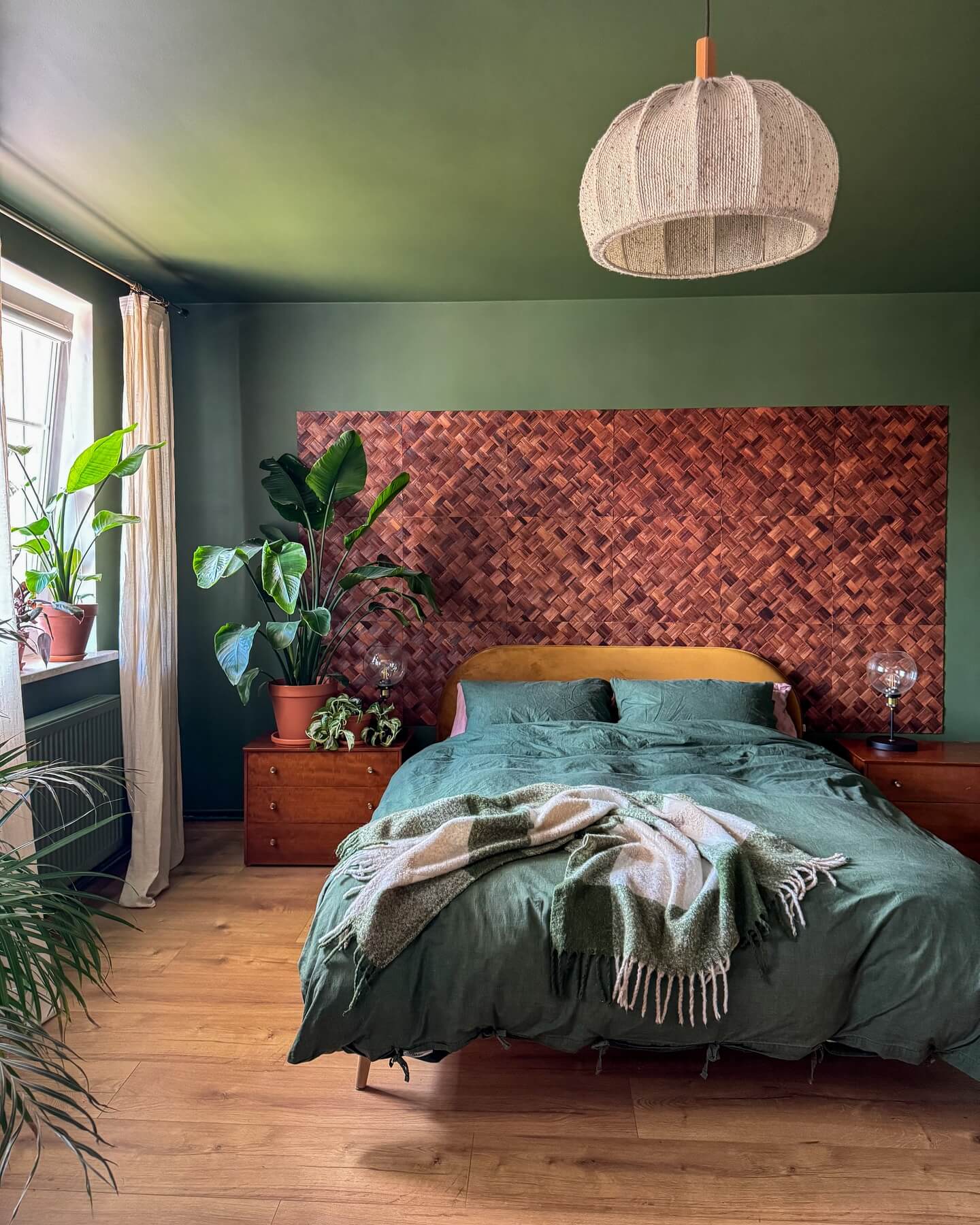
If you crave breezy calm, dial in a coastal green bedroom: sage or sea-glass walls, airy white trim, and tactile layers that nod to the shore without going nautical. Start with slim, evenly spaced stripes—on bedding, a lumbar pillow, or a throw—to add lift and hotel polish. Keep woods pale (ash, white oak) and bring in woven Roman shades or a seagrass rug for dune-like texture. Metals can be light and reflective—polished nickel or unlacquered brass—to bounce daylight and keep the palette fresh. Use a mix of crisp percale sheets and a gauzy coverlet so the bed looks cloudlike, not heavy. Accent with stoneware in sandy neutrals and art with soft horizon lines. Limit blue to tiny moments so sage stays the star. The key is negative space: fewer, better objects, generous drape puddling, and soft, diffused lighting. The result is a coastal sage sanctuary that feels bright by day and whisper-quiet by night.
Biophilic Green Bedroom Styling, Lighting Layers, and Small-Space Layout Tips
Biophilic design amplifies green bedrooms by connecting color with living textures, natural light, and plant life. Choose easy-care varieties like ZZ, snake, or pothos, then scale upward with a rubber tree or olive topiary for height. Use ceramic and rattan planters to repeat earthy tones from wood furniture, keeping three material finishes consistent throughout. A moss art panel or preserved fern frame gives verdant presence where maintenance or pets make live plants impractical. Echo outdoor forms in curved headboards, pebble-shaped lamps, and ribbed glass, softening edges that might otherwise feel rigid. Incorporate subtle aromatherapy—eucalyptus stems, cedar sachets, or fresh rosemary—so the sensory experience of “green” extends beyond paint.
- Layer lighting with 2700K LEDs, dimmable bedside sconces, a fabric drum pendant, and hidden toe-kicks, balancing task, ambient, and accent illumination for depth and bedtime wind-down.
- Float nightstands slightly narrower than the headboard and wall-mount lamps to free surface area, a small-space trick that looks tailored and adds valuable walking clearance.
- Install a ceiling track and hang olive linen panels to create a soft canopy illusion, framing the bed, improving acoustics, and adding instant hotel-level coziness without heavy carpentry.
- Combine blackout Roman shades with sheer drapery to manage morning brightness and privacy, then color-match hardware to wall paint so treatments recede and the green palette remains dominant.
- Use half-painted walls—dark moss below, soft ivory above—to widen small rooms, aligning the transition with headboard height and repeating the darker shade on doors for continuity.
- Choose closed storage in sage cabinetry with integrated pulls to minimize visual clutter, then display only a few organic objects—stones, branches, or ceramics—to keep the narrative disciplined.
- Bring pattern through a single hero textile—an emerald botanical duvet or kilim rug—then echo one accent color twice more so the eye understands the scheme intuitively.
- Add a green-upholstered storage bench at the foot of the bed to hide blankets, visually extend the mattress plane, and introduce additional texture without crowding nightstand zones.
- Swap glossy art glass for frosted or ribbed vases to diffuse light softly, preventing glare on darker greens and preserving the restful, cocoon-like mood at night.
- Ground the palette with matte black picture ledges and curtain rods, giving contrast that sharpens greens while echoing hardware finishes for a unified, high-design look.
Climate control affects comfort in green bedrooms, so layer breathable percale sheets with a medium-weight wool blanket and add a lightweight quilt for seasonal shifts. Keep bedside surfaces calm with trays that corral chargers, hand cream, and a book, then hide everything else in drawers. For tech, choose warm-white smart bulbs and schedule dimming one hour before bedtime to reinforce wind-down cues. If you share the room, mirror nightstand heights and lamp styles to avoid visual imbalance that can make compact spaces feel chaotic. Pet-friendly households should avoid toxic plants like philodendron; opt for calathea, parlor palm, or faux specimens in high-traffic zones. Finally, maintain the palette with quarterly touch-up paint and regular fabric care, preventing minor scuffs from undermining the room’s intentional serenity.
Green Bedroom Know-How: Quick Answers to Common Design Questions
What shade of green is most relaxing for a bedroom?
Soft, muted greens with gray or beige undertones—think sage, celadon, or pistachio—tend to feel calm. They reflect light gently, reduce visual contrast, and pair easily with natural materials.
How can I keep a dark green bedroom from feeling cave-like?
Balance depth with layered lighting, warm metallics, and lighter textiles. Add reflective elements like satin-finish paint or ribbed glass, and keep ceilings or trims a warmer white.
Get the Fail-Safe Paint Color Playbook (Free PDF)
36 proven colors • 8 ready palettes • trim & sheen guide • printable testing cards.
Which plants thrive in low-light green bedrooms?
Snake plant, ZZ plant, and pothos tolerate low light and occasional neglect. Place them near indirect light sources, rotate monthly, and avoid overwatering to prevent root rot.
Get the Fail-Safe Paint Color Playbook (Free PDF)
36 proven colors • 8 ready palettes • trim & sheen guide • printable testing cards.
Are there rules for mixing patterns with green decor?
Choose one dominant motif, one geometric, and one small-scale stripe or dot. Keep them within similar saturation levels, and repeat colors at least three times across the room.
Final Verdict: Your Green Bedroom, Tailored and Timeless
Green proves its power as a restorative neutral with personality—equally at home in serene sage schemes, earthy olive palettes, and glamorous emerald moments. The most successful green bedrooms balance tone and texture: think limewash or paneling for depth, botanical or plaid for pattern, and linen, velvet, or boucle for touchable comfort. Whether you lean coastal with sea-glass layers, go modern with black contrast, or opt for Japandi restraint, a cohesive undertone (cool, warm, or true) and intentional repetition of color keep the look harmonious.
Use a simple framework to get it right. Define the mood, then build a 60-30-10 palette with two greens and a grounding neutral (bone, oat, or charcoal). Choose one hero feature—a velvet bed, botanical mural, or built-in headboard wall—and echo that shade in at least three places (textiles, art, accents). Mix metals thoughtfully (brass for warmth, chrome for crispness), and plan lighting with warm 2700–3000K bulbs, dimmers, and layered sources. Don’t forget the “fifth wall” for drama or softness, and leverage renter-friendly peel-and-stick patterns to test ideas without commitment.
For a space that feels good and does good, prioritize low-VOC paint, natural fibers, and vintage wood. Add life with plants or herbaceous tones (sage, basil, eucalyptus) and refresh seasonally by swapping bedding, pillows, and art. From spa-level calm to jewel-toned sophistication, these green bedroom ideas make it easy to craft a sanctuary that’s current, personal, and enduring—one swatch, one texture, one thoughtful layer at a time.