How Much Does It Cost to Paint a Pool? Full Cost Guide
Swimming pools are a centerpiece of many modern homes, promising a refreshing escape and significant aesthetic value. When the paint or finish begins to fade, chip, or dull, the pool loses its vibrant appeal and can even become a safety concern. Fortunately, restoring the pool’s color and protective layer through professional painting or resurfacing is a highly effective way to revitalize the entire space.
However, the question of “how much to paint a pool” is far from simple. The final cost is not determined by a single variable but by a complex interplay of factors: the pool’s underlying material, the current condition of the surface, the size, the specific paint chemistry required, the level of structural repair needed, and the labor involved. Understanding these variables is the key to establishing an accurate, realistic budget.
Get the Fail-Safe Paint Color Playbook (Free PDF)
36 proven colors • 8 ready palettes • trim & sheen guide • printable testing cards.
Quick answer: Painting a pool typically costs between $500 for a small DIY acrylic paint job and $5,000+ for a professional epoxy or specialized cementitious coating on a large concrete or gunite pool. The final cost depends on the pool material (concrete, gunite, fiberglass, or vinyl), any structural repairs needed before coating, the paint chemistry required, and the level of deep cleaning and preparation required before application.
Planning Before You Start: Assessing Your Pool’s Condition and Scope
Before any paint can be mixed or purchased, the most critical step—and often the most expensive—is the thorough assessment of the pool shell itself. Treat this assessment as a structural evaluation, not just a cosmetic one. A skilled professional will guide you through this process, identifying potential weak points.
First, determine the pool type. Is it concrete, gunite, fiberglass, or does it have a vinyl liner? Different materials dictate entirely different preparation methods. Concrete and gunite, which are porous, require aggressive cleaning and often specialized cementitious coatings. Fiberglass and vinyl liners require surface treatments that adhere to flexible, non-porous materials. Knowing this early narrows down the viable paint options and necessary prep work.
Next, inspect the entire surface for damage. Look for hairline cracks, major fissures, efflorescence (white mineral deposits), peeling paint, and areas where the plaster or surface material has eroded. Any structural damage, such as deep cracks or voids, must be professionally repaired (patching, crack filling) before any coating can be applied. Ignoring structural issues will guarantee that the new paint layer will fail prematurely.
The Pool Painting Process and Detailed Cost Breakdown
The painting process is not merely applying paint; it is a multi-stage restorative construction project. The cost breakdown must account for the time and materials dedicated to each phase. We will outline the process in four critical stages:
Phase 1: Deep Cleaning and Surface Preparation (The Major Cost Driver)
This stage is non-negotiable. The surface must be stripped of all loose, flaky, or failing material. This typically involves high-pressure washing, chemical cleaning to remove mineral buildup (scale and calcium), and sometimes abrasive methods. If the original surface is plaster, the professional may recommend chemical etching to create a porous, rough surface profile, ensuring maximum adhesion for the new primer. This preparatory work is labor-intensive and requires specialized chemicals, significantly impacting the overall cost.
Phase 2: Structural Repair and Patching
Any cracks or holes found in Phase 1 must be filled using specialized, waterproof patching compounds that match the substrate material. These patches must cure completely and are often reinforced with structural mesh before the primary coating is applied. This is a specialized trade that adds significant cost, as it involves material science and structural integrity checks.
Phase 3: Priming and Sealing
A high-quality primer is essential. It acts as a bond between the old, porous substrate and the new topcoat. The primer seals the surface, preventing the new paint from being absorbed unevenly by the underlying material. This step is critical for durability and often involves specialized, waterproof coatings.
Phase 4: Topcoat Application
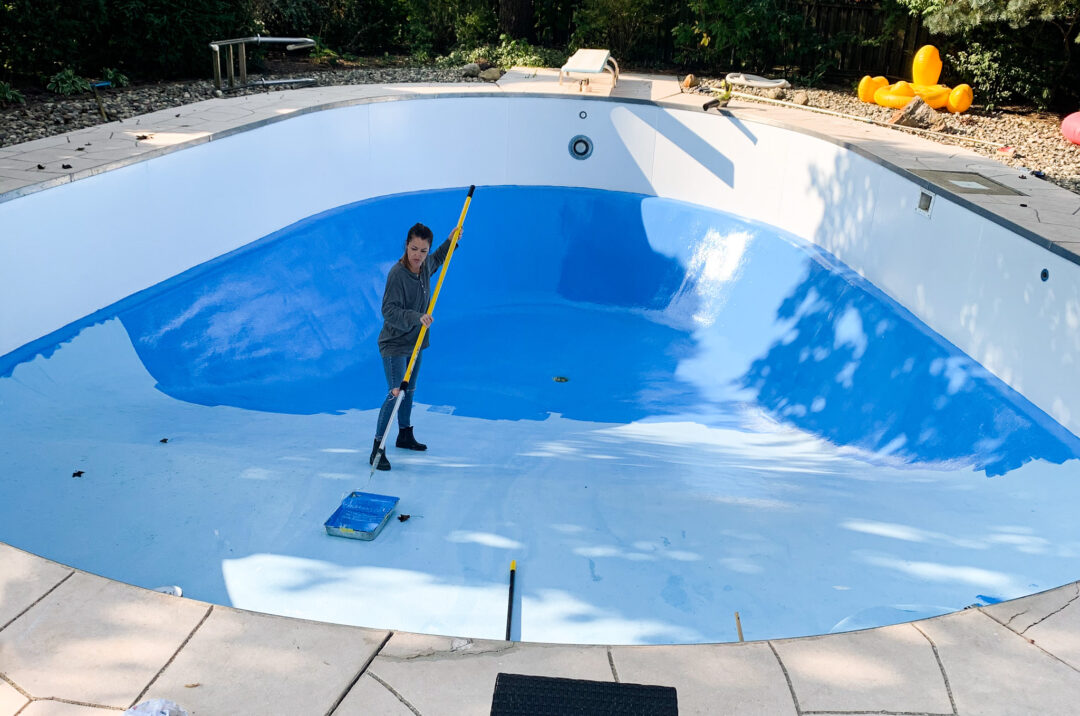
The final topcoat—whether acrylic, epoxy, or cementitious—is applied. The number of coats required (usually two or more) and the chosen finish heavily influence the material cost. Proper application, whether by spray or trowel, is vital for achieving the desired aesthetic and protective qualities.
Materials and Tools Checklist
When budgeting, consider separating the costs into materials (purchased supplies) and equipment (tools/labor). For a professional job, the contractor provides most specialized equipment, but knowing the required items helps manage expectations.
- Specialized Coatings: Waterproof cementitious or acrylic coatings, structural patching compounds, and specialized primers.
- Cleaning Agents: Industrial-grade degreasers, acid-neutralizing cleaners, and calcium removal agents.
- Tools: High-pressure washing units, scaffolding/lifts (for accessing high areas), trowels, and professional-grade paint sprayers.
- Safety Gear: Chemical-resistant gloves, respirators (N95 or higher), safety goggles, and protective clothing.
Choosing the Perfect Finish: Design and Color Considerations
The color and finish you select impact both the aesthetics and the longevity of the paint. This decision must harmonize with the surrounding environment.
Color and Undertones: Consider the natural light of your backyard. Does the pool face north (cooler, dimmer light) or south (bright, intense light)? In dimmer light, a lighter, slightly warmer color can help the pool appear more vibrant. When selecting a color, consult with a professional color consultant who understands how pool chemistry and natural light affect paint pigments. Avoid colors that are too dark and matte, as they can absorb more heat and sometimes make the pool look dingy.
Finish/Sheen: For durability and ease of maintenance, a semi-gloss or satin finish is often recommended over a high-gloss finish, which can sometimes highlight minor imperfections. A matte finish, while beautiful, may be more susceptible to staining over time. The choice must balance visual appeal with practical resilience.
Interaction with Decking: The pool paint color should complement the surrounding hardscaping (pavers, natural stone, concrete). If the deck is a warm, reddish travertine, a cool, deep blue pool tone can create a striking contrast. If the deck is light gray concrete, a muted, earth-toned pool color will create a more seamless, minimalist look.
Avoiding Costly Mistakes in Pool Painting
The most common mistakes are not related to the paint color, but to the preparation process. These errors are costly because they guarantee premature failure.
- Skipping Surface Prep: The biggest mistake is assuming a simple wash will suffice. If paint is applied over dirt, oil residue, or minor mineral deposits, the new coating will fail rapidly.
- Ignoring Structural Cracks: Treating visible cracks as mere cosmetic flaws is dangerous. They are pathways for water intrusion and chemical damage, and must be filled with specialized, waterproof epoxy compounds before painting.
- Rushing the Cure Time: Paint, especially high-performance coatings, requires specific curing times—sometimes days or even weeks—to reach maximum strength. Attempting to use or swim in the pool before the manufacturer-specified cure time is dangerous and will ruin the finish.
Mistakes to Avoid
Do not skip assessment just because the project looks simple. Most paint, cleaning, repair, and tool-care problems come from poor prep, incompatible products, rushed drying time, or using a method that does not match the material.
Avoid working without ventilation, gloves, eye protection, or a cleanup plan when coatings, solvents, sanding dust, or business/studio supplies are involved. Test first, read manufacturer directions, and pause if the surface, tool, or client setting creates safety questions you cannot answer confidently.
Safety and Practical Protocols
Because pool painting involves strong chemicals, high pressure, and working at height, safety protocols are paramount. Never compromise on safety equipment or professional standards.
- Personal Protective Equipment (PPE): Always wear chemical-resistant gloves, safety goggles, and appropriate respirators to protect against chemical fumes and dust.
- Ventilation: Ensure adequate ventilation, especially when mixing or applying epoxy or cementitious coatings, as these chemicals can release strong, potentially harmful fumes.
- Structural Integrity Check: Always have a licensed professional inspect the pool structure before commencing work. Do not paint over areas with suspected structural weakness; call a structural engineer for an assessment.
- Local Codes: Check with your local building department for any required permits or specific guidelines regarding pool resurfacing materials and application techniques.
A Lasting Investment: Conclusion
Painting or resurfacing a pool is a substantial investment, but it is one that yields significant returns in both aesthetic value and structural protection. While the initial cost can feel overwhelming, remember that the expense is not just for the paint; it is for the meticulous preparation, the structural repairs, and the specialized expertise required to ensure the finish lasts for years.
By prioritizing thorough planning, understanding the necessary multi-stage process, and committing to the highest standards of safety and preparation, you can transform a faded, tired pool into a stunning, durable centerpiece that will enhance your home for years to come.
Get the Fail-Safe Paint Color Playbook (Free PDF)
36 proven colors • 8 ready palettes • trim & sheen guide • printable testing cards.
Frequently Asked Questions
How much does it cost to paint a pool, and what are the major cost drivers?
The cost is highly variable and cannot be estimated by a simple paint price. The major cost drivers are not the paint itself, but the preparation and structural integrity work. These include: 1) Surface preparation (high-pressure cleaning, chemical etching, and removal of failing material); 2) Structural repairs (filling deep cracks and voids with specialized, waterproof compounds); and 3) Labor, which is intensive due to the multi-stage process (cleaning, patching, priming, and topcoating). Always budget for professional assessment before estimating a final cost.
Do I need to repaint my pool if the paint is still intact, but the color is faded?
While minor fading might be purely cosmetic, if the color has faded, it often indicates that the protective layer is degrading. A professional assessment is necessary to determine if the underlying plaster or shell has begun to erode or if the sealant has failed. If the paint is peeling, chipping, or dull, resurfacing is highly recommended. Attempting to simply touch up the color without addressing the underlying structural and chemical degradation will likely result in premature failure.
What is the difference between a primer and a topcoat, and why is both necessary?
The primer and the topcoat serve entirely different functions. The topcoat is the visible, protective finish (e.g., acrylic or epoxy). The primer, however, is a specialized adhesive that acts as a bond between the old, porous substrate (the pool shell) and the new topcoat. It seals the surface, preventing the new paint from being absorbed unevenly by the underlying material, which is critical for long-term adhesion and durability.
The process is not a single day’s work; it is a multi-stage construction project that requires significant time. The actual application may take several days, but the total project duration is dictated by the curing times of the specialized materials. Waterproof patches, epoxies, and cementitious coatings often require specific curing periods—which can range from days to weeks—before the pool can be safely used or before the next layer can be applied. Never bypass the manufacturer-specified cure time.
Is it safe to paint the pool myself, or do I need a professional?
Due to the complexity of the required preparation and materials, professional service is strongly advised. Pool painting involves specialized equipment (high-pressure washers, scaffolding), industrial-grade chemicals, and structural expertise. Attempting the process yourself carries a high risk of critical errors, such as insufficient surface prep or failure to address structural cracks, which will guarantee that the paint fails prematurely. Always ensure the contractor provides full safety gear and adheres to local building codes.