How To Make Bronze Color Paint: Easy Mixing Recipes for Perfect Bronze Shades
Bronze is not just brown with a little shine. It is warm, rich, earthy, and metallic-looking when mixed the right way. Get the balance wrong, and it can turn muddy, orange, or dull fast.
The good news? Making bronze color paint is easy once you know the right base colors. With brown, orange, yellow, and a few small adjustments, you can create anything from soft golden bronze to deep antique bronze.
Get the Fail-Safe Paint Color Playbook (Free PDF)
36 proven colors • 8 ready palettes • trim & sheen guide • printable testing cards.
In this guide, you will learn the easiest bronze paint recipes, including basic bronze, metallic bronze, and aged bronze finishes, plus quick fixes if your mix does not look right.
What Color Is Bronze Paint?
Bronze paint is a warm, earthy color that sits between brown, orange, and muted gold. It is darker than gold, less red than copper, and richer than plain brown. A good bronze color usually has a deep brown base with orange or yellow undertones, which gives it that classic aged-metal look.
The exact shade can change depending on the type of bronze you want. Light bronze looks warmer and more golden. Dark bronze has more brown or black mixed in. Antique bronze often looks deeper, duller, and slightly weathered. Reddish bronze leans closer to copper, while golden bronze looks brighter and more polished.
Bronze vs Copper, Brass, and Gold
Bronze is often confused with other metallic colors, but each one has a different tone. Copper is usually brighter and redder. Brass is more yellow and lighter. Gold is shinier and more vibrant. Bronze, however, has a more grounded, brown-orange look.
That is why mixing bronze paint is all about balance. Too much orange can make it look like rust. Too much yellow can push it toward gold. Too much brown can make it look flat. The goal is to create a warm, rich color with enough depth to feel like real bronze.
Basic Colors Needed To Make Bronze Paint
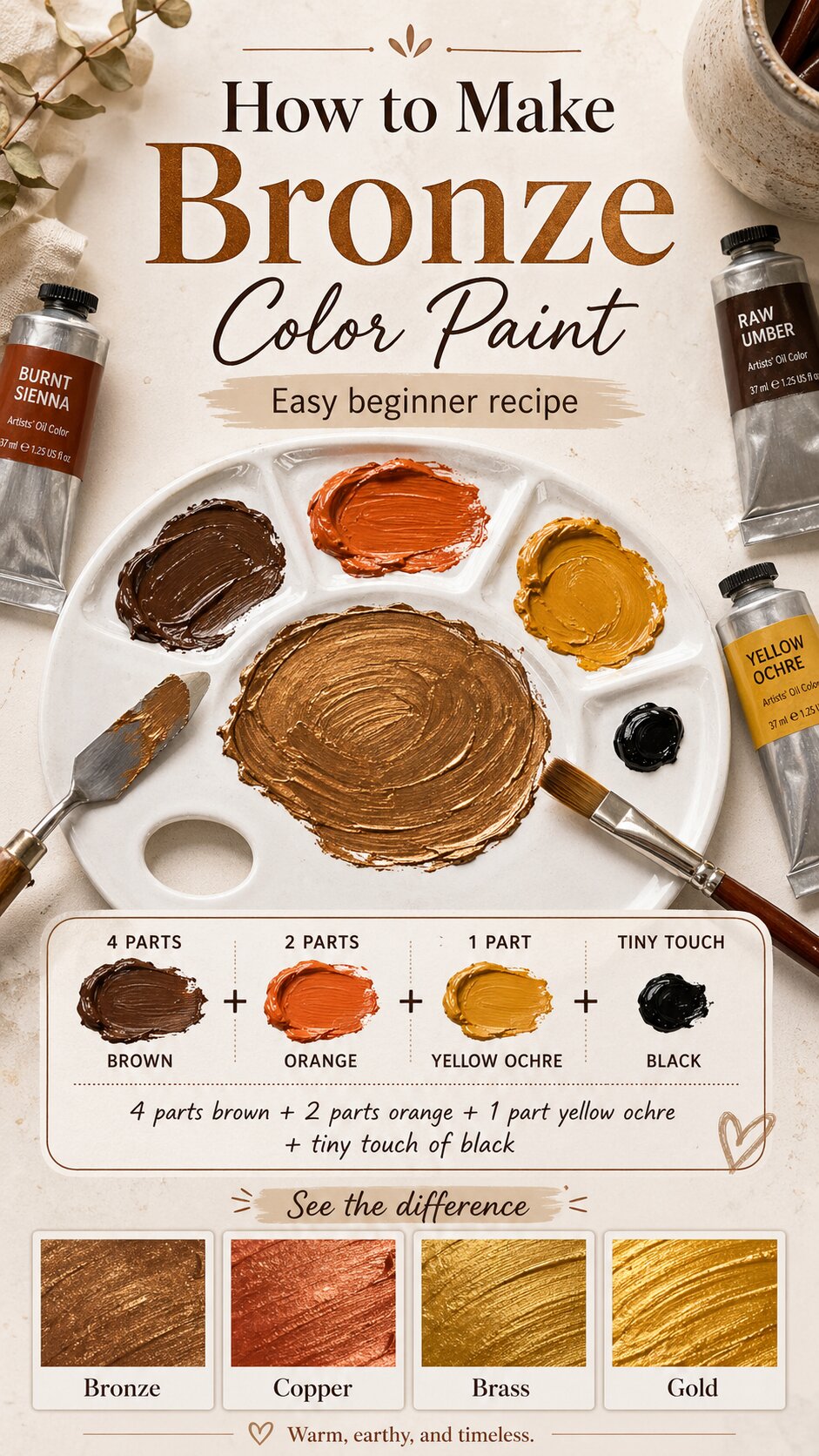
To make bronze color paint, you usually need brown, orange, and yellow. Brown gives the mixture depth, orange adds warmth, and yellow brings in the golden undertone. These three colors create the base of a simple non-metallic bronze shade.
A good beginner recipe is:
| Paint Color | Amount |
|---|---|
| Brown | 4 parts |
| Orange | 2 parts |
| Yellow or Yellow Ochre | 1 part |
| Black or Dark Brown | Tiny touch |
| White | Optional |
Start with brown first, then mix in orange slowly. Once the color becomes warm enough, add yellow or yellow ochre to create that bronze-like glow. If the color looks too bright, add a tiny amount of dark brown or black. Be careful with black because it can quickly make the mixture muddy.
Best Base Colors for Bronze
For a natural bronze shade, burnt umber, burnt sienna, yellow ochre, orange, and black work very well. Burnt umber creates a dark earthy base, while burnt sienna adds a reddish-orange warmth. Yellow ochre is better than bright yellow if you want a softer, more realistic bronze.
White should only be used when you want a lighter bronze. Add it slowly, because too much white can make bronze look beige instead of rich and metallic.
How To Make Metallic Bronze Paint
If you want bronze paint with shine, start with a metallic paint instead of a flat color. The easiest method is to mix metallic gold or metallic copper with brown. Gold gives the mixture brightness, copper adds warmth, and brown tones everything down into a realistic bronze shade.
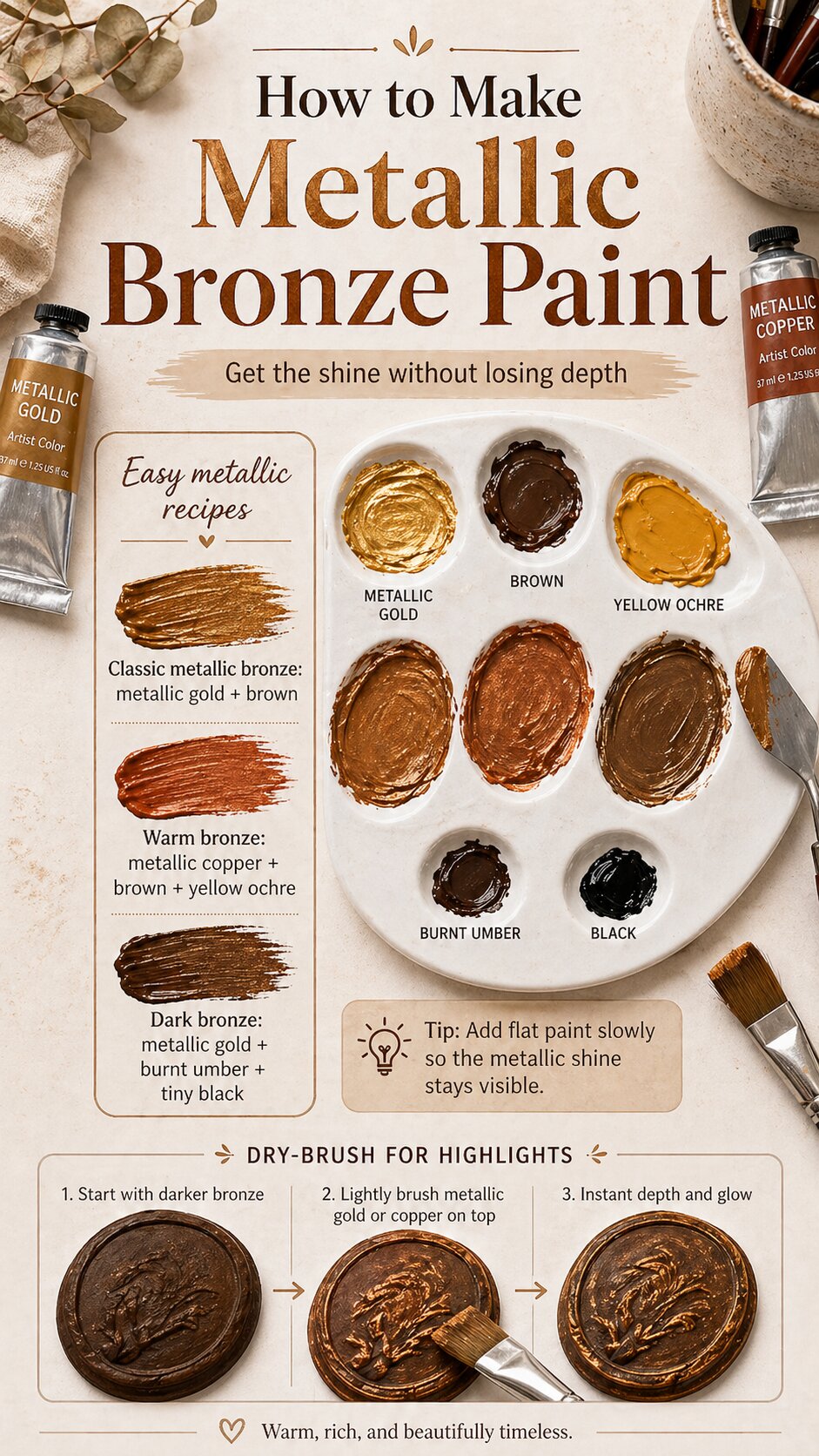
A simple metallic bronze recipe is:
| Bronze Type | Paint Mix |
|---|---|
| Classic metallic bronze | Metallic gold + brown |
| Warm bronze | Metallic copper + brown + yellow ochre |
| Dark bronze | Metallic gold + burnt umber + tiny black |
| Reddish bronze | Metallic copper + burnt sienna + brown |
| Antique bronze | Metallic bronze + dark brown + black-brown wash |
Start with metallic gold or copper as your base. Add brown in small amounts until the color becomes deeper and less shiny-gold. For a darker bronze, add burnt umber or a tiny touch of black. For a warmer bronze, add burnt sienna or orange.
How To Keep the Metallic Shine
The biggest mistake is adding too much regular acrylic paint to metallic paint. Flat paint can cover the reflective particles and make the bronze look dull. To avoid this, use small amounts of brown or use a transparent glaze, ink, or metallic medium when possible.
For a more realistic finish, paint a dark bronze base first. Then lightly dry-brush metallic gold or copper over raised areas. This creates highlights and makes the bronze look more like real metal.
How To Make Antique Bronze Color Paint
Antique bronze is darker, softer, and more aged-looking than regular bronze. Instead of a bright metallic shine, it has a deep brown-gold tone with a slightly weathered finish. This shade works well for picture frames, statues, furniture details, hardware, miniatures, and vintage-style crafts.
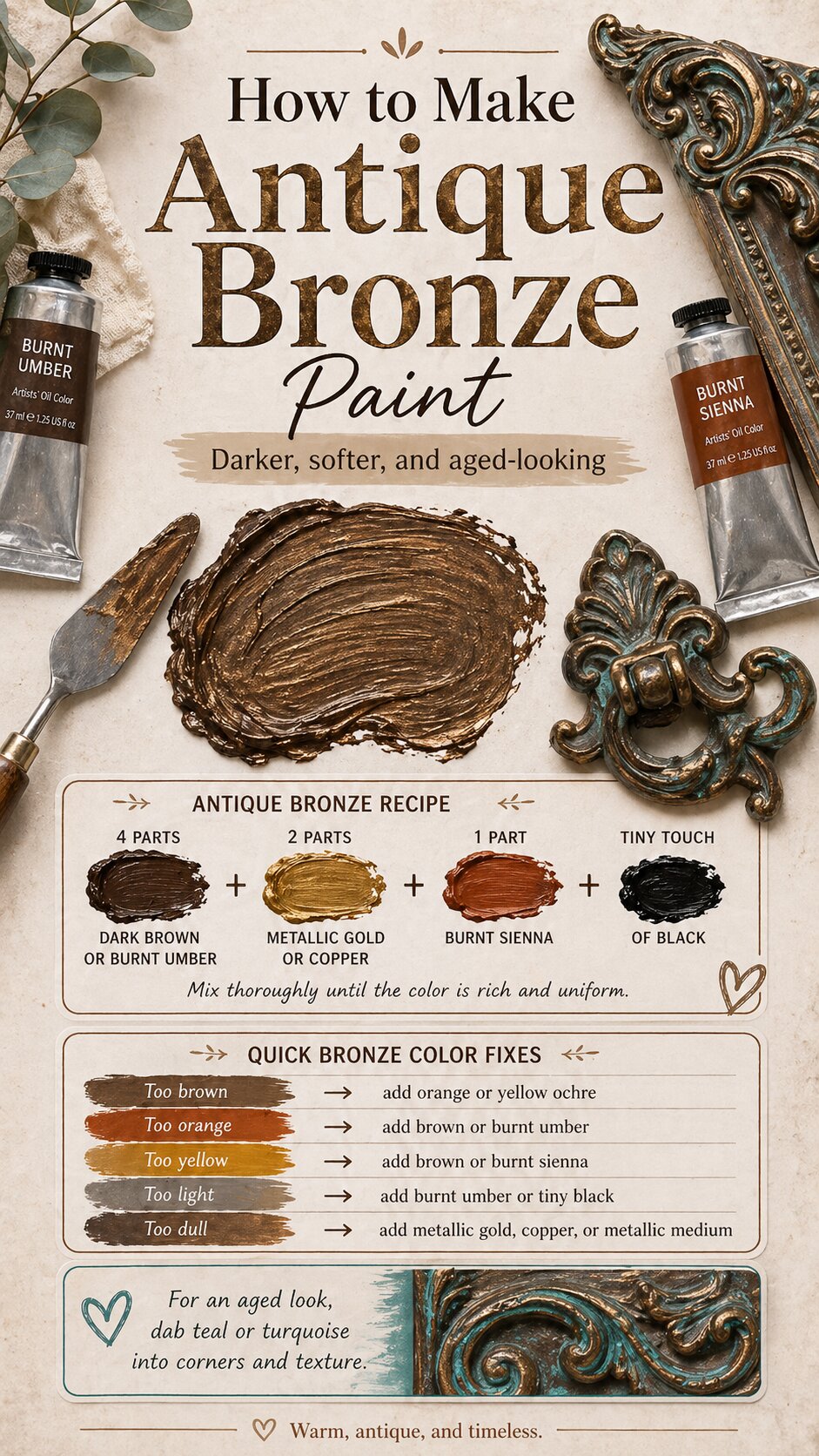
To make antique bronze paint, start with a dark brown base. Add a small amount of metallic gold or metallic copper, then tone it down with burnt umber, black, or dark brown. The goal is to create a rich bronze shade that looks old, not freshly polished.
A simple antique bronze recipe is:
| Paint Color | Amount |
|---|---|
| Dark brown or burnt umber | 4 parts |
| Metallic gold or copper | 2 parts |
| Burnt sienna | 1 part |
| Black | Tiny touch |
Mix the dark brown and metallic paint first. Then add burnt sienna to give the color warmth. Use black very carefully, because too much can make the bronze look dirty instead of antique.
Adding an Aged Patina Effect
For an older bronze look, add a light patina effect using teal, turquoise, or green-blue paint. Apply it lightly into corners, cracks, or textured areas with a dry brush or small sponge. Do not cover the whole surface. Real aged bronze usually has patina in small uneven areas, so a little goes a long way.
How To Adjust Bronze Paint Shades
Once you mix bronze paint, you may need to adjust the shade. Bronze can easily become too orange, too brown, too yellow, too dark, or too dull. The key is to make small changes slowly instead of adding too much paint at once.
If your bronze looks too brown, add a little orange or yellow ochre. This brings back warmth and makes the color look more like bronze instead of plain dark brown. If it looks too orange, add more brown or burnt umber to calm it down. If it looks too yellow or gold, add a small amount of brown to make it deeper.
Quick Bronze Color Fixes
| Problem | Add This |
|---|---|
| Too brown | Orange or yellow ochre |
| Too orange | Brown or burnt umber |
| Too yellow | Brown or burnt sienna |
| Too light | Burnt umber or tiny black |
| Too dark | Metallic gold, yellow ochre, or a little white |
| Too dull | Metallic gold, copper, or metallic medium |
To make bronze lighter, use yellow ochre, metallic gold, or a tiny amount of white. However, avoid adding too much white because it can make bronze look beige or chalky.
To make bronze darker, use burnt umber, dark brown, or a very small touch of black. Black is powerful, so add it slowly and mix well before adding more.
Best Paint Types for Making Bronze
The best paint for making bronze depends on your project. For most crafts and beginner projects, acrylic paint is the easiest option. It dries quickly, mixes well, and works on canvas, wood, cardboard, clay, and many decorative surfaces. You can make flat bronze with regular acrylics or shiny bronze with metallic acrylic paint.
For fine art, oil paint can create a richer and smoother bronze effect. Oils blend slowly, which makes them useful for realistic shadows, highlights, and metal reflections. However, they take longer to dry and need more cleanup.
Acrylic, Oil, Watercolor, and Spray Paint
Watercolor and gouache can create a bronze-like color, but they usually will not look metallic unless you use metallic watercolor, shimmer paint, or mica-based paint. For paper projects, this can be a good choice.
For furniture, frames, lamps, hardware, and home décor, metallic spray paint or furniture paint may be the easiest option. These paints give a smoother finish over large surfaces and often look more even than hand-mixed paint.
If you are painting miniatures or small details, use thin layers. Start with a dark bronze base, then add lighter metallic highlights. This gives the surface more depth and makes the bronze look realistic instead of flat.
Common Mistakes When Mixing Bronze Paint
One of the most common mistakes is making bronze paint too brown. Since bronze has a brown base, many people add brown first and stop there. But bronze needs warmth. Without orange, yellow ochre, gold, or copper, the color can look flat and muddy instead of rich and metallic.
Another mistake is adding too much orange. Bronze should have an orange undertone, but it should not look like rust or terracotta unless that is the style you want. If your mix becomes too orange, add brown, burnt umber, or a tiny touch of black to bring back depth.
Why Bronze Paint Can Look Dull
Bronze paint often looks dull when too much flat paint is added to a metallic base. For example, if you mix a large amount of regular brown acrylic into metallic gold, the metallic particles may get covered. This can reduce the shine and make the paint look like ordinary brown.
To avoid this, add flat colors slowly. You can also use metallic medium, bronze metallic paint, or a thin brown glaze over metallic gold or copper. This keeps the shine visible while still changing the color.
Also, avoid adding too much black. Black can darken bronze quickly, but it can also make the color look dirty. Use burnt umber or dark brown first, then add black only in tiny amounts if needed.
Quick Bronze Paint Recipes
Here are some simple bronze paint recipes you can use depending on the shade you want. Start with small amounts, mix well, and test the color before painting your final surface.
| Bronze Shade | Paint Mix |
|---|---|
| Basic bronze | Brown + orange + yellow ochre |
| Metallic bronze | Metallic gold + brown |
| Dark bronze | Brown + burnt umber + orange + tiny black |
| Antique bronze | Dark brown + metallic gold/copper + burnt sienna |
| Reddish bronze | Brown + burnt sienna + metallic copper |
| Golden bronze | Brown + yellow ochre + metallic gold |
| Aged bronze | Antique bronze base + teal or green-blue patina |
For a basic non-metallic bronze, use more brown than orange or yellow. A good starting point is 4 parts brown, 2 parts orange, and 1 part yellow ochre. This gives you a warm bronze base that can be adjusted easily.
Best Recipe for Beginners
The easiest beginner recipe is brown + orange + yellow ochre. This works well if you do not need a shiny finish. For a metallic version, start with metallic gold, then mix in a little brown until it turns into bronze.
If you want a darker vintage shade, use burnt umber instead of regular brown. If you want a warmer reddish shade, add burnt sienna or copper.
Get the Fail-Safe Paint Color Playbook (Free PDF)
36 proven colors • 8 ready palettes • trim & sheen guide • printable testing cards.
Final Tips for Getting the Perfect Bronze Color
The best way to make bronze color paint is to mix slowly and adjust in small steps. Bronze is a balanced color, so one extra drop of black, orange, or white can change the final shade quickly. Always begin with your base color, then add warmer or darker colors little by little.
Let the paint dry before judging the final result. Wet paint can look brighter, darker, or shinier than it will after drying. This is especially important with acrylic paint, because acrylics often dry slightly darker.
Test Before Painting the Final Surface
Before using your bronze paint on the main project, test it on a scrap piece of the same material. Paint can look different on canvas, wood, clay, paper, metal, or plastic. A shade that looks perfect on a palette may look too dark or dull on the actual surface.
For the most realistic bronze finish, use layers. Start with a darker bronze base, add medium bronze over it, then highlight raised areas with metallic gold, copper, or light bronze. This creates depth and makes the color look more natural.
In the end, the perfect bronze paint depends on your project. Use brown, orange, and yellow ochre for a simple bronze shade. Use metallic gold or copper for shine. Add dark brown, burnt umber, or patina effects when you want an antique bronze look.