
Narrow Entryway Decor Ideas That Make a Small Entrance Look Stylish
The moment you walk through your front door, your entryway sets the tone for your entire home. But if your entrance is narrow, long, or simply small, it can feel more like an obstacle course than a welcoming space. —a tight foyer doesn’t mean you have to sacrifice style! With smart design choices, vertical styling, and clever furniture placement, you can transform a cramped, narrow entrance into a polished, inviting first impression.
Mastering a small or narrow entryway is all about maximizing vertical space and keeping the walkway clear. Instead of trying to fit oversized furniture, we focus on slim, multi-functional pieces and visual tricks that make the space feel larger and more intentional.
Get the Fail-Safe Paint Color Playbook (Free PDF)
36 proven colors • 8 ready palettes • trim & sheen guide • printable testing cards.
Whether you’re a renter in a small apartment or a homeowner in a cozy cottage, these narrow entryway decor ideas will help you create a welcoming, functional, and stylish welcome that perfectly suits your space.
Quick Design Principles
- Go Vertical: Draw the eye upward with tall art, vertical shelving, or hanging plants. This tricks the brain into perceiving the space as taller and wider.
- Keep it Slim: Opt for narrow consoles, floating shelves, and slim hooks instead of bulky furniture. Every inch counts in a narrow space.
- Use Mirrors Strategically: Mirrors are the ultimate illusion tool. Placing one opposite a light source or at the end of a narrow hall instantly reflects light and space, making the area feel significantly larger.
- Maintain Flow: Always ensure the main walkway remains clear. Furniture should define the space without blocking movement.
Use a Slim Console Table for Narrow Entryway Decor
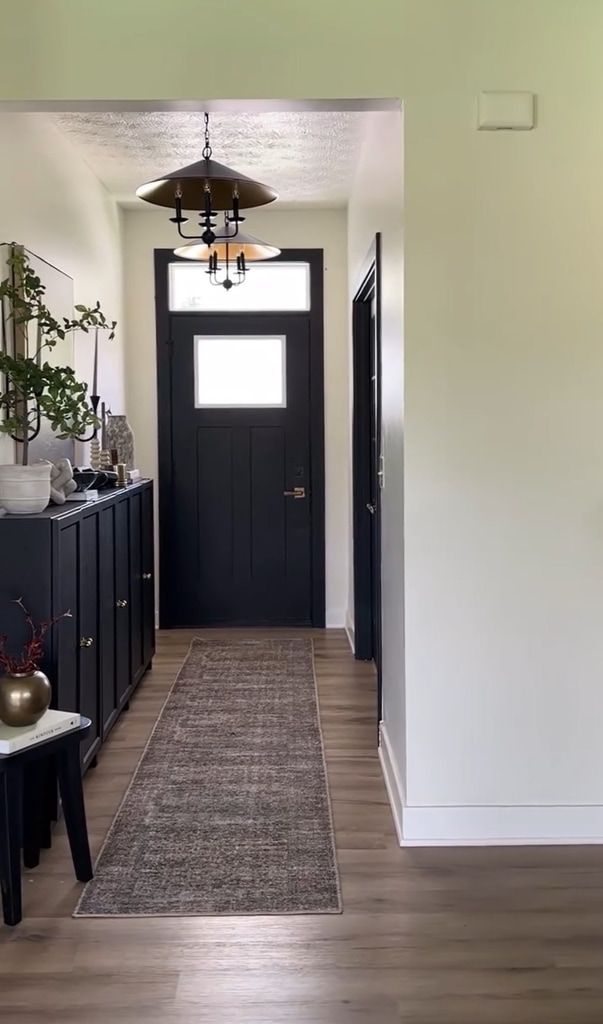
When designing a narrow passage, the console table is a functional powerhouse. Opting for a slim, dark console cabinet, like the one pictured, provides essential closed storage for shoes and clutter without overwhelming the space. This keeps the entryway looking clean and refined.
To maximize the visual length of your hall, anchor the console with a neutral, textured runner rug. Styling the console with greenery and framed wall art completes the look, transforming a simple doorway wall into a cohesive, finished entry zone.
For the full cluster of layouts, start with small entryway decor ideas and then adapt the scale to your doorway.
Use Bench Seating Without Blocking the Walkway
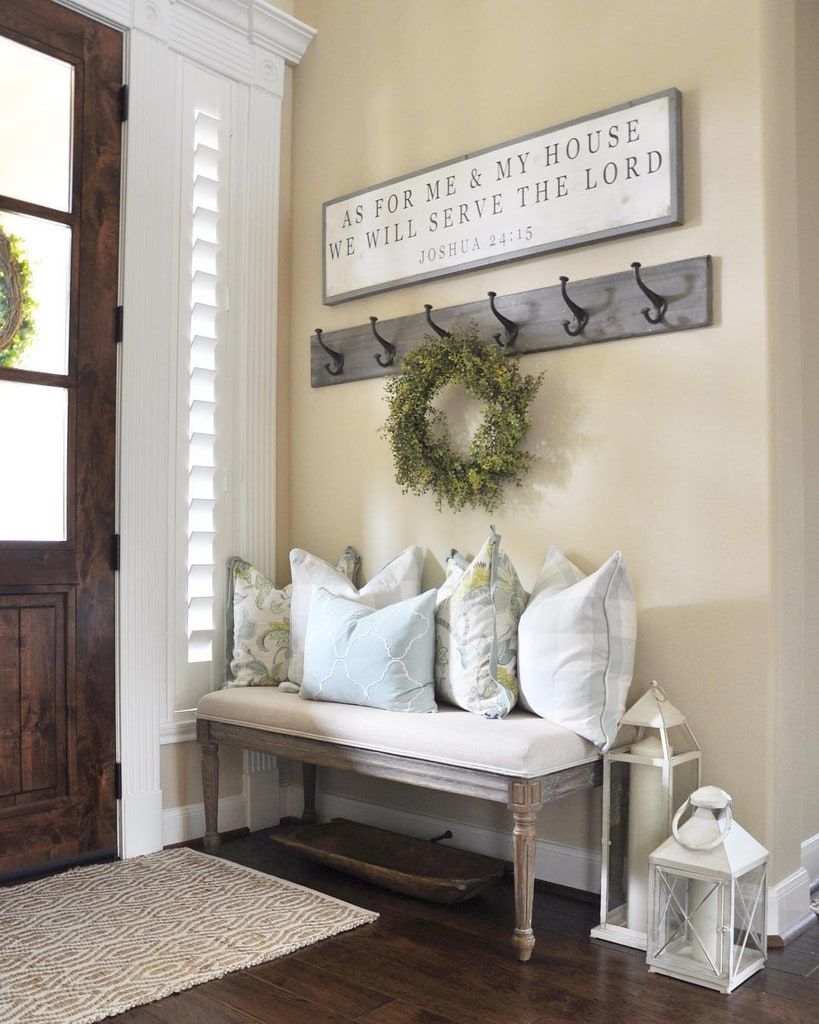
For a welcoming and functional landing zone, a slim upholstered bench is ideal. This piece provides necessary seating for putting on shoes while maintaining a light, airy feel in the narrow passage. Adding decorative hooks above the bench maximizes vertical storage for keys and coats.
Layering textures with throw pillows and incorporating wall art, such as a rustic wooden sign, adds personality. Ensure the console table placed behind the bench is slim enough that it doesn’t impede the main traffic flow.
For seating-first layouts, use the entryway bench decor ideas guide as the next step.
Choose a Runner Rug That Lengthens the Hallway
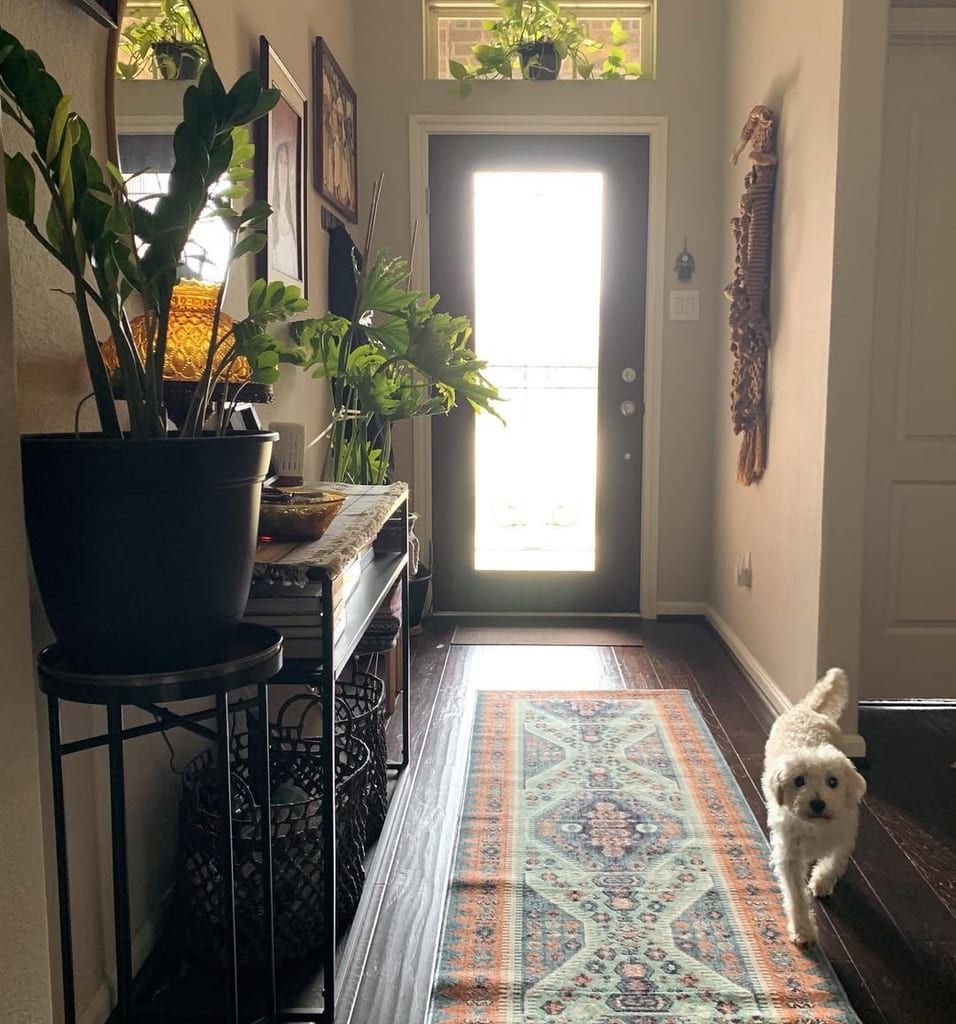
To make a narrow hall feel expansive, the runner rug is useful. Choosing a patterned or neutral rug that runs the full length of the passage immediately draws the eye forward, visually lengthening the space. Pair this with a slim console table for contained styling.
Keep the floor clear by utilizing vertical space for decor. The combination of framed artwork and potted tropical plants on the console table adds life and depth. Remember that utilizing closed storage under the console keeps the look tidy and intentional.
Turn a Narrow Table Into a Practical Entry Drop Zone
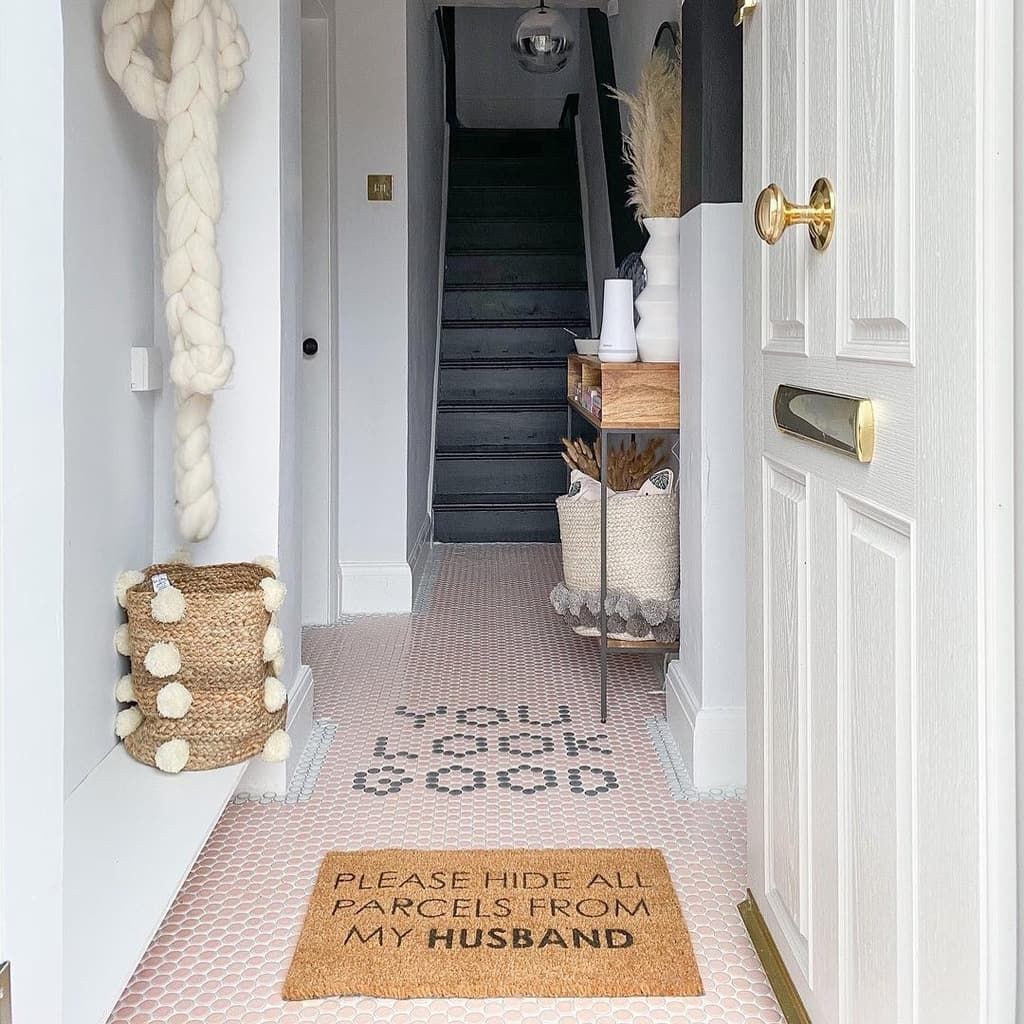
A slim console table is an ideal space-saving choice for a small entry, providing a functional drop zone without sacrificing precious floor space. Utilizing vertical elements, such as a narrow shelving unit, allows you to display decorative items and keep small necessities organized.
To maximize the visual flow, anchor the space with a patterned runner rug that guides the eye down the hall. Complement this arrangement with woven baskets placed on the floor to hide clutter, keeping the overall look airy and curated.
Hang a Mirror to Make a Narrow Entryway Feel Wider
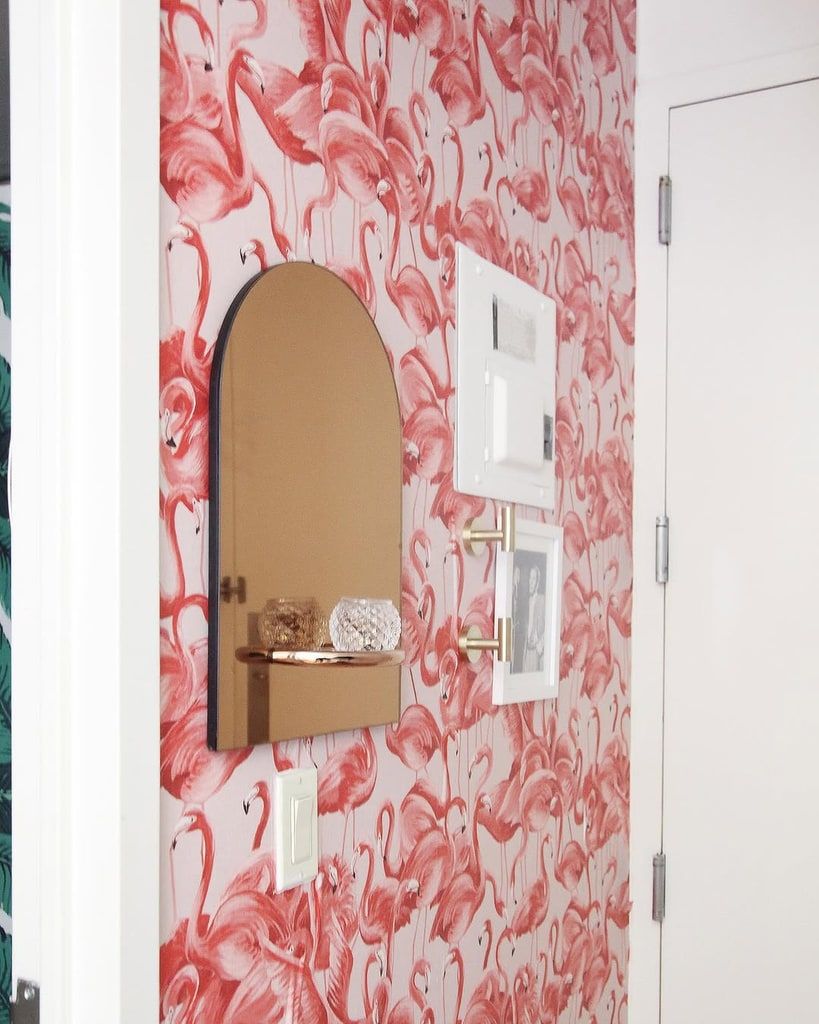
The most effective trick for making a small entry feel larger is using a large mirror. By placing a substantial, arched mirror on a small console, you instantly reflect light and the entire space, creating an illusion of depth. This technique works even with bold wallpaper patterns, adding a dramatic, intentional flair.
Keep the console surface minimal, perhaps styling it with a small gold tray and a few decorative objects. Adding hooks or a slim coat rack to utilize vertical space ensures that the area remains functional for daily use without feeling cluttered. This combination of art and reflection makes the front-door zone a statement piece.
Use a Mirror and Console to Brighten a Narrow Entry
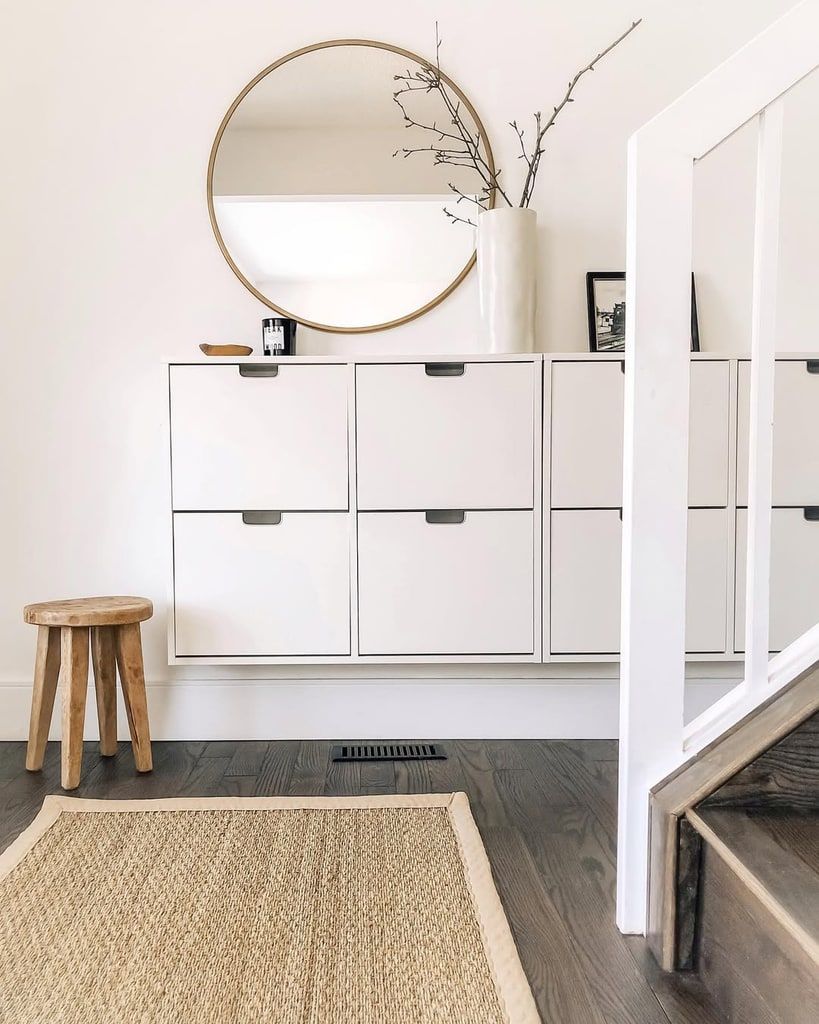
For narrow passages, open shoe storage can quickly overwhelm the space. Instead, opt for a slim console cabinet that provides closed storage, keeping daily shoes and clutter neatly out of sight. Pairing this with a large, round mirror above the cabinet maximizes the feeling of light and space.
The console surface should remain uncluttered, perhaps holding only a tall vase with decorative branches. By using closed cabinetry, you maintain a clean, Scandinavian aesthetic that is both practical and visually calming. This setup is ideal for keeping the traffic flow clear.
If wall storage is the main opportunity, entryway shelf decor ideas offer more shelf-and-hook combinations.
Try a Tiered Shoe Rack When Floor Space Is Tight
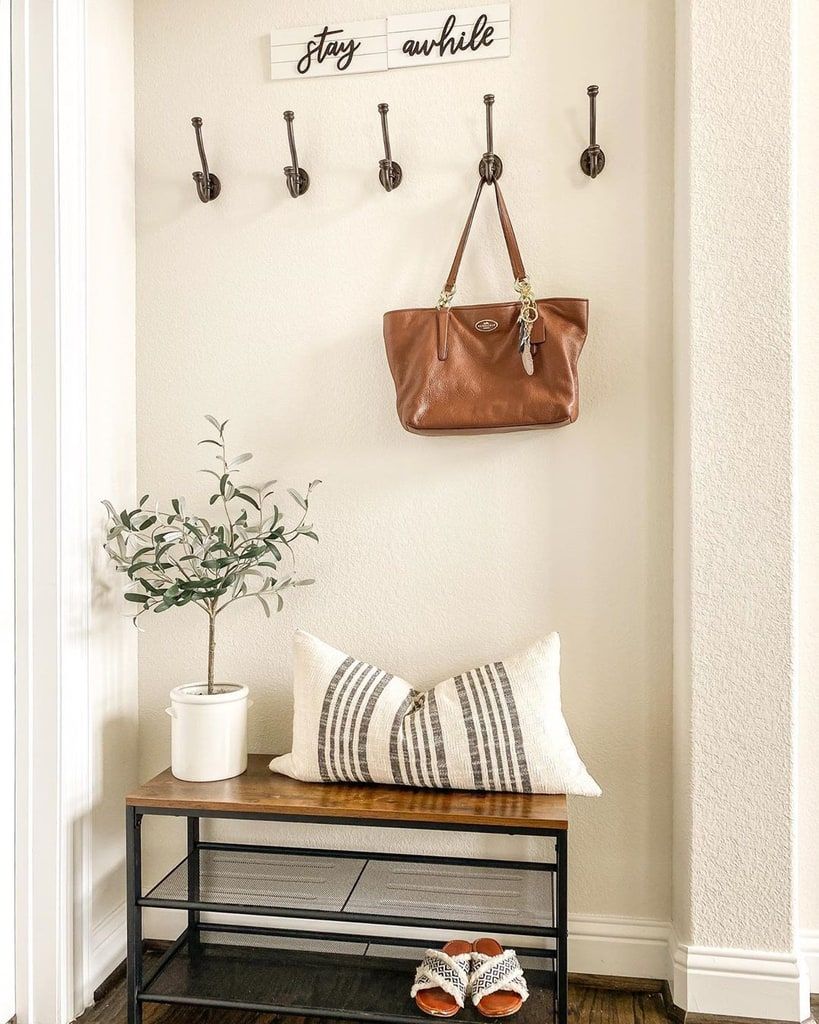
When designing a small entry, maximizing vertical space is key to keeping the area from feeling cluttered. A slim console table, paired with decorative wall hooks and an open shoe storage shelf, is an ideal way to create a functional drop zone without sacrificing precious floor space. This arrangement keeps keys, bags, and even seasonal items easily accessible.
The console itself provides a surface for a potted plant or a decorative tray, while the hooks keep items off the tabletop. For a pulled-together look, ensure the storage shelf matches the console’s style, creating a unified, intentional landing zone that feels orderly.
Consider using washable runners or decorative baskets on the open shelf to contain shoes and small items, maintaining a clean look while maximizing the utility of the space.
Style a Slim Console Under Art for a Finished Entry
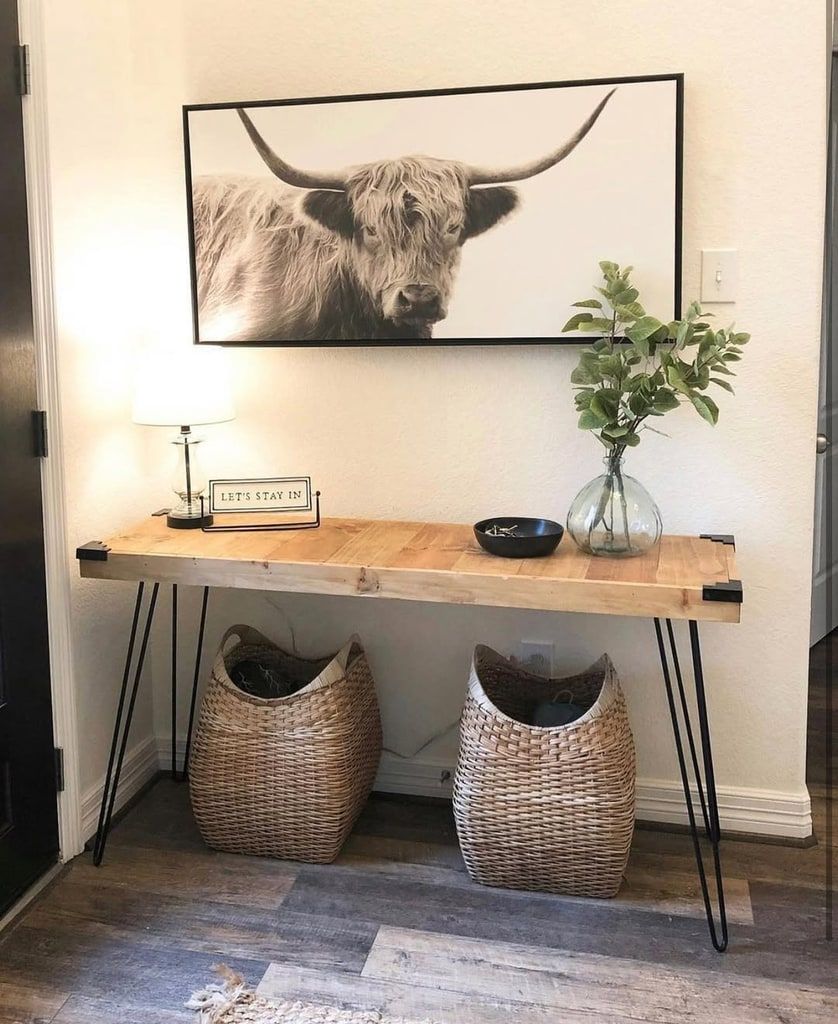
A narrow console table is the useful anchor piece for a small entry, especially when paired with artwork. Placing a slim console beneath a large piece of art, like a framed portrait, draws the eye upward and instantly improves the entire space. This technique makes the doorway wall feel intentional and finished.
To style the console, group items of varying heights—such as a table lamp, a vase with greenery, and decorative baskets—to create visual interest. The contrast between the rustic wood console and the modern black metal accents adds depth and warmth to the area.
If your console is deep, ensure the items you place on it are scaled appropriately so they don’t overwhelm the narrow passage. Keeping the surface relatively clear maintains a sense of spaciousness.
Use Closed Cabinets When Open Hooks Look Too Busy
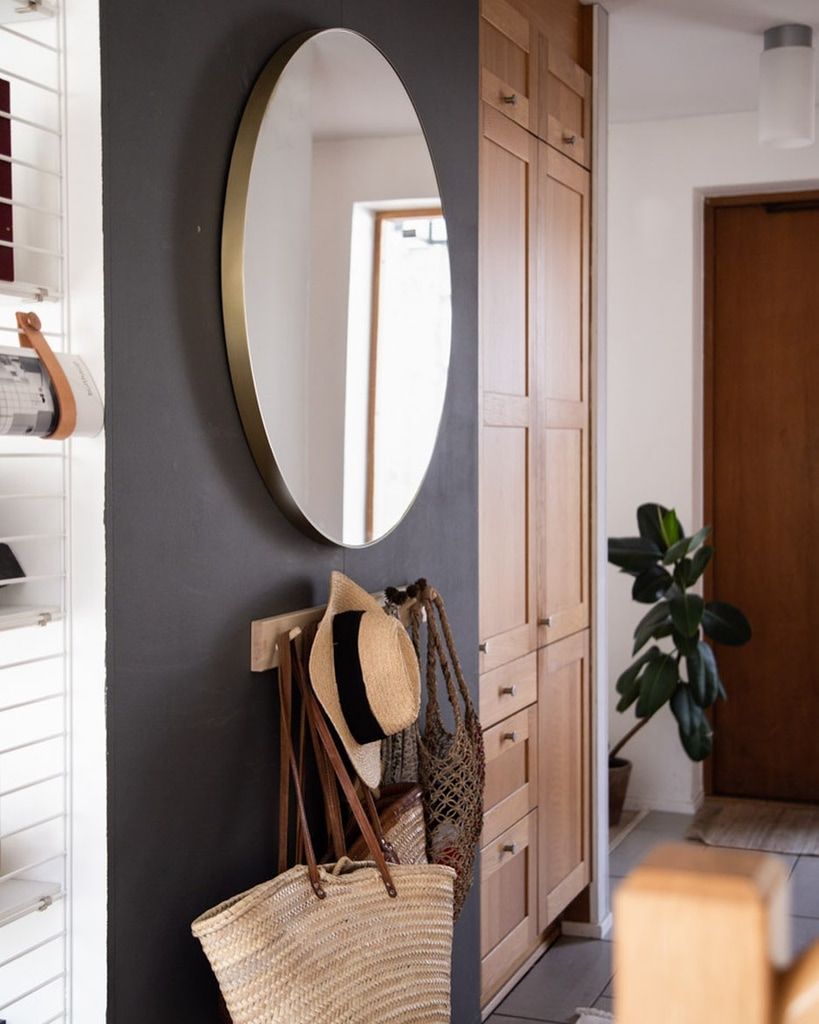
When dealing with a busy or narrow hallway entrance, closed storage is useful. Incorporating tall, built-in cabinetry or a slim cabinet unit provides ample space for coats, shoes, and daily clutter while maintaining a sleek, minimalist aesthetic. This approach keeps the visual noise at bay.
Pairing the built-in storage with a large, round mirror is a powerful trick to maximize the perceived size and light in the landing zone. The mirror reflects light and the surrounding space, making the entire area feel significantly larger than it is.
Choosing cabinetry that matches the wall color or has simple lines helps the unit blend into the architecture, making the entry feel cohesive and less like a collection of disparate pieces.
Keep Daily Shoes Organized With a Slim Tiered Rack
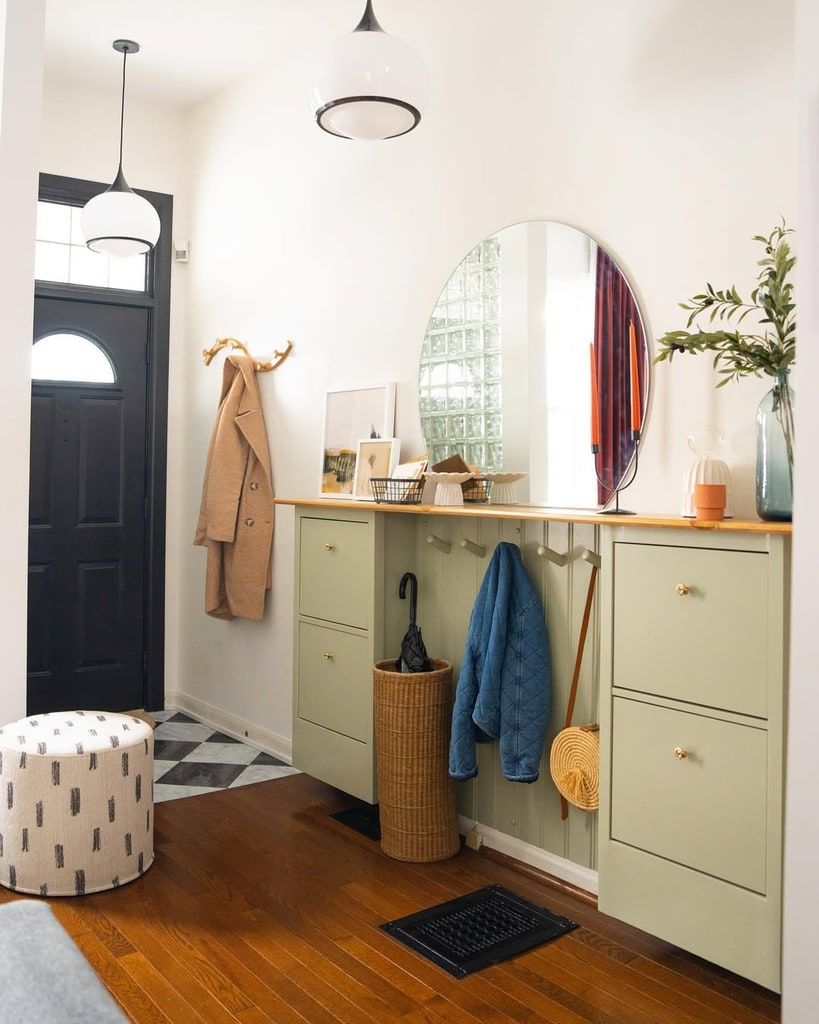
When designing a small entry, built-in furniture is a game-changer. This sage green console cabinet offers closed drawers for shoe storage and ample wall hooks for coats, keeping the entire space looking neat and cohesive. The addition of a round pouf provides a comfortable spot to sit while putting on shoes.
To maximize the narrow hallway entrance, focus on verticality. Utilizing wall hooks and a slim console surface for keys and flowers keeps the floor clear and the space feeling open. This setup proves that even small entryways can be practical and stylish.
For a pulled-together look, choose built-ins that match your existing wall color, making the furniture feel like it was always part of the architecture. This approach is especially helpful when dealing with limited space.
Try a Storage Bench to Control Shoes Near the Door
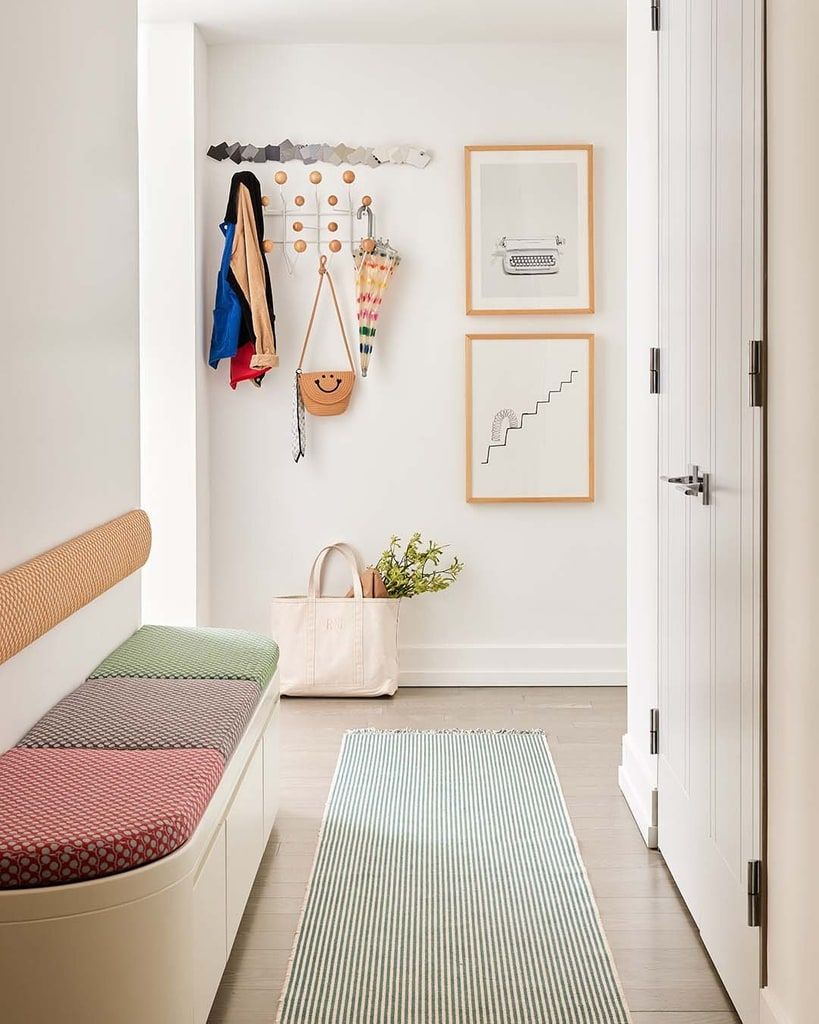
A storage bench is invaluable for a functional landing zone. This built-in piece provides a place to sit, while the peg rail and woven basket handle shoes, bags, and small daily clutter. Pairing it with a peg rail system and a large woven basket adds utility and texture to the entry wall.
To maintain clear traffic flow in a narrow passage, keep the console surface minimal. Use the wall hooks for daily essentials, and let the striped runner rug visually extend the space, drawing the eye past the immediate clutter. This keeps the overall look airy.
Decorate the Area Behind the Front Door
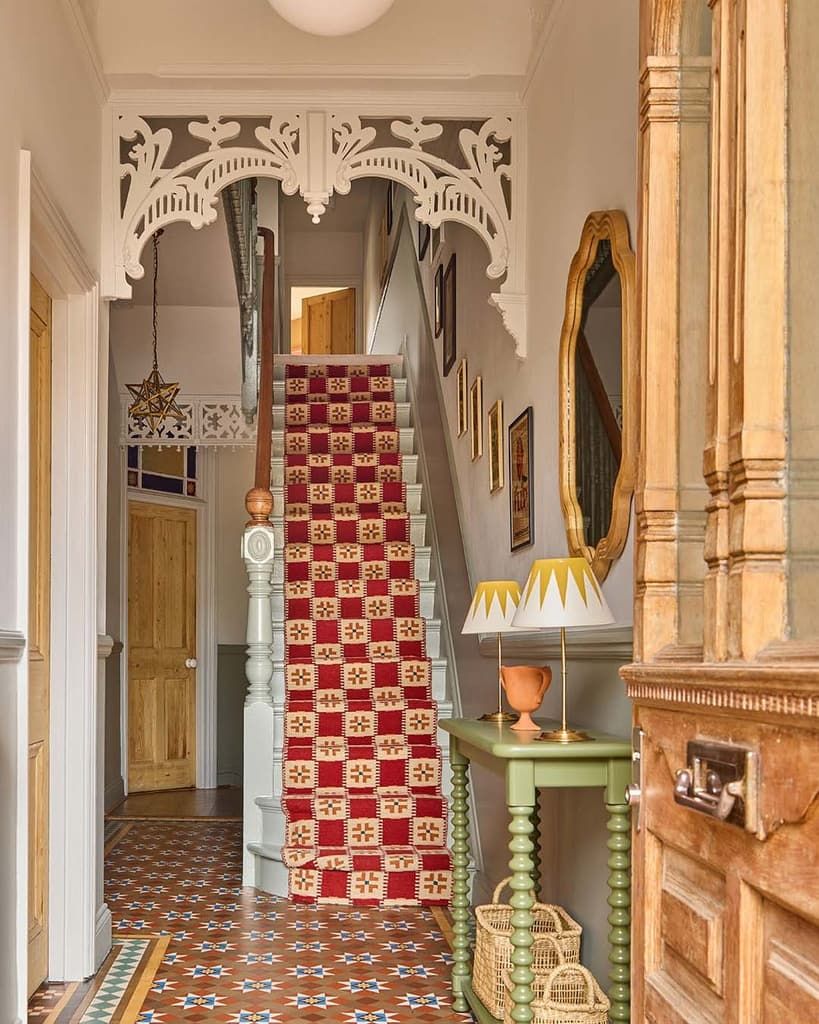
When decorating the area behind the front door, a combination of a console table and a large mirror is highly effective. The mirror instantly reflects light and space, making the entire passage feel significantly wider and brighter. Pairing this with a slim bench adds necessary seating without overwhelming the space.
To enhance the look, layer the console with decorative baskets for hidden storage and complement it with framed artwork. Using a patterned runner rug helps guide the eye and adds a touch of warmth, making the passage feel more intentional and stylish.
Remember that architectural details, like wainscoting or decorative archways, can be incorporated into the design to add character and depth to the entry wall.
Add a Slim Bench Where the Entry Needs a Landing Spot
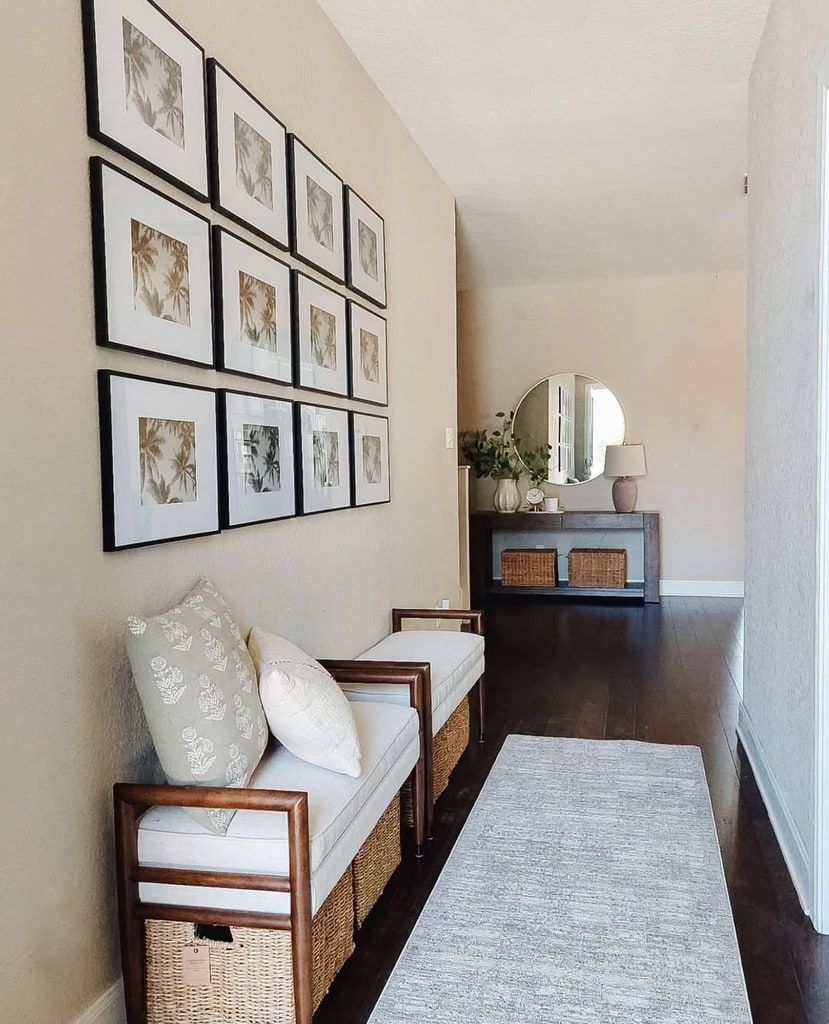
Incorporating a slim bench is key for both seating and storage in a narrow passage. This setup uses an upholstered bench with woven baskets underneath, providing a functional landing spot without overwhelming the walkway. Pairing this with a slim console table and a round mirror helps visually elongate the space.
To maximize the sense of space, anchor the area with a light runner rug that guides the eye down the hall. Above the bench, a gallery wall of framed artwork draws the eye upward, making the entire area feel taller and more expansive. Ensure the console table depth does not impede traffic flow.
Use Open Shoe Storage When the Doorway Is Tight
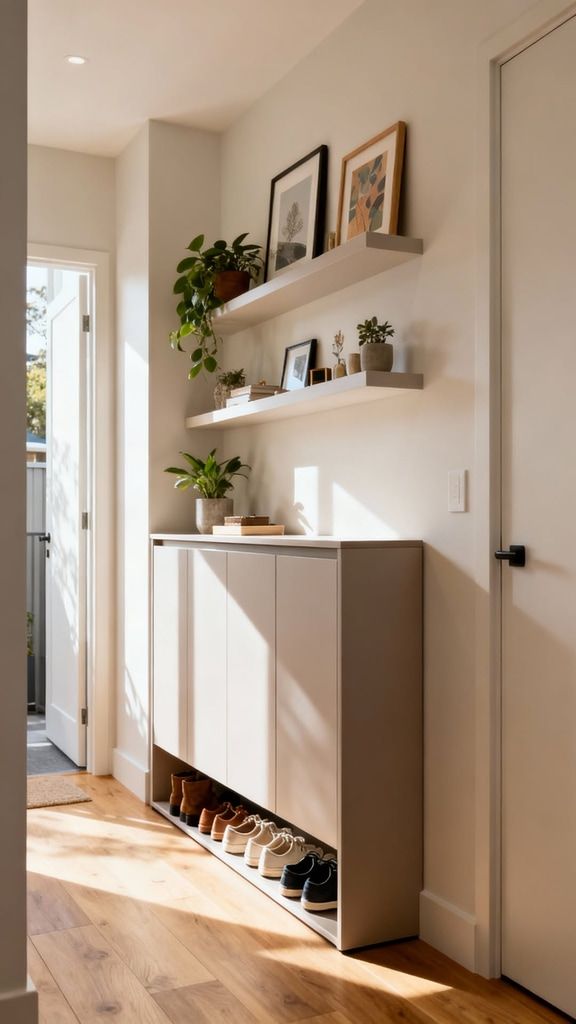
For a modern, minimalist look, utilizing built-in, closed shoe cabinets is a useful way to manage clutter in a narrow hall. This design maximizes vertical space while keeping the floor clear, which is crucial for maintaining a sense of openness. The floating wall shelves above the cabinet allow for decorative touches, such as potted greenery and framed art.
When selecting storage, look for units that maintain a low profile to avoid visually shortening the entryway. The combination of the closed shoe cabinet and the floating shelves creates a practical zone that still feels airy. This method is ideal for maintaining a clean aesthetic in a small entry.
Use a Shelf Above the Bench for a Complete Entry Setup
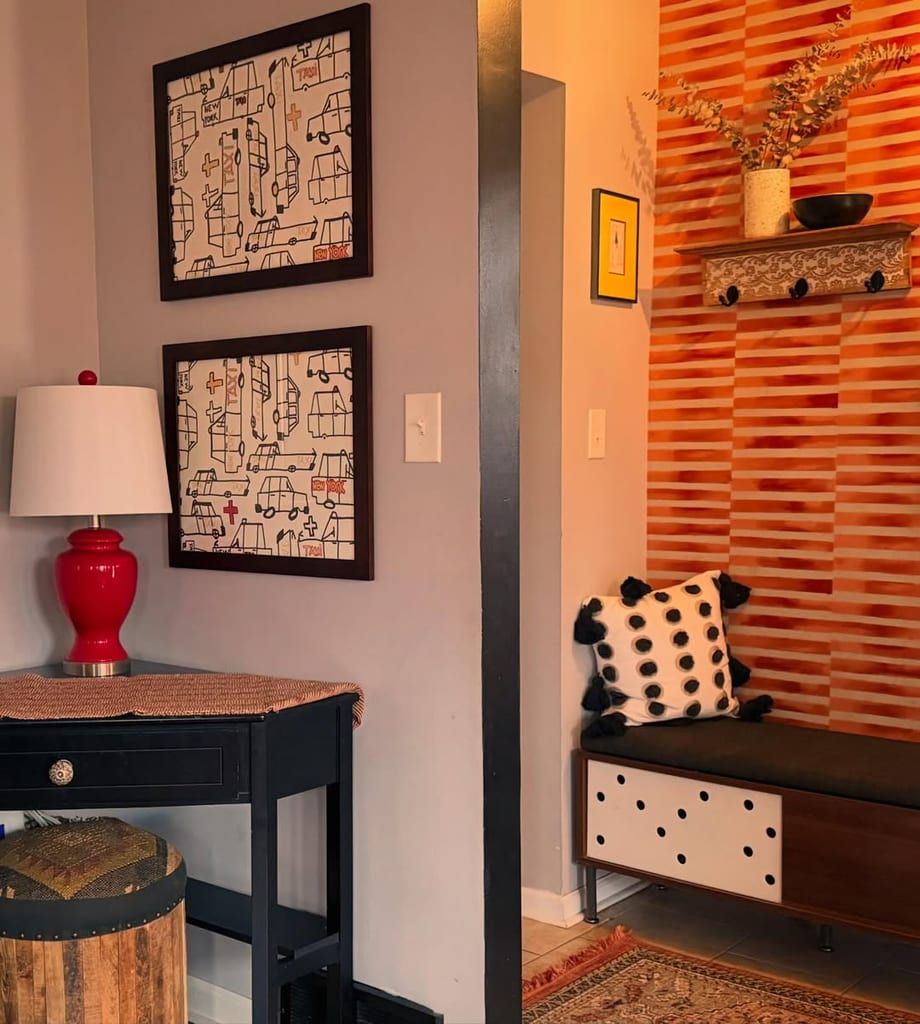
When space is limited, a console table paired with vertical wall storage is the most effective solution. This setup uses a dark console table topped with a lamp and a collection of graphic art prints, creating a defined landing zone. The wall space is utilized with a floating shelf and a long upholstered bench.
To keep the look cohesive, use vertical art and a floating shelf to draw the eye upward, enhancing the perceived height of the entryway. The contrasting stripes on the accent wall add a modern, graphic pop, while the bench provides necessary seating. Remember to measure the depth of your console to ensure it doesn’t block the main traffic flow.
Entryway Checklist
- Measure Twice: Before buying any piece, measure the exact width and depth of your entryway to ensure furniture won’t impede traffic flow.
- Prioritize Function: Choose pieces that serve multiple purposes (e.g., a console table with hidden storage, or a bench with internal compartments).
- Embrace Wall Space: Utilize every available wall surface for art, hooks, or shelving. This keeps the floor clear and adds visual interest.
- Select a Cohesive Palette: Stick to a limited color palette and material scheme (e.g., white, wood, and brass) to create a unified, expansive look.
Common Mistakes to Avoid
- Overstuffing: Trying to fit too many items (decor, furniture, baskets) into a small space makes it look cluttered and overwhelming. Less is truly more.
- Using Bulky Furniture: Selecting a massive, deep console or bench that eats up valuable walkway space. Stick to slim profiles.
- Ignoring Verticality: Treating the walls as merely background space. Failing to use vertical elements diminishes the perceived height of the room.
- Clashing Styles: Mixing too many different decor styles or color palettes, which can make the small space feel chaotic rather than curated.
More Entryway Ideas to Try
- small entryway decor ideas – For a complete guide to making any tiny entrance feel stylish and spacious.
- apartment entryway decor ideas – Renter-friendly and budget-conscious ideas useful for small apartment entries.
- entryway bench decor ideas – Creative ways to add seating and storage without sacrificing style.
- entryway shelf decor ideas – Floating and wall-mounted shelves for stylish, clutter-free storage.
- shoe rack entryway decor ideas – Stylish and discreet ways to manage shoes and keep the entryway tidy.
FAQ
How do you decorate a very narrow entryway?
Focus on verticality and slim profiles. Use tall, narrow mirrors, vertical wall art, and floating shelves instead of a wide console. Keep the main path clear to maintain a sense of flow and openness.
What furniture works best in a narrow entryway?
Slim console tables (under 12 inches deep), narrow hall benches, and wall-mounted storage units are ideal. Avoid deep furniture pieces that jut out into the walkway, as they will make the space feel even smaller.
Get the Fail-Safe Paint Color Playbook (Free PDF)
36 proven colors • 8 ready palettes • trim & sheen guide • printable testing cards.
How can I make a narrow entryway look wider?
Use large mirrors to reflect light and space, paint the walls a light, monochromatic color, and use light-colored flooring. These elements visually expand the room and make the space feel more open.
What should I put on a narrow entryway wall?
A mix of gallery wall art, slim floating shelves, and decorative hooks works well. Consider a vertically oriented piece of art or a row of matching hooks to draw the eye up and emphasize height.
How do you add shoe storage to a narrow entryway?
Opt for wall-mounted shoe cubbies or slim, vertical shoe racks that utilize vertical space. If using a floor unit, ensure it has a narrow footprint and is tucked neatly against the wall.
Conclusion
Creating a welcoming and functional entryway doesn’t require a large footprint. By implementing smart, space-saving design principles—like utilizing vertical space, choosing slim furniture, and strategically using mirrors—you can transform even the narrowest hall into a welcoming and stylish first impression. Remember that every small detail, from the art on the wall to the choice of mirror, contributes to the overall feeling of openness and polish.
Don’t let the size of your entryway dictate your style. Treat it as a gallery wall, a storage hub, and a statement piece all at once. By following these guidelines, your narrow entrance will feel intentional, organized, and perfectly suited to your home’s unique character.