
Pipe Fence Ideas You’ll Love: Strong, Stylish Designs for Homes, Ranches, and Acreage
Pipe fencing blends rugged strength with clean, modern lines—perfect for everything from ranch perimeters to chic suburban front yards. It delivers long-lasting security, low maintenance, and a timeless profile that frames your landscape without blocking the view.
In this guide, we’ll explore smart pipe fence ideas that balance form and function, from minimalist horizontal runs to mixed-material accents with wood, cable, or mesh. You’ll find inspiration for driveways, pasture boundaries, gardens, and pool zones—each tailored to your budget, terrain, and style.
Get the Fail-Safe Paint Color Playbook (Free PDF)
36 proven colors • 8 ready palettes • trim & sheen guide • printable testing cards.
We’ll also touch on practical details that make a big difference: post spacing, gate design, coatings and finishes, and how to keep maintenance simple. By the end, you’ll have a clear vision for a fence that looks great, works hard, and lasts for years.
Modern Pipe Fence Ideas for Ranch Properties and Acreage Aesthetics
For ranch properties, pipe fencing blends rugged durability with clean, modern lines that elevate curb appeal. Choose schedule 40 or heavy drill‑stem pipe to resist livestock pressure and seasonal wind loads. Finishes matter: hot‑dip galvanizing, powder‑coating, or rust‑stabilized weathering steel each signal a distinct style with different maintenance cycles. Profile choices, like three‑rail horizontals versus classic post‑and‑top‑rail silhouettes, change how open pastures feel from the road. Consider terrain, gate count, and traffic patterns early, because they shape budgets and welding hours more than rail count alone. Integrate complementary gates, corners, and transitions so the system reads cohesive from entry drive to back pasture.
Design Styles and Finishes
- Powder‑Coated Black Steel: Matte or satin black frames modern farmhouses, hides welds, and shrugs off UV, with touch‑ups limited to gate scuffs and post caps every few seasons.
- Galvanized and Clear‑Coated: Bright silver rails feel ranch‑authentic, resist road salt and mud, and age evenly; clear coats preserve sheen while keeping maintenance minimal for coastal or high‑humidity sites.
- Corten Weathering Steel: Pre‑rusted patina reads rustic‑modern, reducing repainting; specify drip details and gravel skirts so staining never reaches concrete aprons, stucco walls, or pale limestone entries.
- Mixed Material: Pipe + Wood: Pair steel posts with cedar fascia or oak rails to warm the silhouette, dampen impacts, and coordinate with barn siding or post‑and‑beam porches.
Functional Upgrades and Safety
- No‑Climb Wire Infill: Stretch 2-by-4 woven wire between rails to stop calves and pets without blocking views; weld tabs or use saddle clamps for fast, field‑serviceable replacements.
- Wildlife‑Friendly Crossings: Raise the bottom rail to 18 inches in migration zones, allowing pronghorn and deer passage while keeping cattle contained; add reflective markers where night traffic is common.
- Integrated Lighting: Thread low‑voltage conduit through posts and mount down‑lights under top rails to illuminate drives, minimize glare, and deter trespass without floodlighting pastures or spoiling starry skies.
- Heavy‑Duty Gates and Latches: Use schedule 80 hinge stubs, adjustable gudgeons, and slam latches; brace openings with H‑frames so trailers, tractors, and livestock can’t rack or jam your entry.
Layout accuracy determines weld time, so snap stringlines and mark post centers before digging to maintain straight, repeatable spans across variable terrain. Set corner and gate posts deeper with larger concrete bells to resist torsion from rails and swinging loads. Space line posts 8 to 12 feet depending on pipe diameter, animal pressure, and local snow or wind exposure. On slopes, step rails consistently or angle‑cut joints for parallel lines that read intentional rather than improvised. Always call utility locate services, verify sight triangles at driveways, and review county setbacks to avoid costly rework. With protective coatings and thoughtful detailing, a pipe fence can deliver decades of service while looking tailored, not industrial.
Clean 3-Rail Pipe Perimeter for Acreage
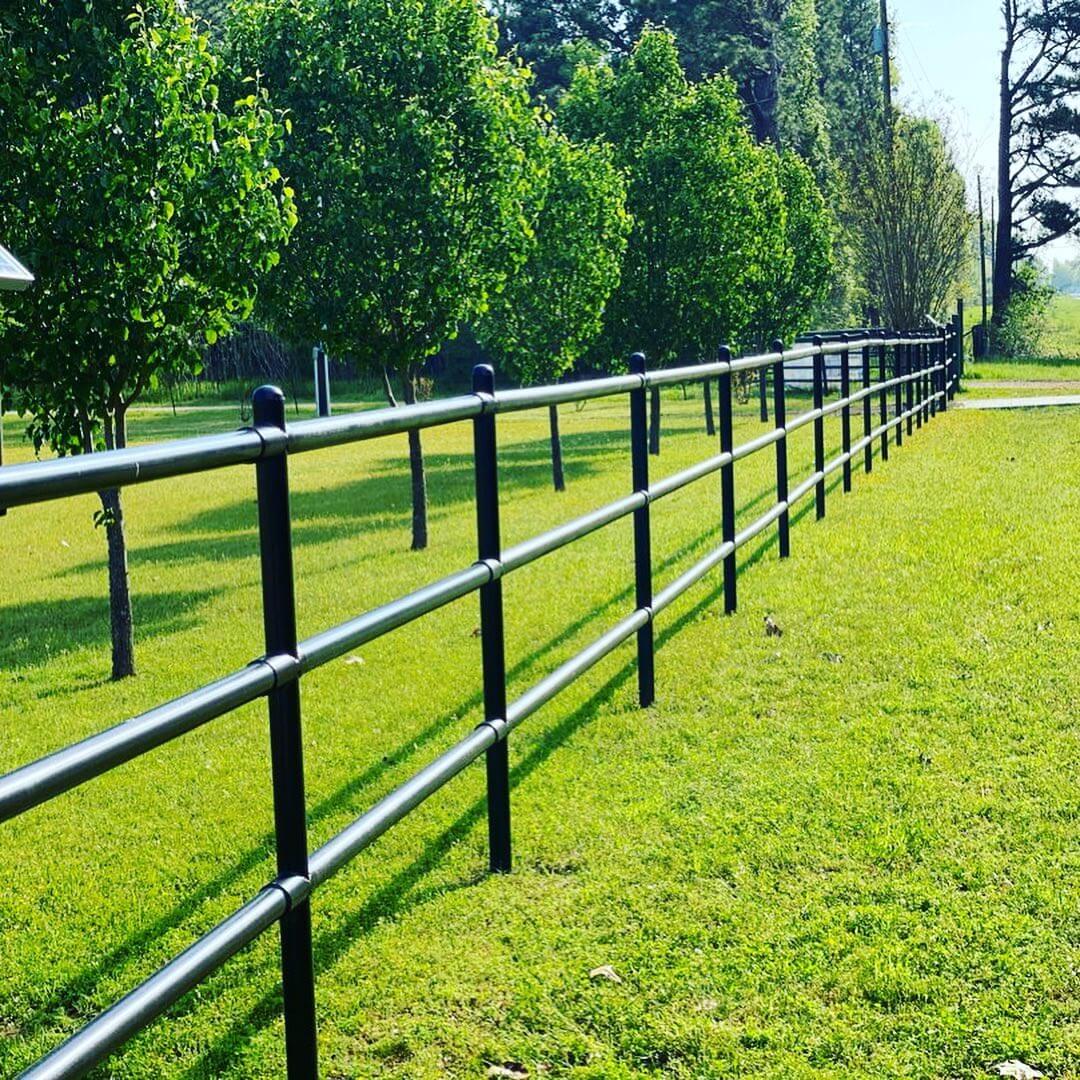
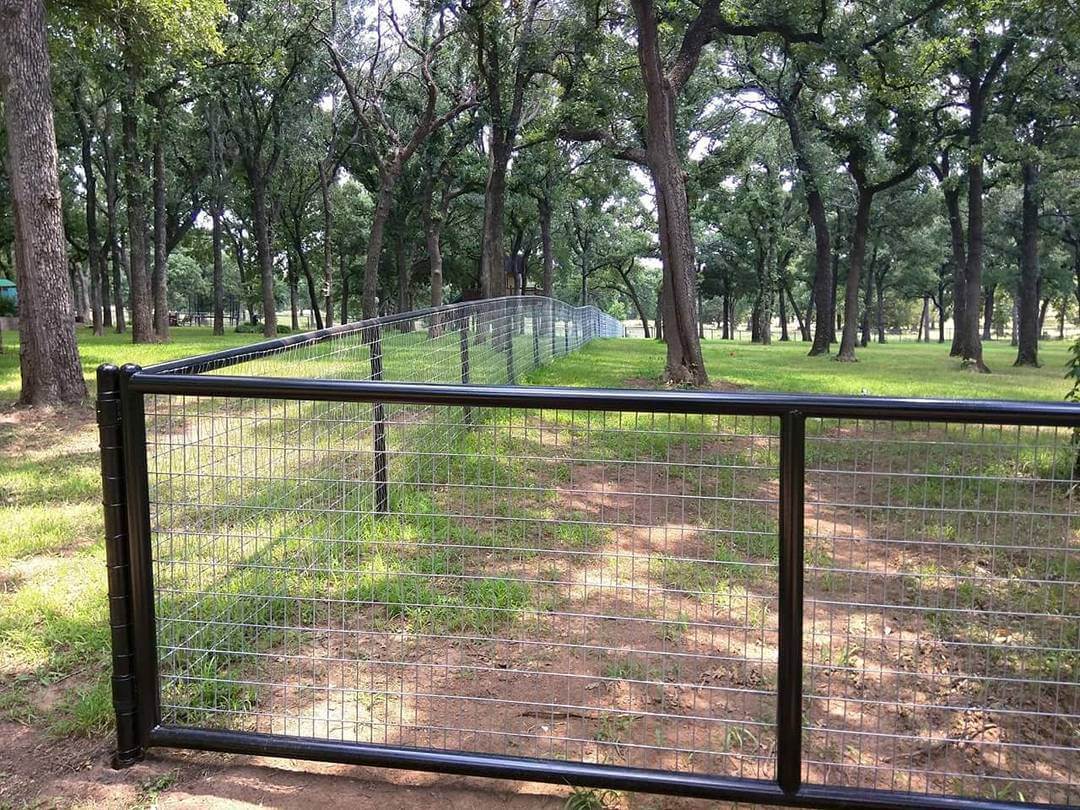
A classic three-rail steel pipe fence delivers the blend of durability, visibility, and crisp lines most acreage owners want. Keep the proportions light but strong: 2 3/8″ or 2 7/8″ schedule 40 pipe for posts set 8–12 feet on center, with 1 1/4″–1 5/8″ rails riding at roughly 14″, 30″, and 48″ for a tidy profile. If you’re using reclaimed oilfield pipe, bevel and cap every post to shed water, drill discreet weep holes to prevent rust from the inside, and prime with a zinc-rich base before topcoating in black or a ranch-brown enamel.
Set posts below frost depth in concrete belled footings and run a continuous, level top rail that visually ties long stretches together. On curves, tighten spacing to keep arcs smooth; on long straightaways, break the run at concealed expansion points behind shrubs or at gates. The result is a low-maintenance, working fence that won’t block views of pasture or prairie—and one that’s easy to adapt later with mesh or hot wire if you add animals. For most soils, a 10–12″ augered hole is plenty; in sandy loam or fill, widen the bell and add a gravel sump for drainage. Strong, simple, timeless.
Statement Entry: Pipe Driveway Gate with Strong H-Braces
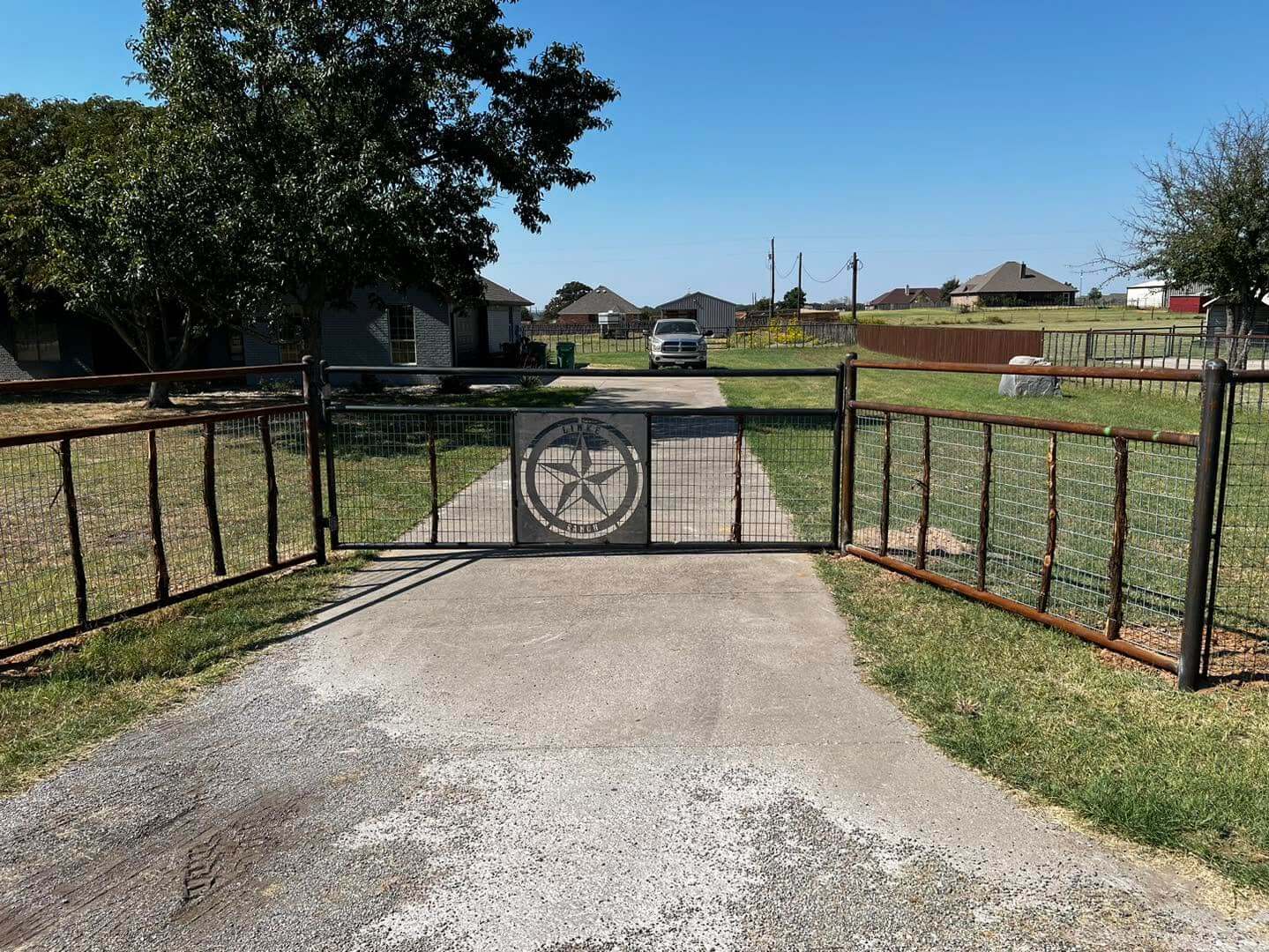
Your fence’s first impression is the entry, so build a gate that swings true for decades. Start with oversized hinge posts—2 7/8″ or 4″ schedule 40—set deep and braced with a welded H-brace and diagonal kicker. A 12–16′ single swing suits most driveways; go bi-parting for wider ranch access or trailers. Frame the leaf with 2 3/8″ pipe, add a diagonal compression brace to prevent sag, and hang it on adjustable bolt-on hinges so you can fine-tune after seasonal movement.
Blend utility with curb appeal: flank the pipe with stone or timber columns, add a ranch brand panel, and pre-run conduit for a solar opener, keypad, and discreet lighting. Keep the bottom rail a few inches above grade to clear gravel crowns, and use a drop rod sleeve so wind can’t walk the gate. If you need animal control, pair the entry with a cattle guard or a short wing fence that funnels livestock away from the opening. Powder coat in matte black for a modern vibe or oil-rubbed bronze for a warmer tone. With solid geometry and bracing, your gate will latch like a vault and look like a welcome.
Horse-Safe Pipe Fence with No-Climb Mesh
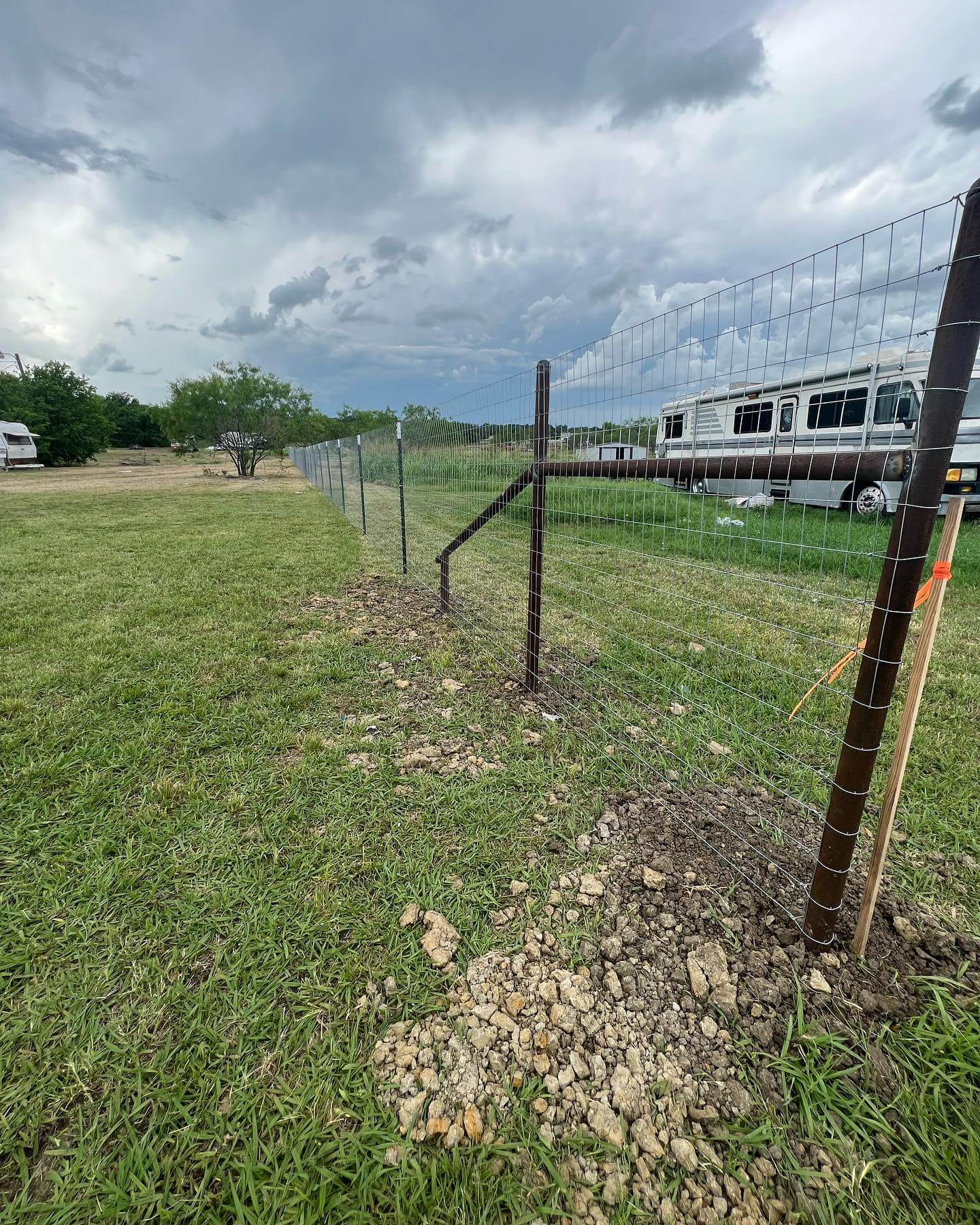
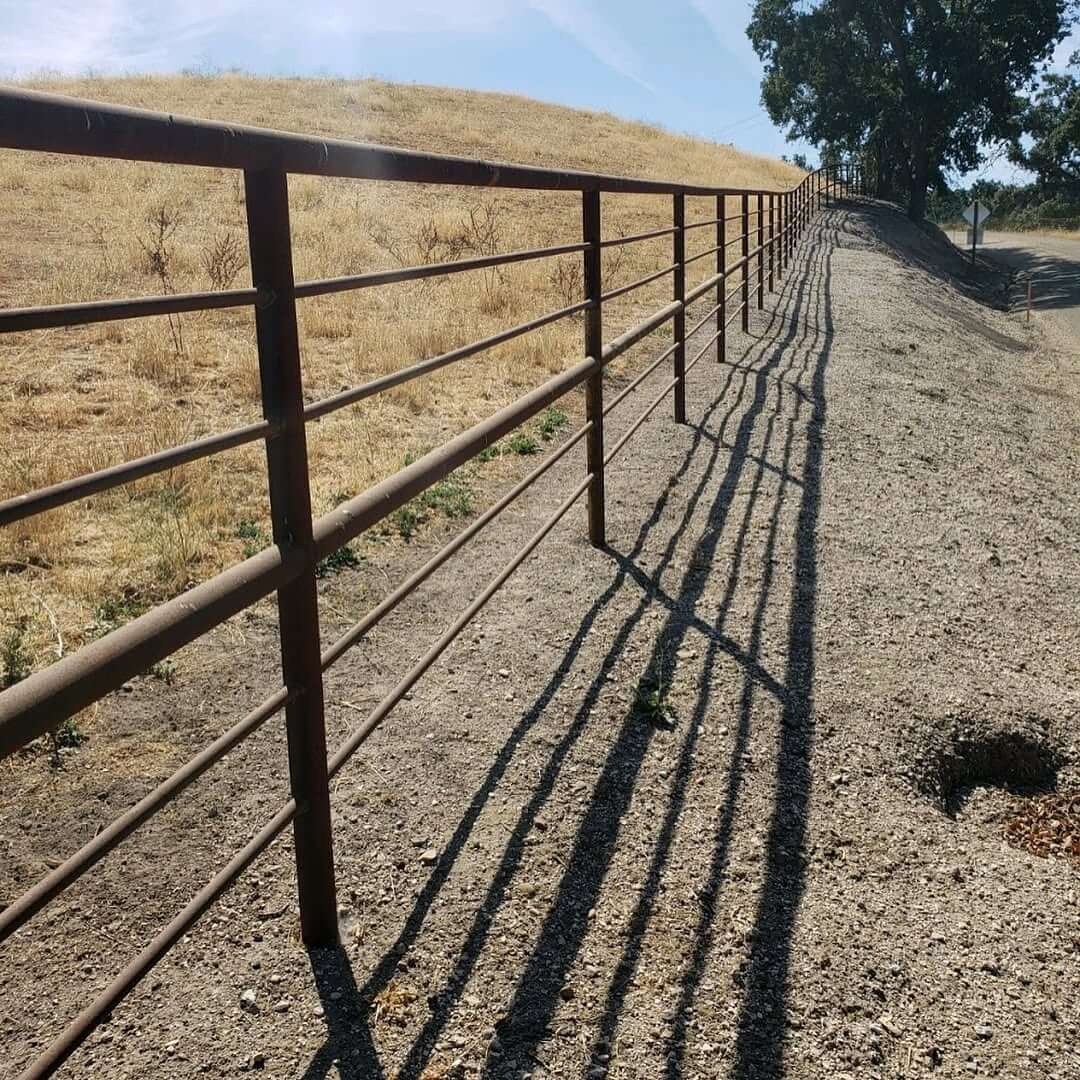
Pipe rails are tough, but horses and dogs need tighter containment. The solution is a pipe framework with 2″x4″ no-climb mesh stretched between posts for a safe, polished enclosure. Run a continuous top pipe rail for strength and visibility, then attach galvanized mesh with clips or ties every 8–12″ to prevent billowing. Keep the top of the mesh just under the top rail, cap posts, and avoid exposed wire tails. For most horses, 54″ finished height is ideal; for dogs, bury a 6–8″ apron or add a tension wire and gravel toe to deter diggers.
Set posts a bit closer—8′ on center improves mesh tension and keeps lines crisp. Around corners and gates, weld stout pipe frames so mesh termination points are rock solid. If you prefer a softer look, paint the pipe a dark neutral; the mesh visually disappears from a distance. For pool-adjacent zones, check local barrier codes—often you’ll add a midrail or closer spacing to meet the 4″ rule and self-closing gate requirements. This hybrid solution reads upscale and barn-safe, controls small animals, and still feels airy across paddocks, gardens, and play yards.
Cattle Panel Pipe Fence for Fast, Budget Cross-Fencing
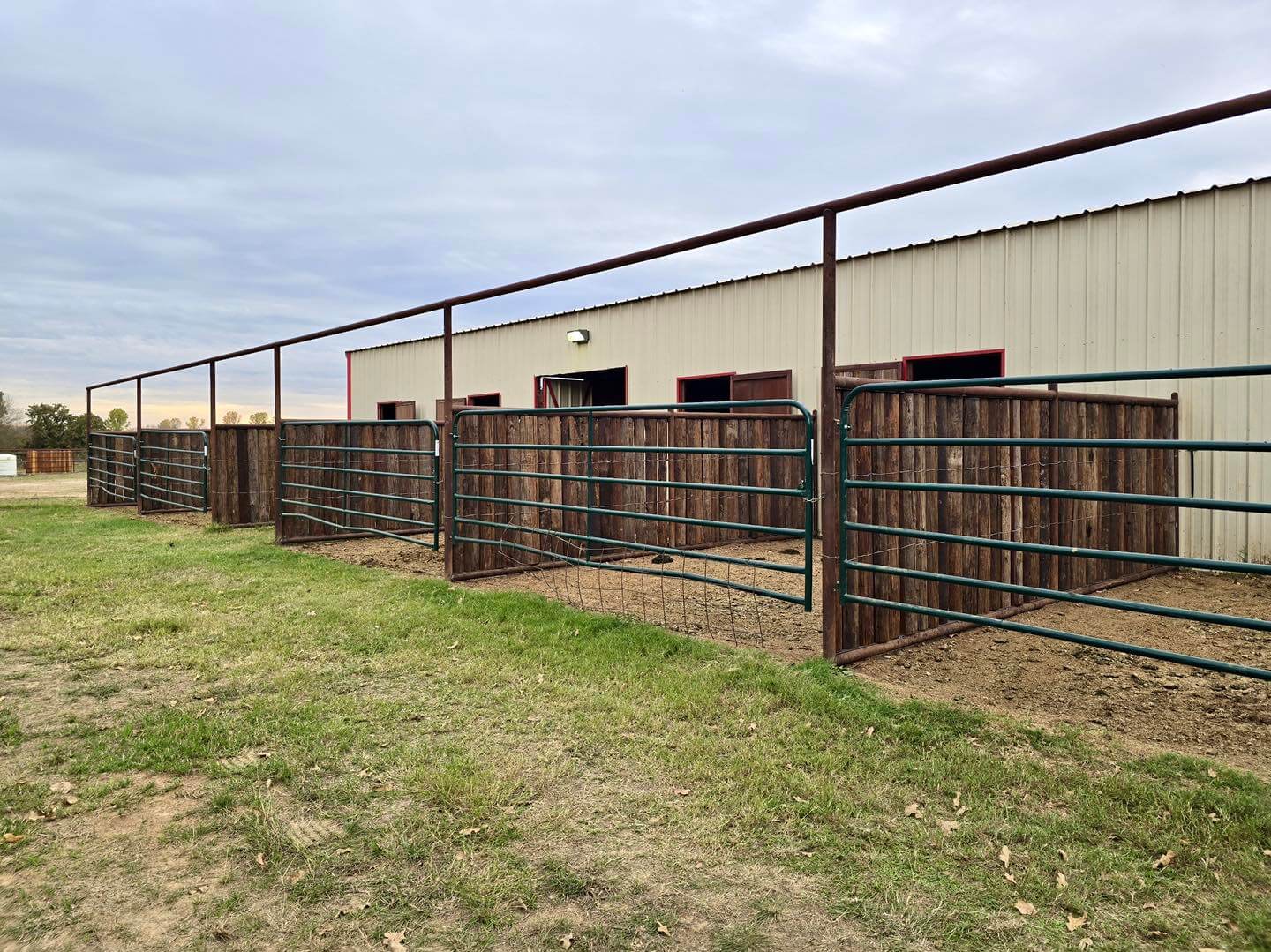
When you need durable cross-fencing in a hurry, pair welded pipe frames with 16′ cattle or utility panels. The pipe gives you straight, sag-free runs; the panels deliver quick coverage with predictable openings. Weld or clamp panels to horizontal rails set at the top and mid-span, then add a kick rail low to the ground to resist hooves and mower bumps. For rotational grazing, align panels to standard 16′ bays so you can swap a panel for a gate or a removable section without cutting.
This system shines on undulating terrain—trim panels to follow grade and hide cuts behind a bottom rail for clean lines. Use heavier gauge panels at corners and around working areas, and lighter gauge in low-pressure stretches to save cost. A lick of flat black or dark green brings panels and pipe together visually, making the grid fade into the landscape. Where calves or dogs are in play, choose smaller opening sizes and add a buried apron along hot spots. It’s a pragmatic, good-looking fence that installs fast, adapts easily, and keeps your budget corralled as neatly as your herd.
Sucker Rod Rails for Arenas and Corrals
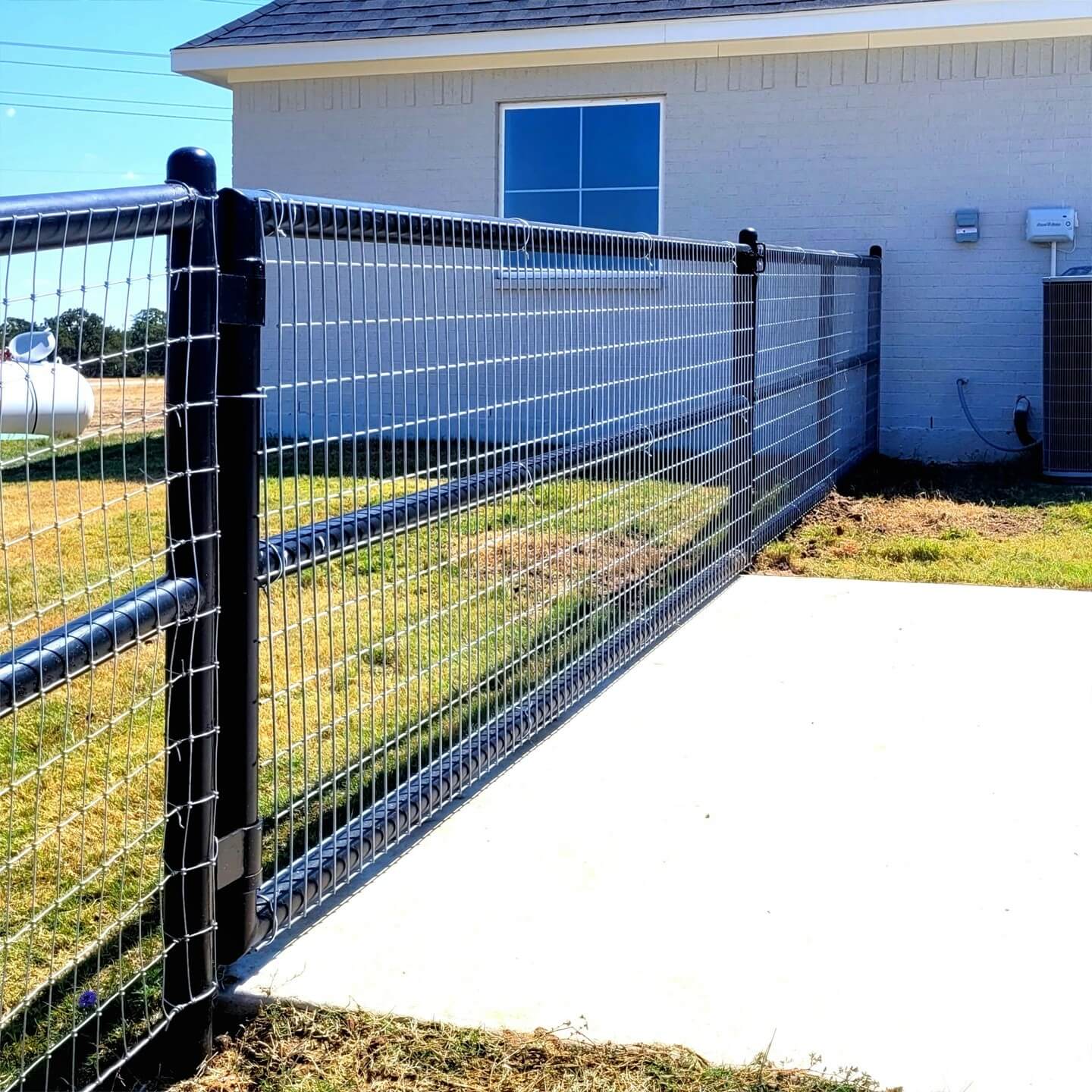
For hard-use arenas and corrals, sucker rod rails welded to pipe posts deliver exceptional strength with a classic ranch aesthetic. Use 2 7/8″ posts at 8′ centers and 1″ solid sucker rod for rails; five to seven courses land you between 54″ and 66″ depending on discipline. Saddle-cut each rod for tight welds, and stagger joints between bays to avoid weak spots. Keep lower spacing closer to discourage foals and calves from testing gaps, and finish every weld smooth to prevent hide and tack snags.
In roping or sorting arenas, frame a stout return alley and add a continuous top rail for riders to follow. Round pens work beautifully at 50–60′ diameter with a 66″ height and sand footing; the smooth rods read as a visual wall without feeling heavy. If you’re integrating chutes, build pipe-framed gate leaves that swing flush inside the line so nothing protrudes. A dark enamel topcoat hides dust and visually simplifies the structure. The payoff: a bombproof working fence that shrugs off kicks, takes a trailer rub without flinching, and keeps its shape through seasons of weather and use.
Get the Fail-Safe Paint Color Playbook (Free PDF)
36 proven colors • 8 ready palettes • trim & sheen guide • printable testing cards.
Modern Black Pipe Fence for Front Yards and Drives
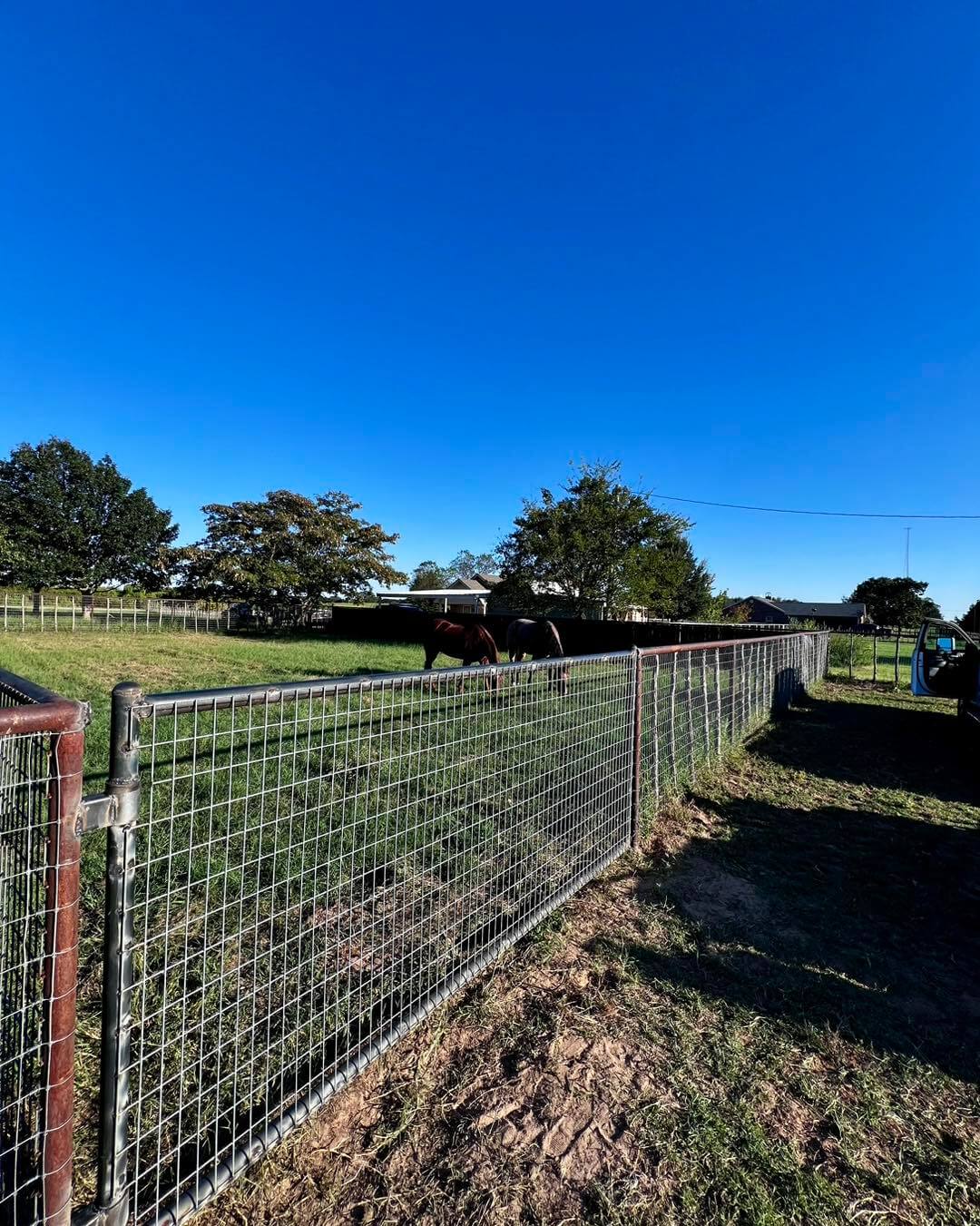
Want a clean, contemporary street presence? A slim, powder-coated black pipe fence frames plantings and hardscape without stealing the show. Scale is everything: 2″ posts with 1 1/4″ rails or even 1″ round for a lighter touch, set at 42–48″ overall height to stay neighbor-friendly and sightline-safe. Integrate a pedestrian gate with a minimalist latch, and mount house numbers or a small mailbox panel to the top rail for a custom, built-in look.
Powder coat over a blasted surface yields the most durable finish; in marine or de-ice zones, spec a zinc-rich prime under the color. Keep corners welded and continuous for crisp lines, and cap every post to prevent water ingress. For driveways, maintain sight triangles at the sidewalk and flare the fence back from the apron so turning is easy. Add low-voltage LED markers along the inside of the top rail to softly wash plant beds and improve nighttime wayfinding. The result is a low-maintenance, modern steel pipe fence that reads upscale, boosts curb appeal, and transitions seamlessly to privacy hedges or taller backyard barriers where needed.
Pipe Fences on Slopes: Stepped, Racked, or Follow-the-Grade
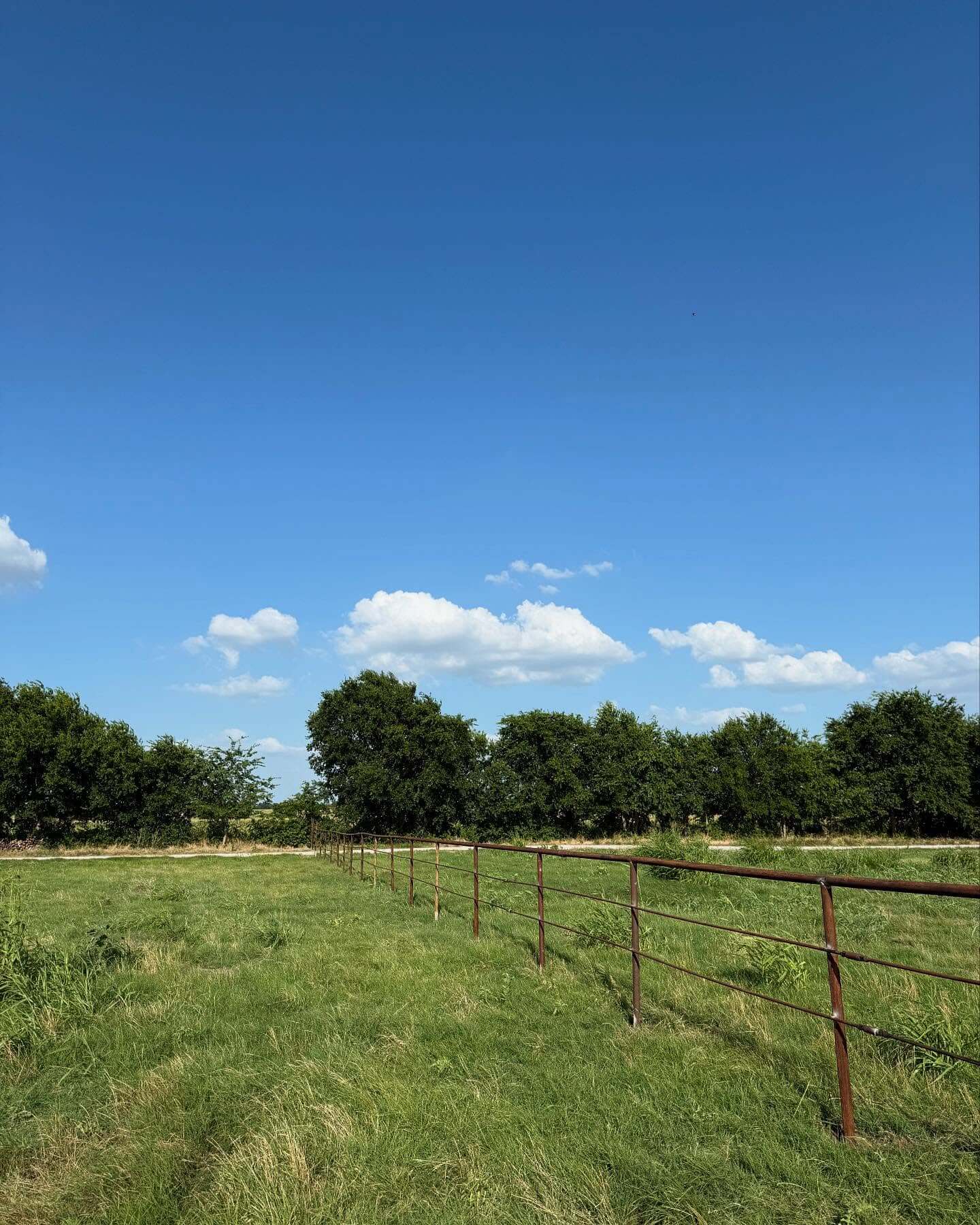
Sloped sites don’t have to break your design. You’ve got three clean ways to run a pipe fence on grade: step it, rack it, or fully follow the contour. Stepping keeps rails perfectly level and introduces small vertical jumps at posts—great for formal entries and front yards. Racking tilts rails to roughly match the slope between posts, smoothing the line for mild grades. Following the grade with saddle-cut rail joints produces the most fluid, custom look on rolling terrain.
Whichever you choose, layout is the secret. Snap stringlines, mark consistent reveal distances between rails, and tighten post spacing on steeper sections to hold geometry. Use fishmouth cuts for tight rail-to-post welds and maintain weep holes on the downhill side of each post for drainage. Break long runs at natural grade changes so you can reset your rail heights cleanly without a visual stutter. On erosion-prone slopes, bell footings and add gravel sumps. Finish with a dark coat to unify shadows and slight plane shifts. The right approach turns tricky topography into a feature, not a flaw, and keeps your steel pipe fence looking intentional end to end.
Pipe-and-Cable Hybrid for Big Views
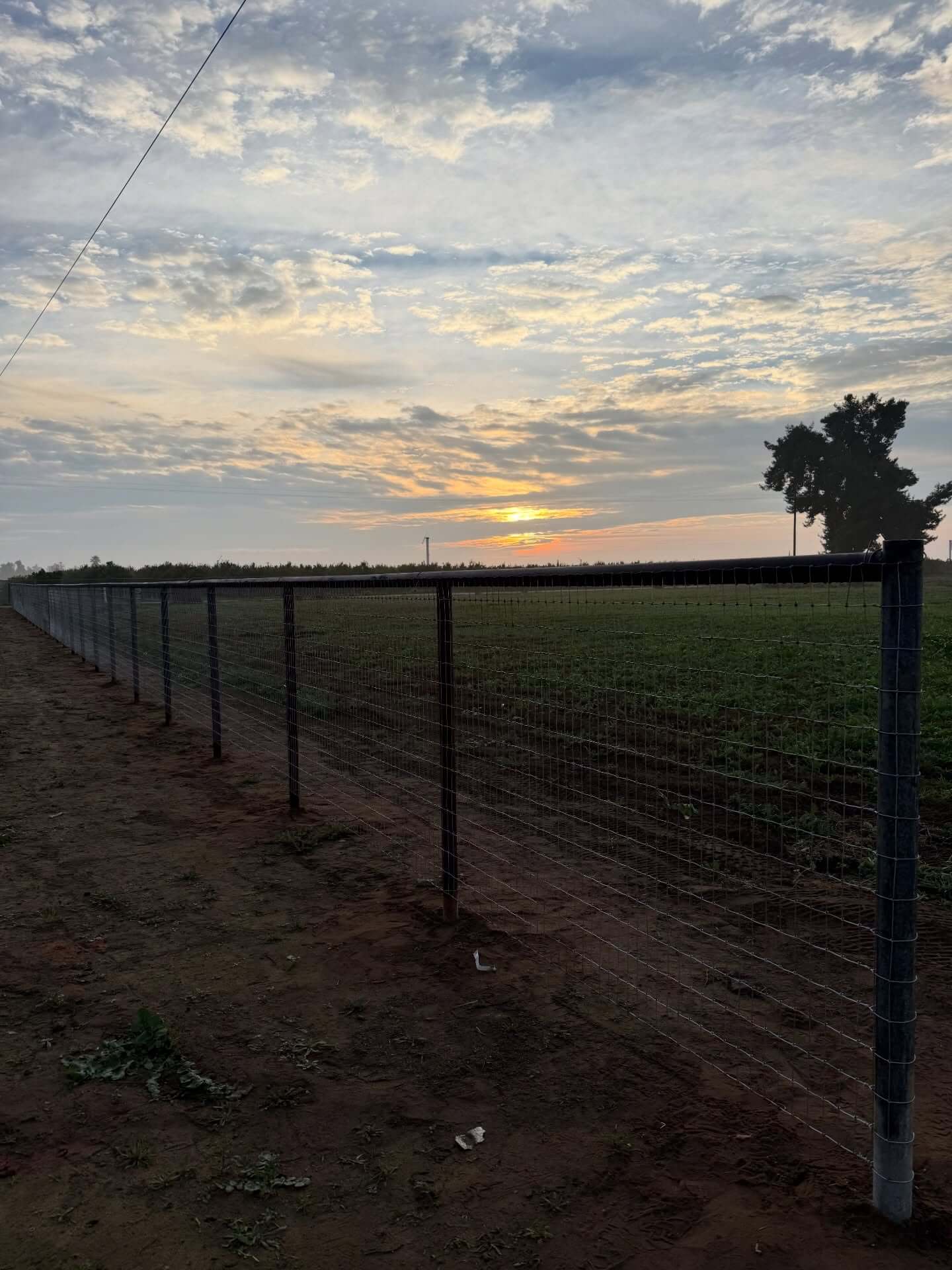
If your goal is to preserve panorama while defining space, a pipe-and-cable hybrid nails the brief. Use pipe posts and a stout top rail for structure, then infill with horizontal stainless-steel cable to keep sightlines wide open. Space posts closer—6–8’—to control cable deflection, and install intermediate cable braces on longer bays. Marine-grade 316 cable and fittings resist corrosion; isolate stainless from bare carbon steel with nylon grommets or a quality powder coat to prevent galvanic reaction.
Tension cables progressively from bottom to top with inline turnbuckles, and keep spacing tight where codes apply (often under 4″ for guards; check your jurisdiction). On pure property-line fencing, wider spacing is fine, but maintain a rhythm that reads consistent with nearby pipe runs. This hybrid shines along lakefronts, ridges, or modern homes that crave lightness. It pairs beautifully with cedar gates or stone piers at entries and can shift to solid pipe plus mesh where containment matters. The look is tailored and architectural, but still rugged enough for acreage living—exactly the sweet spot pipe fence ideas often target.
Wildlife-Friendly Pipe Fence That Still Works
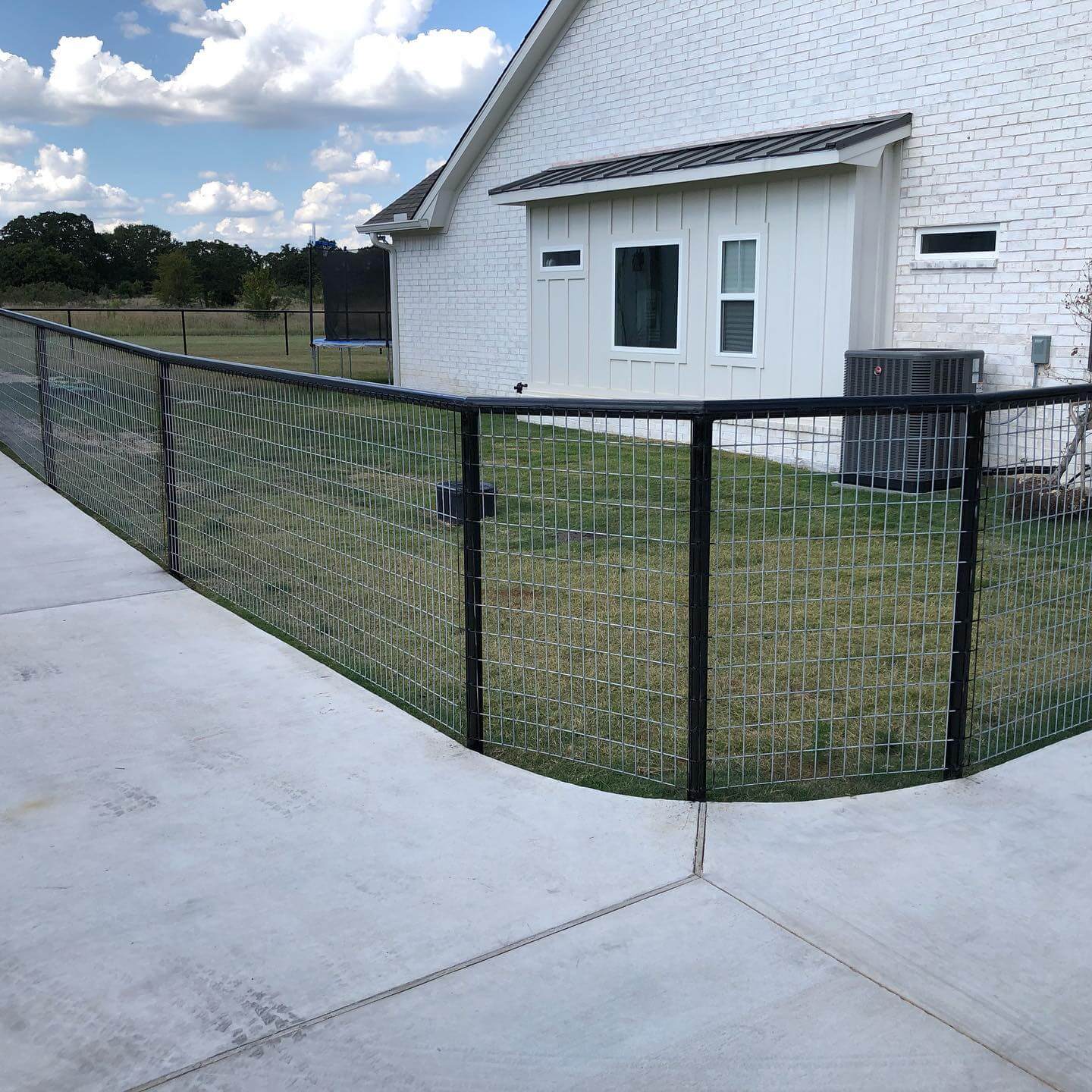
In migration corridors or open-country acreage, a wildlife-friendly pipe fence reduces conflict without giving up function. Raise the bottom rail to 16–18″ so pronghorn and fawns can pass; keep the top under 42″ in low-pressure stretches to ease deer crossings. Where you need seasonal control, design “lay-down” sections—short bays that drop to the ground with pins—so you can open paths during migration and stand them back up for grazing.
Swap the bottom pipe for a smooth hot wire to discourage cattle without creating a hard barrier for wildlife, and flag new stretches so animals learn the line. Use high-visibility caps or small wing panels at pinch points near arroyos and draws. At water gaps, build sacrificial swing sections that release under flood load and reattach easily. Finish in a low-contrast dark tone so the fence recedes, and keep post spacing tight near roads to prevent animals from pushing through. This approach respects the land and the herds—yours and the wild ones—while delivering a resilient, good-looking steel pipe fence across big country.
Custom Branding: Logos and Art Panels in Pipe Gates
Personalize your fence with a custom brand panel or monogram set into a pipe gate—the ultimate functional art. Start with a rigid pipe frame and inset a plasma-cut 3/16″–1/4″ steel panel braced with hidden stringers to prevent oil-canning. Keep the art centered on the gate’s neutral axis so weight doesn’t fight the hinges, and use adjustable, greasable hinges plus a ground sleeve for a cane bolt on wide leaves.
A textured powder coat over zinc-rich primer keeps details crisp and low-glare; backlight the panel with low-voltage LEDs or mount it between stone piers for extra presence. For long driveways, add reflective address numbers so deliveries find you after dark. Tie the motif into smaller fence accents—post caps, latch plates, or a ranch sign over the entry—so the look carries down the line. With good engineering and finish, your branded pipe gate won’t just welcome guests; it’ll anchor the design language of the entire property and stand up to weather, stock, and time.
Bulletproof Pipe Corners and Bracing for Long, Straight Runs
If you want rails that stay laser-straight and gates that never sag, invest in serious pipe bracing. Corners and ends carry the load of every panel, so build them like anchors: set larger-diameter posts (3-1/2″ to 4-1/2″) deep past frost with well-compacted concrete, then add an H-brace at full rail height and a diagonal brace (pipe or tensioned rod/wire) to lock it all in. For extra-long stretches or where terrain pushes and pulls, a double H-brace distributes force and keeps tension consistent. Use true saddle cuts for tight welds, keep braces level, and cap posts to keep water out. On gate openings, pair a heavy hinge post with a matching latch post and a ground stop; a kicker leg from the hinge post back to a deadman adds insurance for heavy ranch gates. Whether you’re hanging mesh, cable, or three-rail pipe, good bracing is what preserves alignment, quiets rattles, and reduces maintenance for years. It’s the unglamorous part of a beautiful pipe fence—but it’s what makes every glossy finish and clean rail line possible.
Get the Fail-Safe Paint Color Playbook (Free PDF)
36 proven colors • 8 ready palettes • trim & sheen guide • printable testing cards.
Galvanized Pipe Fences for Coastal, Wet, and Snowy Climates
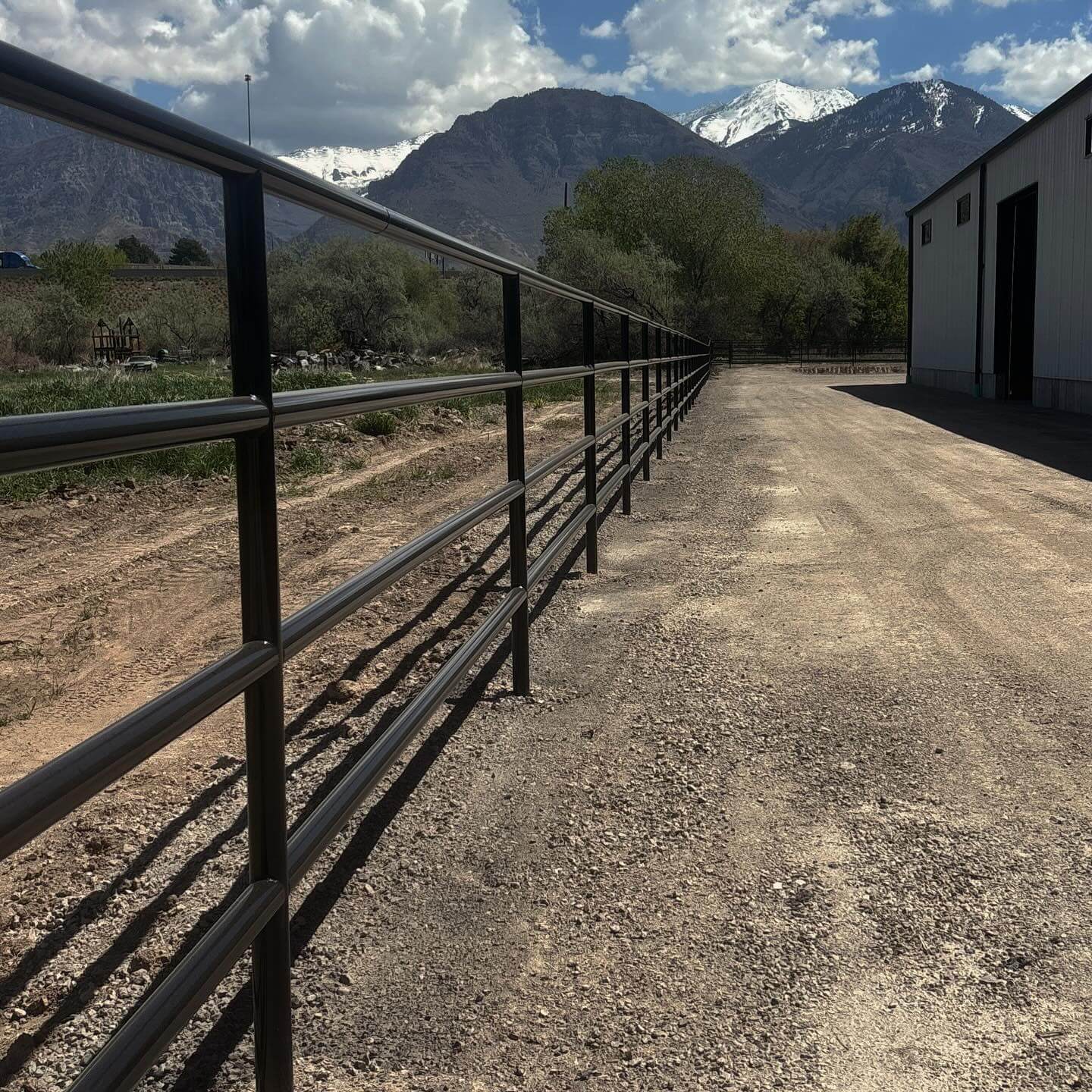
In high-moisture zones—coastal air, irrigation overspray, snowmelt—hot-dip galvanizing makes a pipe fence nearly bulletproof against rust. When steel is dipped after fabrication, zinc coats inside and out, including welds and hard-to-reach cavities, extending life decades beyond paint. If you weld on pre-galv tube or drill-stem, treat all welds and cuts with a zinc-rich cold galvanizing compound and mind good drainage with weep holes so condensation can escape rails and posts. Pair galvanizing with stainless or zinc-plated hardware on gates, isolate dissimilar metals where needed, and avoid water traps by slightly crowning cap welds and sealing tops. For a flawless architectural look, a duplex system—galvanizing plus powder coat—adds color while the zinc handles corrosion duty underneath. It costs more up front, but the lifecycle math usually pencils: fewer repaints, less downtime, and a fence that still looks crisp after storm season. For ranch entries, pool zones, and front yards alike, galvanized pipe fencing delivers low-maintenance peace of mind in the toughest environments.
Kid- and Pet-Safe Pipe Fence With Welded Wire Infill
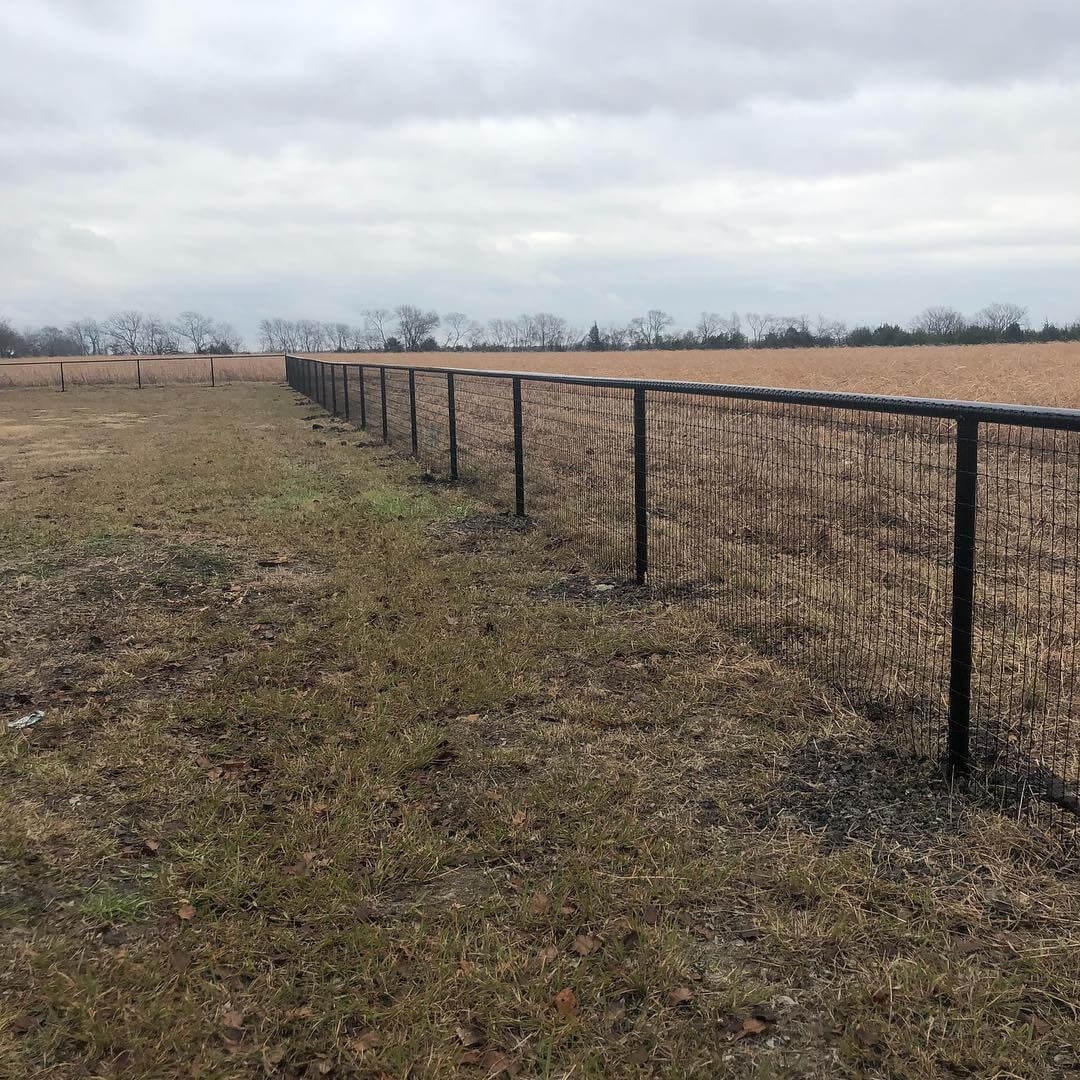
Love the clean lines of pipe fencing but need a family- and dog-proof perimeter? Frame the structure in steel pipe for strength, then add welded wire infill that keeps small paws and soccer balls inside. A 2×2 or 2×4 non-climb mesh tacked or clipped neatly to the rails prevents footholds without killing sightlines, while a smooth top rail gives a safe, finished edge. For diggers, bury a 12–18 inch apron or add a bottom kick rail with the mesh wrapped to grade. On sloped yards, rack the wire to follow the grade so gaps don’t open. Choose powder-coated black or bronze mesh for a “disappearing” look against the landscape, and spec self-closing, self-latching gates to corral runouts. If you’re near a pool, confirm local barrier codes (height, latch height, and climb resistance) and size openings accordingly. The result is a modern, low-visibility fence that blends with plantings, withstands roughhousing, and takes minutes to hose off—exactly the kind of practical elegance that makes pipe fence ideas work for real life.
Landscape-Integrated Pipe Fence With Planter and Retaining Edges
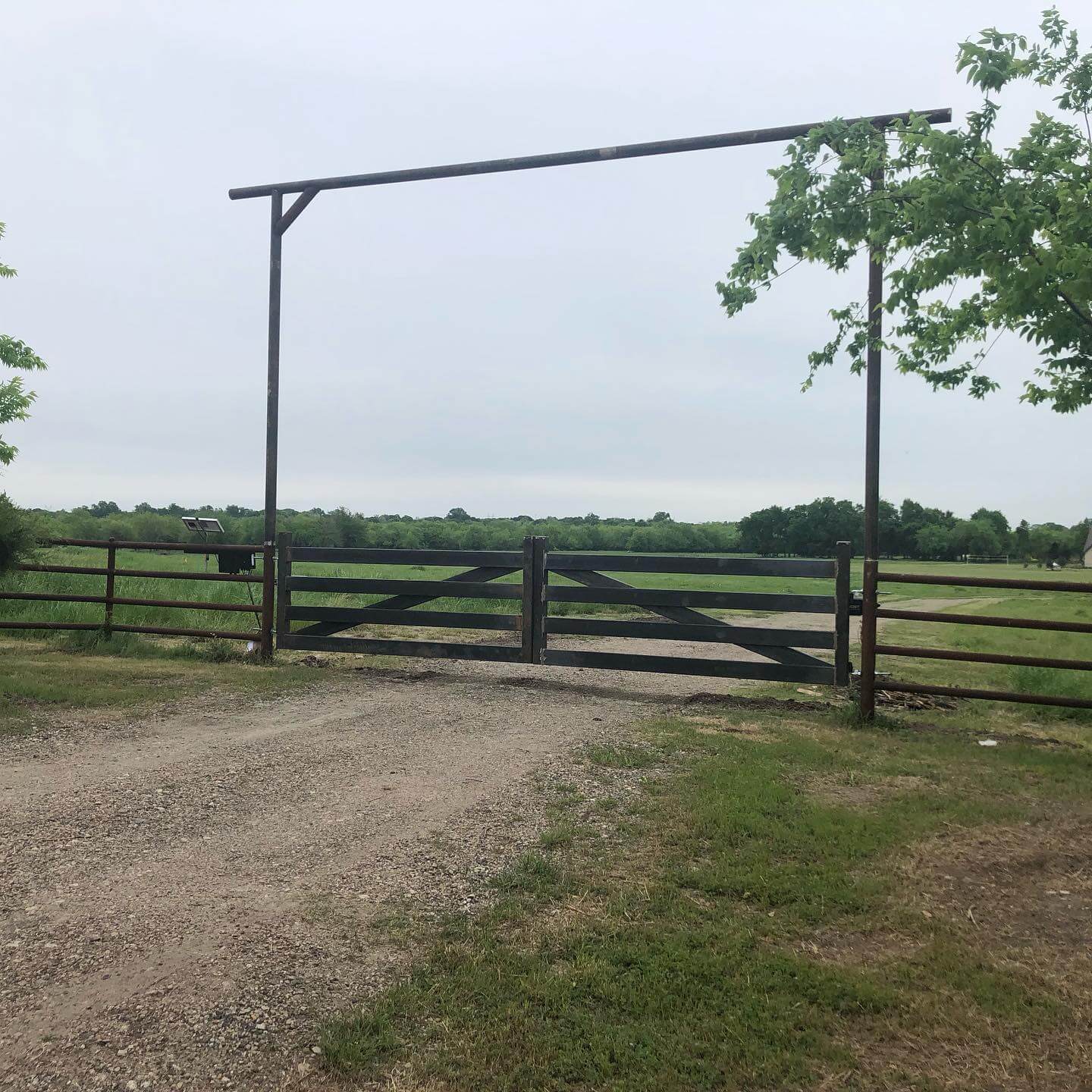
Turn a basic boundary into a finished landscape element by integrating low retaining and planter edges with your pipe fence. A continuous steel mowing strip or curb at the base gives you a crisp line for beds, tames grade changes, and keeps mulch from washing under rails. On modest slopes, terraced planter boxes tied back to fence posts handle soil pressure while showcasing ornamental grasses, roses, or privacy shrubs. Run drip irrigation through concealed conduit inside posts for clean installs, and add low-voltage lighting to wash the rails and highlight entries at night. Where drainage is an issue, incorporate a French drain or perforated pipe behind the planter edge so water moves away from footings—longevity starts with dry posts. Finish with a color that complements your home’s trim or stonework for a cohesive look from curb to pasture. This approach keeps the open, airy character of pipe while delivering a tidy, high-end boundary that looks designed—not just installed.
Get the Fail-Safe Paint Color Playbook (Free PDF)
36 proven colors • 8 ready palettes • trim & sheen guide • printable testing cards.
Ranch-Rustic: Oilfield Pipe With a Clear, Sealed Finish
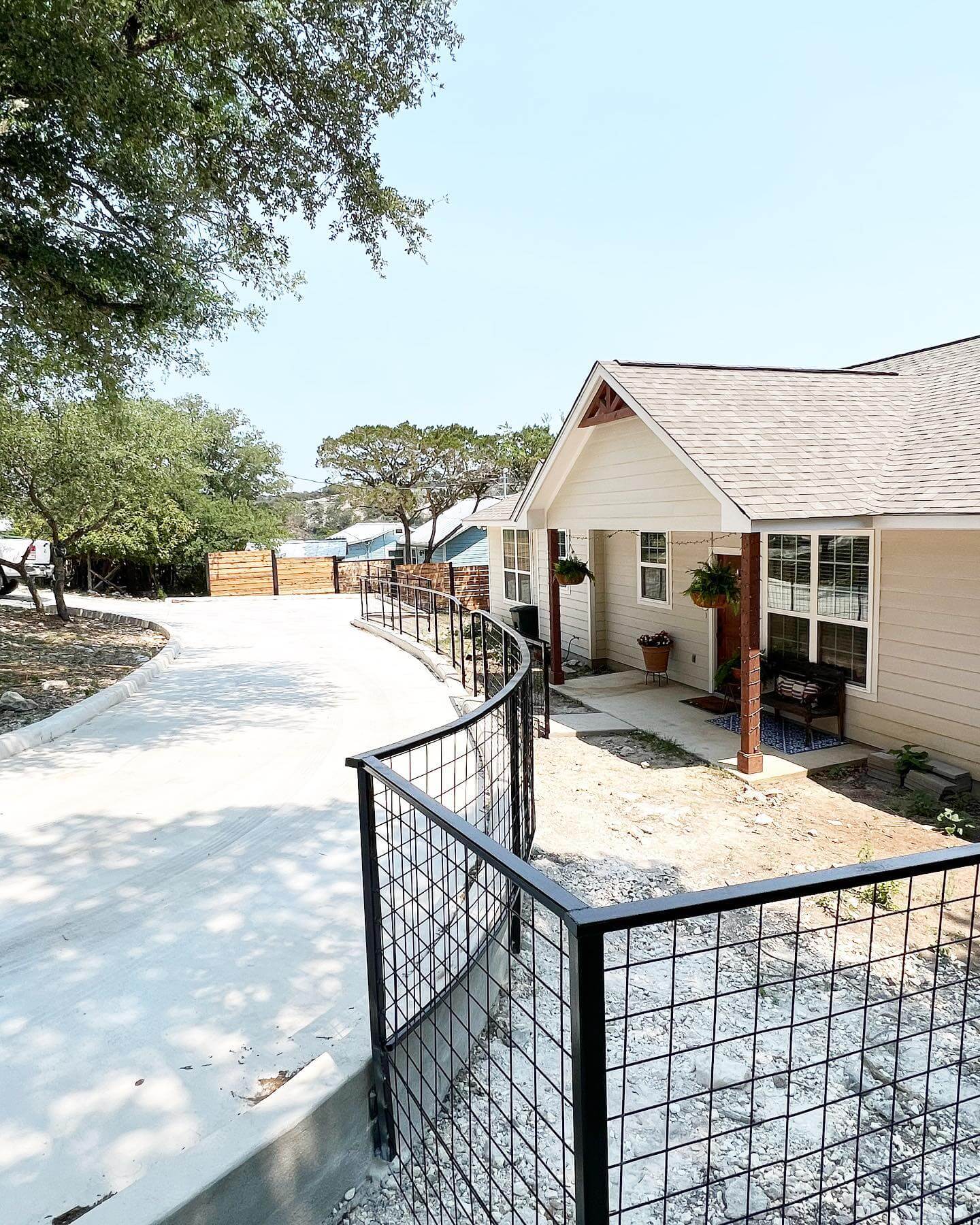
If you love the ranch aesthetic with a bit of grit, oilfield drill-stem pipe finished in a clear industrial sealer is a signature look. Reclaimed pipe brings character—subtle mill scale, heat marks, and honest wear—that painted fences can’t mimic. Prep is everything: degrease, media-blast to a uniform profile, then seal with a 2K clear urethane or epoxy system rated for UV. You keep the raw steel vibe but lock out moisture and stains. For panels and corrals, pair 2-3/8 inch or 2-7/8 inch rails with stout posts, coping each joint so welds sit clean and strong. Add domed caps to keep water out and maintain the minimalist profile. The result suits arenas, driveways, and acreage where authenticity matters—and it photographs beautifully at golden hour. Clear-coated oilfield pipe offers the durability of steel with the warmth of patina, making it one of the most distinctive pipe fence ideas for anyone chasing modern-rustic style without high-maintenance wood.
Pipe-and-Wood Hybrid Panels for Warm, Semi-Private Screens
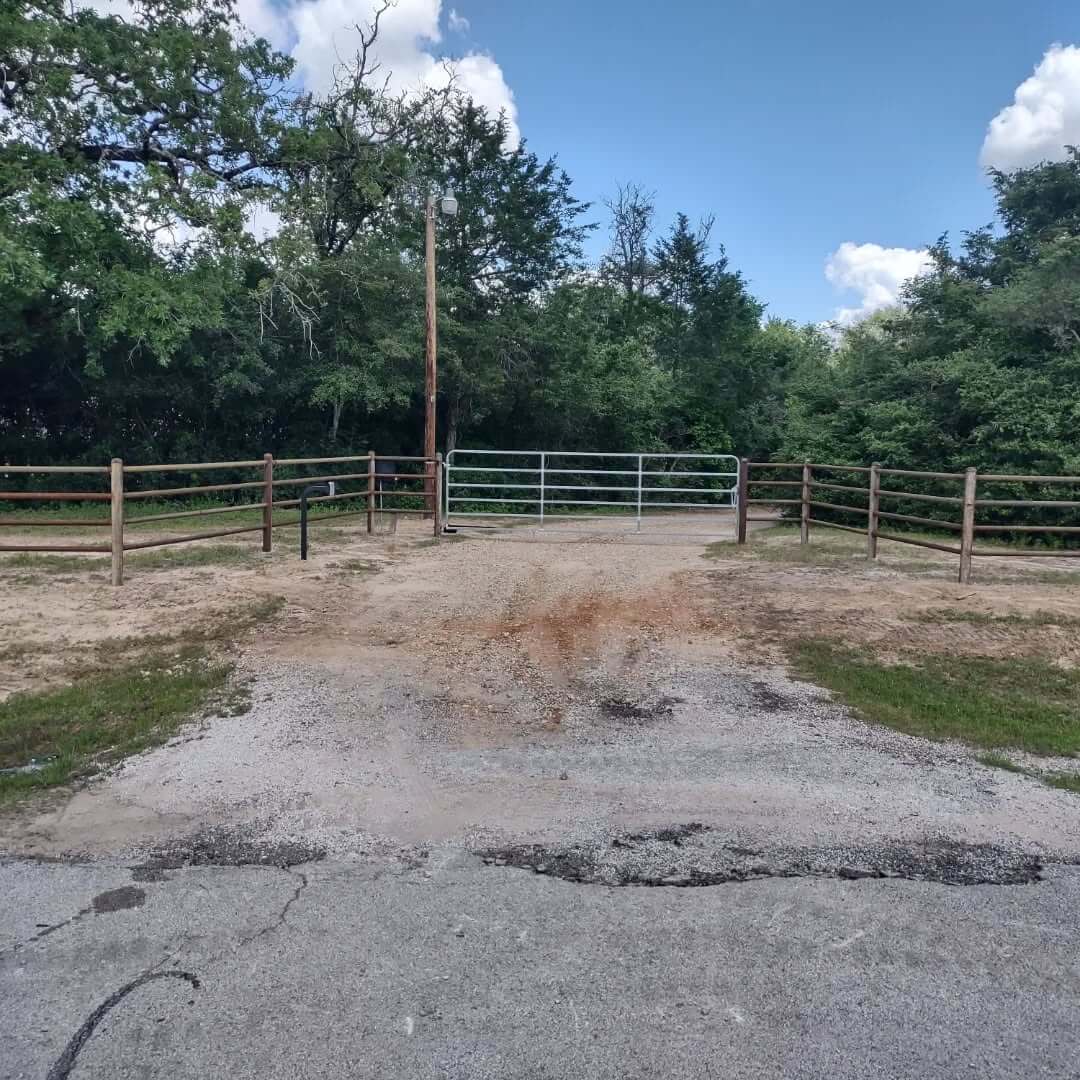
Marry the strength of steel with the warmth of wood by framing semi-private screens in pipe and infilling with cedar or composite slats. Horizontal slats read contemporary; vertical slats feel crisp and classic. Either way, keep consistent reveals—1/2 to 3/4 inch gaps let breezes through while softening sightlines around patios, trash enclosures, or side yards. A pipe perimeter resists racking, holds square over time, and accepts hidden brackets so fasteners disappear. For longevity, oil cedar with a penetrating finish or choose capped composite in earth tones; both pair beautifully with black or bronze pipe. In mixed-use properties, alternate open rail sections with wood-infill bays to balance privacy and views. This hybrid approach also solves grade changes: use solid slat modules where you need screening and open pipe where the landscape wants to show off. It’s a versatile, design-forward solution that elevates front-yard curb appeal and creates resort-like outdoor rooms on a realistic budget.
Smart Pipe Gates: Automation, Solar Power, and Safe Hardware
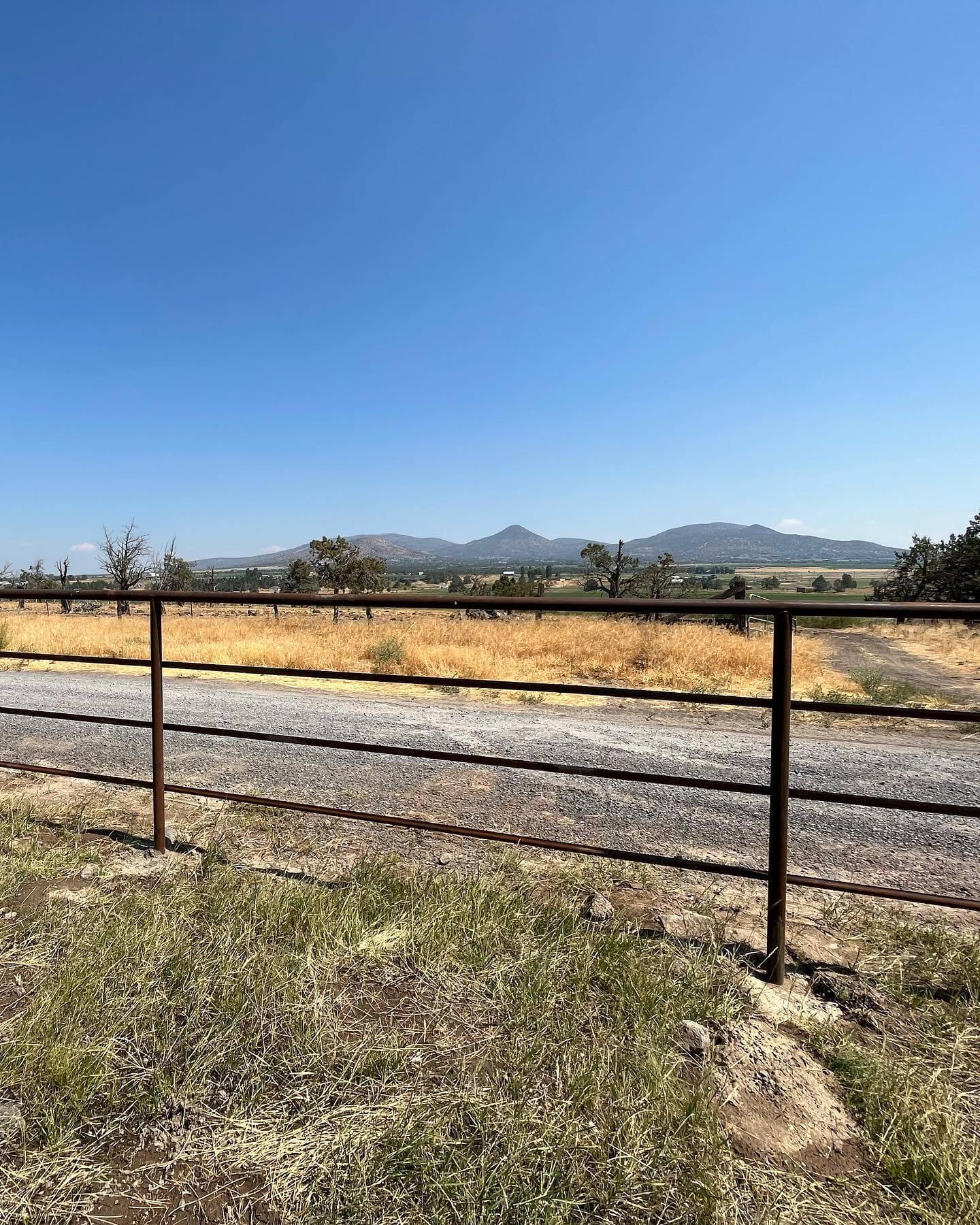
A well-built pipe gate deserves smart, smooth automation. Start with structure: a true H-braced hinge side, a matching latch post, and a ground stop to protect the opener from wind loads. Choose swing or slide based on driveway slope and snow; slides shine on short aprons and windy sites. Solar kits simplify rural installs—pair with deep-cycle batteries, a robust control board, and lockable steel enclosures. For daily convenience, add a keypad, vehicle probes or loops, clickers, and app control; for deliveries, a pedestal and temporary codes are game-changers. Safety matters: include photo eyes, entrapment protection, and a crush-relief hinge or clutch. Conduit inside posts keeps wiring discreet and protected, and a lightning arrestor plus proper grounding saves electronics on exposed ranch entries. Finish the gate to match your fence—powder coat, galvanize, or both—and spec heavy pin hinges with grease zerks for buttery, long-lived motion. Automation turns your entry into an everyday luxury without sacrificing the rugged reliability of pipe.
Garden and Orchard Pipe Fences With Critter Skirts
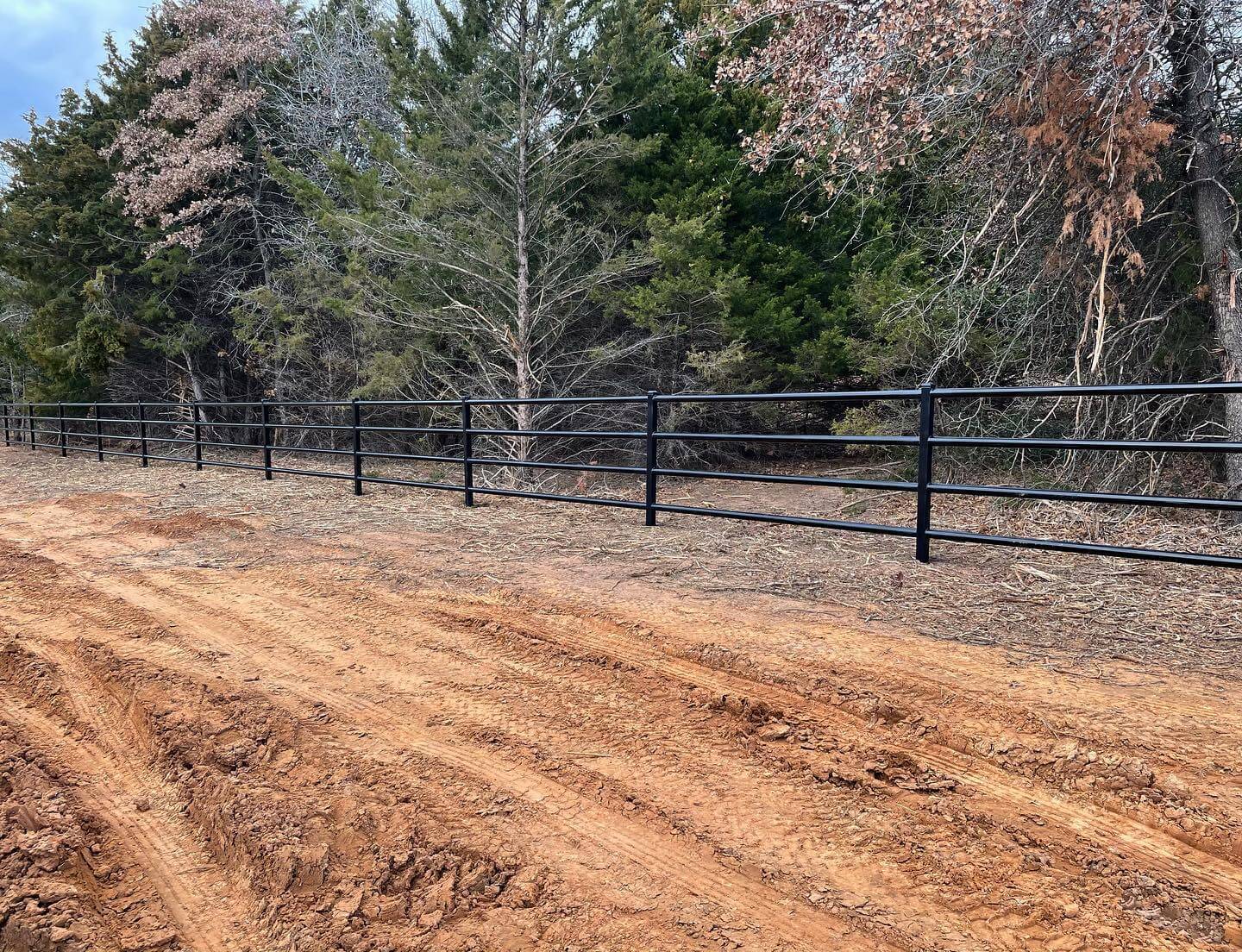
Protect raised beds, berries, and young trees with a light-on-the-land pipe frame and wildlife-smart mesh. A simple top rail with intermediate posts keeps everything tidy; attach black welded wire or high-tensile woven mesh so it “disappears” visually. For rabbits and skunks, add a buried apron that flares outward 12–18 inches; for chickens or small dogs, tighten the lower zone with 1×1 or 1×2 mesh to 24 inches high. In deer country, extend height with a secondary top rail and tension wire or use angled outriggers to deter jumpers without building a fortress. Wide gates (6–10 feet) make mowing and mulch deliveries painless; self-closing walk gates keep the patch secure between trips. Inside an orchard, brace ends vineyard-style and align rows so equipment flows. Pipe takes UV, sprinklers, and tool bumps in stride, while the mesh keeps the harvest yours. It’s a clean, affordable pipe fence idea that gardens love and neighbors barely notice.
Color-Coated Pipe Fences: Bronze, White, and Earth Tones
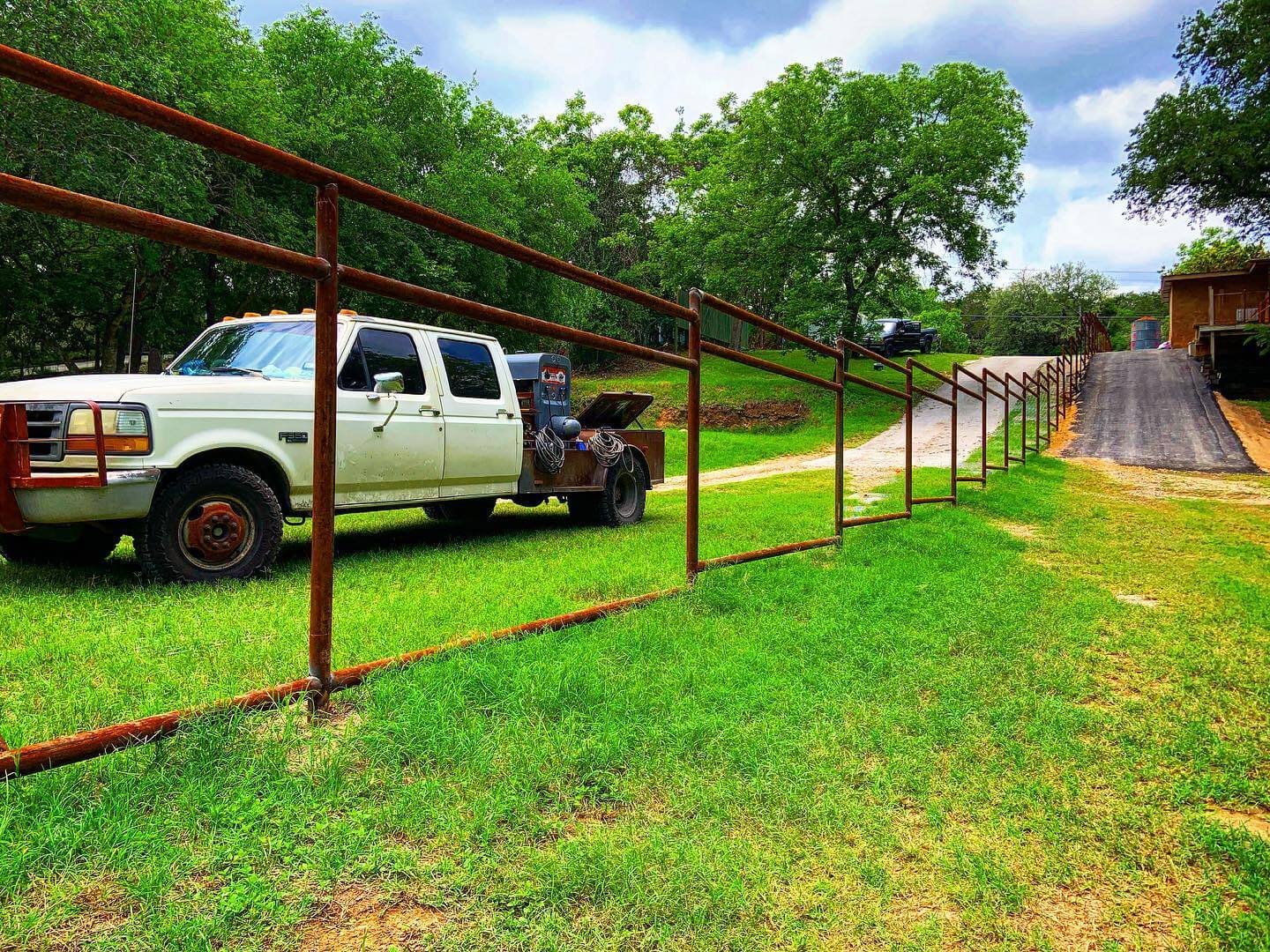
Black is timeless, but color opens fresh design lanes for pipe fencing. Bronze and espresso melt into native landscapes; desert sand and olive pair with stucco and stone; crisp white pops on coastal cottages and farmhouses. For durability, ask for a zinc-rich epoxy primer under a TGIC polyester powder topcoat—or go full duplex: hot-dip galvanize, then powder coat. That combo delivers color without giving up corrosion resistance, especially near pools or salt air. Select sheen intentionally: matte hides dust; satin reads high-end; gloss adds punch to statement entries. Color can also zone your property—dark perimeters to recede, lighter accents at gates and patios to draw the eye. Keep hardware coordinated (hinges, latches, caps), and request touch-up kits for post-install nicks. With the right prep—blast, clean, prime, cure—color-coated pipe fences stay vivid for years, proving that performance and personality can live on the same rail.
Foundations, Drainage, and Post Caps That Make Fences Last
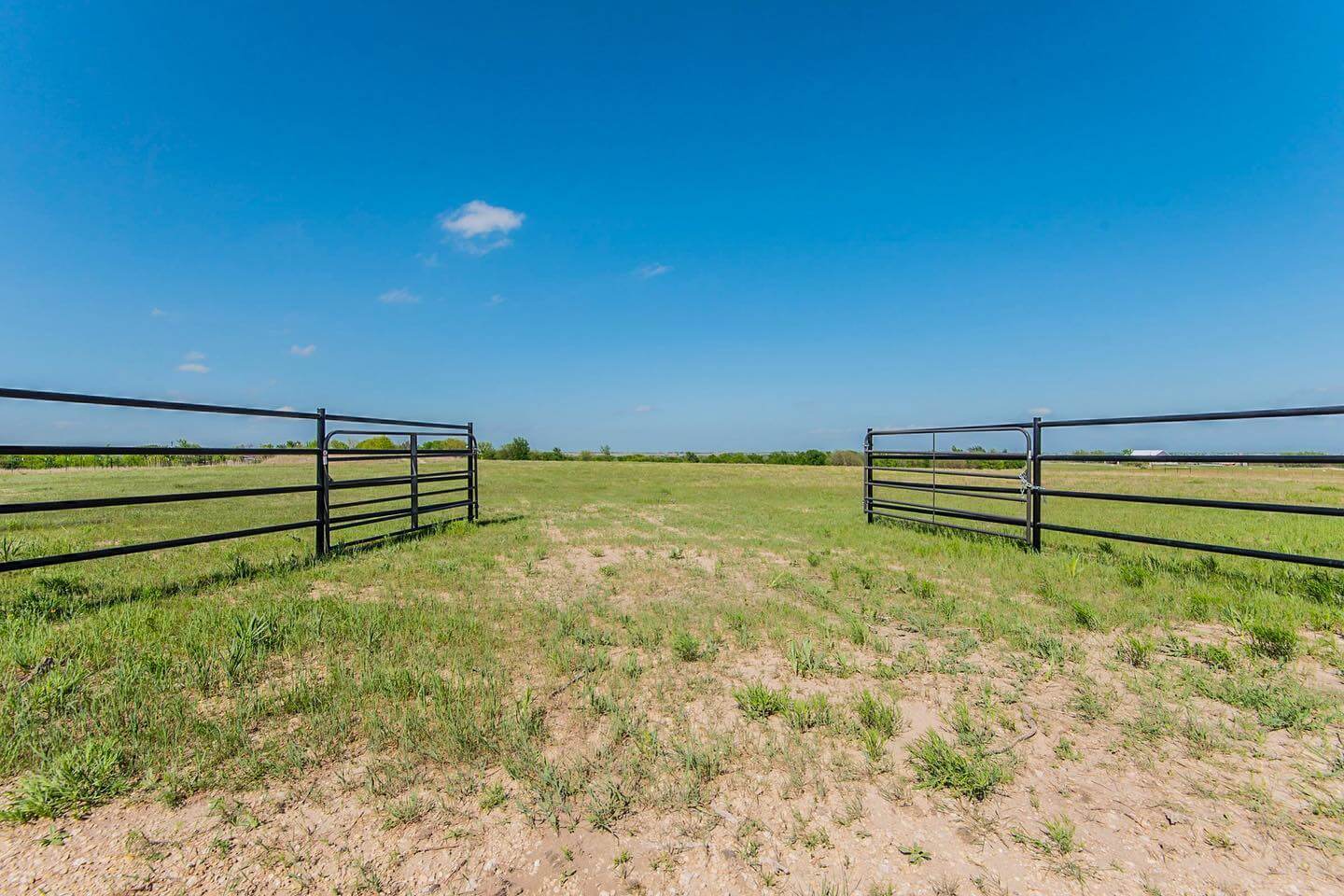
Great pipe fences start below grade. Set posts past frost depth in clean, straight holes; bell the bottoms or add gravel for uplift resistance on clay. In wet soils, a few inches of compacted rock at the base plus crowned concrete at the top sheds water away from welds. On long runs, alternate concrete-set corners and braces with driven line posts where soils allow to save time without sacrificing strength. Drill weep holes in horizontal rails and leave tiny vent holes on enclosed sections so condensation doesn’t build pressure or sit and rust from the inside out. Cap every post—domed steel, pressed caps, or welded tops—then seal. Where you’ll add mesh later, plan tabs or flat-bar now for cleaner installs. Before you dig, call 811 to mark utilities; after you set, let concrete cure before hanging gates to avoid sag. These behind-the-scenes details are what turn good pipe fence ideas into low-maintenance realities that outlast trends and weather alike.
Get the Fail-Safe Paint Color Playbook (Free PDF)
36 proven colors • 8 ready palettes • trim & sheen guide • printable testing cards.
Curb-Appeal 3-rail Pipe Fence for Driveways and Road Frontage
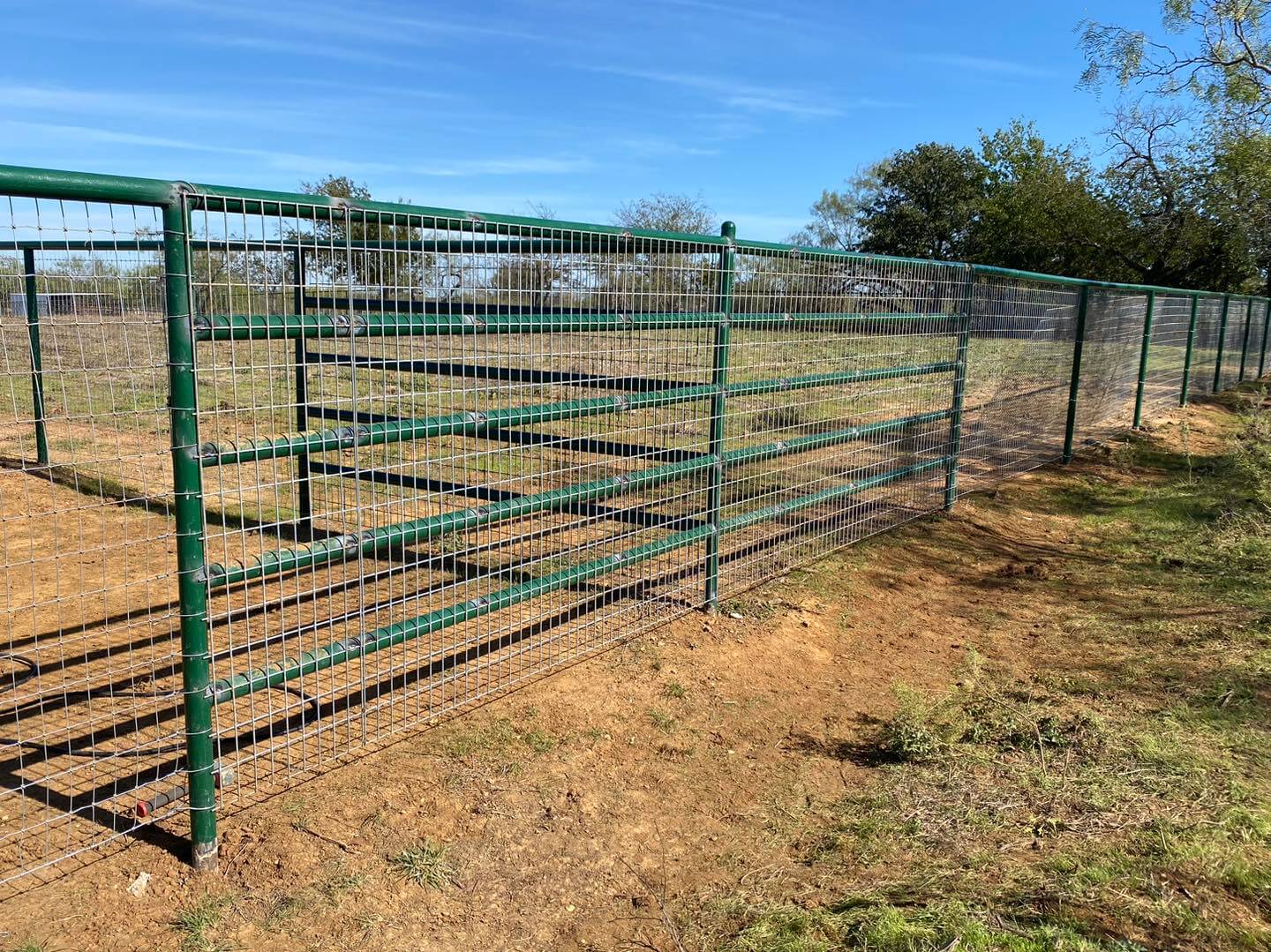
For quick curb appeal that still works hard, a clean 3-rail pipe fence along your driveway or road frontage hits the sweet spot. The open profile keeps sightlines clear for drivers and guests while the continuous top rail ties everything together visually from entry to house pad. Aim for 8–12 ft post spacing (tighten on curves), a 48–54 in overall height, and welded or pressed post caps that shed water. If you’re in a snow or mower zone, lift the bottom rail slightly to prevent drift buildup and string-trimmer rash.
Dial in details that matter day to day: align the fence with your culvert and mailbox turnout, add reflectors at the gate posts for night visibility, and spec a powder-coated or industrial enamel finish in black or bronze for a polished, low-maintenance look. Where ditches or swales cross, sleeve rails or transition to a short section of racked rails so water keeps flowing. Set line posts below frost depth and crown the concrete to push water away. The result is a durable steel pipe fence that frames your acreage, guides vehicles naturally to the entry, and looks as intentional up close as it does from the road.
Arena-Ready Pipe Fence With Safe Top Rails and Open Sightlines
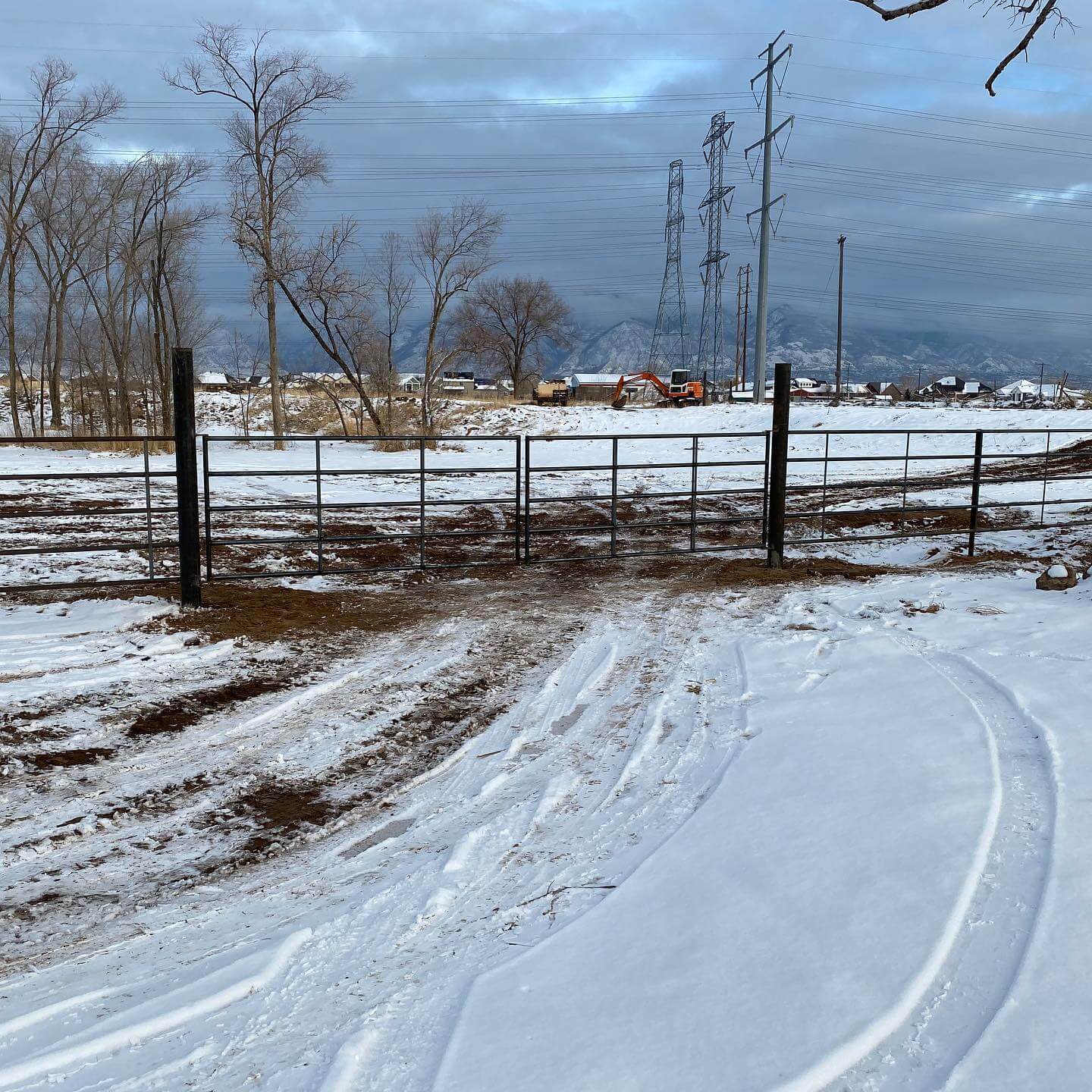
If you work with horses, an arena-ready pipe fence prioritizes safety, visibility, and smooth geometry. Choose a continuous top rail with clean, ground-flat welds and no protruding fasteners. For most arenas and round pens, 4–5 rails at 60–66 in height keep horses contained without feeling claustrophobic. Radius your corners or use large, mitered returns to avoid pocket traps, and keep the interior face flush so stirrups and knees glide past without catching.
Plan service access from the start: 12–16 ft pipe gates let drags and tractors pass, and a slam-latch with shielded hardware speeds resets between rides. Many builders add a “kicker” rail low to the ground to discourage pawing at posts, or a removable board at the base to hold footing in windy sites. Matte or satin finishes reduce glare under arena lights, and contrasting gate posts make entries more visible to green horses. If you need partial containment for small stock, pair the pipe frame with safe, small-opening mesh in limited zones—avoiding anything hoof-sized. With the right layout and hardware, a purpose-built pipe arena fence rides as good as it looks and stands up to daily training.
Stepped vs Racked Pipe Fences: Clean Grades on Slopes
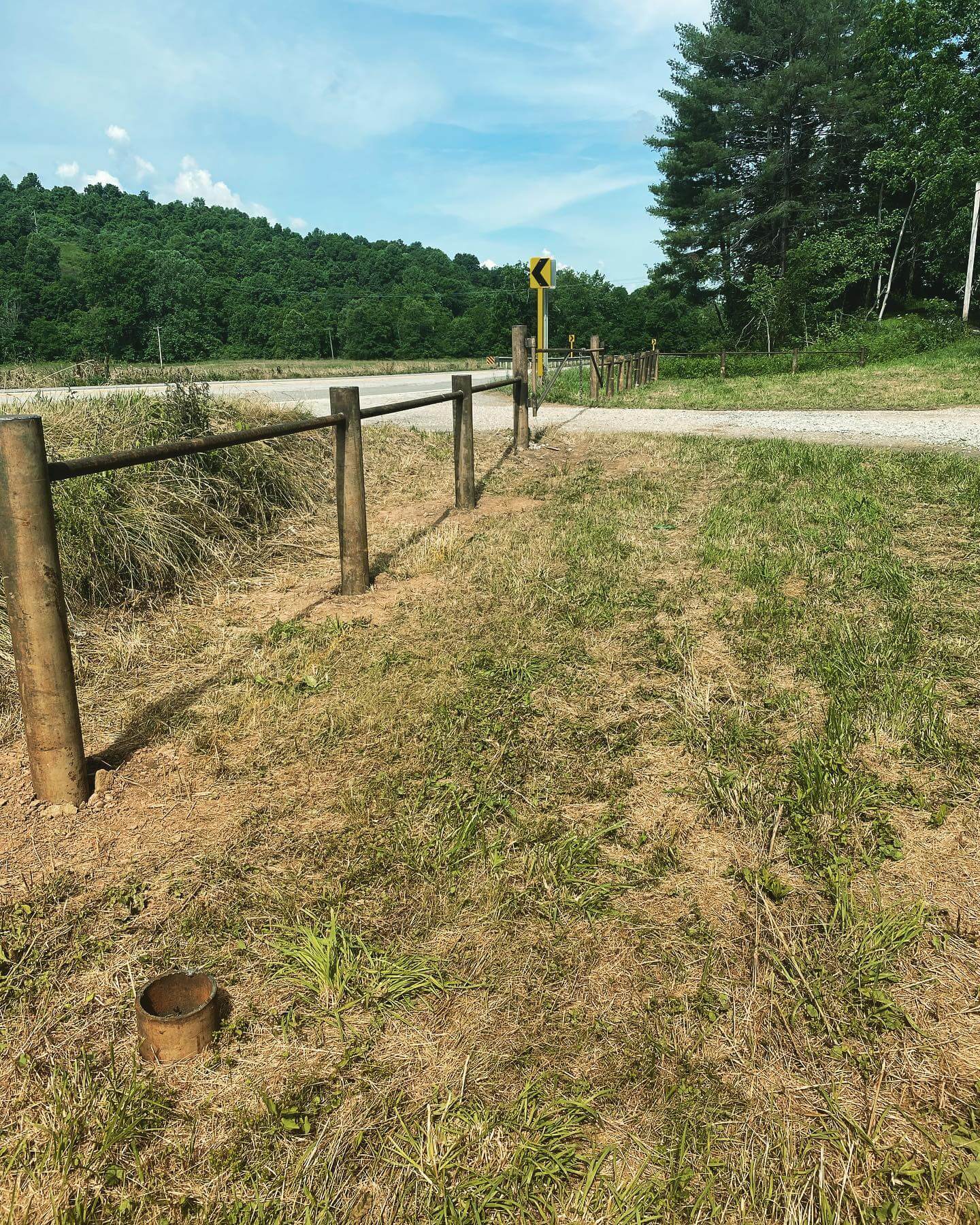
On sloped ground, the difference between a tidy fence and a wavy one comes down to whether you step the rails or rack them. A stepped pipe fence keeps each panel level, dropping at posts like shallow stairs—great for modern, geometric aesthetics and moderate slopes. A racked fence follows the grade continuously by saddling rails to taller downhill posts, avoiding toe gaps and looking more organic in pasture or naturalized landscapes.
Use slope as your deciding metric: up to roughly 10% grade, either method works; beyond that, racking looks cleaner and reduces pet or livestock escape routes. Pre-layout is everything—snap strings along the grade, mark consistent rail reveals, and pre-cut saddle angles before you set posts in concrete. On steep runs, consider a narrow grade beam, extra bracing at transitions, and deeper footings to resist soil creep. Where water sheds down a hill, leave a controlled gap under the bottom rail or direct flow through a culvert so your fence doesn’t act like a dam. The payoff for careful planning is a pipe fence with straight sightlines, crisp angles, and a professional finish that respects the terrain instead of fighting it.
Pipe-and-Corrugated Metal Privacy Bays for Modern Accent Walls
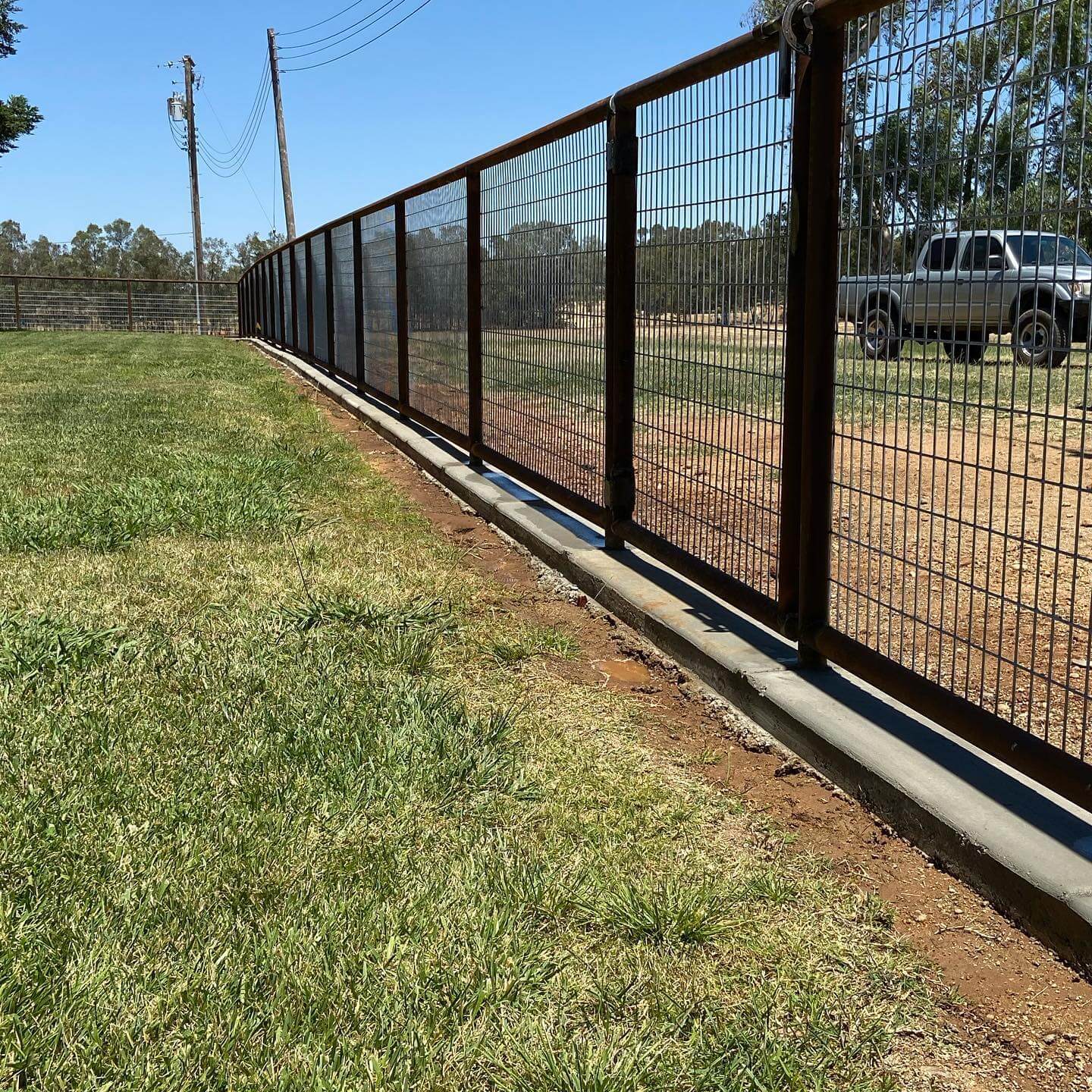
For spots that need privacy or wind screening—patios, hot tubs, trash enclosures—combine a pipe frame with corrugated metal infill for a bold, modern accent. Use pipe posts and a welded top/bottom frame, then capture coated steel panels with angle or flat-bar surrounds so edges are safe and clean. Color-match the panels to your trim or roof and keep the rest of the perimeter as open pipe rails so the design feels intentional, not bulky.
Engineer for wind: tighter post spacing, deeper footings, and through-fastened frames prevent rattle and oil-canning. Separate dissimilar metals with neoprene washers and isolators to avoid galvanic corrosion, and leave small expansion gaps so panels can move silently with temperature swings. Add a drip edge or slight panel overlap to shed rain, and set bays a touch lower near seating to block views while preserving airflow. In high-salt or high-splash zones, pair a galvanized or zinc-rich-primed pipe frame with powder-coated panels for maximum longevity. This hybrid approach gives you the privacy of a solid fence in the places that need it most—without sacrificing the open, streamlined look that makes pipe fencing so versatile.
No-Weld Pipe Fence Systems for Fast, DIY-Friendly Installs
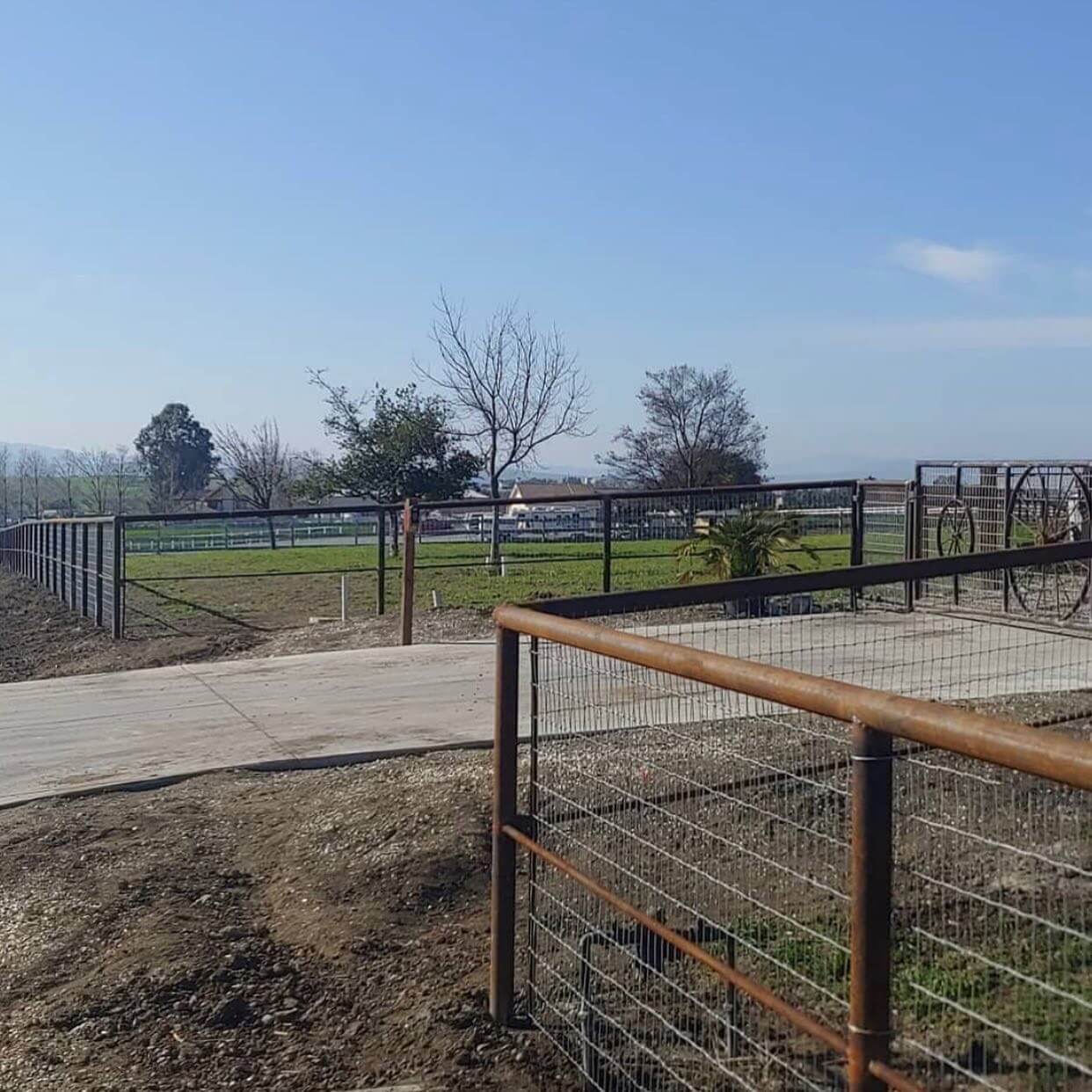
On a tight timeline or without a welder, bolt-together pipe fence systems make clean, durable results possible for DIYers. Galvanized set-screw and clamp-on fittings let you build 2- or 3-rail runs, garden enclosures, or utility barriers with only a saw, level, and impact driver. Start with schedule 40 posts set in concrete or heavy-duty base plates epoxied to slab, then cut rails to length, deburr, and tighten fittings to torque.
The big advantages are speed and adjustability—panels can move a few inches to dodge a root, and gates can be fine-tuned after the posts cure. To keep the look refined, align fittings consistently, tuck set screws to the property side, and add pressed caps for a finished top line. Use threadlocker on vibration-prone gates, and plan a quick annual check to snug hardware. Many builders mix methods: bolt-together lines with a welded entry gate, or DIY rails now with the option to weld later. Finish with powder coat or industrial enamel for color, or leave the galvanized sheen for a utility vibe. It’s a practical way to get a straight, sturdy steel pipe fence up fast—no sparks required.
DIY Pipe Fence Ideas for Backyards, Driveways, and Small Farms
Ambitious DIYers can build pipe fences that look professional by planning tools, joints, and finishes as carefully as the layout. A 180‑amp MIG or stick welder, chop saw with metal blade, and pipe notcher handle most ranch‑style connections. Source straight drill‑stem or new schedule 40 from reputable yards; roll pipes on the ground and sight down lengths to reject bows. Pre‑fit rails on sawhorses, then tack and plumb posts before final welding to minimize warp and grinding. For tight budgets, mix prefab livestock panels between pipe posts, or weld saddles to accept cedar slats where privacy matters. Measure slope changes with a level and story pole so steps or angled rails align cleanly across long runs.
- Build a three‑rail driveway run with oversized gate columns, embedding hinge posts deeper and adding gravel aprons so turning tires, trailers, and rainwater never chew up your entry.
- Swap middle rails for stainless cable infill between pipe posts to keep open views near patios, tensioning properly with turnbuckles and through‑post grommets to prevent cable bite.
- Create a garden enclosure by welding pipe frames around livestock panels, adding rabbit wire skirting and a hinged arch gate to block deer while preserving airflow and easy access.
- Assemble portable corral panels with saddle‑clamped pipe corners and chain connectors, letting you reconfigure pens seasonally without cutting, grinding, or driving new posts into compacted areas.
- Add semi‑privacy by slotting powder‑coated steel slats between verticals for patio zones, keeping airflow while screening grills, trash bins, and equipment from neighbors or street traffic.
- Prep used drill‑stem by degreasing, wire‑wheeling, and brushing rust converter before primer and alkyd enamel, ensuring weld zones get spot‑primed once cooled to prevent underfilm corrosion.
- Dig post footings to frost depth, bell the base in expansive soils, and crown surrounding grade, so freeze‑thaw cycles and ponding water can’t shift alignment or rot gate approaches.
- Automate driveway gates with solar operators rated for swing weight, adding photo‑eyes and soft‑start control boards to protect hinges and avoid slamming during gusts or icy mornings.
Plan coatings around weather; paint too soon and morning dew will haze finishes, wait too long and flash rust forces grinding. Budget thoughtfully by estimating per‑foot costs for pipe, consumables, coatings, and rental equipment, then add 10–15% contingency for surprises. Wear PPE—leathers, face shield, respirator—and keep a charged extinguisher nearby whenever cutting or welding around pastures. Check local code for right‑of‑way setbacks and maximum gate widths, especially near county roads or shared drive approaches. Before energizing any automation, test swing paths by hand and verify photo‑eye alignment, limit stops, and latch landings. With careful prep and patience, a DIY build can match pro quality while saving thousands and tailoring details to your property.
Quick Answers for Smarter Pipe Fencing
What pipe size is best for a three‑rail fence?
For residential or light ranch use, 2 3/8‑inch OD line posts with 1 5/8‑ or 1 7/8‑inch rails balance strength and cost. Heavier cattle pressure or wide spans justify 2 7/8‑inch posts.
Get the Fail-Safe Paint Color Playbook (Free PDF)
36 proven colors • 8 ready palettes • trim & sheen guide • printable testing cards.
How do I prevent rust on a pipe fence?
Start with clean steel, then apply a zinc‑rich primer and high‑solids enamel or powder coat. In coastal or salted regions, galvanizing plus a clear coat offers the longest, lowest‑maintenance protection.
What does a pipe fence cost per foot?
Regional steel prices vary, but basic three‑rail pipe often lands between $18–$40 per foot for DIY materials, excluding tools and coatings. Professional turnkey builds commonly range $35–$80 per foot.
Can pipe fences work with HOAs or modern homes?
Absolutely—use slimmer profiles, consistent welds, and matte black or galvanized finishes for a refined look. Incorporate horizontal lines, concealed fasteners, and coordinated gates to match contemporary architecture.
Final Verdict: Build a Pipe Fence That Works as Hard as It Looks
From clean 3-rail perimeters to modern black front-yard runs, pipe fencing proves you don’t have to choose between rugged performance and refined curb appeal. Mix and match elements to fit your needs: horse-safe pipe with no-climb mesh, cattle panel cross-fencing for quick coverage, sucker rod rails for arenas, and pipe-and-cable or corrugated metal accents where views or privacy matter. On slopes, decide whether to step, rack, or follow the grade for the cleanest line, and in tough climates, lean on galvanized pipe and smart drainage. Add personality with branded gates, keep kids and pets secure with welded wire infill, and integrate planters or retaining edges so the fence feels designed, not dropped in. The result is a durable, low-maintenance system that protects livestock, guides vehicles, and elevates landscapes across ranches, acreages, and suburban drives.
Turn inspiration into a build by mapping grades and access points, marking utilities, and defining each fence zone by function. Specify post spacing, pipe diameter and wall thickness, and bracing details; pick coatings (powder coat, epoxy, or galvanizing) to match your climate; and confirm permits, setbacks, and HOA rules. Get apples-to-apples bids with drawings, test gate swing clearances, and price in automation—solar openers, safe hinges, and hardware that stands up to weather and use. If you’re DIY-minded, consider no-weld systems for speed; if you’re hiring, ask for sample welds and finish chips before work begins. With thoughtful planning and simple upkeep—seasonal rinse-downs, touch-up paint, hinge lubrication, and quick brace inspections—you’ll lock in decades of strength, safety, and style from a pipe fence that looks sharp and works every day.