
Clever Shared Boys’ Bedroom Ideas to Maximize Space, Style, and Sibling Harmony
Sharing a room doesn’t have to mean clutter, clashes, or compromise. With the right layout, smart storage, and thoughtful styling, a shared boys’ bedroom can feel bigger, calmer, and personal to each child—no matter their ages or interests.
From space-saving bunk beds and lofts to twin layouts with clear “zones,” we’ll explore practical ways to boost floor space, organize toys and clothes, and create privacy without sacrificing personality. Expect durable color palettes, theme ideas that grow from toddler to teen, and renter-friendly updates that make a big impact on a small budget.
Get the Fail-Safe Paint Color Playbook (Free PDF)
36 proven colors • 8 ready palettes • trim & sheen guide • printable testing cards.
We’ll also draw inspiration from real-life rooms to show how lighting, labeling, and layered textures elevate function and look. Whether you’re working with a tiny nook or a full-size room, these shared boys’ bedroom ideas make bedtime smoother, mornings quicker, and sibling harmony more likely.
Space-Savvy Shared Boys Bedroom Ideas: Layouts, Bunk Beds, and Traffic Flow
Space planning underpins effective shared boys bedroom ideas, especially when every inch matters. Start by mapping doors, windows, vents, radiators, and outlets so bed placement preserves airflow and access. Keep primary traffic paths clear from the door to beds, closets, and the bathroom to cut nighttime collisions. Measure mattresses and frames precisely, including headboard thickness and ladder footprint, to test configurations before you buy. If possible, float beds on one wall to consolidate circulation, reserving the opposite wall for storage and desks. Use blue painter’s tape to mock layouts on the floor, validating aisle widths, drawer swing, and ladder reach in real scale.
- Choose bunks only if ceiling height allows at least 33–36 inches above the top mattress, with guardrails on both sides, and avoid placing bunks under fans, vents, or windows.
- Maintain a 30–36 inch walkway between beds and key furniture so kids can pass safely, open drawers fully, and access closets without bumping shins or pinching fingers.
- Position bunk ladders at the wall side, never near doors, and choose angled ladders with deep treads; add a nightlight path to reduce slips during midnight bathroom trips.
- Use a loft bed over a desk or reading nook to reclaim floor space, anchoring hardware into studs and managing cords with clips to prevent snags and tangles.
- Separate active play from sleep by placing play storage near the door and keeping beds farthest from traffic; blackout curtains and white noise support restful, synchronized bedtimes.
Lighting and zoning refine the layout so it works around the clock. Install individual reading sconces or clip lights at each bed to avoid waking a sibling during late homework or stories. Layer ambient light with dimmers, then add motion-sensor nightlights along the floor for safe, sleepy navigation. Define sleep, study, and play with rugs and furniture orientation, keeping noisy activities away from pillows. Choose modular pieces—nesting tables, stackable stools, and rolling carts—to reconfigure quickly for playdates or exam weeks. If furniture has casters, prioritize locking wheels and wide bases to prevent drifting and tip hazards.
Stacked Bunks + Drawers: Go Vertical to Win Floor Space
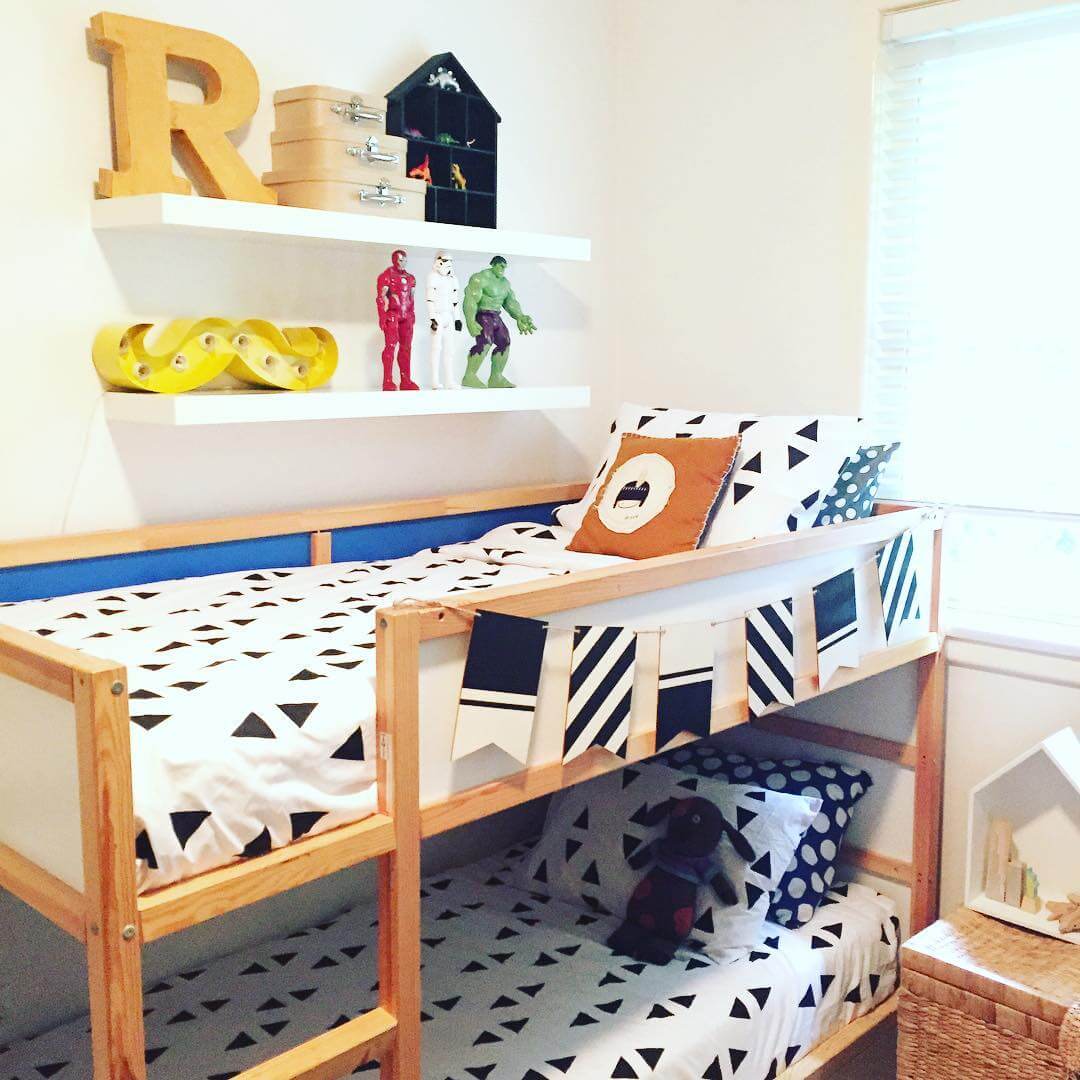
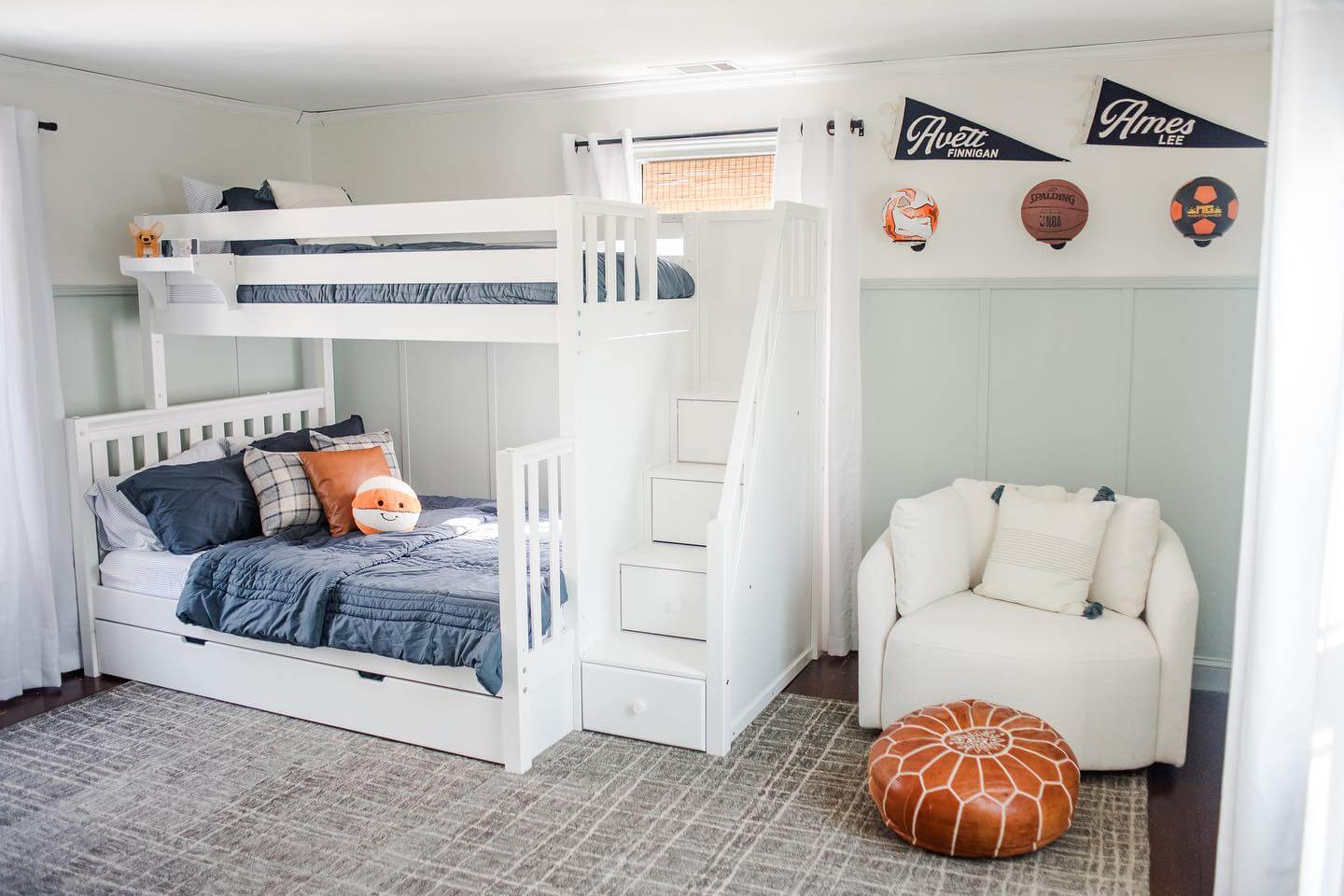
In a small shared boys’ bedroom, vertical beds are your best friend. A sturdy bunk or loft frees up prime floor area for play, reading, or a compact study zone. Prioritize a model with integrated stairs and drawers—steps double as deep storage for PJs, sheets, or LEGO bins and are safer than ladders for sleepy feet. If ceiling height allows, consider an L-shaped bunk that opens a corner for a chair or toy trunk, or add a low trundle to host sleepovers without permanent footprint. Mount individual sconces and shelves at each bunk to give brothers personal space for books and treasures, then add simple curtains on tension rods for privacy during wind-down. Keep circulation clear: place the bunk along the longest wall and slide a slim dresser opposite to avoid bottlenecks. Under-bed drawers beat open baskets for dust control, and labeling each kid’s drawer reduces “That’s mine!” debates. Finish with a durable rug to quiet footsteps and make early mornings gentler. Going vertical sets the whole room’s layout—once the beds are up and storage is built-in, every other decision gets easier.
Twin Beds in Symmetry: One Wall, Double Calm
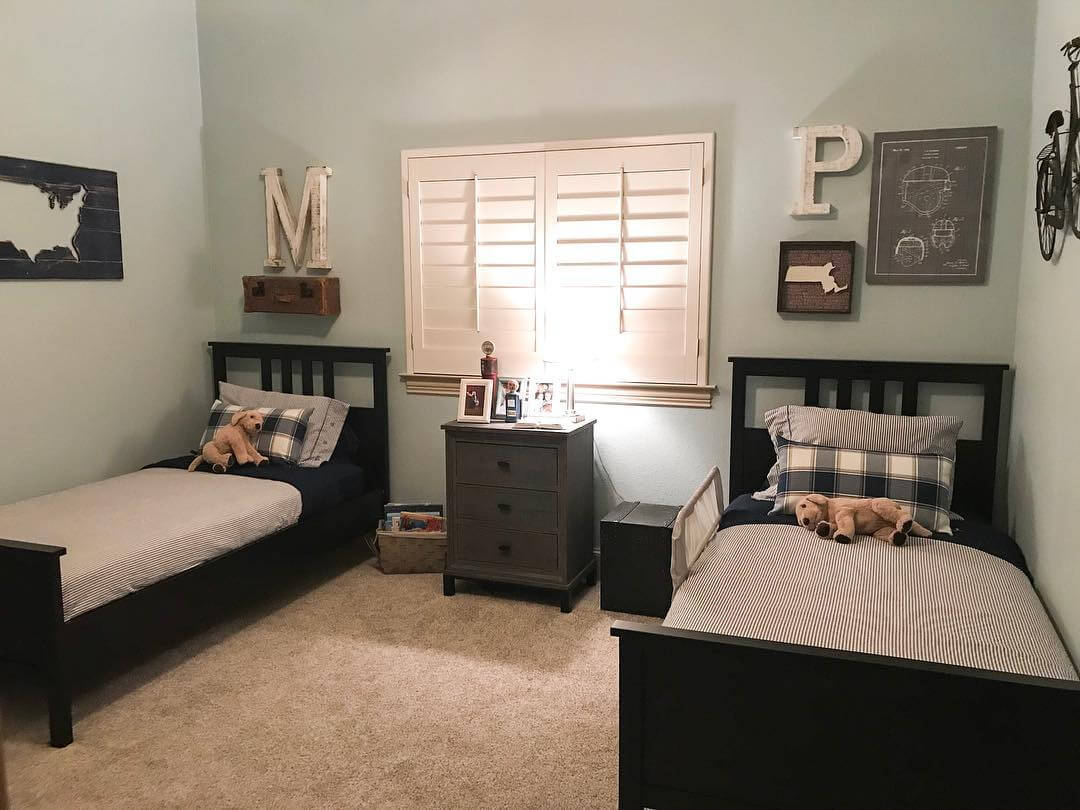
If bunks aren’t your style, symmetry with two twin beds creates instant calm and fairness. Line both beds on the same wall, mirror nightstands, and hang identical sconces at equal heights. This balanced layout reads tidy and gives each child an equal “zone,” which quietly reduces turf disputes. Use a shared center nightstand with a drawer per kid, or opt for two narrow tables to keep water, clocks, and bedtime books handy. Choose matching base bedding in a timeless stripe or solid, then personalize with individual pillows and throws in each brother’s favorite color. Slide low rolling bins under each bed (labeled by name) for daily outfits or toy sets—out of sight, still easy to grab. Overhead, hang two frames at the same level and swap art as interests evolve. In narrow rooms, wall-mount task lights to free tabletop space and keep cords off the floor. A runner rug between the beds softens landings and creates a visual “runway” that helps kids keep pathways clear. The result: a classic, organized shared boys’ room that grows effortlessly from grade school to tween.
Define Fair Zones: Rugs, Curtains, and Low Dividers
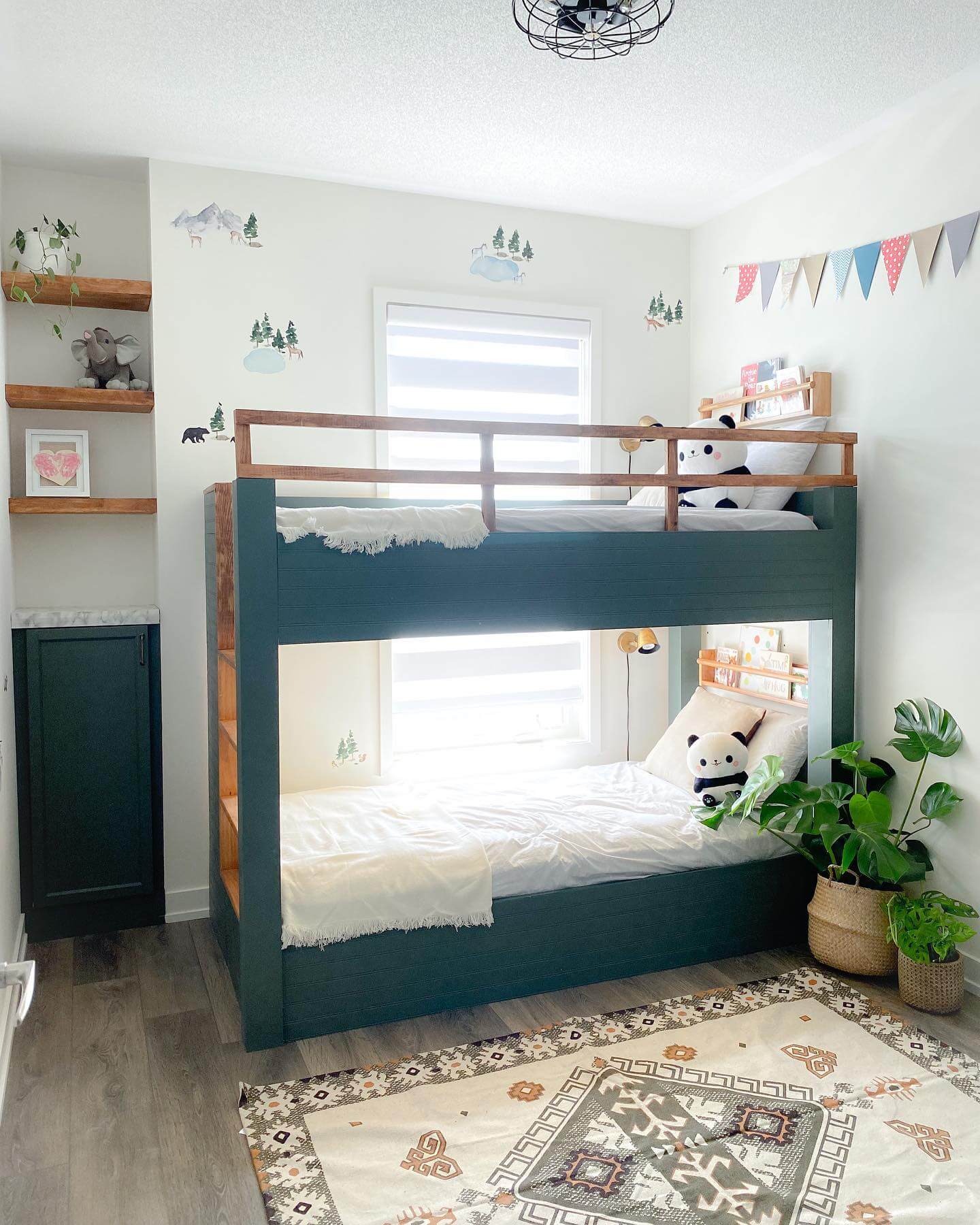
Once the beds are placed, make the room work harder by mapping zones. Start with rugs: one large rug anchors the sleep area, while a flat-weave under a desk defines study space and catches pencil drops. For brothers who crave privacy, a simple ceiling track with a linen curtain can screen a bunk or create a temporary reading nook without permanent walls—ideal for renters. Low shelving (think cube units) doubles as a room divider and toy organizer; keep it below sightline to preserve light and supervision. If you need a stronger boundary, place back-to-back bookcases in the middle of a long room, then style the tops with lamps to brighten both sides. Tame daily friction with duplicate essentials on each side: hamper, hook, and a catchall tray. Consider a small white-noise machine near the sleep zone to buffer different bedtimes. Finally, keep traffic flow intuitive—door to dresser to desk to beds—so morning routines don’t become obstacle courses. Clear zones reduce clutter, increase independence, and make a shared boys’ bedroom feel bigger than its square footage.
A Timeless Color Palette That Grows from Toddler to Teen
Color can unify two personalities without forcing a theme. Anchor the shared boys’ bedroom with a timeless base—warm white, soft gray, navy, olive, or taupe—then layer two accent colors the kids love. Use the 60-30-10 rule: 60% neutral walls and large furniture, 30% mid-tone textiles (curtains, rugs), 10% bold accents (pillows, posters). Two-tone or color-blocked walls add architecture without busy patterns; a painted stripe at headboard height visually connects twin beds or defines a bunk wall. If you rent, try peel-and-stick panels or oversized decals—instant impact, no commitment. Mix wood tones and matte black hardware for durability that hides dings. Choose scrubbable paint (eggshell or satin) and washable duvet covers to survive art projects and snack time. Let each brother pick a micro-accent within the palette—one goes varsity red, the other leans mustard or forest—so individuality shines inside a cohesive scheme. This approach future-proofs the room: as interests shift from dinos to drones, you’ll swap art and pillows, not repaint four walls.
Toy Storage That Works: Label, Rotate, Contain
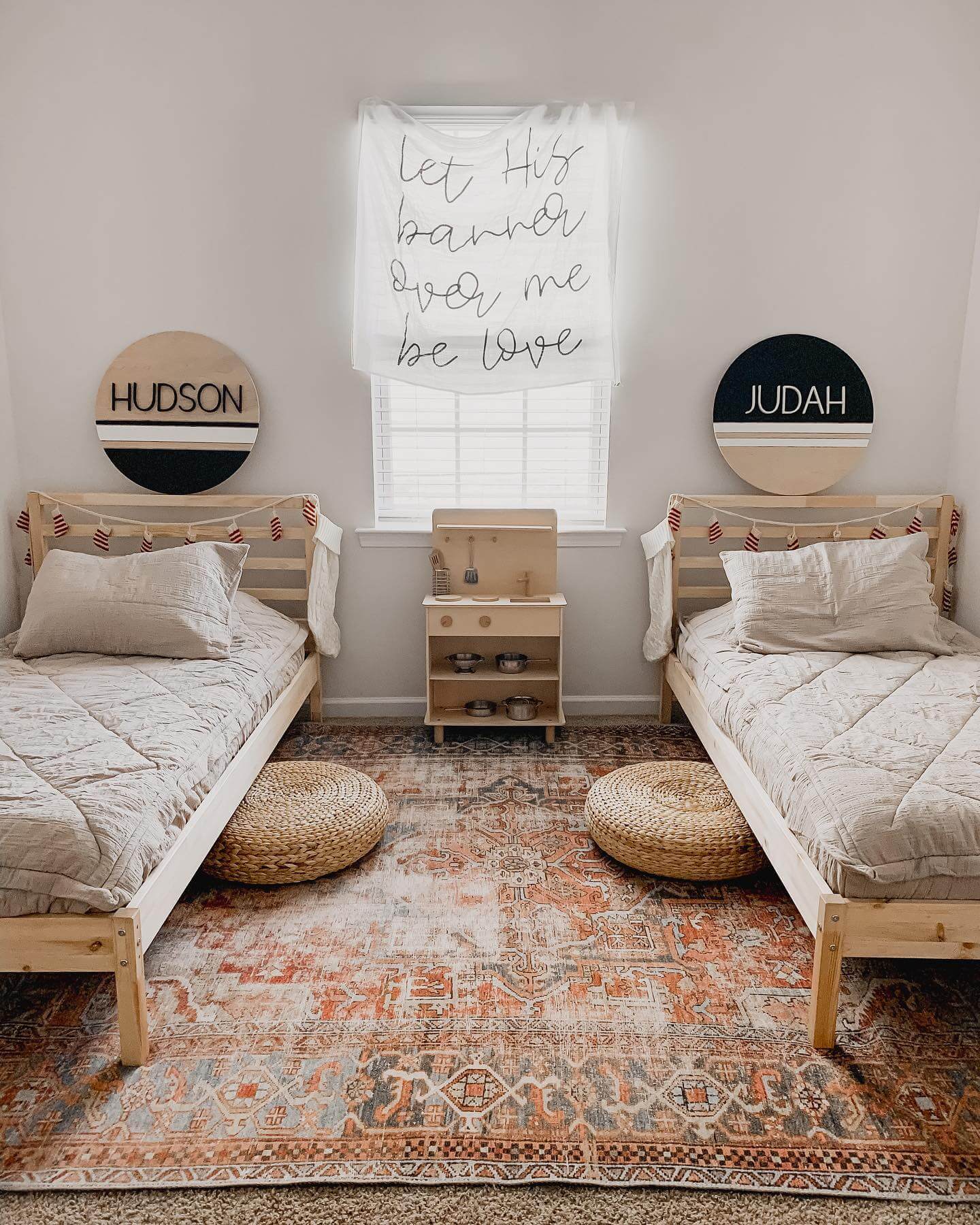
Organization keeps peace. Start with categories—building, vehicles, figures, puzzles—and give each a hard-sided bin that slides onto low shelves kids can reach. Label with pictures plus words so even pre-readers can clean up independently. Under-bed drawers handle bulky sets; soft zip pouches corral puzzle pieces inside a larger bin. Create a simple toy rotation: only 30–40% of toys live out; the rest rest in a top-closet bin you swap monthly. This reduces visual noise and makes old toys feel new. Hang sturdy hooks for dress-up and sports gear near the door to keep floors clear. Over-the-door shoe organizers are secret heroes for Hot Wheels, action figures, and art supplies—one pocket per child for fairness. Add a donation box in the closet and let kids choose one item to release when something new arrives. Cap it with a five-minute nightly reset—turn on a fun playlist and race the song. Thoughtful containment plus routine turns “clean your room” from a battle into a habit in any shared boys’ bedroom.
Two-Person Study Station: One Long Desk, Twice the Focus
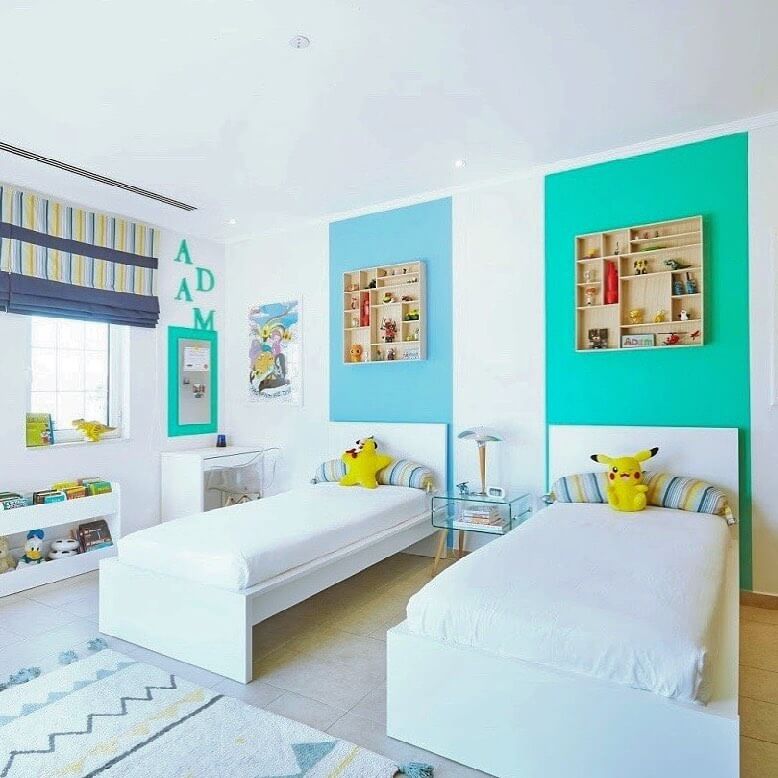
Homework is smoother when each child gets a defined workstation. Install a wall-to-wall countertop or a long desk with two drawer units as supports—cost-effective, sturdy, and perfect for narrow shared rooms. Mark each study zone with its own task lamp, corkboard or pegboard, and a small drawer for personal supplies. Mount a power strip under the desk for hidden charging; add a narrow shelf above for books and a shared printer. Cable clips and a cord sleeve keep everything tidy. If siblings distract each other, use a low divider or a felt privacy panel between chairs during homework hours, then remove it for projects. Choose adjustable chairs and mind ergonomics: feet flat, screens at eye level. Keep art bins mobile in a rolling cart that tucks under when not in use. Finish with a weekly calendar and a color-coded system—one color per kid—to track assignments and activities. A streamlined, side-by-side study area respects different learning styles while maximizing precious square footage in a shared boys’ bedroom.
Layered Lighting for Sleep, Stories, and Midnight Moves
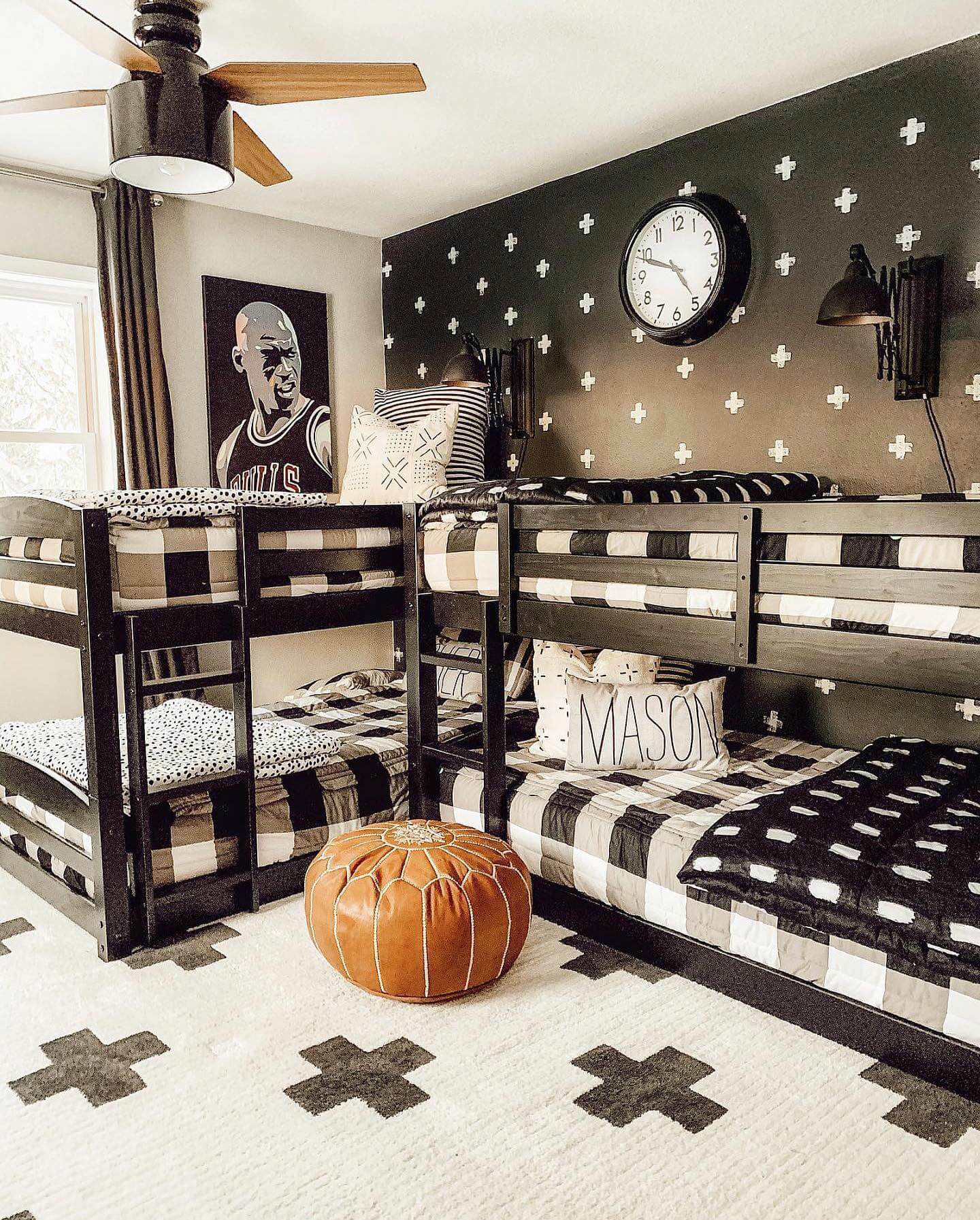
Good lighting solves real-life pain points in a shared boys’ room. Start with a dimmable ceiling fixture for bright playtime and low, cozy evenings. Add wall-mounted reading lights at each bed with individual switches so one brother can finish a chapter while the other nods off. Warm bulbs (2700K) cue sleep; avoid cool blue light at night. A small motion-activated nightlight near the floor or under the bunk makes bathroom trips safe without waking the room. By the desk, task lamps with focused beams prevent glare and arguments over shadowed worksheets. Window treatments matter, too—layer blackout shades behind curtains to support early bedtimes and weekend sleep-ins. If cords are a concern, use plug-in sconces with cord covers or battery-powered options. Put fairy lights or LED strips on timers for magical ambiance that shuts off automatically. Label switches and set a simple “lights plan” so kids know what to use when. Thoughtful layers make the space flexible—from pillow forts to quiet nights—in any shared boys’ bedroom.
Textiles That Soften Sound and Add Personality
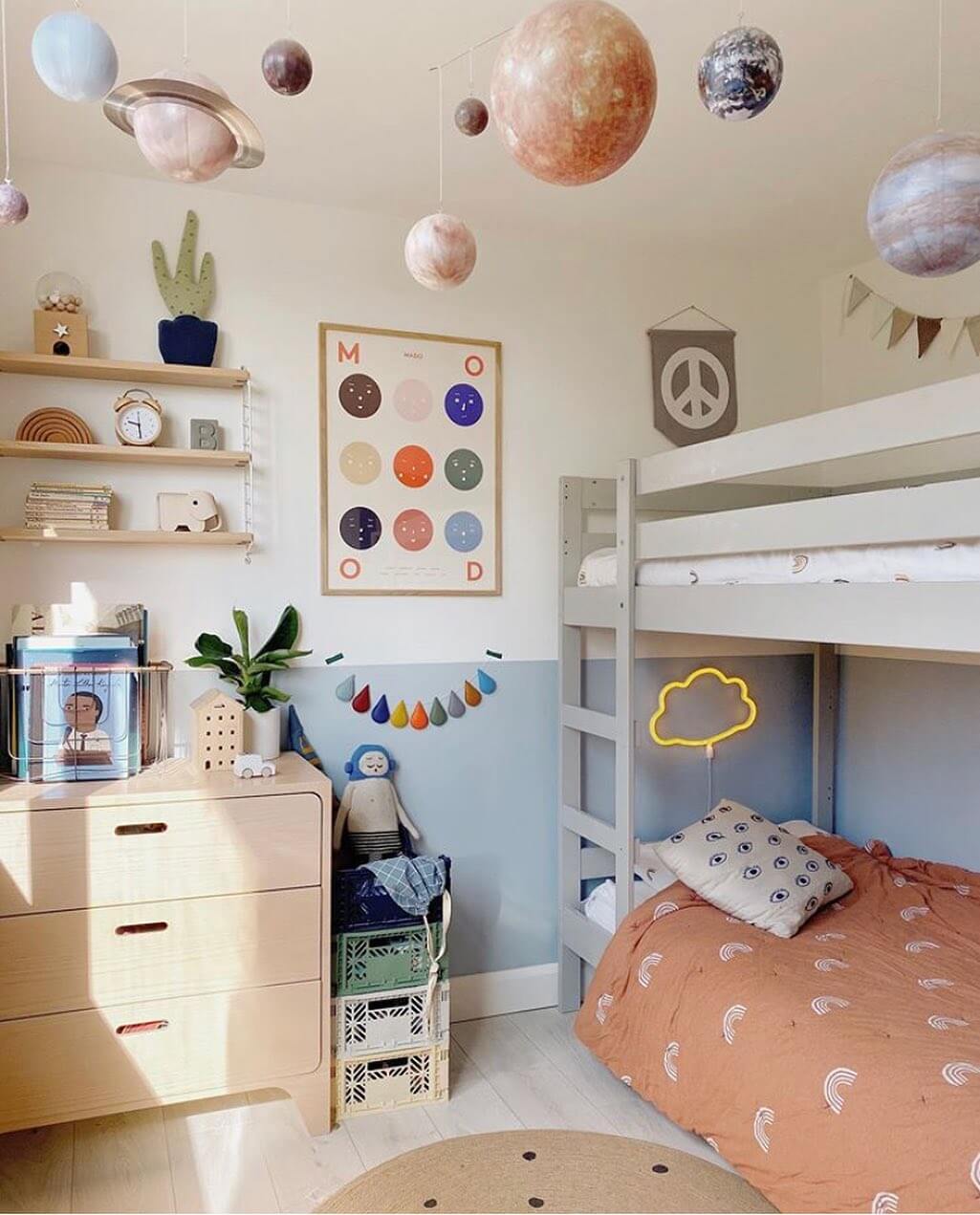
In a room for brothers, fabrics do triple duty: comfort, style, and sound control. Start underfoot with a dense, low-pile rug that’s easy to vacuum and muffles thumps. If beds run wall-to-wall, a runner between them catches early-morning feet; in bunk rooms, add a small washable mat at the ladder or stairs. Choose curtain panels that fully cover windows—linen blends drape well and, paired with blackout liners, improve sleep hygiene. Bedding is where personalities pop without visual chaos: keep duvet covers in a shared stripe or solid, then switch out shams and throws by child. Mix small-scale patterns (pinstripes, checks) with one bolder motif to avoid clutter. Bed skirts can conceal rolling storage while keeping dust down. For a cozy reading corner, layer floor cushions and a quilt in a hardy, machine-washable fabric. Prioritize performance textiles—washable cotton, microfiber, or outdoor-grade rugs—for durability. The right textiles absorb noise, add warmth, and tie your color palette together, making a shared boys’ bedroom feel calm but far from boring.
Theme, But Make It Flexible: Interests on a Budget
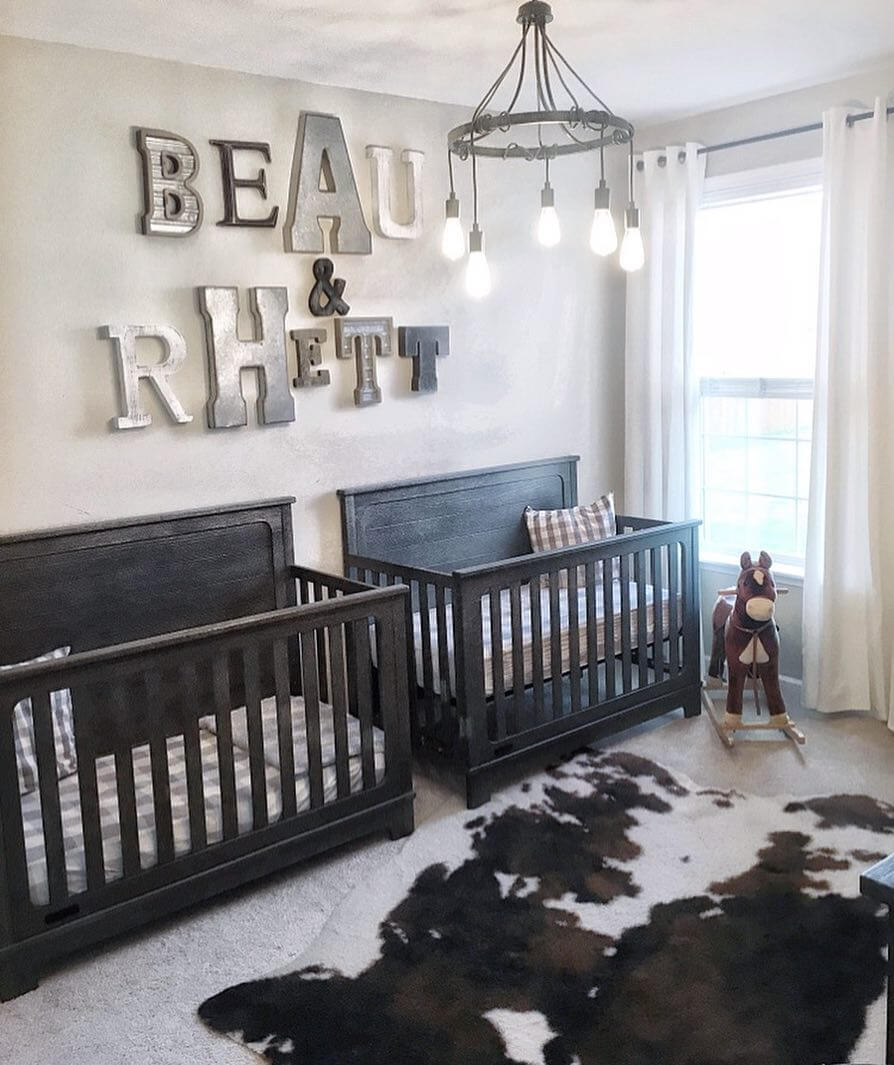
Lean into what your kids love—sports, space, animals—without painting yourself into a corner. Keep the big pieces (walls, beds, rug) neutral, then layer theme through swappable accents: pennants above each bed, framed posters, a novelty pillow, or a vintage locker basket for balls. Use a cork strip or wire gallery to display rotating art, medals, and trading cards so the room evolves with seasons and passions. Contain collections on a single shelf per child to set limits and prevent spread. If you want wall impact, choose peel-and-stick decals or a single removable wallpaper panel behind a nightstand. Bedding is a low-risk place for character prints—use them on sheets that can change as interests do, keeping duvets simple. Aim for three repeating elements of the theme, max; beyond that, the room tips from styled to cluttered. This flexible approach keeps a shared boys’ bedroom feeling personal to each child, but easy to refresh as they grow.
Renter-Friendly, High-Impact Upgrades for Shared Rooms
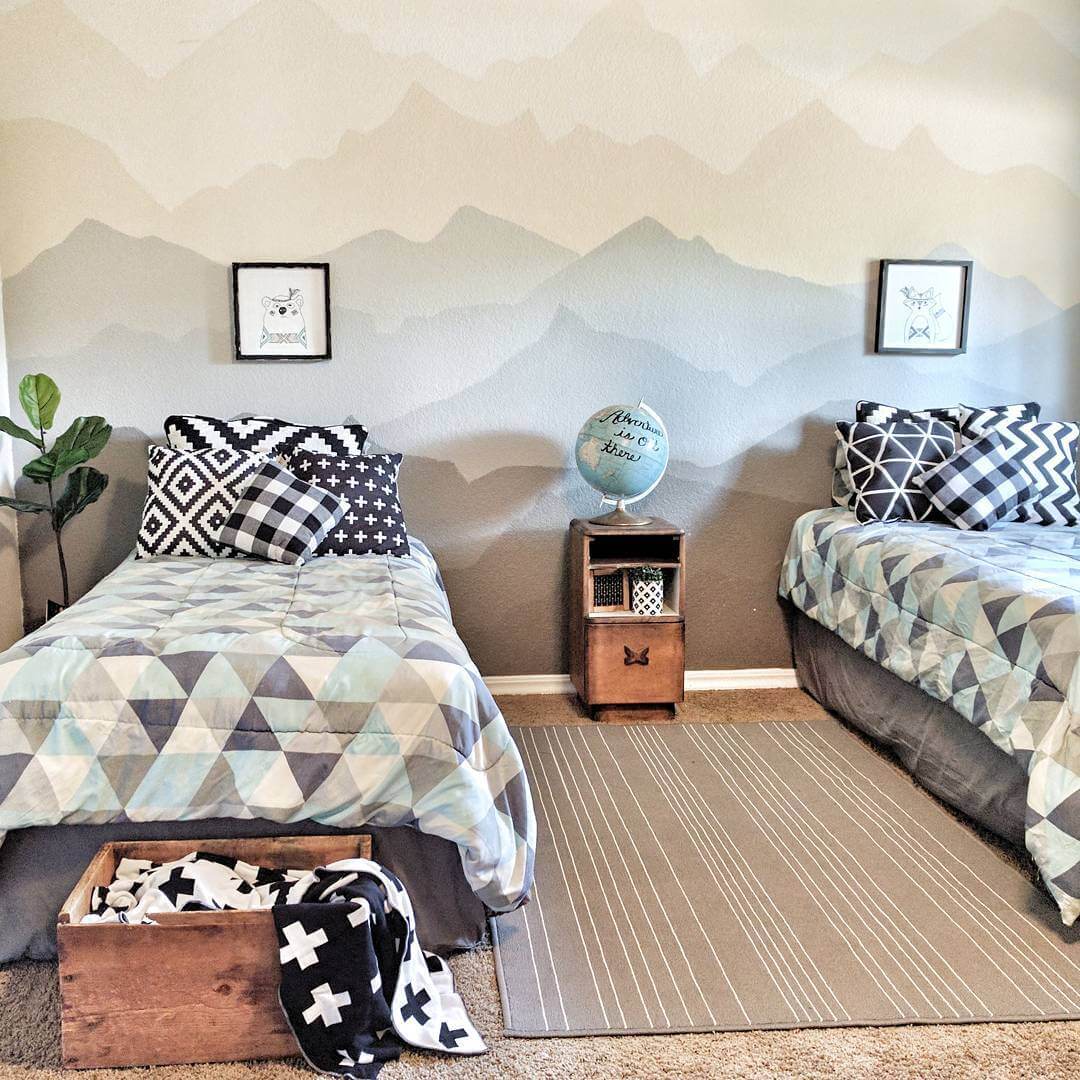
You don’t need a renovation to transform a shared boys’ bedroom. Try peel-and-stick wallpaper on one wall or inside a closet-turned-reading-nook for instant character. Swap builder bulbs for warm LEDs and add plug-in sconces with cord covers—no electrician required. Use removable hooks for backpacks, headphones, and robes to keep floors clear; an over-the-door rack adds bonus hanging space. Slide furniture felt pads under dressers to reconfigure layouts without scuffing floors, and anchor tall pieces with no-stud straps where allowed for safety. Add under-bed risers to gain drawer clearance, then hide storage with tailored bed skirts. Washi tape can create temporary wall stripes, road tracks on a play rug, or picture “frames” for kids’ art. For windows, clip rings make curtain swaps fast as tastes change. Finally, invest in a great rug—big enough to tuck under front legs of furniture—to visually pull the room together. These simple, reversible updates deliver a custom look, better function, and sibling harmony on any budget.
Get the Fail-Safe Paint Color Playbook (Free PDF)
36 proven colors • 8 ready palettes • trim & sheen guide • printable testing cards.
Loft Bed + Play Nook: One Footprint, Two Functions
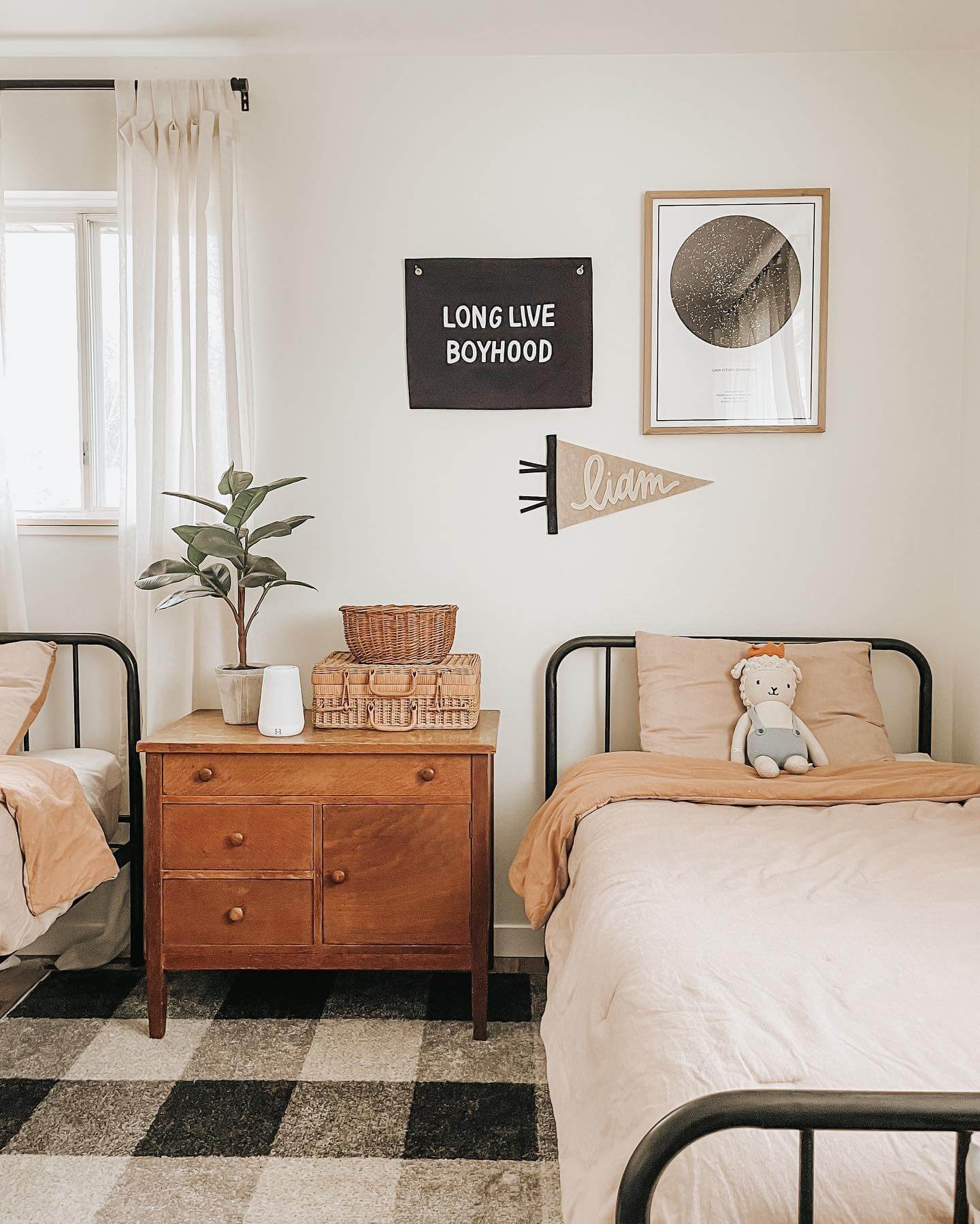
When square footage is tight, lofting one bed instantly frees a full play or study zone underneath—no remodel required. For mixed ages, place the older sibling up top with sturdy guardrails and an angled ladder, then carve a quiet nook below for blocks, train tracks, or a compact desk. A cushy rug, low bookshelf, and dimmable clip light make the under-loft area feel like a private clubhouse without closing off sightlines. Keep the other child’s bed at standard height to balance the room visually and simplify bedtime routines. To avoid clutter creep, add shallow wall shelves for small sets and labeled stackable crates that slide out for quick cleanups. LED strips along the loft slats double as night lighting and can be put on a timer for sleepy-time cues. Coordinate bedding and storage bins in two complementary colors to reinforce “this is mine, that is yours” while maintaining a cohesive boys’ room palette. The result is a flexible layout that maximizes floor space, adds a sense of independence, and grows from playtime to project time with minimal effort.
Trundle Tactics: Sleepover-Ready Without Sacrificing Space
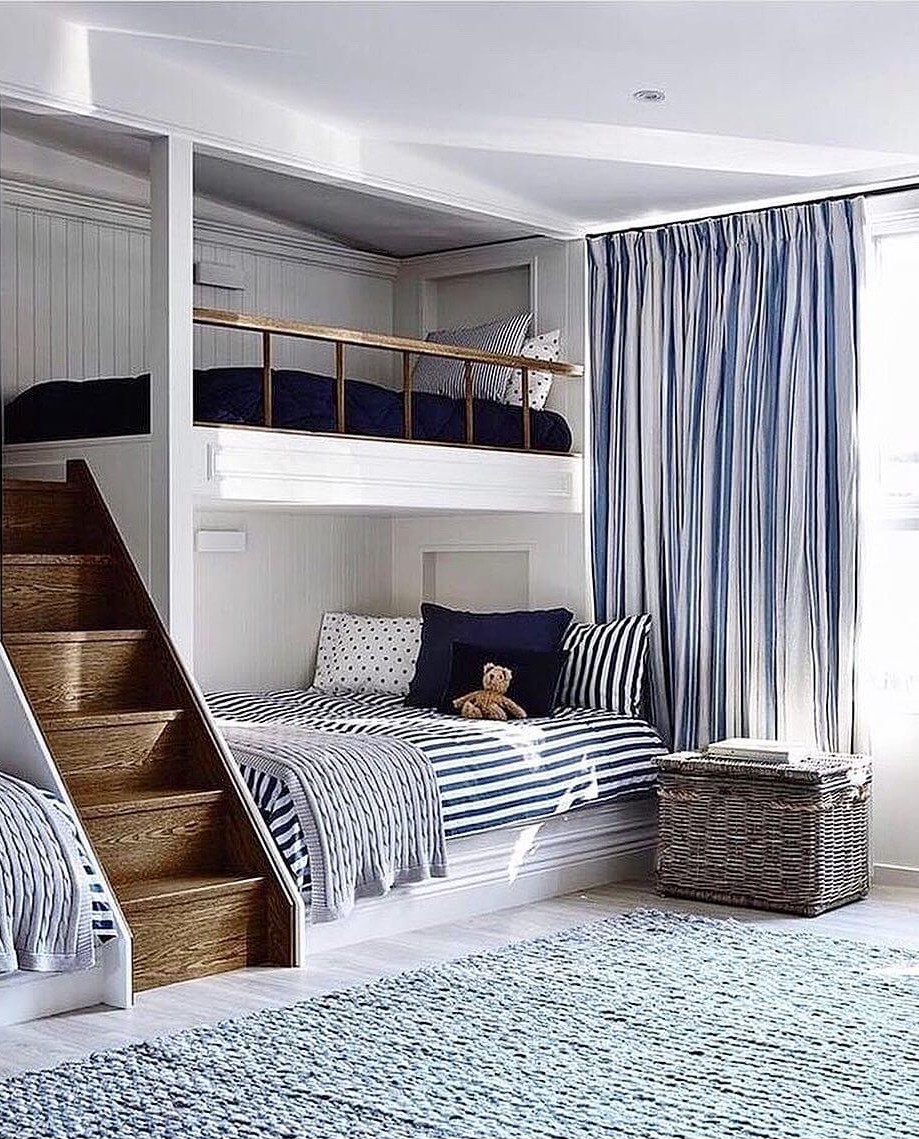
A trundle turns one twin into a two-for-one solution—perfect for siblings in a small room and the occasional guest. Choose a low-profile trundle with smooth casters and locking wheels so it glides out at bedtime and tucks away by morning. To keep under-bed dust at bay, use zippered mattress protectors and slim, lidded bins for off-season clothes or spare bedding along the sides. If floors are uneven, add a thin, grippy rug under the trundle path to prevent drift. For daily life, the main bed can double as a daybed: layer a long bolster and a couple of firm Euro pillows to create a backrest for reading. Color-code sheets and blankets so each child knows which set is theirs—even when the trundle hosts a friend. Store an extra duvet in a vacuum bag behind the headboard to pull out in seconds. This setup preserves open play space, keeps routines predictable, and gives you instant flexibility for sleepovers, sick nights, or transitions when one child needs more room.
Pegboard + Hook Wall: A Vertical Command Center for Two
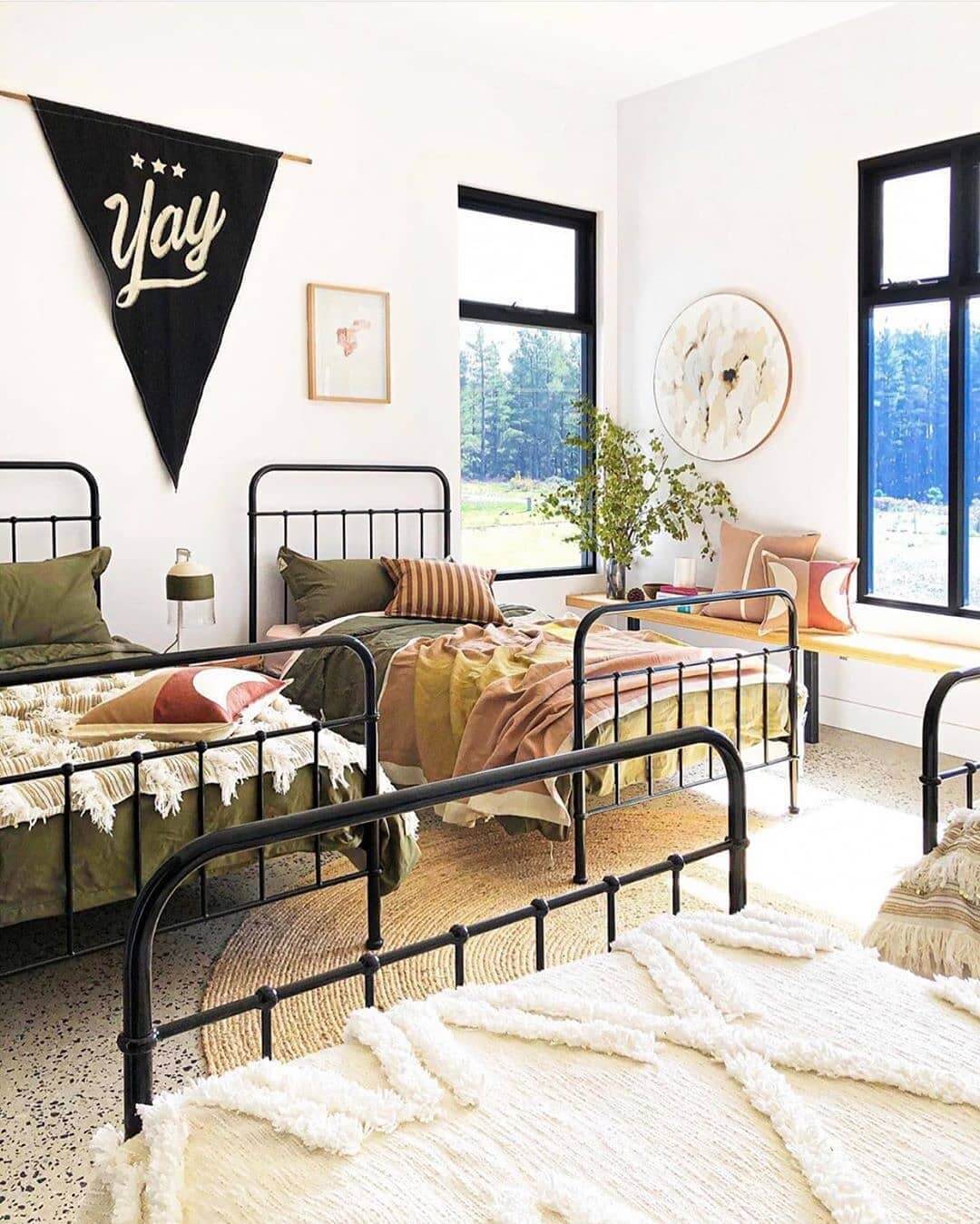
Turn a blank wall into a shared command center with a pegboard or slat system that corrals the daily chaos—backpacks, caps, medals, and art supplies—without eating floor space. Mount panels at kid height, then assign each sibling a color zone using baskets, S-hooks, and labeled cups. Add a shallow shelf for library books that need to go back and a clip rail for permission slips; you’ll streamline school mornings in a snap. For sports-heavy households, hang mesh bags for balls and a sturdy hook for helmets so gear dries between practices. Keep the aesthetic tidy with repeating hardware and matching bins, then echo those finishes on the opposite side of the room for balance. In rentals, use a French cleat with minimal wall holes or a freestanding pegboard frame that nests over a dresser. The vertical layout expands as your boys’ interests change—swap in a charging shelf for earbuds later—while reinforcing personal responsibility and clearly defined zones in a shared boys’ bedroom.
Window Bench With Cubbies: Light, Seating, and Hidden Storage
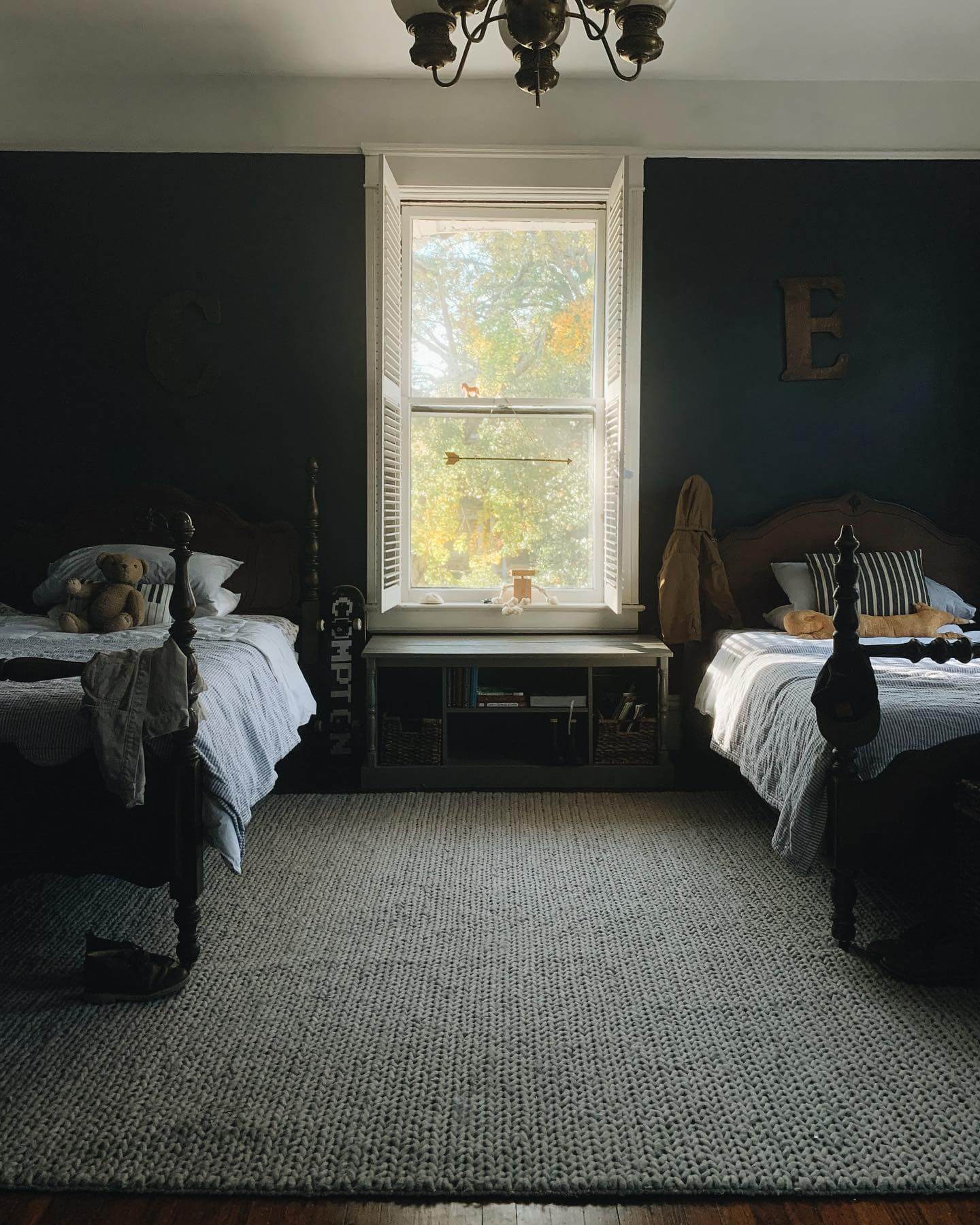
A window wall often gets wasted; turn it into the room’s hardest-working spot with a built-in or modular bench packed with cubbies. The bench creates a reading perch bathed in natural light, helps anchor twin bed placement on adjacent walls, and hides toys, trains, or shoes behind doors or in labeled baskets. Use two sets of identical cubbies—one per child—to avoid “that’s mine” debates, and add a center drawer for shared items like puzzles. A firm, washable bench cushion plus a couple of lumbar pillows makes story time comfortable without swallowing the sill. If you rent, line up ready-made storage units and top them with a single plywood slab cut to size; finish the edge for a custom look and secure it with removable fasteners. Remember safety: use cordless shades or wands and keep cords anchored. The bench’s low profile keeps sightlines open, lets ambient light bounce around, and adds both seating and segmented storage that simplifies cleanups in a busy boys’ shared room.
Get the Fail-Safe Paint Color Playbook (Free PDF)
36 proven colors • 8 ready palettes • trim & sheen guide • printable testing cards.
Double-Rod Closet Makeover: Equal Space, Fewer Morning Battles
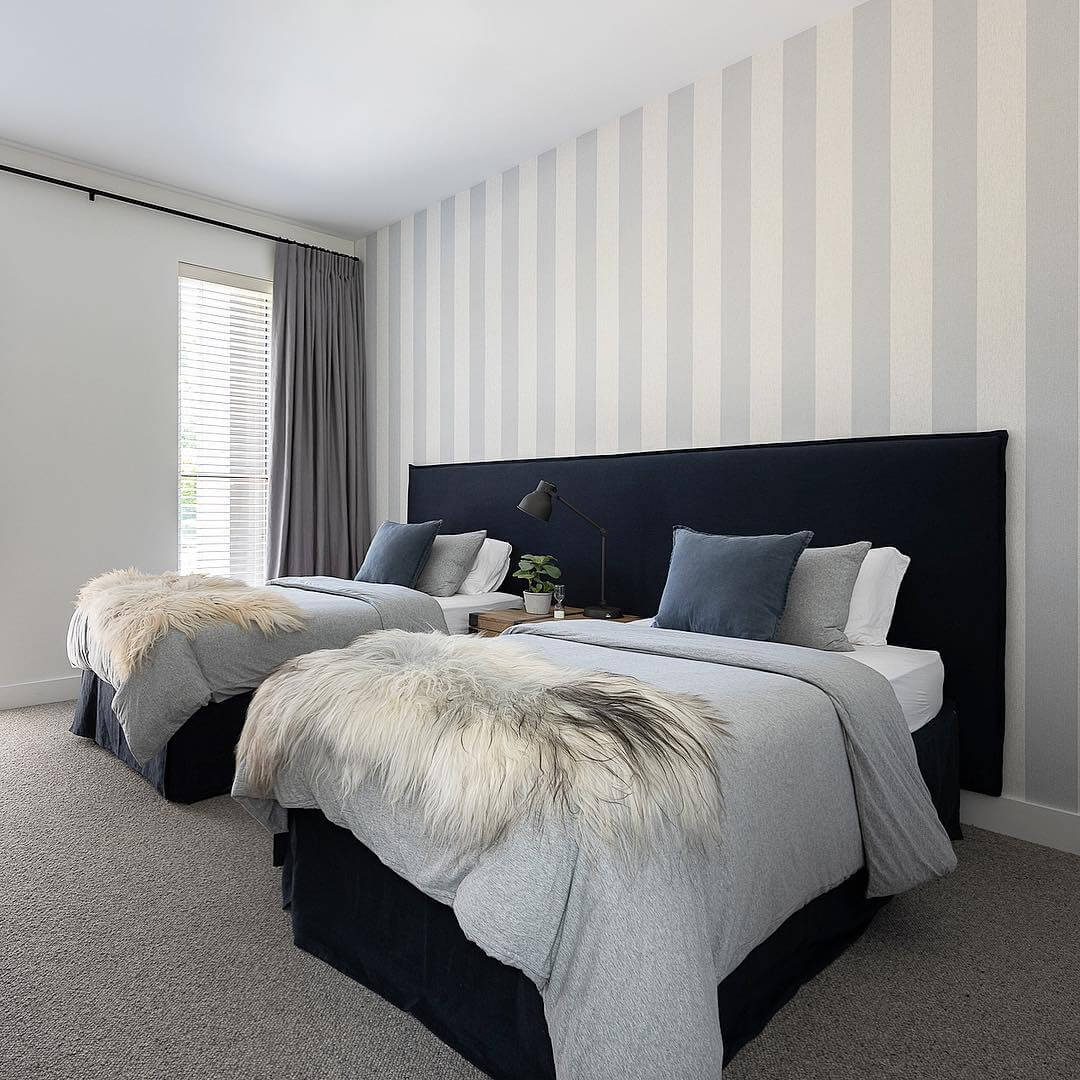
Give each child a fair, functional closet zone by splitting vertical space: double rods on one side for shirts and pants, and a low drawer stack on the other for socks and pajamas. Use shelf dividers up top for labeled bins—uniforms, seasonal gear, or hand-me-downs waiting their turn—and a slim shoe rack on the floor to keep pairs together. Over-the-door racks hold hats and belts, while a hanging organizer with color-coded cubes creates a weekday wardrobe plan that makes mornings smoother. For longevity, install adjustable rail systems so heights can shift as your boys grow; even inexpensive track systems from big-box stores deliver a custom fit. Add motion-sensor puck lights to banish dark corners and a mirror on the inside of the door to keep outfit checks out of traffic lanes. By assigning equal, clearly marked sections, you reduce friction and keep the shared boys’ bedroom free of overflow clutter that often spills out when closets aren’t working hard enough.
Color-Block Walls: Define Sides Without Bulky Dividers
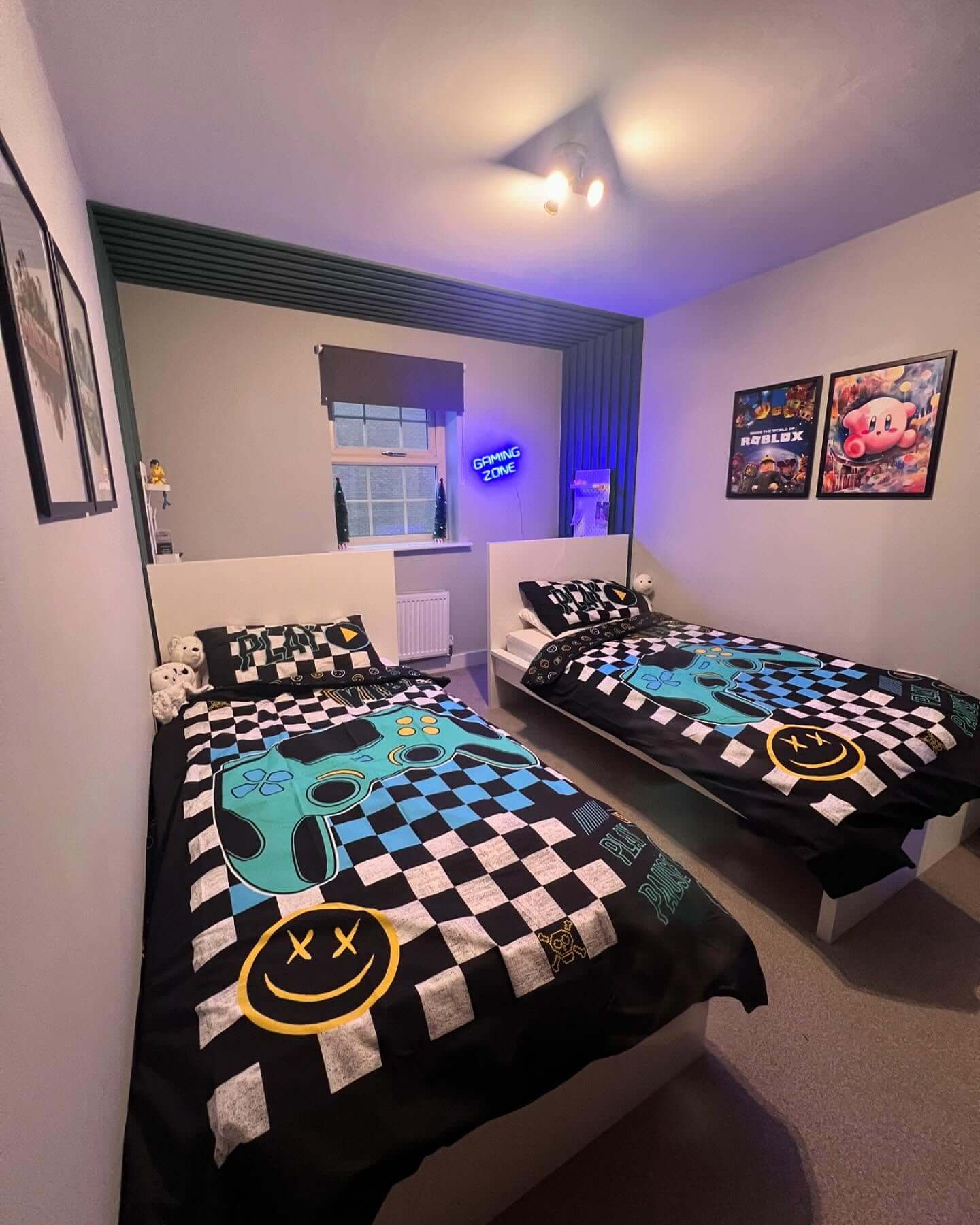
Create visual “zones” with paint instead of furniture. A vertical color-block down the center wall or two complementary half-walls behind each bed instantly defines personal space without stealing inches. Choose durable, wipeable finishes in a palette that can grow—from muted navy and clay to eucalyptus and sand—then echo each hue in a throw pillow or storage bin so the scheme feels intentional. Painter’s tape and a laser level make crisp lines; wrap the color onto the ceiling a few inches to make low rooms feel taller. For renters, use removable murals, oversized decals, or fabric wall panels applied with starch for the same effect. The beauty of color-blocking in a boys’ shared room is the flexibility: if interests shift from dinos to drones, the architecture of the space still reads calm and cohesive. Pair the walls with matching nightstands and individual sconces so each child controls their own light—privacy, personality, and peace, no carpenter required.
Sports Gear Wall + Dual Hampers: Streamline Dirty-to-Clean
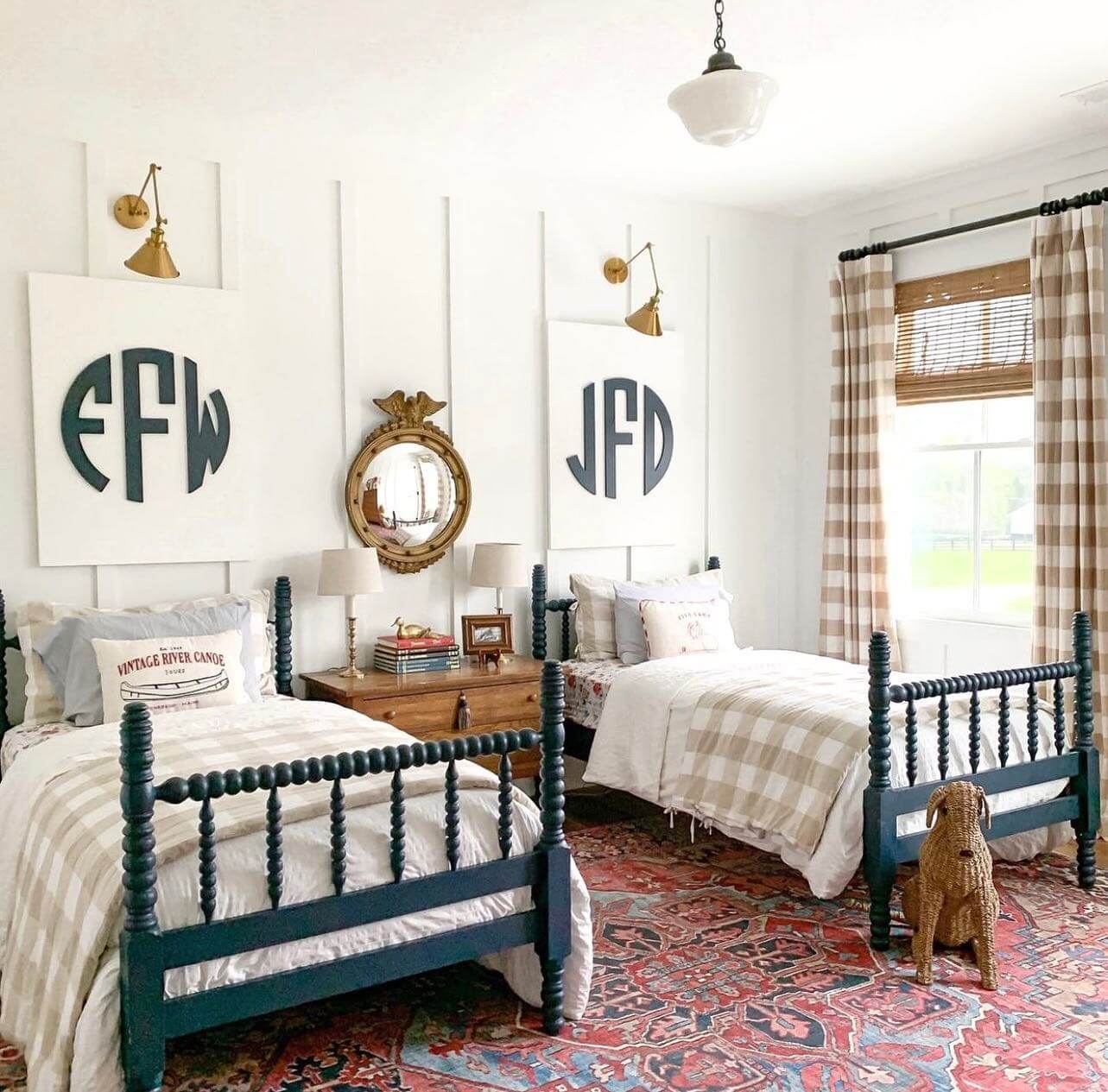
Active kids generate gear and laundry fast. Dedicate a short wall to a sports zone with ball claws, a helmet shelf, and ventilated racks for pads so everything airs out between practices. Mount a narrow bench below for cleat changes and stash wipes in a caddy. Right beside it, place two slim hampers—one per child—labeled with icons for pre-readers. This keeps dirty jerseys from landing on beds and makes sorting a habit. Use rugged, easy-clean bins in the same finishes as your desk or bunk hardware to maintain visual consistency. A small cork strip or magnetic rail above the zone holds game schedules and ribbons without spilling into the rest of the boys’ room decor. On Sundays, have each child clear the rack and check for missing pieces; the routine reduces weekday stress and protects the rest of the space from sweaty clutter. The result: a tidy, smell-smart setup that respects both siblings’ stuff and your storage sanity.
Book Ledges + Sconces: Build a Calm Bedtime Routine
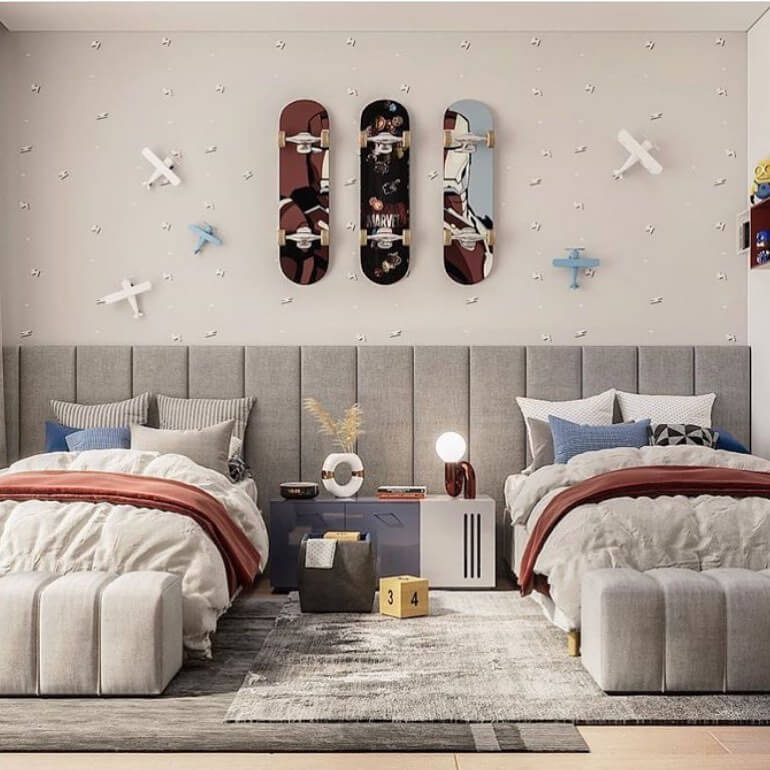
Front-facing book ledges turn covers into art and make it easy for kids to choose a story, promoting calmer nights in a shared bedroom. Install three short rails near each bed at kid height, then add individual plug-in or battery sconces with warm bulbs and on/off toggles so each child controls their own glow. A small tray or pocket caddy next to the light corrals bookmarks and glasses. Keep ledge selections tight—8–10 books per child—and rotate weekly from a larger bin on the closet floor to keep choices fresh without visual chaos. If beds are in bunks, mount ledges low for the bottom and a single slim shelf with a lip for the top bunk, plus a clip light secured to the guardrail. Layer blackout shades with a textured curtain to block light bleed and soften sound, supporting smoother transitions to sleep. This micro-zone blends function, literacy, and design while giving siblings autonomy over their wind-down time.
Platform Bed Drawers: Deep Storage Under Each Twin
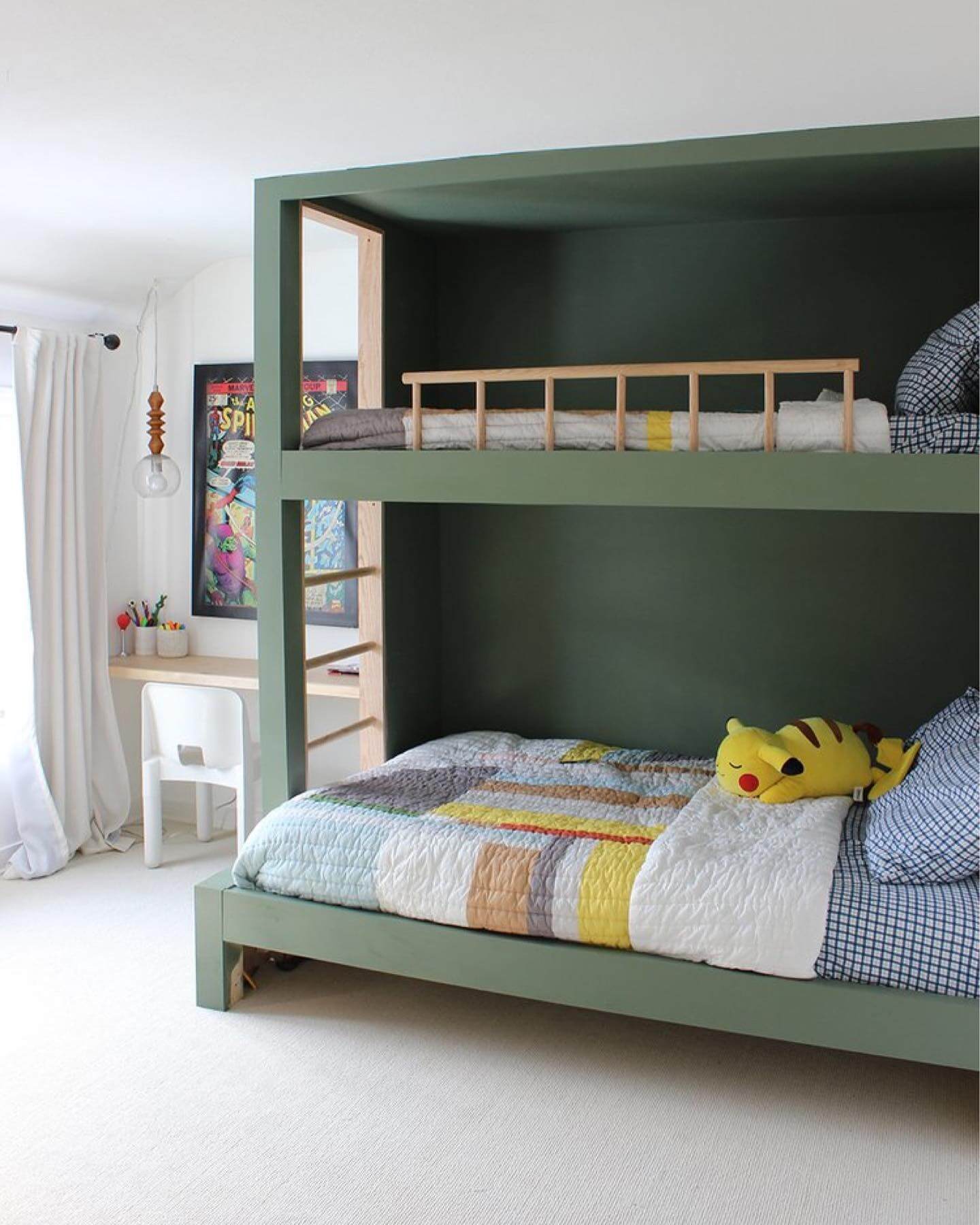
Even without bunks, platform bases with built-in drawers can shoulder a surprising amount of storage—freeing the closet and taming toy overflow. Assign each child one large drawer for everyday clothes, one for pajamas and underwear, and one for “treasures” or hobby kits. Fit soft-close slides and full-extension runners so kids can safely manage access. Low dividers keep socks from migrating while clear labels (words + icons) boost independence. For rooms with wall-to-wall twins, alternate drawer sides—left for one bed, right for the other—to maintain easy reach and avoid bumping. If you’re retrofitting existing frames, add rolling crates with felt pads to protect floors and a simple toe-kick to hide the view. Stick to the room’s core palette for fronts and handles so the units read like quiet architecture rather than more “stuff.” The payoff is big: more floor space for play, faster cleanups, and a shared boys’ bedroom that stays organized Monday through Sunday.
Gallery Ledges + Magnet Strips: Personalize Without Visual Noise
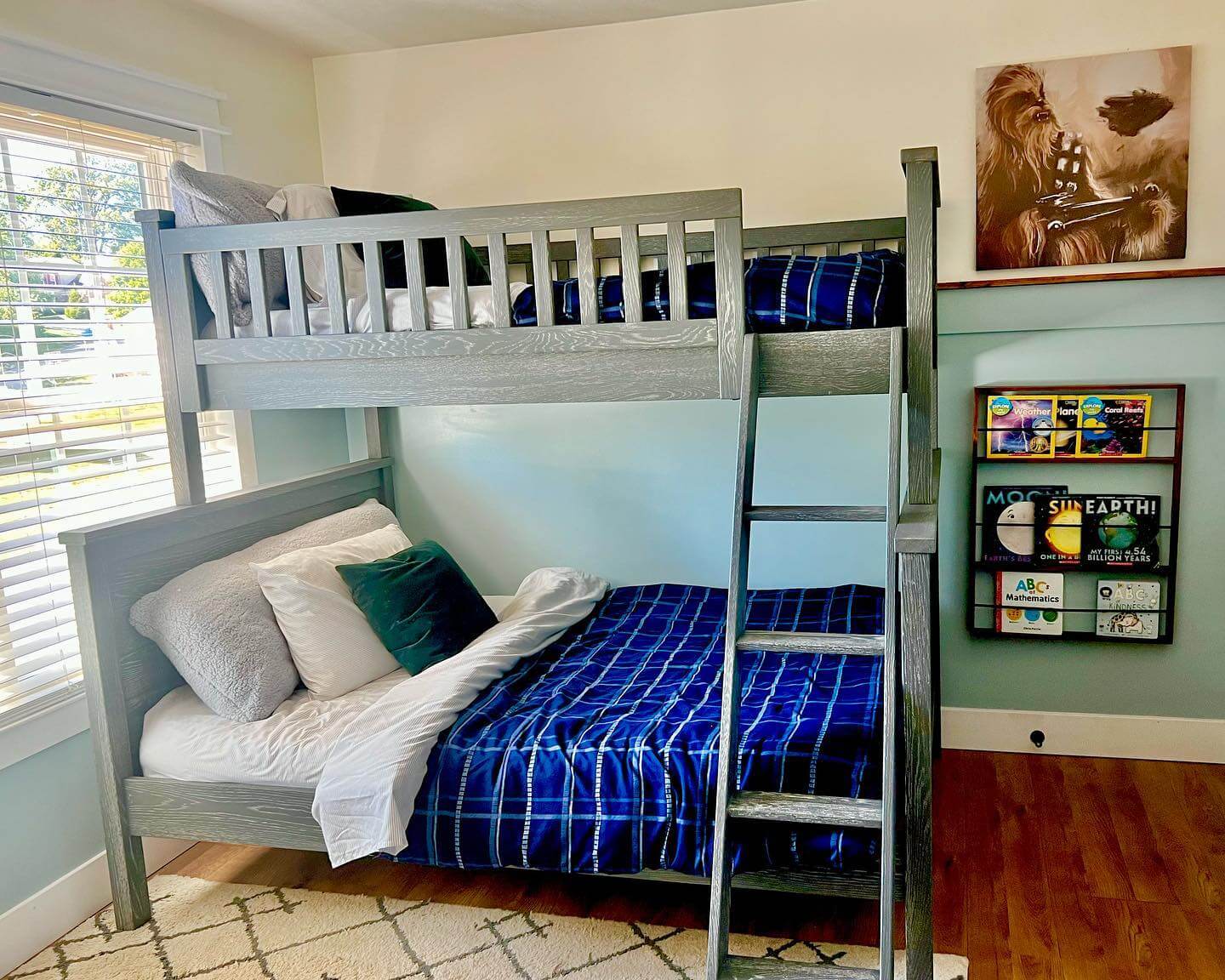
Kids’ creations deserve a stage, but pinboards can look busy fast in a small shared room. Opt for slim gallery ledges paired with magnetic strips to display art, certificates, and favorite photos in a clean, flexible way. Give each child a dedicated ledge length and magnet color so ownership is obvious. Frames can lean and swap easily; flat magnet bars corral trading cards or mini builds without holes. Keep the arrangement low and linear to echo bed heights and align with nightstands for a pulled-together look. A shallow storage box under the lowest ledge holds “waiting” pieces so rotations are simple at clean-up time. This system makes personalization part of the decor—neat, layered, and adaptable—supporting your overall color palette and avoiding clutter. As interests evolve from dinosaurs to skate decks, the display evolves too, preserving harmony while letting both boys feel seen in their shared space.
Corner Bunk Stack + Ladder Shelving: Open Floor, Easy Access
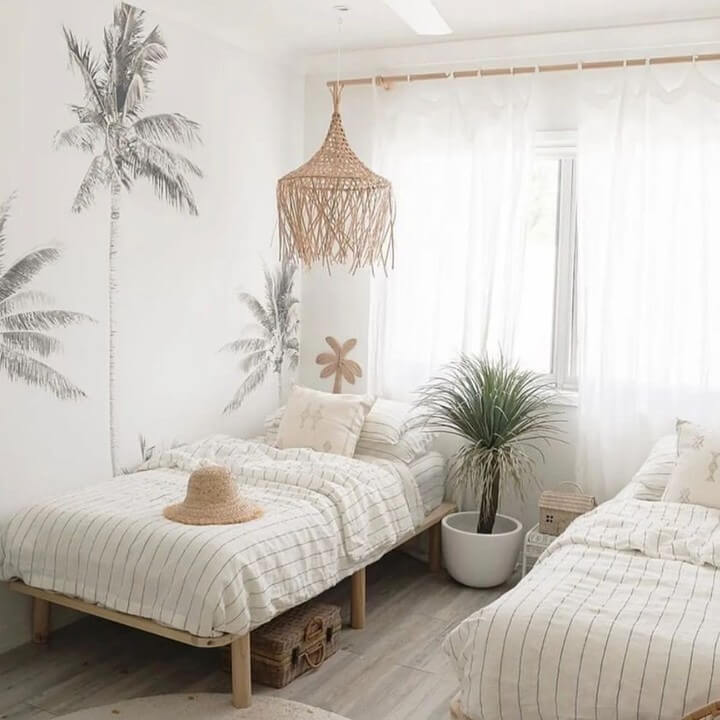
When floor space is tight, a corner bunk configuration earns back precious square footage for play, reading, and morning traffic. Stacking beds at a right angle tucks sleep into one footprint, while a ladder that doubles as shallow shelving turns vertical space into hardworking storage for books, water bottles, and bedtime buddies. For a calmer shared boys’ bedroom, assign each sibling a “side” and a shelf, then add clip-on reading lights with warm bulbs so one night owl doesn’t wake the other. If privacy is a pain point, a slim ceiling track with soft curtains around the lower bunk creates a cozy nook without building bulky dividers. Safety matters: anchor bunks to studs, choose guardrails with small gaps, and keep the top bunk for the older child. Rolling crates under the lower bed corral shoes and sports gear; label by activity so packing for practice is grab-and-go. Keep bedding simple and washable—lightweight quilts and zippered comforters make bunk making doable for kids. The result is a compact sleep zone that frees up the center of the room for a rug, train tracks, or morning stretches, while still giving each child ownership and comfort.
Get the Fail-Safe Paint Color Playbook (Free PDF)
36 proven colors • 8 ready palettes • trim & sheen guide • printable testing cards.
Shared Study Wall: Two Desks, One Calm Command Center
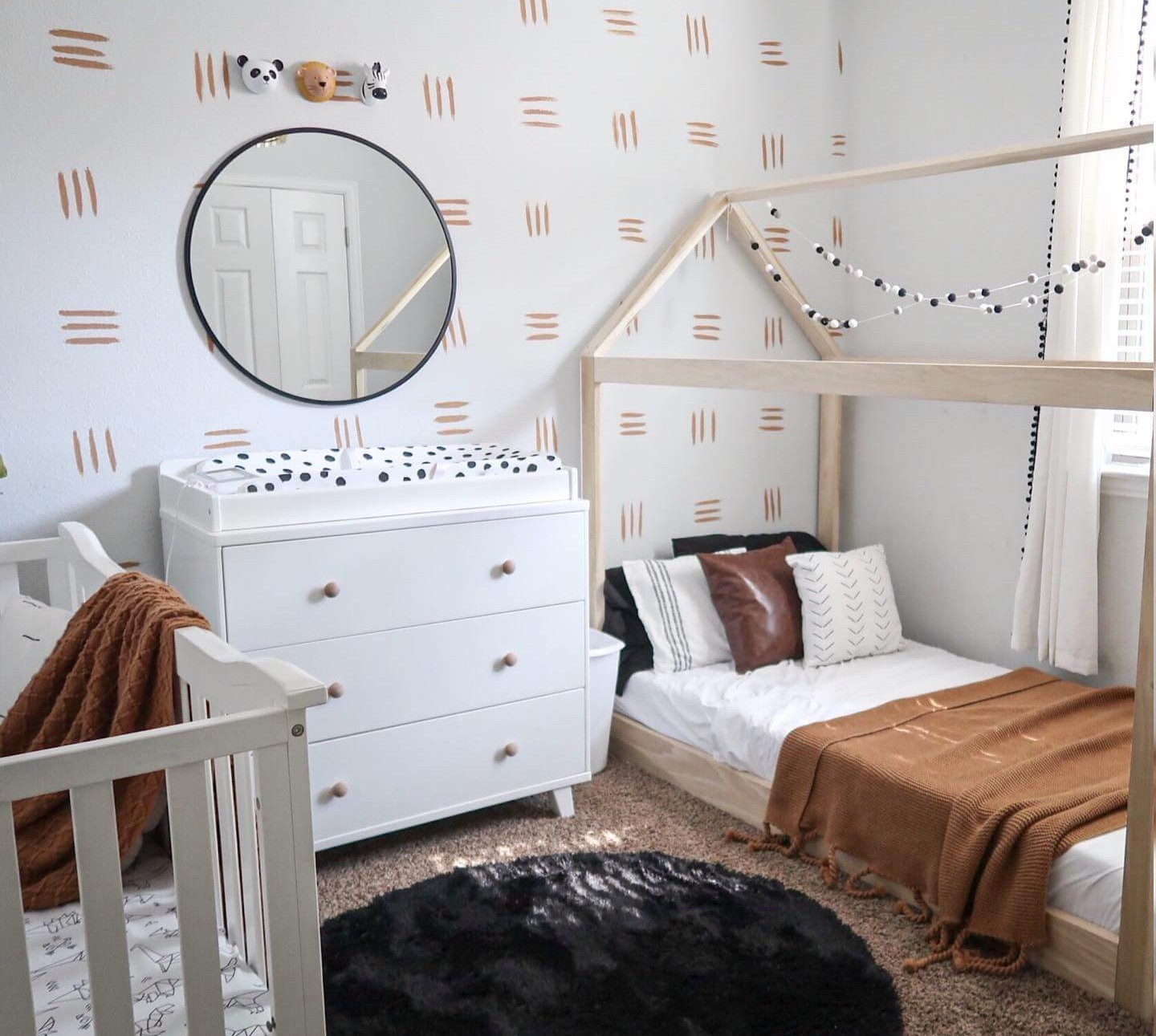
A side-by-side desk wall streamlines homework time and keeps art supplies out of bed zones. Start with a single long surface (countertop, plywood, or a budget-friendly tabletop) supported by two drawer units so each child gets equal storage. Mount a cable tray beneath to hide chargers and install a multi-port power strip with surge protection; color-code cords and label outlets for tablets, lamps, and robotics sets. Above the desk, give each sibling a corkboard or magnetic rail to showcase projects without turning the room into visual clutter—set a “three favorite things” rule to keep displays tidy. Task lights with individual dimmers help focus, while a shared calendar strip tracks library days, practices, and chore rotations. If the room is small, choose shallow desks (16–18 inches deep) and backless stools that tuck in flush. Add felt pads under organizers to soften sound, and a low desktop drawer for “quiet fidgets” to reduce sibling distraction. Tie the study wall into the wider boys’ room palette with matching bins and a runner that defines the zone. With clear boundaries, kids learn to manage their own supplies, and the rest of the room stays restful for sleep.
Color-Coded Storage System: No Mix-Ups, Faster Mornings
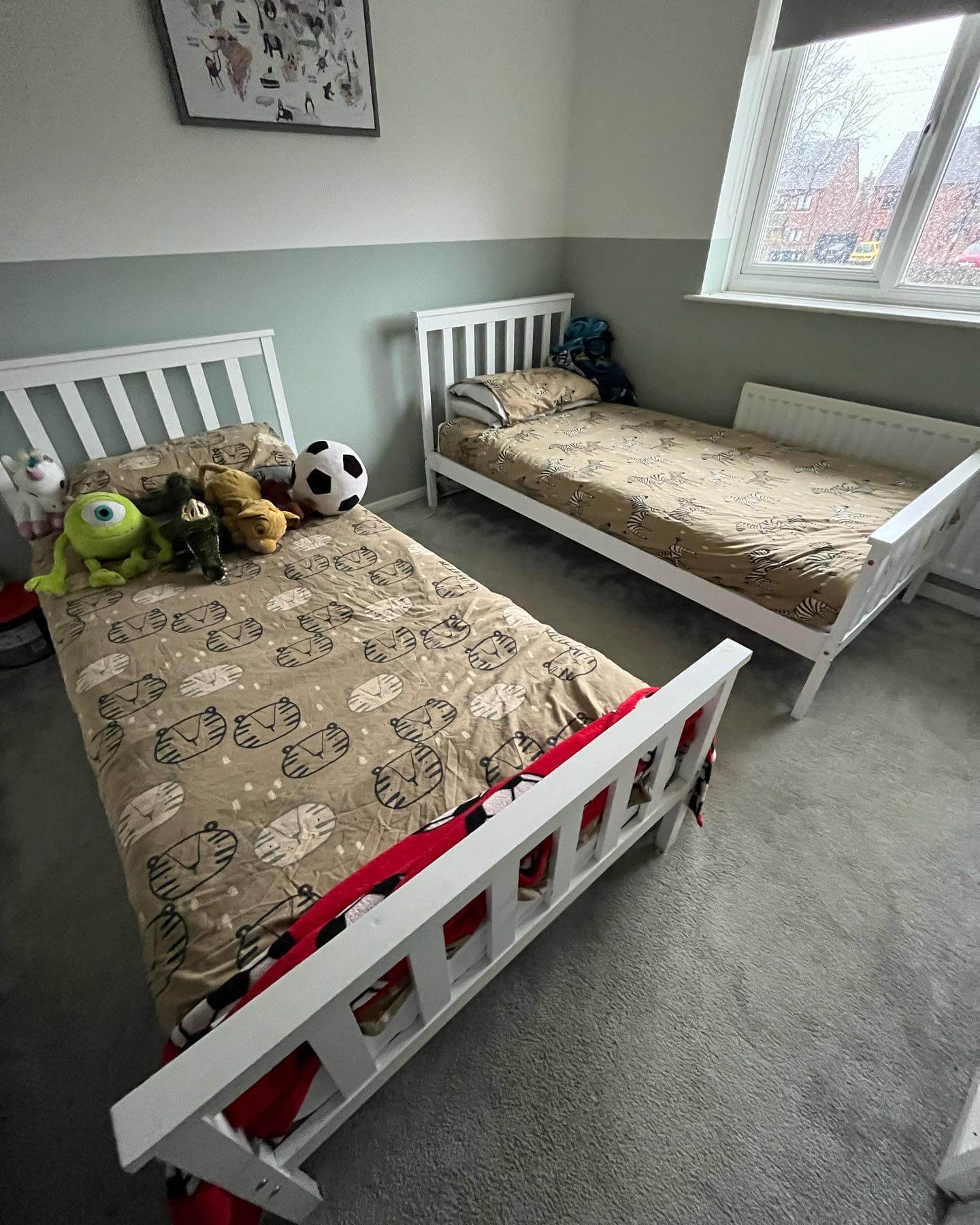
Color-coding is the secret sauce for sibling harmony in a shared boys’ bedroom. Assign each child a signature color—carry it across cubbies, drawer dividers, toothbrush cups, and backpack hooks—so there’s zero debate over whose bin is whose. Use the same hues to thread personality into accents like throw pillows, shelf labels, and towel loops without fragmenting the design. Clear, printed labels (words for readers, icons for younger kids) on baskets and boxes make cleanup intuitive: cars, blocks, costumes, art. Create a weekly “reset shelf” where overflow toys rotate in and out; this keeps surfaces clear and renews interest without buying more stuff. In the closet, add slim shelf risers and matching boxes for out-of-season clothing; install colored hangers to speed up school-day outfit grabs. A shallow under-bed rolling tray per child becomes a private stash for treasures, while a shared “family tools” caddy (lint roller, stain stick, tape measure) prevents hunting at bedtime. Pair this system with your pegboard command wall or double-rod closet for a complete, kid-proof workflow. The visual order reduces sibling friction, builds independence, and makes even small, shared rooms feel bigger and calmer.
Privacy Curtains + Clip Lights: Personal Space in a Shared Place
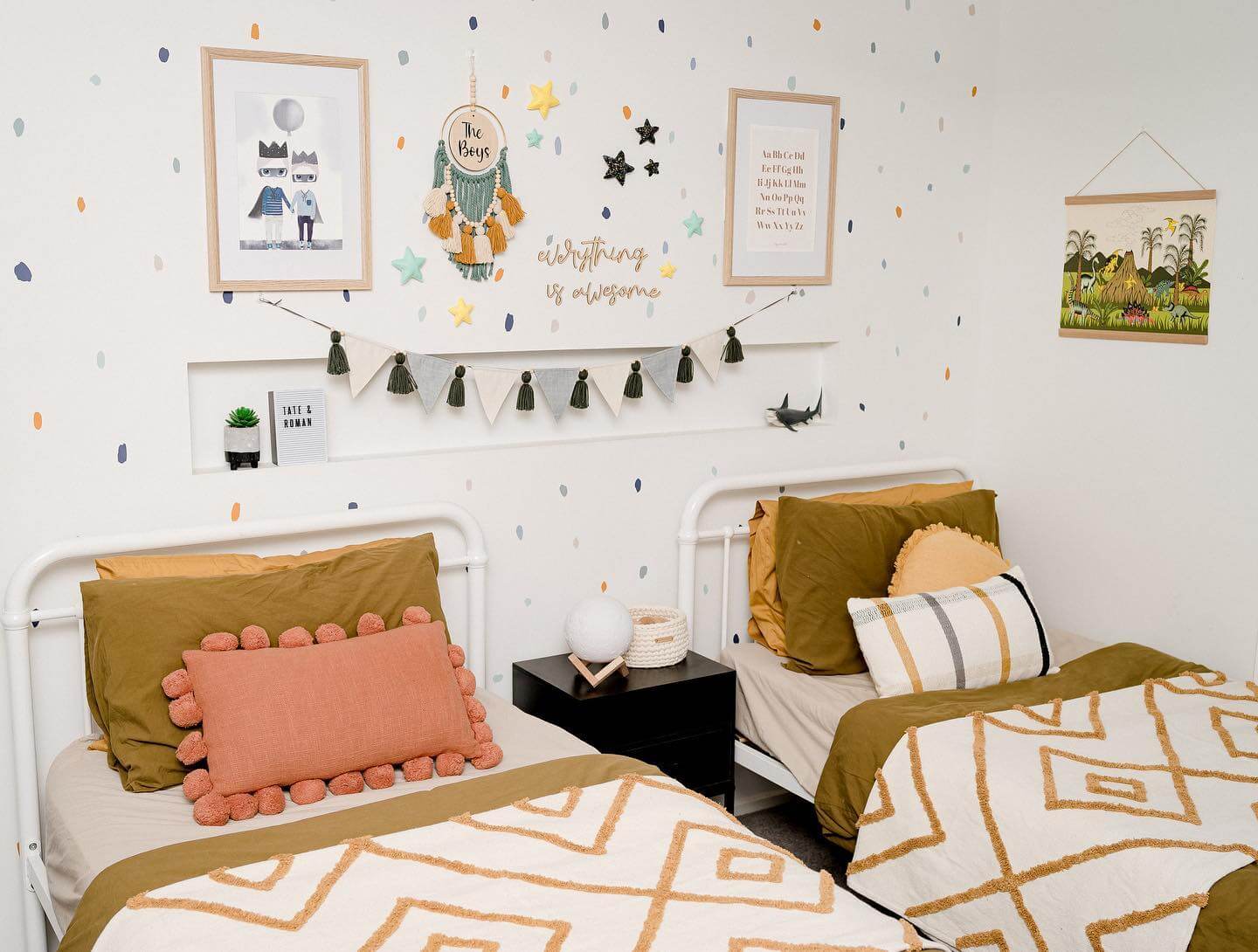
You don’t need drywall to give kids breathing room. Rail-mounted curtains around bunks or across a twin corner carve out instant privacy for reading, decompressing, or early lights-out. Choose washable panels in a durable twill or blackout lining to dim ambient light and calm bedtime energy. Mount a low-profile track to the ceiling and use quiet-glide carriers so late-night curtain swishes don’t wake a sibling. Inside each “pod,” add a clamp-on or hardwired sconce with a warm 2700K bulb, plus a small shelf for a book and water—no more reaching across the floor. Put lights on smart plugs with timers to support consistent sleep cues. For safety, keep fabric clear of fans and heaters and leave a 2–3 inch gap at the bottom for airflow. If you’re renting, tension rods or adhesive-mounted tracks protect walls while still defining space. Complement curtains with contrasting bedding to signal ownership and keep the rest of the room uncluttered. The combination of soft barriers and targeted lighting creates autonomy within a single footprint—key for siblings with different schedules, ages, or sensory needs.
Rug Zoning That Works: Define Sides, Soften Sound
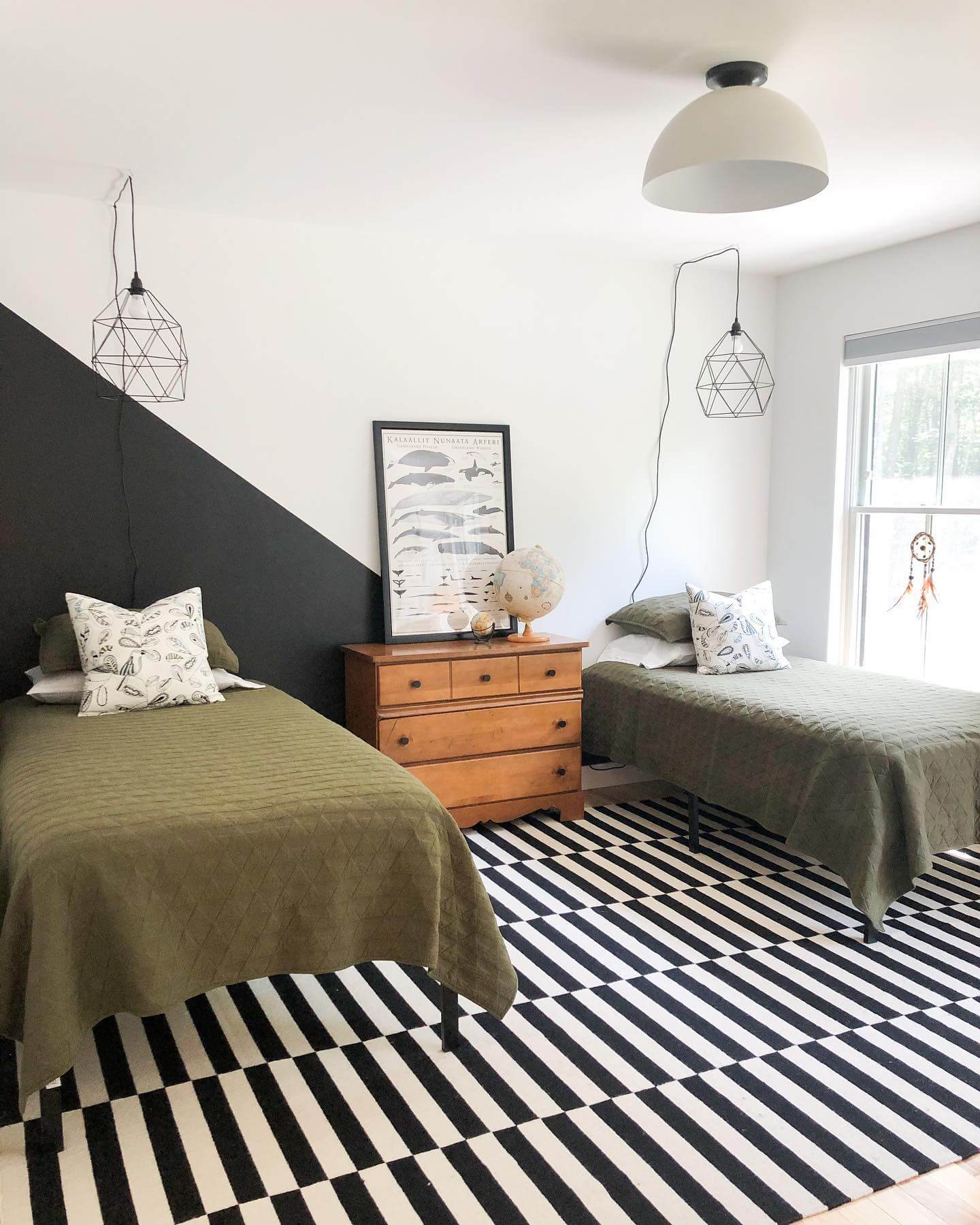
Strategic rugs can quietly solve three shared-room challenges: boundaries, acoustics, and warmth. Use a large, low-pile area rug to anchor the main play zone and two slim runners to mark each child’s side of the room by their bed or closet section. Patterns with subtle stripes or grids help kids “park” toys and line up shoes—function disguised as style. Choose forgiving, family-proof fibers: wool blends for natural stain resistance, or solution-dyed polypropylene/outdoor rugs for easy scrubbing. Always add a quality rug pad to cushion roughhousing and dampen echoes, especially in rooms with hard floors. Color ties everything together: pull accent tones from bedding and storage bins so the eye reads one cohesive story rather than a patchwork. If allergies are a concern, look for low-VOC, washable rugs and set a vacuum routine (top to bottom, then edges). For bunk rooms, run the area rug under at least the front two legs of the ladder and lower bed to steady the footprint. With smart sizing and placement, rugs create visual lanes that reduce bump-ins, absorb noise, and make early mornings kinder on bare feet.
Removable Wall Murals + Decals: Big Impact, Low Commitment
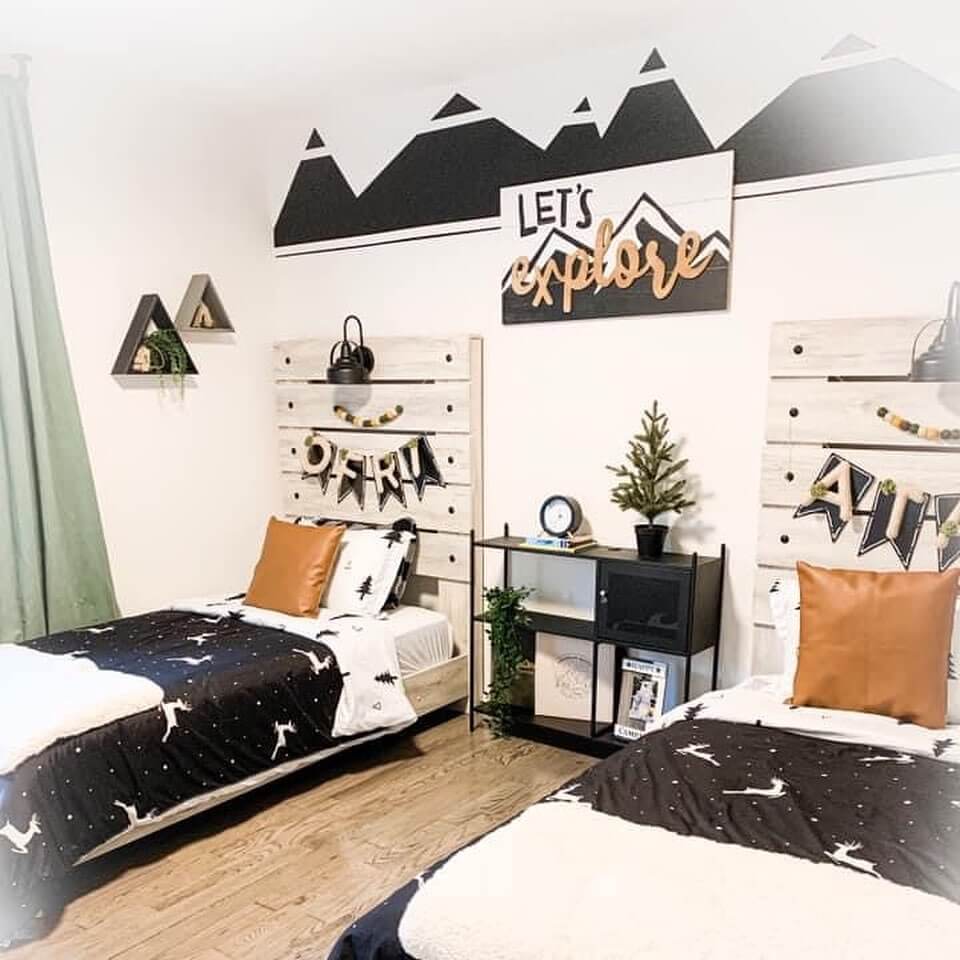
Themes can spark joy without locking you into a phase. Removable murals and decals let a shared boys’ bedroom lean into interests—maps, mountains, space, or bold geometrics—while staying renter-friendly and future-proof. Keep the palette tight (2–3 core colors) and place the feature behind the beds or desk wall so the rest of the room stays calm. For longevity, choose motifs that age well: tone-on-tone topography, classic stripes, abstract shapes over cartoon characters. Frame a mural with simple trim or a painted border to make it feel intentional, then repeat those lines on storage labels and bedding piping for cohesion. Decal “clusters” above each bed personalize without competing; pair with gallery ledges so kids can swap in artwork as they grow. Prep walls carefully and save backing sheets for easy removal when tastes change. Balance strong graphics with textured linens, woven baskets, and wood accents to keep the space grounded. This approach delivers eye-catching style on a budget, invites kids into the design process, and avoids repainting when siblings’ interests diverge.
Slim Shared Nightstand: One Table, Double Duty
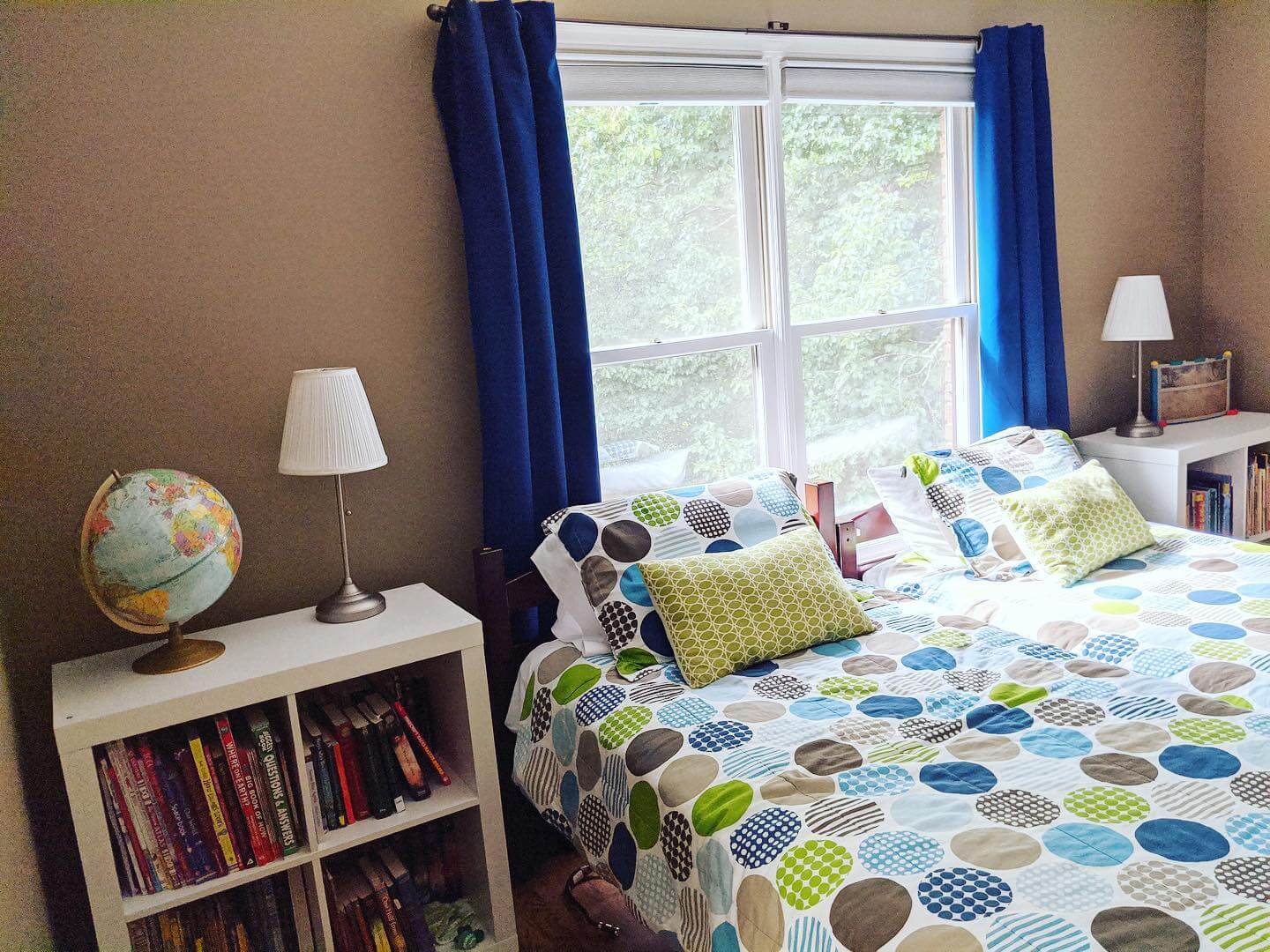
Between twin beds, a slender nightstand becomes neutral ground that works hard for both kids. Choose a model with two equal drawers (one per child) and an open shelf below for shared items like storybooks or a white-noise machine. Add a cable grommet or rear notch so cords for clip lights and chargers route cleanly—no tug-of-war over outlets. Top the table with a tray to corral glasses and a small tissue box; use silicone coasters to protect finishes from midnight water spills. If space is ultra-tight, a wall-mounted cubby or narrow console (10–12 inches deep) keeps floors clear and vacuuming simple. To reduce friction, label drawers subtly with color dots that match each child’s storage system. At night, a dimmable lamp with two switches or dual sconces gives both kids control of their light. During the day, tuck a lidded basket under the table for “today’s treasures” so pockets empty before laundry. The right nightstand brings symmetry, storage, and fairness to a shared boys’ room—small footprint, big peace dividend.
Over-the-Door Storage Wins: Hooks, Pockets, and Hidden Space
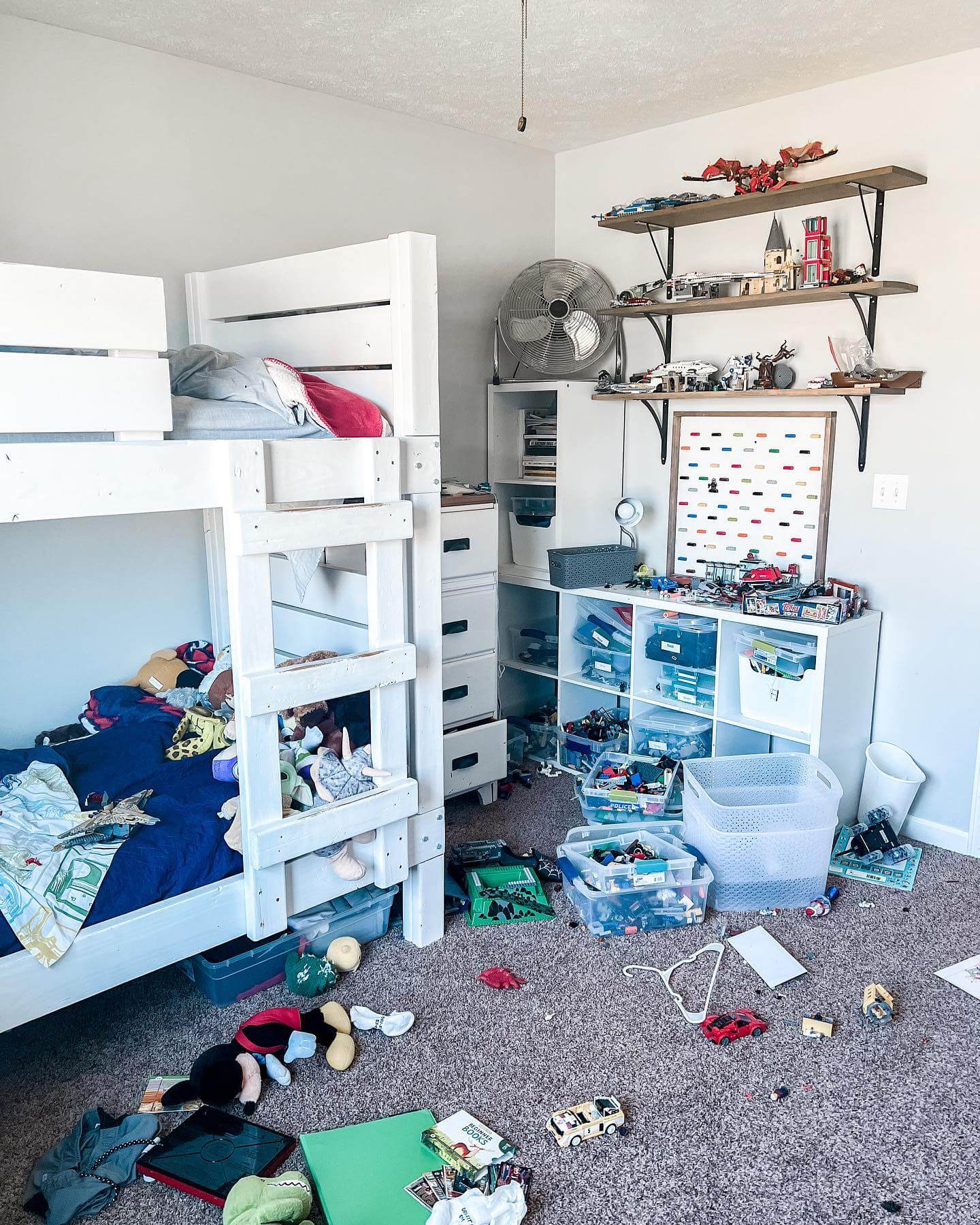
Doors are vertical real estate most families forget. Put them to work with over-the-door systems that corral the daily chaos of backpacks, caps, action figures, and trading cards. Start with a sturdy multi-hook rack at kid height; assign spots by child (left/right) to end floor piles. Layer on a clear-pocket organizer for small items—label pockets for socks, art supplies, and tech cords so kids can self-serve before school. For shoes, a fabric pocket organizer keeps pairs visible and off the rug; reserve the bottom row for the youngest so it’s reachable. Add felt bumpers where racks touch the door to prevent rattles and scuffs, and confirm the door still swings freely without hitting adjacent furniture. If the boys share a bathroom, dedicate a pocket column for each child’s toiletries to streamline bedtime. Seasonal swaps are simple: baseball gear in spring, mittens and beanies in winter. This flexible, renter-friendly tactic pulls storage to the perimeter, frees up closet floors, and prevents the “Where’s my…?” chorus that derails mornings in small shared rooms.
Lighting Layers for Two: Dimmers, Tasks, and Night Paths
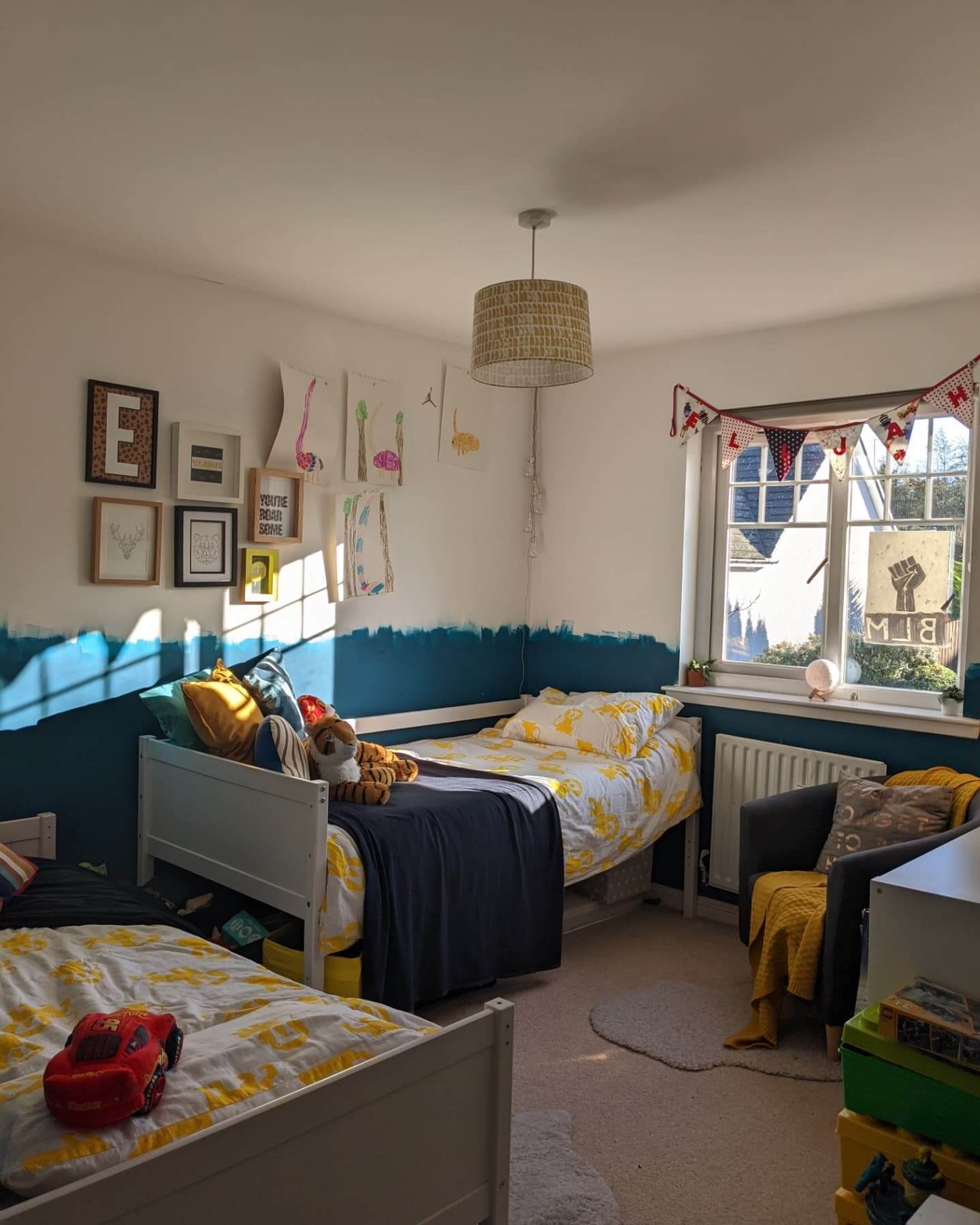
Balanced lighting turns a shared boys’ bedroom into a 24-hour multitasker. Start with a dimmable overhead fixture to shift from playtime brightness to bedtime calm. Add dedicated task lights at each bed and desk so one child can read or study while the other sleeps—opt for warm 2700–3000K bulbs to protect circadian rhythms. A low, motion-activated nightlight along the floor or under the bed guides bathroom trips without fully waking the room. If ceiling height allows, install a flush-mount to avoid head bumps near bunks; otherwise, choose slim profiles and route cords safely with adhesive raceways. Smart bulbs or plug-in dimmers let you set scenes (Homework, Wind-Down, Lights-Out) on a schedule, which reduces arguments and supports routine. Don’t forget daylight: sheer shades diffuse glare for play and homework, while blackout liners help kids sleep in on weekends. Tie finishes together—matte black or brushed brass—so fixtures read as a family. With layered illumination, the space flexes for siblings with different bedtimes, hobbies, and ages, all while keeping the room cozy and safe.
Bedding That Makes Itself: Zips, Clips, and Mixable Twins
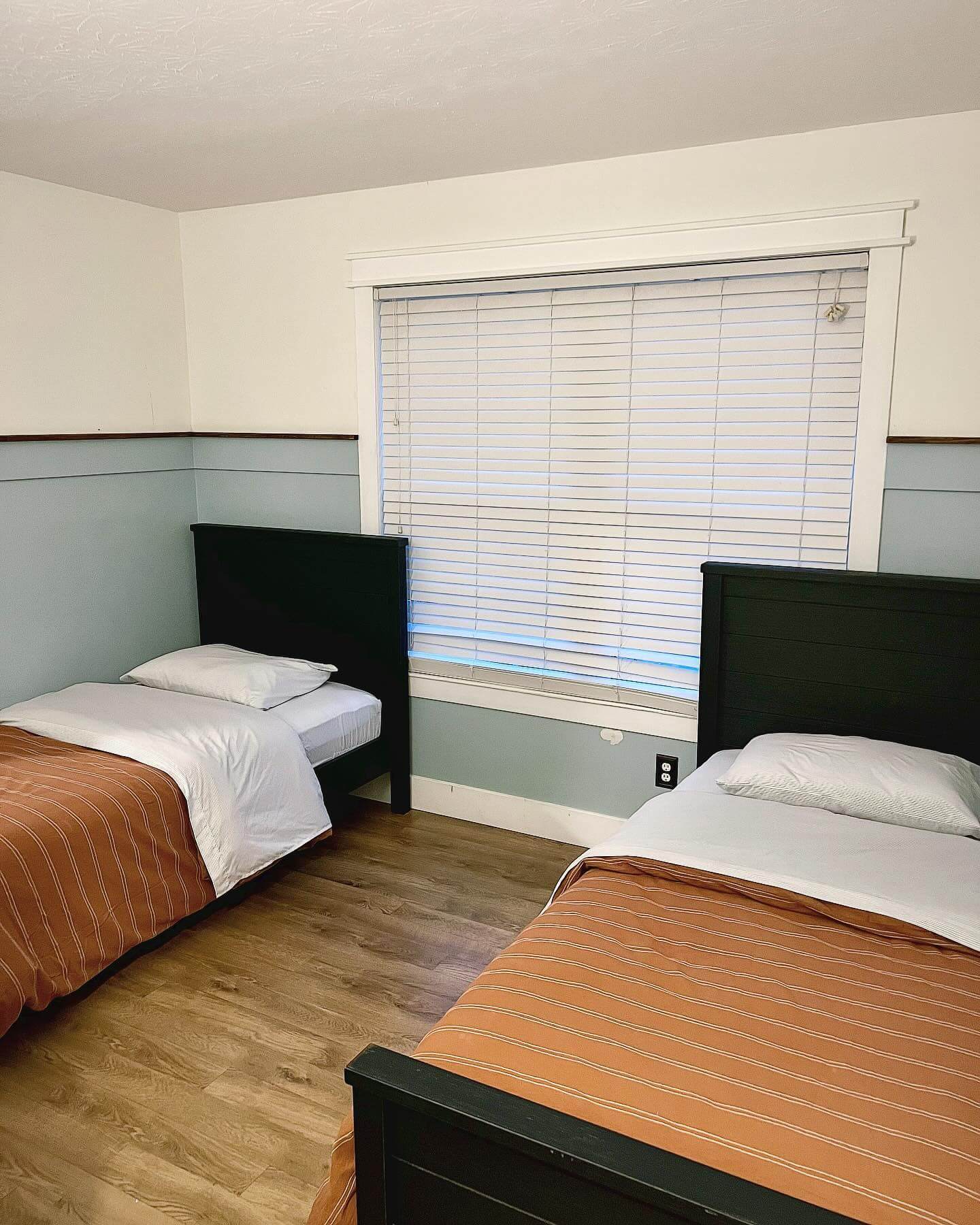
In a shared room, easy-to-make beds keep the whole space tidy. Zip-up bedding systems on bunks are game-changers—kids simply pull up and zip closed, and mattresses stay covered. For traditional twins, use duvet clips or corner ties so inserts don’t drift, plus lightweight quilts for quick smoothing. Choose OEKO-TEX certified sheets in percale or sateen for breathable comfort across seasons; keep one spare set per bed in labeled under-bed bags for fast swaps after spills. Coordinate patterns across beds—think stripes with small checks—so each child’s side feels personal but cohesive. If overheating causes wake-ups, layer with cotton blankets that can be kicked off without tangling. For allergy control, select washable pillows and zippered protectors; schedule a monthly “full wash” day so both kids learn reset routines. Add a throw at the foot of each bed in their signature color to reinforce ownership without clashing. When bedding is simple, durable, and kid-operated, mornings speed up, rooms look finished, and bedtime becomes a smoother, shared ritual.
Get the Fail-Safe Paint Color Playbook (Free PDF)
36 proven colors • 8 ready palettes • trim & sheen guide • printable testing cards.
Stylish Shared Boys Bedroom Ideas: Storage Solutions, Color Palettes, and Evolving Themes
Dial in storage first to keep the room visually calm and easy to reset. Go vertical with tall wardrobes, over-door racks, and wall hooks mounted at kid-friendly heights for daily independence. Inside closets, add double hanging rods, pull-out baskets, and shelf dividers so each child’s items have clear, separate homes. Use lidded bins for off-season gear and open cubbies for daily toys, labeling by name and category for rapid cleanup. For color, ground the room with a versatile base—soft gray, navy, or sand—then layer two bold accents chosen by each sibling. Repeat those hues in bedding, art, storage bins, and desk accessories to keep variety cohesive.
- Underbed Storage Drawers: Install full-extension drawers or roll-out bins under each bed to hold off-season clothes and bulky toys, labeled per child to prevent mix-ups and speed morning routines.
- Wall-Mounted Desks: Mount narrow desks with flip-down tops and integrated cord grommets to free floor space, pairing each with a task sconce and slim pegboard for personalized study tools.
- Cohesive Color Palette: Anchor the room with a neutral base—soft gray, navy, or oatmeal—then layer two accent colors each child selects, repeating them in bedding, art, bins, and desk accessories.
- Personalized Zones: Differentiate territories with monogrammed baskets, individual shelves, and color-coded hooks; add clip-on headboard lights and pinboards so each sibling controls light, mementos, and schedules independently.
- Durable, Easy-Clean Materials: Choose semi-gloss paint, performance upholstery, and washable rugs; opt for rounded corners, metal bed frames with center supports, and drawer soft-close hardware to withstand years of energetic use.
Choose themes that can mature—adventure, stripes, or color-blocking—so swapping art and pillows refreshes the look without replacing furniture. Display collections on shallow picture ledges and rotate favorites seasonally to reduce clutter and keep interest high. Corral tiny parts in divided boxes, then assign each child a color tag system that matches bins, hooks, and hangers. Add acoustic panels, heavy curtains, or a plush rug to soften echoes, making study time calmer and bedtime quieter. Create rituals that support order: a two-minute nightly reset, weekly linen change, and monthly donation sweep for outgrown items. With these shared boys bedroom ideas, the space stays flexible, stylish, and easy for siblings to manage together.
Real-World Answers for Shared Sibling Spaces
How do I fit two beds in a small shared boys room without feeling cramped?
Align beds along one wall and consolidate storage opposite to free a clear center aisle. Consider a loft-over-desk or an L-shaped bunk to unlock corners and daylight.
Get the Fail-Safe Paint Color Playbook (Free PDF)
36 proven colors • 8 ready palettes • trim & sheen guide • printable testing cards.
What color schemes work when siblings have different tastes?
Use a neutral base for walls and large furniture, then give each child two accent colors used on bedding, bins, and art. The room reads cohesive while personal choices still shine.
How can I minimize fights over mess and territory?
Assign clearly labeled storage by child and category, then post a simple cleanup checklist. Add personal pinboards and hooks so prized items have protected, individual spots.
Are bunk beds safe for different age gaps?
Yes, if the older child takes the top bunk and safety rules are strict: guardrails on both sides, sturdy ladder, and no jumping. Follow manufacturer age guidelines and check hardware regularly.
Final Verdict: Smart Layouts, Calm Routines, and Room to Grow
A shared boys’ bedroom works best when every inch is intentional. Vertical solutions like bunks, lofts, and ladder shelving reclaim floor space; deep drawers, trundles, and a double-rod closet keep clothes and toys contained; and subtle dividers—rugs, color-block walls, and privacy curtains—define sides without adding bulk. Layered lighting and a two-person study station build structure into daily rhythms, while flexible themes, durable textiles, and renter-friendly upgrades (peel-and-stick color, decals, and easy-to-swap fixtures) let the room evolve with changing interests.
Make it sustainable with simple systems: color-coded bins and labels to prevent mix-ups, book ledges and sconces for wind-down time, gear walls and over-the-door organizers to handle sports clutter, and gallery ledges or magnet strips to showcase personality without visual noise. Start with accurate measurements, map circulation first, and give each child a clearly marked hub. Then invest in hardworking pieces—platform beds with drawers, a slim shared nightstand, and bedding that nearly makes itself. With thoughtful zoning and smart storage, a shared boys’ bedroom can feel spacious, calm, and genuinely fair—today and years from now.