
Sunken Fire Pit Ideas You’ll Want to Steal for a Cozy, Modern Backyard
Step down, sink in, and let the glow take over. Sunken fire pits turn a flat yard into an immersive outdoor living room—shielded from wind, wrapped in warmth, and made for long, late conversations. Whether you’re after a sleek concrete conversation pit or a rustic stone hideaway, the lowered profile instantly adds drama and comfort.
Beyond the mood, the design is smart. A sunken zone defines space without tall walls, improves sightlines, and can maximize small yards. Think built-in benches, curved seating, layered pavers, gravel for drainage, and lighting tucked under steps. Choose gas for low-fuss ambience or wood for crackle and campfire soul, and match materials to your home’s architecture for a seamless look.
Get the Fail-Safe Paint Color Playbook (Free PDF)
36 proven colors • 8 ready palettes • trim & sheen guide • printable testing cards.
In this guide, we’ll translate standout sunken fire pit ideas into clear, actionable inspiration. We’ll connect styles, materials, and layouts with safety, drainage, and code-friendly tips—so every detail feels intentional. Next, share your Instagram links; we’ll craft section titles and 200-word segments that flow as a cohesive article, with each image anchoring a fresh, relevant idea.
Sunken Fire Pit Designs, Materials, and Seating Layouts
Sunken fire pits create intimate, wind-sheltered gathering zones that feel architecturally grounded and visually dramatic. Prioritize a shape that matches your patio language: round for communal conversation, rectangular for modern lines. Set the bowl or ring about 12–18 inches below adjacent grade for cozy sightlines while preserving safe step-downs. Select materials that balance texture, durability, and heat behavior, combining cast concrete, natural stone, pavers, or steel inserts for performance and style. Plan diameter and clearances early so seating, side tables, and circulation remain comfortable without crowding the flame zone.
Materials and Finishes That Elevate a Recessed Fire Feature
- Cast-in-place concrete: Poured, steel-reinforced concrete delivers sleek lines, curved geometry, and durable heat resistance, accepting integral color, broom finishes, or polished terrazzo aggregates for a modern architectural fire basin.
- Dry-stacked stone: Natural granite, basalt, or limestone blocks create rustic texture, thermal mass, and timeless character, pairing beautifully with gravel floors, native plantings, and timber accents around the recessed hearth.
- Corten steel ring: Weathering steel inserts provide a tidy burn chamber, protect surrounding masonry, and develop a warm patina, complementing contemporary hardscapes and reducing maintenance compared with loose firebrick liners.
- Modular paver systems: Interlocking concrete pavers and segmental wall units speed installation, offer radius options, and simplify repairs, letting DIYers achieve crisp curves, stable seating edges, and cohesive patio transitions.
Seating Configurations and Hardscape Layouts
- Built-in bench retaining wall: A low seat wall doubles as soil retention, frames the pit, and adds backrest warmth, capped with smooth stone or wood for comfort, durability, and ergonomic lounging.
- Curved sectional with cushions: Weather-resistant modular sofas follow the pit radius, maximizing capacity and conversation sightlines, while swappable performance fabrics, hidden storage, and weighted bases balance comfort, airflow, and storm readiness.
- Integrated seat walls with caps: Wide coping stones create perches for plates and glasses, encouraging casual dining, while under-cap LED strips cast safe, inviting light across steps, pathways, and elevation changes.
- Mixed seating zones: Blend Adirondack chairs, poufs, and benches to host varied groups, reserving movable pieces for wind shifts, and anchoring heavier elements to resist tipping on sloped, high-traffic patios.
Detail the descent with comfortable riser heights, grippy treads, and discreet lighting so guests feel guided and secure at night. Use bullnose or eased coping on seat walls to prevent pressure points and snags. Introduce wind screens, privacy planting, or low partitions that temper breezes without trapping smoke. Consider multi-level terraces that stack dining, lounging, and the sunken hearth for a layered, connected experience. Tie finishes together with repeating materials and colors so the pit reads as a seamless extension of the patio.
Sculpted Concrete Conversation Pit with Invisible Drainage
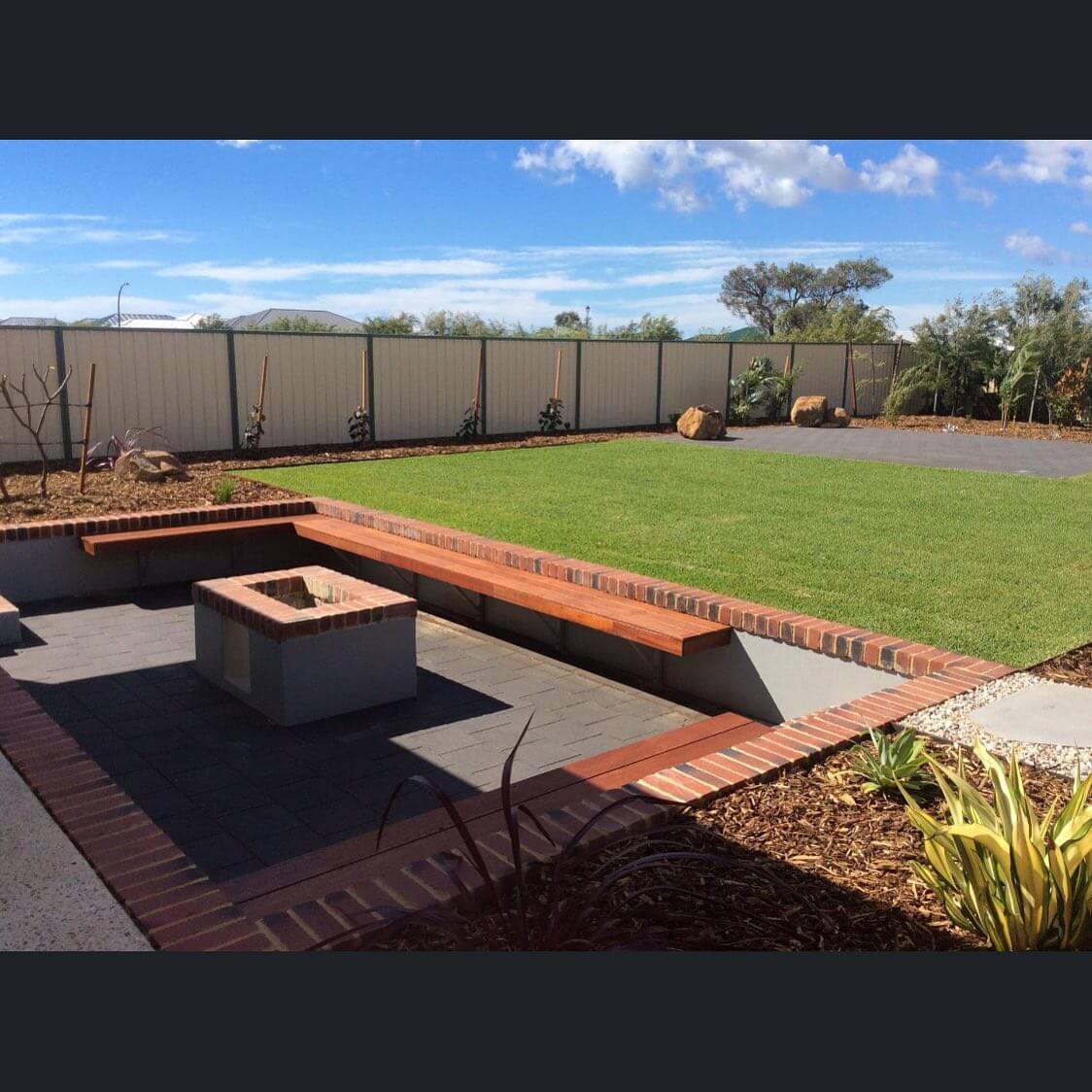
For a crisp, modern backyard, a cast-in-place concrete conversation pit delivers clean lines and lasting comfort. Keep ergonomics front and center: target a 16–18 inch bench height with a 4–8 inch backrest ledge or a sloped back for lounge-worthy support. A rectangular footprint feels contemporary and makes cushions easy to size, while a circular plan invites equal conversation. Integrate a narrow slot drain or center sump beneath the burner pan so rain never puddles; finish the floor with tight-jointed pavers or porcelain to shed water and ash. Gas keeps maintenance low and sightlines spotless—hide the stub-out in a side wall and specify lava rock or black glass media to echo the concrete’s tone. Undercut LED strips on each riser guide guests safely after dark, and a 12-inch coping makes natural “side tables” for drinks and small plates. For visual warmth, soften the monolith with wood accents—teak slats on the bench face or an ipe cap—so the space feels architectural, not austere. The result is a sunken fire pit that blends structure, safety, and style, turning a flat yard into an immersive, wind-sheltered outdoor living room.
Curved Stone Seat-Wall That Hugs the Flame
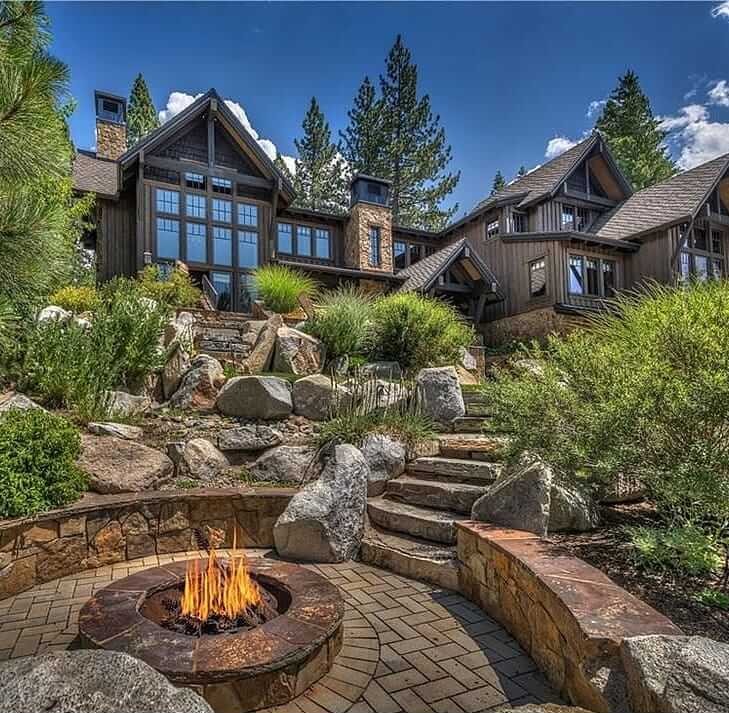
If cozy is the brief, a curved masonry seat-wall wraps the fire like an embrace and blocks breezes at the same time. Think of the wall as furniture you’ll never have to replace: 18–22 inches tall for comfortable perch height, with a 12-inch bullnose or chiseled stone cap that’s wide enough to double as a side table. A 5–7 foot interior diameter around the fire creates an intimate conversation circle without crowding knees. For the build, a mortared core keeps everything sturdy, while tight stacked-stone faces (or a dry-stack look with hidden mortar joints) deliver that hand-crafted texture. Choose a stone that links to your home’s palette—limestone for light, basalt for charcoal, or a warm ledgestone for rustic character—and repeat it on steps and pathway borders for continuity. Add a gravel or decomposed granite floor for drainage and a forgiving underfoot, then weave low, drought-tolerant plantings behind the wall to blur the edge. Whether you opt for a smokeless wood insert or a linear gas burner, a curved seat-wall turns a simple pit into a destination—and gives your modern backyard the timeless romance of masonry built to last.
Deck Drop: A Circular Cut-Out with a Flush Fire Ring
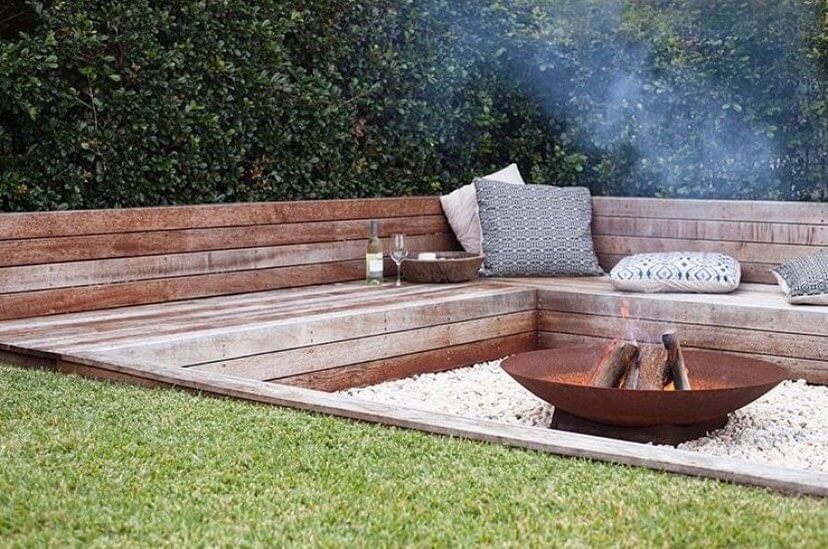
When your main hangout is the deck, carve out a sunken fire lounge right where people naturally gather. Frame a circular or square opening with doubled headers, then step down two to three risers into a protected nook that sits visually below the rail but still feels connected to the action. For safety and simplicity, choose a gas fire ring or rectangular burner and surround it with a noncombustible inset—think stone or porcelain pavers set in a metal pan—so embers and heat stay off the boards. Vent the cavity on at least two sides and follow your burner’s clearance specs to the letter. Under-bench storage hides pillows and a quick-connect for the gas line, while dimmable LED strips under treads and bench lips deliver resort-level glow. Composite or ipe decking stands up to weather; add a contrasting border to define the drop zone and a handrail if local code requires it. Finish with a slatted screen or planter-backed rail to block wind without killing views. A deck-integrated, sunken fire pit keeps flow seamless—kitchen to lounge to stars—without expanding your footprint.
Fire Meets Water: Poolside Sunken Lounge for Elemental Drama
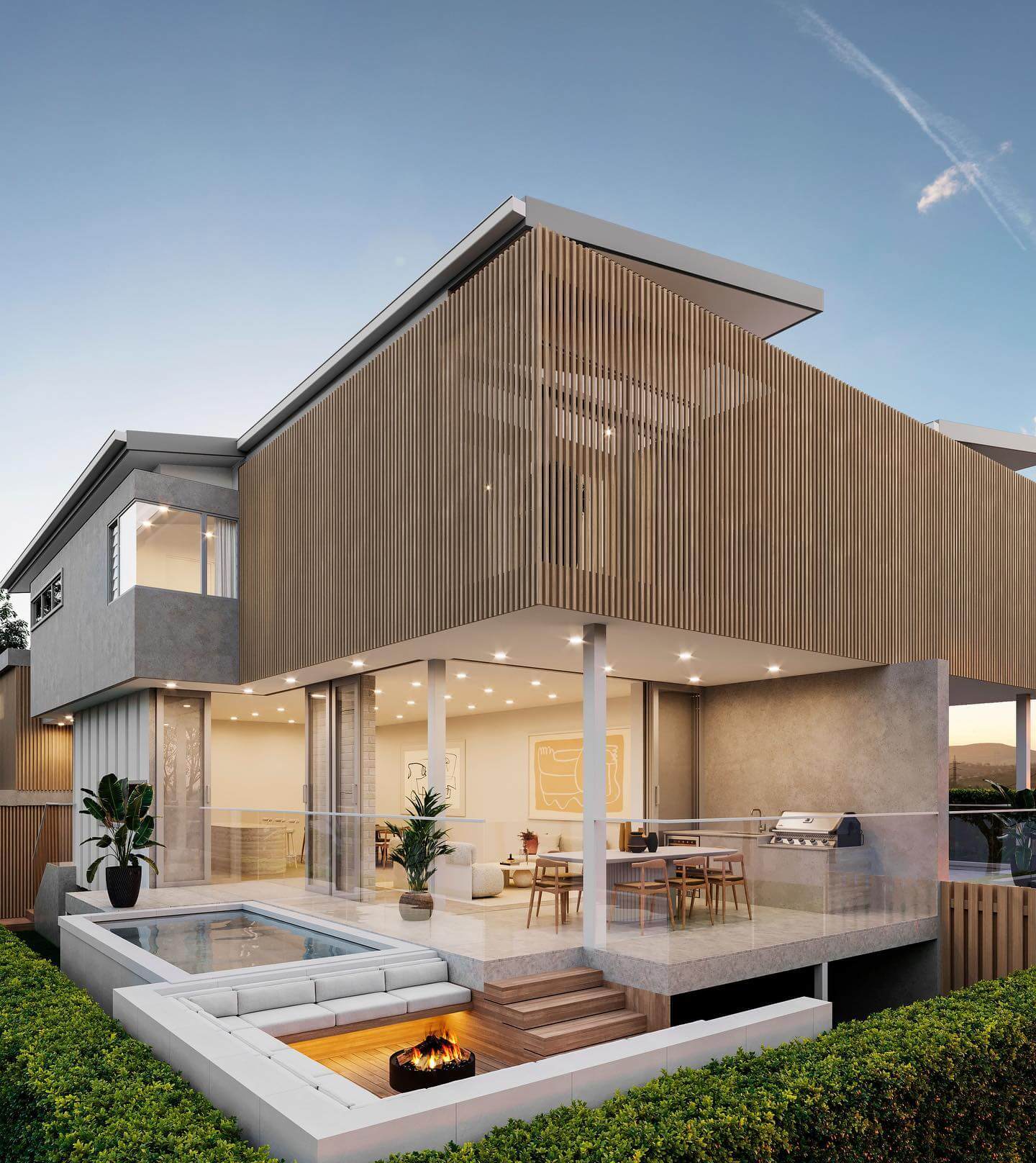
Pairing a sunken fire pit with a pool or spa delivers instant resort energy—firelight flickers across water, and the conversation pit feels like a private cove. Align the burner with the pool’s long axis to strengthen sightlines, or center a round bowl for symmetry. Prioritize slip-resistant finishes (textured porcelain, honed stone) on steps and coping, and insert a discreet trench drain between the pool deck and the pit to catch splash and stormwater. A tempered glass wind guard preserves flame in breezy backyards, while low-heat glass media keeps the burner looking clean. If propane is your fuel, plan a remote tank location with a dedicated pad and a hard line to the pit; for natural gas, include a shutoff tucked under the bench. Layer landscaping at seat-wall height to boost privacy without blocking views to the water. Accent lights under coping create beautiful reflections after dark, and marine-grade fabrics make cushions towel-friendly. With smart drainage, non-slip materials, and code-aware equipment setbacks, a poolside sunken lounge becomes your all-season, post-swim gathering spot.
Gravel Bowl: Budget-Friendly Sunken Pit with Style
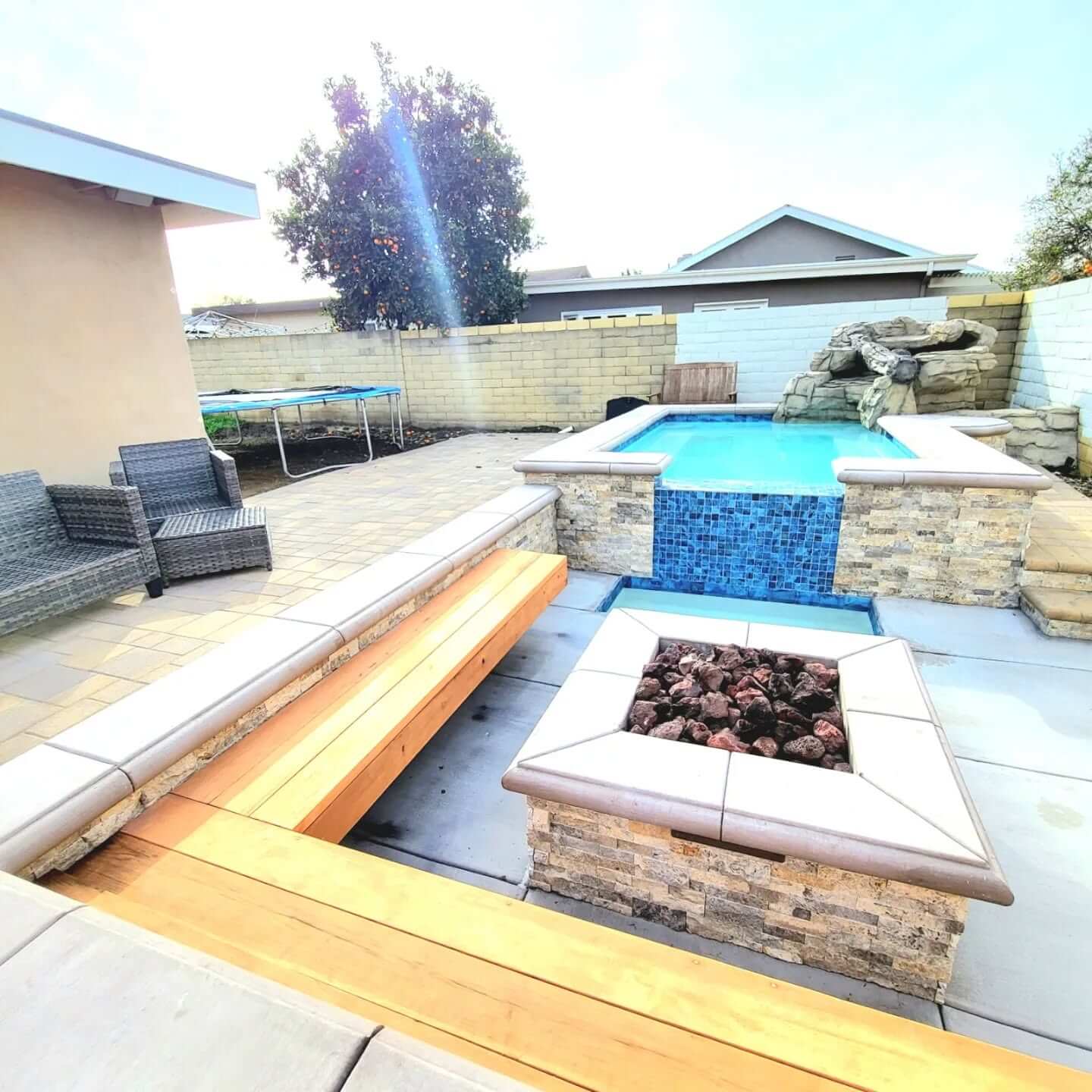
You don’t need a massive build to score major ambience. A gravel-floored, sunken fire bowl delivers drainage, texture, and comfort on a smart budget. Excavate 8–10 inches, compact a base of crushed stone, then top with 3–4 inches of pea gravel or decomposed granite for a cushy, permeable surface. Edge the circle with steel or stone to keep lines crisp and maintenance easy. A corten or cast-concrete bowl offers instant form; if you prefer a ring, sink a steel liner flush or slightly proud of grade for a clean finish. Consider a smokeless wood insert to minimize shifting seats in search of a clear plume, or a gas kit for one-switch simplicity. Radiate paths of large pavers from the pit to doors and dining to keep feet dry after a rain. Plant aromatic herbs and low grasses just beyond the gravel to soften the edge and bring in movement without creating a spark hazard. With simple materials and thoughtful detailing, this sunken fire pit idea proves “easy” can still look elevated.
Terraced on a Slope: Steps Down to a Hillside Hearth
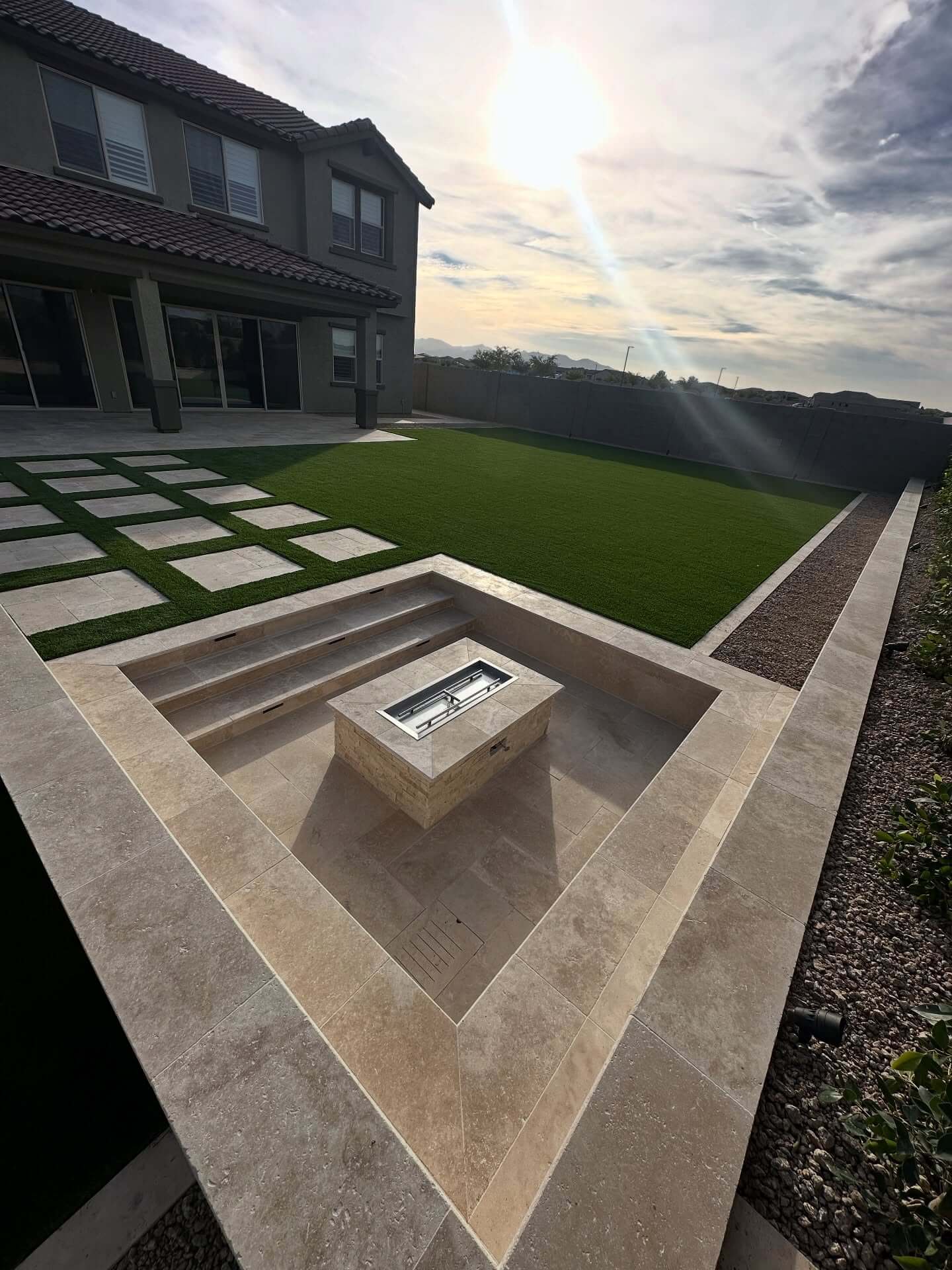
On a grade, a sunken fire pit can double as a small amphitheater—your retaining walls become seat walls, and each step turns into a front row. Start by carving a flat terrace into the slope with engineered block or masonry and proper geogrid reinforcement; a perforated drain behind the wall and a gravel backfill are non-negotiable for longevity. Step down via broad treads (12–16 inches deep) with consistent risers for comfort, and turn landings into mini “pause points” with planters or lanterns. A round fire feature centers the space and equalizes views; a linear burner frames a vista. Cap the top of the retaining wall at seat height along at least one side so overflow guests always have a perch. Hardscape in a single material family—stone, textured concrete, or porcelain—to make the terrace feel original to the site. In windy exposures, a half-height wind screen or planting berm upwind keeps flames steady. Add riser lights and path markers for safe nighttime returns. This terraced approach transforms a tricky slope into a dramatic, view-soaked gathering place.
Small Yard, Big Impact: A Courtyard Conversation Pocket
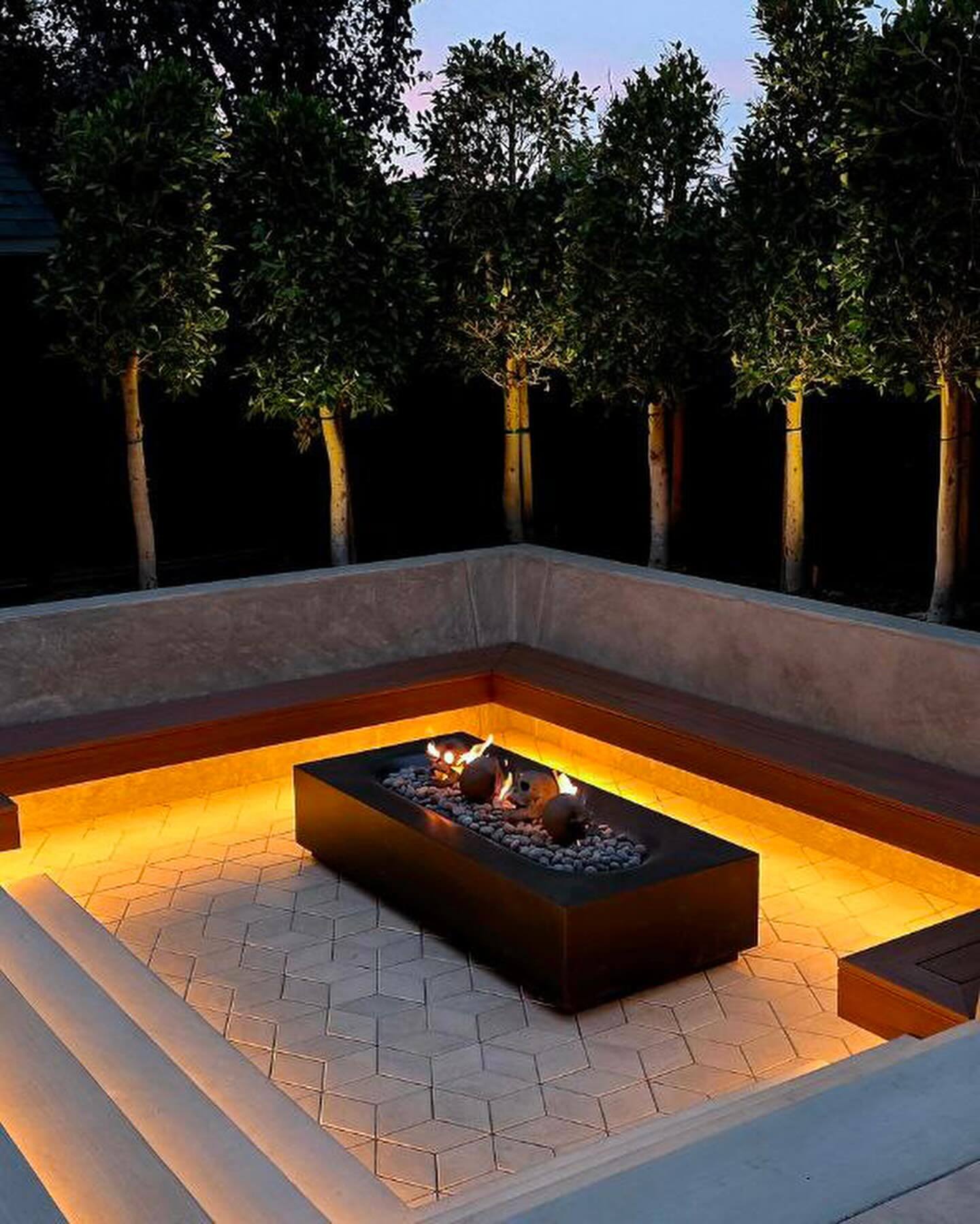
In compact backyards, sinking the fire zone creates psychological space—you’re “away” even if you’re steps from the door. Aim for an 8×8 to 10×10 foot footprint to maintain intimacy and circulation. Build an L-shaped or curved banquette against two edges to maximize seating without clutter, and design the seat lids to lift for cushion and throw storage. Choose a 24–36 inch gas burner or a petite smokeless wood unit sized to your clearances; the smaller the pit, the more important exact proportions become. Vertical screens—slatted cedar, powder-coated aluminum, or living green walls—add privacy and bounce back warmth. Mirror the home’s finishes in the pit’s cap or coping so the courtyard reads as an extension of your interior. A single overhead string of café lights or a wall-mounted sconce keeps the vibe cozy without eating square footage. With focused materials, built-in seating, and right-sized flame, a tiny sunken fire pit proves that thoughtful layout beats raw size every time.
Corten Steel and Desert Textures for Warm, Rustic Edge
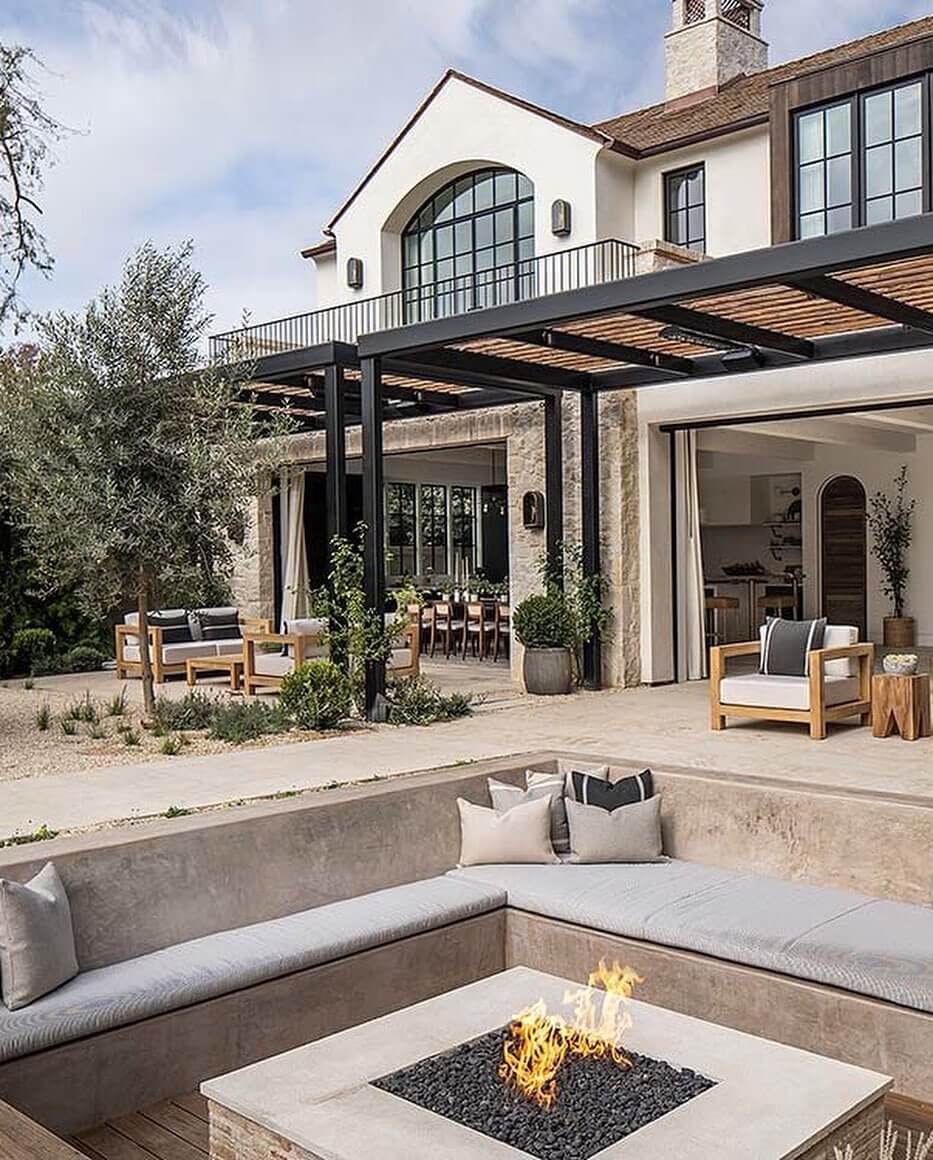
For low-water landscapes, a corten steel fire feature nested in desert gravel brings earthy warmth and sculptural punch. The naturally weathering patina pairs beautifully with decomposed granite, basalt fines, or buff pea gravel—choose a tone that complements your home’s stucco or concrete. Seat walls in split-face block or boulders double as informal perches; top them with smooth stone caps or wood pads for comfort. Plant tough, architectural species—agave, desert spoon, feather grass—just beyond spark range to frame the pit without inviting maintenance. Because corten sheds rust as it seasons, isolate it from adjacent concrete with a slim gravel gap to prevent staining. At night, stake lights and concealed LED strips graze textures and make the lowered footprint easy to navigate. Gas simplifies use during burn bans common in arid regions, and a glass wind guard preserves flame on breezy evenings. The mix of metal, mineral, and muted greens turns a sunken fire pit into a timeless, water-wise focal point with serious mood.
Get the Fail-Safe Paint Color Playbook (Free PDF)
36 proven colors • 8 ready palettes • trim & sheen guide • printable testing cards.
Under a Pergola: Ventilated Cover for All-Weather Lounging
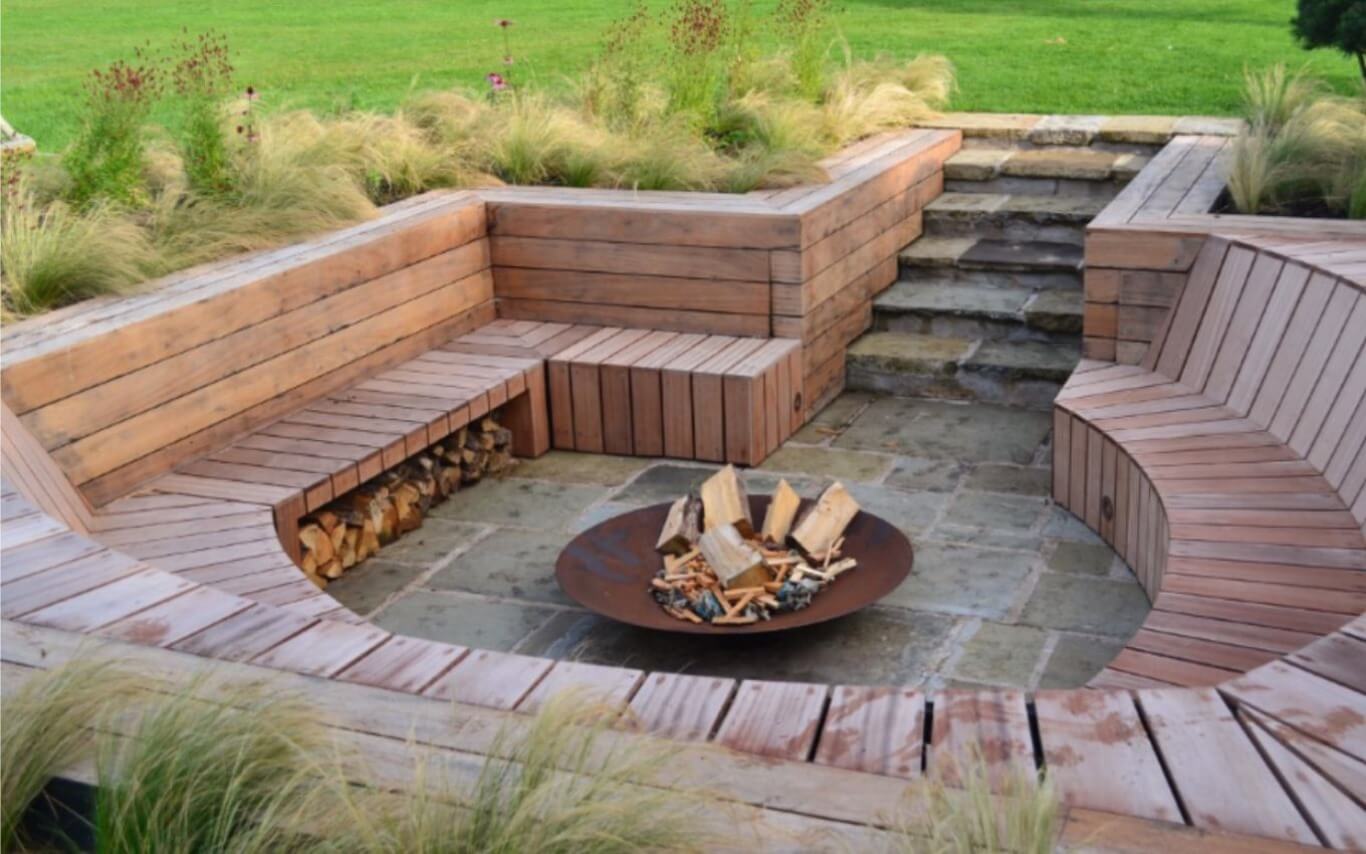
Add a light-touch roof and your sunken fire pit becomes an all-season living room. A pergola or open-roof pavilion defines the room, filters sun, and holds lighting, heaters, or breezy curtains—while still venting smoke and heat. If you’re burning gas, verify overhead clearances and lateral distances per your burner’s manual; for wood, keep the flame well away from any structure and choose ember-resistant roofing nearby. Slatted or louvered systems let you tune shade and airflow; polycarbonate panels invite light but demand careful placement to avoid heat buildup. Run electrical conduit to the pit for step lights, outlets, and a dimmer—then tuck drivers and controls in a serviceable niche under the bench. Integrate gutters and a subtle channel drain at the pit perimeter so rain doesn’t pool in your cozy nook. Finish with performance fabrics, a weatherproof rug, and a stowable cover for the burner. The protected, sunken layout extends the entertaining season without sacrificing the romance of an open flame.
Four-Season Comfort: Snow-to-Summer Sunken Hearth
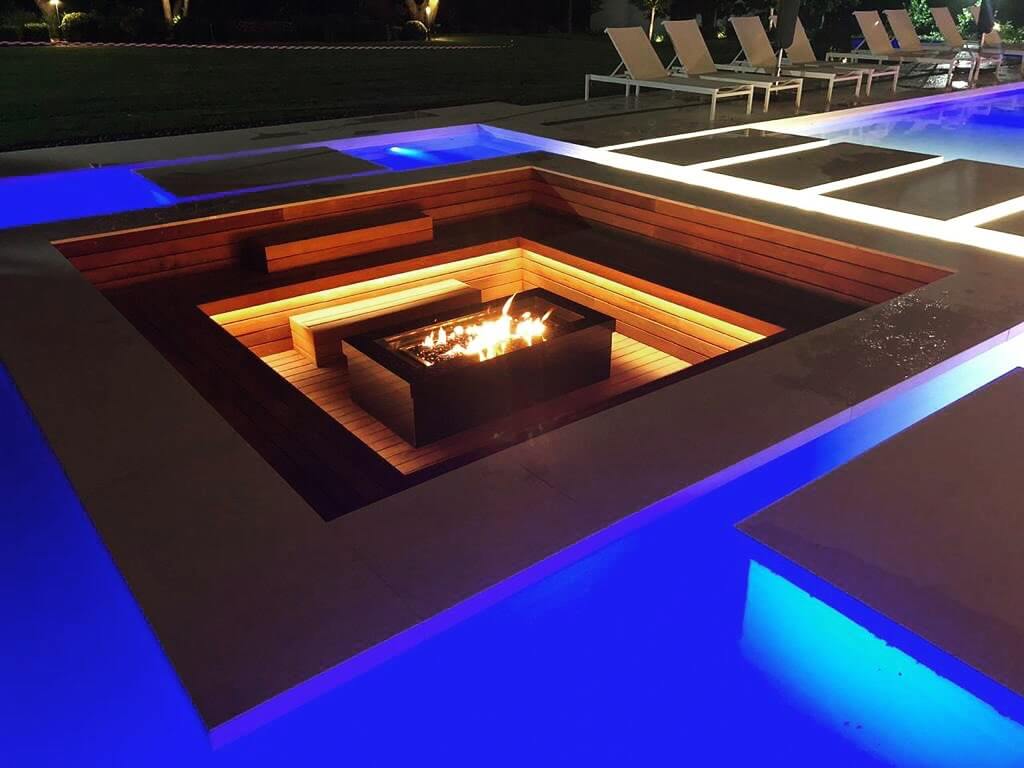
In cold climates, engineer your sunken fire pit to shine from first frost to late summer. Start beneath the surface: a deep, well-drained base with open-graded aggregate keeps freeze–thaw cycles from shifting the floor. Choose dense, frost-resistant pavers or textured porcelain for the walking surface and a stone cap that won’t spall. If budget allows, add radiant heat mats on the steps and a small snow-melt zone at the entry to keep access safe. A taller back wall or integrated wind blade shelters flame and bodies on blustery nights, and a smokeless wood insert keeps smoke predictable when winter air is heavy. In summer, swap in lighter cushions and open the layout with movable stools. Specify a fitted burner lid to protect media from snow and drifting leaves, and design a handsome box or under-bench bay for dry firewood. Finally, confirm local codes for setbacks and fuel storage; what’s cozy in January should be compliant in July. Built thoughtfully, a sunken fire pit becomes the heartbeat of a four-season backyard.
Get the Fail-Safe Paint Color Playbook (Free PDF)
36 proven colors • 8 ready palettes • trim & sheen guide • printable testing cards.
Built-In Benches with Hidden Storage and Quick-Drain Flooring
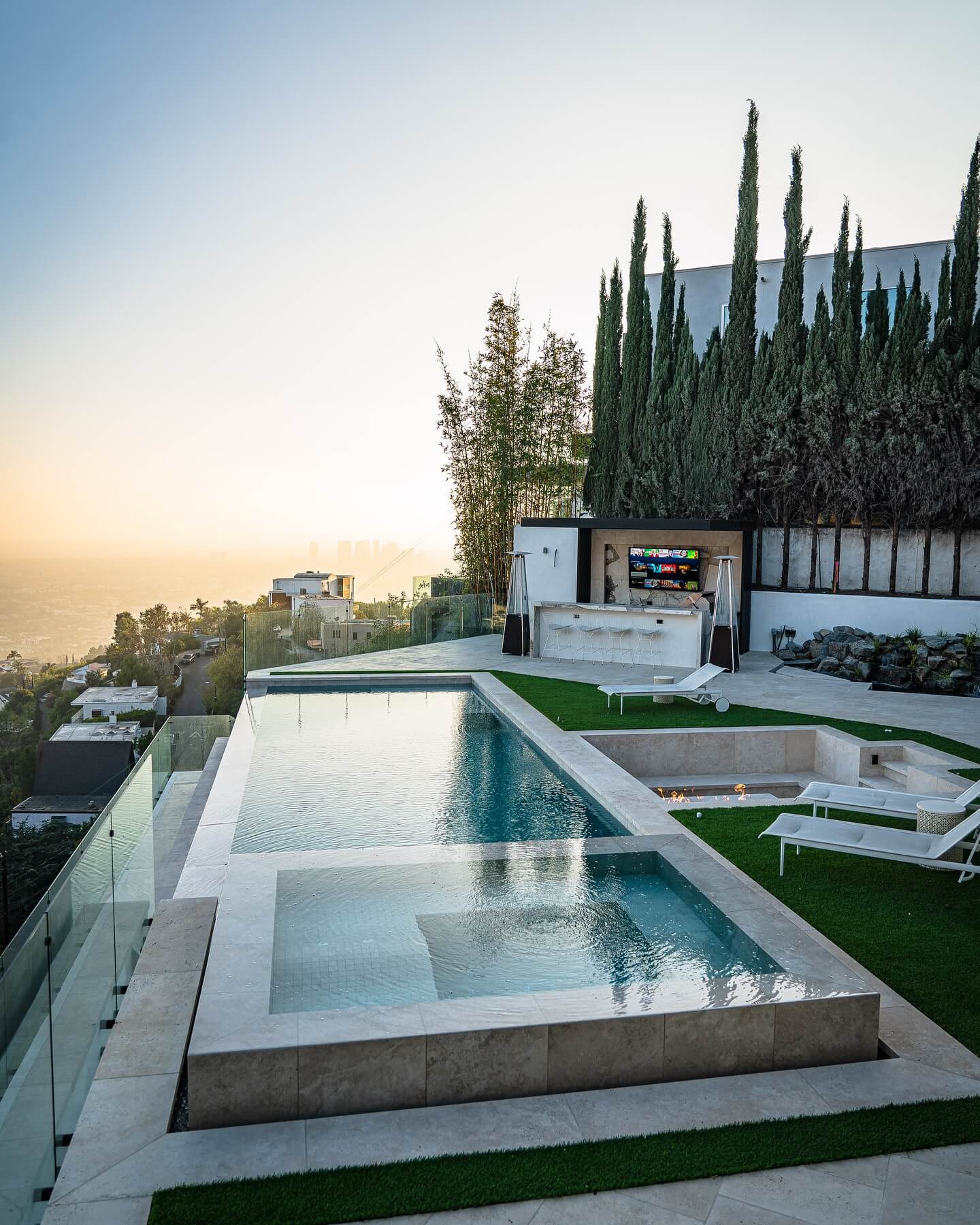
A sunken fire pit becomes truly livable when seating is integrated and clutter disappears. Build L- or U-shaped concrete or masonry benches right into the lowered grade, then top them with hinged, vented lids for cushion and throw storage. Keep safety first: never store propane inside closed benches, and maintain code-required clearances from the burner. For comfort, aim for 16–18 inches seat height and 18–24 inches depth, with angled backrests or thick cushions in solution-dyed, quick-dry outdoor fabrics. Underfoot, design water out before water in: slope the floor 1–2% toward a slot drain or center sump, and layer compacted base rock, permeable pavers, or gravel to move stormwater to a dry well. Add a discreet toe-kick LED under bench faces for soft glow that won’t glare at eye level. Gas creates low-fuss ambience for nightly use; wood delivers the nostalgic crackle if local codes allow. Match bench cladding—smooth stucco, board-form concrete, or stone veneer—to your home’s architecture for cohesion. The result is a clean-lined, modern backyard conversation pit that’s ready in seconds and dries out fast after rain.
Wind-Smart Sunken Pit: Low Seat Wall + Glass Guard
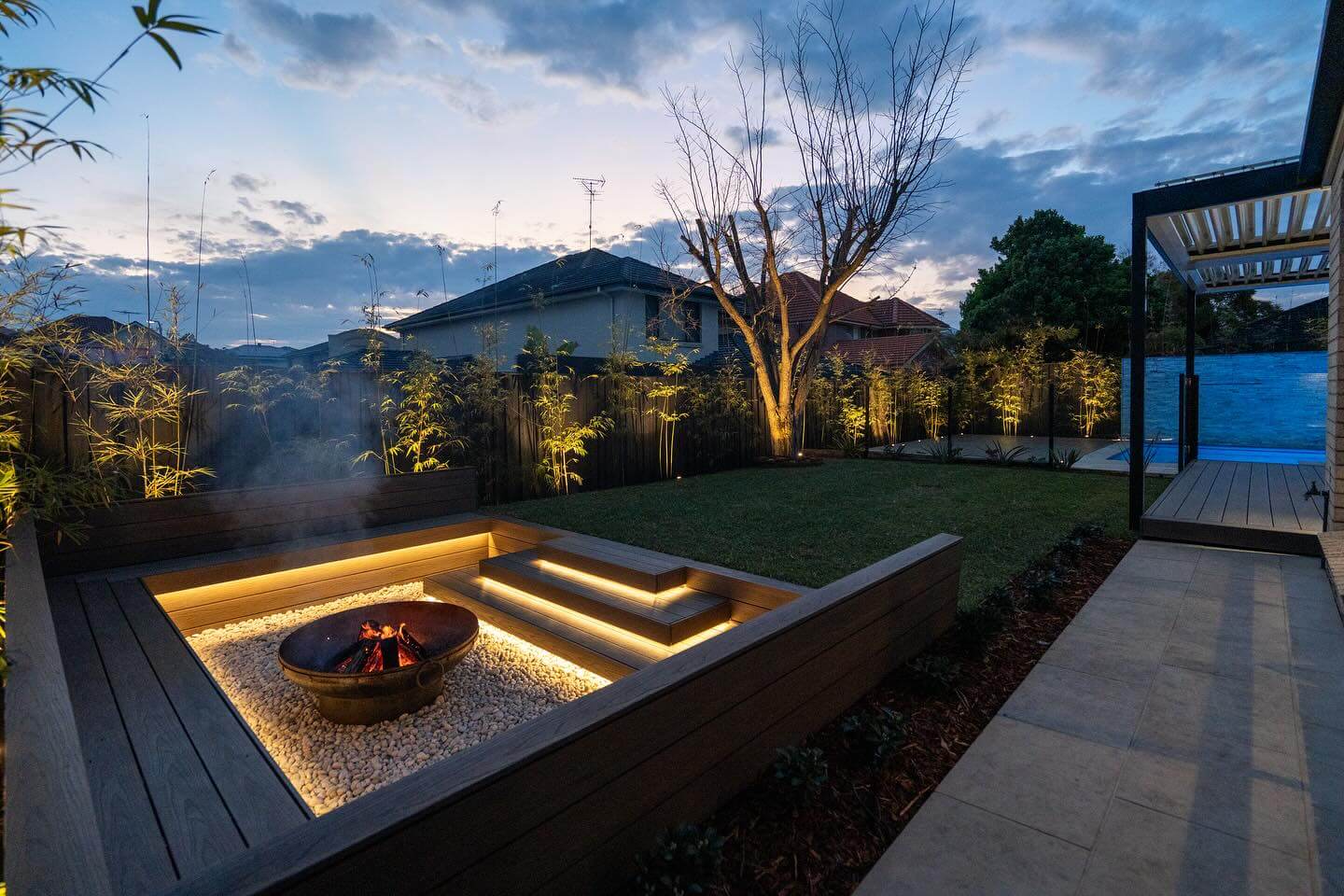
If breezes steal your heat, pair the natural shelter of a sunken fire pit with a subtle windbreak. A low masonry seat wall defines the drop and captures warmth; a frameless tempered-glass guard mounted just beyond the coping tames crosswinds without blocking sightlines. Keep panels 18–24 inches above the sitting surface to disrupt gusts while preserving the open feel. In coastal or roof-exposed yards, specify marine-grade hardware and leave gaps for airflow so the fire breathes. Linear gas burners excel here: they spread heat along the seating arc, and their clean flame avoids soot against glass. For drainage, recess a narrow slot drain behind the wall where glass anchors; it doubles as a shadow line that hides fasteners. Plant a ribbon of ornamental grasses or low evergreens outside the guard to filter wind further and soften the hardscape edge. Check local codes for noncombustible clearances and breakaway requirements near pools. With wind managed, you’ll burn less fuel, hold a steady flame, and extend your season—proof that smart microclimate design belongs in every set of sunken fire pit ideas.
Paver Grid and Groundcover: A Soft-Edge Sunken Lounge
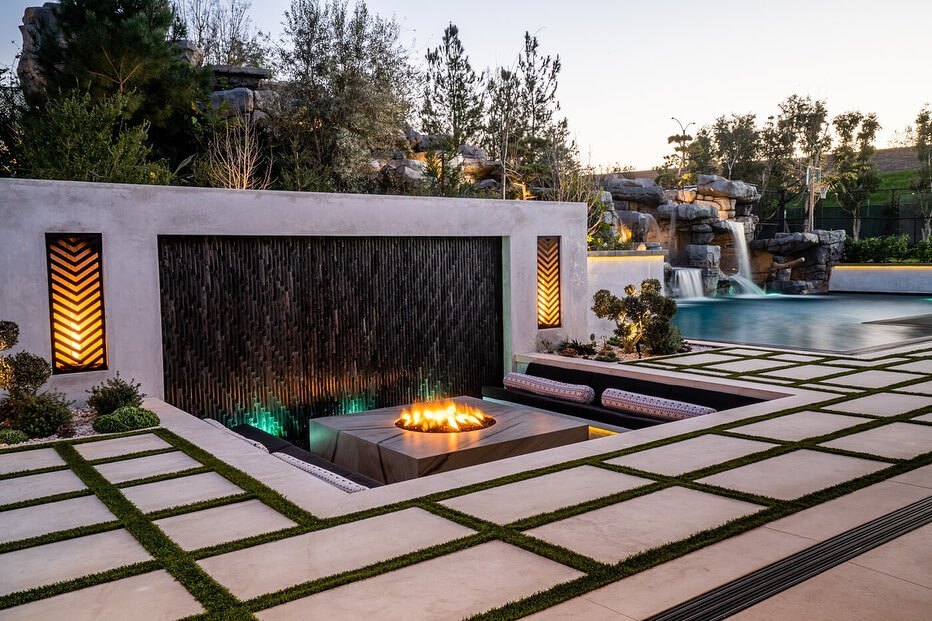
For a modern-meets-organic take, step down into a sunken fire pit wrapped in a paver grid laced with groundcover. Large-format concrete slabs laid with 3/8–1/2 inch joints invite thyme, mondo grass, or no-mow fescue to weave between, cooling surfaces and adding texture. The open joints also boost permeability, so a surprise storm doesn’t pool at the lowest point. Edge the drop with steel or concealed concrete curbs to keep lines crisp, then run a permeable base layer beneath the pit floor that drains to a dry well or daylight scupper. Choose a low-profile gas fire ring or a steel insert surrounded by gravel for a tidy, noncombustible inner zone. Keep risers uniform and slip-resistant; sandblasted or flamed pavers grip even when dewy. Night lighting can stay minimal—just warm LED step markers and a soft under-cap strip—to let the grid pattern glow after dark. This approach lightens the footprint visually, softens acoustics, and delivers a budget-savvy way to make a compact backyard feel like a designed landscape room.
Two Tiers, One Vibe: Dual-Level Pit with Perch Ledge
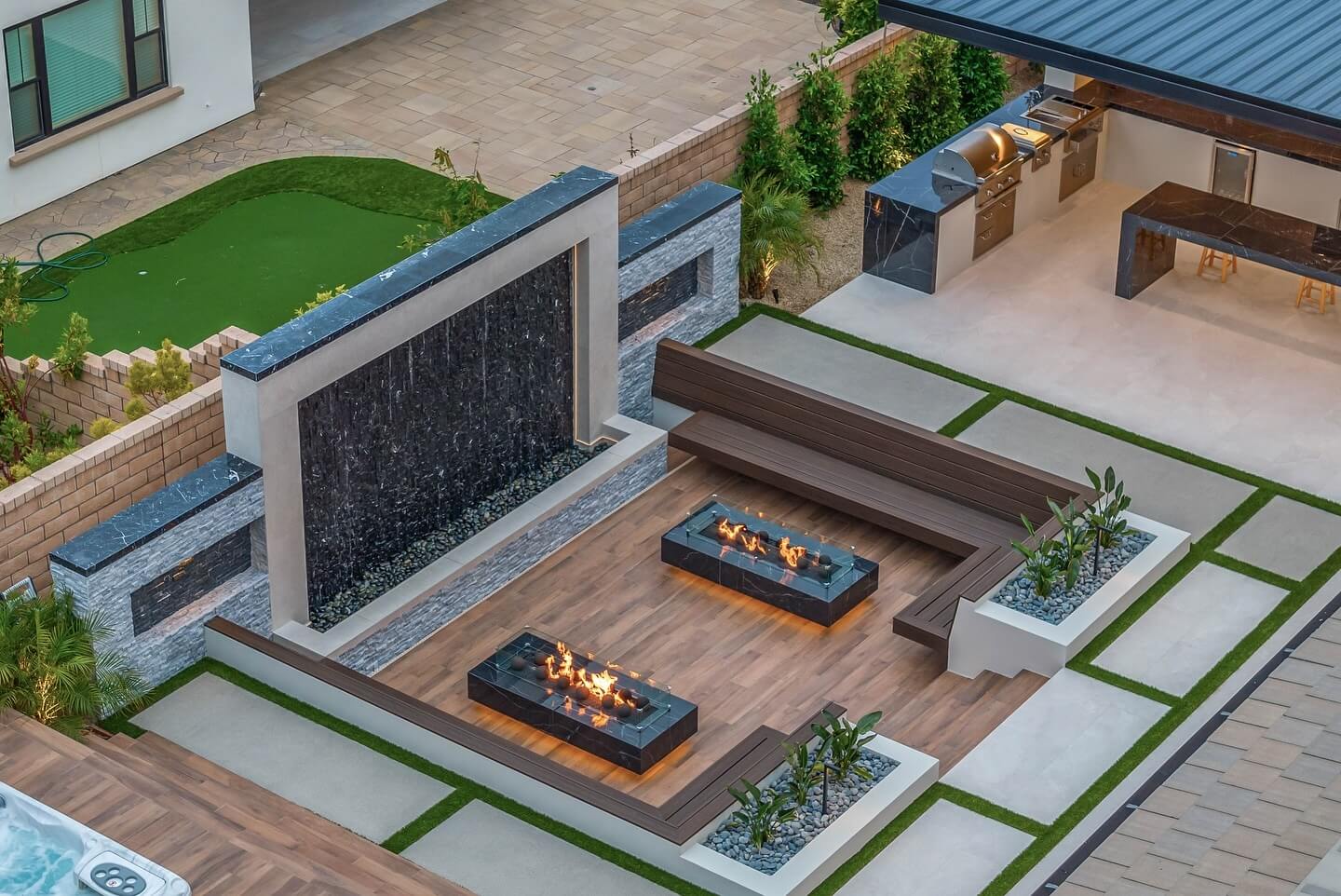
Blend lounging and mingling with a dual-level sunken fire pit. The primary drop holds deep seating around the flame; a secondary perimeter tier sits a step higher with a 10–12 inch coping ledge that doubles as a casual perch and a perfect spot to park drinks. This split-height move solves a classic hosting dilemma: some guests want to tuck in, others prefer to circulate. Keep transitions intuitive with wide, shallow treads (11-inch minimum) and integrated handholds or a low return wall for balance. If you’re burning gas, plan cross-vent openings through the lower wall to meet code and vent any built-up fuel. Wood-burning? Add a spark screen and a hidden storage bay for logs well away from the heat zone. Consider a slim bar counter at the top tier facing the pit so snacks and s’mores kits are always within reach. With power and USB tucked under the ledge and dimmable step lights, this layered layout becomes a social engine—elevating both flow and function without adding height that blocks backyard views.
Reclaimed Brick Well for Heritage Warmth
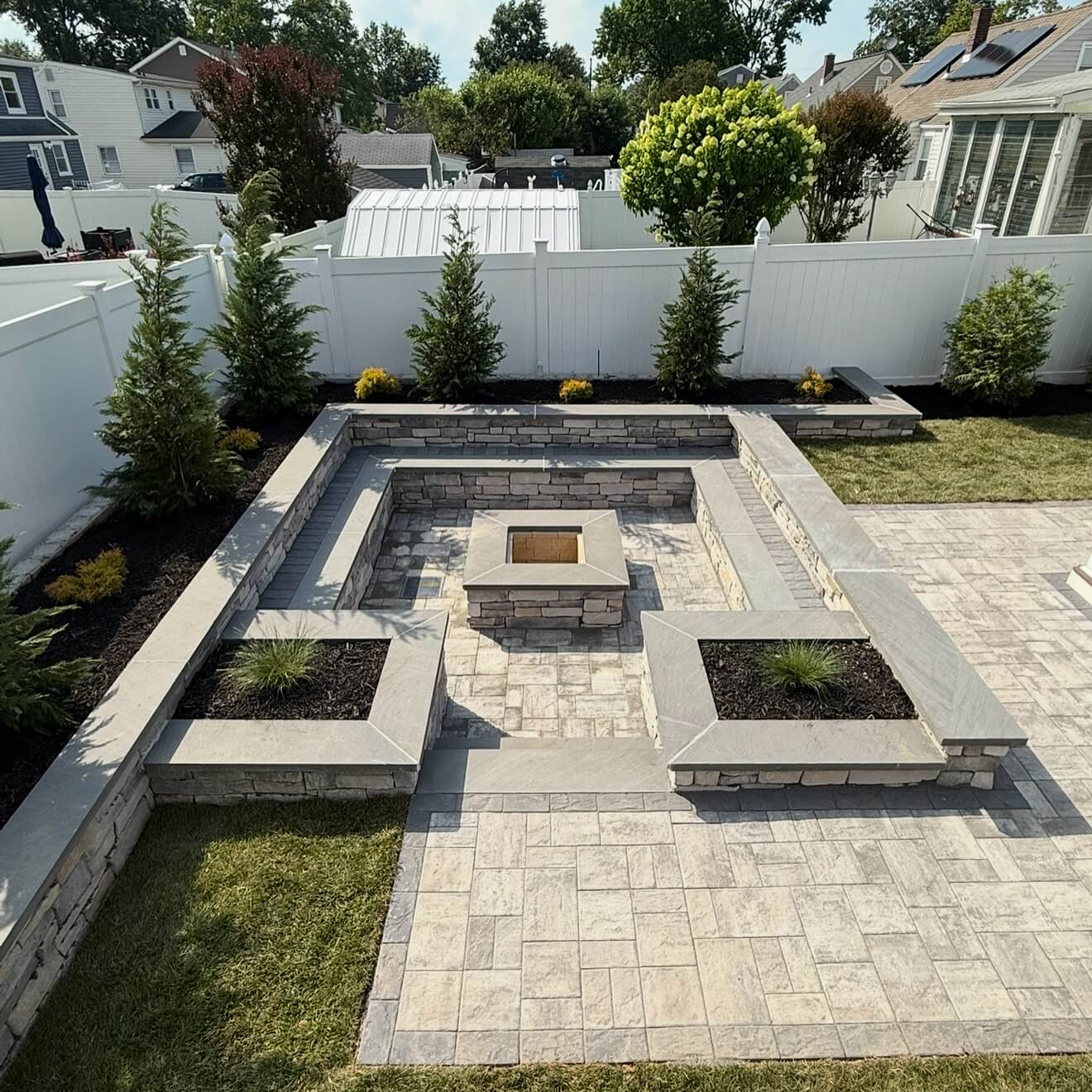
Love patina? A circular sunken fire pit in reclaimed brick delivers instant character and sustainability. Lay a soldier-course coping to frame the drop, then run stretcher courses below, staggering joints for strength. Because old brick varies, dry-fit first and select the best faces for exposed areas. Inside the burn zone, line the pit with fire brick or slip in a steel fire ring; standard clay brick alone won’t handle repeated high heat. Bed the assembly on a compacted gravel base with a gentle center slope to a drain crock, and set frost-depth footings if you’re in a freeze–thaw climate. Lime-rich mortar can flex subtly with age, but use heat-resistant refractory mortar where flames lick. Surround the well with pea gravel or reclaimed pavers to keep sparks off plants and create a satisfying crunch underfoot. Finish with curved, cushion-topped benches or moveable Adirondacks to keep the mood casual. This timeless look suits cottages and farmhouses, but it also grounds modern backyards, proving that classic materials can headline contemporary sunken fire pit ideas.
Kitchen-Adjacent Sunken Fire Pit for Seamless Entertaining
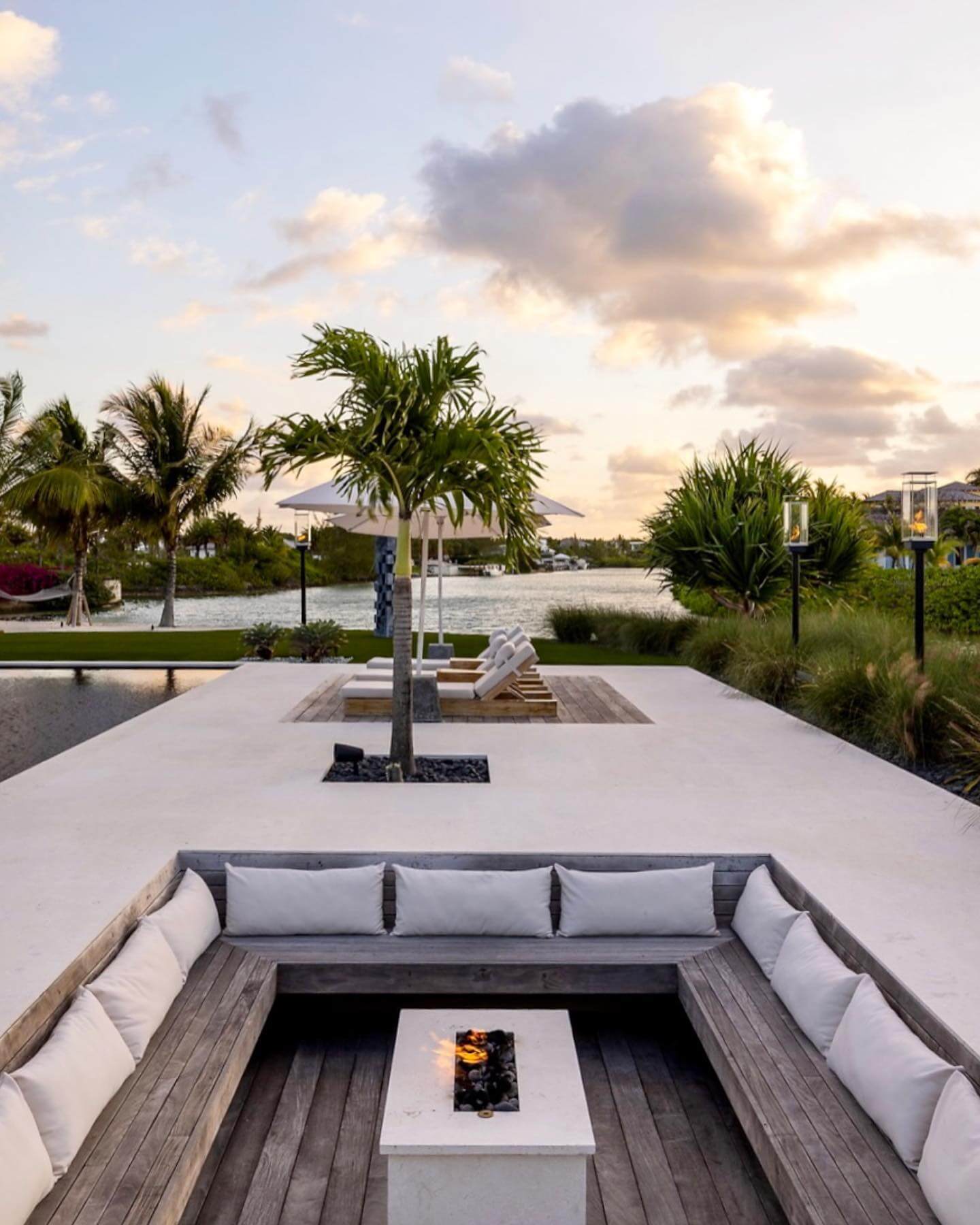
Put your sunken conversation pit on the same axis as the kitchen and everything about hosting gets easier. Align the drop just off a patio door or pass-through window so trays, blankets, and s’mores boards travel a straight, well-lit path. Add a slim counter or drink rail at the pit’s rim that doubles as a staging zone and visual threshold. If you’re running a gas fire, stub a dedicated hard line with an accessible shutoff and oversize it slightly for future appliance upgrades; protect the run in conduit under steps. For wood-burning, maintain recommended clearances from structures and overhead elements, and consider a spark arrestor if you’re near a pergola. Plan drainage first—slot drain at the toe of the house wall, and a separate sump for the pit floor—so roof runoff never cascades down your steps. Texture the treads and add motion-sensor downlights under the eaves for a safe nighttime commute between snacks and seats. The net effect is a backyard that works like an open-plan home: zones distinct, circulation effortless, and warmth always within a few steps.
Mediterranean Mood: Plaster Benches and Handcrafted Tile
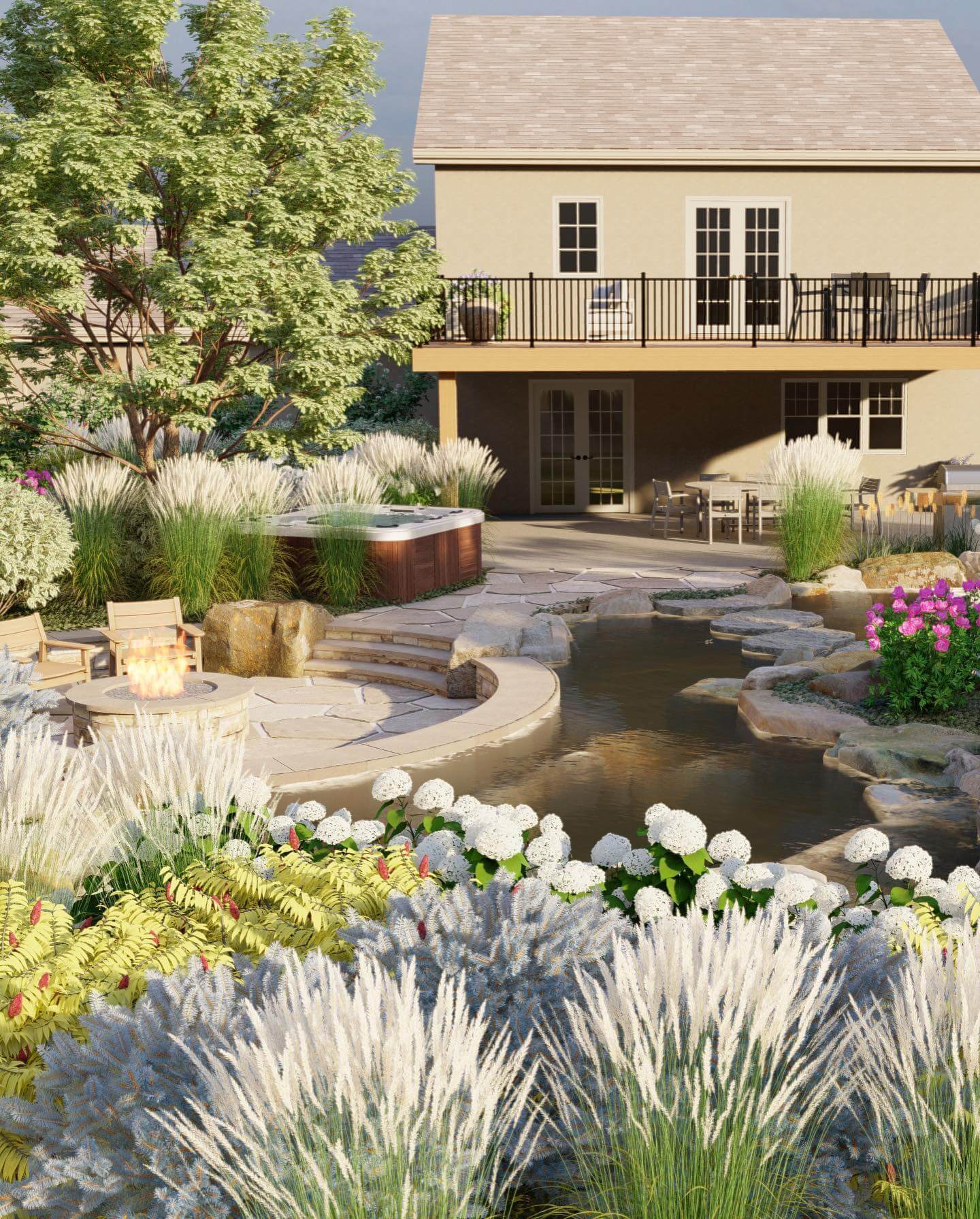
Bring resort calm home with a Mediterranean-inspired sunken fire pit. Cast-in-place concrete benches finished in smooth lime plaster or tadelakt curve around a low, round fire bowl, their softened edges inviting barefoot lounging. Accent the stair risers or bench fronts with handcrafted zellige or terracotta tile in sun-washed tones; their slight variation reads luxe and hides scuffs. Keep the palette light to bounce flame glow—think chalky whites, sand, and umber—and punctuate with natural wood trays and linen cushions in performance fabrics. Because plaster is porous, integrate discreet weep slots at the bench base and seal with a breathable product; your drainage layer below should still slope to a hidden sump. Plant silvery olives, rosemary, and lavender beyond the coping for fragrance and movement, and set a gravel apron to maintain a noncombustible buffer. Gas keeps soot off pale finishes and simplifies upkeep; choose a ceramic log or stone media that suits the Old World vibe. It’s a transportive, sunken fire pit idea that blends easy maintenance with vacation-grade ambiance.
Green Privacy: Hedge-Rimmed Sunken Sanctuary
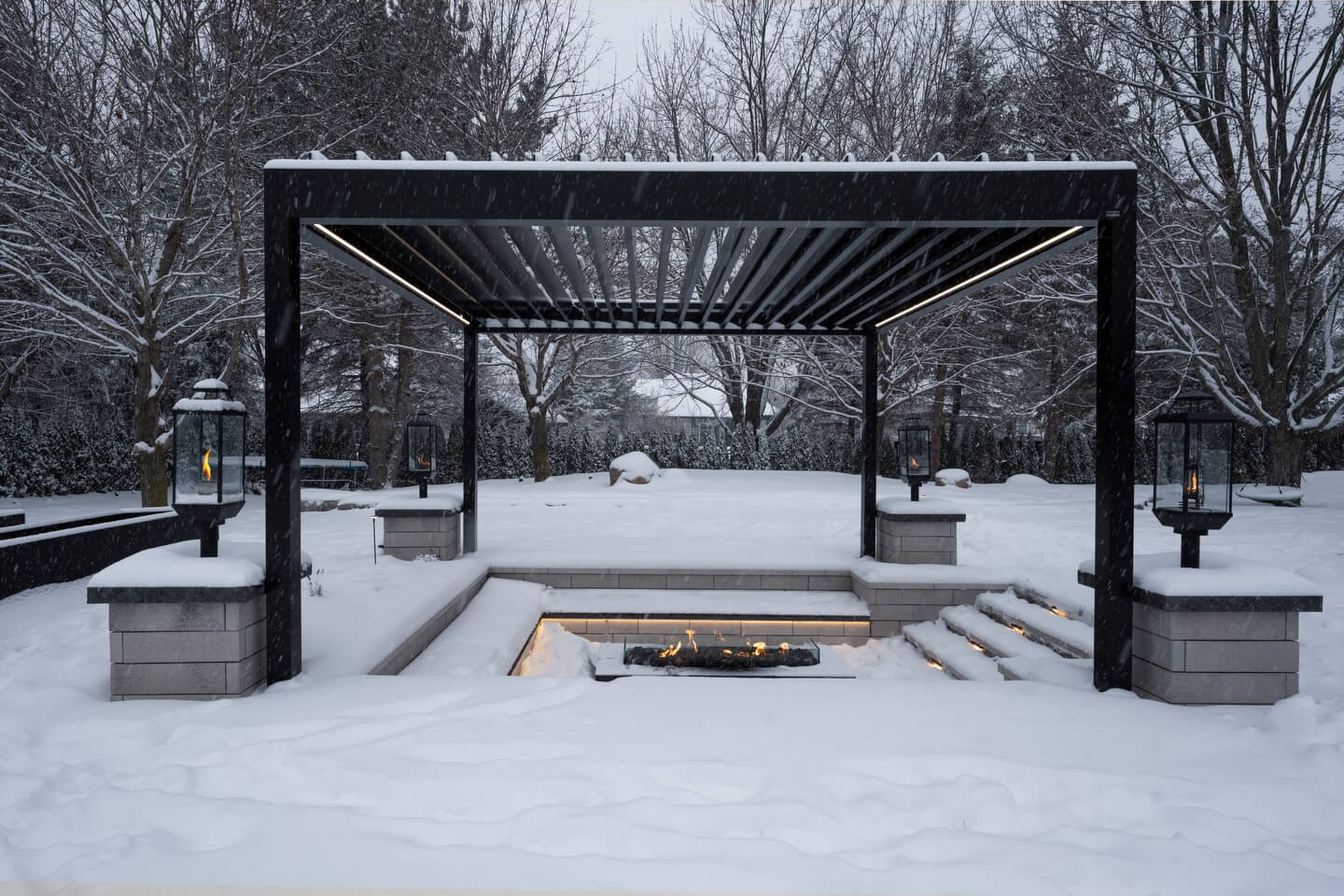
If neighbors are close, sink the fire pit and build privacy with plants, not walls. Use the pit’s retaining ring as a seat wall and as a root-safe barrier for a layered hedge: tall evergreens (podocarpus, laurels, or arborvitae) for year-round screening, a middle tier of flowering shrubs for seasonal color, and a front ribbon of grasses to sway in the firelight. Keep a noncombustible strip—gravel or large pavers—between the flame and foliage, and prune to maintain safe clearances. Drip irrigation on a smart controller simplifies care and avoids overspray into the seating. Underfoot, permeable materials let rain soak into the planting beds rather than ponding at the lowest point; tie the pit drain into a perforated pipe that feeds a mulch-filled infiltration trench beneath the hedge. Lighting should be gentle and downward: low bollards on the approach, step lights in the drop, and a few warm uplights grazing foliage to suggest depth without glare. With sound softened and sightlines curated, this sunken fire pit becomes a cocoon—a retreat that feels secluded even in the city.
Board-Form Concrete Meets Warm Timber Accents
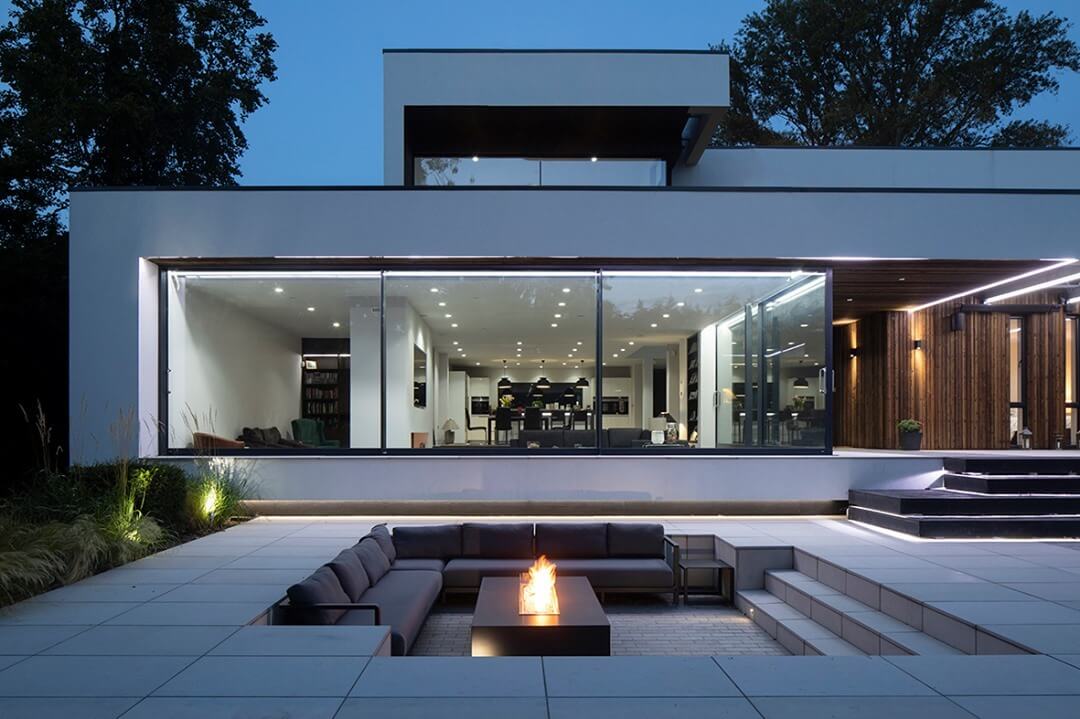
Strike a modern balance by pairing rugged board-form concrete with honeyed wood details in a sunken fire pit. The concrete’s wood-grain imprint adds texture and shadow, turning retaining walls into design features; cap them with a slim chamfered edge for a crisp profile. Introduce warmth through slatted backrests, ipe or thermally modified ash seat toppers, and a narrow timber drink rail at the rim—kept outside required noncombustible clearances. Treat wood with a matte UV oil, and use hidden stainless fasteners for longevity. Beneath, a floating gravel bed around the burner contrasts beautifully with the monolithic walls and doubles as a spark-safe zone for wood fires. Plan movement joints in long concrete runs and seal with a breathable, penetrating sealer so surfaces patina rather than stain. LED strips recessed under the timber edges deliver an ember-like glow without visible fixtures. Gas or wood both work; if gas, incorporate vent grilles into the board-form pattern so they disappear. The effect is tailored yet tactile, a sunken conversation pit that feels crafted, not cold.
Lighting the Drop: Layered Illumination for Safety and Glow
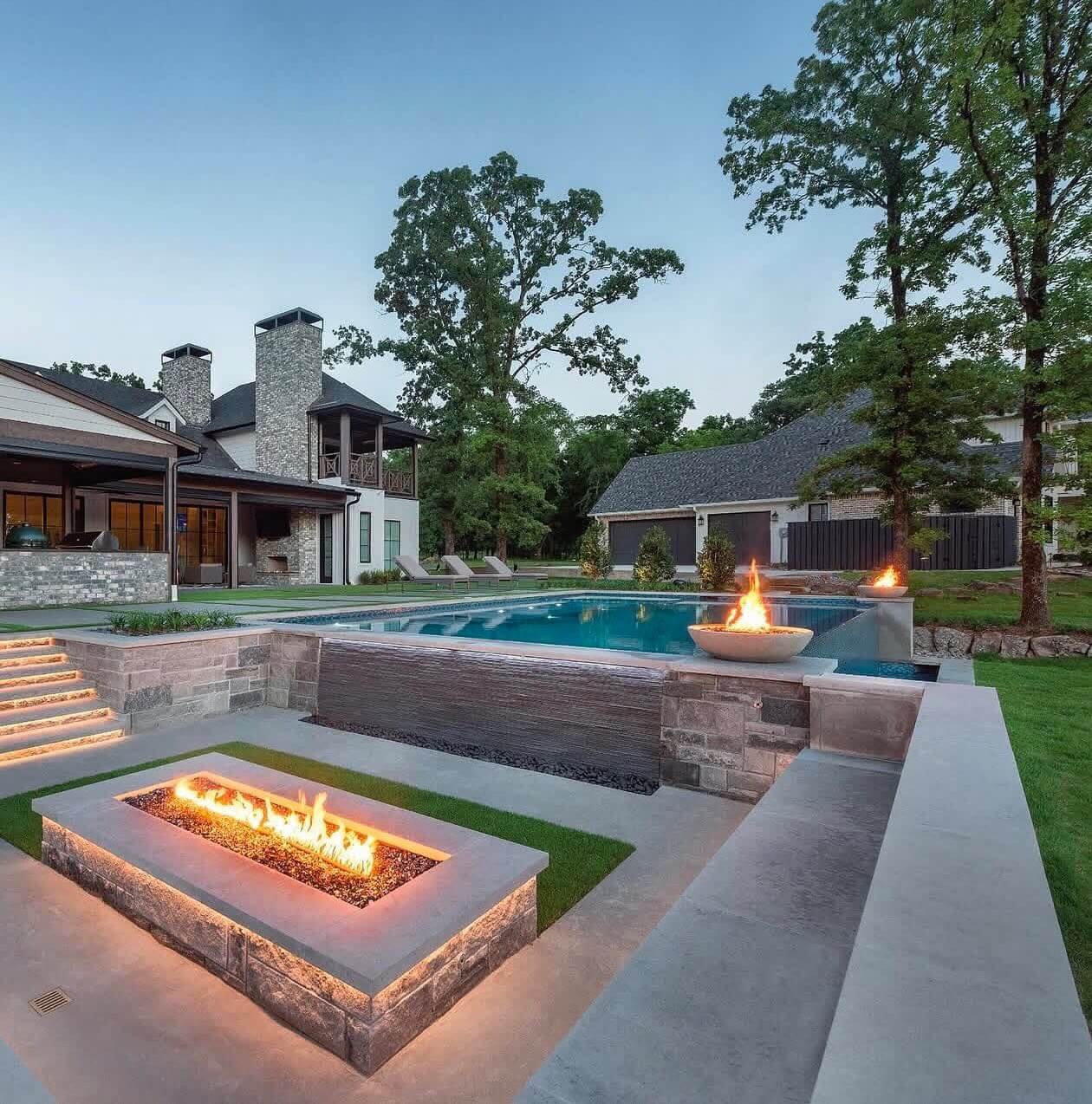
Great sunken fire pit ideas don’t stop at flame—they plan the nighttime scene. Start with code-friendly safety lighting: low-glare step lights at each tread and a pair of path markers at the entry. Add under-cap LEDs beneath seat walls to wash surfaces without shining in eyes, and tuck a soft strip under bench fronts to float the seating plane. Choose 2700K–3000K color temperature to harmonize with firelight; dimmers on separate zones let you dial ambience as the evening unfolds. Accent one or two hero elements—a specimen tree, a textured wall—with discreet uplights aimed to avoid skyglow and neighbors’ windows. Power all of it from a dedicated low-voltage transformer sized at 80% of capacity for future fixtures, and run spare conduit to the pit for a future heater or speakers. In bug-prone regions, amber or warm-filtered LEDs help. If you host often, tie lighting scenes to a smart switch so “fire pit” mode is one tap. The result is layered, legible, and intimate—safety-first illumination that makes your sunken conversation pit magnetic after dark.
Small-Yard Conversation Pit: Courtyard Comfort in a Compact Footprint
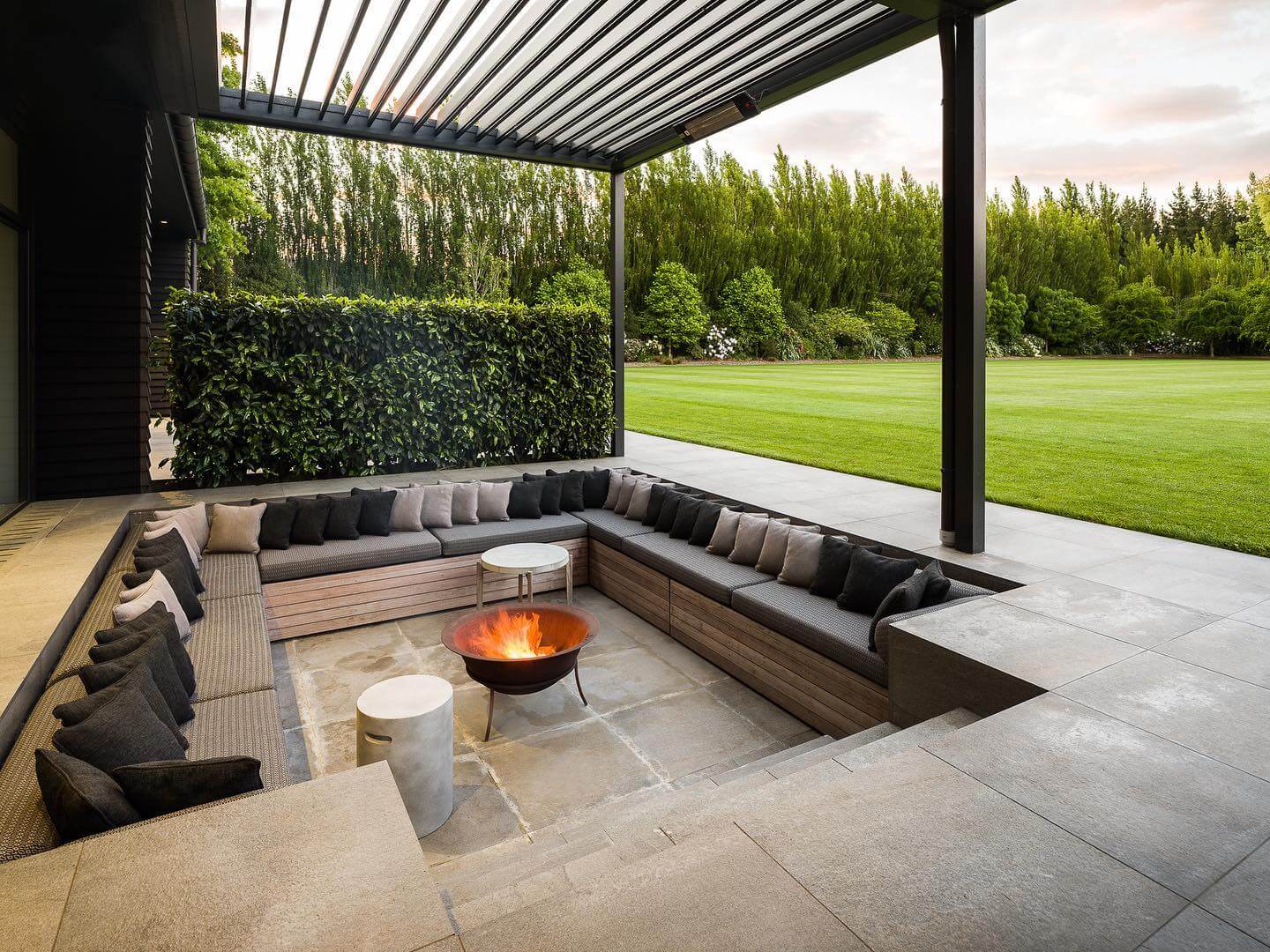
If your lot is tight, a sunken fire pit can feel like a secret room carved right out of the courtyard. Start with a compact interior diameter—about 7–9 feet—to keep conversation close and sightlines clear. A single wraparound bench built into the retaining wall saves square footage while adding structure; angle the backrest slightly and vary seat depths with throw cushions for lounge-level comfort. Permeable pavers or tight-joint stone over a gravel base handle drainage without bulky grates, and a discreet sump with a perforated drain line keeps the bowl dry after storms. To expand the perceived footprint, go vertical: slim planters, a slatted privacy screen, or espaliered trees give enclosure without crowding. Choose a gas burner for clean flames in close quarters, or a spark-screened wood bowl if you crave crackle. Keep steps broad (12-inch treads) with low risers for an easy, inviting drop, and tuck in LED strip lights under each nosing to guide guests. In small urban backyards, every material has to multitask—lighter finishes bounce light, a corner ledge doubles as a cocktail perch, and a low seat wall defines the zone without blocking the rest of the garden.
Get the Fail-Safe Paint Color Playbook (Free PDF)
36 proven colors • 8 ready palettes • trim & sheen guide • printable testing cards.
Corten Steel Ring + Decomposed Granite: Low-Maintenance, High-Style Heat Zone
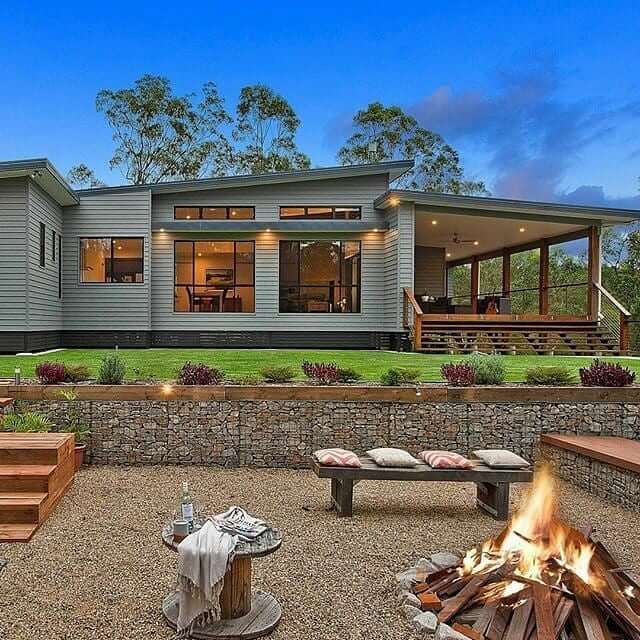
Prefer a set-it-and-enjoy-it solution? A weathering steel (Corten) fire ring settled into a decomposed granite (DG) basin brings sculptural warmth with almost zero upkeep. The steel’s evolving patina complements modern and rustic architecture alike, while DG acts as a permeable, spark-safe carpet that drains fast and never gets muddy. Edge the basin with steel or stone to keep granules tidy, and place a weed barrier beneath the compacted base so you’re not forever plucking sprouts. Because this combo reads minimal, layer comfort with movable lounge chairs, low side tables, and a couple of teak or powder-coated accents. Run a gas line in a sleeve to future-proof the pit—even if you start wood-burning now, you’ll have options later. A circular footprint feels natural here: aim for a 10–12-foot outside diameter to allow safe clearances around the flame. Finish the perimeter with native grasses or groundcovers that won’t litter embers, and uplight a specimen tree to extend the vertical drama after dark. The result is a clean-lined, all-weather sunken lounge that looks sharp in summer and quietly glows through shoulder seasons.
Poolside Sunken Lounge: Fire + Water Drama with Slip-Safe Details
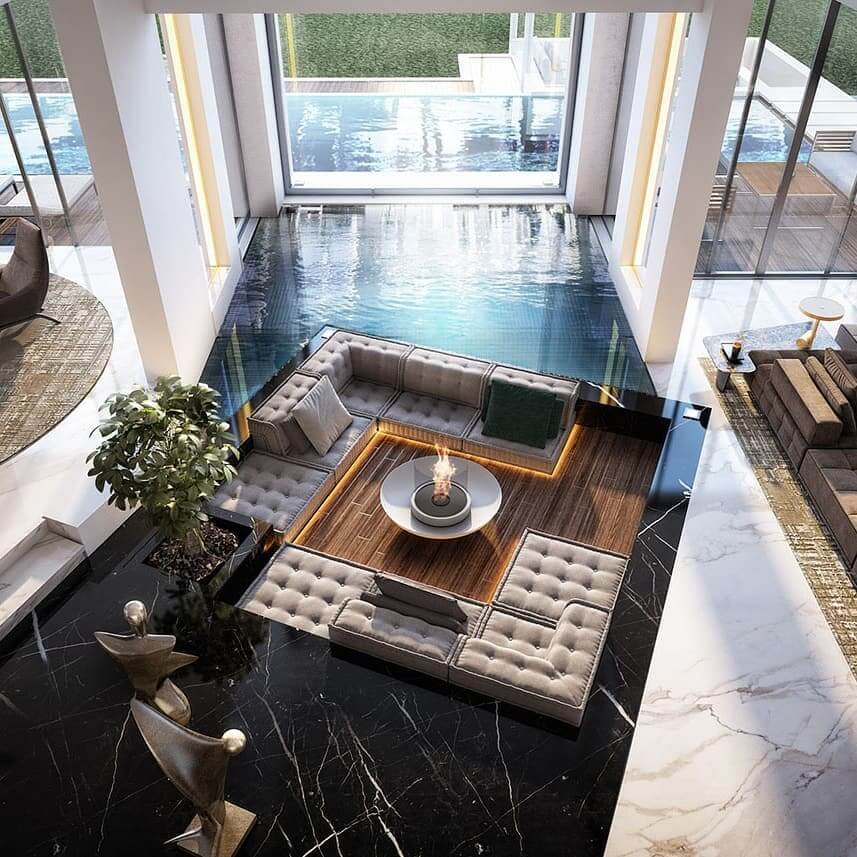
Fire next to water is instant theater—and a sunken pit beside the pool turns the transition from swim to sip into a ritual. Design the drop so it sits just below coping height to preserve views across the waterline, and echo the pool’s geometry with a linear burner or curved bench to tie both zones together. Prioritize slip-resistant finishes: textured porcelain, sandblasted stone, or broomed concrete underfoot, plus quick-drain joints so puddles don’t linger. If your site is breezy, a low glass wind guard tames flames without blocking sightlines. Saltwater or chlorinated environments call for corrosion-smart choices—marine-grade metals, sealed concrete, and outdoor-rated fabrics that dry fast. Storage matters here: a recessed bench bay or slim deck box keeps towels and cushions out of splash zones. Maintain safe clearances from umbrellas and plantings, and set flame height controls within arm’s reach of the lounge for easy dialing between ambiance and warmth. Perimeter step lights and under-cap LEDs guide bare feet after dark, while a narrow perch ledge along the pit doubles as a spot for trays or a post-swim breather. It’s resort energy, right at home.
Slope-Savvy Cut-In: Retaining Seat Wall Carves a Cozy Bowl
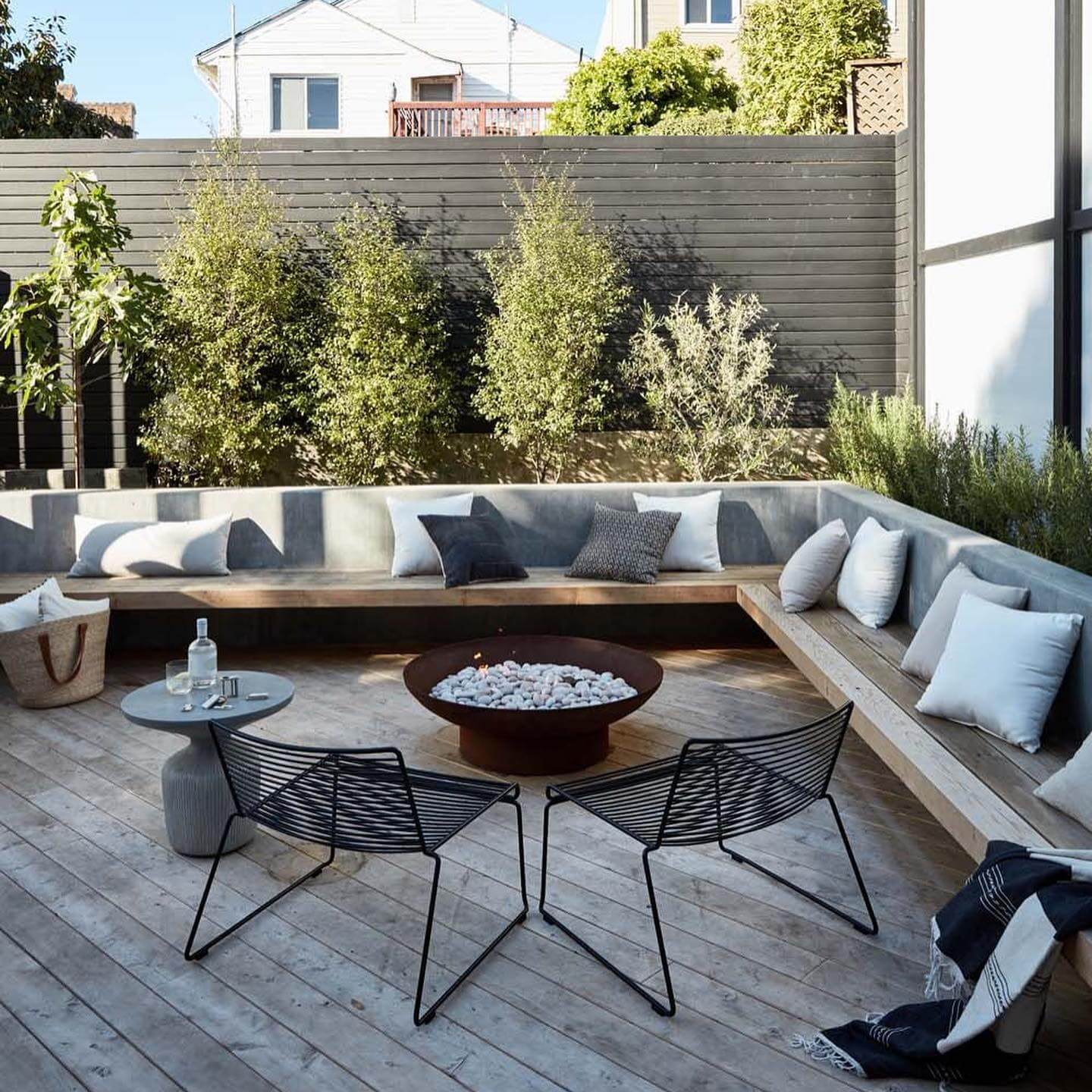
Working with a grade? A hillside is an invitation to nestle your fire feature into the land itself. Excavate into the slope and let a curved retaining seat wall form the backbone of a sunken lounge—part structure, part built-in furniture. Behind the wall, include drainage stone, a perforated pipe, and weep paths so hydrostatic pressure never builds; if you’re retaining more than a few feet, add geogrid reinforcement and consult a pro for footing and frost-depth details. Terraced steps ease the descent and create natural landings for planters or lanterns. A low backrest cap (18–24 inches) offers generous seating and a visual buffer without feeling boxed in. Material continuity is key on a slope: match wall texture to the home’s stone or stucco, then soften edges with native grasses and shrubs that stabilize soil and add movement. For safety, integrate a slender handrail into the wall expression and thread in step lights to read each riser. Whether you choose a masonry fire bowl or a gas burner set into a gravel pad, the cut-in reads intentional—sheltered from wind, warmed by flame, and cradled by the contours of your site.
Installation, Drainage, and Safety for Sunken Fire Pits
Before digging, call utility locators, verify property lines, and review codes, HOA rules, and wildfire restrictions affecting open flames. Choose wood or gas early, since burner size, ventilation, and line routing change the build. Excavate to stable subsoil and establish a compacted stone base that sheds water and resists frost heave. Incorporate a drain assembly beneath the bowl and weep paths through walls so stormwater never ponds in the recess. Finish edges with non-slip coping, and plan illuminated steps and handholds where the descent exceeds a single comfortable tread.
Key Build Considerations:
- Excavate at least six inches below the hearth, add compacted gravel, a perforated drain line to daylight or dry well, and geotextile fabric to prevent clogging and heave.
- In freeze-thaw zones, carry wall footings below local frost depth, avoid saturated soils, and use drainage behind seat walls to relieve hydrostatic pressure and prevent cracking, bulging, or racking.
- For gas fire pits, size the supply line for BTU demand, include an accessible shutoff, bond metallic components, add a sediment trap, and pressure-test according to code before backfilling.
- Integrate low and high vents in the pit surround to promote combustion air and heat escape, reducing soot buildup, burner overheating, and smoke downdrafts in sheltered courts or tight backyards.
- Maintain safe clearances from structures, trees, fences, and overhangs; orient openings away from prevailing winds; and respect property setbacks and easements to simplify approvals and minimize smoke nuisance.
- Allow thirty-six to forty-two inches between seating edges and the flame zone, vary bench heights between sixteen and eighteen inches, and provide twelve-inch coping caps for plates, glasses, and comfort.
- Add tread lighting on steps, downlights under caps, and low-glare path fixtures, plus handrails for deeper pits, ensuring safe nighttime movement and clear egress from all seating positions.
- Use a spark screen, ember mat, and noncombustible radius, store seasoned hardwood off the ground, and clean ash into a metal container to reduce flare-ups, stains, and windblown sparks.
Protect surfaces with breathable sealers suited to stone or concrete, and keep a tight-fitting cover to block rain and debris. Re-level pavers or capstones if movement appears, and re-sand or re-caulk joints as needed. Inspect vents, drains, and burners seasonally, checking for obstructions, leaks, or critter nests before lighting. In cold climates, winterize gas lines per manufacturer guidance and avoid water accumulation that can freeze and expand. Keep an extinguisher, spark screen, and metal ash can nearby, and follow local burn bans without exception.
Answers to Common Questions About Recessed Fire Features
How deep should a sunken fire pit be?
Most designs sit 12–18 inches below surrounding grade, balancing intimacy with safe access and sightlines. Ensure at least one generous step or landing and illuminate transitions for nighttime use.
Get the Fail-Safe Paint Color Playbook (Free PDF)
36 proven colors • 8 ready palettes • trim & sheen guide • printable testing cards.
Do I need a permit for a recessed fire pit?
Gas-fueled pits often require permits, inspections, and line pressure tests, while wood pits may face setback and spark-screen rules. Always check municipal codes, HOA guidelines, and wildfire regulations before excavation.
What materials hold up best around intense heat?
Cast-in-place concrete, dense natural stone, and steel inserts handle heat reliably when detailed with proper ventilation and drainage. Avoid soft stones and moisture-trapping mortars that can spall near flame.
How do I keep water out of an in-ground pit?
Install a gravel sump, perforated drain to daylight or dry well, and geotextile to prevent clogging, then use a fitted cover. Maintain weep paths through walls and clear debris after storms.
Get the Fail-Safe Paint Color Playbook (Free PDF)
36 proven colors • 8 ready palettes • trim & sheen guide • printable testing cards.
Final Verdict: Step Down to Elevated Evenings
The best sunken fire pit ideas blend atmosphere with intention. When you match materials to your architecture, scale seating to human comfort, and plan circulation that feels natural, you get an intimate, wind-calmed lounge that still preserves backyard sightlines. From crisp concrete and corten steel to heritage brick and hand-troweled plaster, the palette sets the mood—but function seals the experience: smart drainage underfoot, layered lighting on steps and seat walls, and fuel choices that fit your lifestyle and climate.
Turn inspiration into a build-ready plan by mapping the footprint, confirming local codes and setbacks, and marking utilities before you dig. Set elevations for positive drainage, specify a permeable base (gravel, DG, or pavers), and choose a burner with proper clearances—or a wood setup with a stable, spark-safe surround. Aim for 16–18 inch seat heights, add a ledge for plates and glasses, and integrate wind mitigation with low walls or tempered glass if needed. Near pools and decks, prioritize noncombustible edges and slip-safe finishes; under pergolas, ensure open ventilation and heat spacing. Whether you start with a simple gravel bowl and steel ring or commit to a tiered conversation pit with built-ins, a focused material palette and thoughtful detailing will reward you with a cozy, modern backyard anchor that invites lingering year-round.