
Attic Bedroom & Loft Room Ideas | Smart & Stylish
Ready to transform awkward eaves into a cozy escape? These attic bedroom and loft room ideas show how to make the most of every inch—bringing in light, storage, and style so your top floor feels bigger, brighter, and beautifully intentional.
From minimalist lofts with clean lines to cottage-chic hideaways layered in texture, we’ll explore layouts that work with sloped ceilings, smart built-ins that tame clutter, and lighting moves—like skylights and dormers—that change everything. You’ll also find ideas tailored to small spaces, guest suites, and creative teen rooms.
Get the Fail-Safe Paint Color Playbook (Free PDF)
36 proven colors • 8 ready palettes • trim & sheen guide • printable testing cards.
Expect space-savvy solutions (think platform beds, low-profile furniture, and under-eave drawers), color palettes that visually lift ceilings, and design cues borrowed from Scandinavian, modern farmhouse, and industrial looks. Whether you’re starting fresh or refreshing a nook, these 25 ideas will help you turn the highest room in the house into your favorite one.
Attic bedroom design ideas for sloped ceilings and skylight layouts
Attic bedrooms thrive when you respect the roof geometry and choreograph circulation beneath the highest ridge. Start by mapping headclearance rings at 6’8″ and 6’0″ to guide bed placement and door swings. Position sleeping areas centrally, then slide storage and seating into the eaves, preserving safe pathways around stairs and dormers. Confirm egress with an operable window or stair link, and plan smoke and carbon-monoxide detectors before closing walls. Finally, specify insulation, vapor control, and air sealing to prevent seasonal condensation and keep temperatures comfortable year-round.
Layout and space-planning ideas
- Low-Knee Wall Daybed: Slide a custom daybed along the low knee wall to preserve central headroom, integrating deep drawers beneath and a slim picture ledge to replace bulky nightstands.
- Dormer Reading Nook: Convert a dormer into a cushioned reading nook, adding built-in shelves under the seat and an articulate sconce for task light, creating an irresistible micro retreat.
- Floating Nightstands: Mount small wall shelves as floating nightstands, keeping floors clear and cords tidy, while emphasizing sightlines under rafters for a visually quieter, safer midnight path.
- Platform Bed Under Eaves: Lower a platform bed under the eaves, centering mattress within the highest pitch and framing with concealed LED coves to highlight beams without glare or hotspots.
- Pocket-Door Ensuite: Tuck a compact ensuite behind a pocket door, minimizing swing conflicts and echoing rooflines with a triangular vanity mirror to bounce light deeper into the bedroom.
- Split-Level Zone: Create a subtle split-level with a low step platform to zone sleeping from workspace, hiding cable management within risers and enhancing perceived ceiling height around the bed.
Lighting, materials, and comfort upgrades
- Dual Skylight Strategy: Pair two smaller skylights opposite the bed instead of one large, balancing daylight while reducing overheating and aligning with rafters to simplify installation and shades.
- Layered Lighting Grid: Combine recessed gimbal cans at ridge, wall washers along knee walls, and dimmable sconces near pillows to sculpt light without harsh shadows on sloped surfaces.
- Acoustic Insulation Upgrade: Retrofit dense-pack cellulose between rafters and add resilient channels with drywall, significantly improving sound isolation from rain and street noise while stabilizing seasonal temperatures.
- Light Flooring Continuity: Run pale matte plank flooring wall-to-wall, carrying the same finish down the staircase to visually link levels and make the attic feel broader and cohesive.
- Mirrored Wardrobe Doors: Use mirrored wardrobe doors on built-ins, bouncing daylight into darker eaves while expanding sightlines; choose low-iron glass to prevent green tint and distortion.
- Programmable Ventilation: Install a humidity-sensing, zoned ventilation fan near the ridge, automatically clearing steam from ensuite showers and night heat, preserving fresh sleep conditions through seasonal swings.
Finishes matter as much as floor plans in attics, where light can be scarce and angles create shadows. Favor low-sheen paints to soften glare along rafters and bounce light evenly. Use slimmer profiles—pencil baseboards, flat-panel doors, and narrow casings—to reduce visual clutter beneath slopes. If adding a bath, keep plumbing clustered along a knee wall to maintain full-height headroom and avoid expensive structural work. Integrate smart controls for shades, ventilation, and heat to fine-tune comfort without leaving bed on frosty mornings.
Skylight Sanctuary: Layered Light That Lifts Low Ceilings
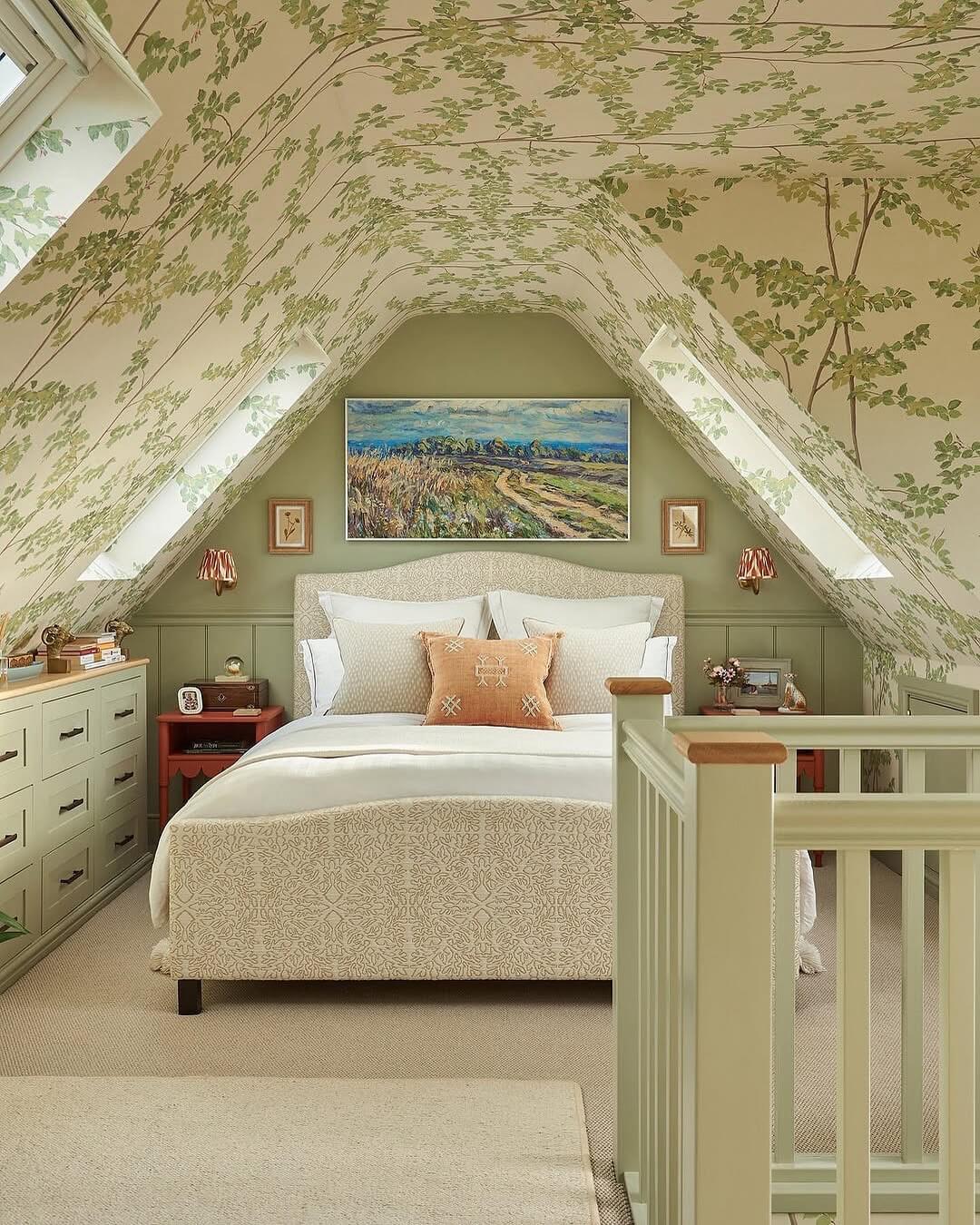
When head height is tight, light is your best design tool. A pair of generous skylights transforms a cramped attic bedroom into an airy loft room, washing sloped ceilings with daylight and visually pushing them back. Aim to balance top-down light with low, cozy fixtures: wall-wash sconces along the knee wall, a warm-glow table lamp on a compact nightstand, and a dimmable strip tucked along a ridge beam. This layered approach keeps mornings bright and evenings soft. Choose matte white or pale limewash on ceilings to bounce light, and anchor the floor with a natural fiber rug so the room still feels grounded. If summer glare worries you, fit blackout or solar skylight blinds so sleep comes easy. A low-profile platform bed under the slope avoids the head-bump zone, while a narrow shelf behind the headboard corrals books and plants without eating floor space. Finish with a mirror opposite the skylight to double the glow and a touch of warm wood to keep things from feeling clinical. It’s one of the simplest attic bedroom ideas that instantly makes a top-floor retreat feel bigger and calmer.
Platform Bed With Under-Eave Storage That Works Overtime
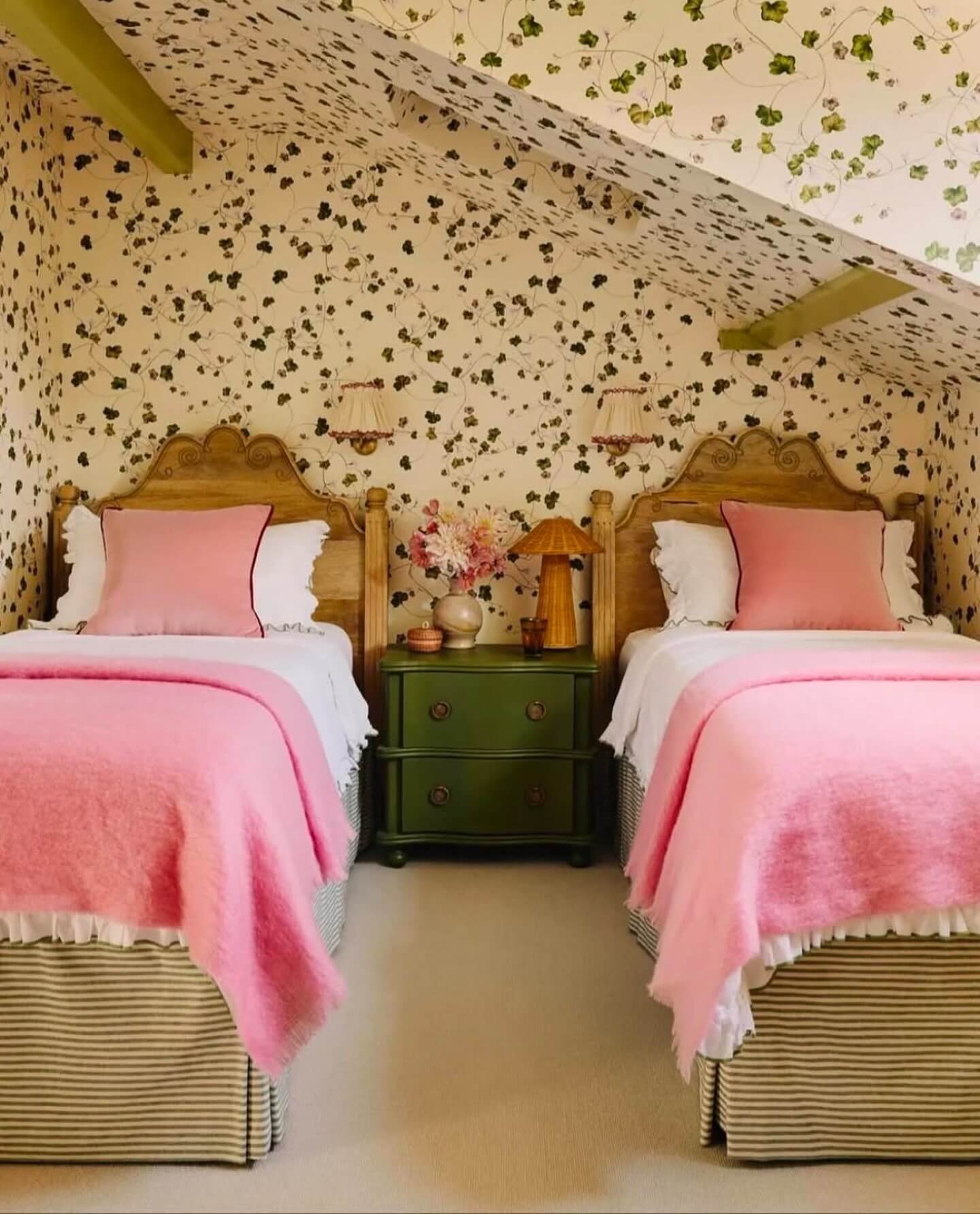
If clutter collects faster than you can fold, build storage into the architecture. A custom platform bed with deep drawers and a continuous under-eave wardrobe turns the awkward knee wall into hardworking square footage. Use handleless push-latch fronts for a clean, modern look and a shallow top shelf that acts like a nightstand across the slope. A continuous plinth and consistent door heights trick the eye into reading one long, orderly “wall,” which makes the loft room feel wider. Add soft-close hardware and toe-kick lighting for safe late-night steps. Keep the palette quiet—think warm oak, putty, and chalky white—so the joinery recedes and the textiles take the spotlight. If you share the space, split the closet behind two sliding doors to save swing clearance, and tuck seasonal bedding into the platform drawers. This built-in strategy is golden in small attic bedrooms because every inch serves a purpose, and visual calm equals perceived space.
Dormer Window Seat Daybed for Reading, Naps, and Views
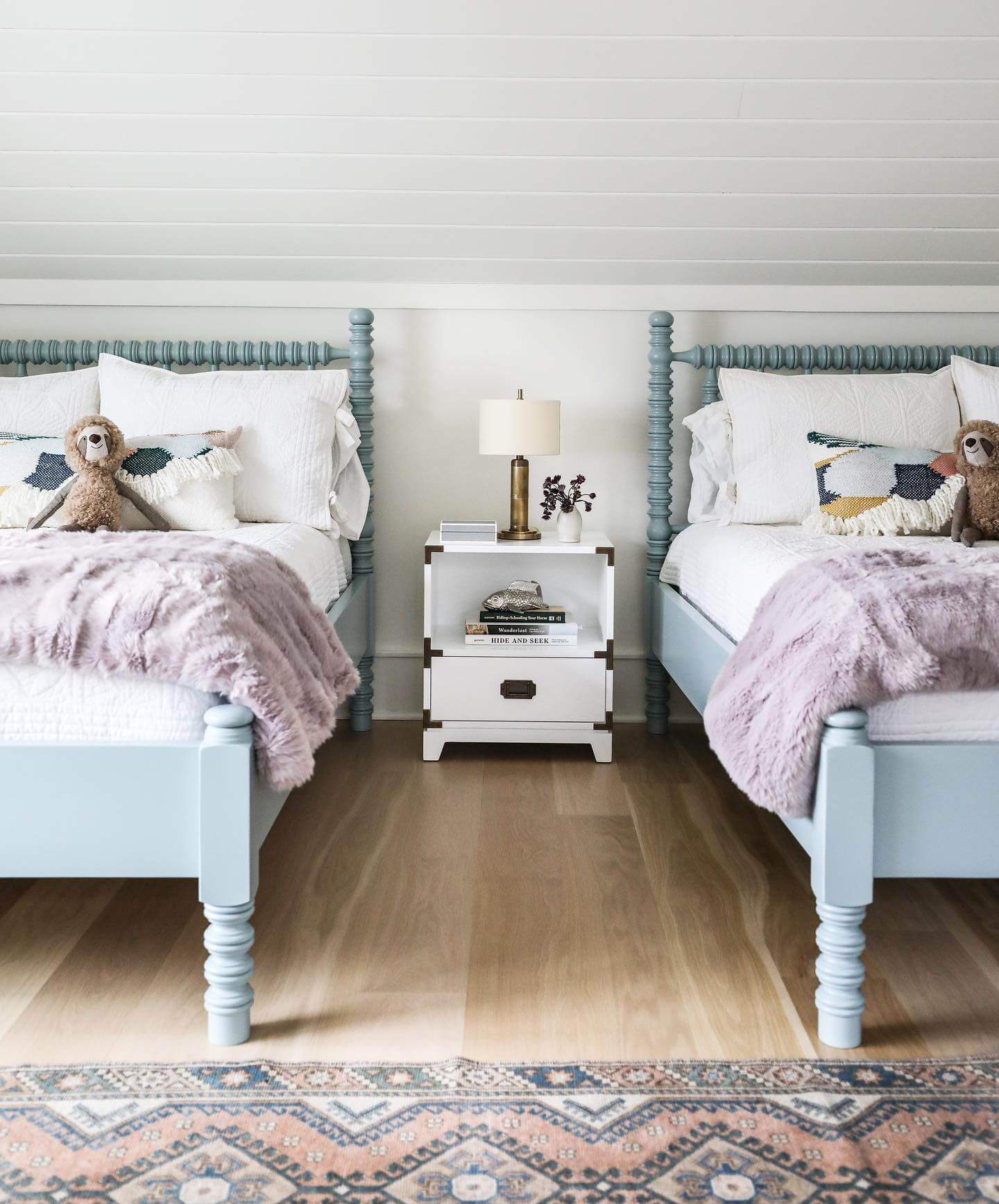
A dormer is a natural focal point—turn it into a destination. Build a cushioned window seat that doubles as a daybed and hide deep drawers beneath for linens and off-season clothes. Flank the opening with slim bookcases to frame the view and create an instant reading nook. Roman shades or relaxed linen curtains soften angles and provide privacy without swallowing light. This move also solves zoning: the dormer becomes a lounge zone, freeing up the main span for the bed and circulation. Layer a textured throw, a small side table for tea, and a plug-in sconce to make the niche usable day and night. If you have both dormer and skylight, let the skylight light the slope and the dormer light the face—your attic bedroom will feel bright at every hour. It’s an elegant way to work with sloped ceilings while adding character and storage, and it makes a small loft room feel like a boutique suite.
Scandi Calm: Whitewashed Slopes, Warm Wood Accents
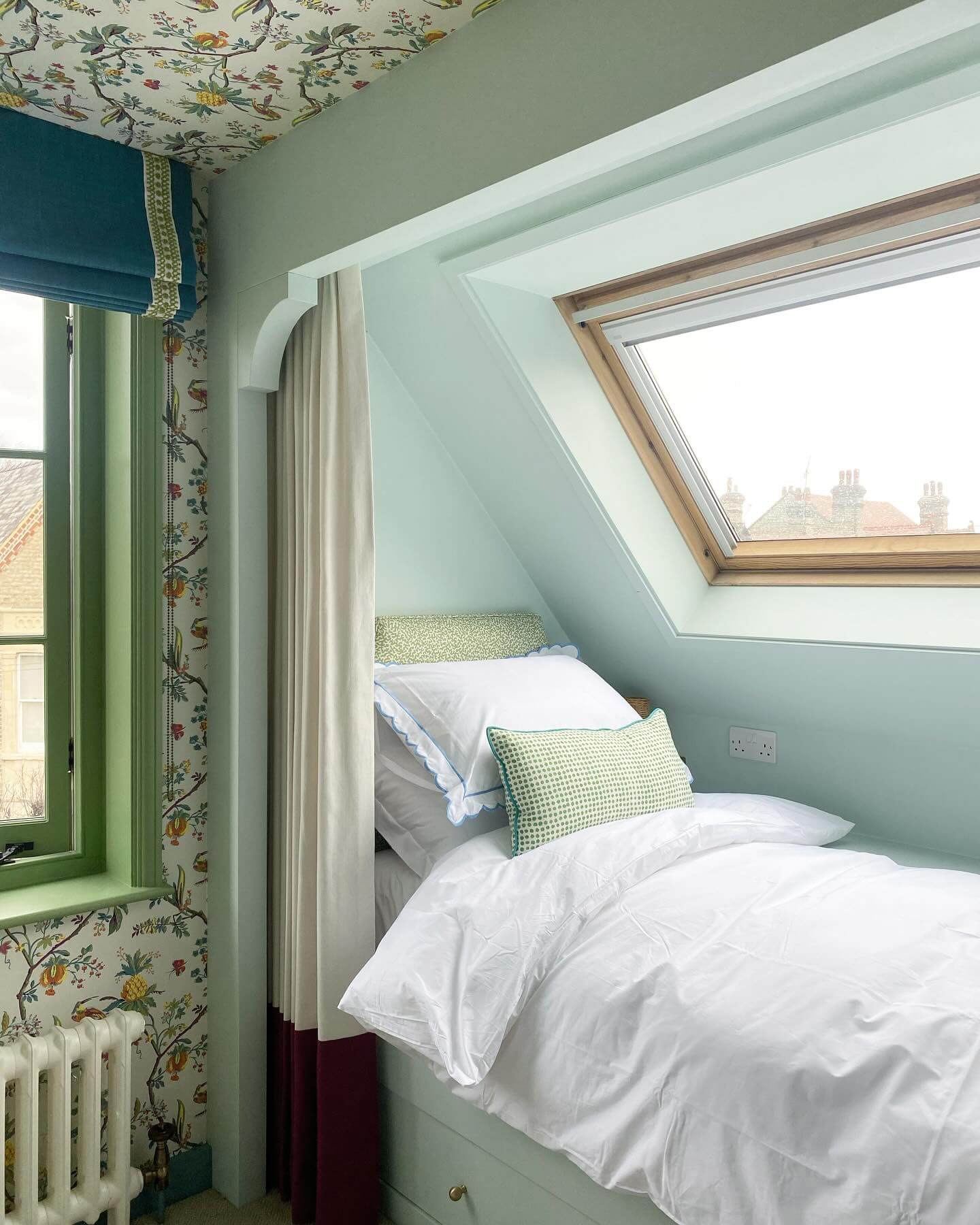
When in doubt, simplify. Scandinavian-inspired attic bedrooms rely on a restrained palette, tactile materials, and negative space to make sloped ceilings feel intentional. Limewash or soft white paint diffuses light and blurs ceiling planes, while whitewashed tongue-and-groove cladding adds subtle texture without visual weight. Balance all that lightness with warm wood—an oak headboard, a simple bench at the foot of the bed, or exposed rafters sealed in a natural finish. Keep furniture low and leggy to maintain sightlines under the eaves, and edit accessories to a few thoughtful pieces: a paper lantern pendant, stoneware catchall, and layered neutral linens. The result reads airy, restful, and highly livable. For comfort, add a thick wool rug to absorb sound and a sheepskin draped over a chair. This minimalist approach is one of the most timeless attic bedroom ideas because it embraces the architecture instead of fighting it, delivering a bright, spacious feel without major construction.
Floating Loft With Glass Balustrade Keeps Light Flowing
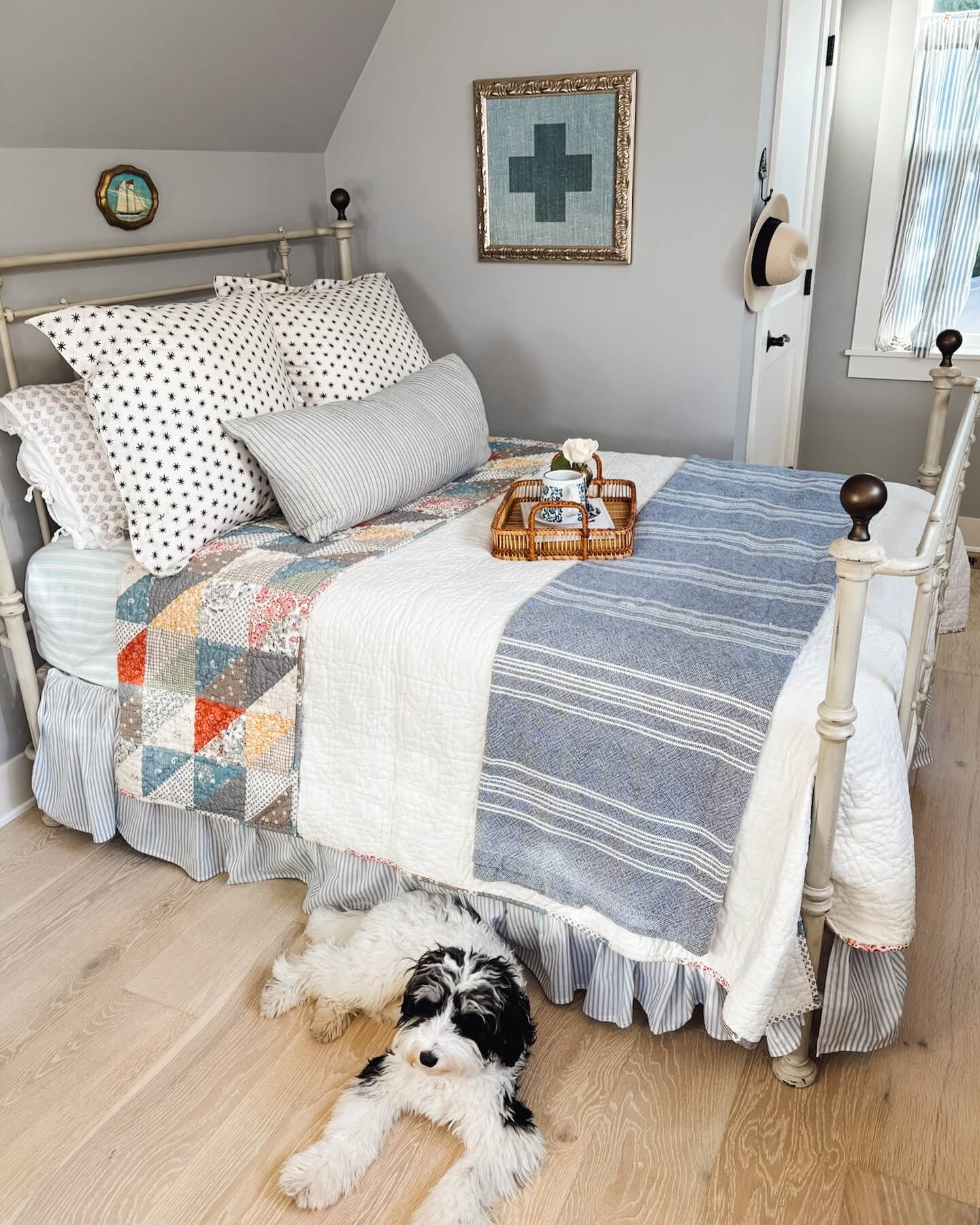
If your attic is a mezzanine above living space, transparency is everything. Swap bulky rails for a clear glass balustrade so daylight pours through and the loft reads as part of the whole. Open-tread stairs reinforce the floating effect and keep sightlines to windows unobstructed. Choose a slim metal or timber stringer for a clean silhouette, then soften with a runner and layered rugs to improve acoustics under the slope. In the sleeping area, a low bed and compact nightstands prevent visual clutter from below. Lighting should be discreet: recessed spots along the ridge, a small spotlight for reading, and a floor plug so cords don’t trail down the stairs. Glass also bounces light back into the attic bedroom, reducing the cave effect common to sloped ceilings. Pair with pale walls, a warm wood floor, and one statement textile to add personality. This modern loft room idea maximizes openness while still feeling cozy and safe.
Moody Cocoon: Deep Paint That Blurs Angles and Invites Sleep
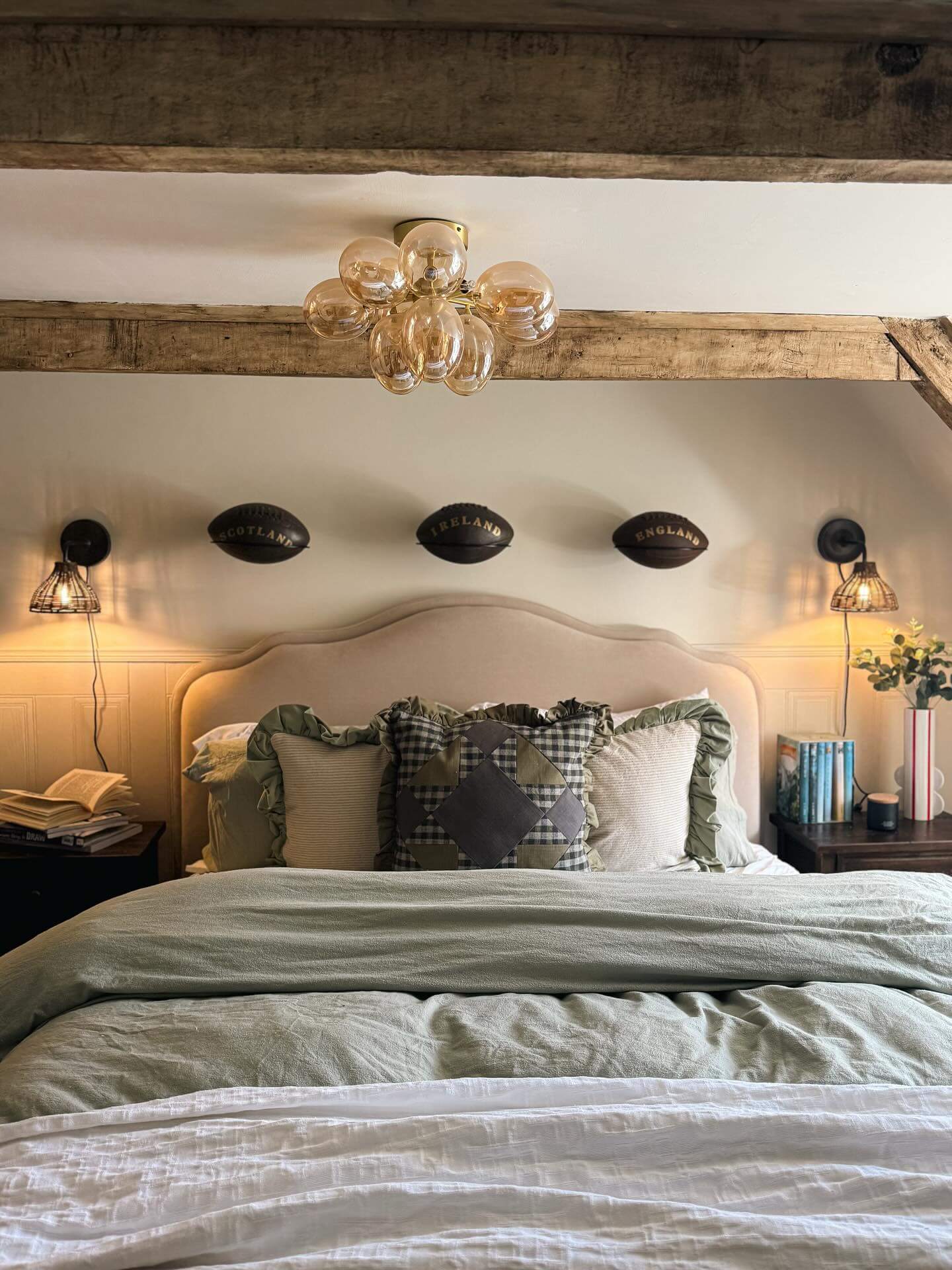
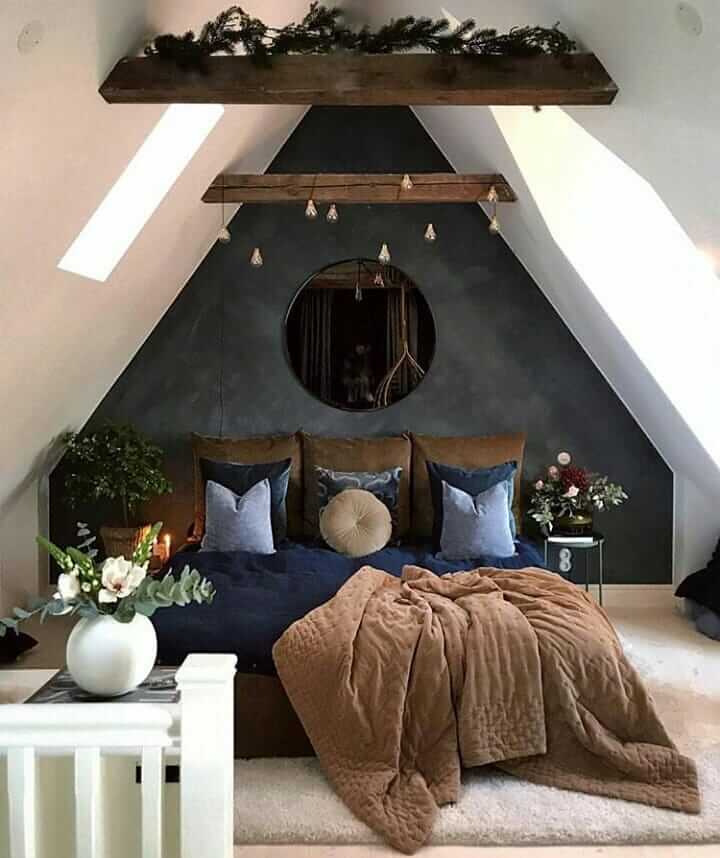
Not every attic has to be bright white. A saturated, matte hue—charcoal, midnight blue, moss—can blur odd angles and make a sloped ceiling bedroom feel like a chic cocoon. Paint walls, ceilings, and trim the same tone to erase lines, then bring in texture for depth: linen bedding, a velvet headboard, woven shades, and aged brass or blackened metal hardware. Warm the palette with wood nightstands and amber-tone bulbs in dimmable sconces for a restful glow. Keep the floor lighter to anchor the space, or go wall-to-wall wool for hotel-level hush. If you have a skylight, add blackout shades to control early light; the contrast of a bright morning and moody evening will make the top floor feel magical. This approach is especially effective in guest rooms and primary suites where the goal is rest. It’s an attic bedroom idea that proves dark and cozy can still photograph—and live—beautifully.
Creative Teen Loft: Ladder Access, Peg Rails, and a Tucked Desk
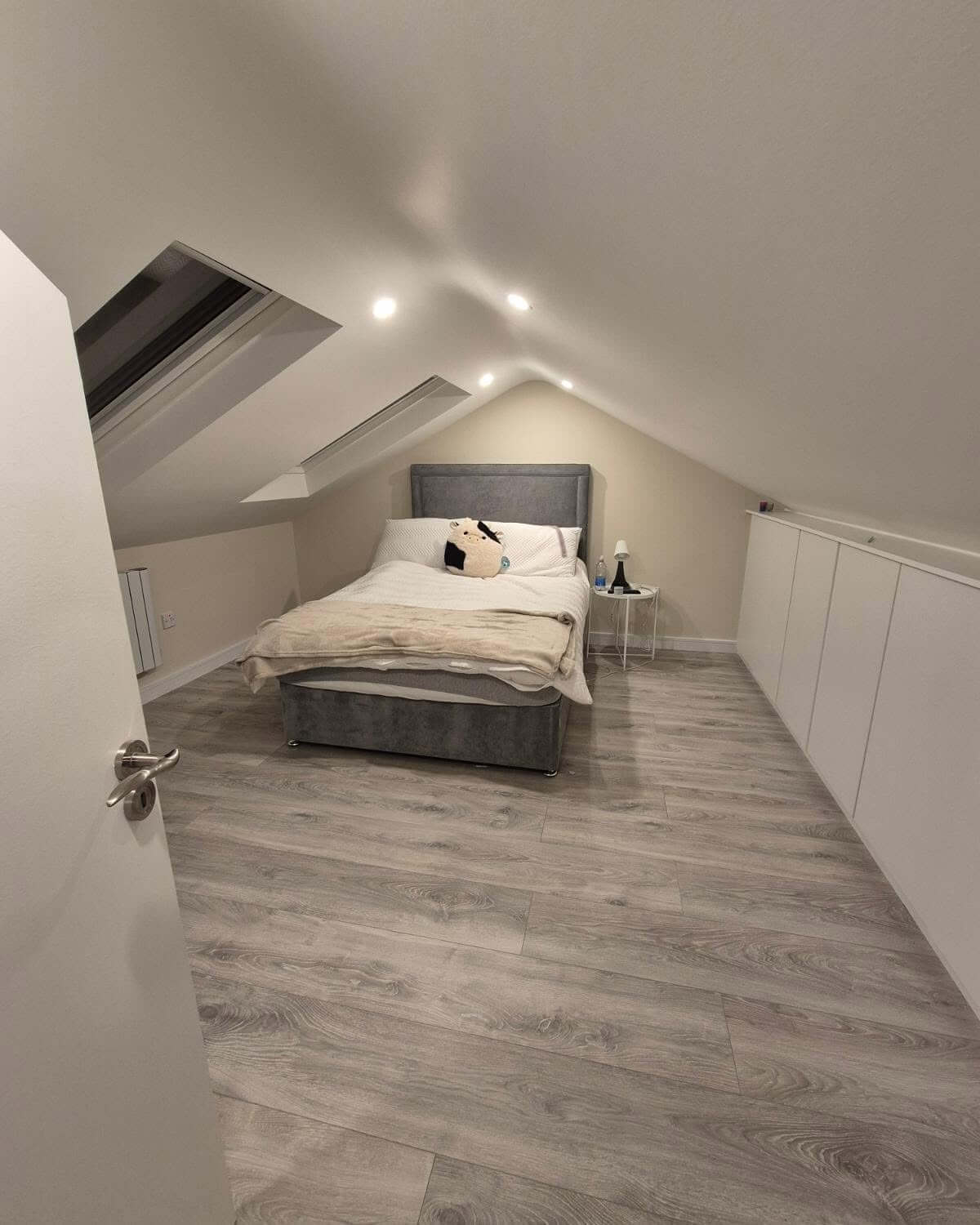
Designing for teens in a loft room is a balancing act between sleep, study, and storage. Work with the angles: place the bed under the lowest pitch and create a compact study nook in the dormer or gable end where head height improves. A wall-to-wall desk with a pinboard or magnetic rail keeps assignments visible, while peg rails along the knee wall corral bags, headphones, and hoodies. Opt for a sleek ladder or alternating-tread stair to save floor space; integrate cubbies into the landing for shoes and small gear. LED strips under shelves and along the slope add glow and make late-night studying less harsh than overhead light. Choose durable, wipeable finishes, and color-block one sloped plane for personality without crowding the room. Smart zoning keeps mess contained and gives a sense of ownership—key for teen buy-in—and turns an awkward attic into a hardworking, good-looking hideout.
Modern Farmhouse Suite: Shiplap, Barn Door, and Black Accents
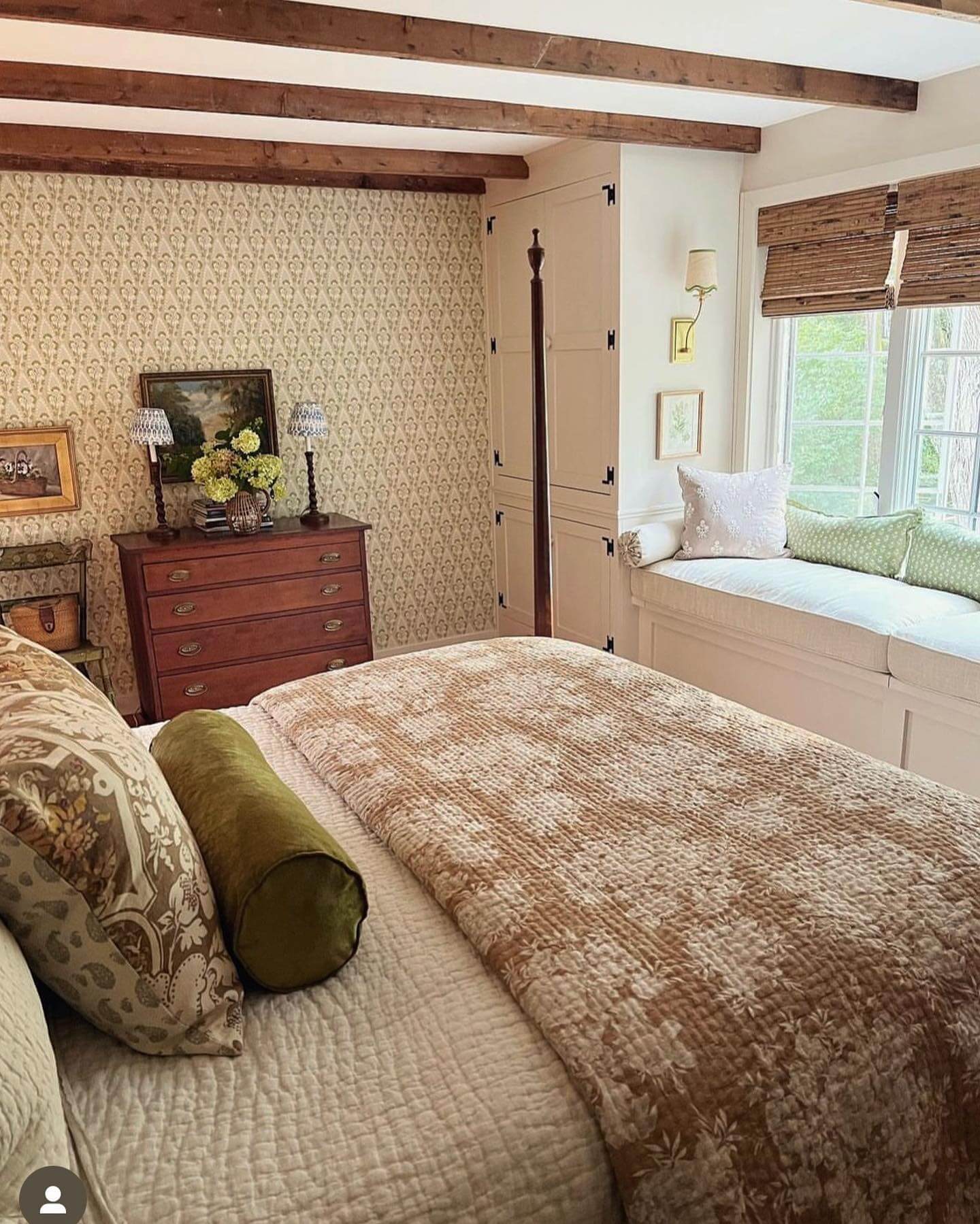
If you love modern farmhouse charm, the attic is the perfect canvas. Run vertical or horizontal shiplap across gable walls to emphasize height and add texture, then keep the slopes smooth for contrast. A sliding barn door saves clearance and hides an ensuite or compact closet under the eaves. Layer in black accents—iron sconces, thin-frame mirrors, or a matte metal bed—to sharpen the cozy whites and woods. Use vintage-inspired rugs to warm the floor and a long runner along the knee wall to visually elongate the room. For storage, build simple shaker-front drawers into the eaves and top them with a pine ledge for books and baskets. Finish with linen curtains, oversized pillows, and a few antique finds for soul. This blend of crisp lines and familiar textures makes a sloped-ceiling bedroom feel both fresh and timeless, and it’s a crowd-pleasing attic bedroom idea for guest suites.
Twin Nook Guest Loft With Built-In Beds and Reading Lights
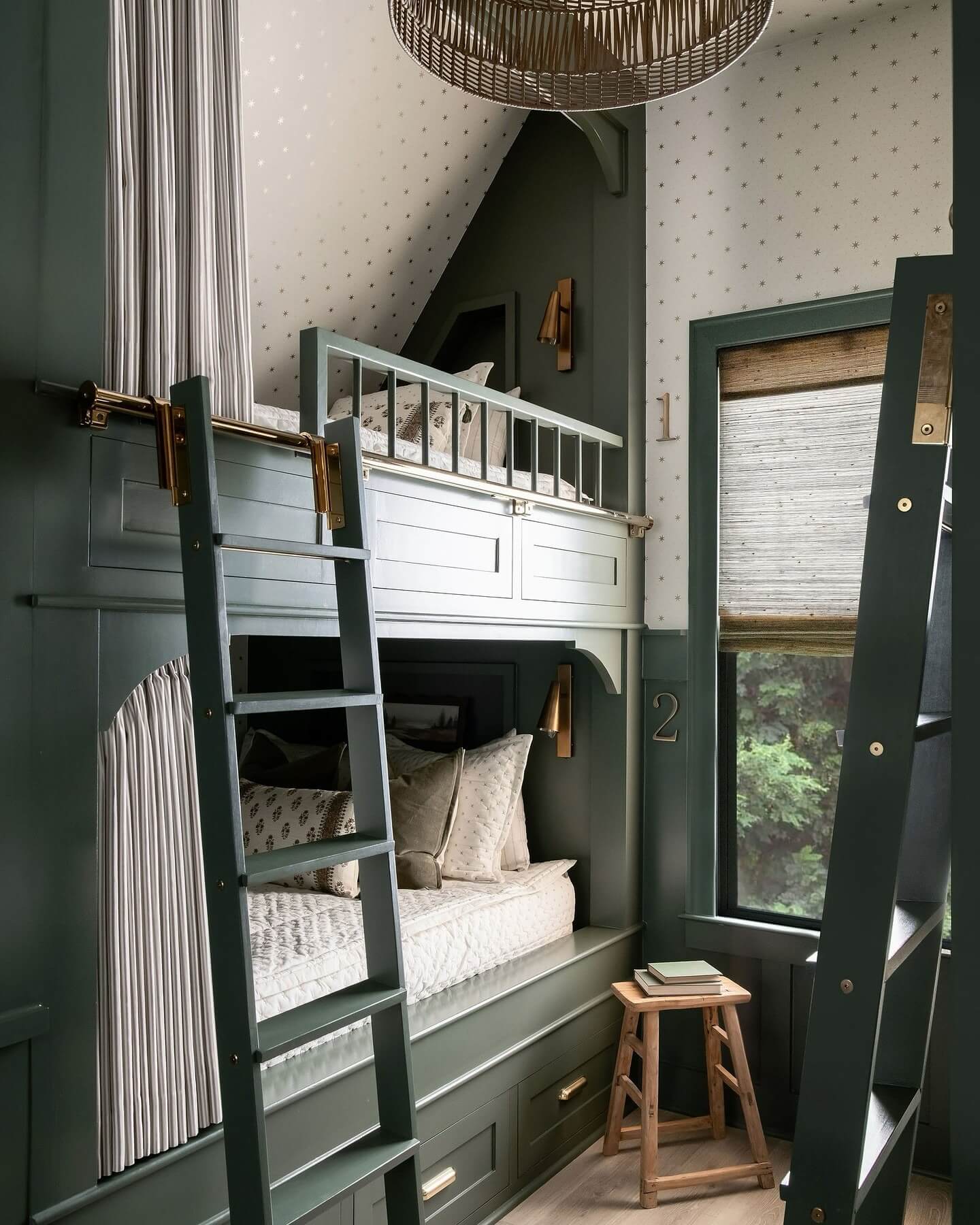
Hosting often? Two built-in twins along opposite eaves create a flexible guest loft that works for siblings, friends, or overflow holidays. Frame each bed with a paneled headboard that aligns to the slope, add individual reading sconces, and carve drawers into the base for spare blankets. A shared trunk or slim chest between the beds acts as a nightstand and keeps traffic flowing down the middle. To keep the space bright, use a light, durable palette—beadboard, striped cotton, and woven rugs—and reserve pattern for pillows and throws that can change with seasons. If you can, add a small skylight over each bed so guests wake naturally; blackout shades ensure it’s optional. Hooks along the knee wall stand in for bulky wardrobes, and a narrow wall mirror helps with morning routines. This layout turns a petite attic into a charming, practical retreat without major renovation.
Get the Fail-Safe Paint Color Playbook (Free PDF)
36 proven colors • 8 ready palettes • trim & sheen guide • printable testing cards.
Hybrid Loft Studio: Disappearing Bed and a Dormer Office
When your attic bedroom has to multitask, choose pieces that do, too. A Murphy bed or wall bed disappears by day, unlocking floor space for yoga, work, or crafting. Park a desk in the dormer so you gain head height and a view, and run concealed power and data along the knee wall to tame cords. Use a storage wall of shallow cabinets under the eaves for printers, files, and bedding, and label everything so the room converts quickly. Layer lighting: task lamps at the desk, a soft pendant on a long cord to clear the slope, and low-level floor lighting for nighttime trips. Acoustic panels disguised as art calm echoes under the pitch, and a neutral palette keeps the shift from office to bedroom feeling seamless. With smart planning, a loft room can pivot from productive day space to serene sleep zone without compromise—proof that small, sloped spaces can work very hard.
Get the Fail-Safe Paint Color Playbook (Free PDF)
36 proven colors • 8 ready palettes • trim & sheen guide • printable testing cards.
Japandi Attic Retreat: Warm Neutrals, Negative Space, and Calm Under the Eaves
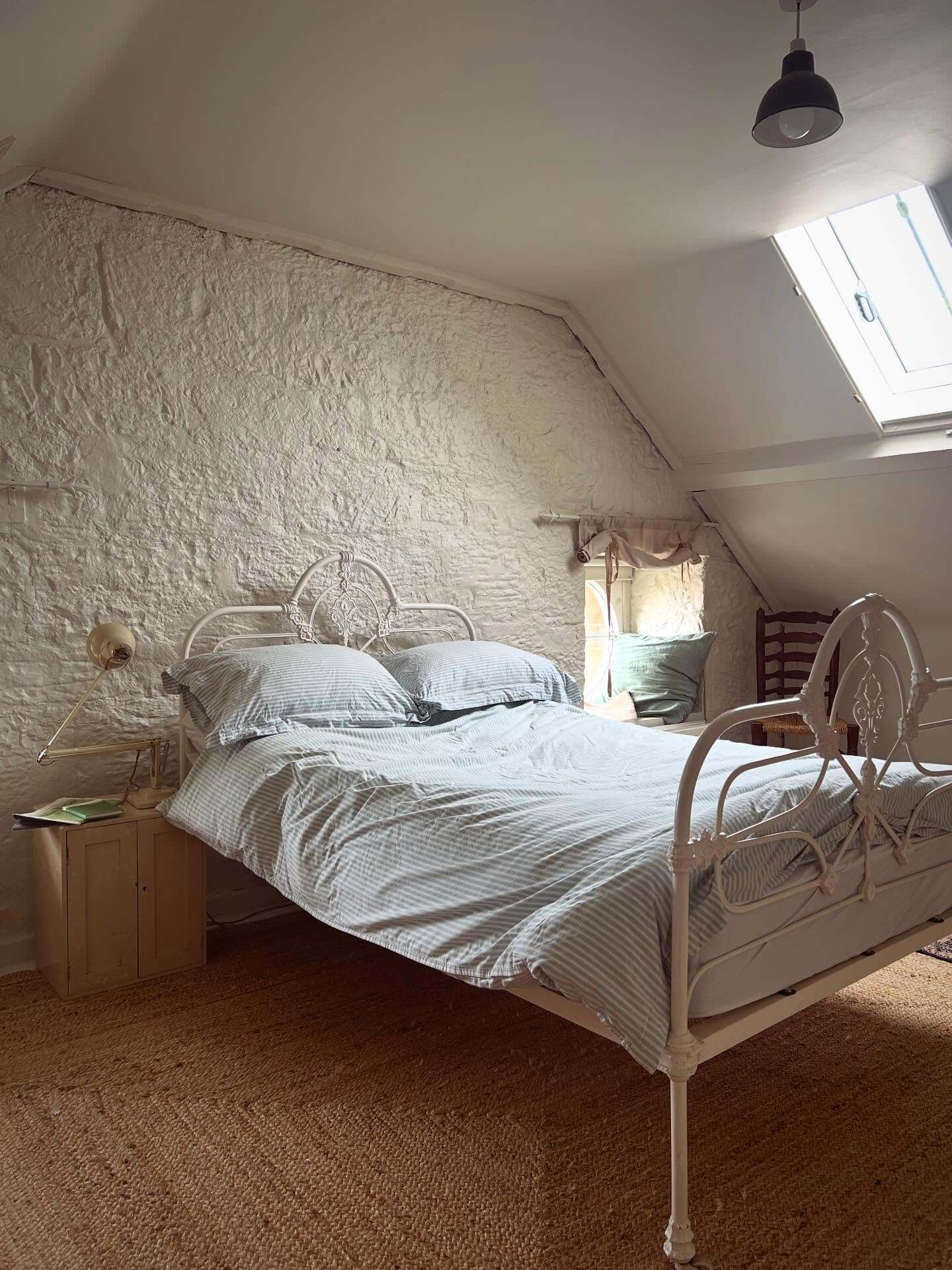
When ceilings dip, simplicity becomes a superpower. A Japandi-inspired attic bedroom blends Scandinavian restraint with Japanese warmth to create visual calm and make low slopes feel intentional. Start with a restrained palette—soft whites, putty, sand, and natural wood—to blur angles and let light bounce. Choose a low-profile platform bed so sightlines skim beneath the eaves; pair it with slim night ledges and paper-shaded sconces for gentle, non-glare lighting. Under-knee-wall drawers keep clutter out of sight, while a single open rail or peg rail displays just a few beautiful essentials—linen robe, woven tote, a favorite hat—so storage doubles as styling. Layer tactile neutrals (nubby wool throw, cotton-linen duvet, jute rug) to add depth without visual noise. For balance, introduce one grounded element—an ash or oak headboard panel or a stone bedside stool—to counter the lightness. Like our “Scandi Calm” idea, it’s about restraint, but Japandi leans warmer and more organic, helping small loft rooms feel serene, not stark. Finish with a low, leafy plant near a skylight for gentle life and improved air quality.
Under-Eave Wardrobe Wall: Flush Fronts, Full-Length Mirrors, Zero Clutter
Knee walls are storage gold mines—if you plan them precisely. Convert that awkward triangle into a seamless wardrobe wall with custom carcasses stepped to match the roof pitch. Use frameless, push-to-open fronts in the same color as your walls so the storage visually disappears; integrate a pair of mirrored panels to lengthen the room and bounce precious light. Inside, specify double-hanging sections for shirts, deep drawers for knitwear, and a pull-out shoe tray tucked into the shallowest end. Add perforated backing or discreet louvered vents so clothes can breathe, especially in well-insulated lofts. Soft-close hardware keeps the space quiet and sleep-friendly, while LED strip lights triggered on door open make every inch usable. If budget’s tight, flat-pack units can be hacked with custom filler panels for a built-in look. Tie it to your palette—matte white for Scandi, oak for farmhouse, or a moody hue to echo our “Cocoon” concept—and you’ll gain a tailored dressing zone without crowding the bed. The result: an attic bedroom that lives larger because everything has a place.
A‑Frame Cabin Vibes: Ridge-Line Focus and a Grounded Platform Bed
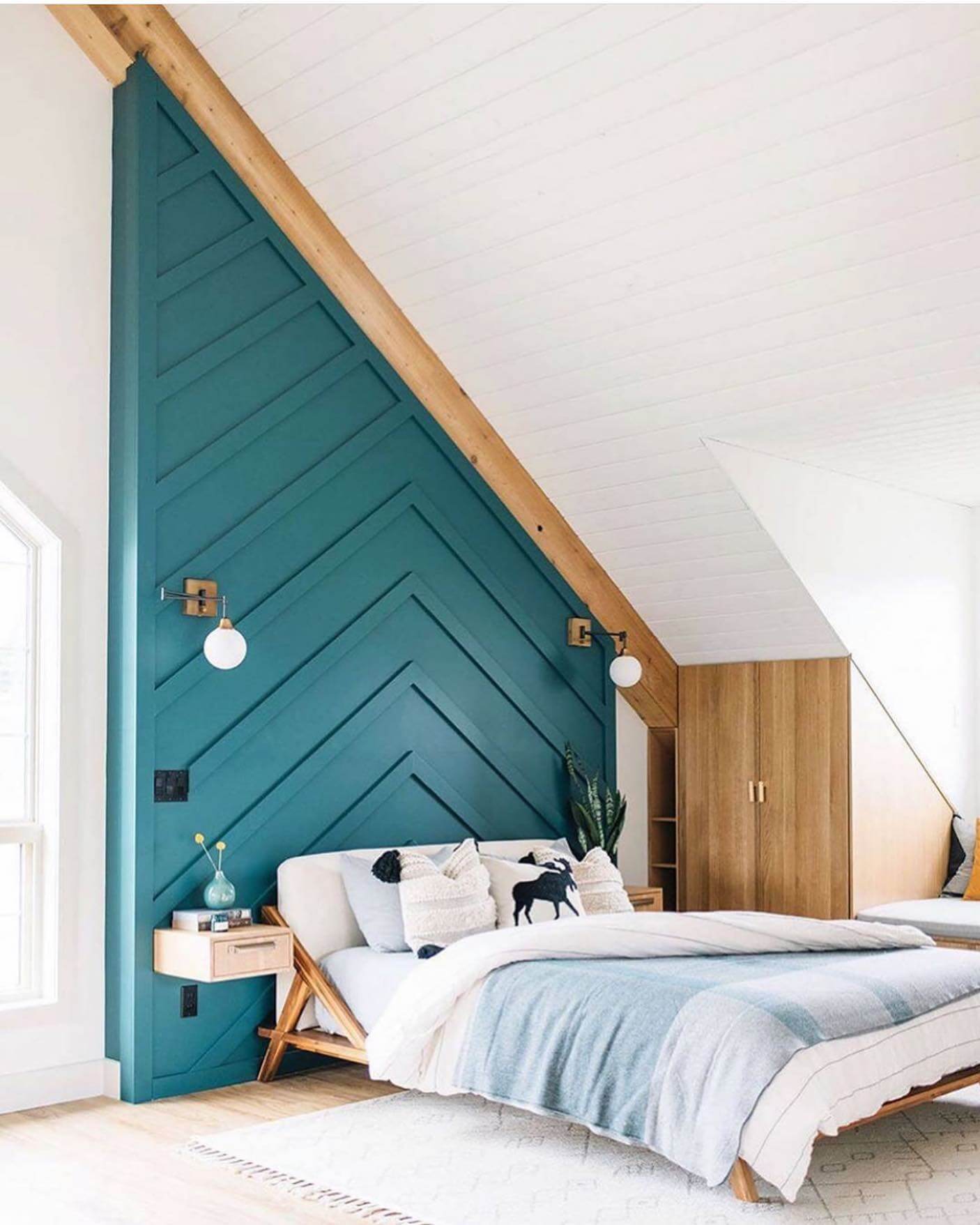
Leaning into an A-frame or steep gable can turn your loft room into a restful hideaway. Anchor the composition on the ridge: center the bed beneath it so the architecture becomes a natural canopy. A low platform keeps proportions feeling calm and preserves headroom where you need it most—when getting in and out of bed. Sheath the slopes in tongue-and-groove or wide-plank panels, then finish with a clear matte to showcase grain and amplify warmth. To avoid “log-cabin dark,” keep floors lighter than the ceiling or introduce a pale rug that reflects light upward. Lighting is crucial: pair a ridge-mounted pendant on a long drop with under-eave sconces so you have task and ambient options without cluttering nightstands. Slip in a shallow, ridge-parallel shelf as a minimalist headboard; it corrals books and charges phones while doubling as a design line that guides the eye. In shoulder seasons, a small, quiet ceiling fan mounted at the ridge helps with stratified heat common in attic bedrooms, keeping your cabin vibe comfortable year-round.
Pocket-Door Ensuite: A Compact Attic Bath That Feels Built-In
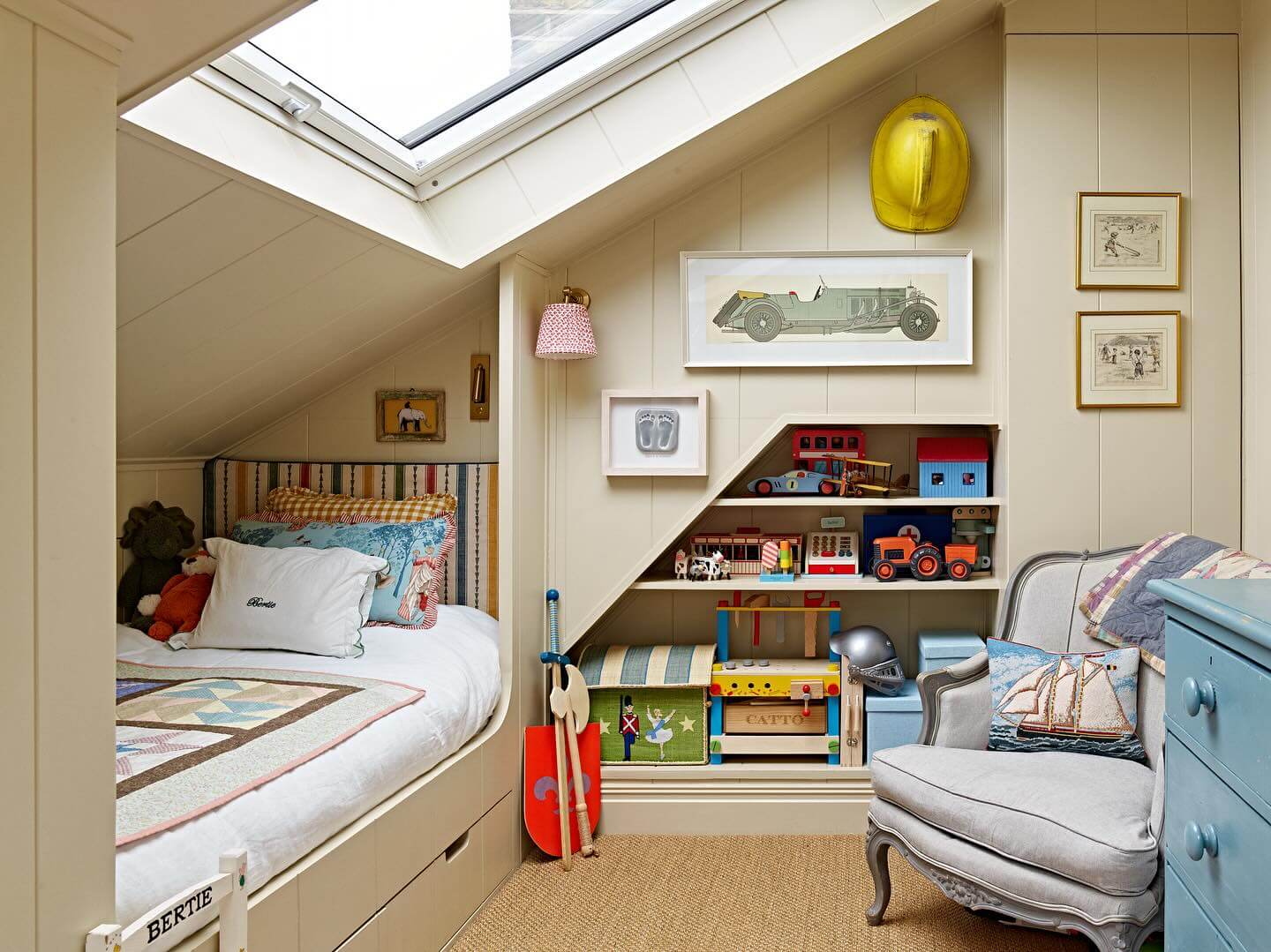
If you’ve wished your loft suite had a bath, steal space from a gable end or deep dormer and make every inch count. A pocket door solves clearance issues; specify solid-core for privacy. Treat the bath like a wet room: continuous floor tile with a linear drain under the slope maximizes standing height at the vanity. Choose a wall-hung toilet and vanity to keep the floor visible (a small-space trick that makes rooms feel larger) and to route services within the knee wall. A roof window with rain sensor provides daylight and passive ventilation—critical in humid zones—while an inline fan tied to a humidity sensor protects finishes. Keep surfaces light and reflective—satin white tiles, pale terrazzo, or microcement—to echo our “Skylight Sanctuary” principle of lifting low ceilings. In the bedroom, repeat the bath’s metal finish (brushed nickel or matte black) in bedside hardware for cohesion. With smart waterproofing and compact fixtures, your attic bedroom becomes a true suite without feeling crowded.
Statement Gable: Patterned Wallpaper That Visually Expands a Small Loft
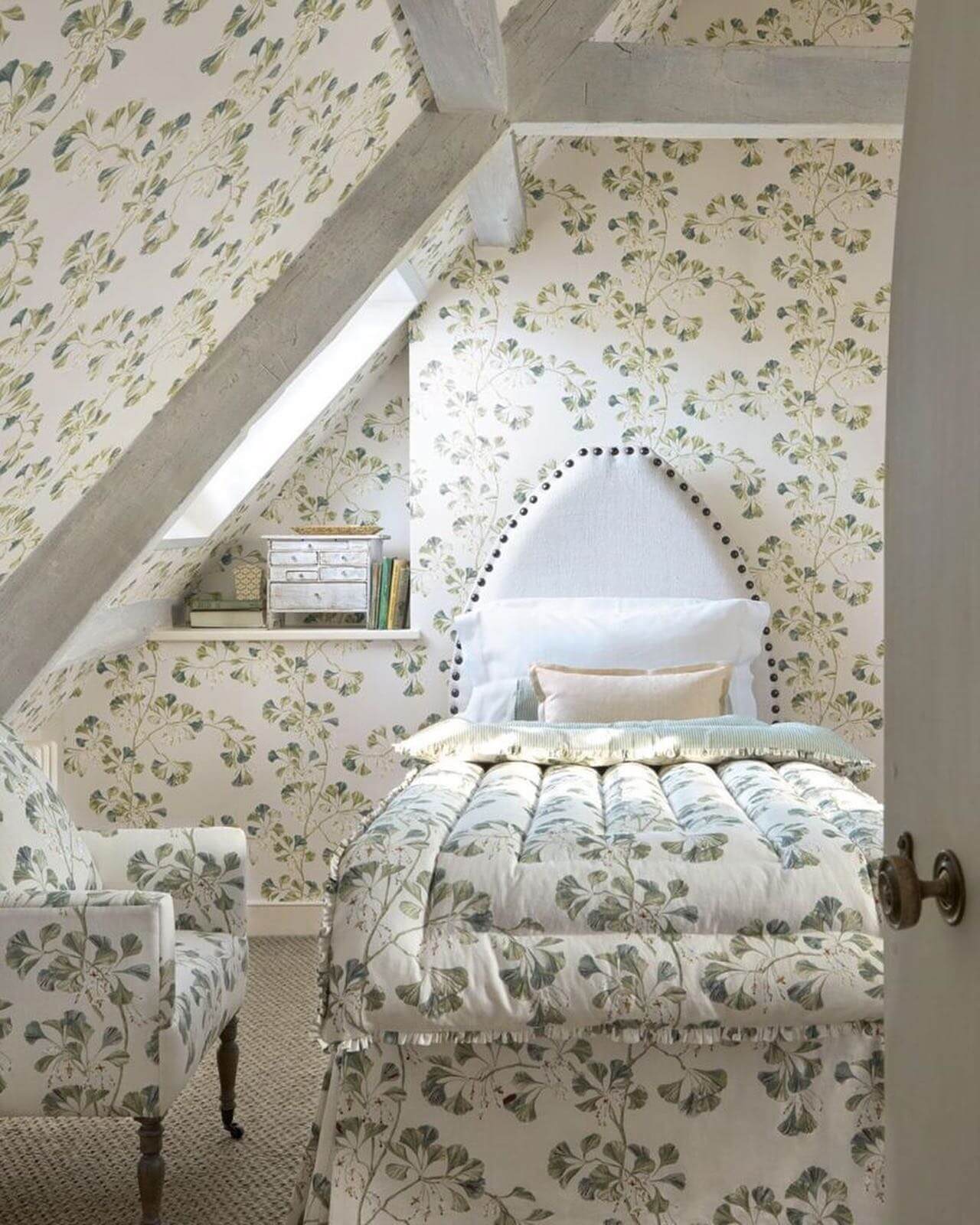
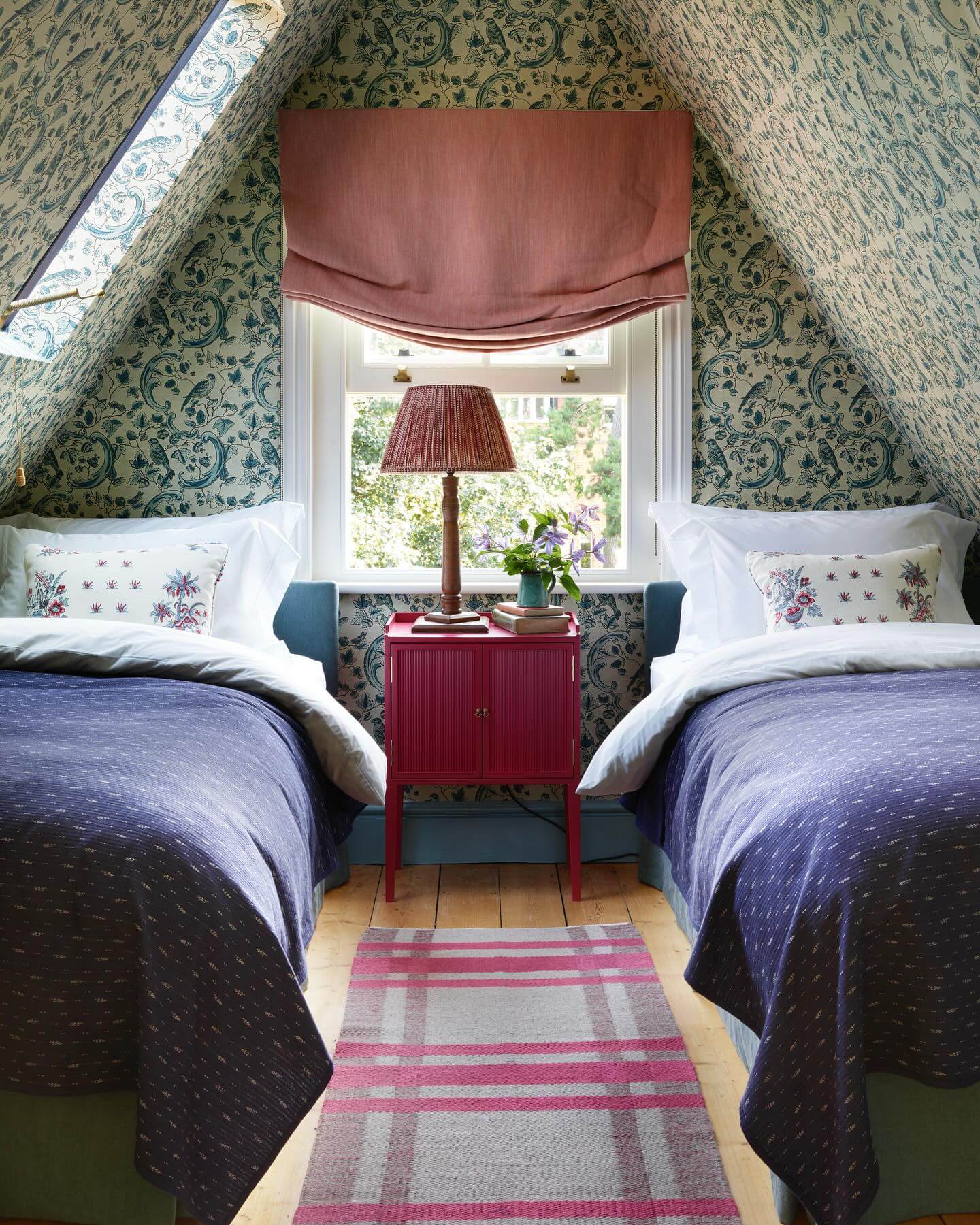
One strategic wall of pattern can correct odd geometry in an attic bedroom. Paper the gable behind the bed with a motif that works with your pitch: vertical stripes “stretch” height, while soft botanicals or micro-geometrics diffuse sharp angles. Keep adjacent slopes and knee walls quiet—paint them in a hue pulled from the paper’s lightest tone—to avoid visual chop. A simple headboard and pared-back linens let the pattern lead without overwhelming the room. Add slim sconces with swivel arms so light sits above the sloped line, and choose a rug that echoes the wallpaper’s rhythm to knit the floor to the feature wall. If your loft is window-light challenged, opt for metallic-ink or grasscloth textures that catch lamp light and add depth. For renters, peel-and-stick options mean commitment-free drama. The payoff is big: like our “Moody Cocoon,” this approach embraces character, but here pattern does the heavy lifting—guiding the eye, softening angles, and making a compact loft feel styled, not squeezed.
Soft Industrial Loft: Exposed Structure, Metal Accents, and Cozy Layers
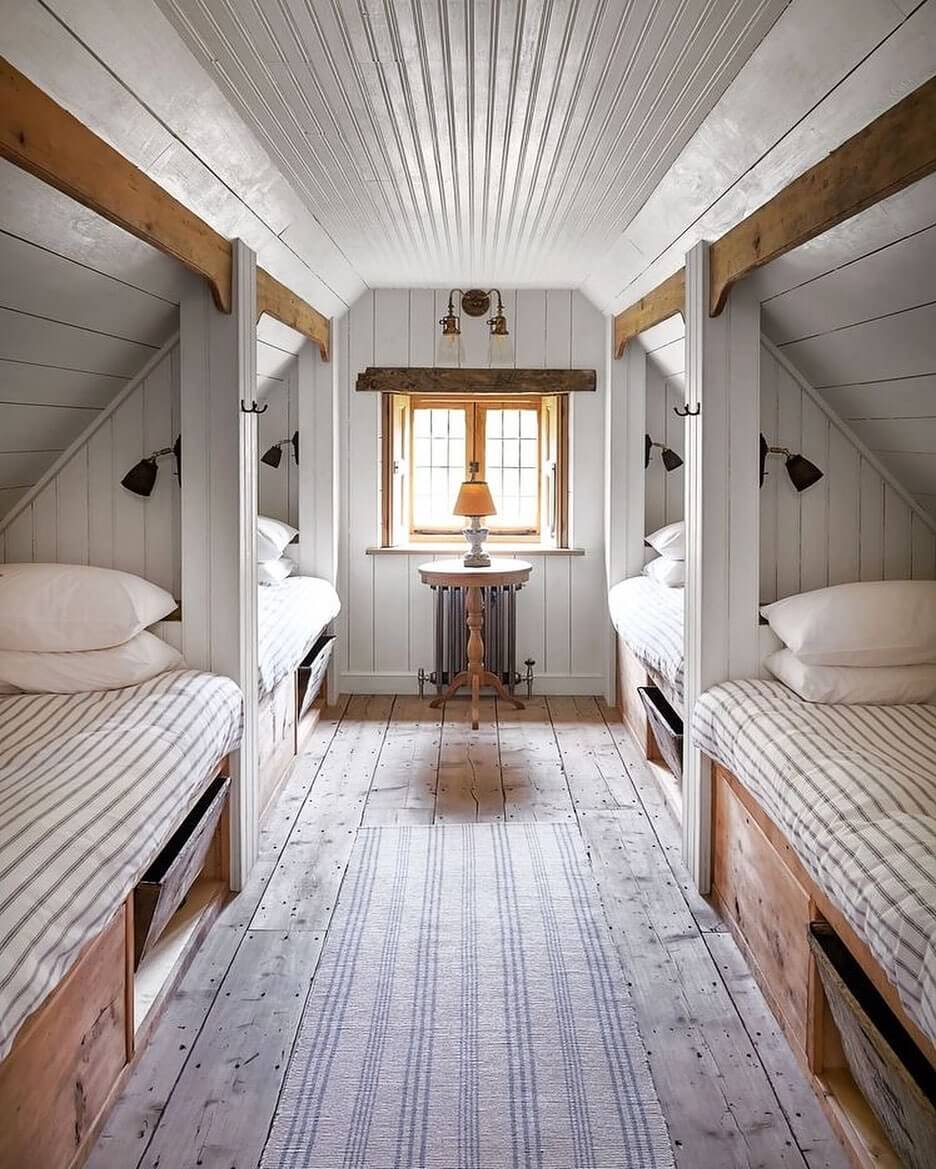
Industrial can be bedroom-friendly—especially in an attic where rafters and joists are already part of the story. Keep the bones visible but balance them with softness. A palette of warm gray, oatmeal, and smoked oak tempers black metal hardware and conduit-style lighting. Choose a platform bed with a slim steel frame, then layer it with plush knits, washed linen, and a thick wool rug to absorb sound under the eaves. Wall-mount swing-arm lamps dodge low nightstand heights, while a dimmable track along the ridge washes the ceiling and highlights the architecture. For storage, use shallow, raw-oak drawers under the knee wall with discreet finger pulls to keep sightlines clean. One vintage find—a factory stool, locker cabinet, or architect lamp—adds soul without tipping into cold. As in our “Floating Loft,” transparency matters: a cable or glass balustrade keeps light moving if your attic opens to the floor below. The effect is tailored and grown-up, with just enough edge to feel loft-like and just enough texture to invite sleep.
Biophilic Under-the-Eaves: Plants, Wood Grain, and Daylight-Rich Sleep
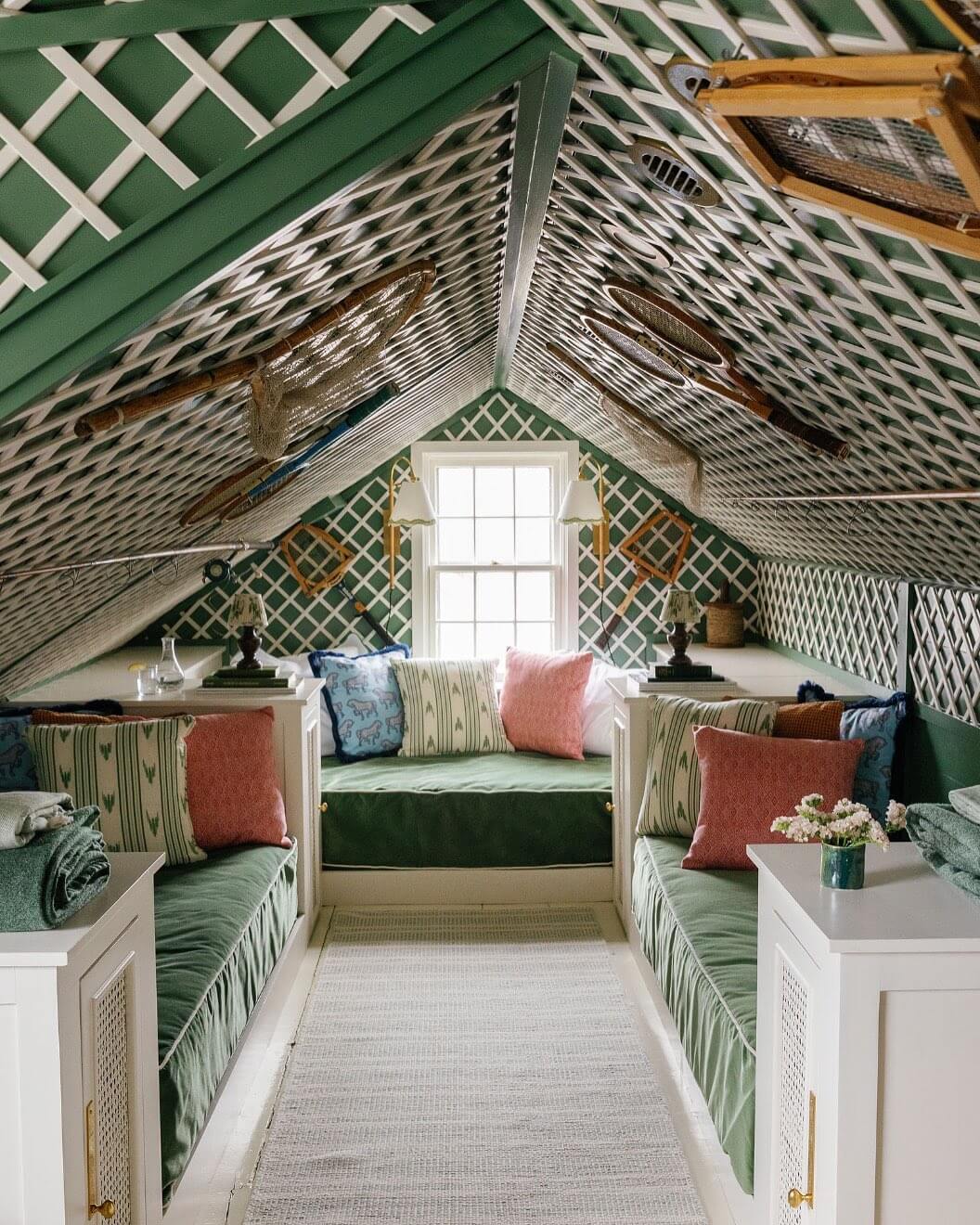
When you can’t add square footage, add life. A biophilic attic bedroom prioritizes daylight, natural materials, and healthy air. Start by aligning the bed to capture sky views without glare—skylights placed higher on the pitch provide even daylight and privacy. Introduce breathable materials: solid wood night tables, rattan baskets, linen drapery for dormers. Cluster low-maintenance plants where they’ll thrive—near east- or west-facing windows—and elevate them on wall shelves that follow the roof angle to keep floors clear. Stick to species that tolerate loft conditions (snake plant, pothos, ZZ) and use self-watering planters if heat rises in summer. Ground the palette with clay, sage, and ecru textiles; they calm visual noise and harmonize with wood grain. A wool or cork underlay improves comfort and acoustics, while non-toxic paints protect indoor air quality in a snug space. Like “Scandi Calm,” this look is pared back—but with more texture and greenery, the loft becomes a restorative retreat that feels connected to nature even under a sloped ceiling.
Coastal Eaves Retreat: Breezy Blues, Woven Texture, and Light-Washed Oak
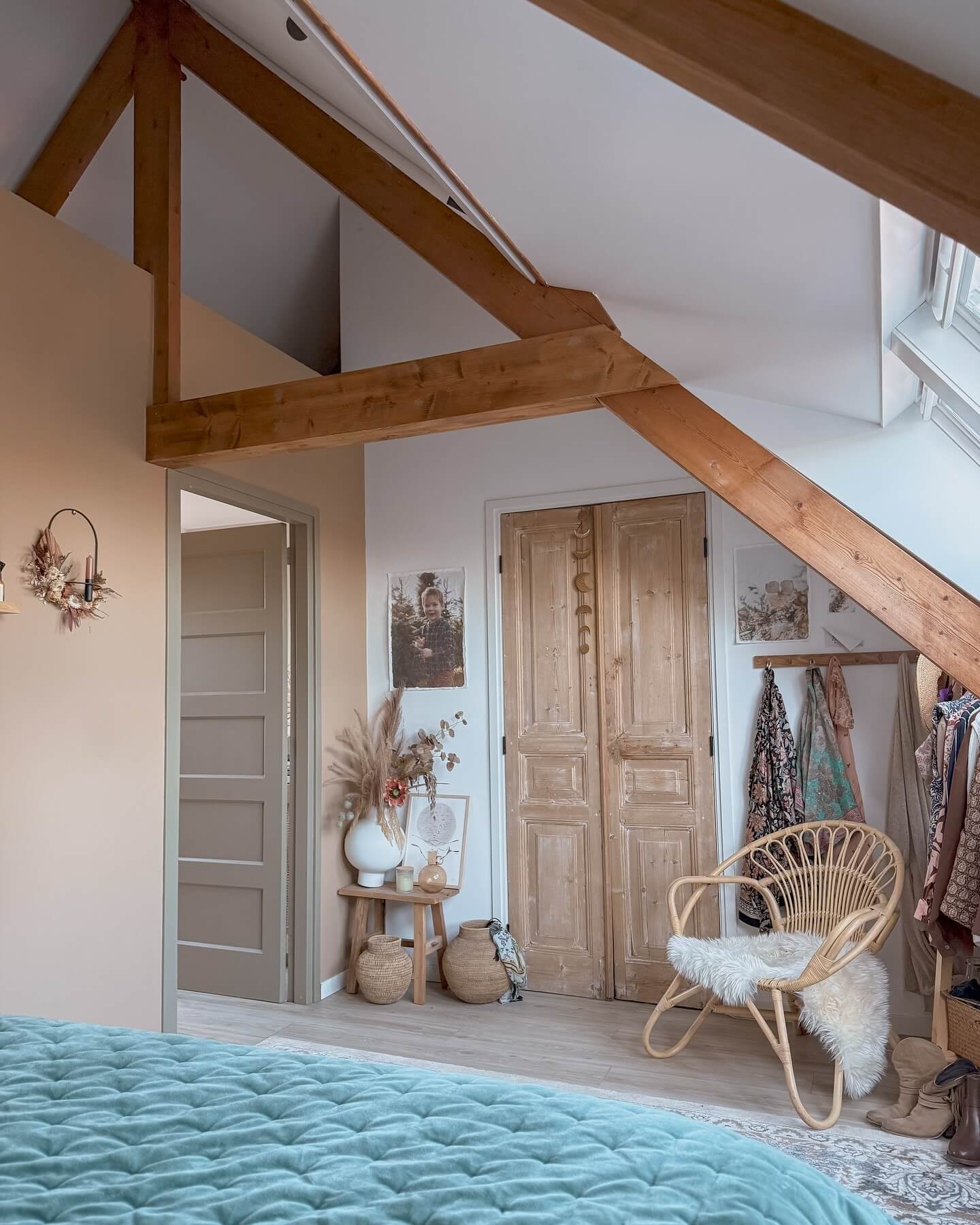
Coastal isn’t just for beach houses; it’s a smart strategy for brightening compact attics. Keep walls and slopes a soft, sunlit white, then layer watery blues and sea-glass greens through bedding and art to pull the eye outward. Light-washed oak or bleached pine floors reflect daylight, while woven textures—jute rug, cane bedside, rope drawer pulls—add tactile interest without weight. Fit a storage bench under a dormer for sandy shoes or extra bedding and top it with a striped cushion for a built-in “bungalow” moment. Choose airy window treatments—linen Roman shades or café curtains—that won’t fight with the roofline. Brass or polished nickel accents mimic sun on water; use them on a slim ceiling fan or lantern-style pendant to keep air moving in heat-prone lofts. If you have a gable window, frame it with a simple valance to emphasize symmetry. The overall effect is fresh and uncluttered, making the attic bedroom feel wider, brighter, and vacation-relaxed—even on a weekday.
Library Loft: Built-In Books, Gable Seat, and a Headboard Niche
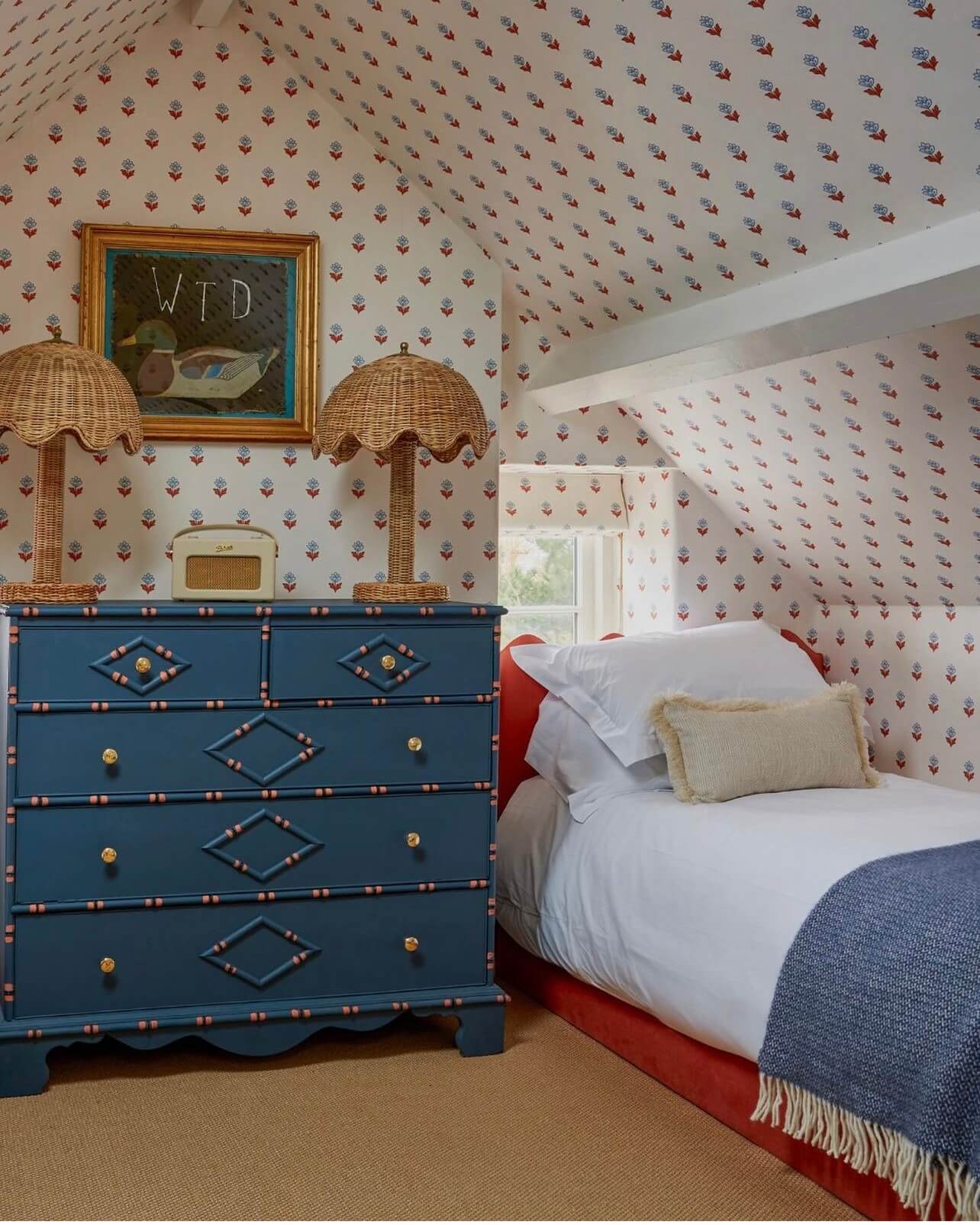
Turn storage into storytelling by wrapping a gable wall in shallow bookcases and tucking a window seat between them. It’s a natural fit for attic bedrooms, where depth is limited but vertical surface is abundant. Keep casework just deep enough for novels and add adjustable shelves to accommodate art and plants. A cushioned bench with drawers below doubles as linen storage, while integrated reading lights make the nook a magnet for rainy-day retreats. Opposite, carve a headboard niche into the knee wall with a continuous ledge—a place for a carafe, alarm, and current read—so you can skip bulky nightstands. Paint shelves the same color as the slopes for a calm envelope, or go tone-on-tone darker to echo our “Moody Cocoon” and make spines pop. If you’re sound-sensitive, install soft-close hardware and add a thick rug to dampen page-flip echoes. The result is a loft room that feels curated and clever—part bedroom, part private bookstore—without sacrificing square footage.
Monochrome Minimal: Black-and-White Lines That Clarify Complex Angles
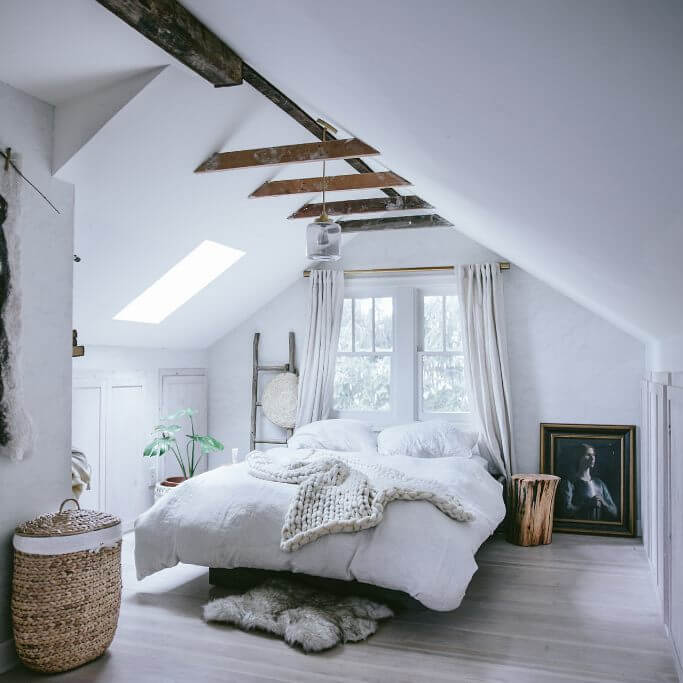
When geometry gets busy, edit the palette. A black-and-white attic bedroom sharpens the architecture and creates a gallery-like calm. Paint slopes and knee walls a soft white for lift, then introduce measured black notes to outline form: a thin metal bed frame, charcoal window mullions, a graphite headboard panel or trim along the ridge. Keep furniture low and leggy to maintain negative space, and choose closed storage with slab fronts so lines read uninterrupted. Lighting should be equally disciplined—matte black sconces with articulating arms for task light; a small, opal-glass globe at the ridge for diffuse ambient glow. Ground the room with a textured neutral rug and add one organic element—wood stool or linen throw—to avoid sterility. This approach pairs well with skylights and glass balustrades from earlier sections because it lets light do the decorating. It’s modern, yes, but more importantly, it’s clarifying: a clean framework that makes sloped ceilings feel designed on purpose.
Layered Daylight: Staggered Skylights and Splayed Light Wells That Lift the Loft
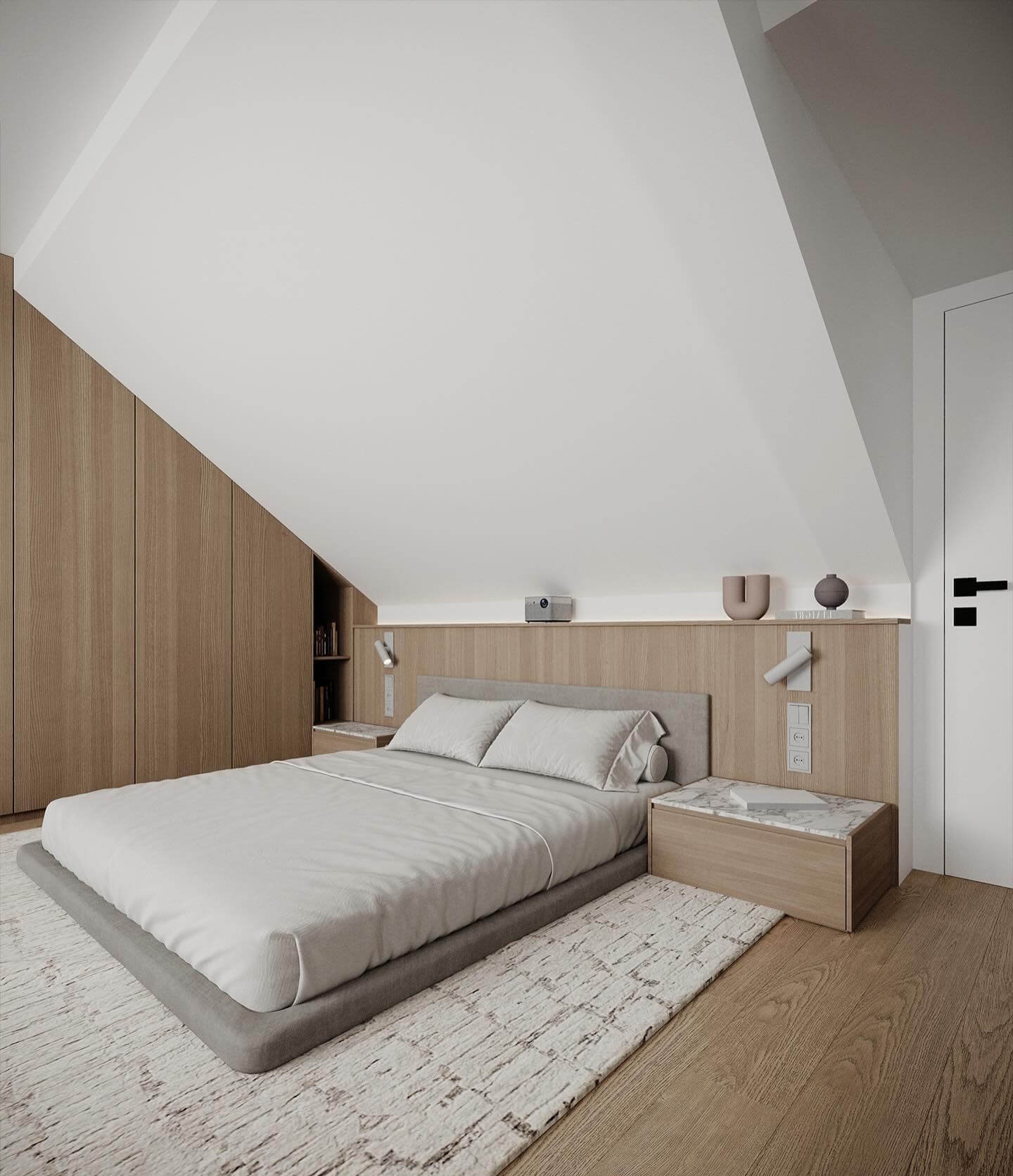
When sloped ceilings steal head height, give it back with light. A pair (or trio) of staggered skylights transformed into splayed light wells can visually “raise” an attic bedroom, washing the rafters and gable in even daylight. Place operable roof windows on opposite pitches for cross-ventilation in summer, and consider low-E glazing with integrated blackout shades for sleep. If glare is a concern, shift skylights away from the pillow line—aim them over a walkway, foot of the bed, or a built-in dresser niche to brighten circulation, not eyelids. Painting the light-well returns in a brighter neutral than your walls amplifies bounce, while a soft-matte ceiling keeps glare down. At night, tuck LED tape along the well edges to create a floating-ceiling effect and pair with dimmable wall sconces for layered lighting. This move works in both compact loft rooms and larger A-frame bedrooms, complementing dormers without the structural cost of adding new ones. The result is a loft that feels taller, airier, and calmer—an attic retreat that changes mood with the sun.
Get the Fail-Safe Paint Color Playbook (Free PDF)
36 proven colors • 8 ready palettes • trim & sheen guide • printable testing cards.
Space-Saving Stair: Compact Treads, Glass Guardrails, and Storage Under the Rise
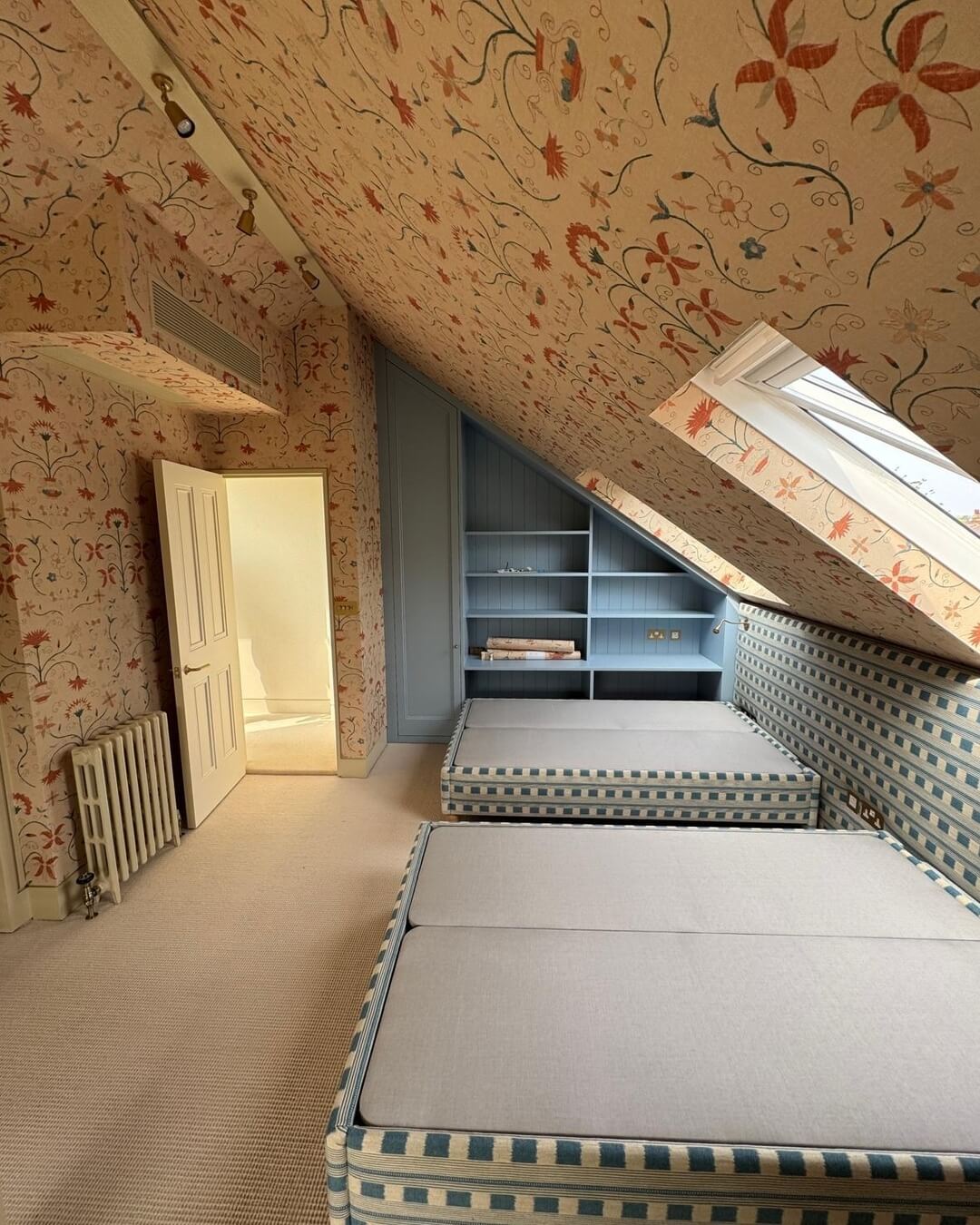
A beautiful attic bedroom deserves an equally smart way up. Swap a bulky switchback for a compact stair or alternating-tread ladder with full-height handrails, then keep sightlines open with a glass or slim metal guard. Where the stair meets the slope, build a run of deep drawers or a pull-out linen cabinet into the dead zone under the eaves—prime real estate for bedding, off-season clothes, or guest duvets. Landings are design gold: add a shallow bookshelf, a wall niche for art, or a shoe bench so the loft feels like a destination, not just an add-on. Illuminate each tread with motion-sensor LEDs so late-night trips are safe but soft, and carry the same wood species from stair to platform bed for a cohesive material story. In tight townhomes, a ship’s-ladder profile keeps floor space for a desk or wardrobe; in larger loft rooms, a sculptural mono-stringer becomes a focal point that still lets daylight flow. Access solved, style upgraded.
Moody Cocoon: Deep Paint, Textural Layers, and Pools of Light Under the Eaves
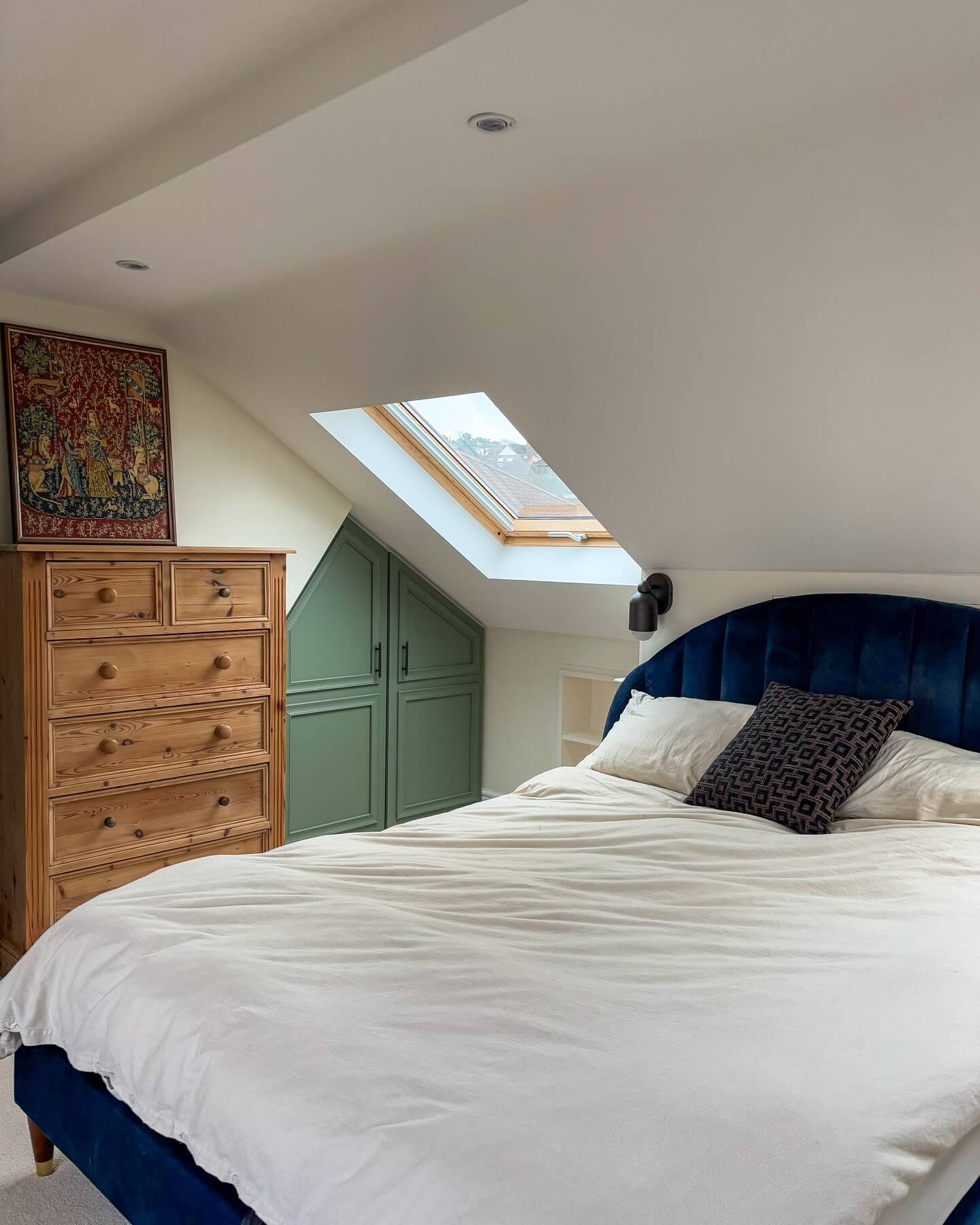
Not every attic needs to go white to feel right. Embrace a cozy cocoon by wrapping sloped ceilings and gable walls in a deep charcoal, olive, or inky blue—matte finishes hug the angles and hide imperfections. The trick is contrast: counterbalance saturated paint with pale linen bedding, warm wood nightstands, and patinated brass or blackened bronze sconces that cast intimate pools of light. A wall-to-wall rug or cork flooring softens acoustics (a gift in loft rooms), while a low-profile headboard keeps the roofline uninterrupted. Add a slim picture shelf or integrated headboard niche to break up expanses of color and display art without drilling into tricky rafters. For daylight, pair a single skylight with translucent blinds so mornings glow rather than glare; at night, add dimmable cove lighting along the eaves to visually “float” the ceiling. The result is a restful, grown-up attic bedroom that feels intentional and enveloping—perfect for reading, recharging, and deep sleep under the rafters.
Teen Loft HQ: Platform Bed Storage, Dormer Desk, and Changeable LED Glow
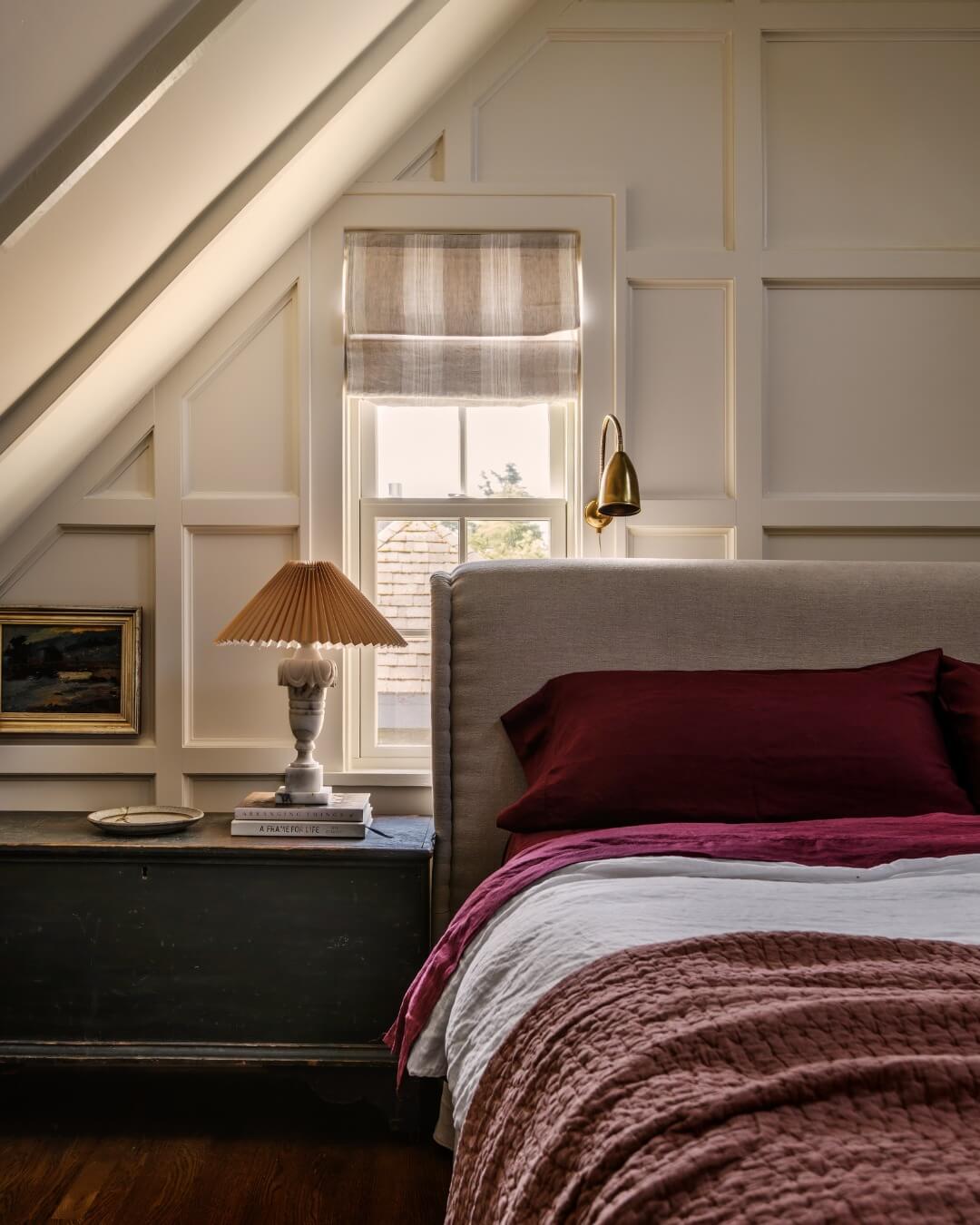
Turn the top floor into a teen’s dream without crowding the floor plan. Start with a platform bed tucked under the lowest eave, packing drawers into the base for hoodies, sneakers, and spare bedding. Where a dormer brings headroom, slide in a wall-to-wall desk with a cork or pegboard backsplash for notes, medals, and headphones—high function that’s easy to rearrange. Swap closet doors for sliding panels or curtains to clear tight angles, and add a rail of wall hooks so bags and jackets don’t live on the floor. A perimeter LED strip along the rafters delivers that customizable color glow teens love, while a task sconce at the bed keeps late-night reading targeted and calm. Durable loop pile carpet tiles or a big washable rug make spills low-stress, and a compact lounge—think floor cushions or a petite loveseat at the gable—creates a hangout zone that doesn’t block pathways. This is a loft room that flexes with hobbies, homework, and sleepovers, maximizing every inch under the eaves.
Guest-Ready Loft Suite: Under-Eave Coffee Nook, Luggage Ledge, and Blackout Comfort
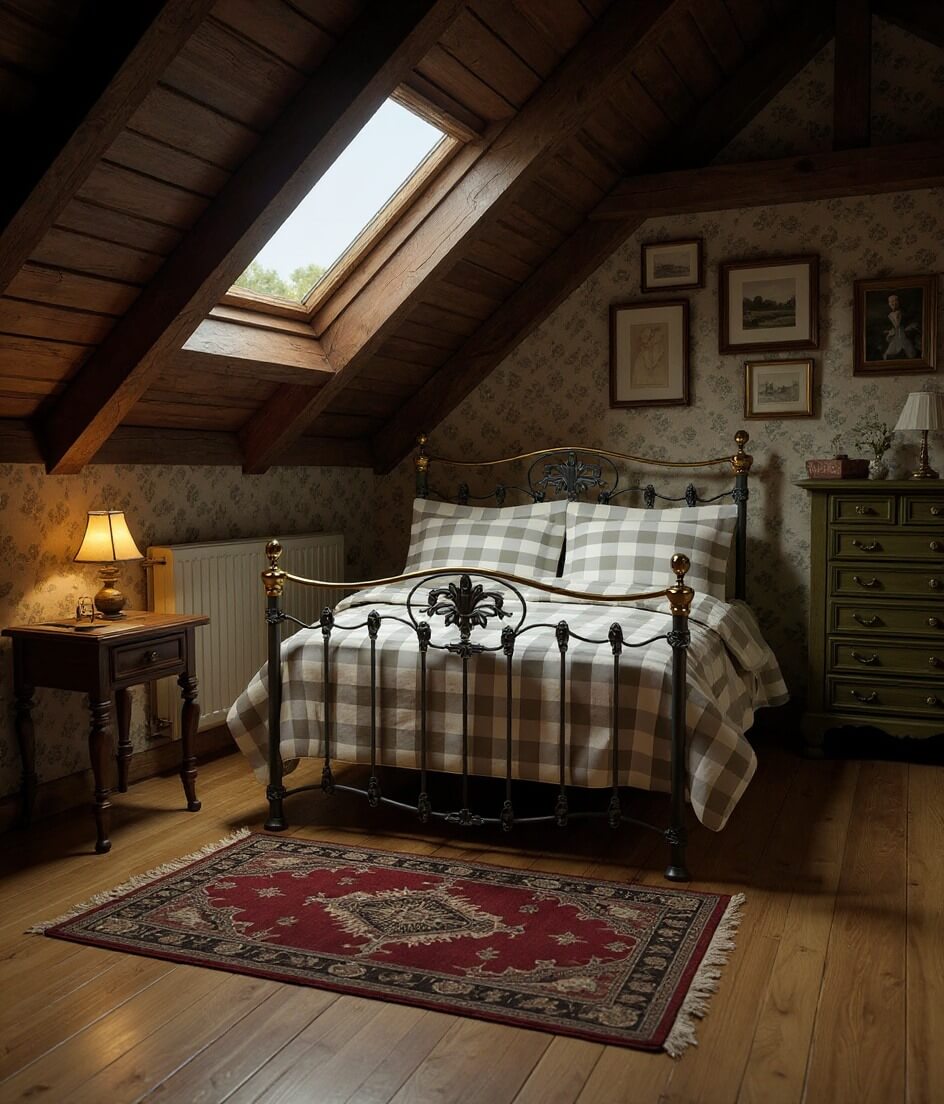
Give your attic guest room boutique-hotel polish. Carve a shallow under-eave niche into a mini coffee bar with a narrow counter, outlet for a kettle or espresso machine, and a drawer fridge for milk and sparkling water. A trunk bench or simple luggage ledge along the gable keeps suitcases off the bed and doubles as seating. Layer blackout blinds on skylights with breezy curtains across the dormer so guests can control light and jet lag. Bedside shelves with integrated USB/C outlets and dimmable sconces make the sloped-ceiling layout feel effortless; a small carafe, extra blanket, and labeled basket for towels deliver hospitality without clutter. If you’ve squeezed in an ensuite elsewhere, echo the same finishes here—light-washed wood, soft metals, tactile textiles—for a cohesive attic suite. Add a full-length mirror on a flush wardrobe door and a woven runner to warm the approach. With these thoughtful touches, your loft room reads as intentional, comfortable, and ready for weekend visitors.
Loft room decorating ideas with built-in storage and multifunction furniture
Loft rooms reward multifunction moves that earn their footprint twice. Choose furniture with integrated storage, prioritize pieces that sit low to respect pitches, and scale everything to tight stair access. Made-to-measure joinery turns odd angles into seamless wardrobes, desks, and window seats that feel deliberate rather than makeshift. A harmonious palette matters upstairs; echo a few tones from the floor below to stitch spaces together visually. Finally, plan cable paths, charging docks, and media placement early so tech disappears and surfaces stay serene.
Smart storage and layout checklist:
- Choose a flush-to-rafters built-in wardrobe around the stair bulkhead, incorporating shallow hanging sections, pull-out trays, and toe-kick drawers to capture every otherwise wasted sliver.
- Opt for a lift-up storage ottoman at the foot of the bed, doubling as a luggage perch while keeping extra duvets, pillows, and seasonal clothing hidden yet accessible.
- Swap a traditional desk for a wall-mounted drop-leaf workstation, aligning its hinge with the knee wall to gain legroom and folding away cleanly whenever you prioritize open floorspace.
- Balance cool whites with warm wood tones and textured linens, preventing the space from feeling clinical while reflecting precious daylight across angled planes without glare or blue-tinted harshness.
- Use a narrow console behind the headboard as a cable trough, hiding chargers, routers, and smart-speaker hubs while keeping bedside surfaces uncluttered and sleep-friendly.
- Introduce curved-edge nightstands and rounded rug corners to soften tight walkways, reducing bruised shins and creating calmer flows around dormer corners and slanted partitions during night navigation.
- Anchor a compact loveseat beneath the tallest ridge line, framing it with low bookcases that double as railing, so lounging never interferes with egress paths or headclearance.
- Layer blackout cellular shades under sheer curtains on skylights, managing heat gain in summer, retaining warmth in winter, and enabling true darkness for shift workers or light-sensitive sleepers.
- Select a neutral loop-pile carpet tile with built-in padding, quieting footsteps over the staircase while allowing single-tile replacement after spills, DIY paint projects, or muddy attic window gardening.
- Paint sloped ceilings and upper walls one continuous color, dropping a cap line around the room to elongate height, then contrast with darker baseboards for grounded, custom-looking proportions.
- Replace bulky swing doors with space-saving bifolds on closets, ensuring they clear the pitch while leaving enough aisle width for dressing, stretching, and luggage maneuvering without scuffs.
- Add a motion-sensing LED strip along the stair stringer, providing safe, low-glare guidance at night while keeping the bedroom area dark and circadian-friendly for restful sleep.
A realistic budget splits evenly between carpentry, climate control, and finishes, because comfort and durability determine long-term satisfaction. Hire a qualified electrician for new circuits, dimmers, and low-profile fixtures appropriate for insulation contact. Moisture management is essential; specify bath fans, sealed skylights, and continuous air barriers to prevent musty odors. Check local codes for egress requirements and minimum ceiling heights before committing to bedroom classification on plans. When style, safety, and storage align, lofted square footage becomes the home’s most coveted retreat.
From Rafters to Retreats: Quick Answers for Brilliant Attic Bedrooms
How do I make a low-ceiling attic feel taller?
Keep the tallest circulation routes under the ridge and use low-profile furniture to respect the slopes. Paint ceilings and upper walls one continuous light color to stretch perceived height and brighten corners.
Get the Fail-Safe Paint Color Playbook (Free PDF)
36 proven colors • 8 ready palettes • trim & sheen guide • printable testing cards.
What lighting works best in a loft bedroom?
Layer task, ambient, and accent fixtures to avoid harsh shadows on angles. Combine dimmable sconces, gimbal downlights at the ridge, and wall washers along knee walls for balanced, glare-free illumination.
Can converting an attic bedroom add resale value?
Yes, when the space meets code for egress, ceiling height, and proper insulation, buyers perceive it as legitimate living area. Quality carpentry, climate control, and storage also signal thoughtful investment.
Get the Fail-Safe Paint Color Playbook (Free PDF)
36 proven colors • 8 ready palettes • trim & sheen guide • printable testing cards.
Do I need permits or special safety features for an attic bedroom?
Most jurisdictions require permits, egress windows or compliant stairs, smoke and carbon-monoxide detectors, and minimum ceiling heights. Consult local codes early to avoid redesigns and ensure a safe, certifiable conversion.
Final Verdict: Turning Sloped Ceilings into Dreamy Retreats
The best attic bedroom and loft room ideas prove that tricky angles can become assets when you design with intention. Prioritize daylight with skylights, dormers, and glass balustrades; then anchor the layout with low-profile pieces—platform beds, tucked desks, and built-ins that disappear under the eaves. Color and texture do the rest: bright, airy palettes lift ceilings, while moody tones and layered textiles create a cocoon for sleep. Whether you lean Scandi, modern farmhouse, Japandi, coastal, or soft industrial, the right mix of materials, lighting, and storage turns the top floor into a calm, high-function haven.
From guest-ready suites to teen HQs and hybrid studios, success comes from planning every inch: under-eave drawers and wardrobes, pocket-door ensuites, compact stair solutions, and task lighting that doubles as ambiance. Measure meticulously, map circulation, and consider insulation, ventilation, and code-compliant egress as you add windows or rework walls. With a clear palette and a smart lighting plan, your attic doesn’t just gain square footage—it gains purpose, personality, and the kind of comfort that makes you want to live a little closer to the sky.