
15 Entryway Accent Wall Ideas That Make the First Few Steps Home Feel Intentional
An entryway has to do more than look welcoming: it also needs to work with the space you have, the way people move through it, and the finishes that are already there. These 15 accent-wall ideas range from wood paneling and murals to painted color, display walls, and architectural detail.
Use the examples to narrow your direction, then check the wall’s width, sightlines, daily traffic, lighting, and installation limits before choosing a material or finish.
Get the Fail-Safe Paint Color Playbook (Free PDF)
36 proven colors • 8 ready palettes • trim & sheen guide • printable testing cards.
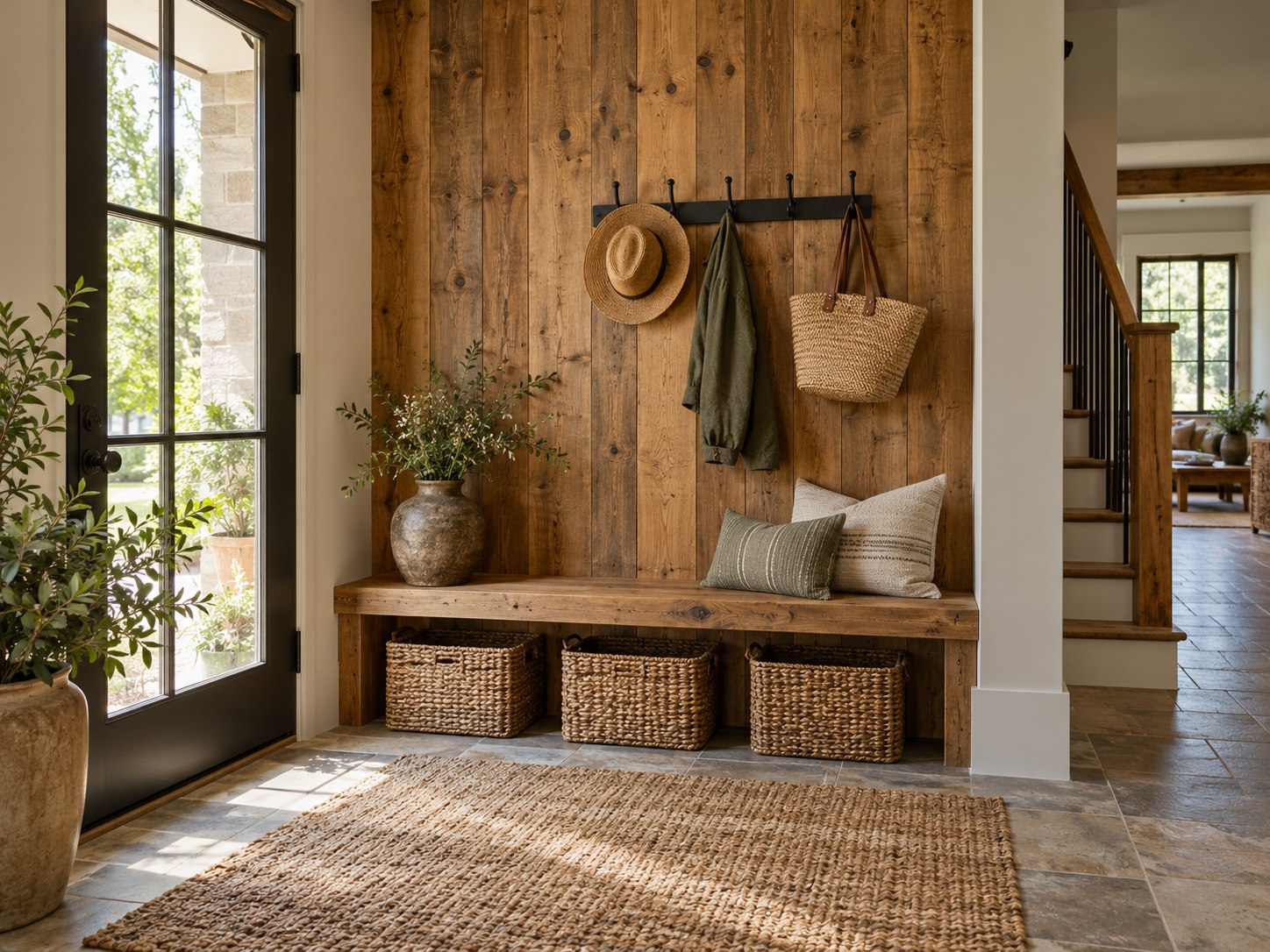
1. Rustic wood paneling
Vertical or horizontal wood boards bring visible grain and warmth to an entry wall. A built-in bench and a few hooks can make the surface work harder, but leave enough clear wall for coats, bags, and the door swing. If the entry is narrow, use a lighter stain or limit the paneling to one wall so the texture does not visually crowd the route through the space.
Reclaimed boards can vary in thickness and condition, so check the surface and fastening plan before installation. A clean, consistent plank layout creates a more tailored look; mixed widths and a weathered finish feel more rustic. For a related small-space idea, browse these entryway designs with a bench.
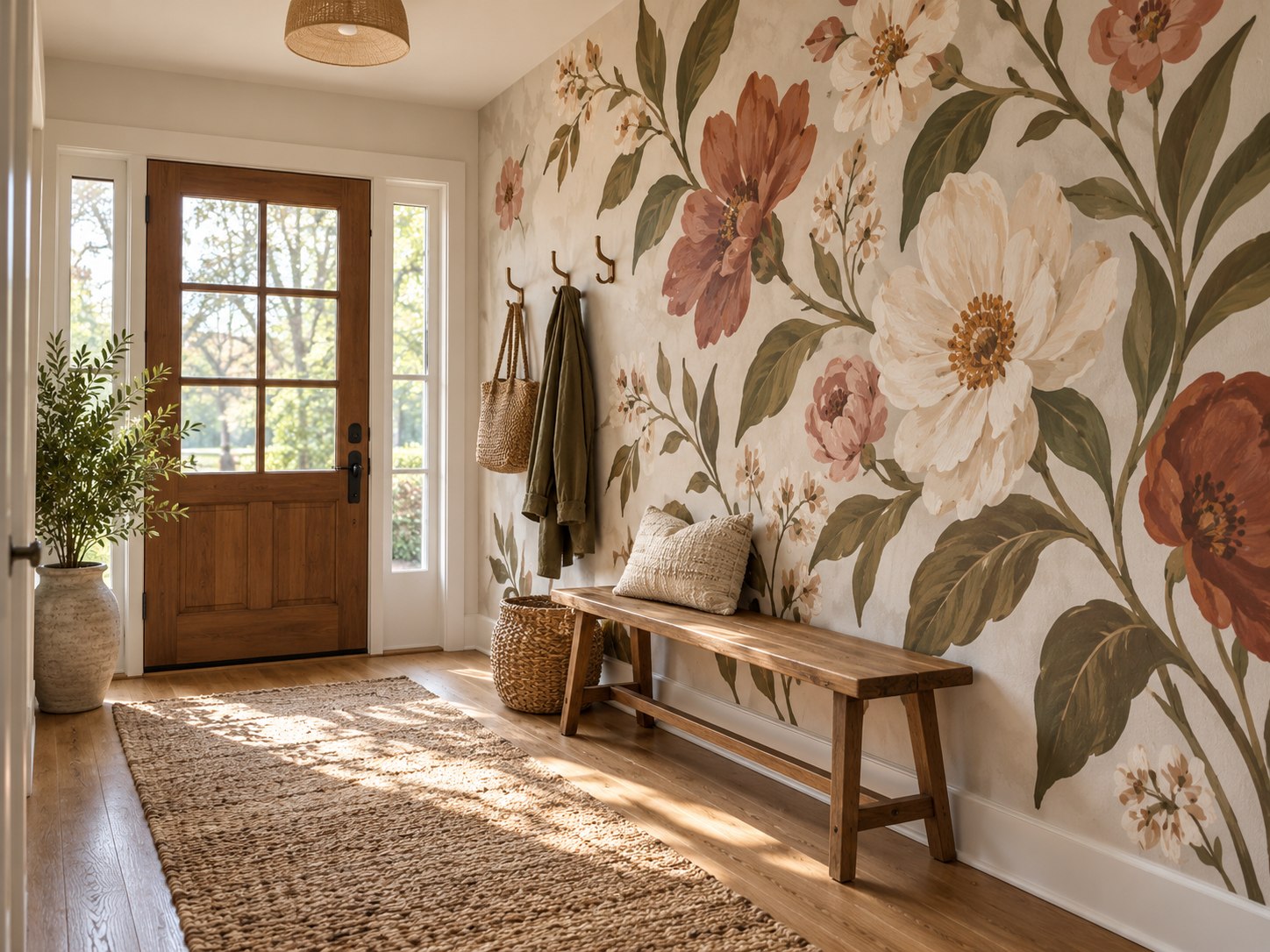
2. A hand-painted floral mural
A floral mural turns the wall into the main artwork, which can be useful when there is little room for a console or gallery arrangement. Oversized blooms make a confident focal point; a looser branch or small-scale botanical pattern can feel quieter. Keep the composition centered where it can be seen from the doorway, and avoid placing the most detailed area behind coats or furniture.
Before painting, map the mural lightly and check the wall for repairs that might interrupt the design. If a full wall feels too busy, confine the mural to a framed panel or a portion of the wall. Coordinate its background with adjacent paint and flooring so the entrance feels connected to the next room.
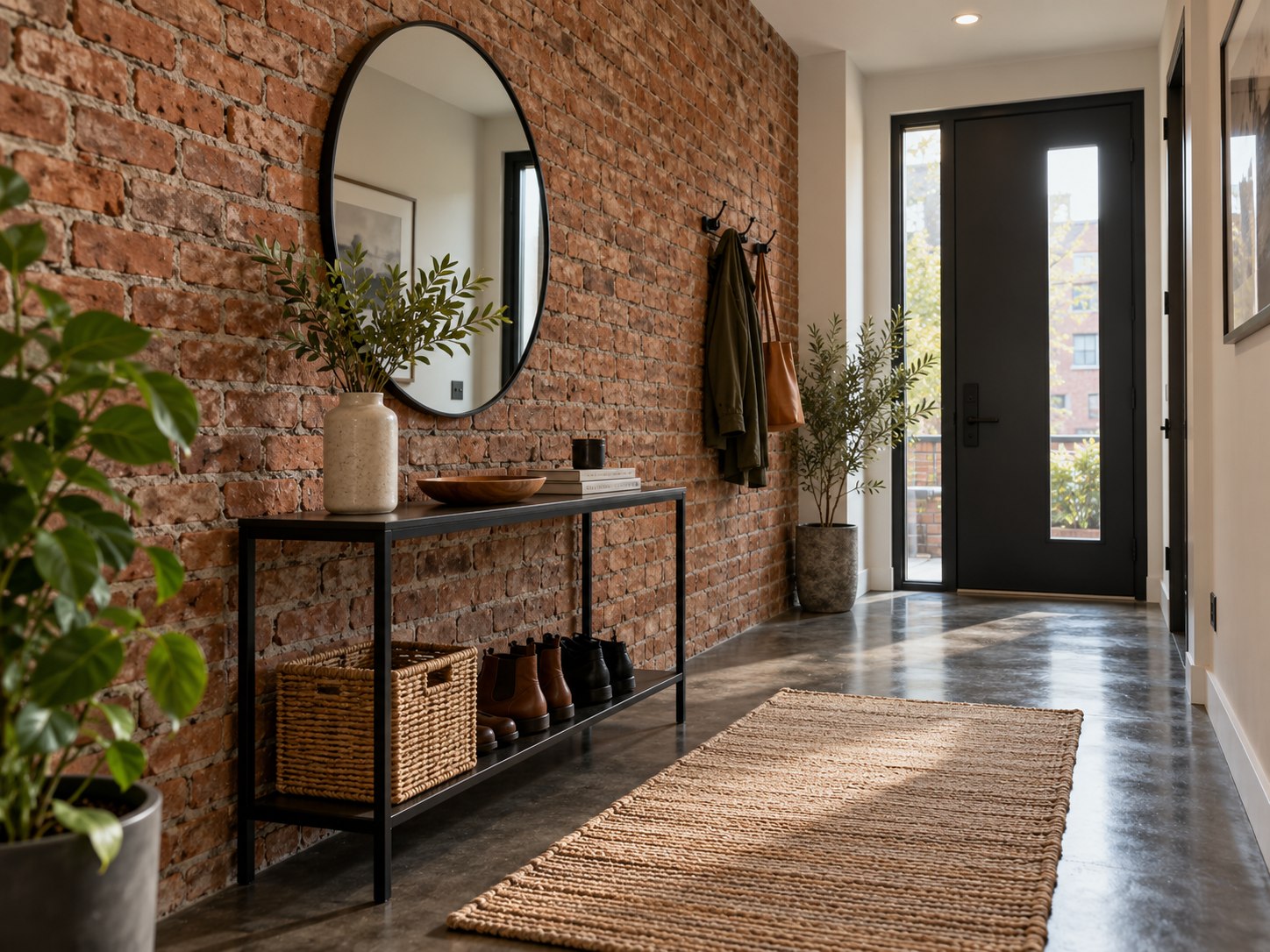
3. A brick-look feature wall
Brick adds a strong pattern and a tactile, architectural note. Depending on the home and wall, the look might come from exposed masonry, a veneer, or a painted faux-brick treatment. These are different projects with different installation requirements, so check the product instructions and the wall condition before choosing a method.
Use the brick texture on one focused wall and keep nearby decor simple. A narrow entry can benefit from a lighter finish or a smaller visible section, while a larger foyer can carry a deeper brick tone. If you are considering a painted faux finish, test a small area first to see how its scale and texture read with the floor and trim.
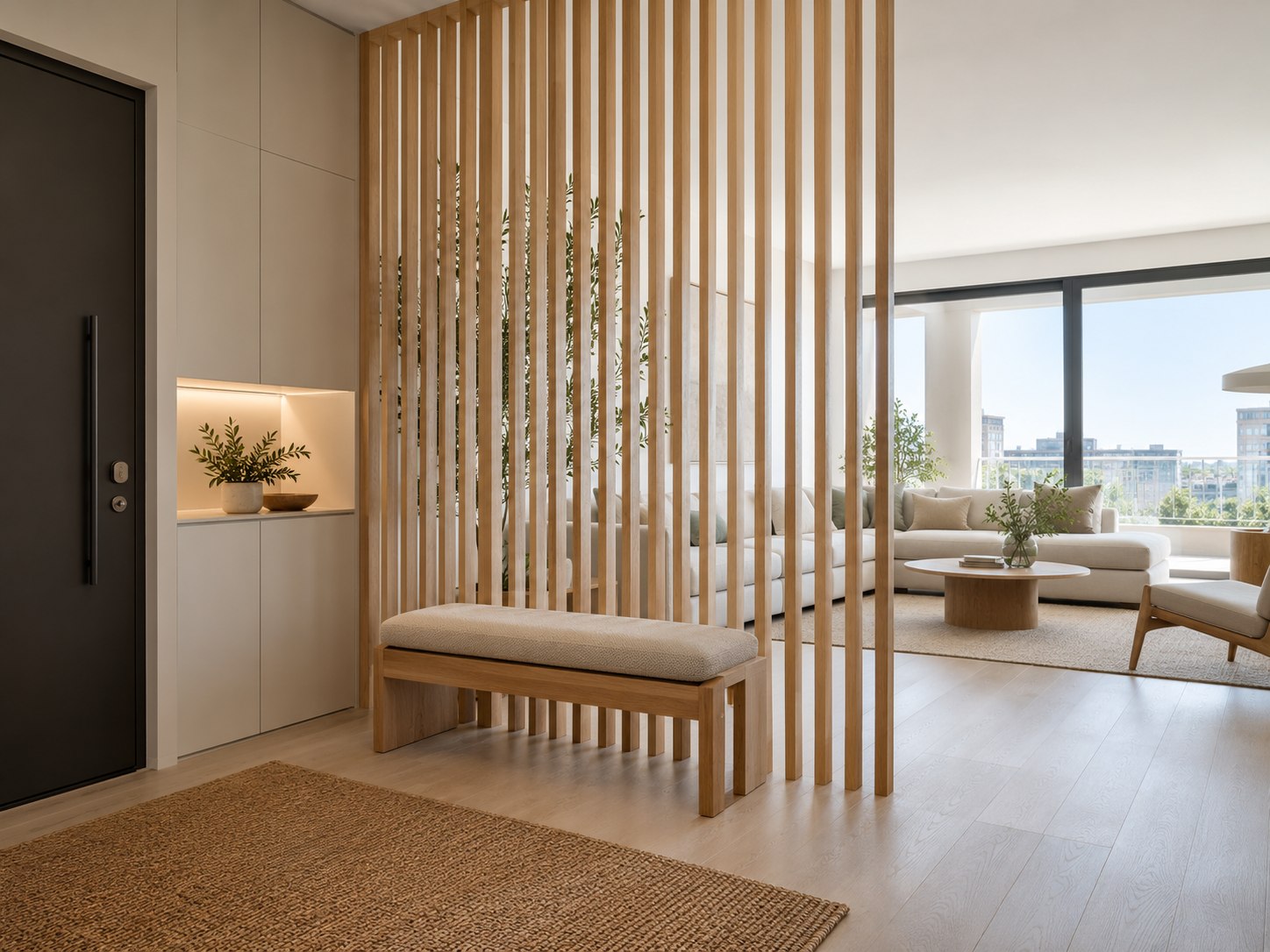
4. Open wooden slats
Slim wood slats create a repeating vertical rhythm and can suggest a boundary without making the entry feel fully closed off. They work as a screen beside a staircase or as a wall treatment behind a narrow console. Decide first whether the slats are decorative or need to provide privacy; open spacing offers visual separation but does not hide everything behind it.
Repeat the wood tone in a handrail, frame, or small furniture piece to make the feature feel connected to the home. Measure the walking route and door clearance before adding a freestanding divider, and follow appropriate fastening guidance for any fixed installation.
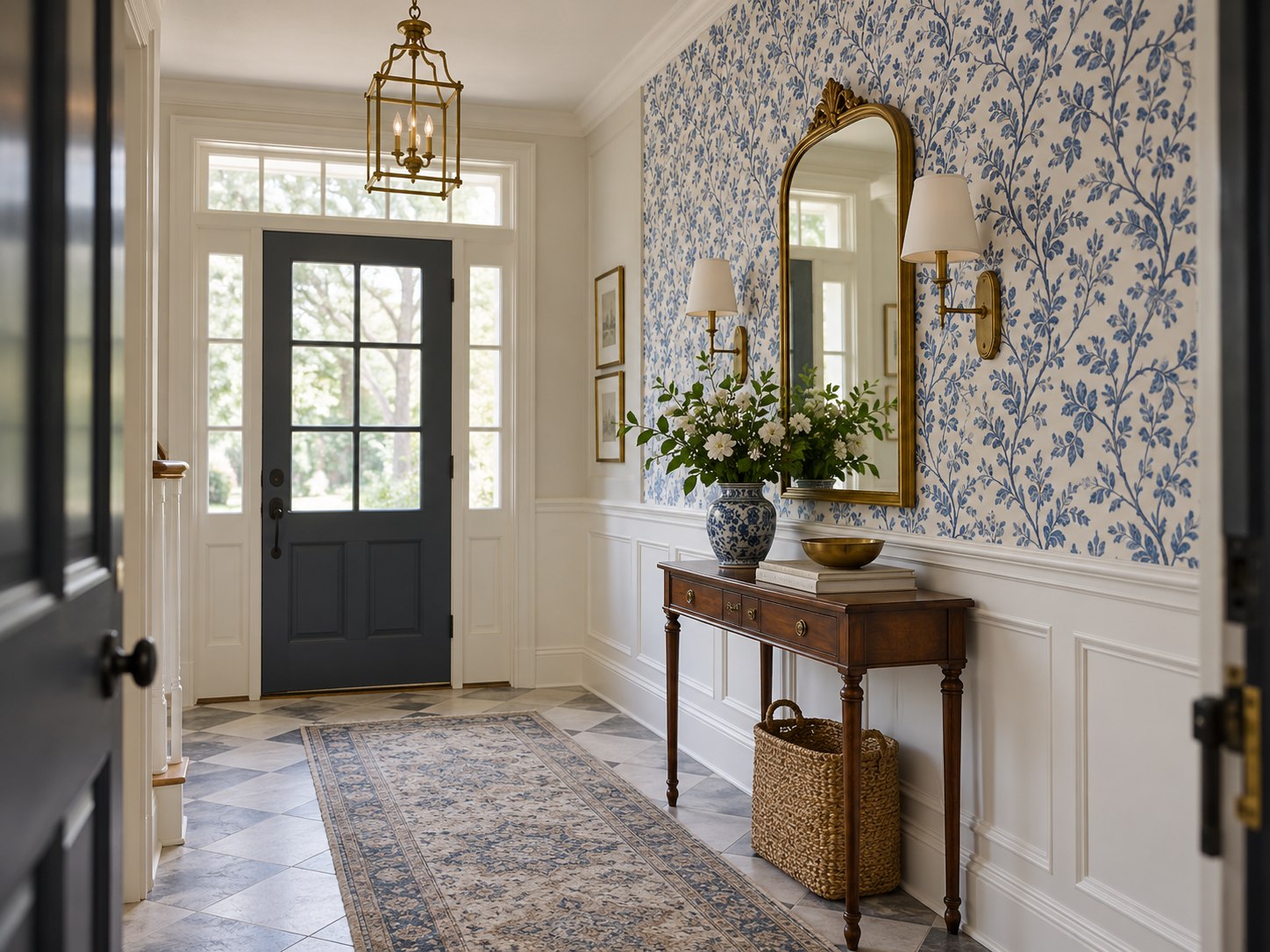
5. Patterned wallpaper
Wallpaper can bring color and movement to an entry without adding shelves or furniture. A large print gives a small wall an intentional focal point, while a fine pattern reads more quietly from the doorway. Choose a wall that can be seen clearly and keep the adjacent surfaces simpler so the print has room to register.
Check the wallpaper manufacturer's surface-preparation and cleaning guidance, especially in a busy entry where hands, bags, and coats may brush the wall. Align the pattern at the most visible edge and account for repeats when estimating material. A sample helps you judge the scale beside the actual floor and lighting.
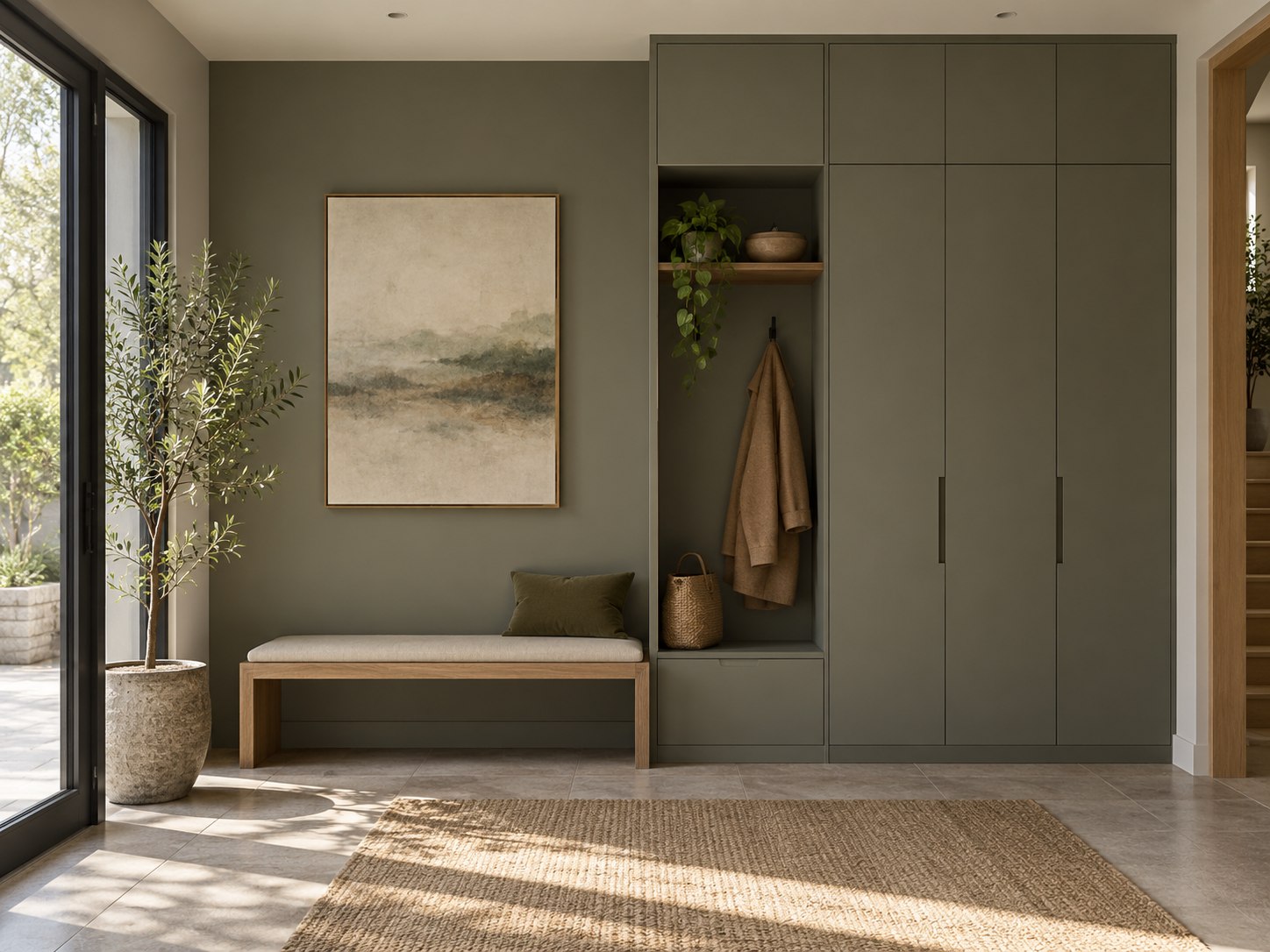
6. A wardrobe that blends into the wall
A flush wardrobe or built-in cabinet can make storage feel like part of the architecture instead of another object in the entry. Matching the cabinet doors to the wall color reduces contrast; contrasting doors can turn the storage into a deliberate feature. Recessed or low-profile pulls help keep a tight passage clear.
Plan the cabinet around what actually needs to be stored, including the clearance for doors and drawers. If a full built-in is not possible, a shallow freestanding cabinet can suggest the same orderly look, but measure the route and door swing before buying. A concealed-storage wall works best when the entry still has a convenient spot for items used every day.
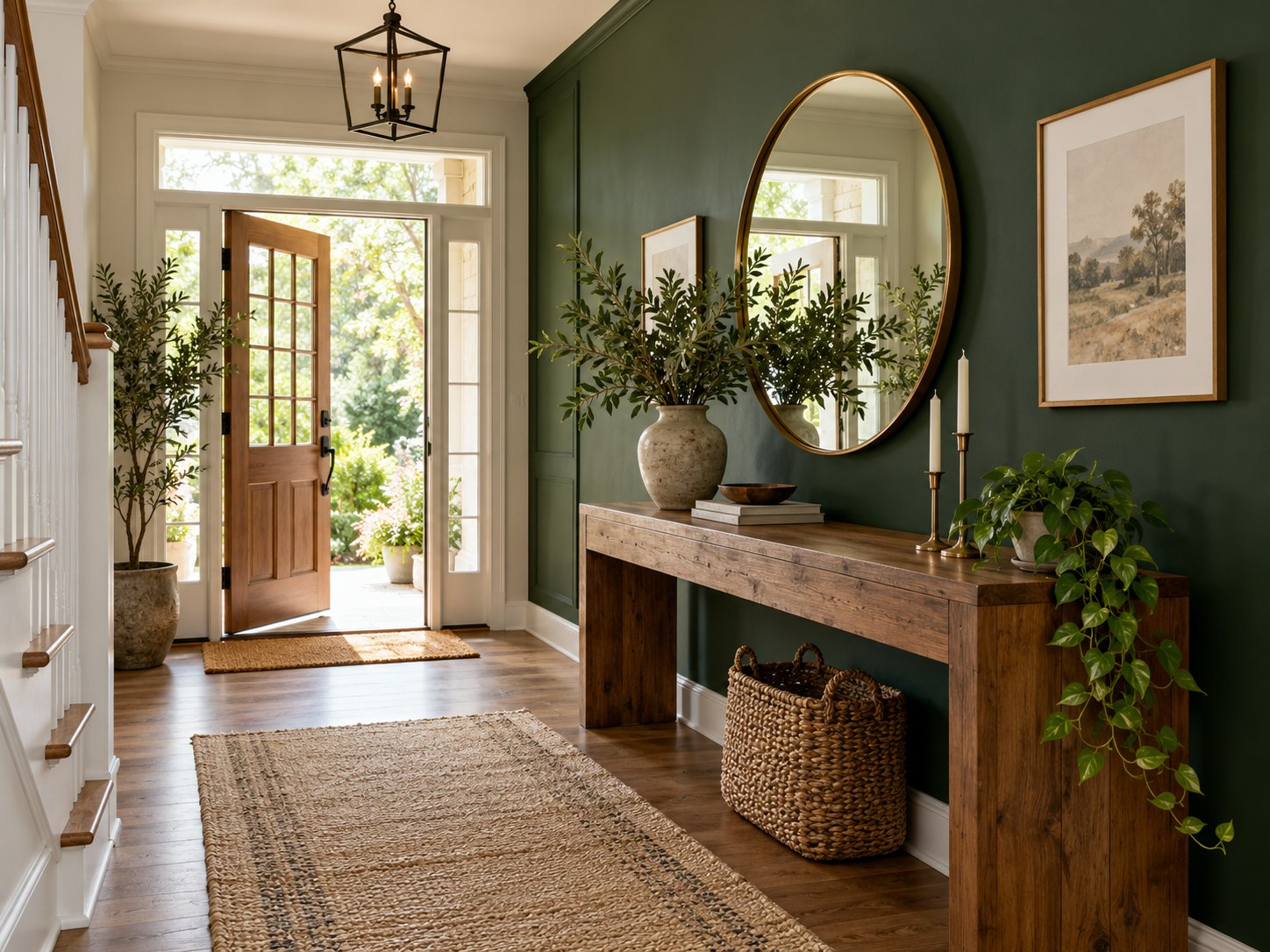
7. A rich green painted wall
A deep green wall adds color while staying connected to natural wood, plants, and garden views. It can frame a bench or mirror especially well. In a dim entrance, try a mid-tone green or keep the color on a smaller wall; a very dark shade can absorb the limited light and make the area feel more enclosed.
Use the wall's existing details to guide the finish: crisp trim sharpens the color, while warm wood softens it. Check the green beside the flooring and any visible room beyond the entry. Paint a sample on the intended wall and observe it in daytime and evening light before choosing the final shade.
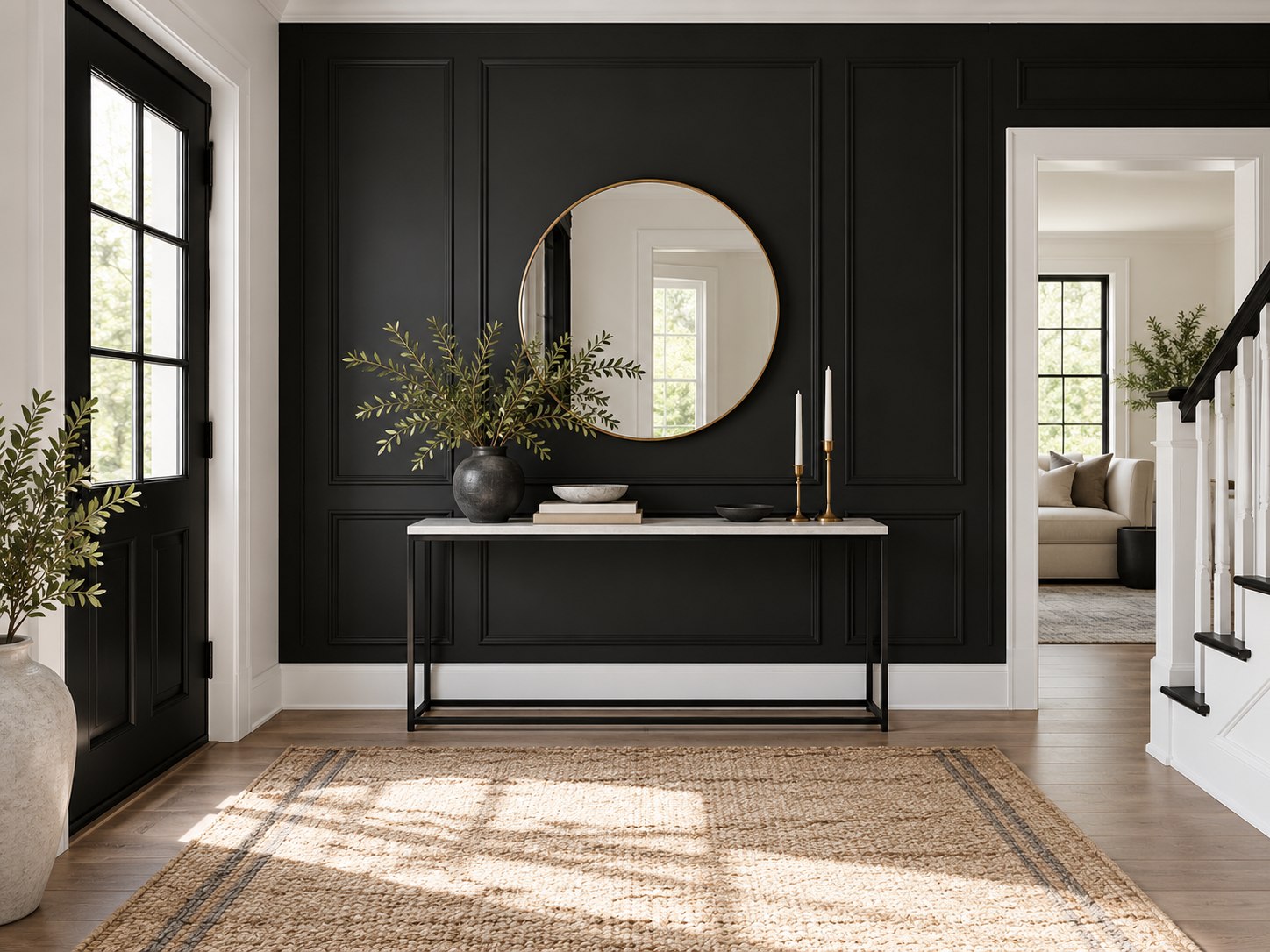
8. Black-and-white contrast
A black-and-white scheme makes an entry feel graphic and structured. Use the darker color as a defined panel, lower section, or feature wall, and reserve lighter surfaces for areas where you want the space to feel open. A patterned tile, framed art, or a simple mirror can bridge the two tones without adding another major color.
Think about the entry's available light and the amount of dark surface before painting. High contrast draws attention to edges and trim, so patch and prepare the wall carefully. Keep the layout simple if the floor already has a strong pattern.
9. A console-table display wall
A console and a deliberately styled wall make a practical landing zone feel finished. Anchor the arrangement with one mirror or artwork, then add a tray for daily essentials and one or two smaller objects. The accent wall can be a paint color, wallpaper, or panel treatment, but leave enough breathing room around the display.
Choose the console depth only after measuring the walking path. In a tight foyer, a wall-mounted shelf can provide a landing spot without taking as much floor space. Keep the display easy to clear so keys, mail, and bags do not turn the focal point into clutter.
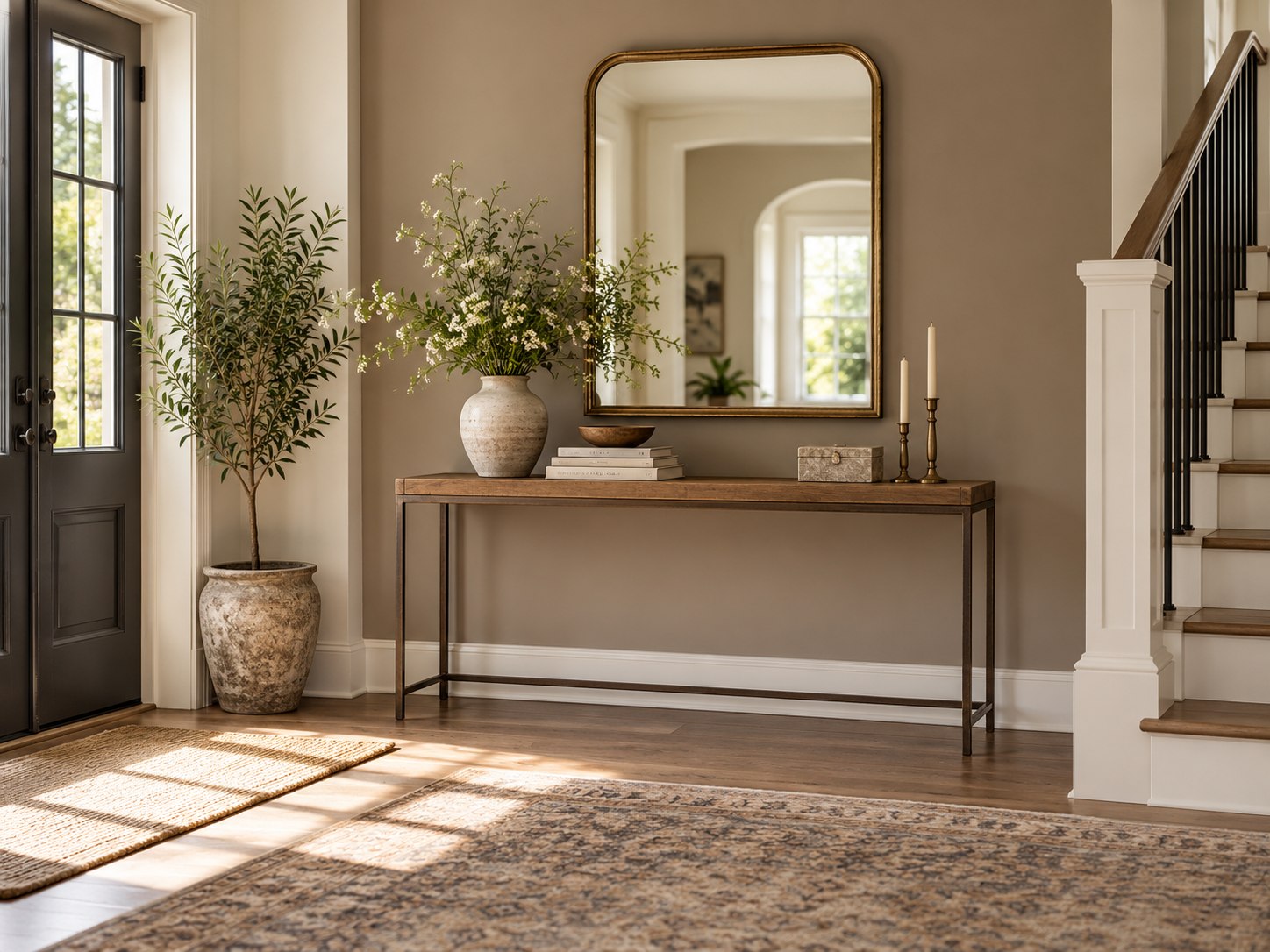
10. Marble-look wall with warm metal details
Marble veining and warm-metal accents create a polished, formal entry. The effect can come from actual stone, a suitable wall covering, or a painted look; each option has different cost, weight, and care needs. Decide which material fits the wall and the home's daily use before planning the decorative finish.
Keep the veining and metallic details restrained if the entry is small. One framed mirror or light fixture may be enough to echo the warm accents. If using a stone-look product, inspect a full-size sample so you understand its repeat and pattern scale before it covers the wall.
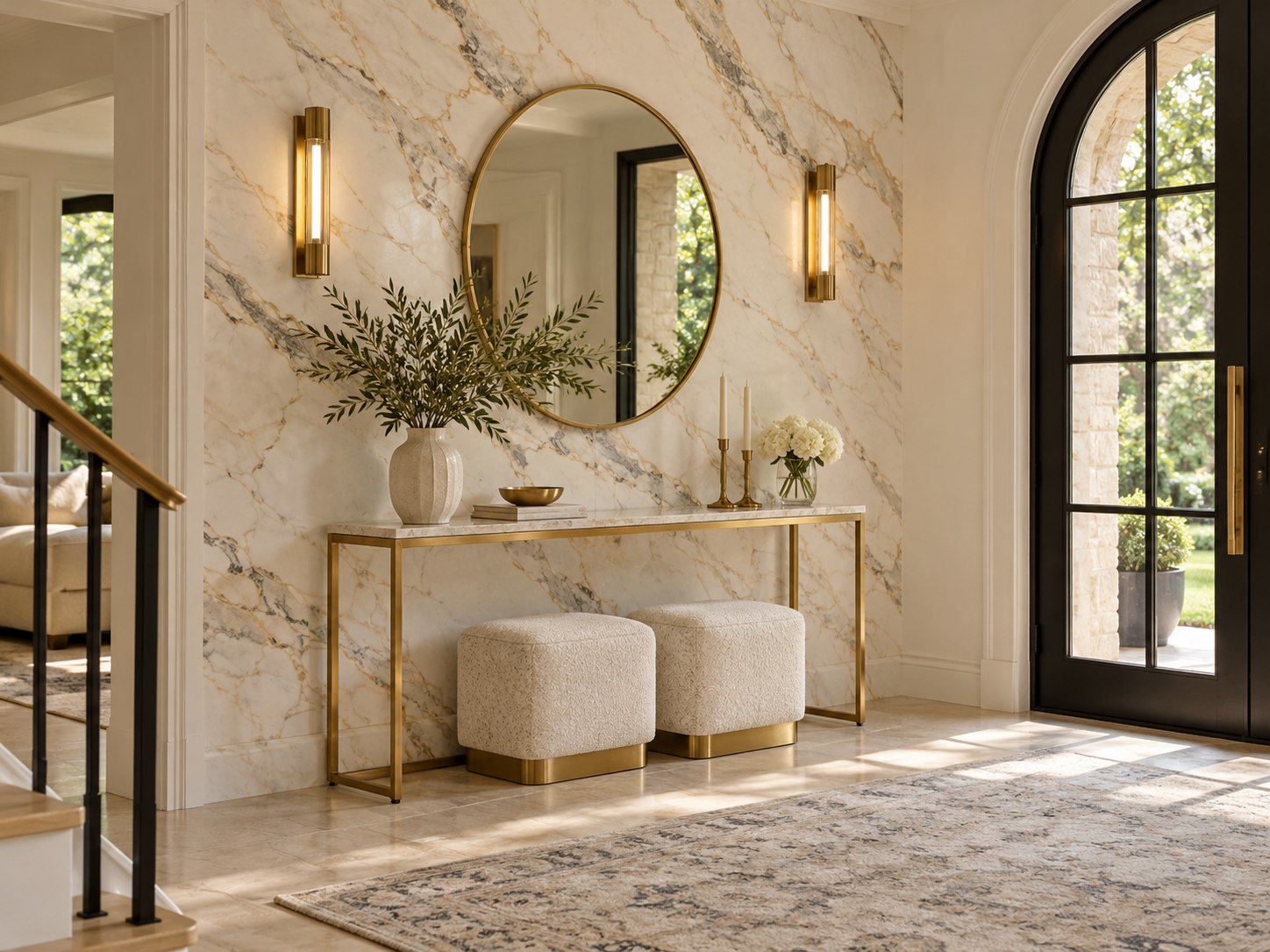
11. A slim pedestal beside the stairs
A narrow pedestal table can bring a small arrangement into a stairway entry without the depth of a full console. Pair it with a focused wall treatment—such as a contrasting paint color or one framed piece—so the table and wall read as one composition. Keep the stair rail and walking path clear.
Check the table's footprint and stability before styling it. A tall, light pedestal can be easy to bump in a busy passage, so choose a form that feels secure and avoid placing fragile objects where people pass closely. A single vase or bowl usually gives the display enough presence.
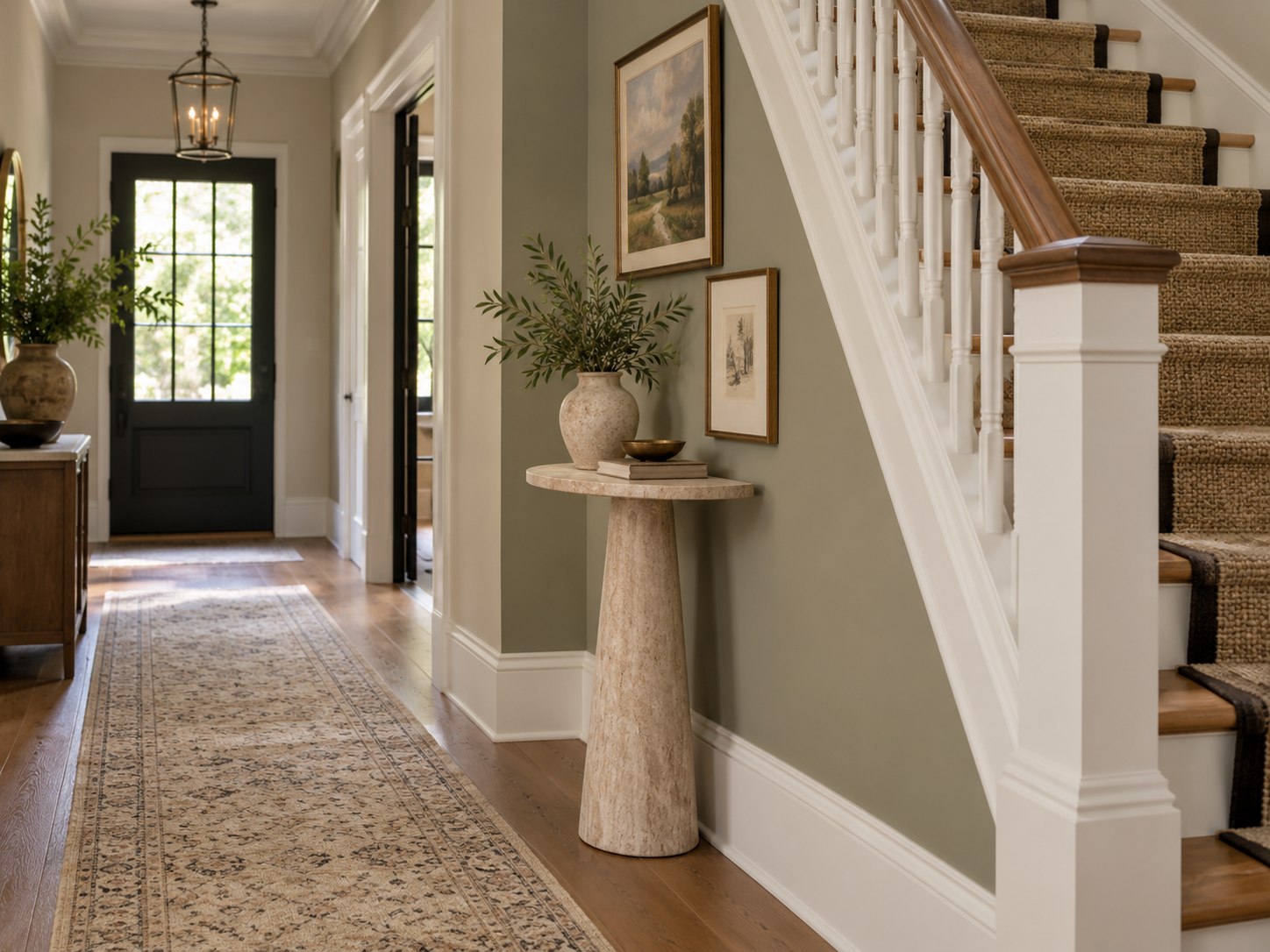
12. A luxurious marble accent
A marble surface or marble-look treatment adds veining and visual movement to a foyer. It can become the hero finish behind a console or at the end of a short hall. To keep the wall from overwhelming the room, pair the pattern with simple trim and a limited set of neighboring materials.
Real stone, slabs, tile, and printed wall coverings are not interchangeable; compare their weight, installation needs, maintenance, and pattern continuity. If selecting a look-alike finish, view a larger sample instead of relying on a small swatch to judge the veining. Repeat one quiet color from the pattern elsewhere in the entry.
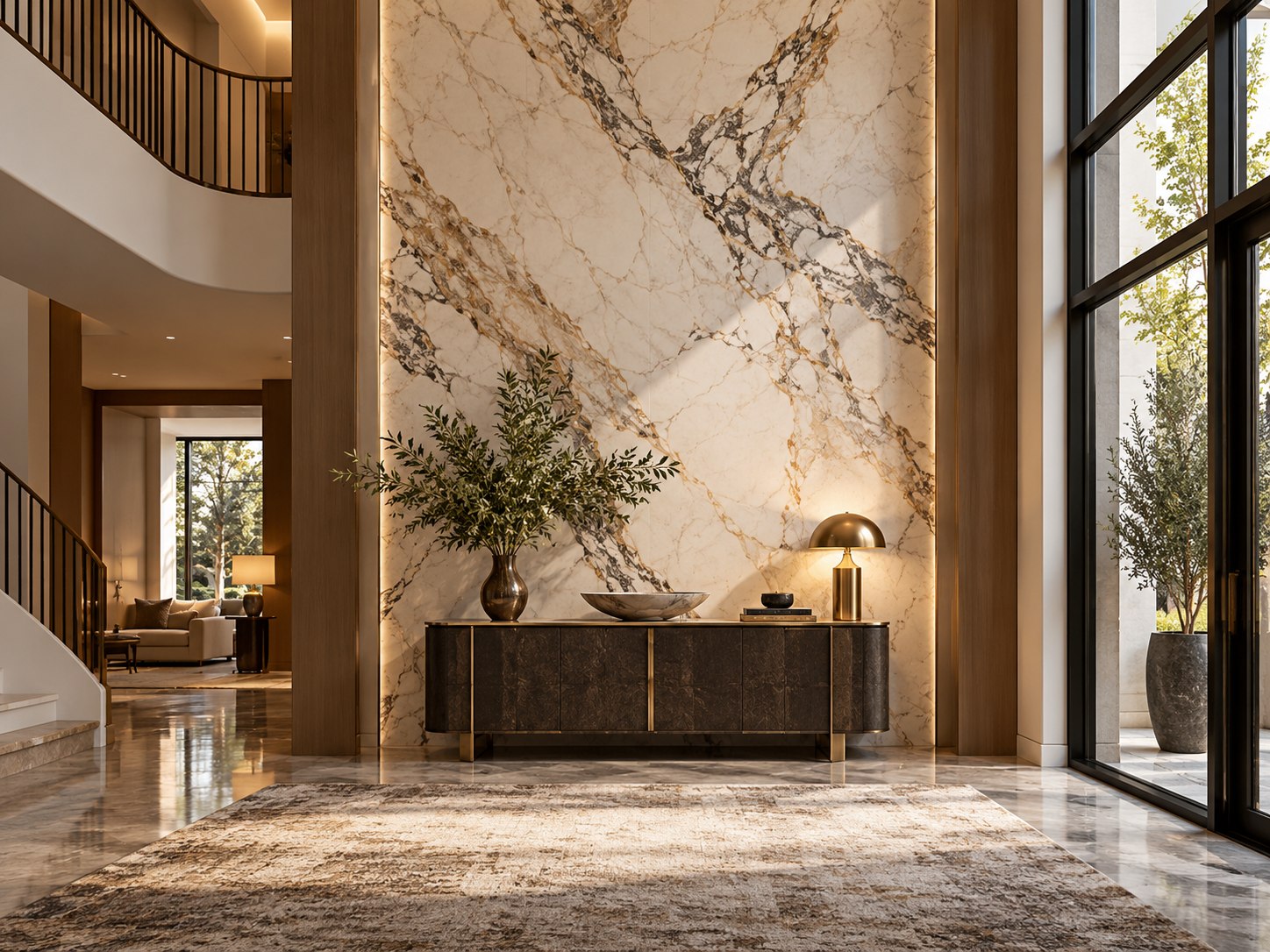
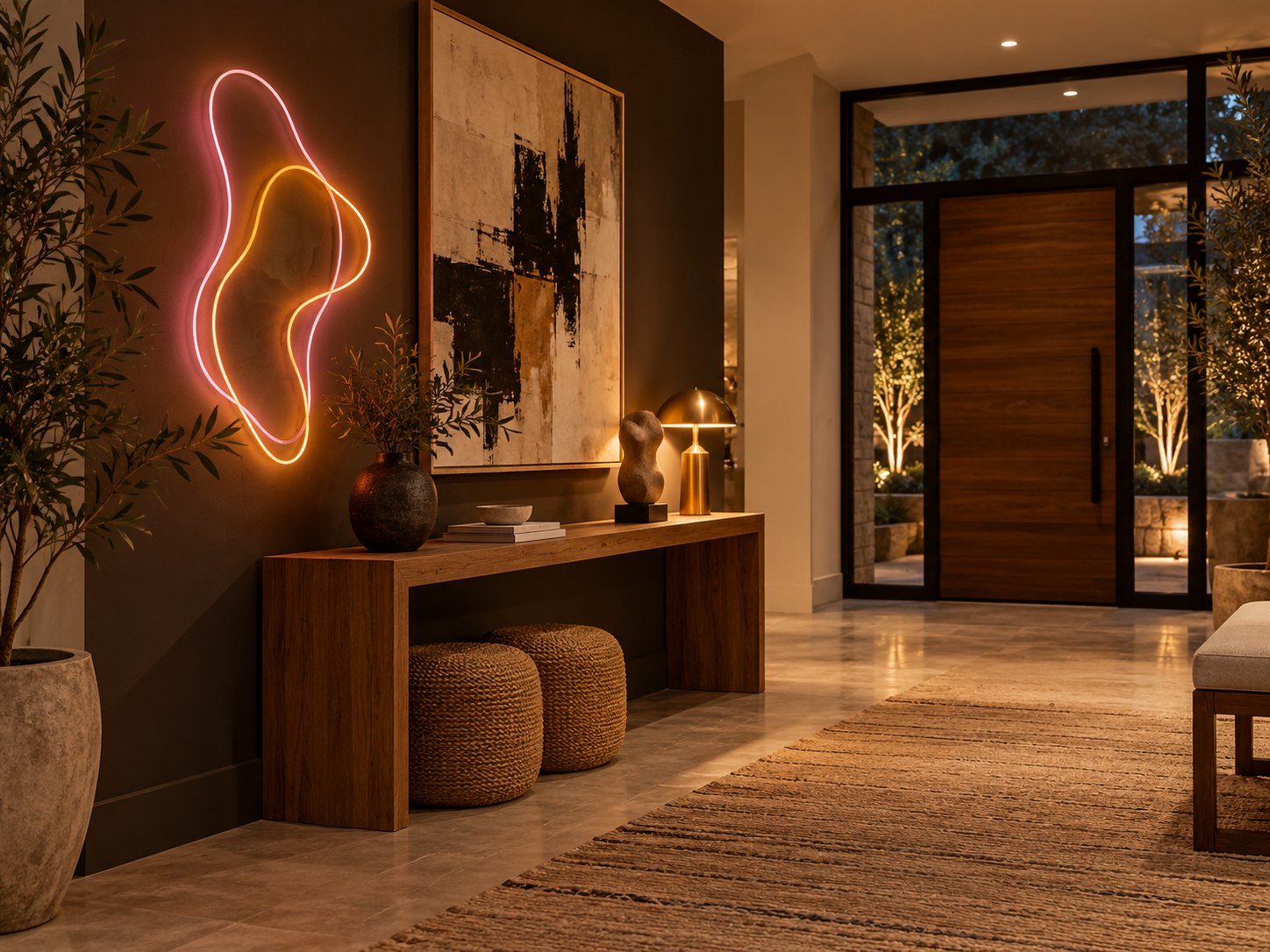
13. Neon as a playful focal point
A neon-style sign brings a playful glow to an otherwise simple wall. Choose a short phrase or a graphic shape that suits the home, then give it clear space so the light remains the focal point. A darker painted backdrop can make the glow stand out; a neutral wall keeps the effect softer in a compact entry.
Plan the power source and cable route before mounting anything. Keep the sign clear of door movement and any spot where bags or coats could catch it. If the entry already has strong overhead lighting, consider how the sign will look when that light is on as well as when it is dimmed.
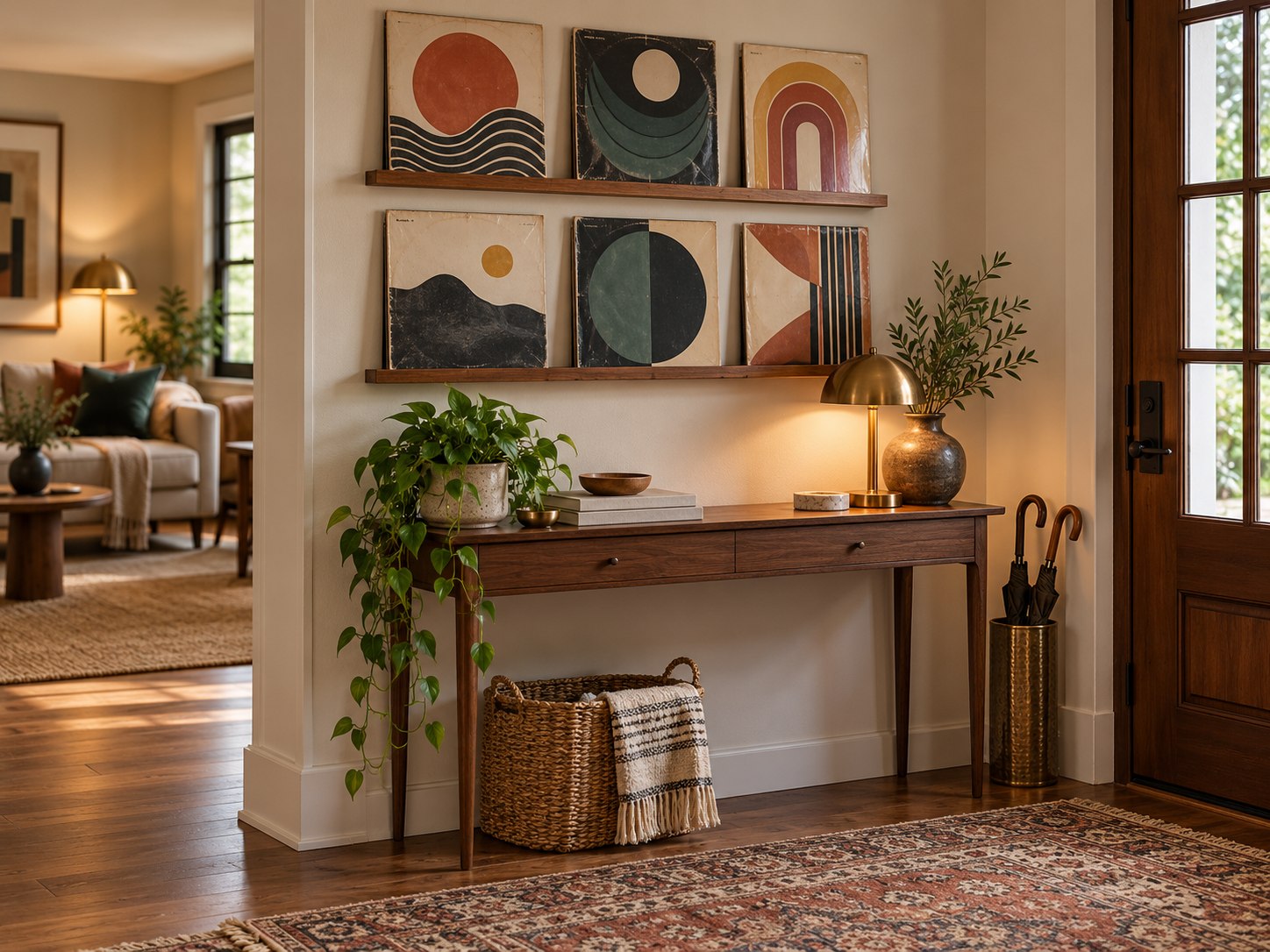
14. A vintage album or art display
Album covers, framed prints, or collected artwork can make the entry feel personal. Arrange the pieces as a grid for a tidy look or as a looser gallery wall for a collected feel. Repeating frame finishes, mat colors, or a consistent gap helps different images feel connected.
Lay out the arrangement on the floor before hanging it, then check its scale from the doorway. Use secure hanging hardware appropriate for the wall and the weight of each piece. Leave enough clearance for doors, switches, and any coat hooks so the display remains easy to use.
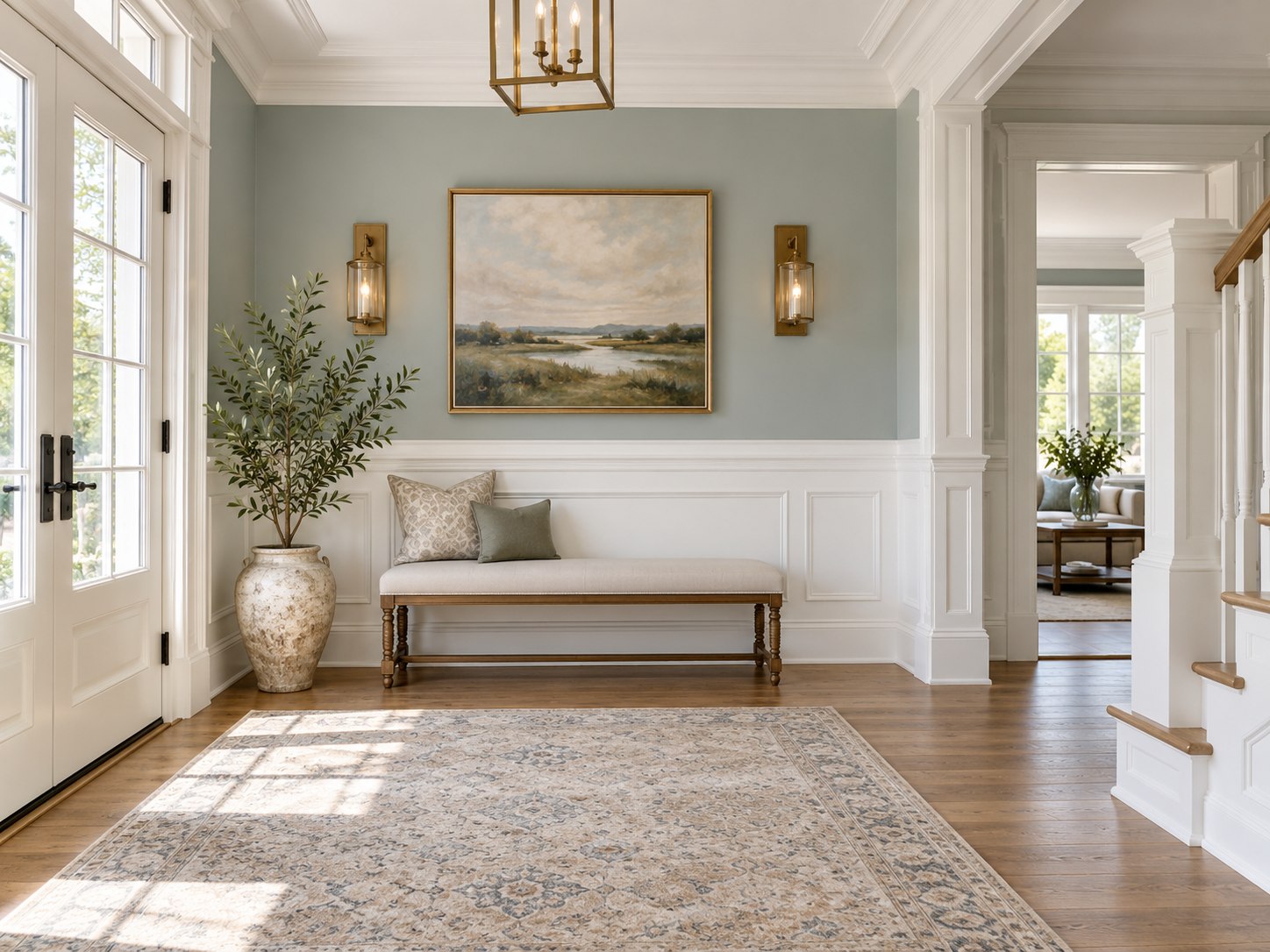
15. Crisp white architectural trim
Wainscoting, picture-frame molding, or board-and-batten detail can give a white entry wall depth through shadow and proportion. The effect depends on the existing ceiling height, door casings, and nearby trim. Match the scale of the panels to the wall rather than squeezing many narrow boxes into a short section.
White architectural detail can be paired with a pale wall color above or painted as one continuous tone for a quieter result. Map the layout around outlets and switches before cutting or fastening materials. For another example of this treatment, see these ways to use wainscoting.
How to choose an accent wall for your entry
First, look at the wall from the front door and from the rooms that connect to it. The best feature wall is usually the one with a clear sightline and enough uninterrupted space to read as a single idea. Check door swings, switches, radiators, stair rails, and the route people use to enter and leave.
Then choose the treatment based on what the entry needs. Paint and wallpaper change the surface visually; paneling and molding add dimension; a mirror or gallery display adds a focal point; storage can make the wall more functional. Match the scale to the space: large patterns and deep colors can work in small foyers, but balance them with simpler adjacent surfaces and adequate light.
Get the Fail-Safe Paint Color Playbook (Free PDF)
36 proven colors • 8 ready palettes • trim & sheen guide • printable testing cards.
Accent walls in narrow or rented entryways
In a narrow entry, keep the floor path clear and avoid deep furniture. Color, wallpaper, a slim wall-mounted ledge, or one large mirror can deliver a focal point without using much floor area. A lighter treatment can help the space feel open, but it is not a requirement; a deep color can also create a deliberate, enclosed moment when the lighting and sightline support it.
For a rental, check the lease and product instructions before applying wallpaper, adhesive panels, or other removable finishes. “Removable” does not guarantee damage-free removal from every paint or wall surface. Choose a reversible option only after testing it in an inconspicuous spot and following the maker's directions.
Frequently asked questions
Which wall should be the entryway accent wall?
Choose a wall that is visible as someone enters and does not compete with the main route through the space. A wall behind a console, bench, or stair landing can work if the furniture and doors leave the feature visible.
Can an accent wall make a small entryway feel larger?
It can shape how the space is perceived, but no single color or pattern guarantees that a room will look larger. Keep the walking area clear, consider a mirror to reflect light, and test the treatment with the entry's actual lighting and adjacent finishes.
What is a practical entryway accent wall for a busy household?
Choose a finish that matches the way the wall will be used and follow its care instructions. A wall behind a bench or coat area may need a more cleanable surface than a decorative wall that people rarely touch. Keep hooks and storage arranged so coats do not obscure the feature.