How Much Does It Cost To Paint A Motorcycle? A Complete Guide
Your motorcycle is more than just a mode of transport—it is a highly personal extension of your identity, a mechanical work of art, and a source of immense pride. Over time, whether through environmental exposure, minor impacts, or simply the passage of time, its original luster can fade. When you decide it’s time for a refresh, the question “How much does it cost to paint a motorcycle?” emerges. This is not a simple price point; it is a complex calculation involving metallurgy, artistry, chemical processes, and labor hours.
Understanding the cost of a full paint job requires delving into the intricate variables that influence pricing. It is a combination of the bike’s structural complexity, the desired paint finish, the necessary surface preparation, and the level of artistic customization. By treating this guide as a comprehensive investment plan, you will gain the knowledge needed to budget accurately and manage your expectations, ensuring the final result matches both your vision and your budget.
Get the Fail-Safe Paint Color Playbook (Free PDF)
36 proven colors • 8 ready palettes • trim & sheen guide • printable testing cards.
Quick answer: Painting a motorcycle typically costs between $300 for a basic single-stage DIY job and $3,000+ for a professional multi-stage custom finish. The final price depends on the bike’s current condition, whether rust or structural damage requires metal repair, the paint system chosen (single-stage vs. base coat/clear coat), and the level of artistic customization. Surface preparation and stripping often represent the largest portion of the total cost.
Planning Before You Start: Assessing Your Project Scope and Budget
Before speaking to any painter or even buying materials, the most critical step is a thorough scope assessment. Treating this process like any major renovation project—whether it’s a bathroom or a car—requires detailed planning. You must define exactly what “fresh look” means to you. Are you aiming for a simple, durable color match, or are you pursuing a show-stopping, multi-layered custom piece?
Assess three key areas: the bike’s current condition, the desired aesthetic, and your budget ceiling. If the paint job needs to cover structural damage, rust, or peeling layers, the labor cost for stripping and metal repair will dominate the budget. If the bike is structurally sound but merely dull, the cost will be significantly lower, focusing primarily on materials and base coats. Be realistic about the time and effort involved in prep—skimping here is the single biggest mistake and leads to paint failure.
The Professional Painting Process: Understanding Stages and Cost Drivers
To understand the cost, you must understand the process. Motorcycle painting is not a single dip; it is a multi-stage chemical and physical process, each stage adding time, materials, and expertise, and thus, cost. A professional job follows a meticulous sequence that must be respected.
- Surface Preparation and Stripping (The Foundation): This is arguably the most expensive and time-consuming stage. It involves more than just cleaning; it includes sanding, chemical stripping of old, compromised paint, rust removal, filling deep scratches, and prepping bare metal. The cost here depends entirely on the severity of the existing damage. A full strip-down to bare metal is far more expensive than simply sanding a surface to dull it.
- Priming and Sealing (The Adhesion Layer): Once the metal is clean, a specialized primer (or sealer) is applied. This layer ensures the new paint adheres perfectly to the substrate and provides a uniform surface for the color coat. The type of primer needed (e.g., epoxy for rust, etch primer for bare metal) impacts the material cost.
- Base Coat Application (The Color): This is where the color comes in. The base coat is the pigmented layer. The complexity here is key: a solid color is straightforward, but metallic, pearl, or flake finishes require specialized materials and precise application techniques, increasing the cost.
- Clear Coat Application (The Protection): This is arguably the most vital step for longevity. The clear coat is a durable, protective polymer layer that seals the color coat, providing UV resistance, depth, and scratch protection. Without a proper clear coat, the paint will degrade rapidly.
- Customization and Graphics (The Artistry): If the design includes airbrushing, pinstriping, or complex decals, these elements are added either before the base coat (for painted graphics) or after (for decals). Airbrushing, in particular, requires a highly skilled artist and adds significant labor costs.
Every step, especially surface prep and the clear coat, is non-negotiable for a long-lasting result and contributes significantly to the final price tag.
Materials and Tools: DIY vs. Professional Supplies
The choice between a DIY approach and professional service dictates the tools and materials required. Both paths demand high-quality items to prevent failure.
For the Professional Painter:
- Specialized Equipment: Industrial paint booths, professional-grade air compressors, HVLP spray guns, and specialized paint mixing equipment.
- Materials: Multi-stage primers (etching, epoxy, self-etching), specialized base coats (candy, metallic, matte), high-grade protective clear coats, and masking materials designed for automotive use.
- Expertise: Access to professional chemical knowledge regarding curing times and solvent handling.
For the DIY Enthusiast:
- Safety Gear (Mandatory): Certified respirator (for sanding and solvents), chemical-resistant gloves, safety goggles, and proper ventilation equipment.
- Preparation Tools: Various grits of sandpaper (80 to 600 grit), wire brushes, degreasers, and rust converters.
- Application Tools: High-quality spray paint guns (better than household sprayers), appropriate primers/paint kits (ensure they are rated for vehicle use), masking tape, and plastic sheeting.
A crucial DIY warning: Do not attempt to paint on a surface that has not been thoroughly stripped of old, compromised paint. This is the most common failure point.
Design and Finish Selection: How Appearance Impacts Budget
The type of paint finish you choose will drastically affect both the look and the material cost. These finishes require different application methods and protective layers.
Metallic and Pearlescent Finishes: These are incredibly popular but costly. They contain fine flakes or mica pigments that require specialized paint lines and careful application to achieve depth. They also often require more meticulous prep work to ensure the flakes lay flat and uniformly. Expect a higher cost premium here.
Matte and Satin Finishes: These finishes are generally easier and less expensive than deep metallic or candy coats, but achieving a uniform, non-reflective matte finish requires careful application to prevent streaks or uneven texture. They also require specific clear coats designed not to introduce gloss.
Two-Tone and Custom Graphics: Any deviation from a solid, single color increases the complexity and cost. A two-tone job requires two separate base coats and two sets of masking, significantly increasing labor time. Custom graphics, especially hand-painted airbrush work, are pure labor costs and can be the most variable expense.
Finish, Compatibility, and Prevention Tips
Choose a finish that matches the repair goal and the surface conditions. Gloss and semi-gloss resist moisture and are easier to clean, while flat or matte finishes hide imperfections better but are less washable.
Check compatibility between primer, filler, paint, and the existing surface. Some repairs require specific primers or prep steps to prevent the problem from returning. Consider drying time, odor, and cleanup method before starting, and confirm that the product suits interior or exterior use as needed.
Mistakes to Avoid: Costly Planning Pitfalls
To keep the project on budget and successful, avoid these common pitfalls:
- Underestimating Prep Time: This is the #1 mistake. If the surface is not chemically stable, the paint will peel or chip, leading to costly re-dos. Dedicate enough time to stripping and sanding.
- Skipping Priming: Never go straight from bare metal to color coat. Primer is the adhesive bridge; skipping it guarantees poor adhesion and premature paint failure.
- Ignoring Environmental Factors: Painting in humid conditions or dirty environments can ruin the job. Proper preparation includes ensuring the workspace is clean, dust-free, and the temperature is stable, following manufacturer guidelines.
- Choosing the Wrong Finish: If your bike is frequently exposed to salt air (coastal environments), a standard clear coat may not be enough. You must budget for a marine-grade or highly durable protective coating.
Safety and Practical Notes: Essential Precautions for Success
Safety must take precedence over cost savings. Professional painting involves highly volatile solvents, chemicals, and abrasive processes. Never compromise on safety gear.
- Ventilation is Non-Negotiable: Always work in a well-ventilated area to dissipate toxic solvent fumes. Use industrial ventilation systems, never just open windows.
- Personal Protective Equipment (PPE): When sanding, stripping, or applying paints/primers, always wear a certified respirator (not just a dust mask), chemical-resistant gloves, and eye protection.
- Curing and Drying: Different paint types (urethane, enamel, acrylic) have vastly different curing times. Never attempt to paint or polish the motorcycle before the clear coat has fully cured, as premature handling can cause damage. Always follow the manufacturer’s stated curing schedule.
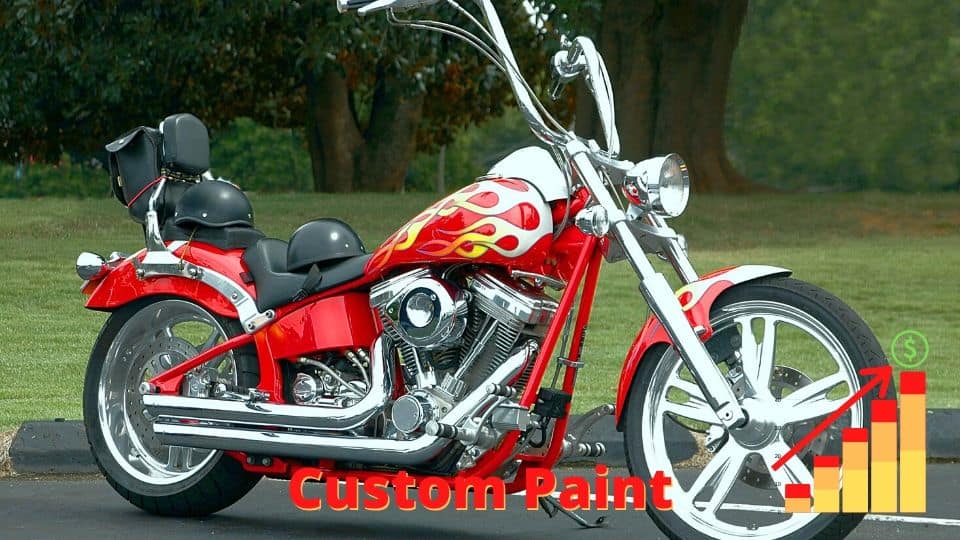
| Painting Type | Price Range |
|---|---|
| Basic Single-Color Paint Job | $300 – $1000 |
| Two-Tone or Custom Color | $800 – $2500 |
| Custom Graphics or Airbrushing | $1000 – $5000 and above |
Frequently Asked Questions
How much does a full motorcycle paint job typically cost?
It is impossible to give a single price, as the cost is determined by complexity, not just paint. The most significant cost drivers are the level of surface preparation (e.g., bare metal repair vs. simple touch-up) and the finish chosen. Expect a solid color job to be significantly cheaper than a complex, multi-layered custom finish like a candy or metallic pearl coat. Always request a detailed quote that itemizes the cost for prep, materials, and labor.
Get the Fail-Safe Paint Color Playbook (Free PDF)
36 proven colors • 8 ready palettes • trim & sheen guide • printable testing cards.
What is the single most important step to prevent paint failure?
Surface preparation and stripping. If the paint job needs to cover rust, deep scratches, or compromised old paint, the labor cost for stripping and metal repair will dominate the budget. Never skip the chemical stripping and sanding process. A poor foundation, regardless of how expensive the paint is, guarantees premature failure.
Do I need a primer if I am painting over existing paint?
Yes. Primer is the adhesive bridge. Even if the surface looks solid, using a specialized primer (such as an etching or adhesion primer) is critical to ensure the new paint bonds correctly to the old substrate. Skipping the priming stage is a primary cause of peeling and poor adhesion.
Safety is paramount. Always work in a well-ventilated area and wear proper Personal Protective Equipment (PPE), including a certified respirator and chemical-resistant gloves. Furthermore, do not attempt to polish, clean, or move the motorcycle until the clear coat has fully cured. Different paints have vastly different curing times; always follow the manufacturer’s specific curing schedule to prevent damage.
Conclusion
Painting a motorcycle is a substantial investment that yields tremendous returns in aesthetics and ownership pride. The final cost is not determined by the price of the paint itself, but by the meticulous preparation, the complexity of the design, and the expertise of the artisan. By treating the process as a structured project—focusing equally on prep, proper materials, and safety—you can manage your budget effectively.
Whether you opt for the controlled environment of a professional shop or the DIY challenge, remember that planning, communication, and patience are the most valuable resources. A detailed quote, a comprehensive understanding of the process, and adherence to safety protocols will ensure that your motorcycle not only looks spectacular but remains durable for years to come.