
What Is the Best Fence Paint or Stain for Your Property?
A fence is often viewed merely as a boundary, but in reality, it is one of the most visible and impactful architectural elements of any property. Choosing the right finish—whether it’s a protective stain, a solid coat of paint, or a clear sealant—requires far more thought than simply picking a color. The best choice depends on a complex interplay of factors, including the fence material, the climate you live in, and the specific aesthetic you wish to achieve.
A successful paint or stain job doesn’t just look good; it must provide lasting, reliable protection against the elements. Using the wrong product, or failing to prepare the surface adequately, can lead to peeling, warping, mildew, and premature deterioration. This guide provides a comprehensive resource to help you navigate the technical choices, ensuring your fence remains beautiful and structurally sound for years to come.
Get the Fail-Safe Paint Color Playbook (Free PDF)
36 proven colors • 8 ready palettes • trim & sheen guide • printable testing cards.
Quick answer: For what is the best fence paint, start by identifying the surface condition, gathering the right supplies, and working in a well-ventilated area. Prep carefully, test a small area when possible, follow manufacturer directions, and use thin, controlled steps so the result is safer, cleaner, and easier to correct if something looks wrong.
Planning Before You Start: Assessing Your Project
Before you even look at a can of paint, you must conduct a thorough assessment of the fence itself and its environment. This initial planning phase saves time, money, and frustration down the line. Think of yourself like a contractor: ask the hard questions first.
Identifying the Material Type
The substrate (the material) dictates the type of adhesion required. You cannot use a product designed for porous wood on smooth metal, and vice versa. Pay close attention to the primary material:
- Natural Wood (Cedar, Redwood, Pine): These woods have varying levels of porosity and absorption rates. Cedar and redwood are naturally durable and often benefit from stains that highlight their grain. Pine and pressure-treated woods are generally more porous and require robust sealing.
- Composite Materials (Wood/Plastic Blends): These are non-porous and require specific cleaners and paints designed for plastics, not wood. They often handle paint better than natural wood, but you must use products formulated for their specific polymer makeup.
- Vinyl/PVC: These are entirely non-porous plastic materials. They require specialized vinyl paints, as standard latex or oil paints will simply peel off the smooth surface.
- Metal (Aluminum, Wrought Iron): Metal requires primers designed for metal (like rust-inhibitive primers). The choice between paint and stain is irrelevant; you need a protective coating that adheres chemically to the metal.
Considering the Climate and Environment
Climate is perhaps the single most overlooked factor. Your paint must fight the environment it lives in:
- Humid or Tropical Climates: Look for products explicitly labeled as “mildew-resistant” or “mold-inhibiting.” Water-based latex paints are often favored here because they dry quickly and are breathable, allowing the wood to “breathe” and prevent trapped moisture buildup.
- Cold or Temperate Climates: Cold weather can cause paint to crack or fail to cure properly. Oil-based or specialized alkyd coatings are often recommended here because they provide deep penetration and superior durability against temperature fluctuations.
- Arid or Desert Climates: The main enemy here is intense UV radiation and rapid temperature changes. Select products with high UV resistance and breathable finishes to prevent the wood from trapping moisture and expanding/contracting too rapidly.
Defining the Purpose (Aesthetic vs. Protection)
Are you painting to achieve a dramatic, solid look (aesthetic), or are you painting to keep the wood structurally stable and prevent rot (protection)? Knowing your primary goal helps narrow down the product category:
- High Protection/Low Aesthetics: Opt for penetrating stains or clear sealants. These prioritize the wood’s integrity over a uniform color.
- High Aesthetics/Moderate Protection: Solid color paints provide the most dramatic, uniform look, but they can sometimes trap moisture if the paint film is too thick.
- Balanced Approach: Semi-transparent stains are the best compromise, offering color while still allowing the wood grain and some natural breathability to show through.
Main Buying Guide: Paint vs. Stain Comparison
Understanding the technical differences between paint and stain is critical. They perform vastly different functions.
Understanding Stains
Stains are designed to penetrate the wood’s pores and color it, leaving the wood grain visible. They are generally breathable, which is good for longevity, but they offer less physical barrier protection than paint.
- Transparent Stain: These are the most breathable. They soak into the wood and provide minimal color, mainly protecting the surface from UV damage while allowing the natural grain to show through completely. Ideal for showing off beautiful, natural wood.
- Semi-Transparent Stain: This is the most popular choice for a balance of look and protection. They add a moderate tint and color while still allowing enough light and the wood’s character to show through. They are excellent for woods that might otherwise look too uniform.
- Solid Color Stain (Paint-Stain): These are highly pigmented and opaque. They provide maximum color coverage and are excellent for achieving a uniform, deep, durable look. However, because they are more opaque, they can sometimes trap moisture if the underlying wood isn’t properly sealed first.
Understanding Paints
Paints form a protective film *on* the surface of the wood. They are excellent for durability, adhesion, and achieving uniform color. However, because they create a film, they must be compatible with the wood type and climate.
- Latex (Water-Based) Paint: These are generally easy to clean up, dry relatively quickly, and are often chosen for their mildew resistance, making them popular in humid areas. They are excellent for quick touch-ups and general residential use.
- Oil-Based Paint: These paints cure through oxidation, resulting in a very hard, durable finish. They offer superior protection, especially in harsh or cold climates, and tend to adhere exceptionally well to dense wood. Be aware, however, that they have a stronger odor and longer drying times.
When evaluating potential products, focus on these technical criteria rather than just the brand name.
Adhesion and Compatibility
Adhesion refers to how well the coating sticks to the surface. If the paint/stain isn’t compatible with the wood type or the existing finish, it will peel, chip, or blister. Always check the manufacturer’s recommended use list against your specific wood species (e.g., some stains are specifically formulated for cedar and perform poorly on pine).
Sheen (Finish) Selection
Sheen refers to how much light the finished surface reflects. It is a critical aesthetic decision:
- Matte/Flat: Absorbs the most light, giving a deep, rustic, and natural look. It is ideal for achieving a low-maintenance, understated aesthetic.
- Satin/Semi-Gloss: Offers a moderate sheen, providing better durability and washability than matte finishes. This is often the best all-around choice for high-traffic, visible fences.
- Gloss: Reflects the most light. While very durable and easy to clean, a high-gloss finish can sometimes look artificial or overly shiny on natural wood, and it tends to highlight imperfections.
Durability and Maintenance
A high-quality exterior coating should resist UV fading, moisture penetration, and insect damage. Durable products typically require proper preparation and may need re-coating every 3–5 years, depending on the climate and exposure.
Use and Application Tips: The Preparation Process
The success of your project is 80% preparation and 20% application. Do not rush this stage.
Step 1: Cleaning and Inspection
Before anything else, the fence must be thoroughly cleaned. Use a garden hose and a mild detergent or specialized fence cleaner. Pay close attention to areas of mildew, moss, or algae growth. Scrub these areas gently using a stiff brush. Rinse thoroughly to remove all soap residue.
Inspect the fence for structural damage. If you find sections of rot, warping, or loose boards, those areas must be repaired or replaced before painting or staining. Painting over structural rot will only delay the inevitable failure.
Step 2: Scraping and Sanding
Scrape off all flaking, peeling, or chalky old paint. If the previous finish was oil-based and you are switching to a water-based paint (or vice versa), thorough scraping is mandatory to ensure adhesion.
Lightly sand the surface. The goal of sanding is not to achieve a bare, pristine wood surface, but rather to “open up” the wood’s pores. This mechanical abrasion provides a microscopic texture that allows the primer or stain to grip effectively. Use medium-grit sandpaper (80-100 grit) and follow the wood grain.
Step 3: Priming (The Most Important Step)
A dedicated exterior primer is non-negotiable. The primer seals the wood, standardizes the absorption rate (preventing some areas from soaking up more product than others), and provides a perfect base coat for the final color. Use a primer formulated for the specific material (e.g., a wood-specific acrylic primer).
Step 4: Application
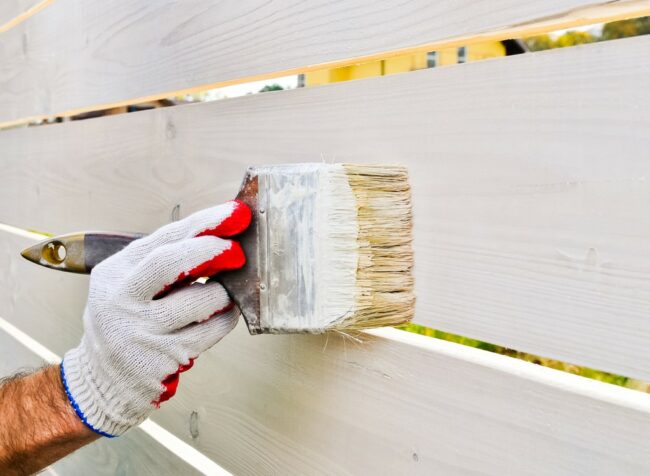
Follow the manufacturer’s instructions regarding application method (brush, roller, or sprayer) and required drying times. Apply the product in thin, even coats. Over-applying paint is the number one cause of failure, as thick layers trap moisture and promote peeling.
Mistakes to Avoid
Even experienced DIYers can make costly mistakes. Being aware of these common pitfalls will greatly increase your chances of success.
- Ignoring Surface Prep: This is the biggest mistake. Applying paint over dirt, mildew, or loose paint guarantees peeling and poor adhesion. Always clean, scrape, and prime.
- Painting in Bad Weather: Never paint or stain when temperatures are near freezing, or when humidity is extremely high, or when rain is imminent. Extreme conditions prevent the product from curing correctly. Check local weather advisories and always adhere to the manufacturer’s recommended temperature range.
- Mixing Incompatible Products: Never mix latex paint with oil paint, or use a paint designed for metal on wood. These products are chemically distinct and will fail when mixed.
- Skipping the Primer: Skipping the primer is like skipping the foundation of a house. It leads to uneven color absorption and weak adhesion.
Safety and Practical Notes
Working with exterior coatings requires adherence to safety protocols. Your safety and the integrity of the finish depend on these steps.
- Protective Gear (PPE): Always wear appropriate personal protective equipment. This includes safety goggles, gloves, and, critically, a respirator mask when sanding or applying paint, as fumes and dust can be harmful.
- Ventilation: Ensure the work area has adequate ventilation. When working with oil-based products, fumes can be strong, so keep pets and children away and open windows if possible.
- Structural Integrity Check: If you suspect structural rot or severe damage, do not attempt to paint or stain it yourself. Consult a licensed professional carpenter or contractor.
- Manufacturer Directions: Always treat the product container as the ultimate authority. Pay close attention to drying times, cure times, and recommended application methods.
Frequently Asked Questions
What is the single most critical step before painting or staining?
The most critical step is thorough surface preparation. Never skip cleaning, scraping, and priming. First, the fence must be scrubbed to remove all mildew, dirt, and algae using a specialized cleaner. Next, all loose, peeling, or chalky old coatings must be scraped off. Finally, sanding is necessary to open the wood’s pores, allowing the primer to penetrate fully and provide a stable base coat. Failure to prepare the surface properly guarantees poor adhesion and premature peeling.
Get the Fail-Safe Paint Color Playbook (Free PDF)
36 proven colors • 8 ready palettes • trim & sheen guide • printable testing cards.
If my fence is made of mixed materials (e.g., wood and vinyl), what should I do?
You must treat each material type using a product specifically formulated for it. Do not use a single paint or stain across different materials. For example, standard wood paint will peel off vinyl/PVC, and specialized vinyl paint will not properly protect the porous wood. Use the correct cleaning agents, primers, and topcoats for the wood sections, and entirely separate, specialized products for the plastic or metal sections.
How often do I need to re-coat or restain my fence?
The required maintenance cycle depends heavily on the climate and the product used. In high-UV, humid, or coastal environments, expect to inspect and potentially re-coat every 3 to 5 years. In temperate, low-exposure climates, this cycle may be longer. Always check the manufacturer’s recommendations, as they provide the most accurate estimate based on the specific product and conditions.
Do I need to sand the entire fence, or just the old paint?
While scraping off loose paint is mandatory, light sanding across the entire surface is highly recommended. The goal of sanding is not to make the wood look pristine, but to create a microscopic texture that helps the primer and stain grip effectively. Use medium-grit sandpaper (80–100 grit) and always follow the natural grain of the wood. This process “opens up” the pores and ensures maximum adhesion.
Can I use paint on metal fences, or should I stick to stain?
You should use a specialized metal coating, which is a type of paint. Stains are designed to penetrate wood pores and are irrelevant for metal. Metal requires a dedicated primer, such as a rust-inhibitive or rust-converting primer, followed by a protective enamel paint formulated for metal. Always ensure the product is chemically compatible with the metal type (e.g., aluminum versus wrought iron) and follow manufacturer instructions precisely.
Conclusion
Choosing the best fence paint or stain is ultimately a calculated decision based on the material, the climate, and the desired longevity. By prioritizing thorough preparation, understanding the chemical differences between stains and paints, and respecting the technical guidelines provided by the manufacturer, you can ensure your fence receives a beautiful, durable, and protective finish that enhances your property for years to come.