
How to Make Metallic Paint: Match the Pigment to the Right Medium
Metallic paint can come ready to use, or it can be made by combining a metallic pigment with a compatible medium. Those approaches do not share one universal recipe: a powder intended for acrylic work may call for different materials and handling steps than a product made for oil, resin, or another coating. The surface matters too, because a mixture that looks bright on a test card may not adhere or cure properly on furniture or a wall.
This guide focuses on choosing the project and product system before mixing. You’ll learn how to check pigment and binder labels, make a small test batch using the maker’s directions, and assess the dried finish before committing to a larger area. Work with the precautions listed for the exact materials you choose, especially when handling dry powders, and avoid combining products unless their manufacturers say they are compatible.
Get the Fail-Safe Paint Color Playbook (Free PDF)
36 proven colors • 8 ready palettes • trim & sheen guide • printable testing cards.
What metallic paint is
“Metallic paint” can describe a ready-made paint with a reflective effect, or a custom mixture made by combining a compatible metallic pigment with a medium. The two approaches can look similar at a glance, but they are not interchangeable recipes. A ready-made paint has been formulated as a product; a custom mix depends on the specific pigment, binder, surface, and finish.
Golden Artist Colors explains that large mica effect pigments can lose luster if ground or mulled, while other dry pigments may need wetting and dispersion before an acrylic binder is added. Guerra Paint describes product-specific starting directions for its own liquid metallic and pearlescent effects. These examples are tied to their products, not a general household formula. For a small craft, a ready-made metallic paint labeled for the intended surface may be the simplest option.
Choose the project and surface first
Name the surface and conditions the finished piece will face. Paper, canvas, decorative wood, furniture, and walls may need different preparation or coatings. A mixture that brushes smoothly onto a test card may behave differently on sealed wood or a previously painted surface. Check whether both pigment and medium labels identify your planned use; keep water-based and oil-based systems separate unless their makers describe a compatible combination. A topcoat can change gloss, color, or the reflective look.
Gather compatible materials and check labels
For a small test, gather the selected metallic pigment or effect product, its recommended binder or medium, a clean mixing surface, palette knife or stirrer, a suitable brush, and a sample of the same surface. Read labels for intended medium, surface suitability, ventilation, protective equipment, cleanup, and use limits. Dry powders can become airborne while being poured or mixed; follow the product’s dust-control directions and avoid creating dust. If safety guidance is unclear, choose a labeled ready-made paint or contact the manufacturer.
Make a small test batch
Write down the product names, mixing order, and any proportion printed by the maker. Do not borrow a ratio from a different pigment or binder: concentration, particle size, and intended use may differ. If the product calls for dispersing dry pigment, use its stated method; if it is a ready-to-use liquid effect pigment, follow that label. Prepare only a small amount on a clean surface. For mica effect flakes, avoid grinding or mulling unless the maker directs it, since large flakes can lose reflective quality when crushed. Stop if the mixture clumps, immediately separates, or behaves differently from the instructions.
Test the finish before committing
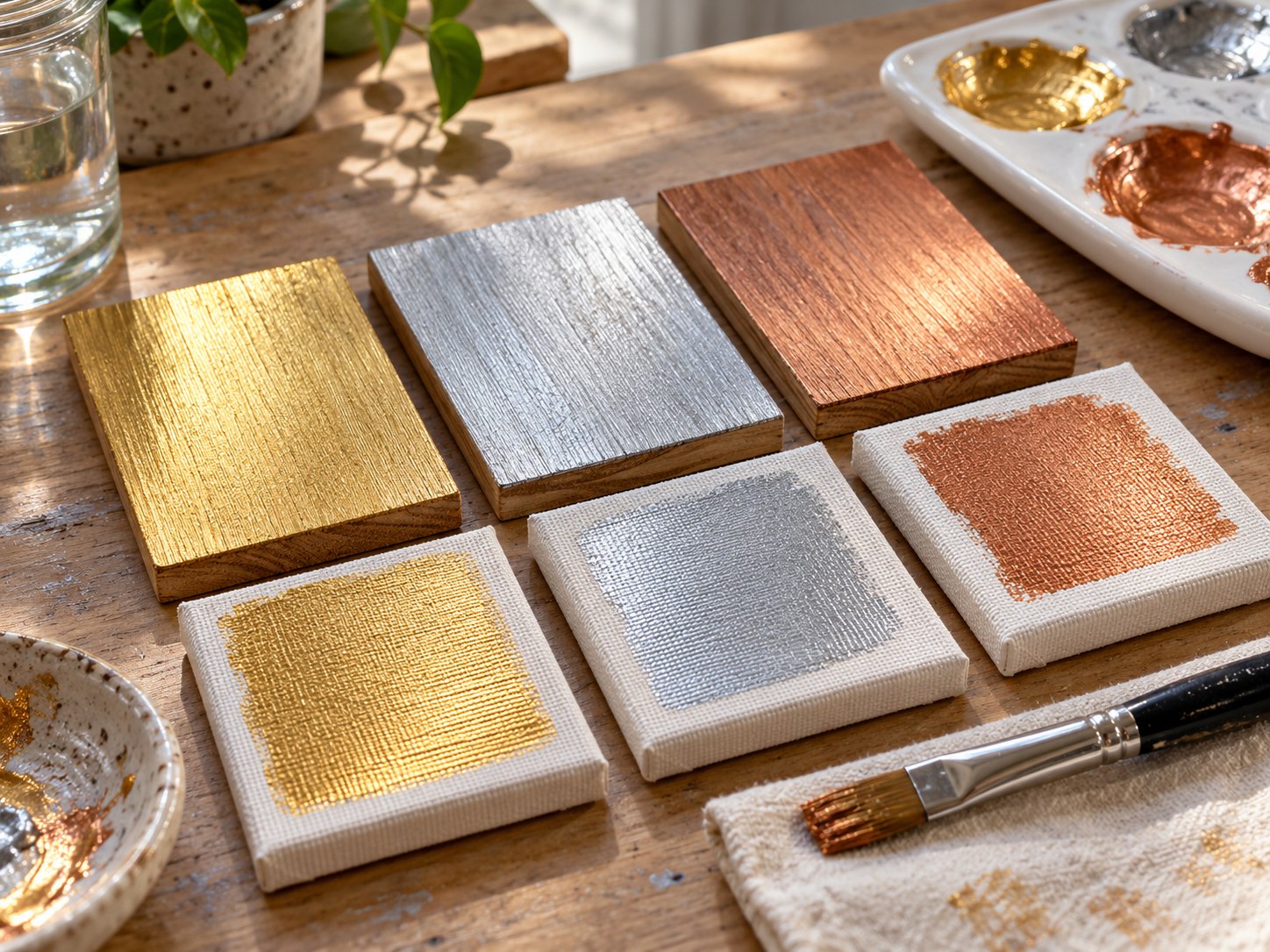
Apply the mixture to a scrap or hidden area made from the same material as the project. Use the planned surface preparation and application method. Follow the product’s drying directions, then inspect the result in the light where it will normally be seen; metallic effects can look different as the angle changes. Check for cracking, flaking, clumping, uneven pigment, or binder separation. Do not treat touch-dry as fully cured. Record products, amounts, surface, tools, coats, and wait times so you can repeat a result that works.
Prepare and apply to the project surface
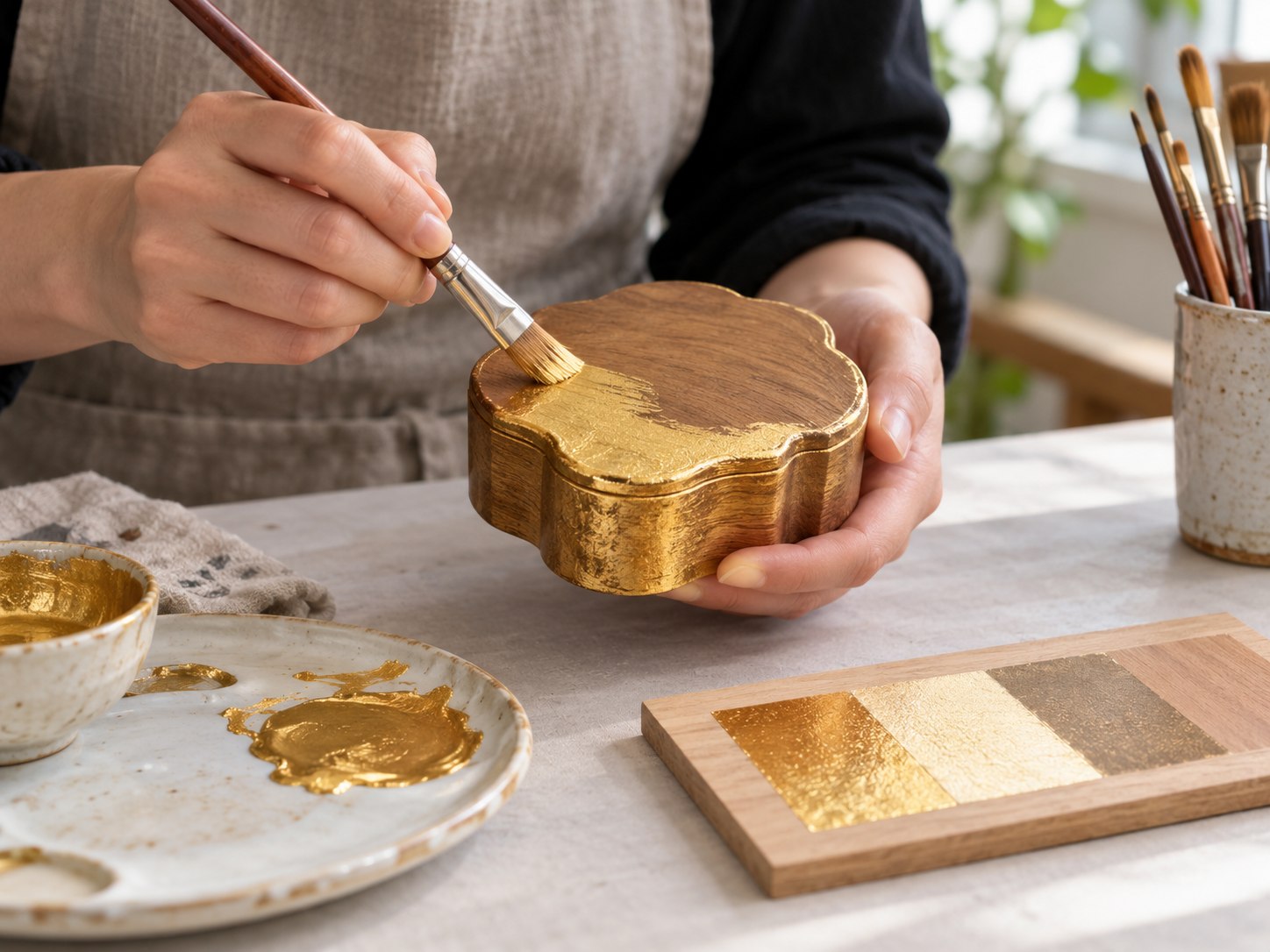
Prepare the actual surface according to its material and the selected product directions. Remove dust or residue with a compatible method; protect nearby surfaces and use the ventilation and personal protection on the labels. Mix only the amount you can apply within the stated working time. Do not add water, glue, or extra binder unless the manufacturer says that adjustment is allowed. Apply with a suitable tool as directed, letting each coat dry for the stated interval. Allow the final coat to dry and cure for the full period stated by its manufacturer before handling, sealing, or placing objects against it.
Troubleshoot common mixing and coverage problems
If dry pigment forms stubborn lumps, pause before adding binder; it may need a wetting or dispersion step. If the blend separates, stir only when the instructions allow, then test another sample. If the finish looks dull, check the binder sheen and recommended application. Streaks can come from uneven application, textured surfaces, or settling. Cracking, flaking, or poor adhesion means the coating is not performing as intended: do not cover it with a thicker layer or assume a topcoat will fix it. Check preparation and compatibility, then consult the maker. If the test still fails, switch to a ready-made metallic paint labeled for the project rather than guessing a new ratio.
Decide whether to add a clear finish
A clear finish is optional. Choose one only after the metallic sample has dried and been evaluated. Check whether the paint or pigment maker recommends a protective coat and whether it is compatible with the binder and surface. Test it on a second sample made with the same mixture; follow its label and check for cloudiness, softening, lifting, streaks, or a change in sheen. If the coating is not identified as compatible, leave the paint uncoated or ask the manufacturer. A decorative craft and an exposed tabletop have different wear conditions.
Get the Fail-Safe Paint Color Playbook (Free PDF)
36 proven colors • 8 ready palettes • trim & sheen guide • printable testing cards.
Metallic paint questions, answered
Can I mix metallic pigment into ordinary paint? Only if the pigment maker and paint or medium maker say the products are compatible. Test a small sample first.
What creates the reflective look? Metallic effect products can use mica or other treated particles, but ingredients and intended use vary. A shimmering powder is not automatically compatible with every binder.
How much pigment should I add? There is no single amount for every metallic pigment. Use the ratio or starting range supplied for the exact product; do not transfer a number from another brand’s instructions.
Can I use a custom mixture on a wall or furniture? Check the label for the surface and conditions. Test on the same substrate before committing.
How long should it dry? Follow the product’s stated drying and curing times, which vary by binder, coat thickness, room conditions, and surface. Wait for the labeled cure period before sealing or heavy use.