
17 Dog Crate Furniture Ideas That Fit Your Home
A dog crate can eat up the best corner of a room, especially when the door swings into the path between the sofa and the kitchen. Before shopping for a prettier enclosure, think about where the dog settles comfortably, where you can reach the latch, and where you can slide out the tray. A design that makes all three easy will feel more at home than an expensive cabinet shoehorned into the wrong spot.
These dog crate furniture ideas range from end tables to built-ins. Start with a properly sized, ventilated crate your dog already accepts. Check the internal dimensions against your dog’s ability to stand naturally, turn around, and lie comfortably, then compare the outside dimensions with the room. Follow the manufacturer’s instructions and introduce a new setup gradually. See the Humane Society’s crate-training guidance.
Get the Fail-Safe Paint Color Playbook (Free PDF)
36 proven colors • 8 ready palettes • trim & sheen guide • printable testing cards.
1. Put an oak crate end table beside the sofa
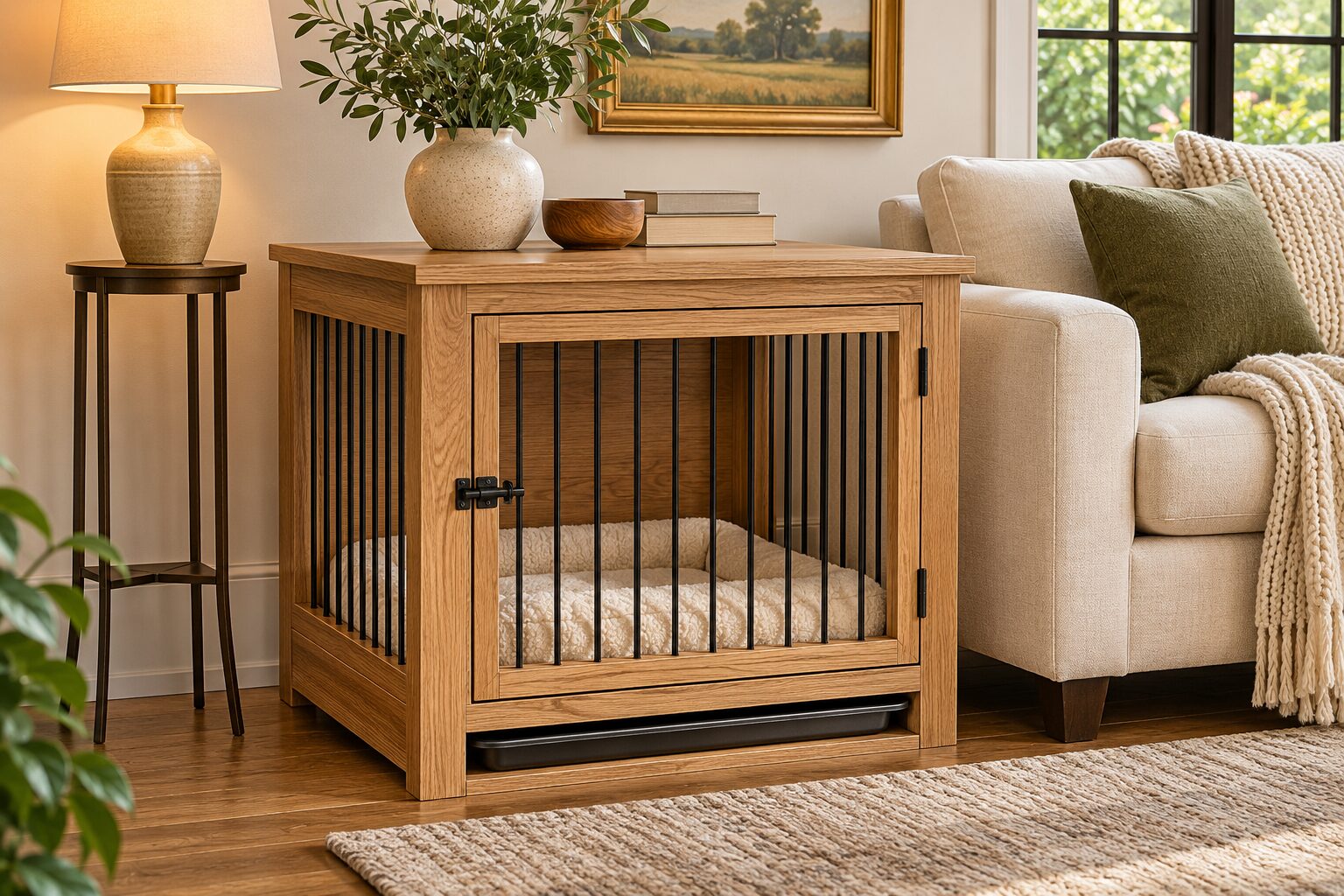
An end-table crate works where the sofa ends against an open stretch of wall and you already plan to use that spot for a lamp. Look for a door that faces the room and clears the sofa arm. Natural oak can pick up the wood from a coffee table or picture frame. Cream upholstery and matte black bars make the wood stand out.
Mock up the footprint with painter’s tape and put a rectangle of cardboard where the open door will sit. Walk past it carrying a laundry basket, then check if you can reach the tray. If the table height would make the enclosure too short, keep the larger crate and move the lamp to a wall fixture or a table across the room.
2. Give one end of a walnut sideboard to the crate
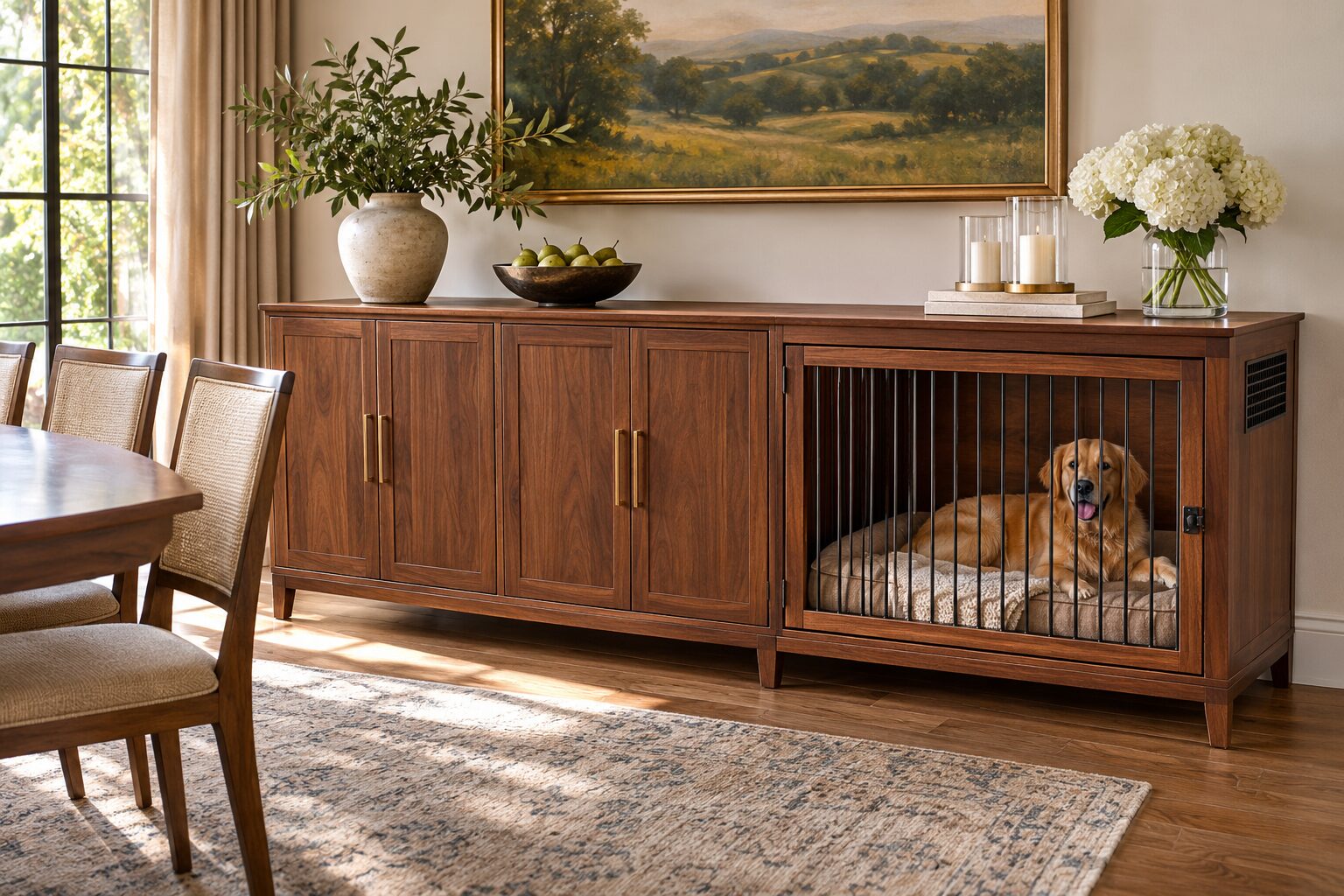
A long sideboard can organize an awkward dining-room wall. Set closed storage for linens at one end and use an appropriately sized, independently ventilated crate at the other. The halves can share walnut tones, aligned feet, and the same top line. Keep serving dishes and drinks on the storage half during meals.
Pull the nearest dining chair out before deciding which end gets the crate. If the chair traps the open door, swap the two halves or choose another wall. Measure the clearance needed to remove the tray all the way, especially if the table is fixed or the crate sits against a corner.
3. Pair a low crate with a tall mudroom cabinet
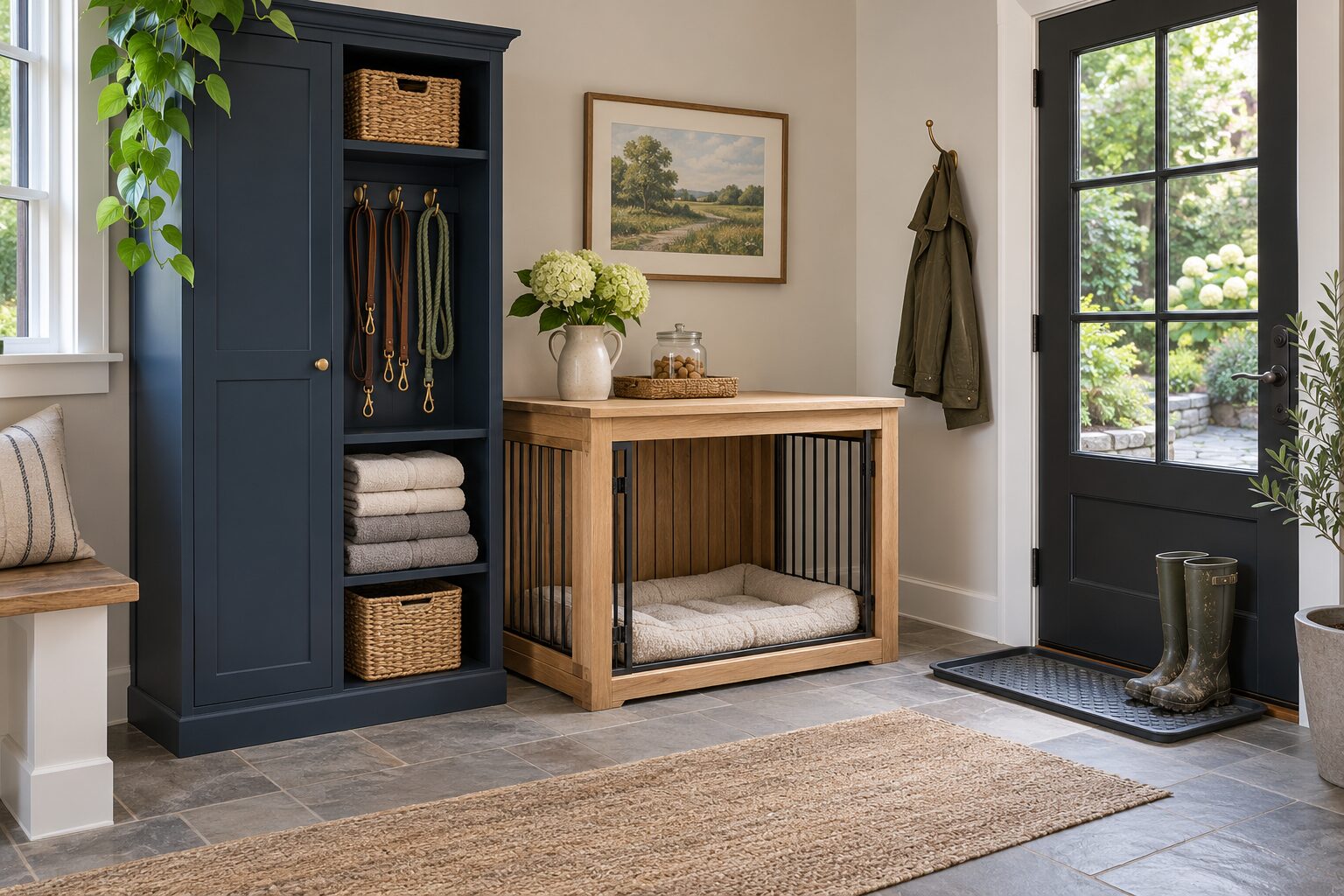
A tall cabinet can hold leads and towels while a separate low crate sits next to it in a quieter part of the mudroom. Use a dark cabinet and a lighter crate to distinguish the two. A drip mat near the exterior door gives muddy boots their own landing spot away from the crate.
Open the outside door, then imagine a person bending to untie shoes while someone else passes. The crate door should clear both movements. Move the setup if arrivals make the spot noisy or the dog avoids it. These narrow entryway ideas can help you plan a clearer route.
4. Use a painted cabinet beside a freestanding crate
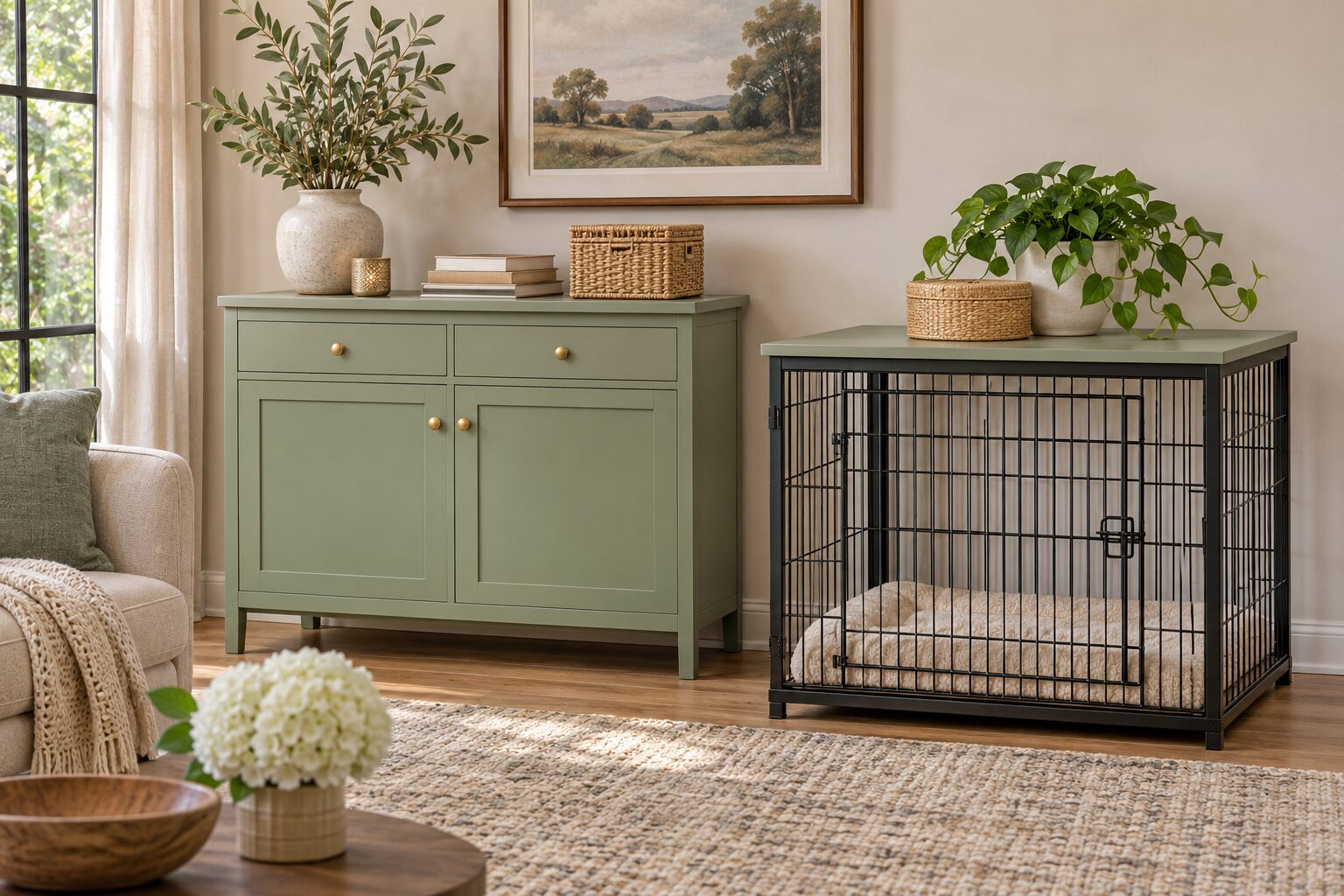
Choose a low cabinet that sits near the crate’s top line, then repeat one detail, such as black pulls or a muted green exterior finish. Give the crate its recommended ventilation clearances. This arrangement is easy to adjust when you change rooms or replace furniture.
Separate pieces also let you clean the wall or carry the crate away independently. Look closely at the base before buying. A projecting plinth can force the crate several inches out from the wall. Use a straightedge or a piece of cardboard to preview how the fronts of both pieces would line up and how much room you would have to walk past.
5. Anchor a crate console behind a floating sofa
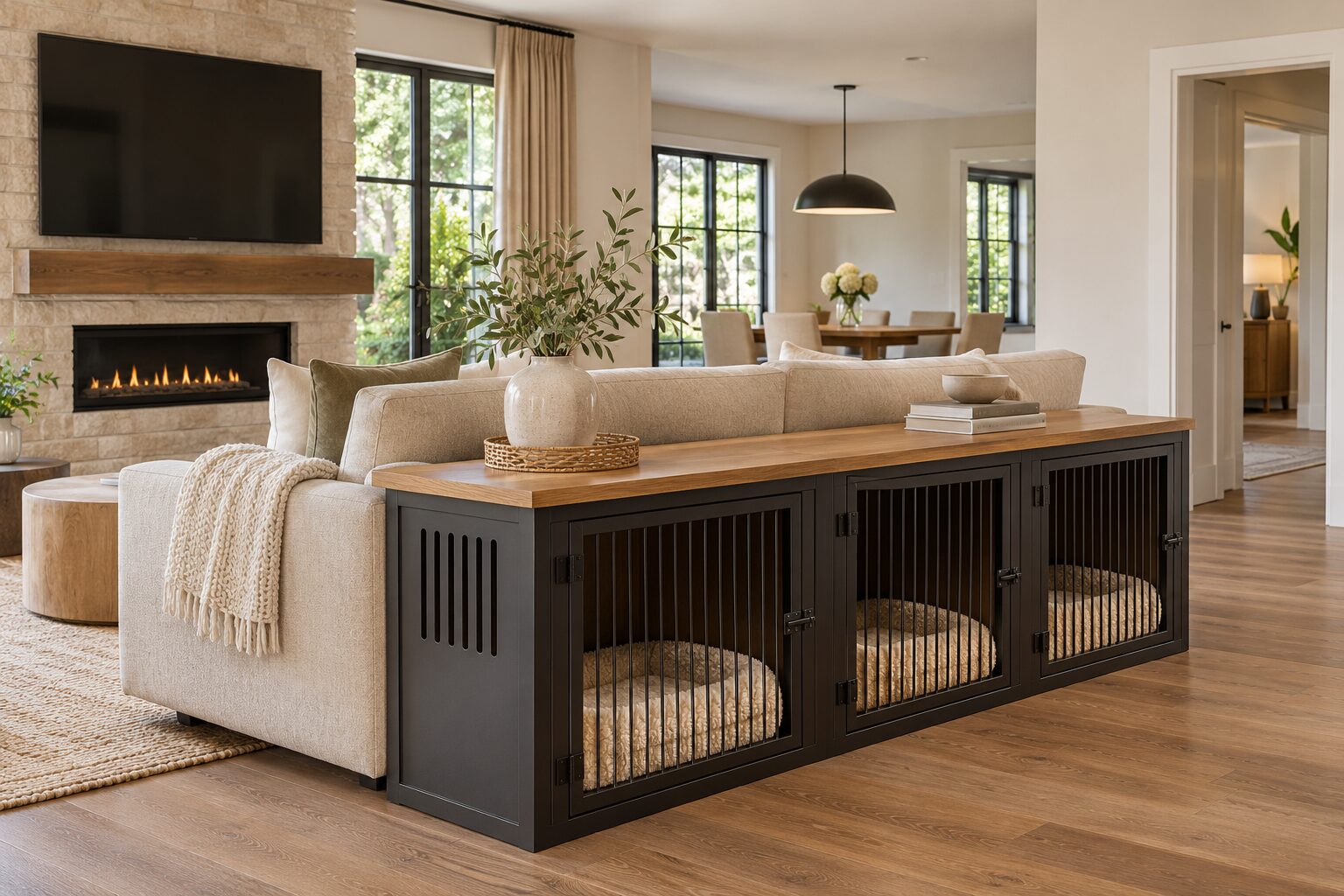
If a sofa divides an open-plan space, a purpose-built crate console behind it can connect the seating area to the rest of the room. A wood top and a shallow tray for keys can soften the view from the entry. Position the entrance toward the quietest clear route. Verify clearances so that the sofa doesn’t obstruct ventilation or access.
Stand at the entry and look toward the sofa. If the console looks bulky, try a light finish and keep the top uncluttered. Keep the crate’s height appropriate for your dog even if it means changing the layout. Walk the route to the kitchen with the crate door open before settling on this idea.
6. Fit a crate into a dedicated alcove
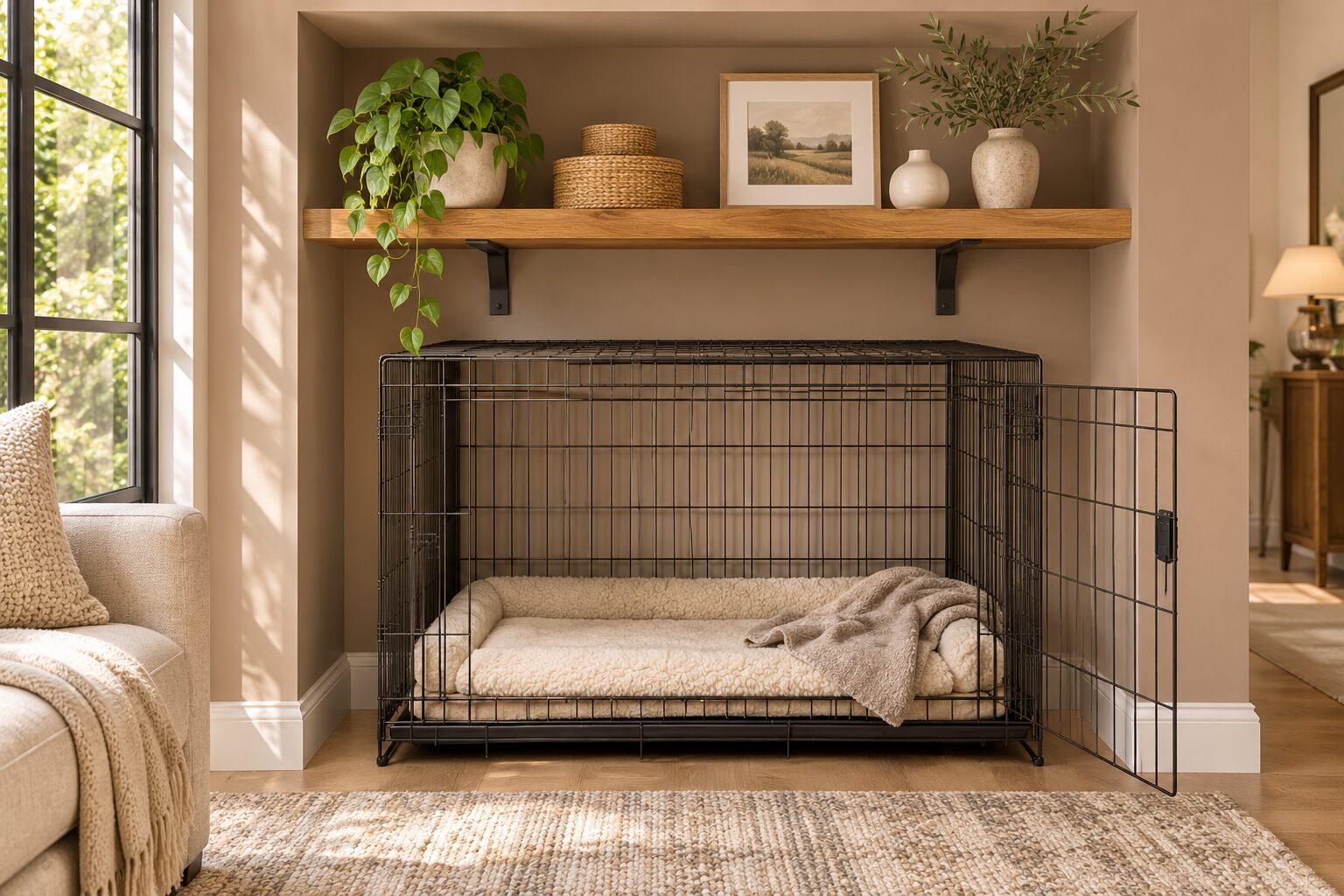
An unused alcove can frame a freestanding crate and make it look built in. Measure at the baseboard, midway up, and near the top. Older walls can taper enough that a crate fits the front but binds farther back. Include trim, door hardware, and the feet in the measurements.
Paint the back wall a contrasting color if you want the nook to look intentional. A clay or mushroom tone can tie it to a nearby rug. Make sure you can pull the crate forward without moving heavy furniture. An independently supported shelf may work above the alcove if it preserves the clearances specified by the crate maker.
7. Coordinate a bedroom crate with the dresser
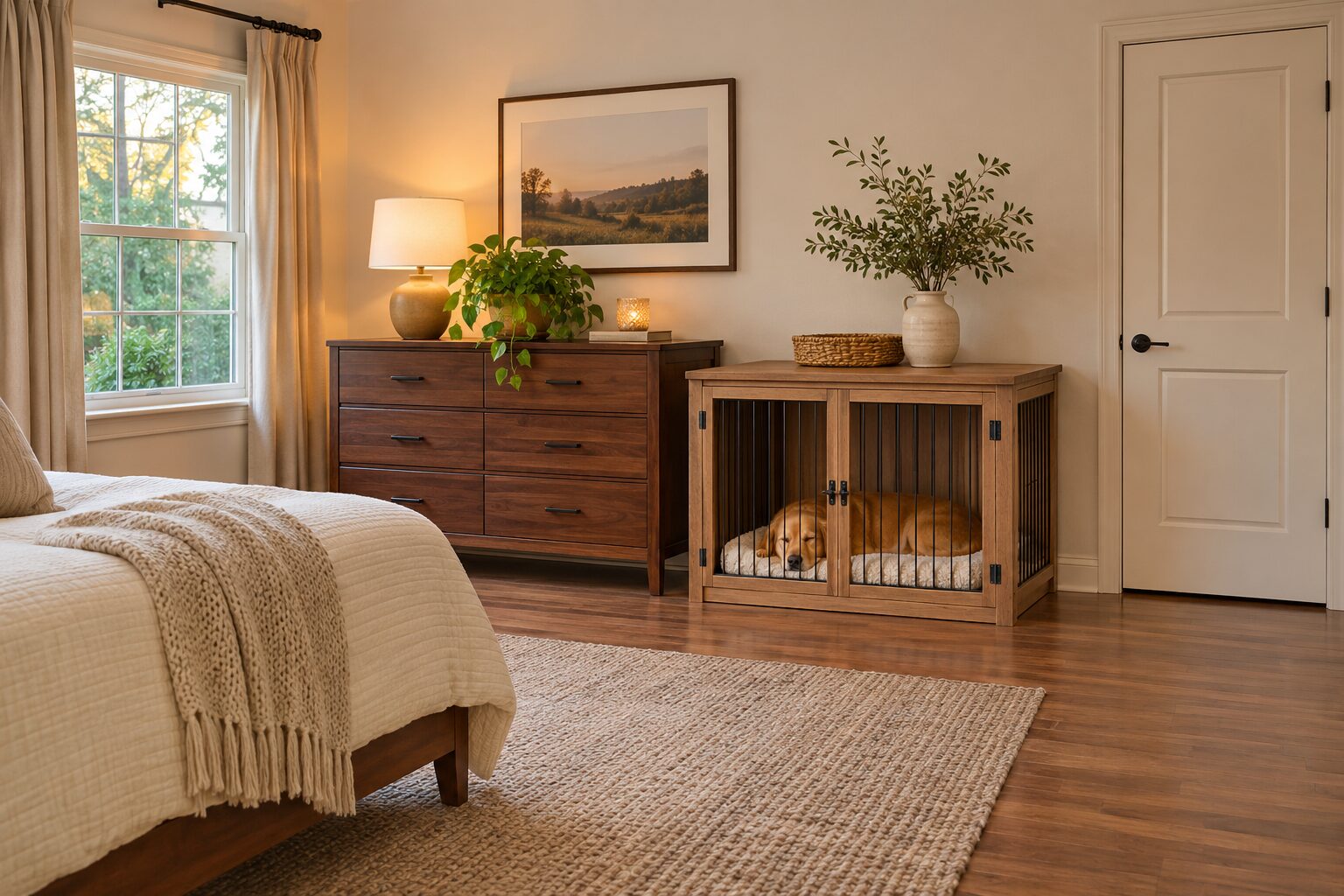
In a bedroom, put the crate where its door clears the path to the bed and bathroom. A natural-wood finish can connect to a dresser, while a painted finish can pick up the wall color. See these bedroom paint colors for ways to work around strong furniture undertones.
Walk the room with the overhead lights off and the bedside lamp on. Make sure the crate’s feet and corners remain visible. Open the dresser drawers and see where you can stand. Keep curtains, blind cords, and bedding away from the crate. If you have to sidestep around the bed, try the perpendicular wall.
8. Give a home office crate its own side of the desk
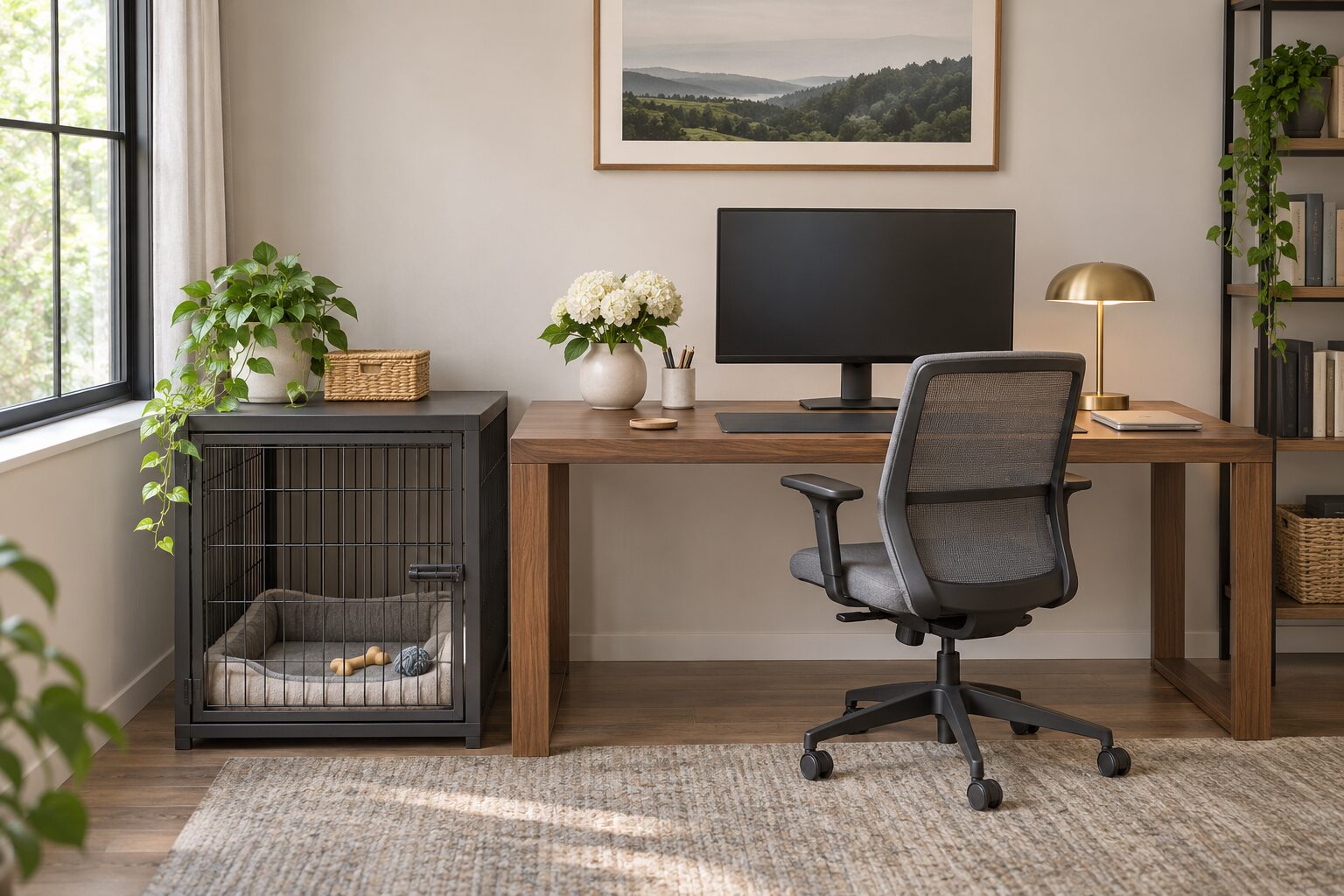
A freestanding crate beside the desk gives your dog a place to rest during the workday. A dark desk leg and a dark crate frame can tie the pieces together. Keep chargers and the power strip out of reach and make sure the desk chair can roll freely without sweeping across the crate entrance.
Compare where the chair sits when you write, take calls, and roll back to stand. Keep the crate on the quieter side of those movements, away from the printer and door traffic. Leave space between the two pieces to reroute cables or change desk chairs later without having to move the resting spot.
9. Use a two-door crate to make a corner more flexible
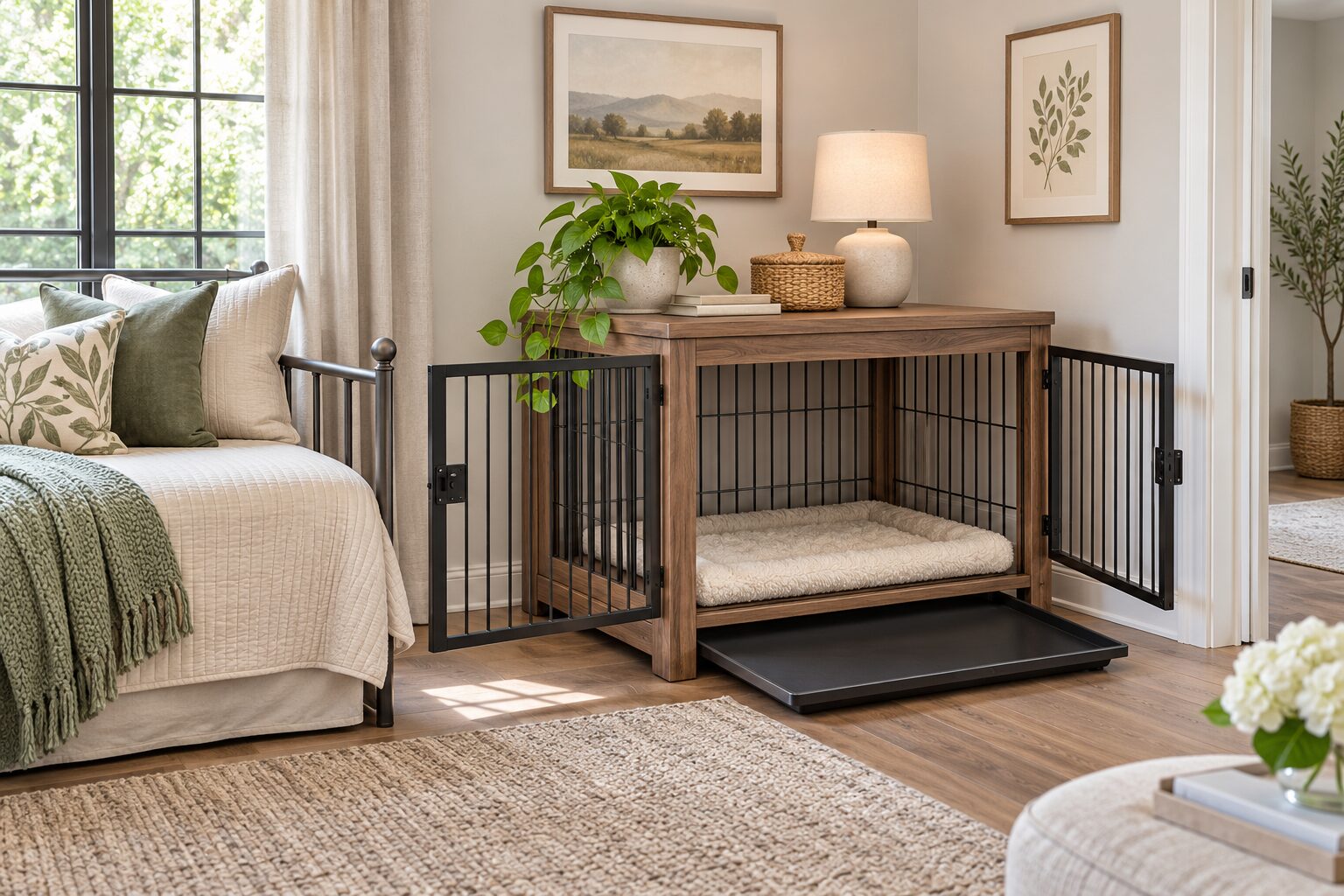
A crate with two manufacturer-designed entrances can be useful in a multipurpose room. Choose the opening that works with the furniture and secure the other door according to the instructions. This is handy in a guest room where a sleeper sofa or daybed takes up more floor space on some nights.
Draw an everyday floor plan and another with the spare bed fully deployed. Mark the sweep of both doors and the direction the tray comes out. A corner that works in one arrangement may trap the latch or tray in the other. Give the dog the calmer approach and keep spare linens off that route.
10. Style an airy metal crate with a manufacturer-approved top
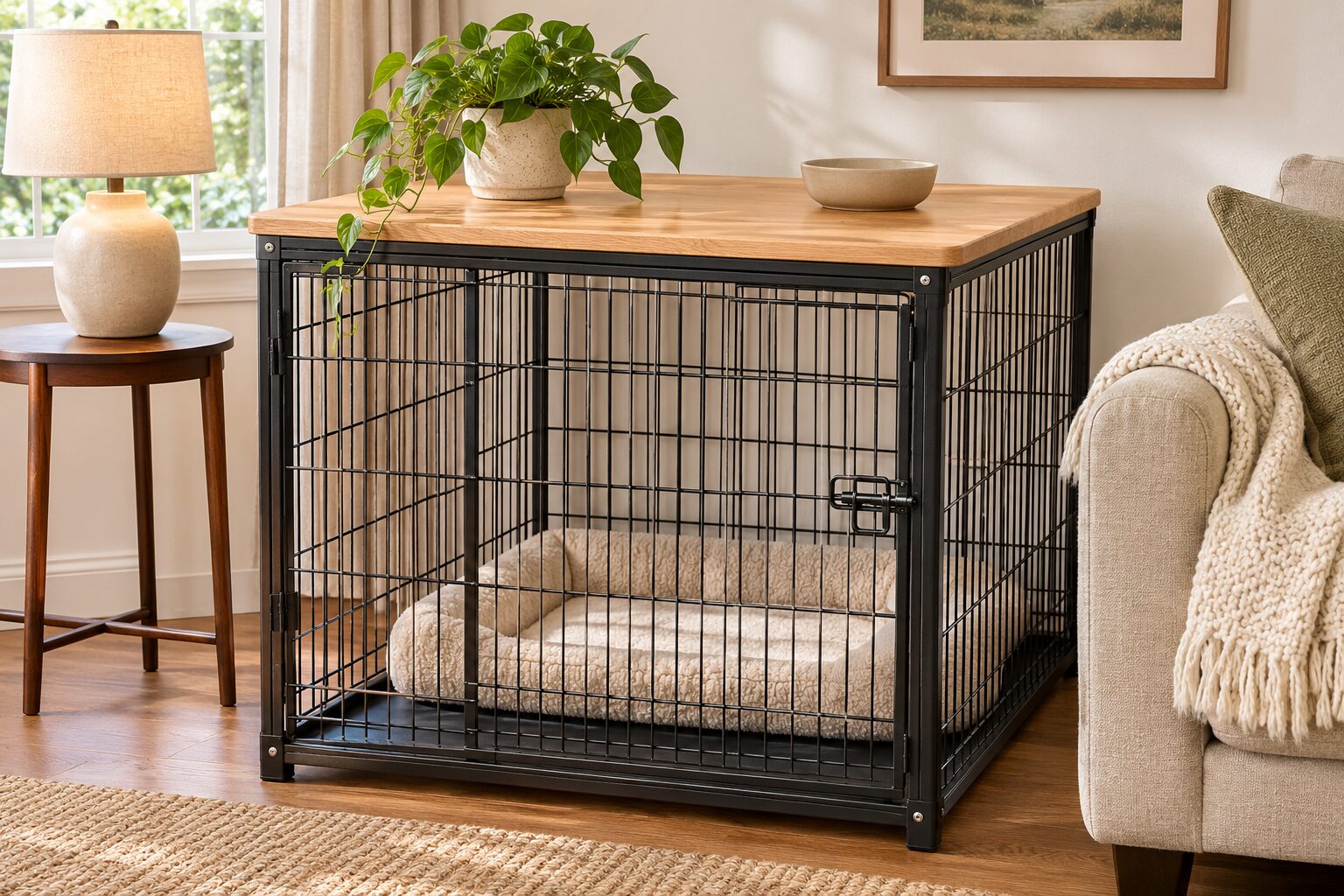
A top that is approved for your exact crate model can make a metal frame look at home beside a sofa. Choose a wood tone that works with the chair legs and keep what you place on top within the rated limits. Leave latches and air openings clear. A separate side table can carry the lamp if there is no approved top.
A straight rectangular edge suits modern rooms, while an eased edge can echo traditional furniture. Keep fabrics away from the sides so they cannot block air or be pulled in. Before styling the top, operate the latch and pull the tray out again. Anything that complicates that daily routine should move to another surface.
11. Match a crate to a reading corner
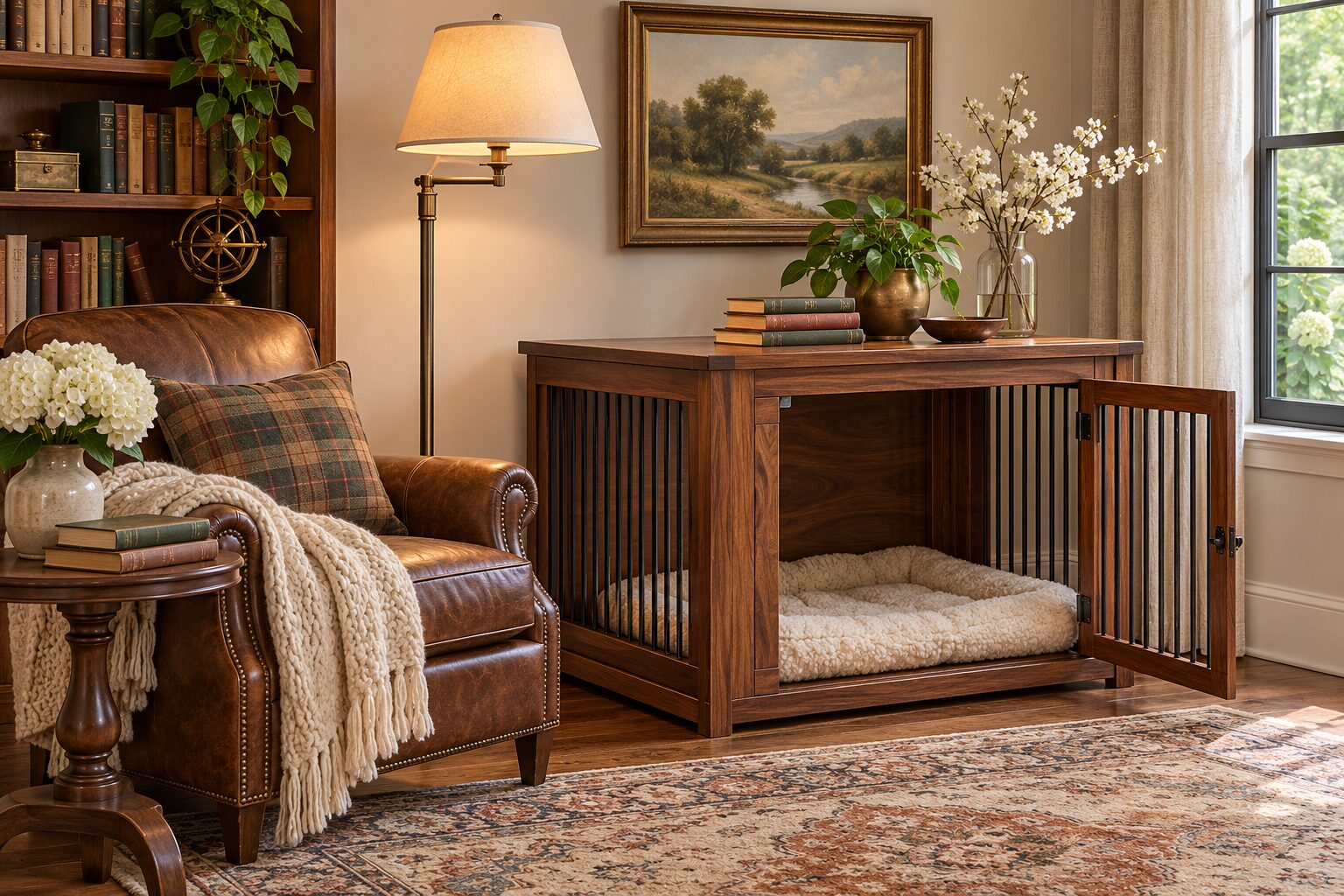
Try a crate alongside a reading chair when an uninterrupted wall extends beyond the chair arm. Walnut works with warm leather and a soft painted finish can sit beside a patterned chair. Leave space for a lamp on the opposite side, with the cord routed away from the enclosure.
See how much room the chair takes when a person gets up. Swivels and rockers need extra space. Put the dog’s entrance at the quieter end, where a person reaching for a book will seldom step across it. If the corner gets sun, check it at different hours before choosing it as a resting place.
12. Build the room palette around a charcoal frame
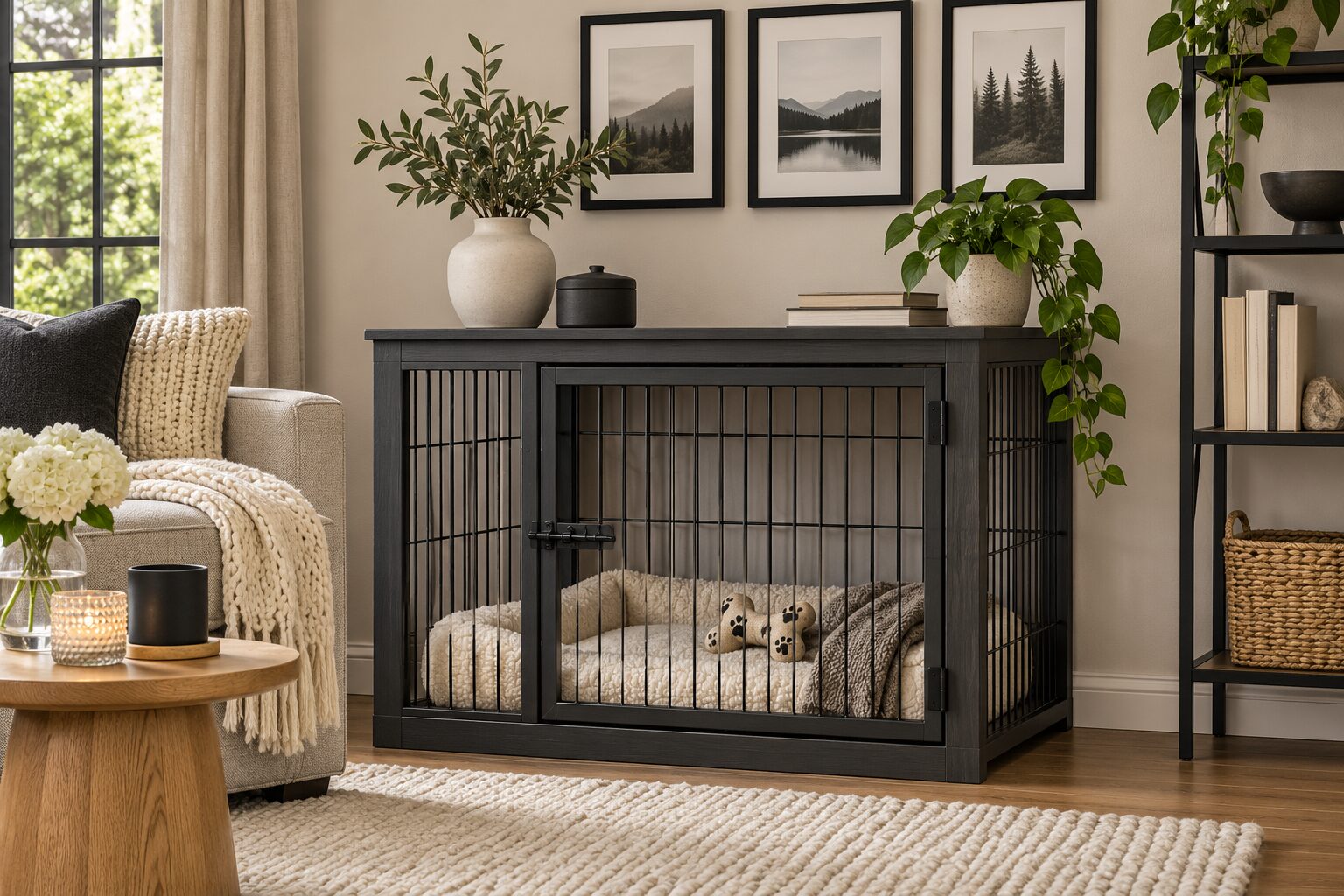
A charcoal crate can work alongside iron shelving, dark picture frames, or black window trim. Repeat the color in one or two places, then bring warmth back with an oak table or a textured cream rug. Keep the silhouette visible from across the room.
Test the finish under daylight and your usual evening lamps. A frame that looks gray at noon can read as black after dark. If the room has dark walls or a narrow walkway, give its edges enough contrast to stay visible. Hold a sample against the floor and wall before committing to a large piece.
13. Set a crate on one end of a living-room storage wall
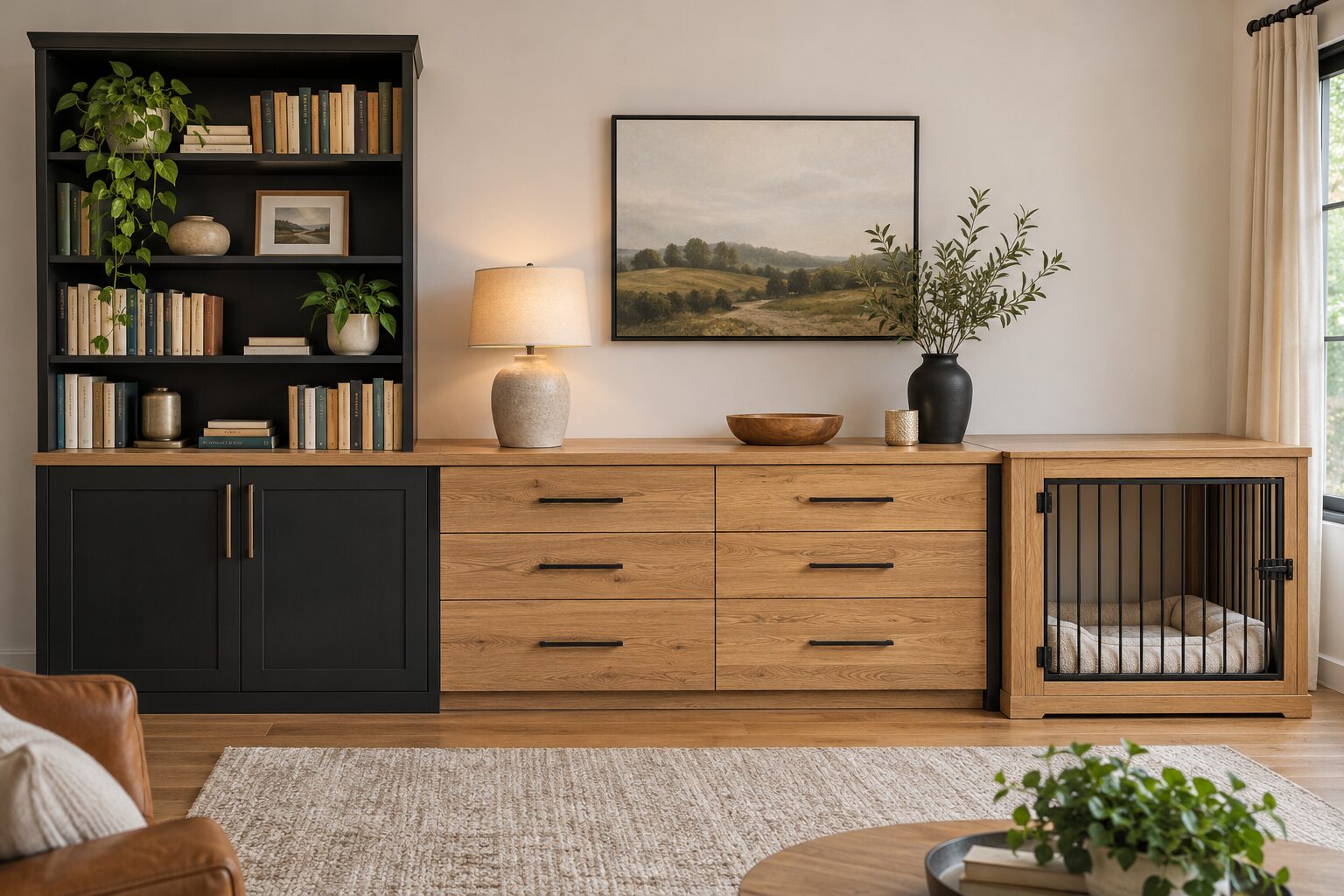
Reserve one end of a storage wall for a standalone crate and the rest for a bookcase or closed cabinets. Repeat the wood finish or use similar hardware to unify the wall. Keep high-use shelves and drawers away from the opening so people can use them while the dog rests.
Tape out the full furniture run. A larger dog may require a shorter bookcase or a narrower media cabinet. Start with the crate’s required dimensions and fit the shelving into the remaining space. Anchor tall casework independently as its manufacturer directs and keep loose objects away from the edge near the dog’s space.
14. Try an open-front console as a voluntary bed
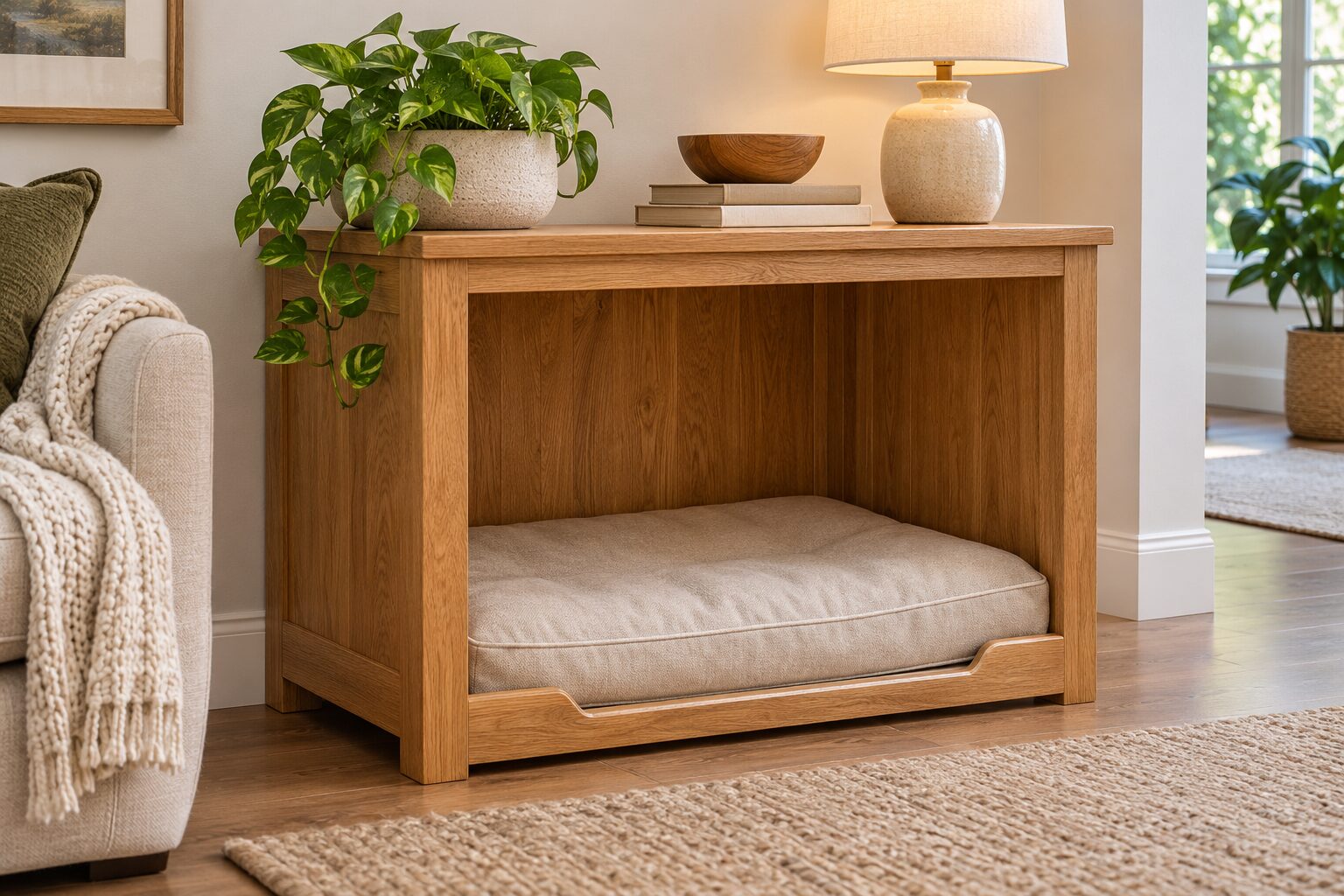
A dog that needs a place to nap in the living room may be happy with an open-front bed console. A washable mat and finished outer frame give it a furniture look. Keep the threshold low enough for easy entry and leave the way out clear. Use a suitable crate elsewhere if you need an enclosure.
An oak surround suits airy rooms and a painted one can sit beside paneled walls. Make sure you can wipe the inside and remove the entire mat. A reused piece of furniture should be stable and free of exposed hardware. Stand in front with the bedding in your hands and check how you will take it out for cleaning.
15. Choose a freestanding crate cabinet for a rental
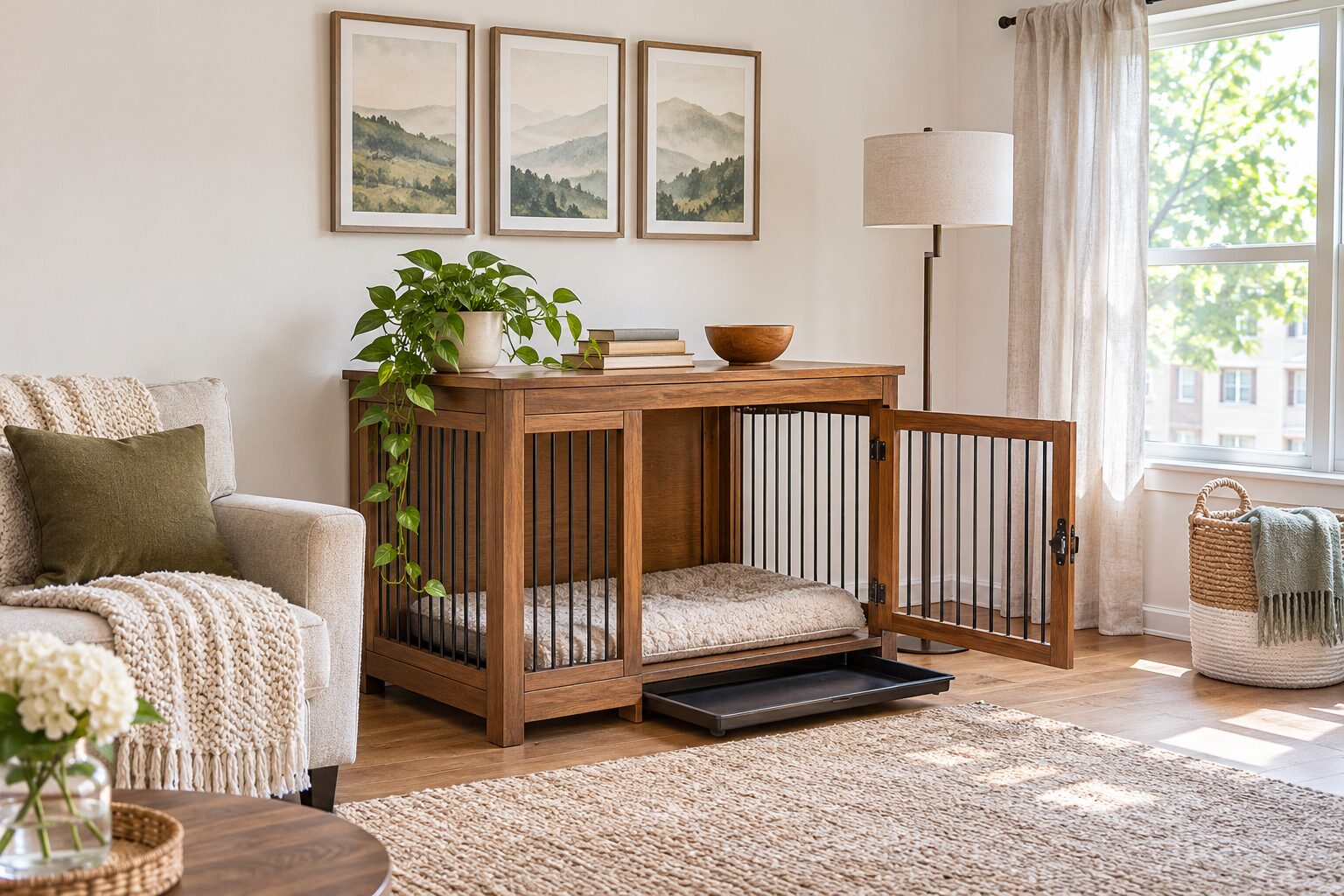
A self-contained crate cabinet can give a rental the look of fitted furniture without needing custom millwork. A standard rectangle is easier to reuse in a different room than a large corner unit. Check whether you can operate the door and slide out the tray without taking off the top.
A medium wood tone can warm a neutral backdrop. See MightyPaint’s neutral paint colors for rentals if you have permission to paint. Before delivery, measure the building entrance and stair turns. Check the manufacturer’s instructions if you need to take the crate apart to move it.
16. Leave a quiet gap beside kitchen cabinetry
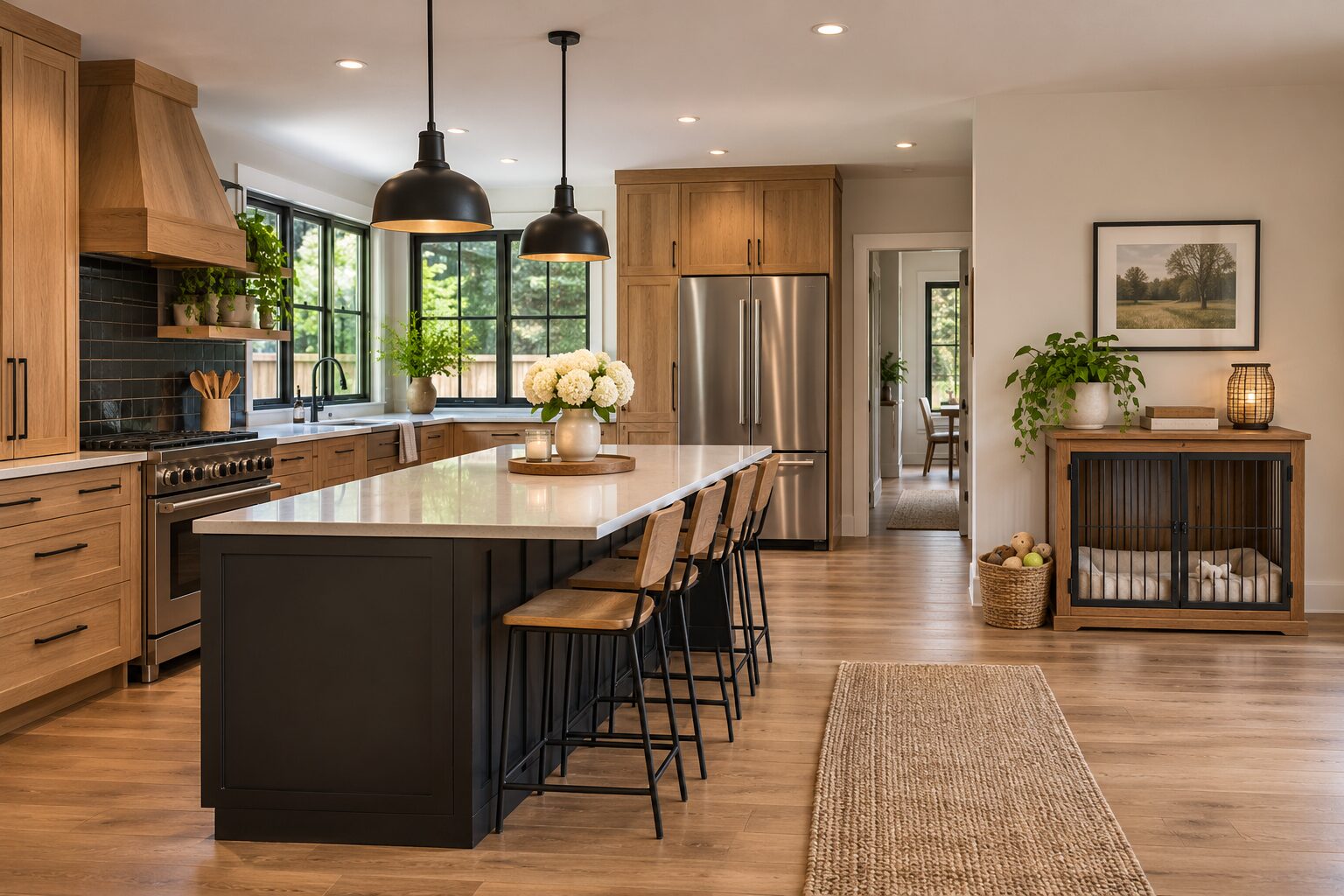
In a large kitchen, position a separate crate where family members can see the dog without repeatedly crossing its entrance. Keep the enclosure away from ovens, vents, and the working side of an island. Match a cabinet finish or pick a wood tone related to the kitchen table.
Open the refrigerator, dishwasher, and nearest cabinet doors in turn. Walk from the fridge to the sink and from the table to the room exit. If the dog’s entrance falls along those routes, test another wall. Use the space between meal prep and cleanup as your real-world guide to how busy the spot gets.
17. Use warm wood and black metal to connect two styles
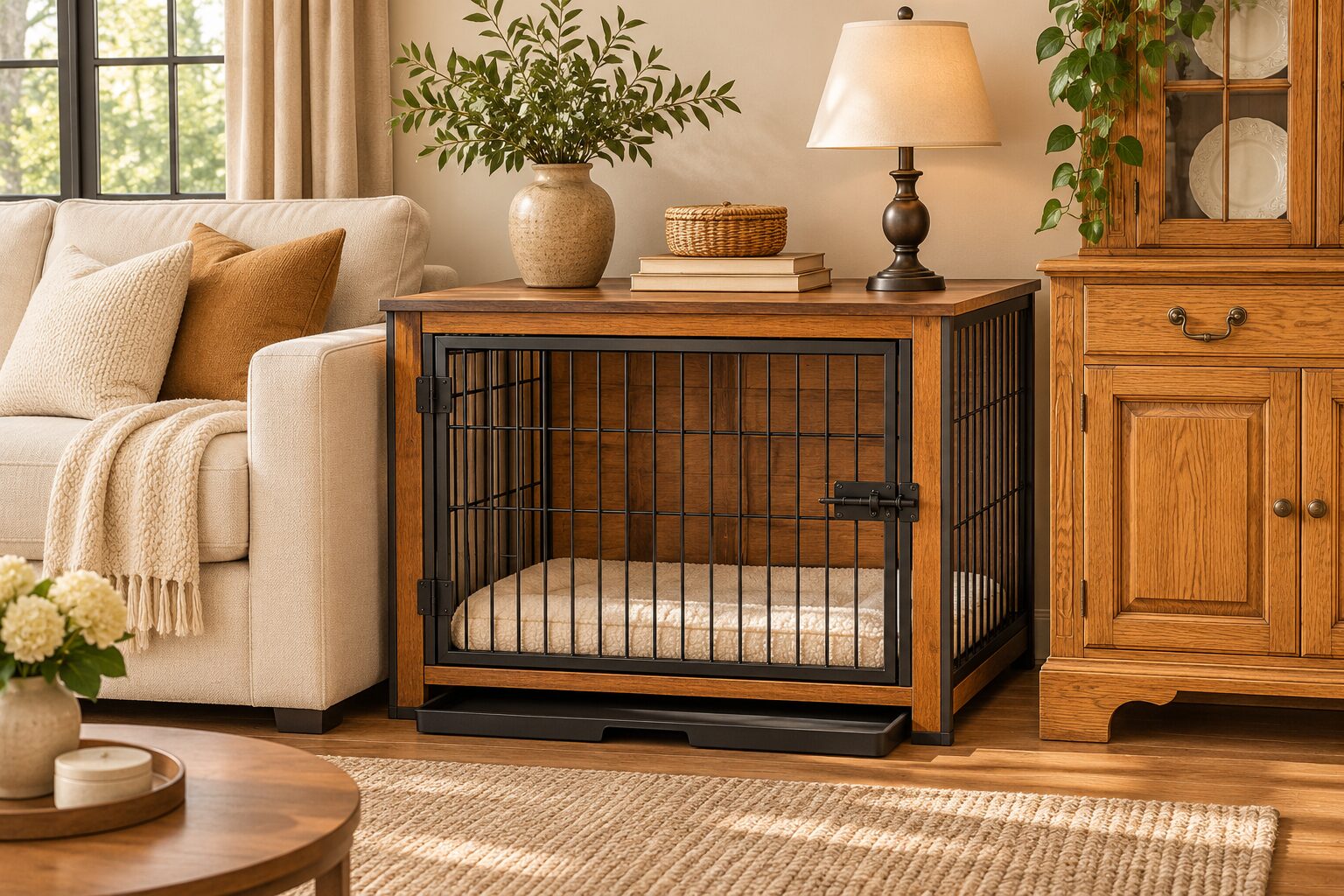
A ventilated crate with a wood outer frame and black metal panels can link a modern sofa to traditional furniture. Choose wood based on the nearest piece. If that is honey oak, check a reddish walnut sample beside it before committing. The metal can repeat in a lamp or curtain rod across the room.
Make a swatch board with the wall, floor, and furniture colors. Take photos of the finish options against the floor in typical daylight and evening light. Keep the top spare and leave a clear line to the door and tray. Let the existing furniture do most of the styling so the crate fits the room without bringing in more accessories.
How to check the fit before buying
Record separate interior and exterior measurements. The dog needs enough interior space to stand naturally, turn around, and lie comfortably. Then use the exterior size to check the room. Include the largest projection from the latch, knobs, feet, and hinges. Ask for the maximum door swing and which way the tray comes out. Check those details again if you change sizes within the same product range.
Leave a taped footprint on the floor through an ordinary morning and evening. Bring in groceries, pull out a chair, or unfold the guest bed as you usually would. Mark any conflict with a familiar route. For a built-in, settle service access and ventilation before commissioning any work. Check that you can get to anything you need to clean without dismantling the surround.
Get the Fail-Safe Paint Color Playbook (Free PDF)
36 proven colors • 8 ready palettes • trim & sheen guide • printable testing cards.
Measure the delivery route as well as the final location. A crate that fits beside the sofa can still be difficult to get through a stair landing or around a sharp hallway turn. Ask whether the manufacturer ships it flat or assembled and whether you can remove the door for delivery. If you expect to move the unit between rooms, check its weight and whether it has a clear place to grip from the outside.
If you are comparing two layouts, give each one a day with the same taped footprint. One may look better from the entry while the other gives you a cleaner route to pull out the tray. Try cleaning around the corners with your usual vacuum or mop during the test. Also check whether a nearby floor register, outlet, or access panel needs to stay reachable. Those details can decide between two otherwise similar furniture pieces.
Choose a finish you can live with
Ask the manufacturer what to use on the tray and bars, then check cleaning instructions for the wood or painted surround separately. Removable components make it easier to wipe corners and dry them without soaking the surrounding furniture. Keep fabric away unless your setup makes it appropriate for both the model and your dog.
A furniture-style crate earns its place when the dog settles in it comfortably and the room stays easy to use. Settle the size, door position, cleaning access, and location before choosing a color. A finish that connects to one or two pieces you already own can do more for the room than matching every piece of furniture.
Planning space for more than one kind of pet? Explore our cat wall shelf ideas and hidden litter box ideas for more pet-friendly room layouts.