
How to Paint an Ocean Sunset: A Step-by-Step Guide for Artists
Witnessing the awe-inspiring beauty of an ocean sunset is a profoundly evocative experience that transcends mere visual appreciation; it captures a mood, a moment, and a powerful sense of tranquility. The vibrant, shifting hues—the fiery oranges, the delicate pinks, the deep violets—that dance across the vast expanse of the sky, mirrored perfectly in the serene waters, are moments that demand to be captured and preserved.
For the aspiring artist, translating this natural spectacle onto a canvas requires more than just a palette of warm colors; it demands a deep understanding of color theory, atmospheric physics, and advanced blending techniques. This comprehensive guide will walk you through the entire artistic process, transforming the abstract concept of a sunset into a concrete, manageable, and breathtaking masterpiece, regardless of your current skill level.
Get the Fail-Safe Paint Color Playbook (Free PDF)
36 proven colors • 8 ready palettes • trim & sheen guide • printable testing cards.
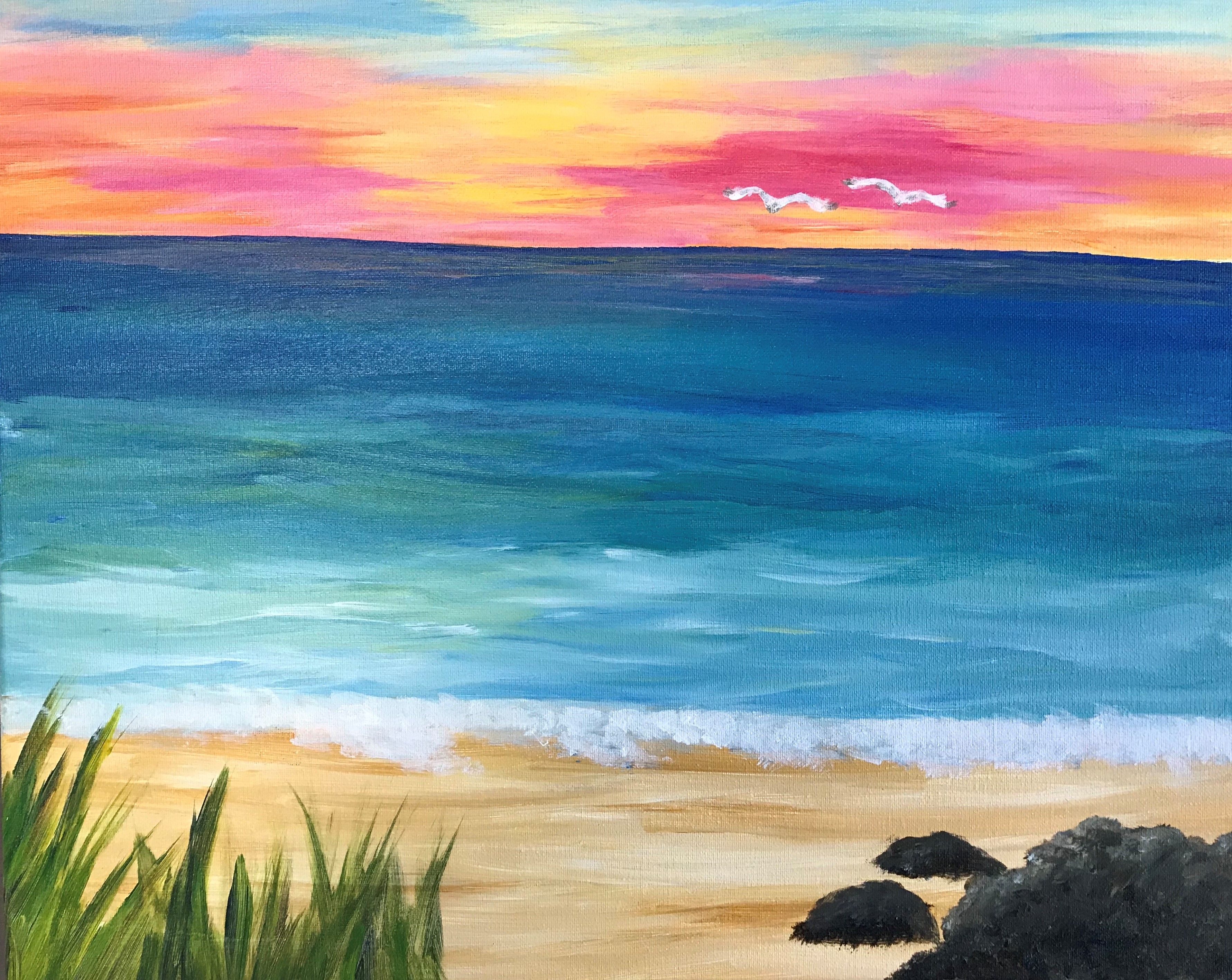
Quick answer: To Paint an Ocean Sunset, start with the safest first step for the material involved, test a small area when needed, and follow the process in thin, controlled stages. Use proper ventilation and protective gear when chemicals, sanding, spraying, or solvents are involved.
Materials and Tools: Building Your Artistic Arsenal
Before the first brushstroke touches the canvas, gathering the proper materials is paramount. The choice of paint medium and brush dictates the entire feel and texture of your final piece. For a sunset, you need tools that excel at smooth gradients and soft blending.
Selecting the Right Paint Medium
The paint medium you choose will affect everything from drying time to blending capability. When painting a sunset, which relies heavily on smooth transitions, this choice is critical.
- Acrylic Paints: These are excellent for beginners and for achieving vibrant, highly saturated colors quickly. They dry fast, which can be good for layering, but fast drying can also make seamless blending (like the soft glow of a sunset) challenging. Using a blending medium or retarder is highly recommended to extend drying time.
- Oil Paints: Oils are unparalleled for blending. Their slow drying time allows artists to blend colors seamlessly for hours, mimicking the natural, gradual transition of light in the atmosphere. This is ideal for achieving the soft, luminous quality of a sunset glow. However, oils require careful handling and proper ventilation.
- Watercolor: While beautiful for soft, washed-out, misty sunsets, watercolors are limited in their ability to handle the deep, saturated contrast (like deep violet or fiery orange) that defines a dramatic sunset. They are best used for highly atmospheric, hazy coastal scenes.
For maximum blending and luminosity, many professional artists working on sunsets prefer oils or high-quality acrylics mixed with a blending medium.
Choosing the Appropriate Brushes
Different brushes are required for different tasks. You cannot use a single brush for the entire painting.
- Filbert Brushes (Flat/Round Mix): These are the workhorses for blending and laying down broad washes of color, perfect for the main sky gradients.
- Blending Brushes (Soft, Clean): These are critical for techniques like *sfumato*—the delicate blending of edges to create a hazy, atmospheric look. They should be kept clean and slightly damp.
- Round Brushes (Small): Used for detailed work, such as painting the edges of clouds, small foreground elements (like distant boats), or the intense glow around the sun.
- Palette Knives: These are not just for mixing; they are excellent for adding thick impasto texture to foreground elements (like rocky shores) or for scraping out dry, dramatic cloud edges.
Additional Materials
- Gesso/Primer: A quality primer is essential to ensure the paint adheres evenly and prevents the canvas from absorbing paint too quickly, which can muddy your colors.
- Palette: Use a non-porous palette (like glass or plastic) for easy cleaning.
- Mediums: Keep blending mediums (e.g., linseed oil for oils, or acrylic retarder) on hand to control drying time.
- Reference Materials: High-quality reference photographs or, ideally, observing a real sunset, is the single most important tool.
Preparation and Planning: Setting the Scene
A successful painting starts long before the paint goes on the canvas. Preparation involves priming the surface and, crucially, establishing a strong compositional framework. This planning stage saves time and prevents frustration later.
| Paint Type | Features |
|---|---|
| Acrylic | Vibrant colors, quick-drying, versatile |
| Oil | Blendable, textured finish, slow drying |
| Watercolor | Transparent, ethereal effects, delicate |
Priming the Canvas
Always prime your canvas, regardless of the paint type. Applying a layer of gesso not only seals the material but also provides a uniform surface that accepts paint consistently. After the gesso is dry, lightly sanding with fine-grit sandpaper smooths out any uneven texture, ensuring that your paint can glide effortlessly, allowing for those delicate, smooth gradients characteristic of a sunset.
Sketching and Compositional Balance
Do not start painting until you have a light pencil sketch. This sketch is your blueprint. When planning a seascape, focus on establishing the horizon line and the placement of key visual anchors (the sun, prominent clouds, foreground rocks).
The most powerful tool in composition is the Rule of Thirds. Imagine dividing your canvas into nine equal segments with two horizontal and two vertical lines. Instead of placing the sun or the horizon line directly in the center, position them along these lines or at their intersections. This technique creates immediate visual tension and balance, making the viewer’s eye travel across the canvas naturally.
Furthermore, use Leading Lines. The curve of the shoreline, the path of the water, or the line of the cloud can be used to guide the viewer’s eye directly toward the sunset’s focal point, enhancing the narrative depth of the piece.
Color Theory: Capturing the Sunset’s Palette
A sunset is not just a collection of pretty colors; it is a masterclass in color theory. Understanding how colors interact—especially contrast and value—is what elevates the piece from a simple wash of color to a dramatic, luminous artwork.
| Brush Type | Function |
|---|---|
| Wide and Flat | Broad strokes, blending colors |
| Round | Details, fine lines |
The Power of Complementary Contrast
The most striking element of a sunset is the contrast between warm and cool tones. The primary warm hues are reds, oranges, and yellows. Their perfect complementary contrast is provided by the blues and violets of the deep ocean and the upper atmosphere. By placing these opposing colors near each other (e.g., bright orange glow against deep cobalt blue shadows), you make both colors appear more intense and vibrant, creating a natural ‘pop’ that mimics the intensity of the real sky.
Value, Chroma, and Atmosphere
When painting, you must think in terms of Value (the lightness or darkness of a color) and Chroma (the purity or intensity of the color). A sunset is defined by dramatic shifts in value—from the intense, bright yellow-white glow near the sun to the deep, cool violet in the upper atmosphere.
Crucially, remember Atmospheric Perspective: as objects recede into the distance (like distant mountains or landmasses), they lose contrast, become lighter, and take on a cooler, bluish haze. Applying this principle to the background ensures the scene feels deep and vast, rather than flat.
The Step-by-Step Guide to Painting the Sunset
This process is divided into three main stages: the sky, the water, and the final details. Do not rush any stage; allow time for layers to dry and for the colors to interact.
Phase 1: Painting the Sky and Atmosphere
The sky must be treated as a gradient, not a flat wash. Begin by establishing the brightest point—the horizon. Use the lightest yellows and pale pinks, applying them with broad, soft strokes (wet-on-wet blending). As you move upward, gradually transition the color palette. Introduce oranges, then reds, and finally, the deepest purples and violets at the top, blending these tones smoothly. This gradual darkening creates the illusion of depth and atmospheric density.
For clouds, do not paint them as solid white shapes. Instead, treat them as highly illuminated, voluminous masses. Use small, varied strokes of pale yellow, cream, and light orange, blending the edges softly into the background sky. If you are painting a stormy sunset, use thicker paint (impasto) and dramatic, dark clouds (stratus) contrasted sharply against the bright glow of the sun.
Phase 2: Painting the Ocean and Reflection
The water is a mirror of the sky, but it is not a perfect copy. The water surface absorbs and refracts light, changing the colors and patterns. The reflection must be slightly darker and more saturated than the actual sky, giving it weight and grounding the composition.
The key technique here is the stroke direction. Use long, horizontal, and slightly curved brushstrokes to capture the overall reflection of the sky’s gradient. Where waves break, the strokes should become more dynamic and vertical. These breaking waves should feature high-contrast highlights (bright white or pale yellow) against the deeper, shadow-filled blues and purples of the water troughs. This contrast is what gives the water its sense of movement and energy.
Phase 3: Compositional Refinement and Foreground Details
The final stage brings the scene to life. Focus on the foreground elements—silhouettes, rocks, or a distant boat. These elements are painted in deep, saturated, dark tones (often almost black) because they are viewed against the bright backdrop of the sunset. These dark shapes serve two functions: they provide a powerful contrast point, and they act as visual anchors, guiding the viewer’s eye through the entire painting. When painting these foreground objects, remember that they are seen through the atmosphere, so they should follow the principles of atmospheric perspective, appearing slightly muted compared to the central glow.
Common Artistic Mistakes to Avoid
Even professional artists struggle with certain elements of a sunset. Being aware of these common pitfalls can save hours of effort and frustration.
- The “Muddy Color” Mistake: This is perhaps the most common error. It happens when colors are mixed too heavily or when the paint is applied over an area that has not dried completely. Solution: Always allow sufficient drying time between major color shifts. When colors mix, try to mix them on the palette, not on the canvas, to maintain the intended saturation and value.
- Flat Perspective: Treating the entire scene as having the same light and saturation level makes the piece look like a photograph, losing the depth of painting. Solution: Constantly think about distance. The foreground should be the darkest and most detailed; the background should be the lightest and most hazy (atmospheric perspective).
- Ignoring the Horizon Line: A poorly placed or uneven horizon line will ruin the entire composition. Solution: Use a straight edge or tape to establish the line precisely, and use it as a constant reference point when painting the reflection.
- Over-Detailing: While detail is important, painting every leaf or every ripple can overwhelm the viewer. Solution: Focus your highest level of detail on one or two key areas (like the sun’s immediate glow or a prominent foreground object) and let the rest of the scene breathe with broader, softer strokes.
Safety and Practical Notes
When working with paint, especially oils and specialized mediums, safety and preparation are non-negotiable. Always prioritize your well-being and the longevity of your materials.
Get the Fail-Safe Paint Color Playbook (Free PDF)
36 proven colors • 8 ready palettes • trim & sheen guide • printable testing cards.
- Ventilation: When using solvents (like turpentine or mineral spirits) or certain mediums, always work in a well-ventilated area. Proper airflow is crucial to prevent inhaling fumes.
- Protective Gear: Wear appropriate protective gear, including gloves and a dust mask, especially when handling raw pigments, sanding, or cleaning brushes with chemicals.
- Cleanup: Clean your brushes immediately after use. For oils, use solvent; for acrylics, use soap and water. Never let paint dry in your brushes.
- Drying Time: Always follow the manufacturer’s instructions for drying times, mixing ratios, and the application of varnish. Patience is not just a creative virtue; it is a practical necessity for successful layering.
Frequently Asked Questions
What is the best paint medium for blending sunset colors?
While both mediums have merits, oil paints are traditionally preferred for sunsets because their slow drying time allows artists to blend colors seamlessly for extended periods, mimicking the natural, gradual transition of light. If you prefer faster work or need higher saturation, use acrylics mixed with a dedicated blending medium or retarder to extend the drying time and maintain that soft, glowing gradient.
How do I create the illusion of deep atmospheric depth?
To achieve depth, you must master “Atmospheric Perspective.” Never paint distant elements (like far shores or mountains) with the same intensity or contrast as the foreground. As objects recede, they must appear lighter, cooler, and slightly hazier (more blue/violet) because the atmosphere naturally diffuses the light. Keep the foreground the darkest and most detailed to anchor the viewer’s eye.
Is the water reflection just a mirror image of the sky?
No. The water surface is not a perfect copy; it absorbs and refracts light. The reflection should generally be slightly darker and more saturated than the actual sky to give the water weight and grounding. Use long, horizontal strokes for the general gradient, but use high-contrast, dynamic strokes of bright white or pale yellow where waves are breaking to give the water energy and movement.
What is the most critical safety rule when working with paint solvents?
Ventilation is paramount. When using solvents like turpentine or mineral spirits, always work in a well-ventilated area to prevent inhaling fumes. Furthermore, clean your brushes immediately after use—never let paint or solvents dry in the bristles—and always wear appropriate protective gear, such as gloves and a mask, when handling chemicals.
Conclusion
Mastering the painting of an ocean sunset is a deeply rewarding journey that combines technical skill with emotional expression. By treating the canvas not just as a surface, but as an atmosphere, and by respecting the rules of light, color, and composition, you can capture the ephemeral beauty of the setting sun. Remember that art is a practice of observation and patience. Embrace the unexpected colors, learn from the mistakes, and let your unique vision guide your brush. Happy painting!