
How to Paint Over Oil Stains on Walls: A Step-by-Step Guide
Oil stains on interior walls are one of the most frustrating paint dilemmas for any homeowner. Whether the stain comes from years of kitchen grease splatters, a persistent nicotine residue, or a recent motor oil spill, these stains are not just cosmetic; they fundamentally compromise the adhesion of standard paint. Trying to paint over them without proper preparation is the fastest way to guarantee that the stain will bleed through, no matter how many coats you apply.
The good news is that successfully painting over these difficult stains is absolutely achievable, but it requires a dedicated, multi-stage approach that goes far beyond simple washing and painting. This comprehensive guide will walk you through the entire process—from deep chemical cleaning and surface preparation to selecting the perfect stain-blocking primer and paint finish—ensuring your walls are ready for a beautiful, lasting transformation.
Get the Fail-Safe Paint Color Playbook (Free PDF)
36 proven colors • 8 ready palettes • trim & sheen guide • printable testing cards.
Quick answer: To paint over oil stains on walls, wash the stain with degreaser, rinse lightly, let the wall dry, then seal the mark with a stain-blocking primer before painting. Oil can bleed through regular latex paint, so do not skip primer. Apply thin finish coats and check the spot after drying before adding another coat.
Planning Before You Start: Assessing the Stain and the Surface
Before you even pull out a bucket of cleaner, a thorough assessment is crucial. The stain’s composition and the wall’s current condition dictate the entire preparation process. Are you dealing with a surface grease stain (easy to clean), or is the oil deeply permeated into porous drywall (a major challenge)? Understanding this difference saves time, money, and frustration.
Consider the source of the stain. If it’s grease from a kitchen backsplash area, you will need heavy-duty degreasers. If it’s from smoke or nicotine, the stain is chemically bound and requires specific chemical remediation. If the stain is simply a minor spill, a thorough wash might suffice. Always check the wall surface—if there is peeling paint, flaking drywall, or crumbling plaster, these areas must be repaired and stabilized *before* addressing the stain, as the new surface needs to be structurally sound for paint to adhere to.
The Comprehensive Step-by-Step Guide to Stain Removal and Repainting
Step 1: Deep Cleaning and Degreasing (The Chemical Strip)
Do not rely on simple soap and water. You must use a chemical agent strong enough to break the molecular bonds of the oil and grease. For most oil and grease stains, a commercial degreaser or a substitute for Trisodium Phosphate (TSP) is necessary. These products are formulated to lift oils that standard soap cannot reach.
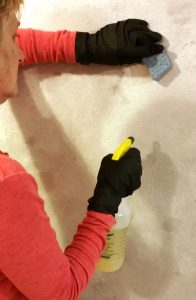
Mix the degreaser according to the manufacturer’s instructions. Using disposable gloves and eye protection, apply the solution liberally to the stained area, allowing it to dwell (sit) for the recommended time—this gives the chemicals time to penetrate the stain. Do not scrub aggressively; let the chemical do the work. After the dwell time, scrub gently with a non-abrasive sponge, rinsing thoroughly with clean water. The goal here is not just to remove surface grime, but to lift the oils trapped within the porous substrate of the wall.
Step 2: Neutralizing and Rinsing
After using strong chemicals, the wall surface must be neutralized. Residual cleaning agents can react with the primer or paint, causing poor adhesion. Use a mild solution of water and a very mild detergent (like dish soap) to rinse the area, followed by a final rinse with plain water. The wall must be allowed to air dry completely. Depending on humidity and the depth of the stain, this drying process can take anywhere from 24 to 72 hours. Patience is critical here; rushing this step is a primary cause of paint failure.
Step 3: Priming with a Stain-Blocking Compound (The Barrier Layer)
This is arguably the most critical step. Standard latex primer will not stop the oils from bleeding through. You need a specialized stain-blocking primer. The industry standard for severe grease, oil, and nicotine stains is a shellac-based primer. Shellac is excellent because it seals the porous surface and acts as a physical barrier, preventing the residual oils from migrating up through the new paint layers. Alternatively, specialized oil-blocking primers are available, but shellac remains highly effective.
Apply the primer evenly, ensuring full coverage over the stained area, extending slightly beyond the stain edges. Follow the manufacturer’s instructions precisely regarding drying time and ventilation. The primer must cure fully before any subsequent steps can begin.
Step 4: Painting the Surface (Achieving Uniformity)
Once the primer is dry and cured, you can apply the final paint. To ensure the stain is completely masked, plan for a minimum of two coats. The first coat helps cover the primer and any remaining faint stain traces. The second coat builds the final color and provides the necessary depth of coverage. Use high-quality tools (rollers and brushes) and maintain a consistent application pressure to avoid streaks or uneven coverage. Always remember to lightly feather the edges of the newly painted area into the surrounding, unstained walls to create a seamless transition.
Materials and Tools Checklist
Gathering the right supplies is half the battle. Do not attempt this project without proper equipment and the correct chemical agents.
- Safety Gear: Disposable gloves, safety goggles, and a dust mask or respirator (especially when handling strong solvents).
- Cleaning Agents: Commercial degreaser or TSP substitute, mild detergent, and clean water.
- Application Tools: Non-abrasive sponges, clean buckets, and adequate rinsing water.
- Priming: A specialized stain-blocking primer (shellac-based is highly recommended) and painter’s tape for masking.
- Painting: High-quality roller cover and brush appropriate for the paint type, and paint matching the desired color.
Finish, Compatibility, and Prevention Tips
Choose a finish that matches the repair goal and the surface conditions. Gloss and semi-gloss resist moisture and are easier to clean, while flat or matte finishes hide imperfections better but are less washable.
Check compatibility between primer, filler, paint, and the existing surface. Some repairs require specific primers or prep steps to prevent the problem from returning. Consider drying time, odor, and cleanup method before starting, and confirm that the product suits interior or exterior use as needed.
Mistakes to Avoid When Painting Over Stains
Even with the best intentions, several common mistakes can ruin the project. Being aware of these pitfalls is key to success.
- Under-Cleaning: This is the number one mistake. If you skip the degreaser, you are merely washing the surface dirt, not the deeply embedded oil, and the stain will reappear.
- Skipping the Primer: Never paint directly onto a stained or oily surface. The paint will fail to adhere properly and the stain will bleed through.
- Rushing the Drying Time: Every chemical, degreaser, and primer has a specific curing time. Applying the next coat before the previous one is fully dry will compromise adhesion and cause the paint to peel or bubble.
- Ignoring the Surface: Assuming the wall is perfect is dangerous. Always check for flaking paint, cracks, or crumbling drywall and address these structural issues first.
Safety and Practical Notes
Because this process involves strong chemicals and solvents, safety must be your top priority. Always wear protective gear, including gloves and eye protection, when handling degreasers and solvents. Crucially, ensure maximum ventilation by opening windows and using fans to prevent chemical buildup and inhalation of fumes. When in doubt about the stain’s source, depth, or the structural integrity of the wall, do not hesitate to call a licensed professional painter or restoration expert. They have industrial equipment and chemical knowledge that DIY solutions cannot replicate.
Get the Fail-Safe Paint Color Playbook (Free PDF)
36 proven colors • 8 ready palettes • trim & sheen guide • printable testing cards.
Frequently Asked Questions
How long does the entire process take?
The time frame varies drastically based on stain depth and humidity. While the active work (cleaning, priming, and painting) might take a day or two, the critical steps—neutralizing, drying, and curing the specialized primer—require patience. You must allocate at least 3 to 7 days total, ensuring proper drying time between every stage. Never rush the drying process, as this is the primary cause of paint failure.
Can I use a general household cleaner instead of a commercial degreaser?
No. Simple soap and water are generally insufficient for deeply embedded oil and grease stains. Household detergents are designed for surface grime, not to break the molecular bonds of oils. You must use a specialized commercial degreaser or a substitute like TSP (Trisodium Phosphate) to lift the contaminant from the porous drywall substrate. Always follow the manufacturer’s instructions for mixing and dwell time.
What happens if the stain is from nicotine or smoke?
Nicotine and smoke stains are chemically bound, meaning they require more than just degreasing. They need chemical remediation and, most critically, a specialized stain-blocking primer. Shellac-based primers are highly recommended because they create an impermeable barrier that physically seals the surface, preventing the residual chemicals from bleeding through the new paint layers.
If I am unsure about the stain’s depth or the wall’s condition, what should I do?
Do not proceed with a DIY attempt. If the stain is ancient, deeply permeated, or if the wall has significant structural issues (cracks, flaking plaster), the best course of action is to consult a professional painter or restoration expert. They possess industrial-grade equipment and chemical knowledge that can assess the stain’s true depth and recommend the most durable, long-lasting solution.
Conclusion
Painting over oil stains is a challenging project, but it is entirely manageable with the right knowledge and patience. By treating the stain not just as a cosmetic issue, but as a deep surface contaminant, and by following the rigorous steps of deep cleaning, proper neutralization, and specialized priming, you can create a durable, beautiful, and long-lasting finish. Approach the project methodically, take your time, and you will be rewarded with walls that look brand new.