
17 Backyard Dog Run Ideas with Practical Layouts
A backyard dog run can give outdoor routines a more predictable place. It can keep a muddy route away from the main lawn, separate energetic play from a dining terrace, or provide a clearly defined area you can supervise and clean. The most useful layout depends on the shape of your yard and how your dog behaves in it.
Start with boundaries, access, shade, and drainage. Then decide how much space belongs inside the run and what needs to stay outside. These ideas compare practical arrangements for narrow side yards, square gardens, courtyards, and shared outdoor spaces. They are layout concepts to adapt to your site, rather than construction plans or a substitute for walks, interaction, and supervision.
Get the Fail-Safe Paint Color Playbook (Free PDF)
36 proven colors • 8 ready palettes • trim & sheen guide • printable testing cards.
1. Long Side-Yard Run with a Clear Service Path
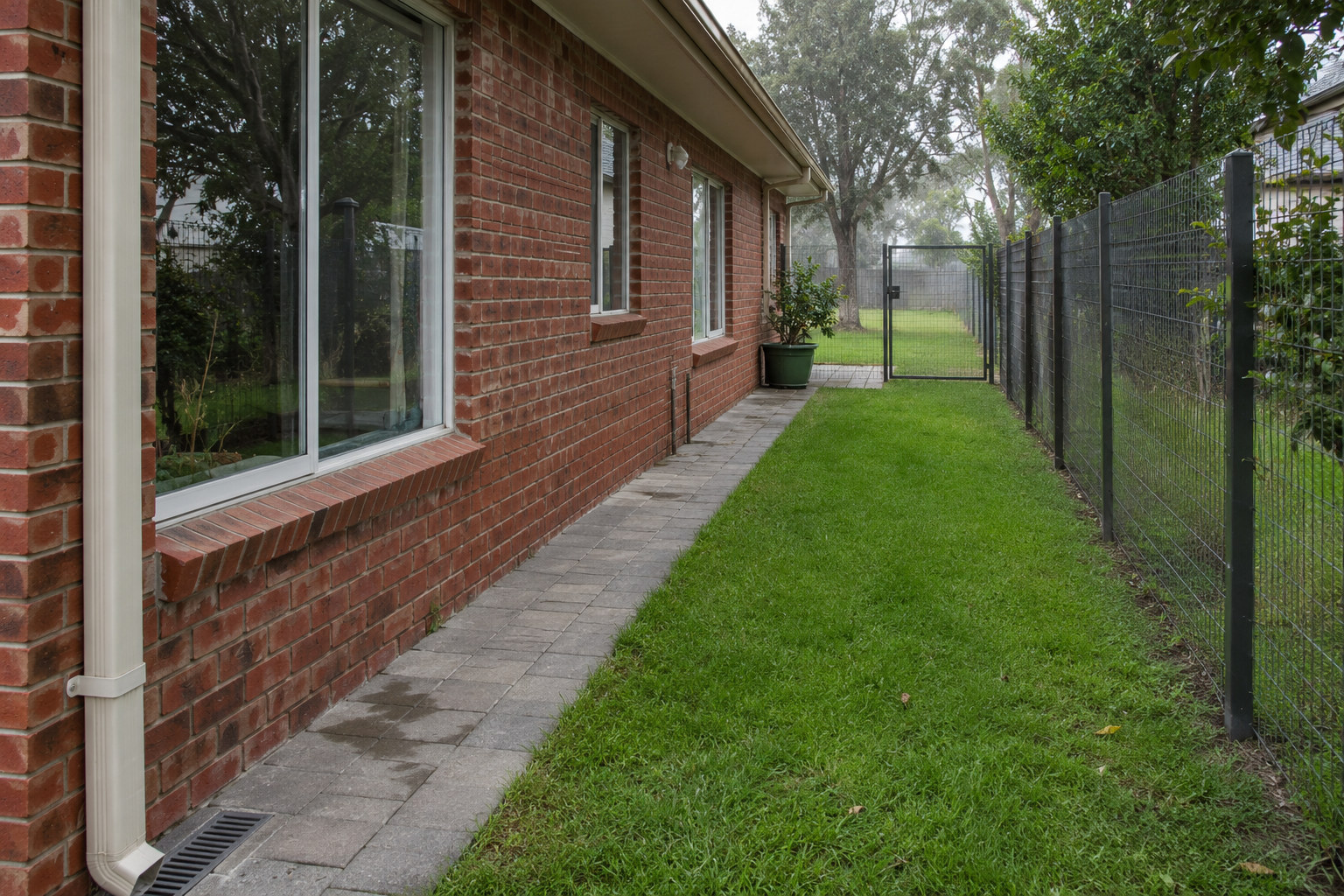
A side-yard run uses a part of the garden that can otherwise become a storage lane. A long, clear layout gives the dog an uncomplicated route while keeping the main backyard available for other activities. Reserve access to household equipment, drains, meters, and windows before deciding where the fence should go.
A service strip along one edge can make it easier to walk through with cleaning tools without wearing the whole surface into a muddy track. Keep the strip flush and comfortable to cross. Check the narrowest point between the house and fence: downpipes, air-conditioning equipment, and projecting sills can reduce the usable space more than a simple plan suggests. Avoid treating the house wall as automatically suitable containment. Any openings, fittings, and access requirements need to be included in the design from the start.
2. Back-Fence Run That Preserves the Main Lawn
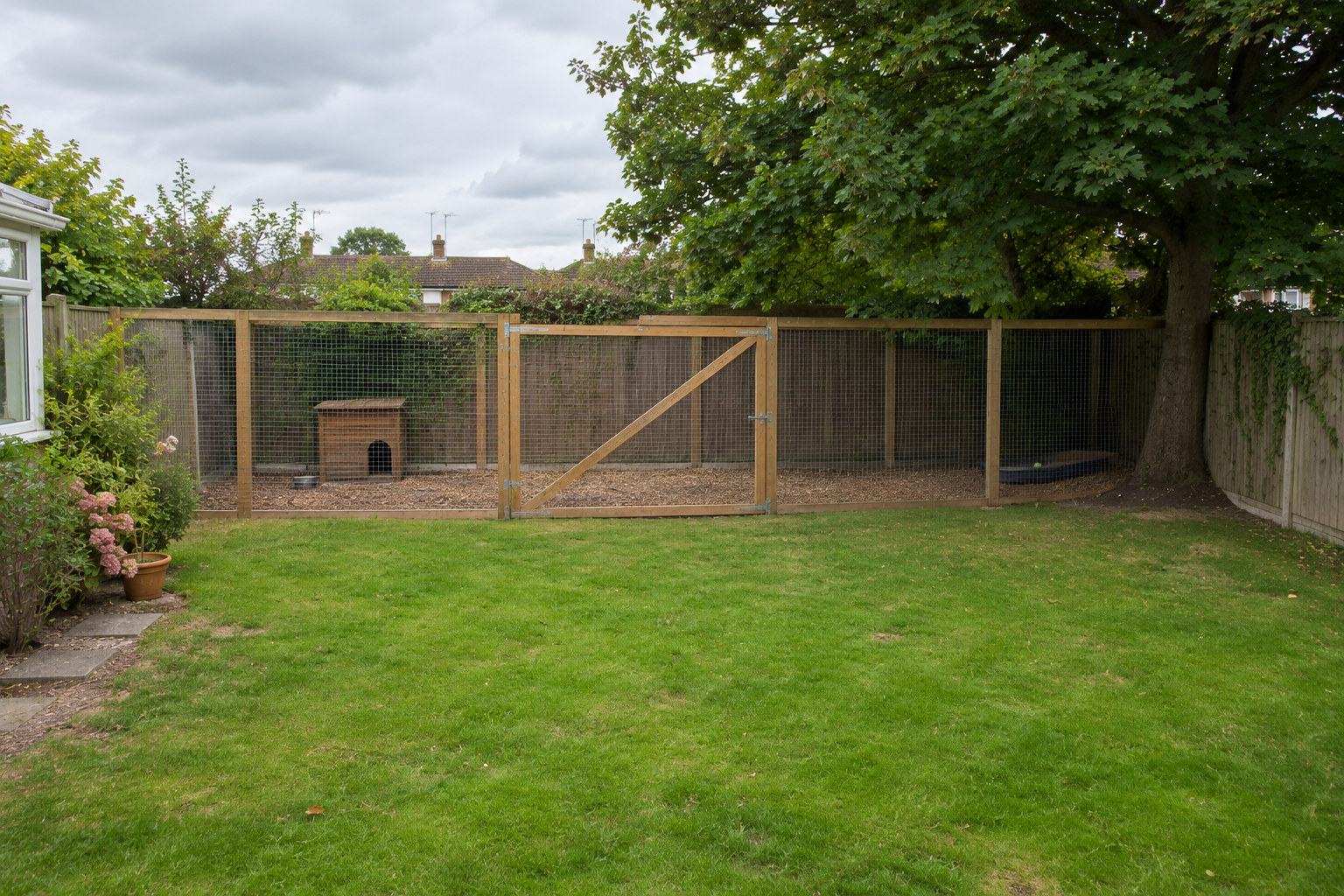
A run along the back boundary preserves a broad central lawn for people, furniture, or other garden activities. It can work well in a rectangular yard where a side run would divide the space awkwardly. Place the gate where you can reach it without crossing a flowerbed or moving outdoor chairs.
Think about visibility from the house. A rear run hidden behind dense planting may be less convenient to supervise than it looks on a plan. Keep a clear view of the main activity and resting areas, and plan a practical route for carrying water and cleaning equipment. The existing boundary may need assessment before it becomes one side of the enclosure. A fence designed mainly for appearance is not necessarily suited to your dog’s size or behavior, even when it seems substantial from the patio.
3. L-Shaped Run Around a Garden Corner
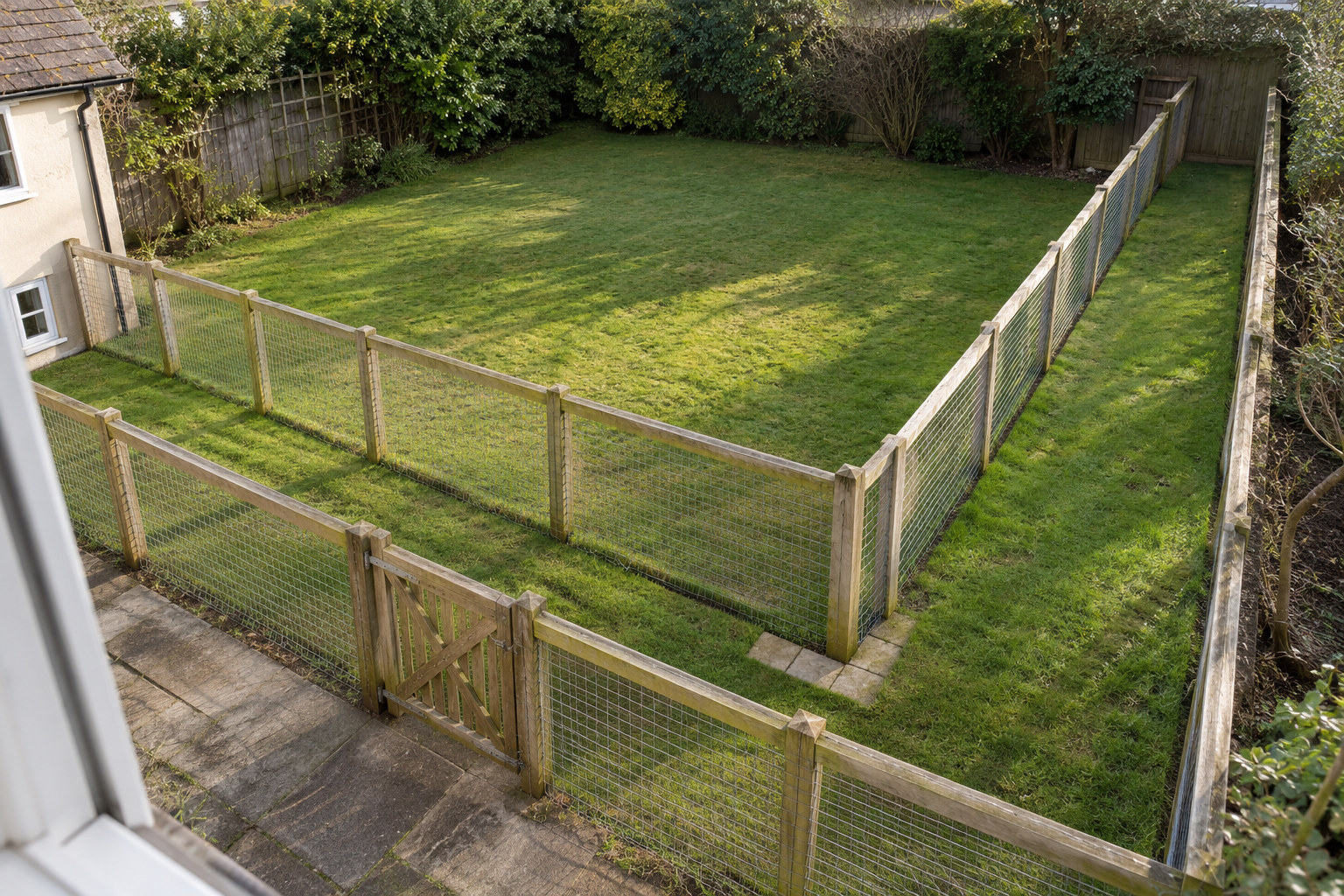
An L-shaped run can follow two edges of a garden and leave the center open. The change of direction gives the space different zones, such as a shaded resting stretch and a more open activity stretch. It is useful where a straight enclosure would block access to a shed or cut across the best part of the lawn.
Make the corner wide and easy to navigate. A tight turn can become a bottleneck for a large dog and an awkward place to maneuver a wheelbarrow or cleaning equipment. Keep a clear line of sight through the bend where possible. Check all the ground-to-fence junctions around it, since a change of direction often coincides with a level change. Use the layout to work with the garden’s shape rather than adding turns simply to make a small enclosure look more elaborate.
4. Dog Run with a Double-Gate Entry
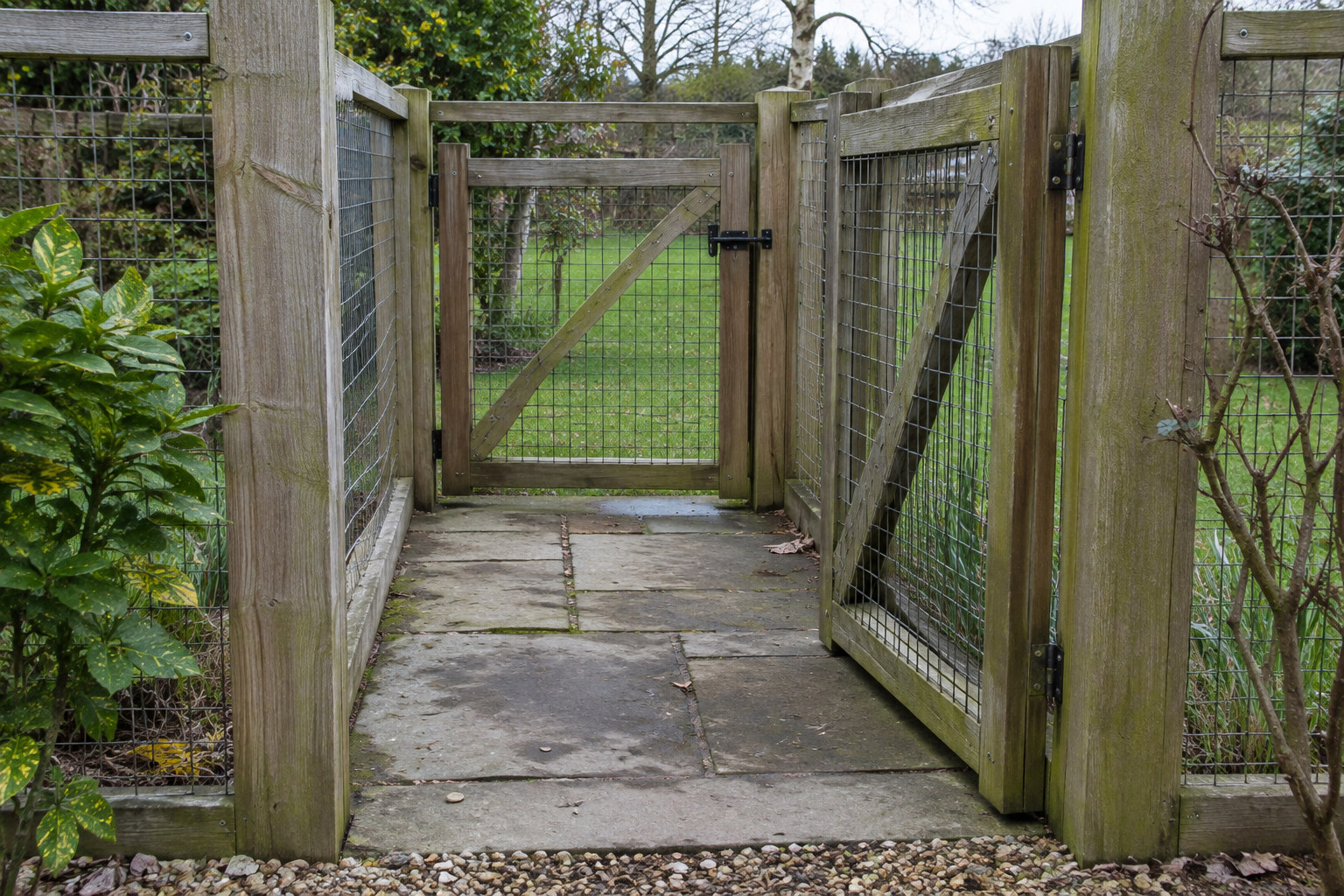
A double-gate entry creates a small transition space between the garden and the run. It can be helpful when opening a single gate directly into an active dog area feels awkward. Each gate needs enough room to operate independently, and the space between them should comfortably accommodate the person using it.
Plan the entry around real routines: carrying a water bowl, bringing in a bed, or moving cleaning tools. A vestibule so small that both gates must stay open defeats its purpose. Select latches and gate details with the dog’s behavior in mind, and keep checking them as part of normal maintenance. The arrangement does not remove the need for careful handling or supervision. It simply provides an additional place to pause and organize the transition before opening the next boundary.
5. Shaded Run Beside a Covered Patio
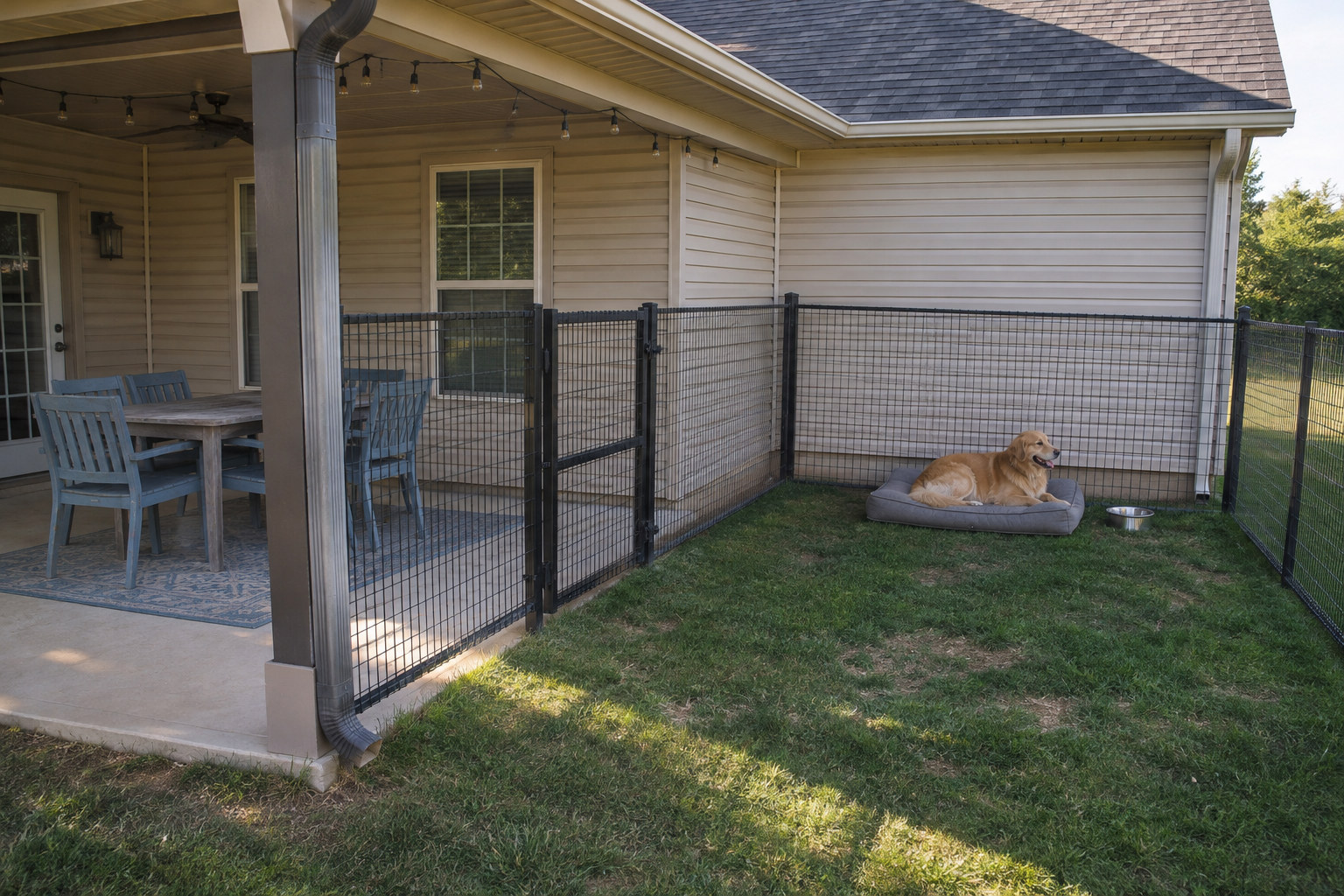
Positioning a run beside a covered patio can put supervision and shade close to the house. The fence creates a clear edge between the dog area and outdoor dining, while the roof may shade a useful resting corner at certain times. Check the shade throughout the day before relying on it as part of the design.
Keep the dog run’s gate away from chair pull-out space and barbecue activity. A person serving food should not need to hold a gate open at the same time. Give the run its own water and resting location, and make sure rain from the patio roof is directed appropriately rather than draining into the entrance. The patio connection works best when it supports everyday company and access without turning the dog area into the busiest passage through the garden.
6. Split-Surface Run for Play and Cleaning
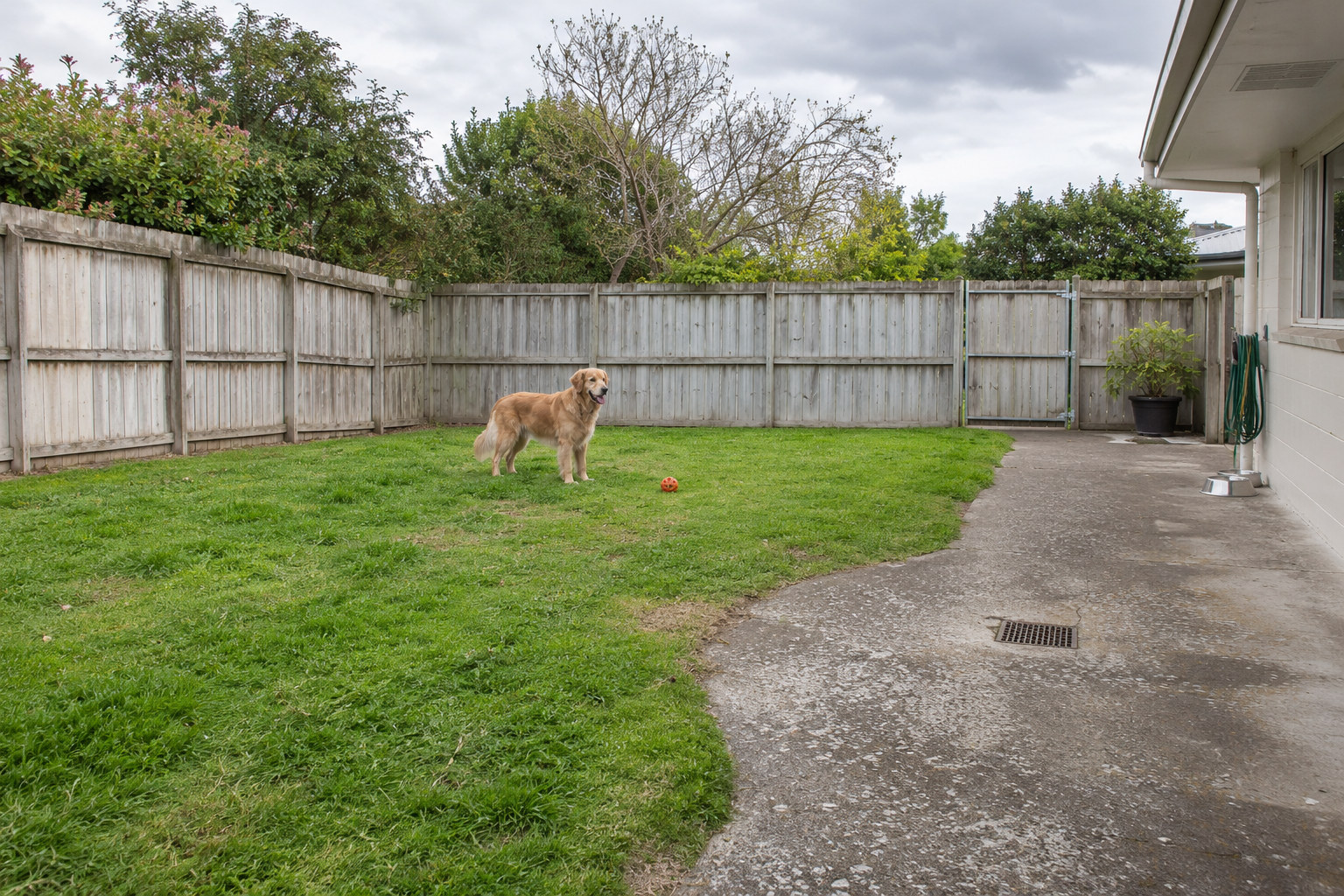
A mixed-surface run can assign different jobs to different areas. Grass may suit the main activity space, while a smaller hard-surface section can provide a convenient place for water bowls, entry, and cleanup. The useful balance depends on your site and dog, rather than on a fixed percentage of lawn and paving.
Keep transitions stable and comfortable to cross. Avoid loose edging, abrupt lips, or drain details that can catch paws. Ask about surface suitability, drainage, cleaning, and heat exposure before selecting a material. A finish that is easy to hose does not necessarily stay comfortable in direct summer sun. Place the service area where you can reach it without walking through the entire run, and leave enough room to remove bowls and mats for cleaning rather than working around them in place.
7. Two Neighboring Runs with Independent Gates
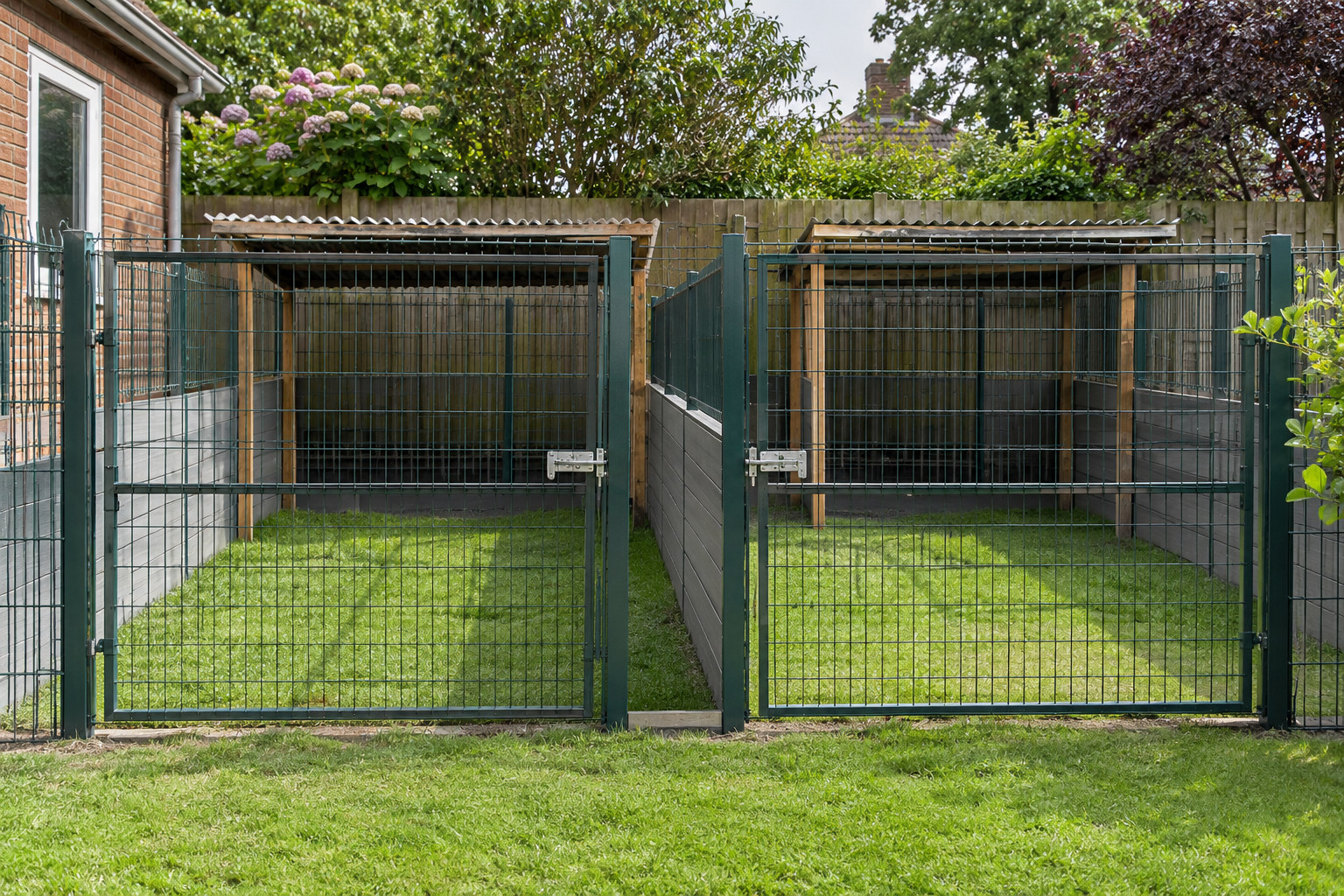
Two separately accessed runs can provide flexibility in a multi-dog household. They may allow different routines, individual rest, or separate use of the garden when needed. Give each area a complete layout with its own access, shade, water, and comfortable space, rather than making one a narrow overflow strip.
The shared divider deserves particular attention. Decide whether a visual screen is helpful, and avoid assuming that dogs will relax simply because a fence separates them. Watch how they respond to the arrangement. Gates should not force both dogs into the same small entry corner at once. If the reason for separation involves guarding, conflict, or distress, obtain suitable professional advice alongside the layout work. The garden design can support a management plan, but the divider alone does not establish that the situation is comfortable.
8. Run Wrapped Around an Existing Shade Tree
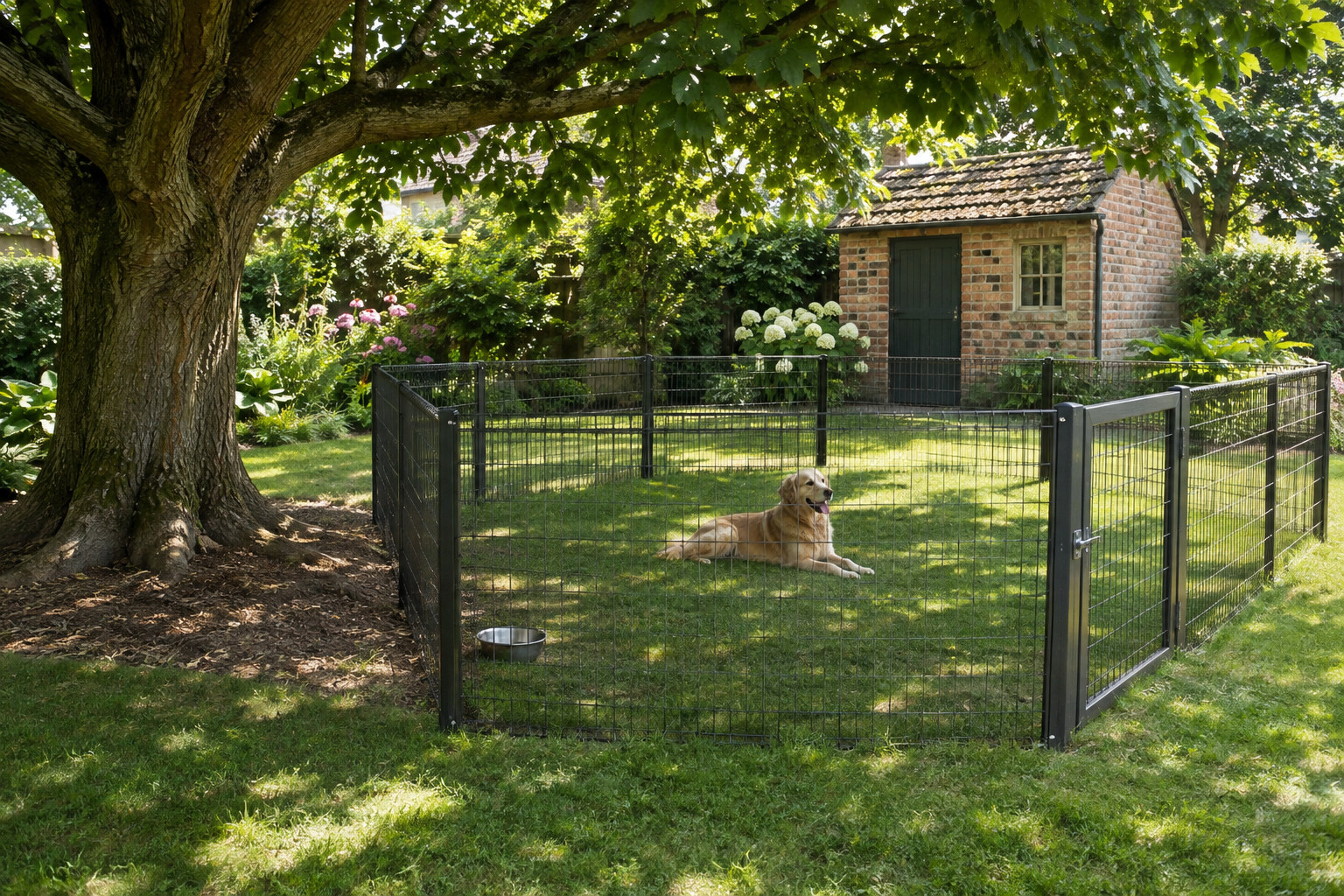
An established tree can influence a run’s position by providing a shaded edge and a more varied outlook. Place the enclosure to benefit from the canopy while protecting the tree and leaving its trunk and root area appropriately considered. The best arrangement may sit beside the tree rather than enclosing it.
Ask for site-specific guidance before digging posts or changing levels around important roots. Keep tree maintenance access in mind, and check whether branches or nearby objects could provide an escape route. The shaded area also needs to stay usable after rain; a cool patch that becomes a persistent muddy hollow is not a complete resting solution. Observe the garden at different times of day and season. Tree shade moves, and a location that works in one period may need another protected resting option later.
9. Courtyard Run with Simple Sightlines
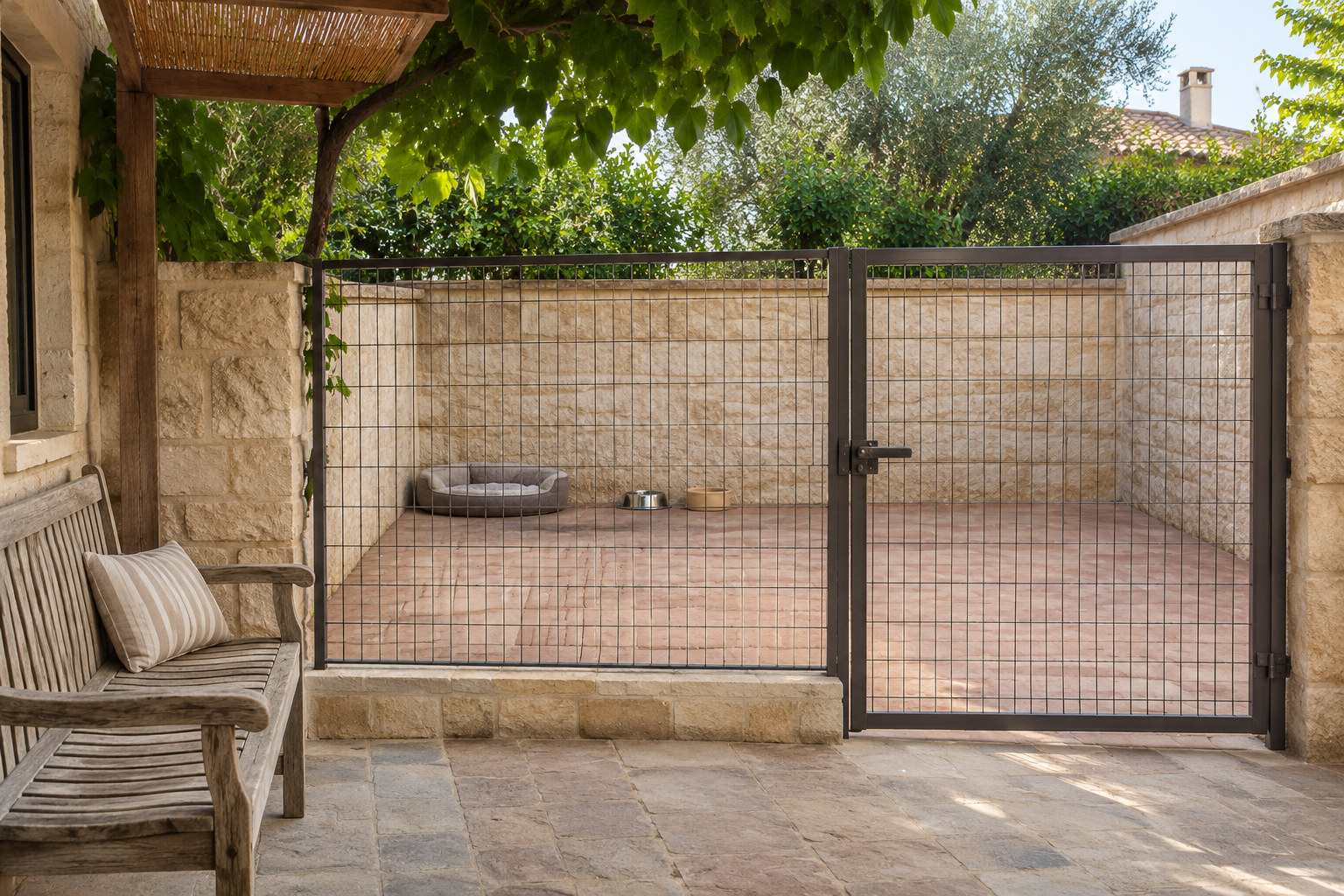
A courtyard run can make a compact outdoor space feel orderly by keeping the center open and placing practical elements along the edges. Sound walls and a suitable gate may form part of the enclosure, but assess every opening and access point rather than assuming a courtyard is secure by definition.
Keep sightlines simple so you can see the dog and spot a dropped object or damaged fitting quickly. Hard surfaces need particular consideration for drainage, wet footing, and temperature in the actual exposure. Add a comfortable shaded resting place instead of covering every edge with storage. Small courtyards can become visually crowded very quickly, so select a few useful elements and leave breathing room between them. These small backyard ideas offer ways to organize compact outdoor areas without filling the center with furniture.
10. Run with a Separate Quiet Resting Bay
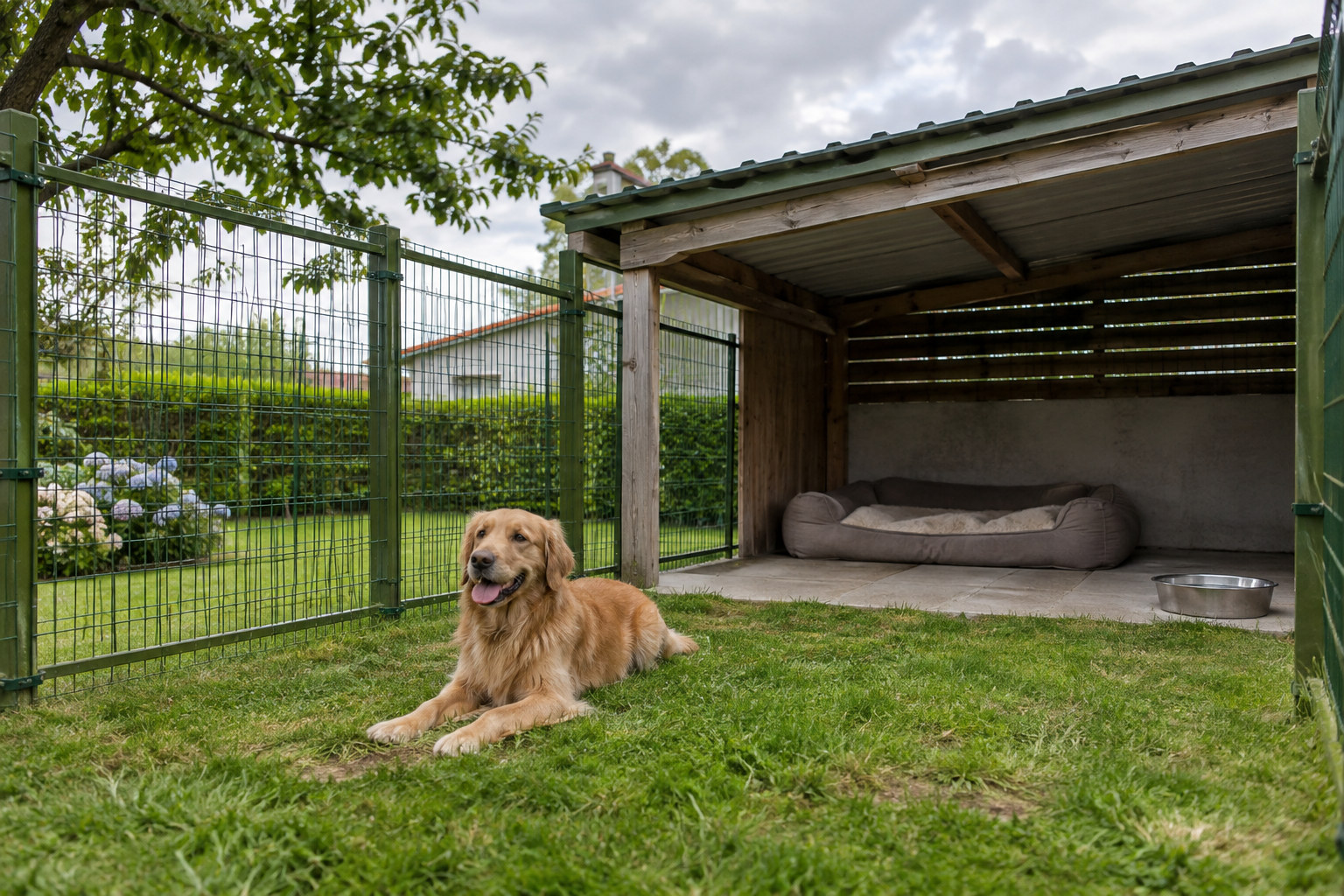
A quiet resting bay gives the run a different pace from its open activity area. It can sit under a suitable roof or other shade structure, with a comfortable surface and water nearby. Keep it open and well positioned so the dog can choose to rest without being pushed into a cramped corner.
Consider weather from more than one direction. A roof may block overhead sun but leave the bed exposed to driving rain or low afternoon light. The bay needs a suitable setting and maintenance routine, not just an attractive shelter shape. Keep the floor and bedding accessible for cleaning, and leave a clear route back into the run. This is a place for supervised outdoor rest within the broader household routine, not a reason to leave a dog outside in unsuitable conditions.
11. Wide Short Run for a Squarer Backyard
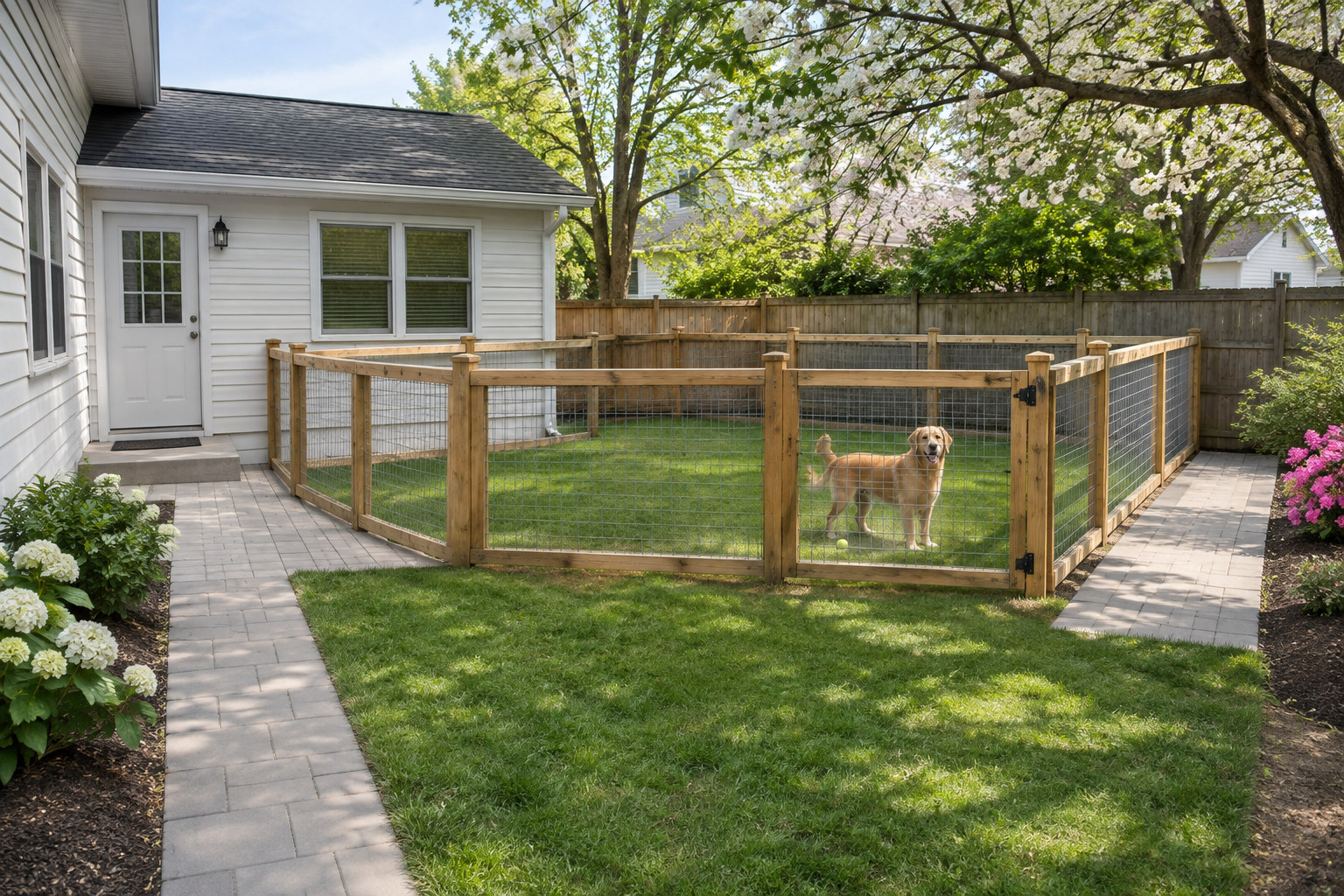
In a square backyard, a wide, relatively short run may fit better than a thin lane. It can preserve a useful area for outdoor dining while giving the dog a broad turning space. Place the enclosure so it does not create a narrow leftover passage between the fence and the house.
Test the gate position from both sides. A gate near a garden corner can be awkward to open when furniture or a hose reel is nearby, while a centrally placed gate may give a more direct route. Keep the main activity area uncluttered instead of adding obstacles to make it look busier. The shape of the run should reflect the dog’s movement and your care routine. A wider rectangle with clear access can be more practical than a longer enclosure whose usable width is reduced by permanent equipment.
12. Run Linked to a Supervised Back-Door Exit
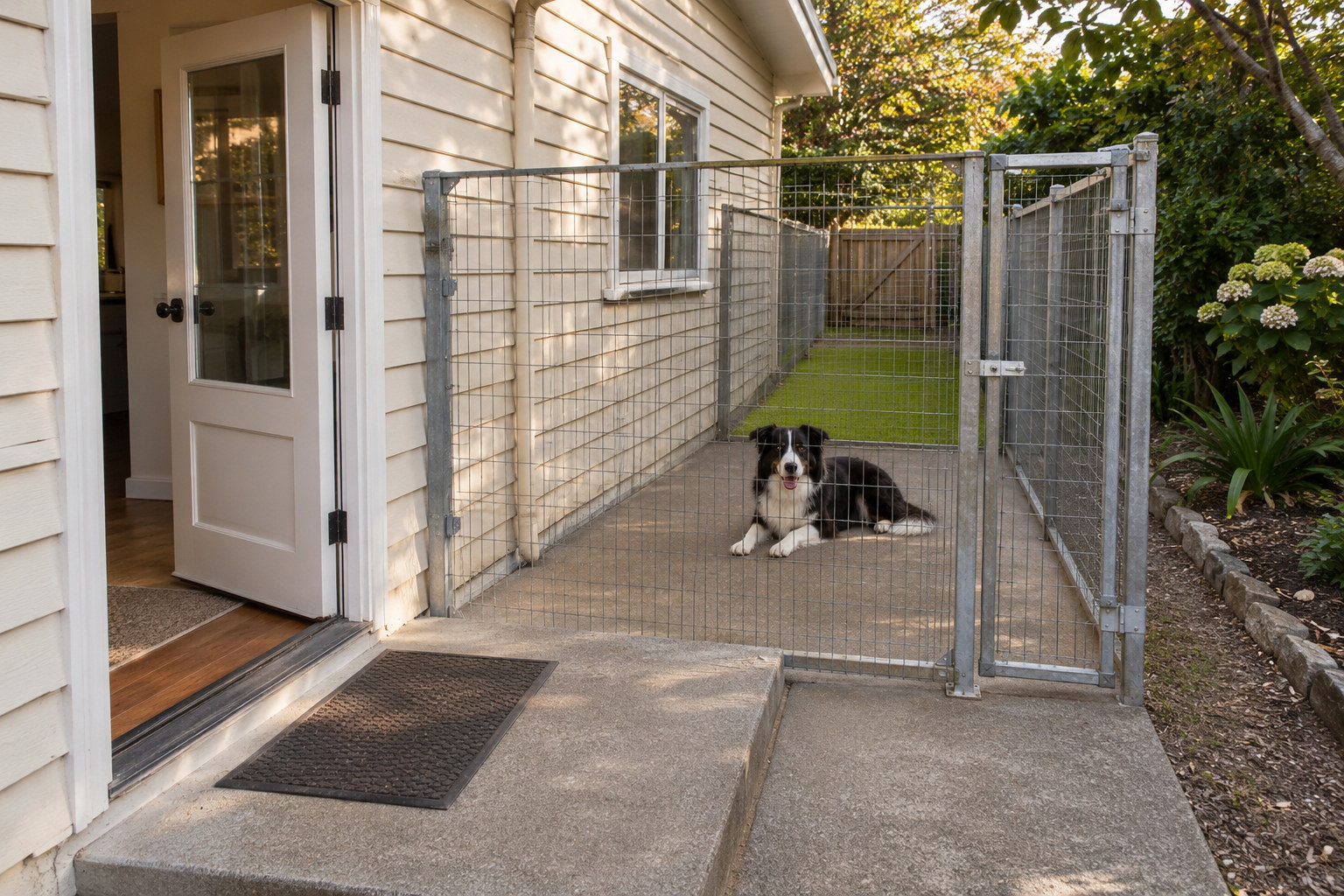
Connecting the run to the back-door landing can simplify supervised trips outside. A clear, level or otherwise suitable route helps you move between house and garden without a detour around beds or storage. Set the run’s gate far enough from the door that one opening does not collide with the other.
Look closely at the landing. It needs to accommodate the dog’s movement and the person handling the door, and its surface must suit the weather it receives. Keep deliveries, shoes, and garden tools out of this transition area. A direct connection also makes it easy to overlook household access requirements, so preserve any necessary escape, maintenance, or service routes. This arrangement is most useful when it makes supervised outdoor time convenient; it should not turn an unattended doorway into the only containment strategy.
13. Garden-Bed Buffer Outside the Fence
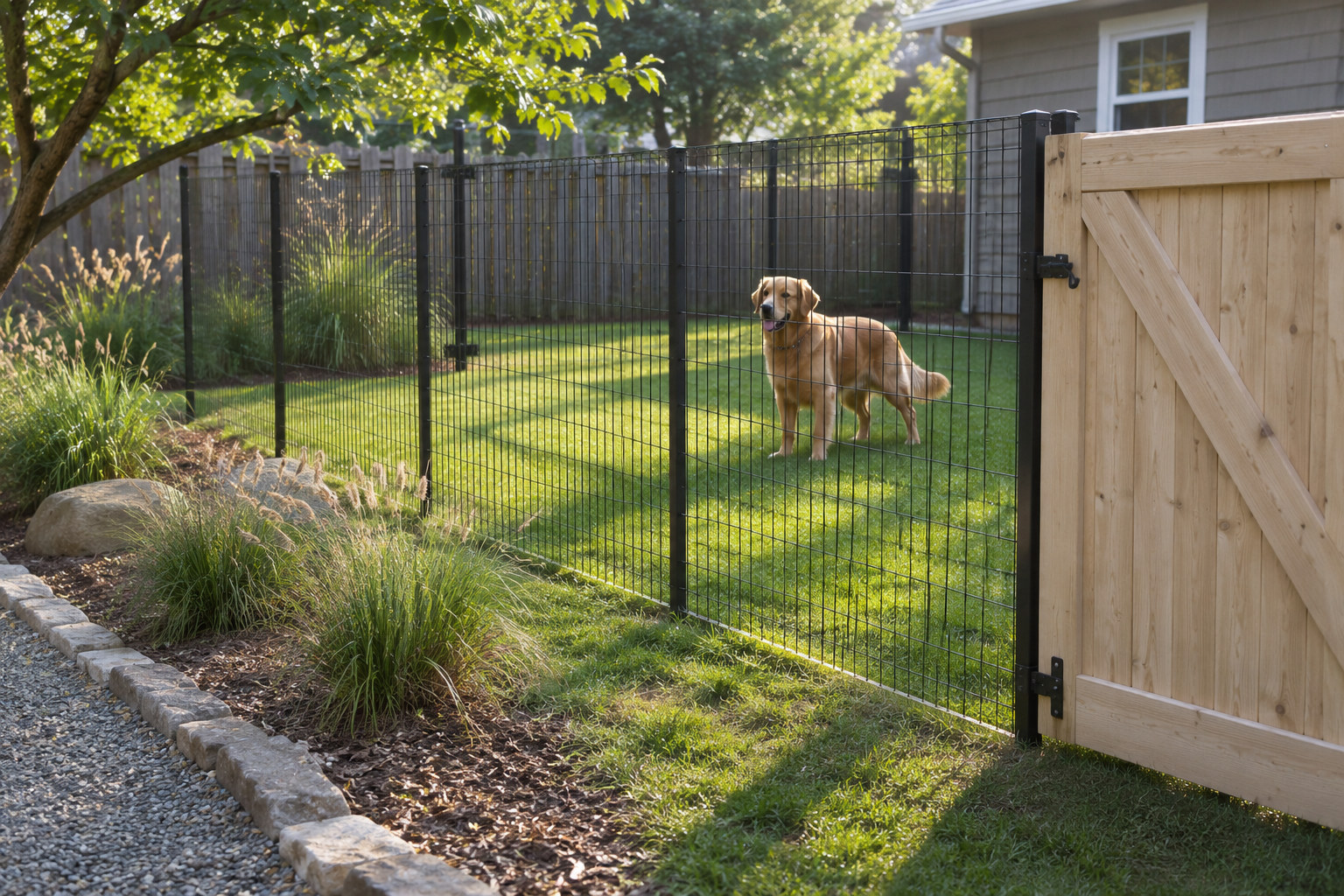
A planted buffer outside the fence can soften the view of a dog run while keeping the interior simpler to maintain. It can also create a visual transition between the enclosure and the rest of the garden. Leave enough space to inspect and repair the fence rather than planting directly against every post and panel.
Select planting with the dog’s reach and access in mind, and check individual species before using them near pet areas. A plant outside the fence can still drop leaves, fruit, or branches inside. Keep the ground line visible enough to notice gaps, digging, or damaged mesh. The buffer should make the enclosure easier to live with visually, not conceal its condition. Use a modest planting scheme at first so you can see how the area behaves before committing the whole boundary to dense growth.
14. Run with a Screened Street-Facing Edge
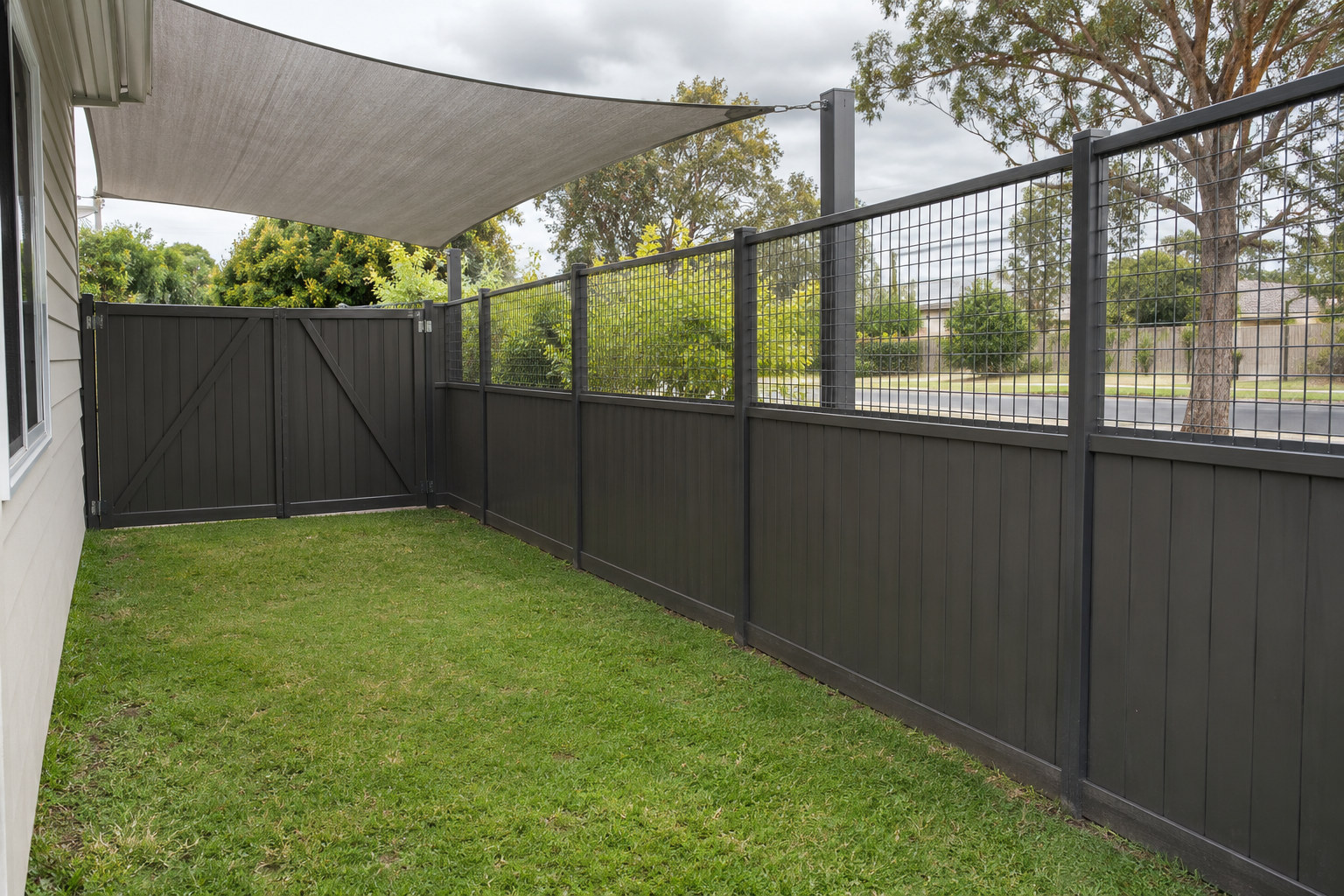
A street-facing edge may need a different treatment from the rest of the run. A suitable visual screen can reduce the direct view of passing activity while preserving a usable open area inside. Test the idea on a small section and observe your dog before investing in a fully screened boundary.
The screen is part of the fence system, so its attachment and exposure need proper consideration. Adding a solid surface changes how a structure meets wind, and decorative panels are not interchangeable with assessed containment components. Keep corners, gate latches, and the ground line accessible for inspection. Avoid assuming that screening will resolve barking or distress by itself. It can change the view, but the dog’s response and the daily routine still determine whether the area is a comfortable place to spend time.
15. Gentle-Slope Run with Level Resting Spots
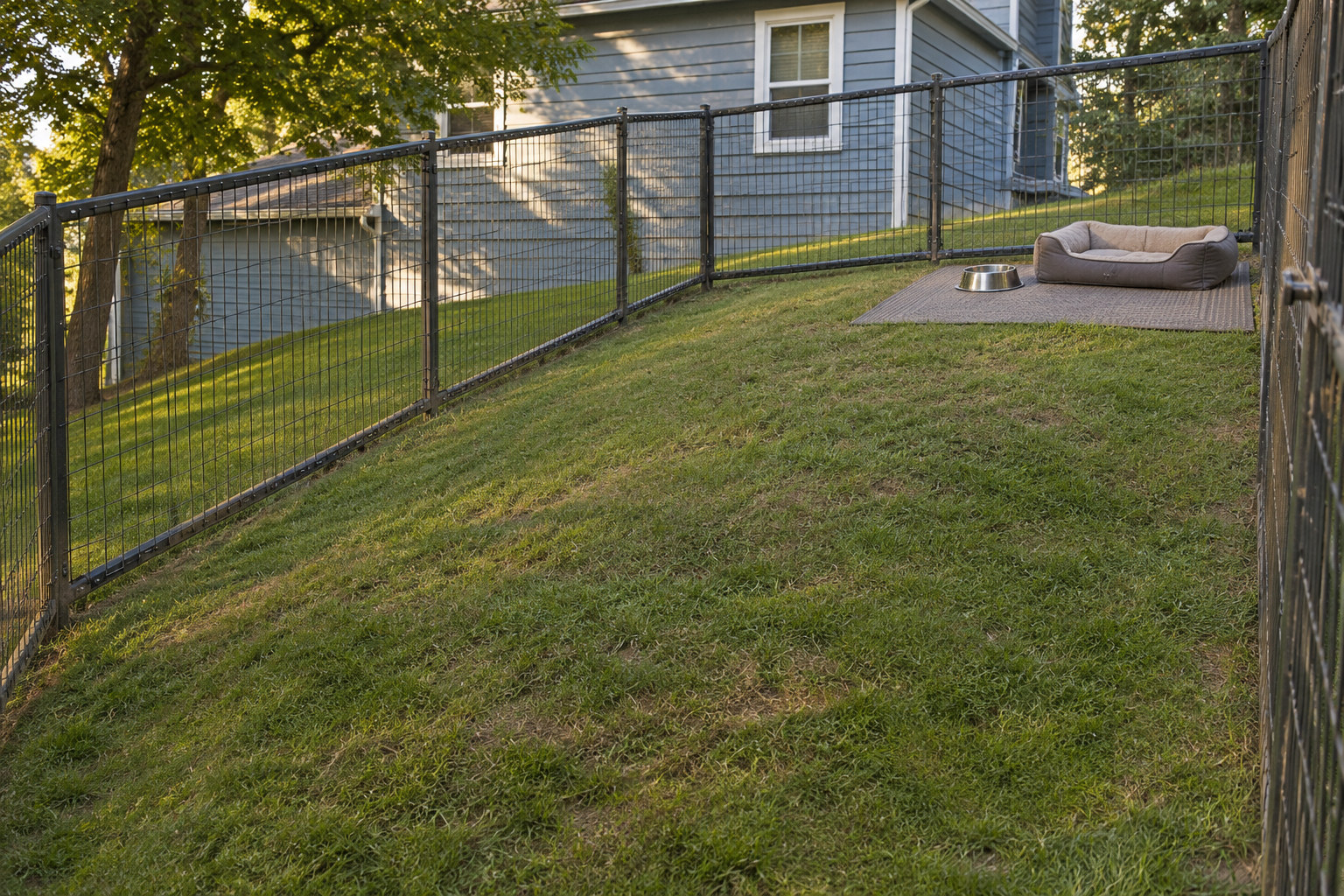
A mildly sloped garden does not always need to be flattened to create a useful run. A layout that follows the ground can preserve the site’s shape, provided the fence remains appropriate at every change in level. Include a stable level resting spot so bowls and bedding are not left on an awkward incline.
Watch how water moves across the area before deciding where the entrance and resting pad belong. Avoid directing runoff toward the house or another property. More substantial grading, drainage, or retaining work needs site-specific professional design. Check the lower edge of the fence along the whole slope, since a panel that meets the ground at one end can leave an opening at the other. Plan maintenance access too: the route that is easy to walk when dry may be much less convenient after rain.
16. Large-Dog Run with a Wide Turning Zone
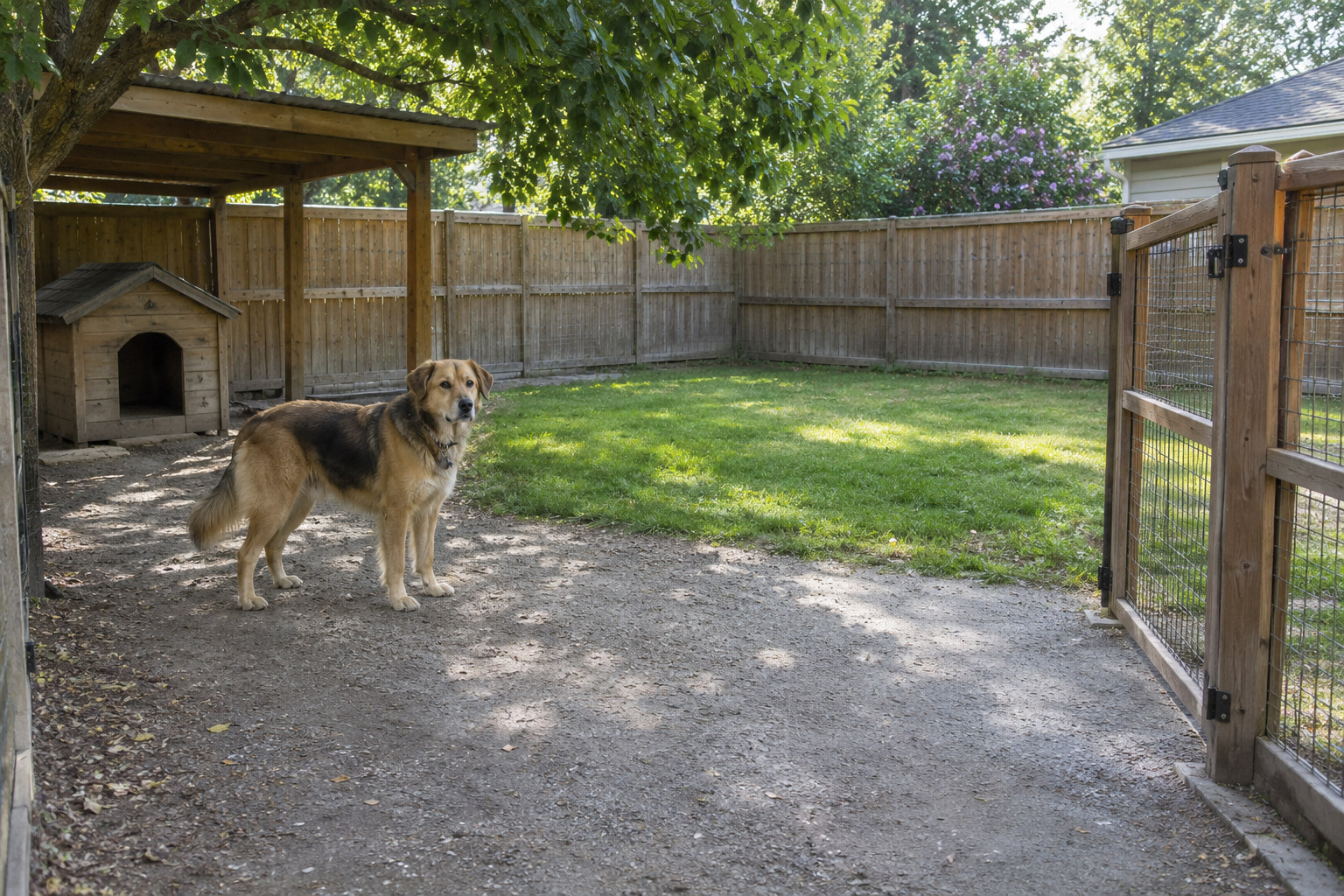
A large-dog layout needs generous working space at the gate and a broad turning area beyond it. Consider how the dog enters beside a person, rather than measuring only whether its body fits through an opening. Keep water bowls, beds, and storage out of this arrival zone so they do not narrow the usable route.
Fence construction and height must suit the individual dog’s behavior and the site. Avoid choosing them from appearance alone or assuming every large dog needs the same solution. A calm dog that stays close to people presents different planning questions from an athletic climber or persistent digger. Leave the center of the run uncomplicated, with a shaded rest area toward one edge. A spacious layout should give the dog room to move and give you room to clean and maintain it safely.
17. Small Run That Opens into Supervised Garden Time
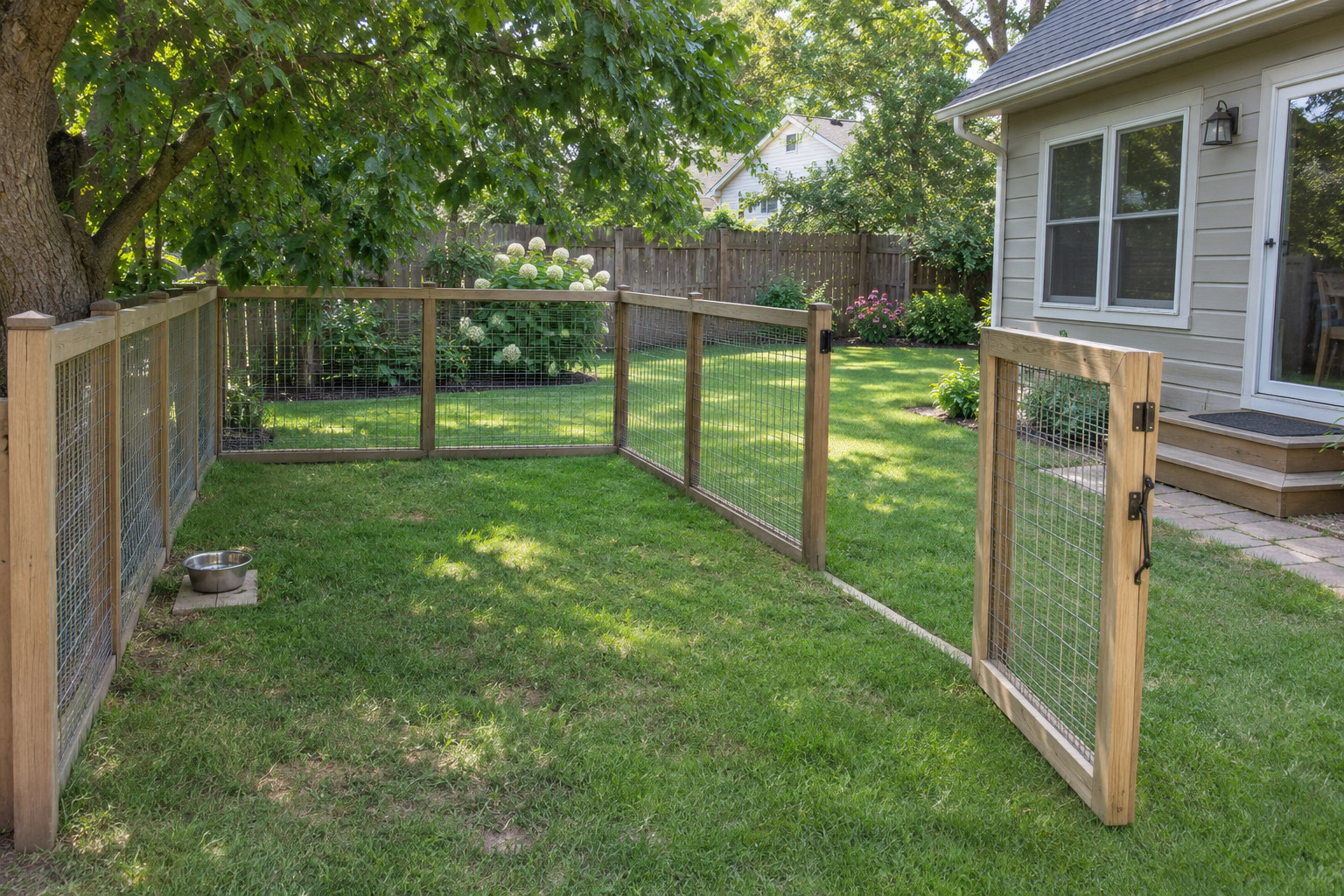
A compact run can form one part of a larger supervised garden routine. A wide connecting gate lets you open the broader yard when conditions and supervision allow, then return to the defined area for other activities. The run still needs its own suitable layout; it should not be so cramped that the open gate is the only way it becomes usable.
Plan the connection where it does not cross a busy dining area or lead straight into fragile planting. Check the larger garden before opening access, including temporary hazards such as tools or an open service gate. Keep the run’s resting and water spots available throughout. This flexible arrangement can help a shared backyard accommodate different activities, but it works through deliberate supervision and secure boundaries rather than through the size of the connecting opening alone.
Choose the Layout Before Choosing the Fence Style
Map the whole garden routine
Mark the house doors, gates, drains, utilities, outdoor seating, storage, and routes you need to keep. Then add the dog’s likely movement, resting place, and the path you will use for cleaning. A layout that looks generous on an empty plan may become awkward when a shed door or washing line is in use.
Walk the proposed boundary and test gate positions with temporary markers. Consider the route for carrying water and removing waste as well as the route for the dog. If the run will share an entry with the house, the organizing principles in these small entryway layouts can help keep that transition clear indoors.
Assess containment for your dog and site
Dogs Trust’s garden guidance emphasizes secure boundaries, supervision, shade, and water. Check the proposed enclosure against your dog’s actual behavior, including jumping, climbing, digging, or pushing at a gate.
There is no fence height, mesh opening, or ground detail that this article can prescribe for every dog and property. Ask an appropriate installer about the complete system, and check local requirements where they apply. Inspect existing boundaries before incorporating them. A decorative screen, an old panel, and a purpose-designed enclosure may look similar in a photograph while behaving differently in use.
Follow the sun and rain
Visit the proposed area at different times, including the part of the day when your dog will use it. Record where shade falls and where water collects after rain. A useful layout gives you options rather than relying on one small patch that happens to be shaded during the planning visit.
Get the Fail-Safe Paint Color Playbook (Free PDF)
36 proven colors • 8 ready palettes • trim & sheen guide • printable testing cards.
Keep drainage work within an appropriate site plan. Avoid simply adding a hard surface and expecting water to disappear. The surface, ground preparation, edges, and outlet all affect how the area performs. If the site has persistent drainage problems, resolve those before enclosing the space.
Make Maintenance Part of the Design
Leave room to reach both sides of gates and the full fence line. Keep tools in secure storage outside the dog’s space, and plan where bowls, mats, or beds go while you clean. Choose surfaces according to the dog’s needs and the actual exposure, with clear product guidance for installation and care.
Inspect the enclosure regularly and after weather or other events that may affect it. Look at latches, fixings, panels, the ground line, and any nearby object that could change access to the boundary. A run is an arrangement that needs ongoing attention, not a one-time purchase that makes the garden automatically secure.
Help the Run Fit the Rest of the Backyard
Repeat a small number of materials from the house or existing garden to make the enclosure feel connected. Keep decorative additions outside the working areas, and use planting only after checking its suitability. If you want a stronger visual link between indoor and outdoor colors, these two-color wall ideas can help you think through color balance without copying every finish into the run.
Start with the layout that gives you the clearest access, suitable conditions, and the least awkward maintenance. The best-looking fence is more satisfying when the gate is in the right place, the water bowl stays shaded, and the whole area fits the way your household actually uses its garden.