
17 Dog Feeding Station Ideas for a Tidier Home
A dog feeding station works best when it solves the small annoyances you notice every day: a water puddle in the walkway, a bowl that travels across the floor, or a food bag that never seems to have a proper home. You do not need a new kitchen to fix those problems.
Start with your dog’s usual eating position, the space you can spare, and the route you take to wash the bowls. Then choose a layout that keeps meals easy to serve and the surrounding floor easy to reach. These dog feeding station ideas cover everything from a removable tray to a purpose-built cabinet nook, with practical details that make each option useful.
Get the Fail-Safe Paint Color Playbook (Free PDF)
36 proven colors • 8 ready palettes • trim & sheen guide • printable testing cards.
1. Low-Profile Bowl Tray in a Quiet Kitchen Corner
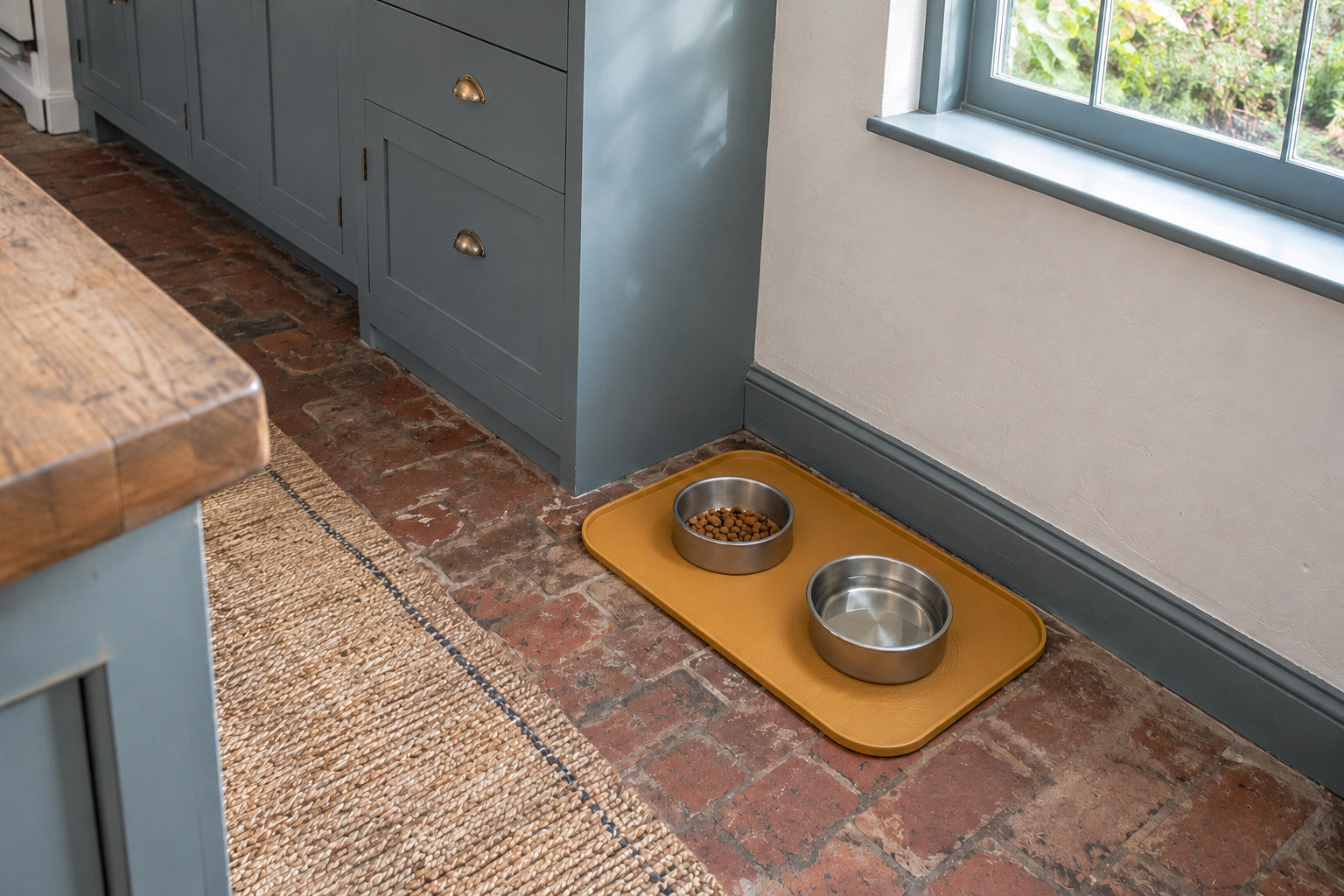
A shallow tray is the easiest place to start because you can test the location before buying furniture or altering a cabinet. Look for enough room around the bowls to catch the ordinary drips from your own dog, rather than choosing a mat that only just fits their bases. An open corner outside the main cooking route often works well.
Leave a little space between the meal bowl and the water bowl so a splash does not immediately soak dry food. Keep both easy to lift out, and choose a tray you can carry to the sink without twisting it around chair legs. The blue-grey kitchen and ochre mat shown here demonstrate how a useful item can also introduce a deliberate color accent. The brick floor still needs regular checking beneath the tray, where unnoticed moisture can linger.
2. Open Feeding Alcove at the End of a Cabinet Run
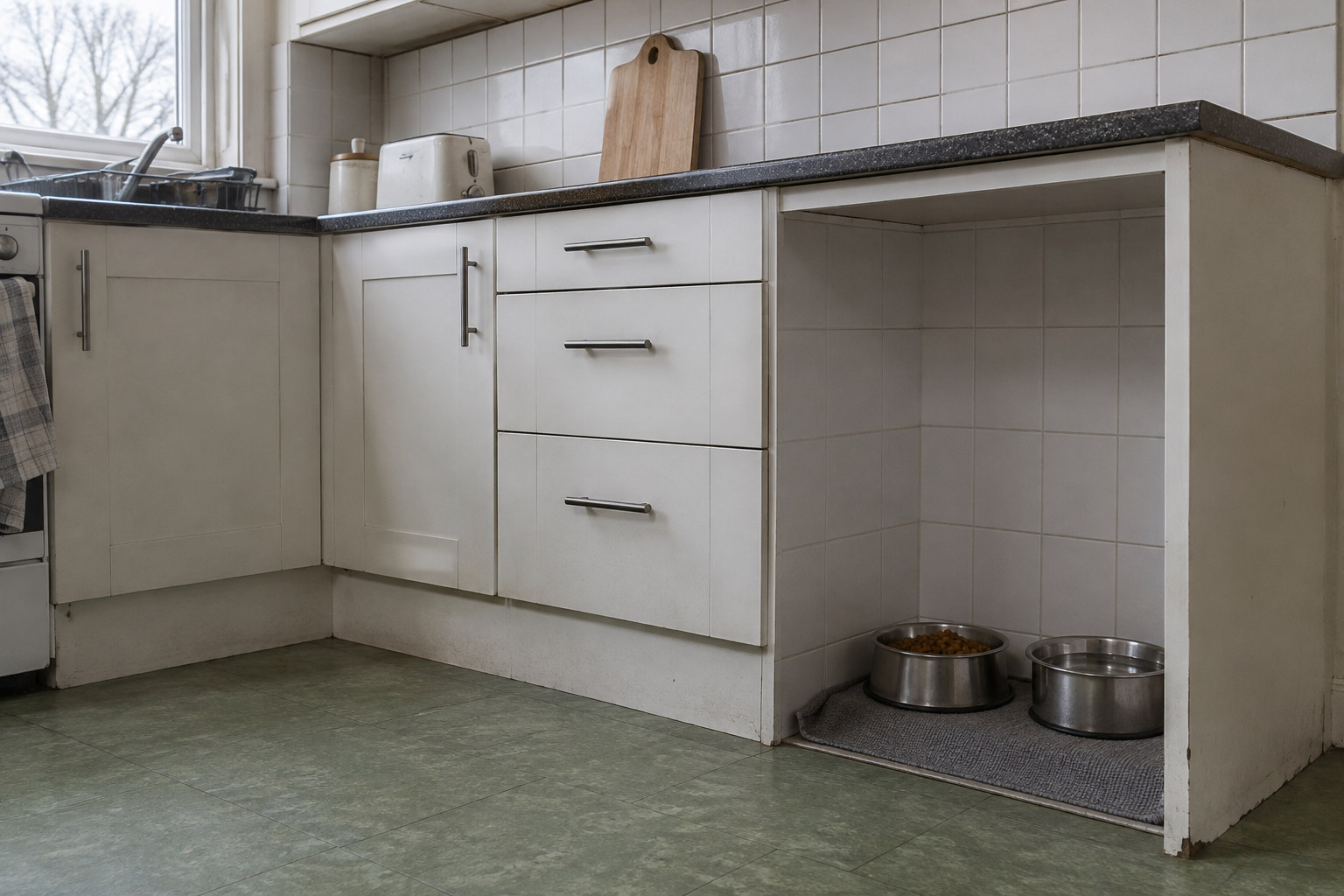
An open bay at the end of a cabinet run makes a feeding area look planned without adding another object to the room. Its biggest advantage is access: you can approach the bowls from the front, and the dog does not have to squeeze between dining chairs. Keep the bay fully open during use, with no door that can swing into the animal.
Measure the dog as well as the bowls. A cabinet opening may appear generous when empty but feel awkward once a broad head, a mat, and your hand are all competing for space. Keep the eating surface at the appropriate position for your dog, and make the floor of the bay removable or easy to wipe. A tiled or otherwise suitable splash panel can help the surrounding finish tolerate routine cleaning without making the nook complicated.
3. Pull-Out Meal Tray with a Separate Water Spot
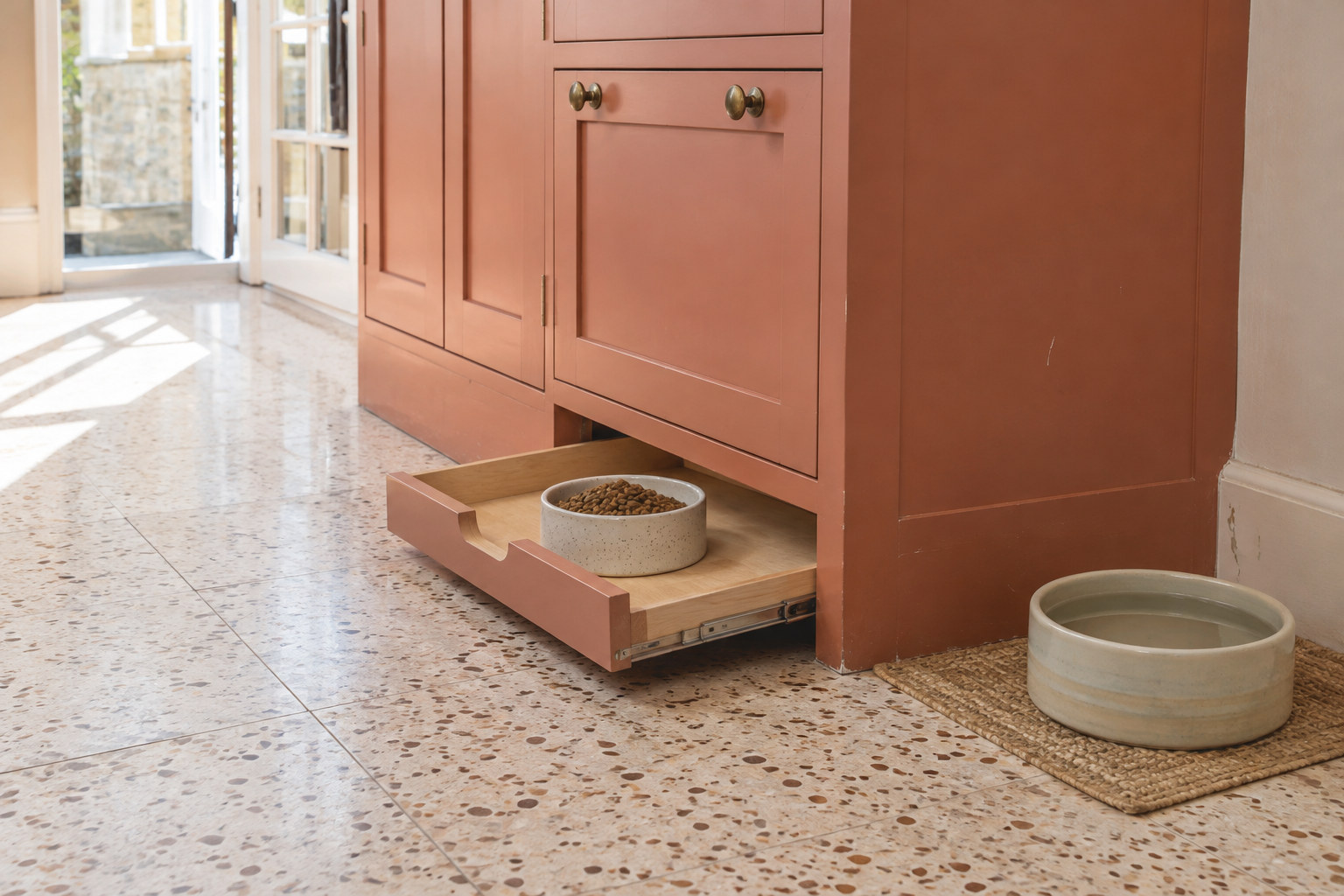
A pull-out tray can reclaim floor space between scheduled meals, particularly in a compact kitchen. The useful version slides out smoothly, stays securely in position, and lets you remove the bowl without dismantling anything. Check where the extended tray lands: it should not sit in the dishwasher’s opening arc or across the only route through the room.
Treat it as a meal station, with a separate water bowl that remains accessible when the tray is closed. That distinction matters more than a perfectly concealed appearance. Leave the tray open while the dog eats and put it away only after clearing and cleaning it. Before commissioning cabinetry, mock up the fully extended footprint with cardboard. If you find yourself stepping over it during an ordinary kitchen task, move the design to a quieter end of the room.
4. Washable Feeding Zone on a Mudroom Tile Pad
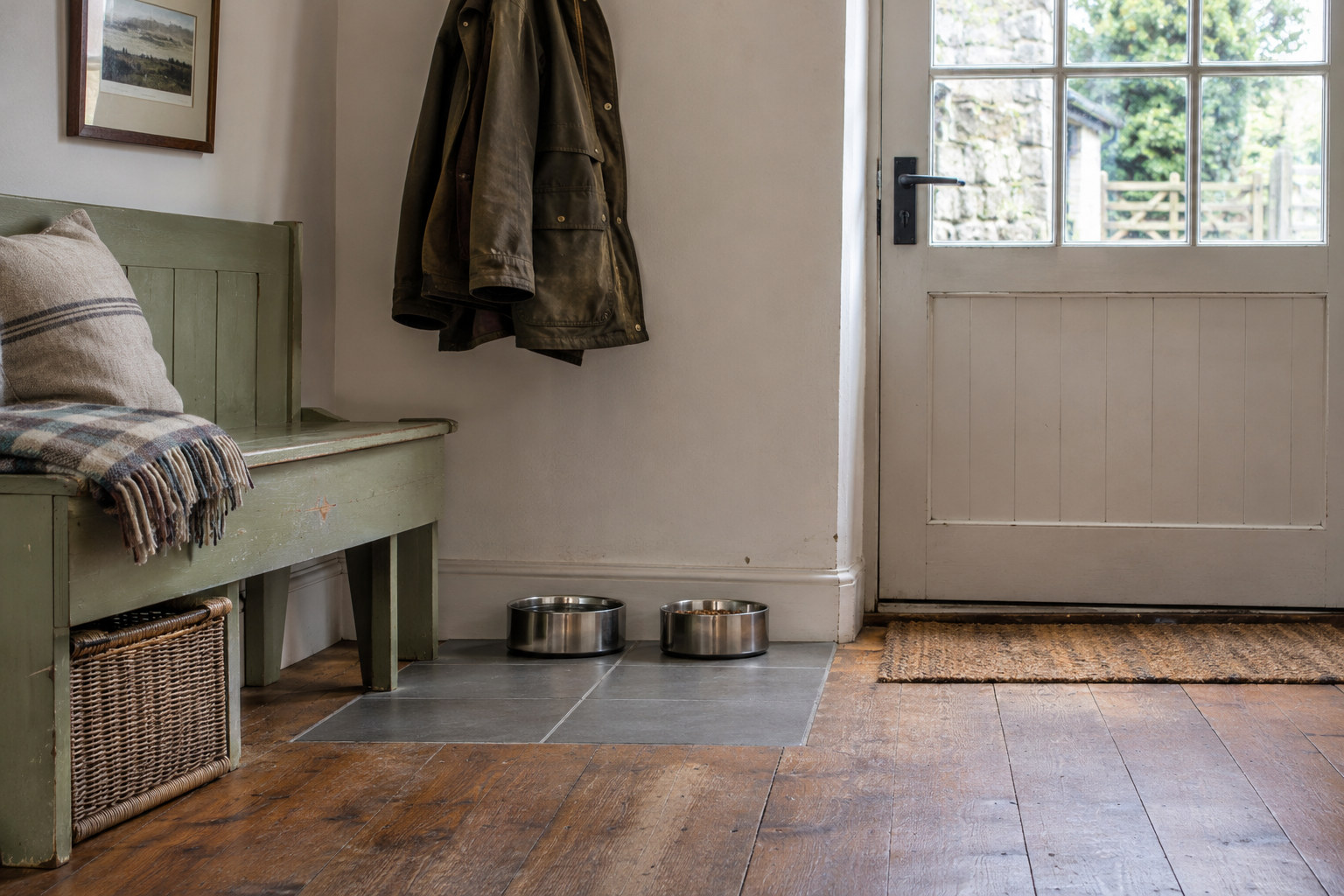
A mudroom already handles muddy footwear and wet coats, so a feeding zone can fit naturally into its daily routine. A defined tiled pad helps the bowls feel intentional, especially where the rest of the room has a timber floor. Keep the pad level with the surrounding surface where possible so the edge does not become another thing to catch with your foot.
The bench and hooks need their own working room. A coat that hangs neatly when dry may reach the bowls when heavy and wet, and a bag dropped from a hook can block the dog’s approach. Test the setup with the room in use, including school bags and boots. If your entry is compact, these small entryway ideas offer ways to organize the human side without borrowing the feeding area’s floor space.
5. Narrow Feeding Strip Along an Unused Wall
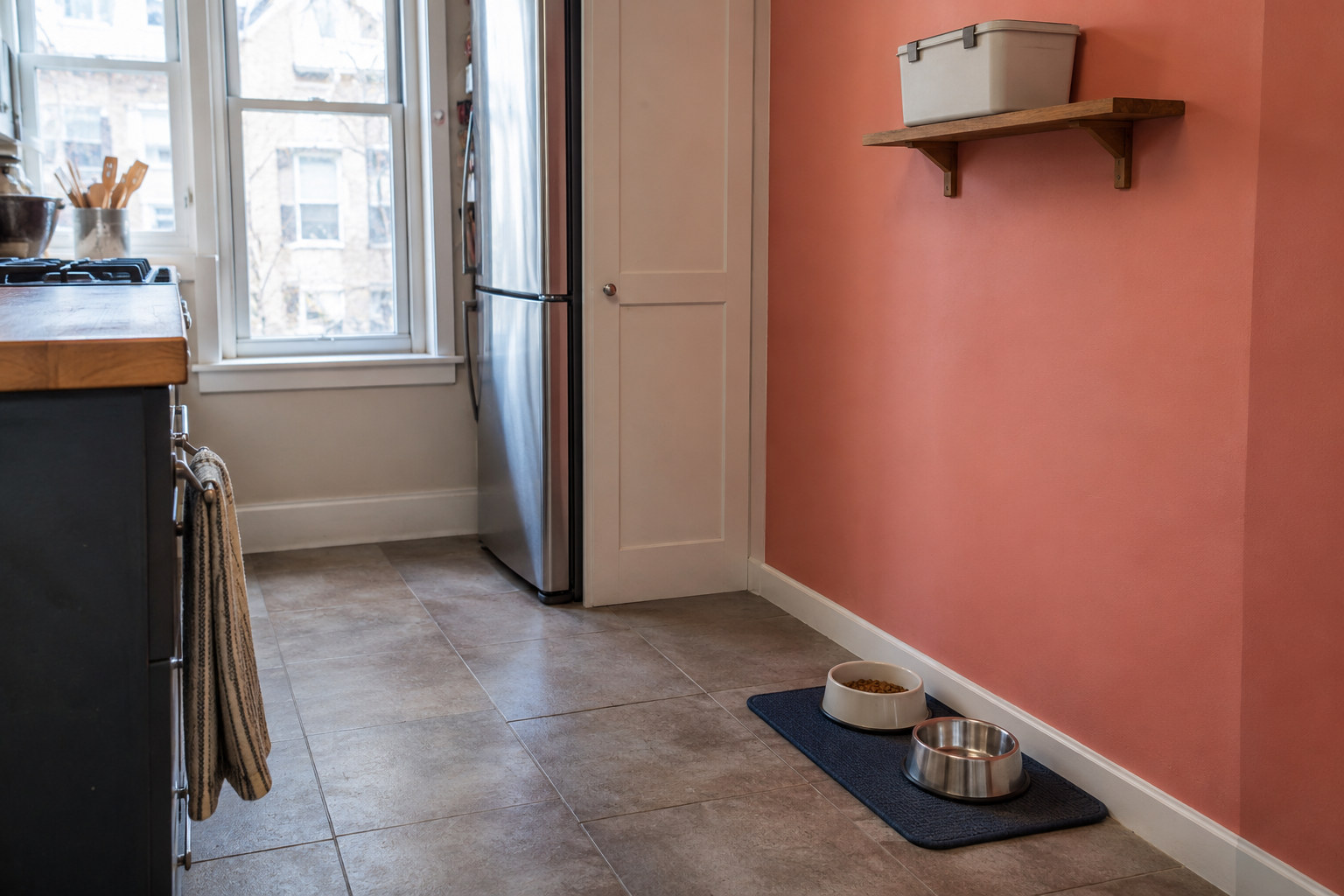
A narrow stretch of unused wall can hold a feeding station even when there is no spare corner. Arranging bowls along the wall instead of projecting them into the room reduces the station’s depth. This works particularly well beside a cabinet end or in an open section beyond the main preparation area, where the dog can stand without blocking a door.
Use the mat as a visual boundary, but check the dog’s actual stance before deciding the boundary is wide enough. A large dog may need much more clear floor in front than the bowls suggest. Avoid placing supplies on a low shelf directly above the animal’s head. Keep storage high enough to stay clear, or use an adjacent closed cabinet. A slim arrangement should make movement easier for everyone, not create a feeding slot that feels cramped.
6. Pantry-End Feeding Nook with Closed Food Storage
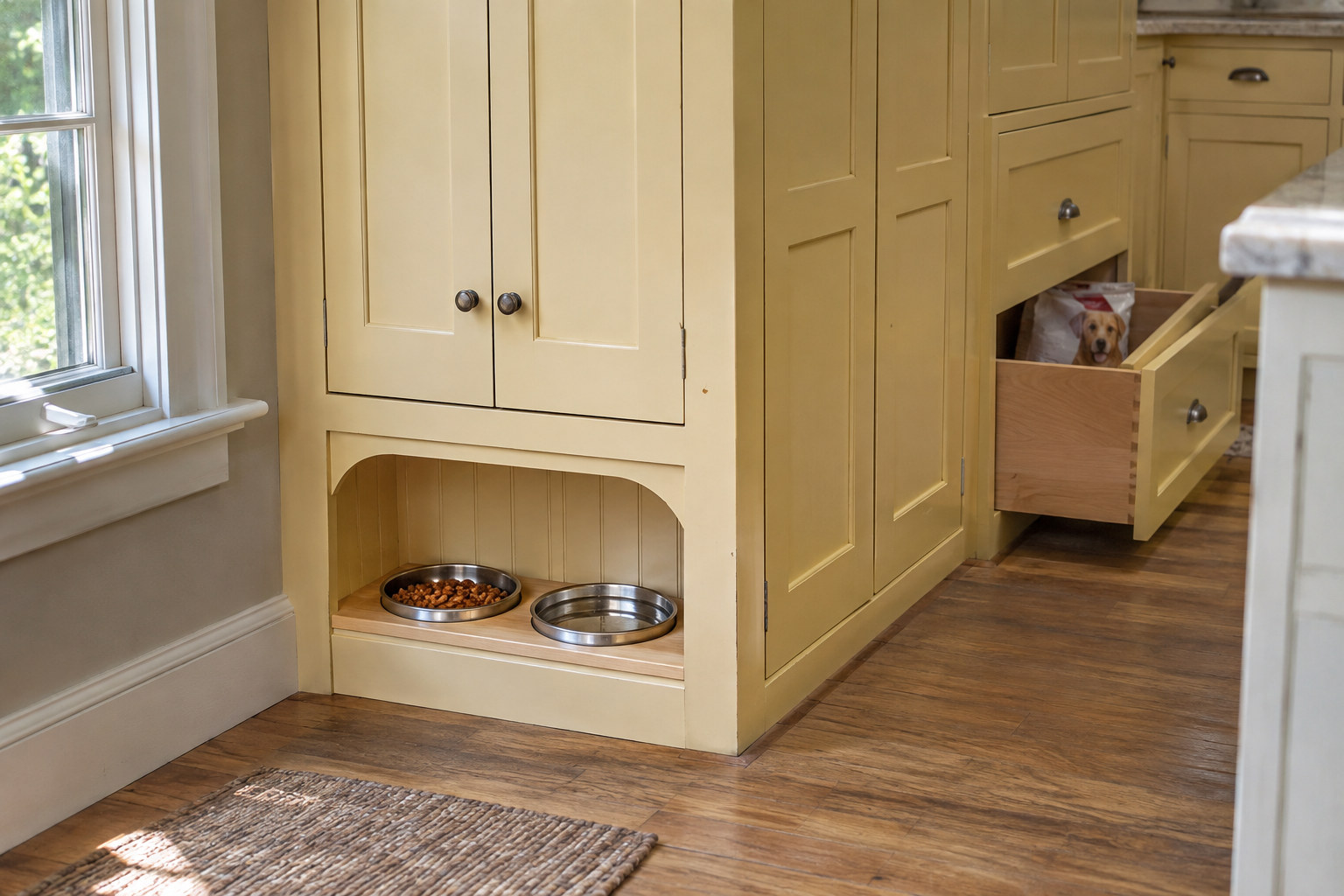
The outside end of a pantry can combine a sensible meal location with nearby storage. Keep the feeding space at the bottom, the daily accessories within comfortable reach, and the food in a separate closed compartment. This arrangement is especially convenient when the pantry stands away from the sink, oven, and busiest drawer stack.
Design the storage around the bag you actually buy, including its height when folded closed. The FDA recommends keeping dry pet food in its original bag; that bag can sit inside a storage container. A cabinet that only fits loose food decanted into a decorative jar is less useful than it first appears.
Give the bowl area its own removable mat, and leave enough space to reach the cabinet’s back corners. The feeding nook and food compartment should be easy to clean independently so a water spill does not become a pantry-clearing exercise.
7. Freestanding Feeding Cabinet That Can Move with You
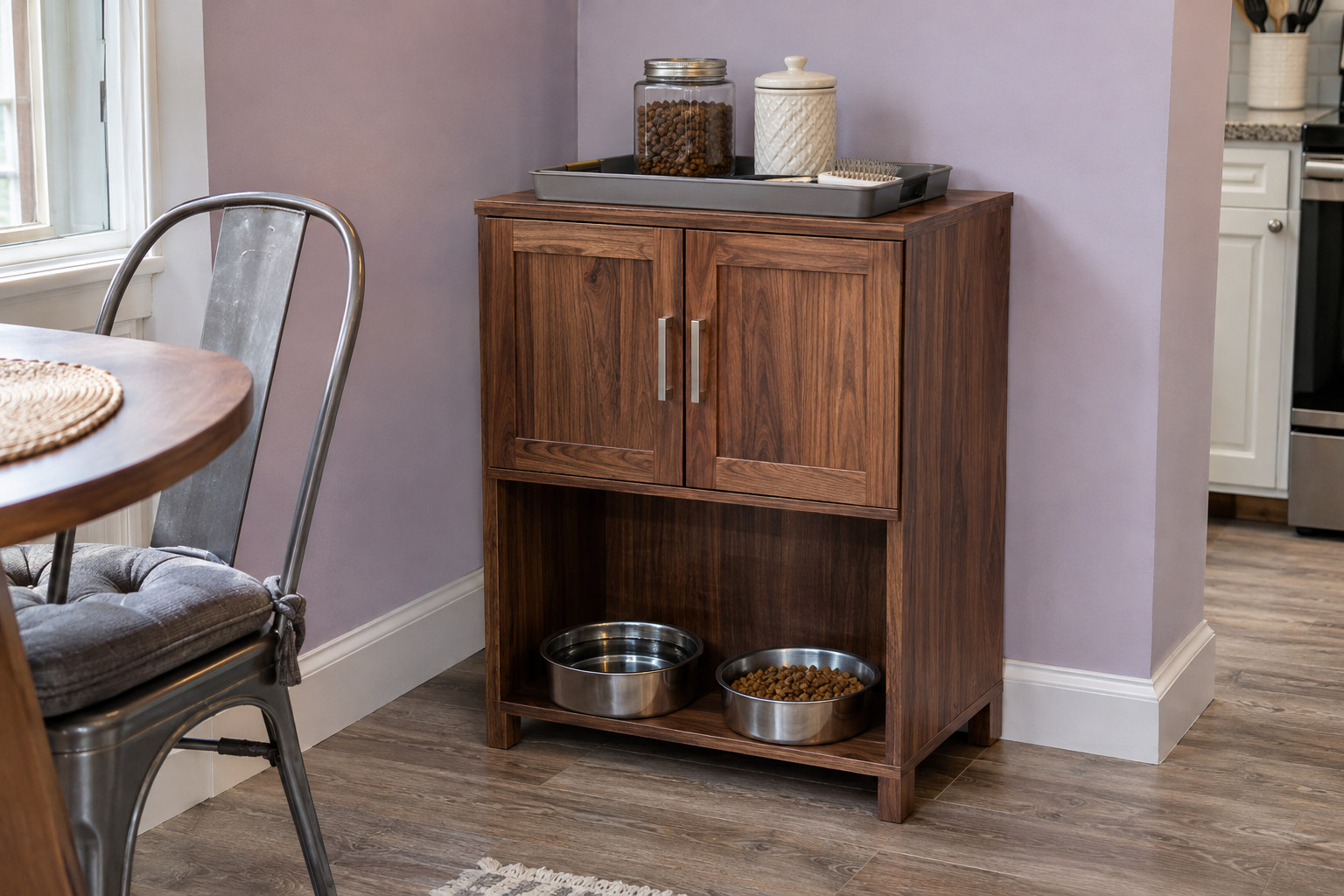
A freestanding cabinet suits renters and anyone whose room arrangement changes regularly. You can move it to a different wall without rebuilding the kitchen, and its upper storage can absorb the scoop, spare mat, or travel bowl that otherwise drifts onto the counter. Choose a piece that stands securely on the floor and remains stable when its doors are open.
An existing cabinet needs thoughtful adaptation. Removing a lower door does not automatically create a comfortable feeding opening, particularly if a shelf still cuts across the dog’s head space. Check the interior and all exposed edges before using it. Keep the bowls low and accessible, with a surface beneath them that can handle cleaning. A freestanding piece also needs breathing room around its sides: being movable is only an advantage when you can pull it out to check the floor behind.
8. Two Separate Meal Stations for a Two-Dog Home
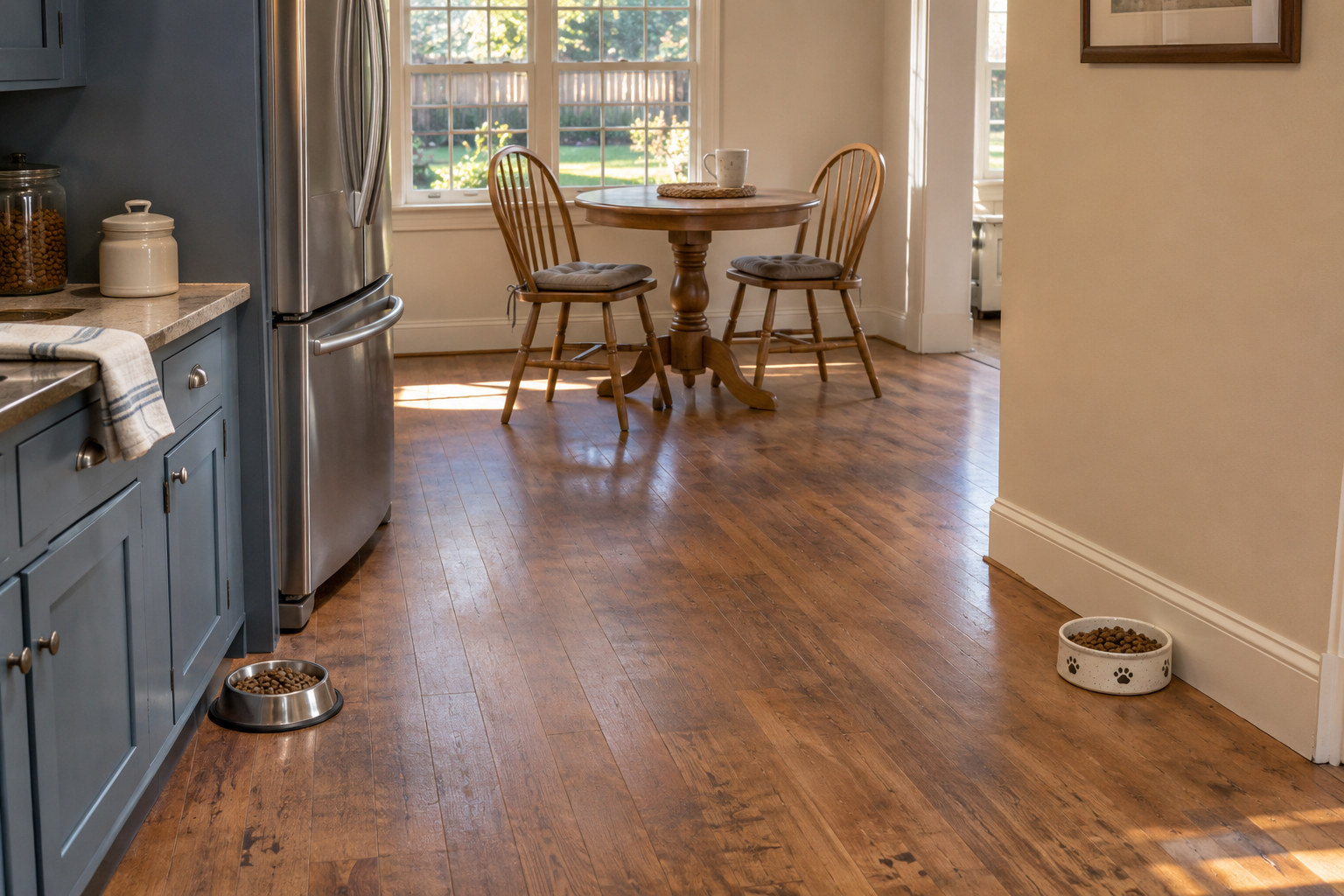
Two dogs do not have to share one attractive double-bowl unit. Separate meal stations give you more control over the room layout and let each dog eat without having another head immediately beside the bowl. You might use opposite ends of a kitchen, or a kitchen corner and an adjoining breakfast area, depending on the dogs and the household routine.
Avoid using one narrow passage as the space between stations. A person carrying dinner should not need to thread between two eating dogs. Give each location a clear approach and an easy route away, then use separate mats to make the boundaries obvious. Observe whether the arrangement actually works for your dogs, especially if one finishes much faster. If there is guarding or conflict, discuss management with a qualified professional rather than relying on furniture placement to solve it.
9. Feeding Corner Beside the Utility Sink
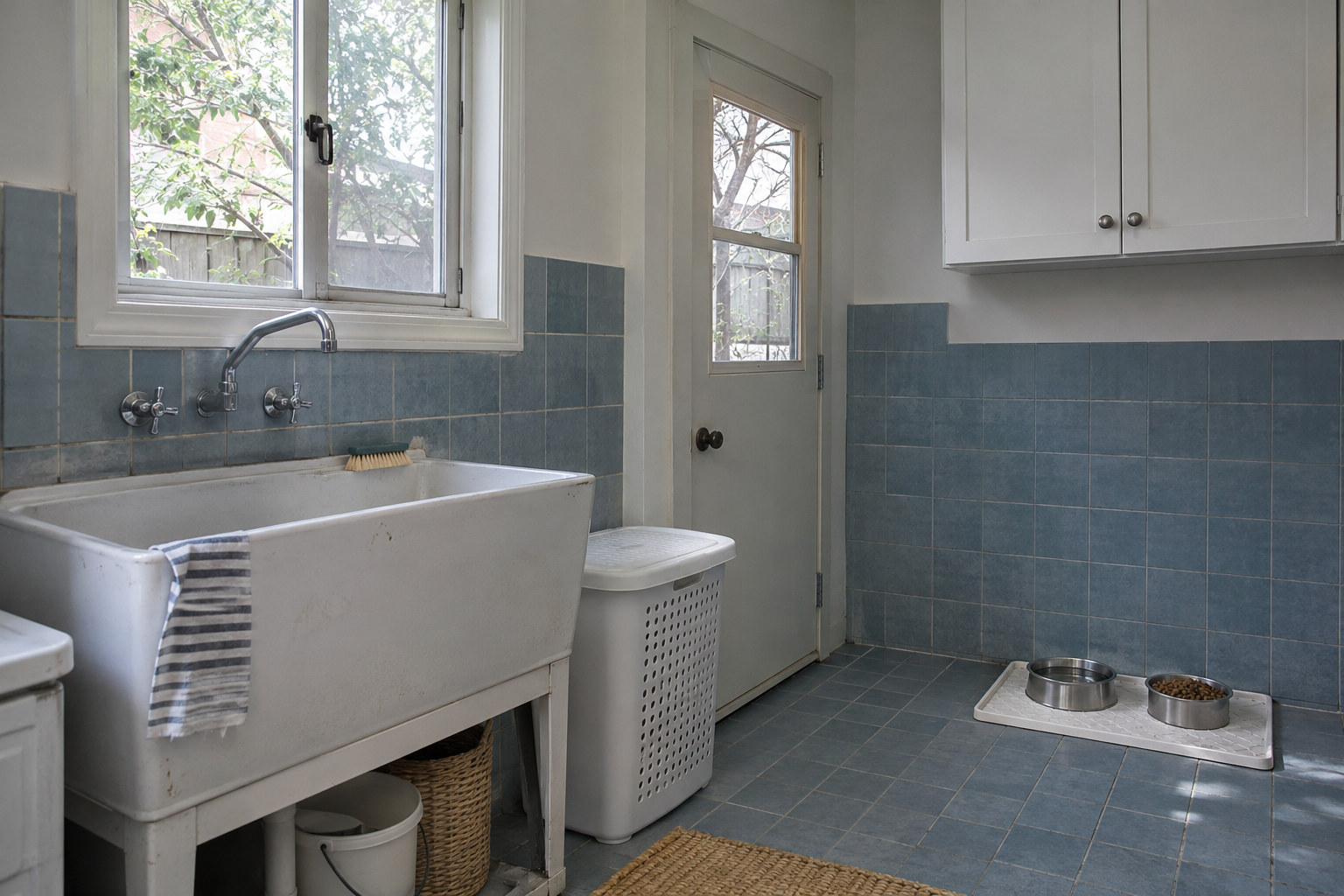
A utility sink makes bowl washing convenient, but the feeding station does not need to sit directly underneath it. An adjacent wall often gives you a better balance of access and separation. You can lift out the bowls, wash them, and return them without carrying drips across the house, while the dog stays clear of the sink cabinet and its pipework.
Keep detergents and other household products in secure storage away from the feeding area. An attractive open shelf is not a good place for containers that could fall or leak onto bowls. The room also needs a practical landing surface for clean dishes and a place to dry the mat. For a tight utility space, adapt the zoning principles in these small laundry room ideas, reserving the quietest reachable floor area for feeding.
10. Recessed Wall Niche with a Wipeable Back Panel
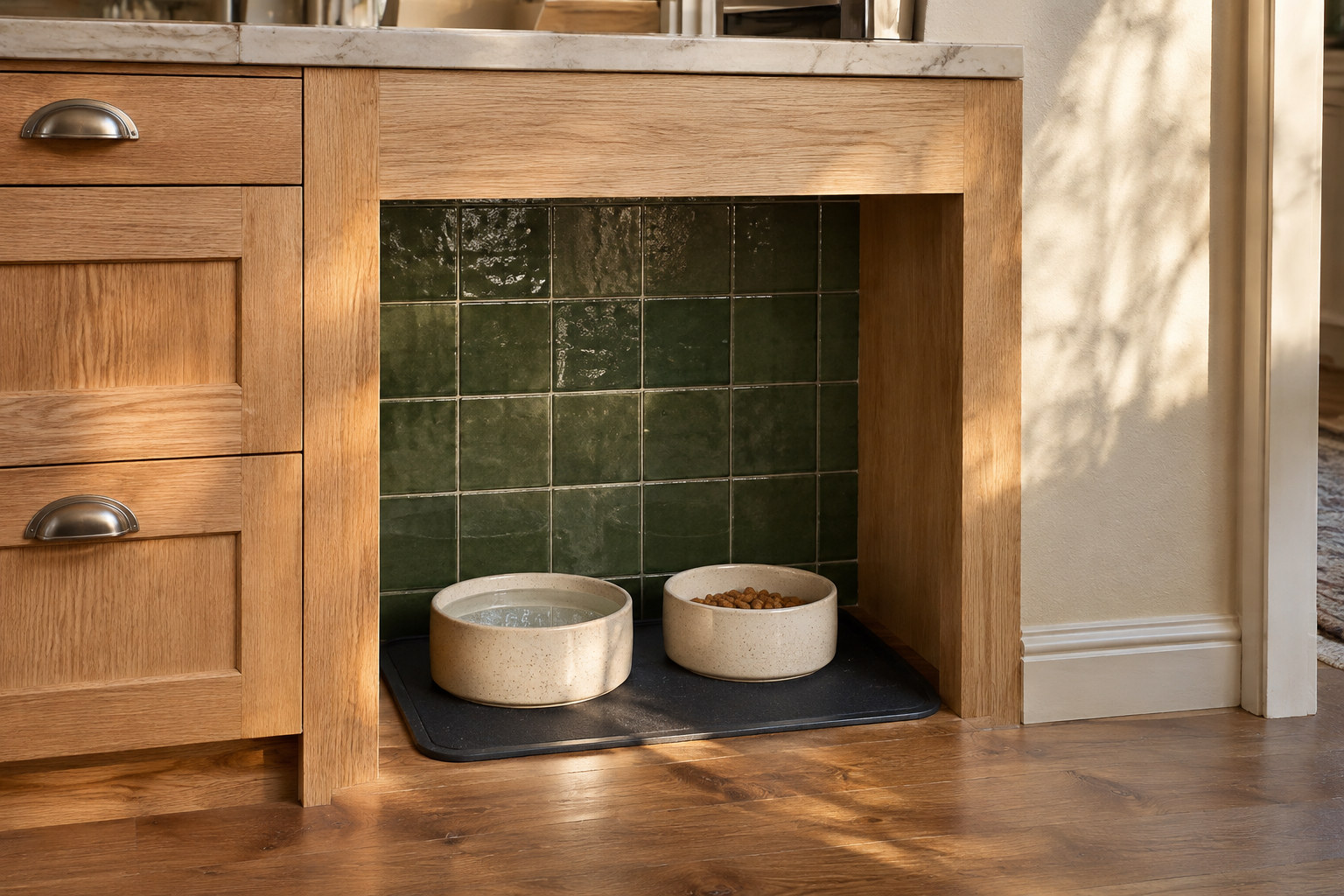
A shallow niche can frame a feeding station without swallowing a large amount of floor space. The key is to treat it as an open recess, not a little room the dog must push into. A wipeable back panel catches the visual mess of an ordinary feeding area, while a removable mat handles what reaches the floor.
This is a useful option when new cabinetry already includes an awkward shallow end section. Keep any building work within an appropriately assessed design; a convenient-looking wall is not an invitation to cut into it. Measure the bowl rims, the dog’s shoulders, and your own hand clearance before deciding the opening. A restrained tile pattern can give the niche character, but busy relief tiles and narrow ledges add cleaning work. Smooth, reachable surfaces are usually more rewarding than intricate trim here.
11. Meal Station on a Covered Interior Porch
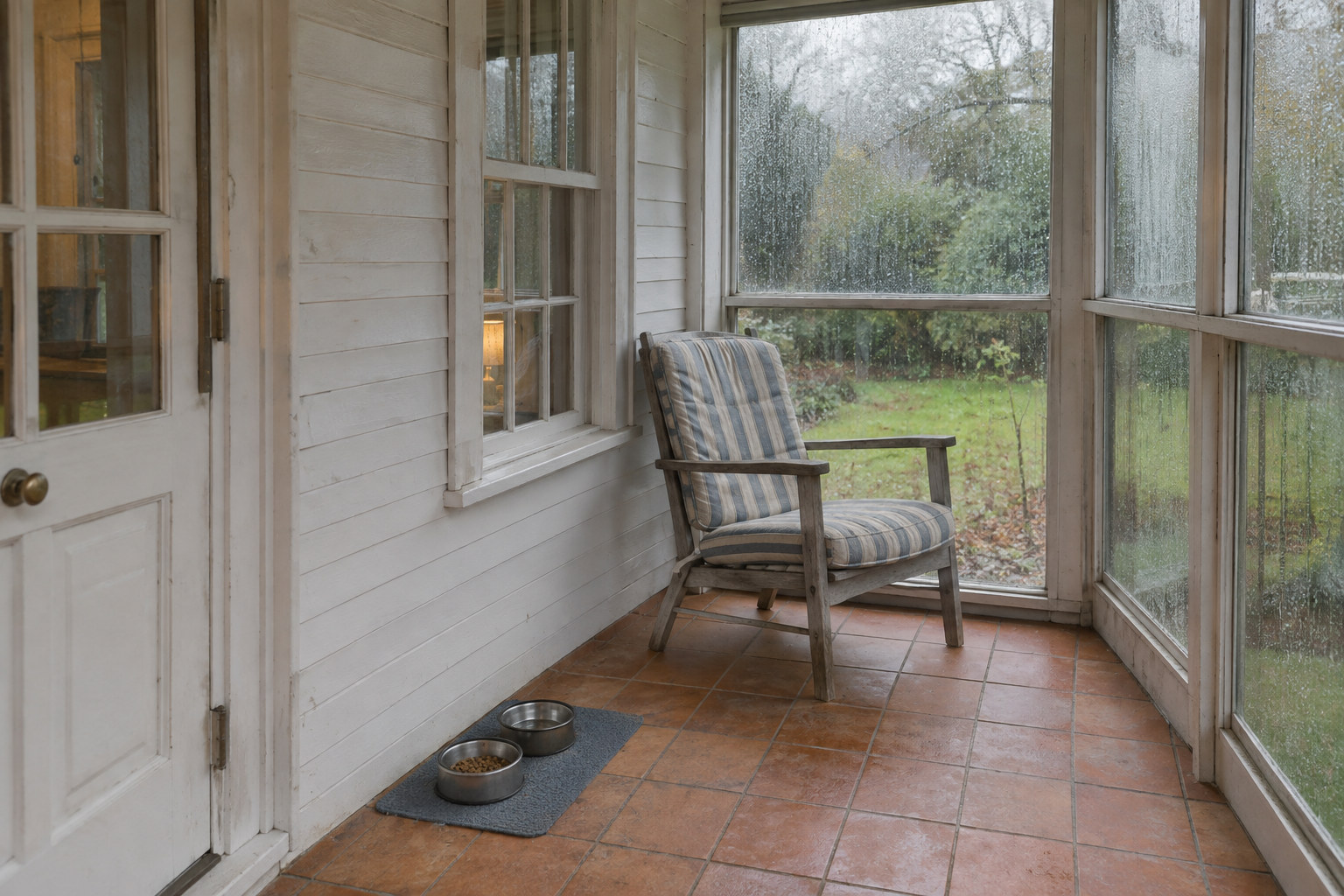
An enclosed interior porch can offer a calm feeding spot when it functions as a comfortable part of the house throughout the year. Position bowls away from the door swing and any strip of direct sun that moves across the floor. A shaded corner with a reliable route back into the home is more useful than the empty space immediately beside the entrance.
Check the room at the time your dog usually eats, not only when you first admire the layout. Some porches become the household’s busiest route at breakfast or collect parcels and wet umbrellas in the evening. Keep the feeding tray outside that traffic. Glazing, flooring, and a nearby chair may make the room look finished, but they do not guarantee comfortable conditions. Use this idea only where temperature and access are consistently suitable for your dog.
12. Portable Tray for a Flexible Small Home
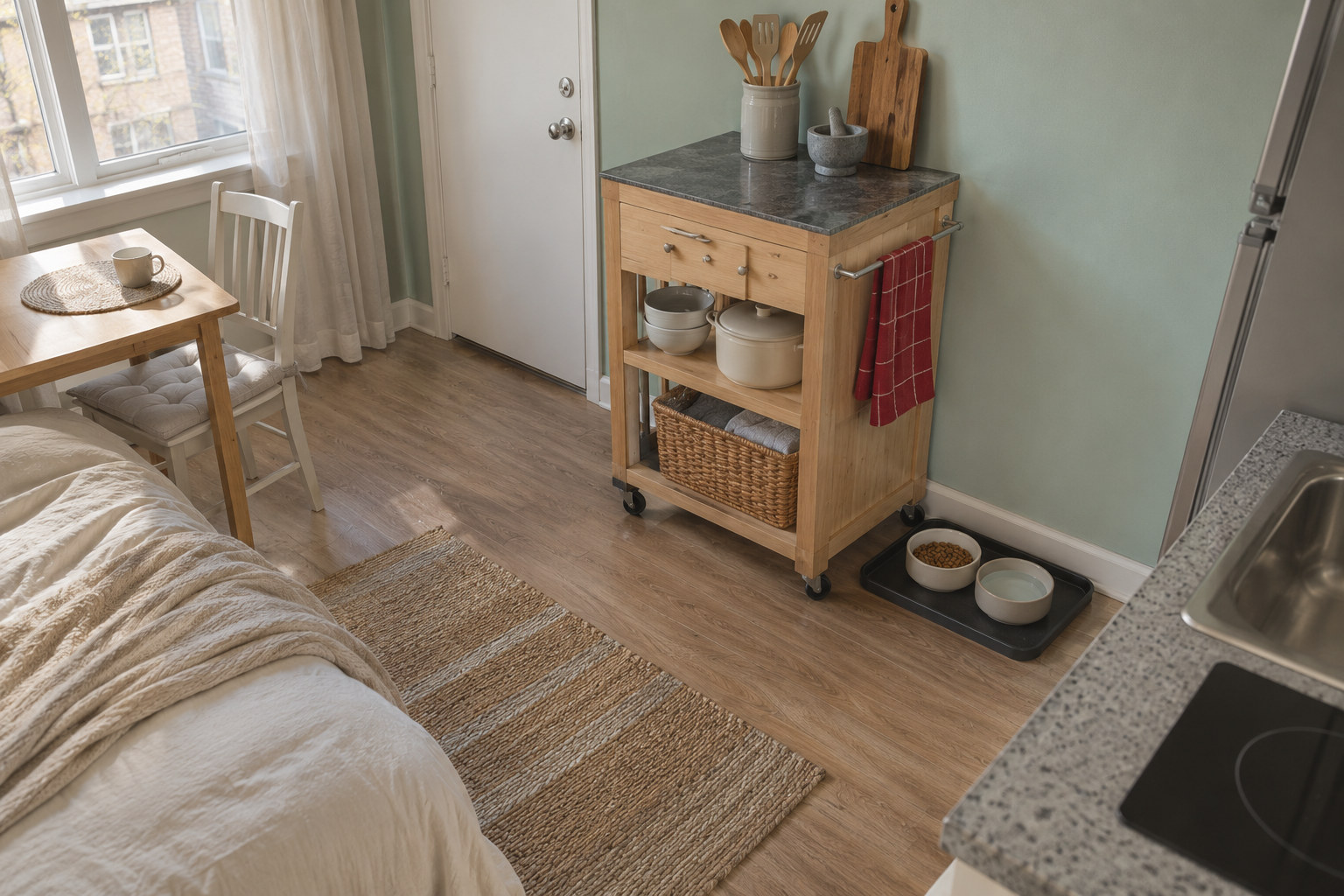
A portable tray gives a small home a feeding station without committing the floor to it permanently. It is useful beside a kitchen trolley, at the end of a breakfast counter, or in another spot that is quiet during meals. Pick it up to clean underneath, and keep a definite place for it to return so feeding does not become a daily search for spare floor.
Check the weight and flexibility of the tray with the bowls on it. A floppy mat may be easy to rinse but awkward to carry when wet; a rigid tray may be easier to move but bulkier to store. Keep a separate water bowl available if the meal tray is packed away. The trolley in this arrangement serves as nearby storage, with its wheels locked, rather than as something the dog needs to lean against or reach under.
13. Low Sideboard Bay in a Dining Room
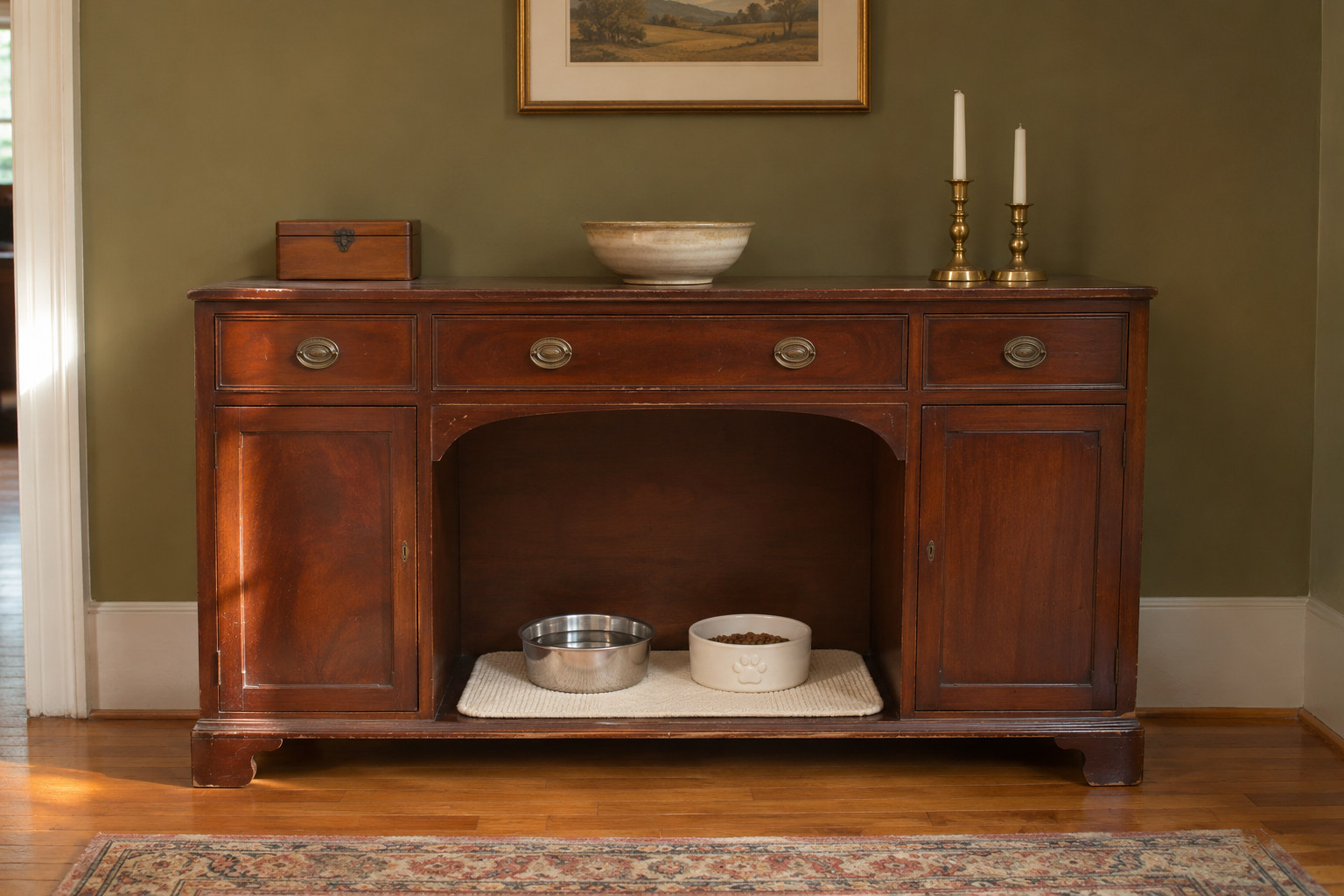
A low sideboard bay can bring the feeding station into a dining room while keeping it away from cooking activity. This works best with a generous open section near one end of the piece, rather than a narrow opening centered among drawers that people constantly use. The surrounding room needs enough clearance for dining chairs to move without entering the feeding zone.
Treat an older sideboard as furniture to assess, not a ready-made pet product. Check stability, interior finish, old hardware, and any exposed fixings before adapting it. Give the feeding area a washable protective surface independent of the decorative wood. Keep special-occasion tableware elsewhere if retrieving it would mean stepping around the dog at every meal. The goal is a comfortable everyday arrangement that happens to fit the room’s furniture, not an elaborate hiding place.
14. Dedicated Water Station Away from the Meal Bowl
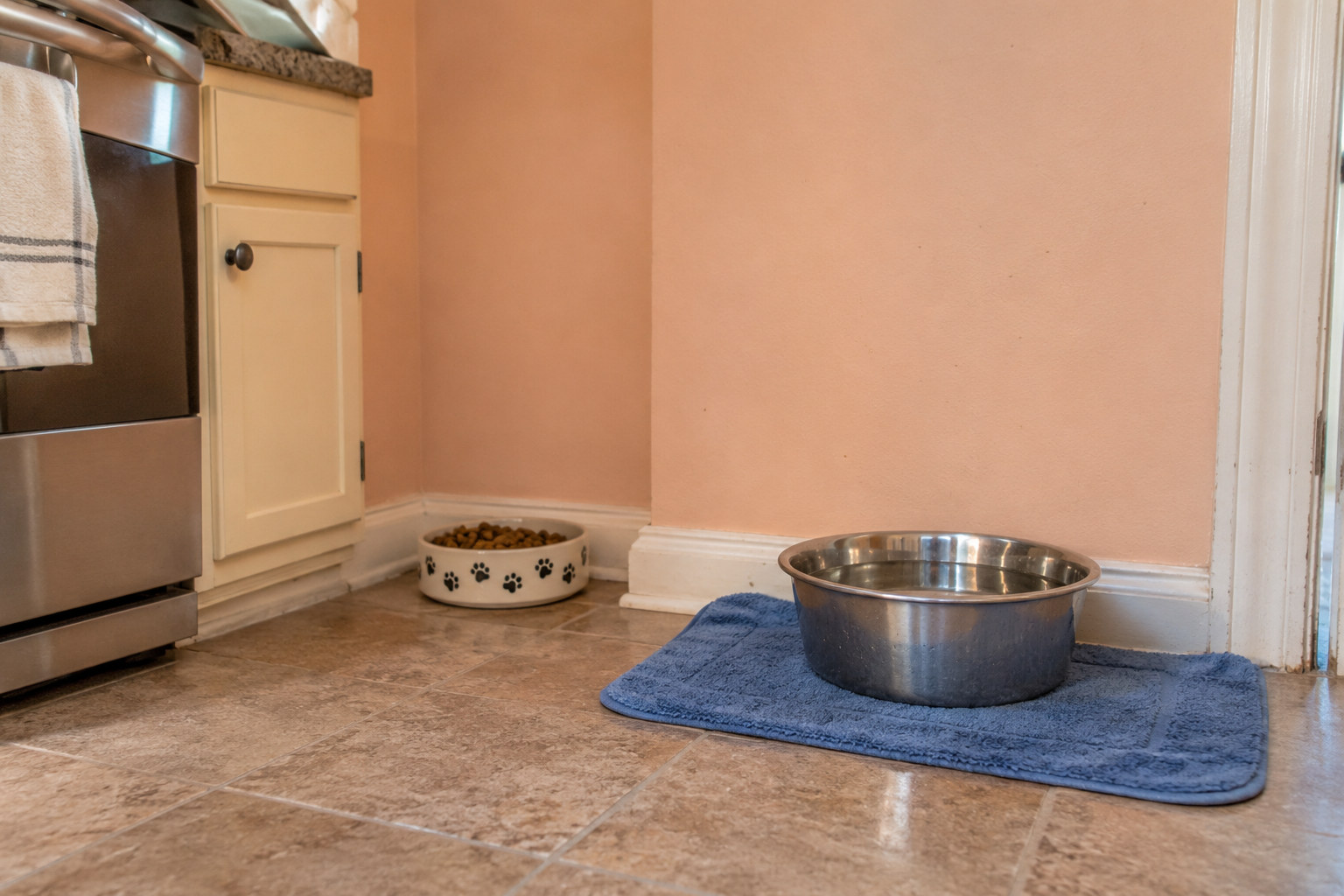
Sometimes the tidy solution is to separate water from meals. A dedicated water spot can sit where you can see spills quickly, while the dry-food bowl stays in a calmer, drier corner. The two stations can use different mats because their jobs are different: one needs to catch regular splashes, and the other mainly marks the meal area.
Keep the water location easy to reach throughout the day, including when doors, dining chairs, and dishwasher racks are in use. Avoid placing it behind a movable trolley that is likely to drift. Choose a bowl that stays stable for your dog, then check the mat and floor beneath it regularly. This arrangement also helps when a pull-out feeding tray or portable meal station is put away after use. The water has its own permanent place, rather than depending on the meal setup.
15. Feeding Nook Under an Open Utility Counter
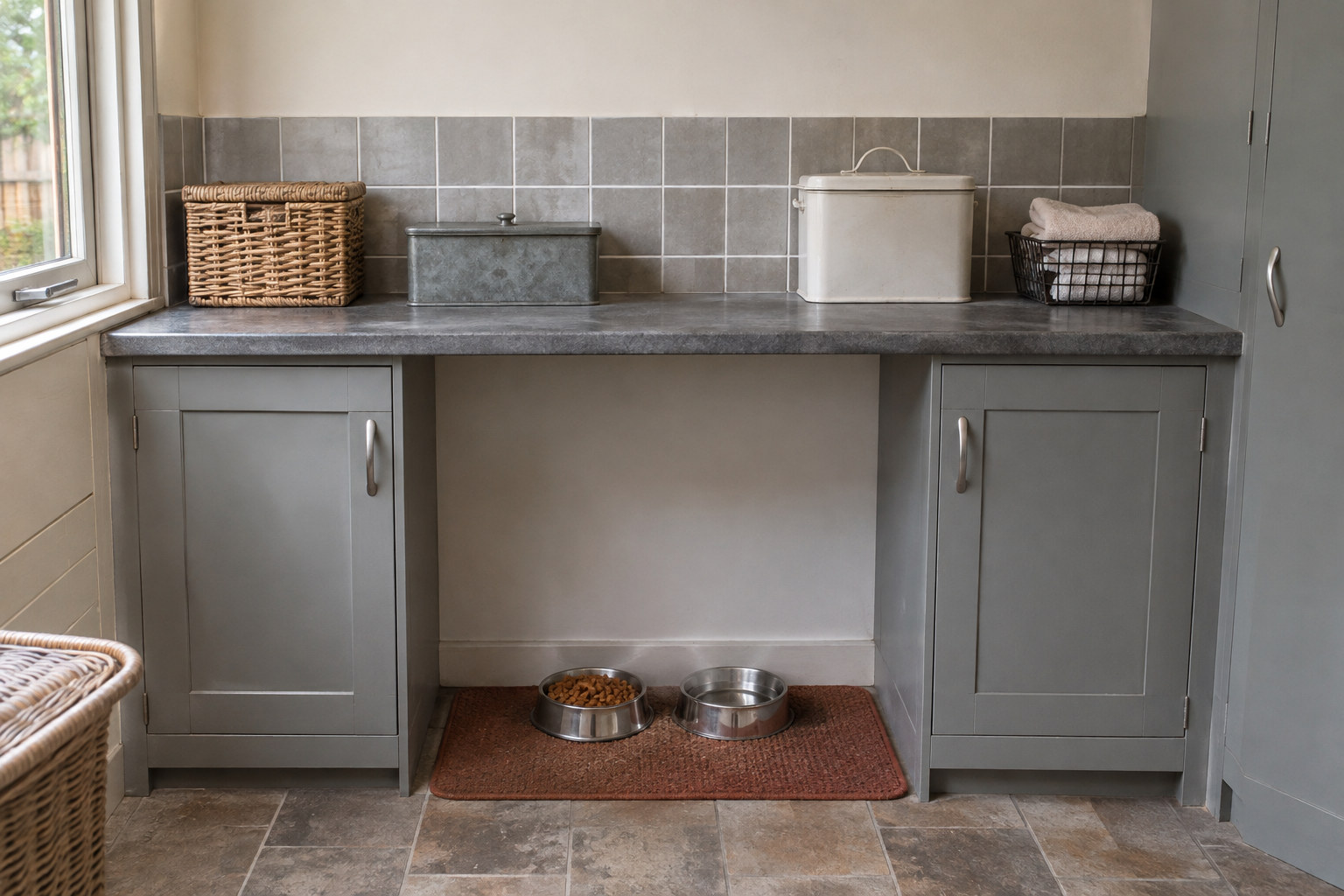
An open section below a utility counter can accommodate bowls while leaving the worktop available for household jobs. It is often easier to use than a deep cabinet because the opening already has clear front access. Make sure the dog can stand comfortably without ducking under a low rail, and keep the approach free of laundry baskets.
Think about what happens above the feeding nook. A counter used for sorting clean towels is a different prospect from one used for decanting cleaners or storing wet gardening equipment. Keep those activities elsewhere. The back panel and floor should tolerate the cleaning routine you intend to use, and the bowls should come out without moving the whole mat. If the counter becomes the family’s default dumping spot, add closed storage nearby so objects are less likely to fall into the feeding area.
16. Senior-Dog Feeding Area on a Clear Non-Slip Route
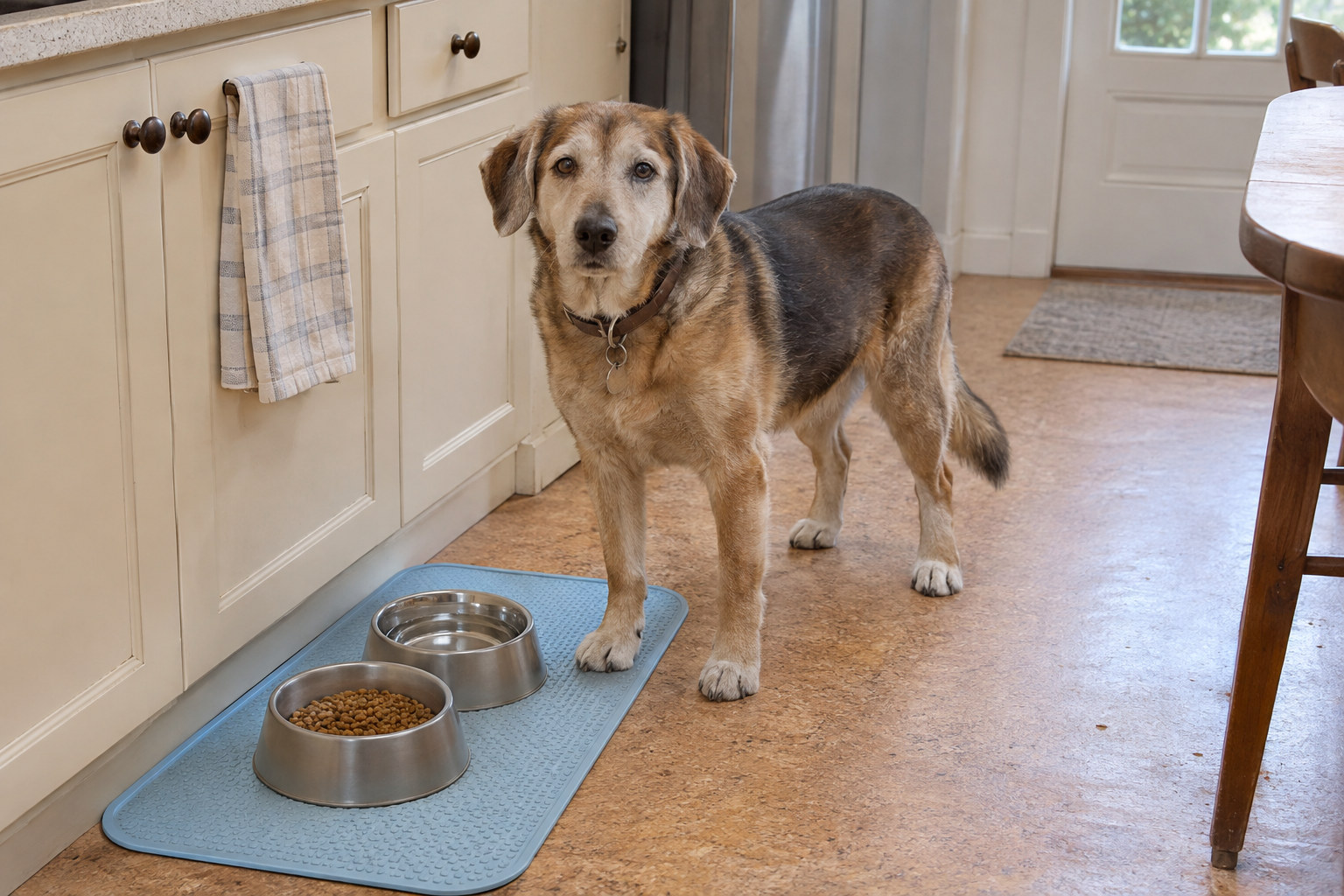
For an older dog, the route to the bowls deserves as much attention as the station itself. A clear, level approach removes unnecessary detours around stools, floor baskets, or a projecting cabinet foot. Keep the arrangement familiar and give the dog room to stand in its usual comfortable posture without a tight turn at the end.
Choose floor protection that stays flat and does not curl at the corners. A thick soft mat can look comfortable but may be awkward if it shifts underfoot. The right bowl position is individual; do not assume that a raised stand is automatically better. Ask your veterinarian if your dog has pain, swallowing difficulties, or other needs that affect feeding. A good room layout supports the advice you receive while keeping the everyday practicalities simple: stable bowls, a clear approach, and easy cleanup.
17. Feeding Zone Behind a Short Open Room Divider
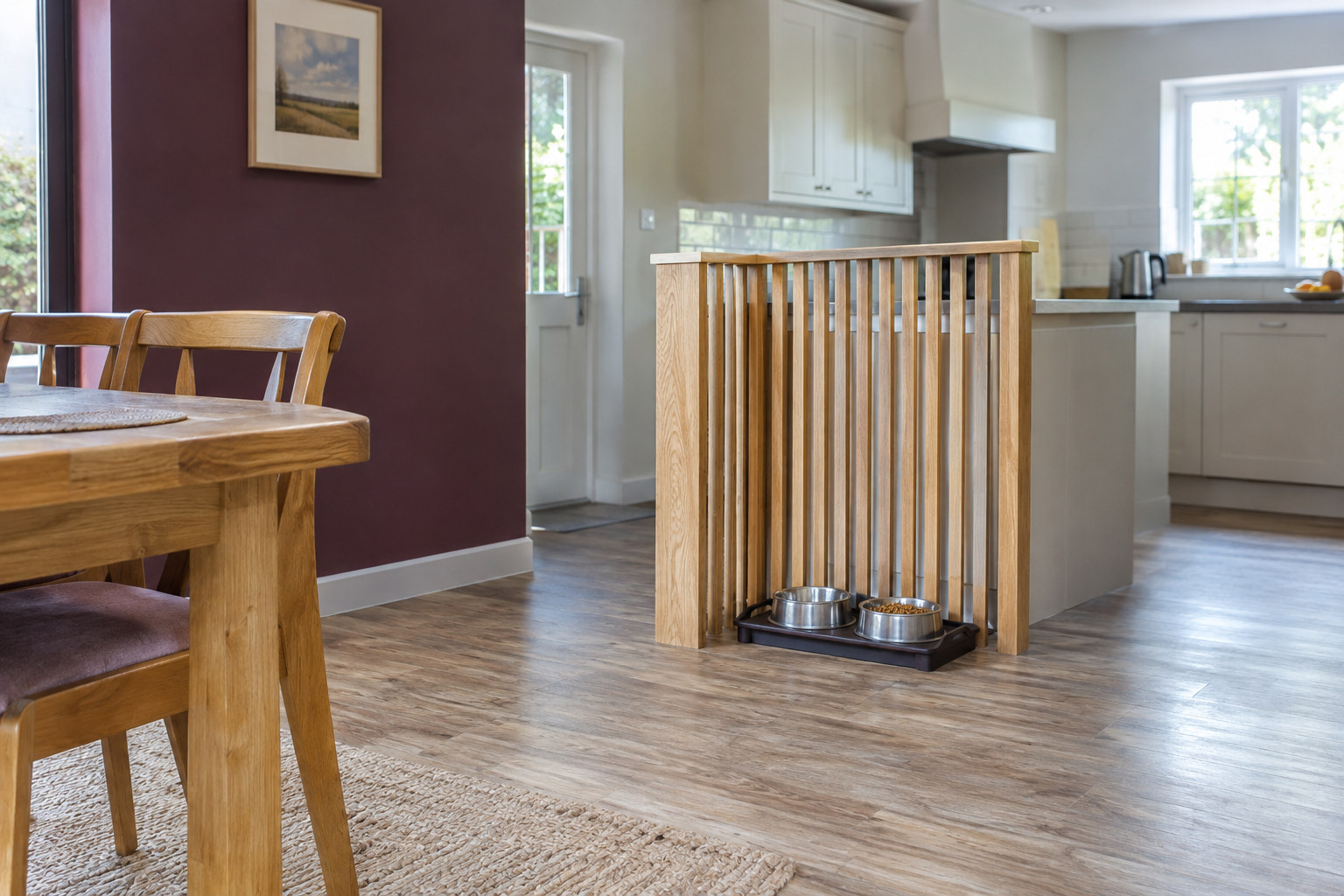
A short room divider can make a feeding area less prominent in an open-plan home while leaving it easy to enter. Keep the divider outside the dog’s standing space, with broad openings rather than a single narrow access point. The station should still be visible enough that you notice an empty water bowl or a spill.
Use a stable divider suited to the household, not a lightweight screen balanced next to the bowls. A partial visual boundary is usually enough; there is little benefit in creating a dark, enclosed corner solely to hide pet equipment. Keep both sides of the divider reachable for cleaning. If the living and dining areas need stronger visual organization, coordinate the station with the room’s existing materials and colors instead of adding several new finishes. The result can feel deliberate without making the feeding area a centerpiece.
How to Choose the Right Feeding Station Layout
Test the location before building anything
Put the bowls and a temporary mat in your proposed spot for several ordinary days. Include the busiest parts of your household routine, such as breakfast, unloading groceries, and cleaning the kitchen. Watch where the dog stands and how people move around it. A station that works only when every chair is pushed in is not yet in the right place.
Measure the entire working footprint, including the dog’s approach, your access to the bowls, and any door or drawer that opens nearby. Photograph the test arrangement with the room in use. That gives a cabinetmaker or other installer more useful information than bowl diameters alone.
Choose cleaning access over elaborate concealment
A good station lets you lift every bowl, remove the mat, and reach the wall-floor junction without tools. Check whether decorative rails, tight corners, or fixed shelves would make that harder. Use finishes appropriate to their exposure and follow their care instructions rather than assuming every painted or sealed surface tolerates repeated soaking.
The FDA’s pet-food handling advice includes washing bowls and scooping utensils after use. Place the station where that routine is convenient. Also inspect beneath floor protection, because a tidy-looking top surface can conceal water underneath.
Keep food storage practical
Storage is useful when it fits the packaging, closes securely, and can be cleaned. Leave room to remove a bag without dragging it through the bowl area. Keep scoops and accessories organized separately from household cleaning products, and avoid filling the feeding nook with more supplies than you use daily.
For detailed food-storage guidance, use the FDA’s storage recommendations and the instructions on the product. The decorative container is secondary to preserving the food and retaining its packaging information.
Get the Fail-Safe Paint Color Playbook (Free PDF)
36 proven colors • 8 ready palettes • trim & sheen guide • printable testing cards.
Treat bowl height as an individual decision
Furniture photographs often show raised feeders, but the appearance is not a health recommendation. Cornell’s information on gastric dilatation-volvulus lists raised bowls among possible risk factors. Ask your veterinarian about a suitable setup if you are considering a different feeding position for a medical or mobility reason.
For room planning, concentrate on what you can assess directly: whether the dog reaches the bowl comfortably, whether the station moves, and whether the surrounding layout creates awkward turns or interruptions.
Small Details That Make the Station Easier to Live With
Keep a spare mat or towel where you can reach it, but give it a home outside the eating space. Match the station’s footprint to the real mess rather than to the smallest attractive tray. Avoid loose decorative objects above bowls, and leave a clear place to set clean dishes while you wipe the area.
If upper-wall storage would help, borrow the organizing ideas from these entryway shelf arrangements while keeping anything heavy or spillable away from the dog’s immediate space. A simple station with a reliable cleaning routine will earn its place in the room faster than a complicated cabinet you hesitate to open.
Start with the least permanent option that meets your needs. Once the location works through normal family life, you can decide whether matching cabinetry, a tiled recess, or a dedicated storage piece would make daily use meaningfully easier.