
15 Laundry Room Dog Wash Station Ideas with Practical Layouts
The best laundry room dog wash station starts with the route through the room. A muddy dog needs somewhere to enter, somewhere to stand, and somewhere to dry without crossing a pile of clean laundry. The washing basin is only one part of that sequence.
These layouts show different ways to organize the wet area, storage, and everyday laundry work. Use them to decide what your room needs before choosing tile or cabinetry. Some suit a planned renovation; others work with an existing shower recess or utility-room arrangement. In each case, the useful question is the same: can you reach, wash, rinse, and dry your dog comfortably while keeping the rest of the room usable?
Get the Fail-Safe Paint Color Playbook (Free PDF)
36 proven colors • 8 ready palettes • trim & sheen guide • printable testing cards.
1. Low-Threshold Wash Bay Beside the Back Door
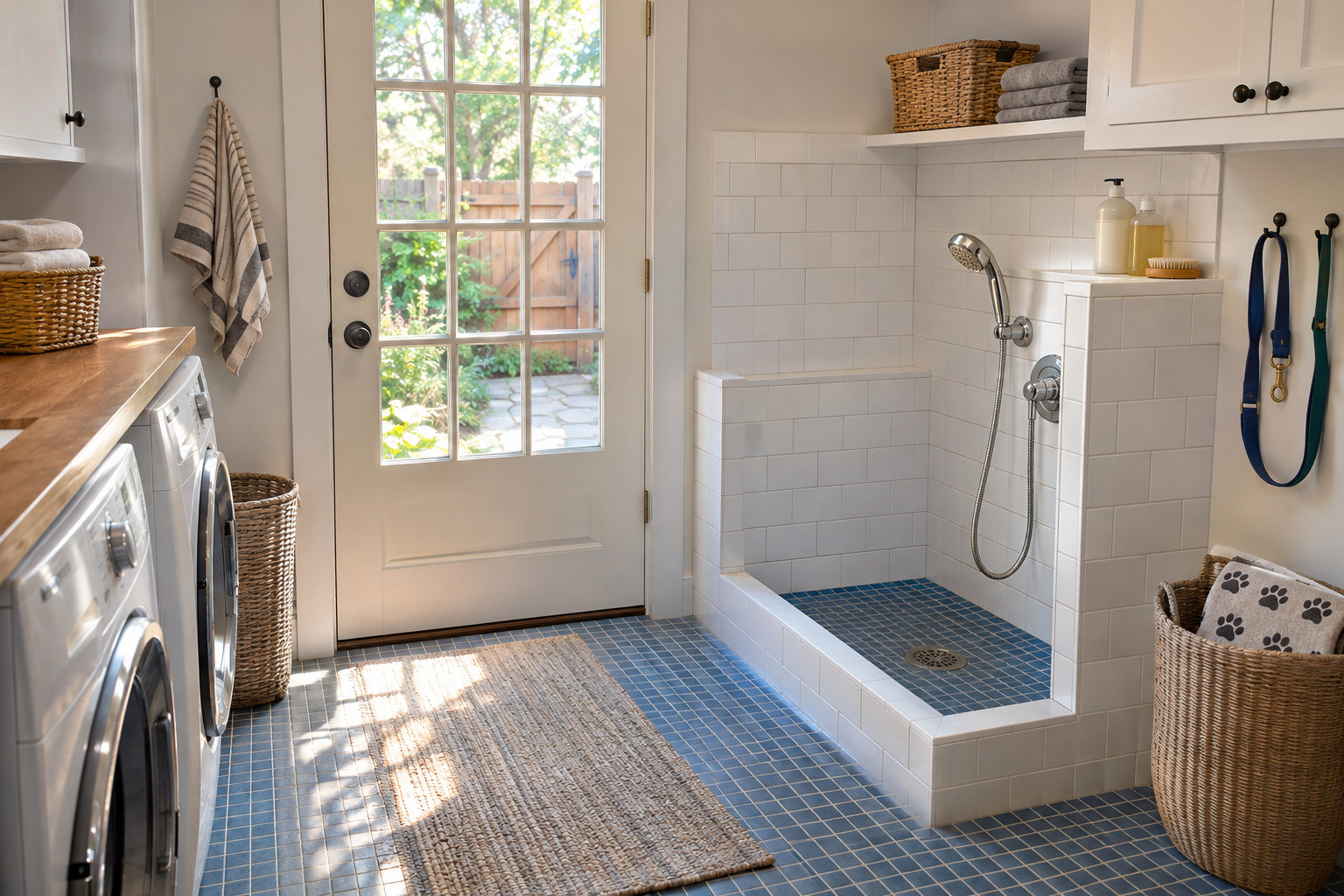
A wash bay near the back door creates a short route from muddy garden to washable surface. Place it to one side of the entrance rather than directly behind the door, so you can bring the dog inside and close the door without a cramped turn. A low threshold can make entry simpler, provided the whole wet-area design manages water properly.
Allow a dry place to stand outside the bay. You will need room for your feet, a towel, and the dog’s movement as it comes out. Keep the door mat separate from this drying area, since one catches outdoor grit while the other needs to stay ready for a clean dog. Before committing to the layout, rehearse the sequence with the actual door open and a laundry basket in its usual place. Small obstructions become surprisingly noticeable when both hands are occupied.
2. Raised Tub for Small Dogs with a Safe Approach
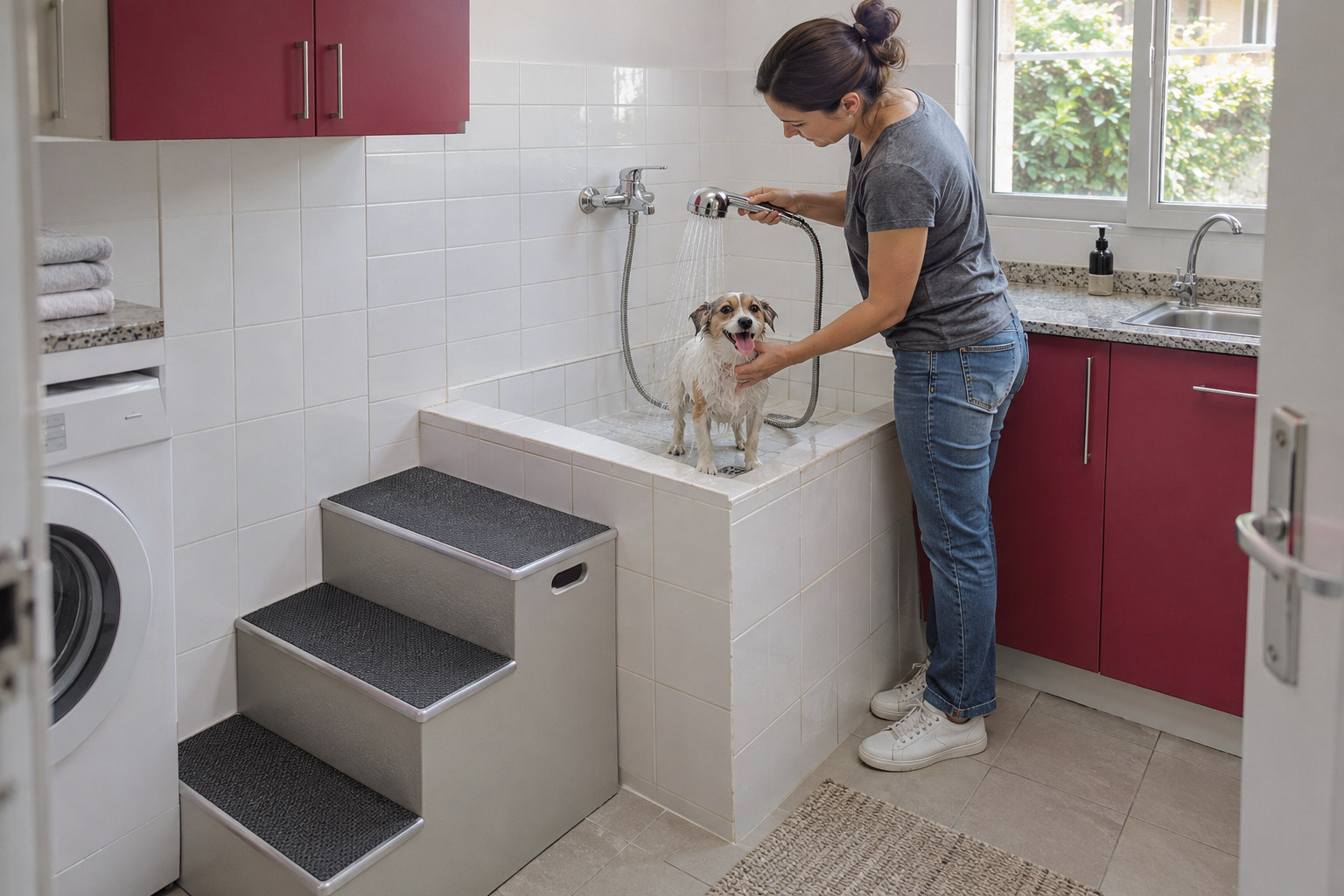
A raised tub can bring a small dog closer to a comfortable working height. It is most useful when the dog can be placed or assisted into it safely and the person washing can reach the whole animal without leaning over a deep front wall. Treat the tub height and approach as one decision, not two separate purchases.
Broad, stable access steps may suit some dogs, but they need enough floor space and a secure position during use. A steep little staircase added afterward can undo the benefit of a convenient tub. Keep the working area clear, use an appropriate nonslip surface, and never leave a dog unattended in an elevated basin. Build in a place for wet towels outside the entry route. If lifting is difficult or your dog’s mobility changes, a lower wash bay may be the more adaptable choice.
3. Walk-In Wash Station at the End of a Galley
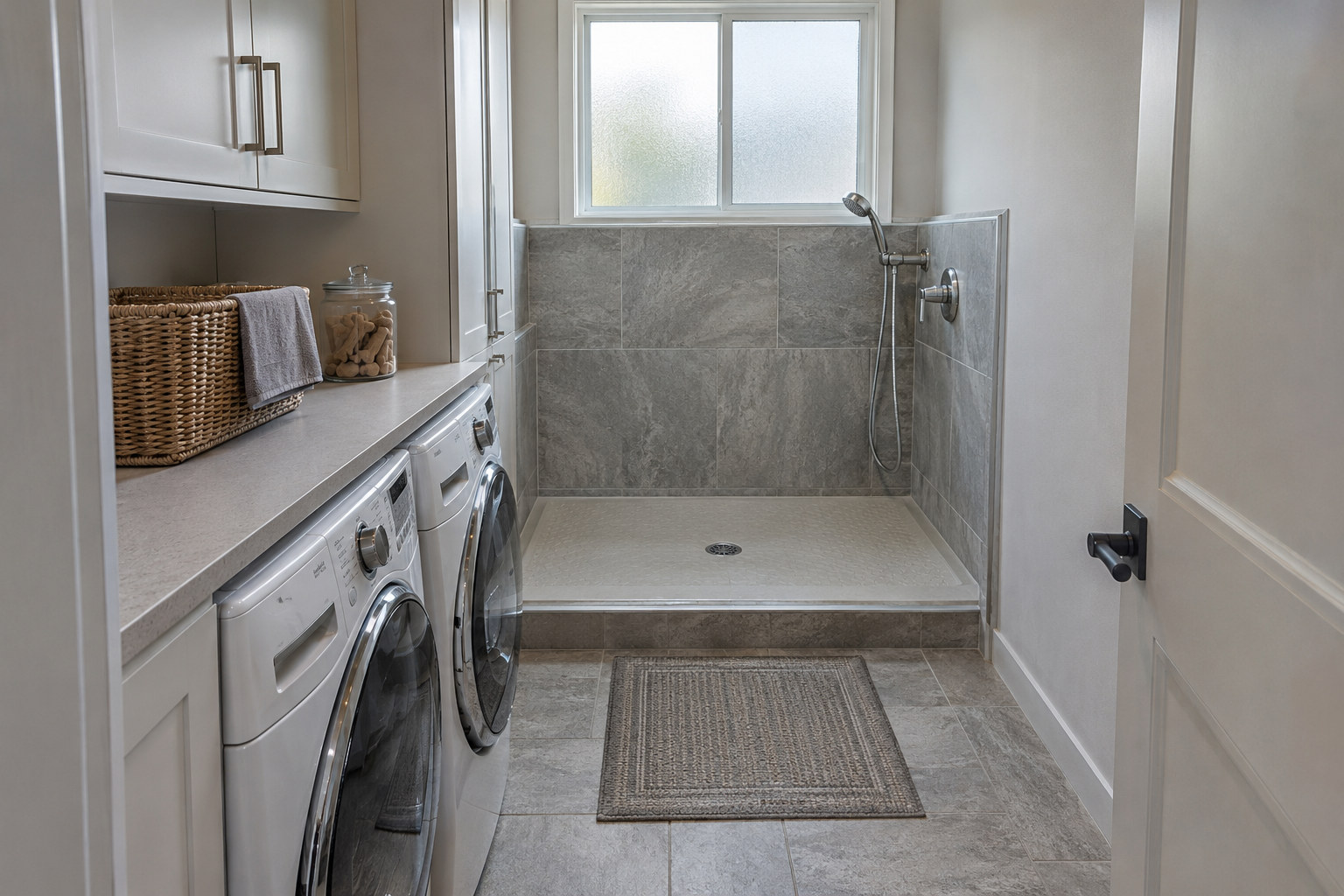
The far end of a galley laundry can become a dedicated wash zone, leaving appliances and folding space along the side walls. The arrangement works when the dog can travel through the room without squeezing between open machine doors. A full-width end bay often feels calmer than a tiny basin inserted into the middle of a busy cabinet run.
Check the narrowest part of the approach, not just the wash bay itself. Keep baskets, stools, and floor-standing hampers out of that route during bathing. You also need somewhere to move when the dog steps out, so avoid filling the final stretch with storage. If the room already feels compressed, these small laundry room layouts can help you reorganize the dry tasks before deciding how much space remains for a useful wash area.
4. Corner Wash Bay with Two Splash Walls
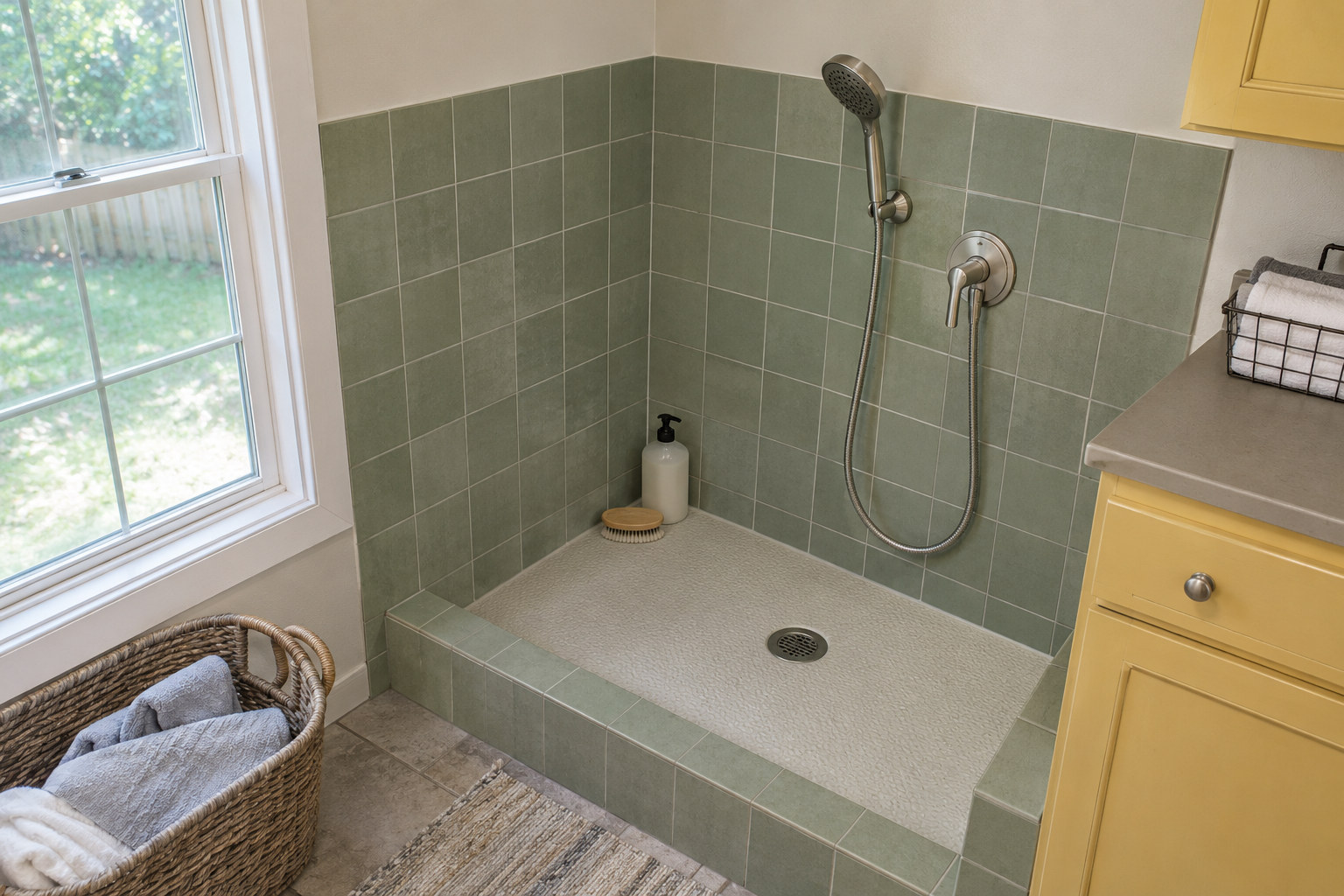
A corner bay uses two existing room edges to define the splash area. It can leave the rest of a square laundry open and make plumbing and storage arrangements easier to discuss with an installer. Keep the front generous enough to reach the dog, rather than shaping the bay into a tight triangular enclosure simply to fit the corner.
The two walls need an appropriate wet-area construction behind their finish. Tile is a surface choice, not the whole waterproofing plan. Think about the outside corner too: a projecting curb or sharp cabinet return can make entry awkward. Set nearby cupboard doors back from the main splash and standing zone. A simple corner arrangement usually benefits from a small number of reachable shelves or hooks, with frequently used items outside the spray but close enough that you do not need to leave the dog.
5. Wash Bay Opposite a Fold-Down Drying Surface
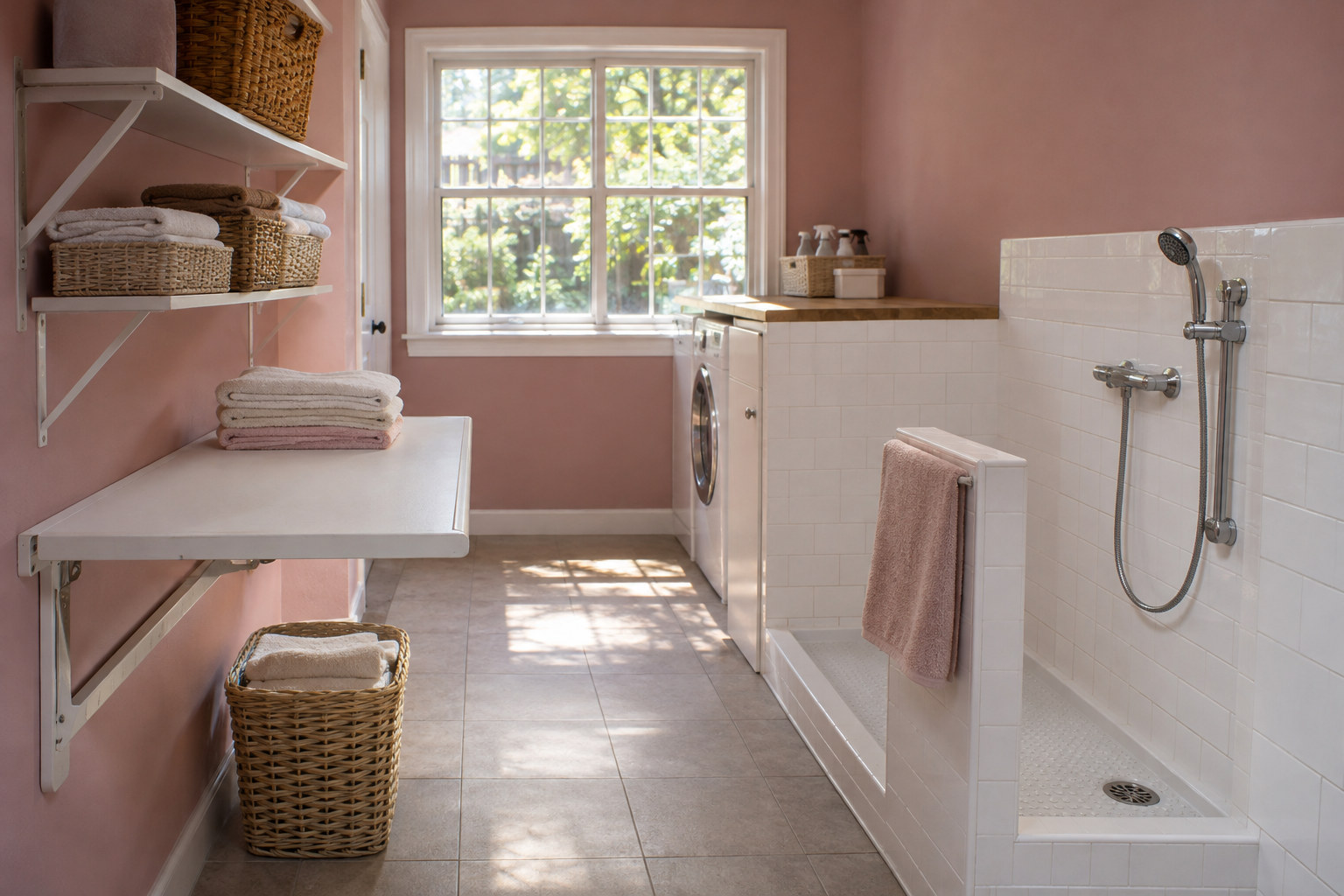
A fold-down surface opposite the wash bay gives towels and grooming supplies a temporary landing place. It can be useful in a room that needs to return to laundry duty after bathing. Position it where opening it still leaves a comfortable aisle, and choose hardware and installation suitable for its intended use.
Use the surface for supplies unless it has been specifically designed and assessed to support an animal. A convenient-looking folding shelf should not become an improvised grooming table. Keep clean towels on the dry side and give used ones a separate hamper so the two do not become mixed mid-bath. Test the shelf with all the room’s doors open. If it prevents access to the washing machine or forces you to turn sideways beside the dog, a smaller fixed shelf or movable caddy may serve you better.
6. Shower-Style Wash Area with a Partial Screen
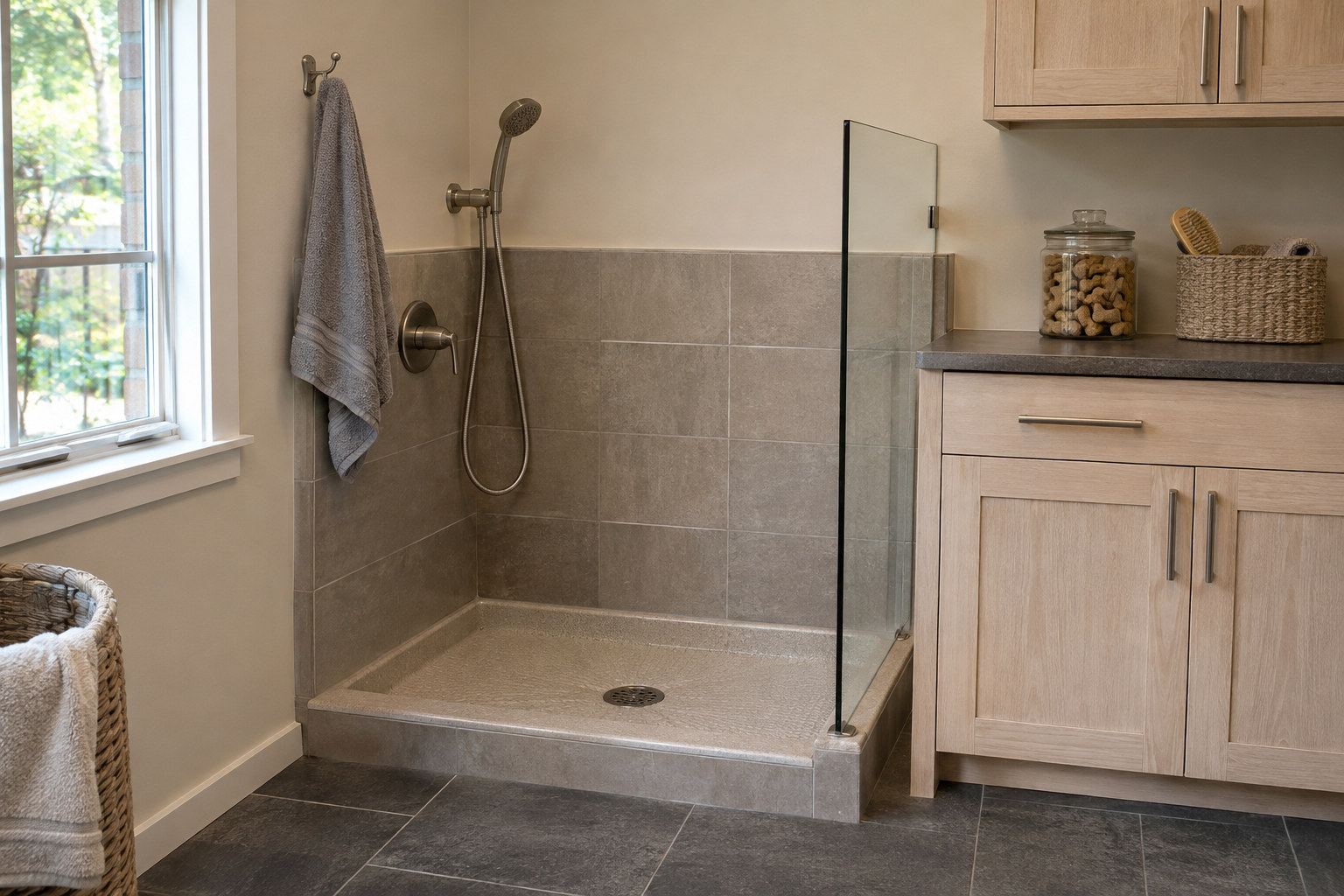
A partial splash screen can protect the neighboring cabinet without turning the wash station into a closed glass box. Keep the entrance broad and the working side open enough to reach the dog comfortably. The screen should solve an observed splash problem, not merely copy the appearance of a human shower.
Consider how you will clean both faces and the joint where the screen meets the floor or curb. Narrow inaccessible gaps quickly become annoying in a room used for muddy paws. Use a screen and fittings appropriate for the location and have the installer plan the attachment as part of the wet-area system. An open layout also needs sensible hose reach and spray direction. A handheld sprayer aimed toward the protected walls can do more for everyday tidiness than adding increasingly elaborate barriers around a cramped basin.
7. Dog Wash Between Two Closed Storage Cabinets
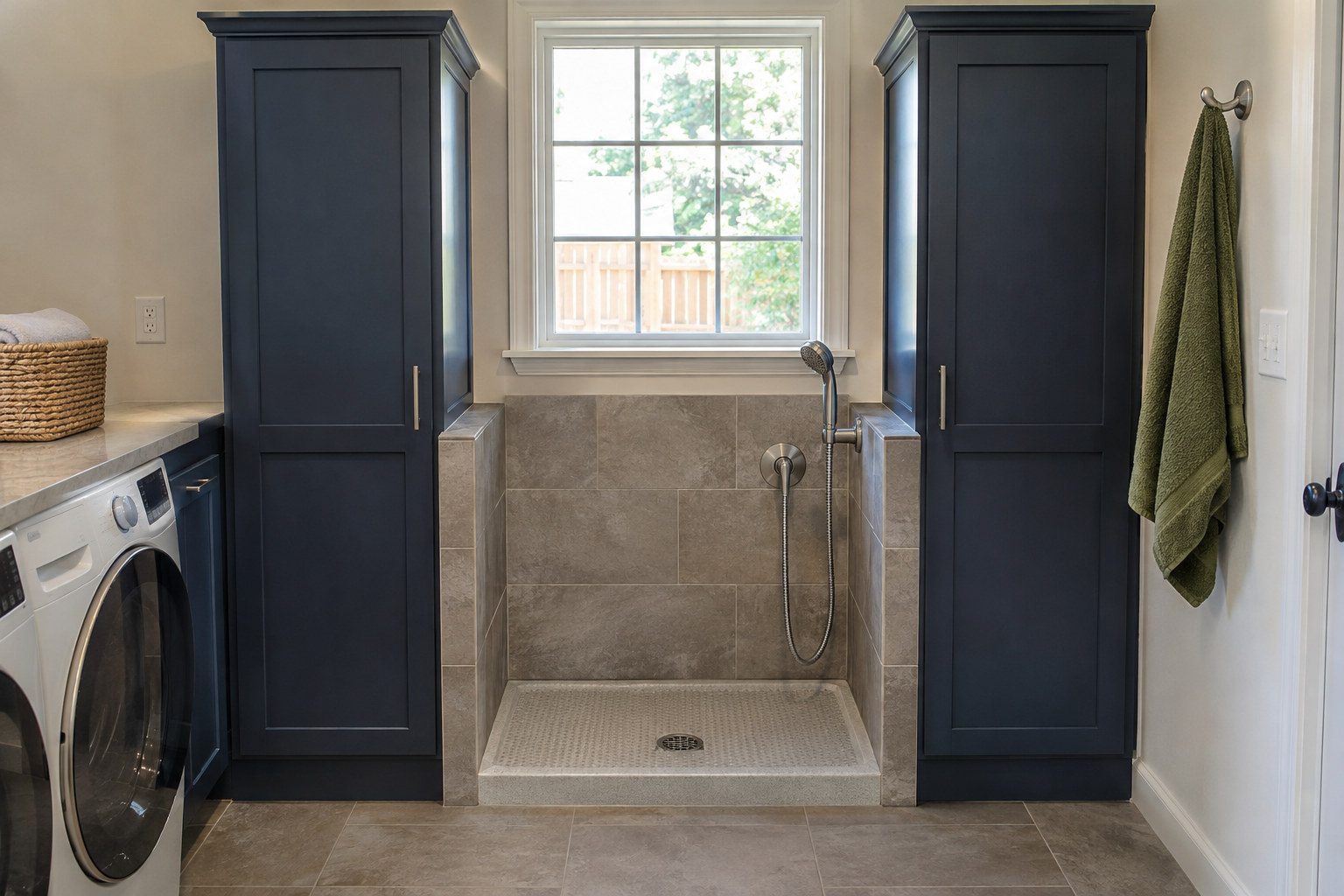
Framing a wash bay with storage can make the whole wall feel organized, especially in a laundry with little space elsewhere. Use the surrounding cabinets for towels, spare mats, and other dry supplies, while keeping their fronts and bases out of the main splash path. The wash area should retain enough width for the dog and your hands.
Avoid letting storage dictate a basin that is too narrow to use. Start with the bathing footprint, then assign the remaining wall space to cabinetry. Closed storage is useful for keeping household products away from the animal, but check what sits immediately above the wet zone as well. A tall door that swings over the basin creates an unnecessary interruption. Leave a clear place to set down the sprayer, and ensure every cabinet can open fully without requiring the dog to move.
8. Wide Wash Bay for a Large Dog
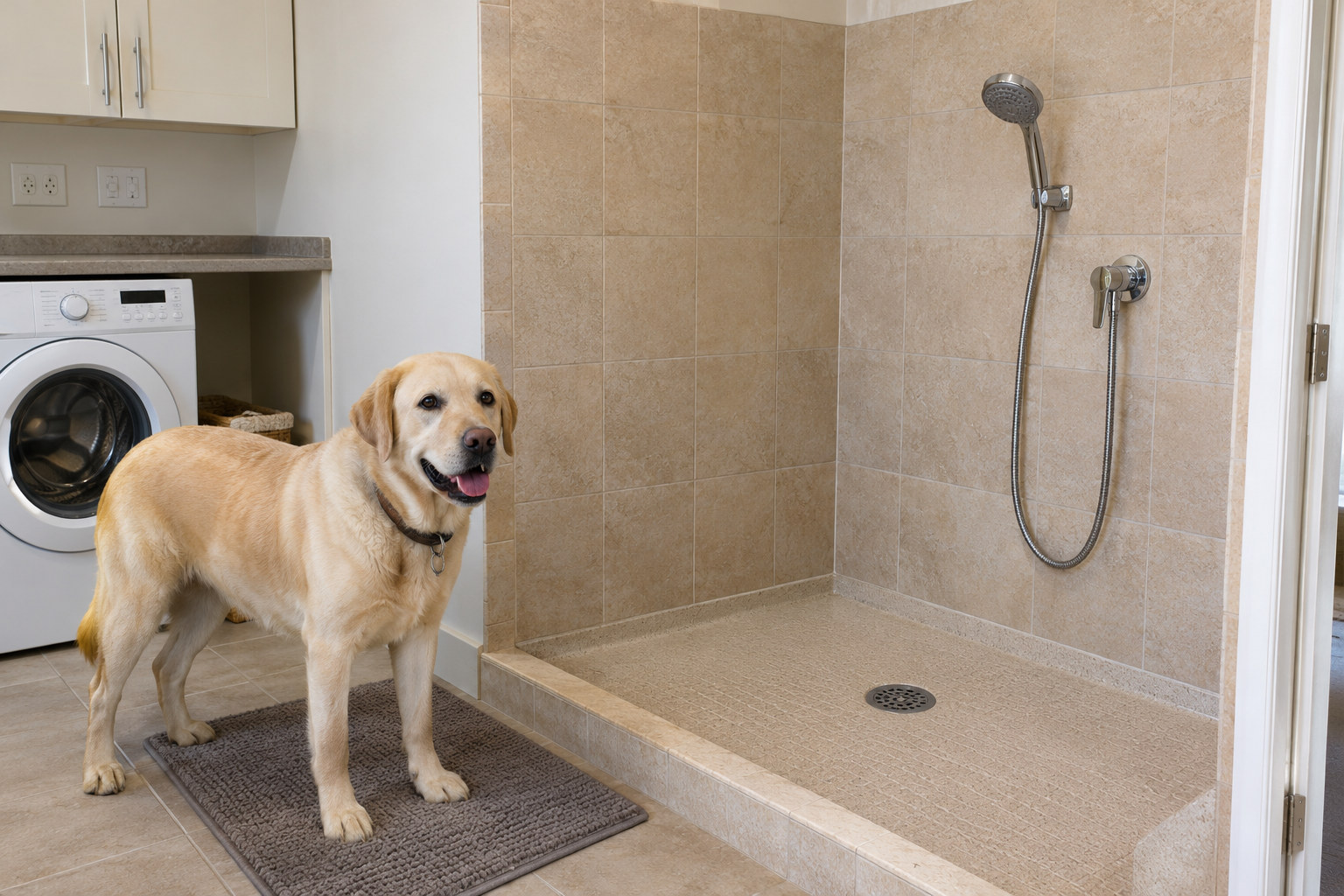
A large dog’s wash bay needs space for more than four paws. Consider the animal’s length, the way it turns, and where you will stand to reach each side. A wide, simple basin with a manageable threshold is often easier to work around than a deep tub that looks substantial but limits access.
Use a temporary floor outline to test the proposed size with your dog before ordering fixtures. Leave room for the approach and drying area beyond that outline. The hose should reach the far side without stretching taut across the animal, and the controls should be reachable without climbing into an awkward position. Keep the surrounding floor suitable for wet use. A wider bay also gives you more surface to clean, so choose accessible corners and a drain arrangement your installer can service without dismantling the station.
9. Compact Wash Station Under a Window
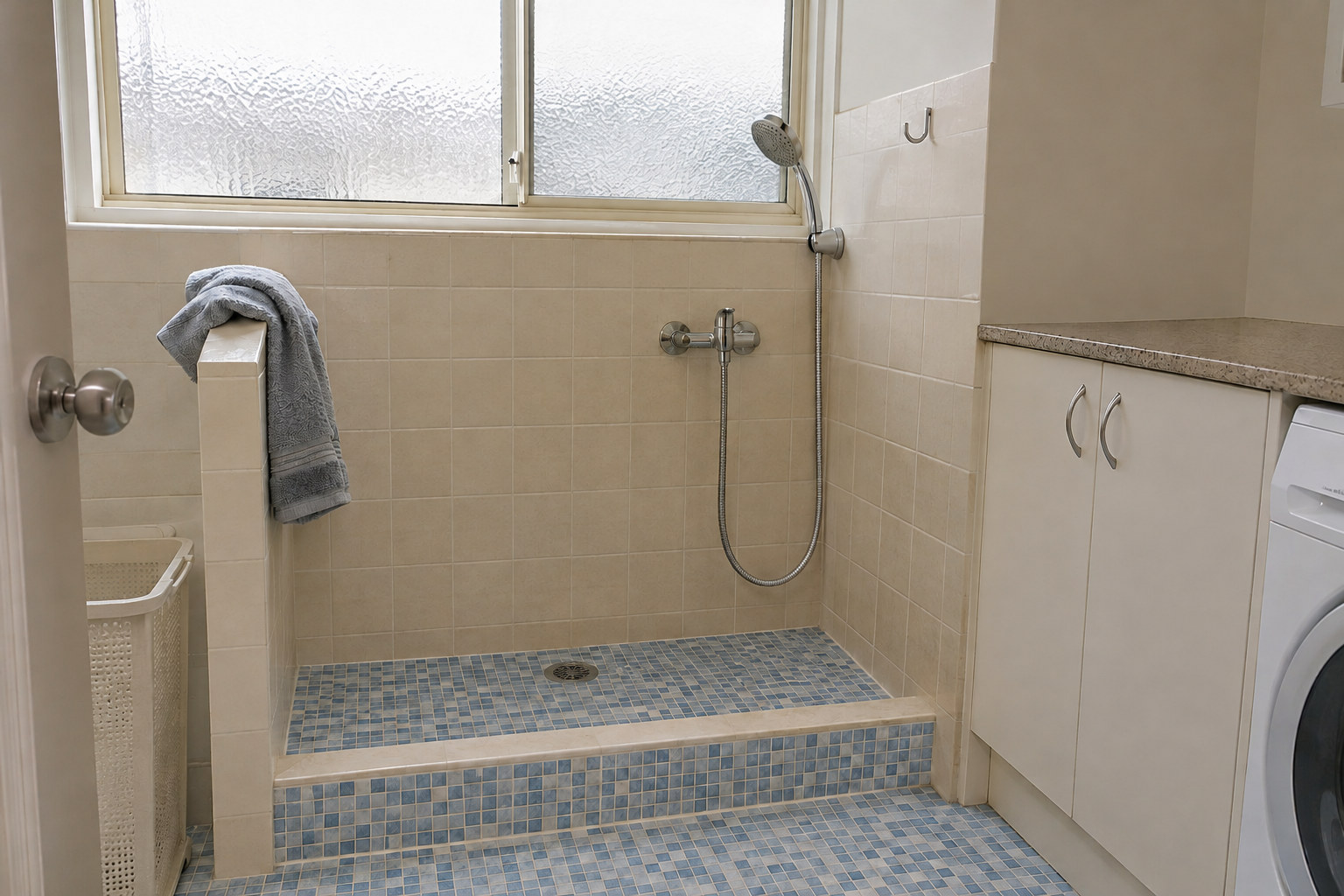
A wash station below a high window can benefit from daylight without occupying the laundry’s brightest worktop area. The useful version keeps the sill and window fittings outside the main splash exposure, with privacy appropriate to the room. A window directly at dog height may be distracting or complicate the wet-area detail.
Ask the installer how the window junction will be protected and maintained before choosing the layout. Do not assume ordinary paint and trim will be enough beside regular spray. Keep any blind cords and loose fabric clear of the dog and wet zone. If natural light is the main attraction, a bay beside the window may achieve the same effect with simpler detailing. In a compact room, that small change can also leave more wall area for controls and an accessible place to hang the sprayer.
10. L-Shaped Laundry with a Separate Wet Corner
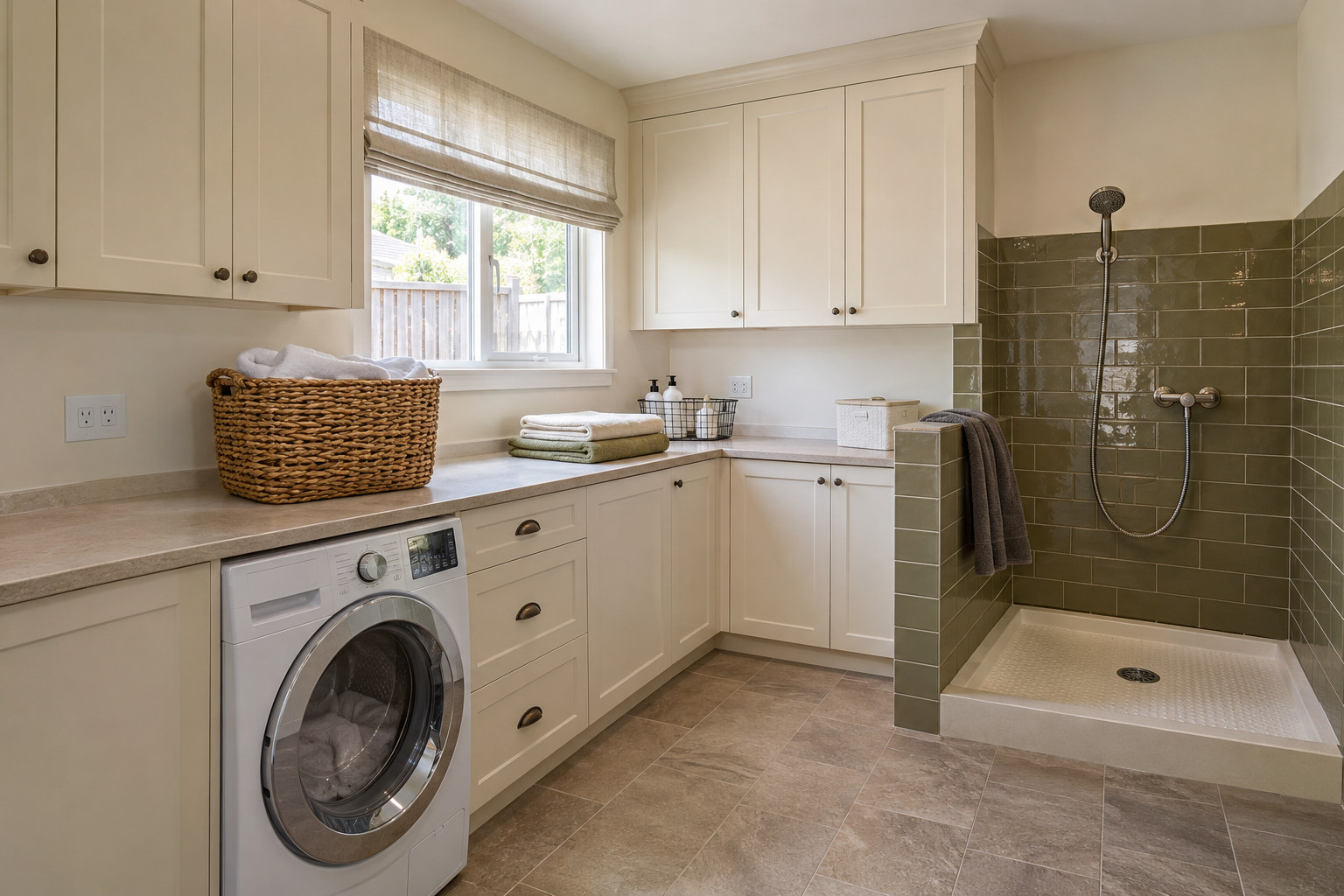
An L-shaped room can separate wet pet care from washing and folding without adding another room. Put the dog wash on the shorter return and keep the main run of appliances and worktop for laundry. That creates a recognizable wet corner and reduces the need to carry clean clothes past the bathing area.
Check the inside corner carefully. Two cabinet runs can look spacious in a plan while leaving little standing room where they meet. Keep the dog’s entry and your working position outside competing door arcs. Plan towel storage on the route out of the wash bay, not behind the washing machine. A restrained change of tile or wall color can define the corner visually, but the separation needs to work physically first. The room should still have a clear dry route to the machines when the dog wash is in use.
11. Conversion of an Existing Shower Recess
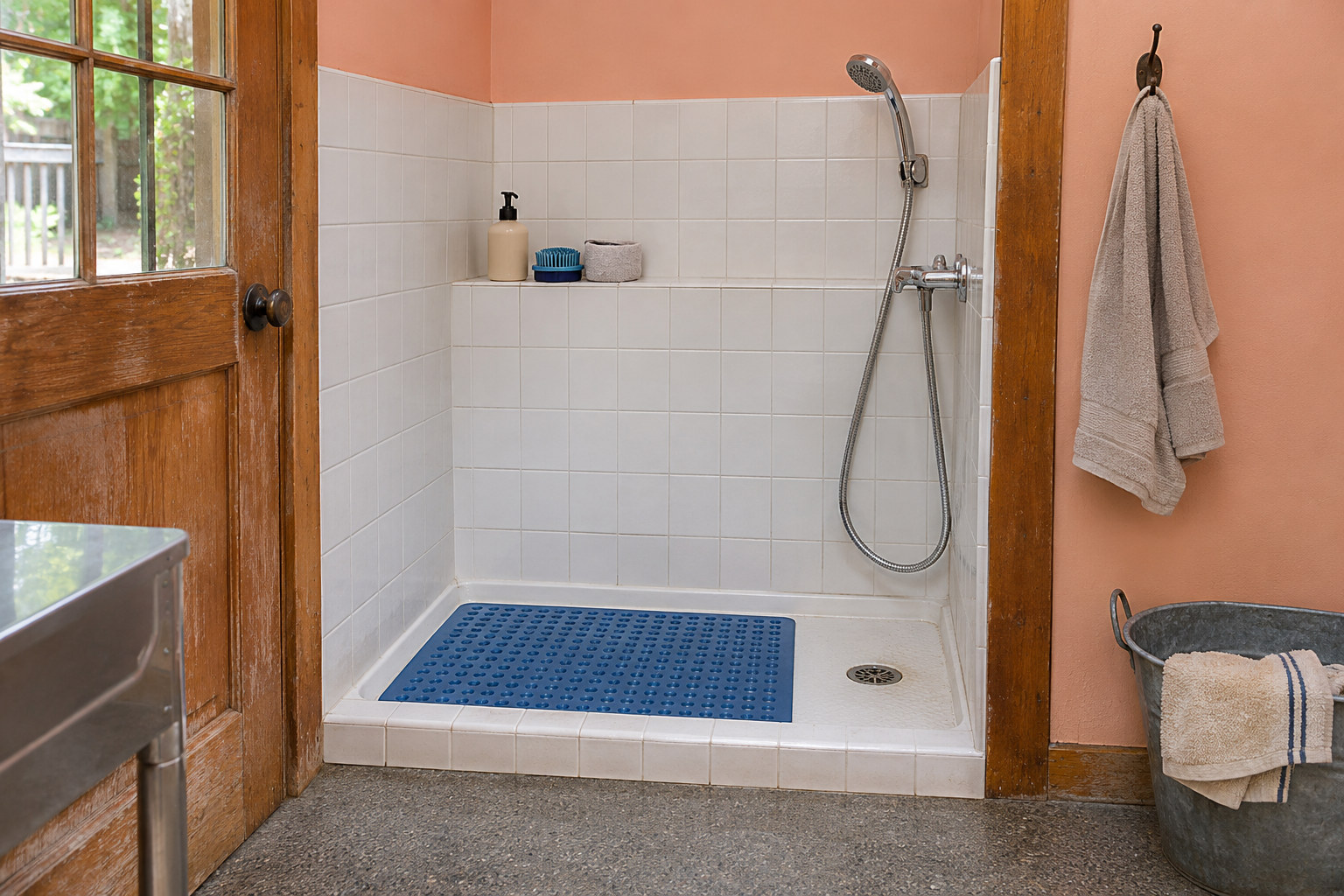
An existing utility shower recess may provide a useful starting point, especially when it already has a suitable drain, water supply, and accessible entrance. Have its condition and suitability assessed before treating it as ready for a different use. An old tiled surface can conceal defects that a new sprayer or attractive mat will not address.
Focus the adaptation on reach and access. A handheld shower may be more useful than a fixed overhead head, while an awkward screen or door may need a considered change. Check whether the dog can turn and whether you can reach the far side without twisting. Keep any removed fittings from leaving sharp edges or unsealed holes. Reusing a recess can reduce the amount of rearrangement, but it still needs to function as a complete wet area with an appropriate cleaning and maintenance routine.
12. Wash Bay with a Dedicated Dry Landing Pad
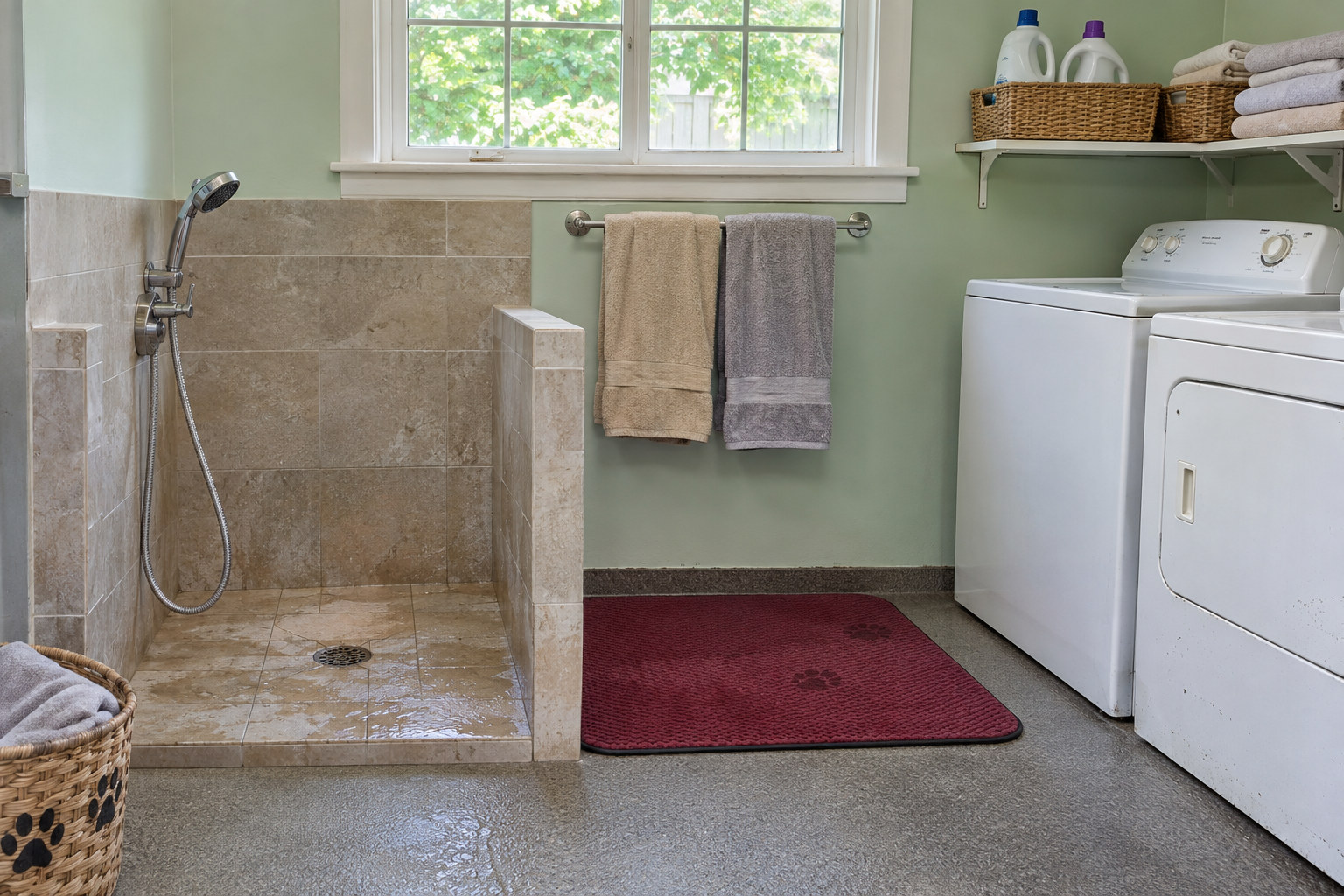
A dedicated drying pad beside the bay is one of the most useful pieces of the layout. It gives the dog somewhere predictable to step out and gives you a place to begin toweling before wet paws travel through the house. Keep it close enough that reaching it does not require crossing the main laundry aisle.
Choose a mat that stays securely in place and can be removed to dry and clean. Check the floor underneath after use instead of leaving damp layers stacked together. Put clean towels within reach of the landing, and keep a separate place for wet ones. The landing area also needs to remain free during ordinary laundry work. If it becomes the natural home for a hamper, build that storage into another part of the room so bathing does not begin with moving furniture.
13. Mudroom-Laundry Wash Zone with Boot Space
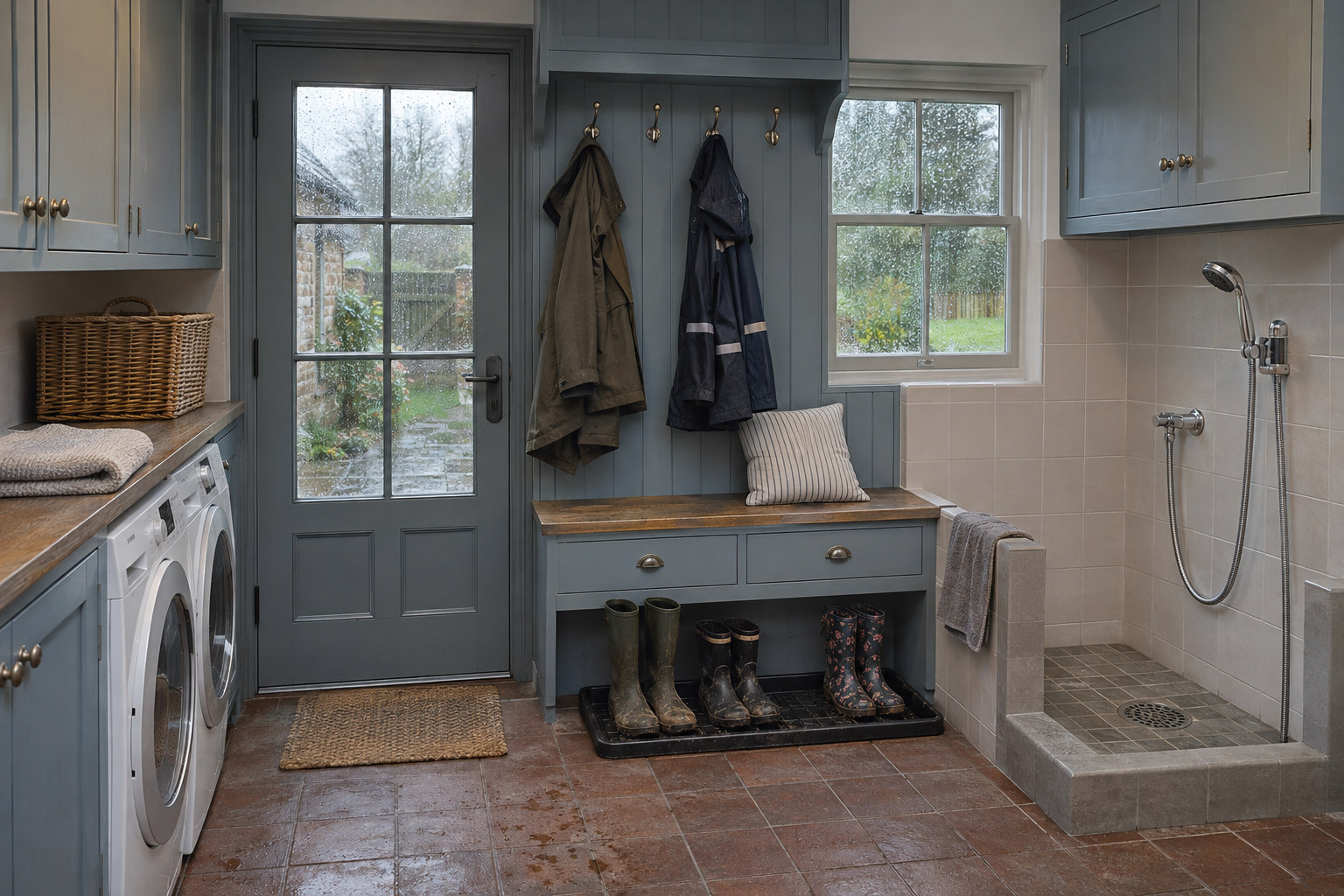
A combined mudroom and laundry can handle several outdoor routines if each has its own place. Give boots a tray, coats a bench or hooks, and the dog a wash area that is not also the only route to sit down. The arrangement works when muddy equipment can arrive without covering clean laundry or obstructing the wet zone.
Plan the room in the order it is used. A person may need to remove shoes, close the back door, and put down a lead before starting the wash. Each action needs reachable space. These small entryway organizing ideas can help keep coats and everyday bags from spreading into the dog area. Use finishes suited to their specific location, and keep household chemicals secured separately. A shared utility room stays useful when storage supports the routine instead of filling every open wall and corner.
14. Accessible Wash Layout with a Broad Side Approach
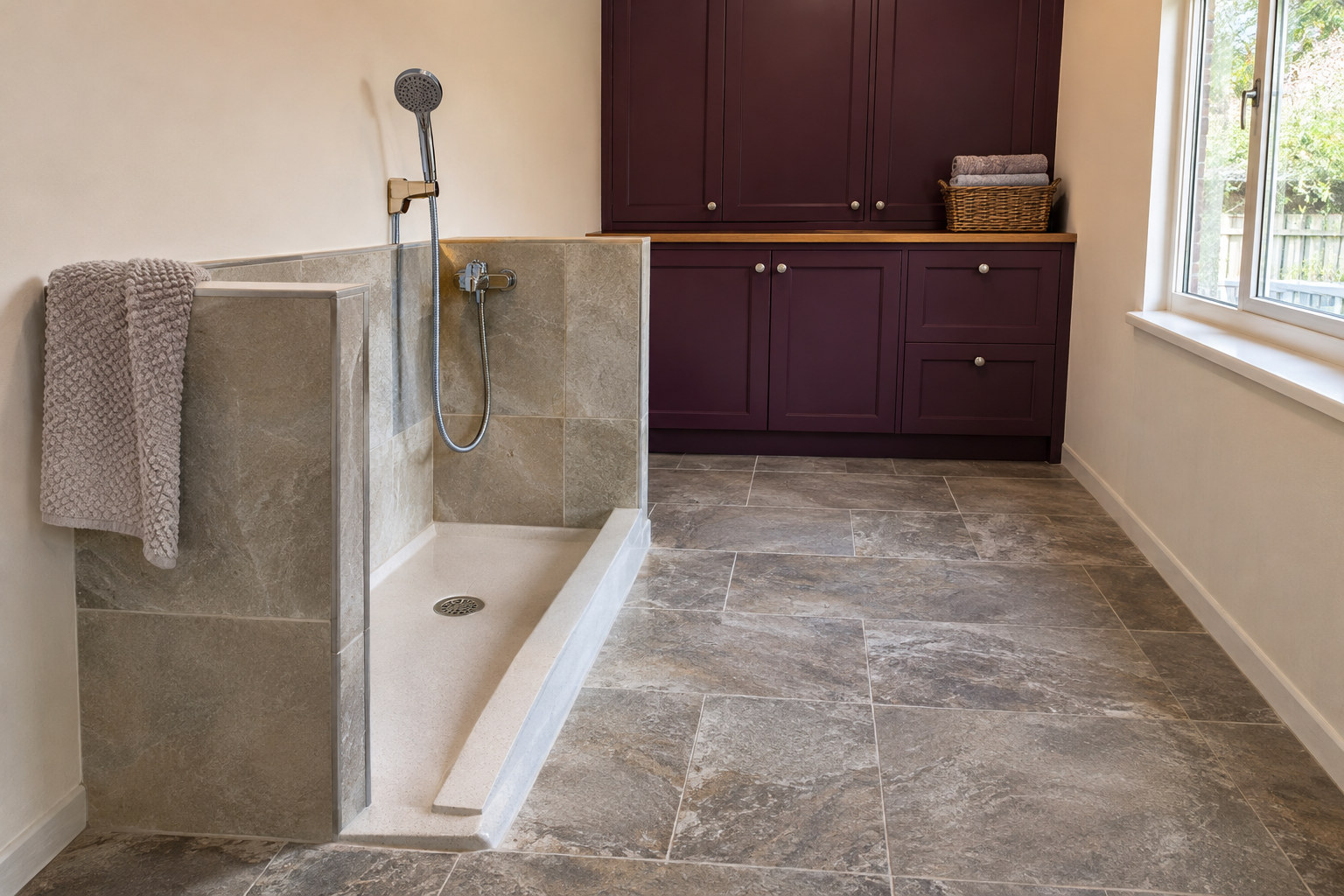
A broad side approach can make a wash bay easier to use when a dog needs assistance. The goal is to reduce awkward reaching and provide space for the person helping, rather than to add a collection of narrow steps and platforms. Start by mapping the route from doorway to bay and the position you need to stand in while washing.
Discuss the dog’s needs and the room’s constraints before fixing the threshold, basin height, or access method. A layout that suits a small dog you can comfortably lift may not suit a heavier dog or your future circumstances. Keep the entrance clear and the floor appropriate for wet use. An accessible arrangement should also make cleanup manageable: removable mats, reachable controls, and storage that does not require bending around the animal all contribute to a simpler routine.
15. Wash Station Planned Around Removable Equipment
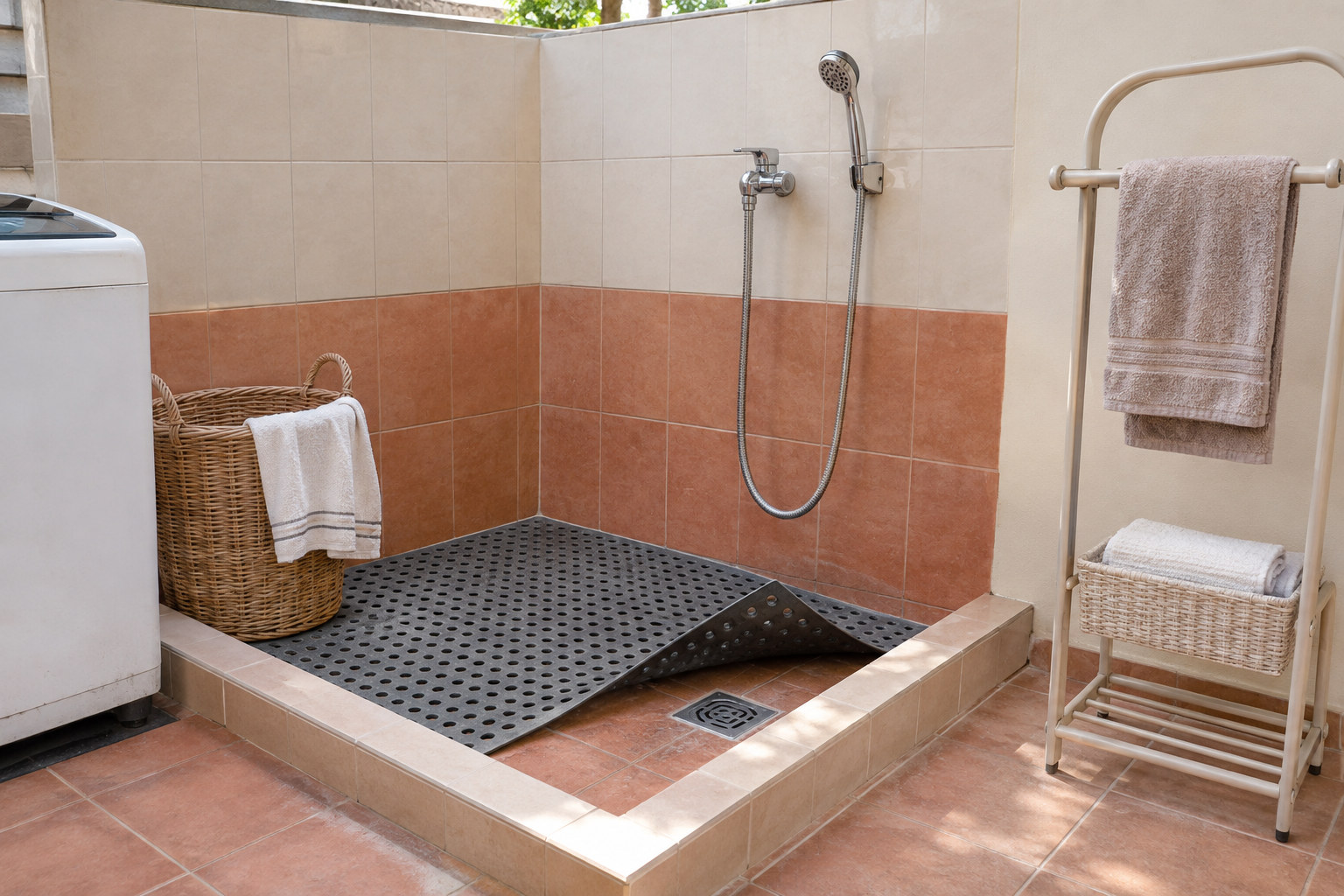
Removable equipment makes the station easier to maintain and adapt. A mat you can lift, a sprayer you can replace, and a towel caddy you can move may be more useful than several fixed accessories built into the walls. Keep the underlying basin uncomplicated so you can reach the drain and inspect its surfaces.
Plan where each removable item goes when it is drying. A mat draped over the only clear counter can interfere with laundry, while a wet caddy pushed into a cupboard can create a new problem. Choose attachments and materials according to their intended use and care instructions. Before finishing the design, imagine cleaning the station after the muddiest bath. If an accessory has no clear purpose or makes a corner difficult to reach, leave it out until experience shows that you need it.
Plan the Wash Station as a Complete Wet Area
Establish the entry, wash and drying sequence
Draw the room with every door and appliance opening shown. Mark the dog’s route in, your working position, and the route back out. Then add towel storage, a used-towel hamper, and a place for the lead. These ordinary details often determine whether the room feels easy to use.
Test the arrangement on the floor with removable tape and boxes representing the fixtures. Allow for the dog you have, the person who usually does the washing, and any assistance needed. Do this before deciding that a fashionable basin shape or a spare cabinet opening must work.
Resolve waterproofing before tile selection
The visual finish is only part of the construction. Schluter explains that tile and grout alone do not make a shower waterproof. A dog wash needs its wet-area system, drain connection, edges, and penetrations planned together by an appropriate professional.
Ask how water is contained, how the drain is maintained, and which surfaces are within the expected splash zone. Follow the selected system’s installation requirements and the rules that apply locally. A photograph can help explain the desired layout, but it cannot establish the hidden construction details for your room.
Choose surfaces you can actually maintain
Compare more than color. Look at wet-use suitability, texture, cleaning instructions, joint layout, and the edges your dog will cross. A surface that looks pleasantly rustic may have deep recesses that hold mud, while a glossy finish may not suit the footing you need. Ask for product information relevant to the actual application.
Keep the number of material transitions manageable. A small wash bay with several trims, ledges, and decorative bands creates more junctions to clean and maintain. Use color in dry cabinetry or nearby walls if you want character without adding complexity to the wet area.
Get the Fail-Safe Paint Color Playbook (Free PDF)
36 proven colors • 8 ready palettes • trim & sheen guide • printable testing cards.
Make the Daily Routine Comfortable
Blue Cross recommends a nonslip mat and lukewarm water when bathing a dog. Build the room around a calm, supervised routine, with the supplies ready before you begin. Follow your veterinarian’s or groomer’s advice if your dog has particular skin, mobility, or handling needs.
Keep the hose and controls reachable from your normal working position. Check where the hose rests when you put it down, and avoid leaving it across the dog’s exit. Store bathing products separately from laundry chemicals. A closed cupboard can still be convenient if it sits at a comfortable height outside the splash zone.
Ventilation and drying matter after the bath as well. Discuss the room’s moisture management with your installer, particularly if it already struggles to dry laundry. Leave removable items somewhere suitable to dry and deal with wet towels promptly. The station should return to a clean usable condition without taking over every surface in the room.
A Simple Design Brief to Take to an Installer
Bring your room measurements, photographs, dog size, and a clear description of the routine you want. Explain whether lifting is practical, which doorway the dog uses, how the laundry works during a bath, and where clean and wet towels will go. Ask the installer to resolve the structural, plumbing, drainage, electrical, and wet-area details that apply to the proposed location.
For finishing the dry part of the room, a two-color wall treatment can define the laundry and pet-care areas without adding more cabinetry. Keep decorative decisions subordinate to the working layout. A straightforward wash bay with a comfortable approach and a proper drying space is a strong foundation for a room you will use regularly.