
17 Dog-Friendly Backyard Landscaping Ideas for Shared Outdoor Space
A backyard can have attractive planting and still be awkward to share with a dog. The path may miss the route your dog takes, the patio may lose its shade after lunch, or a carefully edged bed may sit exactly where everyone turns toward the gate. Useful dog-friendly backyard landscaping ideas bring those everyday details into the design from the beginning.
The following ideas cover the whole shared garden: routes, lawn, planting, drainage, resting places and practical maintenance. Choose the changes that match your site and your dog, then develop them into one coherent plan rather than trying to add every feature.
Get the Fail-Safe Paint Color Playbook (Free PDF)
36 proven colors • 8 ready palettes • trim & sheen guide • printable testing cards.
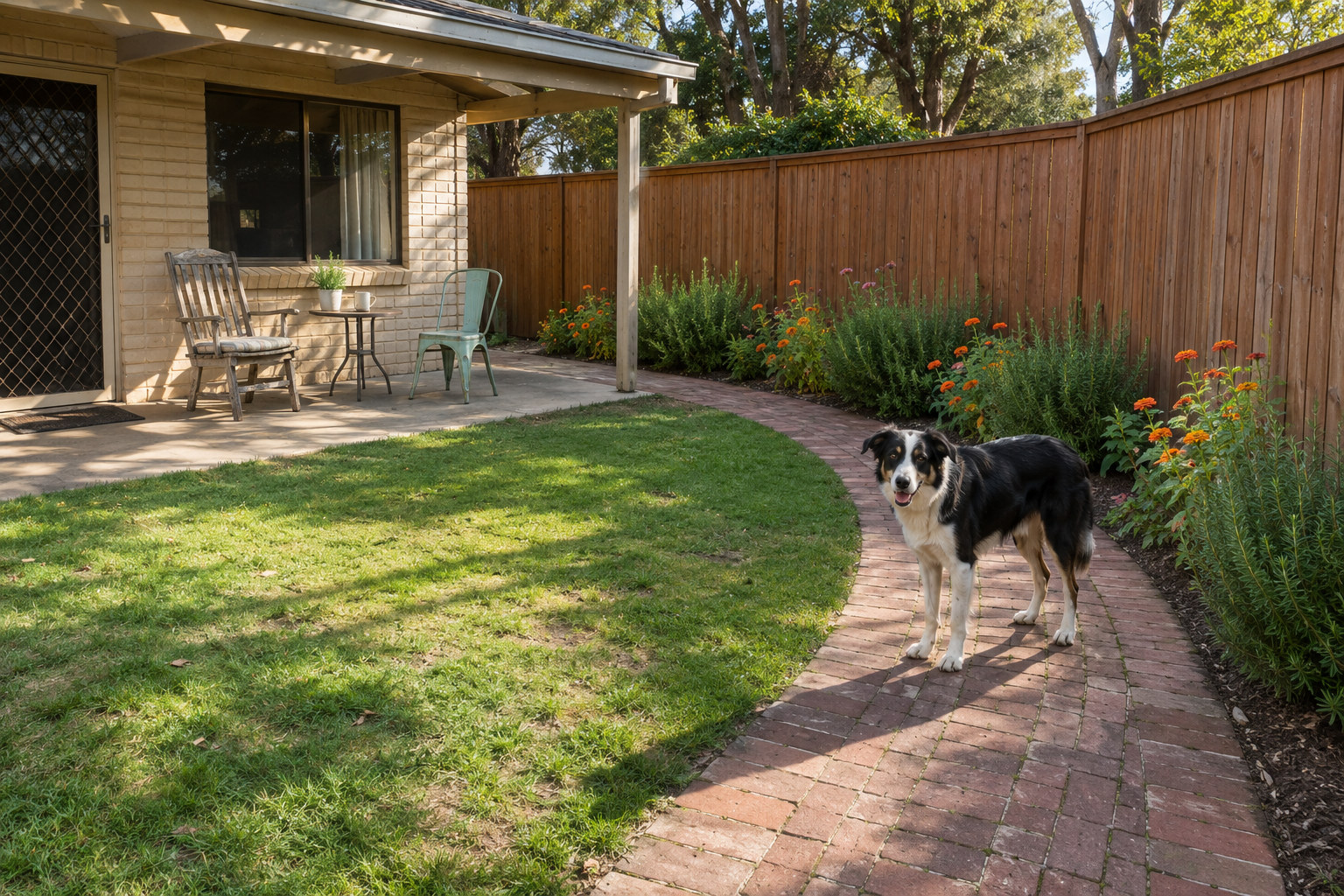
1. Put Main Paths Where Your Dog Already Walks
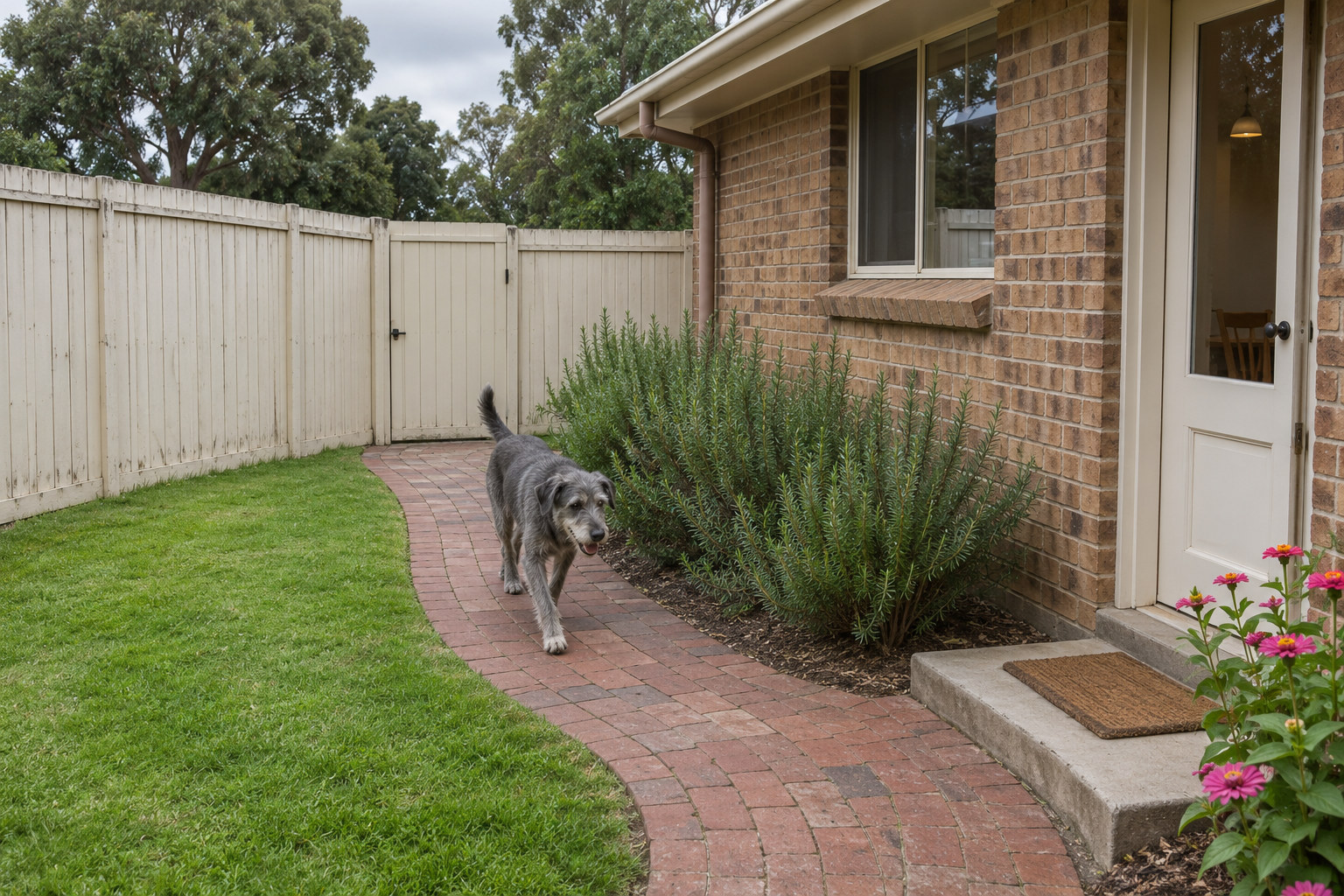
Watch how your dog moves through the yard before drawing a new path. A worn line between the back door and gate may reveal a route that is more useful than the one on your original plan. Where possible, put a properly constructed path on that line instead of repeatedly repairing the same strip of lawn.
Keep curves broad enough to walk naturally. A decorative bend that adds several extra steps may simply be cut across, especially when the dog is following you. Allow extra room where people turn, carry things or pass a seated family member.
Consider where the path ends as well as where it begins. It should arrive at the usable part of a gate or patio without funneling movement into a flower bed. This approach makes circulation part of the landscape and can protect the planting through better placement, without adding barriers around every border.
2. Keep a Useful Area of Natural Lawn
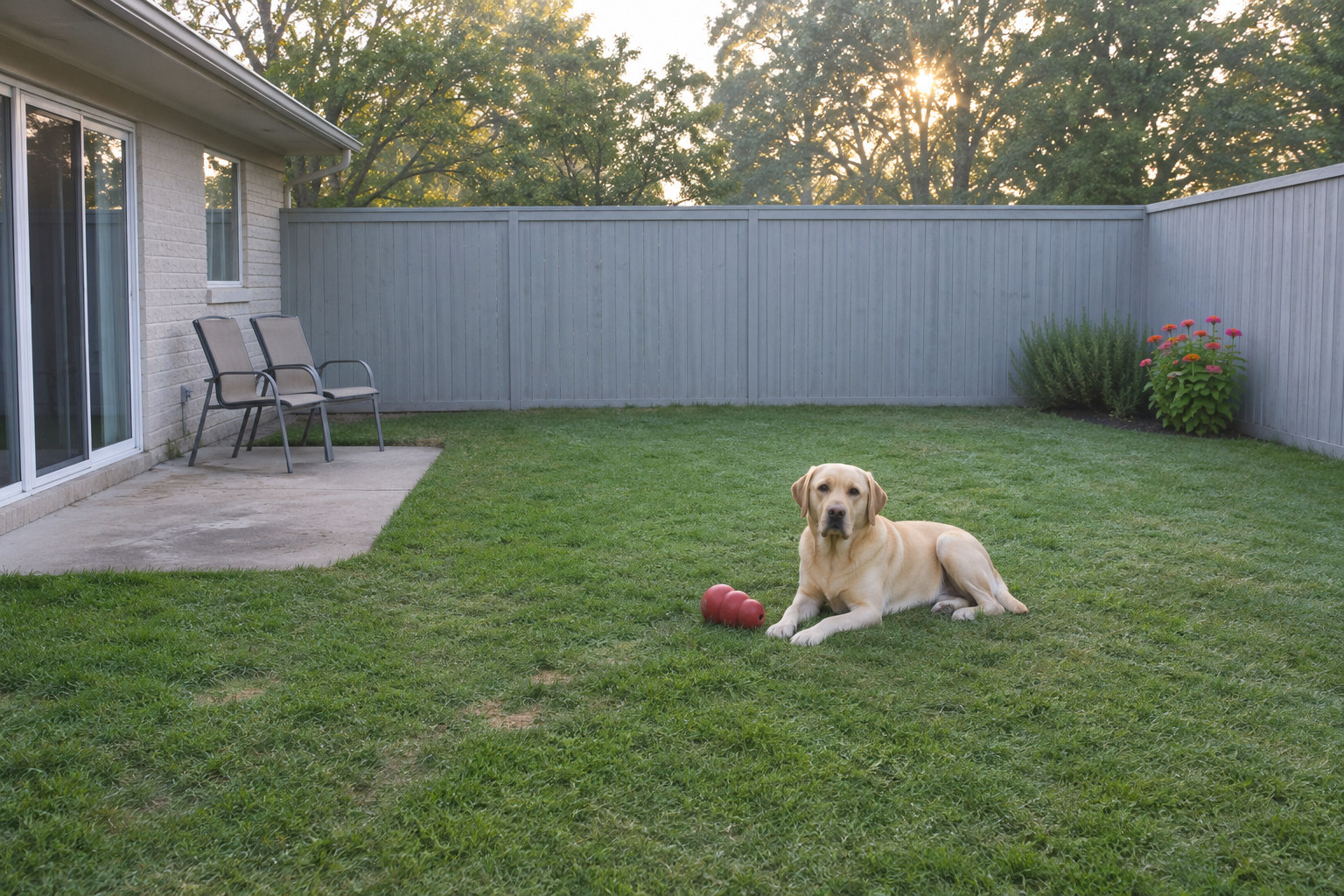
A useful lawn has a shape that supports what happens on it. One continuous patch can accommodate resting, gentle play and ordinary movement more easily than several thin strips divided by edging. Let its outline respond to the yard and the main routes rather than choosing a complicated shape for decoration alone.
Judge the grass against your climate, sunlight, soil and maintenance capacity. A dog-friendly garden does not require a flawless green carpet, and a few worn places can be a cue to adjust the route or the routine. Ask a local turf specialist about suitable varieties if you are replacing an established lawn.
Preserve somewhere for the dog to go while a section is being repaired or treated, following the relevant product directions. If the yard is compact, these small backyard planning ideas can help you balance the lawn with a realistically sized seating area and the access it needs.
3. Move Planting Beds Away from Busy Corners
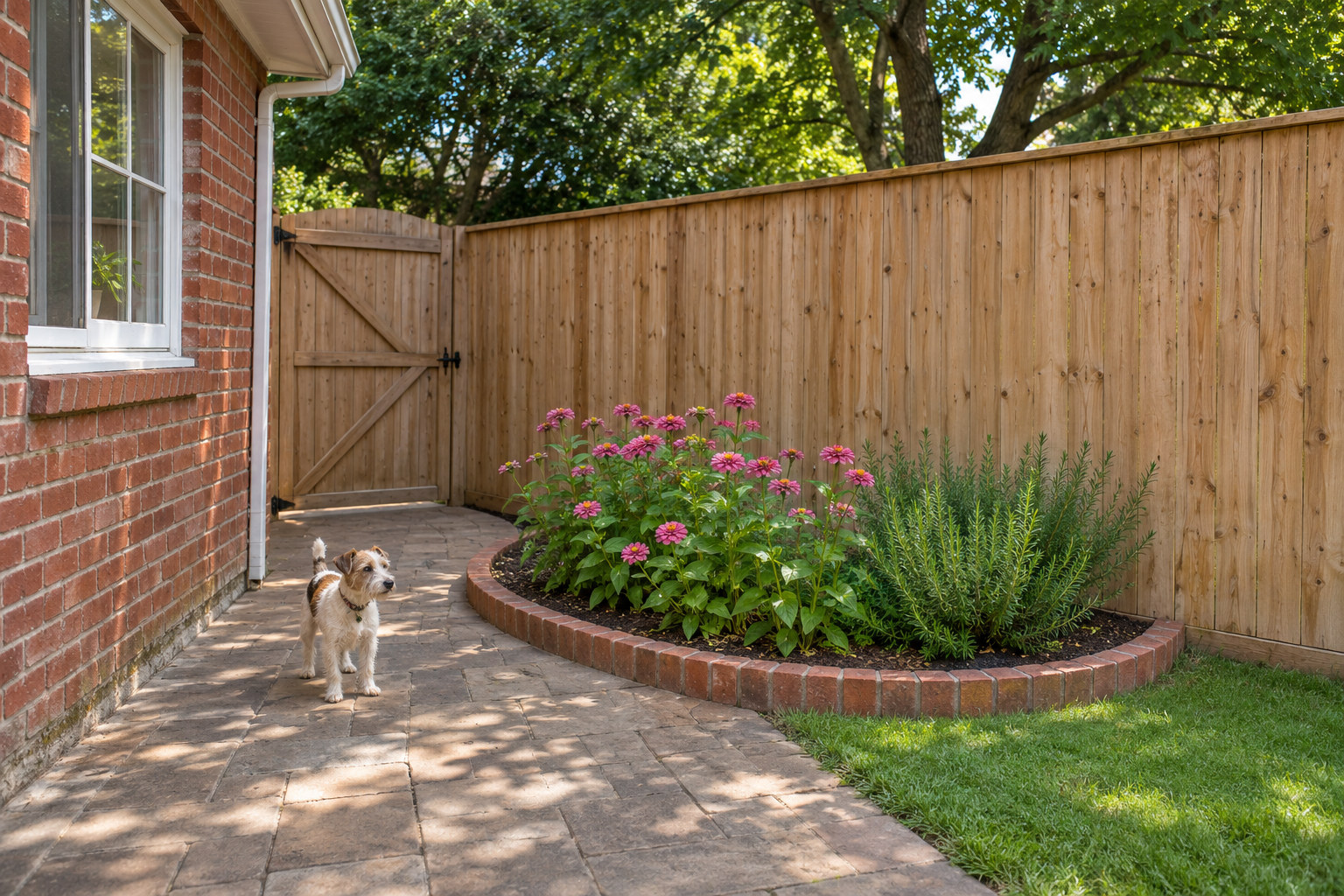
The inside corner of a path is an easy place to lose plants. Dogs and people naturally shorten a turn, so a bed pressed against that corner can become a regular obstacle. Pull the planting back and give the turn a little more hard surface or lawn.
A rounded bed edge can make that adjustment look intentional. Choose a finish without exposed sharp metal or projecting corners, and keep the edge out of the main travel line. The aim is a generous turning space, not a narrow protective rim that everyone must step over.
Lay out the proposed border temporarily while the dog is elsewhere, then walk the route before digging. Include the spread of the mature plants in your plan. A young plant can look neatly contained while the same plant later leans into the path. Let its eventual size determine the setback rather than relying on constant pruning.
4. Build a Short Plant List You Can Identify
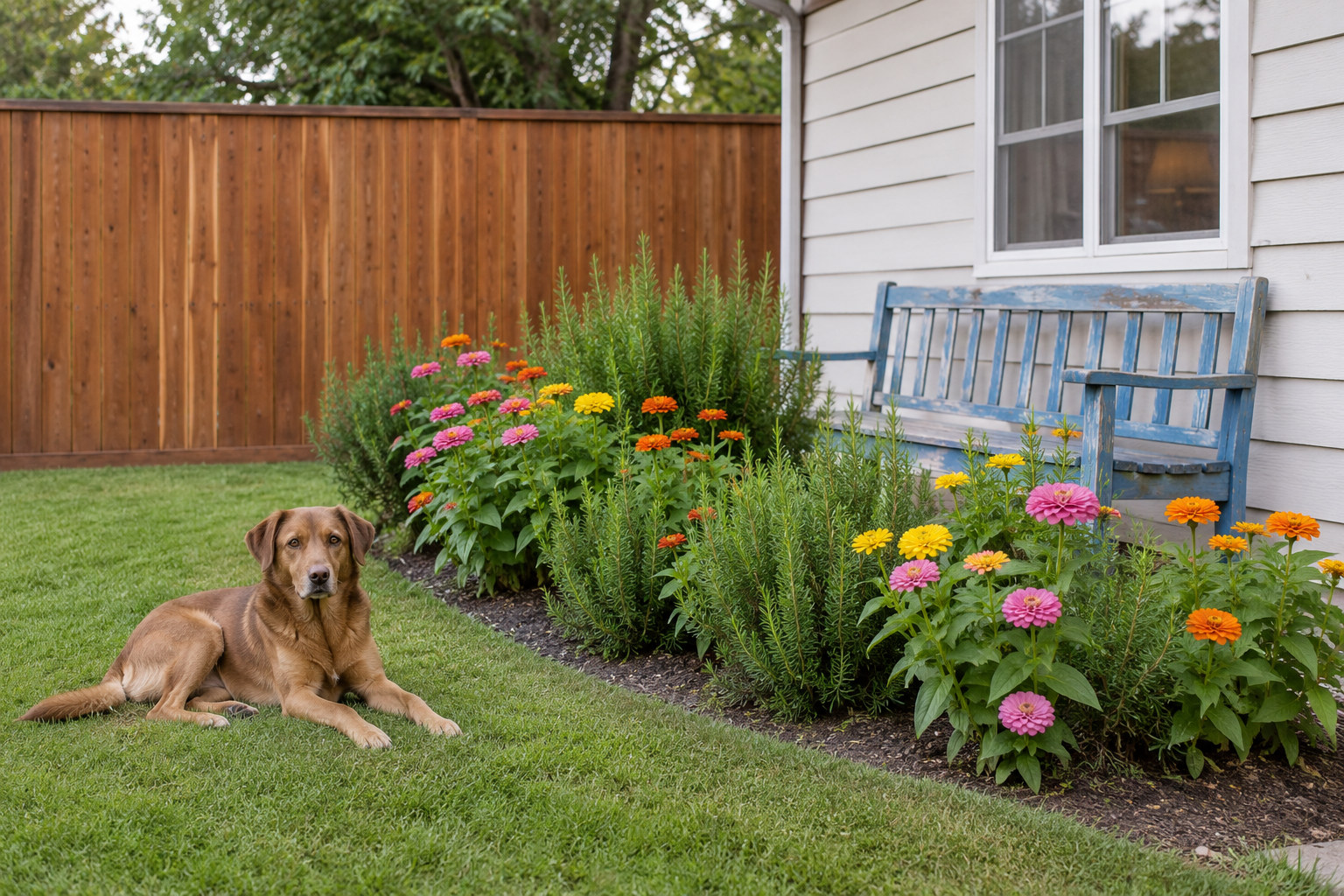
Build the planting plan from a short list of plants you can identify accurately. Record the botanical names before buying, particularly where common names could describe different species. Check suitability for dogs and any other pets in the household, then consider climate, mature size and maintenance.
The ASPCA identifies rosemary and zinnia species as non-toxic to dogs. These can be starting points where their growing requirements fit, rather than a universal planting recipe. Do not encourage chewing or assume a non-toxic classification makes fertilizers, sprays or potting material harmless.
Repeat a few suitable plants through the border to make the design feel connected. Keep the tallest growth away from inspection points, gates and places where it blocks your view of the dog. If an existing plant is unidentified, resolve that question before designing the dog’s regular route around it.
5. Protect Young Beds with a Separate Barrier
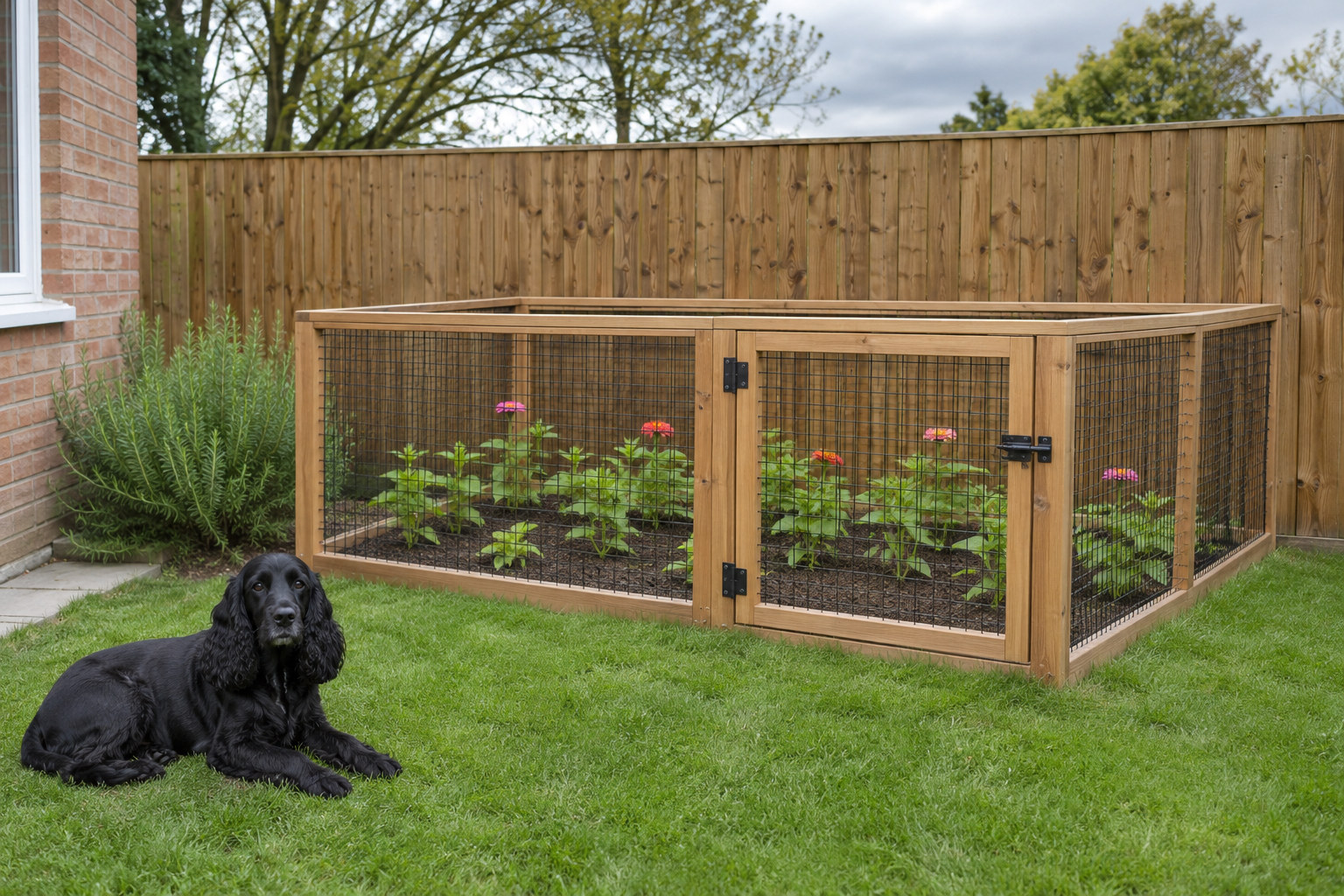
Young planting sometimes needs a separate barrier while it establishes. A simple framed enclosure can protect a specific bed while leaving the rest of the yard shared. Choose a design that is visible, stable and appropriate for your dog, with no protruding wire ends or narrow places that could catch a paw.
Keep the barrier continuous, including the gate and its lower edge. An ornamental panel placed loosely in front of the bed may be easy to move or walk around. Work out how you will get inside to water and weed before settling on the size.
This is a garden-management feature, not a reason to include a hazardous plant in the accessible yard. Keep checking the planting itself. If you plan to remove the barrier later, allow the border enough room to hold its mature plants without spilling across the dog’s route or requiring a new obstacle somewhere else.
6. Make Shade Part of the Landscape Plan
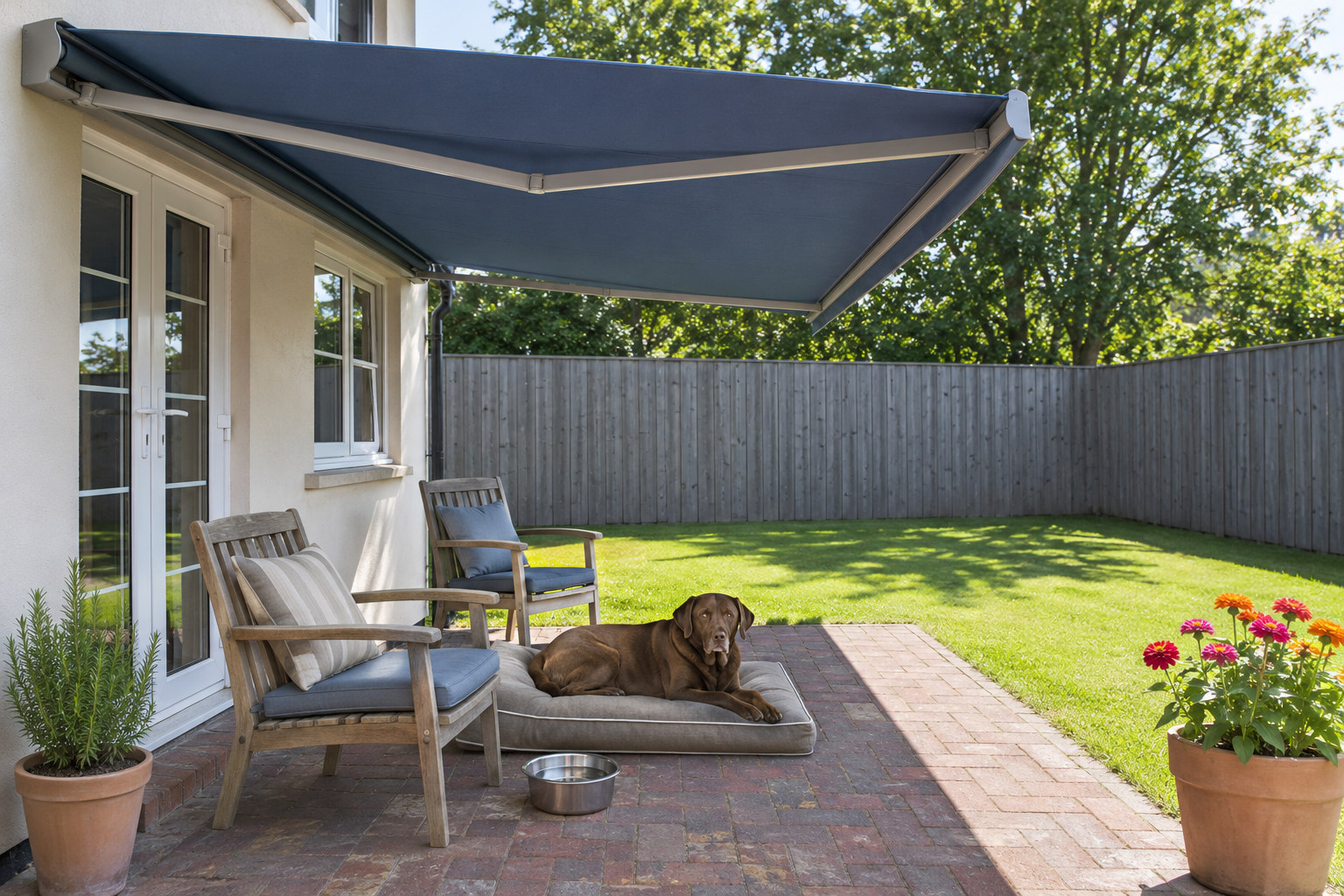
Treat shade as a location on the plan, not simply an object to buy. Mark where the dog’s resting place will be during the hours you spend outside, then see whether the house, existing cover or a suitable new structure actually shades that position.
Keep the shaded area connected to water and an easy route indoors. Dogs Trust recommends a quiet garden spot with shade, shelter and fresh drinking water. The dog should have options as the shadow moves, and outdoor time should change with the conditions.
If you need permanent cover, compare the proportions in these patio roof extension ideas before discussing structure, fixings and drainage with a suitable installer. Keep supports out of the main walking route. Planting can contribute to the design, but a newly planted tree should not be counted on to provide the shade your household needs immediately.
7. Choose Surfaces for the Actual Household
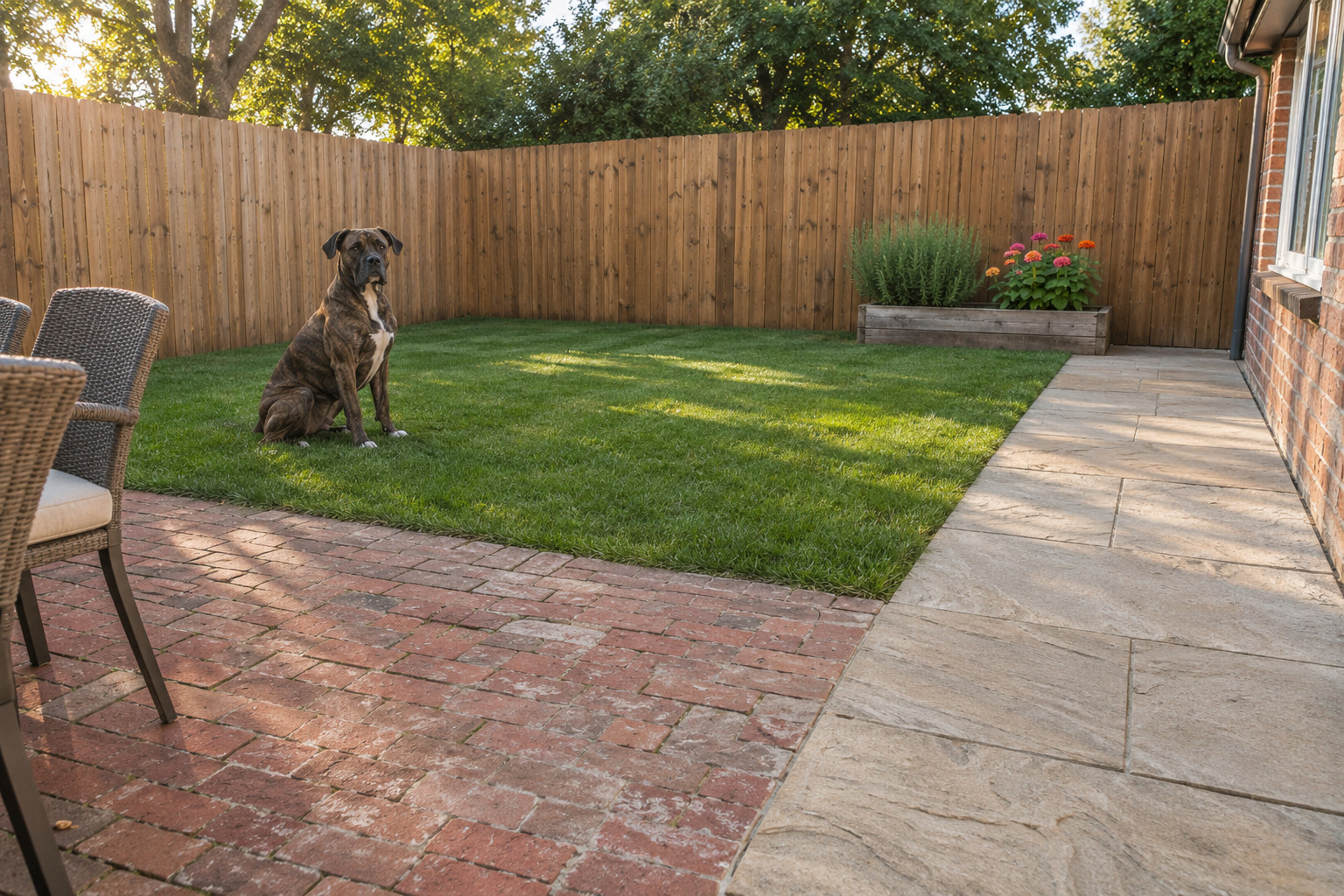
Choose garden surfaces by the way your household uses them. A dining area needs secure furniture footing, a regular walking route needs a predictable surface, and a resting area should suit the dog’s preferences and the weather. One material rarely solves every part of the yard equally well.
Bring samples outside where you can examine the actual texture and color in changing light. Watch how water behaves and consider whether joints will collect debris or catch chair legs. For dogs that pick up stones, loose gravel deserves particular care; PDSA highlights paw and swallowing risks from stones.
Keep the number of surface changes manageable. A patio, a clear path and a useful lawn can provide enough distinction without turning the yard into a patchwork. Choose transitions with the installer so adjoining areas remain stable and easy to cross, rather than treating the edging as a finishing detail.
8. Solve Drainage Before Adding More Paving
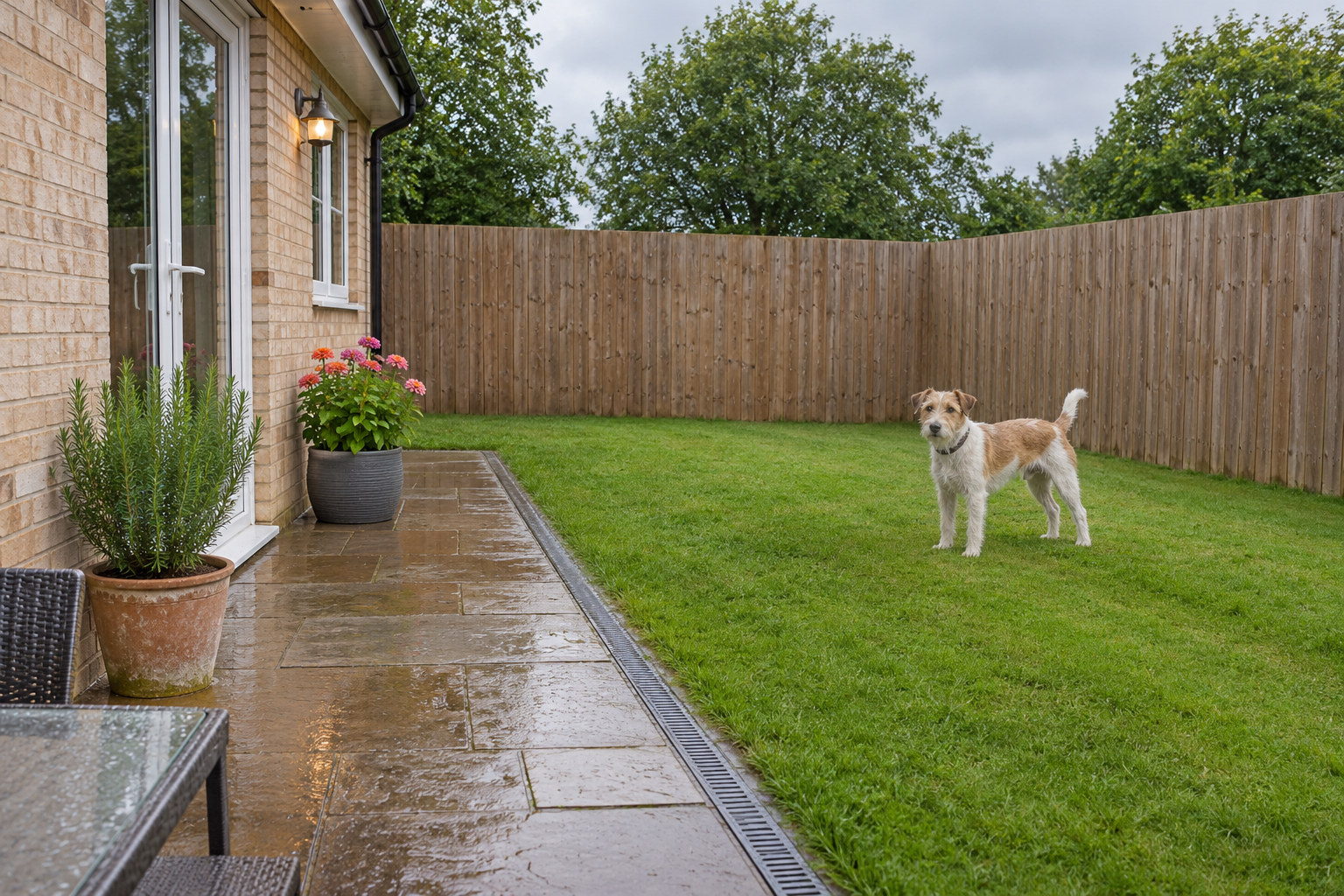
If a yard regularly becomes muddy or holds water, establish the reason before adding more paving. Observe it during and after rain: note where water arrives, where it collects and whether nearby ground or downpipes contribute to the problem. Photographs taken at those moments can help explain the issue to a contractor.
The right solution depends on the site. Soil conditions, existing levels, foundations, drains and the lawful destination of runoff all matter. A product described as permeable does not, by itself, establish that a complete installation will drain as needed.
Plan any drainage work alongside paths and patios, with suitable professional advice where required. Covers and channels in the dog’s route should be securely fitted and appropriate for that location. Avoid improvising an open trench or routing water toward a neighbor. Once the underlying issue is understood, the visible landscape can be designed around a workable system.
9. Keep Edges Flush and Easy to See
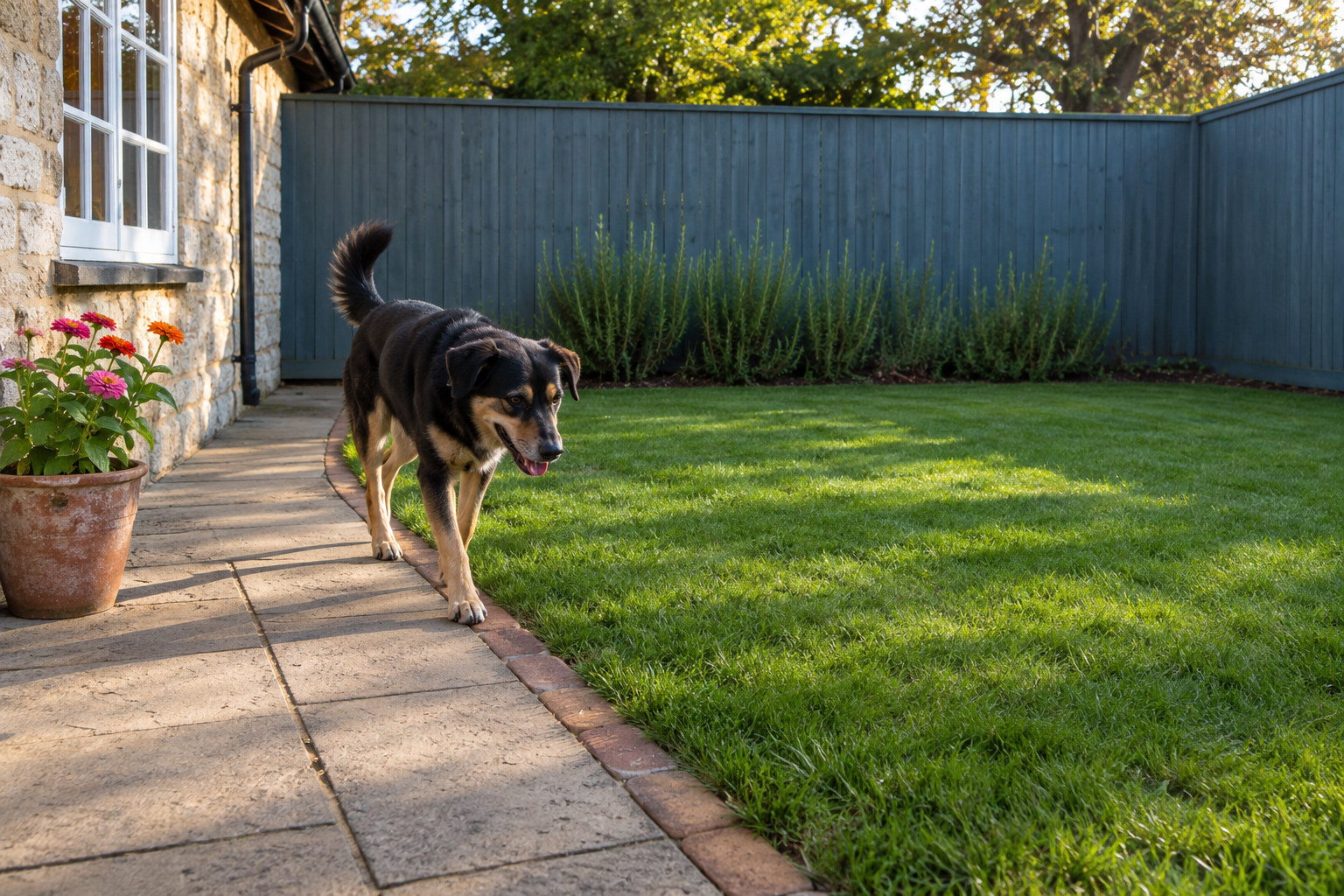
Surface edges deserve the same attention as the large areas they separate. A lawn beside a path can look tidy with a modest, clearly finished border, without a tall raised lip running through the walking route. Choose an edge that suits the installation and remains stable over time.
Walk the planned route at ordinary speed and look down from both directions. Changes should be easy to notice, especially near gates and steps. Keep sharp metal, rough cut ends and decorative stones that migrate onto the path out of the dog’s usual travel line.
Account for maintenance too. A border that makes mowing or sweeping awkward may leave a narrow strip you constantly have to repair. Ask the installer how the edge will meet the adjacent surface and what movement to expect. Small details are easier to resolve before construction than after furniture and planting hide the junction.
10. Give Digging Its Own Spot Away from Fences
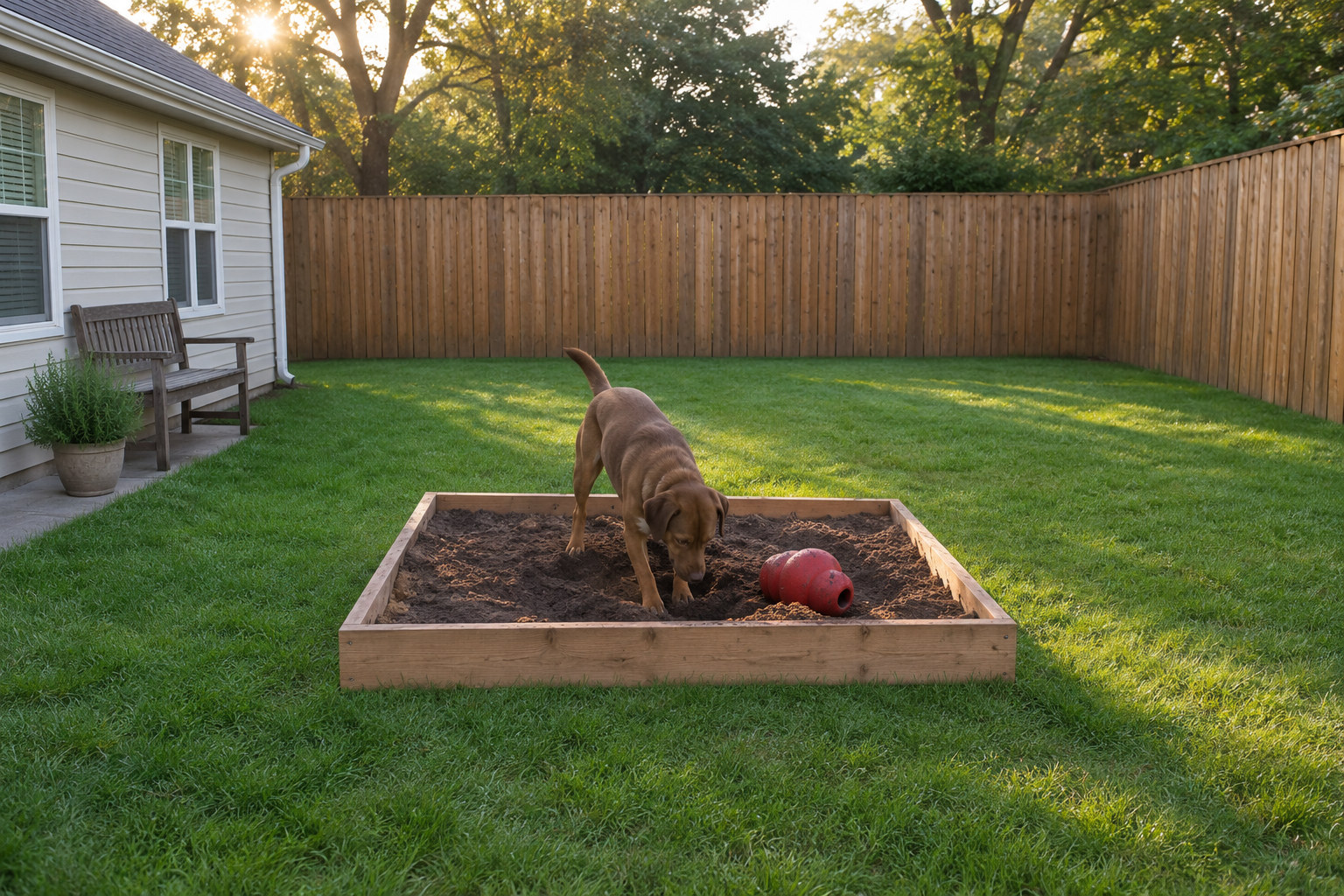
A designated digging spot can give this activity a location you can manage. Put it well inside the yard, away from boundary fences, buried services and important plant roots. A low, smooth-edged box or a deliberately chosen soil area should leave room for supervision and straightforward cleanup.
Choose the contents for the individual dog and discuss persistent eating of soil or other material with your vet. Avoid mixing the area with potting products, sharp debris or garden chemicals. A purpose matters more than a decorative shape: the dog needs an accessible place to investigate, and you need to see what is happening.
Introduce the area through calm, supervised activity and maintain it as part of the garden. It will not automatically stop digging elsewhere. Keep inspecting the full boundary independently, and never position the digging patch where it encourages excavation underneath a fence or beside a gatepost.
11. Keep the Toilet Routine Away from the Dining Spot
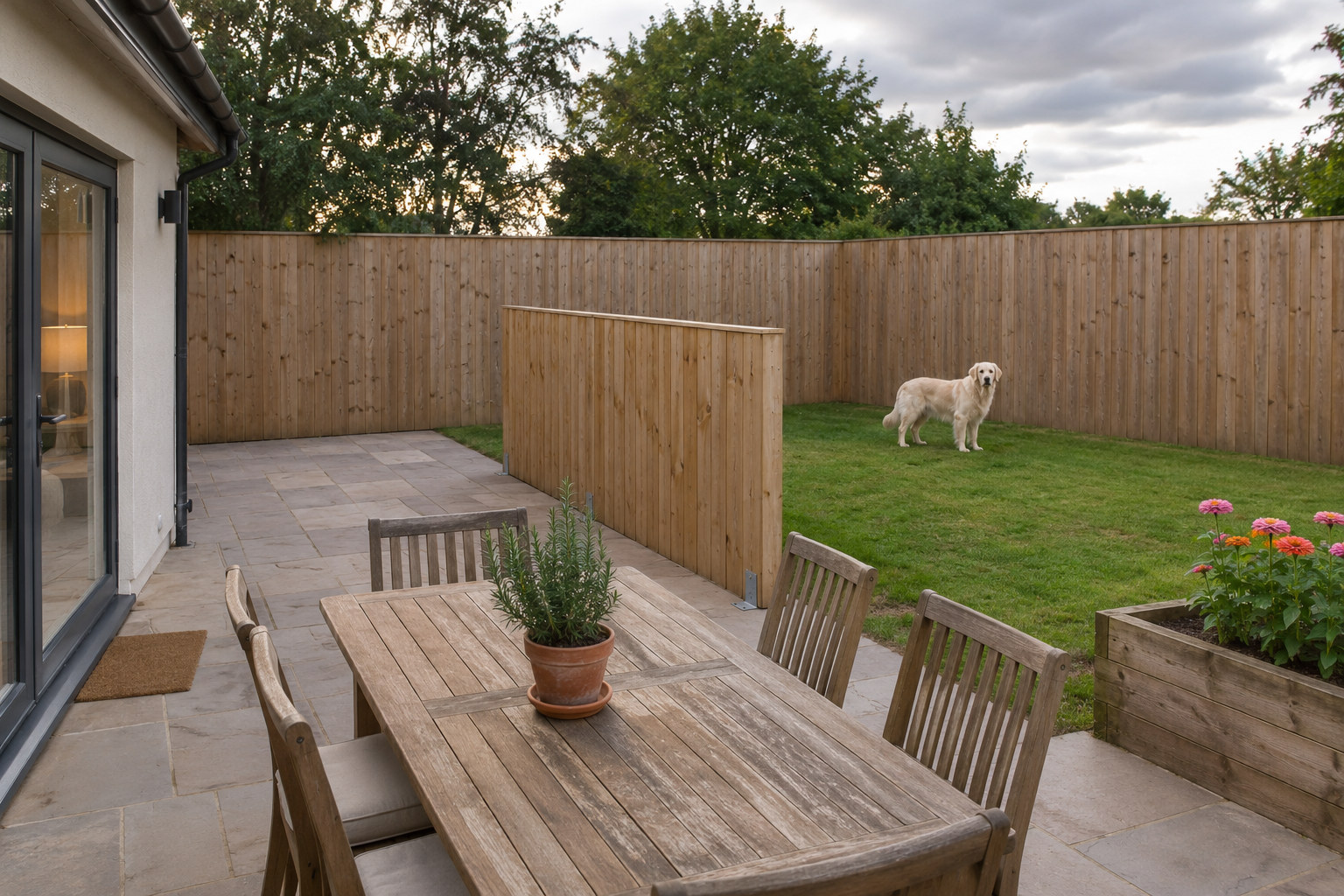
A discreet toilet area is primarily a question of access and maintenance. Choose a spot you can reach easily for prompt cleanup, with a surface appropriate for your dog and site. Keep it away from the main dining footprint, children’s activities and the location where drinking water is offered.
An interior screen can soften the view without turning the corner into a cramped enclosure. Leave enough room to approach, turn and clean around it. Avoid placing the screen so it hides a section of boundary that needs regular inspection.
Think about how the routine works after rain and in the evening. You should be able to reach the area without carrying waste across a crowded table setting or stepping through the planting. The arrangement can support an established routine, but the dog may need patient guidance. A change of surface or a decorative marker will not create a reliable habit by itself.
12. Add a Small Cleanup Area Near the Door
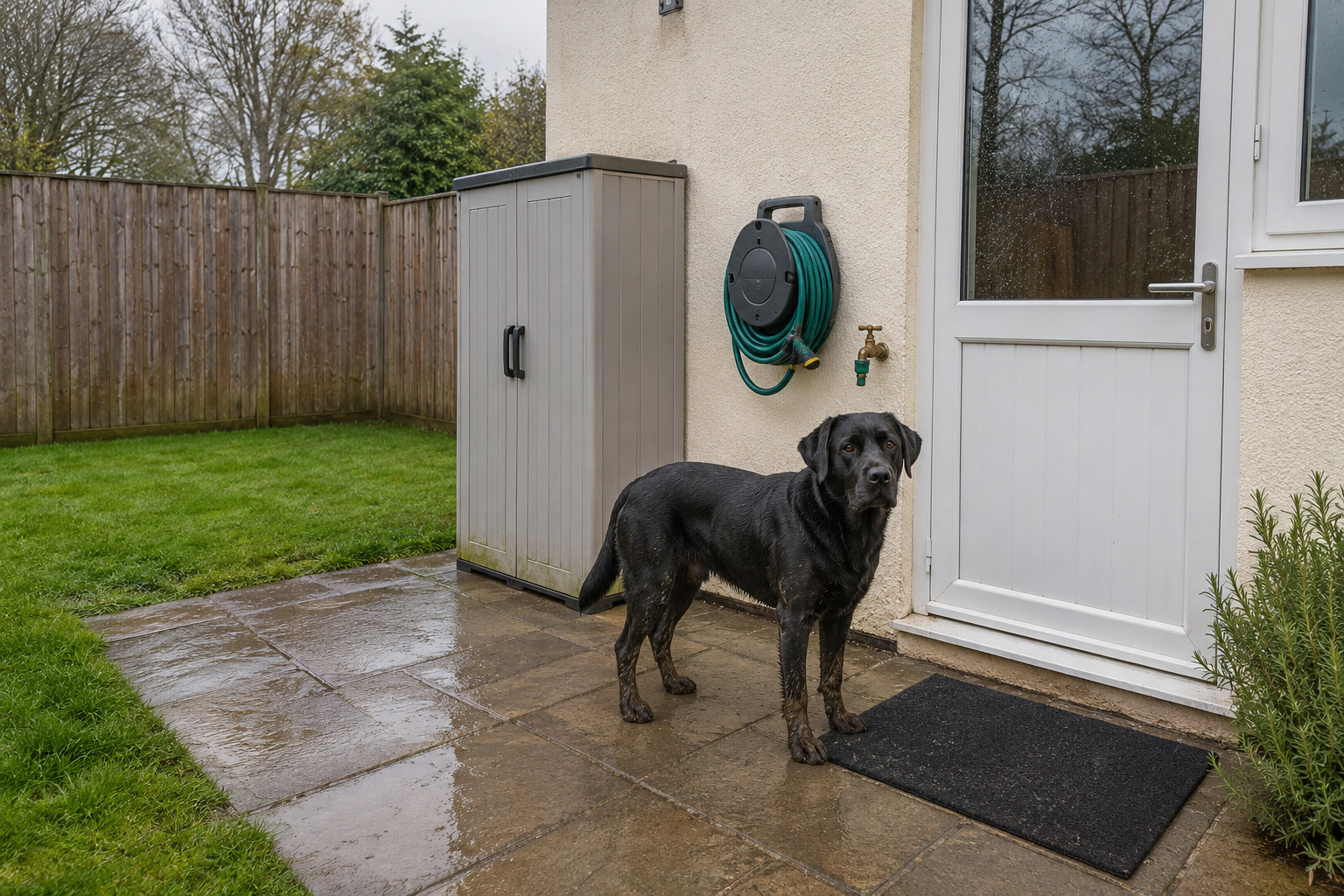
A small cleanup area can make the whole garden easier to live with. Place it near the back door, where a towel, water source and clear patch of paving support the transition indoors. Keep it separate from the dog’s drinking bowl and from food preparation.
A hose should have a secure storage position instead of lying across the path. Choose closed storage for supplies and keep hazardous products inaccessible, following their labels. Allow enough room for the dog to stand comfortably without blocking the entrance or trapping you between the door and furniture.
Plan the indoor side at the same time. These small entryway storage ideas can help you decide where clean towels, footwear and leads belong. Often the best outdoor setup is quite modest because most supplies can remain protected inside. Address drainage and winter use before installing a dedicated outdoor wash fixture.
13. Screen Busy Views Without Blocking the Whole Garden
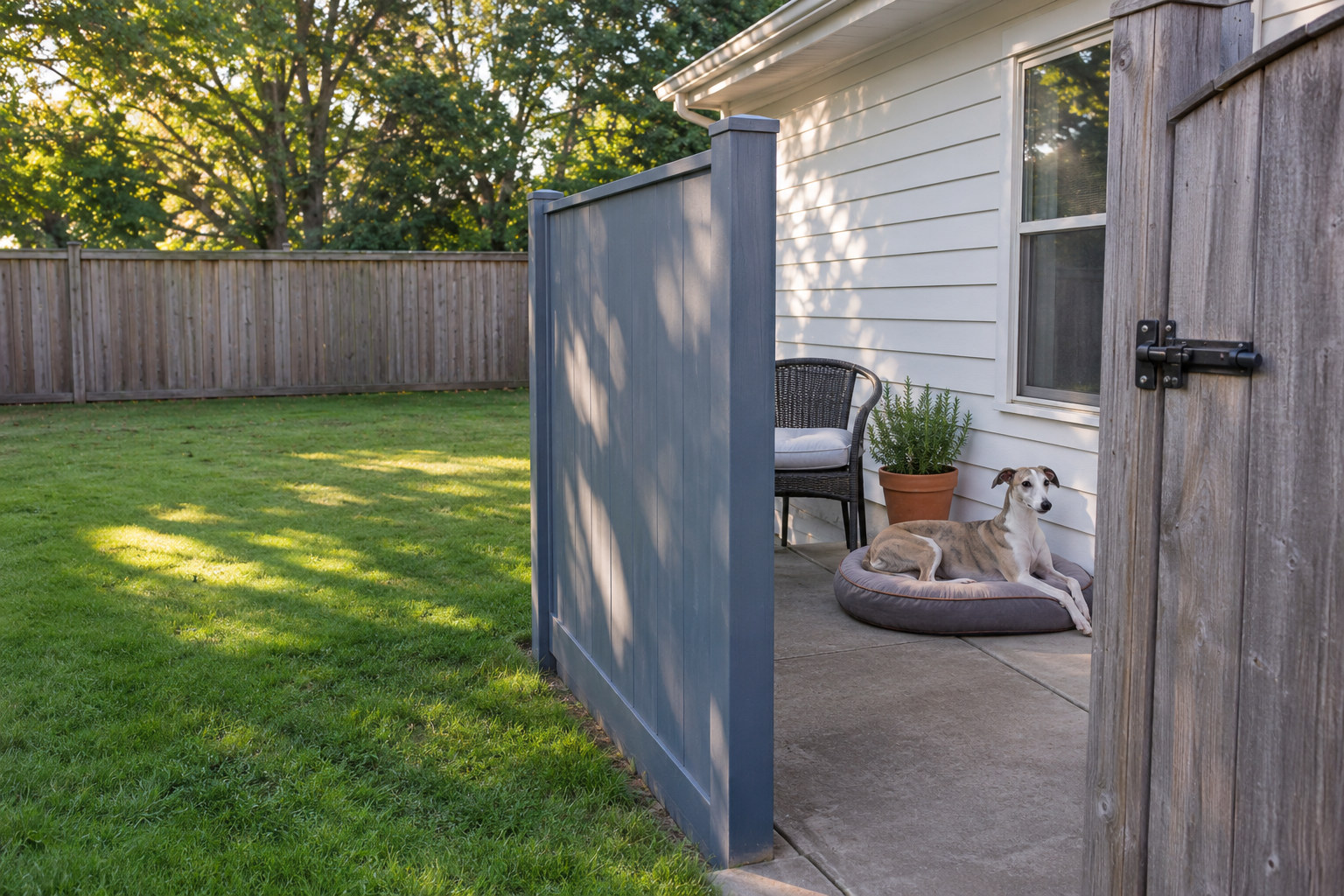
A fence-line view of frequent movement may be a poor backdrop for a resting place. Instead of screening the whole garden, identify the particular view you want to interrupt. A short interior panel near the house can shield a bed or chair while leaving the central landscape open.
Test the position with a temporary visual marker while the dog is elsewhere. From the chair and back door, check that you can still see the dog and inspect the gate. A screen that creates a blind corner may make daily supervision more awkward.
Keep the panel securely installed and separate its decorative role from the actual boundary system. It should not provide a climbing aid or narrow the only route through the yard. Observe whether the revised location suits your dog; changing a view is a layout option, not a guaranteed solution for barking or anxiety that needs individual support.
14. Connect Human Seating with a Dog Resting Place
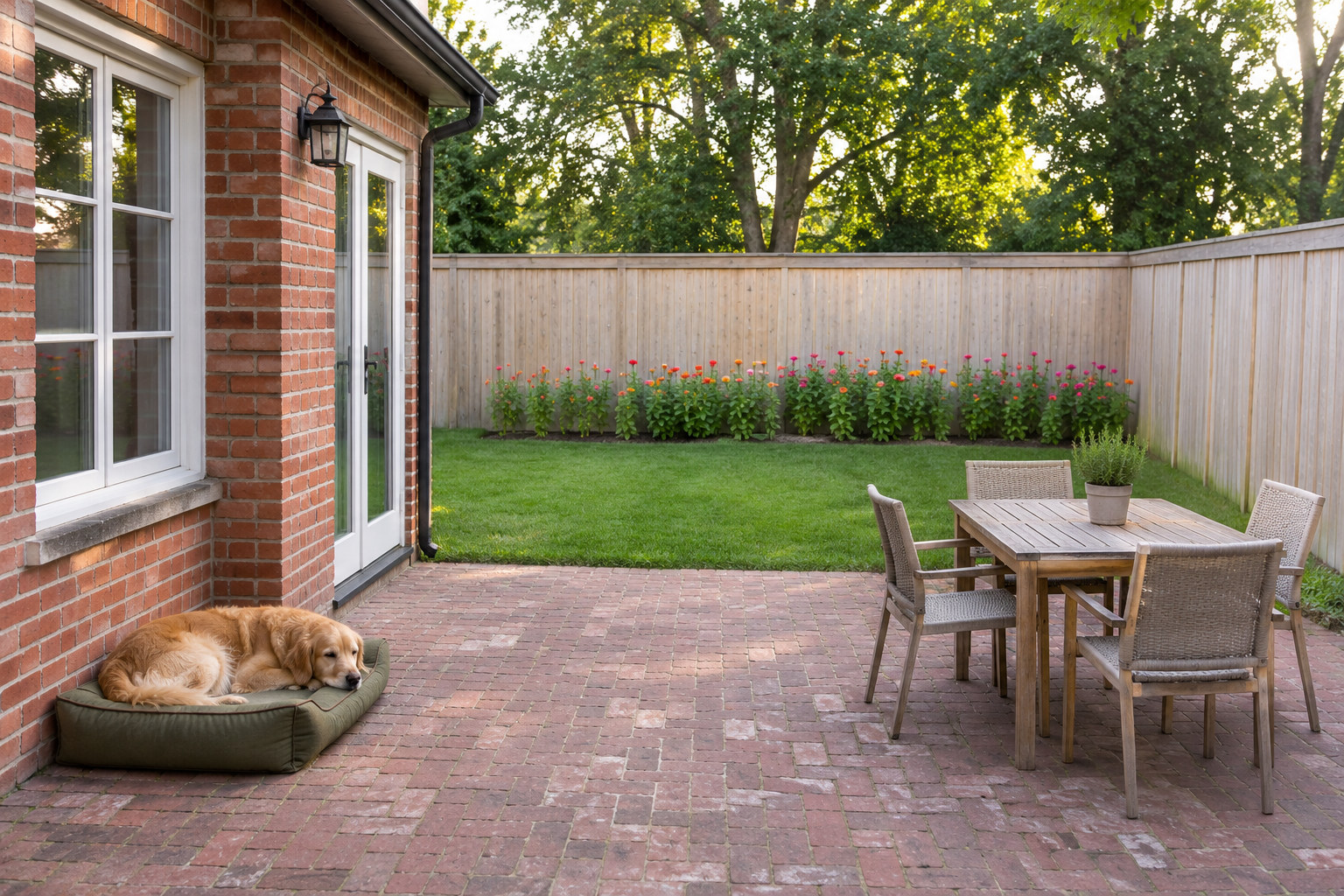
Shared outdoor space works better when the dog’s resting place is part of the main arrangement. Put it close enough for companionship, but outside chair movement, serving routes and the area where people step away from the table. This can be as simple as a cushion at the shaded end of a patio.
Draw the circulation around a table with the chairs occupied. The clear strip between dining and lawn needs to remain useful after everyone sits down. If the available space is tight, reduce the furniture footprint before moving the dog to an exposed or awkward corner.
Choose a resting position with an easy exit and a clear route indoors. Bring bedding in when conditions require it and check its condition regularly. The goal is a landscape that supports ordinary time together, with the dog able to settle nearby without becoming the obstacle everyone has to step over.
15. Give the Food Garden Its Own Gate
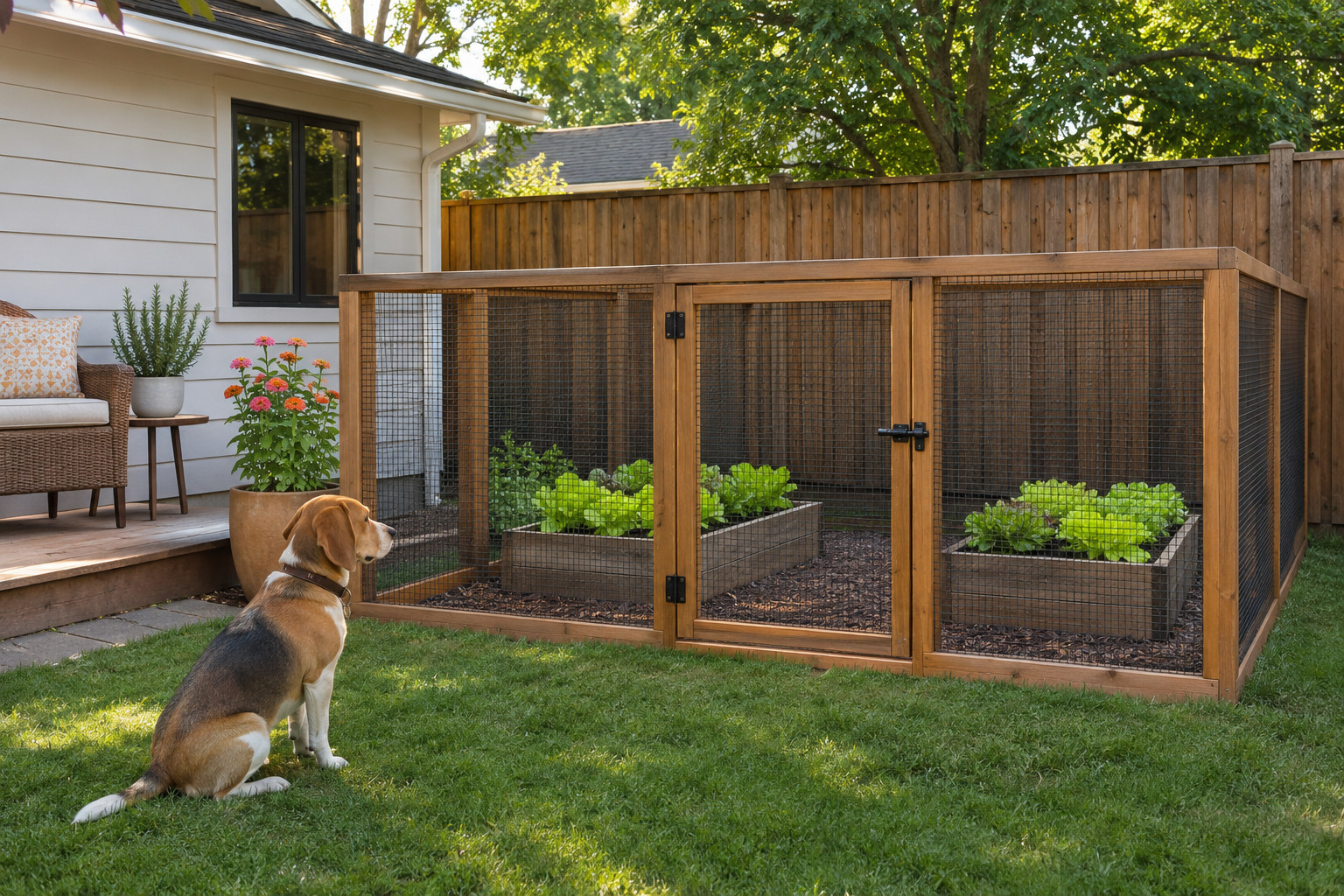
A separate gate around food-growing beds can make shared garden use simpler. It lets you tend the vegetables and manage tools, soil amendments and temporary supports in a defined area while the dog uses the remaining yard. Treat the enclosure as a complete system, including its lower edge and gate closure.
Avoid exposed mesh ends, loose netting or sharp supports where the dog can reach them. Keep the enclosure large enough for you to work inside comfortably, so you do not need to leave the gate open while moving around the beds. Store products and tools securely when the work is finished.
Check every crop and garden product individually for risks to pets. A food plant suitable for people is not automatically suitable for a dog to investigate or chew. The planting plan and the physical separation should work together, with a clear route between the vegetable area, storage and the house.
16. Leave a Route for Garden Maintenance
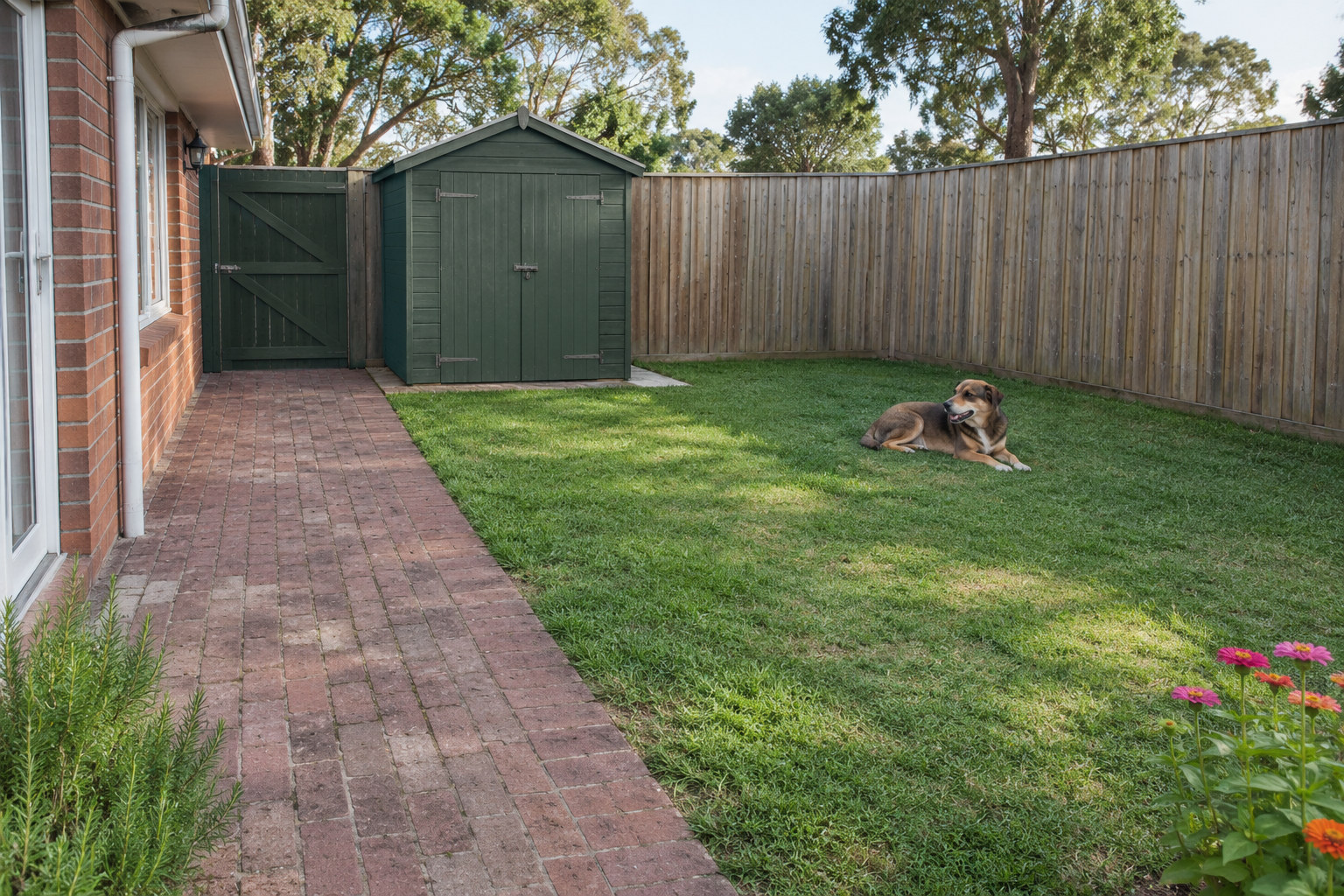
Maintenance needs floor space too. Leave a practical route between the gate, tool storage and the parts of the garden that need regular work. A narrow decorative passage may become frustrating when you carry a bag of supplies or move the equipment you actually use.
Measure those items before setting the route or gate opening. Account for turning space and for any slope or threshold along the way. Keep dog bedding, water bowls and fixed planters out of this access line so preparing for routine work does not require a full rearrangement.
Plan somewhere separate for the dog while mowing, repairing fences or applying products. Close and secure the storage area afterward, then inspect the ground for forgotten items before returning to shared use. A garden that can be maintained without awkward improvisation is more likely to keep its paths clear, its boundaries sound and its useful areas available.
17. Light Routes and Changes of Surface
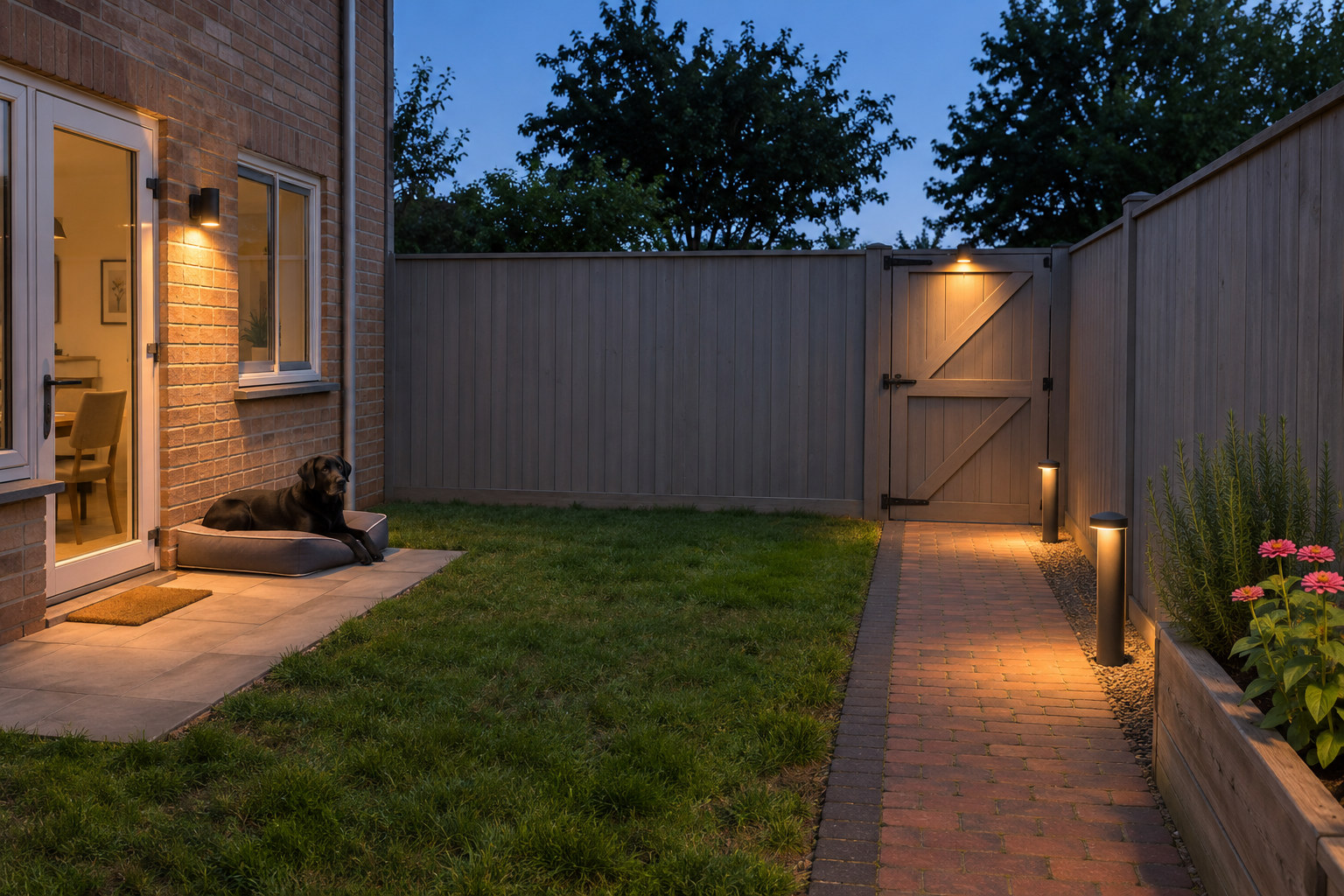
At dusk, lighting should help you recognize the route, gate and important changes of surface. A few appropriately positioned fixtures may be more useful than decorative strings crossing the whole yard. Look for shielded light that falls where you need it, with glare considered from the house and neighboring property.
Place fixtures outside the dog’s usual travel line and use equipment suitable for its outdoor location. Wiring, connections and installation need proper protection; avoid loose cables across paths or around bedding. Have fixed electrical work handled according to the requirements for your location.
Check the layout after dark before adding more lights. Stand at the back door and walk the normal route while looking for confusing shadows or an unlit gate latch. Preserve the quiet feel of the garden. The practical aim is to see and supervise ordinary evening use, not to flood every planted area with light.
Compare Materials in the Conditions That Matter
Appearance is only one part of a surface choice. Consider the following questions when reviewing samples or quotations:
Get the Fail-Safe Paint Color Playbook (Free PDF)
36 proven colors • 8 ready palettes • trim & sheen guide • printable testing cards.
| Surface or feature | Questions to resolve before installation |
|---|---|
| Natural lawn | Does the site support suitable grass, and how will you manage wear, watering and temporary repair areas? |
| Paving | Is the finish appropriate for wet use, are joints stable, and how will runoff and surface temperature be managed? |
| Loose aggregate | Does your dog pick it up, will it migrate onto paths, and can it be maintained without sharp or unsuitable pieces? |
| Artificial turf | What are the product’s installation, cleaning and drainage requirements, and how will you assess its temperature in use? |
| Beds and containers | Are the exact plants checked, the edges finished, and any treatments kept outside the dog’s access? |
No single label guarantees that a complete garden surface will suit every dog. The RSPCA advises checking hard-surface temperature before a dog walks on it. Assess the actual installed surface and weather, then change the routine when conditions are unsuitable.
Work Out the Planting and Maintenance Plan Together
Keep a record of the plants you select, their mature size and the products used around them. The ASPCA plant database is a useful identity check, while a local gardening professional can advise on growing conditions. The database also cautions that plant material can cause stomach upset even when a plant is not classed as toxic.
Avoid leaving prunings, uprooted plants or open garden products where the dog can reach them. Decide where these will go before gardening begins. Choose plants you can maintain without repeatedly blocking the main route or creating a pile of cuttings beside the dog’s bed.
Choose the First Three Changes
Begin with the problem that interrupts daily use most often. That might be an insecure boundary, a muddy approach to the door, or a resting place that receives too much sun. Deal with that practical issue before spending on decorative additions.
Next, improve the main route through the yard. Finally, establish a comfortable place for people and the dog to pause together. Live with those changes and observe the result before expanding the planting or adding another feature. A successful shared landscape is one whose paths, surfaces and routines make sense together, season after season.