
15 Stylish Cat Tree Ideas That Complement Your Decor
A cat tree is a sizeable piece of furniture, so its outline matters as much as its color. A broad upholstered tower, an open timber frame, and a woven basket design can occupy the same corner while giving the room a completely different feel.
These stylish cat tree ideas focus on choosing a form that suits your decor and your cat’s routine. Look for usable resting surfaces, a sensible route between levels, and scratching areas that can withstand ordinary use. Once those needs are covered, the material and silhouette can help the tree feel like part of the room.
Get the Fail-Safe Paint Color Playbook (Free PDF)
36 proven colors • 8 ready palettes • trim & sheen guide • printable testing cards.
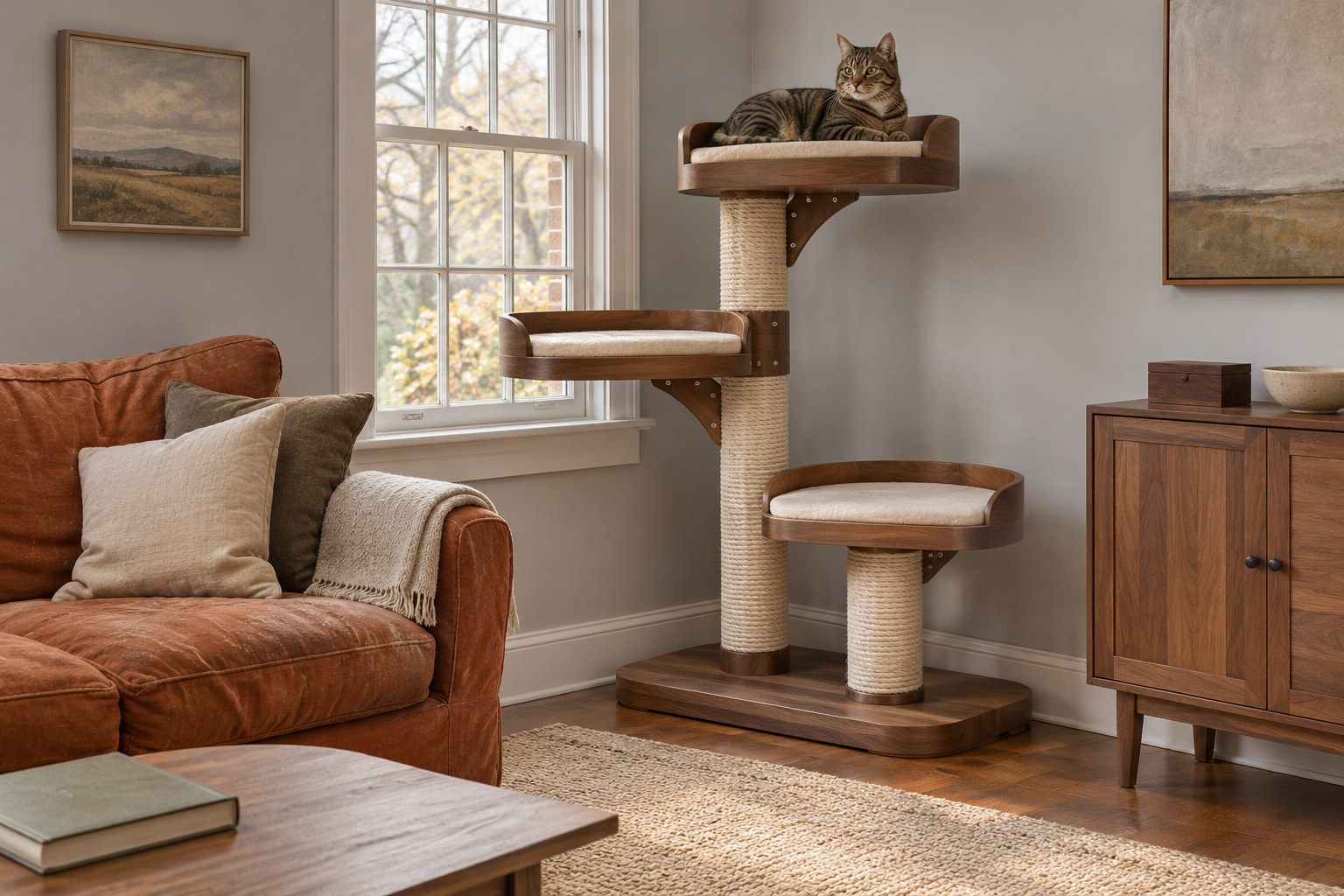
1. Pair Pale Timber with Simple Rounded Platforms
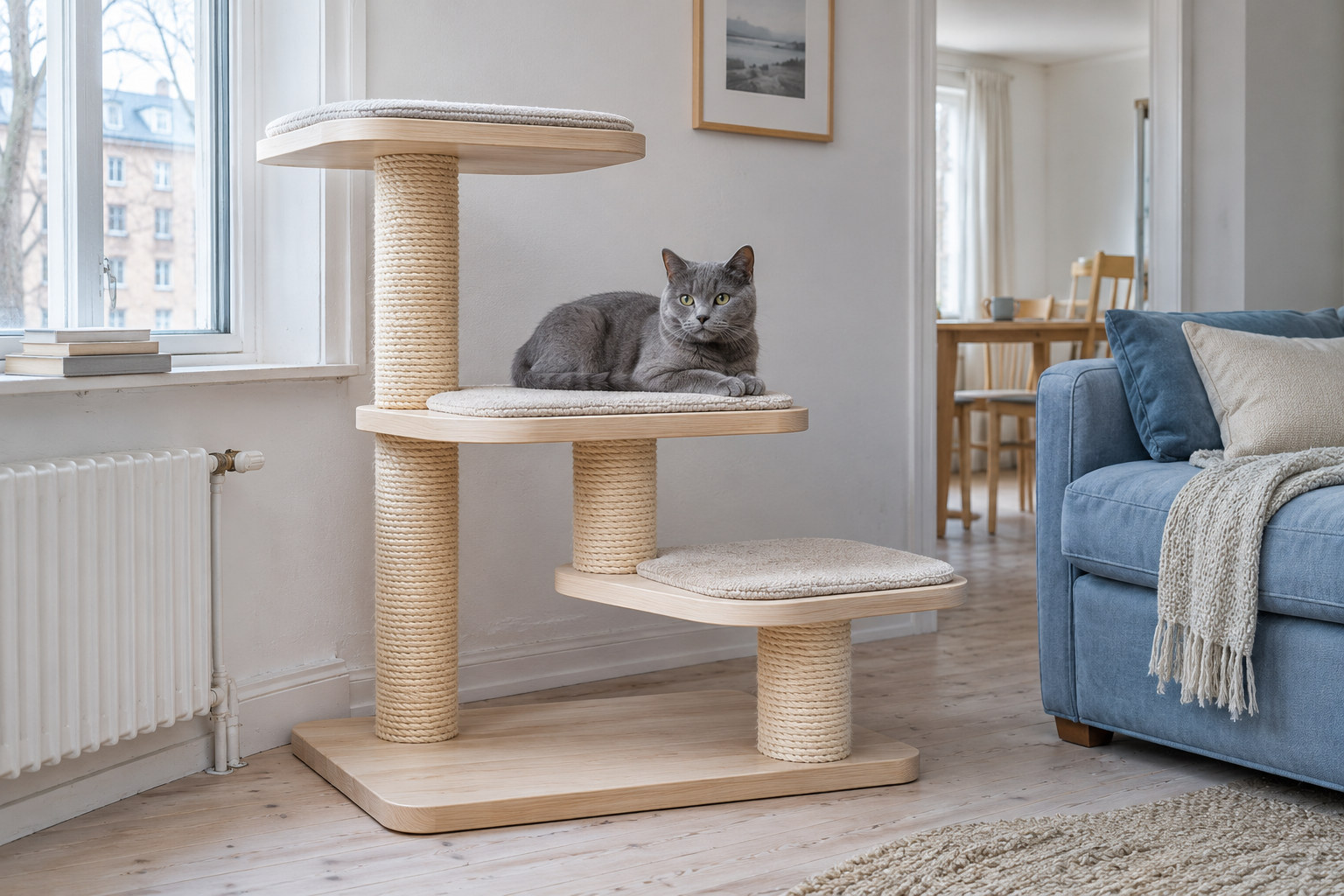
Pale timber and rounded platforms fit naturally into rooms with light flooring, simple upholstery, and a restrained mix of finishes. The visible wood gives the tree a furniture-like outline, while the soft corners prevent a stack of platforms from looking too boxy. Choose one wood tone that relates to the room rather than trying to match every piece exactly.
Look closely at the resting surfaces beneath the styling. Pads should fit the platforms securely, lift out for cleaning, and leave enough usable space for the cat’s normal sleeping position. A generous plain ledge is more useful than a tiny decorative circle.
Place the tree where its staggered platforms remain easy to approach. A pale finish can look airy, but it does not make the physical footprint smaller. Mark the base on the floor before buying, including any ledge that projects beyond it into the walking route.
2. Use Walnut Forms in a Midcentury Room
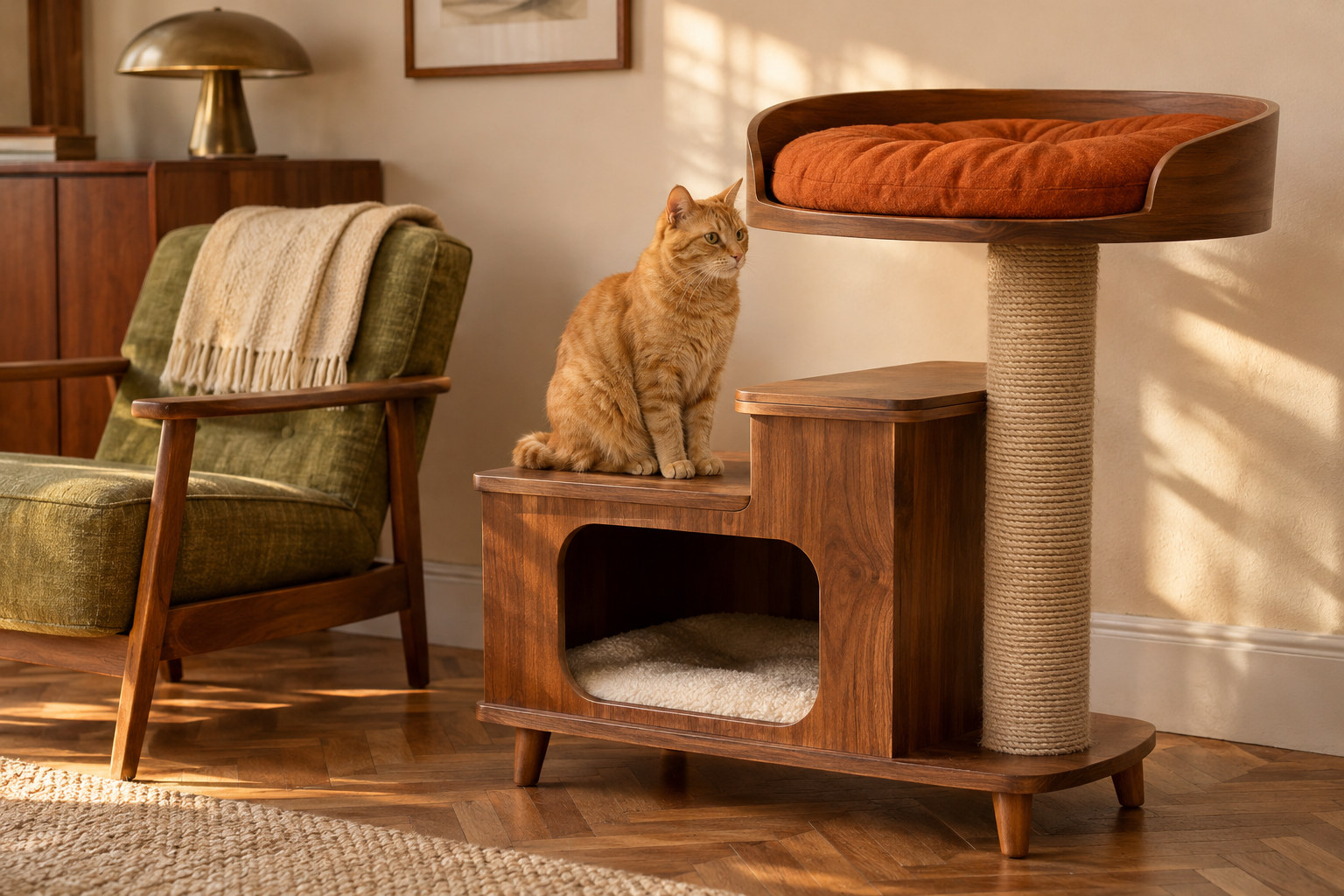
Walnut-colored forms can sit comfortably beside midcentury cabinets, tapered furniture, and warm upholstery. A box-shaped lower den with one generous oval bed above has a clear, compact silhouette. It feels closer to a small piece of occasional furniture than a collection of unrelated shelves.
Check how the cat reaches that upper bed. A stylish lower box should not hide an impractical leap or leave no comfortable route down. Compare the intermediate step, scratching surface, and overall stability with the cat’s current habits.
Use the pad color to connect with an existing cushion or chair, such as rust, olive, or muted blue. You do not need to introduce several additional accents. In a room with dark furniture already, leave some light wall visible around the tree so its outline remains readable. The aim is a deliberate companion to the room’s furniture, not another crowded dark corner.
3. Choose a Branch Form as a Sculptural Accent
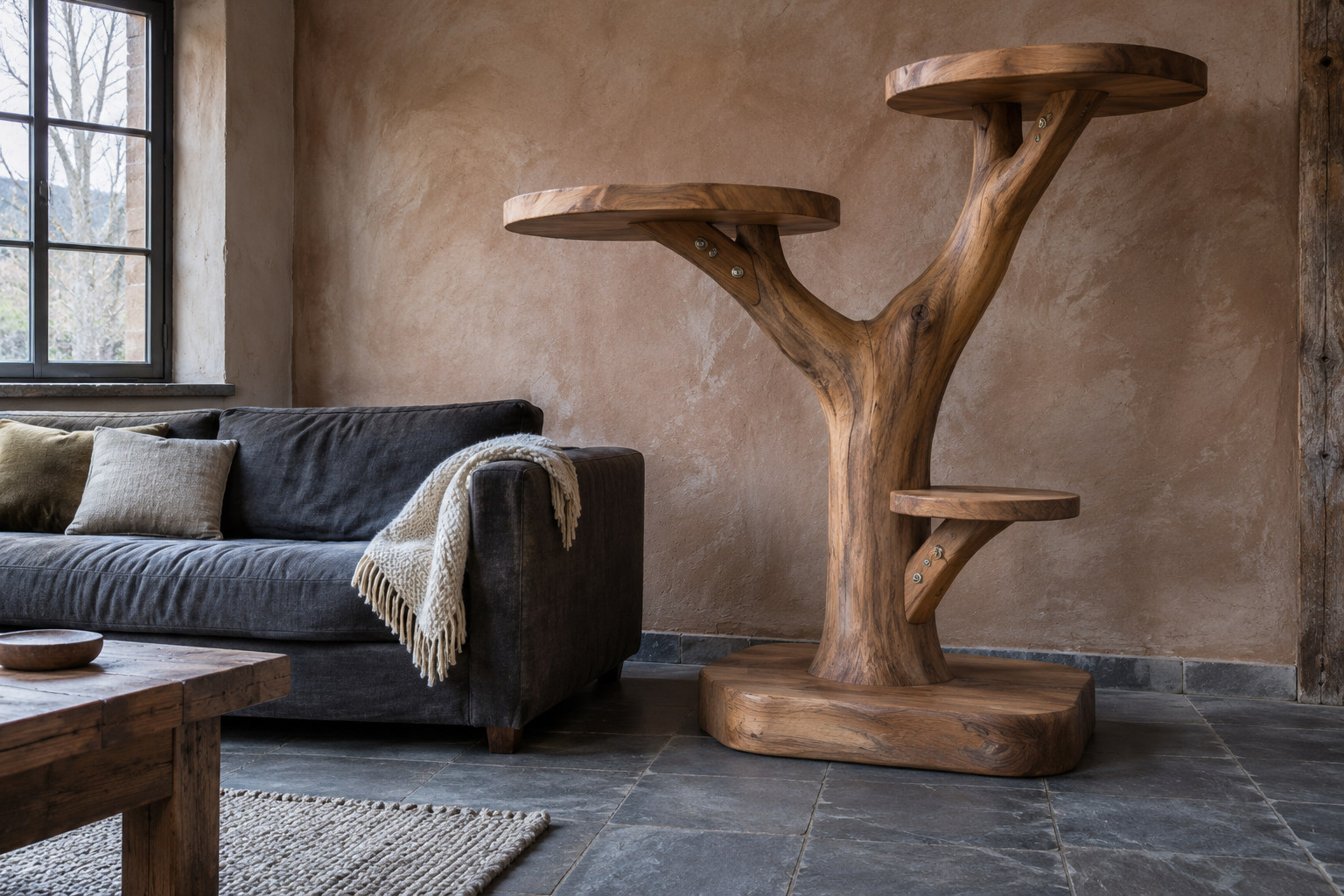
A branch-shaped tree can act as a sculptural accent in a room that otherwise uses simple furniture. Its irregular outline is the main attraction, so give it enough clear wall or window space to be seen. Crowding it beside several tall decorative objects makes the corner feel busy.
Evaluate the actual resting platforms and connections beneath the natural appearance. Branch styling should still provide broad, supported surfaces, an accessible route, and a stable base. Check the product’s materials, assembly instructions, and intended use rather than assuming natural-looking timber is automatically appropriate.
Keep nearby textiles and finishes quiet: a plain sofa, a textured rug, and one familiar wood tone are usually enough. This style works particularly well when you want one substantial statement piece. It is less convincing when the cat’s usable spaces are sacrificed to lots of narrow branches that look interesting but offer little comfortable room.
4. Soften a Modern Room with Rounded Upholstery
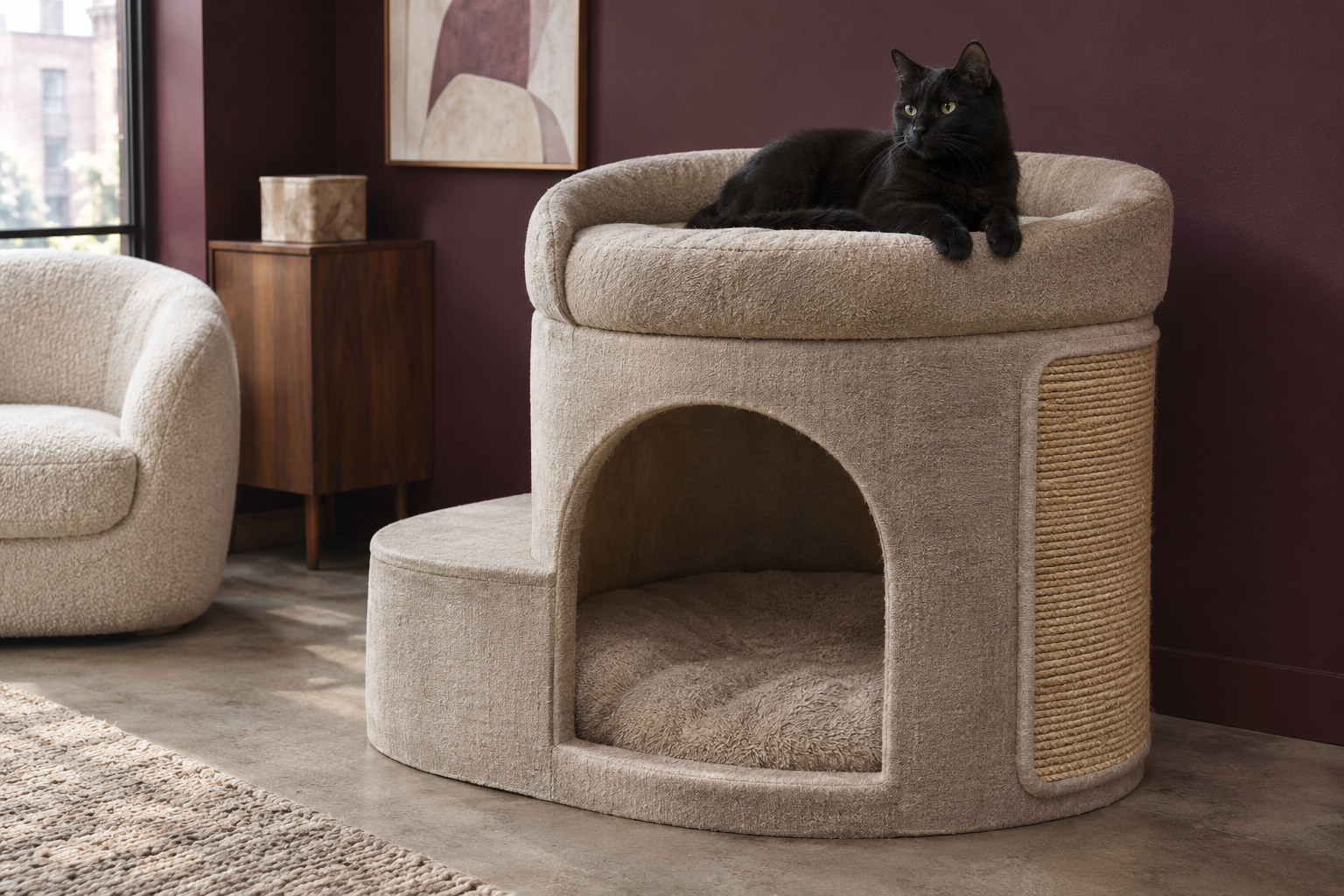
Rounded upholstery can soften a room filled with straight cabinet lines, sharp table edges, or smooth hard flooring. A generous lower opening and broad upper bed give a tower a clear purpose while the fabric makes its outline feel closer to an ottoman or upholstered chair.
Compare the maintenance details before choosing the most inviting-looking texture. Find out which pads or covers can be removed, how the fixed fabric should be cleaned, and whether worn scratching sections can be replaced. Deep decorative seams may require more attention than a simpler surface.
Keep the fabric color related to a larger element in the room, such as the sofa or rug. That makes the tower easier to integrate without surrounding it with matching accessories. Check the opening and platform dimensions separately from the overall shape; a smooth exterior can conceal surprisingly little usable space inside a sculptural-looking tower.
5. Echo Metal Furniture with an Open Frame
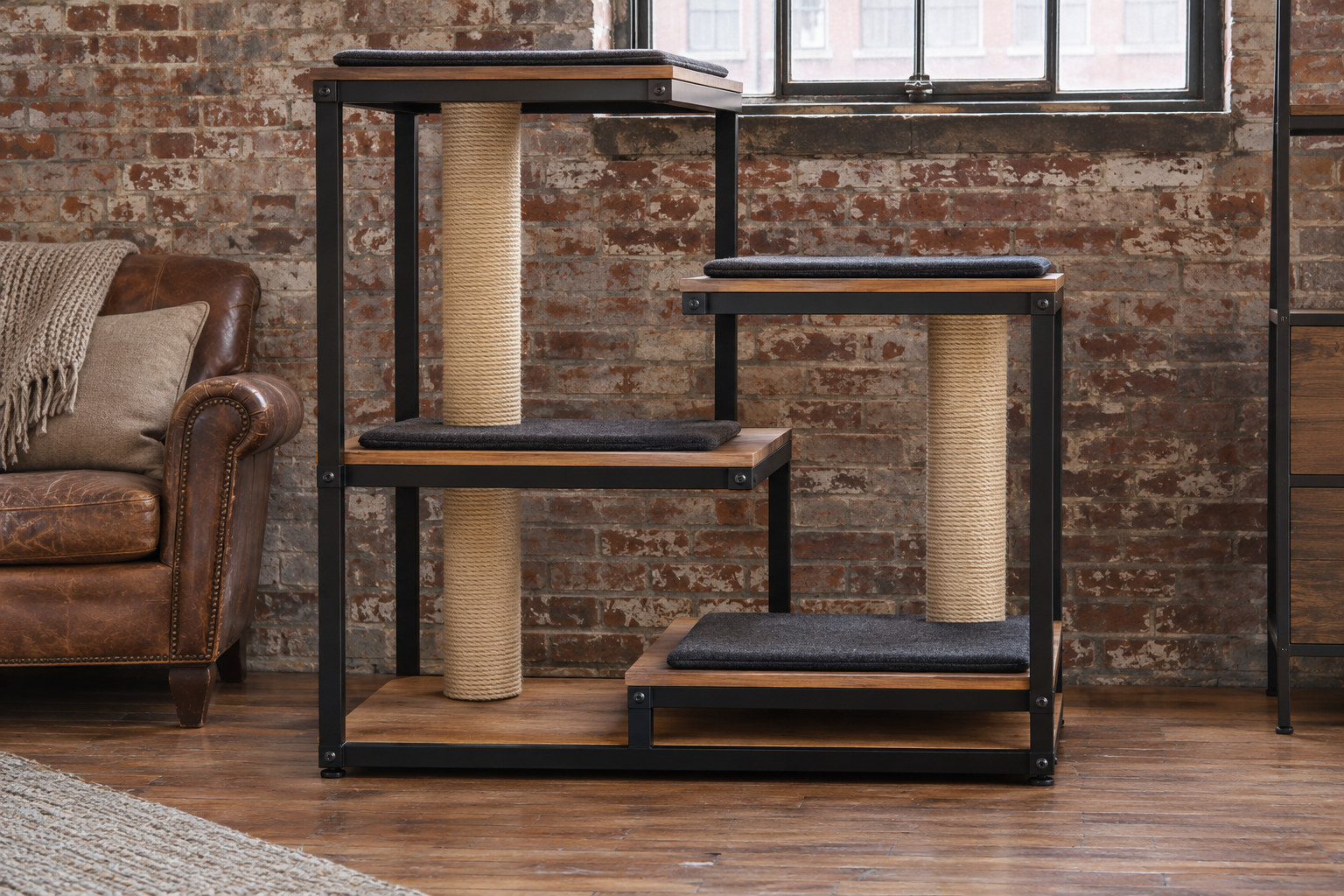
An open metal frame can repeat the lines of a shelving unit, coffee table, or industrial-style desk. Timber platforms and soft pads keep the tree from feeling visually harsh. This combination suits rooms with exposed brick or darker hardware, but it can also provide structure in a plain modern apartment.
Look for a coherent frame with properly supported platforms and clear assembly instructions. Decorative thinness is not a useful reason to accept movement or an uncertain connection. Check the maker’s requirements for placement and any additional securing method.
Keep the climbing route easy to read. Several simple levels often look calmer than many projecting accessories. A dark frame will remain visible against a light wall, so position it deliberately rather than hoping it disappears. Repeat the metal finish in one or two existing pieces and let the scratching material and pads supply the softer texture.
6. Use a Simple Column Against a Matching Wall
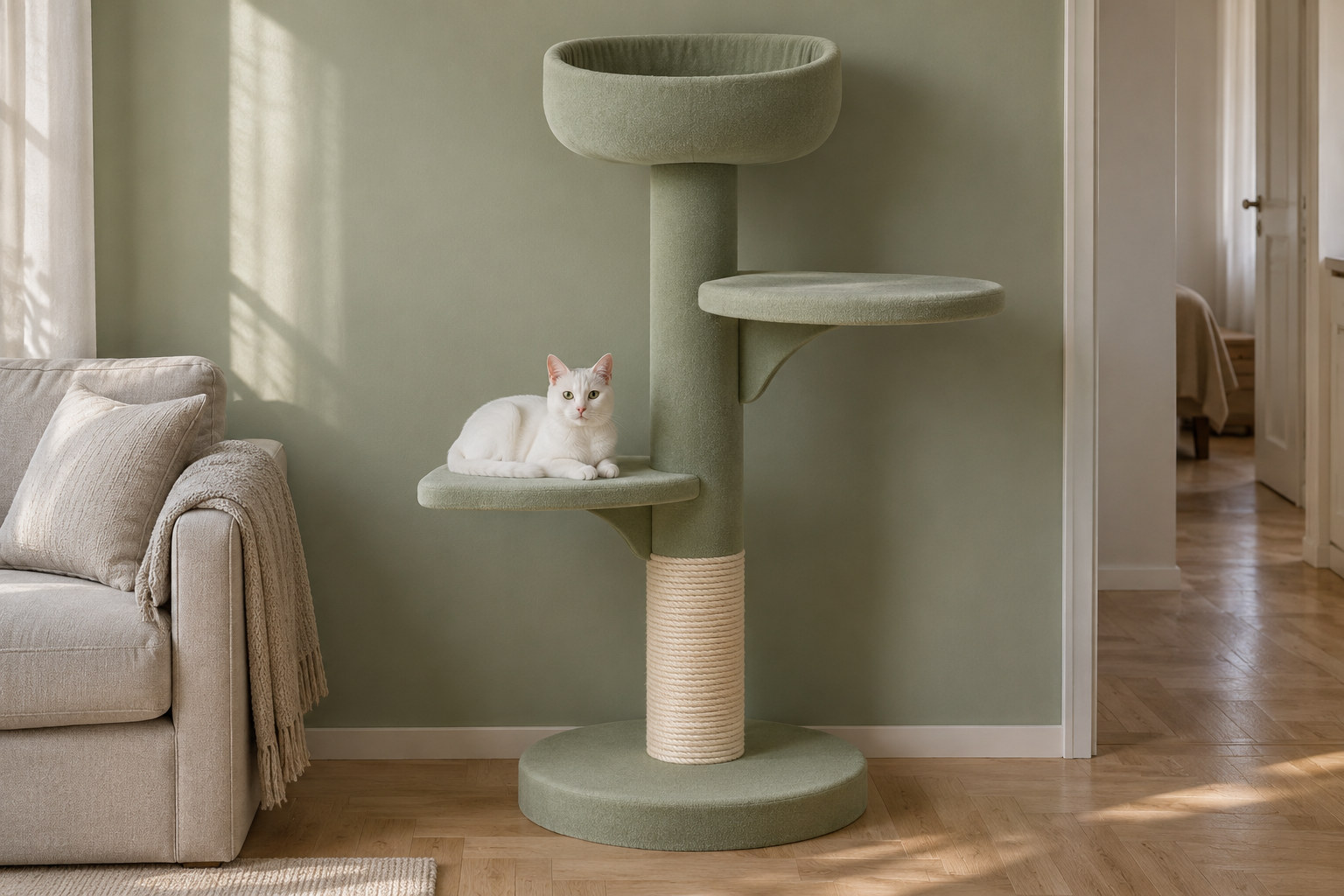
A simple column in a color close to the wall can reduce visual contrast while preserving an interesting sculptural outline. The effect depends on the shape as much as the paint match: broad supported ledges and a clean base look more deliberate than a busy cluster of small platforms.
Choose the tree for its dimensions and access first, then work on the color relationship. A matching shade cannot compensate for narrow resting spots or a difficult jump. Examine the usable area of each ledge, including any raised edge or cushion that reduces the flat surface.
If the wall already has a color break, these two-tone wall ideas can help you consider the background. Keep the tree’s outline visible enough to assess in the room. Similar colors can create a quiet corner without making every texture and finish identical.
7. Bring Woven Texture into an Airy Sitting Room
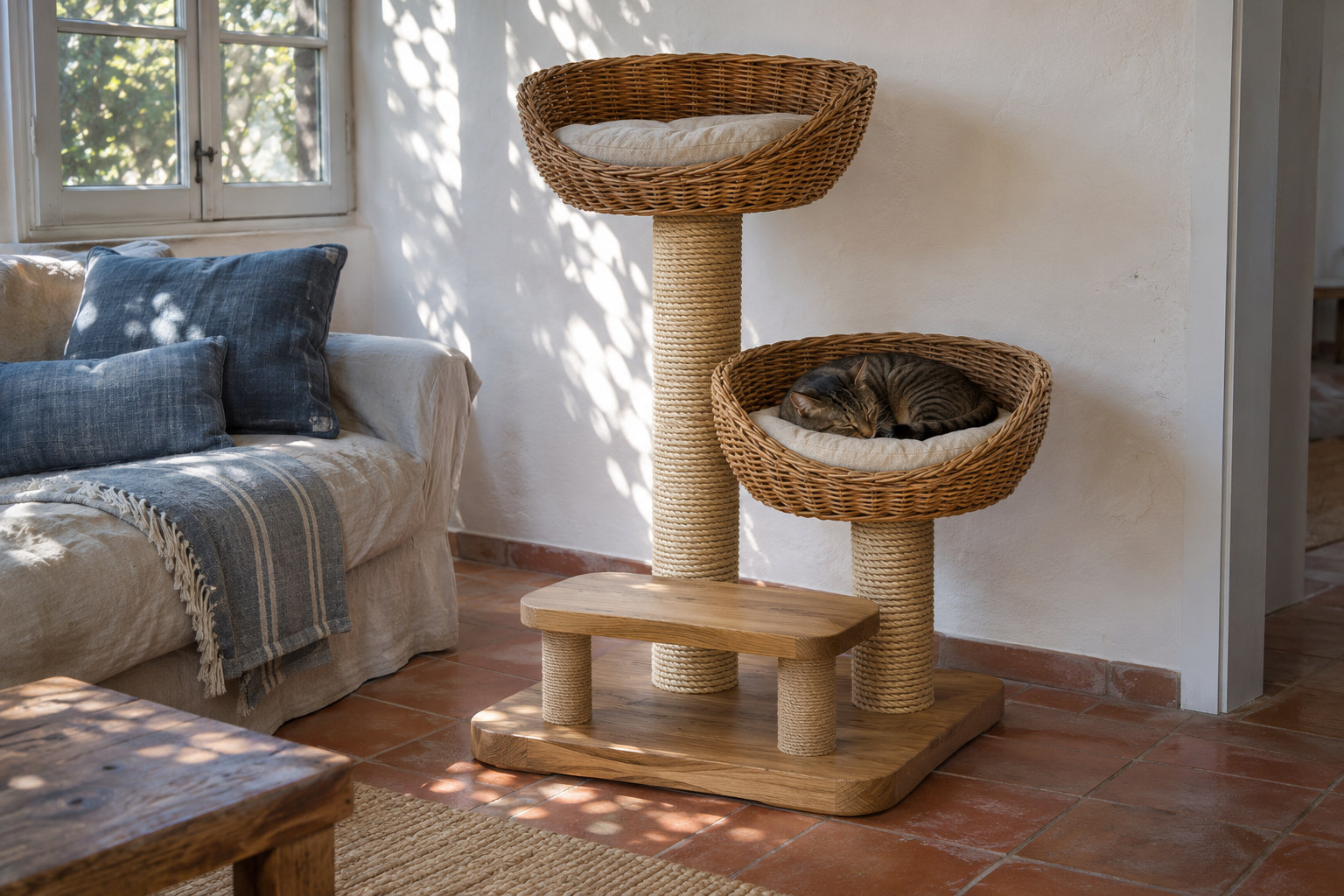
Woven resting bowls bring texture to a room with relaxed upholstery, light plaster, or simple timber furniture. The baskets are the visual feature, so a straightforward frame beneath them is often the best partner. Let the weave relate loosely to an existing chair or rug instead of adding several more woven accessories.
Check that the resting baskets are rigid, securely supported, and roomy enough for the cat. Review the materials and maintenance instructions, including what happens if a woven section becomes damaged. Loose or fraying strands need attention rather than being treated as charming patina.
Look for an accessible lower step and a substantial scratching area. A basket tree should offer more than a place to curl into a small bowl. Place it where the texture catches soft daylight, but keep the cat’s approach clear of curtains and household clutter. The result can feel light and comfortable without relying on delicate construction.
8. Choose Furniture-Like Details for a Traditional Room
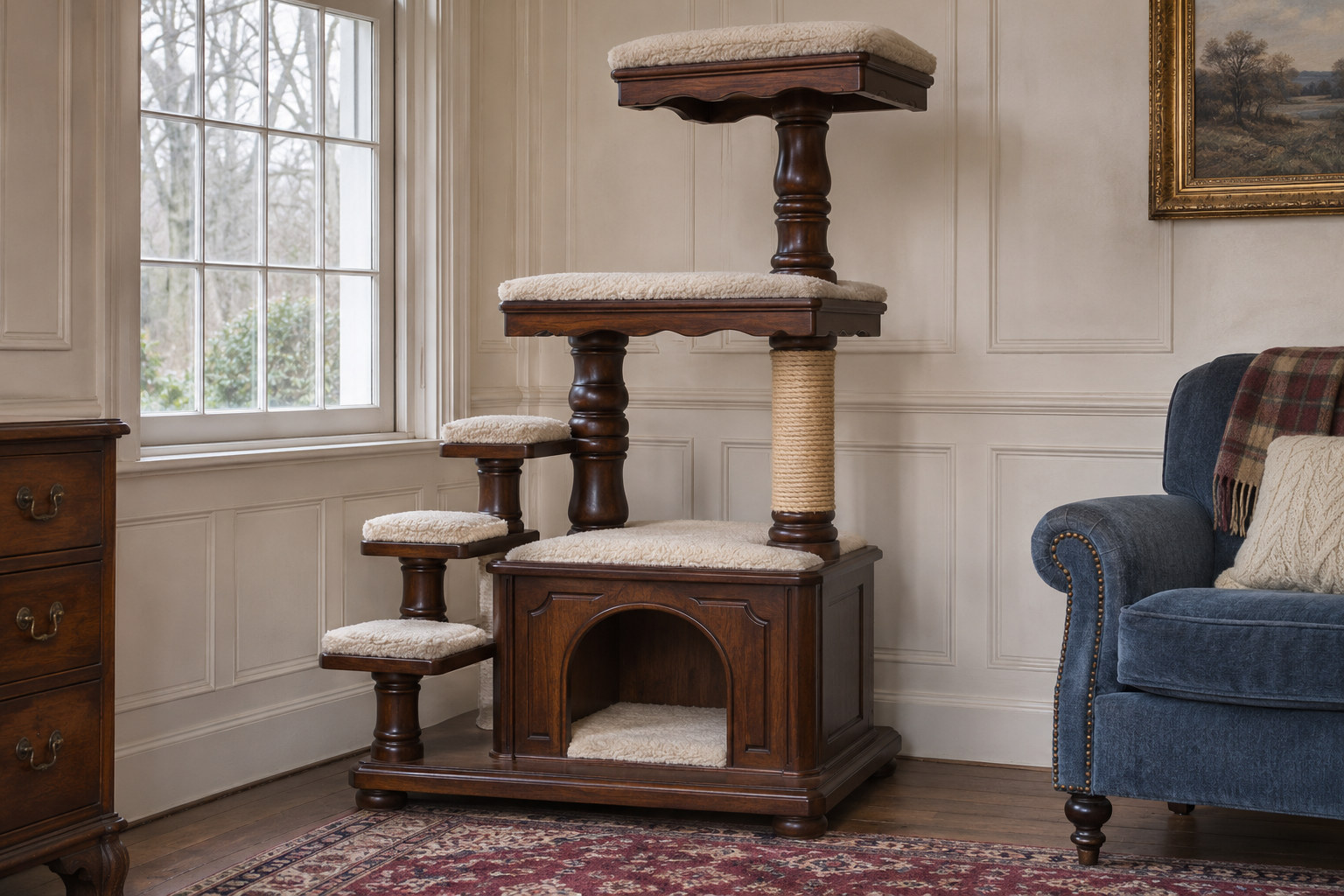
Traditional rooms can accommodate a cat tree with furniture-like trim, substantial turned posts, and simple upholstered platforms. The familiar details relate to bookcases, paneled walls, or older seating without requiring the tree to imitate an antique. A restrained outline usually integrates more easily than elaborate carved decoration.
Choose finishes that connect with the room’s existing timber, then use a quiet pad color. A small repeat of burgundy, navy, or cream may be enough. Our wooden furniture color ideas can help compare the visual effect of lighter and darker finishes.
Look beyond the decorative post shape to the cat’s usable scratching surface and access between levels. Trim should not create awkward protrusions around an entrance or reduce a platform’s resting area. This approach works best when familiar furniture details are applied to a practical cat tree, rather than making the cat adapt to a miniature ornamental cabinet.
9. Keep a Calm Room Low and Horizontal
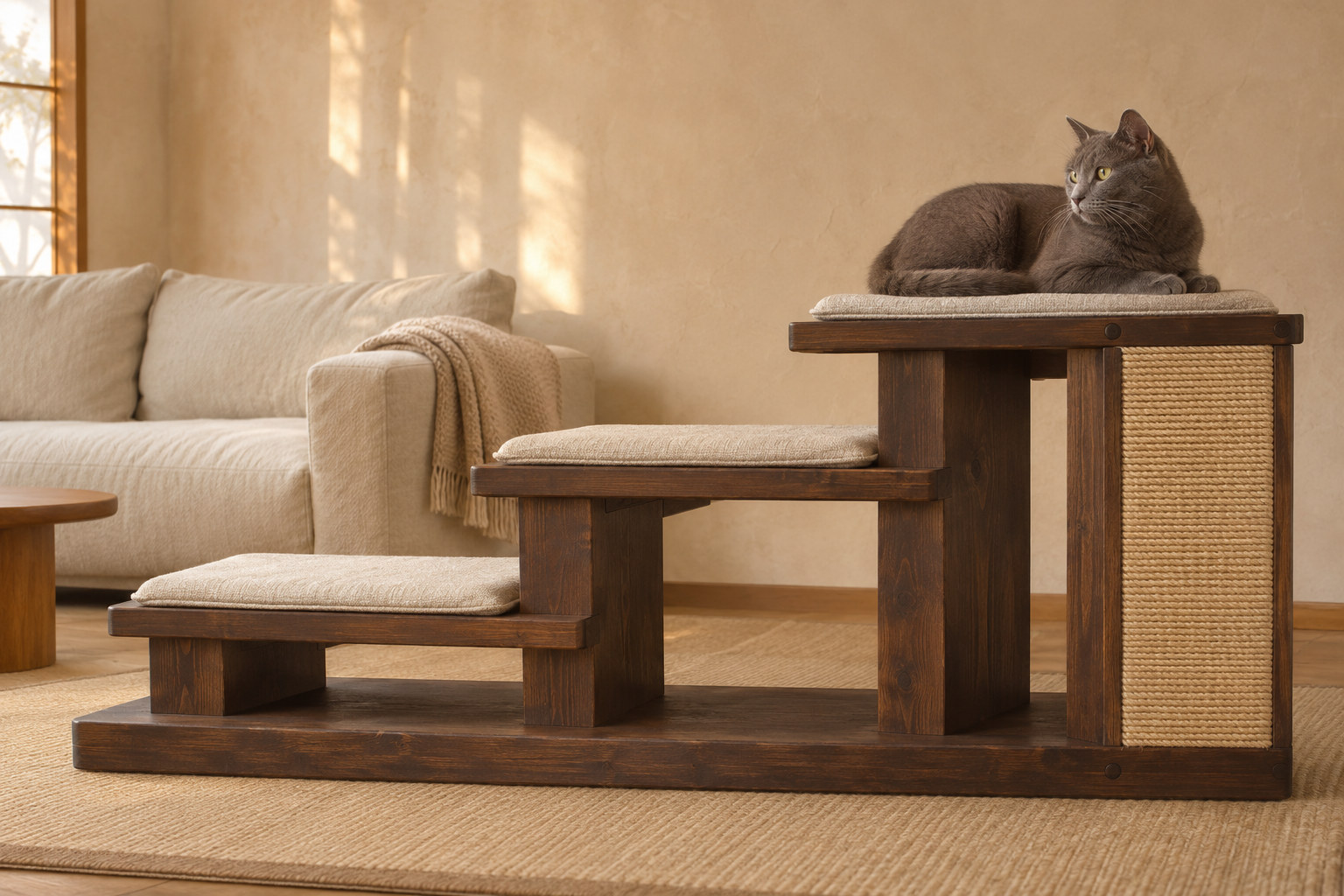
A low, horizontal tree suits rooms organized around broad seating and calm, uncluttered lines. Wide stepped platforms can feel connected to a low sofa or bench instead of rising as a separate tower. The design is especially worth considering when your cat already favors lower resting places.
Compare the platform depth, rise between levels, and the route down. Low height alone does not guarantee easy access, particularly if the steps are narrow or obstructed by pads. Keep the resting surfaces generous and the approach clear from more than one direction.
Use a small material palette, such as dark timber, linen-colored pads, and one sisal face. A plain rug can help group the tree with nearby seating, provided the placement remains stable according to the maker’s instructions. The horizontal footprint may be substantial, so measure the room rather than assuming a lower tree is automatically a space-saving choice.
10. Fit a Corner with a Purpose-Shaped Tree
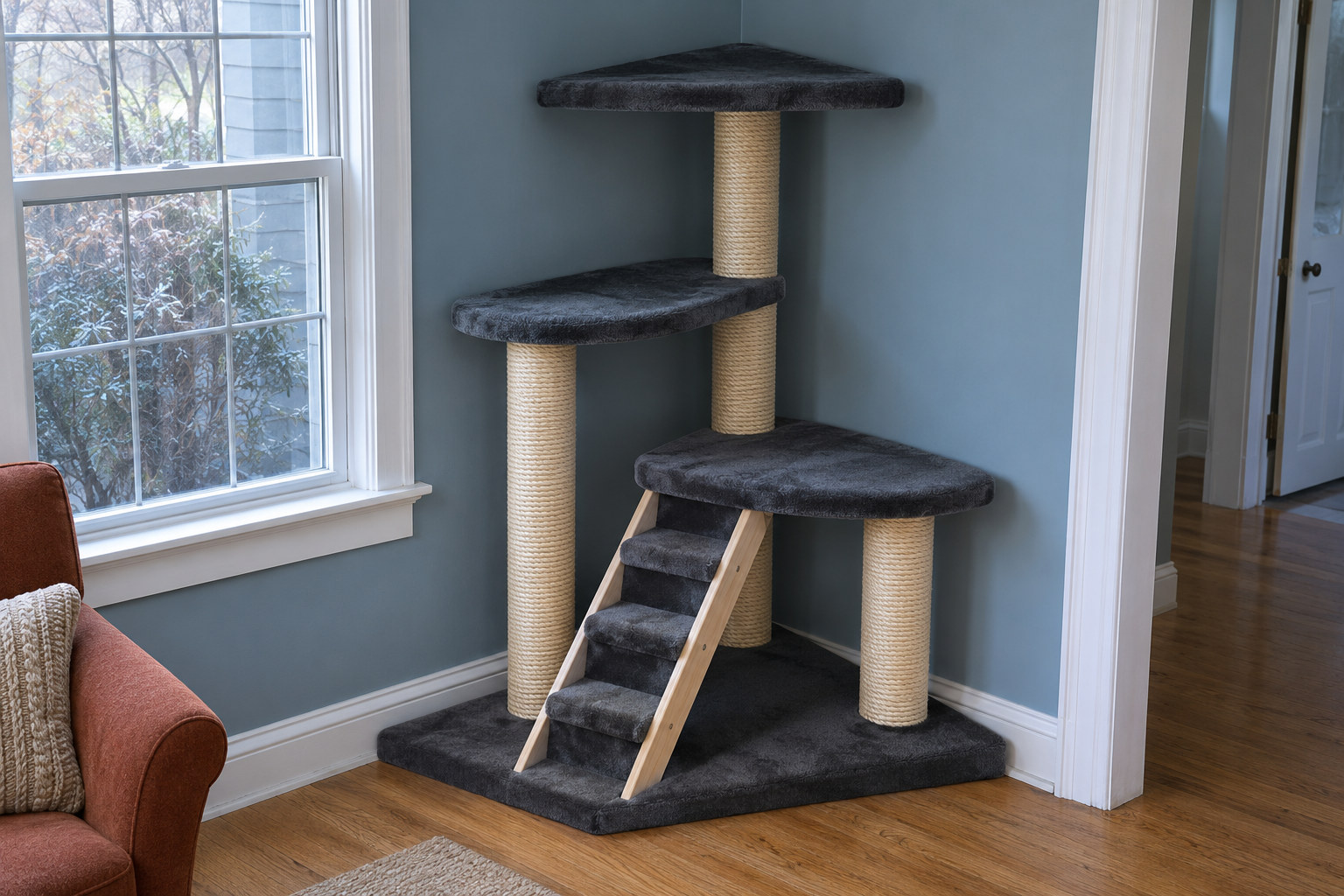
A purpose-shaped corner tree can look more settled than a rectangular base turned awkwardly between two walls. Its platforms should follow the corner without becoming too small to use. Rounded or clipped front edges can give the piece a softer outline while leaving a clear approach from the room.
Measure both wall lengths, the base, and the furthest projecting platform. Include skirting boards, outlets, window trim, and any nearby door movement. A product described as a corner design may still extend well into the walking route.
Choose the corner because it offers a useful position for the cat, not only because it is empty. The tree should remain accessible and easy to clean around. For a compact bedroom, compare the footprint with these small-bedroom layout ideas. A good fit preserves the room’s movement while giving the tree enough space to function.
11. Match the Lines of Nearby Bookcases
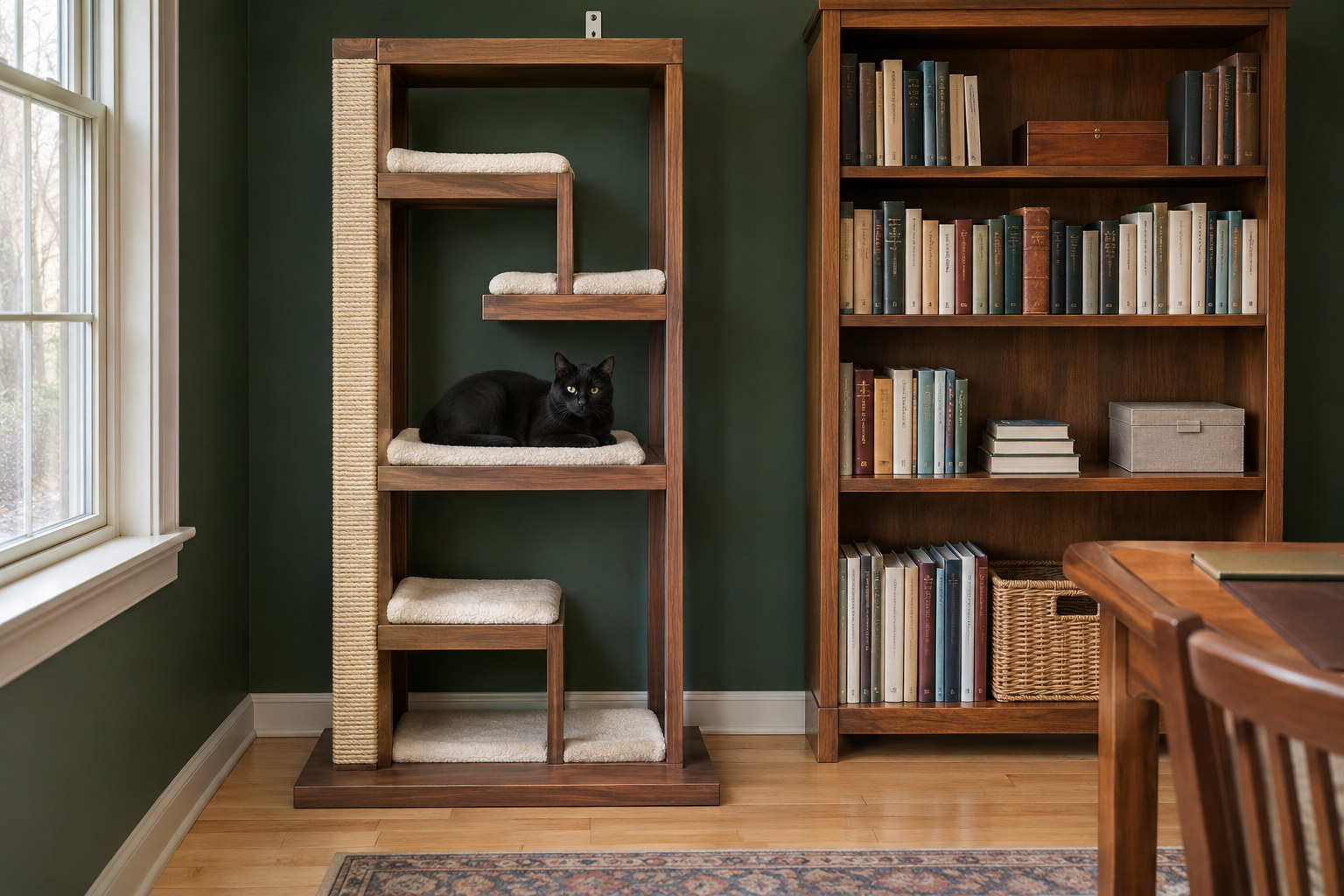
A rectangular cat tower can echo nearby bookcases and make sense in a home office or reading room. Open bays, a consistent timber finish, and aligned horizontal edges give it the visual rhythm of shelving. Keep the cat’s resting and climbing spaces clearly separate from books and ornaments.
Evaluate it as purpose-made cat furniture rather than assuming any shelf unit will work. Platforms need appropriate support, suitable access, and enough clear resting space. Follow assembly and securing instructions, including any specified connection to the wall.
Our bookshelf styling ideas can help coordinate the surrounding room. Keep the neighboring shelves simpler so the combined wall does not become visually crowded. A few repeated finishes will connect the pieces. The cat tower can then have its own empty, usable spaces without looking as though a section of the office storage has been accidentally left unfinished.
12. Add Geometry with Plywood Cubes and Arches
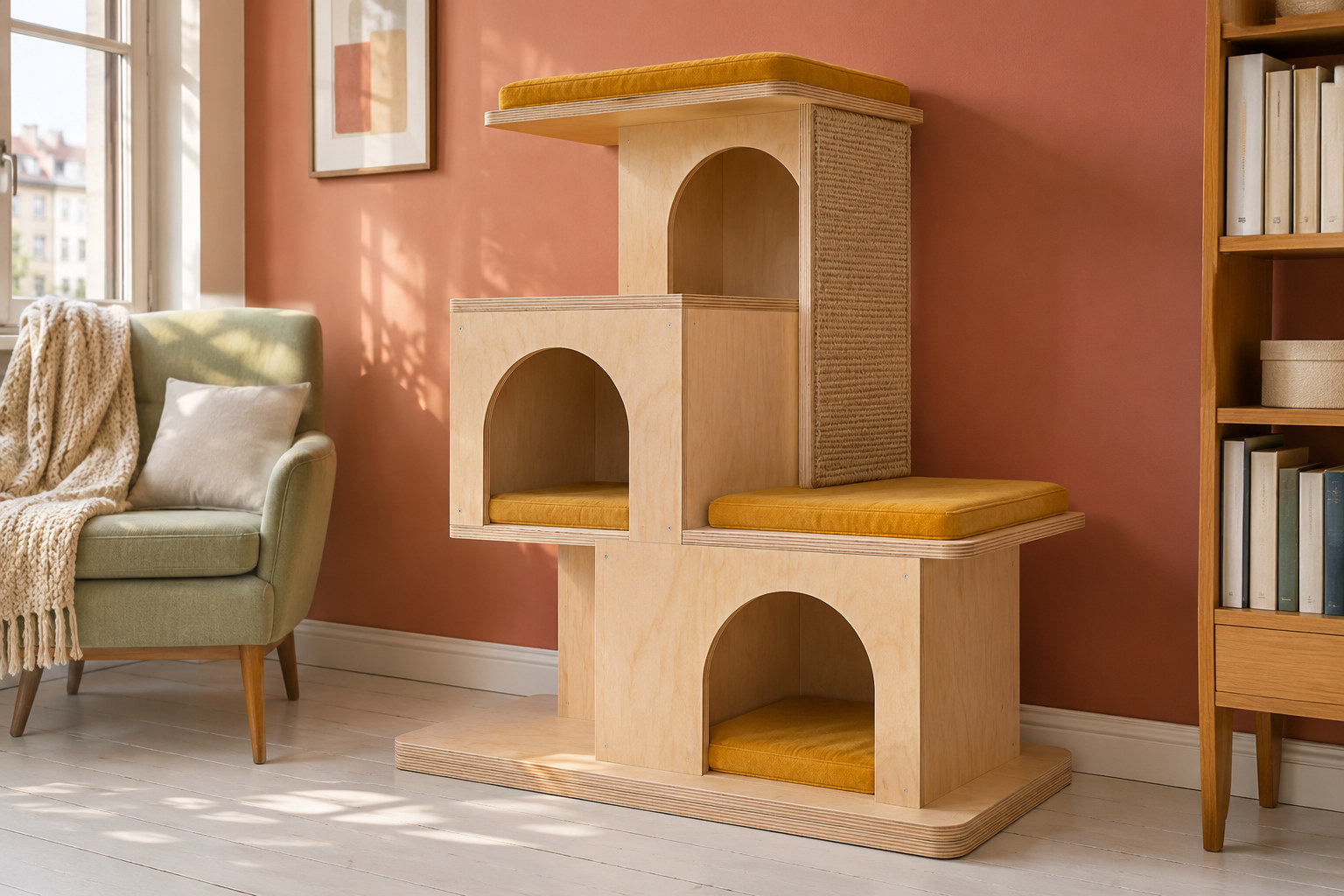
Plywood cubes and broad arch-shaped openings can give a cat tree a playful geometric character. Exposed layered edges and simple colored pads make the form visible without relying on decorative accessories. This style works well in a room that already includes bold shapes or a few carefully chosen accent colors.
Check the inside of each cube as carefully as the exterior. Openings should allow comfortable entry, and the resting area must remain useful once a cushion is added. Look for a clear route between levels rather than a stack of boxes with unpredictable gaps.
Keep the nearby wall relatively simple so the arches and ledges read clearly. One pad color repeated elsewhere in the room can be enough. Choose a product with finished edges, dependable connections, and cleaning access to the lower compartments. A geometric tree should be enjoyable to live with after the first attractive photograph, including when the cushions need washing.
13. Balance Two Resting Towers Across One Base
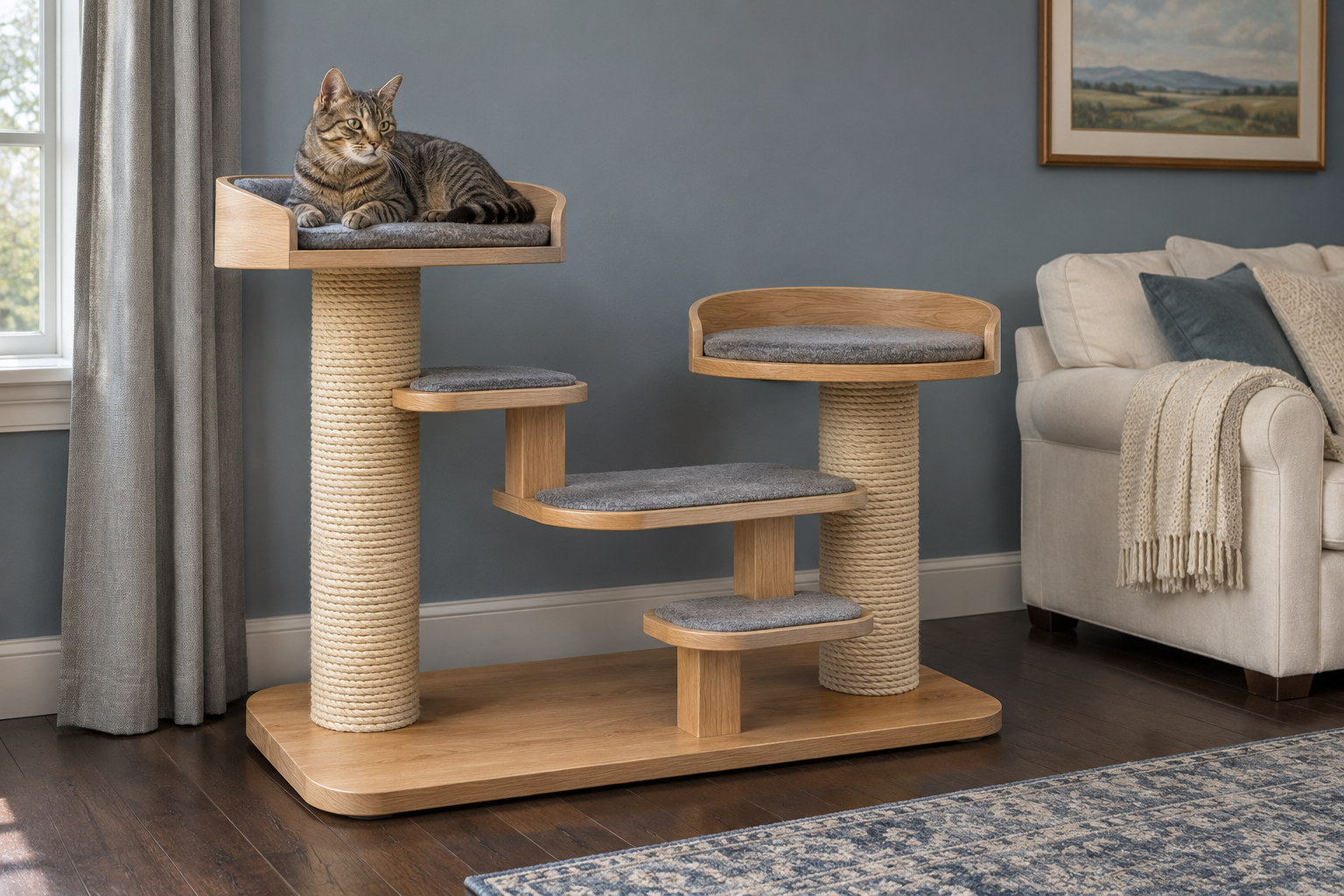
Two substantial resting columns can create a balanced silhouette in a larger room. Separate upper platforms give the tree a more open appearance than one dense central tower. The design can also offer different resting positions, although each cat’s willingness to share still needs to be observed.
Look for distinct approaches and enough room around the base. A broad arrangement with two perches is less useful if both cats must pass through the same narrow access point. Keep alternative resting places available elsewhere rather than treating one large tree as the whole household’s solution.
Use matching pads and a consistent frame finish to keep the wider piece visually calm. Position it where both sides are reachable for cleaning. This style deserves a proper footprint check, including projecting platforms, because its attractive symmetry can disguise how much space it occupies. Choose it when the room can support that width comfortably.
14. Choose a Window-Height Tree with a Broad View
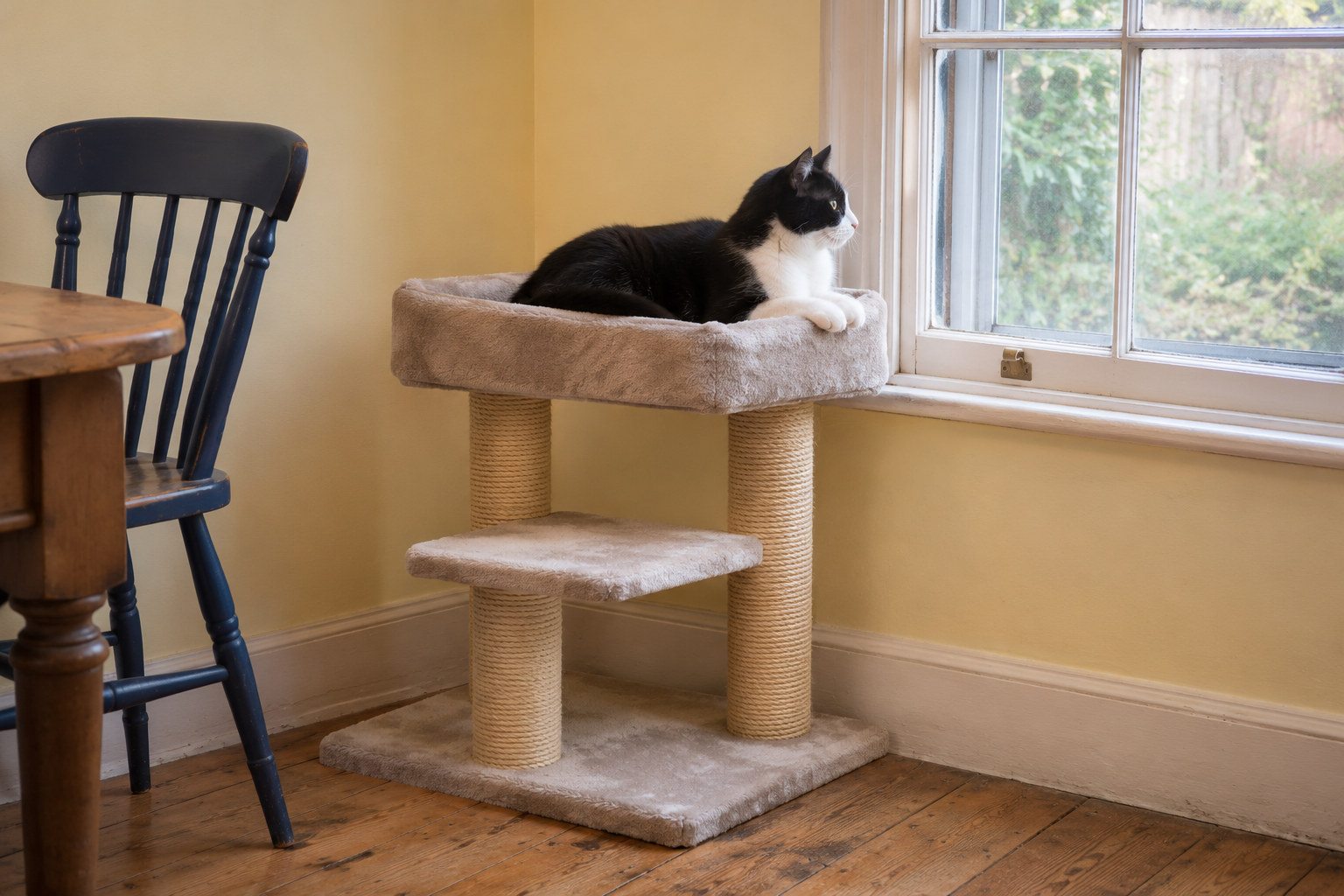
A window-height tree with a broad lounger suits a room where the view is the main attraction. The useful height relates to the actual window and the cat’s position on the pad. A product that looks perfect beside another home’s sill may place the cat below the view in yours.
Measure the sill, resting surface, and surrounding furniture together. Keep the tree independent of window glass unless it is specifically designed for another mounting method, and follow the maker’s placement instructions. Leave window controls and safe operation unobstructed.
Choose a generous lower step and enough scratching surface to make the compact tree useful beyond its top bed. A finish that repeats the nearby chair legs or floor can connect it with the room. The arrangement works best when the tree offers a comfortable viewing position without forcing the cat through curtains or narrowing the route to the window.
15. Let One Sculptural Tree Be the Color Accent
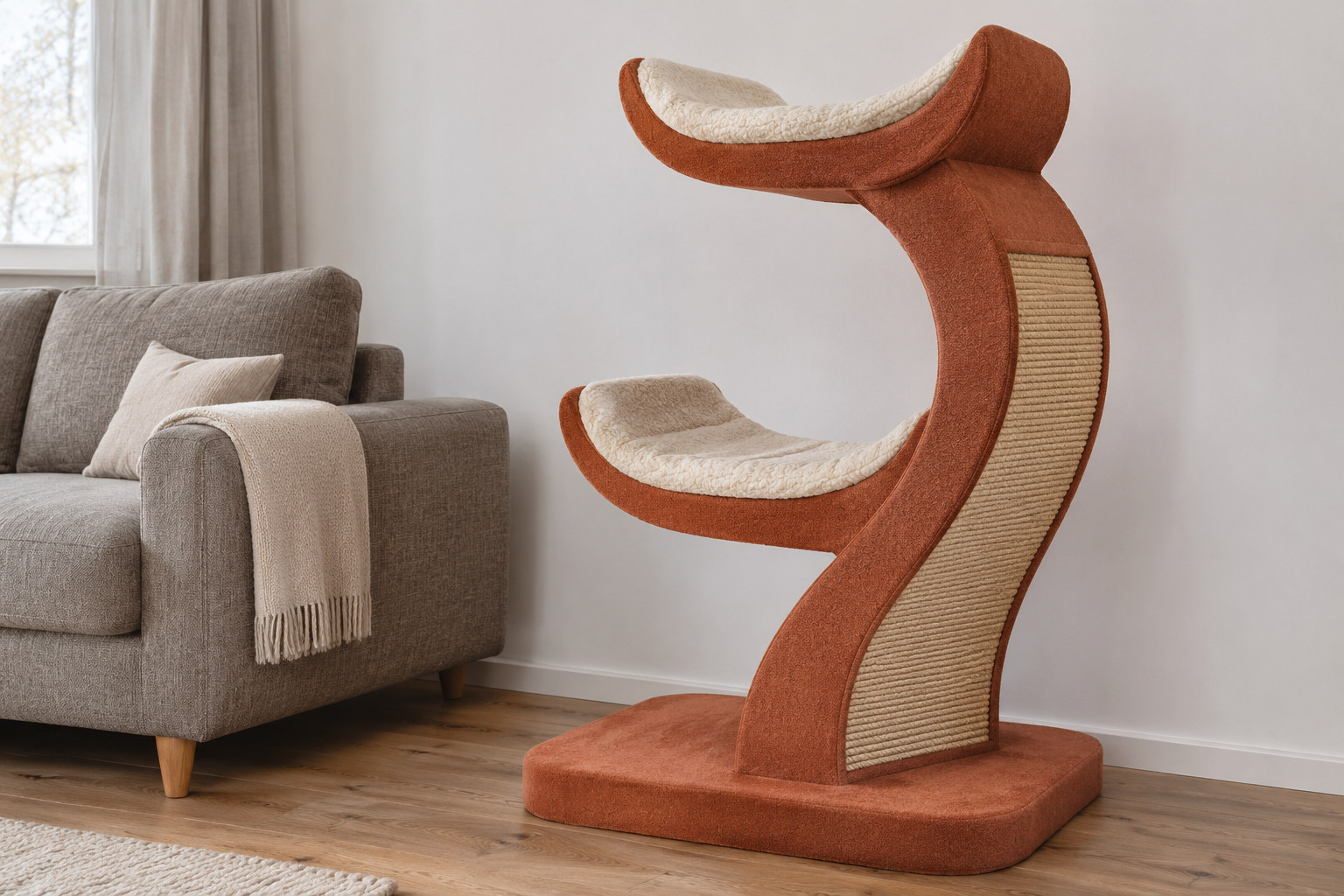
A single sculptural tree can supply the room’s strongest color accent. A wave-shaped frame or bold supported curve creates interest through outline, so the rest of the room can remain simple. Terracotta, muted cobalt, or a deeper green may relate to one existing artwork or cushion without becoming a matching theme.
Compare the working surfaces beneath the statement shape. Shelves still need usable depth, secure pads, and a practical route between levels. A dramatic curve that leaves only tiny places to rest may be more successful as an object than as cat furniture.
Give the tree some space around it so the silhouette is visible. Avoid adding several bright accessories nearby just to justify the color. Check replacement pads, cleaning instructions, and scratching materials before choosing a highly distinctive model. A statement piece earns its place when it remains useful and maintainable, rather than depending entirely on its first impression.
Compare the Silhouette Before the Color
Photographs often encourage a quick choice based on upholstery or wood tone. Start instead with the outline: tall and narrow, low and wide, open and skeletal, or enclosed and solid. Ask which shape belongs with the room’s existing furniture and which one provides the resting and access features your cat uses.
Place a temporary outline on the floor for the base and note the reach of the widest platform. Look at it from the doorway and from the seat you use most. Then check practical movement around it. The tree needs to work in the room from more than the attractive camera angle shown in a product photograph.
| Room feature | Tree direction worth comparing | Practical detail to check |
|---|---|---|
| Light timber and simple upholstery | Pale open frame | Platform size and removable pads |
| Midcentury furniture | Walnut box base and rounded bed | Intermediate access step |
| Traditional seating | Furniture-like posts and trim | Clear openings and usable scratch area |
| Low, calm furniture | Broad stepped tree | Total floor width and approach |
| Strong metal accents | Open metal-and-timber frame | Supported joints and securing instructions |
| Simple neutral room | One sculptural statement | Maintenance and replacement parts |
Give the Cat’s Usable Space Priority
Measure the cat’s relaxed resting footprint and compare it with the flat area of each platform, not just the product’s maximum width. Raised rims, supports, and thick cushions can reduce the surface available. Check the openings into lower dens and the route down from the highest bed as well as the route up.
Ohio State’s perch guidance describes elevated places as opportunities for resting and observing the surroundings. A tree placed where the cat can comfortably watch the room or look outside has a clear purpose beyond filling a corner.
For scratching, Cats Protection recommends a stable post with room for a full stretch, while noting that some cats prefer horizontal surfaces. Use the cat’s observed preference when comparing models. Decorative rope around a short support may contribute texture without providing the scratching opportunity you need.
Get the Fail-Safe Paint Color Playbook (Free PDF)
36 proven colors • 8 ready palettes • trim & sheen guide • printable testing cards.
Read the Assembly and Care Details Before Buying
Check the manufacturer’s intended use, assembly steps, placement requirements, and any specified anchoring. Confirm that the proposed location allows those instructions to be followed. A heavy appearance or a wide photograph does not establish a product’s capacity or stability.
For household furniture around the tree, retain the required anchoring and other precautions. CPSC’s Anchor It campaign stresses following manufacturer instructions to secure furniture. Do not turn a neighboring bookcase into an assumed extension of the climbing route simply because its top is conveniently close.
Compare care requirements with the way you actually maintain the room. Removable pads, accessible corners, and replaceable scratching parts are useful details. Ask how fixed upholstery or woven sections should be cleaned and what can be replaced if damaged. An unusual finish is easier to enjoy when routine care is straightforward.
Make the Placement Feel Intentional
Connect the tree with one or two existing elements: a timber finish, a pad color, or the outline of nearby furniture. It does not need to disappear. Leave clear space around the base, keep cords and fragile objects out of the route, and avoid crowding the tree with decorative baskets that reduce access.
Observe how the cat uses the finished arrangement. A different angle or a less busy position may be more helpful than extra accessories. Keep familiar resting and scratching options available while the tree becomes part of the room. The best style choice is one that still looks considered when a cat is stretched across the top and the cushions are being washed.
Source Notes
- Ohio State Indoor Pet Initiative: Perches, for resting and viewing opportunities.
- Cats Protection: Cats and Scratching, for scratching posture and stability considerations.
- CPSC: Anchor It, for household furniture anchoring guidance. Style comparisons are editorial selection advice, not product testing or load-capacity certification.