
13 Garage Dog Room Ideas with Practical Layouts
A spare garage can look generous on a floor plan and still be a poor place for a dog to rest. Before choosing cabinets or a bed, the space needs to function as comfortable indoor accommodation, with suitable temperature control, dry construction, safe access, and separation from garage hazards.
These garage dog room ideas are for properly assessed and converted spaces. A rug and a partition do not turn an active parking bay into a dog room. The interesting design work begins once the room is suitable: where muddy paws arrive, where the dog can settle, and how storage fits without taking over the floor.
Get the Fail-Safe Paint Color Playbook (Free PDF)
36 proven colors • 8 ready palettes • trim & sheen guide • printable testing cards.
The 13 layouts below focus on those everyday decisions. Adapt them to the dog you have and the way your household actually moves through the space.
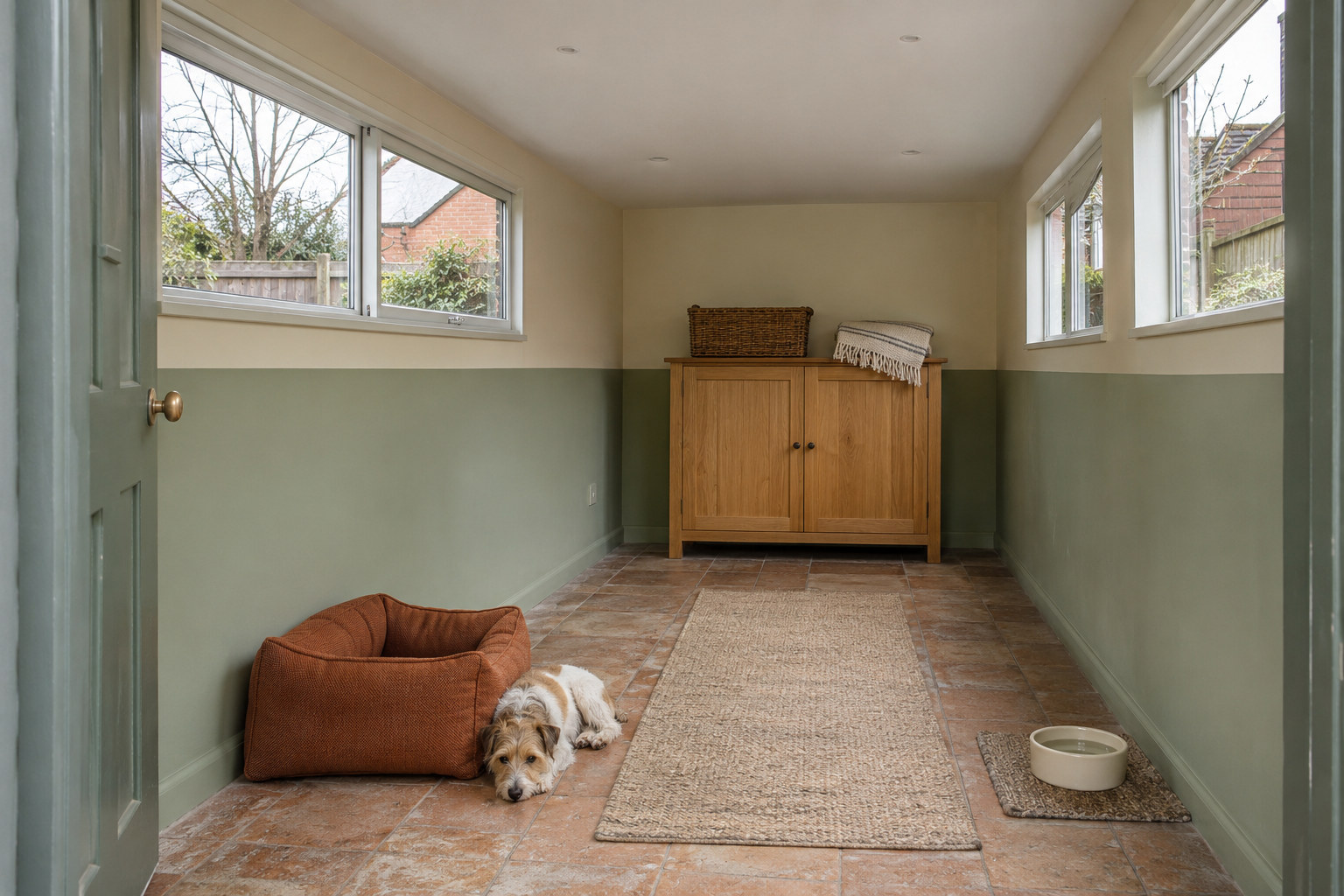
1. Finish a Separate Room Before Adding Dog Furniture
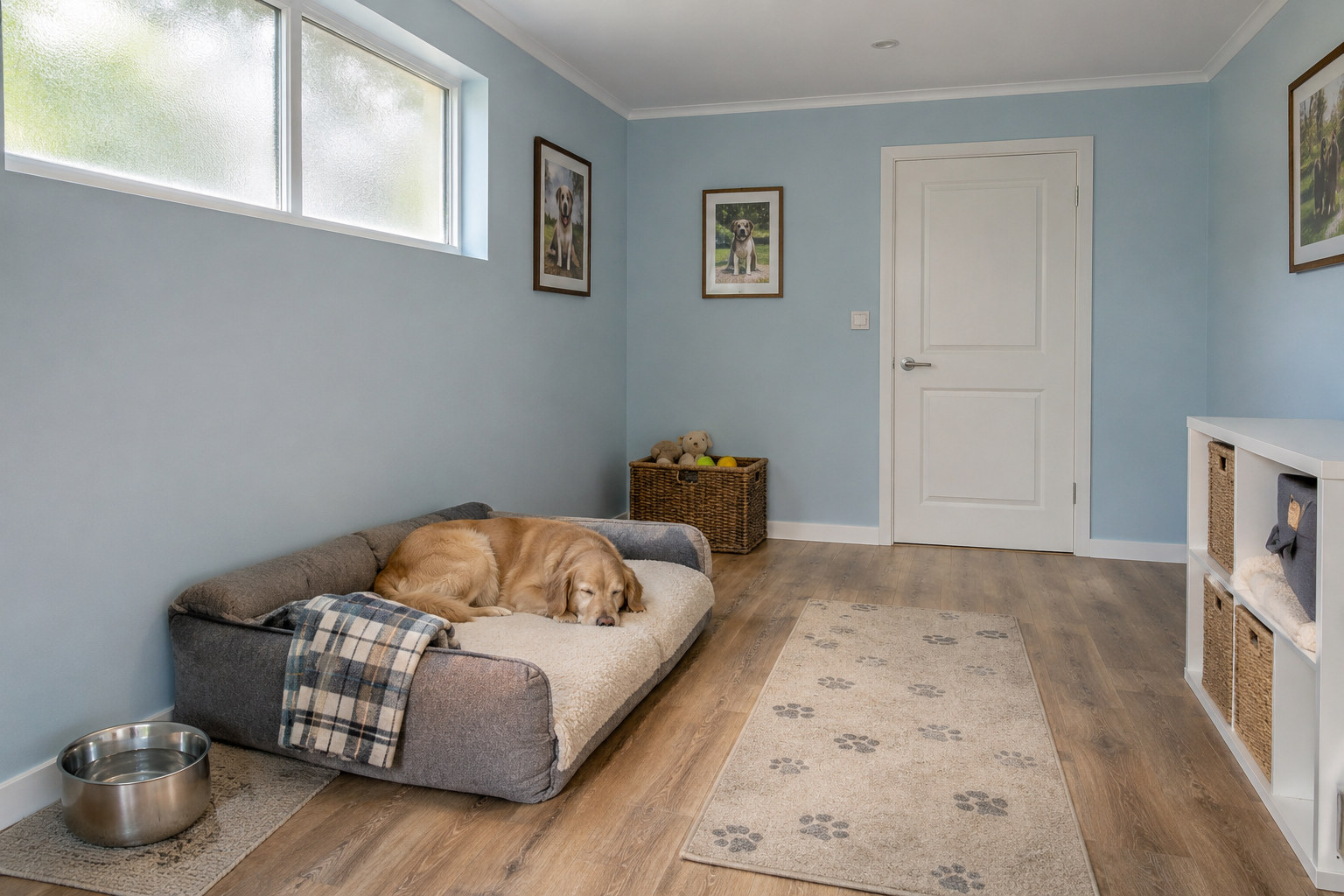
Start with the room itself rather than a shopping list of pet accessories. A finished enclosure should have appropriate walls, floor, ceiling, services, and access for its intended use. Where a conversion retains neighboring garage functions, ask a qualified professional to assess the separation, air movement, and other building requirements.
Once that work is resolved, keep the initial layout simple: a generous bed, accessible water, and a clear route between doors. You will learn more from watching your dog use this arrangement than from filling every wall with permanent cabinetry immediately.
Choose one consistent floor finish and a restrained wall palette to make the former garage feel connected to the house. Furniture can then define the dog’s area without disguising unfinished construction. The useful result is a complete room with dog-friendly furniture inside it, rather than a decorated corner of an unsuitable garage.
2. Put a Wipe-Down Entry Beside the Garden Door
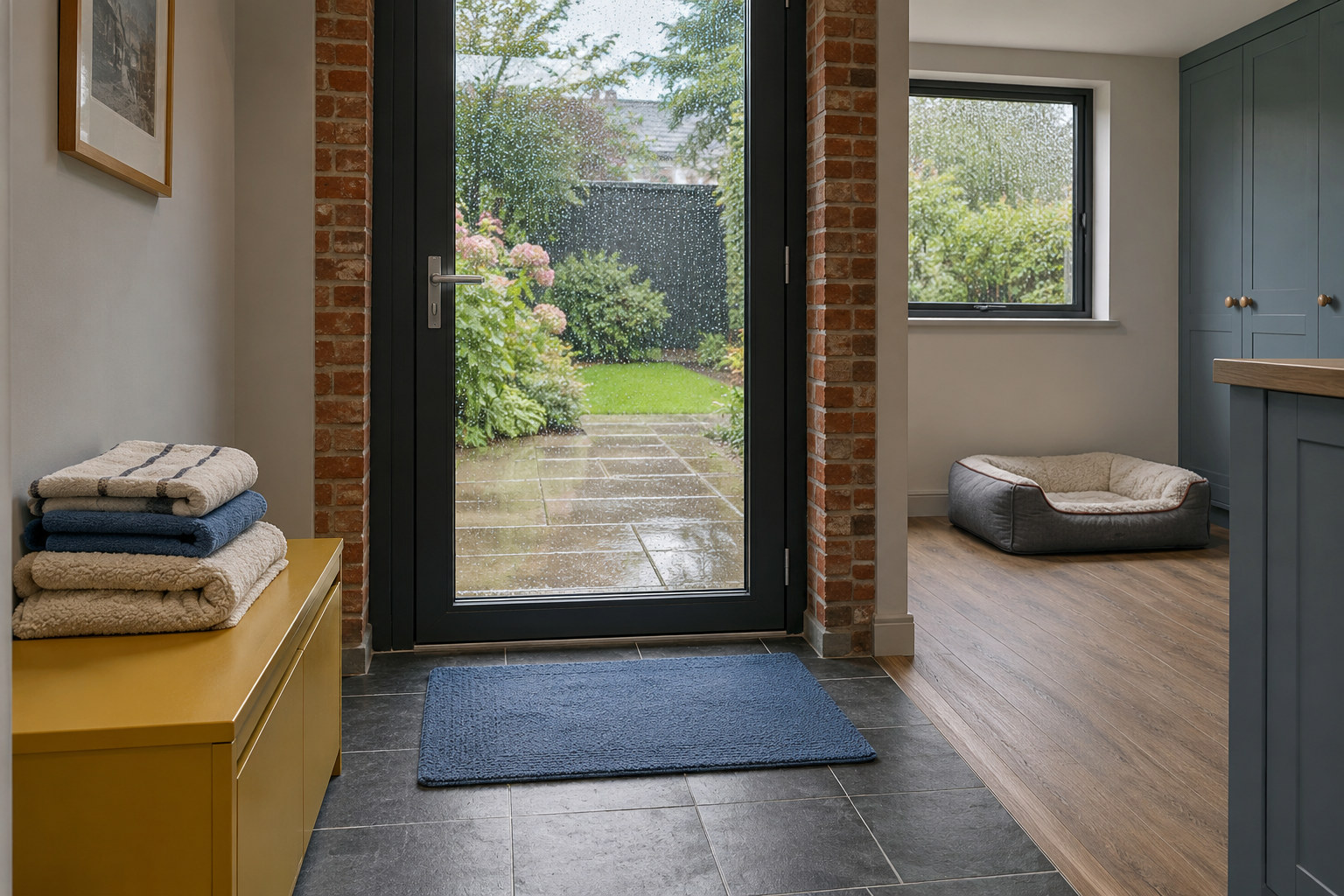
If the converted room opens onto the garden, place the arrival area beside that door. A flat washable mat, a reachable towel drawer, and a small clear space for wiping paws can keep the muddy part of the routine in one place. Leave enough room for the door to open fully without pushing the mat into a ridge.
Keep the main bed beyond the entrance rather than directly in the path from outdoors. This gives the dog a dry resting place and stops someone carrying shopping from having to step over it. Choose an entry surface you can clean using the flooring manufacturer’s instructions.
A narrow bench can hold clean towels underneath while giving you somewhere to sit. For more ways to organize that transition, see these small entryway decor ideas. Borrow the storage principles while keeping the actual doorway comfortably open.
3. Run Storage Along One Wall
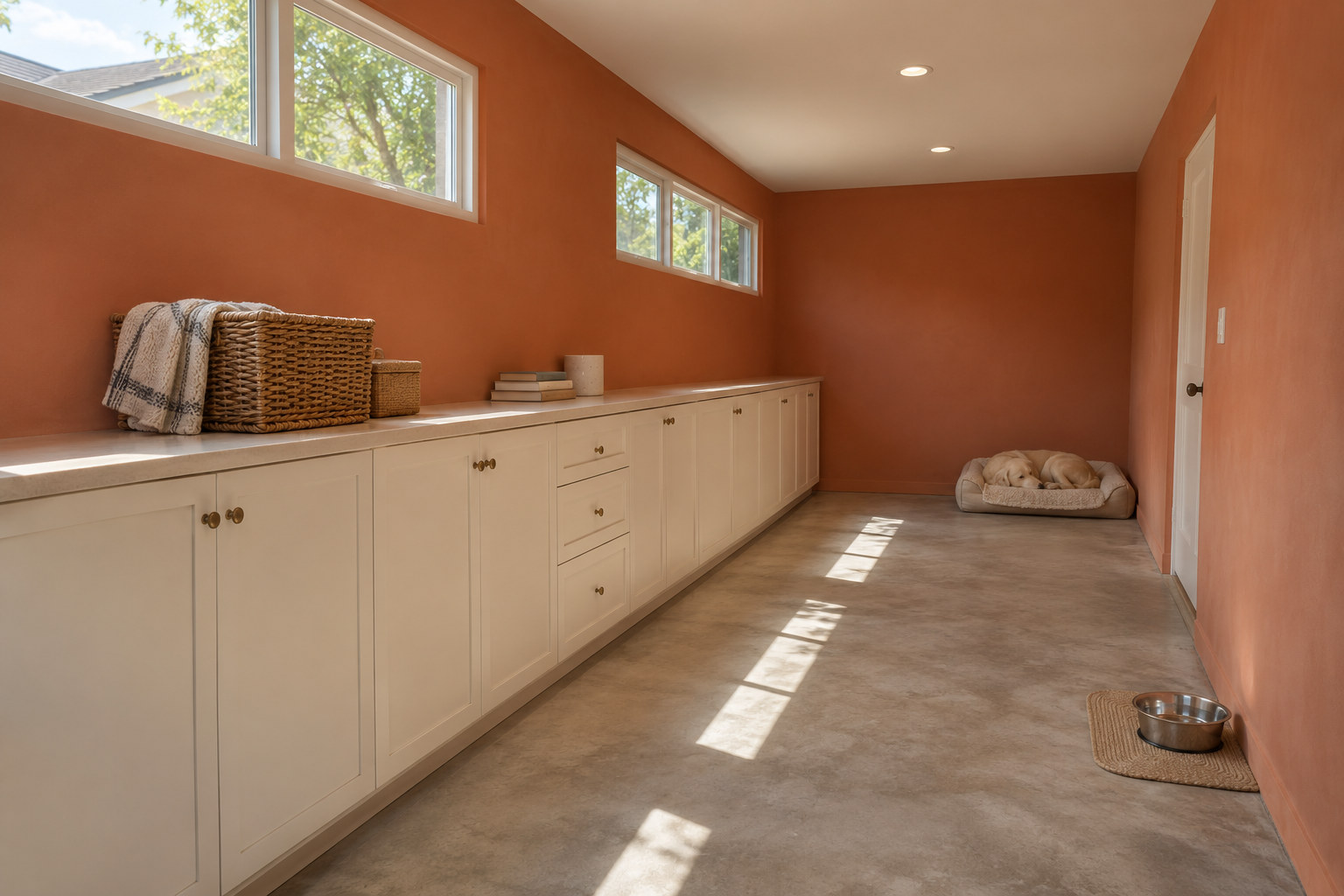
A long, narrow garage conversion often works better with one storage wall than with cabinets facing each other. Concentrating the cupboards on one side leaves a more legible walking route and a larger usable floor area. Draw the cabinet doors open on your plan, because their working footprint matters as much as their closed depth.
Use the storage for clean linens, spare bedding, and appropriate household supplies. Keep anything hazardous in a different secure location. A dog room should not quietly become the overflow cupboard for products removed during the conversion.
Repeat one cabinet finish along the wall and reserve a clear area at the far end for a bed. Shallow storage may hold the supplies you need without making the room feel like a passage. Check that the largest bed can still come out for cleaning without being folded around furniture or wedged through a narrow gap.
4. Create a Quiet Bed Alcove at the House End
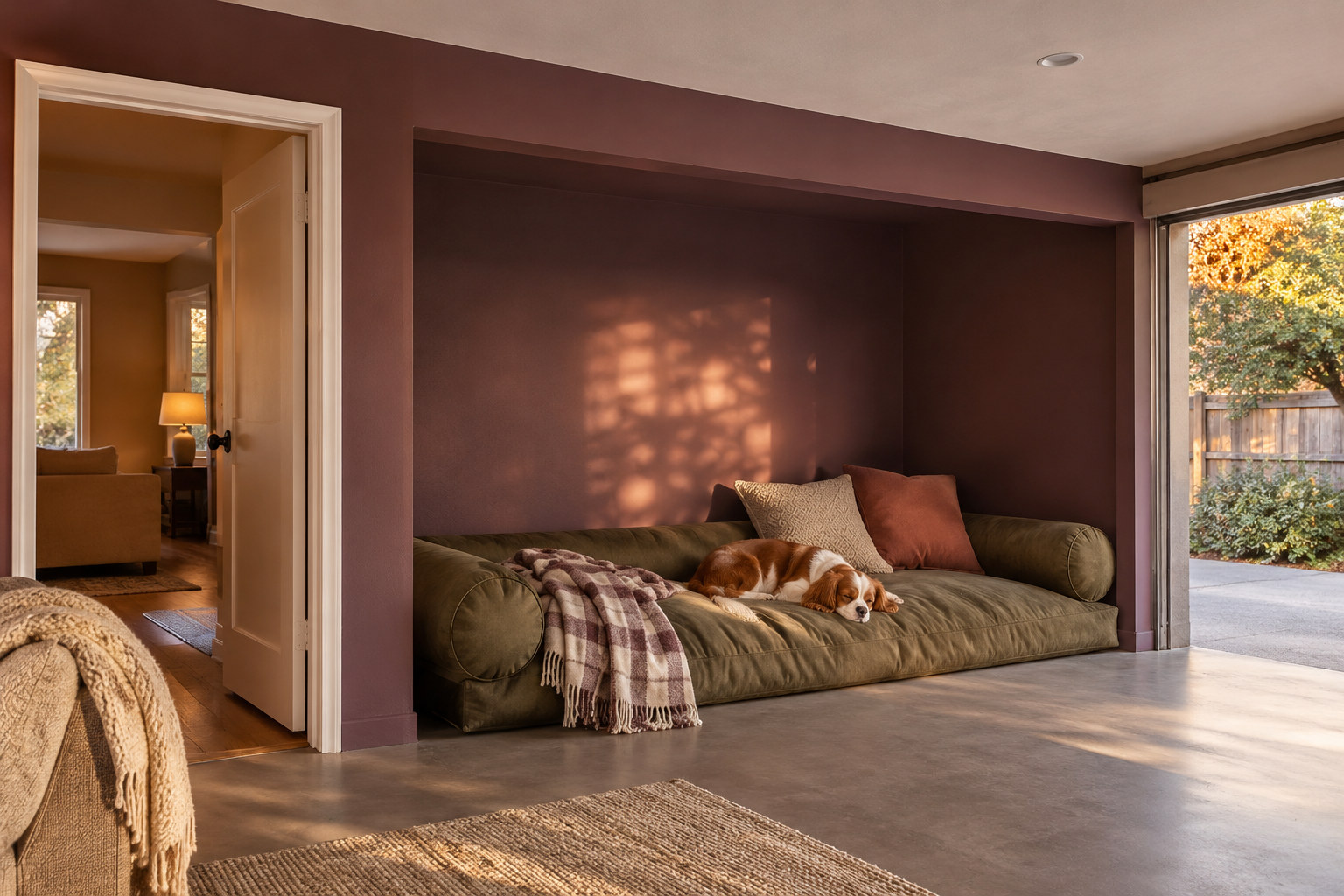
The end closest to the house may offer a calmer resting position than the garden entrance. An open alcove can give the bed a defined location while keeping the dog connected to household activity. Check the real movement through the adjoining door before deciding that this end is quiet.
Keep the resting space broad and accessible at floor level. A decorative frame should not reduce useful headroom or leave the bed trapped inside cabinetry. If you add a low cupboard nearby, make sure its door does not swing across the dog’s entrance.
A slightly deeper wall color can distinguish the alcove without surrounding it with extra furniture. Choose a bed that can be lifted out in one movement, then leave the floor around it easy to reach. This arrangement suits a dog that already chooses a sheltered corner; it is less useful when the dog prefers an open spot closer to people.
5. Share a Converted Garage Office
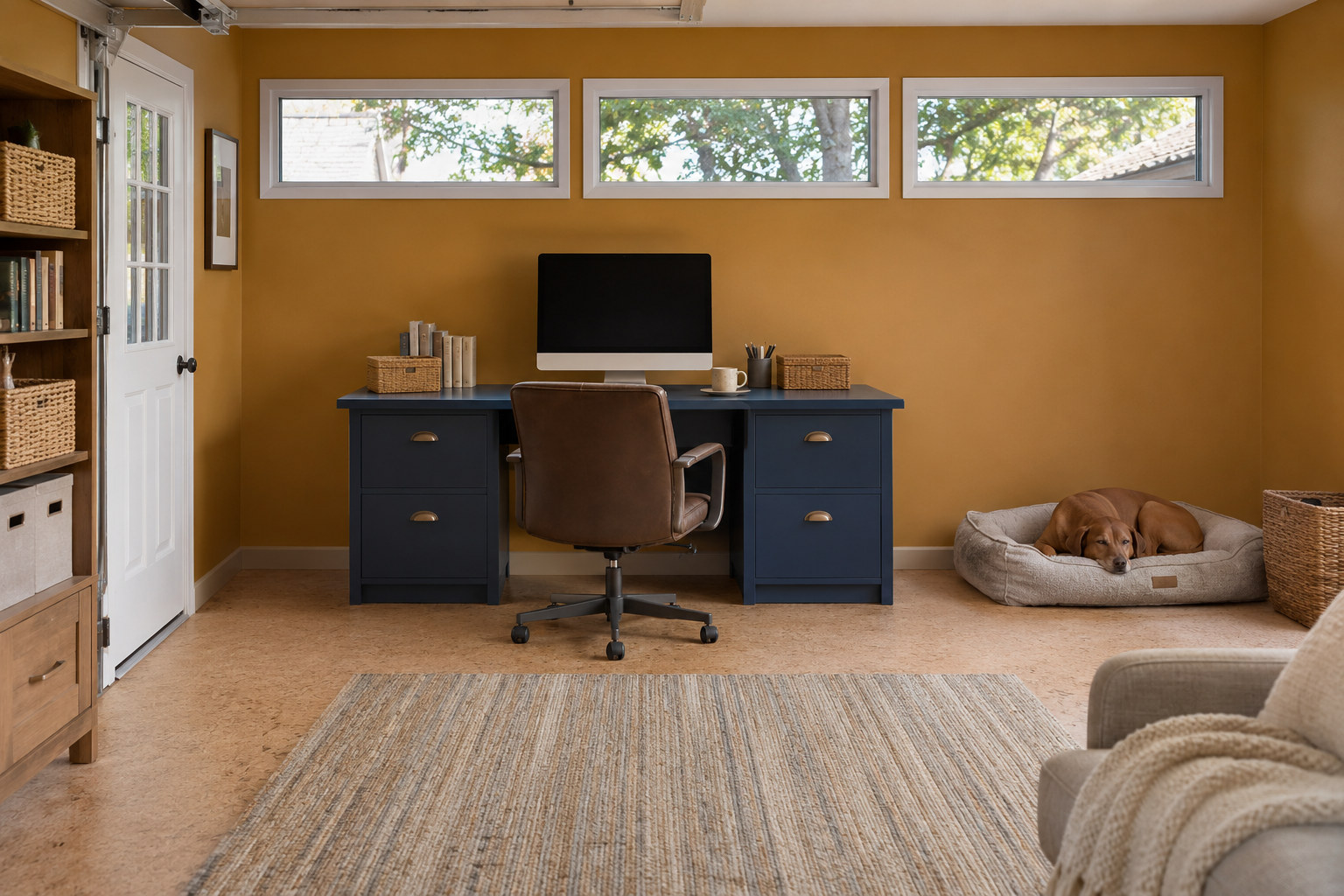
A home office can make a converted garage useful for both work and companionship. Give the dog a separate resting corner beside the work zone, with enough distance that rolling the chair backward will not intrude on the bed. Test the arrangement while sitting at the desk, opening drawers, and standing up.
Keep computer cables and power strips inaccessible, and route them without crossing the dog’s area. Printer shelves, paper storage, and office bags should also remain outside the resting space. The room will feel calmer when its supplies have assigned positions instead of accumulating around the bed.
Use the desk and the bed to form two clear areas, leaving the center open. A repeat of the desk color in a cushion cover or cabinet handle can connect them visually. If calls, visitors, or equipment disturb the dog, provide another comfortable resting option rather than expecting the new office to suit every part of the day.
6. Give Two Dogs Separate Resting Corners
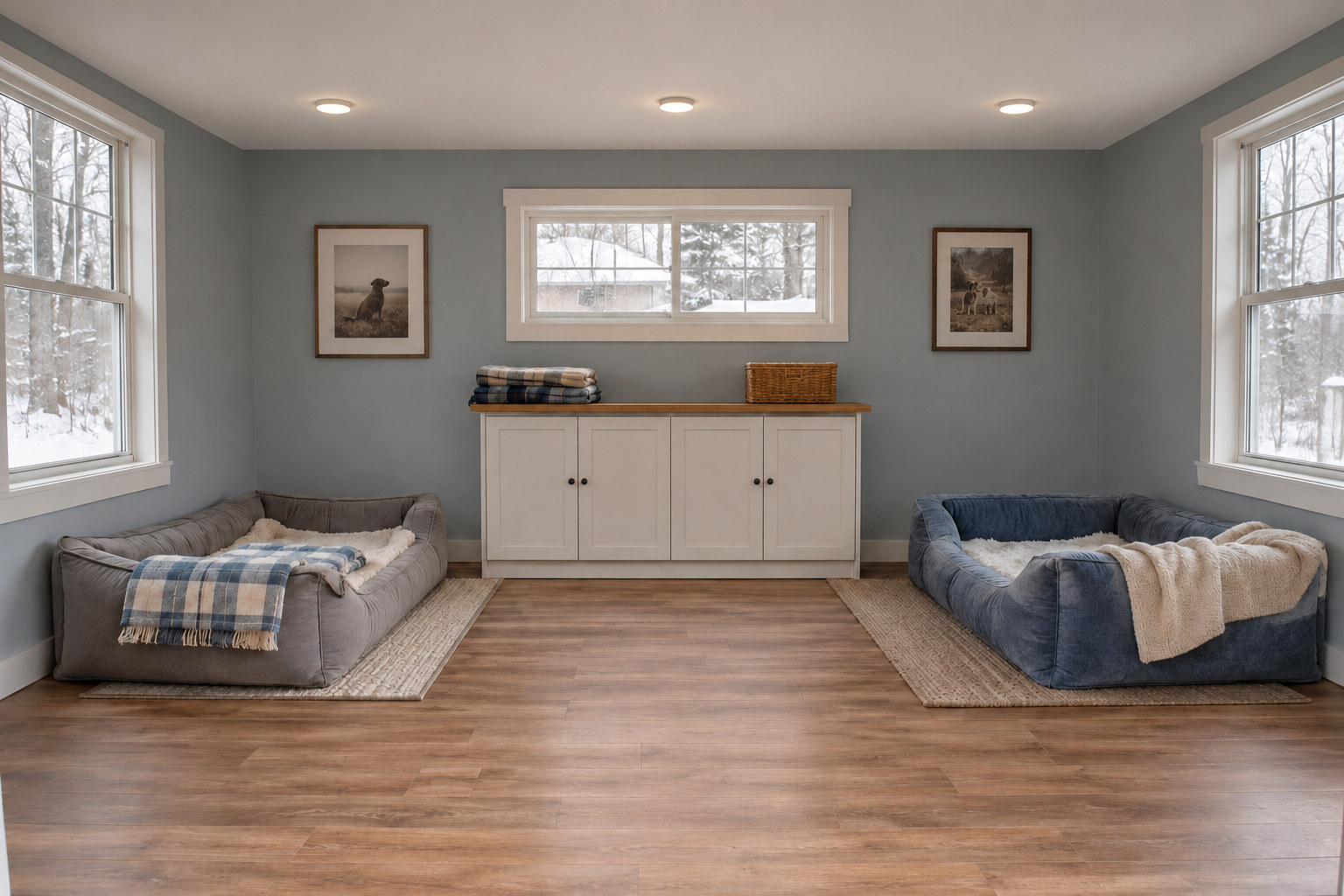
Two beds can share a room without being placed side by side. Separate corners let you keep each approach clear and avoid making one dog walk through the other’s resting area. Begin with how the dogs already choose to settle, rather than arranging matching beds purely for symmetry.
Leave a straightforward route to the room’s exits and drinking water. Keep storage between the resting areas only where it does not create a narrow passage or obstruct sightlines. A broad open floor is often more useful than a large central cabinet intended to divide the room.
Different bed sizes and positions are perfectly reasonable. Repeating the fabric color can make them look coordinated without forcing identical furniture on different needs. Observe both dogs during ordinary use before committing to built-ins. If sharing creates tension, separate rooms or different locations may be more appropriate than refining the layout of this one space.
7. Keep a Wet Utility Zone Apart From the Beds
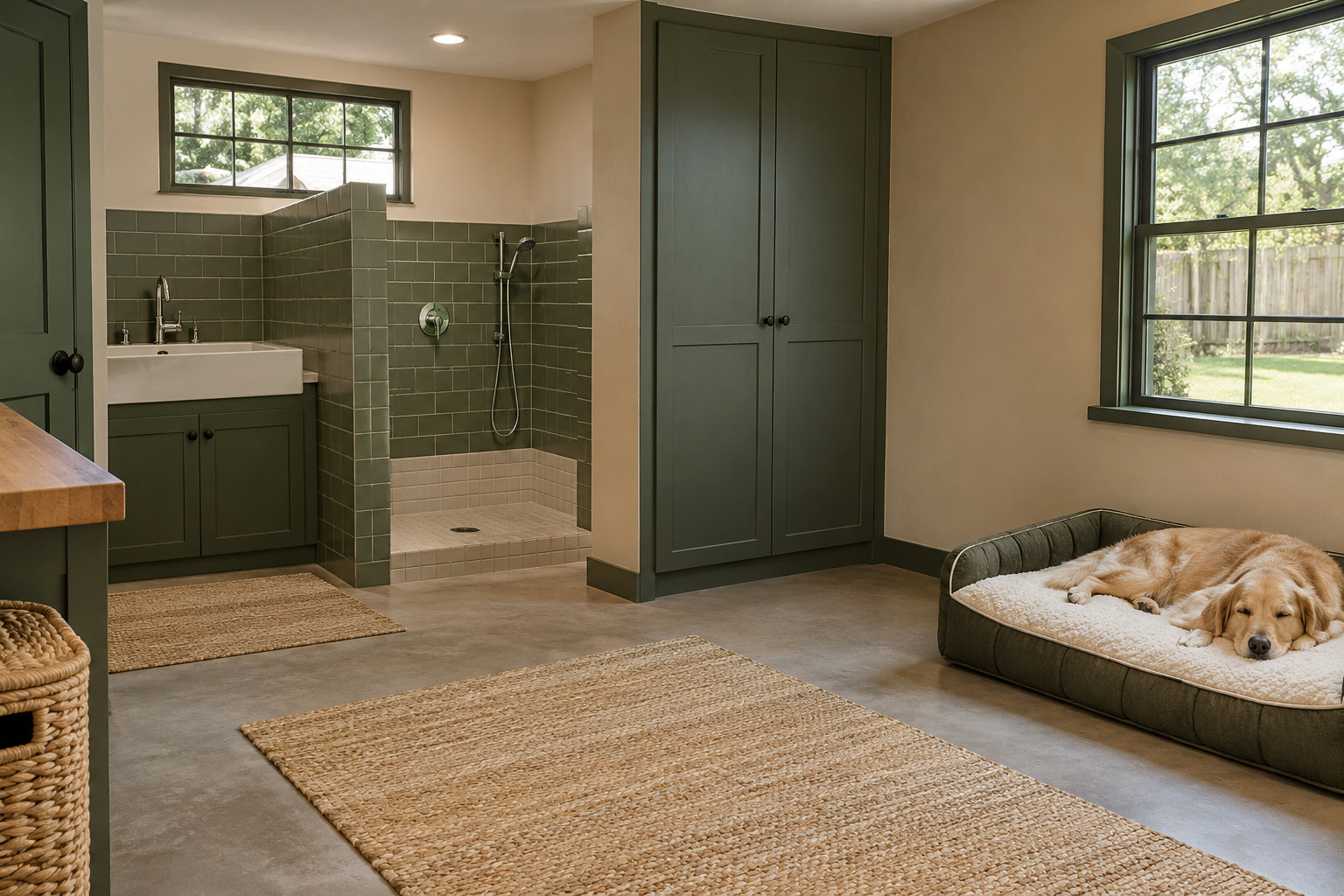
A sink or dog-wash area can be useful near the garden entrance, but the resting zone should stay dry and easy to reach. Put the wet work at one end, with appropriate splash containment and room to dry the dog before moving toward the bed. Do not assume that a tiled finish establishes a waterproof installation.
Have plumbing, waterproofing, drainage, and electrical work designed for the actual space. Leave room to clean the area and store products securely. A wash station that crowds the doorway may be less practical than a simpler utility sink combined with another bathing arrangement elsewhere.
Position towels between the wash area and the dry floor, so the routine moves in one direction. These small laundry room ideas offer useful storage inspiration. If laundry appliances are included, assess their noise and vibration before making the nearby corner your dog’s main resting spot.
8. Use a Low-Threshold Layout for Easy Movement
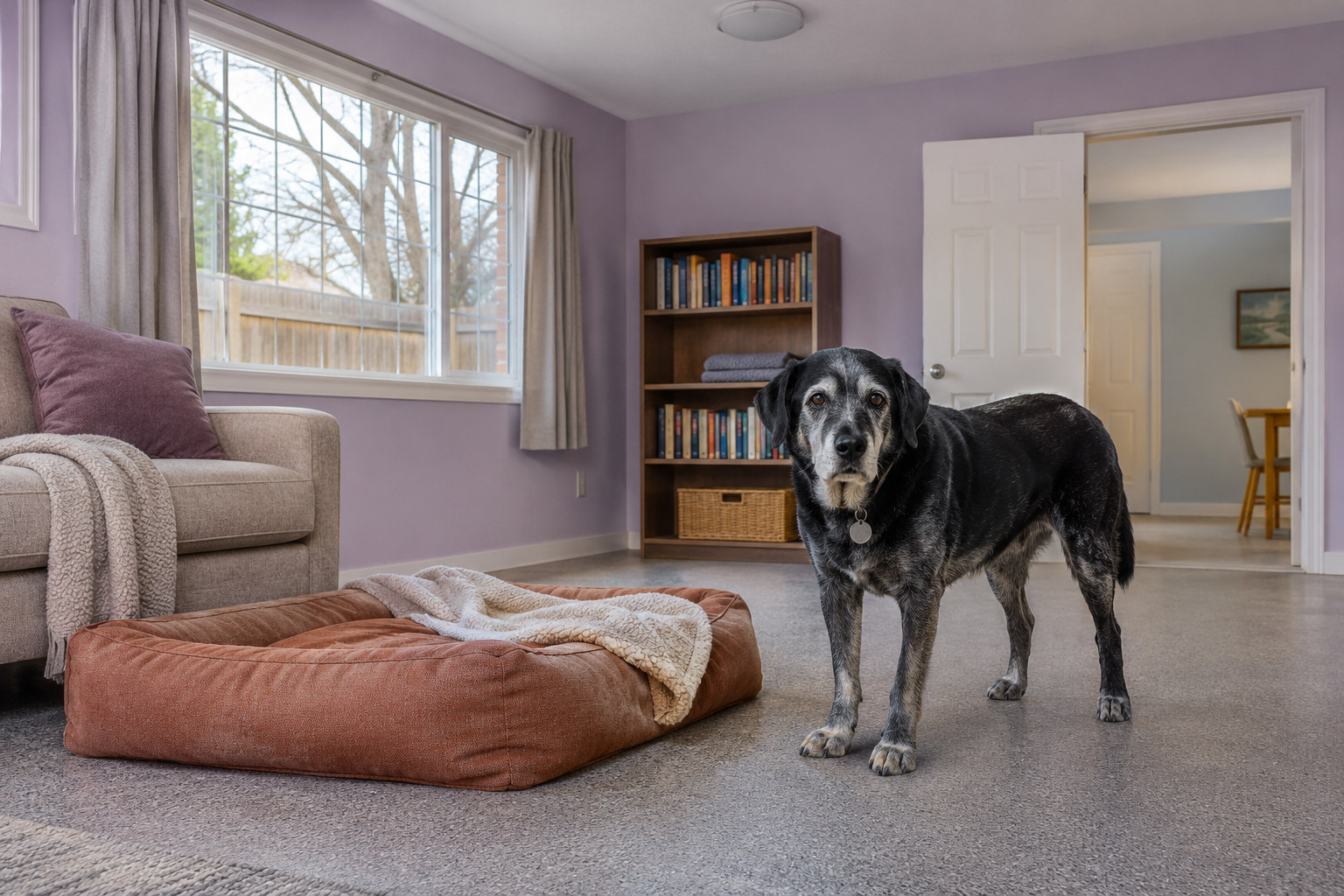
A clear level route can make a room easier to negotiate, particularly when the dog already has difficulty with steps or clutter. Keep the bed at a practical height for that dog and avoid adding decorative platforms simply to define its position. Discuss individual mobility needs with your veterinarian rather than treating one furniture arrangement as suitable for every dog.
Look closely at transitions between the house, converted room, and garden. A thick rug edge or awkward door threshold may interrupt an otherwise simple route. Choose floor coverings that lie securely and follow the product’s guidance for the surface beneath them.
Place water where the dog can reach it without weaving around furniture. Keep the bowl out of the main walking line so people do not repeatedly kick or move it. A restrained arrangement of low bed, accessible water, and clear circulation may work better here than a room full of specialized accessories.
9. Connect the Room to the House Through a Broad Opening
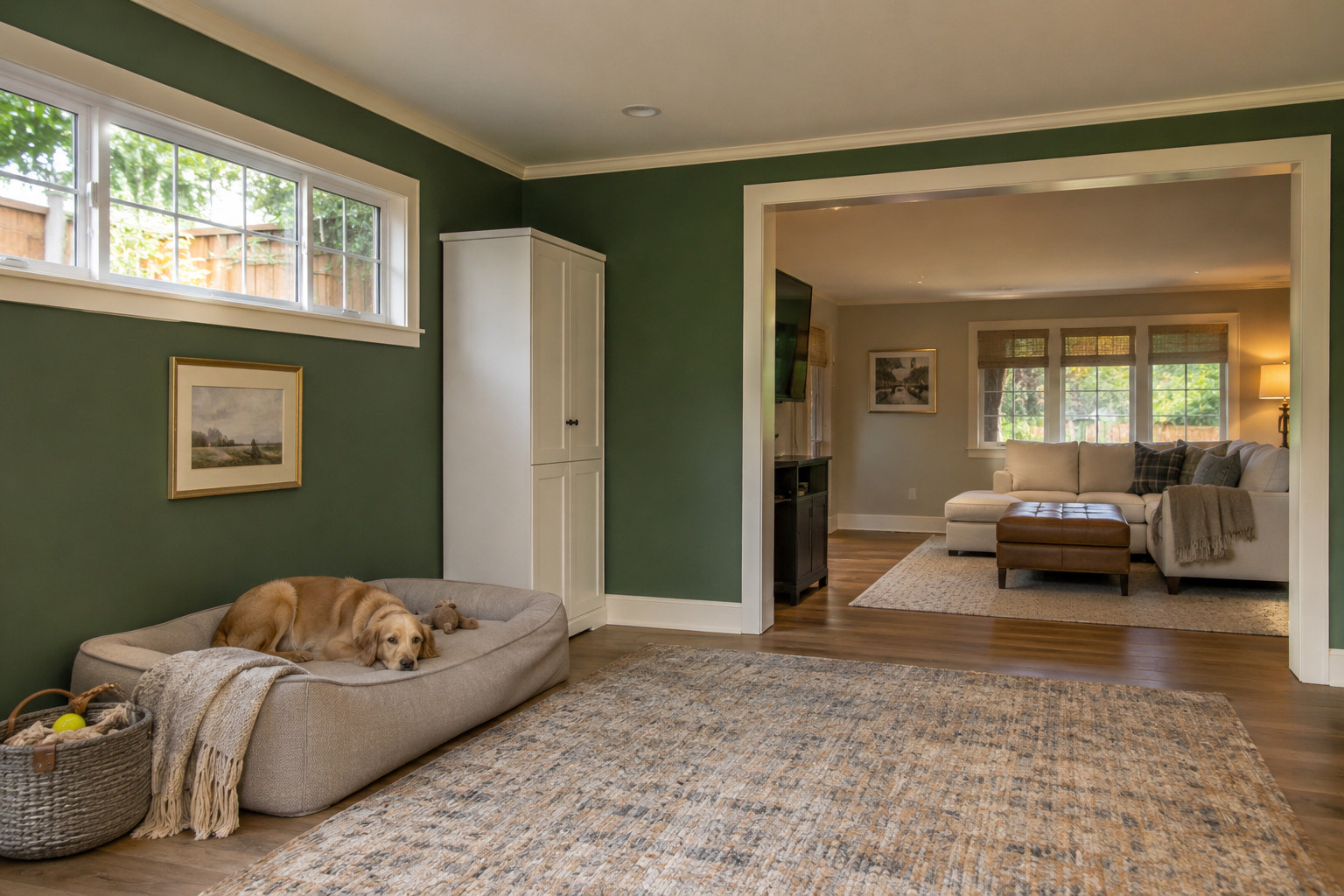
Where the building design allows it, a generous interior connection can make the former garage feel like part of the home. The dog can rest nearby while remaining aware of ordinary household activity. This is an architectural decision to assess professionally, including structural and fire-separation requirements, rather than a doorway to enlarge casually.
Keep furniture to one side of the opening so the route remains obvious. A bed placed directly in the center may look inviting in a photograph but become an obstacle every time someone walks through. Check the arrangement with the room in normal use.
Carry a wall color, trim finish, or flooring tone from the adjoining space into the conversion. This visual connection can be achieved even when the actual opening must remain smaller or have a door. A comfortable existing connection is more valuable than an ambitious alteration that creates problems elsewhere in the house.
10. Leave an Open Center for Gentle Indoor Play
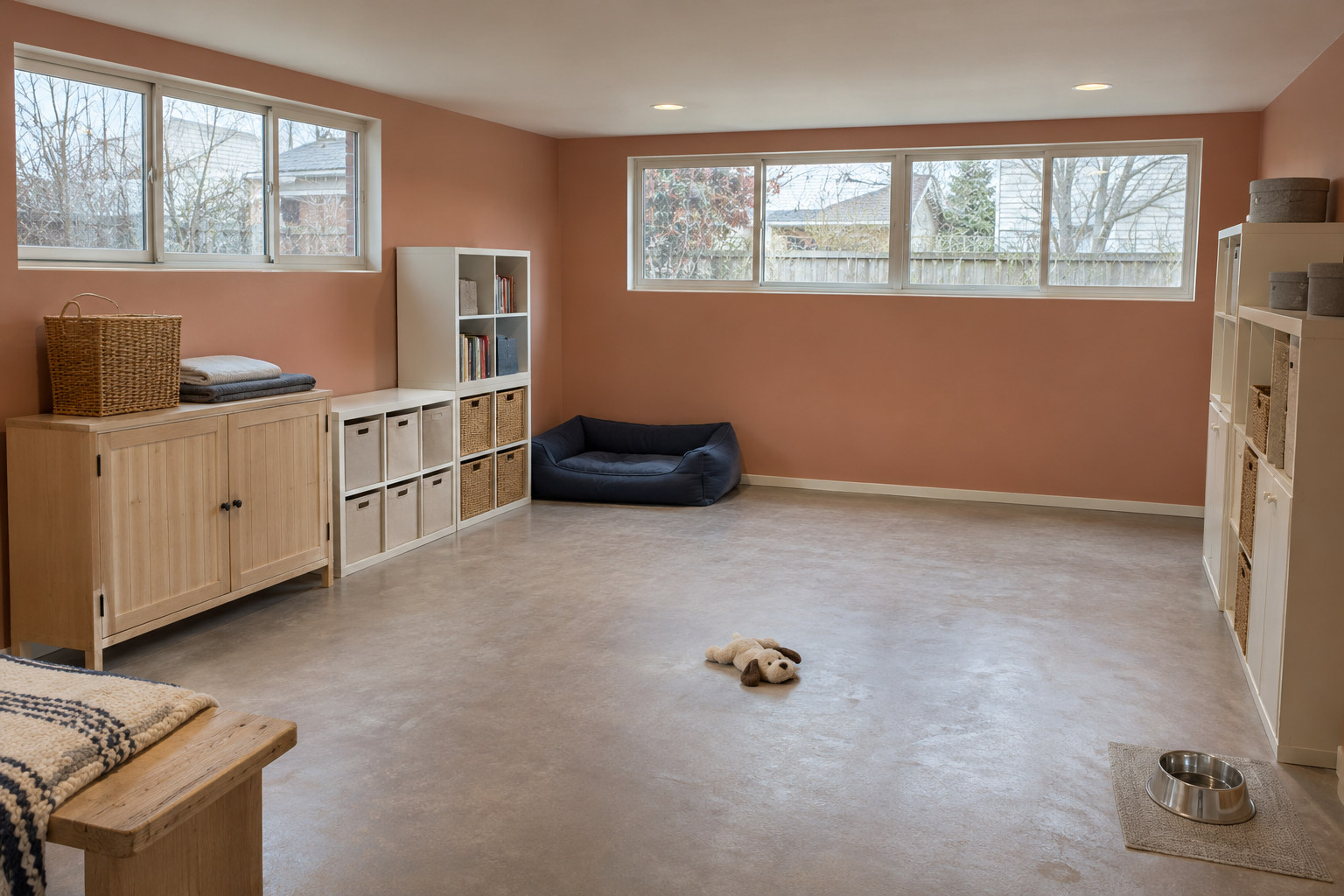
A square conversion can work well with storage and resting areas around its edges and an open center. That floor space gives you somewhere to sit with the dog, practise a familiar cue, or offer suitable quiet enrichment without moving furniture first. It does not need to become an indoor obstacle course.
Choose a few appropriate items for supervised use and put them away afterward. A permanent scattering of toys can make circulation awkward and complicate cleaning. Keep the main bed outside the activity area so the dog has a separate place to settle.
Try the layout with the largest piece of furniture represented on the floor before buying it. A cabinet that looks modest in a store may take away the room’s useful open area. Favor a clean perimeter and an uncluttered center, then adjust the setup according to what your dog actually enjoys doing there.
11. Make a Window-Side Rest Spot With Controllable Light
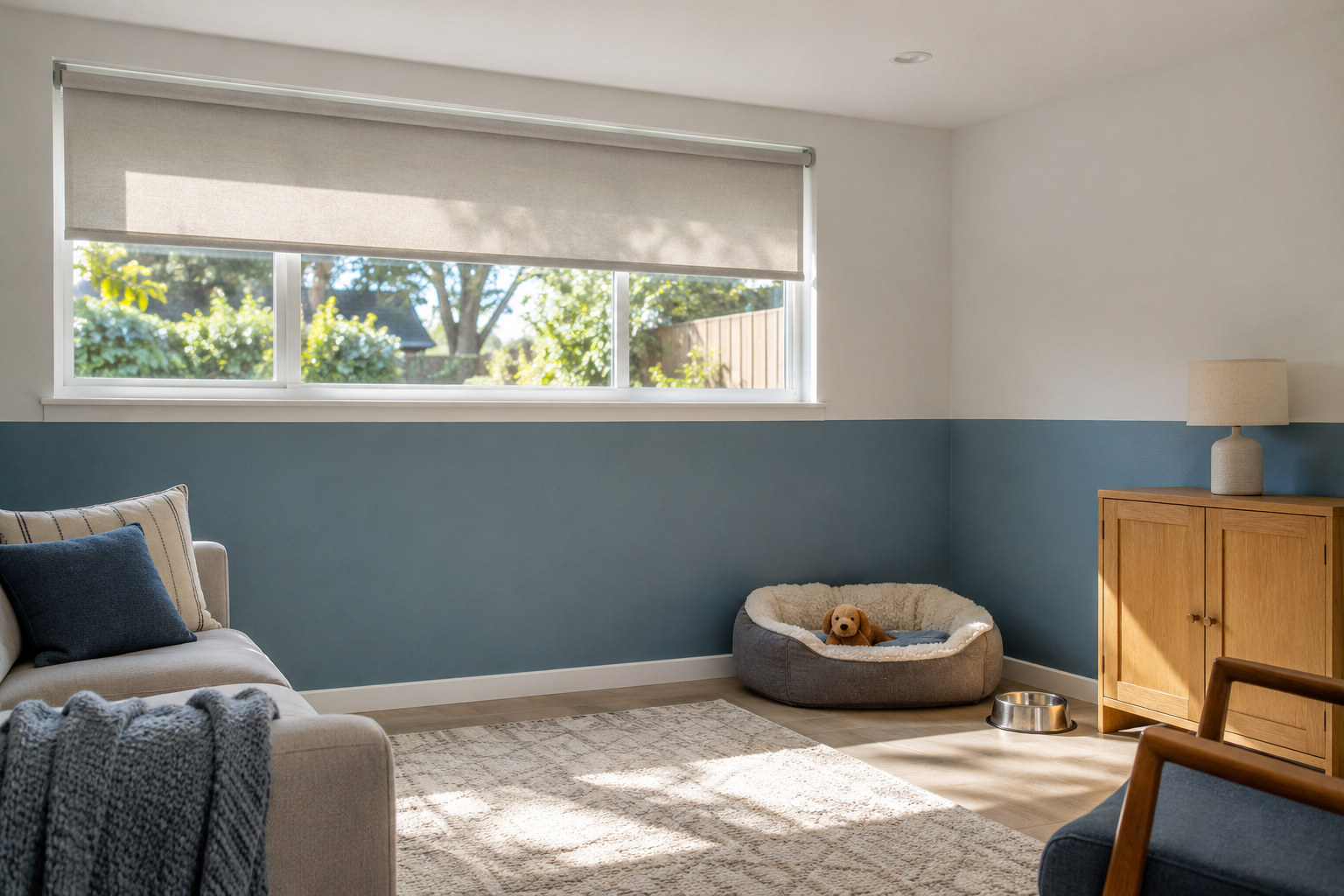
A high garage window can bring useful daylight into a conversion without using much wall space. Position the bed near that light while checking how the sun moves across the floor. A pleasant morning position may receive strong afternoon sun, so assess the room at different times before choosing a permanent spot.
Use suitable window coverings with no accessible dangling cords. Keep the dog away from window mechanisms and make sure the opening remains secure when used for ventilation. Daylight, ventilation, and temperature control are related considerations, but one does not automatically solve the others.
Place a small closed cabinet alongside the bed rather than filling the window wall from end to end. This can preserve both light and a clear route. Soft blue, pale yellow, or warm neutral walls may suit the room; choose the palette by testing samples in its actual changing light.
12. Add a Human Reading Corner Near the Dog
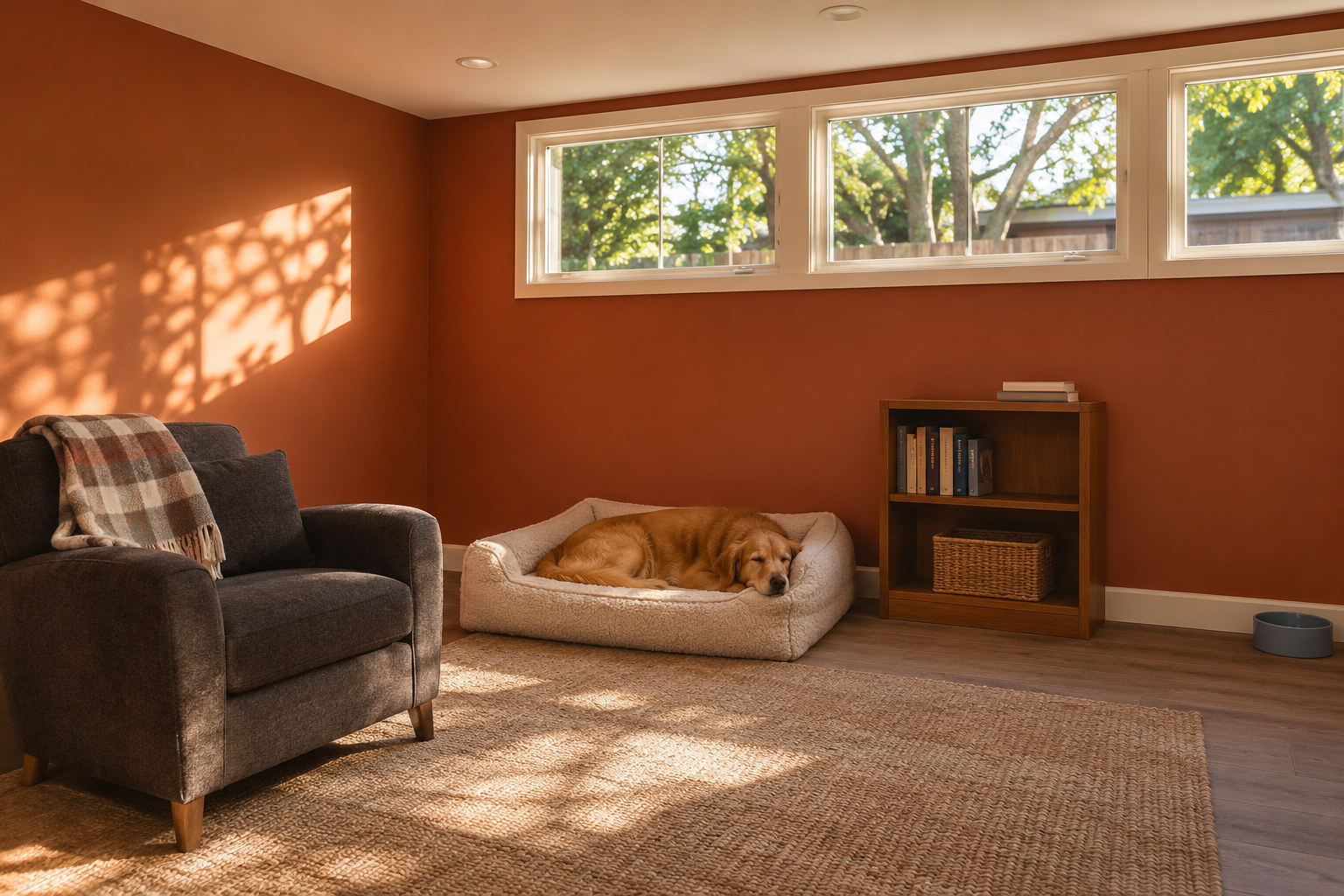
An armchair can make the room a place where people naturally spend time with the dog. Position it near the resting area while leaving the bed independent and accessible. The dog should be able to settle without lying beneath chair mechanisms or in the path of someone’s feet.
A small bookshelf or closed side cupboard can support the human use of the room without dominating it. Keep breakable objects, electrical leads, and loose textiles out of reach. If you need task lighting, plan the fixture and cable route before finalizing the chair position.
Choose washable or easily maintained fabrics that suit your household. A patterned throw can add color while keeping the larger furniture simple. This layout is especially useful when a conversion otherwise feels detached from daily life: giving yourself a reason to sit there can help you assess whether the room is comfortable throughout an ordinary day.
13. Start With Furniture You Can Move
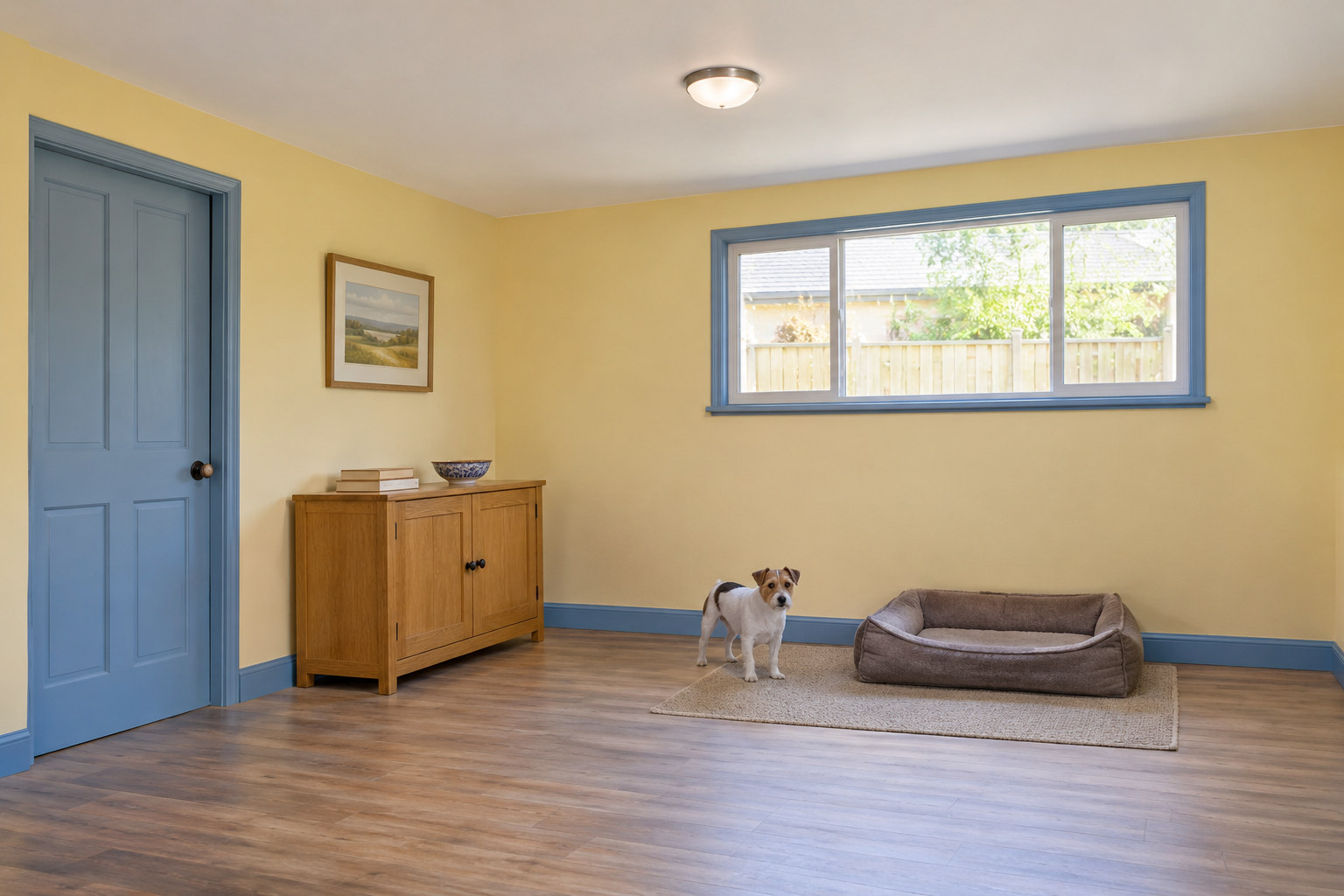
Once the conversion itself is complete, freestanding furniture lets you test the layout before commissioning built-ins. Start with a bed, a suitable low cupboard, and a defined water position. Try different arrangements while watching the door routes, cleaning routine, and the dog’s preferred resting spot.
Choose pieces that can be moved safely without becoming unstable in everyday use. Follow furniture anchoring instructions where applicable, and avoid stacking storage into a tall improvised unit. Flexibility should come from a sensible layout, not from unsecured furniture.
This approach also reveals which storage you actually need. You may discover that a single linen cabinet works better than a wall of cupboards, or that the dog prefers a different corner. Add permanent details only after the room has earned them through use. A modest arrangement that works consistently is a better foundation than a complete fitted scheme based on assumptions.
Decide Whether the Garage Can Become a Suitable Room
Before comparing furniture layouts, assess the building with someone qualified to evaluate the conversion. Discuss the floor and walls, moisture, insulation, heating and cooling, ventilation, electrical provision, access, and any requirements attached to changing the space’s use. The appropriate work depends on the building and location; there is no universal checklist of inexpensive products that makes every garage suitable.
If the garage will retain vehicle storage or workshop use, establish whether a appropriate separate room can be created. The CDC warns against running a vehicle in an attached garage even when its door is open. A decorative screen, fan, or open window should not be presented as a solution to exhaust exposure.
The ASPCA identifies antifreeze, rodenticides, garden chemicals, and other stored products as common garage hazards. Removing those hazards and addressing any contamination comes before allowing the dog into the conversion. Keep the dog elsewhere during building work and finishing, following product instructions before the room returns to use.
If a suitable conversion is impractical, use an appropriate room inside the house. The appeal of spare square footage does not make it the right place for the dog.
Draw the Routine Before Drawing the Cabinets
Make a simple floor sketch with every door, window, fixed service, and piece of furniture. Add door swings, drawer extensions, and the path between the house and garden. Measure the bed your dog already uses comfortably, including the space needed to remove its cover or lift it out.
Then walk through a normal day. Where will you place a damp towel? Can someone reach the garden without stepping over the bed? Where does the dog go while you clean the floor? Which cupboards are used often enough to justify their position? These questions reveal awkward layouts more reliably than arranging rectangles symmetrically on paper.
Give each repeated task a simple destination. A towel drawer belongs near the arrival area, while spare clean bedding can live farther away. Drinking water needs a stable accessible position with room to clean around it. Keep the bed outside the busiest route and preserve an alternative resting choice if the room becomes noisy.
Choose Finishes Around Cleaning and Daily Wear
Select flooring by its suitability for the actual substrate and intended use, then consider grip, maintenance, and transitions. Ask the supplier how the product should be installed and cleaned. Avoid assuming that every smooth floor is easy for a dog to use or that every textured finish is straightforward to maintain.
For walls, think about the areas most likely to receive scuffs and splashes. A suitable washable finish or practical wall protection may be useful near the entrance, while the quieter end can carry more of the room’s decorative character. Our guide to dividing a wall with two paint colors offers visual ideas for separating those areas without adding partitions.
Keep exposed edges simple and reachable. Complicated ledges, inaccessible gaps, and deep trim profiles can turn routine cleaning into a larger job. Plan how the room will be maintained with the bed and supplies temporarily removed, rather than evaluating it only when everything is neatly in place.
Get the Fail-Safe Paint Color Playbook (Free PDF)
36 proven colors • 8 ready palettes • trim & sheen guide • printable testing cards.
Introduce the Room Gradually
Dogs Trust recommends choosing a resting place the dog finds comfortable, with freedom to enter and leave and access to water. Use familiar bedding and short periods of ordinary time together to see whether the converted room suits your dog. Watch its choices instead of assuming it will prefer the new space because it has been decorated for it.
Keep normal exercise, interaction, toileting, and companionship part of the routine. A dedicated room adds an option within the home; it does not replace those needs. If the dog avoids the room or seems unsettled, investigate the location, sounds, temperature, and arrangement before buying more furniture.
Garage Dog Room Questions
Can an Unconverted Garage Work if You Add a Heater?
A heater alone does not address the room’s construction, moisture, ventilation, hazards, or suitability. Have the space assessed as a whole. Heating equipment also needs to be appropriate for its location and installed and used according to its instructions.
Should the Dog Room Include a Crate?
Only if a suitable crate is already appropriate for your dog and routine. Keep its usable space, ventilation, door access, and cleaning arrangements intact. An ordinary bed may be the better option when the goal is a voluntary resting place within the room.
What Should You Buy First?
Complete the necessary building work before buying room-specific furniture. Then begin with familiar bedding, an appropriate water setup, and only the storage needed for daily use. That small starting arrangement makes it easier to see what the room needs next.