
15 Built-In Dog Crate Ideas for Cabinets and Alcoves
A built-in dog crate can make a room feel more organized, but matching the cabinet doors is the easy part. The real design work is preserving enough usable space, keeping air moving, and making the crate straightforward to enter and clean. A handsome opening that is too shallow for your dog is still the wrong opening.
These built-in dog crate ideas compare locations and cabinet arrangements, from a mudroom end bay to a fitted bookcase. Think of them as concepts to discuss with a capable cabinetmaker, with the dog’s needs established before the joinery dimensions. If your dog already enjoys a suitable crate, use that proven setup as the starting point rather than redesigning its space around a standard cupboard module.
Get the Fail-Safe Paint Color Playbook (Free PDF)
36 proven colors • 8 ready palettes • trim & sheen guide • printable testing cards.
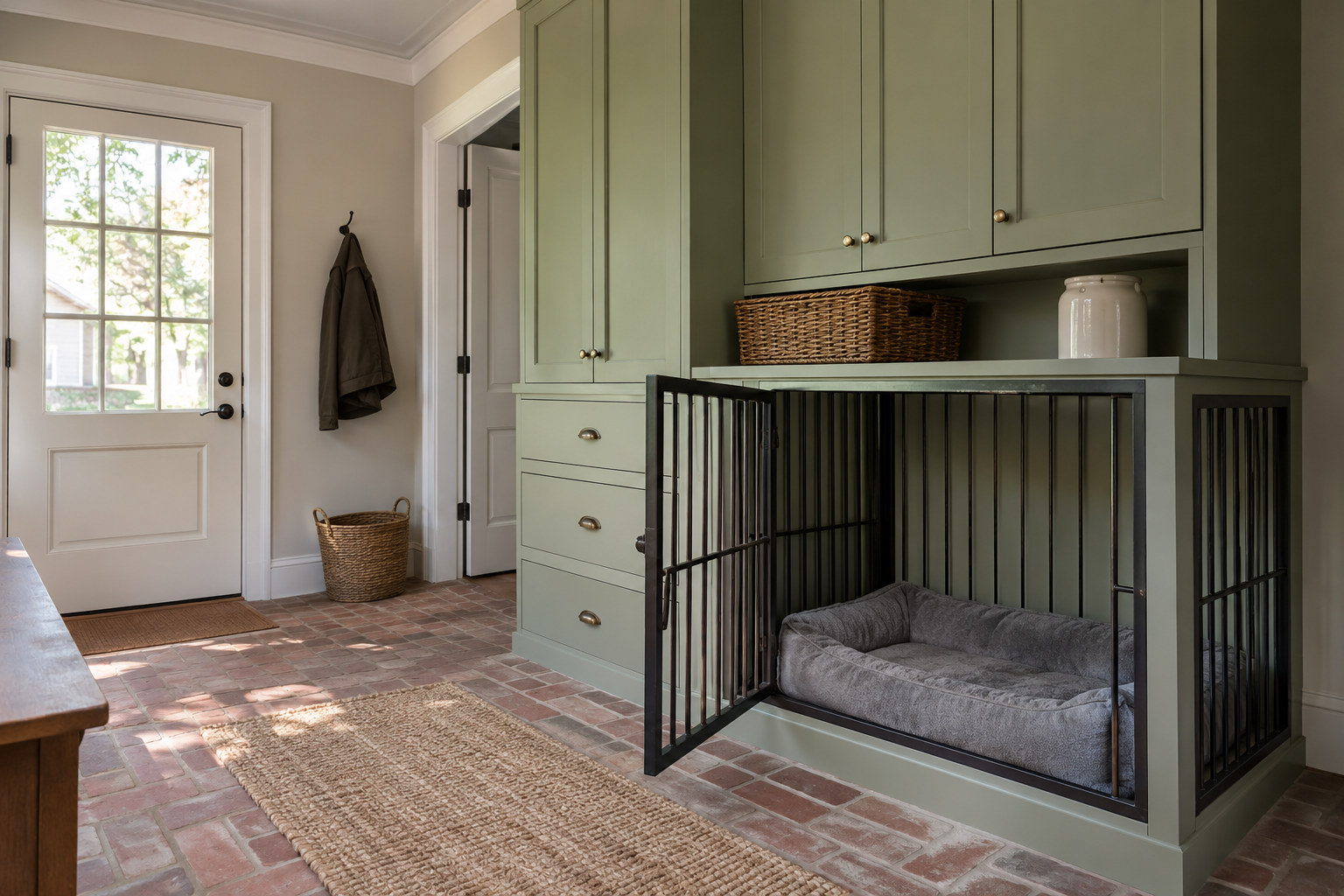
1. Finish a Mudroom Cabinet Run With a Crate Bay
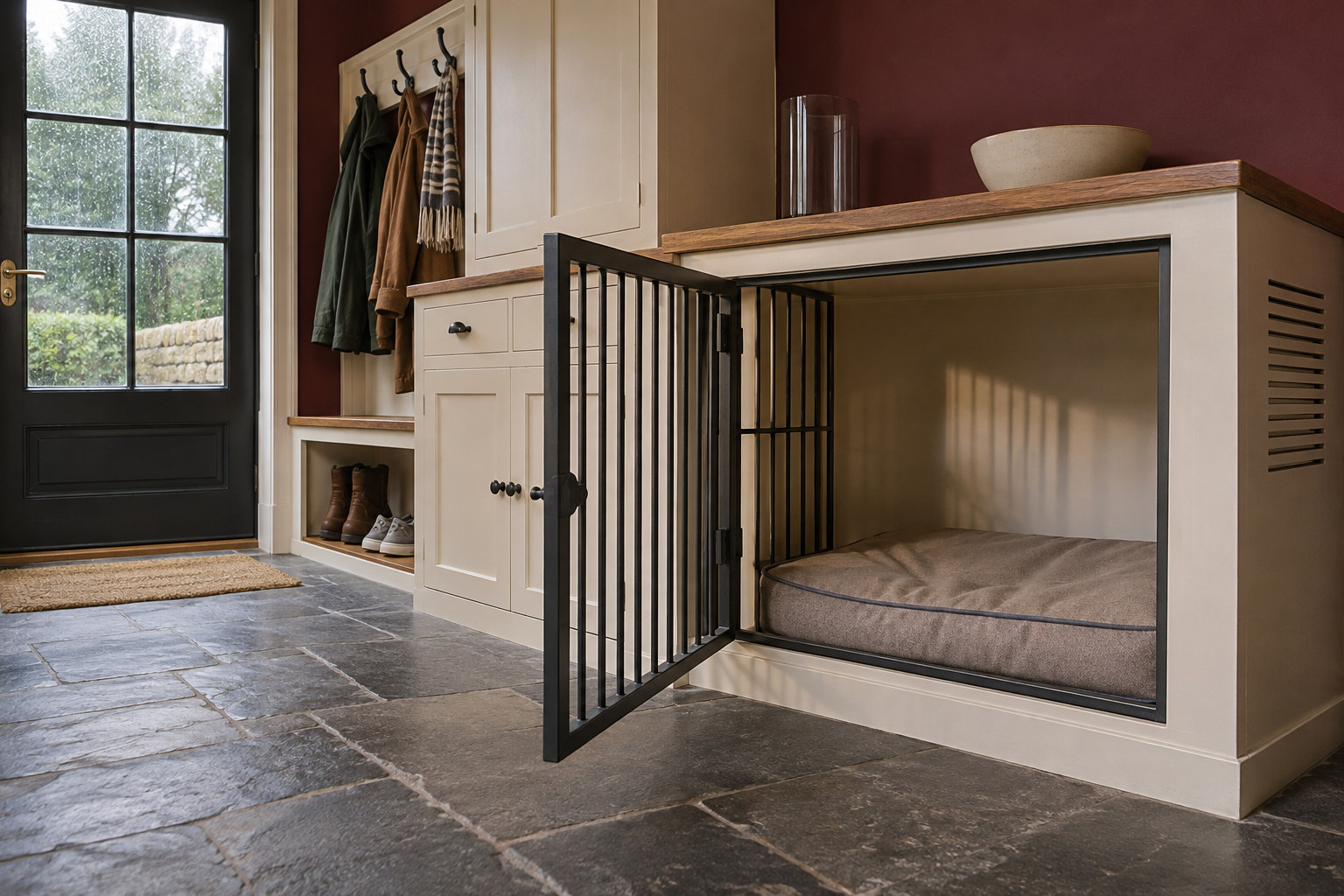
The end of a mudroom cabinet run offers a useful combination of nearby storage and an exposed outer side. That end position makes it easier to plan a broad front opening and additional side ventilation, rather than sandwiching the dog between solid cupboards.
Keep shoes, bags, and coats beyond the crate entrance. A mudroom is only a calm resting spot if the chosen end is outside the rush of people arriving home. Mark the door swing and check the space while someone is putting on boots or carrying laundry.
Match the cabinet color to the rest of the room, then use a practical removable bed and cleanable floor detail inside. For adjacent hooks and storage, our entryway shelf ideas offer options that keep loose belongings off the floor. Reserve the crate opening for access, even when the room is busy.
2. Give a Living-Room Alcove Its Own Airy Front
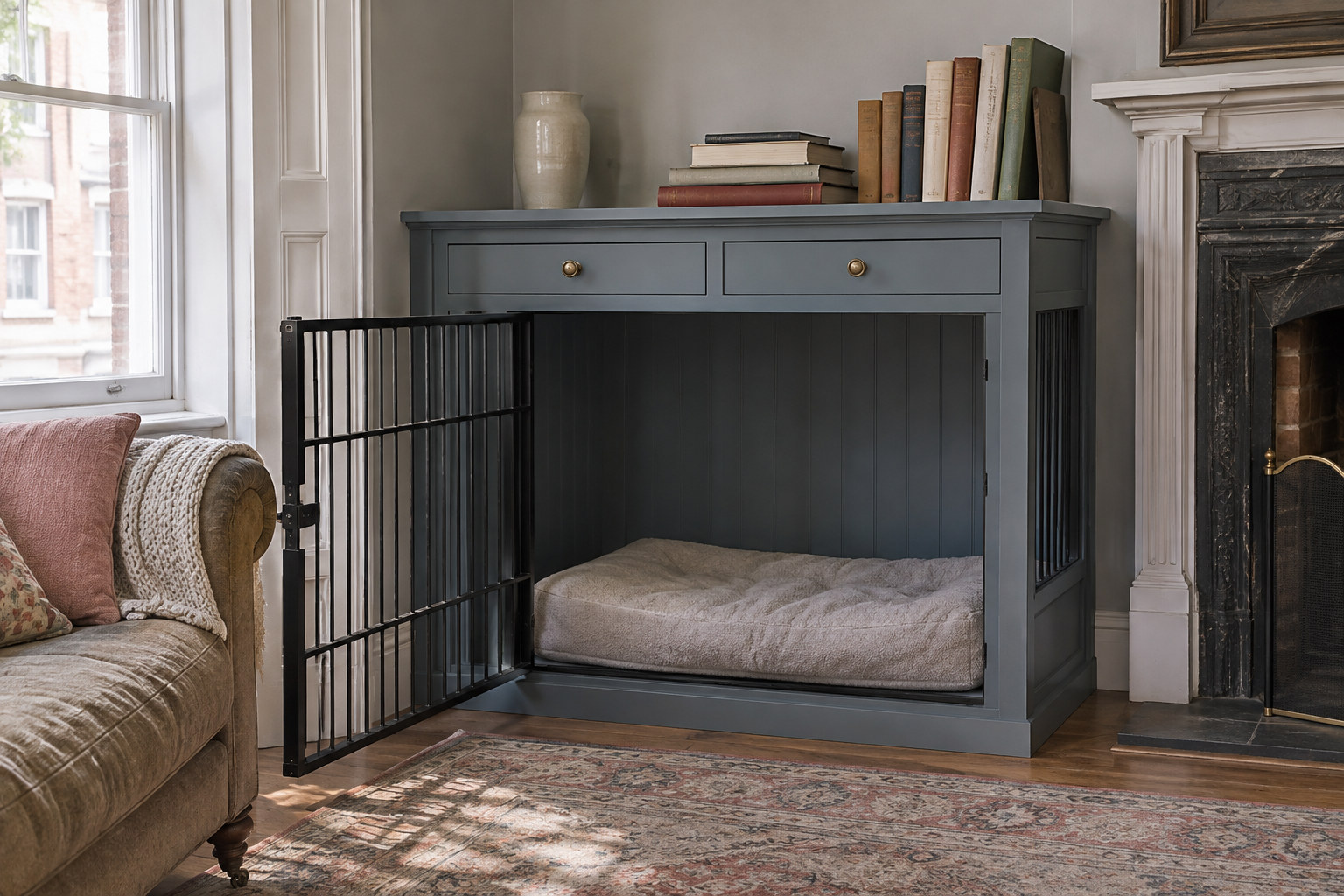
A living-room alcove can become an integrated crate location when it is deep and wide enough for the dog’s actual requirements. Begin with the internal space, including bedding and any fixtures, before designing the visible cabinet frame. Decorative trim can quietly take away valuable clearance.
A broad grille front keeps the crate visually connected to the room. Where the cabinet projects beyond the alcove, an exposed side can provide another opening. Ask the maker how airflow will be maintained throughout the space rather than assuming a perforated door solves every issue.
Place seating so it does not block entry or push a cushion against the grille. Keep lamps, electrical leads, and trailing objects away from the crate. The alcove should read as part of the living room while remaining a functional dog space that you can reach without shifting the sofa.
3. Place the Crate at the Quiet End of a Kitchen
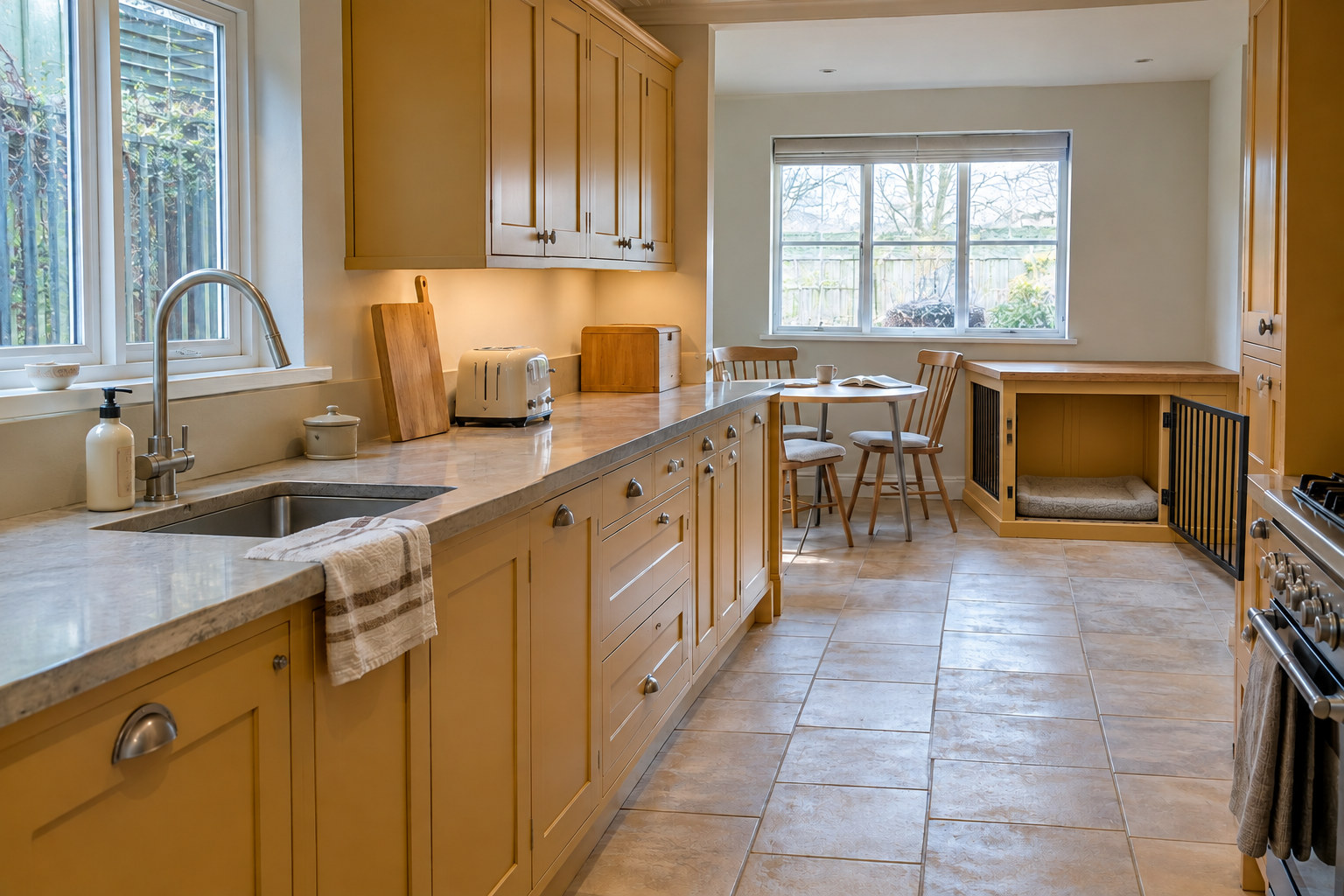
The outer end of a kitchen can offer a practical built-in position when it opens toward a quieter breakfast or sitting area. It should be separate from the main cooking activity, appliance heat, and the route between the refrigerator and sink. Choosing the last cabinet simply because it is available is not enough.
Test the location during a real meal-preparation routine. Open the dishwasher, pull out stools, and carry plates through the room. The crate entrance should stay clear through all of those movements. Include easy access to the floor inside for cleaning.
A vented outer side and broad grille front can make the design less enclosed than an ordinary cupboard conversion. Keep cleaning products in separate secure storage. If the kitchen remains noisy or crowded all day, the same cabinetry treatment may belong in another room where the dog already likes to settle.
4. Build a Dog Bay Beside the Home-Office Desk
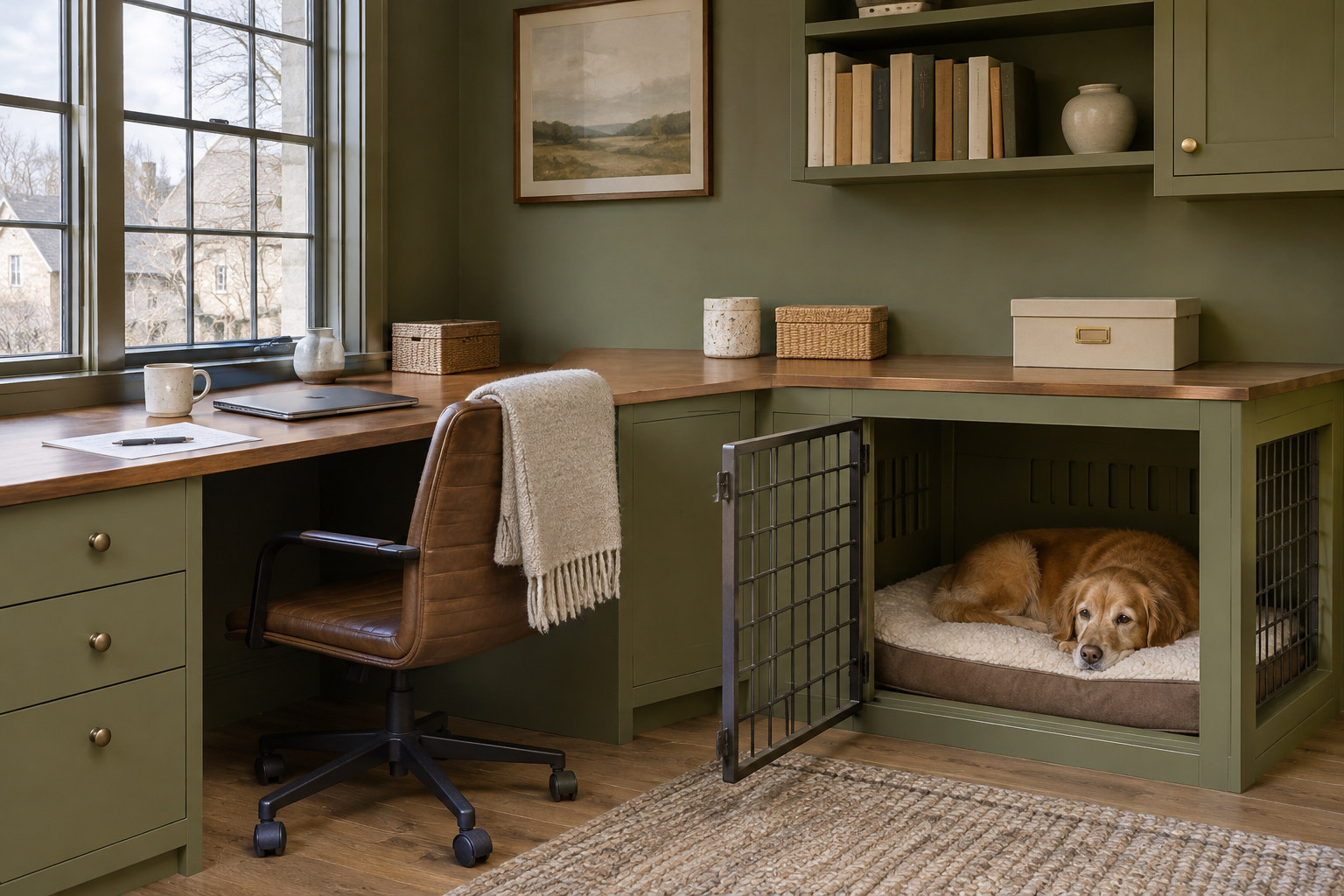
A home-office built-in can combine desk storage and a dog crate without asking both uses to share the same knee space. Give the crate its own bay beside the seated work position, with an entrance that remains clear when the chair rolls backward.
Draw the worktop, chair travel, and crate door on the same plan. A design that looks symmetrical from the front can be awkward when the door opens against your knees. Keep computer cables, power strips, and printer equipment outside the dog’s area and away from ventilation openings.
Use a removable cushion and a floor detail that allows thorough cleaning. The worktop above should have its own appropriate structural support. Matching the desk finish makes the crate feel integrated, but the dog bay should remain an independently usable space rather than a leftover cavity beneath office furniture.
5. Use the Tall Part of an Under-Stairs Alcove
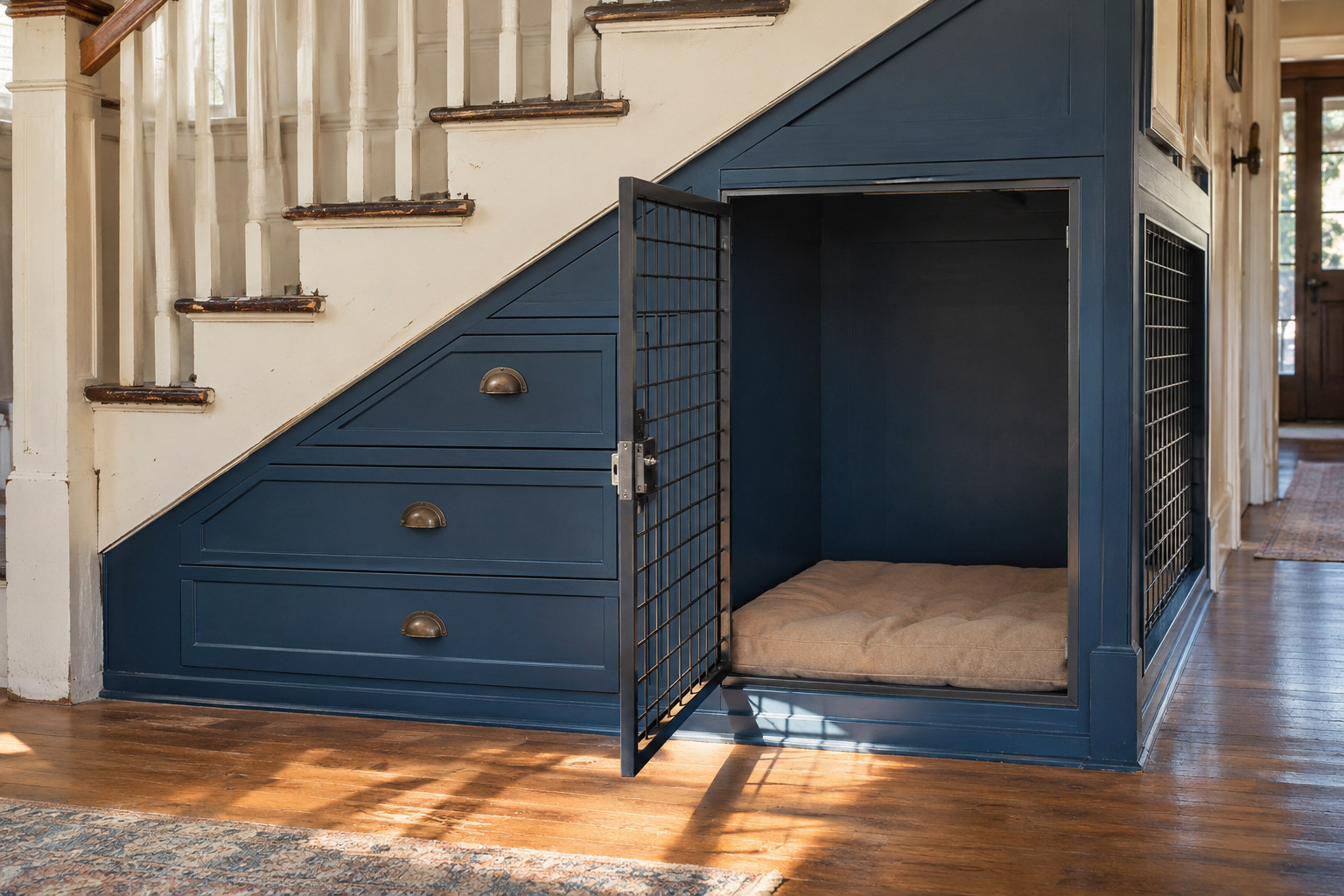
Under-stairs cabinetry works best when the crate occupies the tall end and the narrowing section becomes ordinary storage. This keeps the dog’s usable interior rectangular and generous instead of forcing it into the triangular portion where headroom disappears.
Measure the inside after accounting for framing, panels, and the finished floor. A tall entrance does not prove there is adequate space farther back. Ask the maker to show the internal shape clearly, including every sloping surface and service obstruction.
Do not remove structural elements or alter the staircase to gain room without professional assessment. A suitable existing void may be useful; an unsuitable one may need to remain storage. Keep the crate door clear of the hallway route, and check that shoes or a stair gate will not obstruct entry. The most successful version uses the space honestly rather than disguising its limitations.
6. Add a Crate at One End of a Window Bench
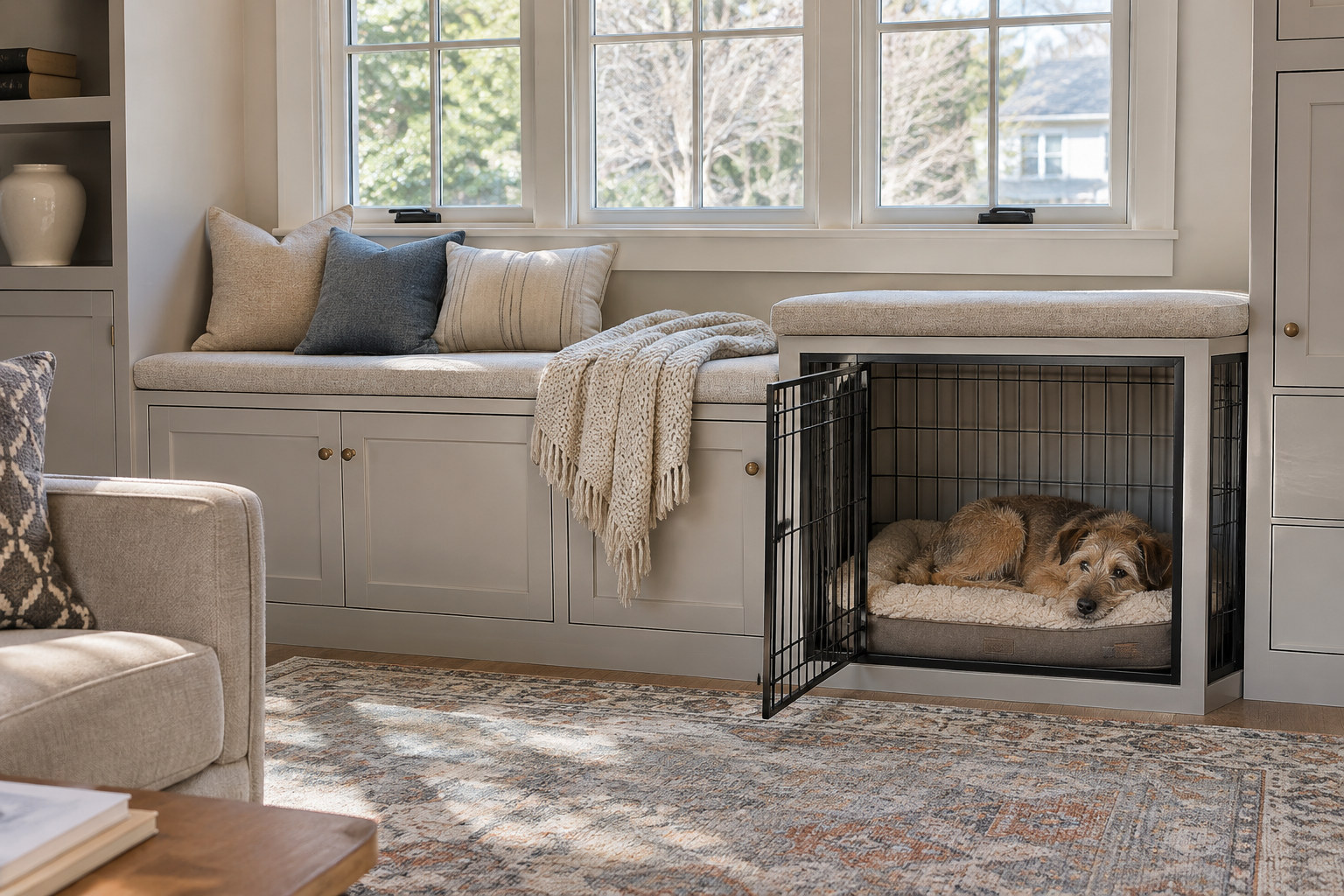
A window bench can incorporate a crate at an exposed end while leaving the remaining base for storage. That end location makes the front easier to access and gives the maker another opportunity for ventilation. The bench still needs enough depth and height to suit the dog, not just a comfortable human seat.
Consider the window throughout the day. A sunny seat can become a hot place for a dog, and a nearby radiator may rule out the idea. Keep curtains and cushions from blocking openings, and choose another position if the location cannot remain comfortable.
The bench structure must support people independently of any removable crate component. Use a washable bed below and a separate seat cushion above. Plan the door so it can remain safely open when appropriate, without creating a projecting obstacle across the room.
7. Integrate a Crate Into a Bedroom Storage Wall
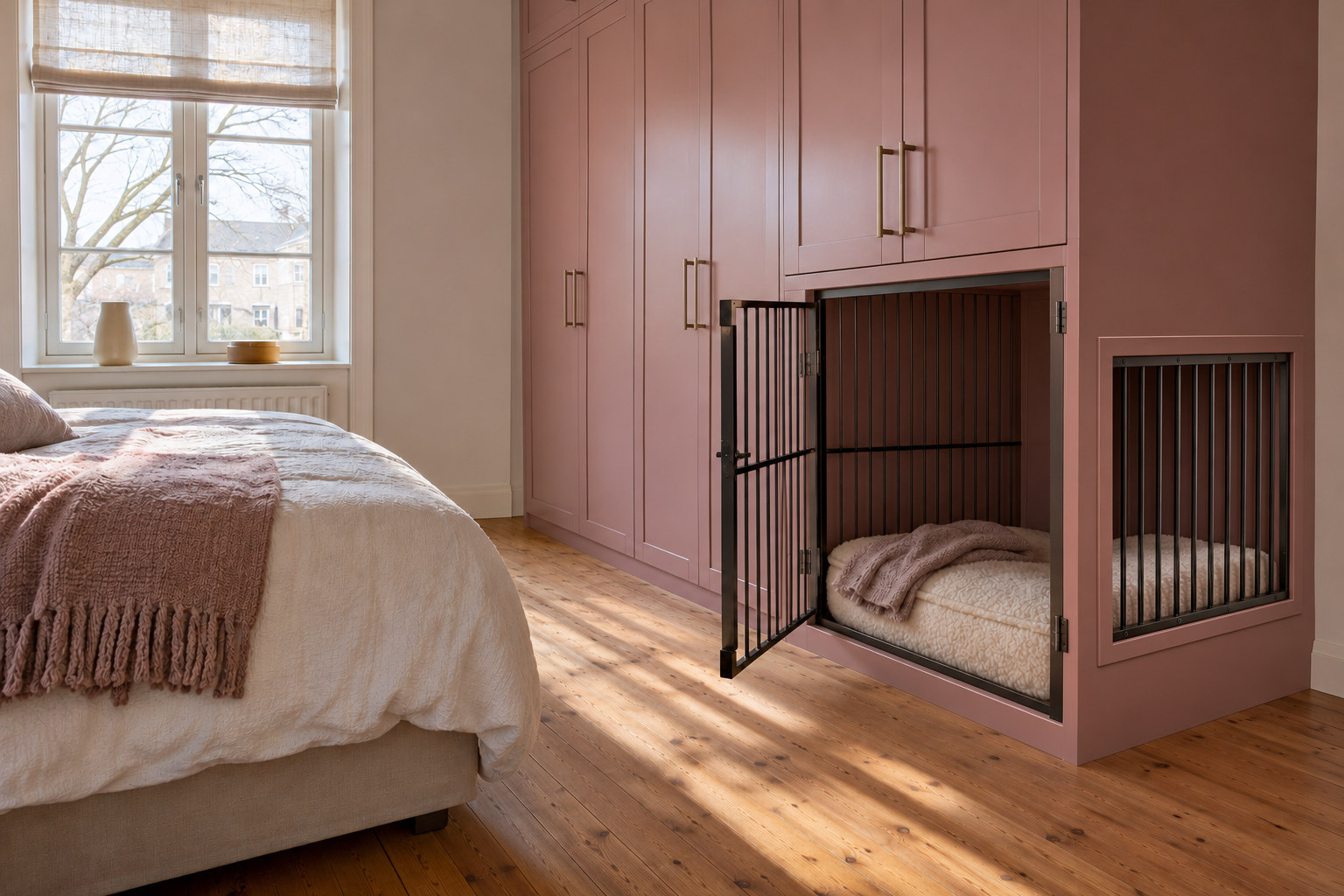
A bedroom storage wall can accommodate a dog crate at one end when the dog already settles comfortably nearby. Giving the bay an exposed end is preferable to simply removing a door from the middle of a wardrobe and hoping the resulting cavity will work.
Keep clothing, hanging fabric, and laundry outside the crate’s space. Confirm that drawers and wardrobe doors can open without interfering with its entrance. The aisle beside the bed must stay usable, particularly at night when visibility is lower.
Our small bedroom furniture and storage ideas can help you compare the rest of the room before committing to a permanent wall of cabinetry. A smaller storage module elsewhere may release the space needed for a better crate arrangement. Preserve ventilation and cleaning access even if that means giving up one additional cupboard.
8. Turn a Broad Hall Recess Into a Calm Dog Spot
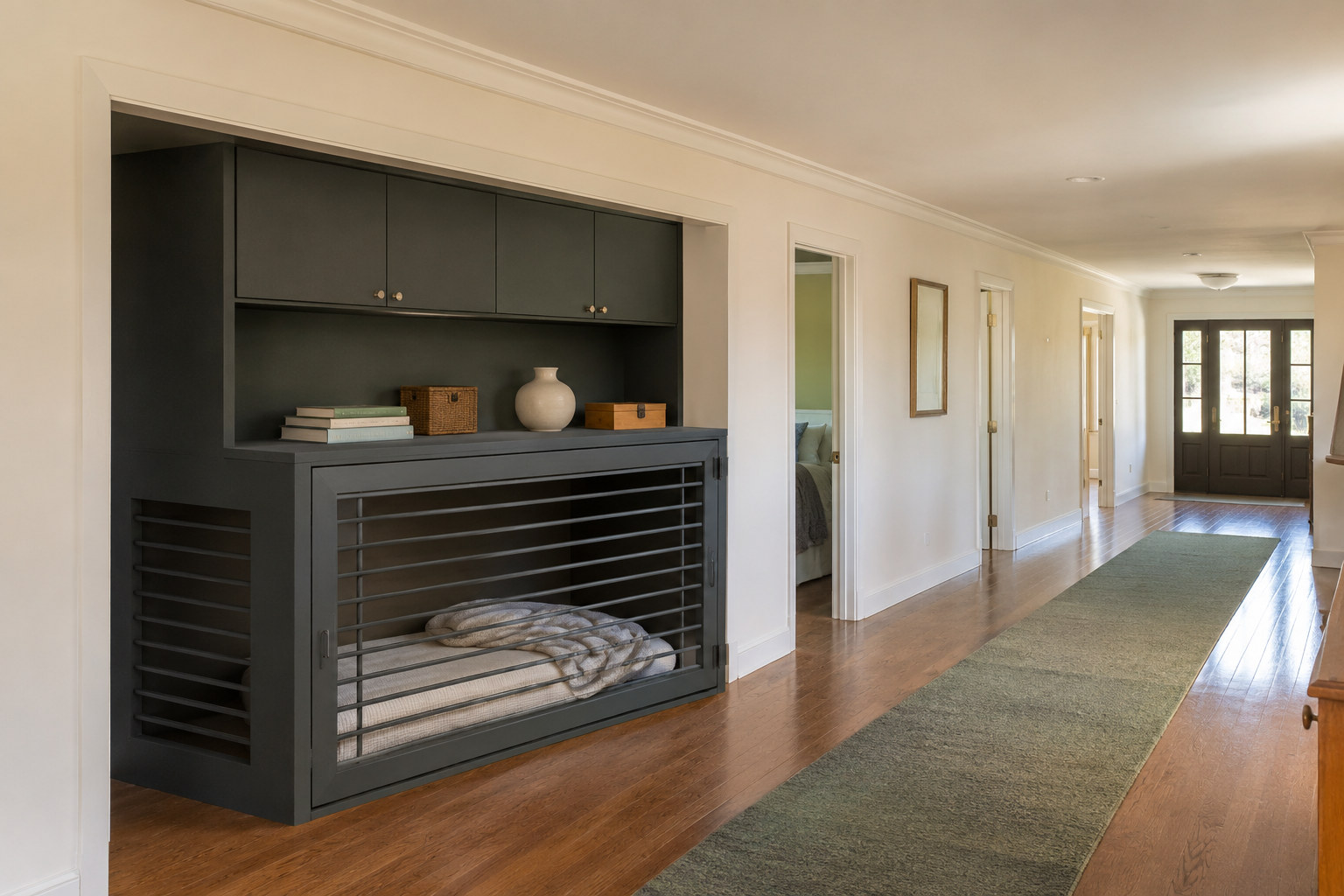
A broad recessed wall can hold a built-in crate without projecting into a hall. This is most promising in a quiet internal hallway, away from the front door, household congestion, and sharp changes in activity. A narrow entry passage offers a different experience and usually demands more caution.
Measure the remaining walking width with the crate door open, not only shut. Consider what happens when someone carries a laundry basket or moves furniture through the hall. The design should allow everyday circulation without stepping over the dog’s entrance.
Use shallow storage above only where it does not compromise the crate interior. Keep the area around the grille clear of shoes and floor baskets. For the surrounding layout, see our small entryway decor ideas. The useful detail is the recess itself, which can organize the room without turning the crate into a traffic obstacle.
9. Use a Dining-Room Sideboard Wall
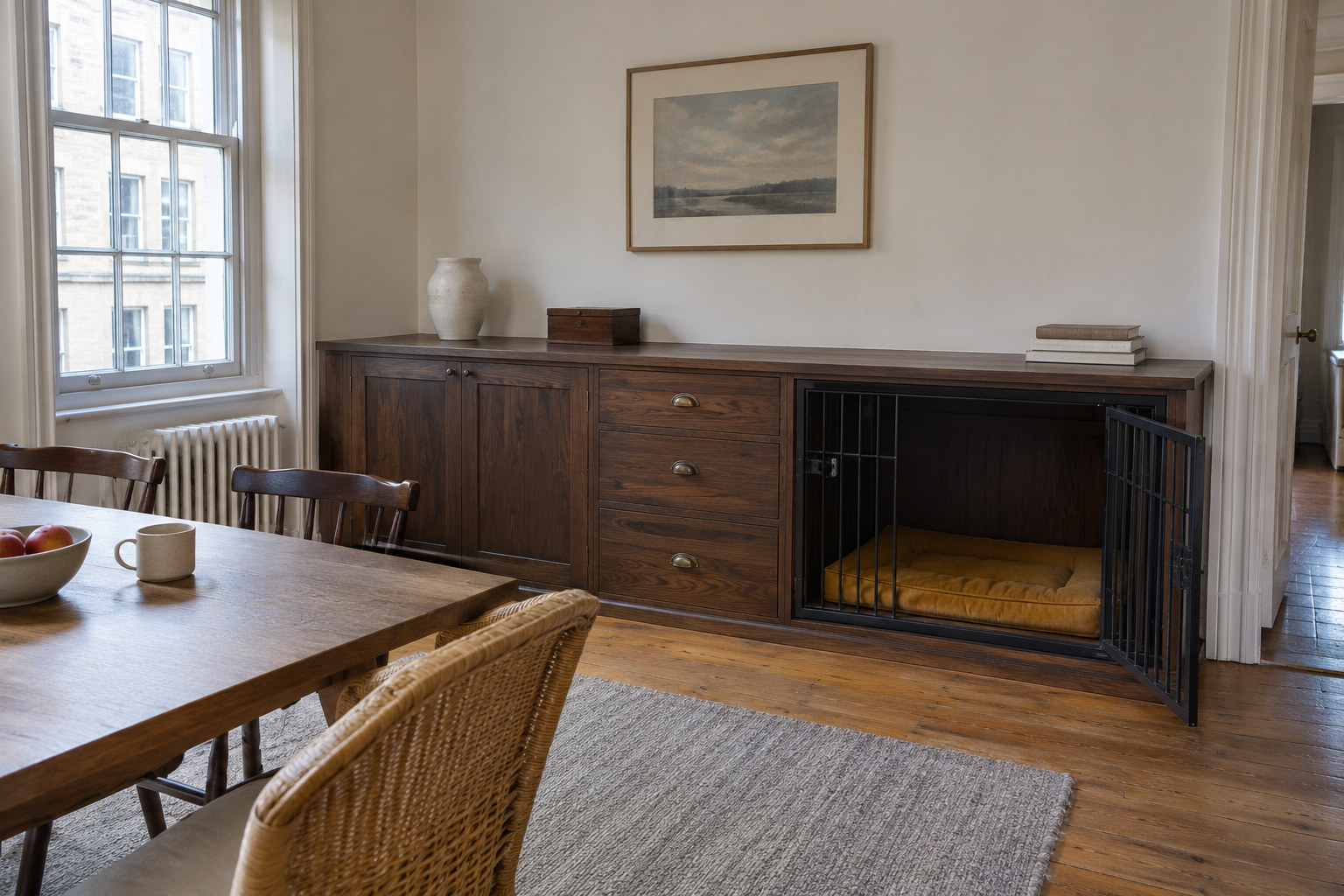
A fitted sideboard wall can incorporate a crate at floor level while retaining serving or storage space elsewhere. Place the crate at the outer end, with the dining table far enough away that pulled-out chairs do not block access. Think through both ordinary meals and larger gatherings.
A wood finish can help the installation connect with existing dining furniture. Keep the crate frontage practical, with suitable hardware and openings rather than delicate ornamental details that might be damaged or create snag points. The cabinetmaker should account for the intended dog’s behavior as well as appearance.
Store table linens and fragile items in separate closed modules. Avoid stacking heavy or unstable objects directly over the dog’s area. This arrangement works when the room remains comfortable and predictable, not when the crate must disappear beneath temporary party storage whenever guests arrive.
10. Plan Two Separate Crate Bays for Two Dogs
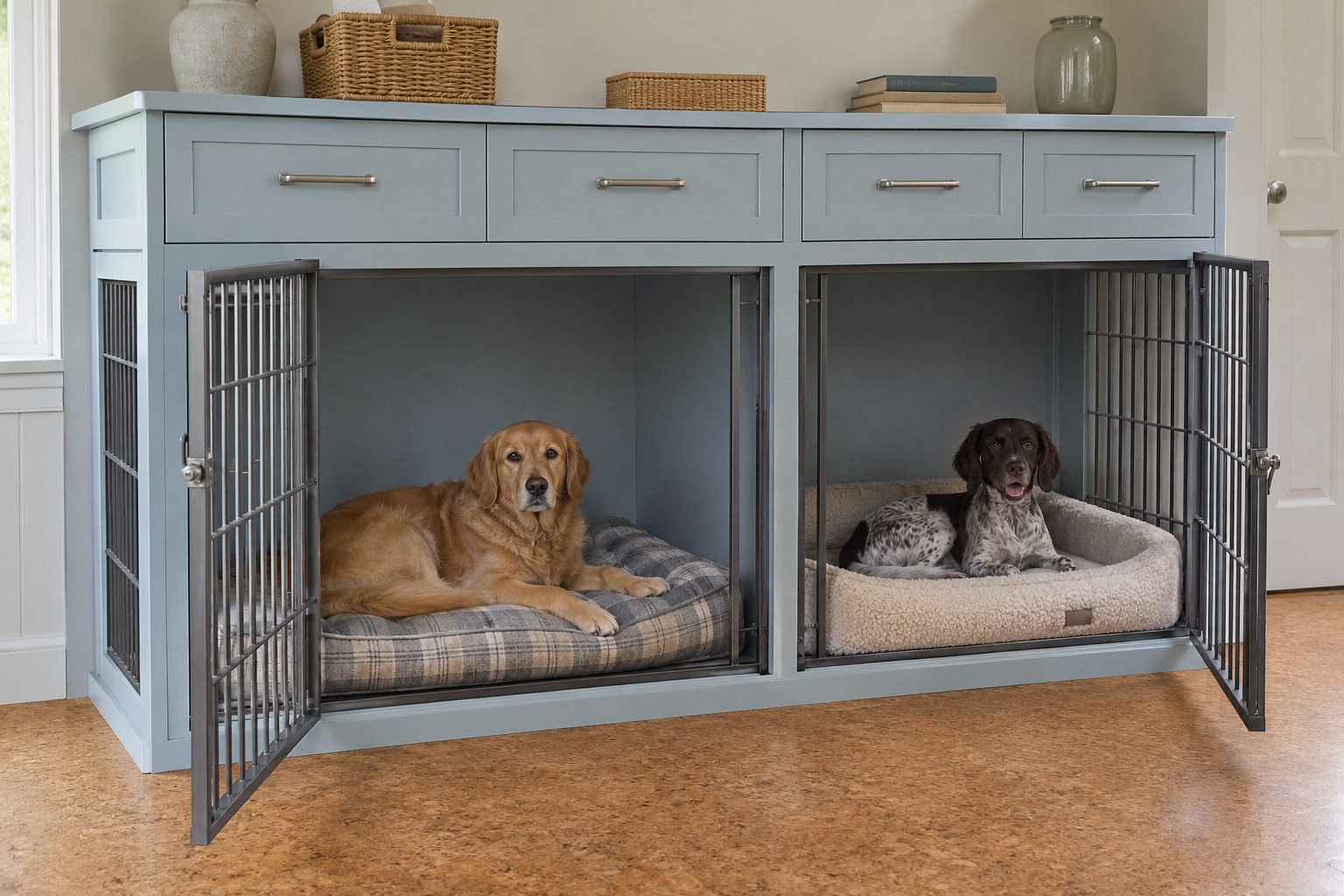
A double installation should provide two individually usable spaces, each sized for its own dog. A long cabinet with a central divider can organize the room neatly, but the division, entrances, and ventilation need thoughtful planning. Symmetrical outside doors do not guarantee suitable interiors.
Give each bay its own accessible door and cleaning arrangement. If the dogs have different sizes or preferences, let the interior dimensions differ even when the overall cabinetry looks coordinated. Avoid requiring one dog to pass through the other’s space to enter or leave.
Observe how the dogs respond to resting next to one another before choosing a permanent shared wall. Adjacent crates will not suit every household. Separate locations may be a better solution. Treat the cabinet as two complete spaces within one piece of joinery, rather than one large box divided for convenience.
11. Make the Outer Face of a Corner Unit Accessible
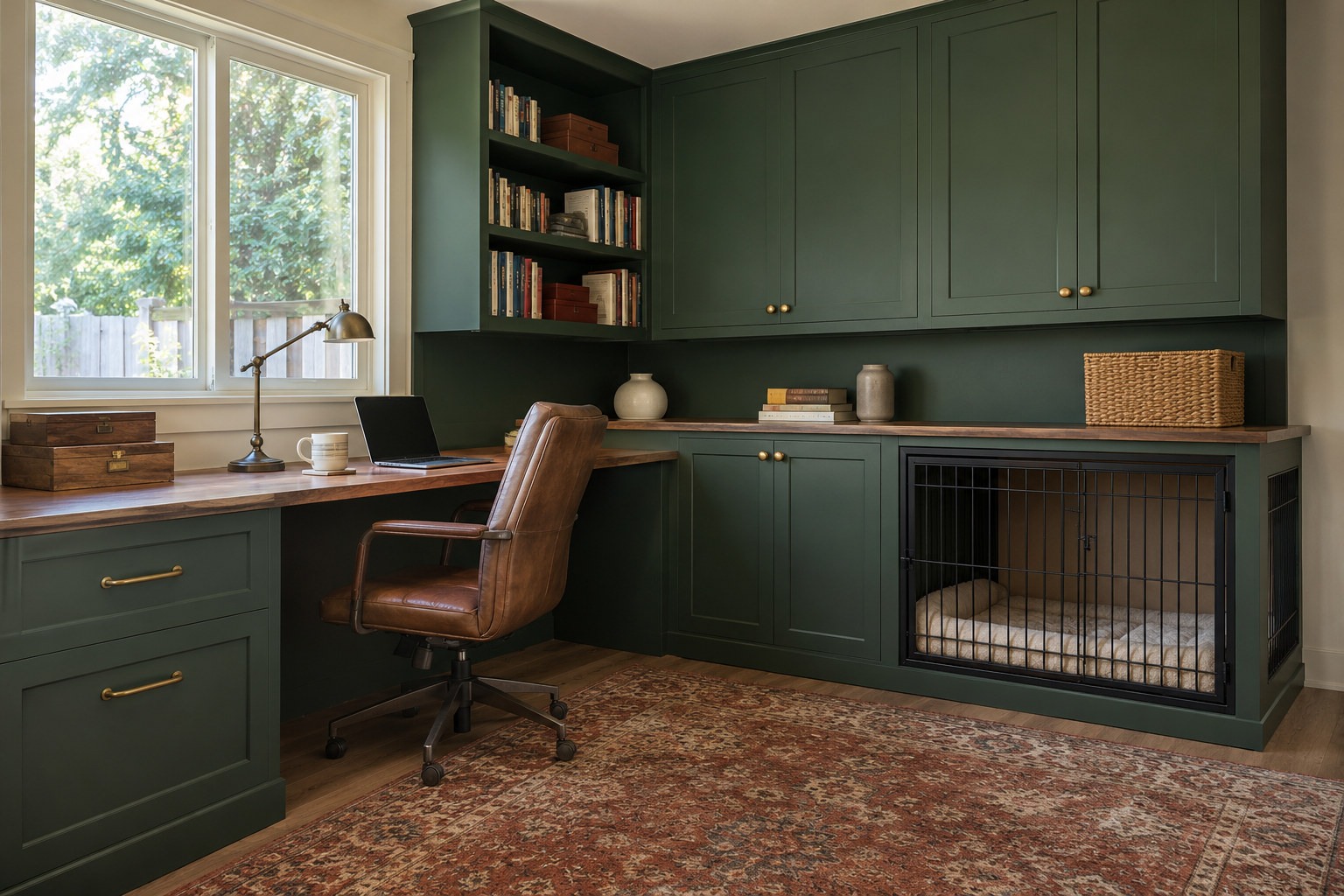
An L-shaped cabinet run can incorporate a crate on the outer straight face of one leg. This is more usable than putting the entrance deep inside the corner, where neighboring doors and furniture can make the approach awkward.
Use the inaccessible inner corner for another purpose, or leave it out of the dog bay entirely. The crate’s interior should have a shape that is straightforward to inspect and clean. Extra hidden depth around a corner is not a substitute for usable room where the dog actually rests.
Plan the door swing alongside adjacent drawers and seating. An exposed end panel can support the ventilation design, while the cabinet color connects the dog bay to the rest of the built-in. Ask for a clear drawing of the finished interior before construction so a tidy exterior does not conceal an impractical layout.
12. Frame a Removable Crate With Custom Cabinetry
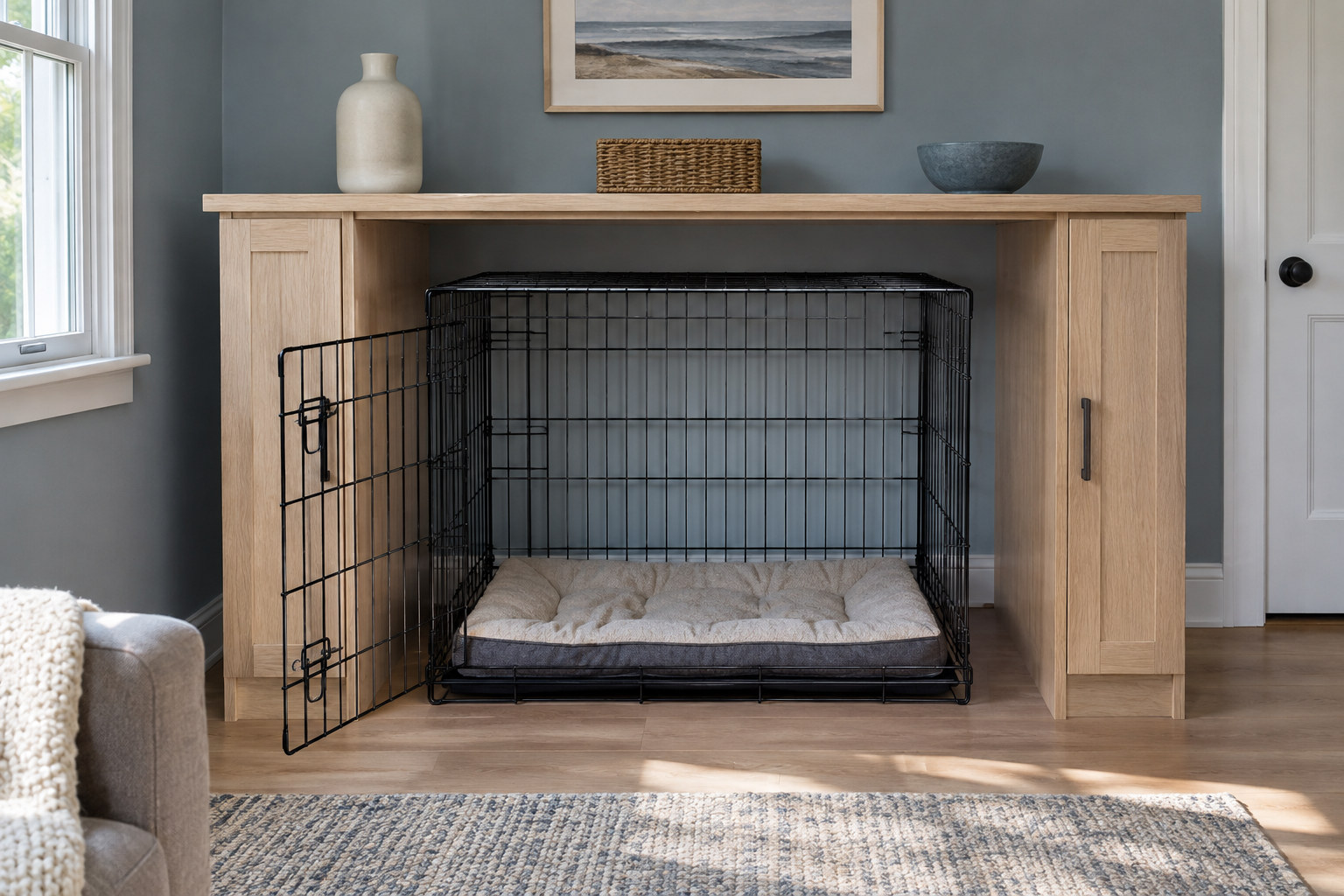
An oversized open surround can give an existing suitable crate a built-in appearance while keeping the crate removable. This approach is useful when you want coordinated cabinetry but value the ability to clean, replace, or relocate the actual dog enclosure.
The surround must preserve the crate manufacturer’s intended use and ventilation. Leave appropriate clearance and avoid blocking the door, tray, hinges, or folding components. It should be possible to slide the crate out without dismantling the room. Confirm the design with the crate manufacturer when compatibility is uncertain.
Support the cabinet top independently. An ordinary wire crate should not become a structural prop for a worktop or bench. With that separation established, the surrounding cabinetry can carry the room’s color and finish while the crate continues to do the job it was designed for.
13. Use the Base of a Fitted Bookcase
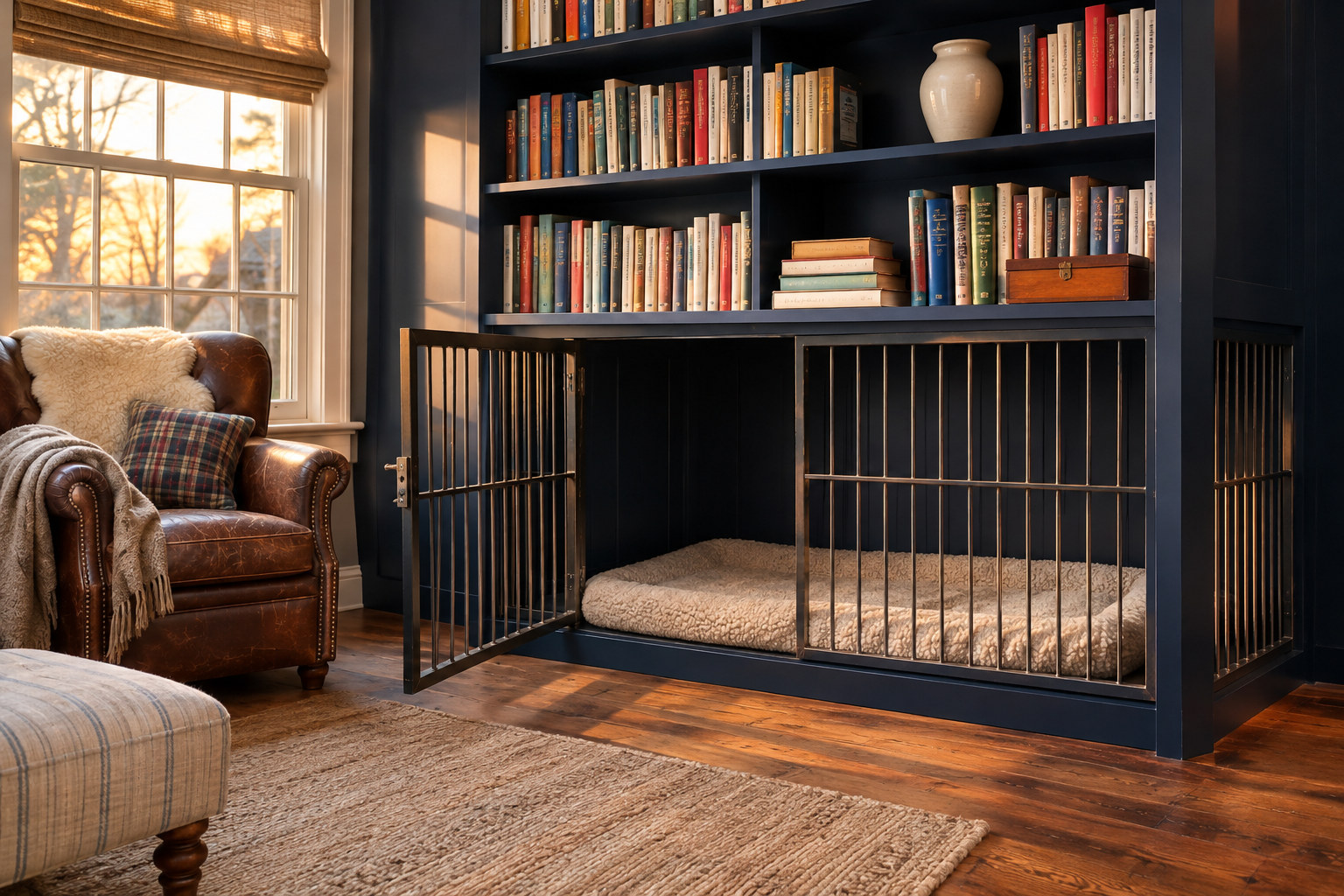
A fitted bookcase can include a generous crate bay at one end of its base. The upper shelves provide the visual continuity, while the lower space remains accessible and airy. This arrangement is particularly useful in a reading or family room where the dog already likes to spend quiet time.
Have the shelving and cabinet structure properly designed for their loads. Books are heavy, and the crate opening should not compromise the support system. Keep loose ornaments, trailing plants, and electrical leads away from the dog’s reach and from the ventilation openings.
A plain grille and simple washable bedding can balance a busy wall of books. Check how a reading chair or footstool affects access before fixing the layout. The dog bay should remain easy to reach when someone is using the room, not only when the chair is pushed aside.
14. Pair the Crate With a Separate Supply Cupboard
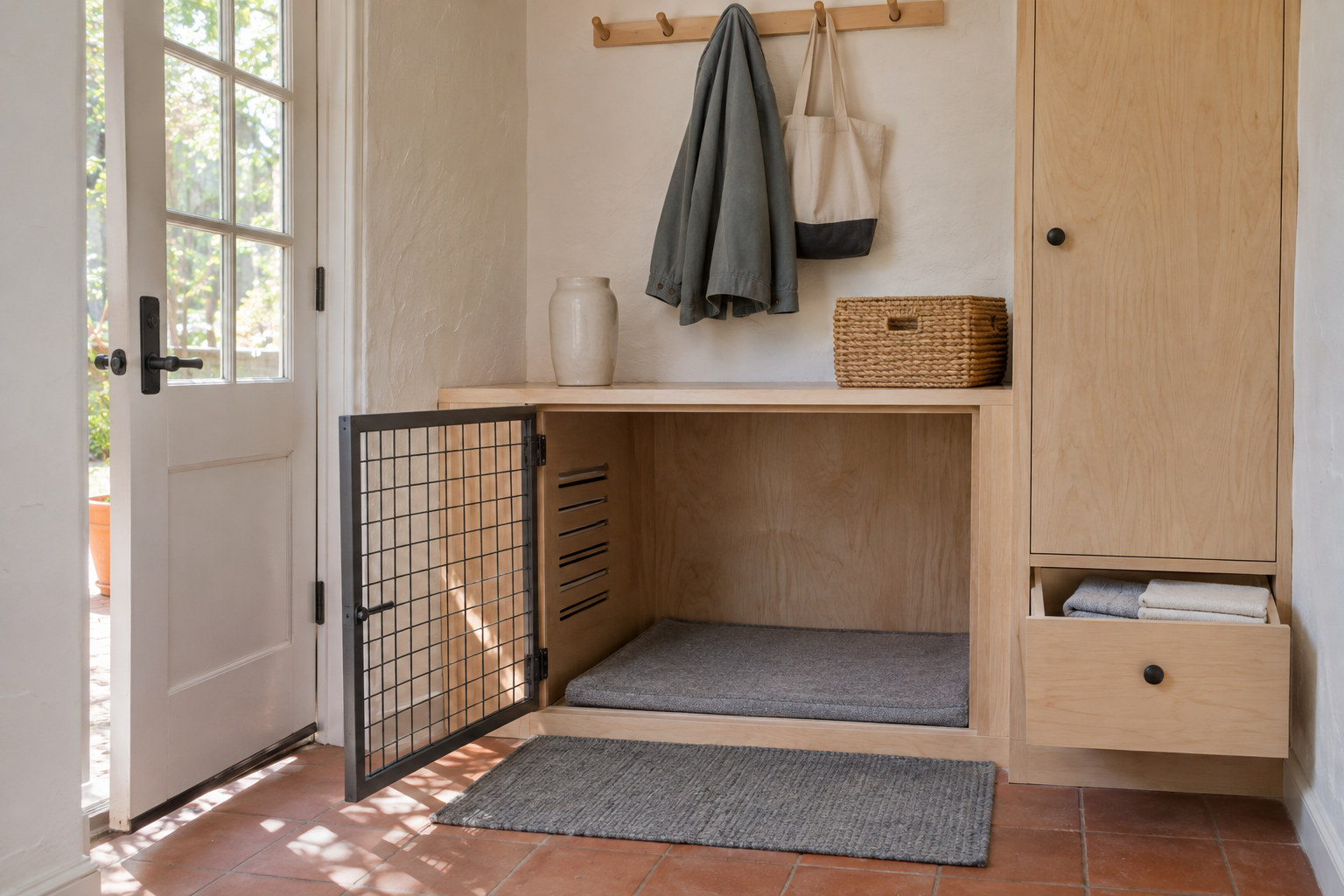
A narrow supply cupboard beside the crate can make daily routines easier without filling the dog’s space with accessories. Give towels, spare bedding, and grooming items their own shelves or drawers, leaving the crate interior uncluttered.
Plan the cupboard door so it opens away from the crate entrance where possible. A drawer for clean linens may be more convenient than a deep shelf that hides everything at the back. Keep products that need secure storage appropriately contained, rather than treating an open cubby as a universal solution.
This approach works well in a back entry or utility room where pet supplies already collect. For the wider room, our small laundry room ideas offer ways to organize vertical storage. Check the actual noise and activity of the location before placing a resting area near laundry equipment.
15. Keep a Built-In Nook Open for a Voluntary Retreat
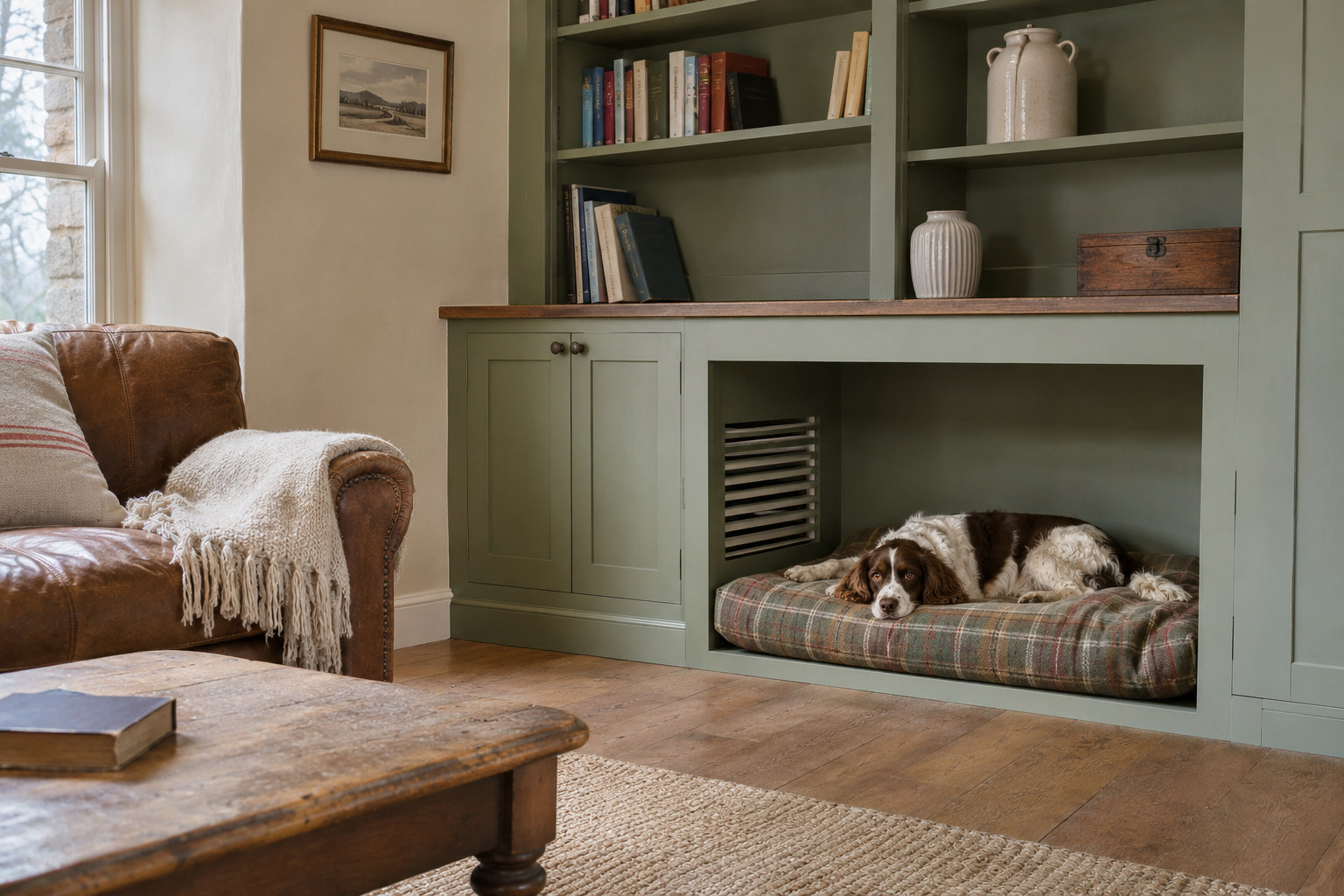
If you want an integrated resting place and do not need an enclosure, a doorless built-in nook may be the more appropriate design. It gives the dog a defined spot within the cabinetry while allowing free movement in and out.
This is a resting nook, not a secure crate. Make that distinction before ordering hardware or relying on the space for confinement. A broad opening, suitable usable space, and ventilation still matter, even though there is no gate. Keep the entrance level and the bedding easy to remove.
Observe whether your dog chooses the location before investing in permanent joinery. A temporary bed in the proposed spot can help you assess the room. Matching the cabinetry is worthwhile only when the result supports a place your dog is comfortable using, rather than creating a decorative vacancy that stays empty.
What to Settle Before Ordering the Cabinetry
Establish the Usable Interior First
PDSA’s crate guidance says a crate should allow the dog to stand and sit without touching the top, turn, lie down, and stretch fully. Use those functional needs to evaluate the finished interior. Include the bed and any bowl fittings when assessing the space; outside cabinet dimensions do not tell the whole story.
Give the cabinetmaker a drawing that distinguishes the interior from the surrounding frame. Identify where a plinth, hinge, latch, or trim will project. For a growing dog, discuss future needs before building a fixed enclosure that may soon be unsuitable. Where an appropriate removable crate is already working, keeping it within a compatible surround can preserve flexibility.
Plan Airflow as Part of the Structure
The RSPCA’s crate training resources emphasize a suitable location away from direct heat and sunlight, alongside access to water. Enclosing a crate in cabinetry changes its surroundings, so ask the maker to explain how the design keeps openings effective rather than simply decorating them.
A vented front can still be obstructed by furniture, while an attractive side grille may face a solid wall. Check the installed arrangement, not just the cabinet on its own. Avoid guessing a universal ventilation-hole count or treating a fan as a fix for an unsuitable enclosed space. If the design cannot stay comfortable and airy, choose a different configuration.
Make the Whole Interior Reachable
Work through cleaning before selecting handles. Can the bedding come out easily? Can you reach the back corners? Can you inspect the floor and every edge without crawling into a narrow opening? A removable tray or compatible removable crate may simplify maintenance, but it must still fit the design correctly.
Choose materials and finishes for their intended use, with the manufacturer’s instructions available. The ASPCA’s home-repair guidance identifies paint, chemicals, fasteners, and debris as potential hazards around pets. Keep the dog elsewhere during construction and finishing, clean the area thoroughly, and follow product directions before returning it to normal use.
Treat the Door as a Moving Part
A door needs more than a matching finish. Check its full swing, latch position, exposed edges, and interaction with nearby cupboards. Ask the maker how the door remains securely open when required, and whether any gaps or fittings create problems for your individual dog.
Get the Fail-Safe Paint Color Playbook (Free PDF)
36 proven colors • 8 ready palettes • trim & sheen guide • printable testing cards.
Avoid improvised furniture hardware chosen solely for appearance. A crate intended to contain a dog has different requirements from a decorative cabinet. If your dog chews, pushes, or becomes distressed in a crate, discuss suitability with a veterinarian or qualified behavior professional before commissioning a permanent enclosure.
Built-In Dog Crate Questions
Can an Ordinary Base Cabinet Become a Dog Crate?
Possibly, but removing a cupboard door is not enough. The remaining interior, materials, openings, ventilation, and access all need assessment. Many standard cabinets will be unsuitable for the intended dog. Begin with the animal’s usable space and work outward, even if that means replacing rather than adapting the module.
Does a Built-In Crate Need to Match Every Cabinet Detail?
No. Matching the color, wood tone, and main proportions can create a coherent room while allowing the crate front to remain practical. A simpler grille may work better than copying every panel and molding. Use the surrounding cupboards for decorative detail and let the dog bay keep the openings it needs.
Is a Built-In Crate Suitable for All-Day Use?
Its appearance does not change appropriate crate use. The RSPCA says dogs should not be shut in a crate all day while owners work. Plan the dog’s normal exercise, interaction, toileting, and resting choices separately from the cabinetry. A built-in is one part of the home, not a complete daily-care plan.
Should You Build the Crate Before Introducing the Dog to the Location?
Try the location first where possible. Place the dog’s existing suitable crate or bed there and observe normal household routines. A new cabinet cannot make a busy hallway quiet or persuade a dog to enjoy an uncomfortable position. Confirm the location, then refine the joinery around what works.
Source Notes
- PDSA: Crate Training Your Dog. Usable crate space and dog-specific suitability.
- RSPCA: How to Crate Train a Puppy. Location, water access, and appropriate crate use.
- ASPCA: Keeping Pets Safe During Home Repairs. Construction and finishing hazards. The cabinetry examples are design concepts, not engineered building plans.