
17 Pet Food Storage Ideas for Cabinets and Pantries
Pet food storage becomes frustrating when the bag is too bulky for the cupboard, the scoop disappears, or a second diet gets mixed into the same corner. A useful system makes everyday feeding straightforward while fitting the space you already have.
Start with the food’s packaging and storage instructions, then choose the cabinet, container, or shelf around them. The FDA recommends keeping dry food in its original bag, including when you place it inside another container. That is the approach used throughout these ideas.
Get the Fail-Safe Paint Color Playbook (Free PDF)
36 proven colors • 8 ready palettes • trim & sheen guide • printable testing cards.
The 17 options below focus on access, organization, and how different layouts work. Some need a kitchen alteration; others only need a suitable bin and a better place to put it.
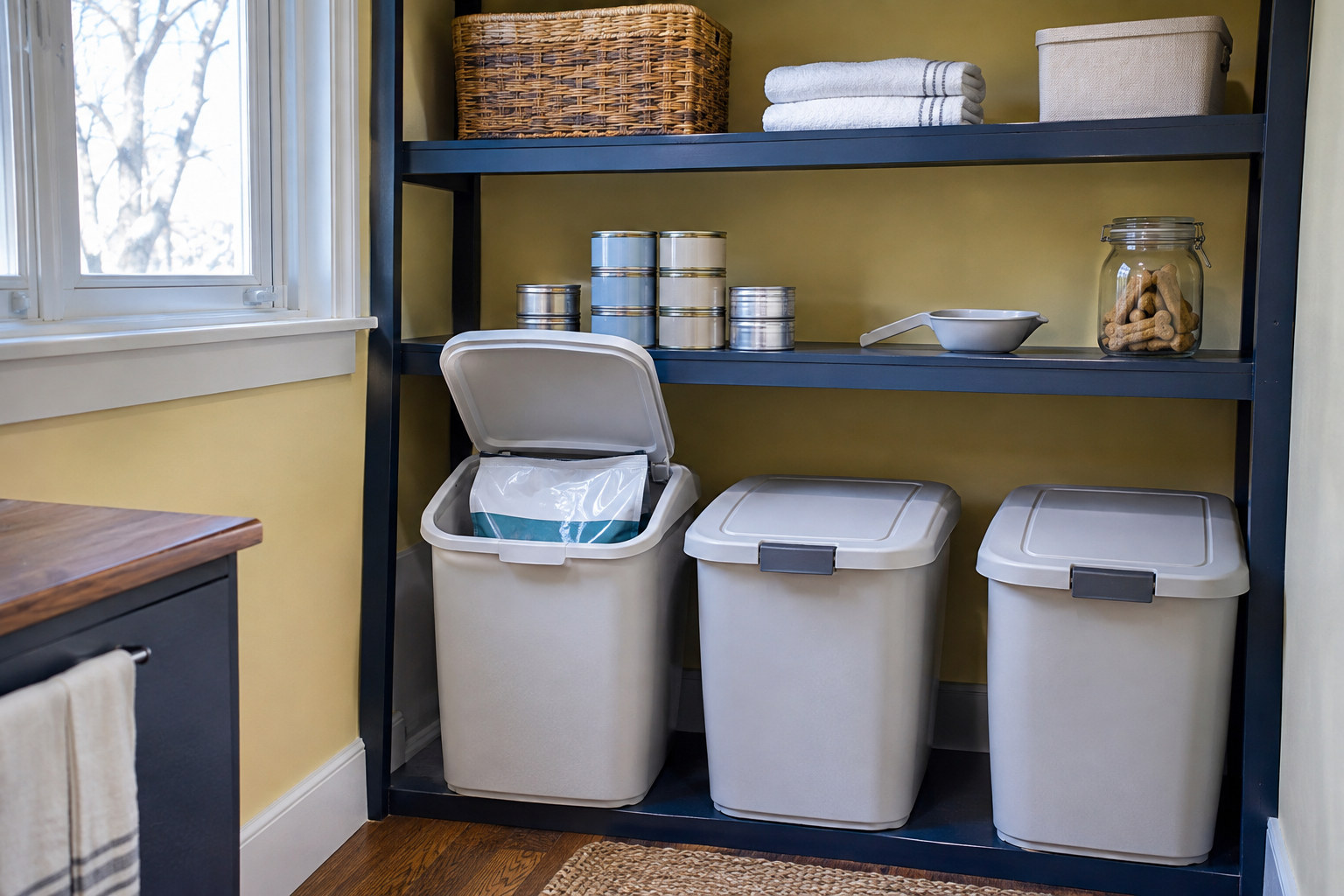
1. Keep the Original Bag Inside a Lidded Bin
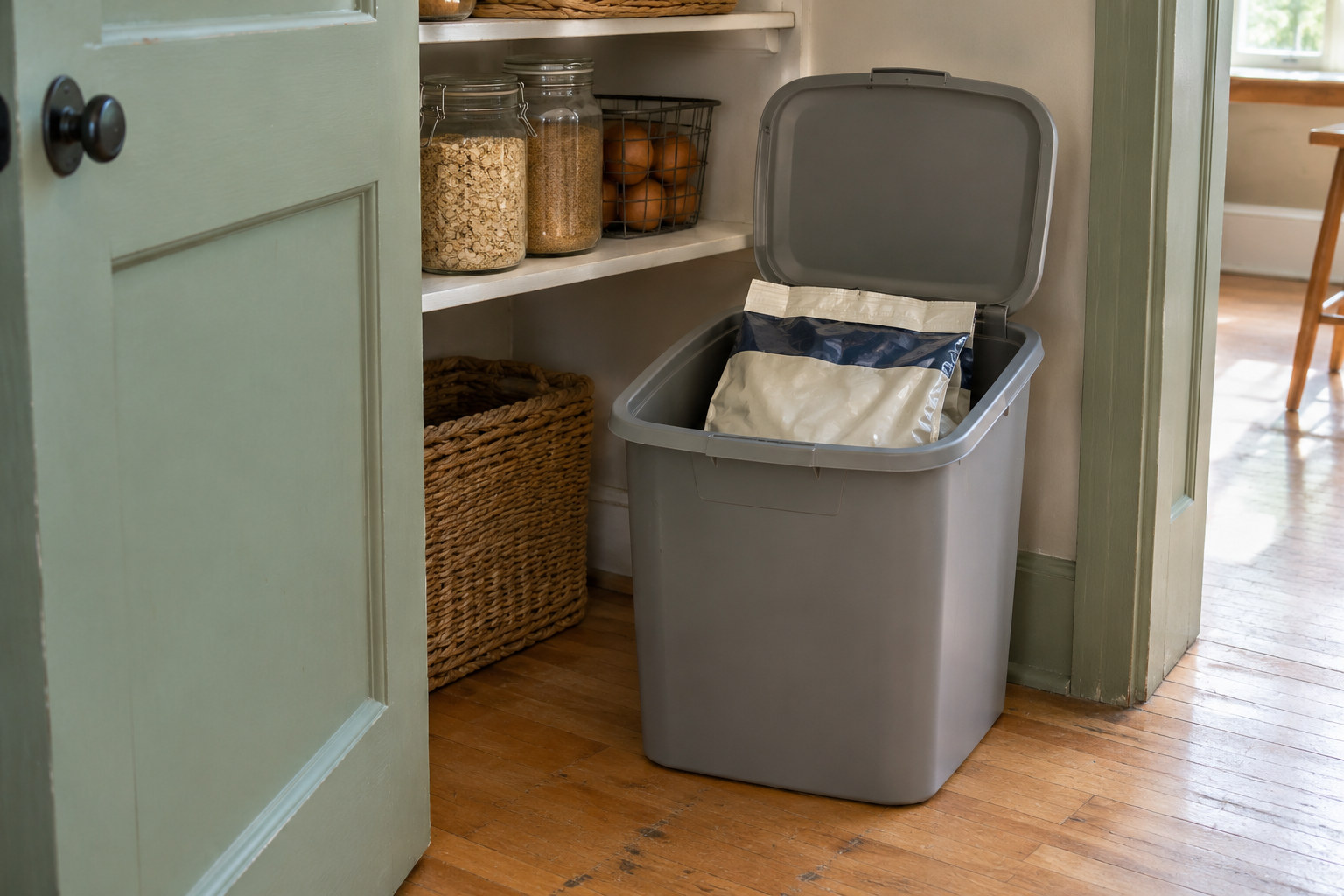
The simplest starting point is a secondary bin that comfortably holds the bag you normally buy. Take the bag’s actual dimensions into account, including the folded or closed top, rather than relying only on the bin’s advertised capacity. A tall narrow bag and a broad short container can be awkward partners.
Look for a lid you can open fully in the intended position. If the bin sits beneath a shelf, check the clearance with the lid raised and your hand reaching inside. A container that fits perfectly while closed may be inconvenient at every meal.
Choose a plain finish that blends with the room, then give the scoop its own clean storage spot. Keeping the arrangement uncomplicated makes it easier to remove the bag and bin when the cupboard needs attention.
2. Add a Pull-Out Bin to a Base Cabinet
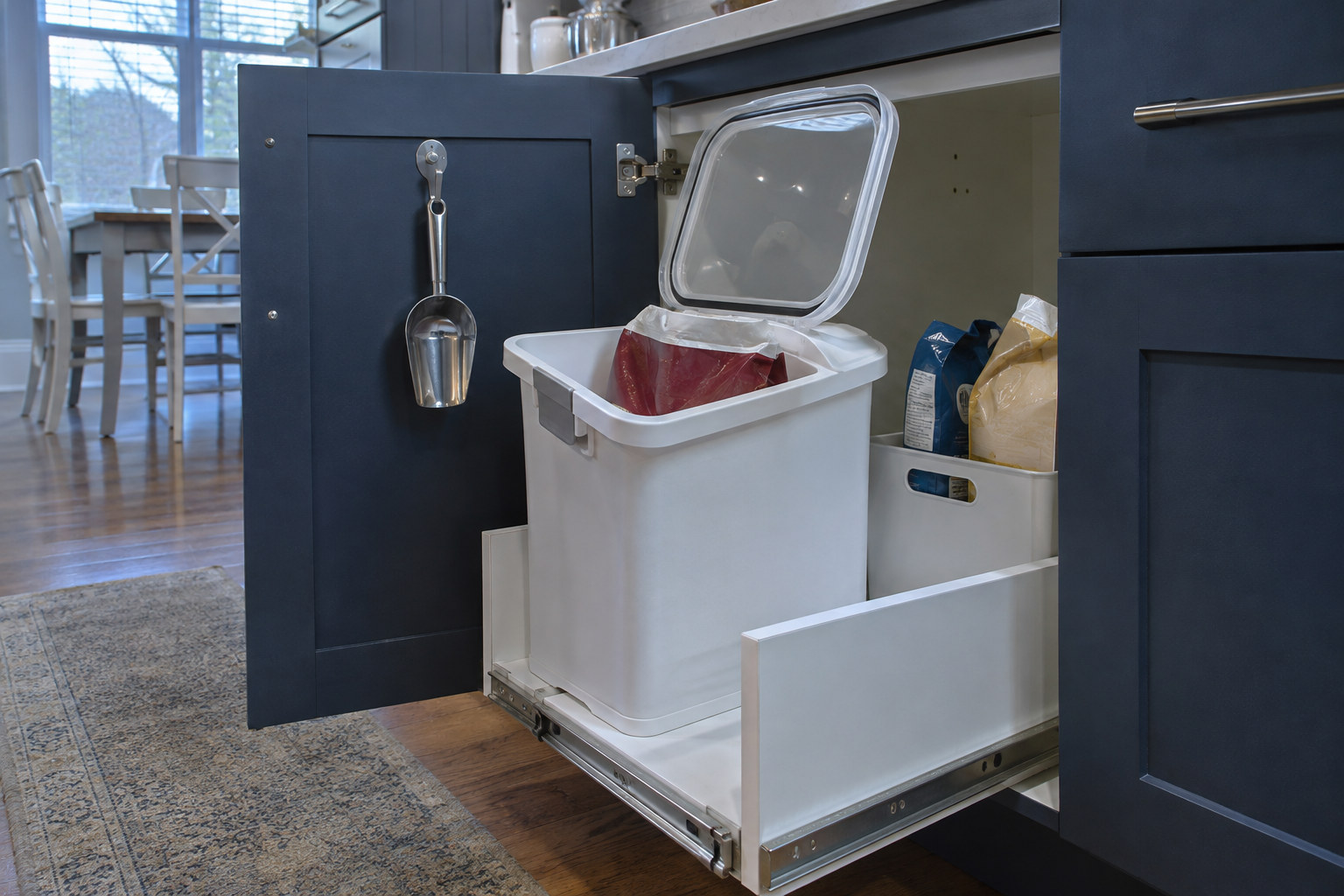
A pull-out tray brings a food bin out of a deep base cabinet so you can reach it from above. It is particularly useful when the alternative is bending into a dark cupboard. Measure the cabinet opening, hinges, interior height, and available drawer-slide space before choosing the hardware.
Account for the combined weight of the bin, food, and pull-out assembly, following the hardware manufacturer’s requirements. The design should allow the bin to lift out without removing a cabinet door. Avoid positioning the pull-out where it blocks an adjacent appliance you use during meal preparation.
Use one appropriately sized bin rather than cramming several containers into the opening. A little clearance around it makes lifting, wiping, and checking the rear of the cabinet much easier.
3. Dedicate a Pantry Shelf to Pet Supplies
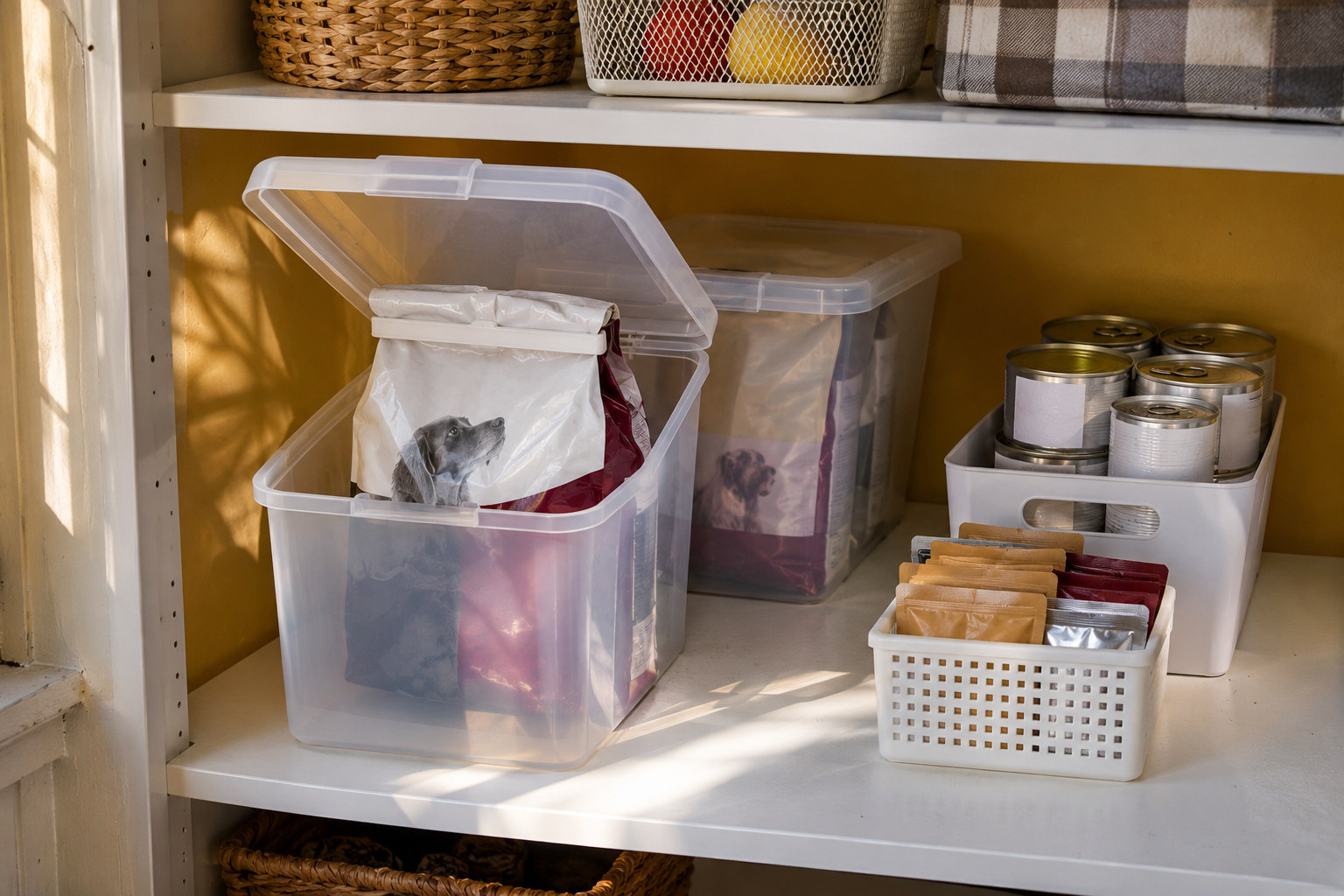
A dedicated pantry shelf keeps the daily food, unopened cans, and a few feeding accessories together without spreading them through the kitchen. Choose a shelf you can reach comfortably and leave enough height for the container lid to open. Reserve the heaviest items for a suitable lower position.
Divide the shelf by use: everyday food in one area, spare supplies in another, and small accessories in a removable tray. You can keep the arrangement visually tidy without transferring everything into matching jars. The shelf’s order matters more than identical packaging.
If other household members feed the pets, use simple clear identification on the storage area while keeping product information accessible. A consistent layout helps someone find the correct supplies without opening every cupboard in the room.
4. Choose a Tall Narrow Bin for a Small Kitchen
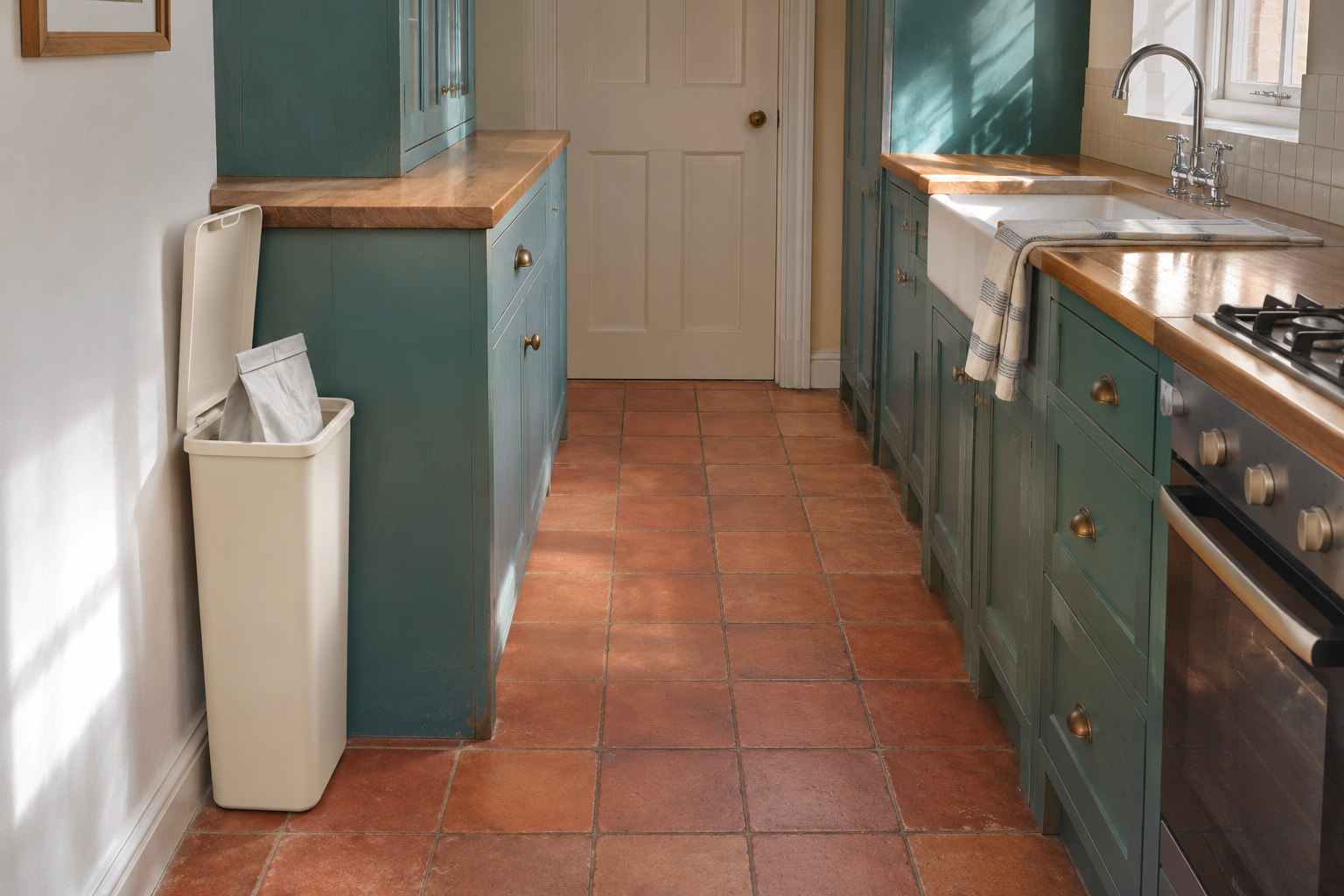
A slim bin can use a narrow gap beside a cabinet or at the end of a pantry. Before committing to that space, check whether the lid can open and whether the full container can be removed. A gap that only accepts the empty bin is not a useful storage solution.
Keep the route through the kitchen clear, especially near a dishwasher or oven door. Avoid treating every unused sliver of floor as suitable food storage; the location also needs to meet the product’s storage instructions. A cool interior cupboard may be a better choice than a sunny gap beside glazing.
A quiet color helps the bin recede visually. If it remains on view, choose a shape that relates to the cabinets rather than adding another strong decorative feature to a small room.
5. Turn a Deep Drawer into a Meal-Prep Station
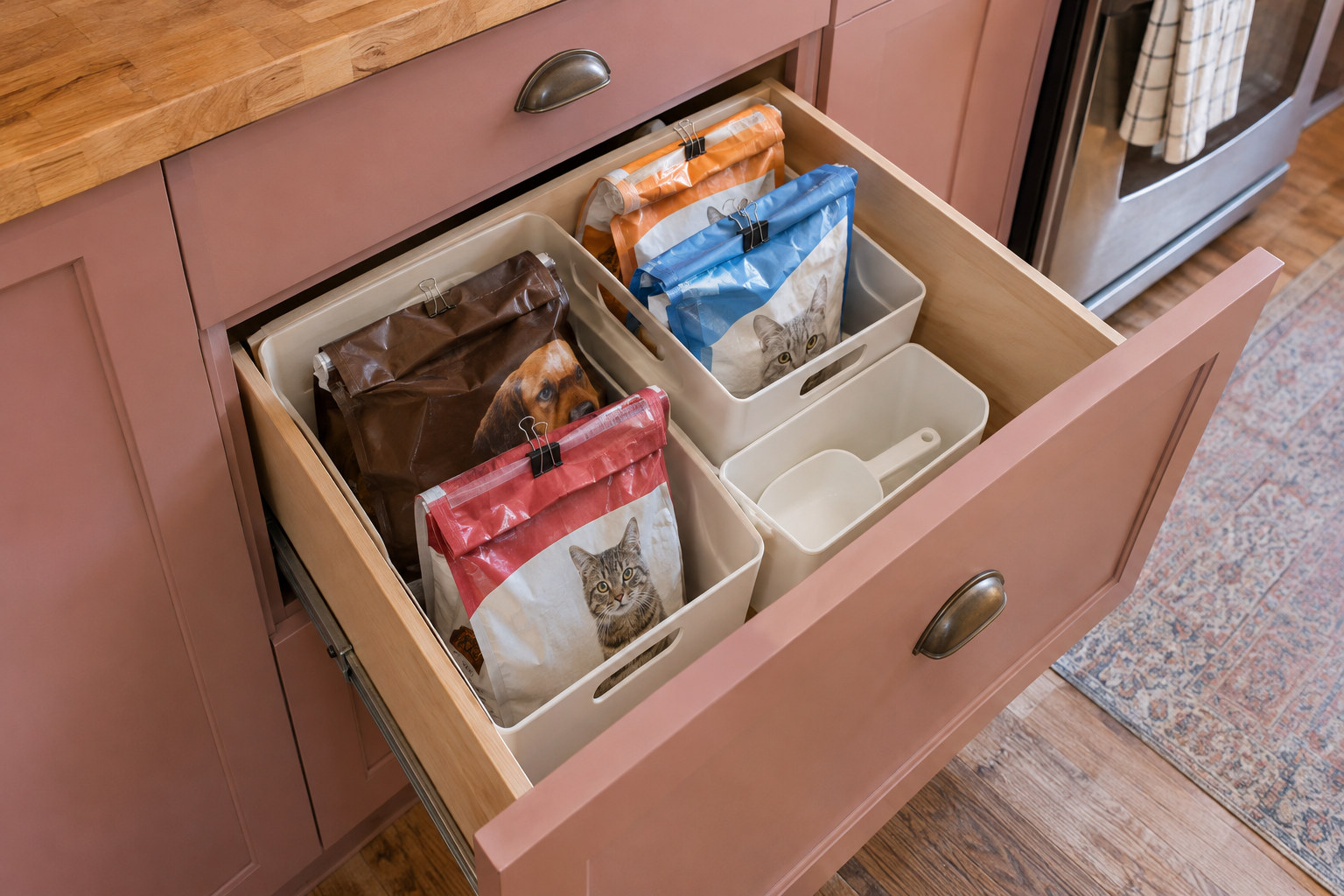
A deep drawer works well for small bags, pouches, and the tools used at feeding time. Fit removable dividers around the supplies you actually buy. Leave the food packages upright where possible so you can see what is available without lifting out the entire drawer’s contents.
Keep the scoop in a separate compartment and make sure packages do not catch on the cabinet frame as the drawer closes. Check the drawer’s load guidance before filling it with heavy supplies. A lower drawer can also become accessible to a determined pet, so consider how securely it closes.
This arrangement is most useful when the quantities match the drawer. If a large bag needs to be folded into an awkward shape, give that bag a suitable bin elsewhere and use the drawer for smaller items.
6. Store Different Diets in Separate Bins
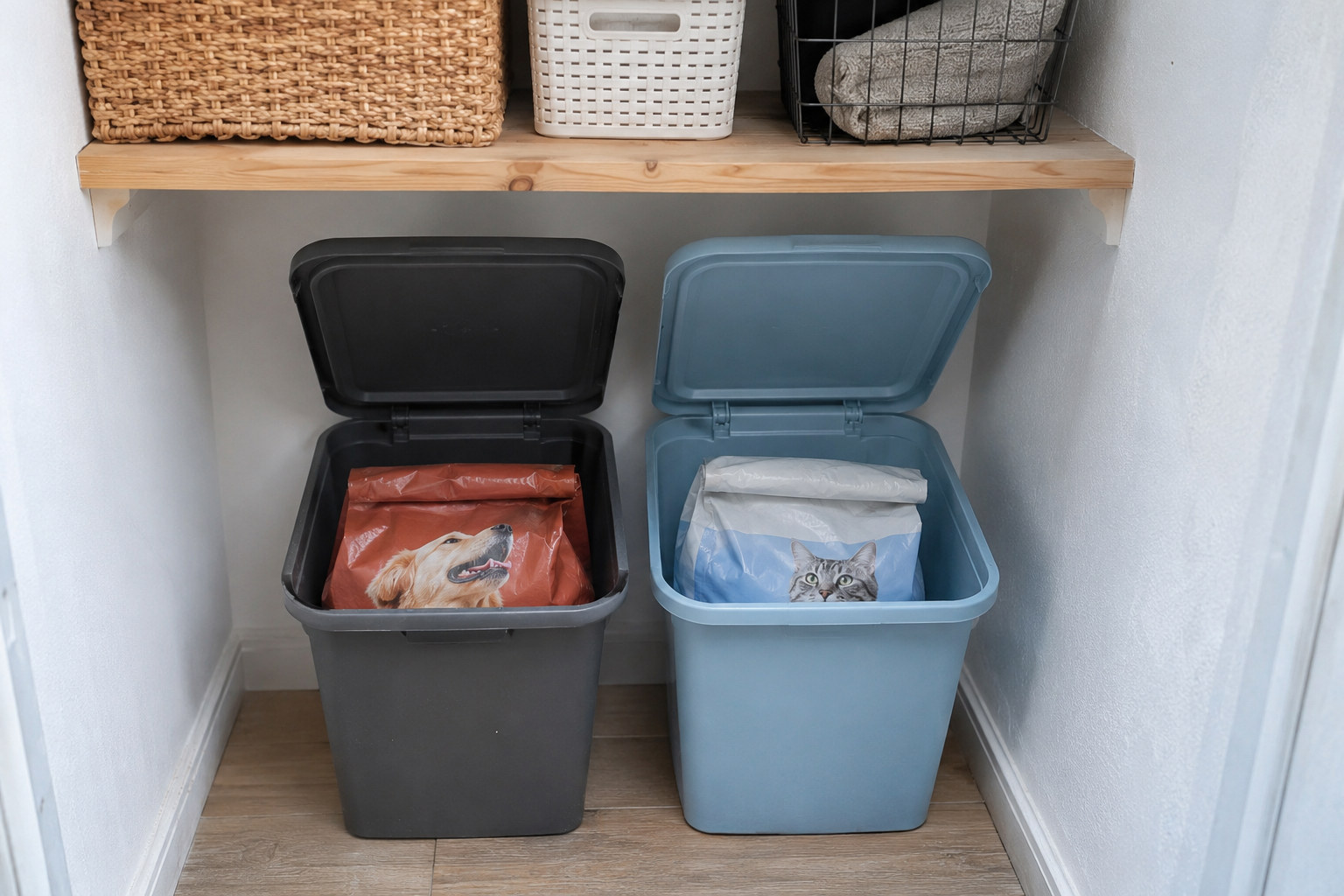
Separate bins can make a multi-pet household easier to organize. Give each diet its own place, with enough visual distinction that someone helping at mealtime can identify the correct one. Different bin colors or clearly assigned cupboard positions can support the product identification on the packaging.
Keep the original packages associated with their bins and avoid using a single unmarked scoop for everything without a clear routine. The storage arrangement should follow the feeding plan you already use, especially where a veterinarian has prescribed a particular food.
Measure the bins together before buying them. Two containers may each fit the shelf but leave no room to open their lids side by side. A slightly staggered arrangement or separate shelves may be more practical than forcing a symmetrical display.
7. Use a Low Cabinet Beside the Feeding Area
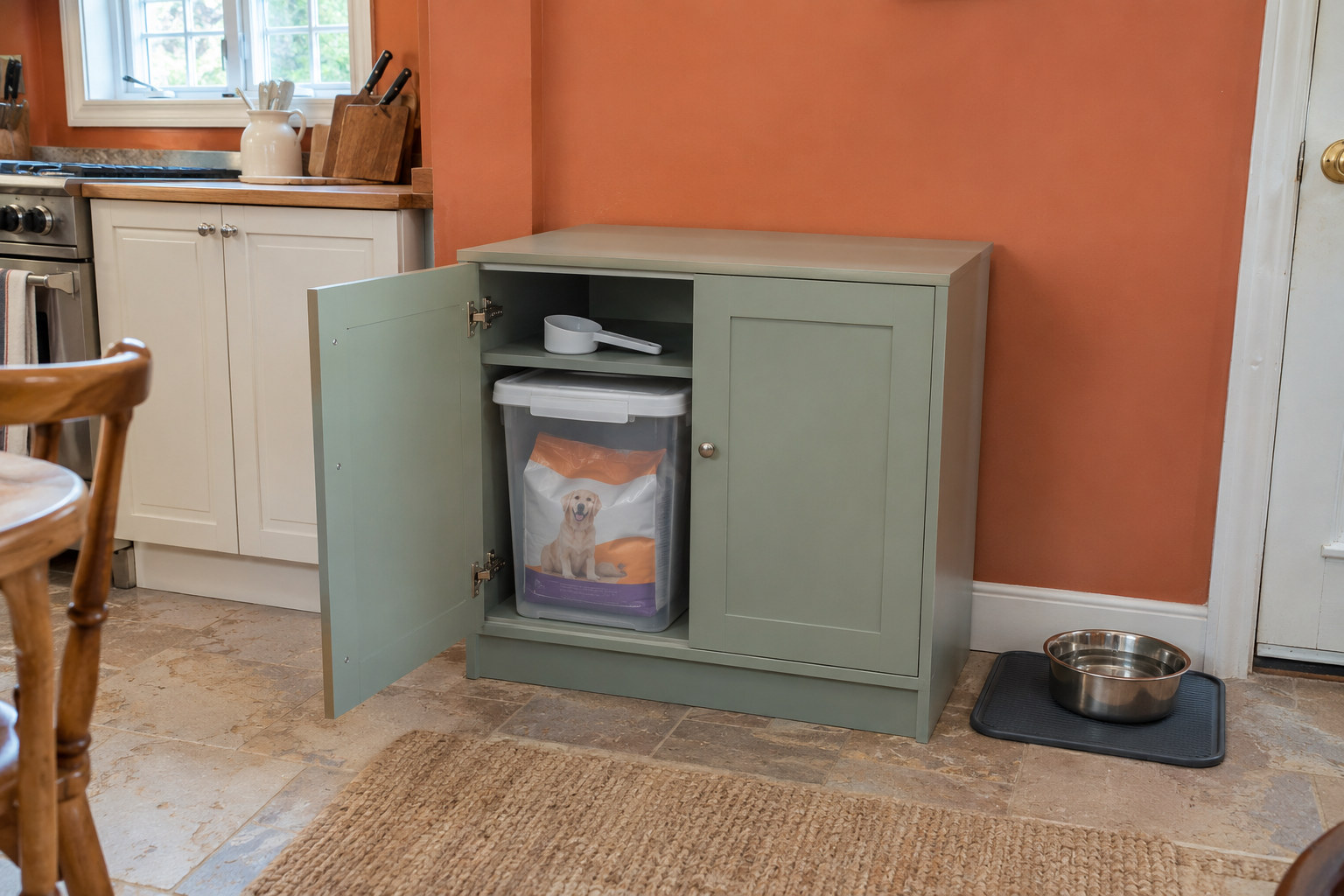
A low cabinet near the feeding area reduces the distance between collecting food and serving it. Position the cabinet close enough to be useful while keeping it clear of splashes from the water bowl. You should be able to open the door without nudging a bowl or moving a mat.
Use the cabinet for storage and let the bowls have their own easy-to-clean position. This keeps the food supply accessible when you lift the feeding mat or wash the surrounding floor. An ordinary side cabinet can work if its interior suits the container and the location is appropriate.
Repeat the kitchen’s cabinet color or choose a complementary painted finish. The furniture can look intentional without pretending the feeding area is invisible. Leave a small usable surface for setting down the portion you are preparing.
8. Keep Small Bags in Removable Shelf Baskets
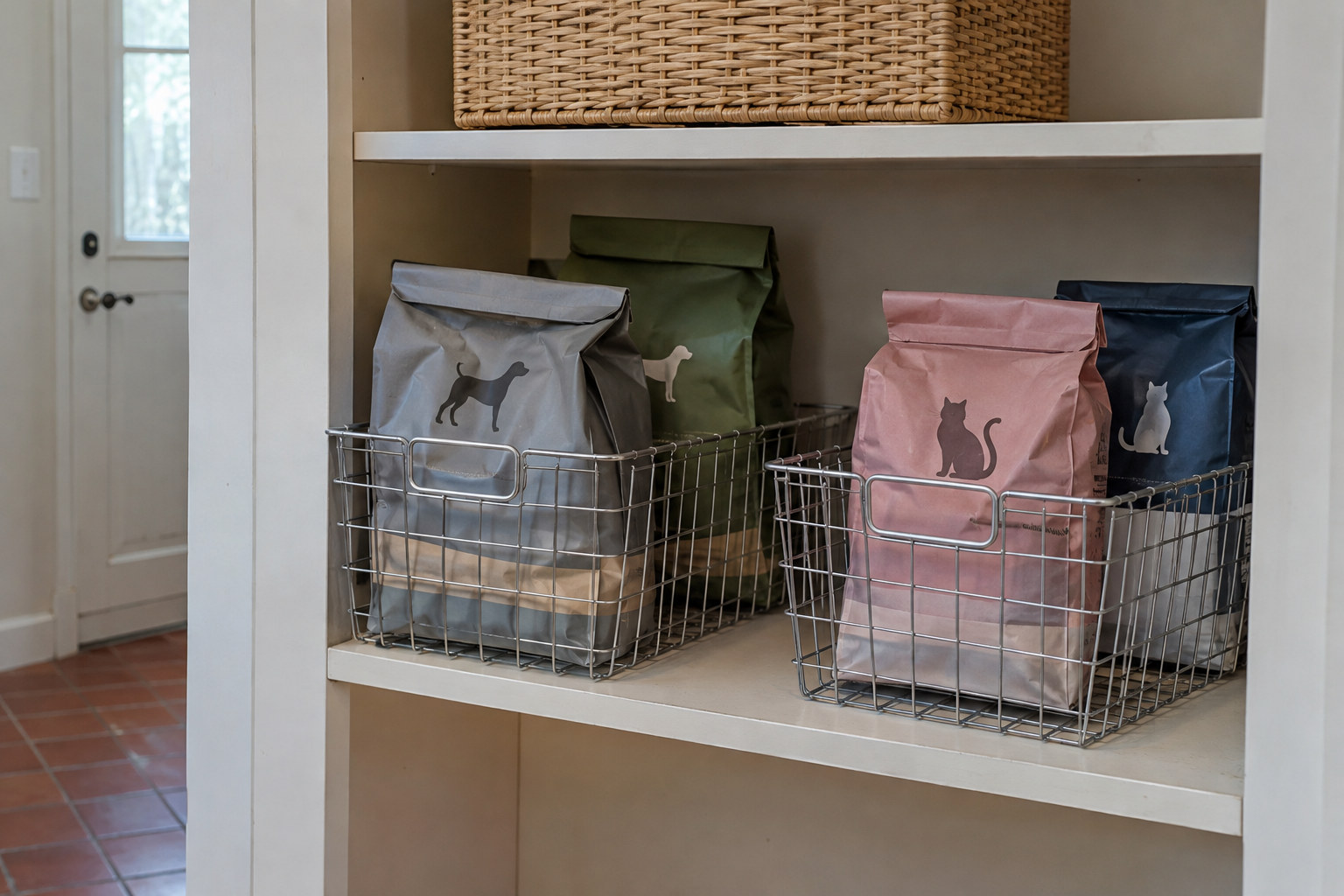
Removable shelf baskets are handy when you buy several small bags instead of one large sack. Arrange the packages upright so you can take the whole basket to a work surface, select what you need, and put it back. Avoid overfilling the basket until packages are crushed or hidden.
Measure the handle clearance as well as the basket width. A basket that fits a shelf but cannot be gripped is awkward to use. Choose a smooth, cleanable design with no sharp edges that might catch packaging, and keep it on a shelf suited to the combined weight.
This setup also works when pantry shelves have fixed heights. You can group related packages within the space available without installing new cabinetry or changing the whole room.
9. Give Unopened Wet Food Its Own Shelf
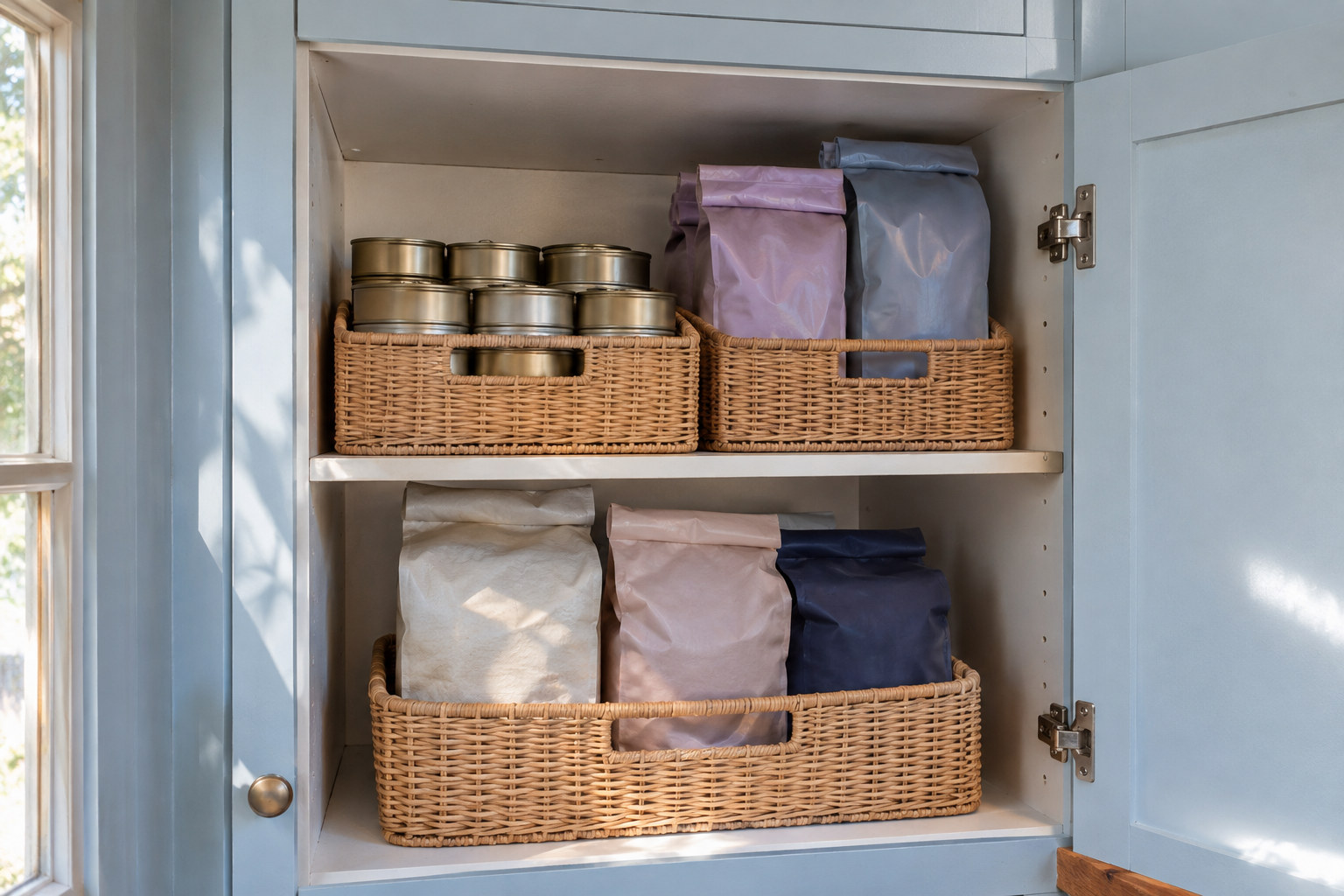
Unopened wet food is easier to organize when it has a distinct shelf or shallow tray. Group the formats you use, such as tins in one section and pouches in another, while leaving enough room to remove an individual package without knocking the rest over.
Keep the oldest suitable stock toward the front and check the package instructions and dates as you restock. A shallow tray helps contain the group, but a decorative basket should not obscure everything you need to read. The storage area is a working supply shelf rather than a permanent display.
Use shelf depth thoughtfully. If you cannot see the back row, a narrower arrangement may reduce forgotten supplies. Match the tray color to the cabinetry to keep the shelf visually quiet while preserving access to the actual products.
10. Reserve a Refrigerator Bin for Opened Wet Food
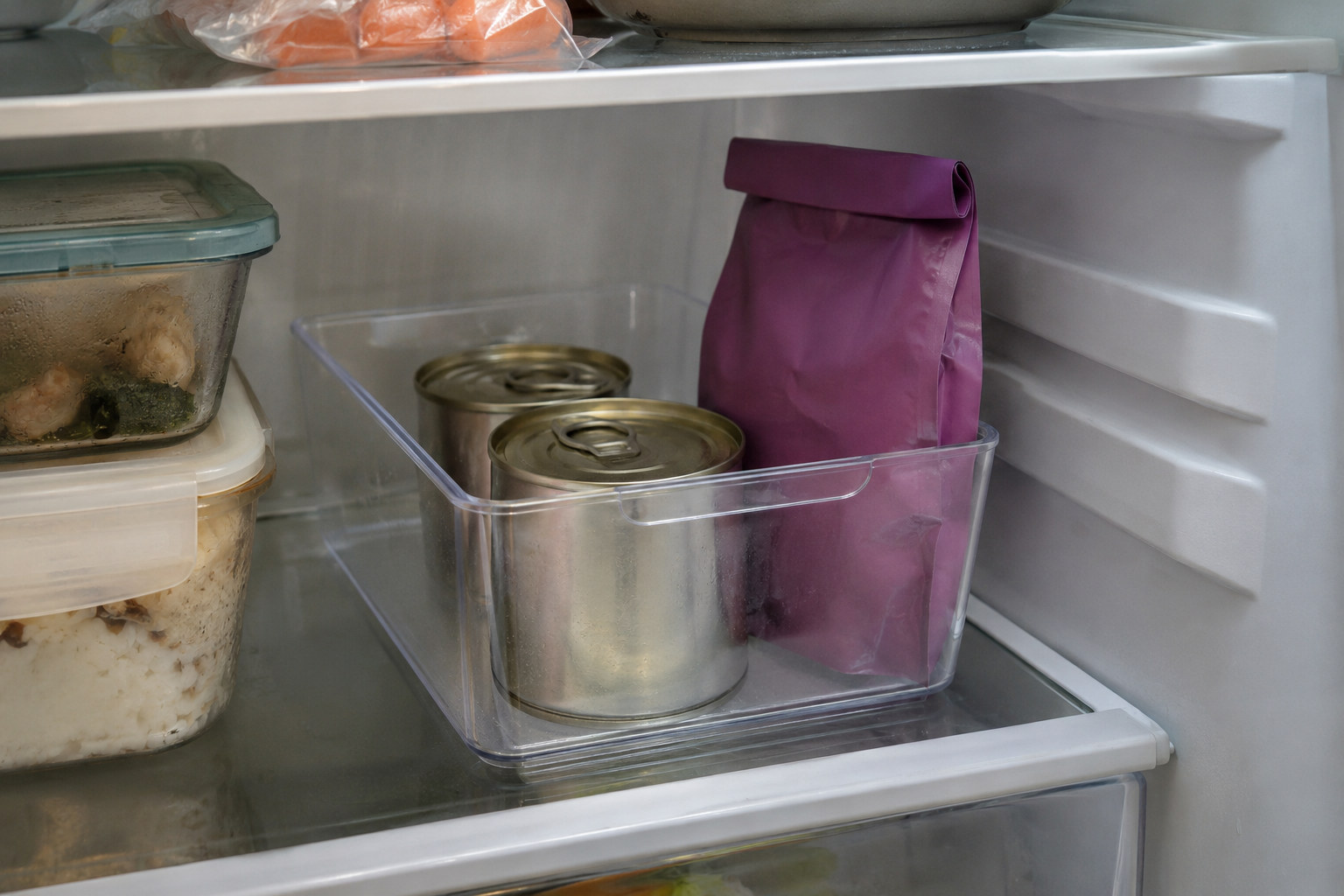
A designated refrigerator bin can separate opened wet food from the rest of the refrigerator’s contents. Choose a container that fits the shelf without interfering with doors or airflow, then use it to group covered cans or appropriately sealed packages. Follow the food maker’s refrigeration and use-after-opening directions.
The bin provides organization; it does not extend the food’s usable life. Keep the relevant opening information visible and avoid letting partly used containers accumulate behind newer ones. Make sure the contents can be removed for cleaning without dismantling the shelf arrangement.
Choose a clear bin if seeing the containers helps your routine. An opaque one may look tidier, but it is less useful if everyone forgets what is inside. Place it where the person preparing meals can reach it comfortably.
11. Keep Treat Packets in a Separate Drawer
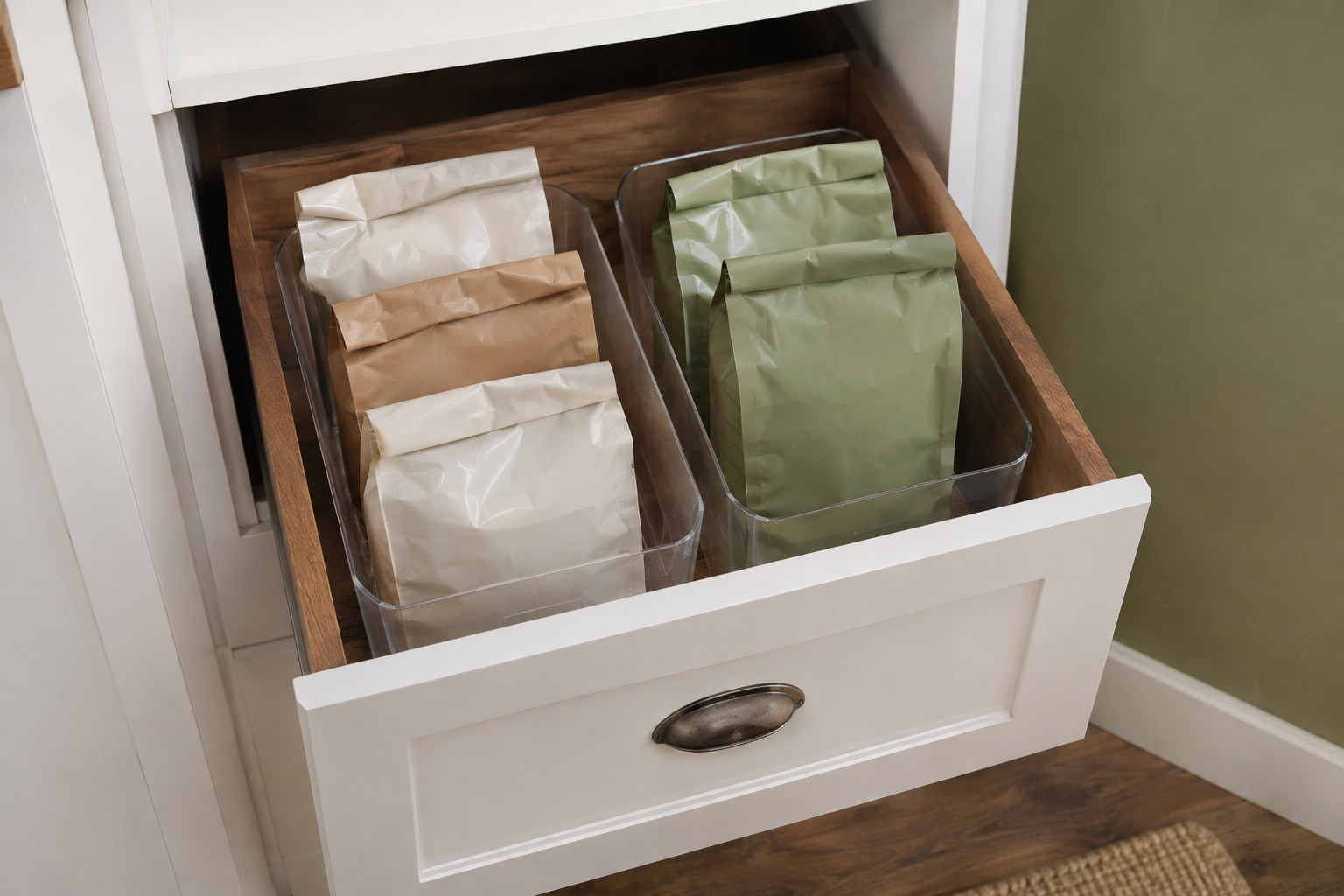
Treat packets deserve their own space if they keep taking over the main food cupboard. A shallow drawer with two or three dividers can group everyday rewards, less frequently used packets, and other small feeding accessories. Keep the packets identifiable instead of combining their contents.
Select a drawer that closes securely and suits your pet’s ability to reach furniture. A low open basket may be attractive in a photo but inappropriate for an enthusiastic scavenger. The same practical thinking applies to drawers within a child’s reach.
Keep this area small enough to review easily. A whole deep cabinet of assorted treats can make it harder to see what needs using. For a compact household, one clearly organized drawer may be all the storage you need.
12. Choose an Accessible Scoop-Out Height
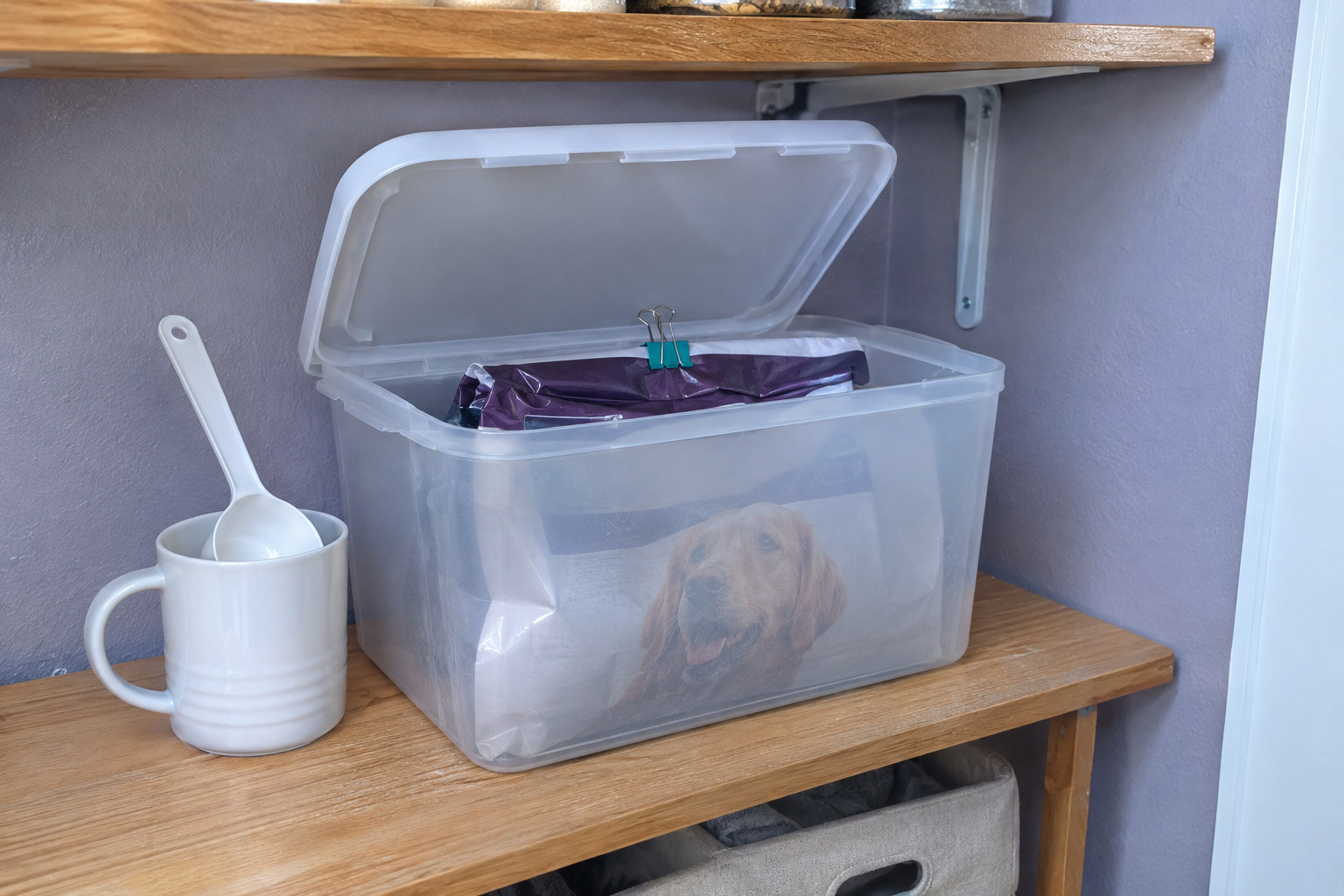
The most convenient scoop-out height depends on the person using the storage and the size of the package. Try the routine with your current bag before choosing a permanent shelf. Notice whether you need to bend awkwardly, lift too much, or reach around the lid.
A low shelf may be a useful compromise between a floor bin and a high cabinet. Keep the full package’s weight in mind when planning how it will be lifted into place. For larger bags, the best position may be one that limits lifting rather than one that looks most balanced on the wall.
Leave a clear landing space for the bowl or measuring tool nearby. Small improvements to the sequence of opening, scooping, and closing can make everyday feeding feel much less cumbersome.
13. Use a Mobile Bin Only with a Secure Parking Spot
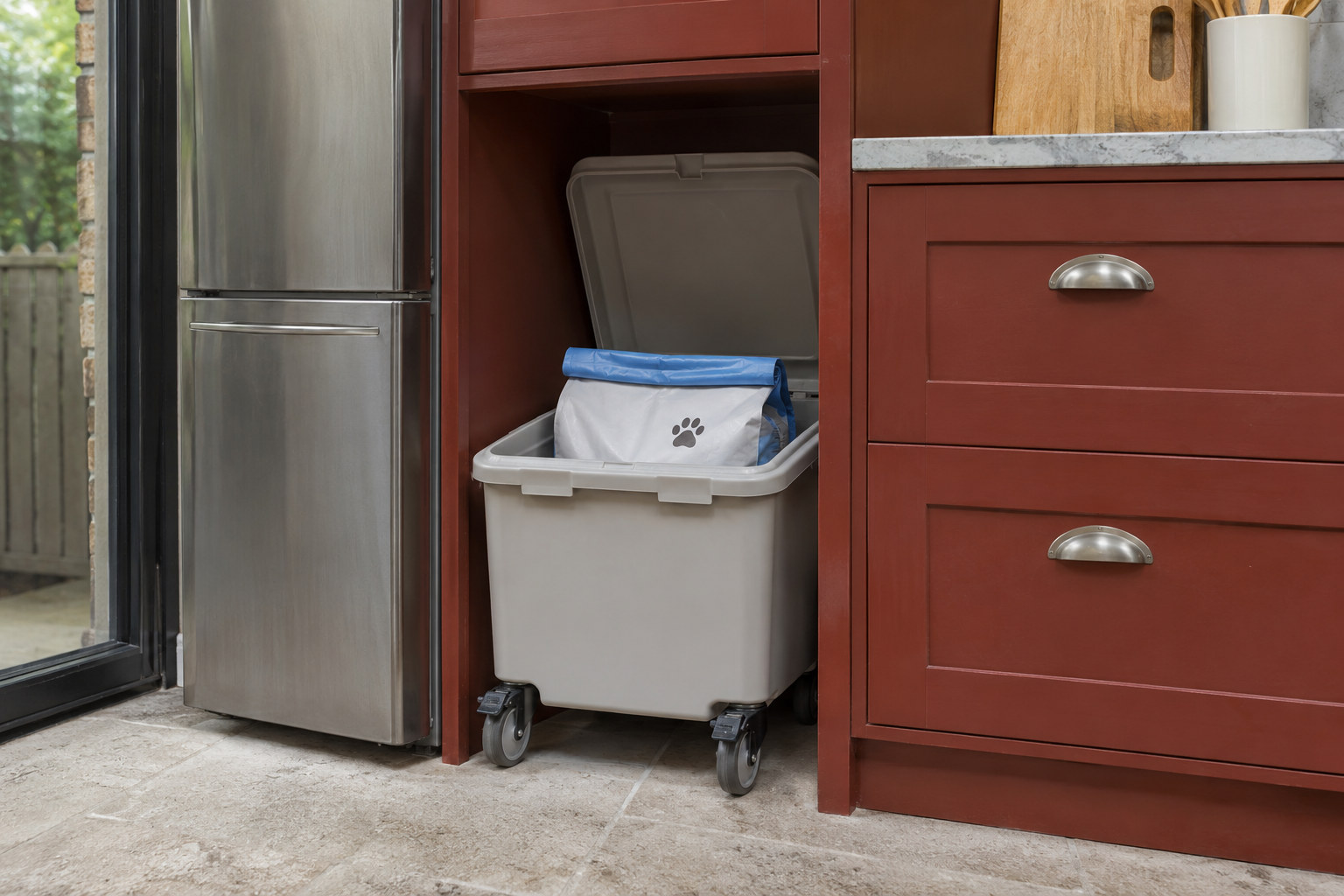
A wheeled bin can make it easier to move supplies out of a deep recess, provided it has a stable dedicated parking position. Choose a product appropriate for the intended weight and use its locking features where supplied. Do not improvise a tall unstable stack on a small furniture dolly.
Check the complete route with the bin in use. It should not roll into a doorway, interfere with appliances, or leave you stepping around it at mealtime. A recessed position beneath a suitable counter can be more practical than leaving it loose in the center of the room.
This option suits a layout where moving the container solves a real access problem. If the bin rarely needs to move, a simpler stationary arrangement may be easier to manage.
14. Organize Back-Up Bags Behind the Open Bag
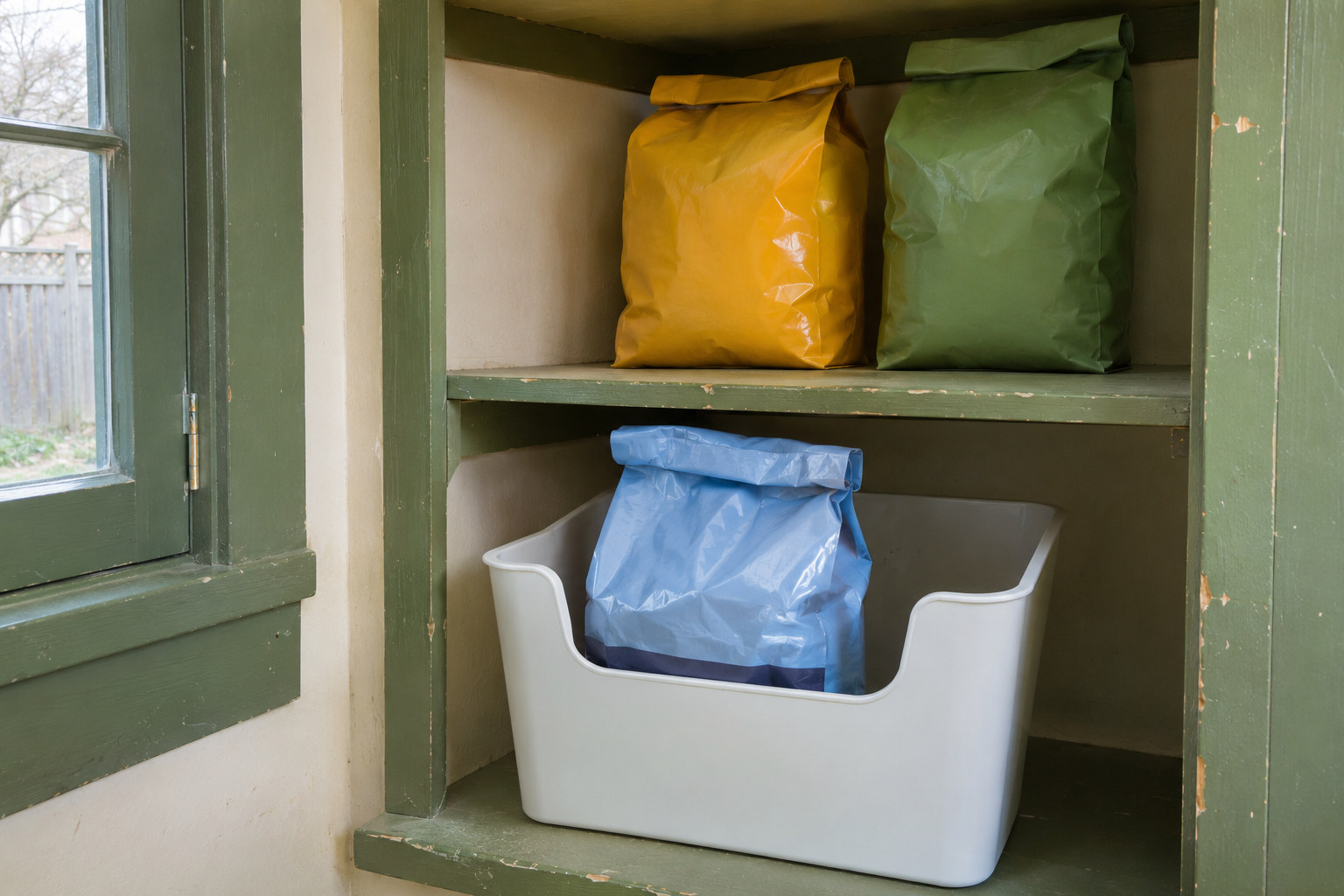
Back-up supplies are easiest to manage when they have a clear position behind or beside the food currently in use. Keep the active package accessible and reserve a defined part of the shelf for unopened stock. This gives you a visual limit before another purchase crowds the cabinet.
Check packaging dates and instructions as you rotate supplies. Do not assume that putting everything into a larger container improves the system. A shelf that lets you read and reach each package is often more useful than a large hidden pile.
Leave space around the active bin so you can remove it without unloading every spare bag. If the cupboard cannot accommodate both daily use and back-up stock comfortably, use a separate appropriate storage area instead of blocking access.
15. Make a Separate Station for Travel Supplies
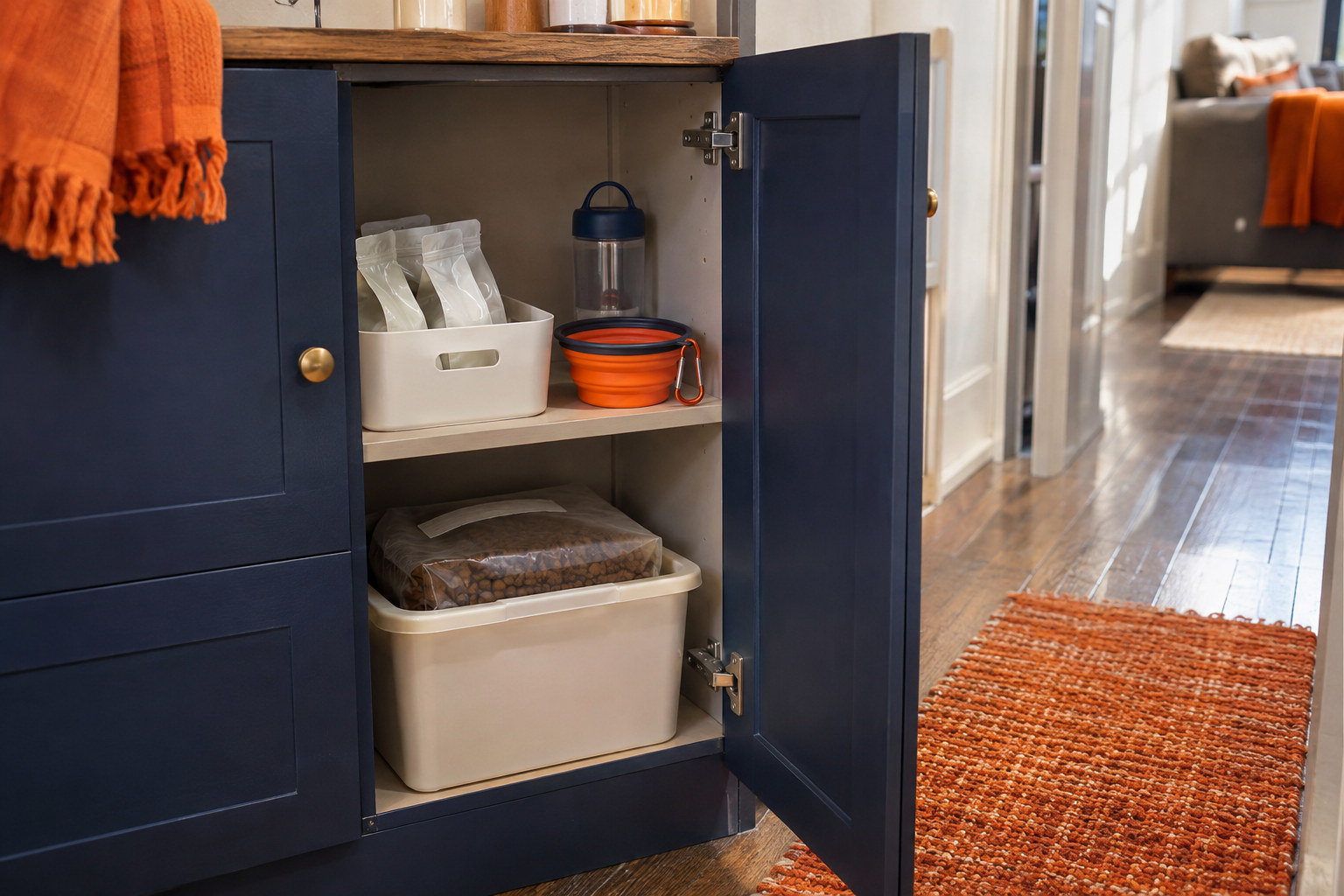
Keep travel bowls and feeding accessories together so they do not migrate between the kitchen, hallway, and car. A removable tray inside a cupboard can hold an empty clean travel container, a collapsible bowl, and suitable sealed single-serve packages when those are part of your usual routine.
Treat this as a packing station rather than a place to leave food indefinitely. Before a trip, select the supplies needed and follow the product’s storage instructions during travel. Avoid storing food in a hot vehicle simply because the equipment lives near the door.
A compact tray is easy to carry to a work surface for packing. If the cupboard also holds coats or shoes, give food supplies a separate clean space. These small entryway ideas can help you plan the surrounding layout.
16. Hide Storage Inside a Dining-Room Sideboard
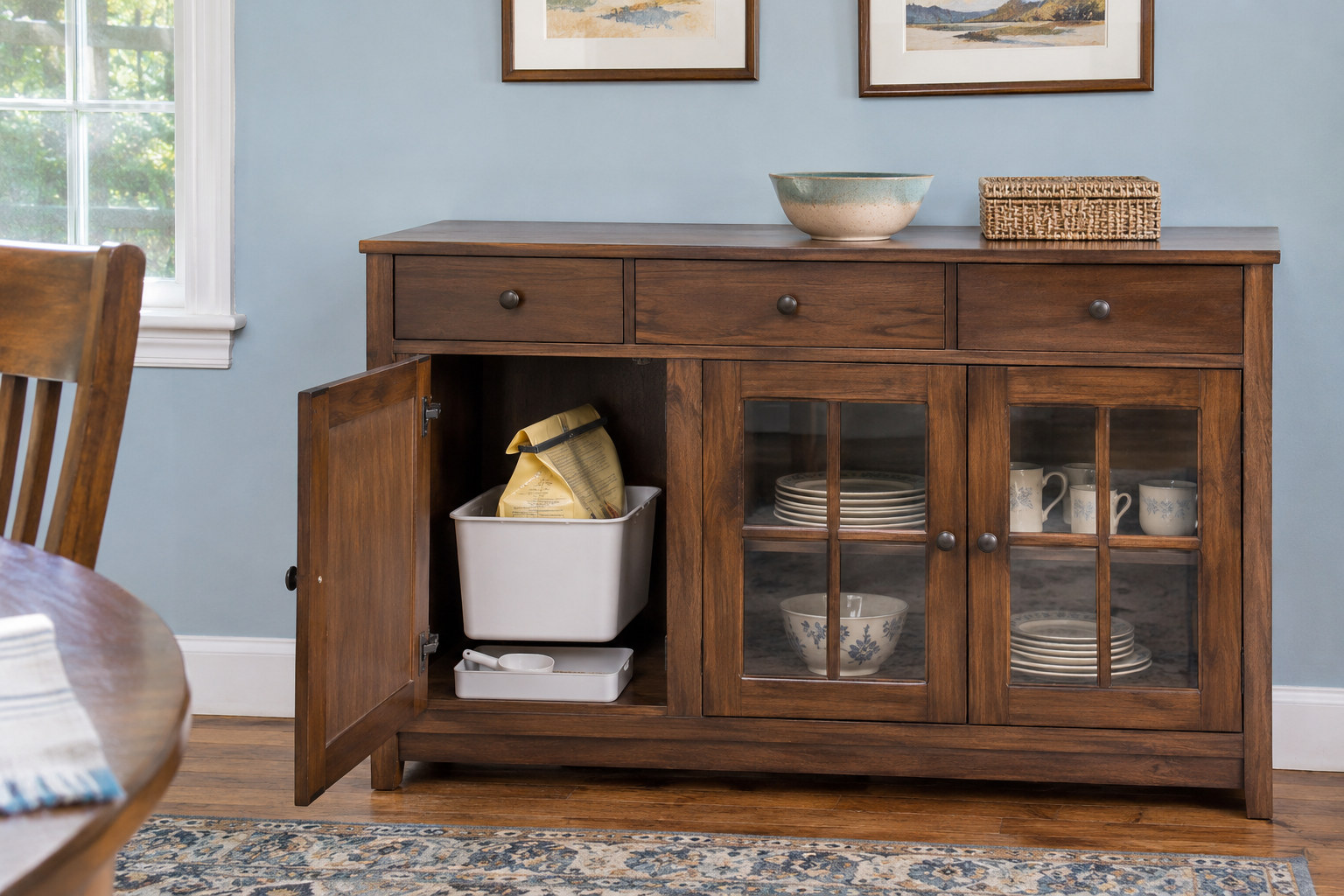
A dining-room sideboard may offer useful storage when the kitchen is crowded. Choose a cupboard with suitable interior dimensions and a location that meets the food’s storage requirements. A solid cabinet door can keep the room visually calm while the working container stays easy to reach inside.
Protect the furniture from routine scuffs with a removable cleanable liner appropriate for its finish. Check that the bin can come out through the actual door opening, which may be smaller than the cupboard’s interior. Keep tableware and pet supplies in separate clearly arranged compartments.
This is a good example of using existing furniture before buying a specialized cabinet. Let the sideboard retain its normal appearance, with the organization happening inside. Avoid adding an oversized container that prevents the doors from closing properly.
17. Build a Simple Refill and Cleaning Station
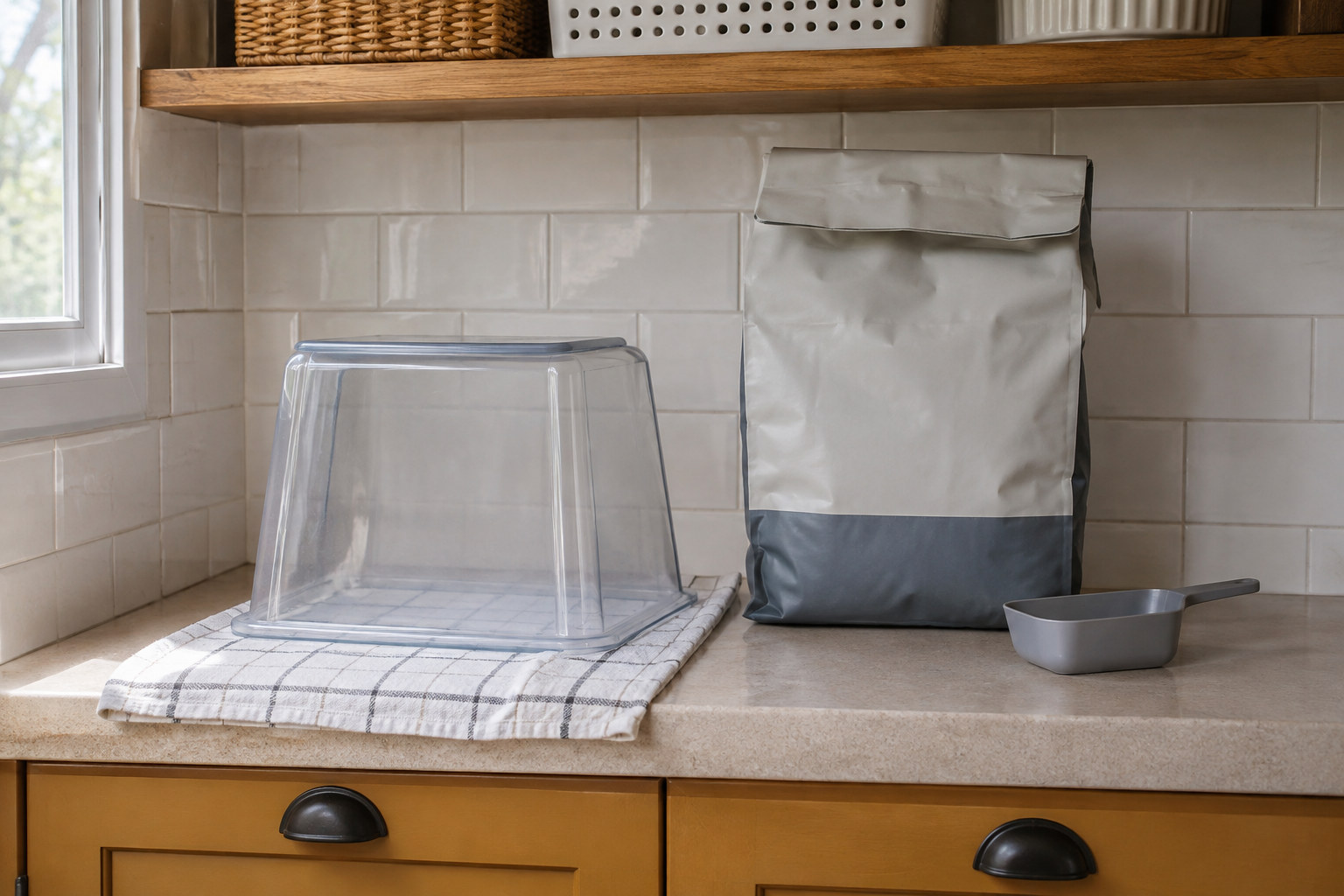
A small clear work area makes changing bags and cleaning containers less awkward. It can be a section of counter, a sturdy table, or a washable surface temporarily cleared for the task. Keep the replacement package nearby without mixing old remnants into a fresh supply.
The FDA advises washing and drying storage containers between bags. Choose a bin you can realistically lift, wash, and dry in your home. An enormous container may be convenient to fill but difficult to maintain if it will not fit near a sink or suitable washing area.
Store cleaning equipment separately from food. Once everything is ready, return the bin, scoop, and packages to their assigned positions so the feeding area starts the next cycle in an orderly state.
Measure the Whole Storage Routine
Choosing a container by volume alone misses several practical details. Measure the food package, the cabinet opening, the shelf height, and the space required to open the lid. Then consider where your hands and the scoop will go. The most useful dimensions are often the ones around the container rather than the dimensions printed on it.
Try a simple rehearsal with your current supplies. Open the cupboard, collect the bowl, reach the food, close the package, and return everything. If you have to hold a door with one knee or place a bowl on the floor temporarily, the layout probably needs adjustment.
For a pull-out or drawer, also consider the fully loaded weight and the manufacturer’s hardware limits. For a shelf, check the support system. The fact that a bin fits physically does not establish that the furniture is suitable for the load.
Choose a Location Before Choosing a Style
The FDA’s storage guidance calls for a cool, dry place below 80°F and secure storage that pets cannot access. Use those conditions to rule out unsuitable locations before comparing colors or cabinet finishes. Product-specific directions remain part of that decision.
Within the suitable options, think about daily movement. A pantry shelf may suit a family with a regular feeding routine, while a lower cabinet may be more convenient for someone who wants to avoid reaching overhead. The right answer should make the task easier for the person doing it.
If storage shares a utility room, plan it around the actual moisture and activity in that room. Our small laundry room ideas offer layout inspiration, but a convenient spare cupboard is only useful when its conditions suit the food stored there.
Keep Identification Simple and Useful
Labels should help people find the correct food and follow the existing routine. A pet’s name on a cupboard position may be helpful, but it should not replace the information on the food package. Retain product, lot, and date details so you can refer to them when needed.
Get the Fail-Safe Paint Color Playbook (Free PDF)
36 proven colors • 8 ready palettes • trim & sheen guide • printable testing cards.
Avoid complicated systems that require a full redesign whenever you change bag size. One assigned position for each diet, a defined back-up area, and a separate place for accessories will often be enough. Use consistent placement so someone helping can understand the arrangement quickly.
If you use decorative exterior labels, keep them short and reserve a practical spot for information that changes. There is no need to turn the pantry into a wall of matching jars or recreate every detail from an inspiration photo.
Make the Storage Fit the Room
Visible storage can look intentional with a restrained palette. A pale bin can blend with light cabinetry, while a dark container may sit quietly beside walnut furniture. Repeating an existing handle finish or cabinet color can connect a new storage piece to the room.
If you are refreshing a cupboard, choose a finish suitable for that furniture and allow the work to be completed before returning food supplies. A two-tone wall or cabinet backdrop can add interest without changing the working arrangement; these two-color wall layouts can help you plan that visual detail.
Start with the most inconvenient part of the current routine and solve that first. It might be the bin opening, a deep shelf, or the lack of a place for the scoop. A good pet food storage system earns its space every day through clear access, sensible organization, and an arrangement you can keep clean.