
17 Dog Room Ideas for a Comfortable, Organized Space
A useful dog room gives the everyday clutter a home and gives your dog a comfortable place to settle. It might be a spare bedroom, a shared office, or a carefully arranged part of a mudroom. The best starting point is how the space will work on an ordinary Tuesday.
Think about three things: where your dog already likes to rest, where you can store supplies, and how people move through the room. A lovely bed loses its appeal when every cupboard opening or passing visitor disturbs it.
Get the Fail-Safe Paint Color Playbook (Free PDF)
36 proven colors • 8 ready palettes • trim & sheen guide • printable testing cards.
These 17 dog room ideas explore different layouts and practical details. Use them as options to adapt to your home, with enough open space for your dog to move comfortably and an easy route back to family life.
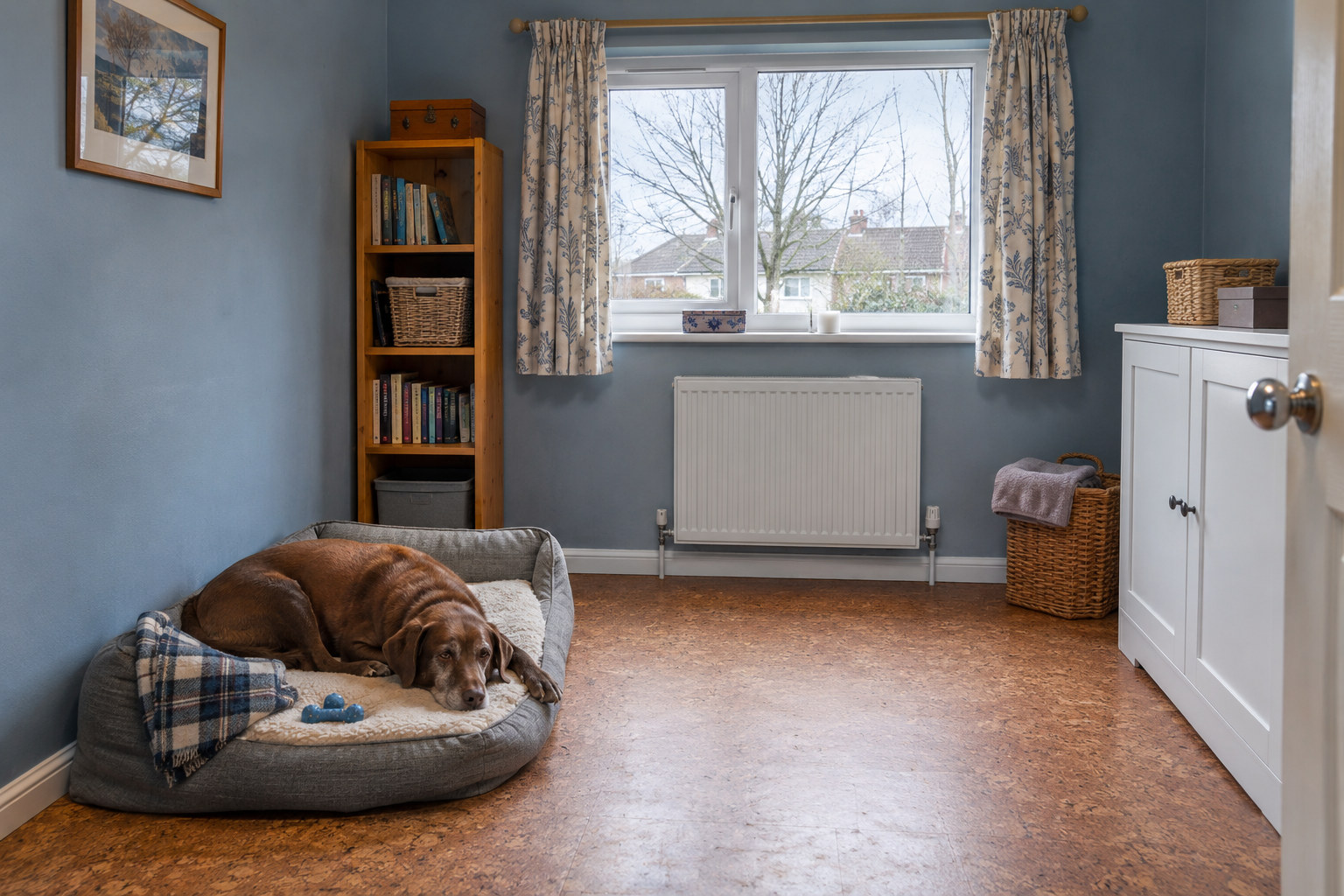
1. Give a Spare Room Three Clear Zones
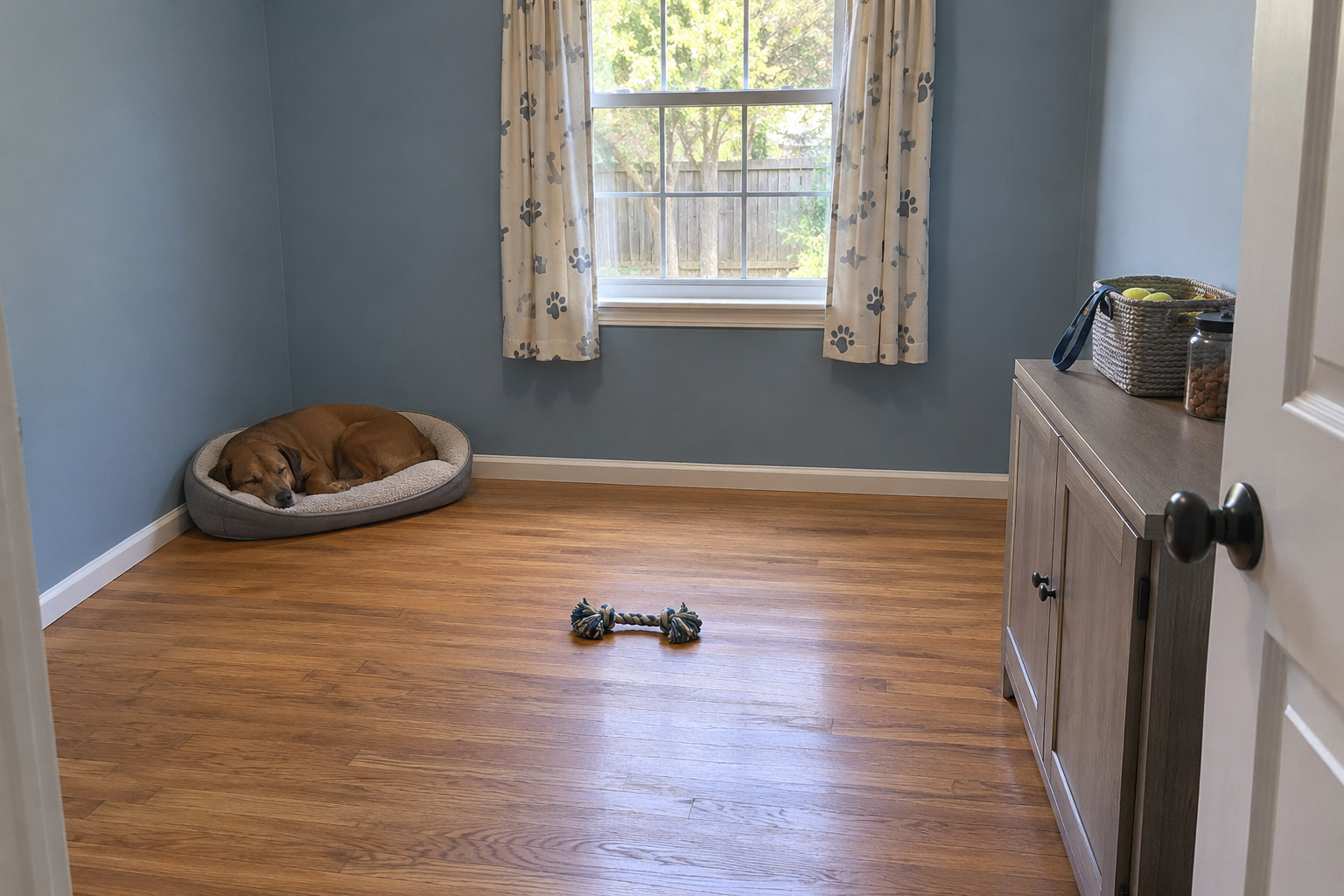
A spare bedroom is easier to organize when you assign one area to rest, another to supplies, and a third to movement or supervised play. Put the bed in the quietest usable corner, then place a closed cabinet near the entrance so you can collect towels without crossing the sleeping area.
Use the bed and storage furniture to establish the zones instead of filling the room with partitions. The open floor between them is part of the design. Before buying anything, mark each furniture footprint with masking tape and check the door swing.
A single wall color keeps this arrangement calm, while a different washable bed cover gives the resting area its own identity. Choose storage based on what you actually keep, including the bulky spare blanket that never seems to fit anywhere.
2. Use an L-Shaped Layout to Keep the Doorway Clear
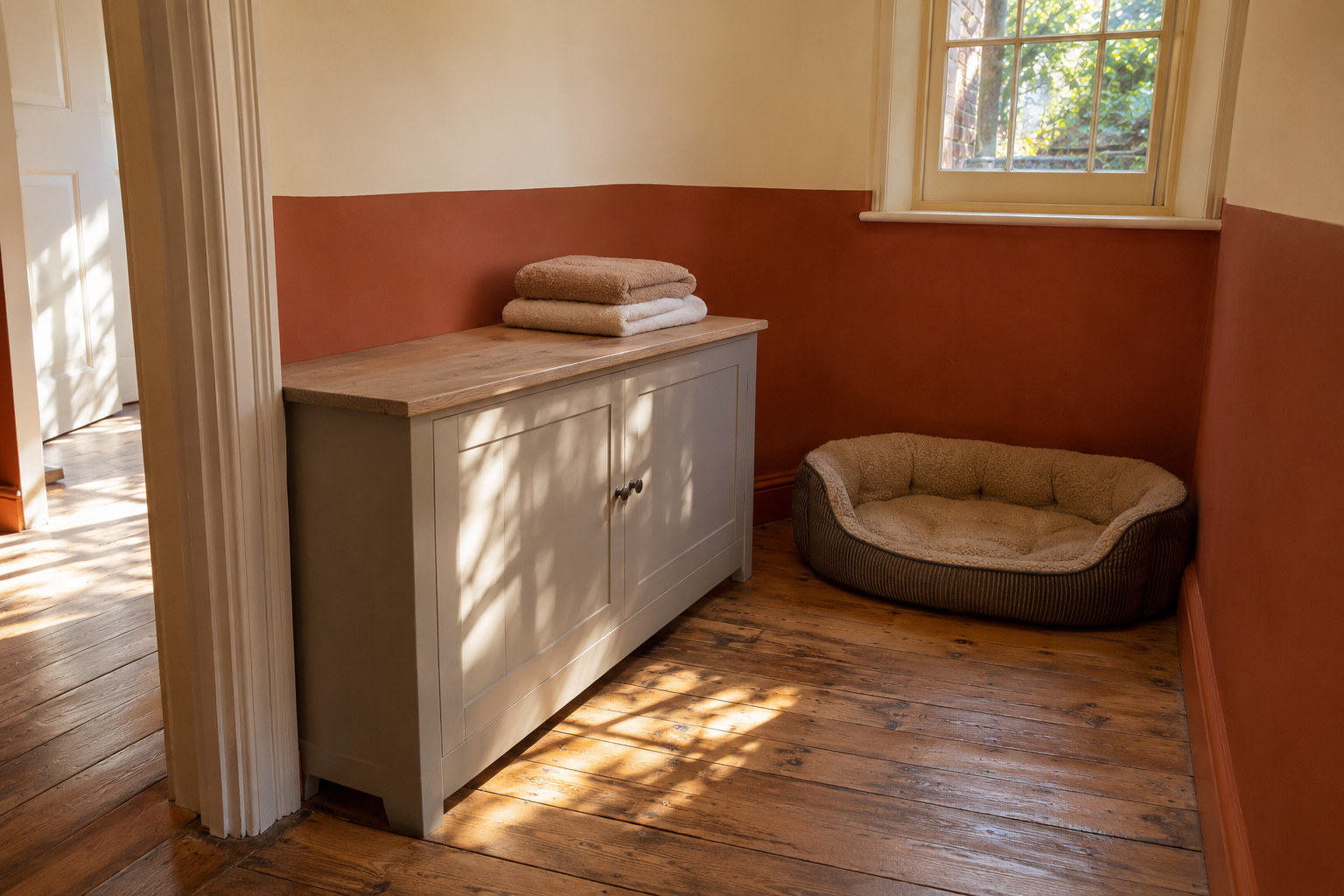
In an L-shaped room, the shorter arm can make a useful resting pocket. Keep the longer arm available for the route between the doorway, storage, and any other rooms beyond. This works especially well when the room has an awkward corner that ordinary furniture leaves unused.
Choose a shallow cabinet along the long wall rather than a deep chest near the turn. Open every door and drawer on your sketch to see whether they compete with the bed. A bed that must be moved each time you fetch a towel is in the wrong spot.
Repeat a color from the main part of the house to make the room feel connected. A contrasting lower wall can define the corner visually without adding another object to navigate around.
3. Share a Home Office Without Crowding the Bed
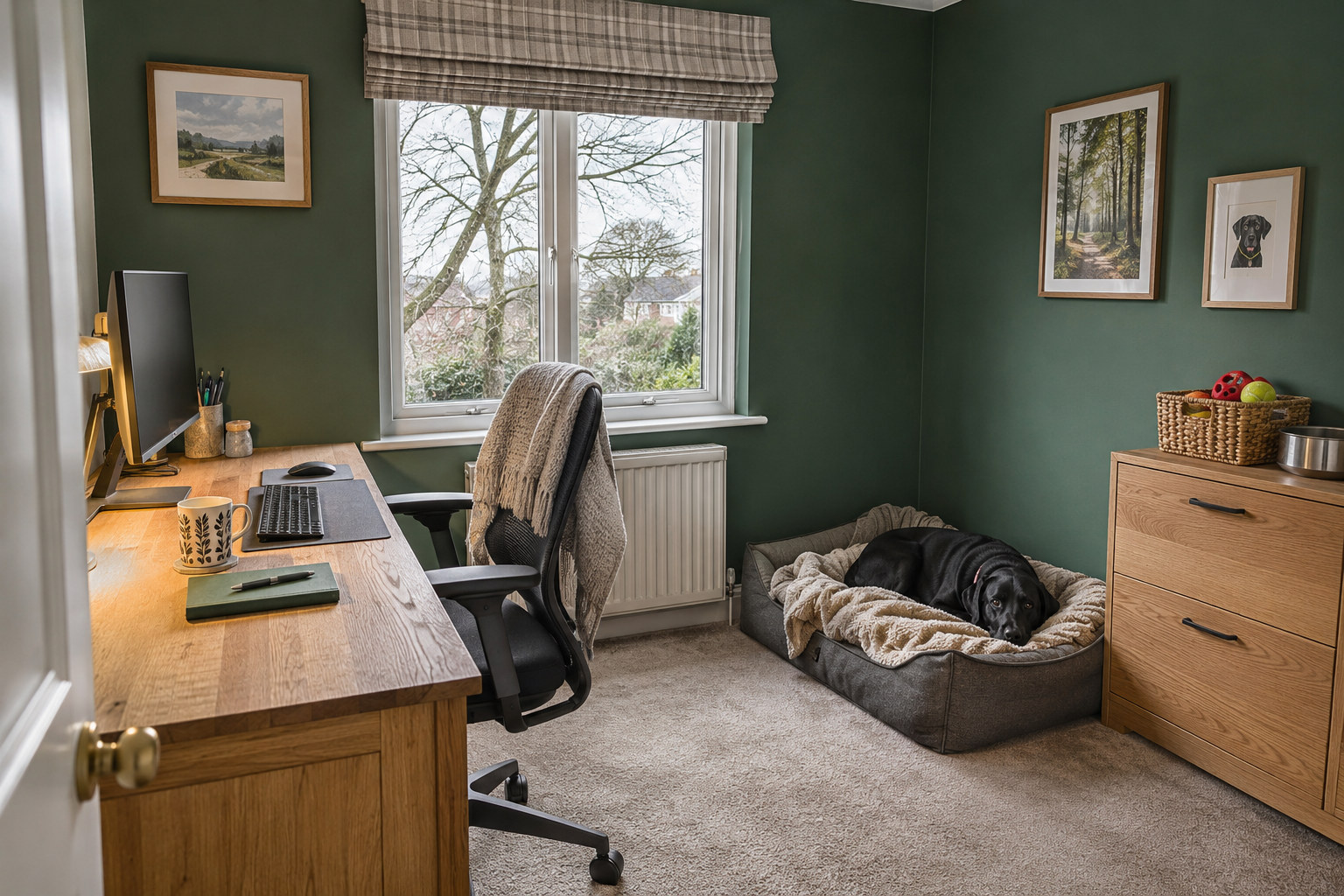
A shared office can work when your dog has a resting area outside the movement of the desk chair. Start with the chair fully pulled out, then place the bed beyond that working footprint. A corner beside the desk may be convenient for you but uncomfortable if wheels pass close to sleeping paws.
Keep cables managed and out of reach, and use a closed drawer or cabinet for dog supplies. This avoids having work accessories and pet equipment spread across the same surfaces. Position the bed where your dog can enter and leave without squeezing beneath the desk.
Choose a washable cover that relates to the office palette. You do not need matching furniture; one repeated color is enough. Leave room to vacuum around the bed instead of wedging it tightly between a cabinet and the wall.
4. Give Two Dogs Separate Resting Corners
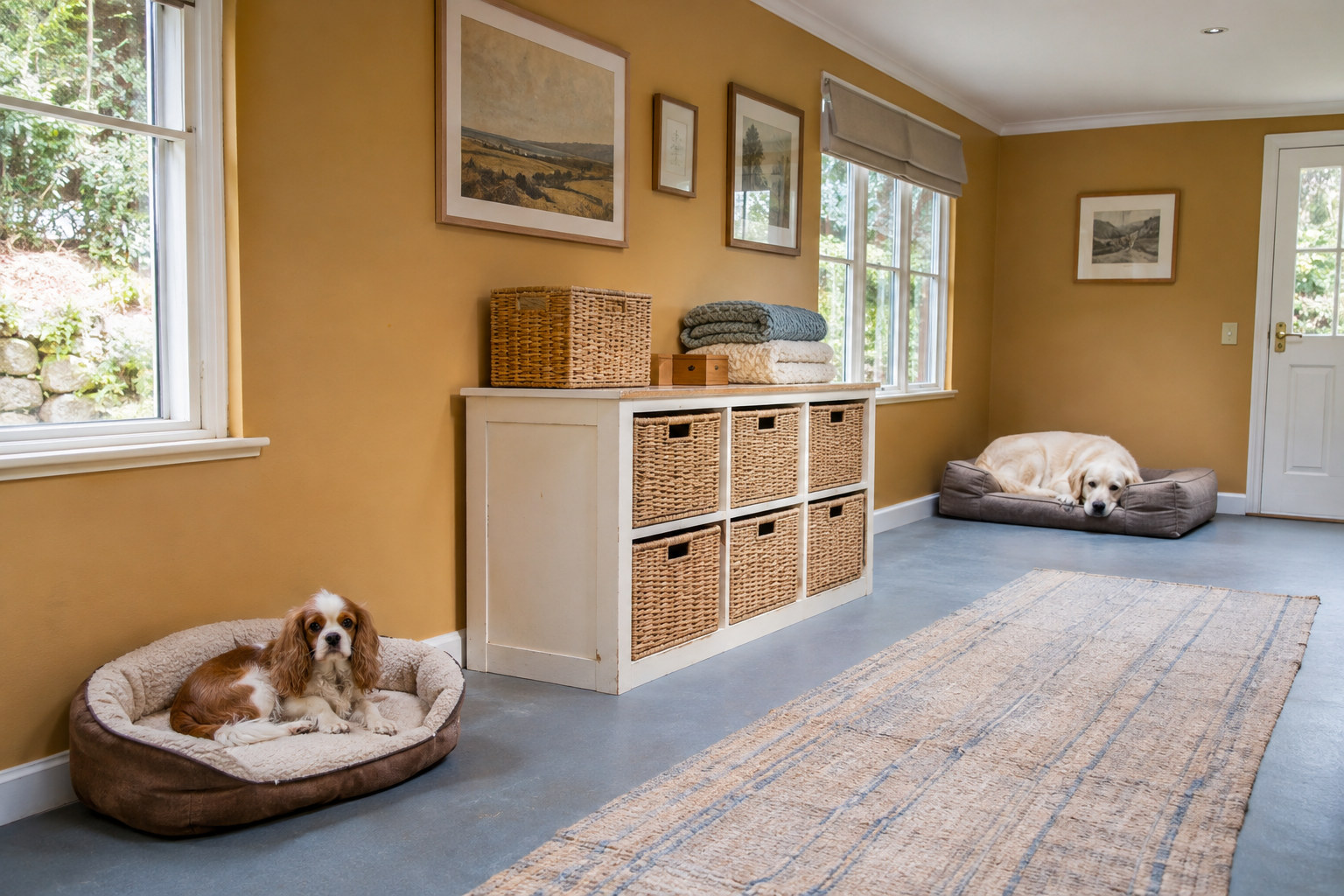
For two dogs, begin with two separate resting positions rather than one oversized shared bed. Place them so each dog can approach and leave without stepping through the other’s space. Opposite corners can work in a broad room; in a narrow room, stagger the beds along different walls.
Keep the central route open and avoid making a single narrow passage serve both beds. Storage can sit between the resting areas if it does not block the view or movement you need for supervision. Let each dog keep the bed style and bedding it already uses comfortably.
Coordinating cover colors will make different beds look intentional. If the dogs need separate feeding arrangements, plan those independently instead of assuming this shared resting room must also become a shared dining area.
5. Make a Low-Access Room for an Older Dog
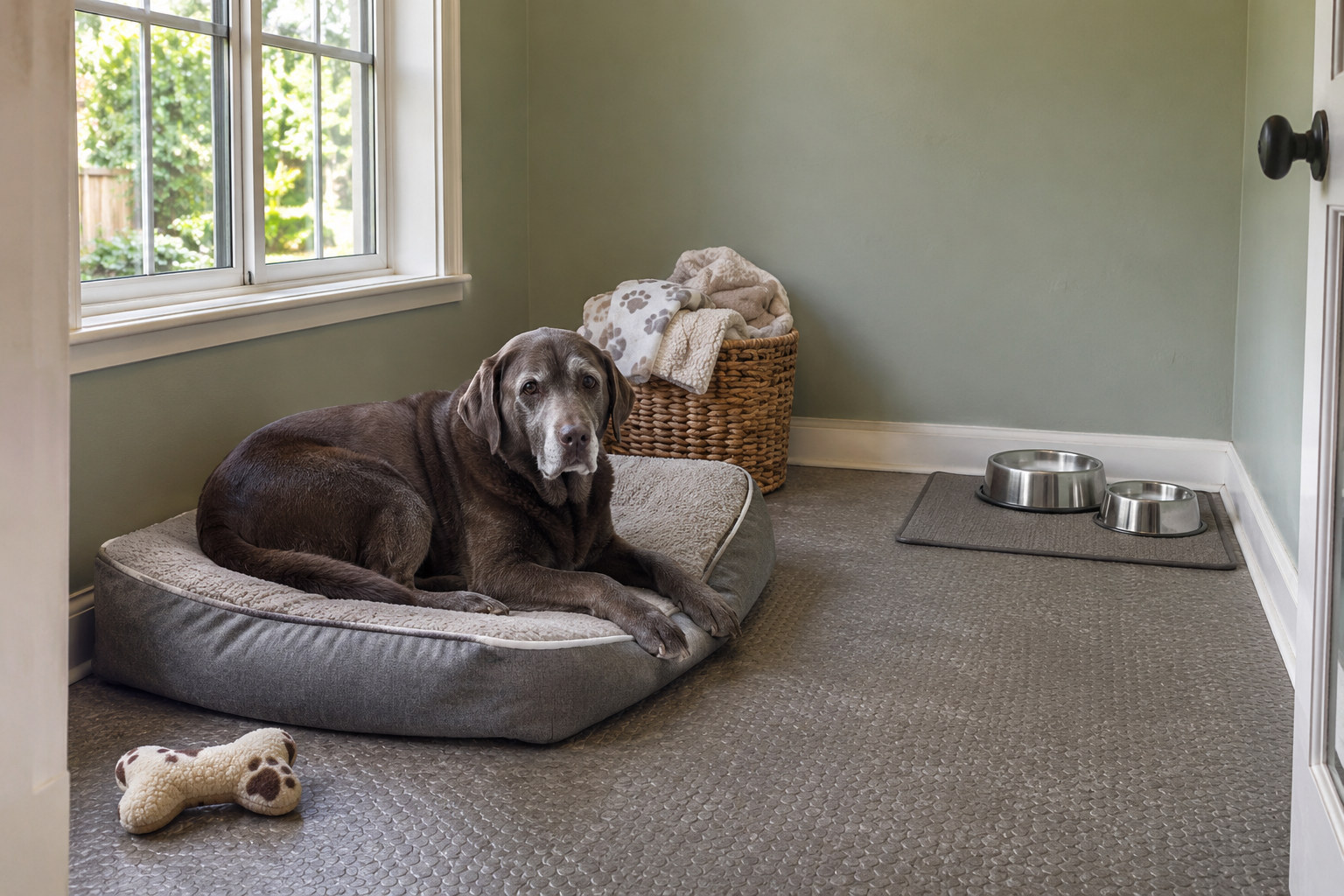
A room for an older dog should be easy to move through before it is visually impressive. Use a low-entry bed, leave a generous approach, and avoid making a step or raised platform part of the everyday route. Put regularly used items where you can reach them without moving the bed.
Look at transitions between floor materials as carefully as the main surface. A curling mat edge or a runner that shifts may create a more awkward route than the floor itself. Secure suitable rugs and keep the path predictable, with furniture staying in familiar positions.
This is a layout approach, not a treatment for mobility problems. If your dog’s movement or comfort has changed, ask your veterinarian about its needs. The room can then support the advice with clear access and sensible placement.
6. Create a Dry Resting Zone Beside the Mudroom
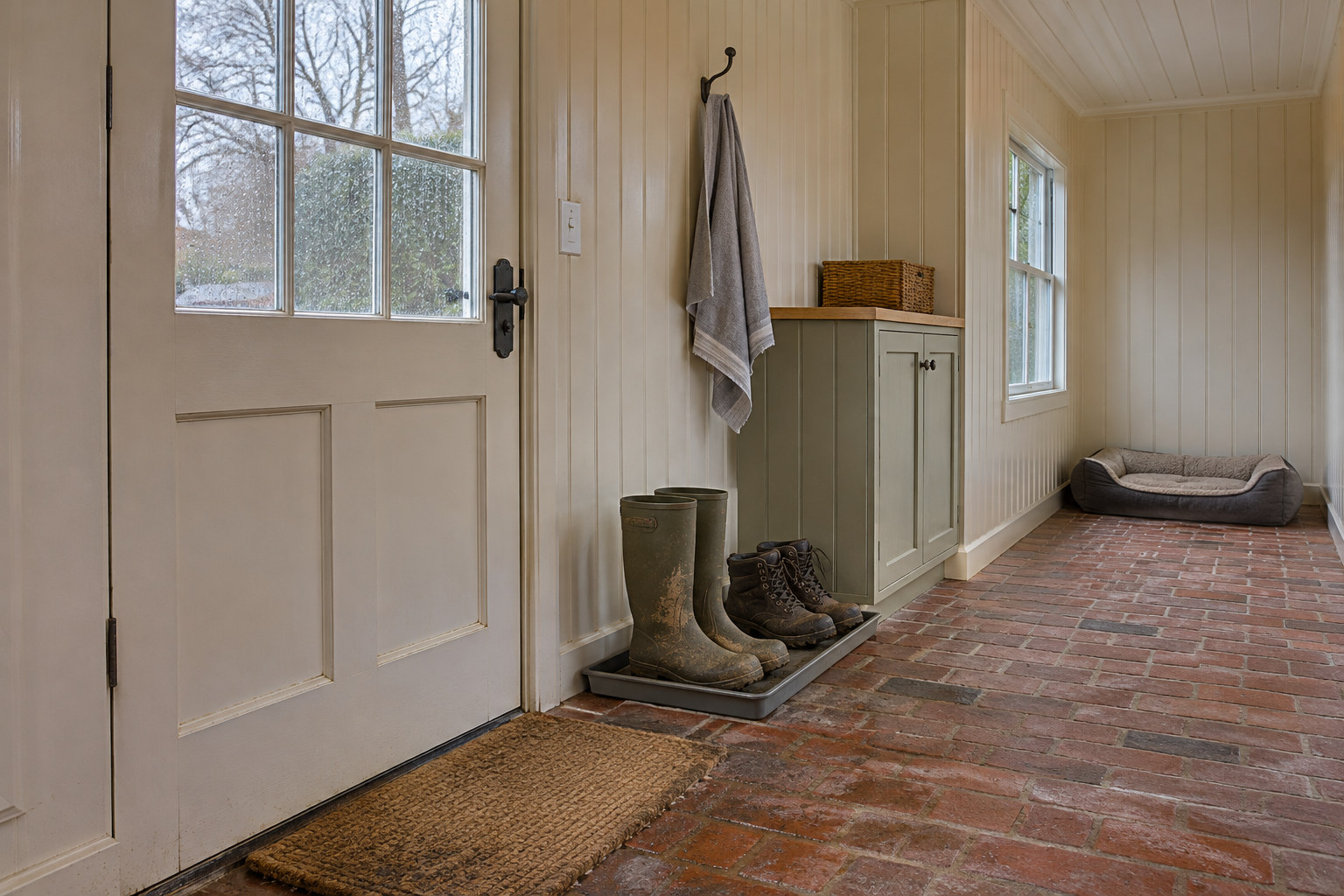
A mudroom dog area works best when the bed sits beyond the wettest part of the entrance. Put boots, outdoor mats, and the first towel within reach of the door, then allow a transition to a dry resting corner. A few feet of thoughtful separation can be more useful than a decorative divider.
Choose a bed cover that is easy to remove and a storage location where clean towels stay dry. Hooks belong where a dog cannot become caught in dangling straps. Leave enough space to handle a muddy arrival without leaning over the resting area.
For visual inspiration, explore these small entryway decor ideas, adapting the furniture to your dog and the actual door clearance. The goal is a working arrival space with a comfortable dry destination.
7. Put Supplies on One Wall of a Utility Room
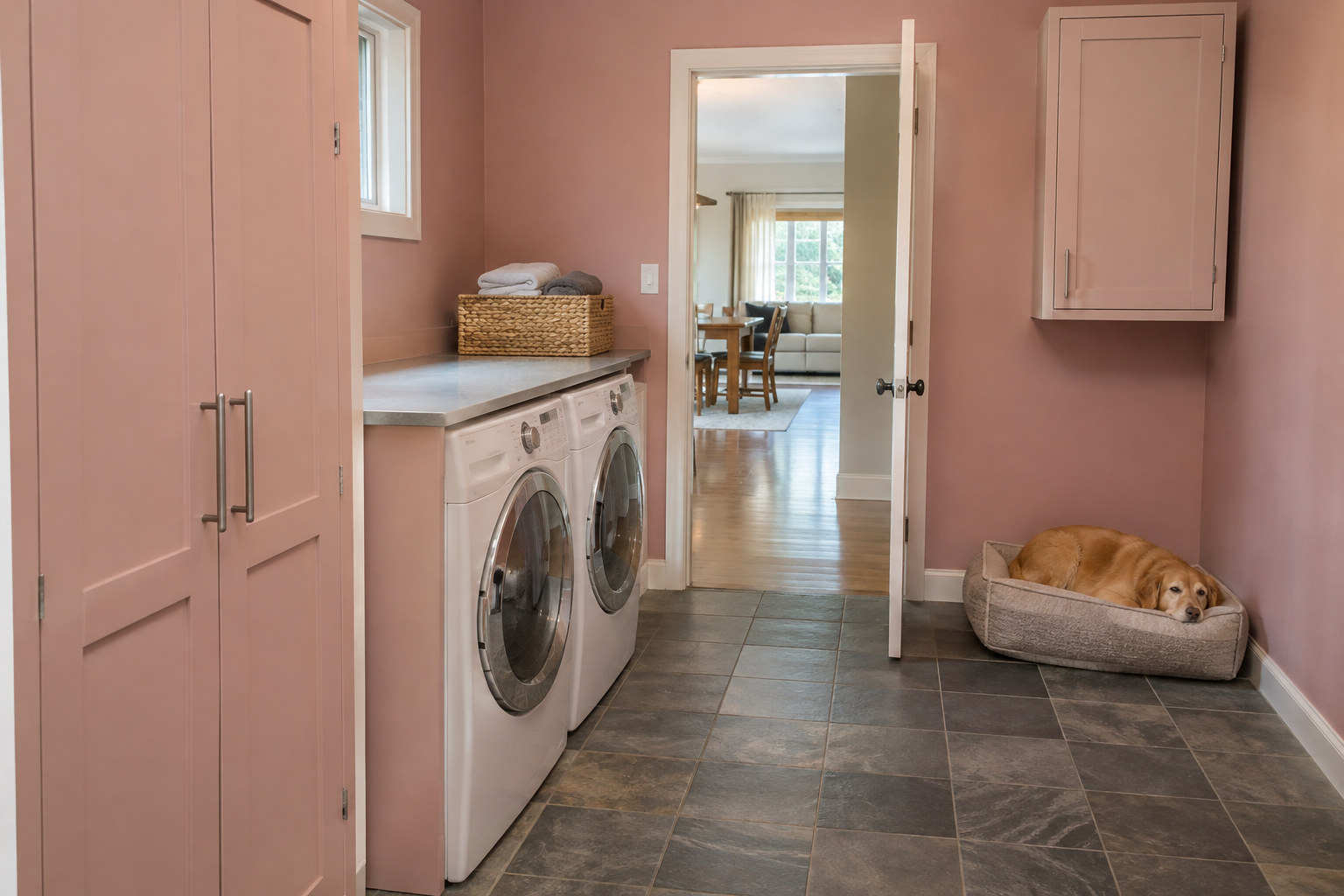
Putting supplies along one utility-room wall makes the room easier to read at a glance. Use closed storage for spare bedding and equipment, with anything hazardous secured separately. Place the bed away from appliance doors, vibration, and the area used for sorting laundry.
Before settling on this option, spend time in the room while appliances are running. A room that looks peaceful in a photograph may feel very different during a spin cycle. If the sound or activity unsettles your dog, choose another resting space and let the utility room serve storage only.
Keep the cabinet fronts simple so the practical equipment does not dominate. Our small laundry room ideas can help with the human workflow, but the dog’s comfort should determine whether the room becomes a shared space.
8. Offer a Window View and a Shaded Retreat
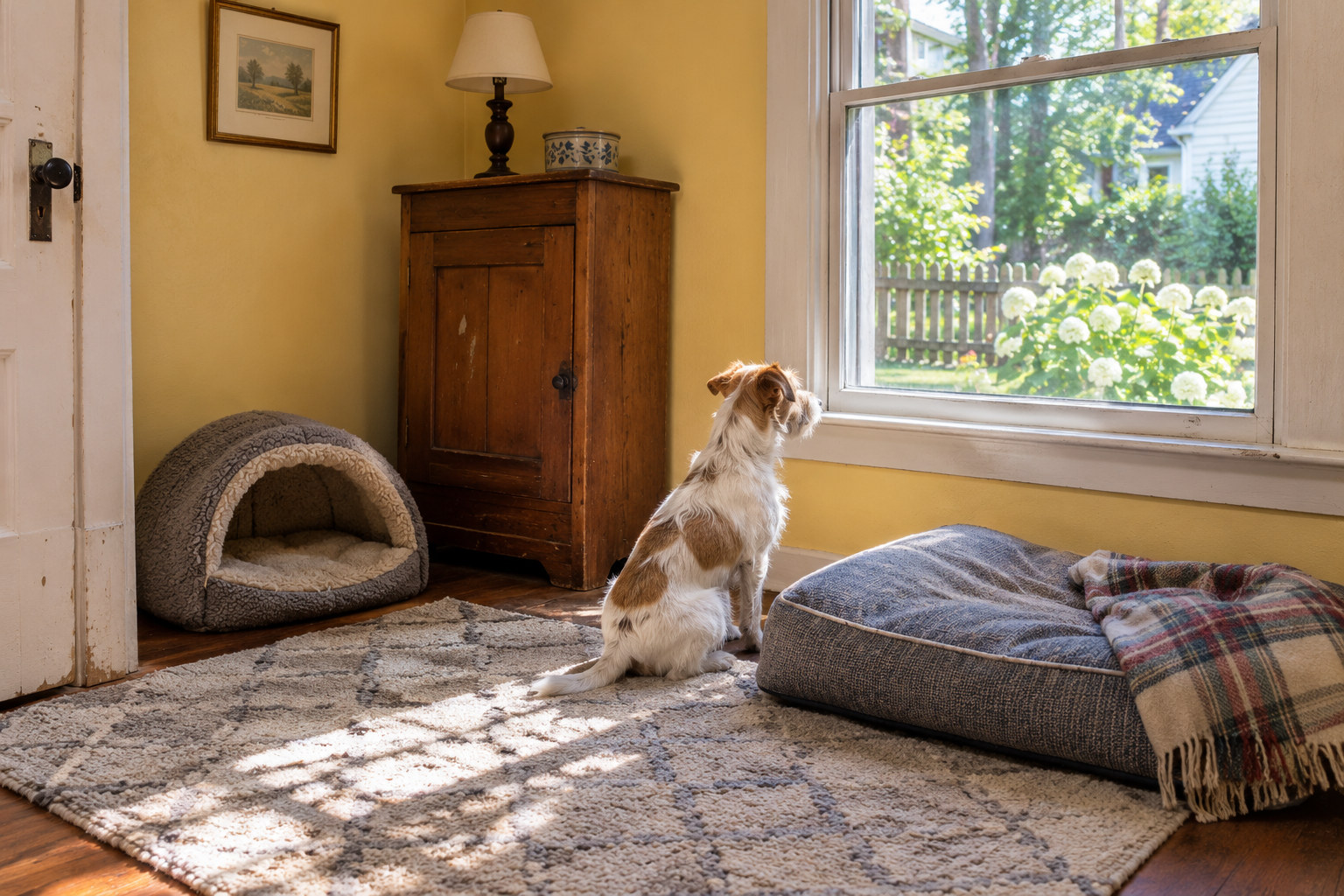
Some dogs enjoy watching the garden from a comfortable floor-level spot. Place a bed near a suitable window while leaving another resting option farther inside the room. This gives the layout variety without relying on an elevated platform or a narrow windowsill.
Watch how the light moves before deciding where the bed belongs. A pleasant morning position can become a hot patch later in the day. Keep window treatments and cords out of reach, and do not let a bed interfere with an opening, heater, or ventilation route.
If outside movement triggers frequent barking or frustration, a direct window view may be the wrong feature for that dog. Move the main bed to the quieter position and use the window wall for storage or a human chair instead.
9. Build a Quiet Corner Away from Household Traffic
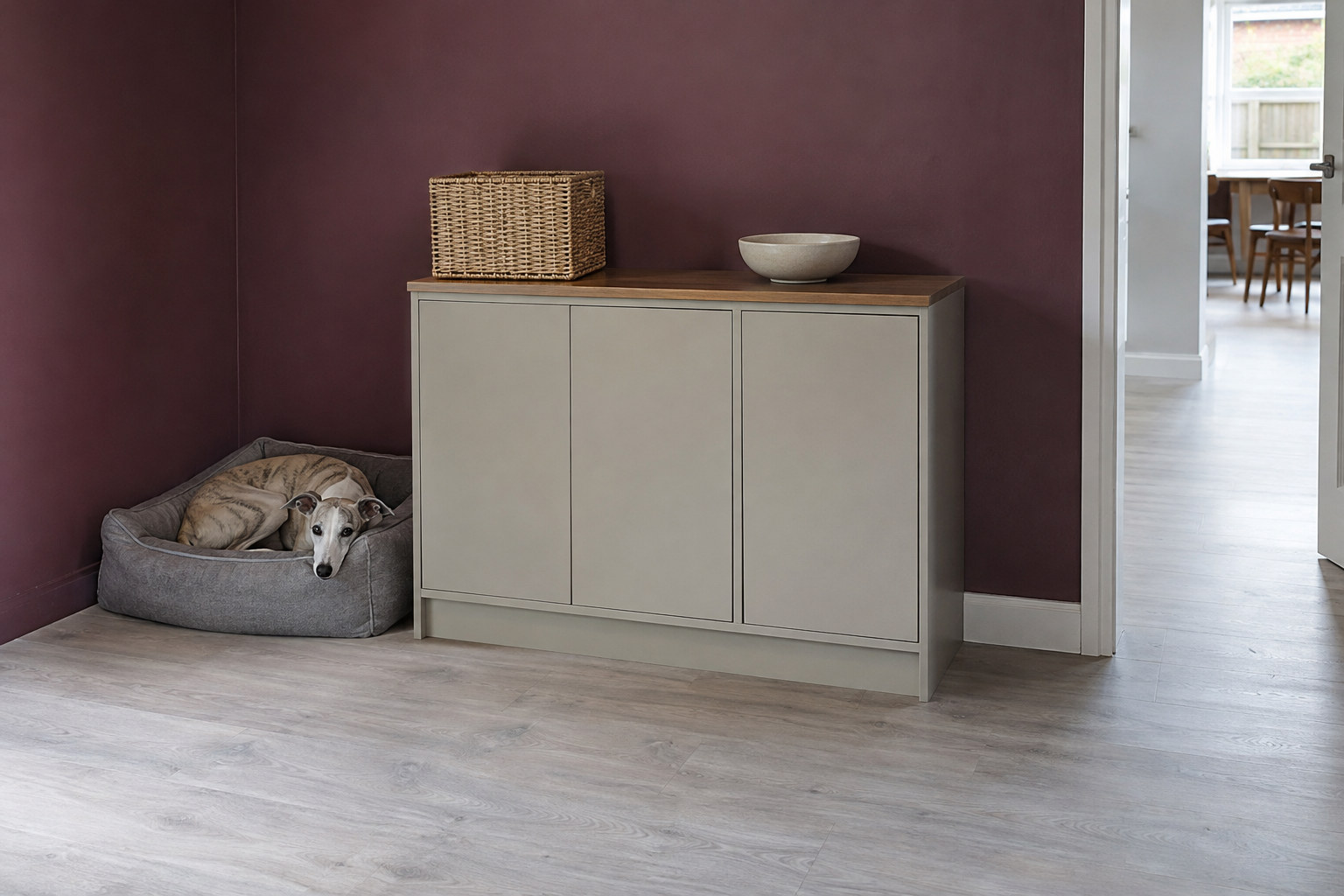
In a busy household, a bed directly opposite the doorway may receive constant attention. Move it to a sheltered corner, using the room’s shape or a low stable cabinet to reduce the direct line of traffic. Keep a clear route in and out so the space remains easy to use.
Avoid turning the corner into a cramped enclosure. You should be able to reach the bedding for washing, check the wall behind it, and see whether anything has slipped into the gap. A simple arrangement is often easier to maintain than a fabric canopy or heavily dressed nook.
Choose a muted background color and let the bed cover supply the pattern. The useful change is the position away from interruption; decoration can stay modest and still make the corner feel finished.
10. Use Freestanding Furniture in a Rental
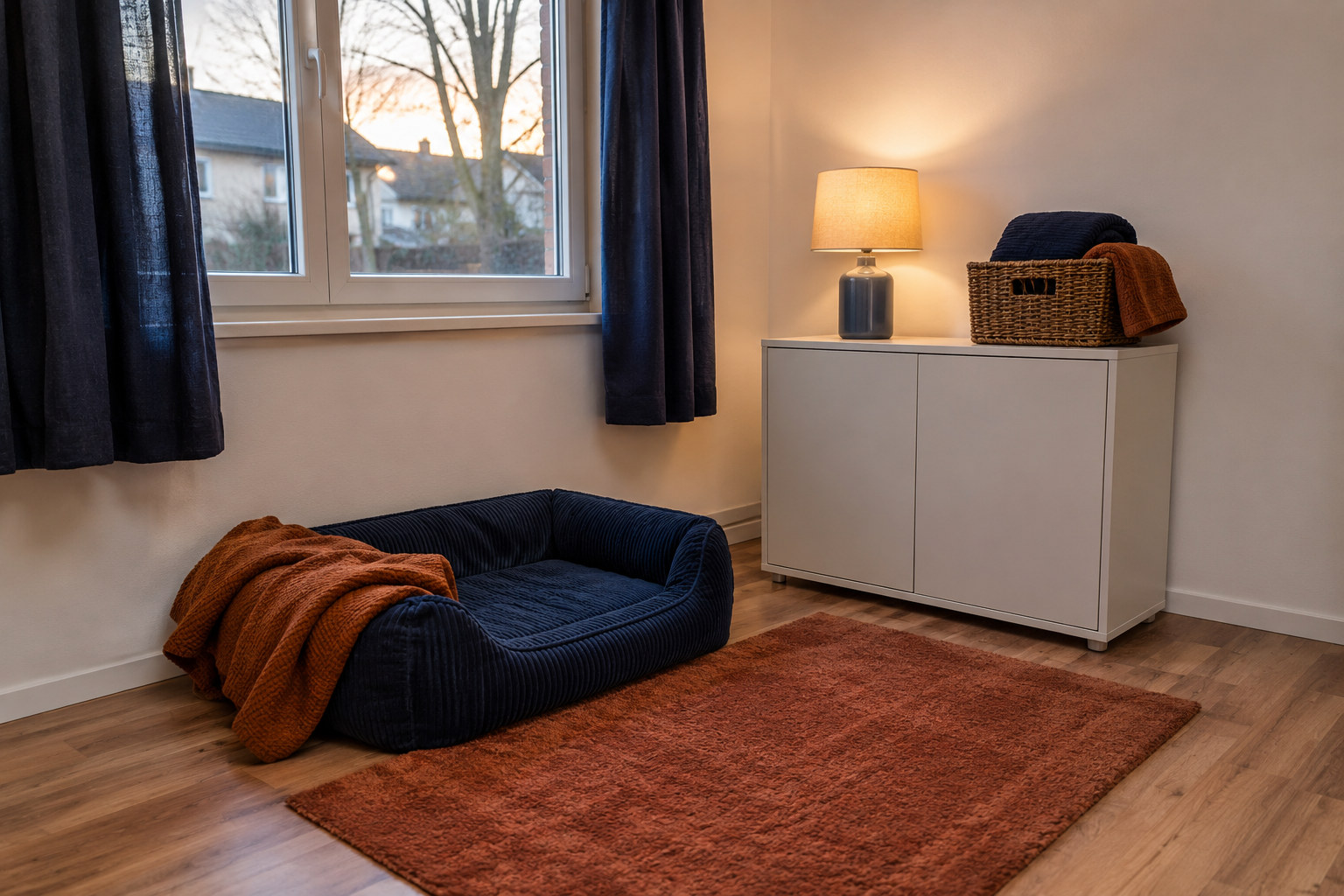
A rental dog room can be organized with furniture you can take to the next home. Start with one low stable cabinet, a washable bed, and a removable floor covering appropriate for the existing floor. Keep the arrangement simple enough that it does not depend on drilling or permanent joinery.
Check furniture stability and any manufacturer’s fixing requirements before choosing a piece. Freestanding does not automatically mean suitable without restraint. Low furniture can be a useful starting point, but the actual product and how it will be used still matter.
Use textiles to bring in color when repainting is unavailable. A navy bed, rust-colored throw, or patterned washable runner can create a clear palette. Measure the doorway and cabinet depth before buying, so a temporary solution does not become a daily obstruction.
11. Keep a Small Room Open with High Supply Storage
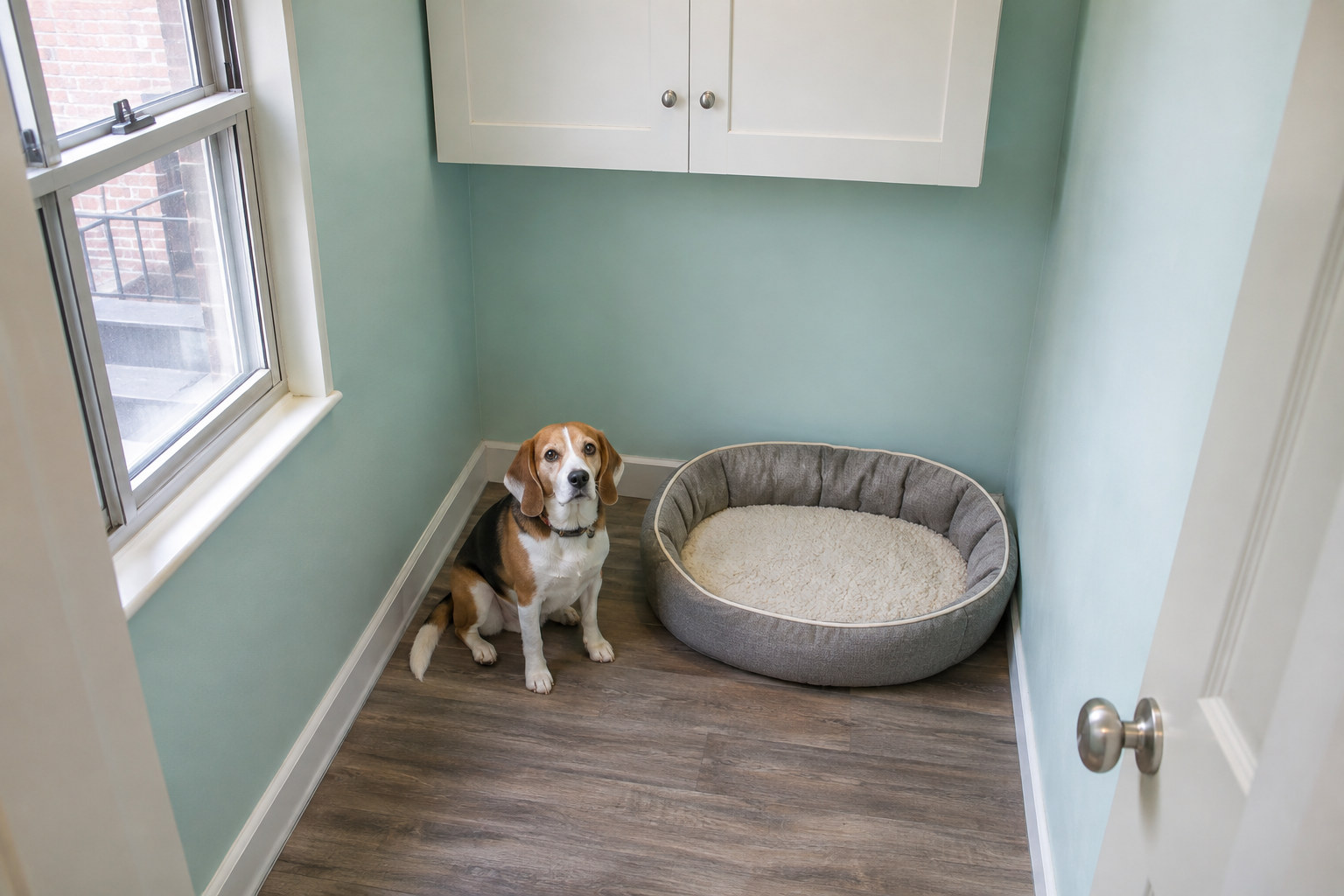
In a very small room, storage that rises above the floor can leave more usable space around the bed. A securely installed high cabinet is useful for light supplies you do not need to reach every hour. Keep frequently used equipment in one easy-to-access location closer to the door.
This arrangement needs a proper installation for the wall and cabinet, not improvised fixings. Avoid storing heavy loose objects over the bed. Closed doors also make the room look less crowded than a collection of open baskets, bags, and hanging accessories.
Keep the floor arrangement restrained: one correctly sized bed and a clear approach may be enough. If the space is too small for the dog to move comfortably with its essentials in place, use it for supplies and locate the resting area elsewhere.
12. Leave the Middle Free for Supervised Play
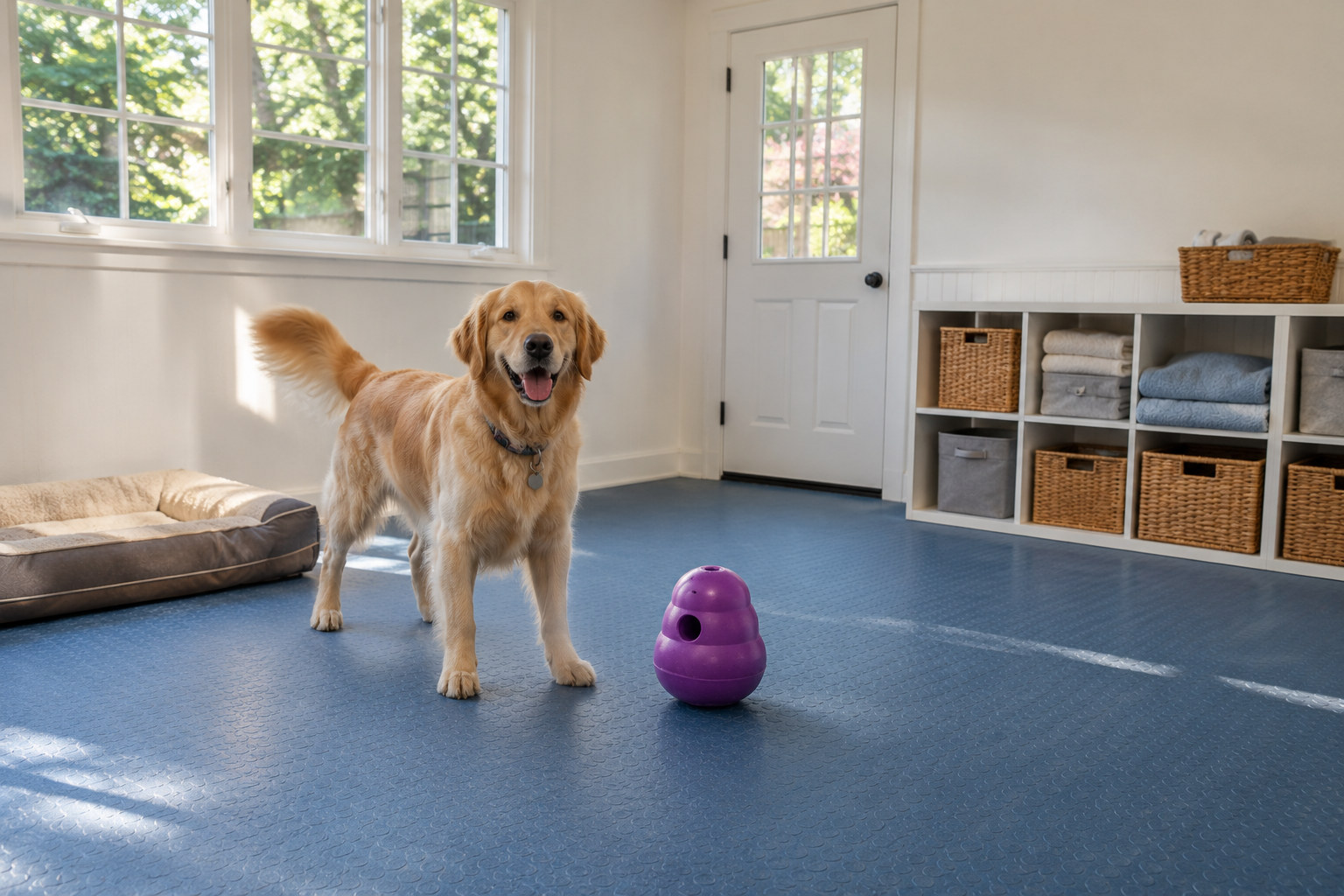
An open center makes a dog room more flexible. Set the bed and storage around the edges, then leave a clear area for supervised games or activities appropriate for your dog. This can be useful when the room needs to switch between quiet rest and time spent together.
Store toys when they are not in use instead of filling the floor with them. A closed cupboard or sturdy container makes it easier to choose one activity, finish it, and reset the room. Keep enough clearance that movement does not end at the corner of a cabinet.
This room adds another useful space; it does not replace walks, company, or outdoor opportunities. Choose a floor surface and mat arrangement that remain stable during ordinary movement, then adjust the layout as you see how your dog uses it.
13. Layer Washable Surfaces Where Mess Happens
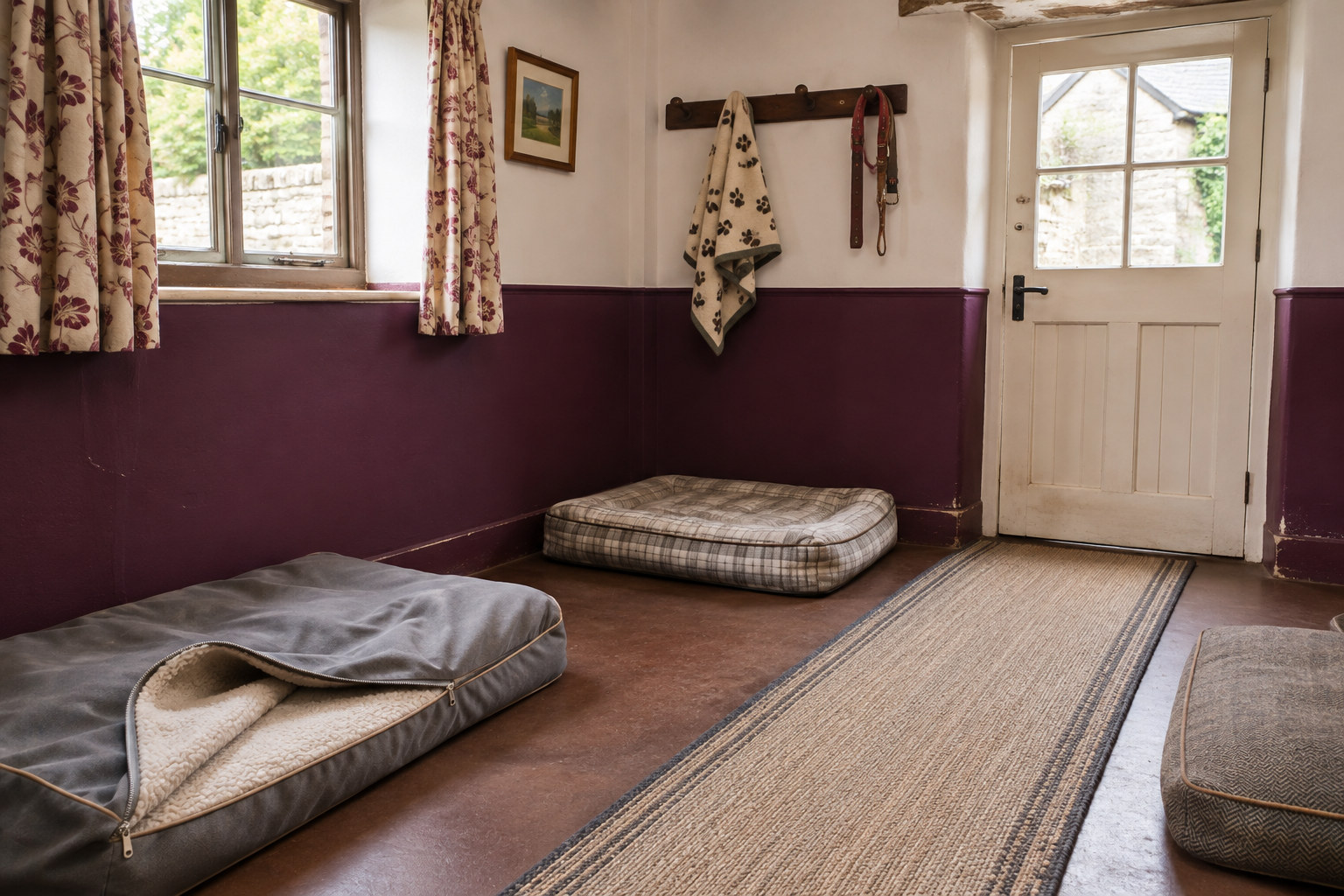
A practical dog room can have several washable layers without looking like a utility closet. Start with the existing floor, add a removable runner where dirt usually enters, and choose a bed with a cover you can take off without dismantling the whole room.
Match each material to the job it needs to do. A smooth cabinet front is convenient beside a supply area, while a suitable floor covering can help define the resting space. Check cleaning instructions before mixing products, and avoid assuming that every fabric described as durable is machine washable.
Keep a spare cover in the room so laundry day does not remove the resting spot entirely. A painted lower wall can tie the surfaces together; these two-color wall ideas offer useful ways to plan the visual boundary.
14. Combine a Guest Room with a Permanent Dog Corner
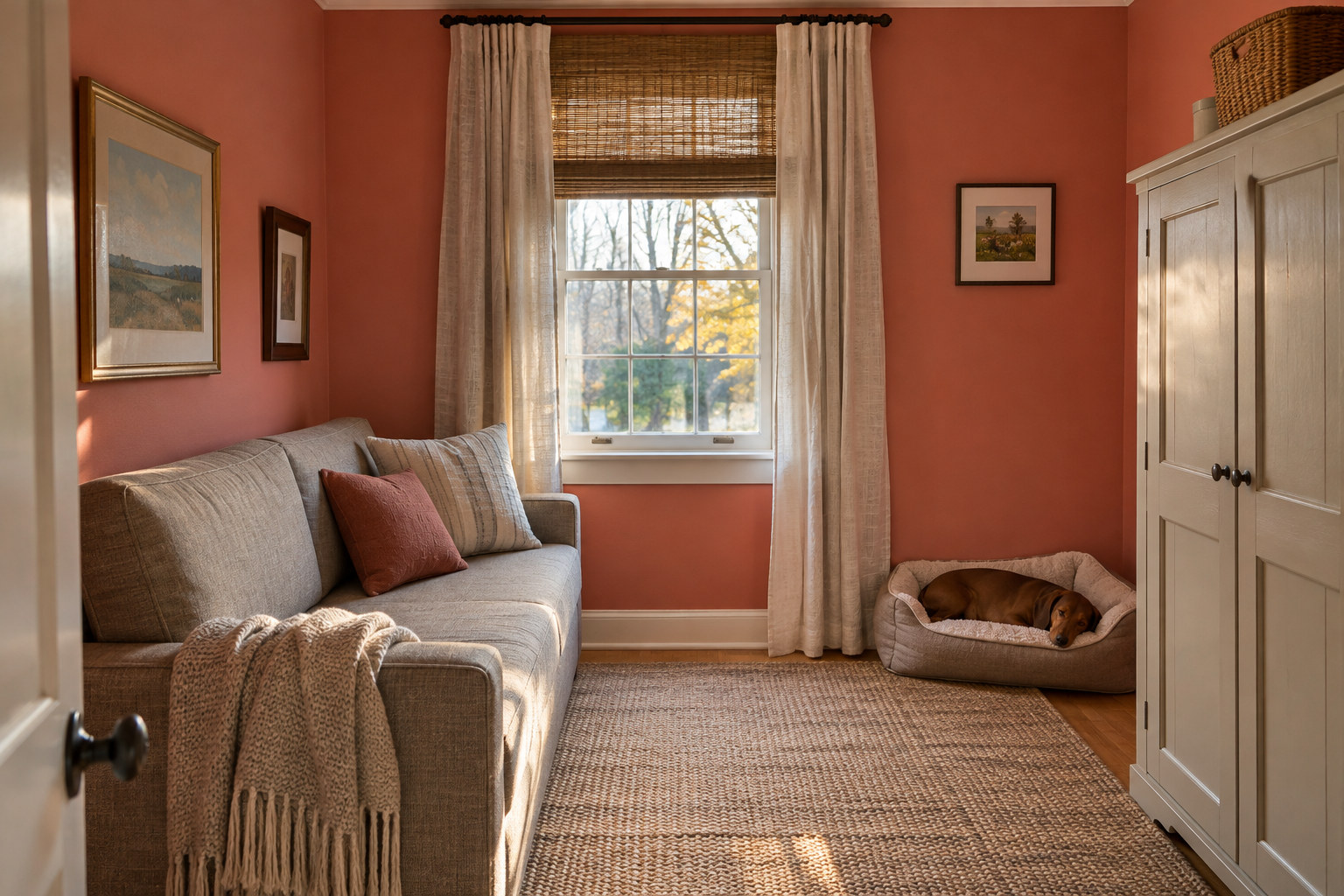
A guest room can share space with a dog when the dog’s everyday corner remains usable after the human bed opens. Draw both layouts before choosing furniture: the ordinary arrangement and the version used by an overnight visitor. The bed, supply cupboard, and route to the door should work in both.
A compact sofa bed may leave more floor space between visits, but check its full open depth. Avoid storing the dog’s essentials beneath a mechanism that blocks access. Give guests a separate place for their bags so belongings do not spill into the dog’s resting area.
For dogs who find visitors unsettling, provide another familiar resting option elsewhere. Shared use works when the room remains comfortable in practice, not simply when everything fits into a tidy floor plan.
15. Create an Indoor Garden-Room Retreat
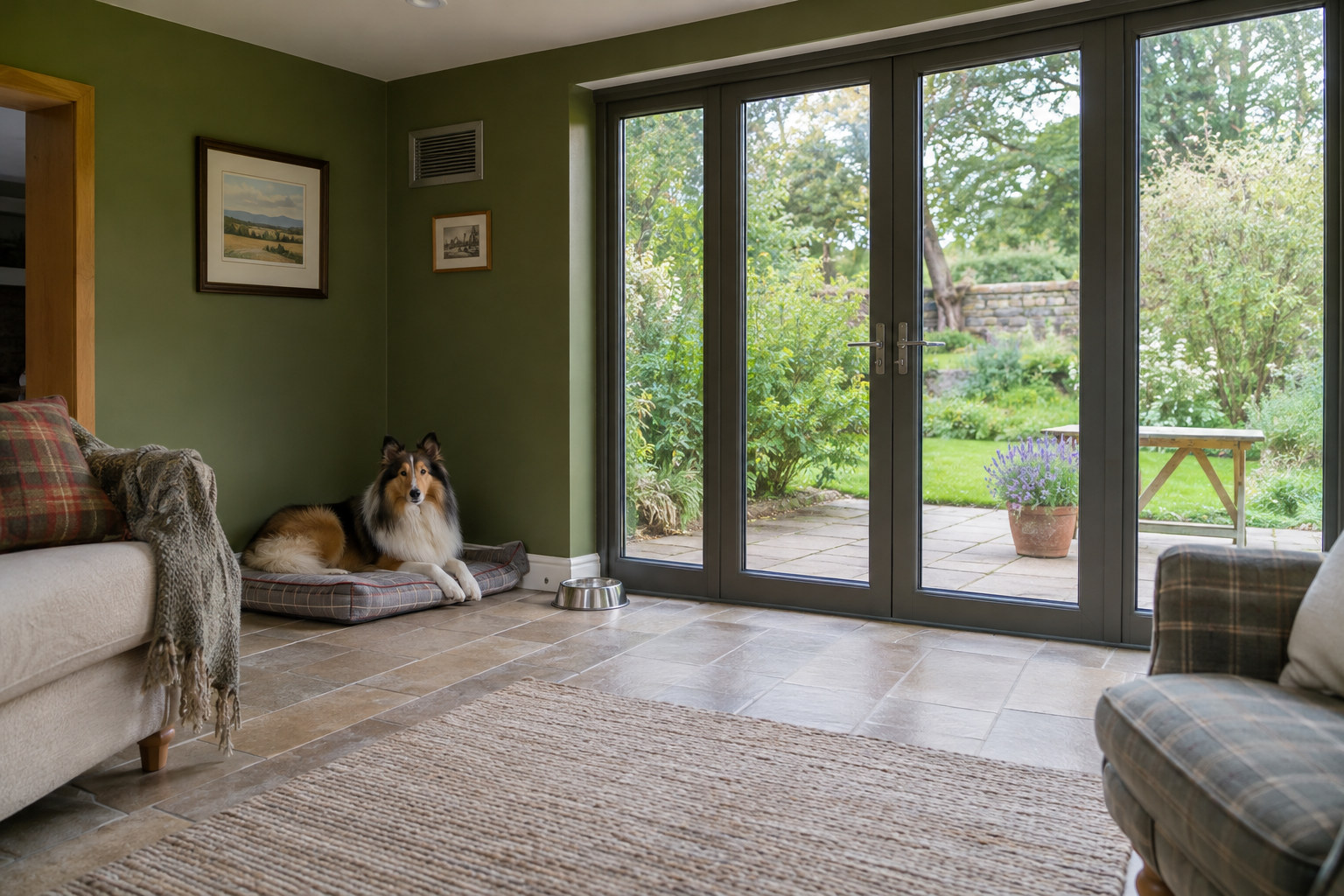
A garden room can provide a pleasant indoor resting space if its conditions are comfortable throughout the day. Choose a shaded position away from the hottest glazing, keep the route to the house clear, and arrange storage so you can clean around doors and corners easily.
Observe the room in warm and cool weather before committing to it as a regular resting place. A bright enclosed space can change temperature quickly. The presence of a garden view does not tell you whether the room has suitable ventilation, shade, or temperature control.
Keep water accessible and use furnishings that tolerate the room’s actual conditions. Avoid placing the bed against a door that is repeatedly opened for gardening. The best position is often on the inner wall, where the dog can enjoy the outlook without sitting in the busiest passage.
16. Split a Long Room into Rest and Everyday Storage
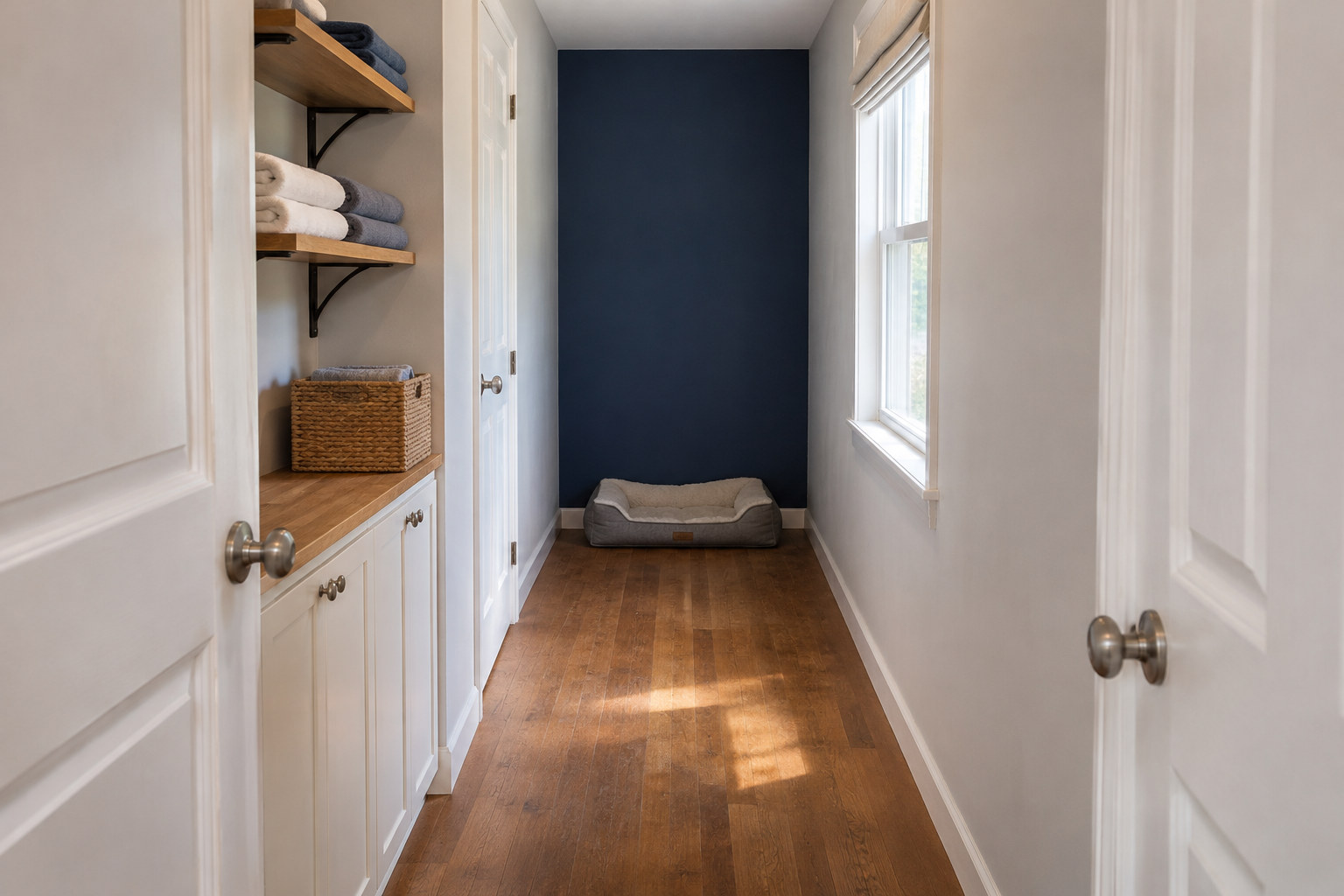
A long narrow room benefits from a simple order: access first, storage next, and rest toward the quieter end. Use shallow furniture along one wall so the remaining route feels continuous. Alternating deep pieces from side to side can turn a straightforward room into an obstacle course.
Measure the narrowest part with cabinet doors open, not only with everything shut. Put the items you use most often nearest the entrance, keeping the end of the room available for the bed. If the far end has an uncomfortable draft or noise source, reverse the arrangement.
A darker end wall can give the space a clear stopping point visually. Keep the side walls quieter and repeat one color in the bedding, rather than adding several small decorative features along the passage.
17. Choose Furniture That Can Move as Needs Change
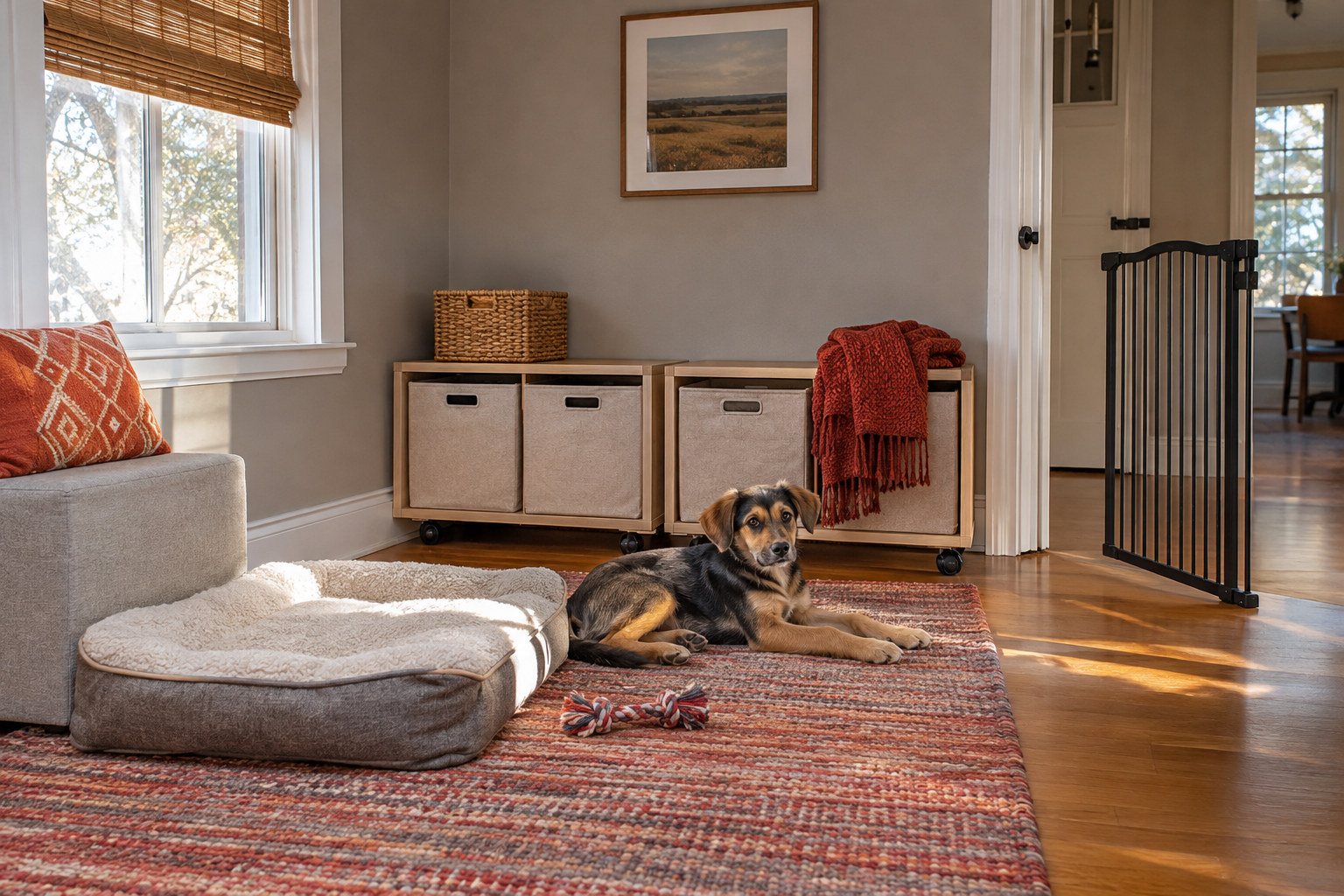
Needs change, especially when a young dog grows or a household routine shifts. A room with separate movable pieces is easier to adjust than one built around a fixed bed recess. Choose stable furniture with straightforward shapes and keep the main floor area available for future rearrangement.
Plan an alternative position for the bed before you need it. That might mean leaving one wall without a bulky cabinet or choosing a supply unit that fits in two locations. If you use an interior gate for supervised management, select and install a suitable product and preserve access to water and comfort.
Do not treat the layout as finished on installation day. Watch where your dog settles, what you repeatedly move, and which storage is awkward. Small changes based on daily use usually matter more than another decorative purchase.
Plan the Room Around Your Dog’s Existing Routine
Before shopping, note the places your dog chooses at different times of day. It may rest near you while you work, then prefer a quieter room when the house gets busy. Your plan can support those choices without expecting one room to meet every need.
Dogs Trust’s safe-space guidance emphasizes a quiet, comfortable retreat where a dog is not disturbed and can come and go. Use that principle when choosing the room and discussing how family members will use it. A decorated room is only useful if the dog feels comfortable spending time there.
Make a simple sketch with the doors, windows, heaters, sockets, and fixed furniture marked. Add the bed at its real size, including the space your dog occupies when stretched out. Then check where you will stand to change bedding, open storage, and clean the floor. Our small bedroom layout ideas can help you think through a compact room, while the pet-specific arrangement remains your priority.
Choose a Manageable Set of Materials
You do not need to replace every surface at once. Start with the items that affect everyday work: the bed cover, the floor immediately around it, and the cabinet that holds supplies. Choosing fewer compatible materials makes future repairs and replacement easier.
Look for clear care instructions and check how parts come apart. A washable cover with an awkward fastening can become frustrating after repeated use. Likewise, a cabinet that leaves a narrow inaccessible gap beside the bed may make routine cleaning harder than an open shelf in a better position.
Keep sample colors beside the existing floor before buying paint. Deep blue can suit warm timber, muted green can work with pale tile, and terracotta can add warmth to a plain room. These are design options, not rules. The light and furnishings in your own room should decide the final combination.
Get the Fail-Safe Paint Color Playbook (Free PDF)
36 proven colors • 8 ready palettes • trim & sheen guide • printable testing cards.
Set Up a Simple Maintenance Routine
Give clean bedding, used towels, and everyday equipment separate destinations. This prevents the room from becoming the place where everything vaguely dog-related is dropped. One closed cabinet and a laundry basket located out of reach may do more for the space than several decorative containers.
Regularly check furniture stability, floor coverings, accessible cords, and damaged toys. Keep only suitable items available for your particular dog. A room arranged for a dog who ignores fabrics may need different choices for one who chews them.
After the first week, change the details that make work awkward. Move the towel storage closer to the door, remove furniture the dog avoids, or shift the bed away from a noisy wall. A good dog room becomes easier to live with as you learn how it is actually used.
Start with the Bed, Then Add What the Room Needs
Choose the most suitable resting position first and test it with familiar bedding. Add storage after you understand the space that remains. This order helps you avoid designing a handsome cupboard arrangement and discovering that the dog’s bed only fits in the doorway.
The finished room can be colorful, quiet, traditional, or modern. Its strongest feature should be a layout that supports everyday life: comfortable rest, easy movement, and supplies you can find without rearranging the furniture.