
17 Indoor Cat Room Ideas for Climbing, Resting, and Play
A useful cat room gives your cat choices: somewhere to climb, somewhere to disappear for a nap, a place to scratch, and enough open floor to play. You can create those choices in a spare bedroom, a shared office, or a quiet part of the family room. Filling the space with the largest cat furniture is not the only approach.
Start by noticing where your cat already spends time and what it avoids. Then arrange the room around those habits, with separate places for the essentials and clear routes between them. These indoor cat room ideas focus on whole-room layouts, so the finished space works for resting, activity, cleaning, and the people who use it too.
Get the Fail-Safe Paint Color Playbook (Free PDF)
36 proven colors • 8 ready palettes • trim & sheen guide • printable testing cards.
1. Window-Led Room with a Central Play Area
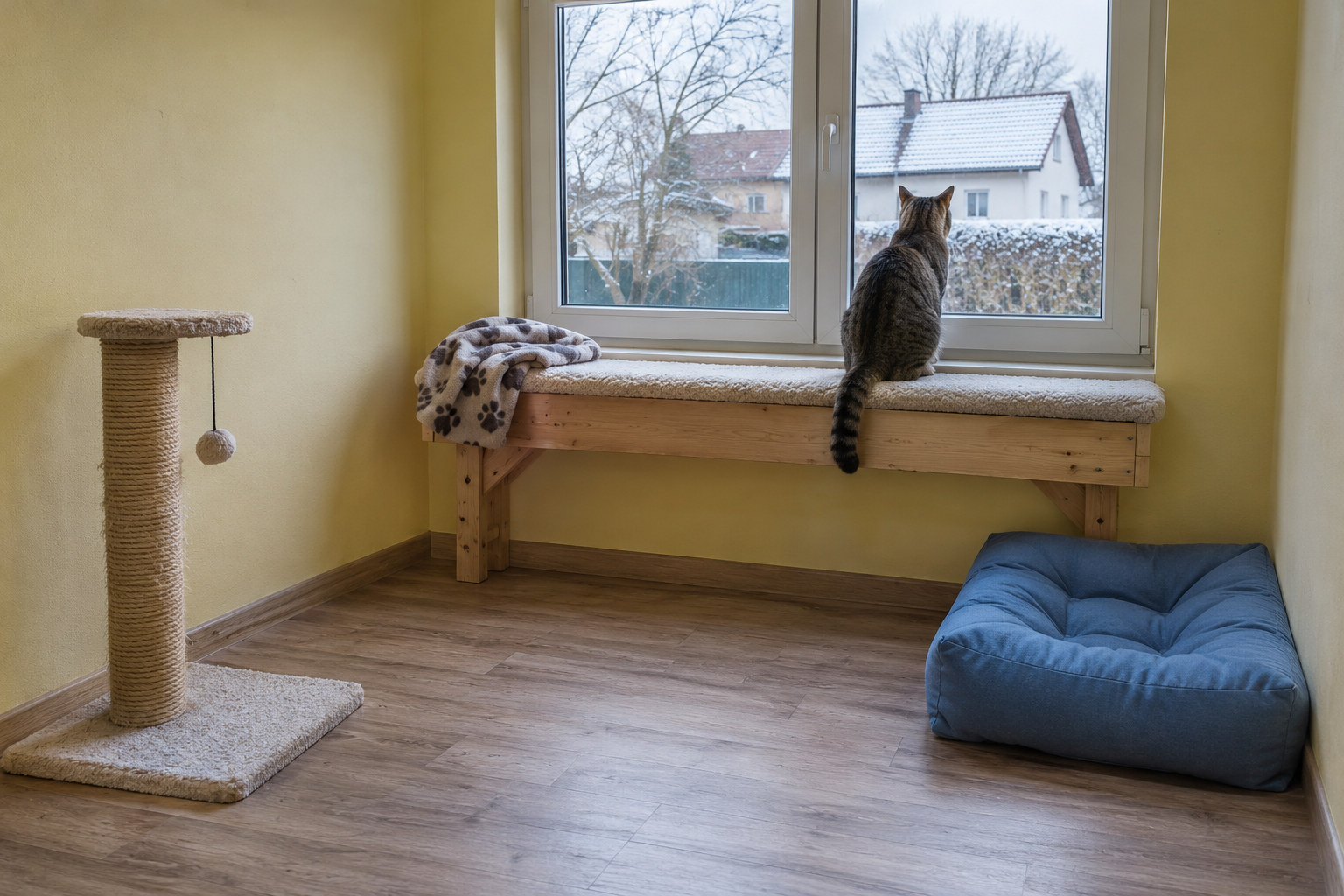
Let a secure window position guide the layout, then keep the middle of the room available for play. A sturdy perch can create a comfortable lookout without requiring a wall covered in climbing furniture. Place a scratching surface nearby and a resting option away from the glass so the cat can choose a different setting.
Check the window, screen, cords, and surrounding furniture before making the perch an inviting destination. Keep the route onto it suitable for your cat, and avoid crowding the landing with pots or ornaments. The central floor does not need to remain completely bare, but movable toys are easier to work around than a permanent obstacle course. This arrangement suits a small room because one clear focal area gives it purpose while the open middle makes cleaning and interactive play straightforward.
2. Spare-Bedroom Layout with Separate Resource Corners
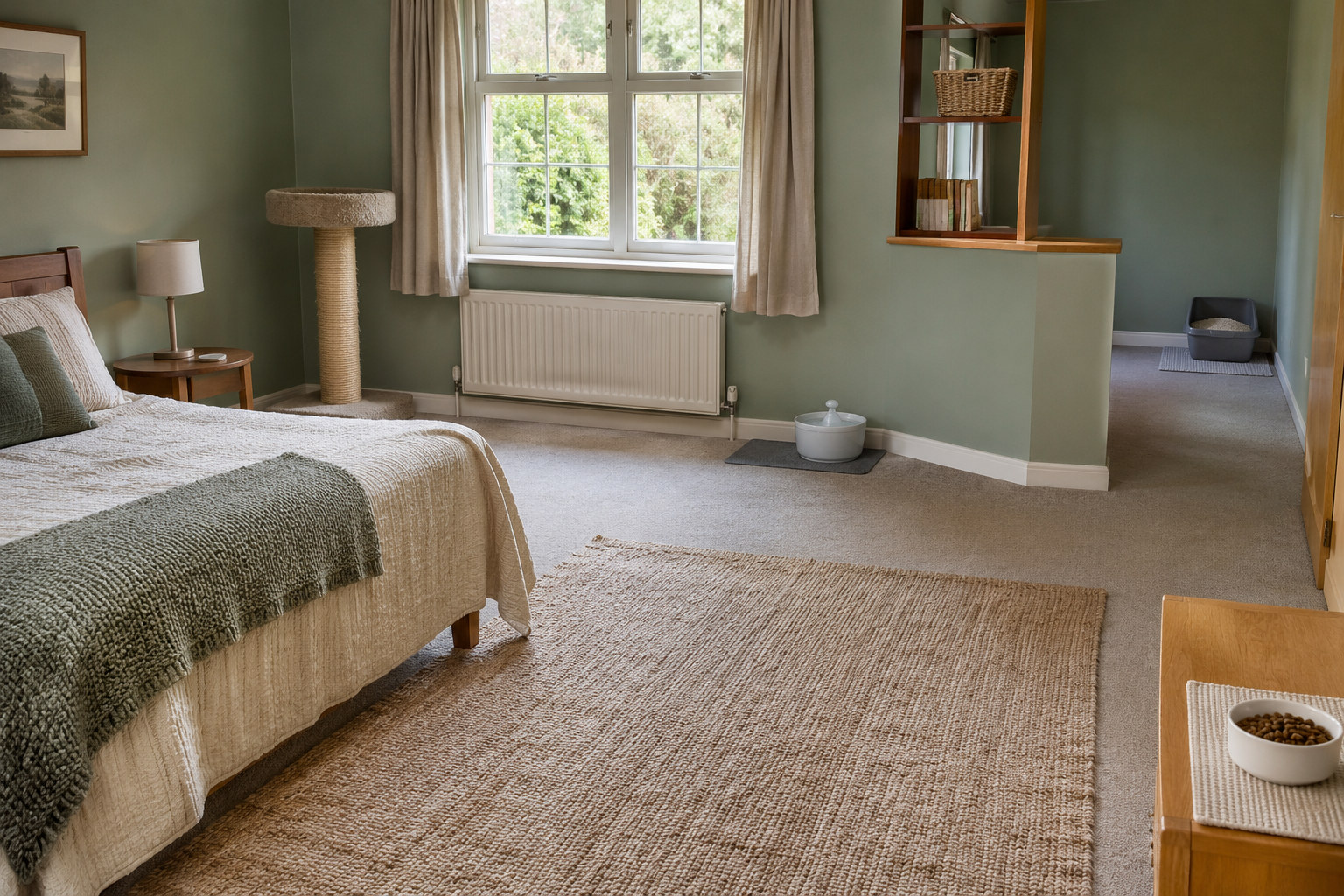
A spare bedroom gives you room to separate feeding, drinking, litter, and resting areas. Start with those locations before adding the tree, toys, and decorative storage. Use the room’s corners as broad zones, but keep the cat’s routes open rather than enclosing each function behind furniture.
Place the litter area somewhere quiet and reachable, with room for you to clean it. Keep food and water away from that area, and give resting places their own calm setting. A low open divider can soften a view without turning access into a narrow tunnel. Test the room with doors and drawers in their normal positions. If the space also stores household items, avoid making the cat squeeze around a laundry basket or suitcase to reach an essential resource. The best-looking arrangement should remain practical when the room is lived in.
3. Reading Room That Shares Space with a Cat
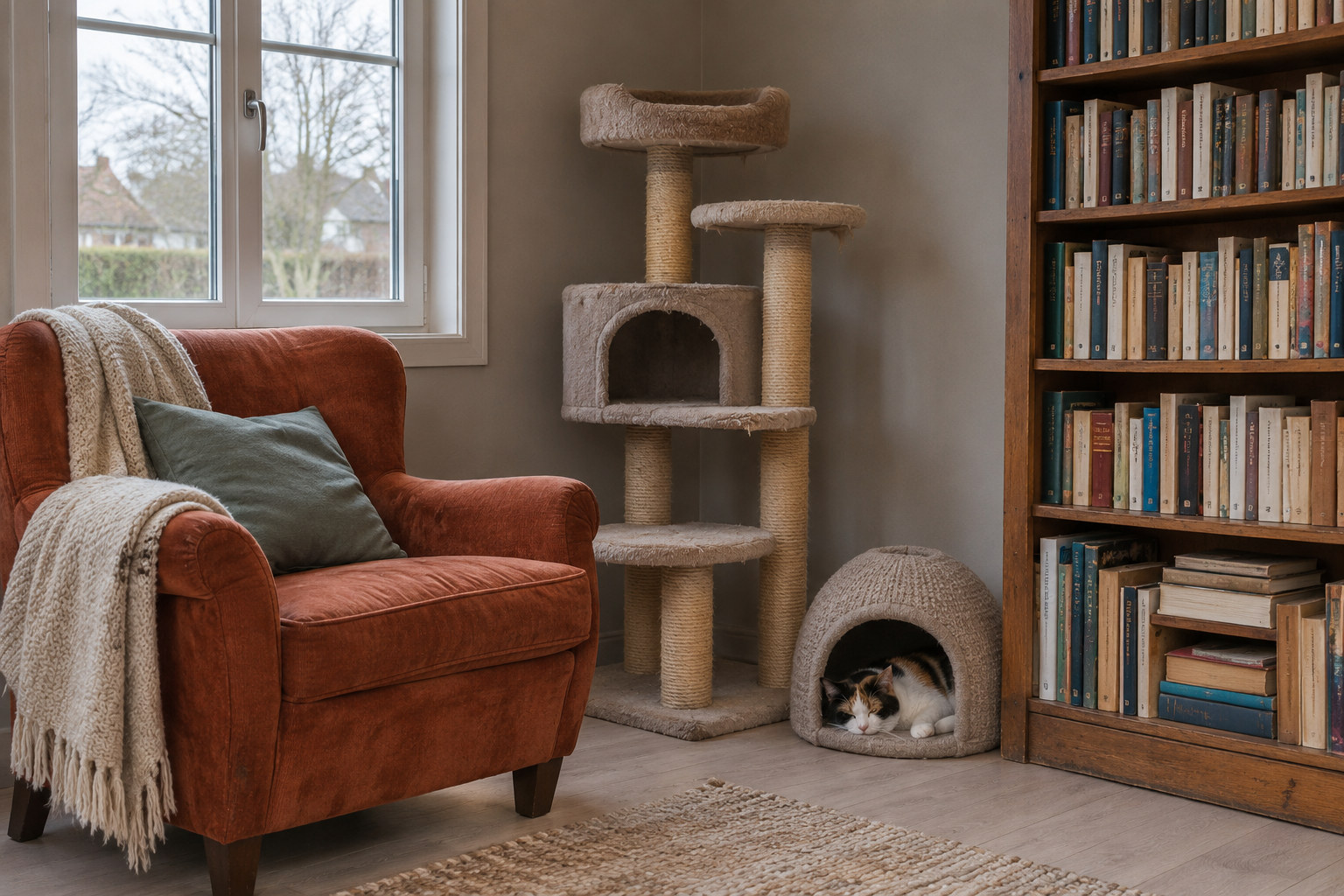
A reading room and a cat retreat can share an unhurried atmosphere. Put the human chair where it belongs for reading, then position a stable cat tree or resting place nearby without crowding the chair’s movement. Some cats may enjoy being close while still having their own surface and an easy route away.
Keep a low hiding place available as well as an elevated option. That gives the cat a choice when visitors arrive or the room becomes busier. Do not rely on an unsecured bookcase as a climbing structure, and keep fragile objects off the route the cat is likely to choose. A small collection of coordinated washable textiles can connect the pet furniture to the room. The goal is shared comfort, with the cat’s equipment arranged as part of the layout rather than scattered wherever a gap remains.
4. Low-Level Room for an Older Cat
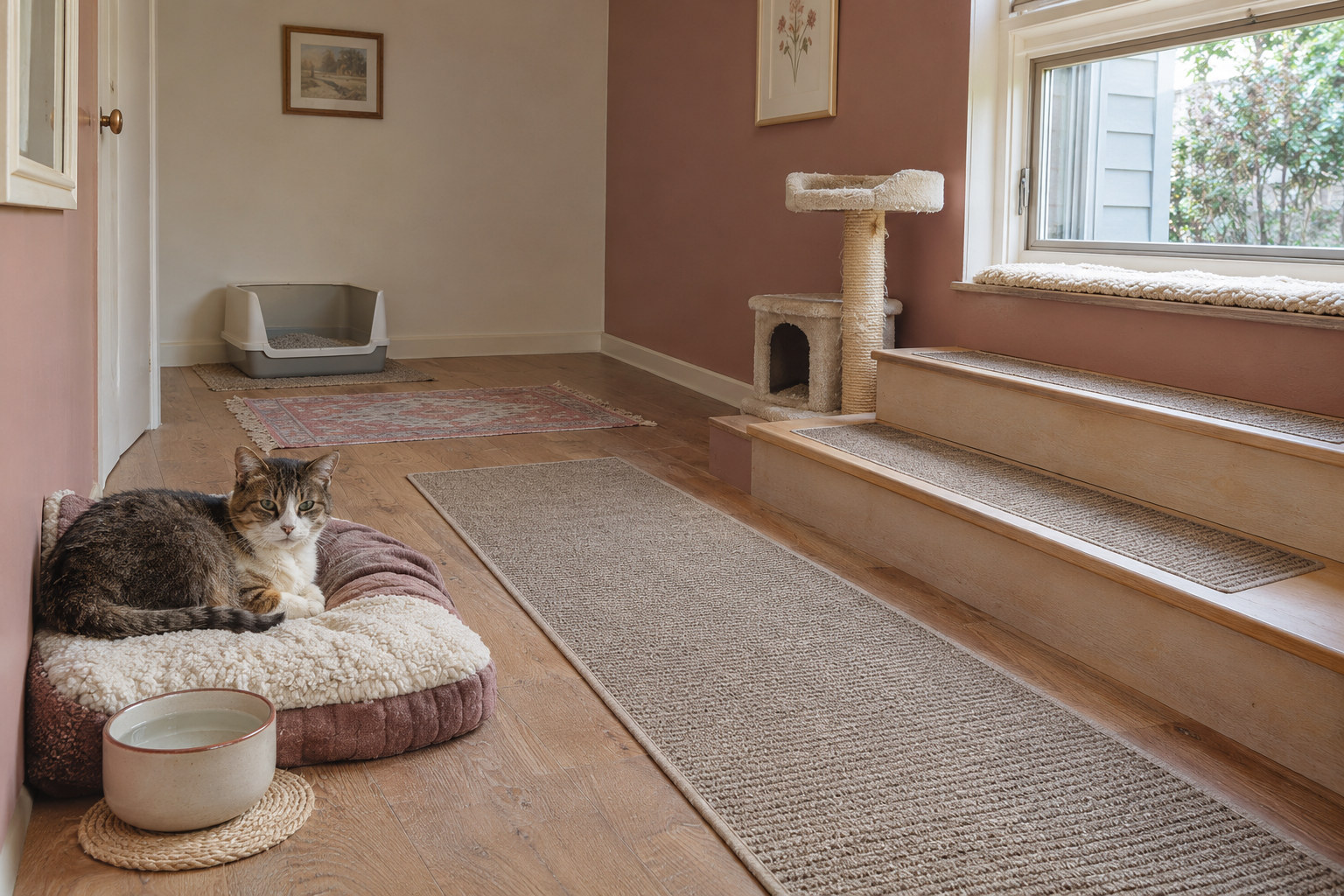
A lower room arrangement can preserve favorite activities for a cat that no longer chooses high jumps. Use broad, stable resting surfaces at accessible heights, and consider an appropriate stepped route to a preferred window position. Keep the floor path between bed, water, food, and litter clear.
Start with what your individual cat can manage comfortably and ask your veterinarian about mobility changes. Furniture should support that guidance, not substitute for it. Check that mats stay flat and that a low bed does not slide when the cat steps onto it. Place storage where you can reach it without moving the cat’s essential items. A lower layout can still feel varied and interesting: a window outlook, a sheltered bed, and a reachable scratch surface offer different choices without requiring a tall climbing wall or a dramatic leap.
5. Two-Cat Room with More Than One Route
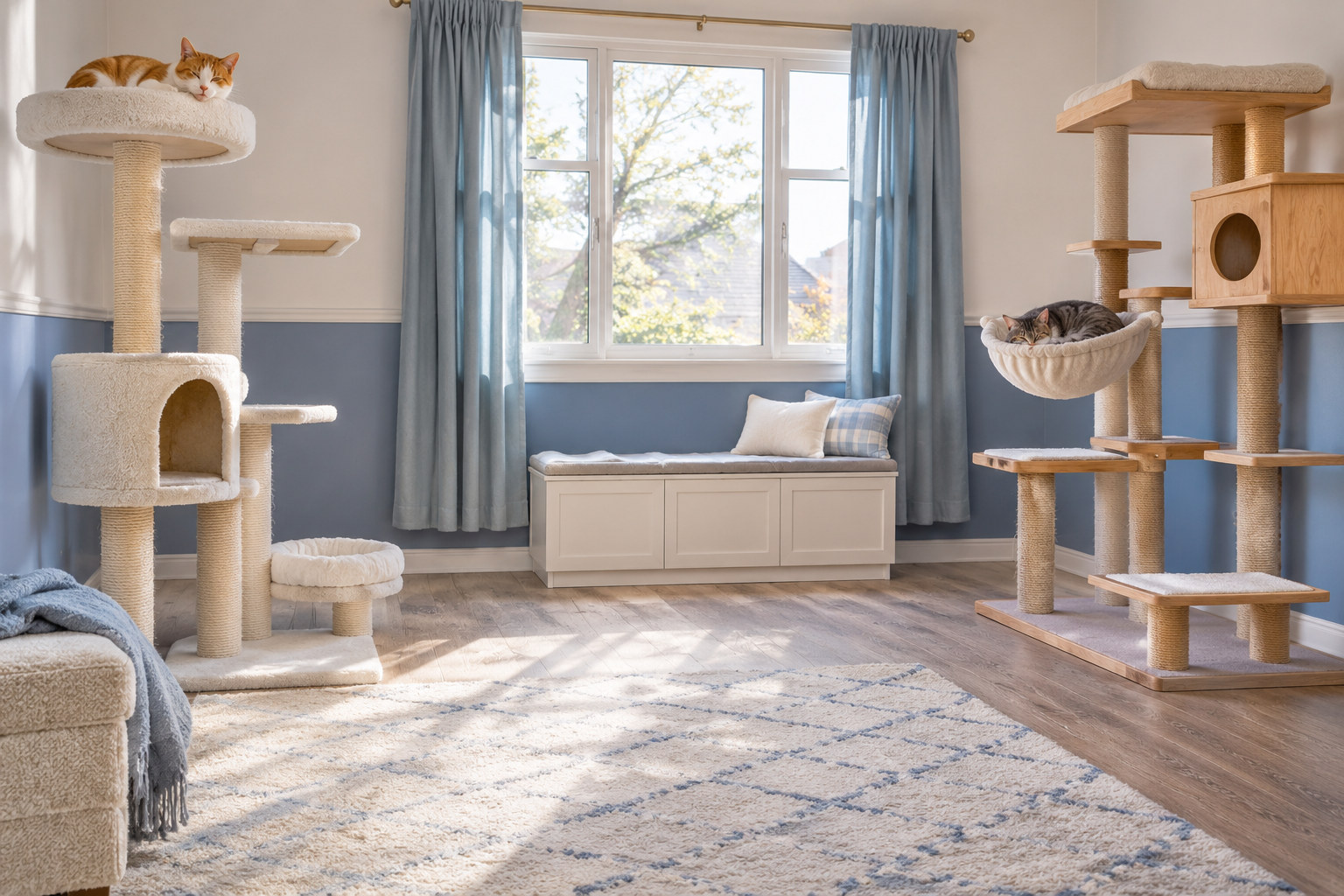
A two-cat room benefits from more than one appealing route and more than one place to rest. Position the main climbing or resting structures apart rather than funneling both cats toward a single narrow tree beside the doorway. Leave open floor between them so either cat can move away without passing through the other’s favorite spot.
Watch how the cats actually share the room. Two attractive beds beside each other do not necessarily provide the same choice as beds in different parts of the space. Keep essential resources suitably distributed, and add quiet alternatives outside the room where the household layout allows. A low divider or furniture arrangement can offer visual separation without blocking movement. The room should give each cat options, not require constant negotiation over one perch, one exit, or the only calm resting corner.
6. Small Square Room with Perimeter Furniture
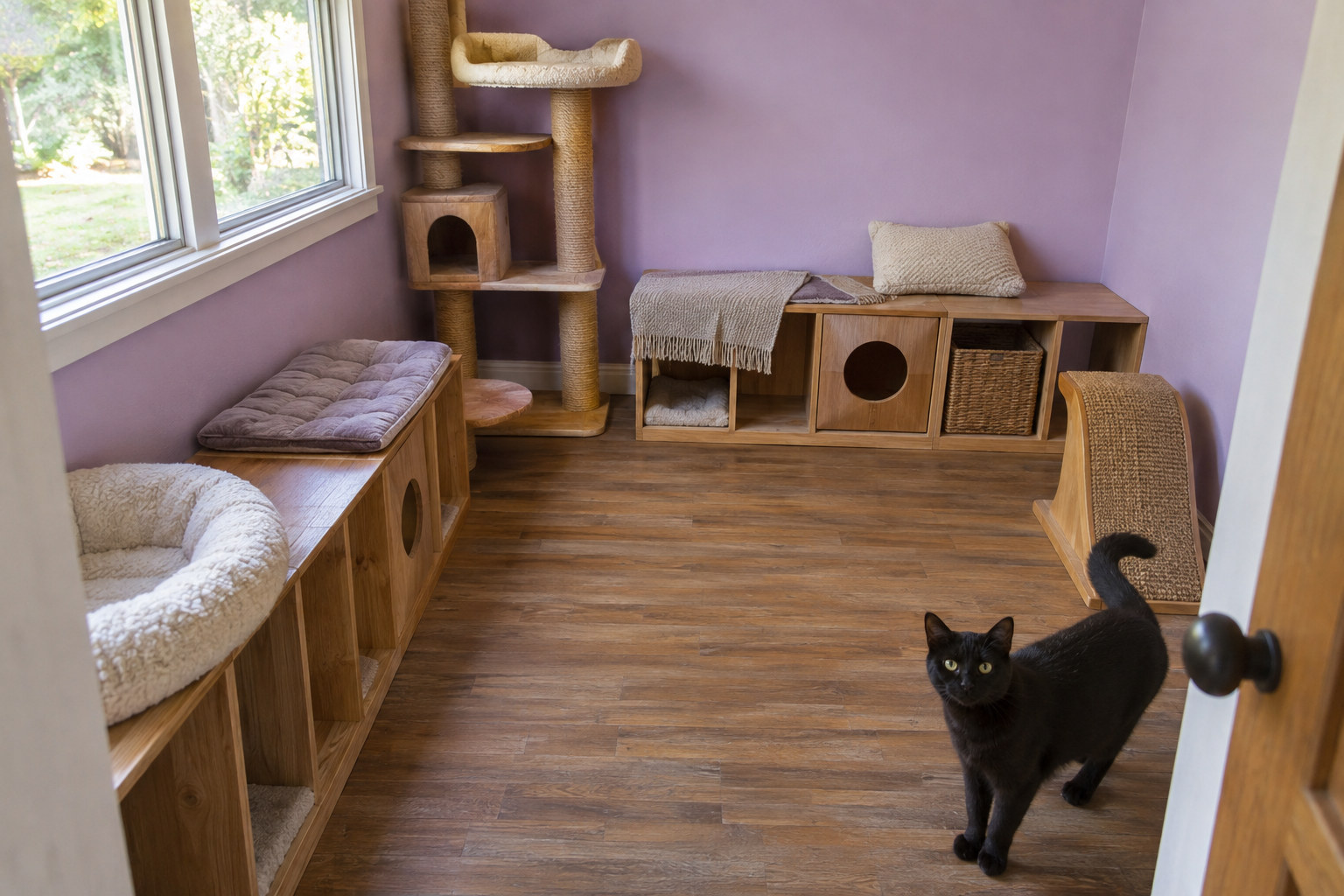
In a small square room, placing the larger furniture around the perimeter can preserve a useful central area. Keep one corner for a sturdy tree, another for a low hiding bed, and a clear route through the remaining space. This creates different destinations while avoiding the feeling of a room filled with isolated obstacles.
Measure furniture at its widest point, including projecting platforms and scratching posts. A tree with a small base may occupy much more airspace than you expect. Keep doors and storage fronts usable so routine cleaning does not require shifting the whole setup. The same space-planning ideas that help a bedroom can help here; these small bedroom layouts offer useful ways to think about open floor and furniture scale. Adapt the arrangement to the cat’s movement rather than copying a human room plan exactly.
7. Long Narrow Room with Staggered Activity Zones
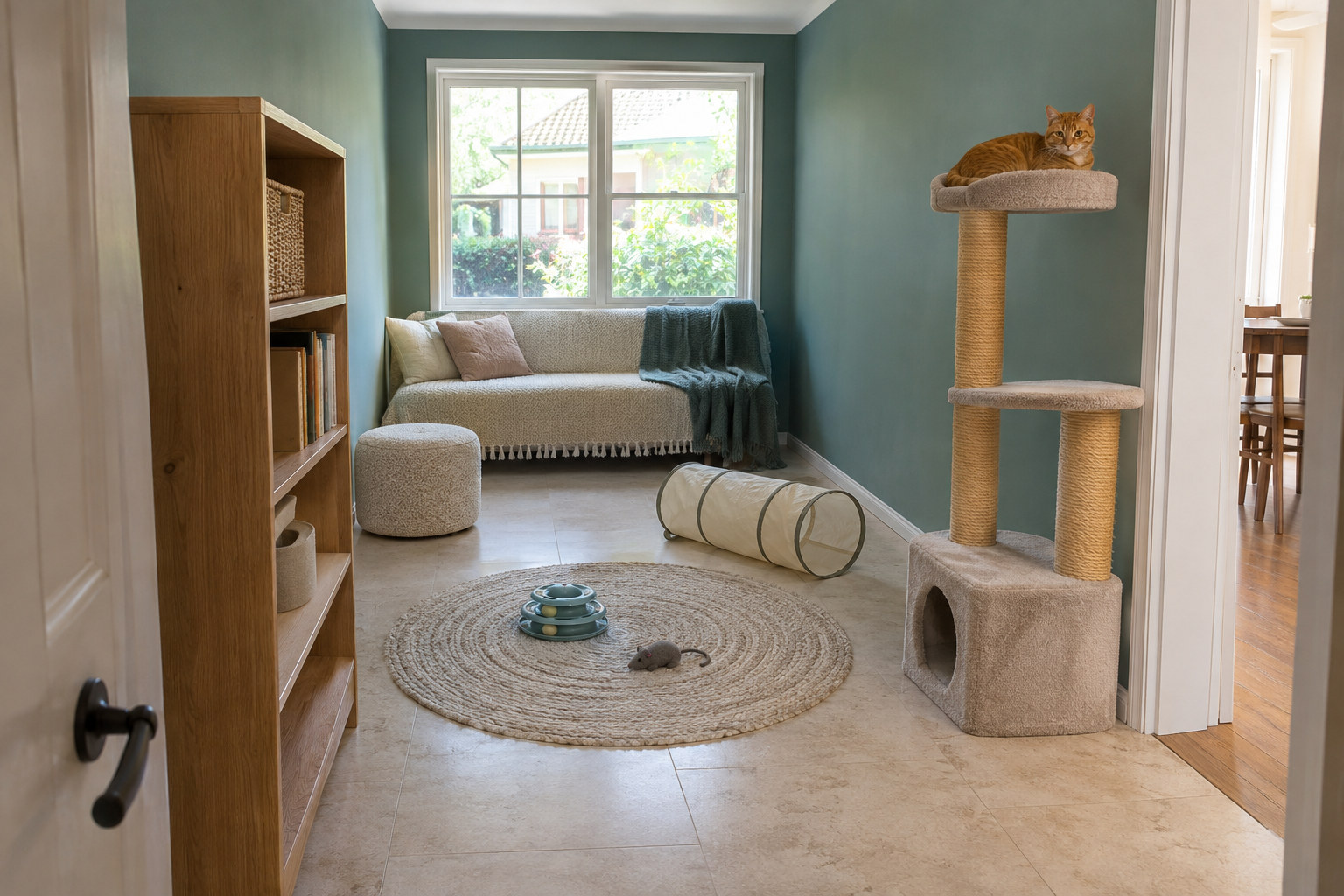
A long narrow room works well when its activities are staggered along the length. A resting area near a quiet window, an open play section in the middle, and a scratching surface near the entrance give the room a readable sequence. Keep large pieces to alternating sections rather than lining both walls with deep furniture.
Check the route from the doorway all the way to the far end. The cat should not have to squeeze past a chair leg or jump onto furniture to reach a resource. You also need enough access to sweep, wash floors, and remove bedding. Place the tallest structure where it does not dominate every sightline. A narrow room can feel calmer with fewer substantial pieces and a clear passage than with a continuous run of shelves, cubbies, and storage occupying both sides.
8. Room with a Quiet Hiding Wall
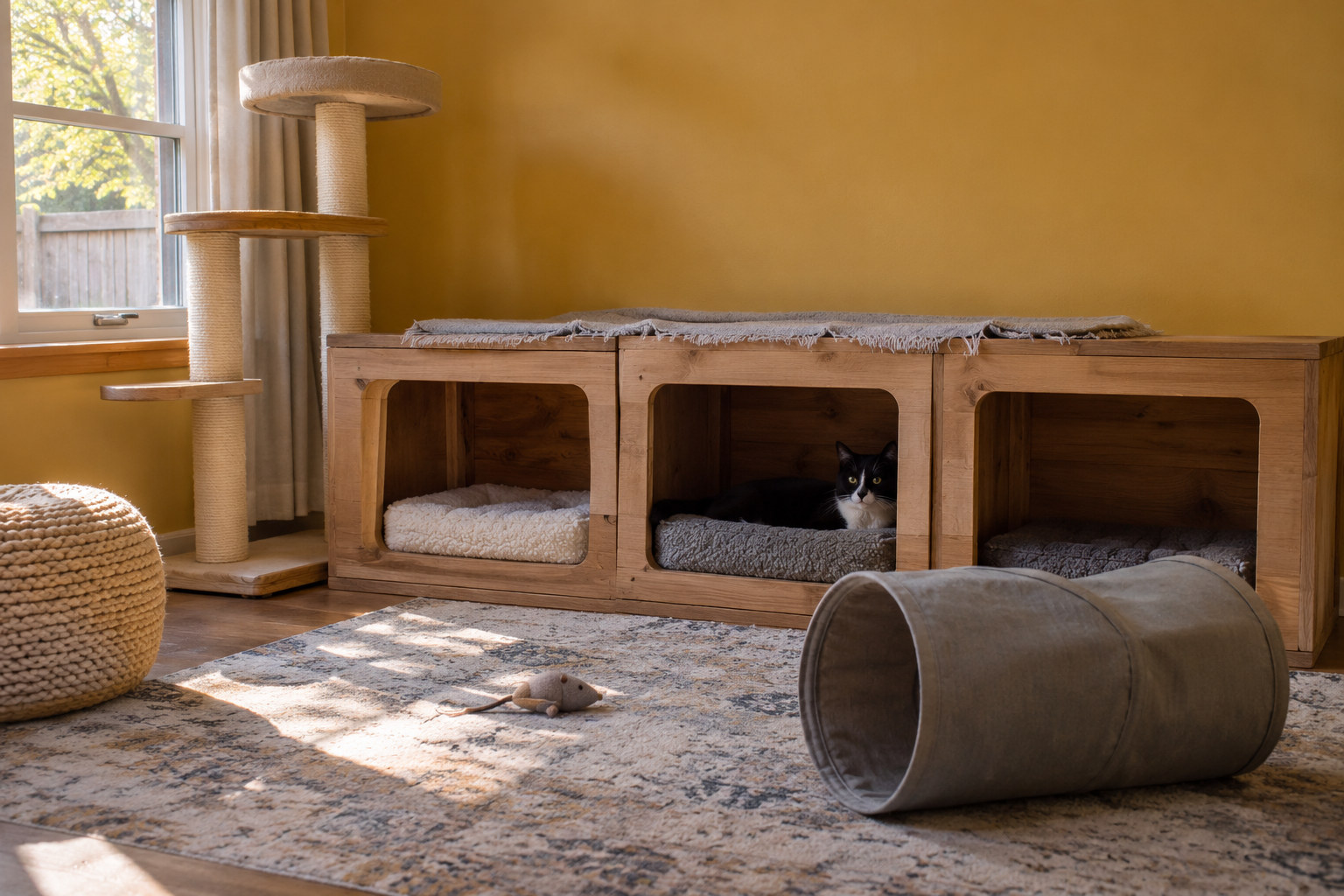
A low hiding wall can provide several sheltered resting choices without taking over the height of the room. Use stable cubbies or purpose-suited boxes with generous openings, removable cushions, and enough separation that each feels like a distinct place. Leave open floor in front so the cat can approach without being boxed in by other furniture.
Keep the arrangement simple to inspect and clean. A maze of deep connected compartments may look entertaining but can make it difficult to reach bedding or notice a problem. Let the cat choose whether to use each hiding place, and avoid filling every opening with toys. The wall above can carry the room’s color and visual interest while the lower section stays practical. This is especially useful in a shared room where you want quiet resting options without adding several tall pieces.
9. Scratch-Friendly Room with Mixed Surfaces
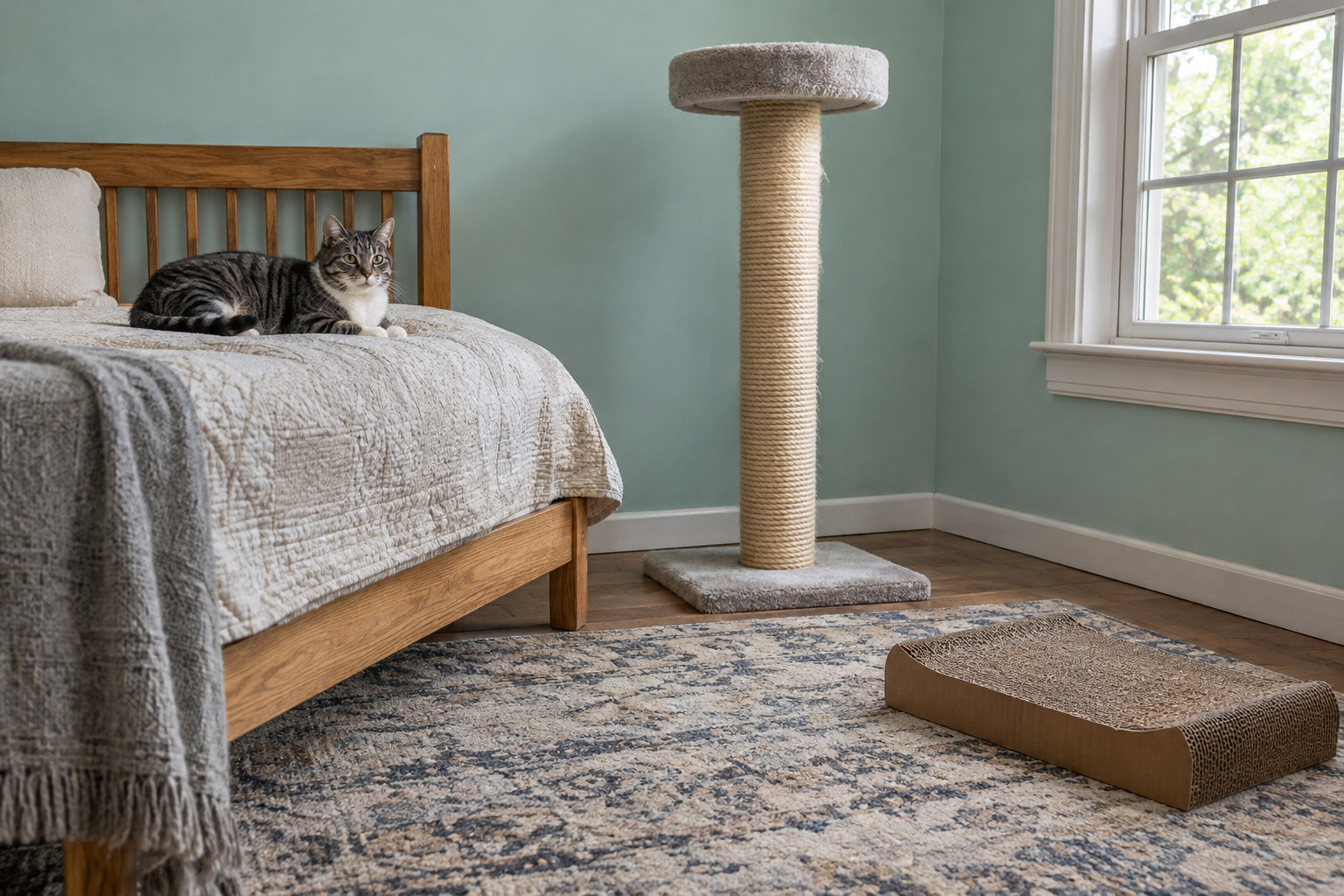
Offer scratching surfaces that differ in orientation and texture, then see which ones your cat uses. A stable upright post and a broad horizontal scratch pad can occupy different parts of the room without competing for much floor space. Put them near relevant activity or resting areas rather than hiding them behind a door because they look utilitarian.
Check that each item stays in place when used. Cats Protection’s scratching advice highlights a stable base and enough height for an upright stretch. Follow the product’s guidance and replace worn or damaged surfaces as needed. Keep loose threads and detached material from accumulating nearby. Coordinating the scratchers with the room’s finishes can help them feel deliberate, but usefulness comes first. An appealing piece the cat actually uses contributes more than a decorative object that only resembles a scratching surface.
10. Home Office with a Separate Cat Zone
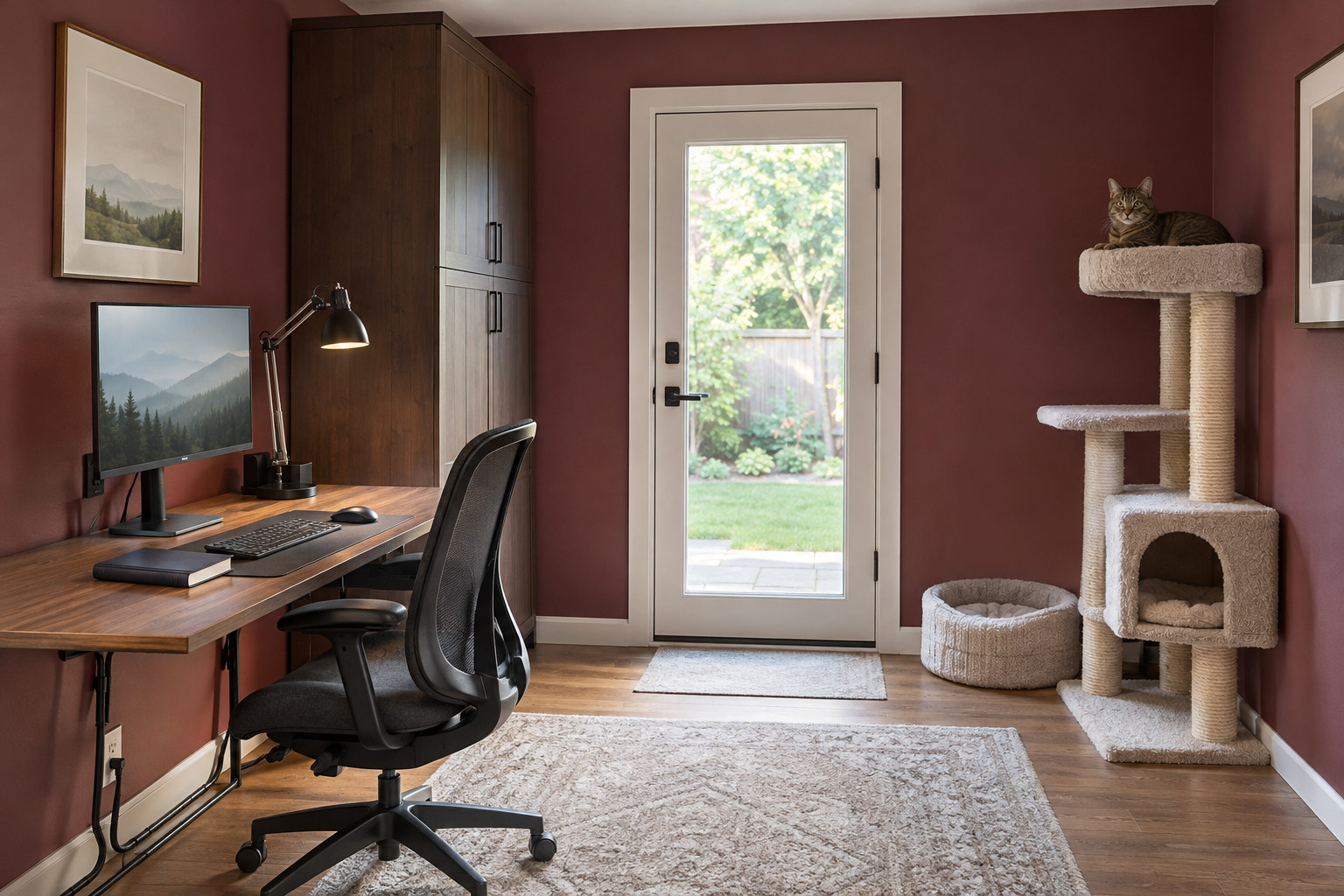
A home office can accommodate a cat zone when the desk and pet furniture have separate working space. Put the cat’s resting and climbing options where they do not obstruct the chair or require crossing the keyboard to reach a window. Keep a clear route to the doorway so the cat can leave when calls or visitors make the room busier.
Organize cords and office supplies with the cat’s access in mind. Closed storage is useful for small objects, and cable management should be assessed as part of the actual desk setup. A resting perch near you may suit some cats, but offer a quieter lower option too. Use the room’s existing colors to connect the areas visually. The arrangement works best when you can move your chair, open a drawer, and clean around the desk without repeatedly relocating the cat’s belongings.
11. Playroom Built Around Rotating Toys
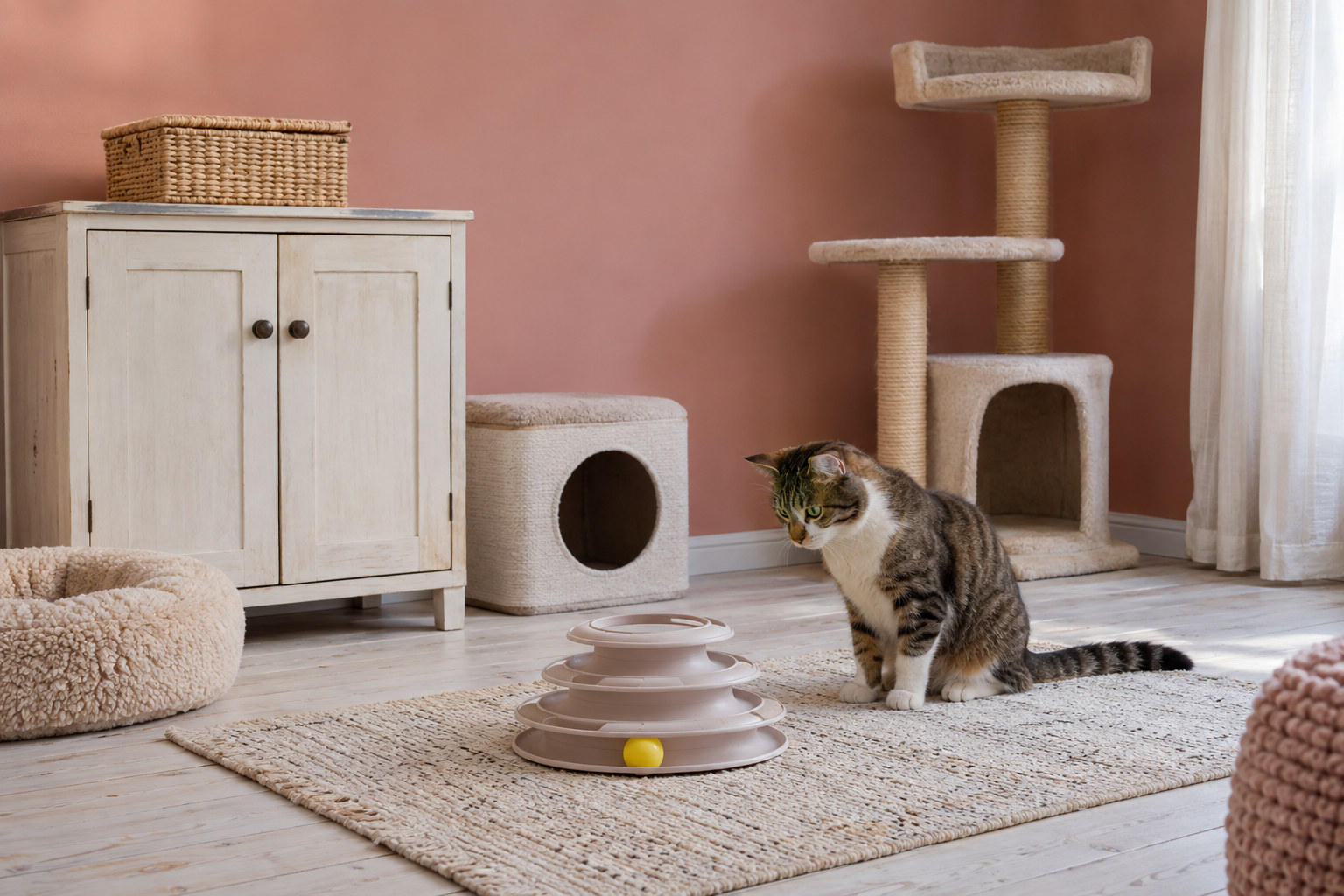
A cat playroom does not need every toy on the floor at once. Give the room a clear central play area and a closed storage place for equipment that is not being used. That makes it easier to vary activities and remove unsuitable or damaged items instead of letting a pile accumulate beneath the furniture.
Keep interactive toys that require supervision, including loose string or wand elements, stored appropriately between sessions. Set up the room so you can sit or stand comfortably while playing, with enough space to move the toy without catching it on a lamp or shelf. A simple toy in a clear area can be more useful than a crowded collection. Keep resting and hiding choices nearby but separate from the main activity path, so the cat can stop playing without needing to leave the room entirely.
12. Sunroom with Reliable Shade and Retreat
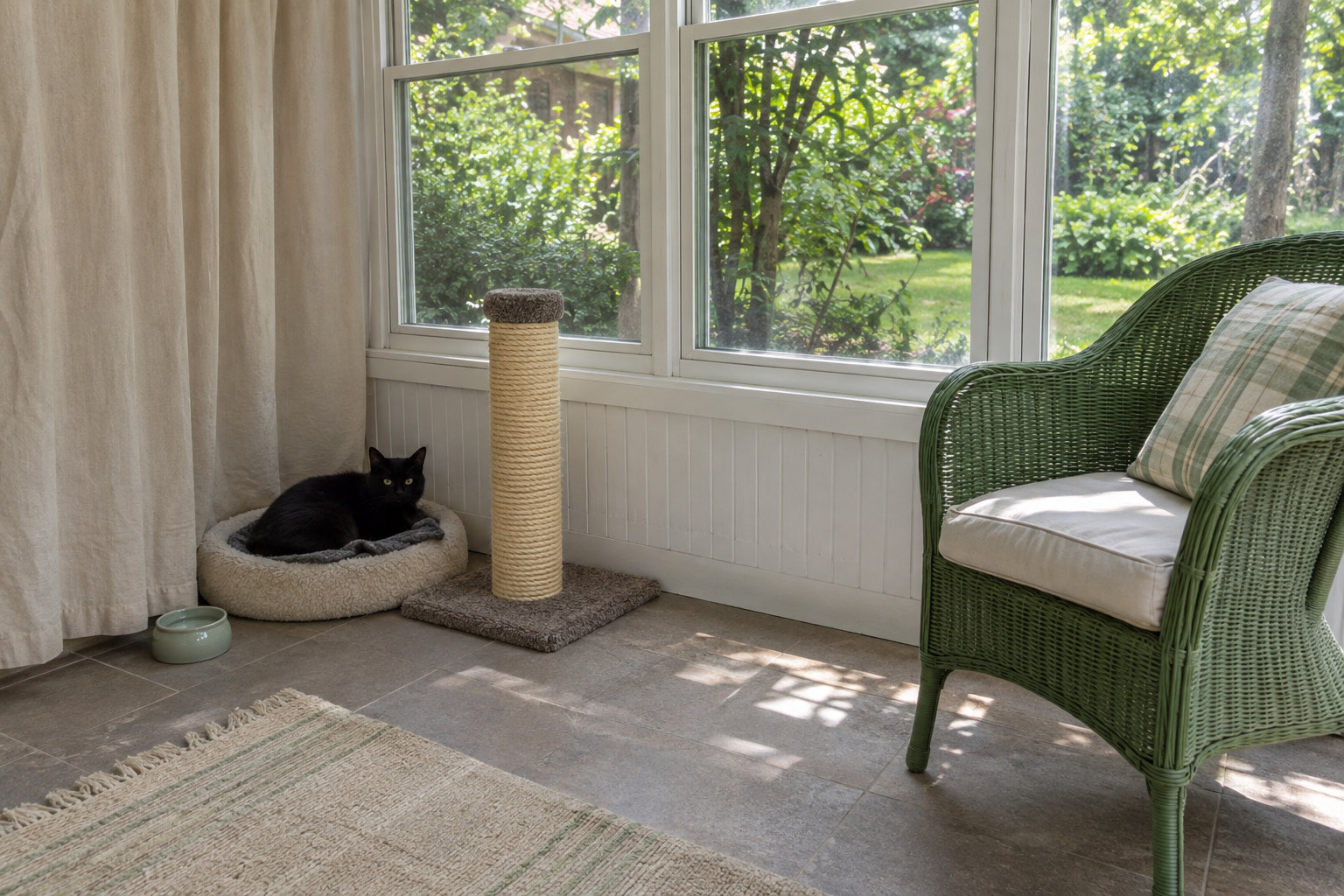
A sunroom can offer an attractive outlook, provided it functions as a suitable indoor environment throughout the times the cat uses it. Include reliable shade, a resting place away from the glazing, and a route back into the home. The window-side position should be a choice rather than the only comfortable destination.
Check the room in changing weather and at different hours. A pleasant morning photograph does not establish what the space feels like later in the day. Secure windows and doors appropriately, keep cords and loose shade fabric out of the cat’s route, and place water where it remains practical to reach and maintain. Choose a few stable pieces instead of filling the perimeter with delicate plant stands. If you add plants, verify each species’ suitability for cats rather than assuming every common indoor plant is harmless.
13. Room Divided with an Open Sightline Screen
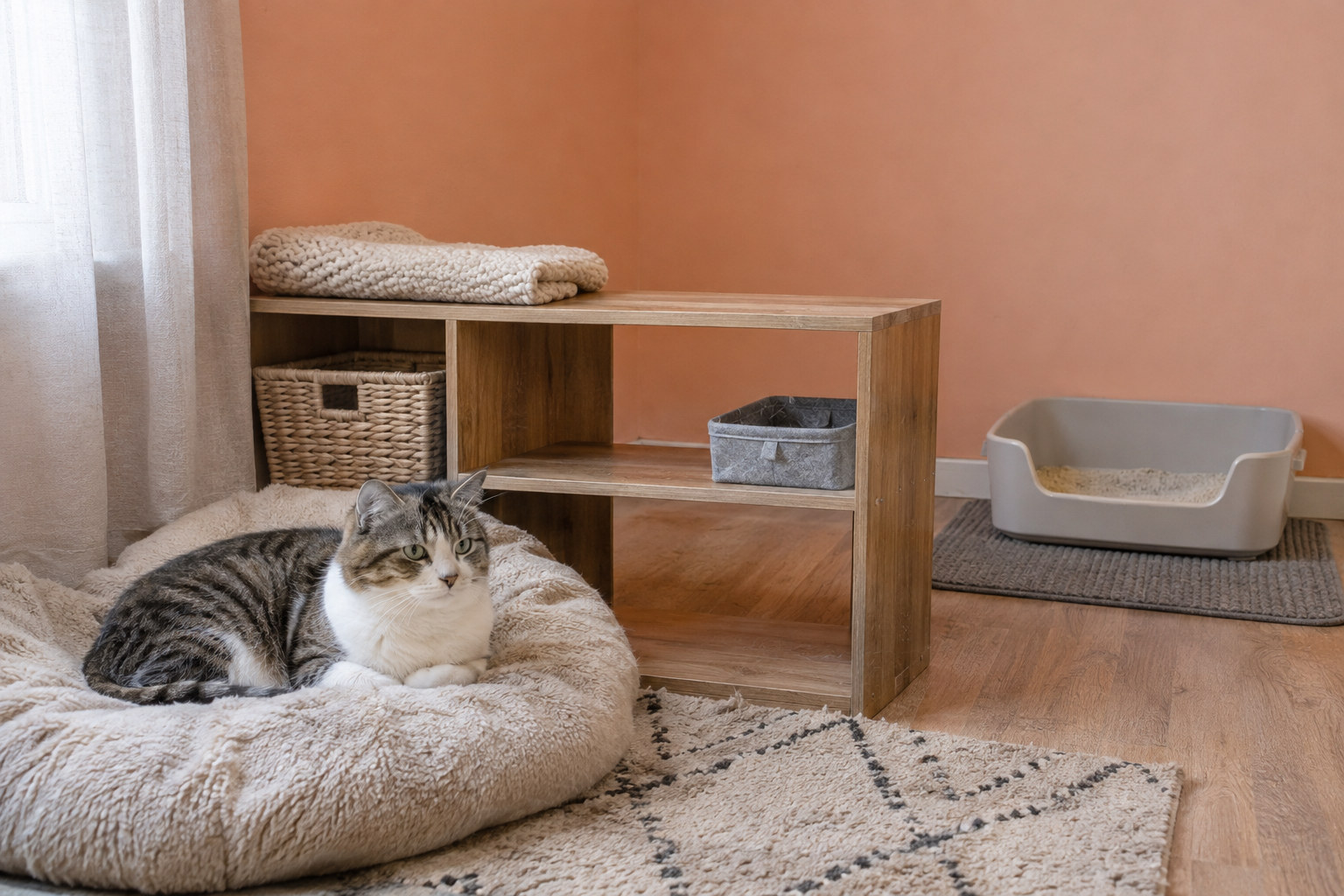
An open divider can give the room a more organized appearance while preserving separate functions. Use it to soften the view of a litter area from the resting side, for example, without enclosing the tray or creating a narrow access slot. Keep the divider stable and positioned outside the cat’s main turning space.
Walk the layout as if you are carrying a litter pan or a bundle of bedding. If maintenance requires lifting items over the divider, the arrangement needs adjustment. Keep the cat’s approach clear on both sides, and avoid making one resource depend on passing another cat’s preferred resting spot. A visual boundary should support a good location rather than disguise a poor one. Leave enough open space around the screen to see how the cat moves and whether it seems comfortable using the separate areas.
14. Guest Room with Fold-Away Human Furniture
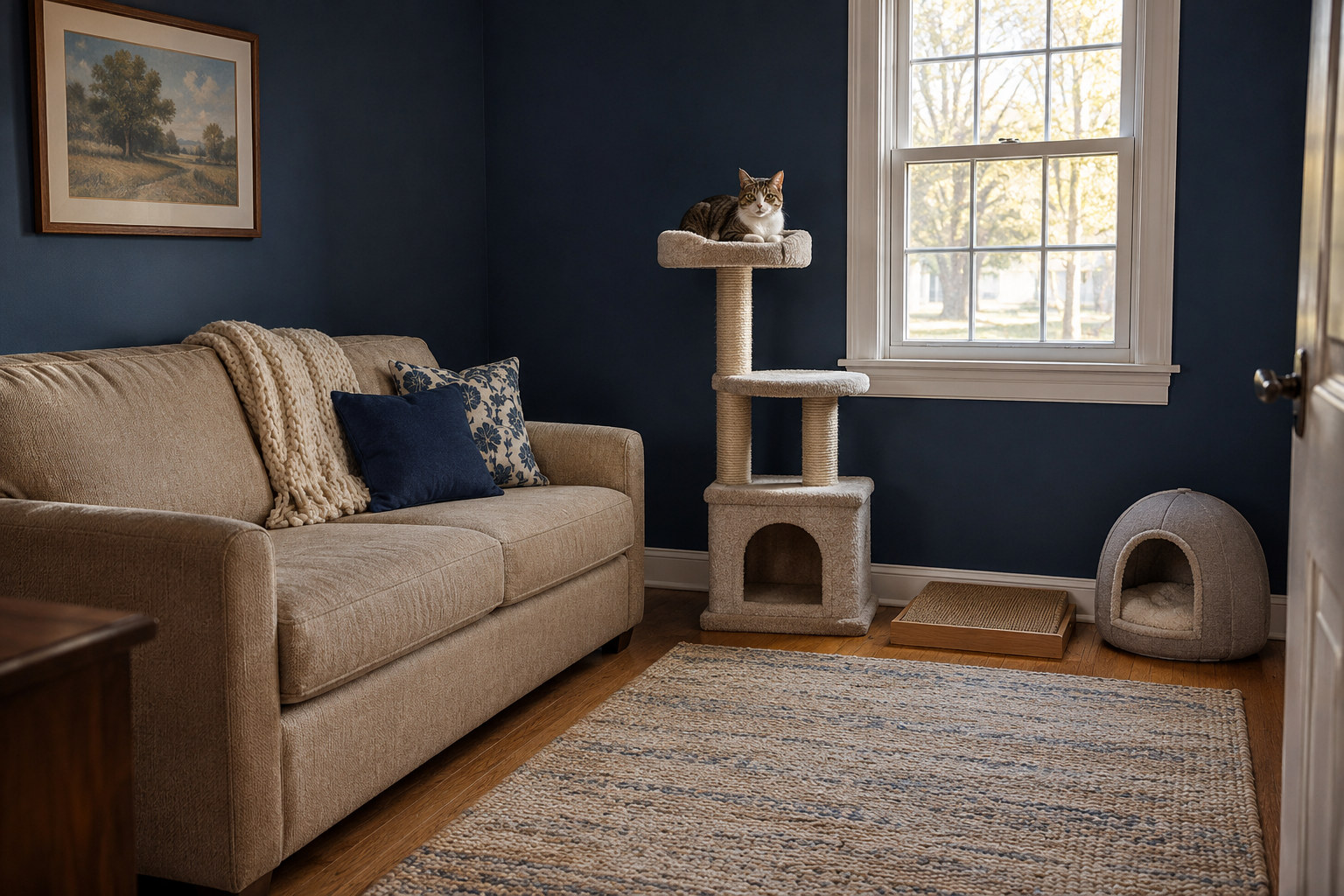
A guest room can work for a cat when the everyday arrangement leaves useful floor space. A fold-away or sofa-style human bed may free the center between visits, while a stable tree, hiding place, and scratcher keep their own positions around the edge. Choose locations that will still work when the bed is open.
Plan the guest version of the room before you finalize the cat version. Essential resources should not disappear behind luggage or become inaccessible when someone stays. If visitors change the cat’s access, provide suitable alternatives elsewhere and introduce the arrangement thoughtfully. Keep bedding storage separate from the cat’s equipment so opening the bed is straightforward. The most useful shared room is adaptable without requiring a complete rearrangement every time, allowing the cat’s familiar resting and access points to remain as consistent as possible.
15. Easy-Clean Room with Washable Resting Layers
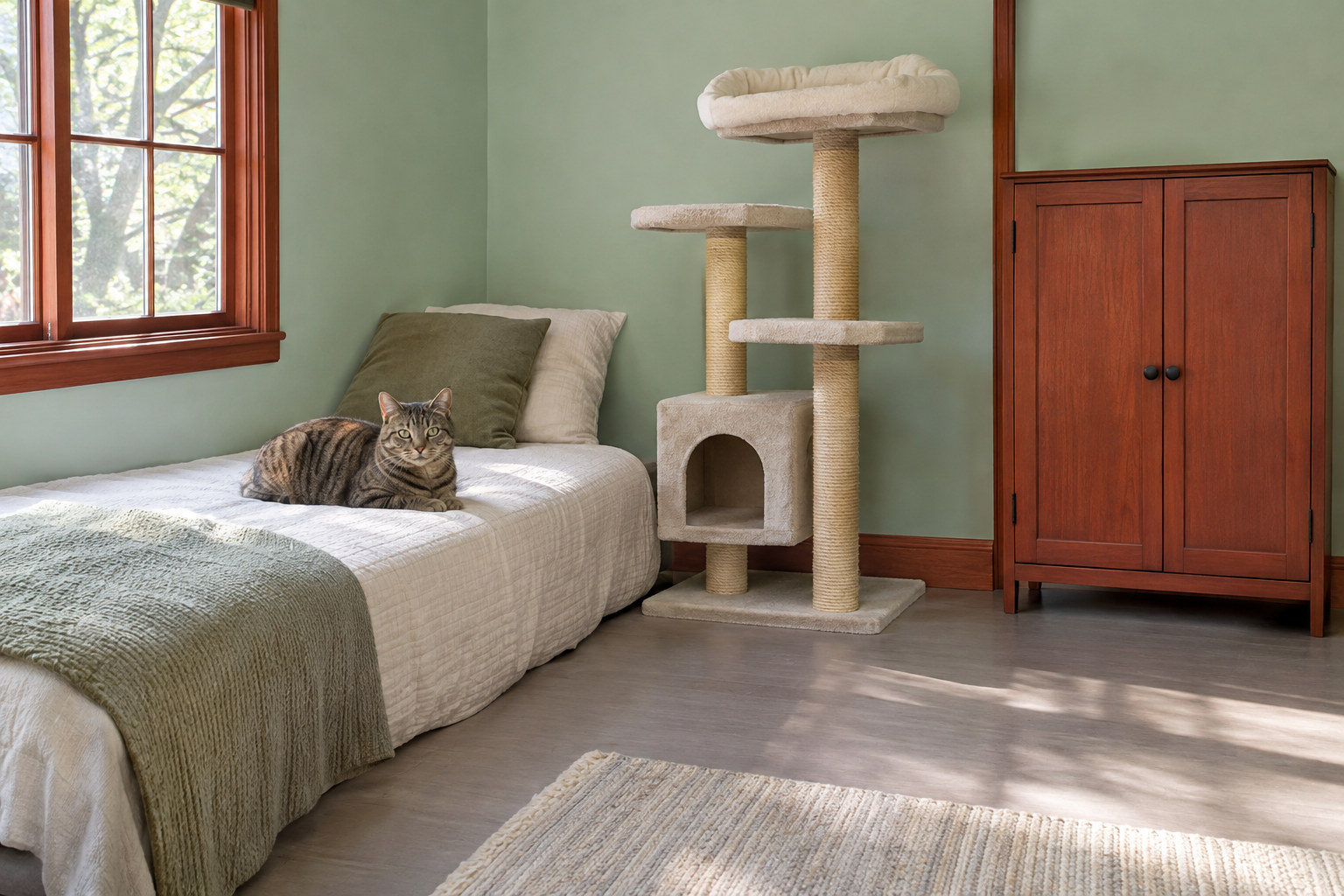
An easy-clean room begins with access, then materials. Leave enough space around furniture to reach the floor, choose bedding you can remove without dismantling a structure, and keep spare covers in a separate storage spot. A smooth appropriate floor and a few manageable textile layers are often easier to maintain than several overlapping rugs.
Follow the care instructions for the surfaces and products you choose, and keep cleaning supplies secured away from the cat. Think about drying as well as washing: a removable pad is only convenient if you have a usable spare or somewhere suitable for it to dry. Keep the room comfortable, with resting textures your cat likes, instead of stripping it back solely for appearance. The aim is a space you can reset easily while preserving the familiar places the cat chooses each day.
16. Quiet Room for a Cat That Avoids Busy Spaces
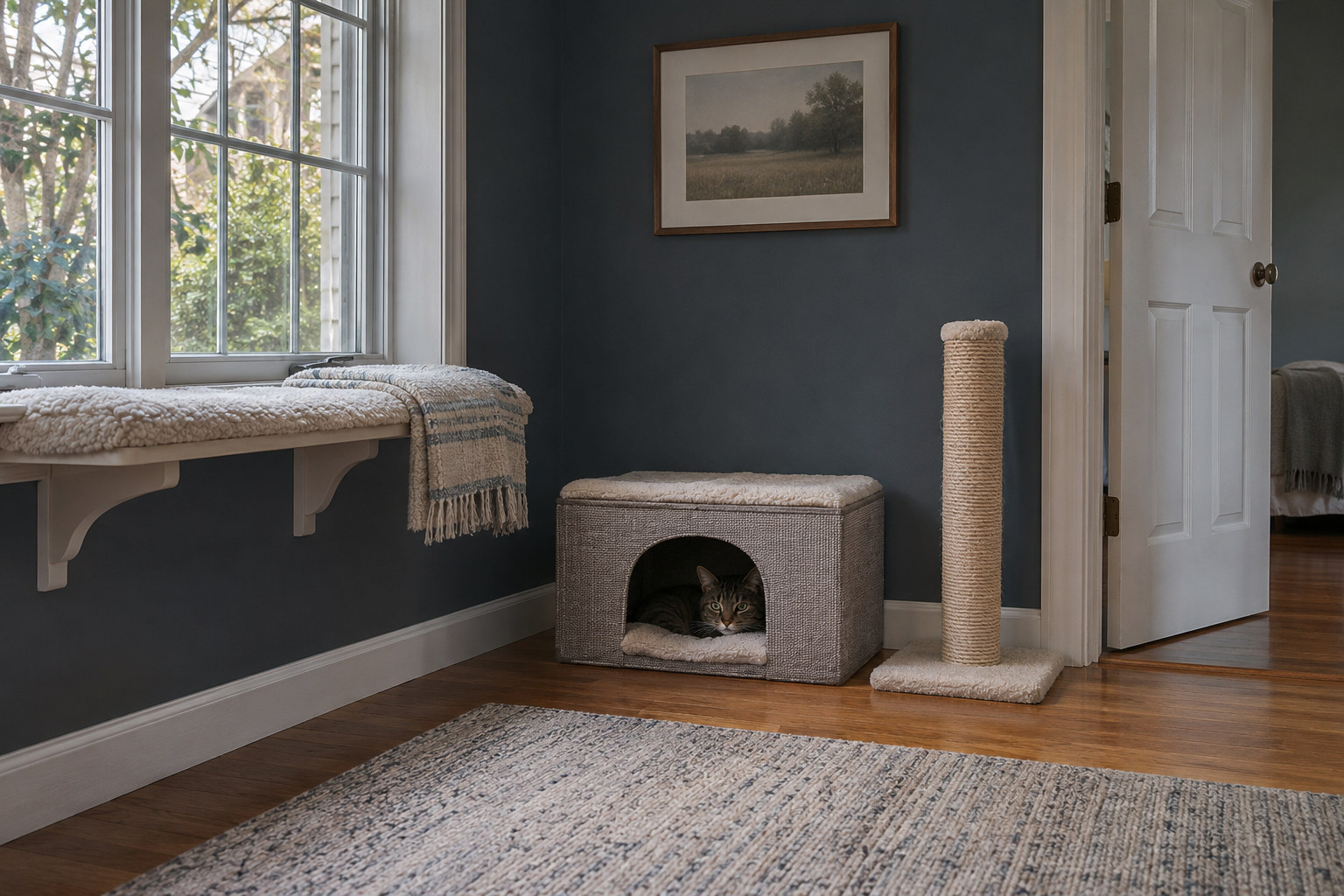
A quieter room can offer a useful retreat for a cat that avoids busy household areas. Place a sheltered resting spot where it can see the room without sitting directly in the doorway. Add a suitable window outlook and scratching option, keeping the central route uncomplicated.
Allow the cat to approach and leave the retreat voluntarily, and avoid turning it into a room that is regularly entered only for noisy cleaning or storage searches. Use closed storage for household belongings so the floor does not gradually fill with boxes. Gentle lighting and an orderly layout can make the space pleasant for you as well, but observe the cat rather than assuming a particular color creates calm. If avoidance or behavior changes suddenly, discuss that with your veterinarian. The room can provide choices while you address the reason for the change.
17. Shared Family Room with a Dedicated Cat Retreat
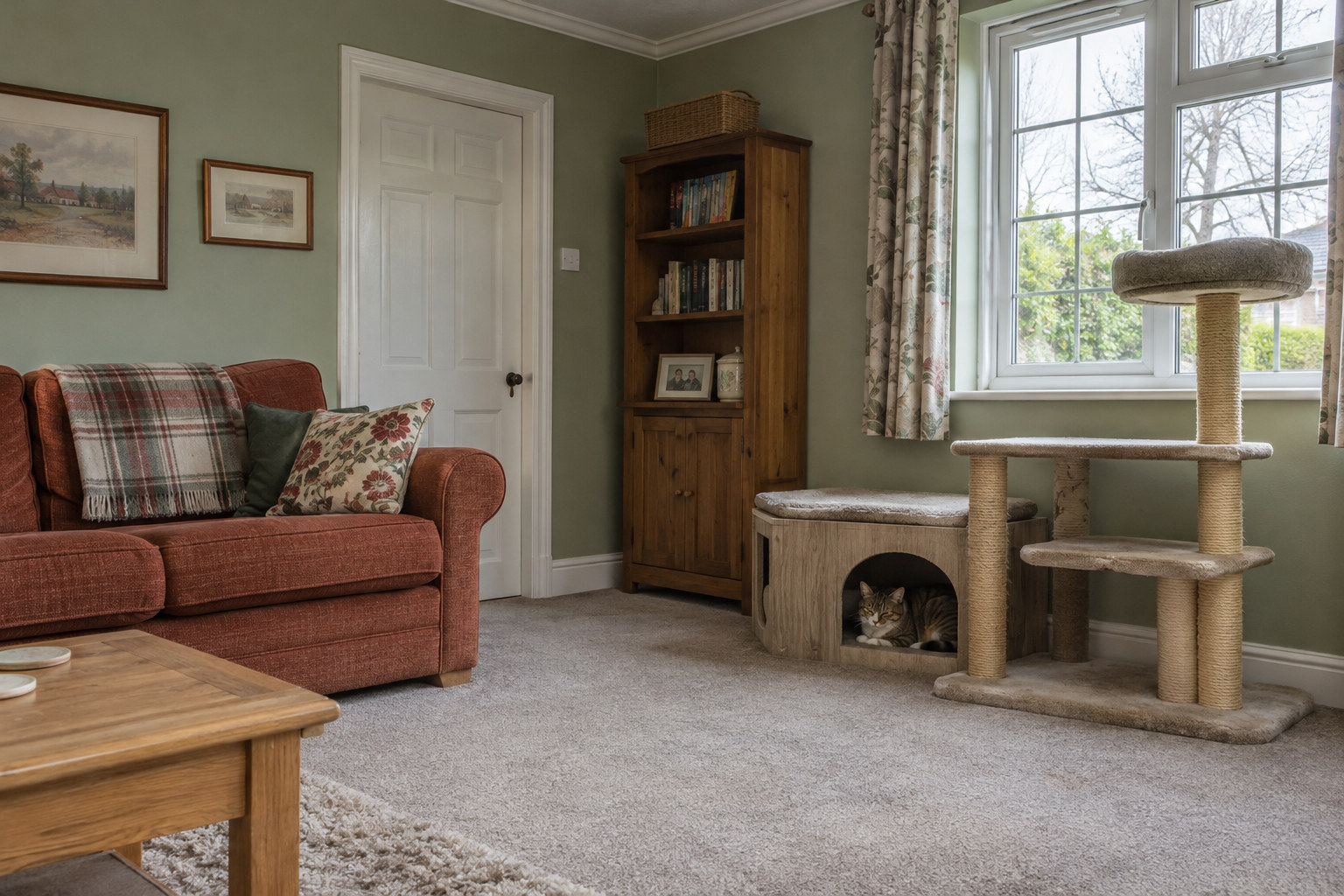
A family room can include a cat retreat without looking like a separate pet room has been inserted into it. Group a few useful pieces in a quieter corner, with a stable climbing option, a low hiding place, and a clear exit. Keep them away from the main route between the sofa, doorway, and television area.
Check how the corner works during normal family activity. A resting cubby beside a speaker or behind the place where children leave bags may be less quiet than it appears when the room is empty. Give the cat alternatives elsewhere, particularly if the room becomes busy. Repeat a wood tone or textile color from the surrounding furniture to connect the zone visually. The most successful shared layout lets the family use the room normally while the cat can choose closeness, height, or a more sheltered resting place.
Build the Room Around Choices and Clear Routes
Start with essential resources
Place food, water, litter, and resting areas before fitting decorative storage around them. Keep access predictable and check how the layout changes when doors open, visitors arrive, or furniture is used. A room that works only in its photographed arrangement will need frequent correction.
Ohio State’s litter-box guidance recommends accessible, quiet locations and generally one box per cat plus one. Plan the household distribution as well as the room itself. A dedicated cat room does not mean every essential resource must be clustered into that one space.
Offer height without making every route difficult
Elevated resting can be part of the room, but the path to it should suit the individual cat. Ohio State’s perch guidance emphasizes sturdy resting places. Check the stability and installation requirements of the furniture or mounting system you use instead of choosing by appearance alone.
Provide lower alternatives too. A cat may choose a different resting level depending on activity, age, company, or how it feels that day. Avoid relying on one dramatic jump as the only route to a favorite location. If a structure needs fixing to the building, the wall construction and suitable attachment need proper assessment.
Keep maintenance easy to repeat
Before buying a large piece, check how its cushions, covers, and scratching surfaces are removed or replaced. Leave space to move it if needed, and make sure your cleaning tools can reach behind it. A small room benefits from fewer pieces with clear functions and accessible edges.
Get the Fail-Safe Paint Color Playbook (Free PDF)
36 proven colors • 8 ready palettes • trim & sheen guide • printable testing cards.
Store spare bedding, toys, and supplies in a place that does not compete with the cat’s floor routes. Keep the daily essentials reachable for you so tidying the room does not require shifting the entire layout. The ability to maintain the space is part of its design, not a task to solve after the furniture arrives.
Give the Room Personality Without Adding Clutter
Wall color can do much of the decorative work. A simple two-color wall arrangement can connect the resting and activity areas, while these paint designs using tape offer ideas for a more playful backdrop. Keep renovation products and equipment away from the cat, and follow the product instructions for application, drying, ventilation, and re-entry.
Repeat a small selection of colors across washable covers and furniture rather than adding many decorative objects at perch height. Keep shelves used by the cat free of fragile ornaments. Choose artwork for walls outside its route, and avoid loose cords or hanging details that change an otherwise clear path.
Introduce Changes Gradually
Begin with the main resting, scratching, and resource locations, then watch how your cat uses them. You may discover that the lower bed is preferred, the window perch is busiest at a particular time, or a piece of furniture blocks an easy exit. Adjust those practical details before buying more equipment.
Keep familiar options available while the room changes, and give the cat time to explore. The finished space should earn its value through daily use: a place the cat chooses to rest, play, scratch, and spend time comfortably. An attractive photograph is a helpful starting point for inspiration, but the cat’s choices tell you which parts of the layout deserve to stay.