
15 DIY Cat Tree Ideas with Materials and Layouts to Compare
A DIY cat tree starts with a useful question: what would your cat actually do on it? One cat wants a broad window perch. Another prefers a low enclosed resting spot. A confident climber may enjoy several levels, while a more cautious cat needs an easier route.
These 15 DIY cat tree ideas compare materials, footprints, and climbing layouts so you can choose a sensible direction before buying timber. Each concept combines places to climb, scratch, or rest in a different way.
Get the Fail-Safe Paint Color Playbook (Free PDF)
36 proven colors • 8 ready palettes • trim & sheen guide • printable testing cards.
Treat the images as design inspiration and plan the structure for your own materials, room, and cat. Dimensions, joints, wall connections, and load capacity need to come from an appropriate build plan or competent construction advice, rather than from a photograph alone.
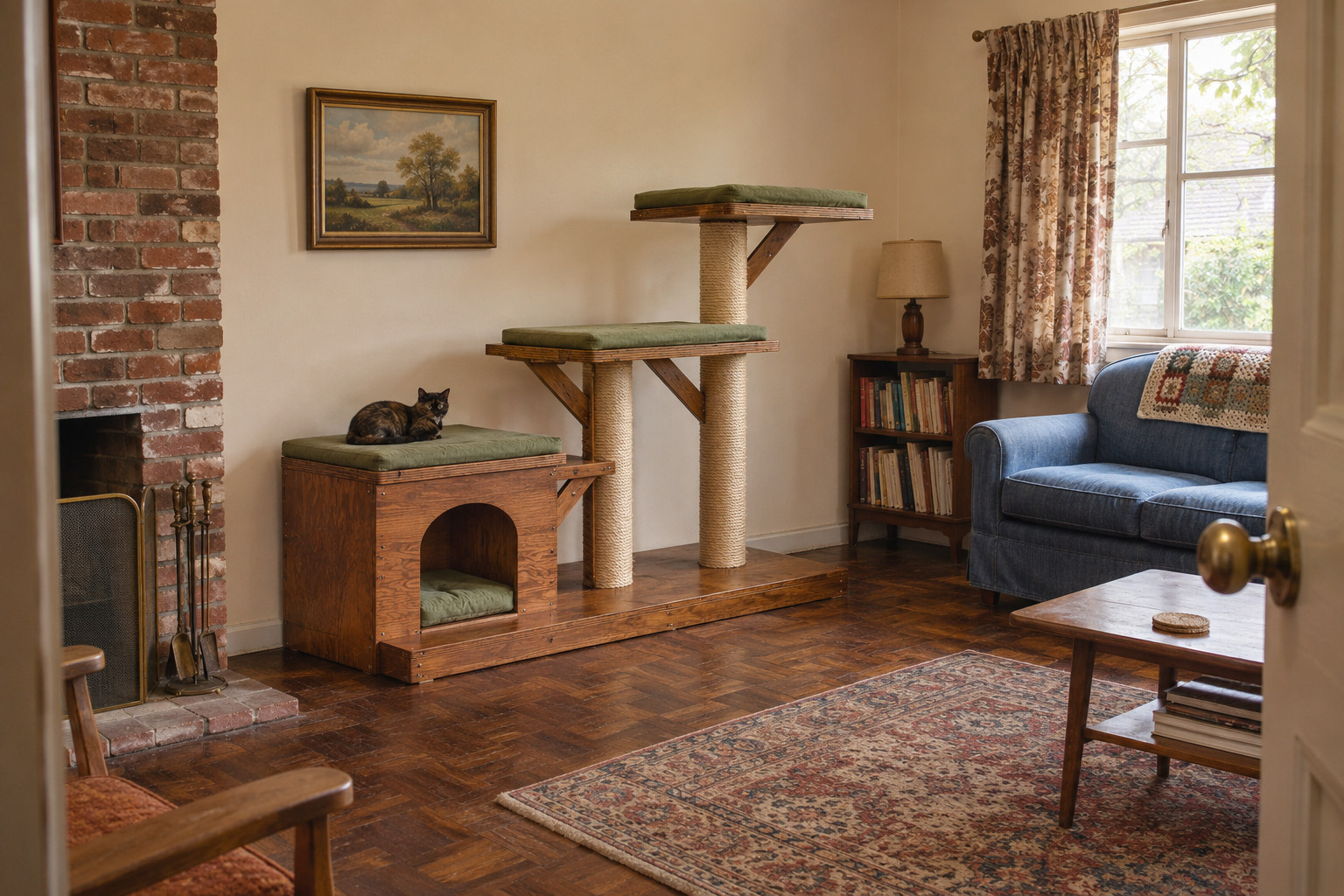
1. Build a Broad-Base Plywood Tower
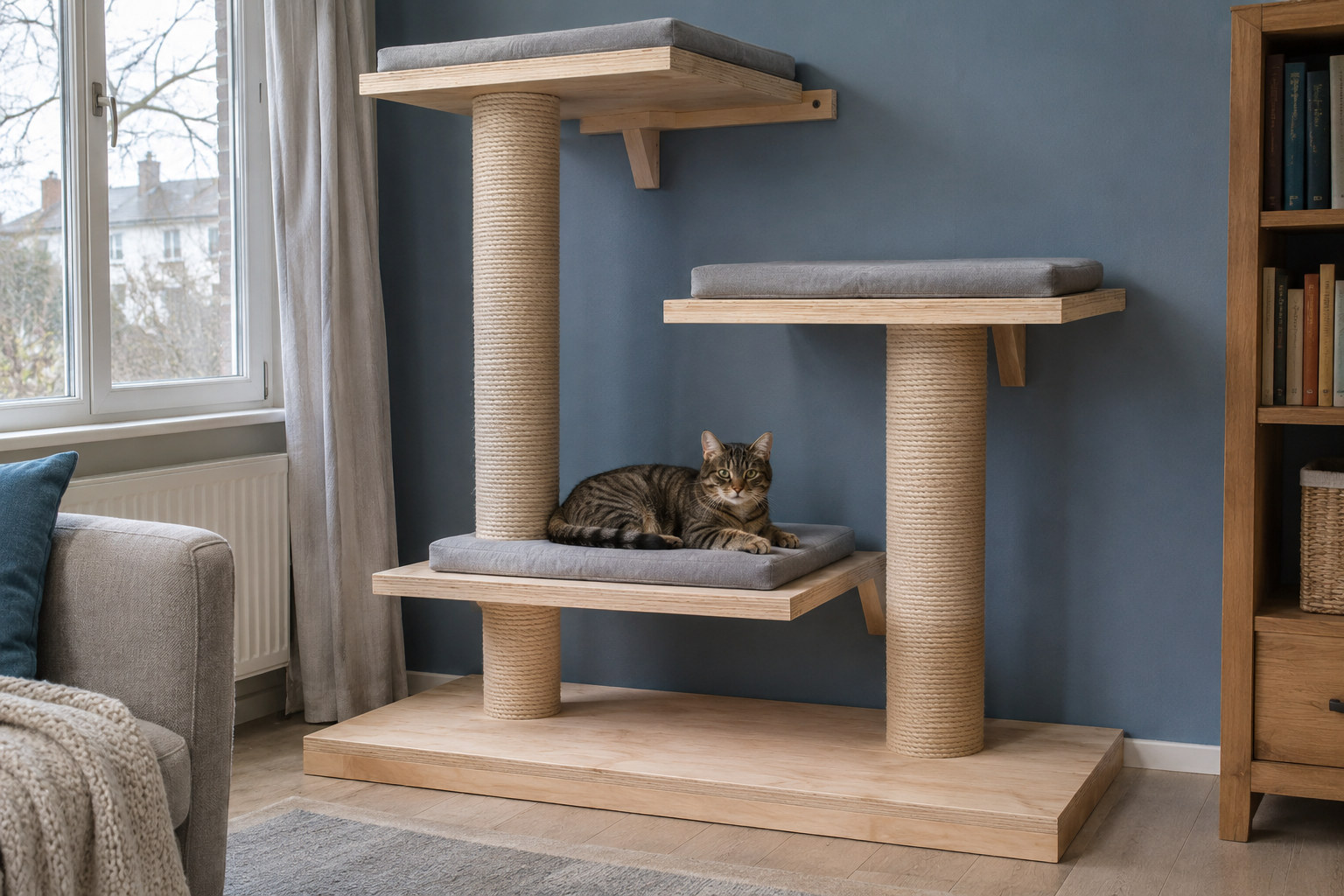
A plywood tower is a flexible starting point because you can shape the platforms around the cat and the available corner. Use a broad base and a small number of generously sized levels rather than adding many tiny ledges. Stagger the platforms so there is a clear route up and an equally usable route down.
The appeal is the balance between solid resting surfaces and an open structure. Keep the upper platforms supported by the actual frame or posts, with connections designed for the assembly. A discreet wall brace may be part of the plan, but it does not replace an adequately built base.
Finish edges smoothly and choose removable pads that fit without curling into the climbing path. Natural plywood can look attractive against painted walls, so the design does not need elaborate trim to feel complete.
2. Turn Strong Cubby Boxes into a Low Climbing Stack
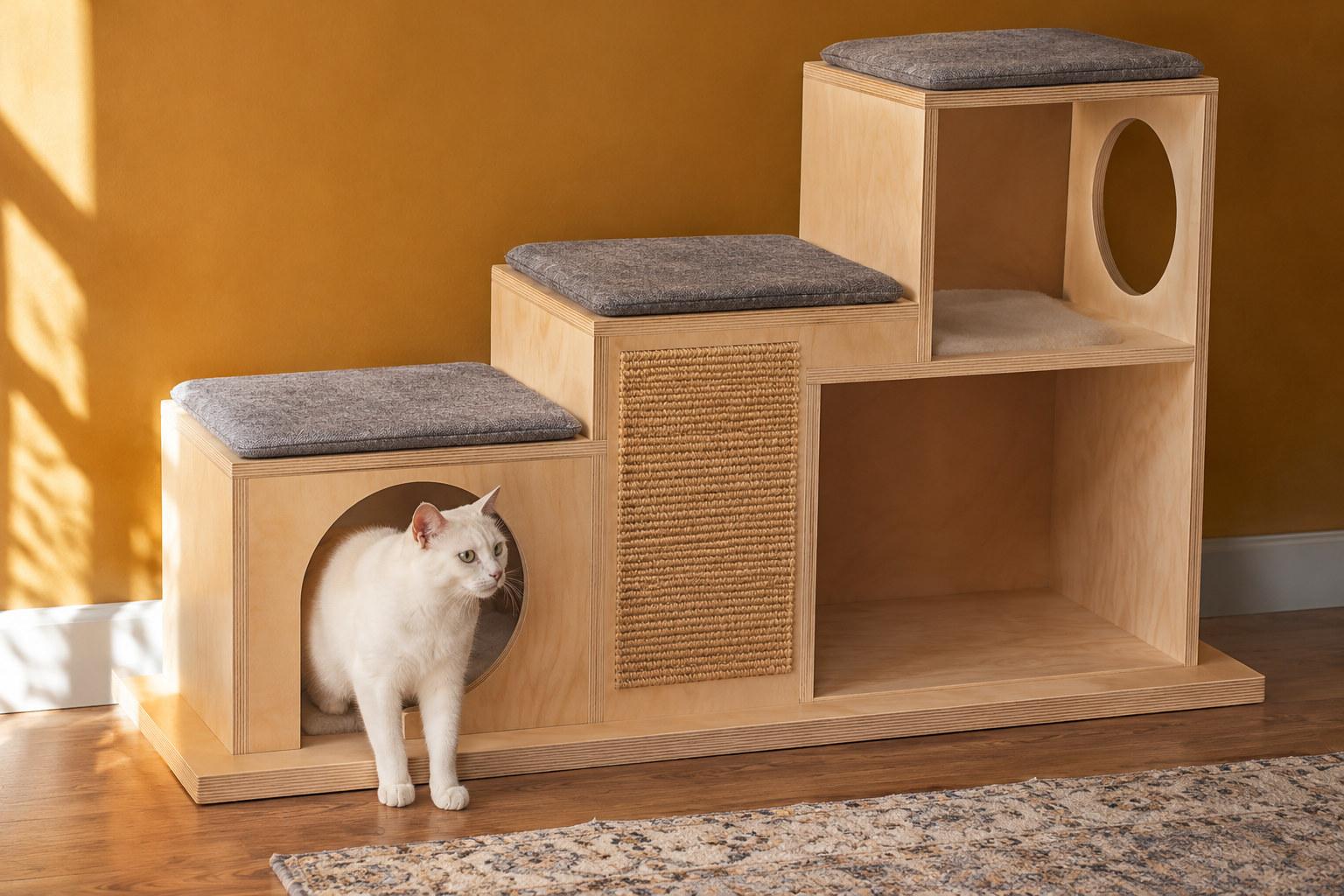
A low stack of strong cubby boxes can create a climbing tree with sheltered resting places. The important distinction is that the boxes form one securely joined structure on a suitable base. Loose decorative crates piled together are not an equivalent construction.
Arrange the openings so the cat can see and use the route between levels. Keep the first step easy to reach and provide a generous place to pause before moving higher. A low design can be useful when you want climbing interest without a tall feature dominating the room.
Solid boxes offer plenty of surfaces to inspect and clean. Choose smooth interiors and removable bedding rather than heavily upholstering every recess. Before adapting purchased storage furniture, check whether its materials and joints are appropriate for the intended modification.
3. Use a Corner for a Braced Climbing Tree
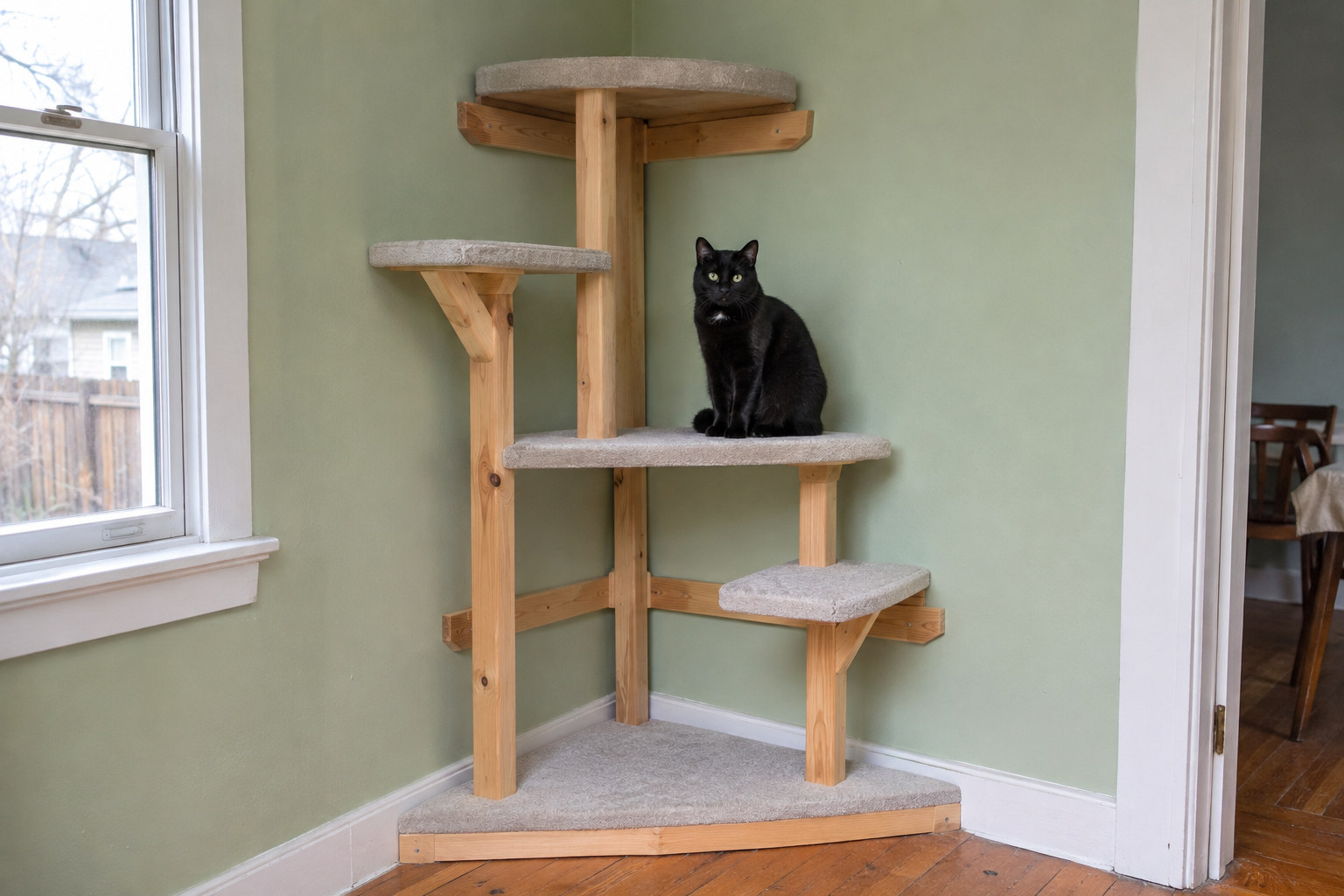
A corner tree uses two walls as part of the layout, which can make the structure less intrusive in a small room. Plan the base and platforms within the corner while leaving a clear approach from the open side. Avoid placing the lowest step where a door can strike it.
Wall connections must suit the wall structure and the furniture design. A braced tree still needs well-supported platforms and sound joints. Locate the connection points before finalizing the shape, rather than building first and hoping the required support exists behind the plaster.
Keep enough space behind and beneath the tree for cleaning. A triangular platform may suit the corner visually, but the usable surface still needs to accommodate the cat comfortably. A slightly larger resting area often contributes more than another level.
4. Make Low Steps for a Cat Who Avoids Big Jumps
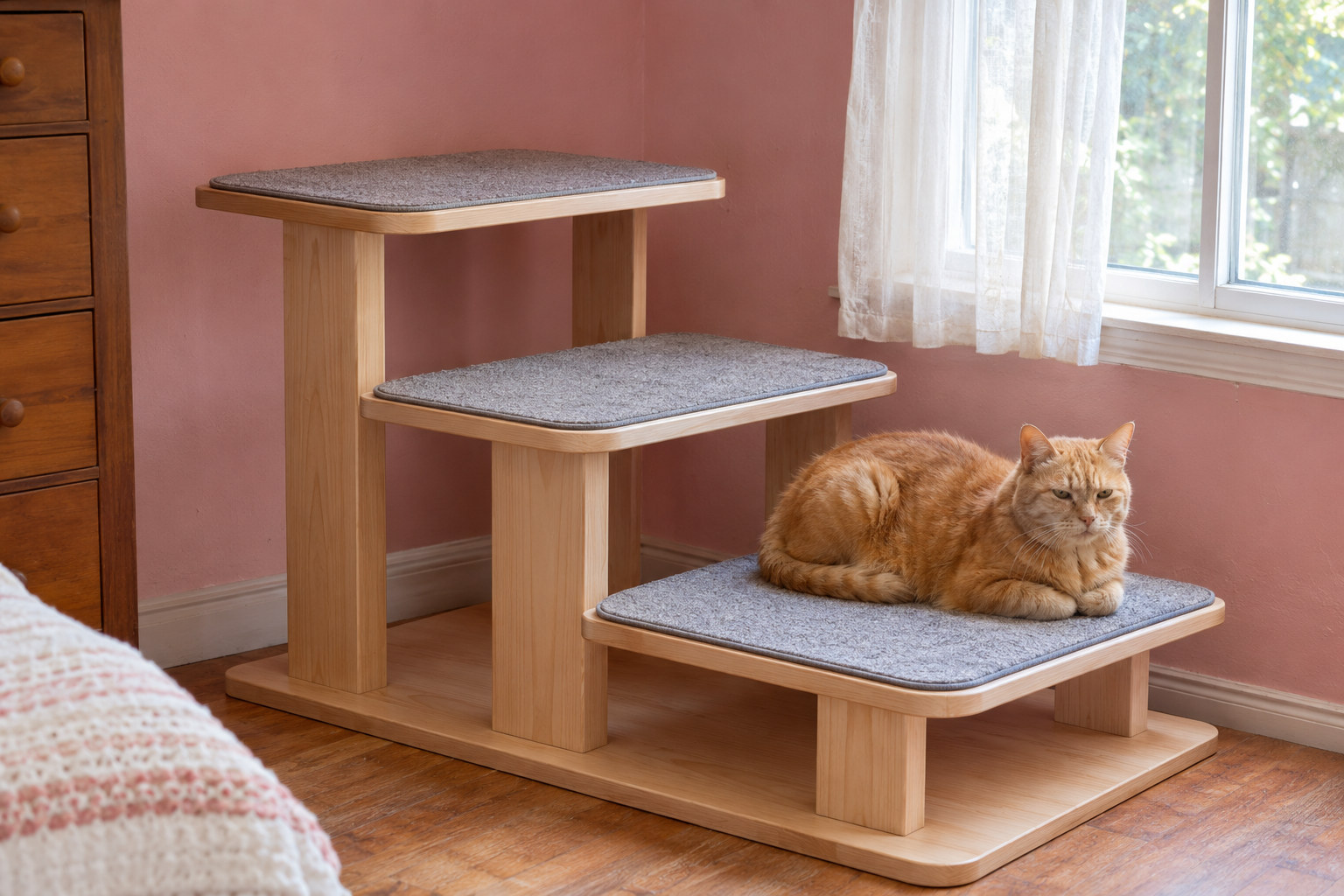
A low stepped structure is useful for a cat that prefers small changes in height. Build the layout around broad resting platforms and a straightforward route, with the first step close to the floor. The aim is easy access, not a miniature obstacle course.
Choose a stable footprint and grippy surfaces that remain securely attached. Keep platform edges easy to see and leave space to turn around. A sequence that looks neat from the front may be awkward if the cat has to reverse along a narrow ledge to descend.
Observe the heights and routes your cat already uses comfortably. If mobility has changed, ask your veterinarian about its needs before deciding on a climbing arrangement. You can then adapt the room and furniture to that advice instead of guessing at a suitable challenge.
5. Give Two Cats Separate Ways Up
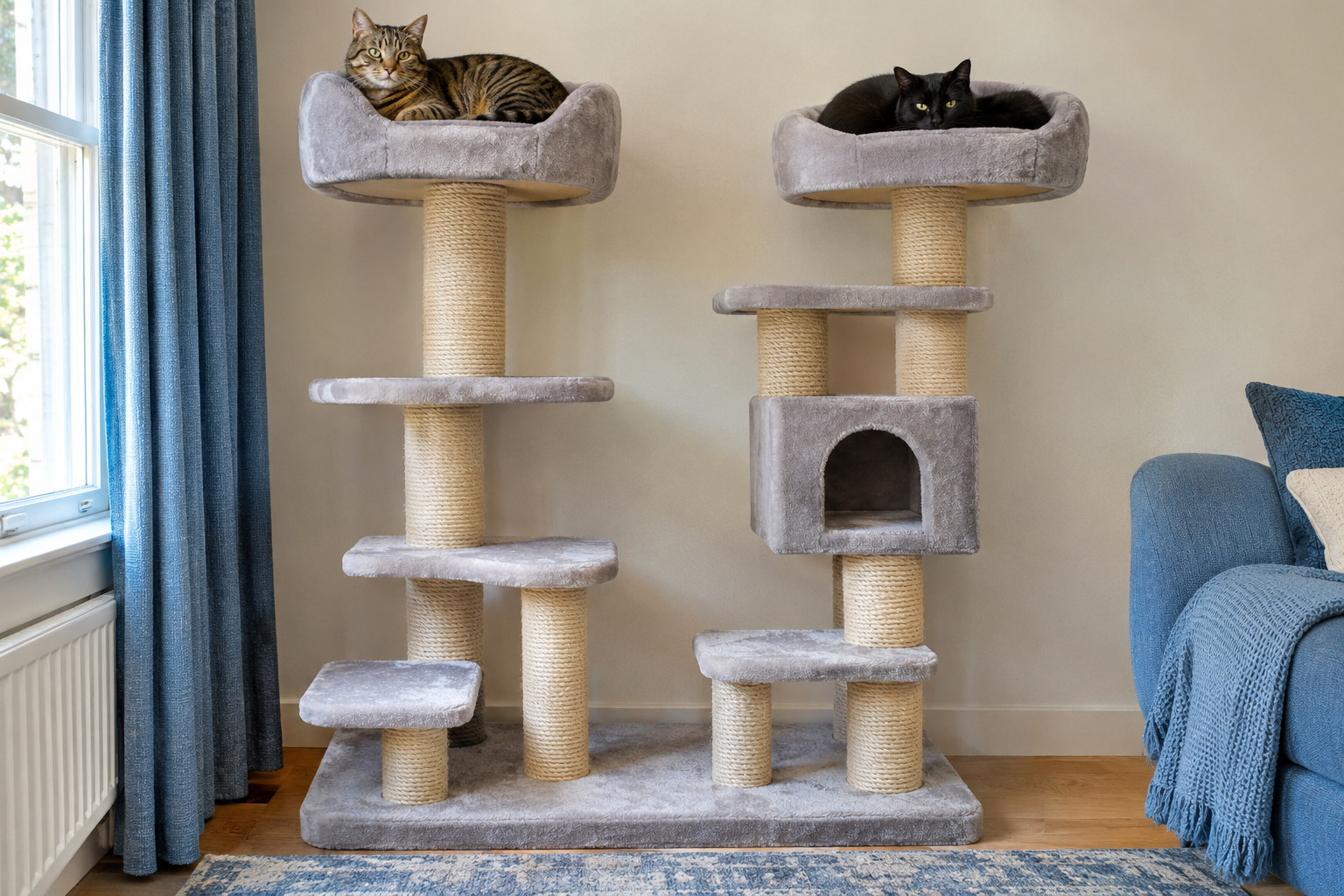
A wide two-column tree can offer separate approaches and resting spots for two cats. Start with the floor space needed for a stable shared base, then plan a route on each side. Avoid making one small central platform the only way to reach both upper beds.
The two sides do not need to be identical. One cat may prefer an open perch while the other uses a lower cubby. Give each resting position enough room and consider how a cat will leave if the other is occupying a nearby level.
This design requires more planning than simply duplicating a single post. The combined frame, platform connections, and base should be designed as one structure. Visually, repeat the same timber and pad fabric so the wider tree reads as a coherent piece of furniture.
6. Convert a Solid Bookcase into a Climbing Station
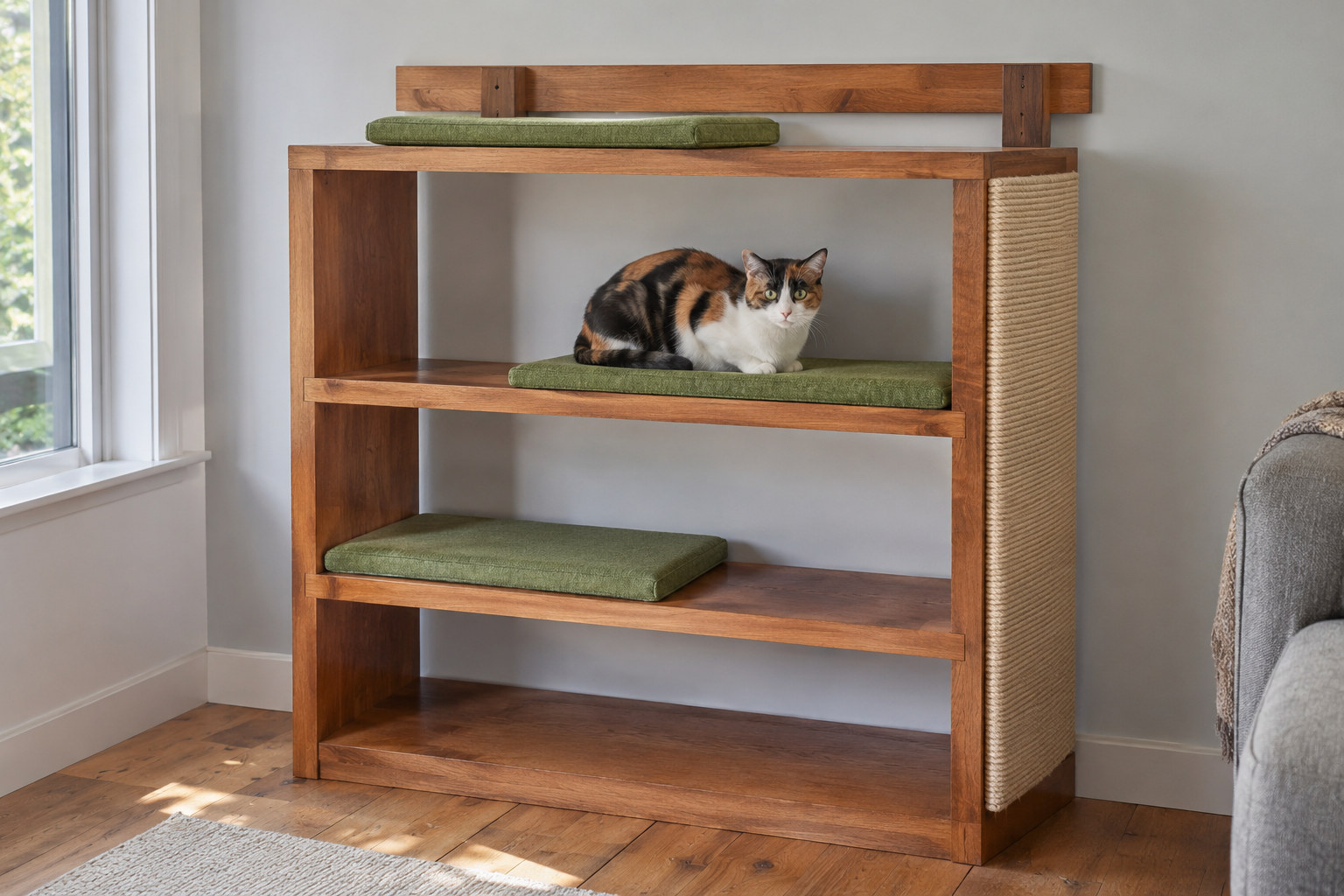
A solid bookcase may provide the starting form for a climbing station, but only if its construction suits the conversion. Inspect the material, joints, shelves, and wall restraint before cutting openings or adding climbing surfaces. Lightweight shelving with a thin back panel may be unsuitable for the idea.
Plan a sequence of generous openings so the cat can move between levels without squeezing through awkward gaps. Keep enough of the structure intact to preserve the intended support, seeking construction advice where modifications affect it. Do not treat a cabinet’s original storage rating as proof of a modified climbing design.
Use removable pads and an external scratching panel to make the piece useful without hiding every surface. A restrained finish lets it blend with other storage furniture while keeping the cat’s route easy to understand.
7. Build a Long Window-Height Resting Platform
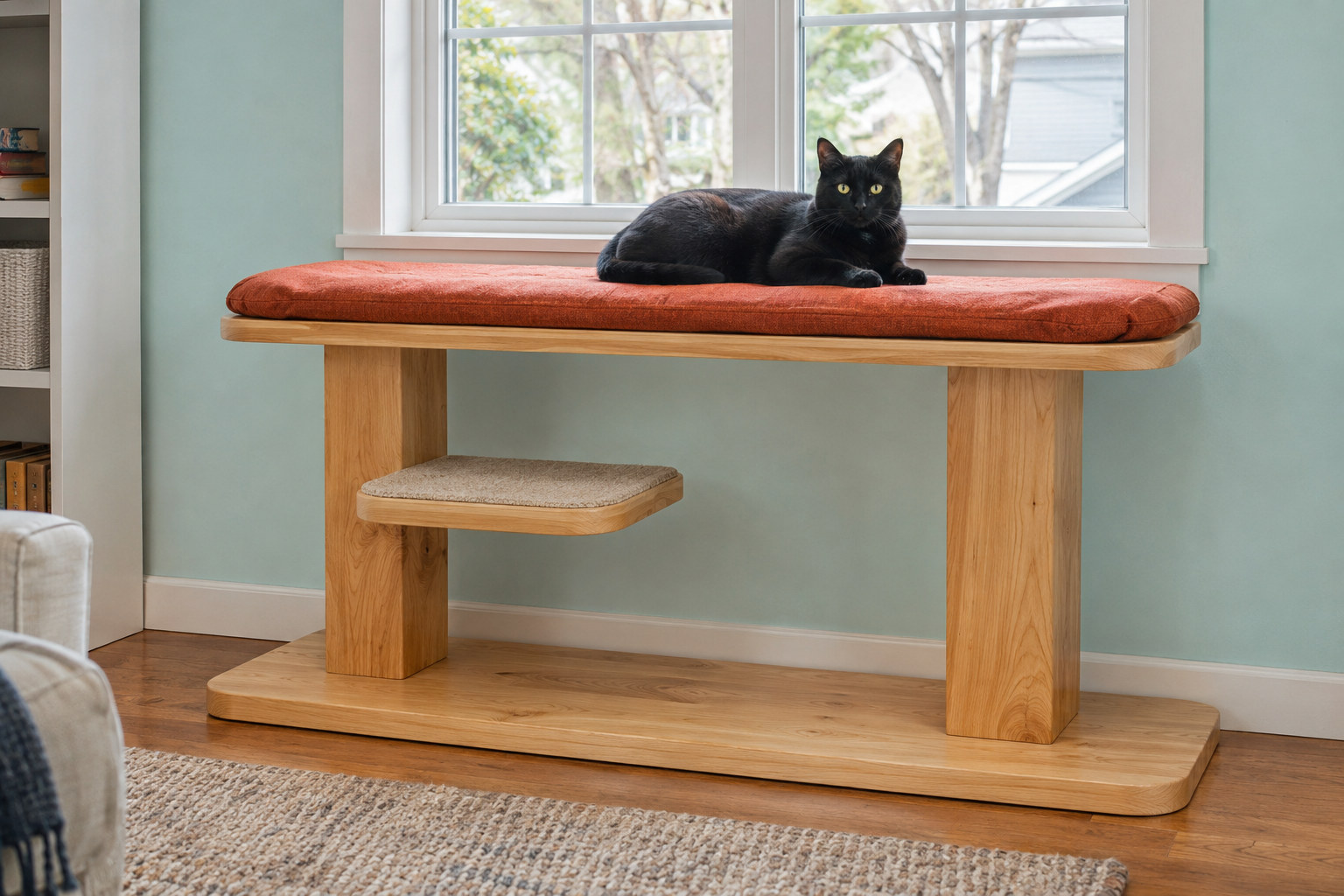
A long resting platform near a window can suit a cat that values watching more than climbing high. Support the platform across a suitable frame or multiple posts, with a broad base and an intermediate step for access. Place it near the window without relying on the glazing or sill for support.
Keep the window securely arranged and remove accessible blind cords from the route. Check the position at different times of day so the resting surface is not always in direct sun. The cat should have other places to settle elsewhere in the room.
Ohio State’s Indoor Pet Initiative discusses sturdy perches that provide resting and viewing opportunities. For this design, the useful feature is the generous resting surface and outlook, rather than maximum height or complicated climbing hardware.
8. Make a Scratching Tree with One Generous Perch
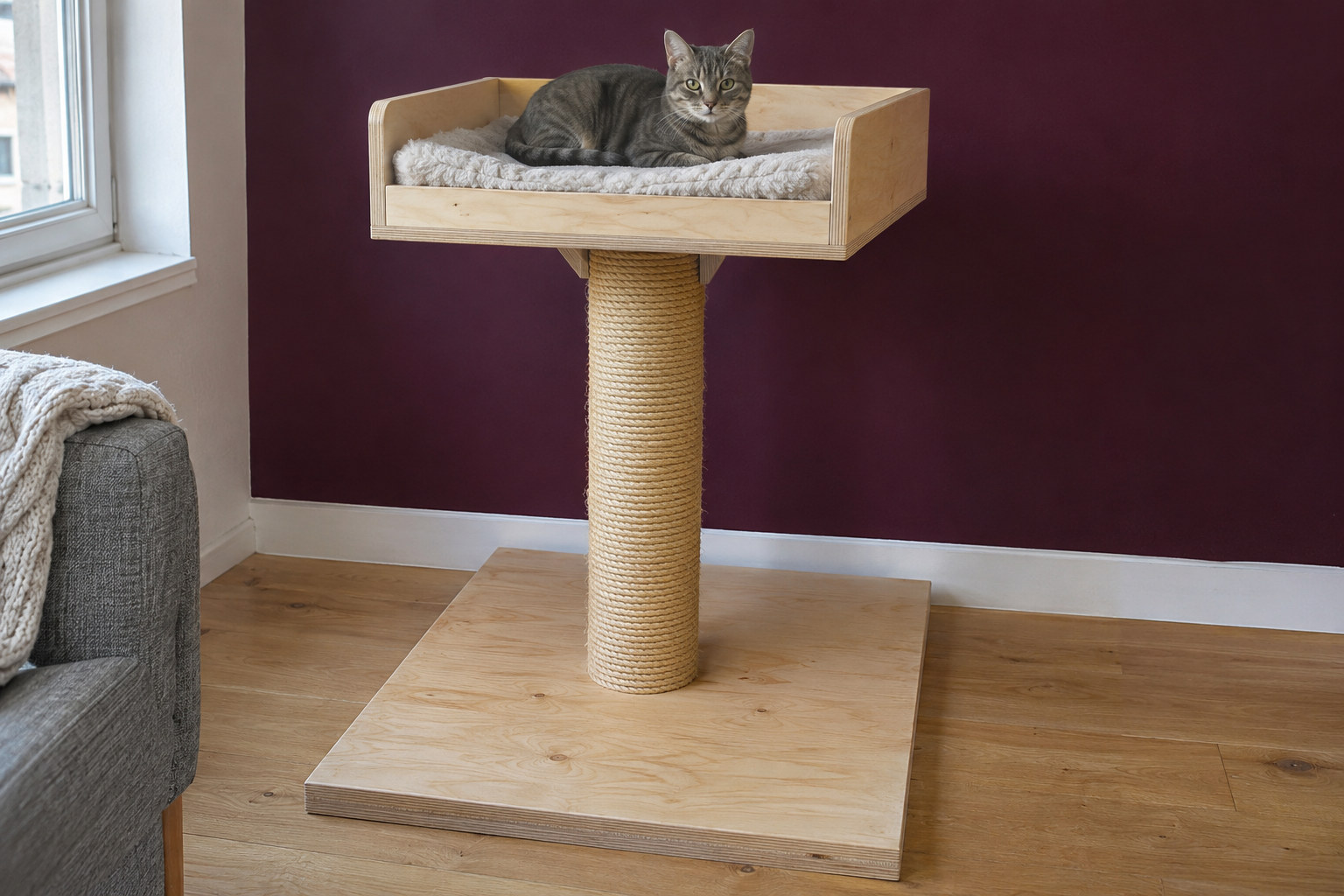
One substantial scratching post with a comfortable top perch can be more useful than a crowded tower. Plan the scratching length around the cat’s reach and give the base enough stability for the intended structure. The perch should be supported by the frame, not merely balanced on top of a thin pole.
Cats Protection recommends stable scratching equipment that allows a cat to stretch. Observe whether your cat prefers a vertical or horizontal surface before choosing the main scratching element. A separate horizontal pad can remain part of the room if that suits its habits.
Keep rope ends and fasteners securely finished, with no loose loops in the climbing area. A simple tree makes wear easier to notice and can be easier to repair than a heavily covered multi-level piece.
9. Create a Tree with Removable Washable Pads
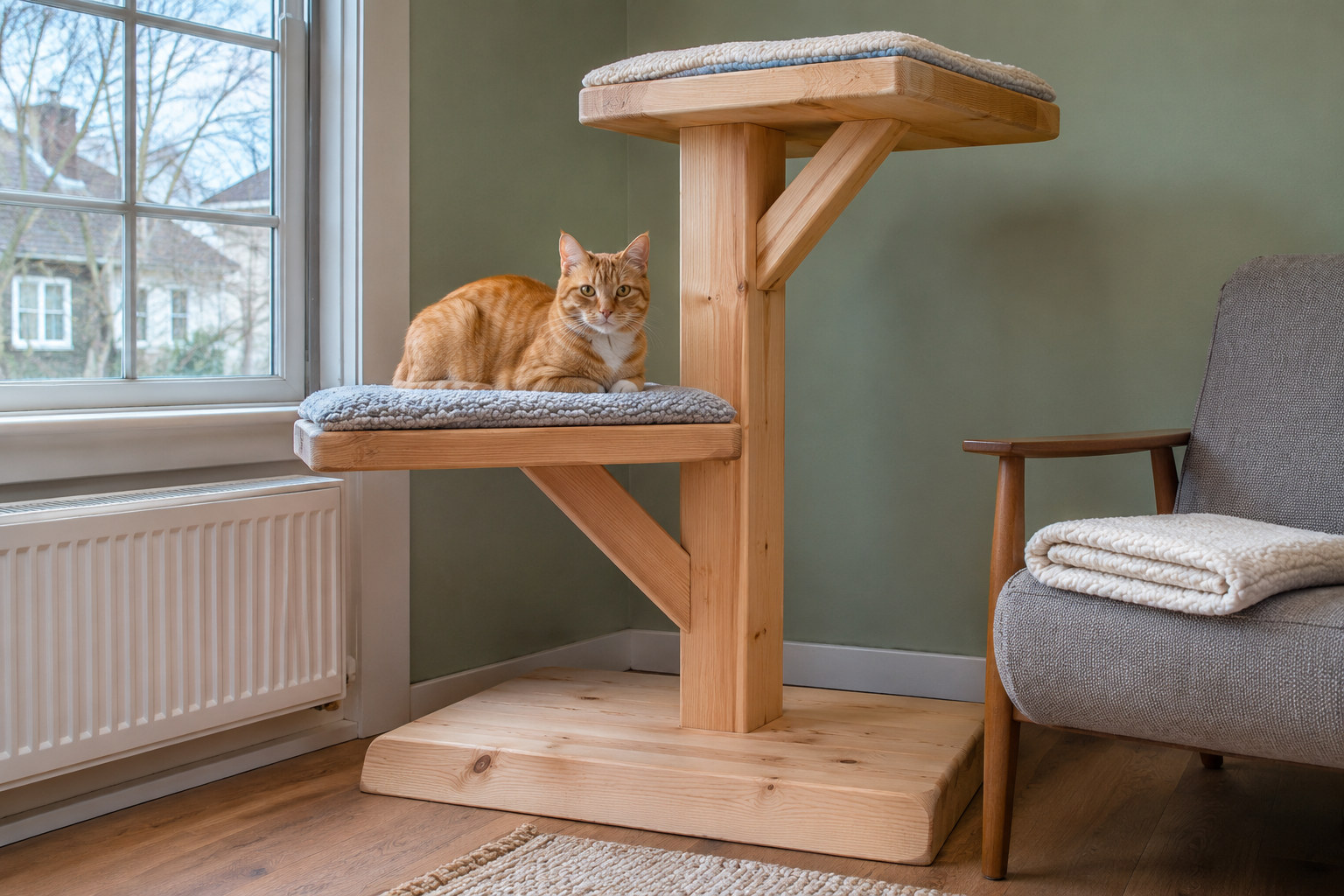
Removable pads make it possible to freshen the resting surfaces without replacing the whole tree. Design the platforms first, then choose a practical fastening method that keeps each pad secure during use and allows removal for washing. Follow the fabric and fastening manufacturers’ care instructions.
Use a consistent pad shape where the layout permits. Having two covers of the same size can simplify laundry and future replacement. Avoid adding thick padding that reduces an already small platform to a narrow perch or obscures its edge.
Keep the structural surfaces accessible for inspection. If every joint is hidden beneath permanent upholstery, a loose connection may be harder to notice. Neutral pads can blend into the room, while a restrained color gives a plain timber tree a more personal finish.
10. Use a Bench as the Base of a Climbing Tree
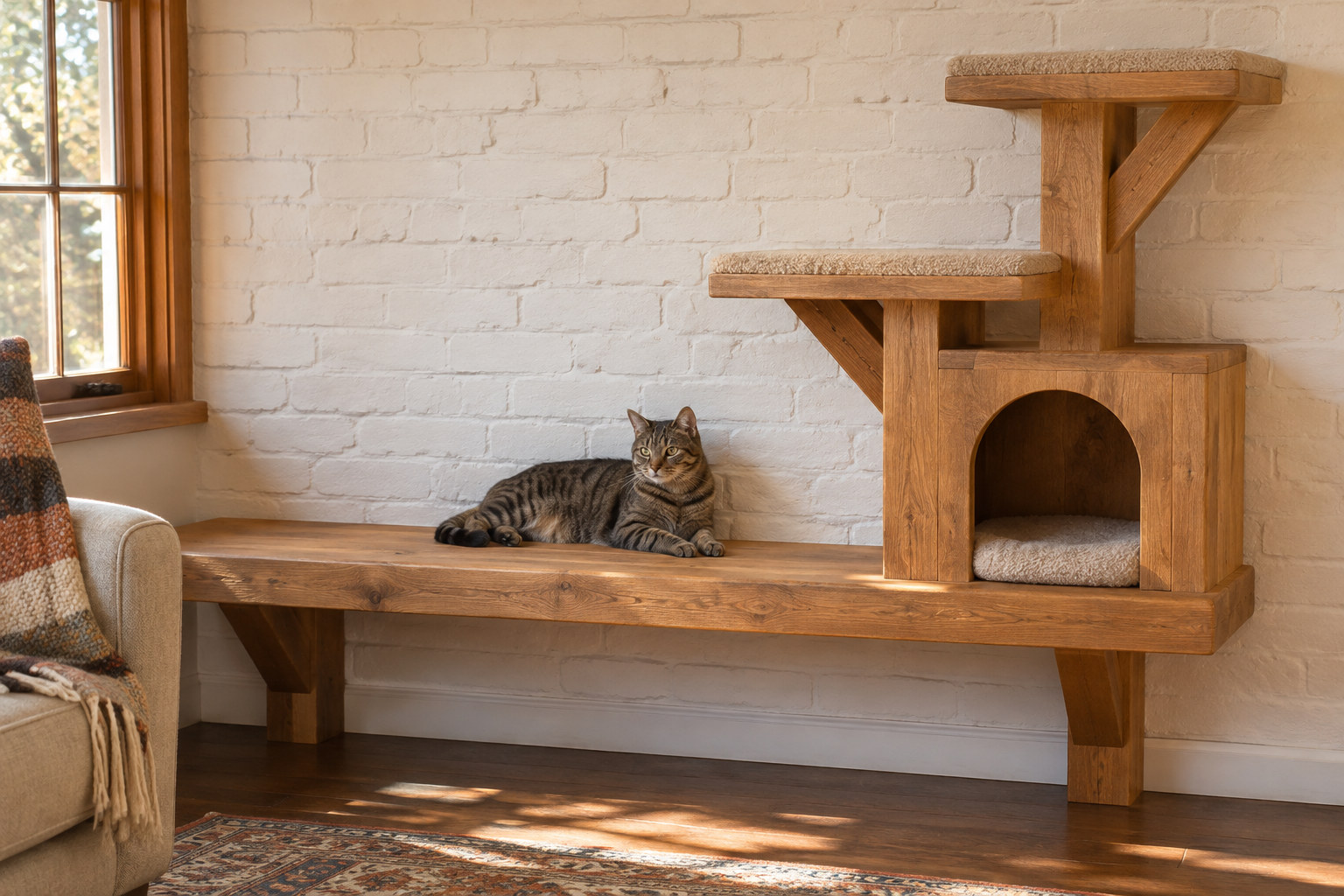
A broad bench can form the visual base of a low climbing tree, with a cubby below and short platforms rising from one end. This makes the piece feel integrated with the room while providing several different resting positions. The bench and climbing elements need to be designed as a single supported assembly.
Keep the intended uses clear. If people will sit on the bench, the structure must be designed for that use as well; a cat furniture concept does not establish human seating capacity. For a cat-only piece, make its purpose obvious through the layout and placement.
Leave the lower opening easy to clean and avoid loose baskets that can shift when stepped on. A wide base offers design flexibility, but the useful surface should still relate to your cat rather than becoming a shelf for household clutter.
11. Connect Two Supported Towers with a Short Perch
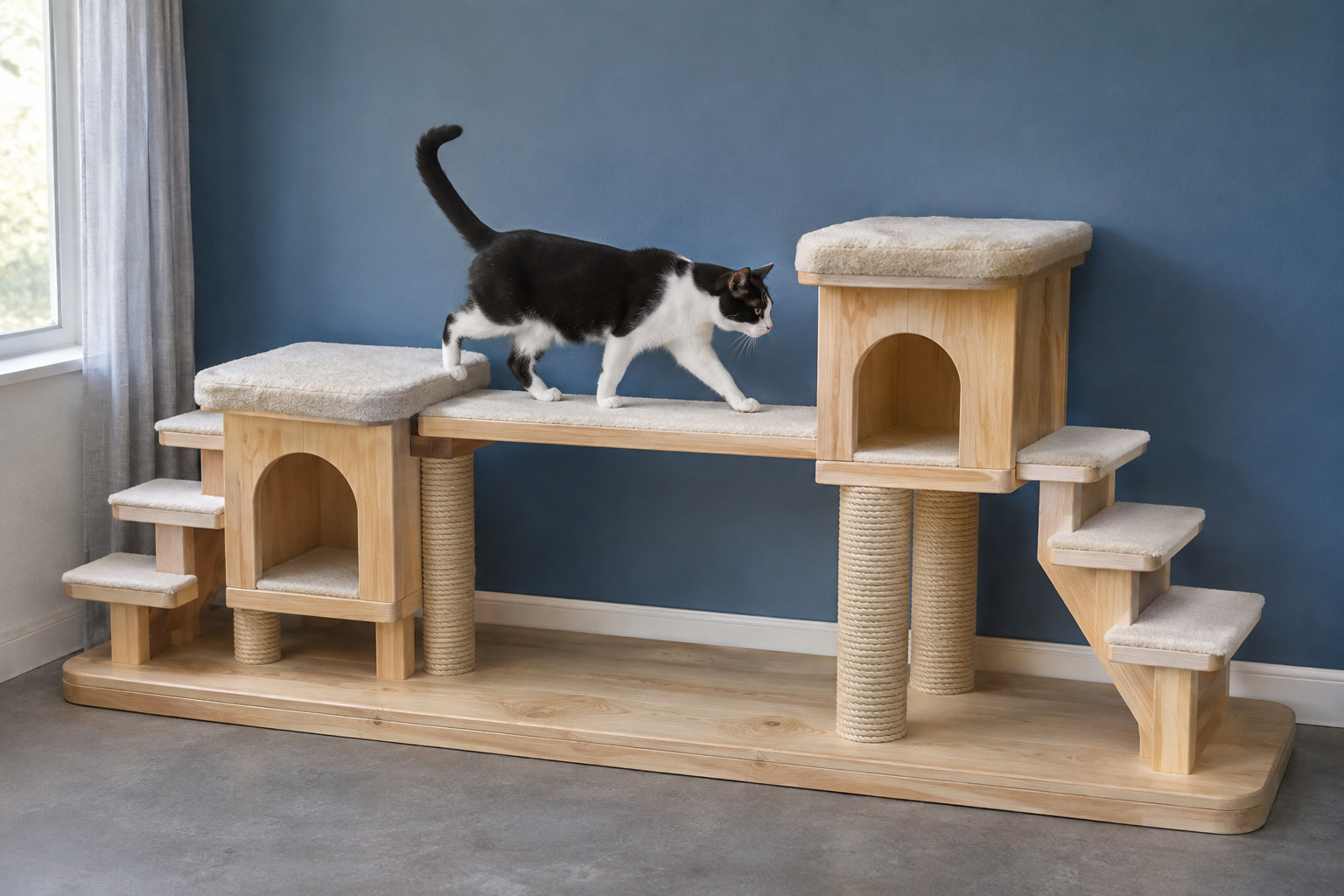
Two supported towers connected by a short solid perch create a horizontal route within one piece of furniture. This can suit a broad wall where a tall narrow tree would feel disconnected from the room. Use a shared base or an appropriately designed connection so the parts work together.
The connecting perch needs its own planned support and connections. Do not assume that a board resting between two separate trees will remain in position during movement. Keep the crossing short and wide enough for the cat to pause and turn comfortably.
Provide access at both ends so the structure is not dependent on one approach. A simple timber platform is also easier to inspect than a decorative hanging bridge. Use matching materials to make the wider arrangement look intentional beside existing furniture.
12. Fit a Compact Tree Beside the Sofa
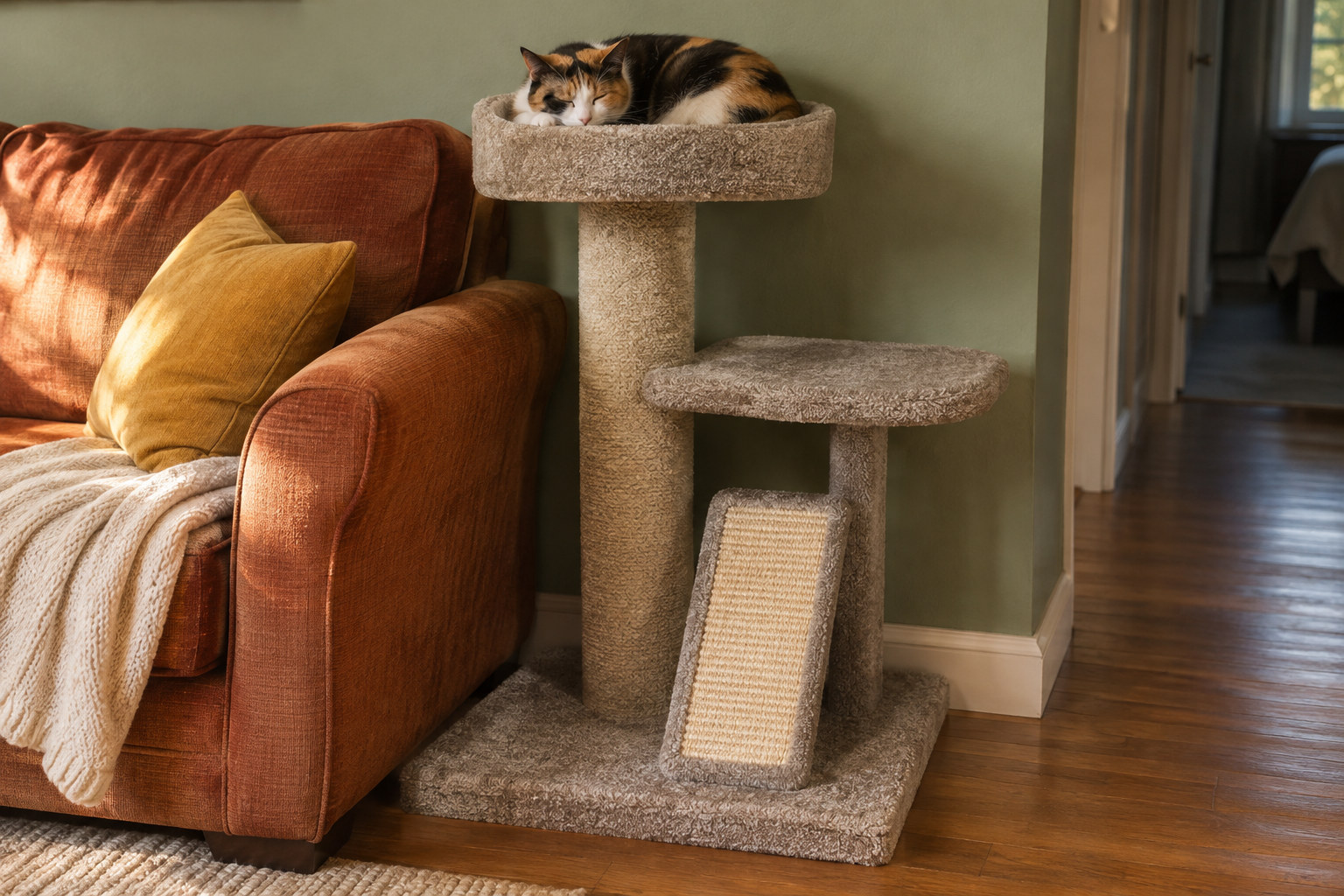
A compact tree beside a sofa lets the cat rest near people without occupying the seat itself. Begin by checking the walkway around the sofa, then choose a footprint that leaves that route usable. The base should not become a hidden trip point near the end of the couch.
Two well-sized levels may be enough: an easy lower platform and an open resting spot above. Keep the scratching surface accessible from the floor, rather than hiding it behind the sofa arm. Plan the tree’s height in relation to the room, while letting support and usable space guide the structure.
Coordinate one material or textile with the seating area. Matching every color is unnecessary. A plain timber finish and washable pad can sit comfortably with patterned upholstery while keeping the cat furniture easy to maintain.
13. Build an Open Timber Frame with Interchangeable Platforms
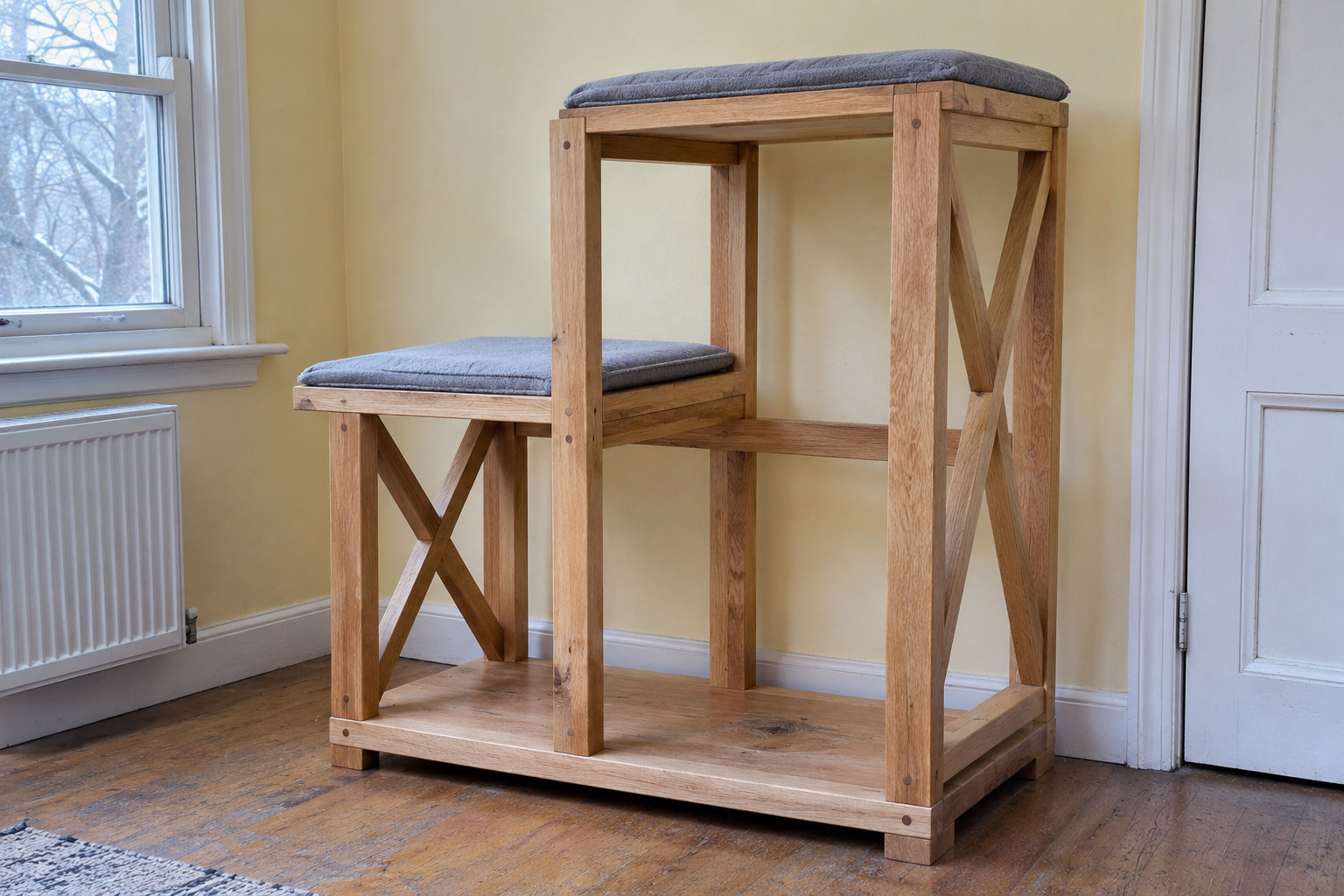
An open timber frame can support a small set of platforms at different heights. This approach makes the structure visible and gives you a clear place to plan braces, joints, and removable surfaces. Start with a sound frame layout, then position the platforms around an accessible climbing route.
Interchangeable should mean properly fastened parts that can be changed during maintenance, not shelves that shift during use. Choose connections suitable for the materials and intended loads, and keep unused holes or hardware from becoming snag points. Avoid relying on appearance alone when judging whether a frame is rigid enough.
The open design works well in a room where a solid tower would feel bulky. It also lets you inspect the connections more easily. Keep the finish simple so the frame looks deliberate instead of resembling unfinished storage shelving.
14. Pair a Covered Lower Den with an Open Upper Bed
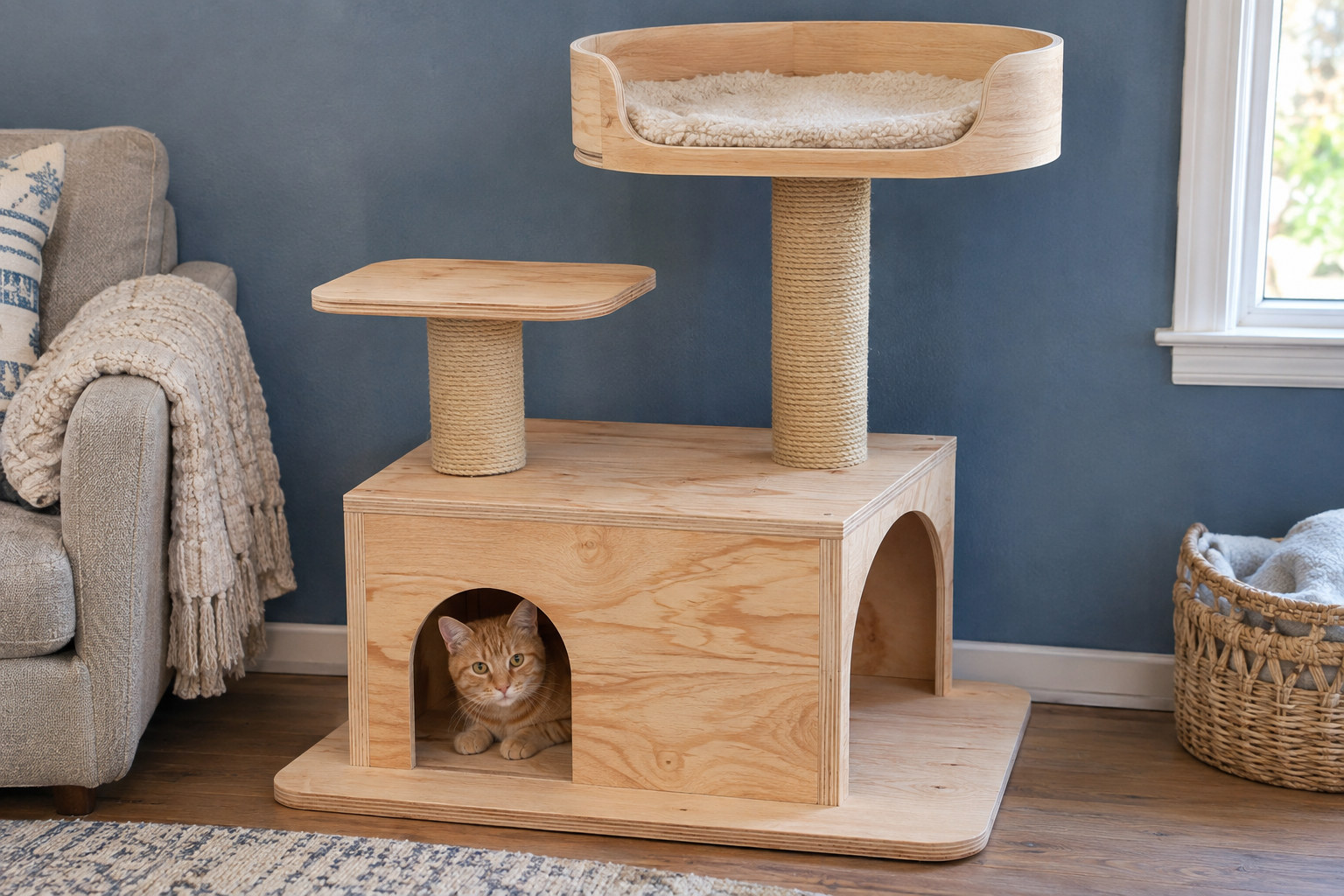
A covered lower den paired with an open upper bed gives one tree two different kinds of resting space. Keep the lower cubby roomy enough for the cat and arrange its openings so it is easy to enter, leave, and clean. The upper bed should have its own sound support through the frame or posts.
Add a sensible intermediate step if the upper position requires it. Avoid placing the only access directly over the cubby entrance, where an arriving cat could interrupt one resting below. In a multi-cat home, consider whether another route would make the arrangement easier to share.
Choose removable bedding for both levels. The contrast between a sheltered lower space and an open perch can be visually appealing without adding tunnels, dangling toys, or decorative parts that make the construction more complicated.
15. Give Scratching Panels Their Own Replaceable Mounts
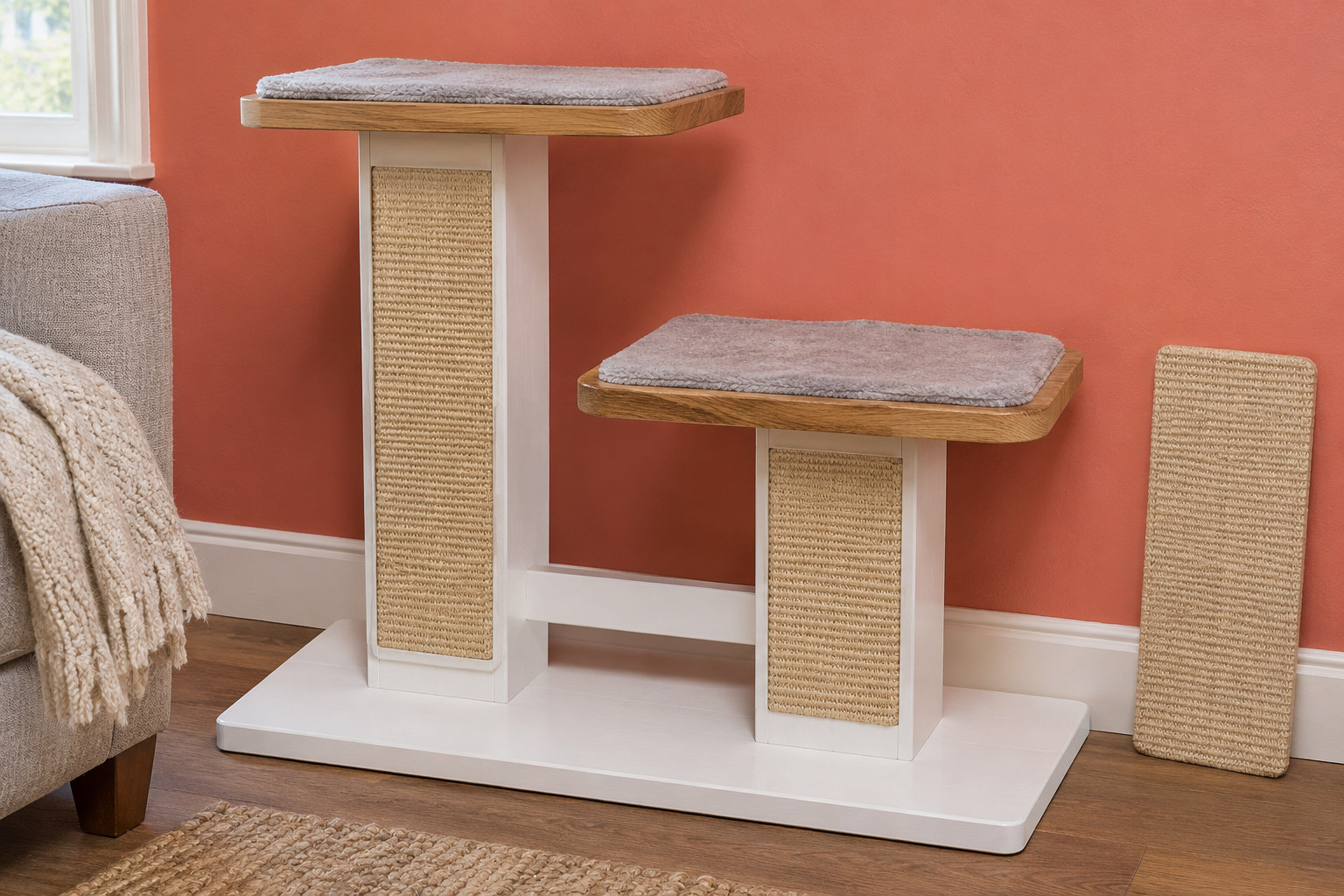
A replaceable scratching panel lets the worn surface be renewed while the main structure stays in use. Plan a separate mounting area on an upright or side panel, with connections that can be accessed during maintenance. The panel must remain secure while the cat scratches.
Choose the scratching material based on your cat’s preferences and keep the edge finish tidy. Avoid accessible staples, loose threads, or exposed fastening points. Inspect the panel as it wears, since replacement should happen before damaged material becomes a loose tangle.
This idea works particularly well on a low tree where the scratching area is easy to reach from the floor. Keep a record of the panel dimensions and materials used. A straightforward replacement process is a practical advantage of making a simple custom piece.
Compare the Layout Before Choosing Materials
Start with the space your cat will actually occupy. Measure a comfortable resting position, the clear floor area available, and the routes around nearby furniture. Add the height of any window you want the cat to see through. These measurements help you compare a low wide design with a taller corner tree.
Watch the cat’s existing choices over several days. Does it prefer an open chair seat, an enclosed box, or the top of a sturdy piece of furniture? Use those observations to prioritize the resting surface before adding more levels. A tree can contain fewer features and still meet the brief well.
In a small room, consider the surrounding furniture at the same time. These small bedroom ideas offer ways to think about floor space, but leave the cat’s approach and the human walkway clear when adapting the layout.
Choose Materials You Can Build and Maintain Properly
Plywood offers broad flat platforms and consistent shapes, while solid timber can work for posts and frames. The grade, thickness, joints, and support arrangement need to suit the actual design. A list of material names is not enough to establish structural capacity.
Be selective with reclaimed furniture. Unknown damage, weak joints, or unsuitable surface treatments can make an attractive piece a poor starting point. If the construction is unclear, choose a better-documented plan or have a competent person assess it before adapting it.
Think about wear parts separately from the structure. Pads, scratching panels, and some coverings may need replacing sooner than the frame. Make those parts accessible, record their dimensions, and avoid permanent decorative layers that conceal the connections you need to inspect.
Match Wall Connections to the Actual Structure
Where a design requires bracing or wall support, identify the wall construction and choose the installation method for that system. Catastrophic Creations’ installation guidance illustrates why their furniture requires specified mounting locations and fixings. Those product instructions are not a load rating for a different DIY tree.
Get the Fail-Safe Paint Color Playbook (Free PDF)
36 proven colors • 8 ready palettes • trim & sheen guide • printable testing cards.
For a custom build, follow an appropriate construction plan or seek qualified advice about the base, joints, and wall connections. Account for the complete structure and how the cat moves through it. Do not infer capacity from the thickness of a single shelf or the strength claim on one packet of fixings.
Complete cutting, sanding, coating, and assembly away from the cat. Follow product directions for drying, curing, and use before bringing the finished piece into the room. Check for rough edges, exposed hardware, loose coverings, and movement at connections before allowing access.
Help the Tree Fit the Room
The surrounding wall can do much of the decorative work. A muted color behind natural wood, or a painted lower wall aligned with nearby furniture, can make a simple tree feel considered. These two-color wall designs offer ideas for the backdrop without complicating the climbing structure.
Choose a restrained palette for the tree itself. One wood tone and one pad fabric make repairs easier to blend in later. Avoid adding fragile ornaments, pots, or trailing decorations to an object the cat will climb and scratch.
Once the tree is in place, observe which surfaces the cat uses and whether any route appears awkward. Keep connections and coverings under review as part of ordinary maintenance. The most successful DIY cat tree is a well-built piece whose size, access, and resting spaces make sense for the cat and the home.