
15 Apartment Litter Box Placement Ideas for Small Homes
The hardest part of fitting a litter box into an apartment usually is not finding a prettier box. It is finding floor space that stays quiet, remains accessible, and does not turn every trip across the room into an obstacle course. A spot that looks clever in a photo can become frustrating when the bathroom door closes or the laundry basket blocks the entrance.
These apartment litter box placement ideas focus on the location itself. Some borrow an underused corner; others rearrange furniture or divide a studio more thoughtfully. Start with a full-size pan that suits your cat, then work the room around it. Making the box smaller to squeeze into the last available gap is rarely a useful design strategy.
Get the Fail-Safe Paint Color Playbook (Free PDF)
36 proven colors • 8 ready palettes • trim & sheen guide • printable testing cards.
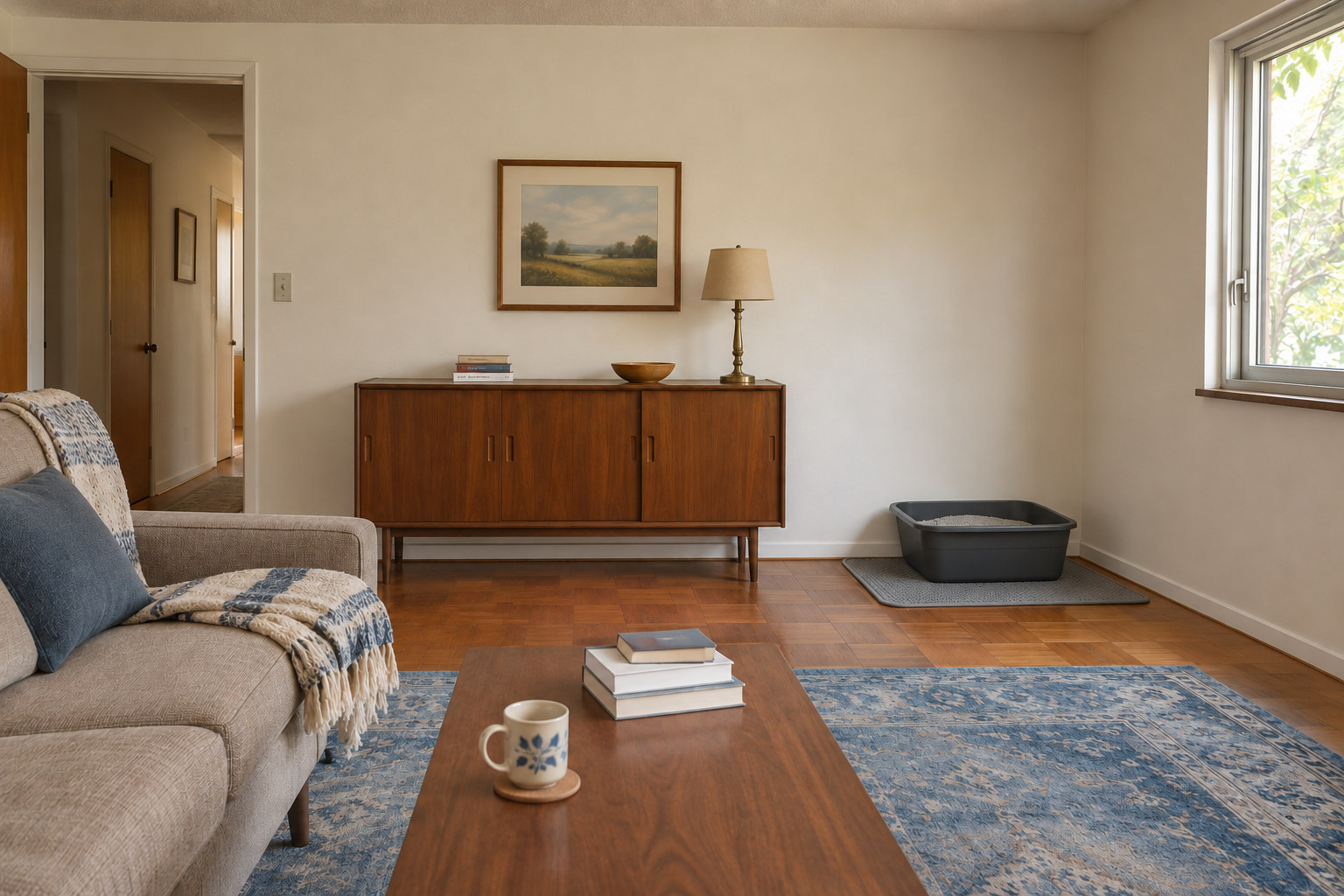
1. Give the Living Room a Quiet Perimeter Spot
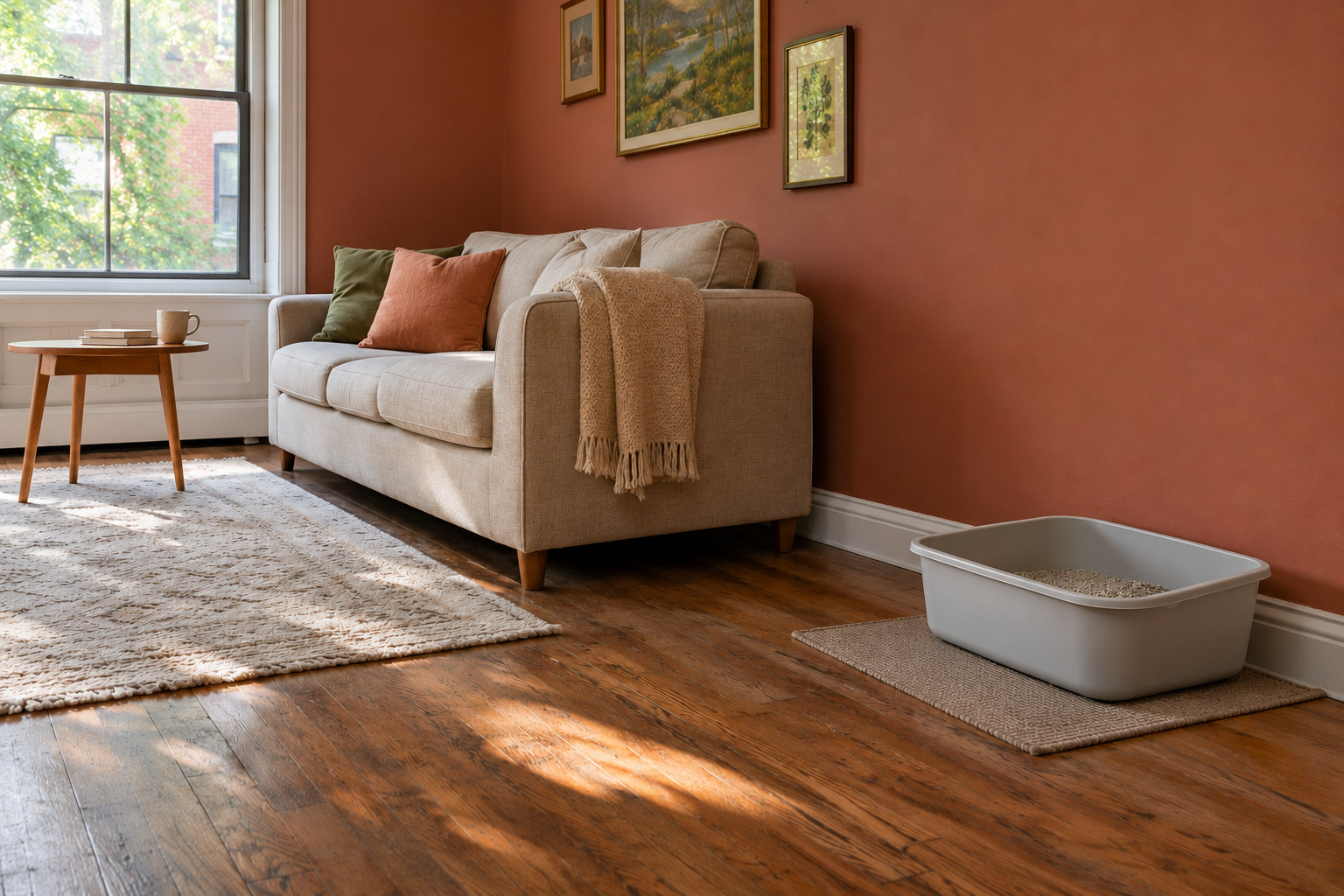
An open patch of wall at the edge of the living room can work better than the cramped hiding place you have been trying to invent. Look beyond the television wall and the main route between the sofa and kitchen. A quieter perimeter gives the pan a defined position without putting it in the middle of family activity.
Move decorative objects first. A floor vase or rarely used accent table can usually relocate more easily than the cat’s essentials. Place a washable mat beneath the pan, leaving enough exposed floor to sweep around it. The mat should lie flat rather than bunch into the approach.
Choose a pan color that relates to the wall or floor if you want the arrangement to recede visually. Keep the entrance fully visible and accessible. The goal is a usable corner that belongs in the room, not a box buried behind the sofa.
2. Use the Unoccupied Corner of a Home Office
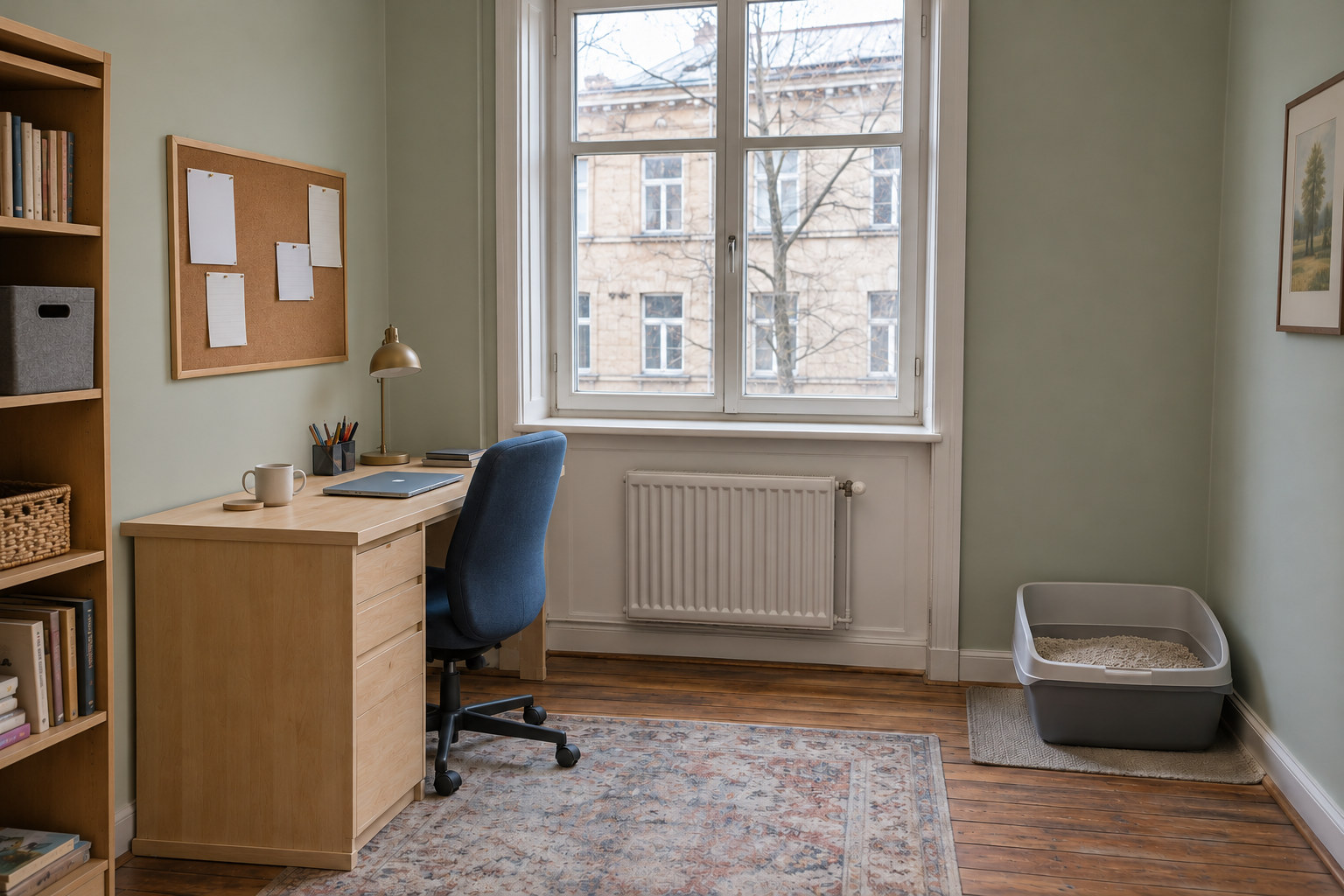
A home office often has a corner that sits empty while the desk, chair, and storage occupy the opposite wall. That can be a promising litter location if the room remains available outside working hours. Check what happens when you roll the chair back, open the desk drawers, or bring in a folding guest chair.
Position the pan beyond those moving parts. Keep charging cables and paper storage away from the cleaning area, and leave room to carry the whole pan out without moving the desk. An open corner is easier to maintain than a space beneath the work surface.
The tradeoff is how you use the office. Frequent video meetings, a loud printer, or a door that must stay shut can make it less suitable. Test the location during an ordinary working day before buying furniture to formalize it.
3. Claim a Dining Recess Away From the Table
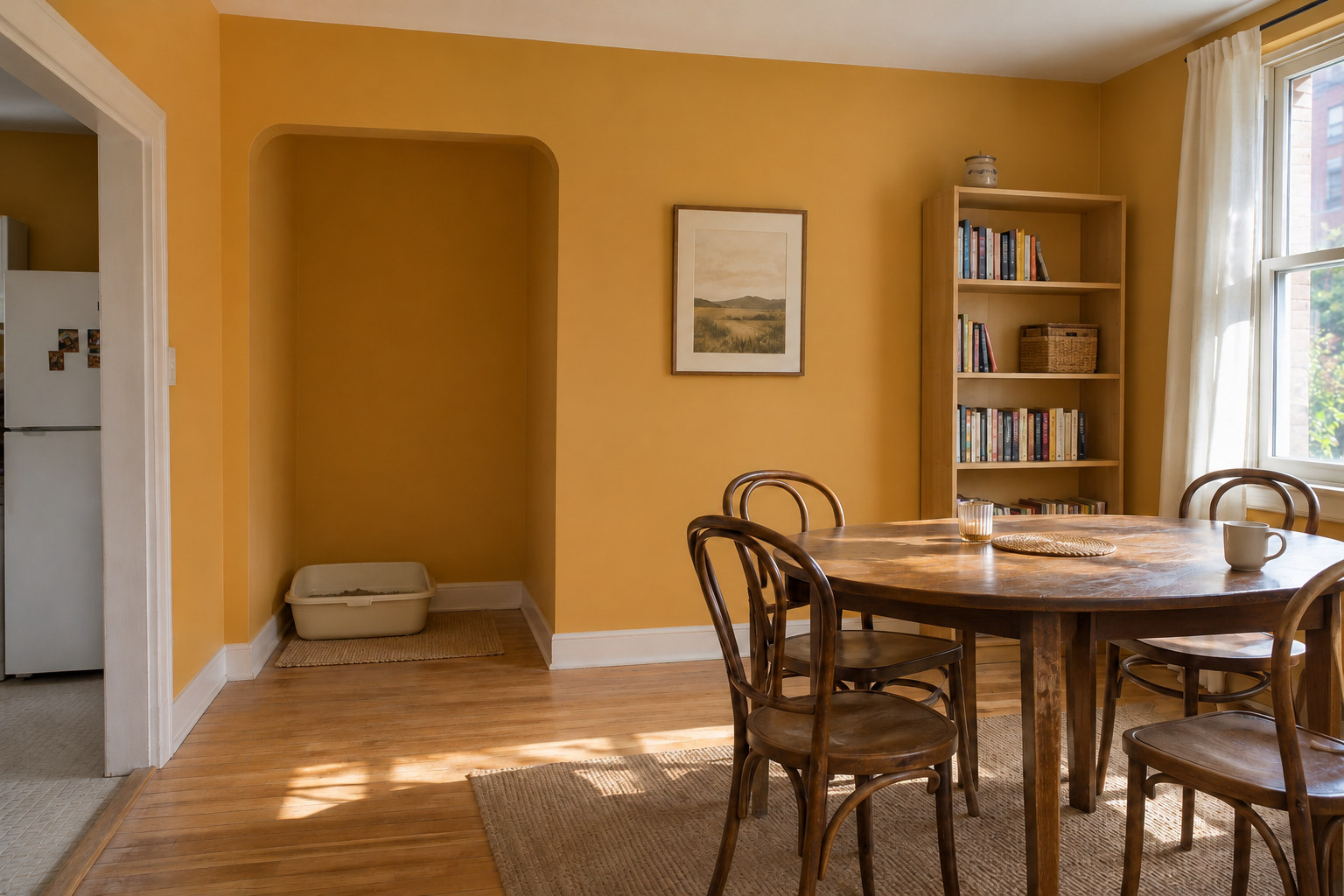
Some apartments have a shallow dining recess that never quite fits another cupboard. If that recess is well separated from the eating area, it can provide a dedicated litter spot without taking over the room. Measure the usable floor, including the space needed to approach and clean the pan.
Pull out every dining chair before deciding. A box that fits neatly while the chairs are tucked in may block the route once people sit down. Also consider where a high chair, serving trolley, or extra guest chair normally goes.
Keep food storage, placemats, and table linens elsewhere. A simple wall treatment can help the recess look intentional; a paint color repeated from the dining chairs is enough. Avoid adding shelves that make the space feel crowded. This placement earns its place through separation and access, not through decorative camouflage.
4. Borrow a Bedroom Wall Without Blocking the Bed
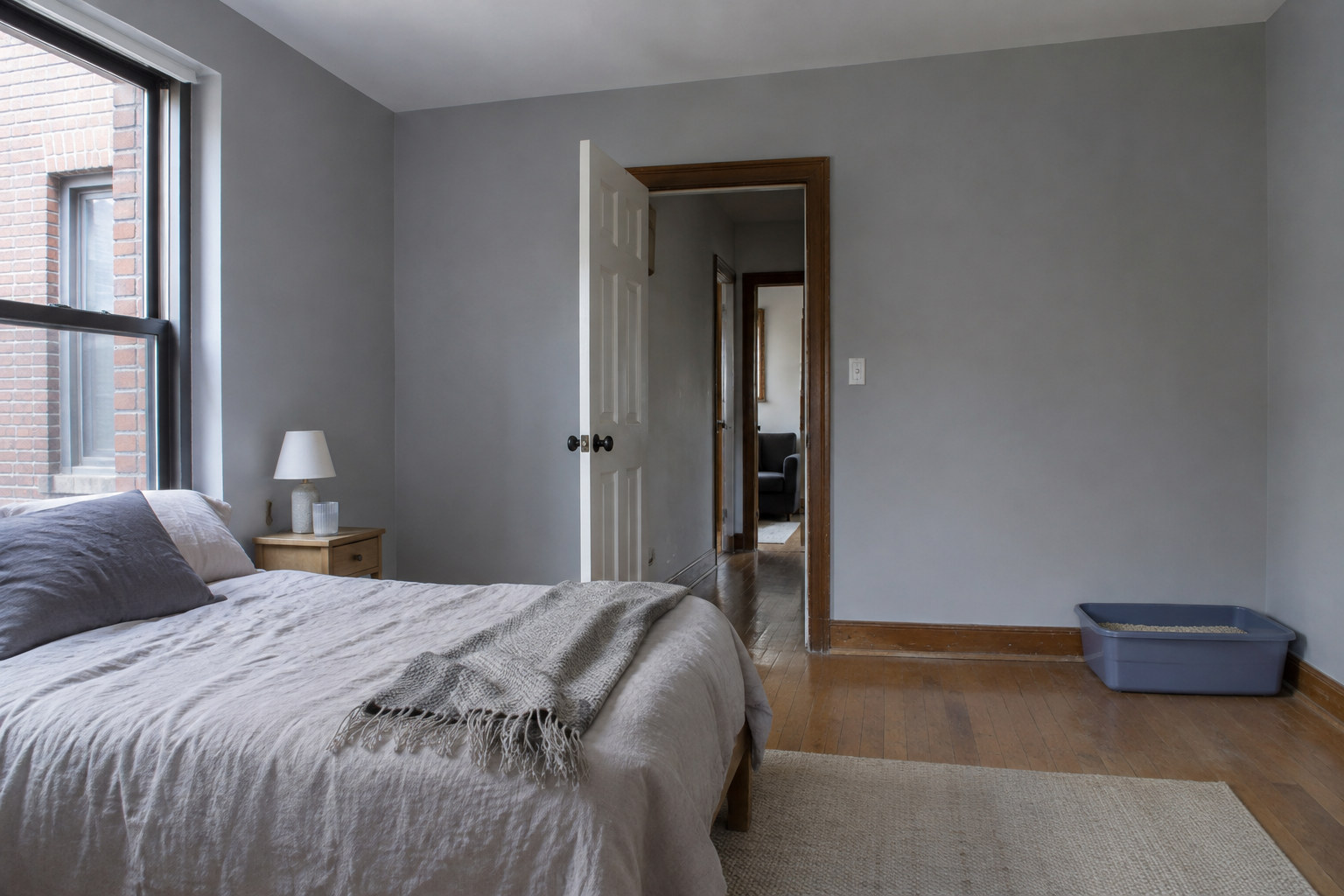
A spare wall in the bedroom may offer a more predictable location than a busy shared living area. Look for floor space beyond the bedside walking route, with enough distance from bedding to handle scattered litter and routine cleaning. Avoid placing the pan where your feet land when you get out of bed.
Reconsider furniture that consumes floor without doing much work. A bulky bedside chest might become a narrower table, or a spare chair might move elsewhere. Our small bedroom layout and storage ideas can help you evaluate those swaps before shrinking the cat’s space.
The bedroom door is the decisive detail. If you regularly close it, choose another location or establish a dependable access arrangement first. Guests, cleaners, and family members need to understand that the route must remain available. A well-planned corner cannot compensate for a closed door.
5. Choose the Bathroom’s Dry Corner
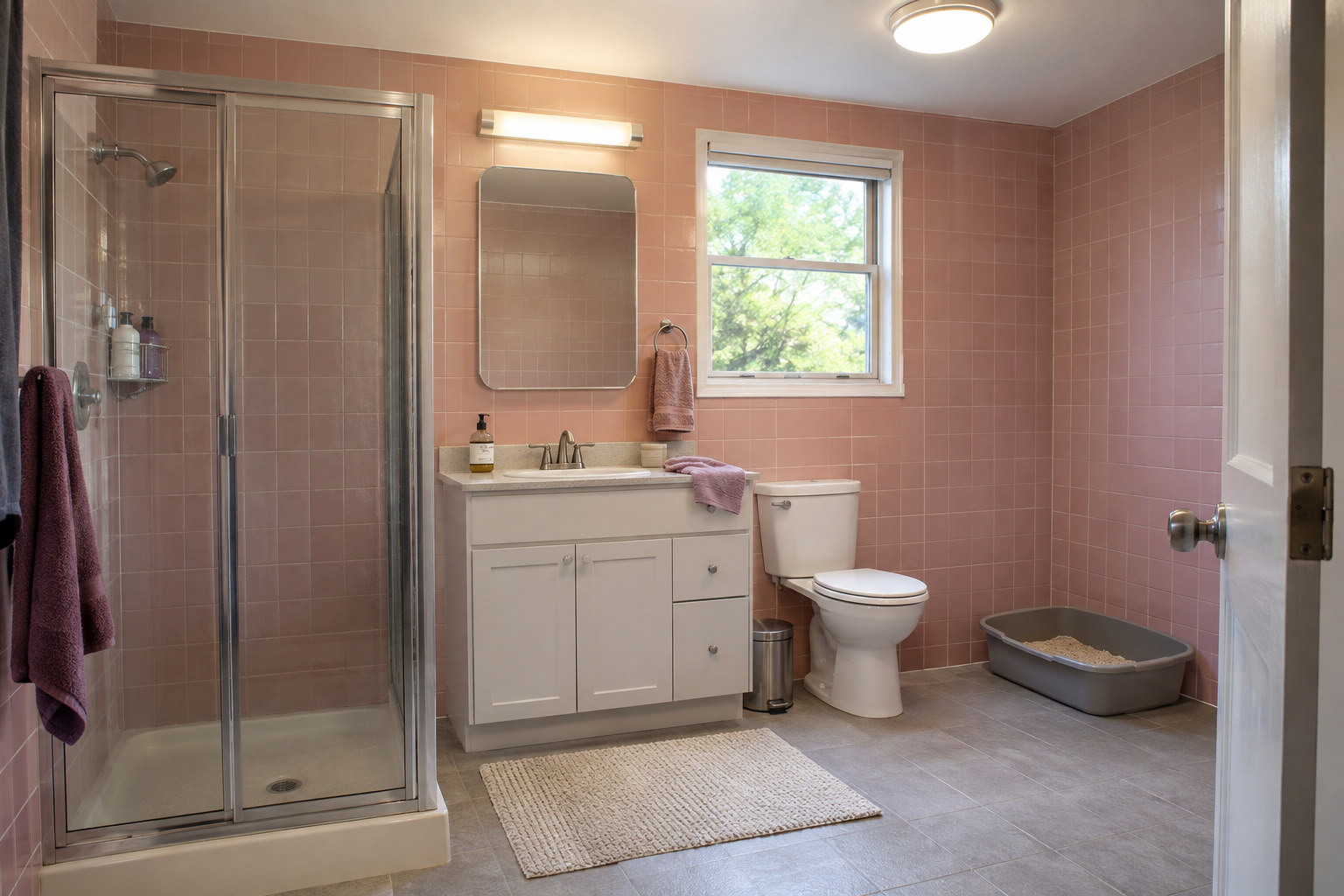
A bathroom can offer a convenient cleaning surface, but only when there is a consistently dry corner beyond the shower splash zone. The pan should sit on usable floor rather than squeeze between the toilet and wall or underneath plumbing. Check the door swing and the space you need to use the room normally.
Watch the room after a typical shower. If water reaches the proposed position or the mat stays damp, the location needs reconsideration. Keep the pan clear of bath mats that get lifted, shaken, or left across its entrance.
An open layout with a washable flat mat is straightforward to inspect and tidy. Leave cleaning products in secure storage elsewhere. This arrangement also depends on household habits: a bathroom that stays locked for long periods cannot provide reliable access, however convenient its tiled floor may seem.
6. Make a Spare Powder Room Useful
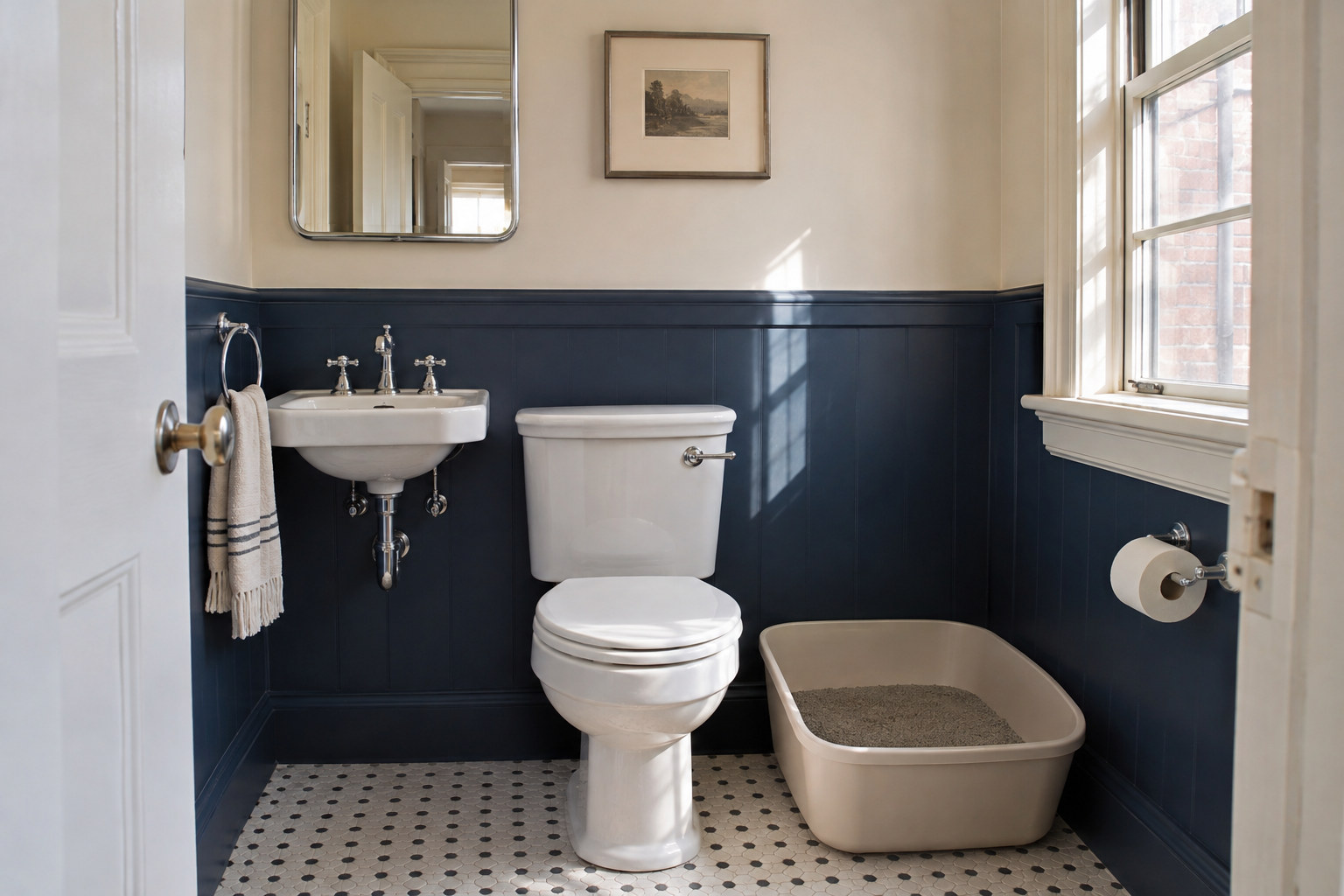
A secondary powder room sometimes provides a quieter option than the main bathroom. Without a shower or bath taking up floor, there may be room for a full-size pan beside the toilet while preserving the walking route. The advantage is a defined, easy-to-find location that does not need elaborate furniture.
Treat this as a space-planning exercise rather than assuming every powder room will work. Open the door fully, stand where a person would stand, and confirm that the pan can be lifted out for cleaning. Avoid tucking it behind the toilet simply because the footprint fits.
Keep the door reliably open whenever the cat needs access. If visitors routinely close it, add this to the household routine or select another spot. A spare room is only useful when its daily operation is compatible with the cat’s needs.
7. Dedicate an Open Dressing-Room Corner
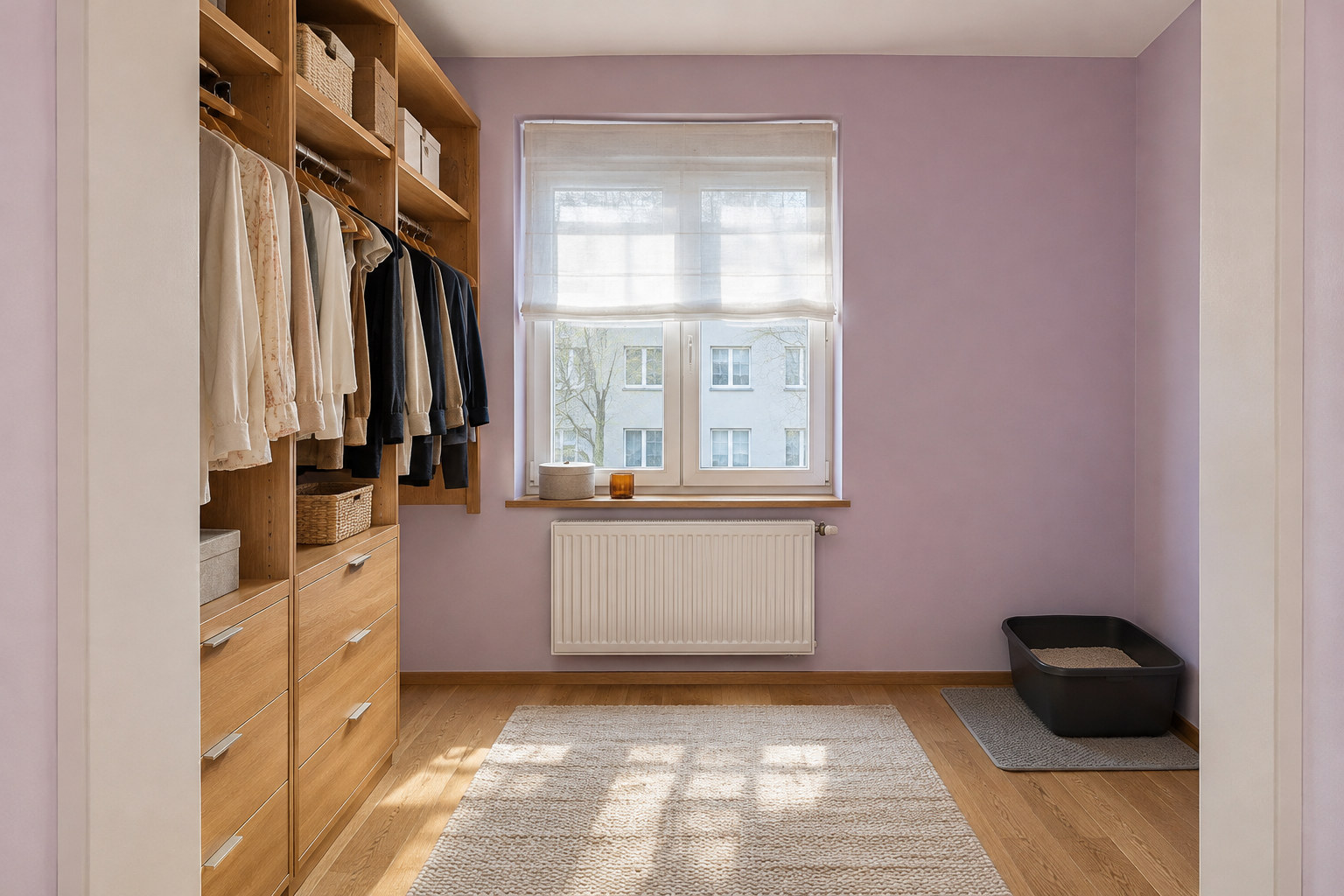
A roomy dressing area can accommodate a litter corner when clothing and the pan occupy clearly separate zones. The strongest version has an open doorway, a generous ceiling height, and a blank patch of floor away from garments. A crowded closet with hanging coats brushing the rim is a different situation.
Start by moving shoes and fabric baskets away from the proposed location. Check that wardrobe doors can open without striking the pan and that clean clothes do not need to pass directly over it. Keep the scoop and spare supplies contained in their own practical storage.
If you rent, an existing doorless arrangement is simpler than modifying the doorway. Do not remove a door without permission. Consider how the area will work in winter, when clothing storage expands. Leave enough spare capacity that the litter spot will not disappear under seasonal belongings.
8. Use a Wide Hallway Alcove
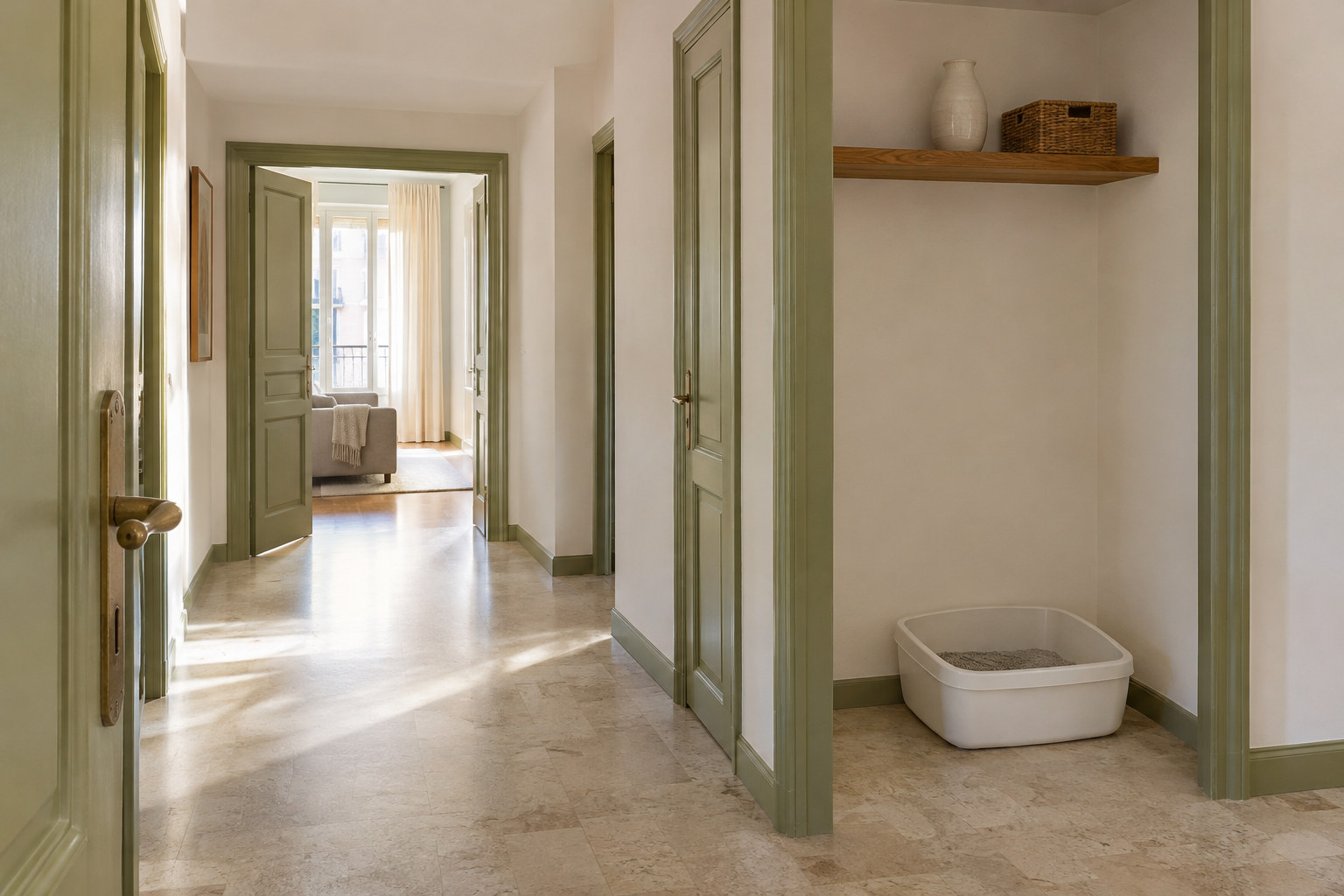
A broad side alcove can be useful in an apartment hallway, provided the pan sits outside the main walking line. The key word is broad. A narrow passage, a tight dead end, or the landing directly in front of the entrance door is unlikely to provide the same calm, accessible arrangement.
Study traffic at the times the hall is busiest. Shoes, bags, deliveries, and an open closet door can temporarily change a generous space into a pinch point. Keep those functions on the opposite wall or elsewhere in the apartment.
For the surrounding storage, borrow ideas from our small entryway layouts while reserving the litter approach as clear floor. A wall-mounted key shelf may replace a floor-standing console. The useful improvement comes from giving each activity its own space rather than asking the cat to navigate through the household drop zone.
9. Create a Studio Zone With One Open Divider
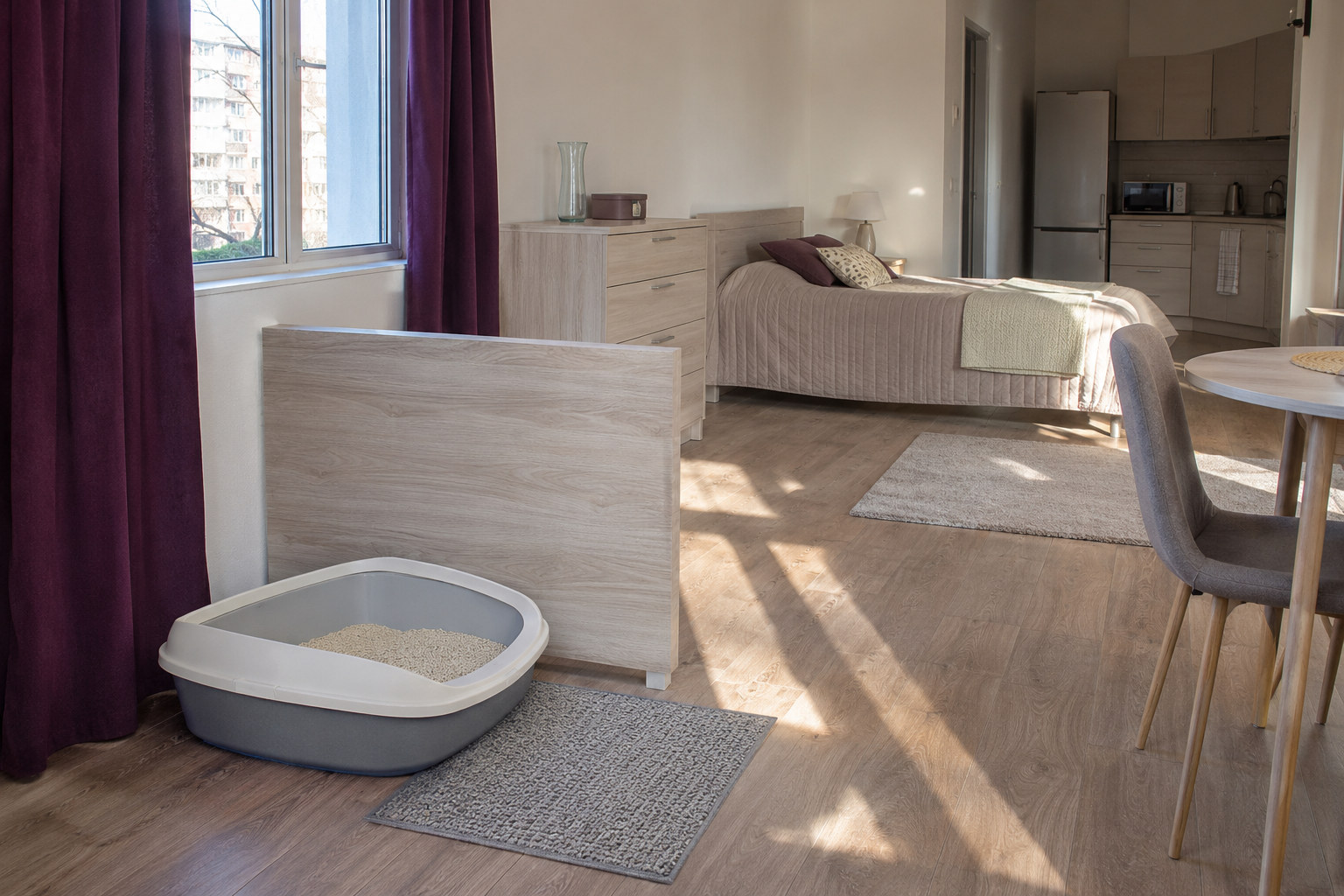
In a studio apartment, complete room separation may be impossible. A single stable divider can reduce the direct view of the pan from the bed or sofa while leaving the area open. Position it to one side, with generous access around the remaining sides, rather than building a miniature enclosure.
Use a divider that suits the floor plan and cannot easily tip. Lightweight folding screens can create awkward feet and unstable panels, so evaluate the actual object before committing to the idea. A modest solid partition may need less visual space than a tall decorative screen.
Walk the approach from the cat’s usual resting area. There should be a clear route that does not pass through chair legs or stored bags. Keep the pan itself uncovered and easy to inspect. The divider is there to organize the human sightline, not restrict the cat’s movement.
10. Use a Loft Apartment’s Full-Height Lower Area
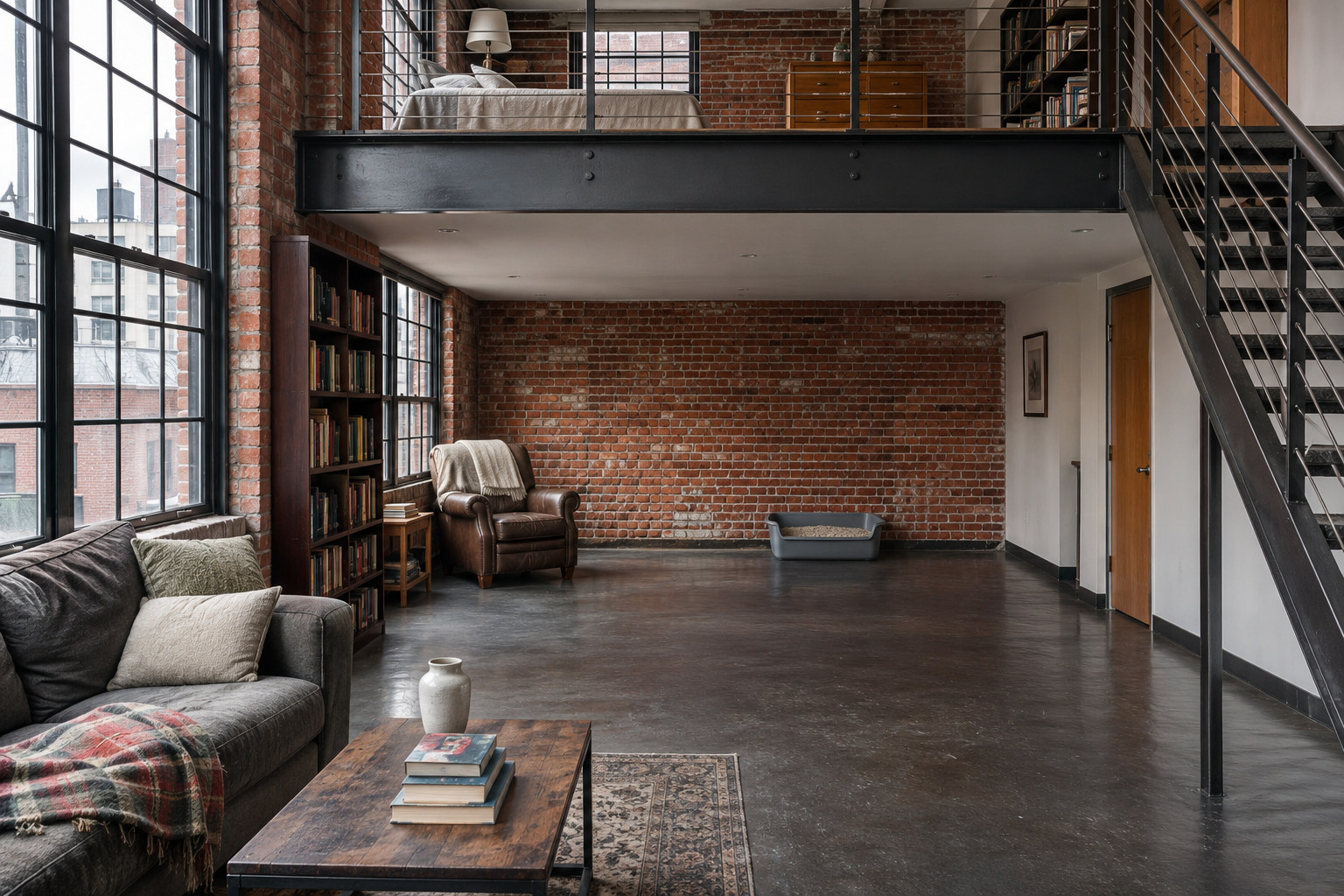
A loft apartment may have a quieter lower zone beneath its sleeping platform, but the available headroom matters. A full-height room under a mezzanine can offer a useful wall position; a low crawlspace beneath a bed platform is not an equivalent choice.
Locate the pan beyond the foot of the stairs so people are not stepping toward it every time they come down. Keep the route level and obvious. If the area doubles as an office or sitting space, arrange furniture so the litter corner remains available when chairs are occupied.
Pay attention to cleaning access as well as the cat’s entrance. You should be able to stand comfortably, scoop without twisting around furniture, and remove the pan. An open, ordinary floor-level location is easier to live with than a visually clever nook that requires crouching every day.
11. Place the Second Box in a Different Room
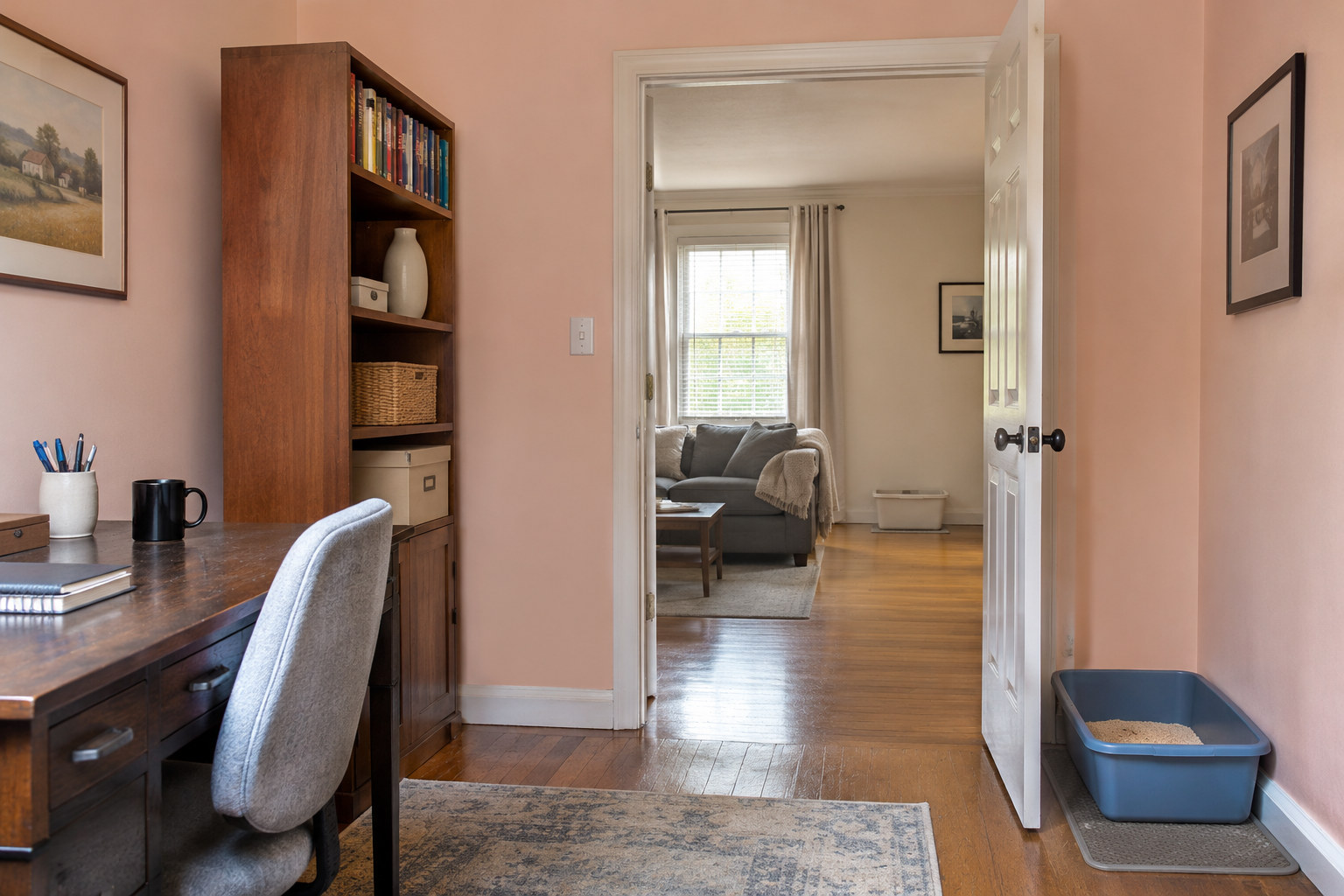
When you need more than one litter box, resist treating them as a single storage problem. Putting both in one tidy row may suit the floor plan visually, but separate locations create different choices within the apartment. Consider a quiet office position for one and a calm living-room perimeter for another.
Evaluate each spot on its own merits. A second pan should not be a token addition squeezed into a less usable gap. It needs the same clear approach, normal headroom, and practical cleaning access as the first.
In a compact apartment, furniture rearrangement can make this possible without a renovation. Move an occasional chair, shorten a storage run, or retire a floor basket that rarely gets used. Label the locations on a simple sketch and check what happens when doors close. Two rooms only function as separate options when both remain accessible.
12. Use a Window Wall With Stable Shade
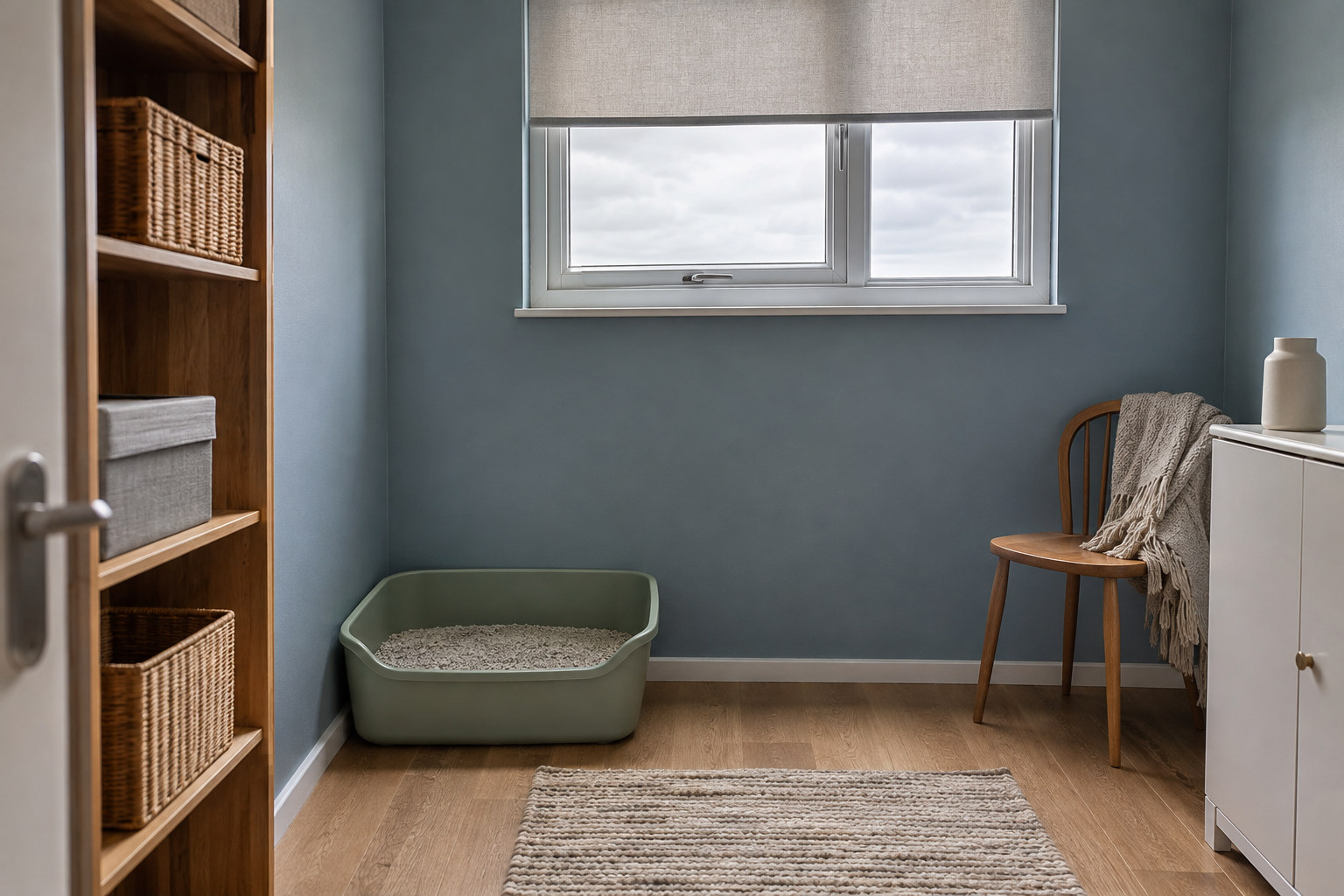
A quiet window wall can provide overlooked floor space, especially when the room has no radiator or air vent beneath the window. Choose a position that stays reasonably consistent during the day, with shade rather than a concentrated patch of hot direct sun.
Check window coverings carefully. Long curtains should not sweep across the pan, and dangling cords should not hang into the area. A short or securely managed blind can keep the floor clear. The window itself should remain secure, with access and ventilation handled appropriately for the apartment.
Watch the location at more than one time of day before settling on it. The bright patch you see in the morning may shift considerably by afternoon. This idea works best when the window wall is already quiet and usable, not when the view is the only reason to choose it.
13. Turn an Empty Storage Room Into an Open Utility Nook
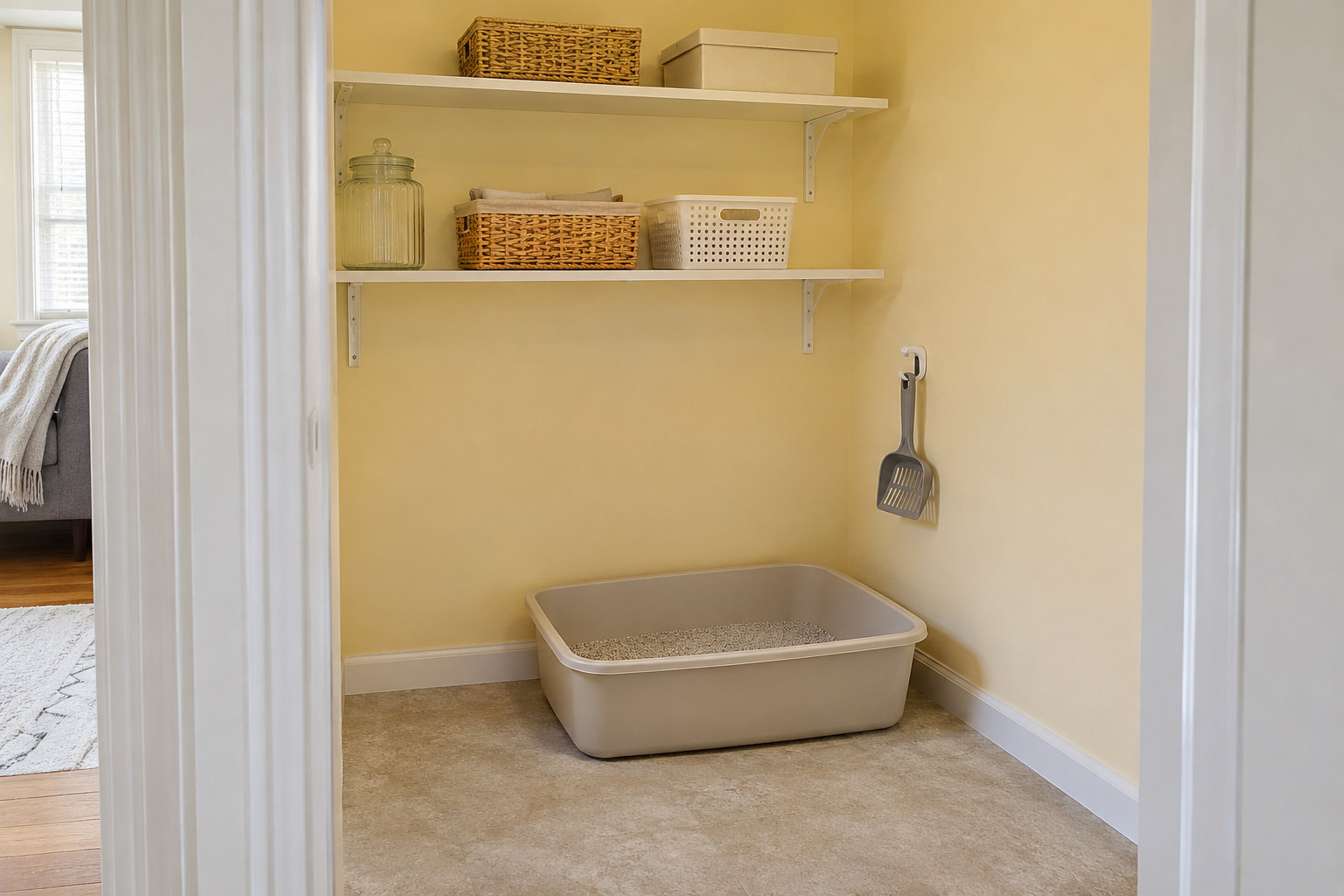
A small storage room can become a dedicated litter location if it offers normal headroom, adequate airflow, and an open, dependable route. Clear it properly before deciding it is suitable. Removing a few boxes while leaving cleaning chemicals, paint tins, or a humming appliance nearby does not create the same space.
Keep the arrangement simple: the pan, a flat washable mat, and contained cleaning supplies stored appropriately. Leave room to stand and work. Resist filling newly cleared wall space with shelves that eventually encourage clutter back onto the floor.
Consider whether the room stays comfortable and whether the doorway can remain available throughout the day. An existing open nook is often easier to manage than a cupboard that relies on someone remembering a latch. If the space is stuffy or awkward to enter, another location deserves priority.
14. Free Space Beside a Wardrobe
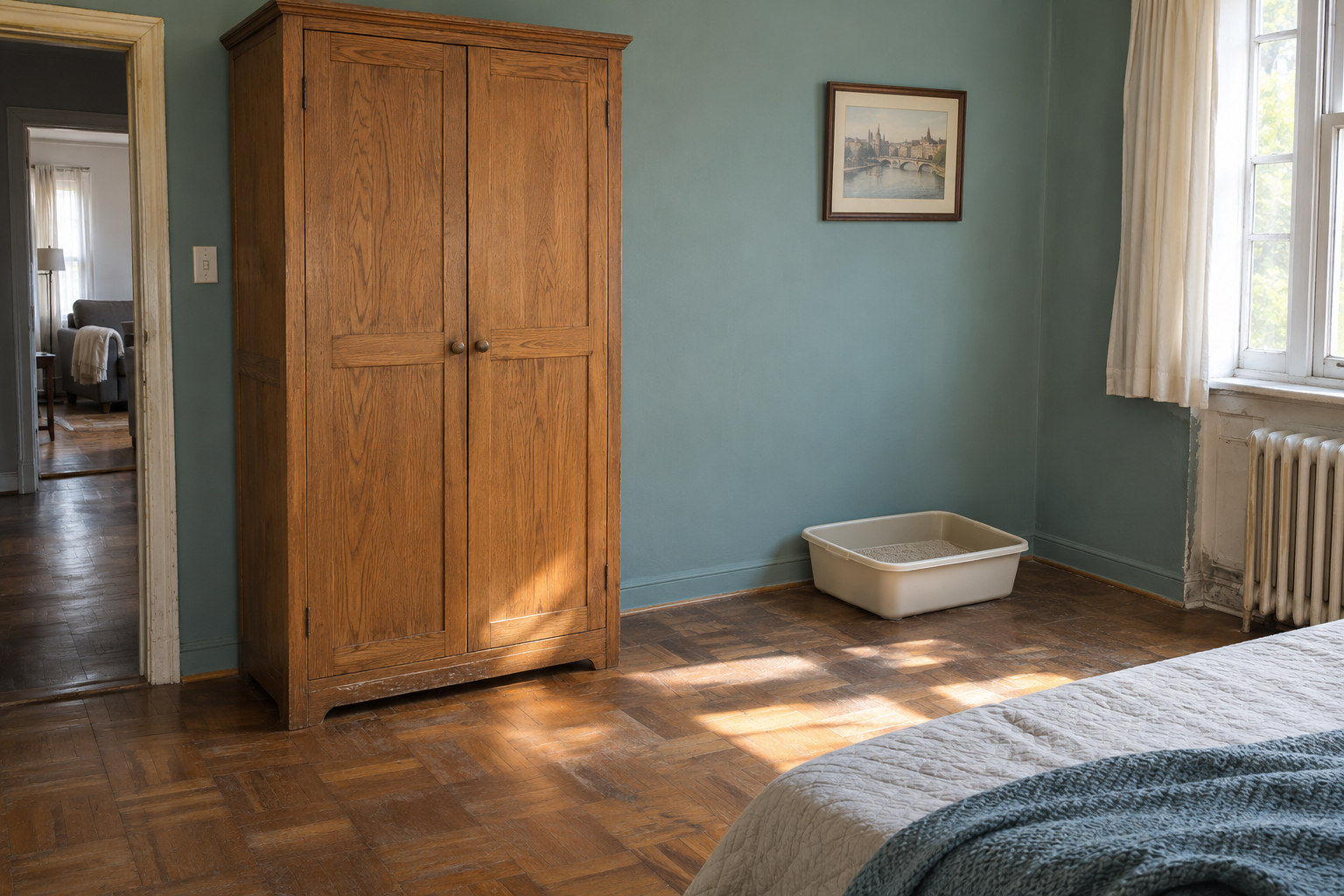
An oversized wardrobe can make a room feel full even when the storage inside is inefficient. Reorganizing it, moving it along the wall, or choosing a narrower replacement may release a useful strip of floor beside it. The litter box sits in that open floor space, not inside the wardrobe.
Mark the wardrobe door swings before placing the pan. Sliding doors reduce one kind of conflict, but the area still needs enough room for dressing and cleaning. Do not let laundry baskets become permanent obstacles in the approach.
A quiet wall color can help the arrangement feel coordinated without adding an enclosure. Our guide to using two paint colors on one wall offers ideas for defining a corner visually. Keep any decorating work separate from the cat, and return the pan only after the space is ready for normal use.
15. Reserve an Easy-Entry Spot for a Less Mobile Cat
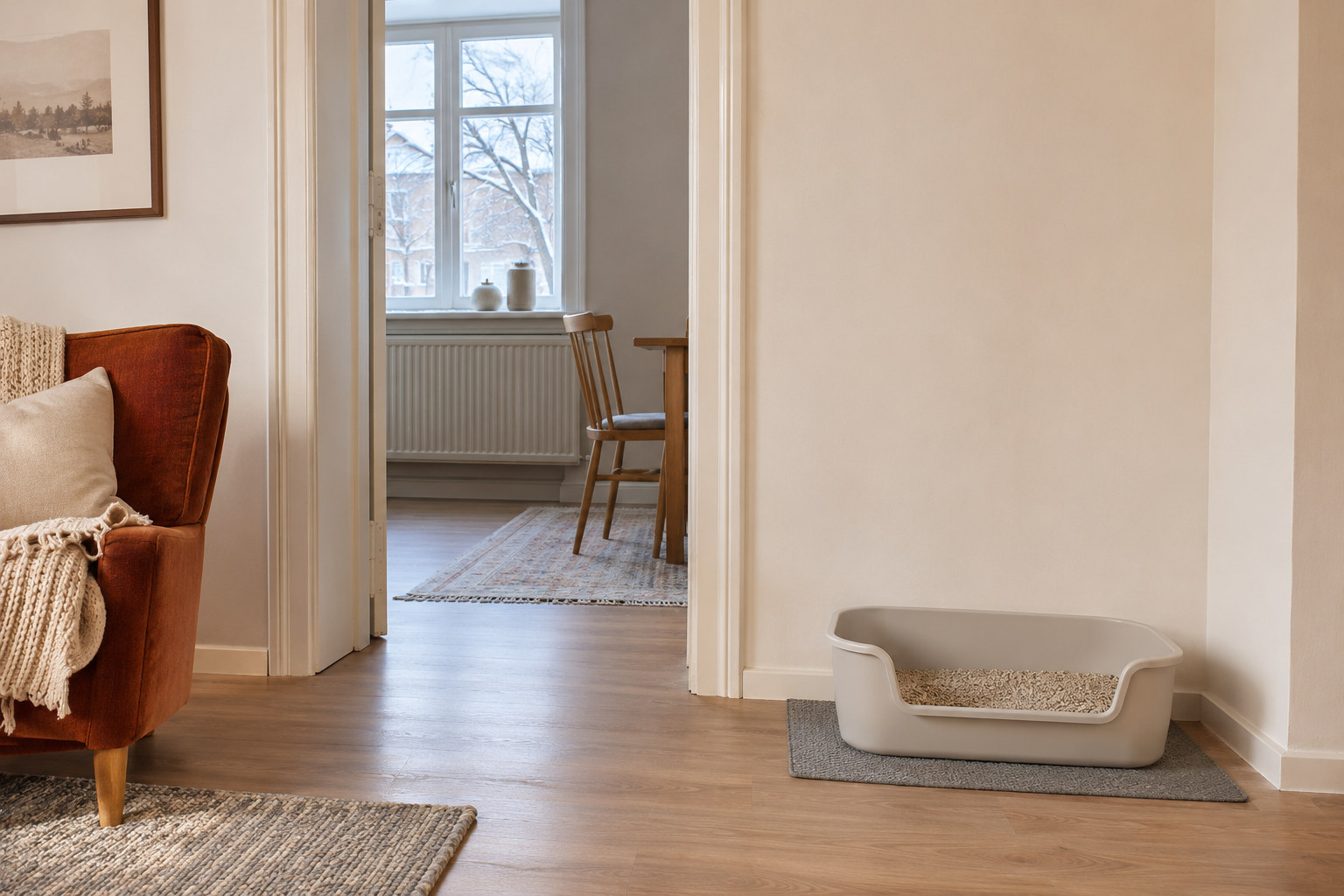
For a cat that needs easier access, the best location may be the simplest open wall on the most-used level of the home. Start with a suitable low-entry pan, then remove the obstacles between it and the cat’s regular resting spots. A raised platform or clever stepped approach adds complexity to an everyday task.
Keep the mat flat and the surrounding floor clear. Check for small thresholds, shifting rugs, and furniture feet that are easy to overlook when standing at human height. Leave enough space to approach without a sharp turn around a cupboard.
If mobility has changed, discuss the setup with your veterinarian rather than trying to solve discomfort through decor alone. From a room-planning perspective, prioritize a direct route and easy cleaning. The familiar, accessible spot may be more valuable than a secluded corner farther across the apartment.
How to Choose Between Two Promising Locations
Check the Cat’s Route Before the Human View
Sketch the apartment and mark the pan, the main resting areas, doors, and movable furniture. Then trace the actual approach. A spot that appears close on the plan may require passing a busy doorway or walking around a desk chair. Look for a route that remains clear when the apartment is being used, not only when it has been tidied for a photograph.
Ohio State’s litter box guidance favors roomy, accessible boxes in quiet locations and cautions against tight spaces and startling appliances. Those principles should decide between two equally attractive corners. Your preference for hiding the pan comes after whether the cat can comfortably reach and use it.
Test Cleaning Access With the Empty Pan
Place the actual empty pan in the proposed position. Kneel or stand as you would to scoop, lift it, and carry it toward your cleaning area. This simple rehearsal reveals narrow turns and awkward furniture faster than measuring the footprint alone.
Also decide where the scoop, waste container, and spare litter will live. They do not all need to surround the pan. A nearby practical storage spot may work better than squeezing several containers into the cat’s approach. Keep the arrangement small enough to clean without dismantling it.
Compare Ordinary Household Conditions
Check each location during breakfast, working hours, evening television, and cleaning. Note door closures, appliance noise, chair movement, and visiting pets or children. A location that works only during a quiet inspection may be a poor choice for the apartment’s normal routine.
Where possible, keep an established box available while introducing a new location. Avoid turning a room rearrangement into a sudden complete change of the cat’s setup. Let observed use guide the final decision, and reassess if the cat avoids the proposed spot.
Get the Fail-Safe Paint Color Playbook (Free PDF)
36 proven colors • 8 ready palettes • trim & sheen guide • printable testing cards.
Small-Apartment Litter Placement Questions
Should the Box Be Hidden From View?
It does not have to be. An open pan in a sensible position can be easier to inspect and clean than an enclosed arrangement. Coordinate the pan and mat with the room, or redirect a sightline with furniture placed well away from the approach. Concealment is a decorating preference, not the starting requirement.
Can the Bathroom Be the Only Location?
Only consider it if access is dependable and the space meets your cat’s needs. Think through showering, visitors, overnight door closures, and cleaning. If the room is often unavailable, a second accessible location may be needed. Do not rely on someone noticing a closed door later.
How Many Boxes Should a Small Home Have?
Ohio State gives the general recommendation of one litter box per cat plus one, with access on each level of a multistory home. A small floor plan makes placement harder, but does not remove the need to consider the number and separation of resources. Use your available rooms and veterinary advice to plan a workable arrangement.
What If There Is No Spare Corner?
Review the furniture before sacrificing usable pan space. A narrow side table, wall shelf, or better-organized cupboard may release more floor than a new litter cabinet would. Compare the value of the object occupying that floor with the everyday function you need. Often the most effective apartment improvement is one careful subtraction.
Make the Location Work Every Day
Choose the strongest location, keep the approach clear, and give cleaning tools a practical home. Then live with the arrangement before adding decorative details. A reliable open corner that stays usable is a better investment of limited floor space than a complicated installation you need to move around every morning.
Source Notes
- Ohio State University Indoor Pet Initiative: Litter Boxes. Guidance on box access, location, size, and number. Layout examples in this article are editorial design concepts.