
15 Budget Dog Run Ideas for a More Useful Backyard
A useful dog run does not need a designer fence, a custom shelter, and an entirely new ground surface. It does need a sound boundary, a workable gate, a comfortable place to spend time, and a maintenance routine you can keep up with. The best budget decisions usually come from examining what the yard already offers before buying anything.
These budget dog run ideas focus on where to spend, what to reuse, and which upgrades can wait. Costs vary with the site, the dog, local materials, and the work required. Compare the complete installation and upkeep before choosing where to save. Start with a setup suited to your dog, then use the ideas below to simplify the project without compromising its basic function.
Get the Fail-Safe Paint Color Playbook (Free PDF)
36 proven colors • 8 ready palettes • trim & sheen guide • printable testing cards.
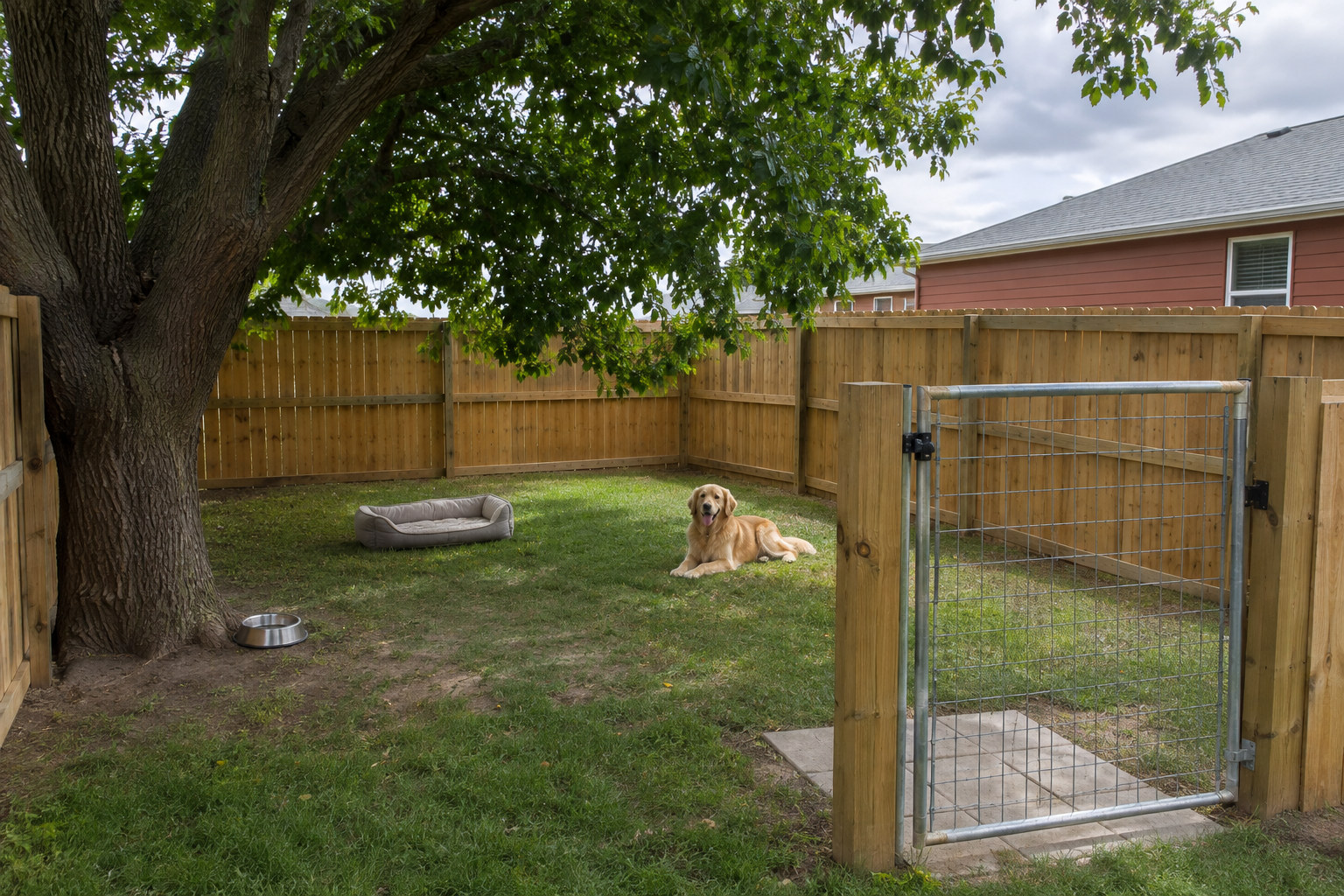
1. Reuse a Sound Boundary Fence
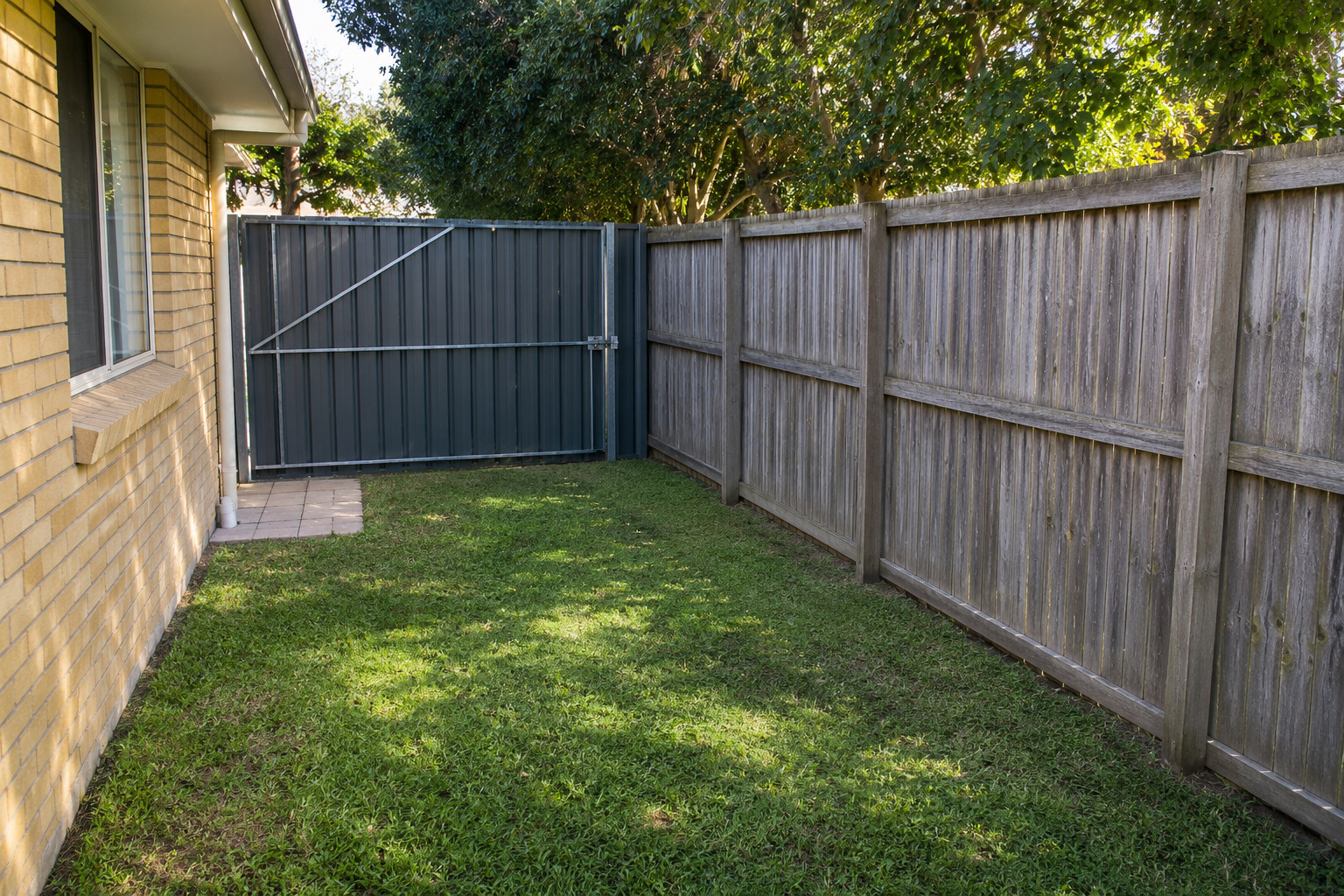
An existing fence may be the most valuable material in your yard. If it is suitable for your dog and in good condition, incorporating it into the run can reduce the amount of new fencing needed. Inspect the whole proposed boundary, including posts, lower edges, corners, and the connection to the house.
Separate cosmetic wear from actual failure. Weathered color may be acceptable; loose boards, movement, damage, and escape gaps need attention before the area is used. Get a competent assessment if you are unsure whether the fence or its supports are sound.
Check ownership and permission before attaching anything to a shared boundary. A simple cross gate may be enough to complete the layout, but the gate and its connections still need to suit the dog. Reusing a good fence saves material. Building around an inadequate one only postpones the real expense.
2. Design Around Standard Panel Sizes
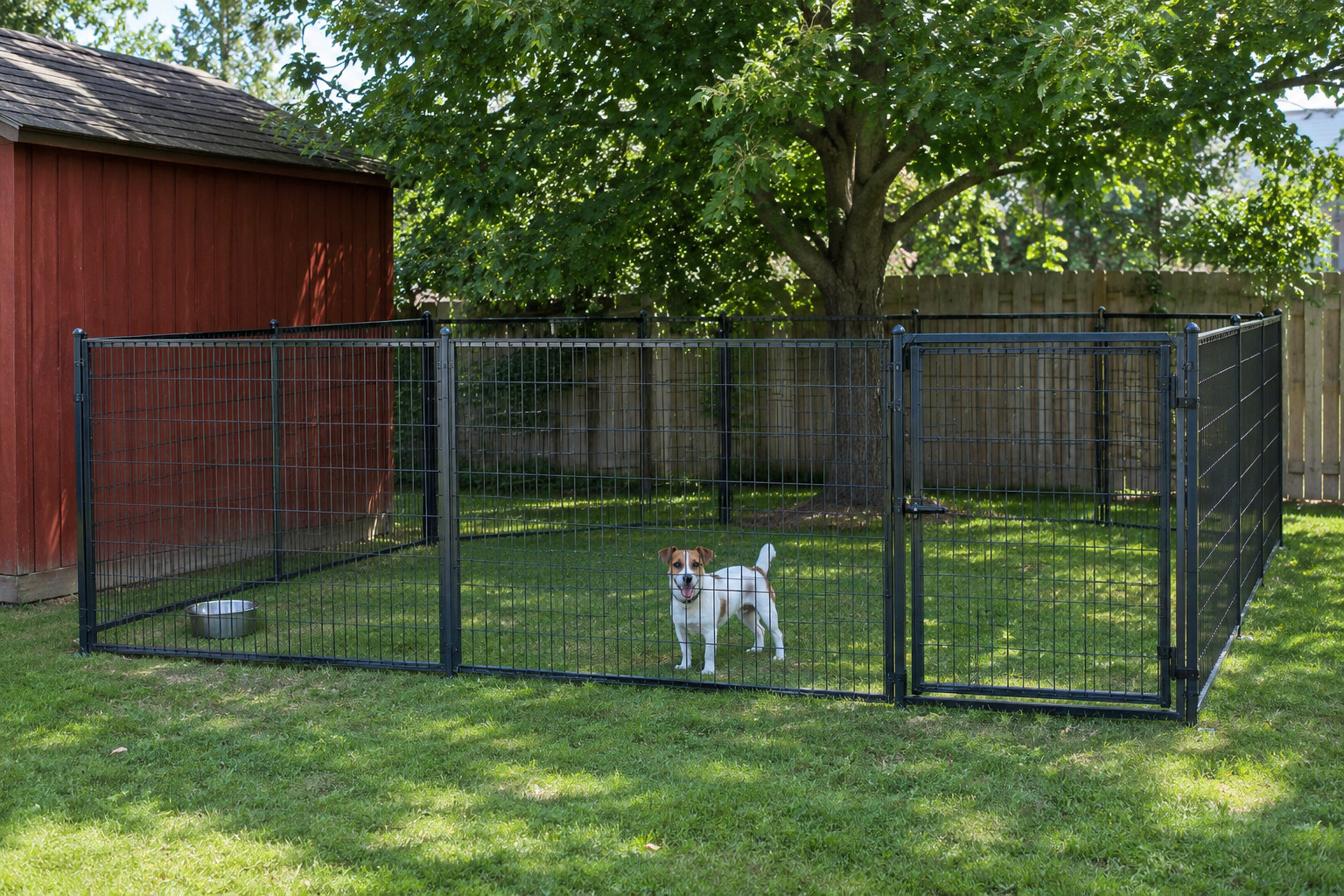
Before marking an elaborate outline, look at the sizes of suitable fencing systems available locally. A simple rectangle that uses complete panels may need less cutting, fewer special parts, and less custom labor than a shape with several short returns.
Sketch the gate as part of the system rather than adding it afterward. Include the posts, connectors, anchoring requirements, delivery, and any ground preparation when comparing options. A cheap panel price tells you little about the complete enclosure cost.
Keep the finished size appropriate for the intended use and your dog. Reducing waste is useful; shrinking the space until it cannot serve its purpose is not. Choose the simplest outline that works with the site, preserves access, and can be installed according to the manufacturer’s requirements. Plain geometry often gives a modest run a more orderly appearance as well.
3. Keep the Lawn That Already Works
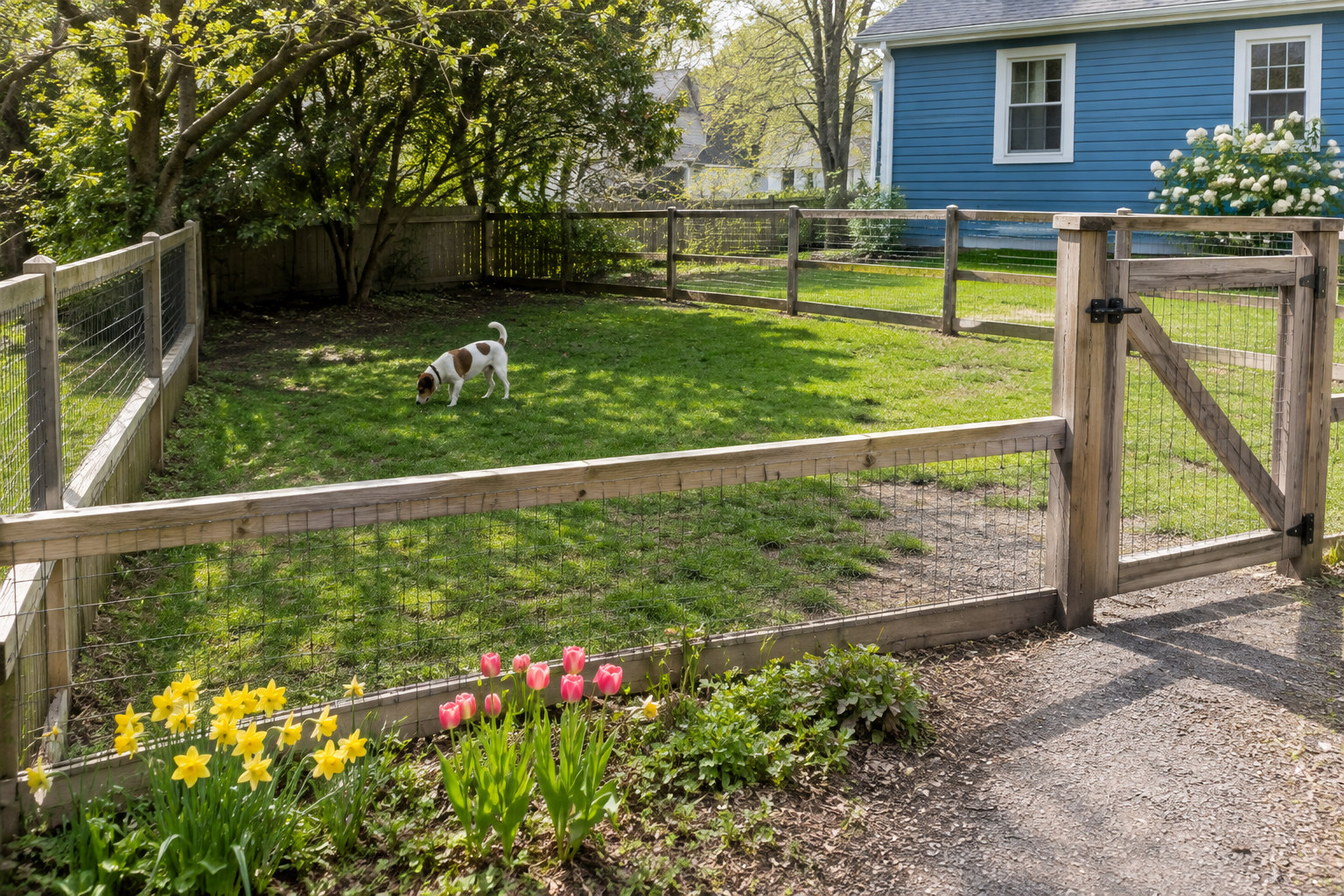
If the existing lawn drains reasonably and remains usable, replacing it immediately may be unnecessary. Start by observing where your dog actually travels and where wear develops. A whole-yard surface replacement can spend money on areas that were not causing a problem.
Keep the initial arrangement simple and watch it through ordinary use and wet weather. If one patch becomes muddy, address that patch rather than assuming every square foot needs the same treatment. Lawn maintenance, dog habits, and weather will influence how well the idea lasts.
Allow room in the budget for later repairs. Keeping grass is a starting choice, not a promise of permanent zero maintenance. This approach is most useful when the existing ground is already suitable. A waterlogged or heavily damaged area needs its underlying problem understood before you commit to using it as the run.
4. Make Use of an Existing Patio
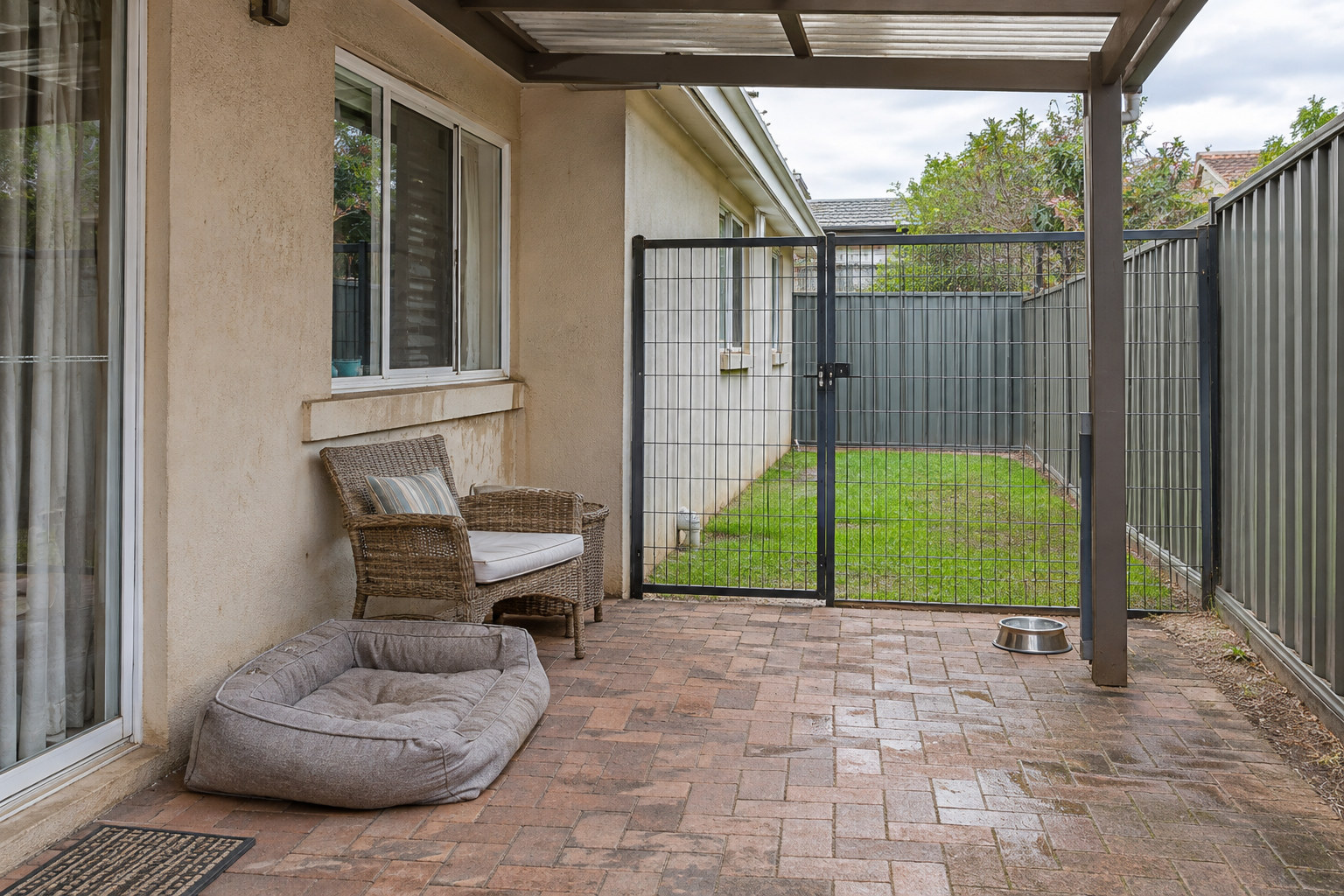
An existing level patio can provide a practical starting surface, especially where it adjoins a useful shaded area or lawn. Check the condition of the paving, its drainage, and the route from the house. Loose slabs and awkward edges need attention before the area becomes part of the dog’s daily routine.
Consider how the family uses the patio. A run that blocks the dining door or removes the only sitting area may create a second project elsewhere. Our outdoor patio design ideas can help you think through the human side of a shared layout.
Observe the surface in different weather and temperatures. An existing patio is not automatically comfortable just because it is already paid for. Keep water and a suitable resting spot available, and choose a different location if the surface or exposure makes the area unsuitable for your dog.
5. Pave Just the Muddy Gateway
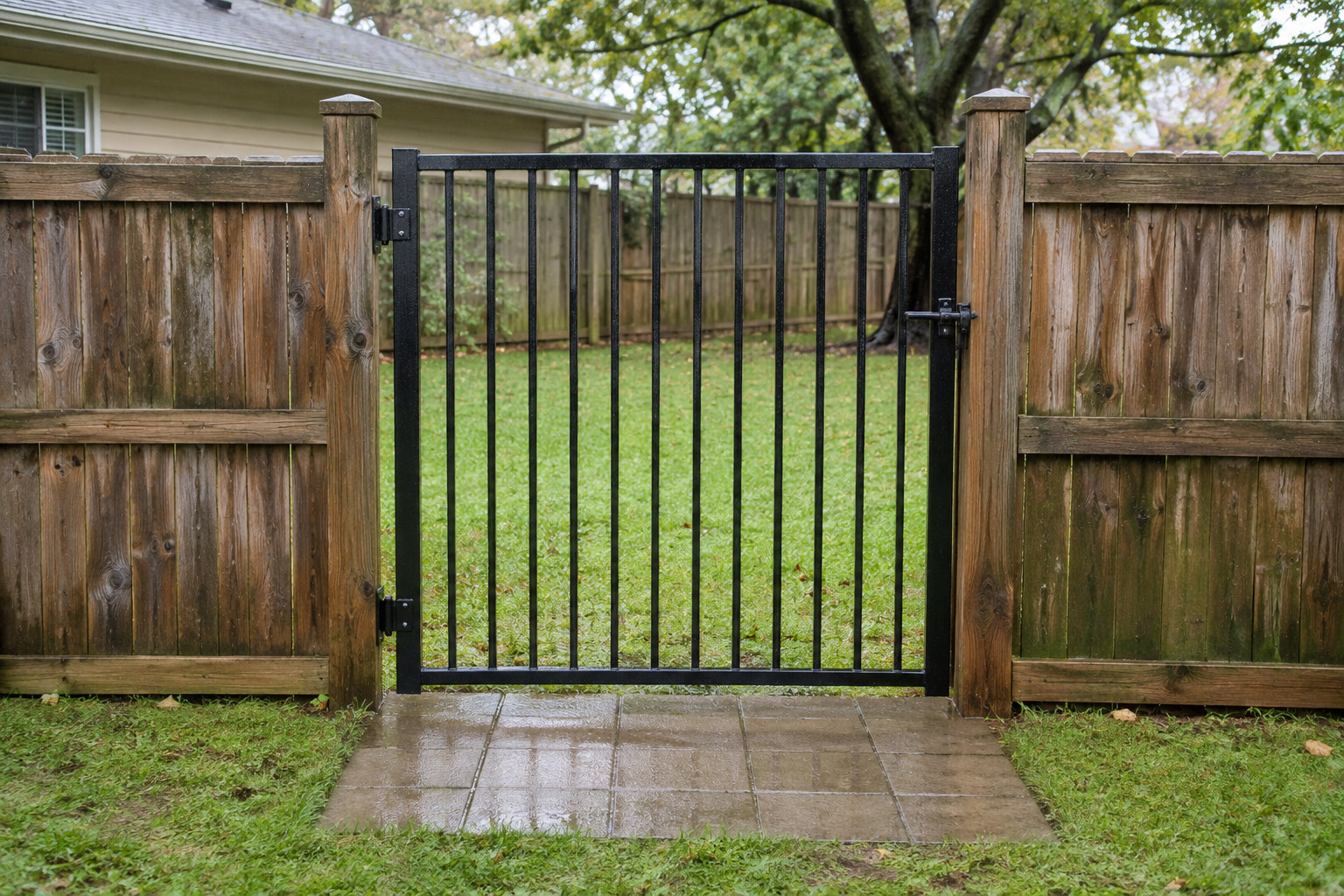
The gate often receives more repeated traffic than the rest of a run. If mud is concentrated there, a small properly installed paved landing can be a more focused investment than resurfacing the entire enclosure. It also gives you a steadier place to stand while operating the latch.
Size the landing for the actual gate movement and your own approach. Make sure the finished surface does not create a trip edge, interfere with the lower gate clearance, or redirect water toward the house. Ground preparation matters more than choosing a decorative pattern.
Use a simple texture and shape that you can clean easily. The surrounding lawn or other suitable surface can remain in place. Watch the area afterward: if water still collects, the problem may involve drainage beyond the gateway. A patch of paving should solve a defined problem rather than hide it temporarily.
6. Repair the Most Worn Route First
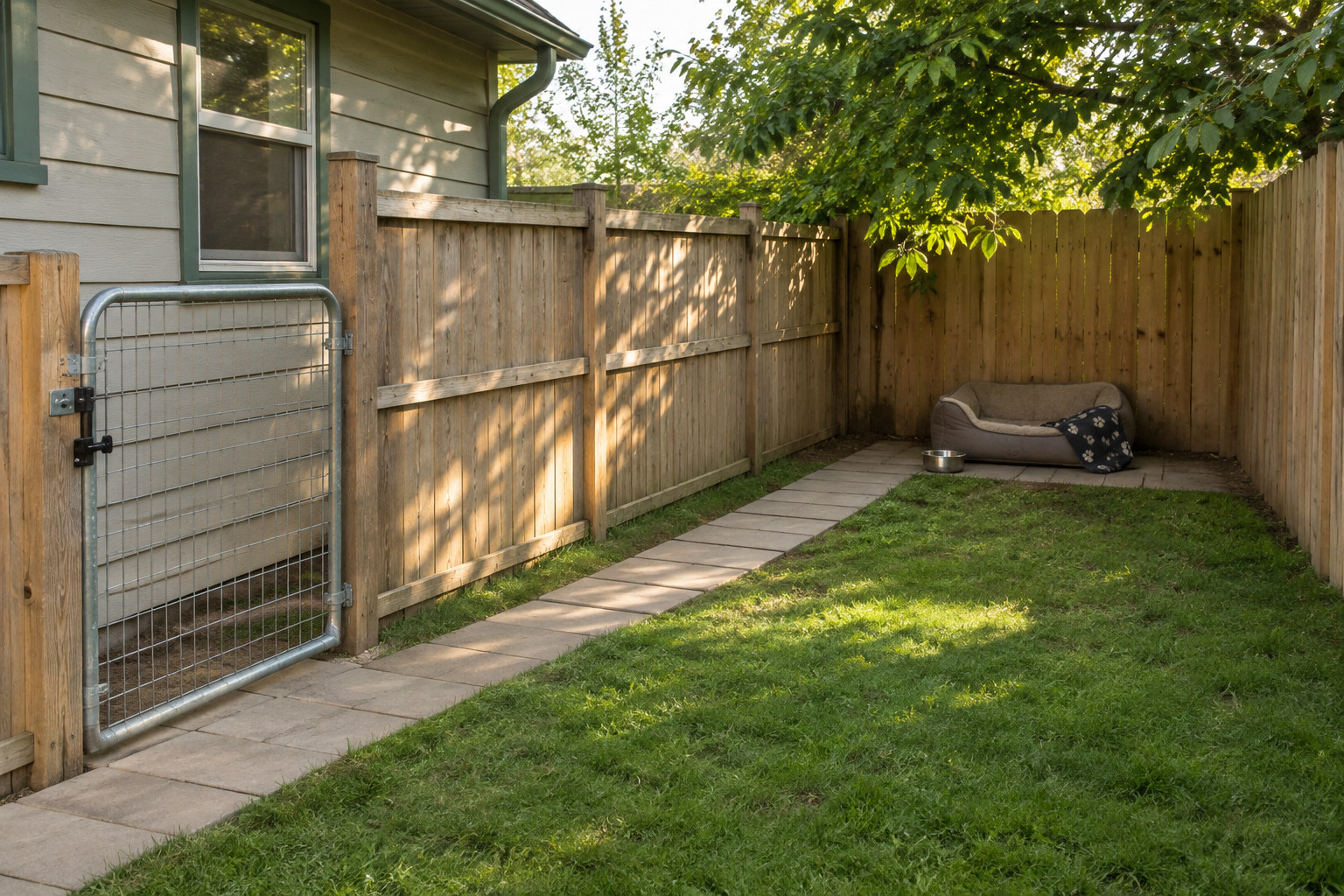
Dogs often create a repeated route between the gate, water, and resting area. If that route is where the ground fails, a short, level path may make the space more useful without changing its entire surface. Plan the path around observed movement instead of imposing an ornamental shape.
Choose materials appropriate for the site and install them so they remain stable. Avoid scattered loose pieces that rock or leave awkward gaps. A plain continuous route can be easier to sweep and inspect than a pattern chosen mainly for photographs.
Keep the path broad enough for its purpose, with transitions that do not create obstacles. Leave the rest of the enclosure open for normal use. For help balancing routes and remaining floor area, see our small backyard layout ideas. The saving comes from targeting wear rather than buying more surface than you need.
7. Choose Straightforward Fencing Materials
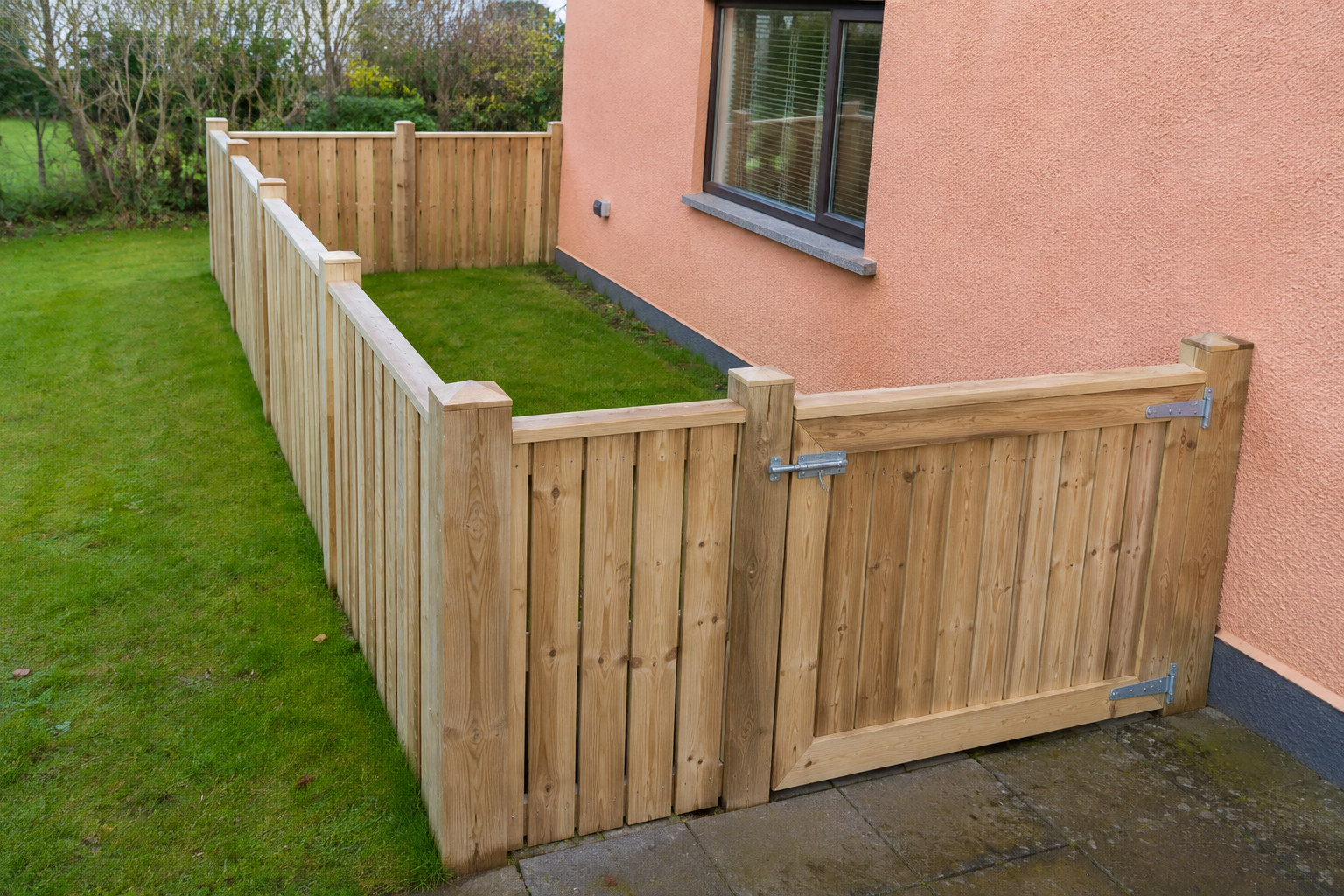
When new fencing is necessary, simple standard components are worth comparing before custom decorative work. Regular boards, compatible posts, and a properly framed gate can create an orderly boundary without expensive arches, mixed materials, or unusual fittings.
Keep the specification focused on the dog and the site. The required height, spacing, supports, and lower edge vary, so do not copy another garden’s measurements without checking suitability. Ask the installer to explain the complete design rather than choosing by the cheapest visible board.
For visual direction, our privacy fence ideas show how different finishes affect a yard. Use those examples for style, then have the containment requirements assessed separately. You can simplify trim and color changes while keeping the structure appropriate. Decorative savings are useful because they do not need to reduce the enclosure’s essential performance.
8. Reuse Sound Pavers With a Simple Layout
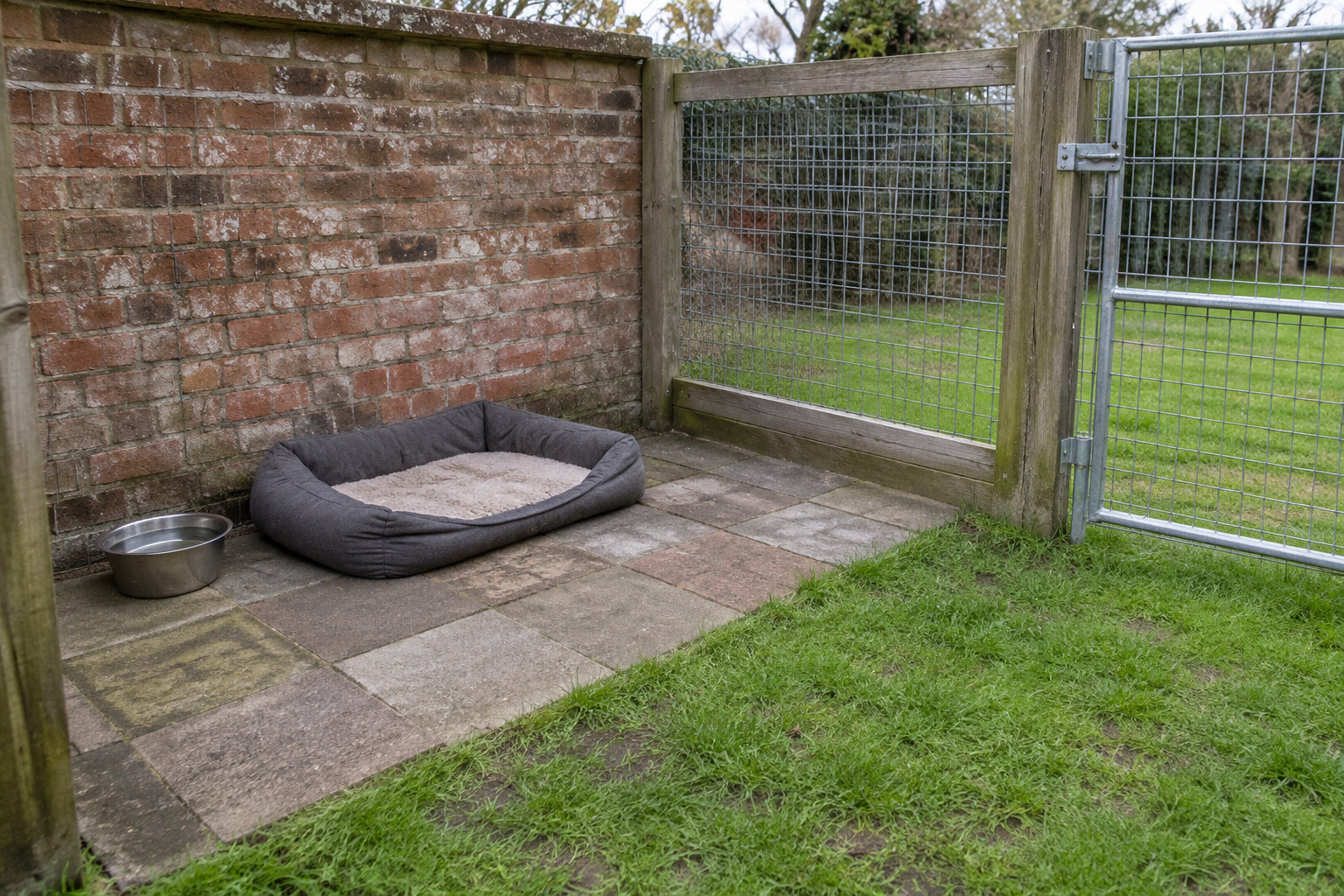
Leftover pavers from another project can be useful for a small landing or resting pad when they are intact and suitable for the job. Sort them before designing the area. Reject damaged pieces rather than trying to make every free item fit somewhere.
Keep the pattern simple enough to work with the quantities you actually have. A modest rectangular pad can look deliberate even when the colors vary slightly. The finished surface should be level and stable, with appropriate preparation and drainage for the site.
Include transport, cleaning, installation, and missing materials in the comparison. Reclaimed supplies are only a saving when the whole job still makes sense. If you need extensive cutting or additional deliveries, new plain pavers may be more practical. Use the available material to support a sensible plan rather than letting a pile of leftovers dictate the entire run.
9. Locate the Run Where Shade Already Exists
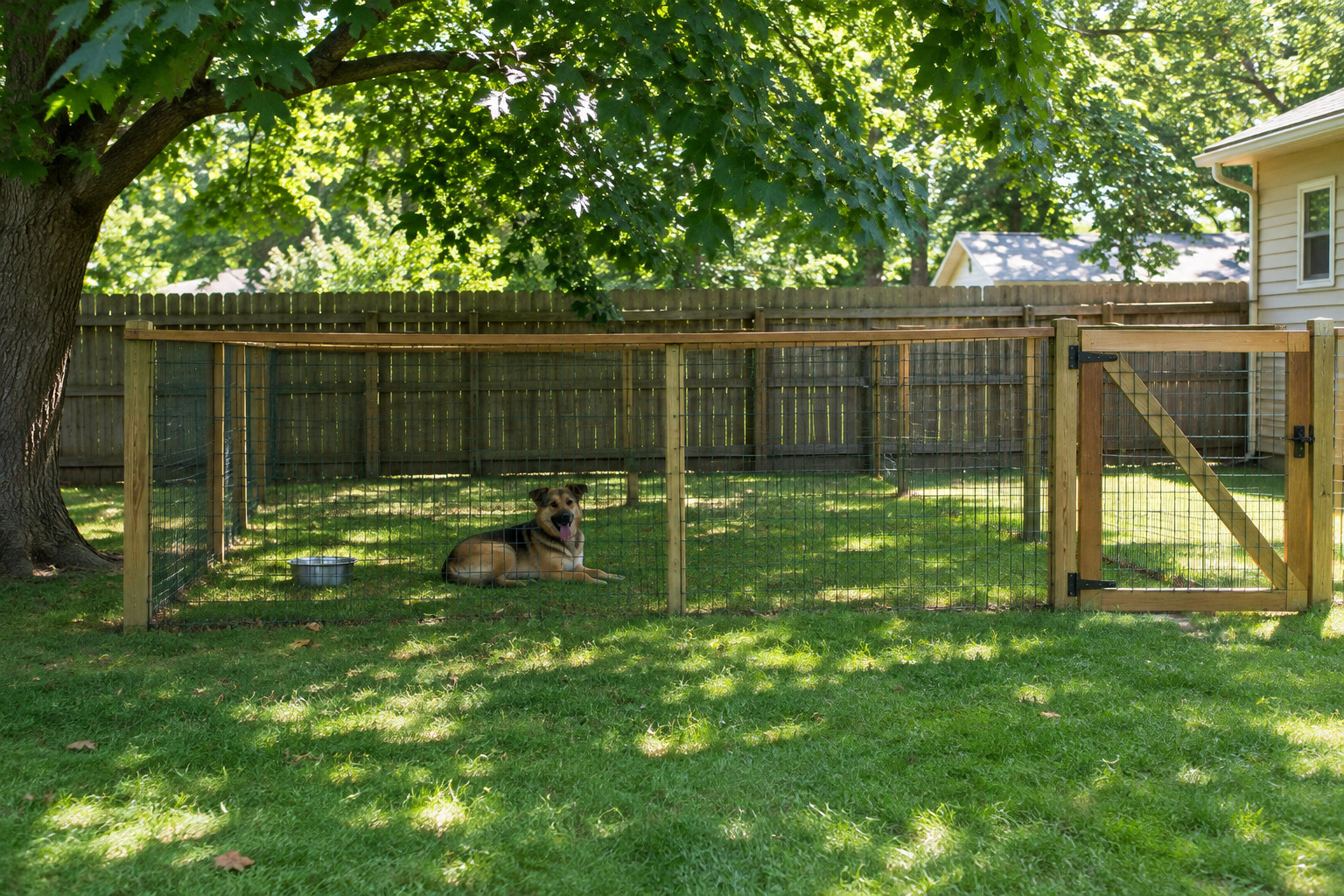
Shade from the house or an established tree can influence where a modest dog run belongs. Visit possible locations at different times of day, since a shaded morning corner may be fully exposed later. Use that observation before deciding on the fence line.
The best shaded spot must still offer suitable ground, access, and containment. Check nearby objects that could create climbing opportunities or interfere with the boundary. Avoid assuming that placing the run beneath branches solves every seasonal or weather-related concern.
Dogs Trust’s garden guidance emphasizes supervision, secure fencing, shade, and drinking water. Existing shade can reduce the need for an immediate new structure, but it does not remove those everyday responsibilities. Keep a plan for bringing the dog indoors when conditions make the run unsuitable, regardless of how well the layout works on a mild day.
10. Add Movable Shade Before a Permanent Roof
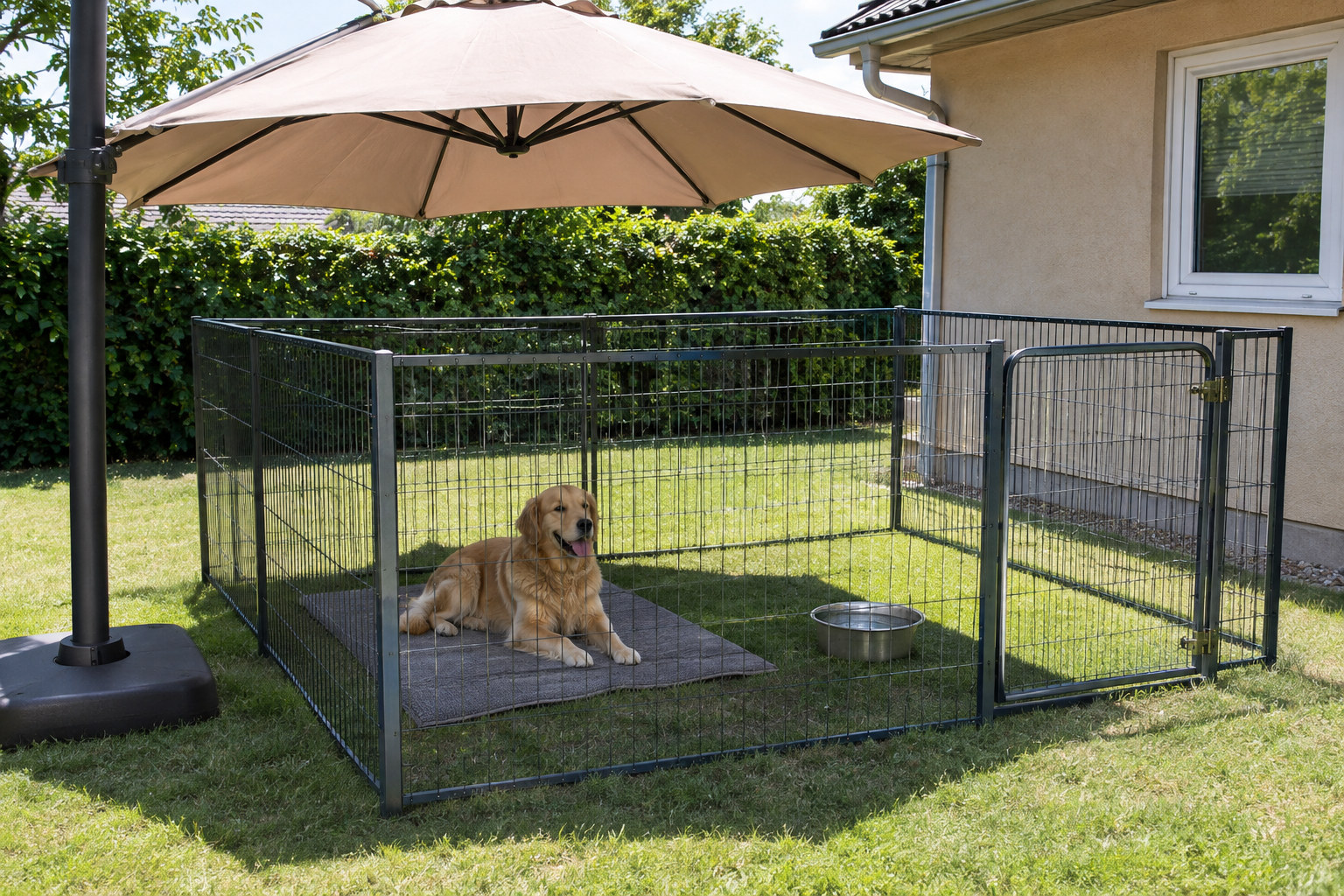
A suitable movable shade arrangement can help you test a location before committing to a permanent roof. For supervised use in appropriate weather, a properly secured garden umbrella outside the enclosure may cast shade where you need it while keeping its base and fittings away from the dog.
Follow the manufacturer’s instructions for the base, position, and weather limits. Keep cords and supports out of the enclosure and away from the gate. If the shade cannot be secured appropriately, it is not a useful budget shortcut.
Watch the shadow rather than the umbrella itself. Adjust the layout so the dog has usable shaded ground as the light moves, and close or remove the equipment when required. This is a flexible early-stage option, not a substitute for a permanent shelter where one is needed or for moving indoors during unsuitable conditions.
11. Stay Near an Existing Outdoor Tap
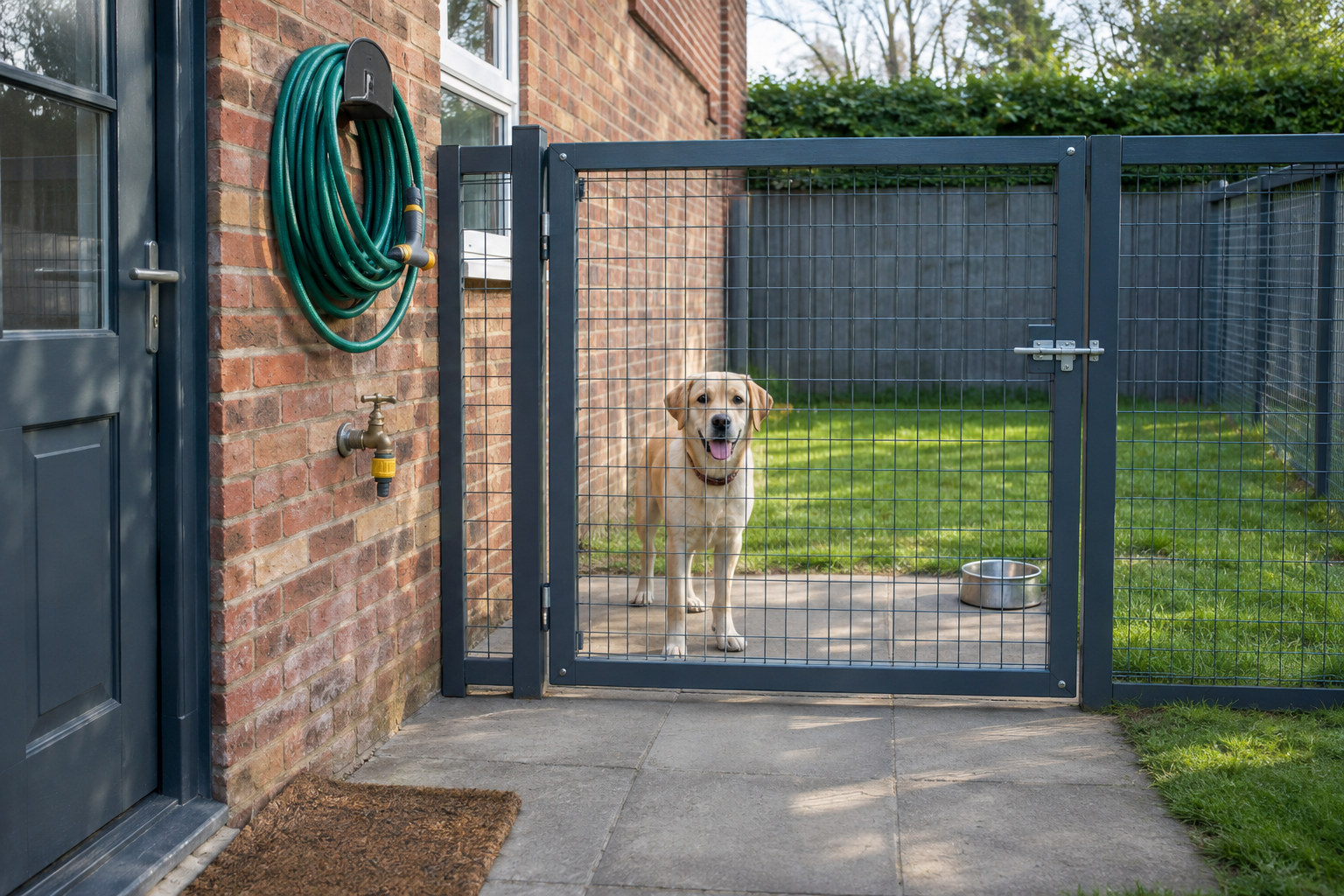
Locating the run within practical reach of an existing outdoor tap can simplify filling water bowls and routine cleaning. Before paying for new plumbing, test whether your current arrangement already reaches the proposed area without creating a hose across a doorway or walkway.
Keep the hose stored outside the dog’s reach when it is not being used. A reel or tidy coil should not obstruct the gate, create a trip hazard, or encourage the gate to remain open during cleaning. Position the water supply around how you will actually maintain the space.
Do not hose waste into an unsuitable drain or toward neighboring property. Decide how waste and wash water will be managed for your site. If plumbing or drainage alterations are needed, have them assessed properly. Convenience is worth planning, but an existing tap is only helpful when the surrounding routine also works.
12. Put Basic Cleaning Tools at the Gate
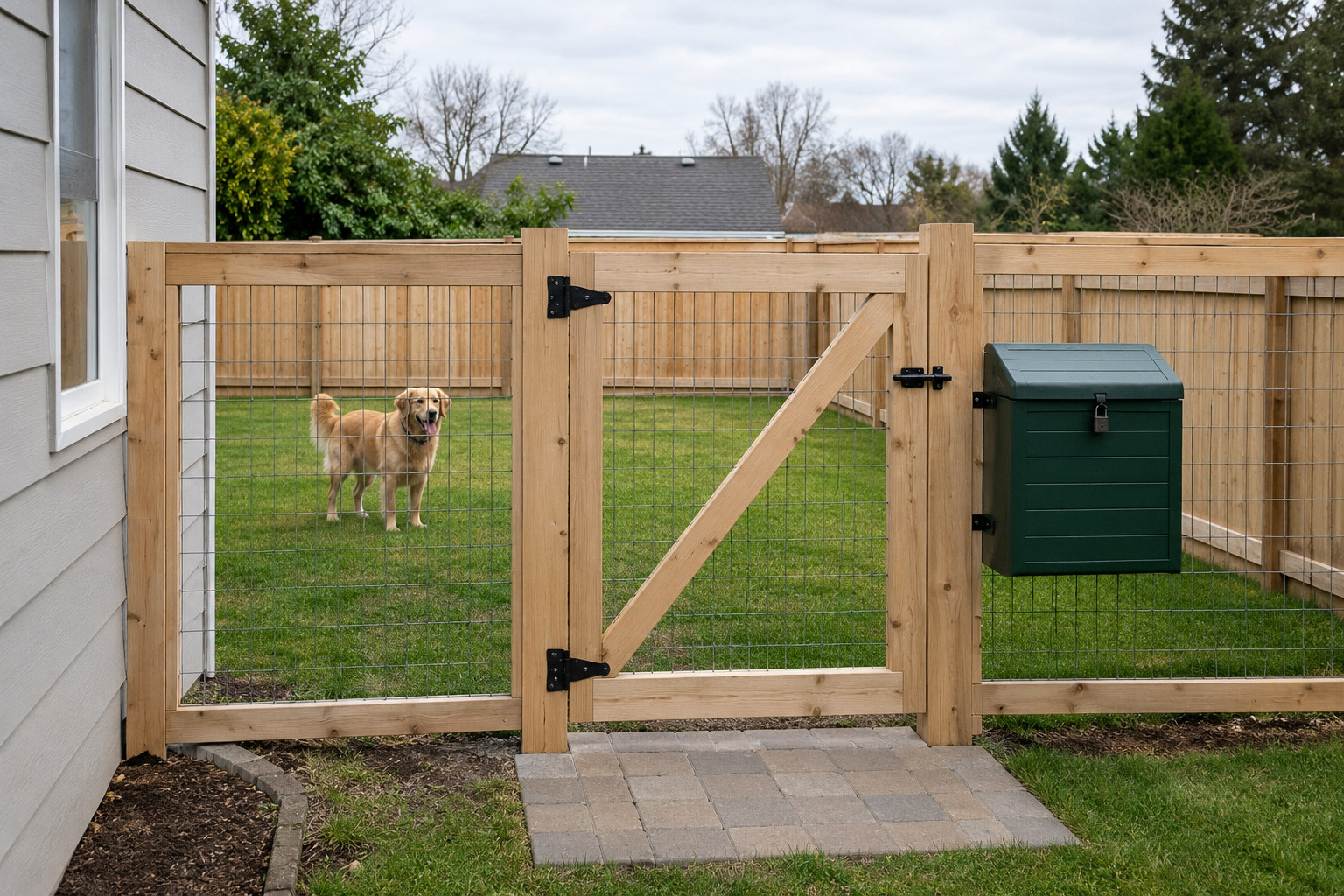
A small weatherproof storage box outside the enclosure can make maintenance easier without adding a full garden cabinet. Give a scoop, waste bags, and other appropriate tools a specific place near the entrance so they are available when you need them.
Choose storage that closes securely and suits its contents. Cleaning products may need a separate secure location, and nothing should be left where the dog can reach through the fence. Keep the gate swing and walking route clear.
Start with the tools you use regularly rather than buying a matching accessory set. A straightforward arrangement is easier to keep organized and less likely to become a dumping place for unrelated garden equipment. The benefit is practical: maintenance becomes part of using the run instead of a task that begins with searching the shed for everything.
13. Give Digging Its Own Small Area
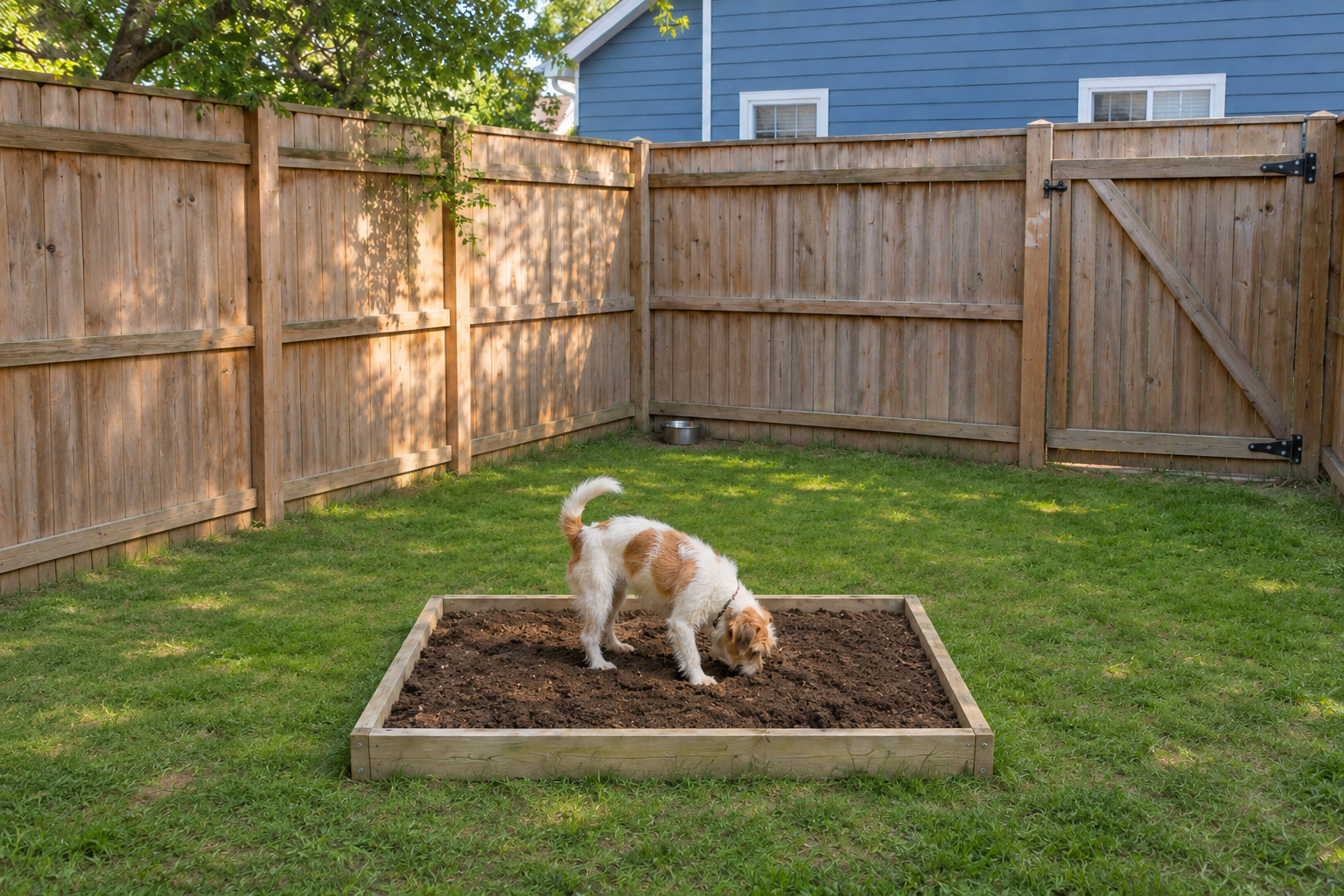
If digging is part of your dog’s normal garden activity, a designated area can be worth considering before repeatedly repairing the whole yard. A small contained patch lets you test whether a defined digging spot fits your dog’s interests and your available space.
Use a suitable design and material, with no sharp edges or loose components that your dog is likely to chew or swallow. Keep it separate from the fence line so the activity does not encourage work at the boundary. Observe how the dog uses the area rather than assuming it will solve every digging issue.
Dogs Trust includes a designated digging area among its garden enrichment suggestions. Keep the first version modest and manageable. If the dog ignores it, you have learned something useful before spending on a larger feature or restructuring the rest of the garden.
14. Use a Washable Resting Setup
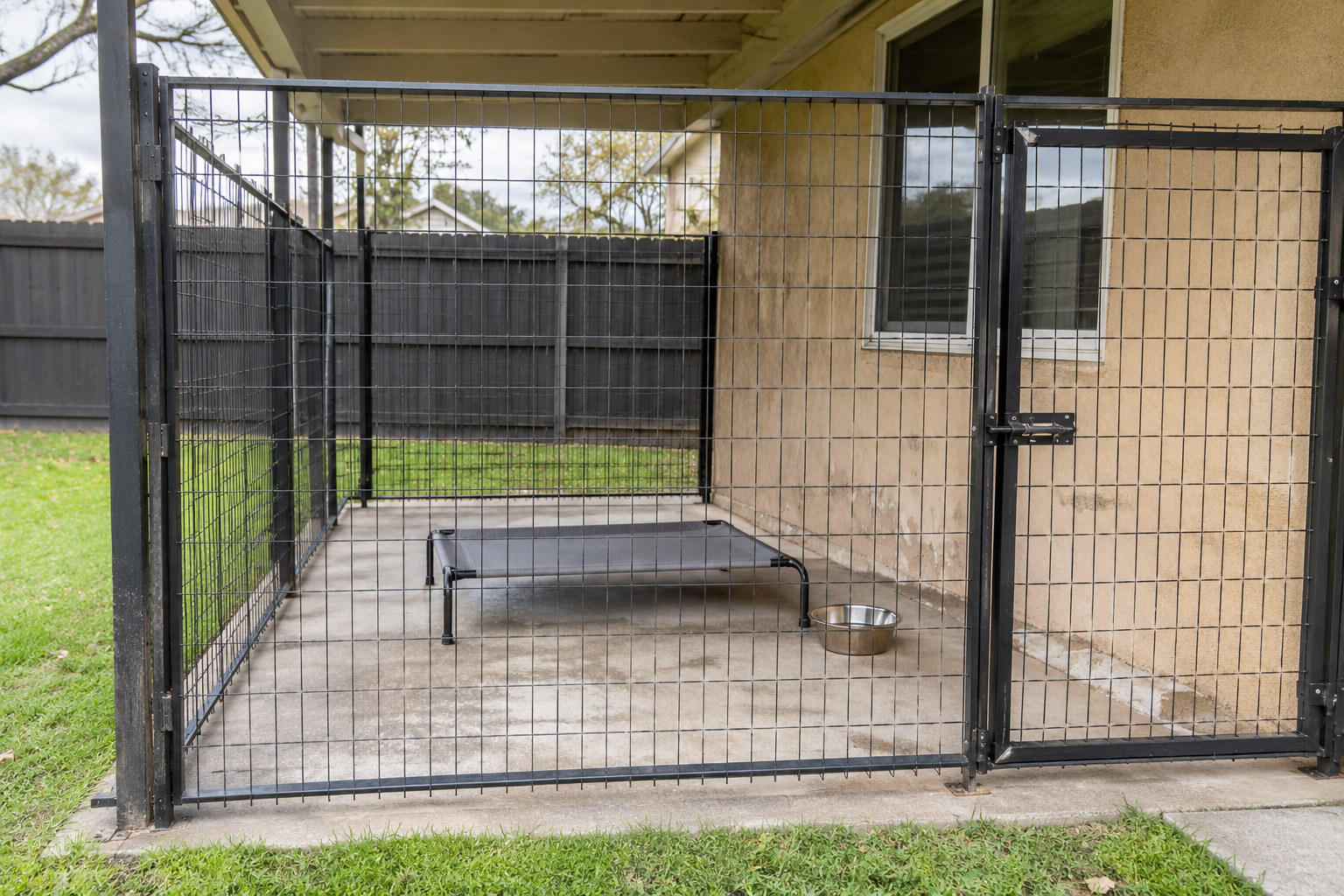
A simple suitable outdoor bed or cot in a comfortable shaded location may be more useful than an elaborate miniature house. Compare how easily each option can be cleaned, dried, moved, and checked. The right choice depends on the dog and the conditions, rather than on which product looks most like indoor furniture.
Place the bed on stable ground and confirm that its feet or frame do not rock. Keep the surrounding space clear and water accessible. Check the product’s intended use, size, and condition regularly, particularly if the dog chews bedding or fabric.
Avoid filling the run with cushions that are difficult to dry or decorative accessories that need constant care. Start with one practical resting arrangement and assess it. A budget is easier to manage when each item has a clear job and can be maintained without a second set of purchases.
15. Build a Complete First Phase With Room to Expand
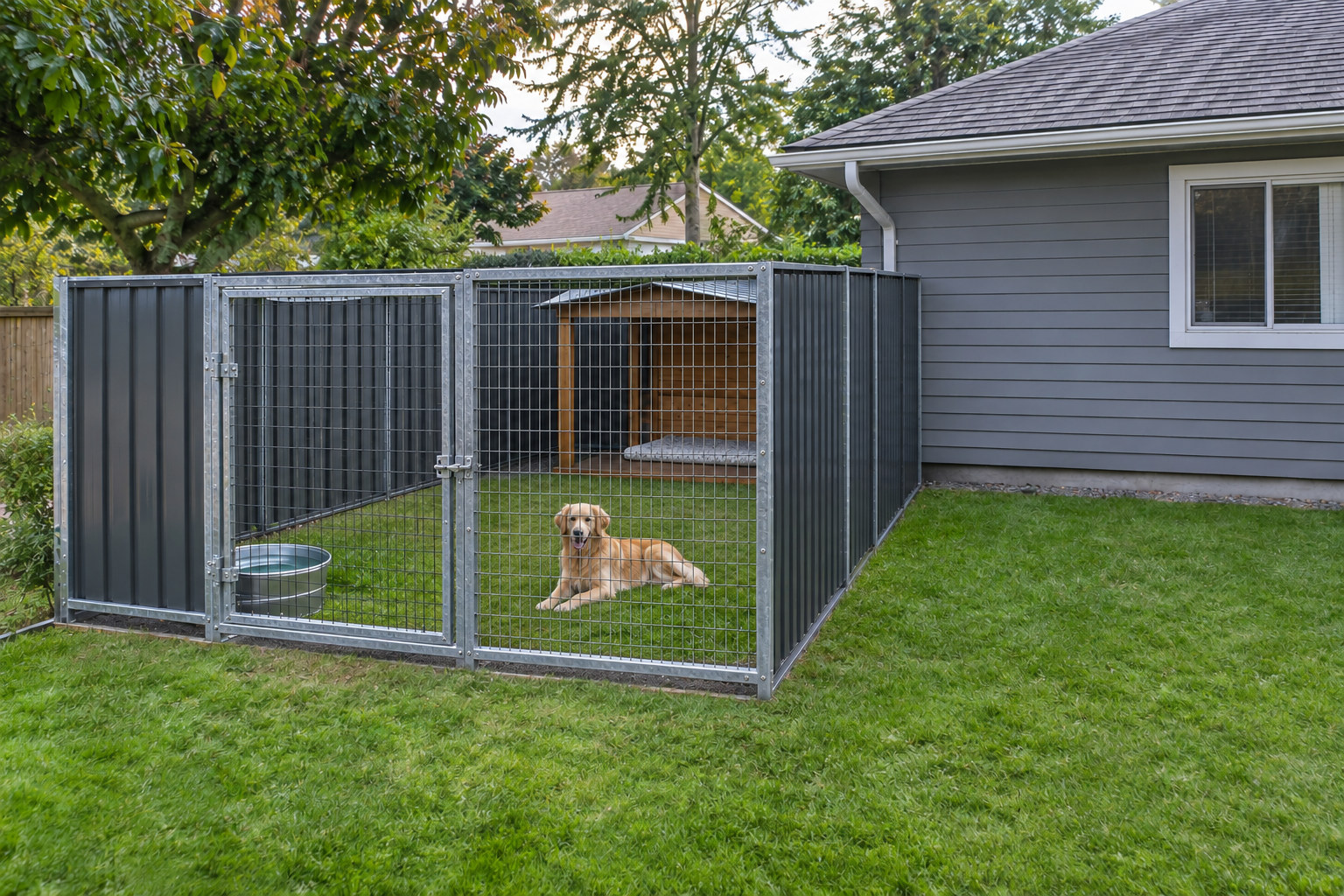
Phasing can control spending if the first stage is a complete, suitable enclosure on its own. Establish a secure boundary, usable gate, appropriate ground, water, shade, and a comfortable routine before adding optional features. An unfinished fence line is not a phase that can be used safely.
Choose compatible components where future expansion is realistic, and record the system details so later purchases match. Keep the proposed extension area available without paying to finish it immediately. The first layout should still suit its intended use rather than being temporarily too small or awkward.
Live with the completed phase and note actual problems. Perhaps the gate needs a better landing, or the resting area belongs elsewhere. Those observations make later spending more precise. Expanding a layout you understand is usually more useful than purchasing every possible feature before the dog has used it.
A Practical Order for Spending the Budget
First, Define What the Run Is For
Write one sentence describing the intended use: supervised garden time, a contained area while you work nearby, or another specific household routine. Then list what that use requires for your particular dog. This keeps the project from growing into a general backyard renovation with a dog-themed name.
An outdoor run remains one part of the dog’s day. It does not replace walks, interaction, appropriate activity, or access to a comfortable indoor environment. Planning its purpose accurately helps you avoid both overspending on unnecessary features and underspending on the things that make it usable.
Compare Complete Costs, Not Headline Prices
For each option, write down materials, fittings, delivery, preparation, installation, and ongoing upkeep. Add removal or disposal when old materials must come out. Two fencing systems with similar panel prices may have very different complete costs once posts and gate hardware are included.
Treat your own time honestly as well. A project that requires tools you do not own, several material collections, and unfamiliar structural work may be less economical than a simpler professionally installed option. Budget planning is a comparison of complete jobs, not a contest to find the cheapest individual component.
| Spending area | Prioritize | Simplify or postpone |
|---|---|---|
| Boundary | Suitable, sound fence and connections | Decorative trim and mixed finishes |
| Gate | Reliable operation, suitable fit, clear access | Ornamental hardware chosen only for appearance |
| Ground | Stability, drainage, and the actual worn areas | Full resurfacing when most existing ground works |
| Comfort | Useful shade, water, and a suitable resting option | Custom themed shelters and accessory sets |
| Maintenance | Easy access and practical storage | Large storage furniture before the routine is established |
Leave a Reserve for What the Site Reveals
Do not assign every part of the budget to visible finishes. Ground conditions, damaged existing posts, or an awkward gate connection may require attention once the work is assessed. A reserve lets you respond without removing essential parts of the plan.
Ask suppliers and installers to separate necessary work from optional upgrades in their quotes. That makes comparison clearer and helps you phase the project sensibly. Choose the basic design only after you understand what is included, what remains unresolved, and what future maintenance will involve.
Get the Fail-Safe Paint Color Playbook (Free PDF)
36 proven colors • 8 ready palettes • trim & sheen guide • printable testing cards.
Budget Dog Run Questions
What Is the Cheapest Suitable Ground Surface?
There is no universal answer. Existing ground that already works may require the least immediate spending, but drainage, wear, temperature, cleaning, and the dog’s habits all matter. Compare the whole installation and maintenance requirement. A cheap material that must be removed shortly afterward is rarely a useful saving.
Can Recycled Materials Be Used?
Some can, after their condition and suitability are assessed. Sound pavers with known history may be useful; damaged fencing, sharp scrap, or unidentified treated materials are a different proposition. Count the work needed to make reused materials appropriate before deciding they are economical. Free materials still need a suitable design and competent installation.
Should a Small Budget Mean a Smaller Run?
The space still needs to serve its intended purpose for your dog. Reduce decorative complexity, reuse suitable existing features, or phase optional additions before reducing the enclosure below what will work. If the available budget cannot produce a suitable complete setup, reconsider the project scope rather than relying on a compromised boundary.
What Should Be Checked After Installation?
Observe the run during real use and inspect the gate, boundary, ground, and resting area routinely. Look for movement, new gaps, wear, obstacles, and changes after weather. Keep supervision part of the routine. A completed project needs continued attention, even when it is simple and well built.
Spend on the Parts You Use Every Day
Start with the fence and gate, solve the actual ground problem, and make the space comfortable to use and easy to maintain. Add decorative touches once those choices have proved themselves. A modest run with dependable daily function offers more value than a complicated layout that spends its budget on appearances before the practical work is finished.
Source Notes
- Dogs Trust: How to Make Your Garden Dog Friendly. Guidance on supervision, fencing, shade, water, and digging enrichment. Budget comparisons and project sequencing are editorial planning suggestions, not contractor quotations or engineered construction specifications.