
15 DIY Cat Furniture Ideas for a More Useful Home
A useful piece of cat furniture solves something you see every day: a favorite sleeping spot with nowhere to stretch, a scratched sofa end, or a cat determined to supervise your desk. Making it yourself gives you a chance to fit that habit instead of squeezing another bulky object into the room.
These DIY cat furniture ideas cover beds, scratching stations, shared tables, and low resting nooks. Choose the job first, then decide whether adapting an existing piece or building a simple new frame makes more sense. The most successful project is often the one with fewer parts, comfortable access, and a cushion you can actually wash.
Get the Fail-Safe Paint Color Playbook (Free PDF)
36 proven colors • 8 ready palettes • trim & sheen guide • printable testing cards.
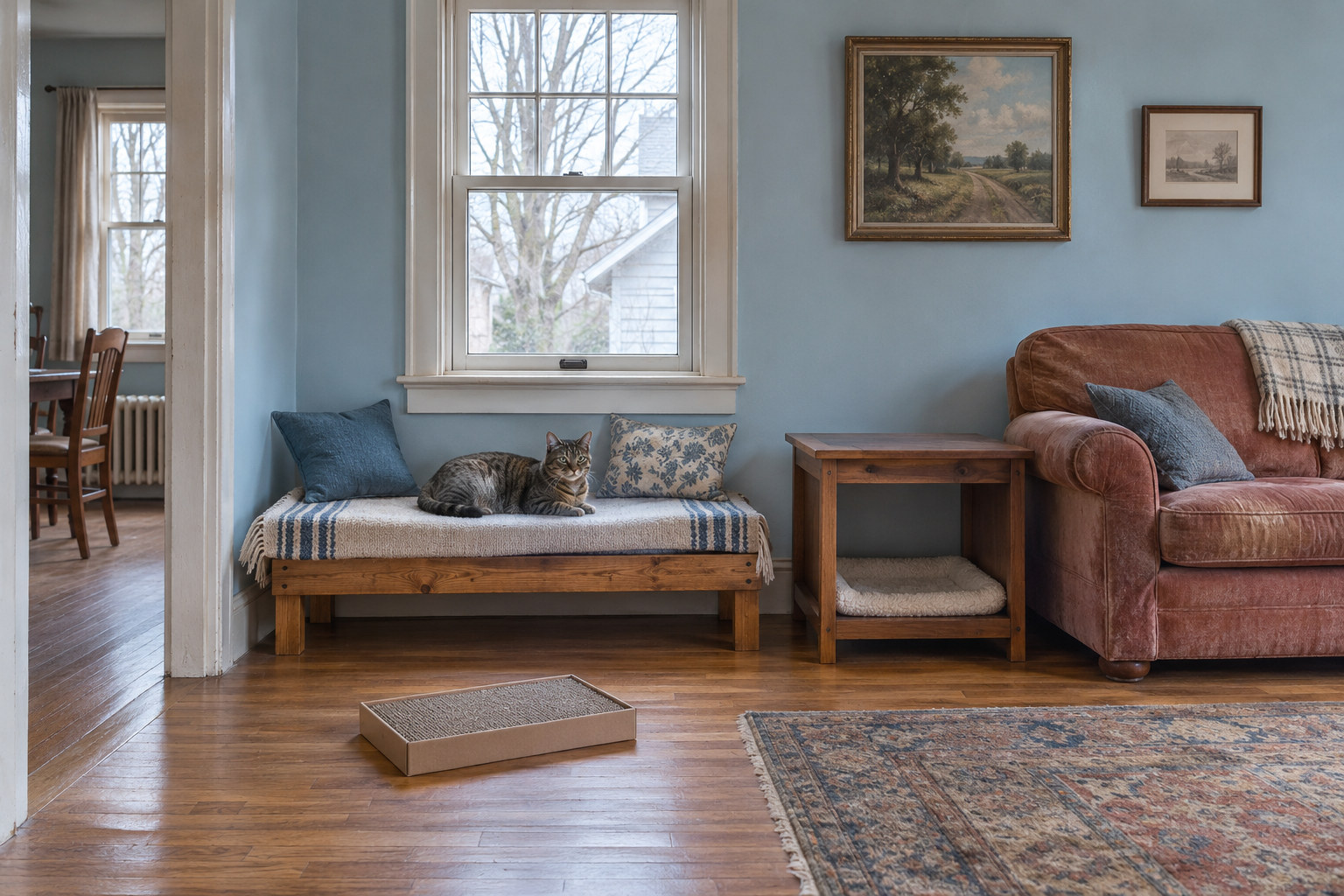
1. Build a Low Window Daybed
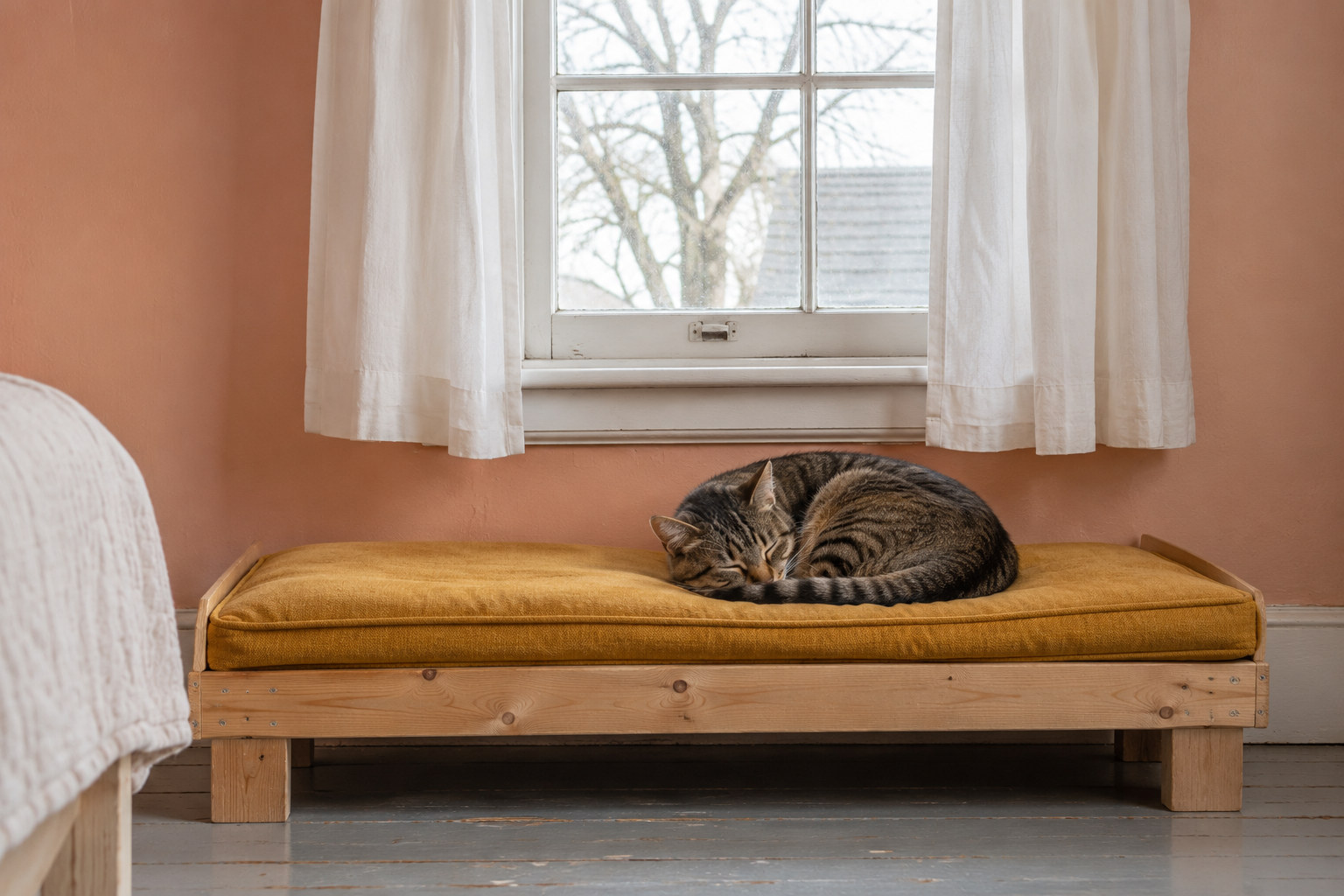
A low daybed turns a window your cat already visits into a more deliberate resting place. Keep the frame independent of the sill so window repairs and cleaning remain straightforward. Measure the cat lying fully stretched, then compare that space with the clear wall beneath the window. A pretty miniature bench is not much use if the sleeper hangs off both ends.
Make the cushion removable rather than upholstering every surface permanently. A fitted pad can be lifted for washing while the frame is wiped and checked. Keep the approach clear of curtains and make sure the window remains securely closed or appropriately protected.
Choose a height your cat already uses comfortably. The point is a familiar view with a better resting surface, not a new jumping challenge. A plain timber frame can echo the room’s floor or bed without needing to match every finish exactly.
2. Turn a Side Table into an Open Sleeping Nook
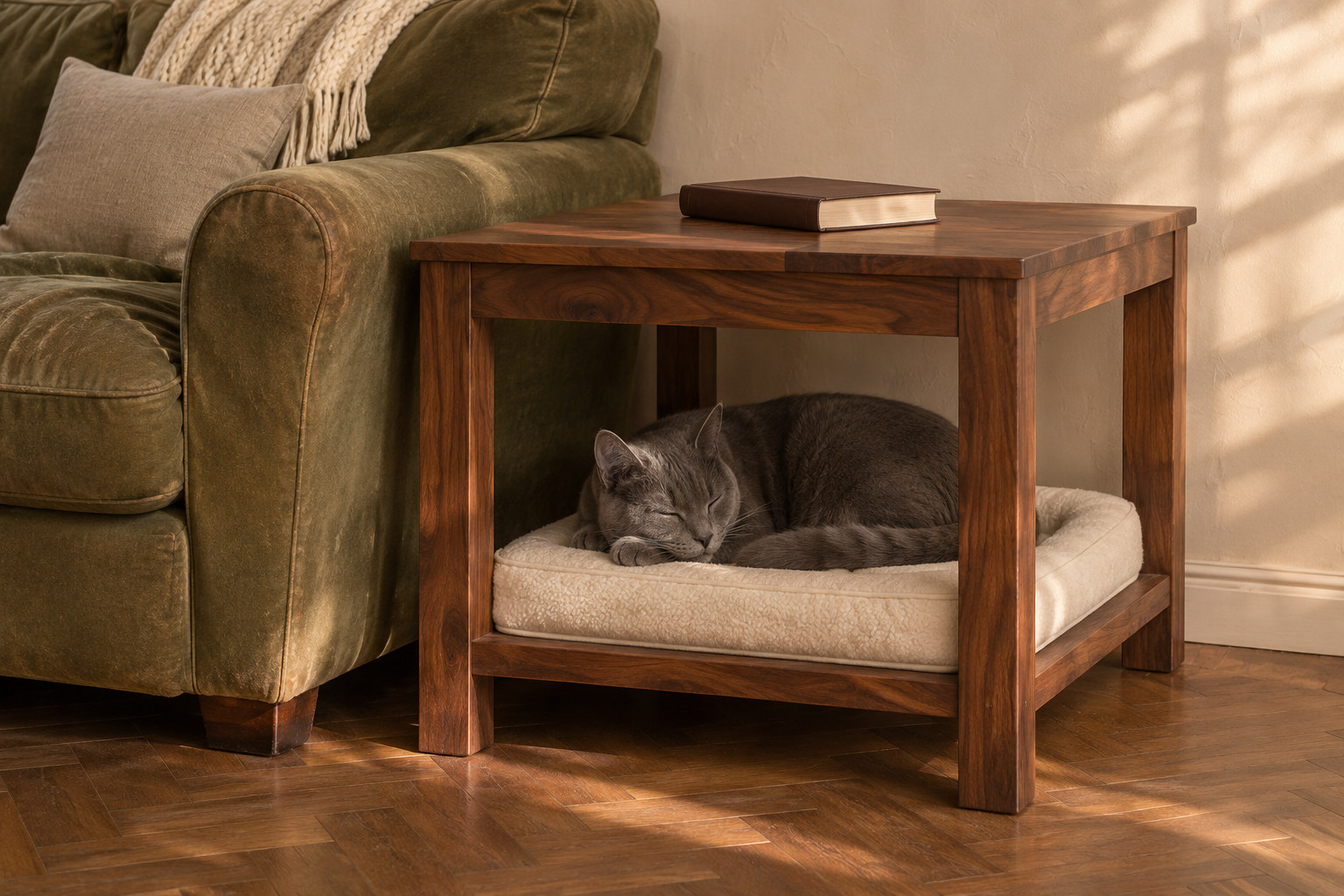
A sturdy side table with a broad lower shelf can serve both the room and its feline occupant. The useful change is usually a fitted sleeping pad, not a dramatic alteration to the table. Check the existing shelf, joints, and supports before deciding it can take a cat landing on it.
Leave at least two sides open when the shape allows. That gives the nook an airy appearance and lets you reach the cushion without moving the whole piece. Keep the top lightly used so a cat entering or leaving does not encounter a tower of breakable ornaments.
Position the table beside a seat the family uses regularly, while allowing an unobstructed route out. If the furniture already feels cramped between the sofa and wall, adding a cat bed will not improve it. This works best as a modest adaptation of a sound, generously proportioned table.
3. Make an Under-Desk Cat Bench
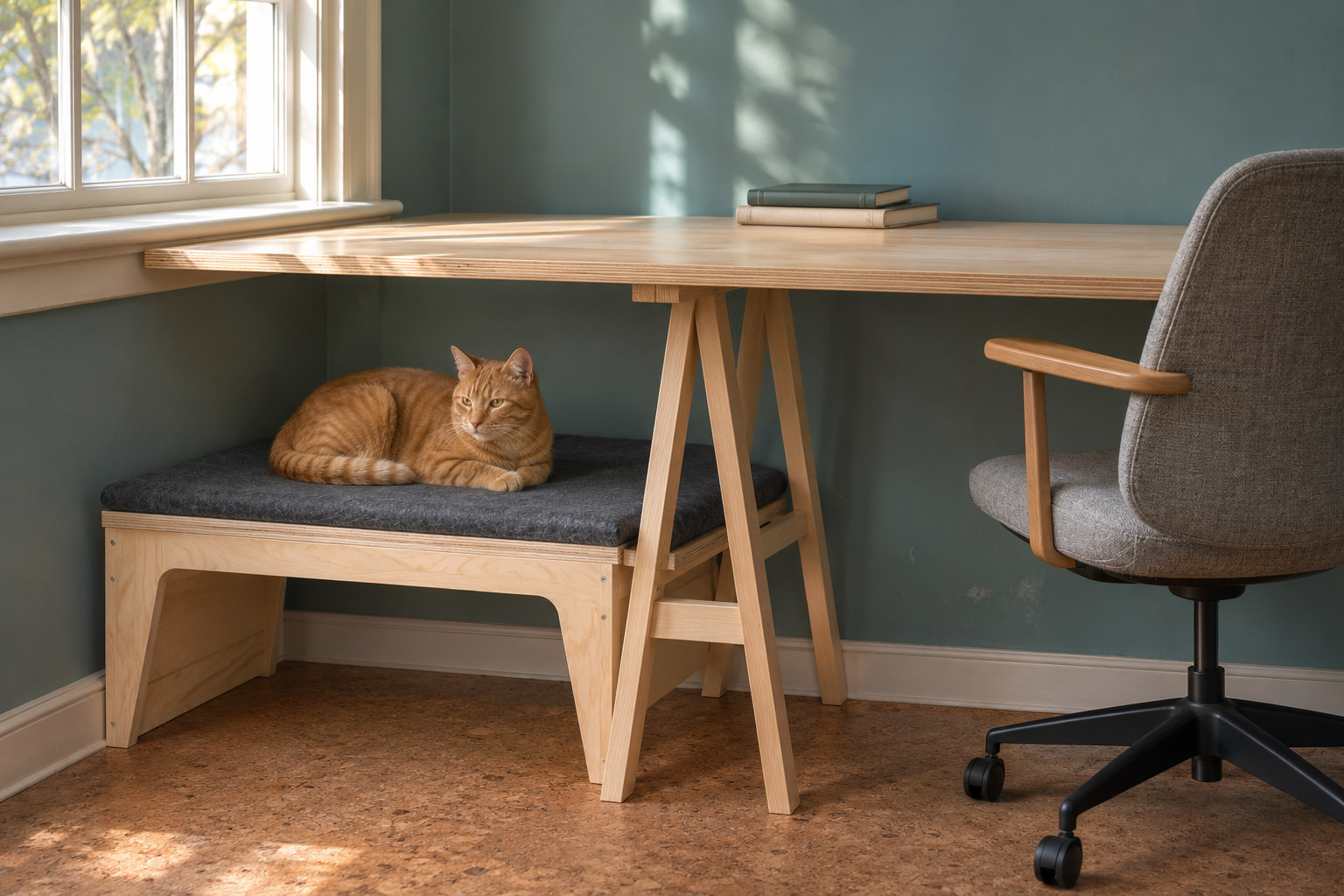
An under-desk bench gives a supervising cat a defined resting spot without surrendering your entire work surface. Start by mapping where your chair rolls, where your feet move, and which side of the desk stays unused. Place the bench only in that spare zone rather than directly beneath your knees.
Use a broad, stable low frame and a pad that stays in place. Keep cables, chargers, and small office supplies completely outside the cat’s resting and access area. The bench should lift out easily when you need to vacuum or rearrange the workstation.
Measure with the chair pulled back as well as pushed in. A setup that fits while everything is tidy may become awkward during normal use. If no clear space remains, put the bench beside the desk instead. Staying close to the work area matters more than making the furniture tuck under it.
4. Build a Freestanding Scratching Panel
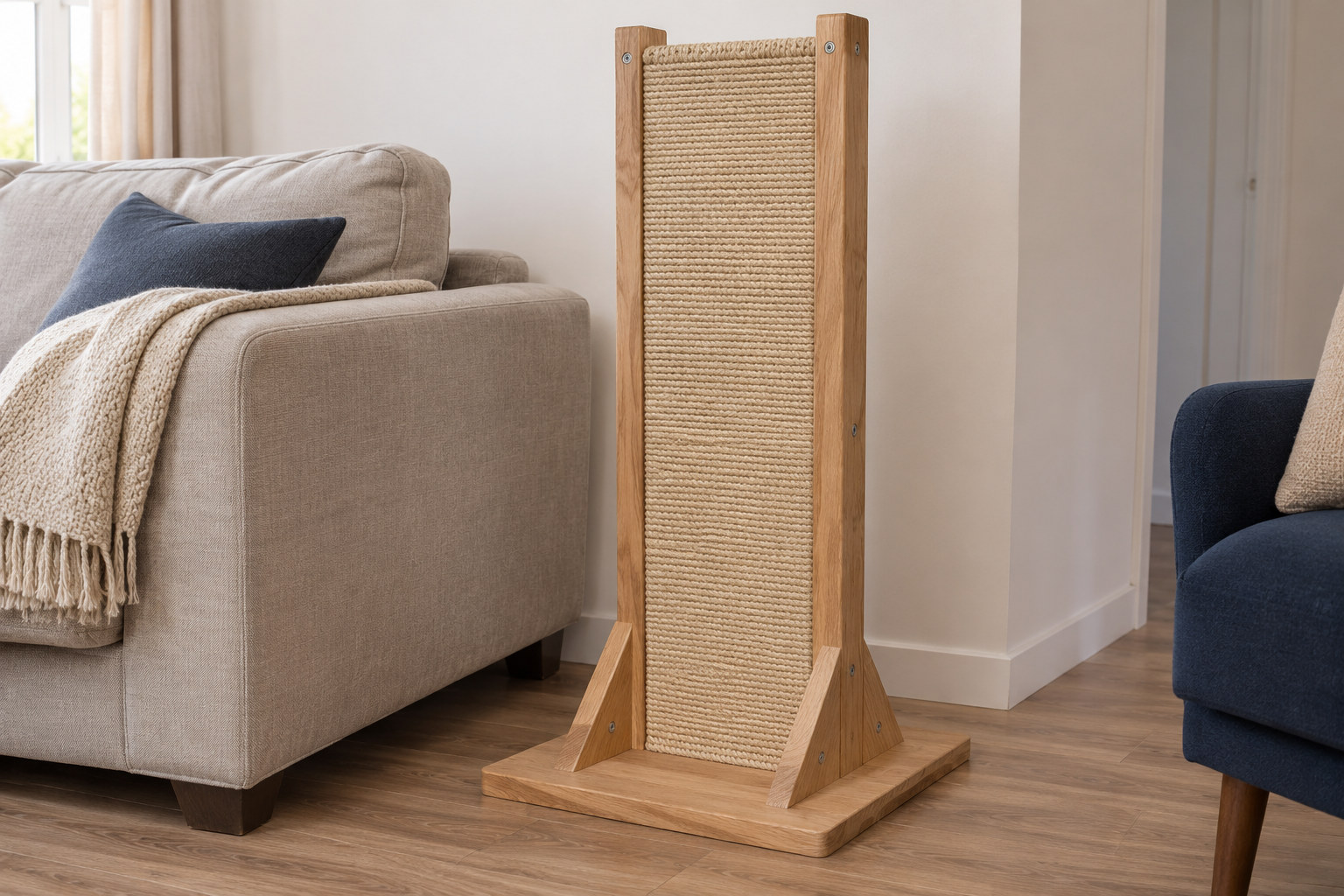
A freestanding scratching panel suits a cat who prefers a broad vertical surface. It also gives you control over the replaceable scratching material without attaching anything to the sofa. Think of it as a supported piece of furniture: a loose board propped against a wall is a different proposition.
Choose a stable base and a properly supported upright frame. Cats Protection recommends a stable scratching surface that allows a full stretch. Use your cat’s existing scratching posture to judge the useful surface rather than copying a decorative panel’s proportions.
Plan how the worn insert will come out before you assemble the frame. Keep fixings inaccessible to claws and check for fraying during routine cleaning. A simple rectangular panel can sit beside a sofa end or resting place with little visual fuss, especially when its frame repeats one of the room’s existing wood finishes.
5. Frame a Replaceable Cardboard Scratcher
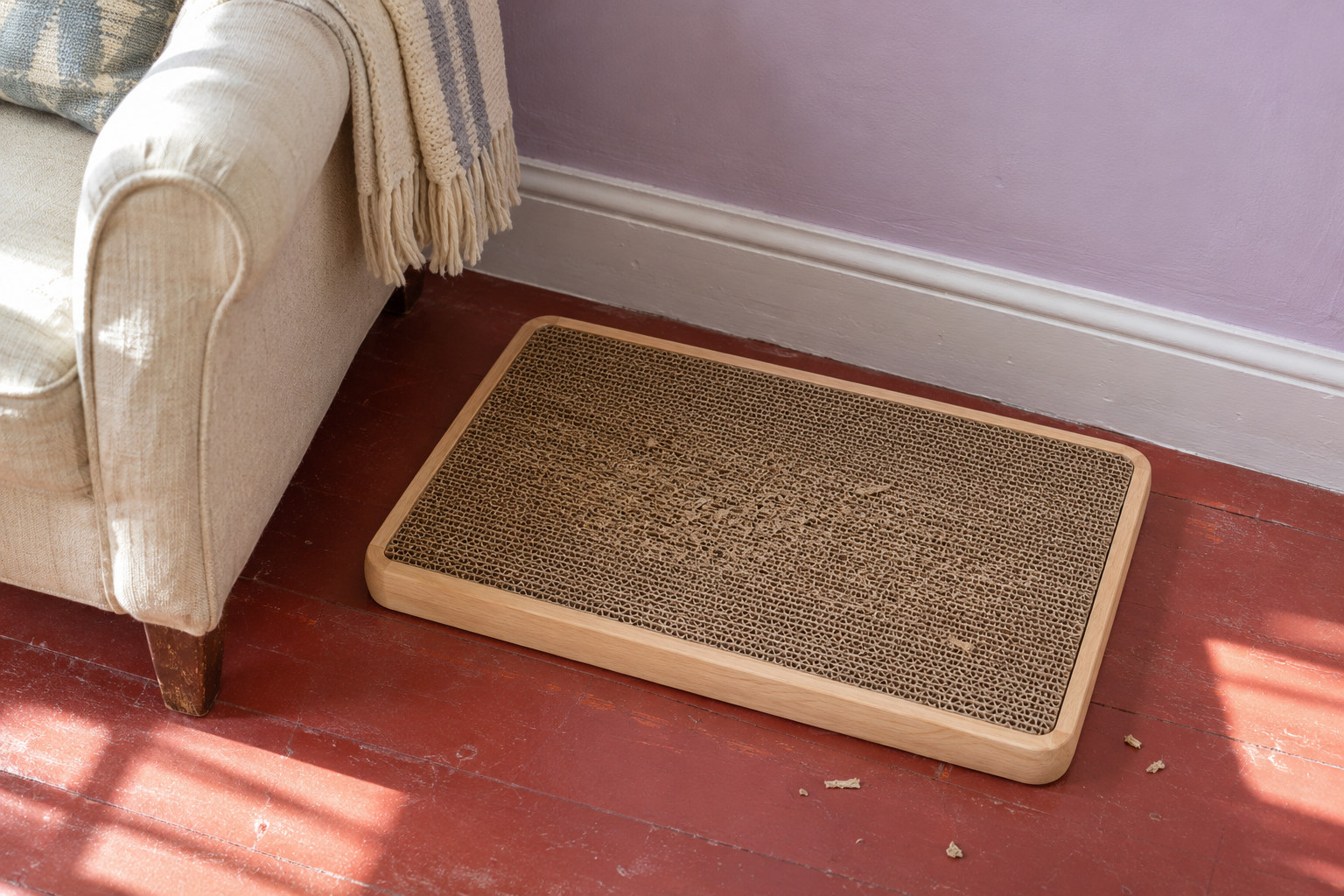
A shallow timber frame makes a replaceable cardboard scratcher look like a deliberate floor accessory. Build around the actual insert you intend to buy again, allowing it to lift out without being squeezed or distorted. The frame should organize the scratcher, not create a high rim that gets in the cat’s way.
Keep the edges smooth and the underside stable on the chosen floor. A broad, low shape is easier to place near a resting area than a narrow decorative tray. Check that no hardware or adhesive remains exposed where the cat scratches.
Allow for the small cardboard crumbs that come with use. Leave enough room to lift the whole frame and sweep beneath it, and choose a location where that is a quick job. A replaceable insert is especially useful when you like the surrounding furniture but expect the scratching surface itself to become thoroughly untidy.
6. Create a Low Inclined Scratching Lounge
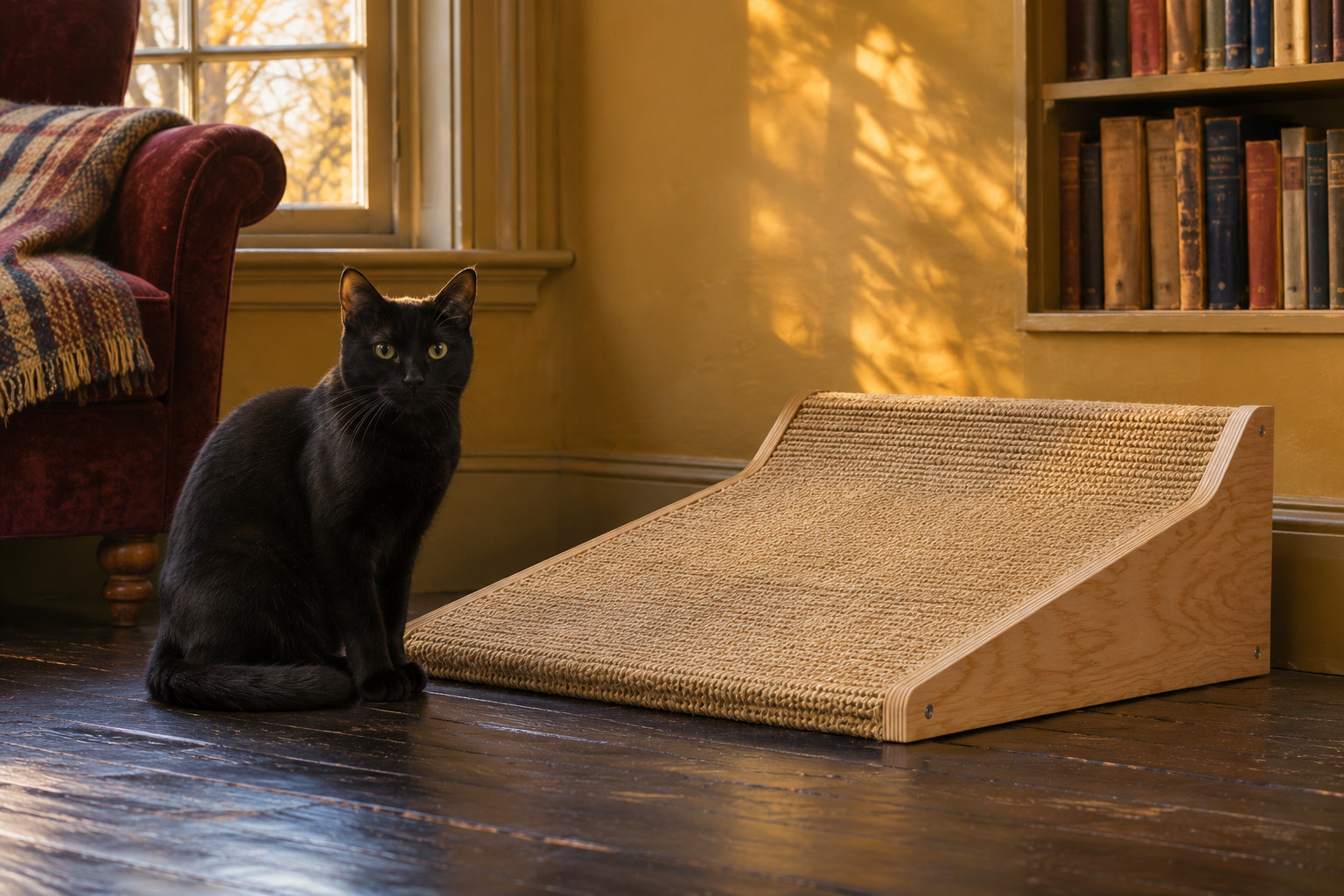
An inclined scratching lounge offers a different angle from a post or flat pad. Start with a cat who already shows interest in sloping surfaces; the shape is an option to try, not a universal preference. Keep the lounge low and broad so it belongs comfortably on the floor beside a chair.
The frame needs properly supported sides, a stable underside, and a securely fitted scratching face. Plan a removable panel so worn material can be replaced without dismantling the entire piece. Avoid exposed fasteners or loose edges along the working surface.
Set the lounge where the cat can approach from either side without blocking a doorway. Its wedge shape can occupy more floor area than it appears to in a photograph, so mark the footprint first. A plain timber outline and one textured face give it a restrained appearance while leaving the useful scratching area easy to reach.
7. Give a Footstool an Open Lower Den
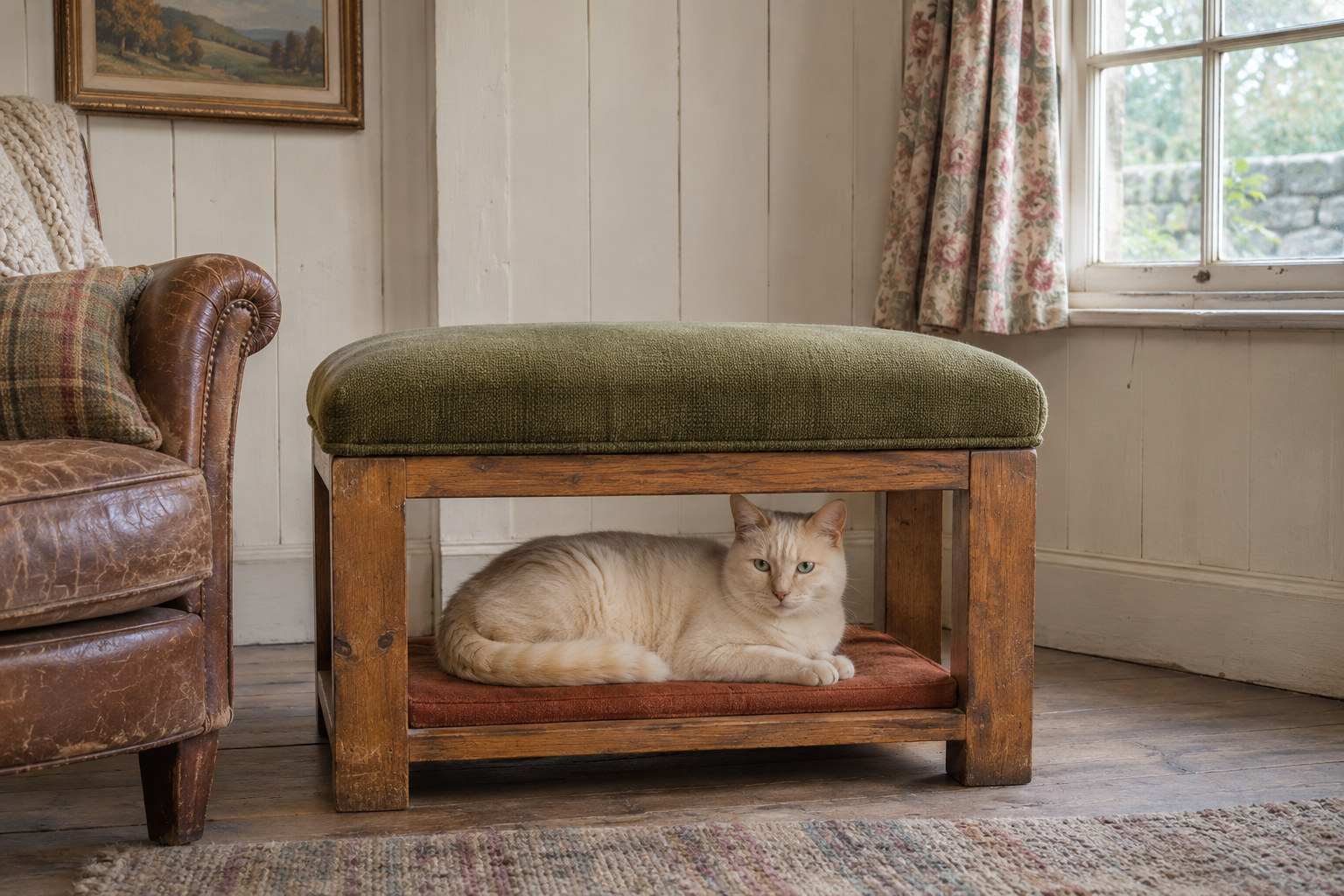
A broad footstool with an open lower bay can provide a sheltered resting nook near the sofa. Use a piece with a suitable existing structure, or have the frame designed for its intended furniture use. Adding a cushion underneath does not turn a lightweight decorative stool into a dependable seat.
Keep the cat’s bay open, with enough height for comfortable entry and enough depth for the chosen pad. Avoid moving lids, folding legs, or mechanisms in the resting space. A removable cushion is simpler to maintain than lining the whole compartment with fabric.
Check how people use the stool before assigning it a second purpose. If it is constantly dragged across the room or covered with bags, choose another location for the cat’s bed. The best arrangement stays predictable: human use above, an accessible resting space below, and enough room around both to clean without a furniture shuffle.
8. Make a Bedside Cube with a Wide Opening
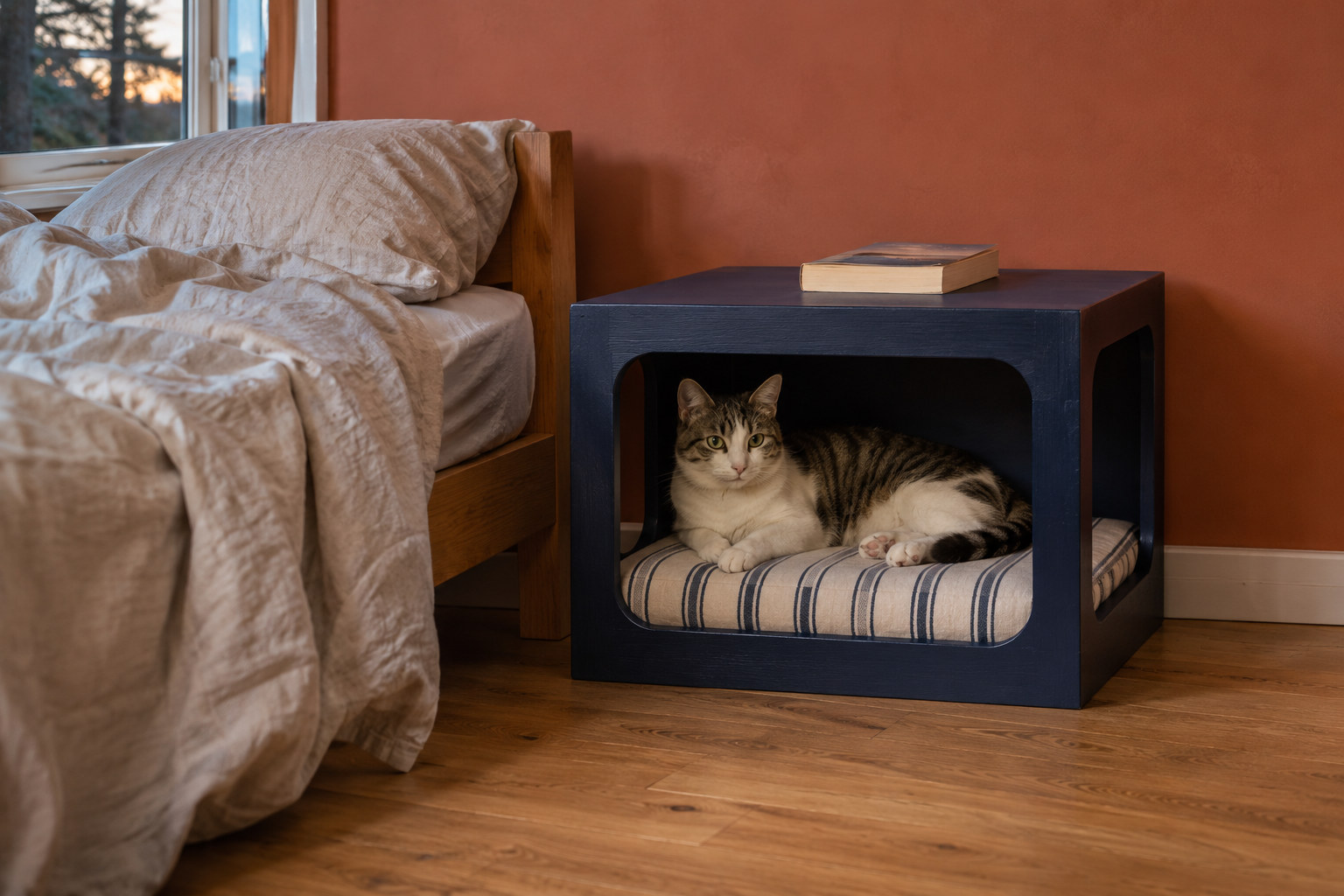
A bedside cube can replace a separate cat bed and small table when the proportions suit both jobs. Give the entrance a broad, smooth outline rather than a tiny decorative cat silhouette. The opening, internal height, and cushion size should all follow the actual cat’s comfortable resting position.
Consider a second open side when the design and location allow it. That makes cleaning easier and avoids turning the cube into a dark box with only one narrow route. Keep the top simple and leave lamps, charging cables, and small objects elsewhere.
The color can connect with the bed frame, trim, or a quieter shade from the bedding. Our paint colors for wooden furniture can help with the visual choice. Confirm the suitability of the complete finish system separately, and follow its preparation and curing instructions before placing the piece into use.
9. Build Wide Storage Steps for a Favorite Seat
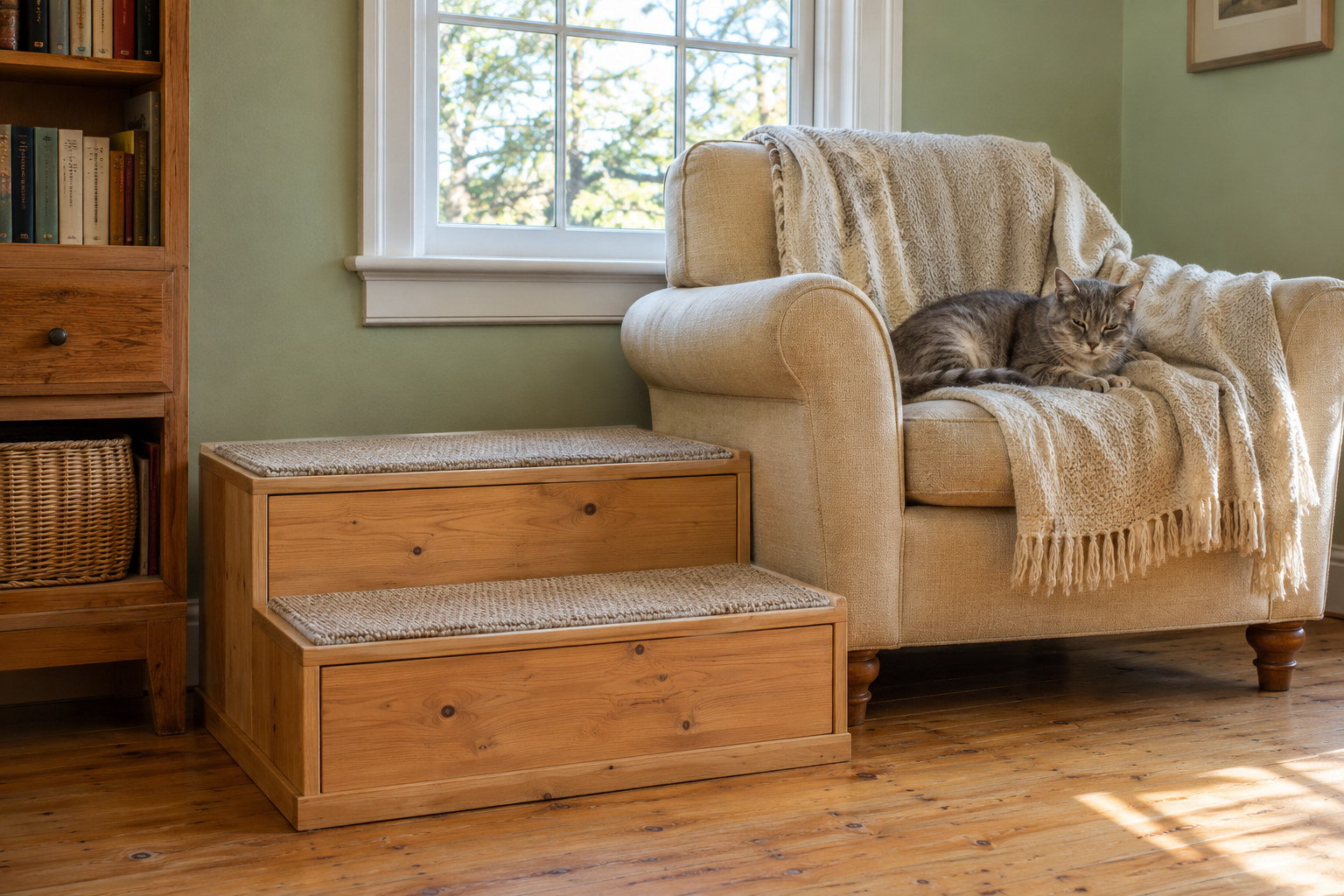
A short set of broad steps can link the floor to an existing favorite chair or bed. The useful question is how your cat moves now, including the route down. Watch that movement before choosing the rise, tread depth, and overall position; a narrow staircase made for a photograph may be awkward in daily life.
Keep the steps fixed together as a stable unit, with secure tread coverings and no open gaps that invite a misplaced paw. If you include storage, use closed fronts that remain shut during use. Do not leave a drawer extended as an extra step.
Allow enough floor space for the approach and landing. A wide unit may be less visually delicate, but it can be easier to navigate and maintain. If jumping has changed suddenly or seems uncomfortable, discuss that change with your veterinarian rather than assuming a furniture adjustment explains the problem.
10. Reserve a Low Bookcase Bay for Resting
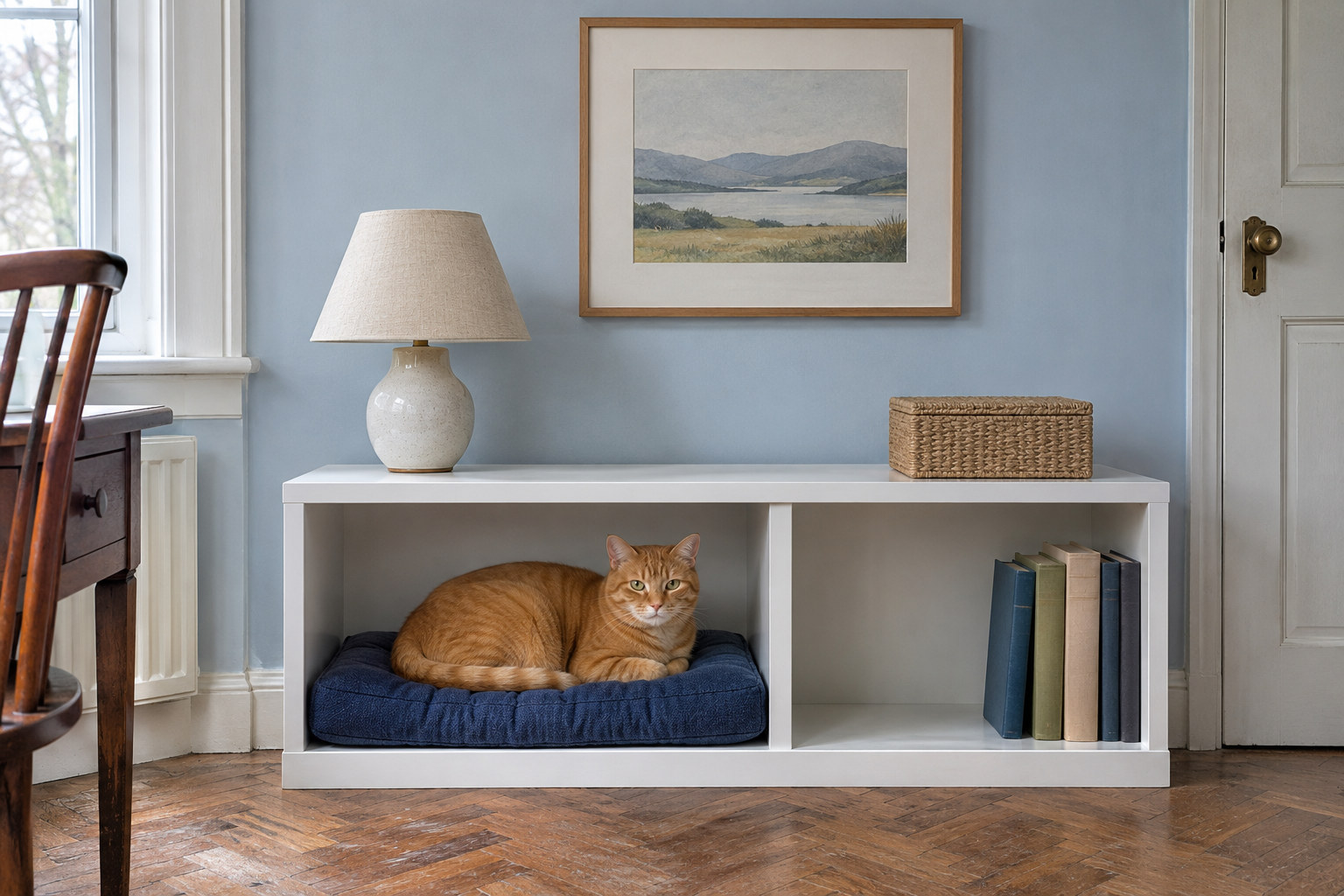
A low bookcase with a generous empty bay can offer a resting spot while still holding a small collection of books. Choose a bay the cat can enter directly from the floor, and keep the sleeping area separate from stacked objects. This project is about sharing low furniture, not creating a climbing route through the library.
Check the shelf construction and follow the furniture maker’s anchoring instructions where applicable. Do not remove a divider or back panel simply because it looks inconvenient; it may be part of the structure. A fitted pad and a thoughtful change of contents may be all the adaptation required.
Our bookshelf ideas offer ways to coordinate the remaining display space. Leave the cat’s bay clear and easy to clean. A few deliberately arranged books beside one comfortable empty compartment usually look calmer than trying to make every opening serve several purposes.
11. Create a Room Divider with a Cat Passage
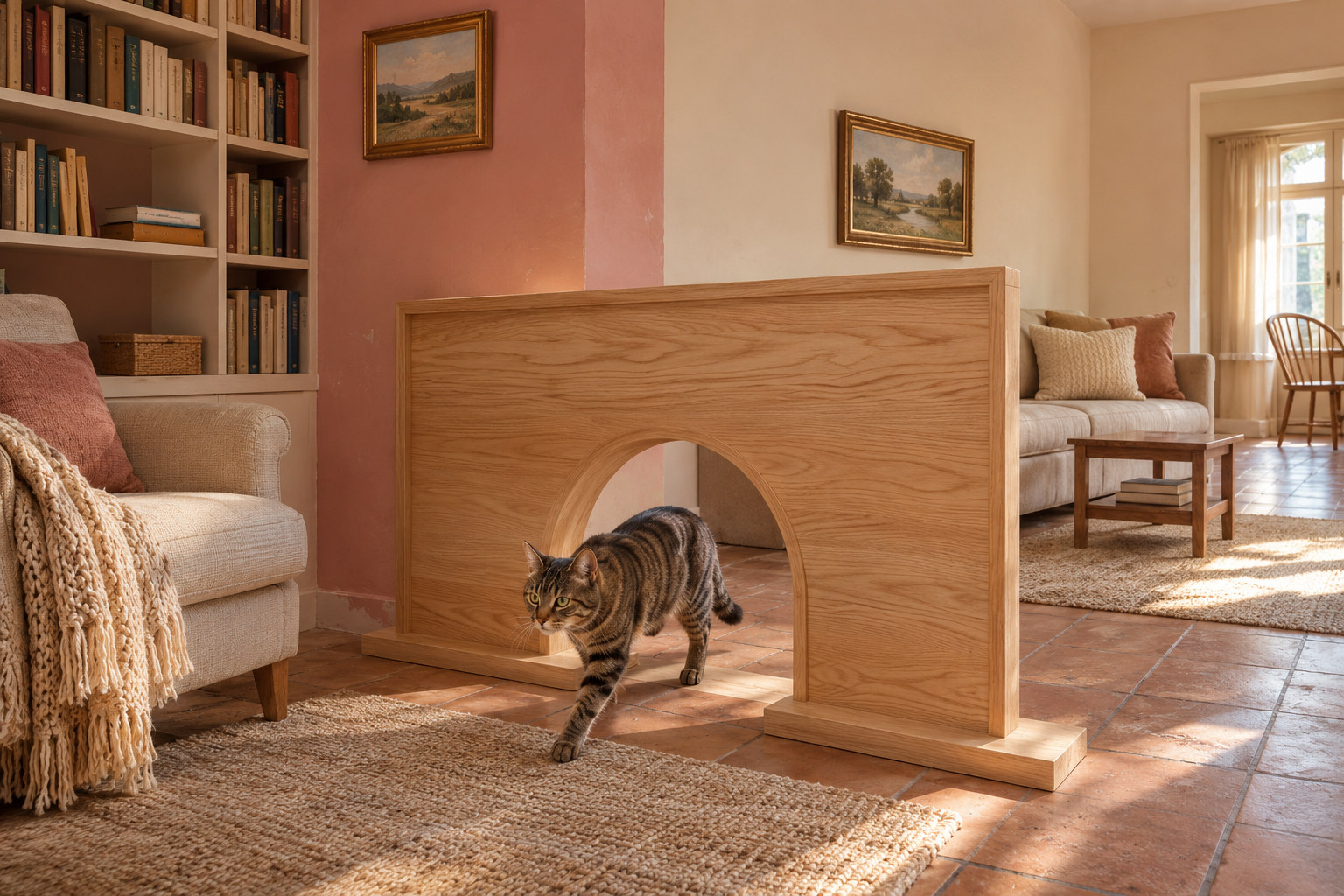
A low divider can separate a reading corner from a busier part of the room while leaving a broad passage at floor level. The cat opening becomes part of the layout rather than a novelty cutout. Mark the divider’s complete footprint, including its supports, before deciding where the passage belongs.
Use a stable structure with smooth edges and enough clear space on both sides. The opening should not emerge directly beneath a chair, into a door swing, or beside objects that are likely to move. Avoid treating a slim decorative screen as climbing furniture.
Keep the upper surface simple so the divider does not become an accidental shelf of fragile objects. A plain timber or painted panel can repeat the room’s existing finishes. This idea is most useful where the household needs a visual boundary; otherwise, a freestanding panel may add an obstacle without improving either the room or the cat’s routine.
12. Add a Replaceable Scratch Face to a Sofa-End Bench
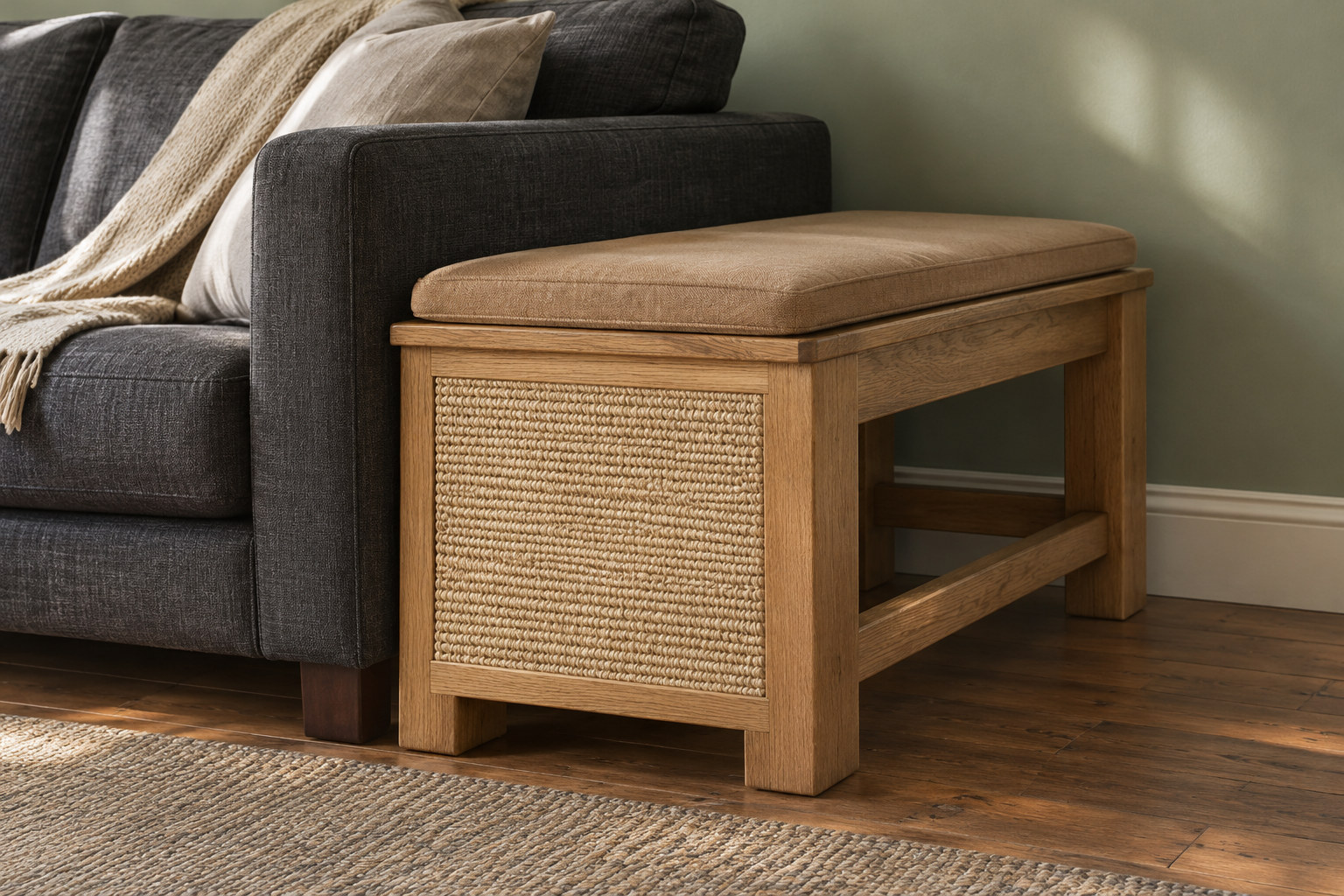
A sofa-end bench can combine a low resting surface with a replaceable scratching face. Use the outward side for the scratching panel so the cat can approach it without squeezing between furniture. Keep the top broad enough for its intended pad, and maintain a clear route around the sofa.
Plan the scratch insert as a separate component with accessible maintenance fixings and no exposed working edges. When it wears out, you should be able to change that panel rather than re-cover the entire bench. Check the frame for movement as well as checking the scratching material.
Choose this arrangement only if it suits where your cat already spends time. A bench that merely extends a large sofa into a narrow walkway will be irritating to live with. Echoing the sofa’s leg finish or cushion color is enough to connect the pieces; they do not need identical upholstery to look intentional.
13. Make a Low Hammock on Its Own Timber Frame
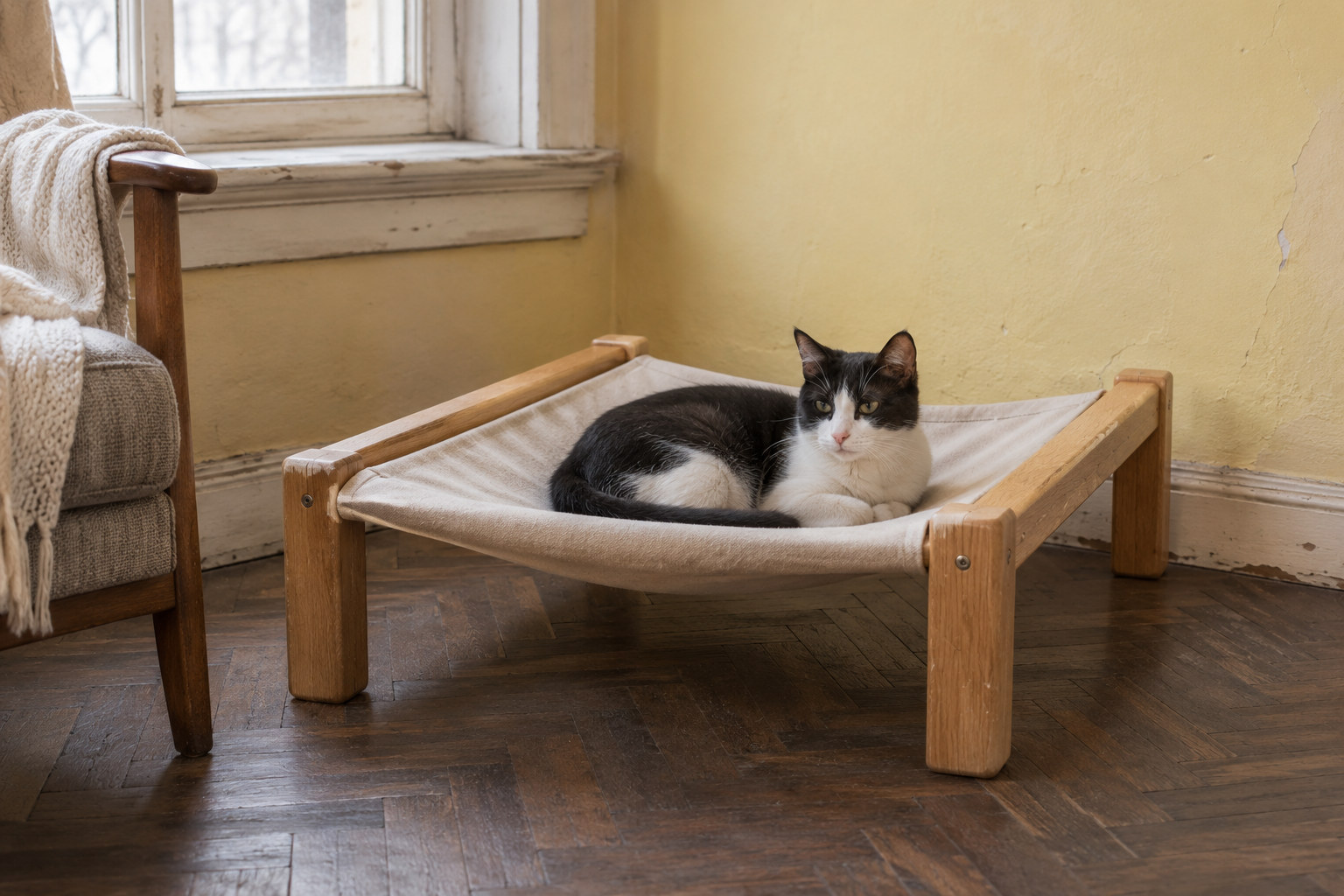
A low fabric hammock can be a comfortable-looking alternative to a padded box when it has its own properly designed frame. Keep the project close to the floor and use a broad, stable structure. Avoid improvising with loose ropes between dining-chair legs or attaching fabric to furniture that was never intended to carry it.
The sling and its connections need to suit the cat and the frame. Plan for secure attachment without accessible loops, and make the fabric removable for cleaning. If you cannot assess the support and attachment method confidently, use a purpose-made frame or obtain help with the design.
Leave clear space around the hammock so the cat can enter without stepping over household clutter. Inspect the fabric and fixings regularly. A simple canvas sling can fit a relaxed room particularly well, but easy washing and dependable support matter more than achieving a dramatic suspended shape.
14. Build an Open Cabinet Bay Around a Carrier
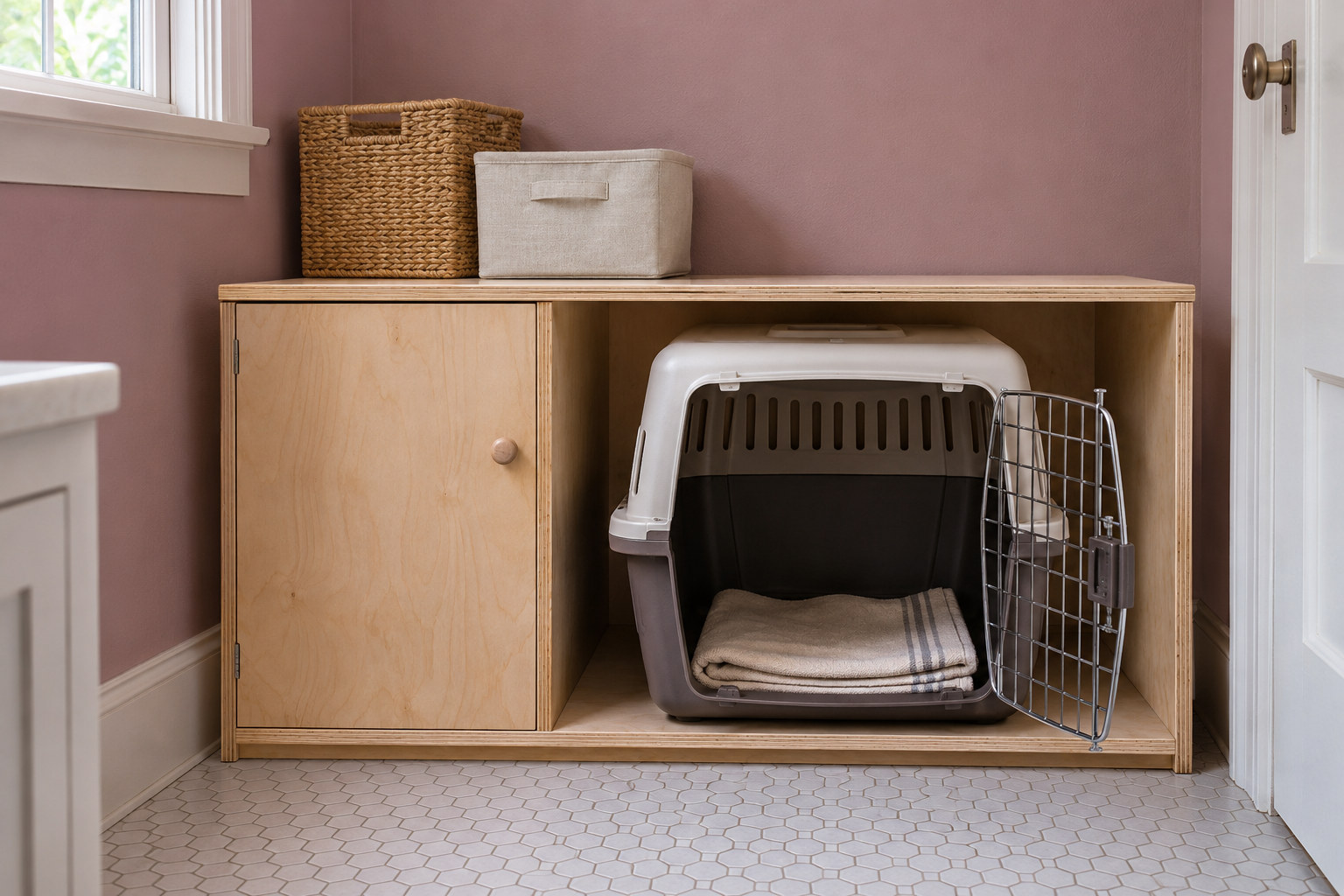
An open cabinet bay can give a carrier a tidy everyday location without turning it into a hidden box. Build the surrounding furniture around the carrier’s complete dimensions, including its ventilation areas and door movement. Keep the carrier removable so it can still be used as intended when needed.
Leave the entrance and air openings unobstructed. Do not add an outer cabinet door that could close across the carrier or modify the carrier itself to make it fit. Any door removal or adjustment should follow the carrier manufacturer’s instructions.
Choose a quiet position where the cabinet does not become a landing zone for heavy bags. Keep separate storage properly enclosed so small supplies cannot fall into the resting bay. This approach works best when you want a practical place for an existing carrier; it is less useful if the furniture makes that carrier harder to reach, clean, or carry out of the room.
15. Give a Long Bench Two Separate Resting Spots
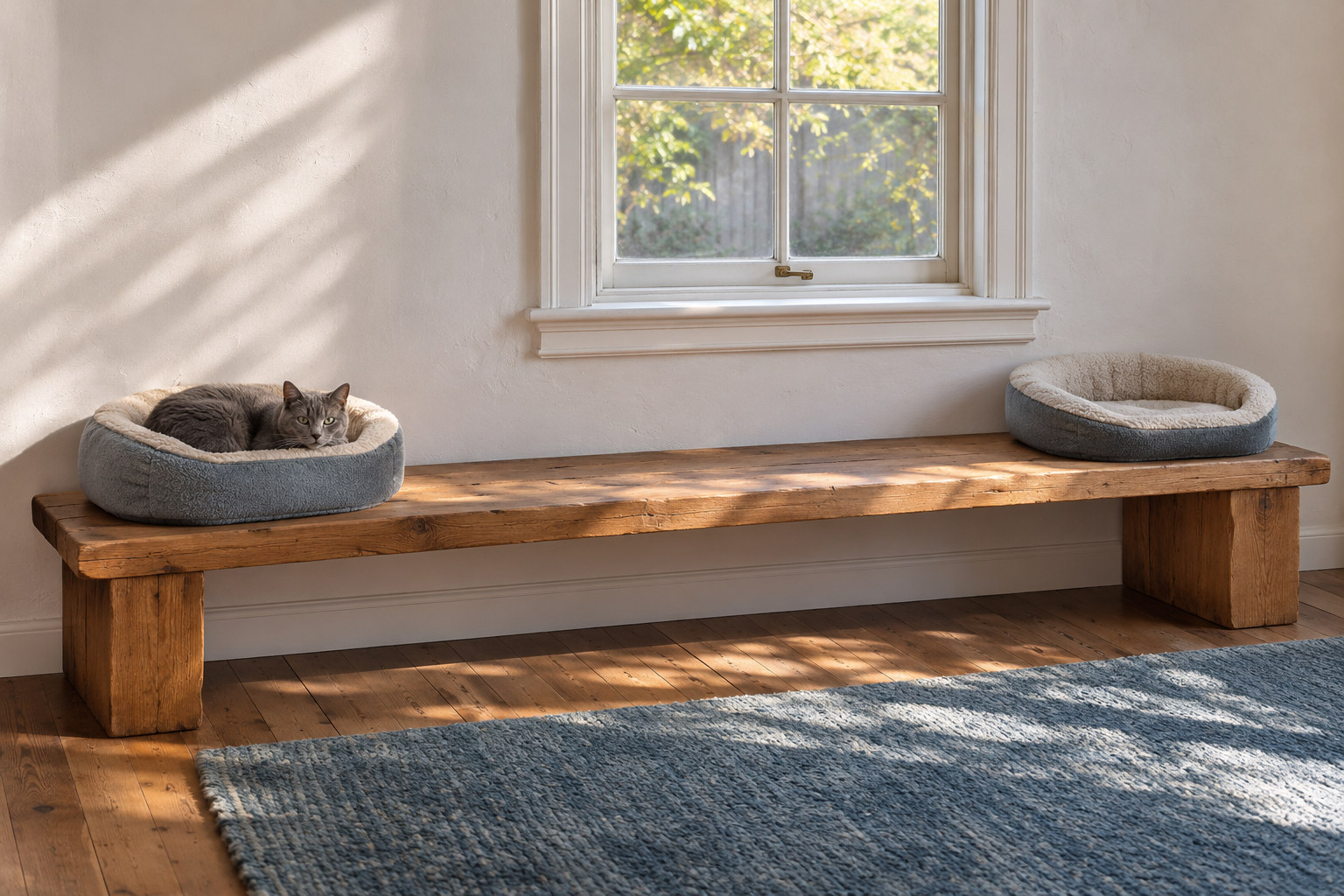
A long low bench can hold two distinct resting spots without turning the room into a collection of unrelated pet beds. Leave generous space between the pads and provide a clear approach from both ends. The empty section between them is useful breathing room, not a space that needs another basket.
Choose separate removable beds so either can be washed or moved independently. Observe how the cats use the arrangement; sharing one piece of furniture is optional, and another resting place elsewhere should remain available. Do not squeeze two pads together simply because they fit within the bench’s outline.
Keep the frame low and structurally suitable for the intended use. A long unsupported span requires proper design, even when the styling looks simple. In a compact room, compare the bench with your existing circulation routes using these small-bedroom layout ideas before committing floor space to a new piece.
Choose the Job Before Choosing the Shape
Watch where your cat rests, scratches, and pauses during an ordinary day. A favorite chair may need a more convenient approach; a sunny window may need a wider resting surface. Start with one of those observations instead of deciding that every room needs a tower, a cubby, and a hammock.
Ohio State’s guidance on perches includes sturdy household furniture as one way to offer an elevated view. That is a useful reminder to assess what already works. Sometimes a washable pad and a clearer approach improve an existing piece more effectively than a new build.
| Main purpose | Useful starting point | Measure before building |
|---|---|---|
| Resting | Low bench, table bay, or floor bed | Cat’s resting footprint and entry clearance |
| Scratching | Upright panel, flat frame, or incline | Preferred posture and usable scratching surface |
| Reaching a seat | Broad fixed steps | Rise, tread space, approach, and route down |
| Sharing a room | Side table, bookcase bay, or divider | Human movement and the cat’s clear access |
| Keeping a carrier handy | Open furniture bay | Carrier ventilation, door movement, and removal route |
Measure the Whole Routine
Use a temporary outline on the floor to check the proposed footprint. Open nearby doors, pull out chairs, and walk the route while carrying laundry or a tray. Then measure the cushion, scratching insert, or carrier that will actually go inside. Working from those objects helps avoid a finished frame that is just slightly too small to be useful.
Include cleaning access in the sketch. Can you lift the pad with one hand? Can you sweep beneath the piece without moving the sofa? Is a replacement scratching insert a standard size you can find again? These details deserve space on the plan alongside the attractive outline.
Get the Fail-Safe Paint Color Playbook (Free PDF)
36 proven colors • 8 ready palettes • trim & sheen guide • printable testing cards.
Match the Structure and Finish to the Project
Inspect any reused furniture before altering it. Loose joints, damaged panels, and unidentified coatings are reasons to investigate, not details to hide with fabric. Keep structural parts intact unless the redesign has been properly assessed. CPSC’s Anchor It guidance emphasizes following manufacturers’ anchoring instructions for household furniture; an attractive adaptation should still retain the original item’s required precautions.
For new work, choose materials and connections with the intended loads and use in mind. A resting surface, a human seat, and a scratching frame create different demands. Ask a competent woodworker to resolve uncertain spans, joints, or supports instead of copying proportions from an image.
Confirm coatings and adhesives with their manufacturers, including suitability for the proposed use and the complete curing process. Do not infer that a product is appropriate for pet furniture from its color, a low-odor description, or a general decorating label. Keep the work area separate from the cat while cutting, sanding, finishing, and cleaning up.
Make the First Version Easy to Maintain
Choose one useful project and give it time in the intended room. Keep familiar resting and scratching options available while the cat investigates. If the new piece is ignored, reconsider its position, approach, or surface before adding more decorative detail.
Keep replacement parts easy to reproduce: record the insert dimensions, material details, and care instructions with your project notes. Check for movement, worn fabric, loose fixings, or sharp edges during cleaning. Furniture that can be repaired and refreshed is more useful than a complicated one-off object that becomes difficult to maintain after the first cushion wears out.
Source Notes
- Cats Protection: Cats and Scratching, for scratching posture and stability considerations.
- Ohio State Indoor Pet Initiative: Perches, for elevated resting and viewing opportunities.
- CPSC: Anchor It, for household furniture anchoring guidance. The ideas here are design briefs, not tested construction plans or load-rated specifications.