
15 Small-Space Cat Room Ideas That Use Vertical Space
A small cat room can feel crowded surprisingly quickly. Add a large tower, a storage basket, a spare chair, and the litter tray, and the useful floor disappears. Looking upward can help, but the aim is to create places your cat can actually reach and use while keeping everyday routes open.
These small-space cat room ideas focus on the shape of the room: its corners, window walls, narrow passages, and shared furniture. Choose the arrangement that suits your available space, then adapt the height and approach to your cat. A few generous resting places usually make a more useful plan than covering every wall with tiny steps.
Get the Fail-Safe Paint Color Playbook (Free PDF)
36 proven colors • 8 ready palettes • trim & sheen guide • printable testing cards.
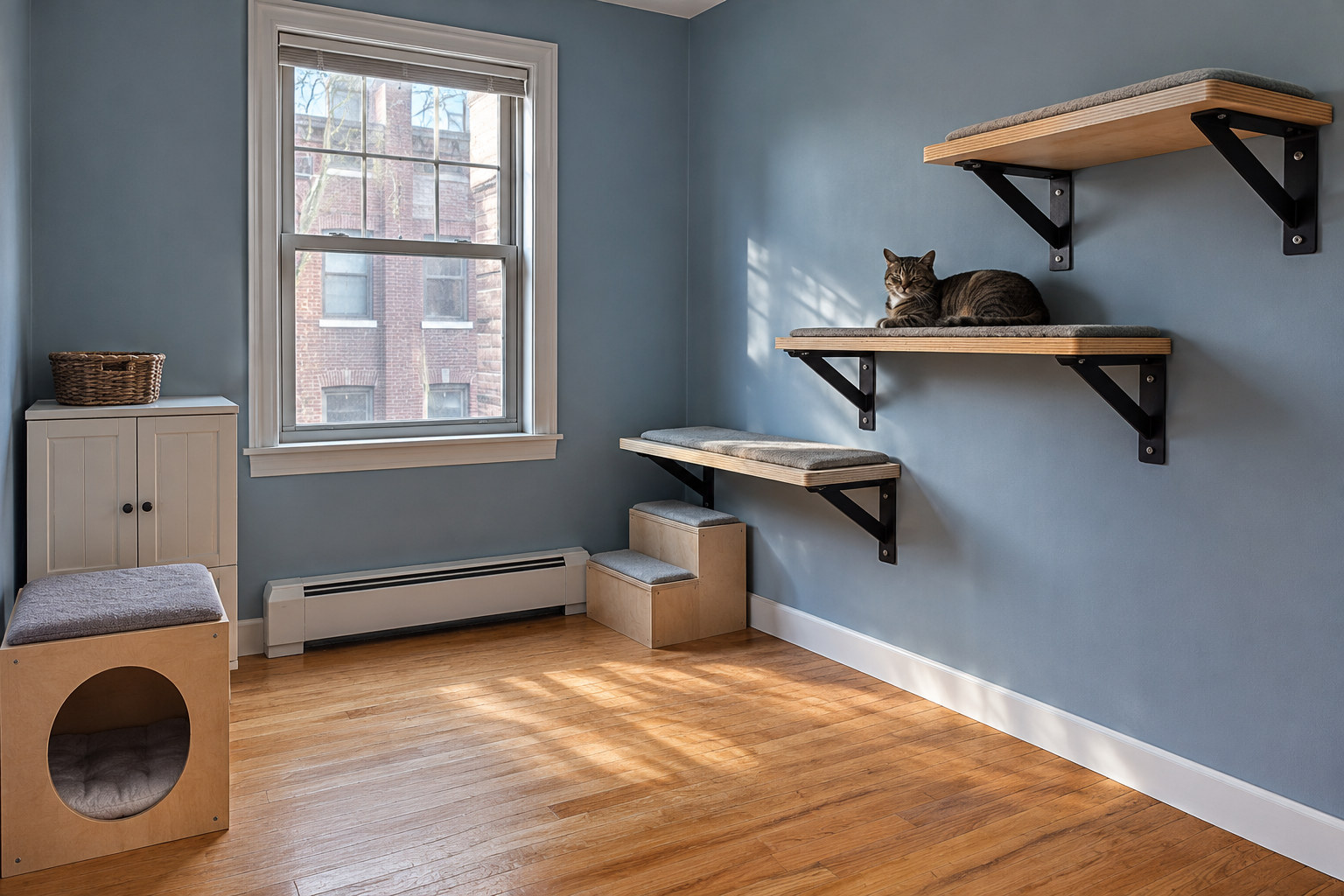
1. Keep One Climbing Wall and an Open Center
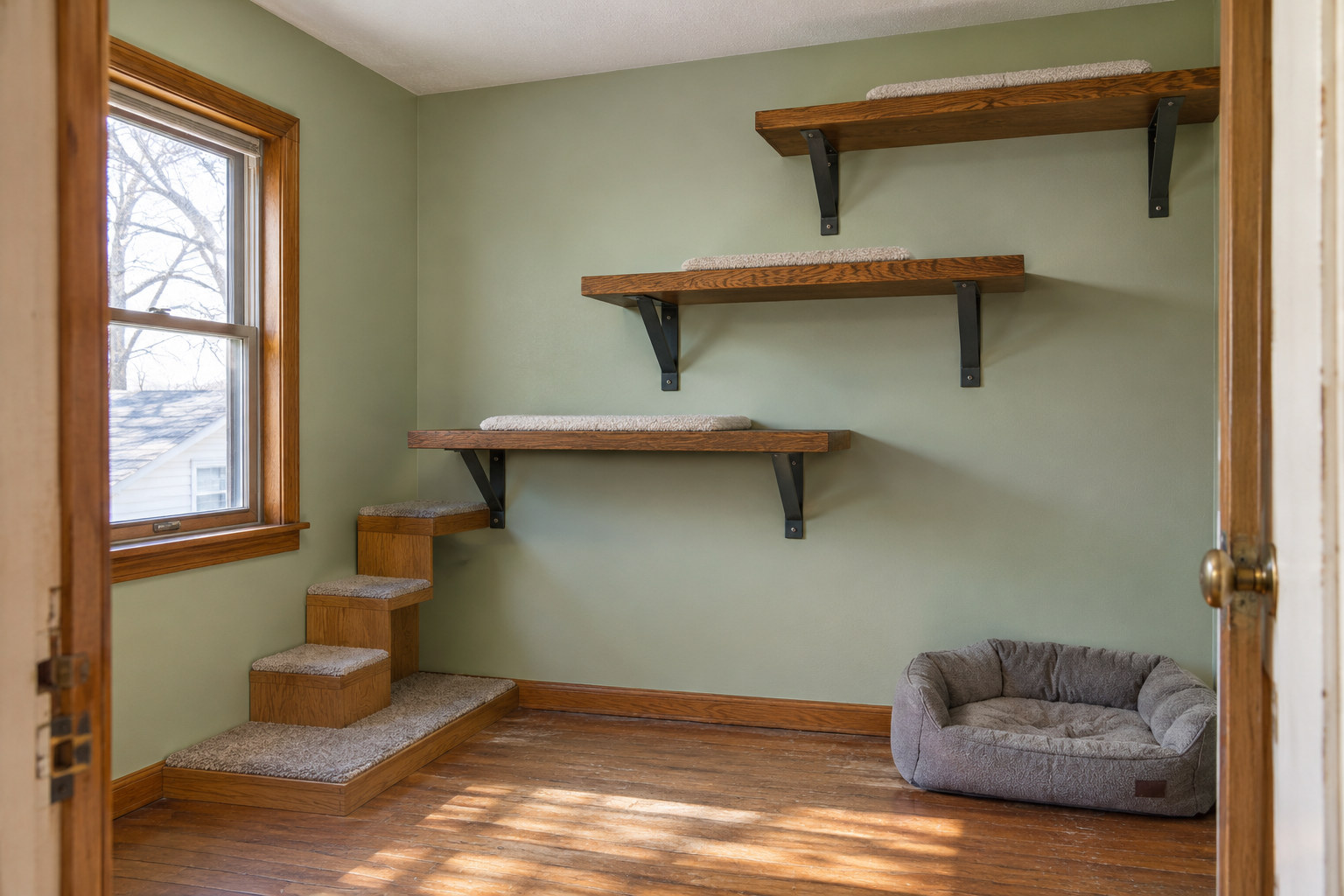
In a small square room, concentrating the climbing furniture on one wall gives the layout a clear structure. Use a low starting platform, a modest sequence of broad landings, and a comfortable resting shelf. The middle of the room remains available for play, cleaning, and moving around.
Begin with the wall that has the fewest interruptions. Door swings, radiators, and cupboard handles can consume more usable space than they appear to on a sketch. Leave room below the first platform so your cat can approach without weaving through stored belongings.
Put closed supply storage on another short section of wall, and keep the litter location separate from feeding and drinking areas. A limited color palette can make the arrangement feel calmer visually, but generous platforms and clear approaches do the practical work. Stop adding pieces when the route already functions well.
2. Turn a Spare Corner Into a Vertical Resting Zone
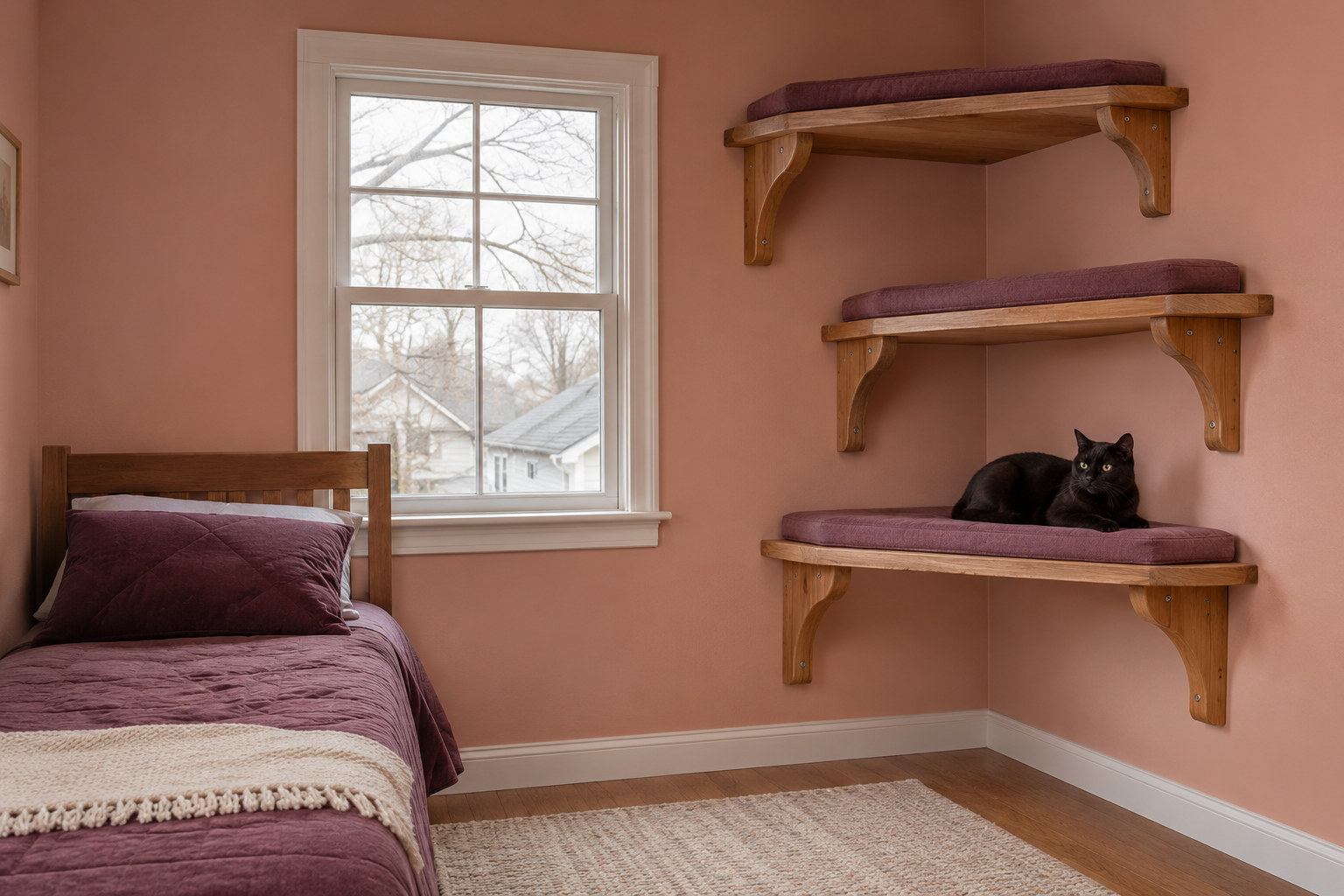
A corner can hold several resting levels while using less of the room’s long wall. This is especially helpful in a bedroom where the bed already claims most of that surface. Broad corner platforms can fit the geometry more neatly than a bulky circular tower.
Check the full approach from the floor. The first landing should be easy for your particular cat to reach, and the upper bed needs enough room for turning and settling. Avoid designing a tall column that has only one awkward way down.
Use the nearby furniture as a boundary when planning, not as an assumed part of the climbing system. A chair that gets moved or a bed covered in laundry is an unreliable step. Keep the corner’s own route usable. Soft pads that fit the platforms can add comfort without loose fabric trailing into the gaps.
3. Run the Cat Zone Along One Side of a Narrow Room
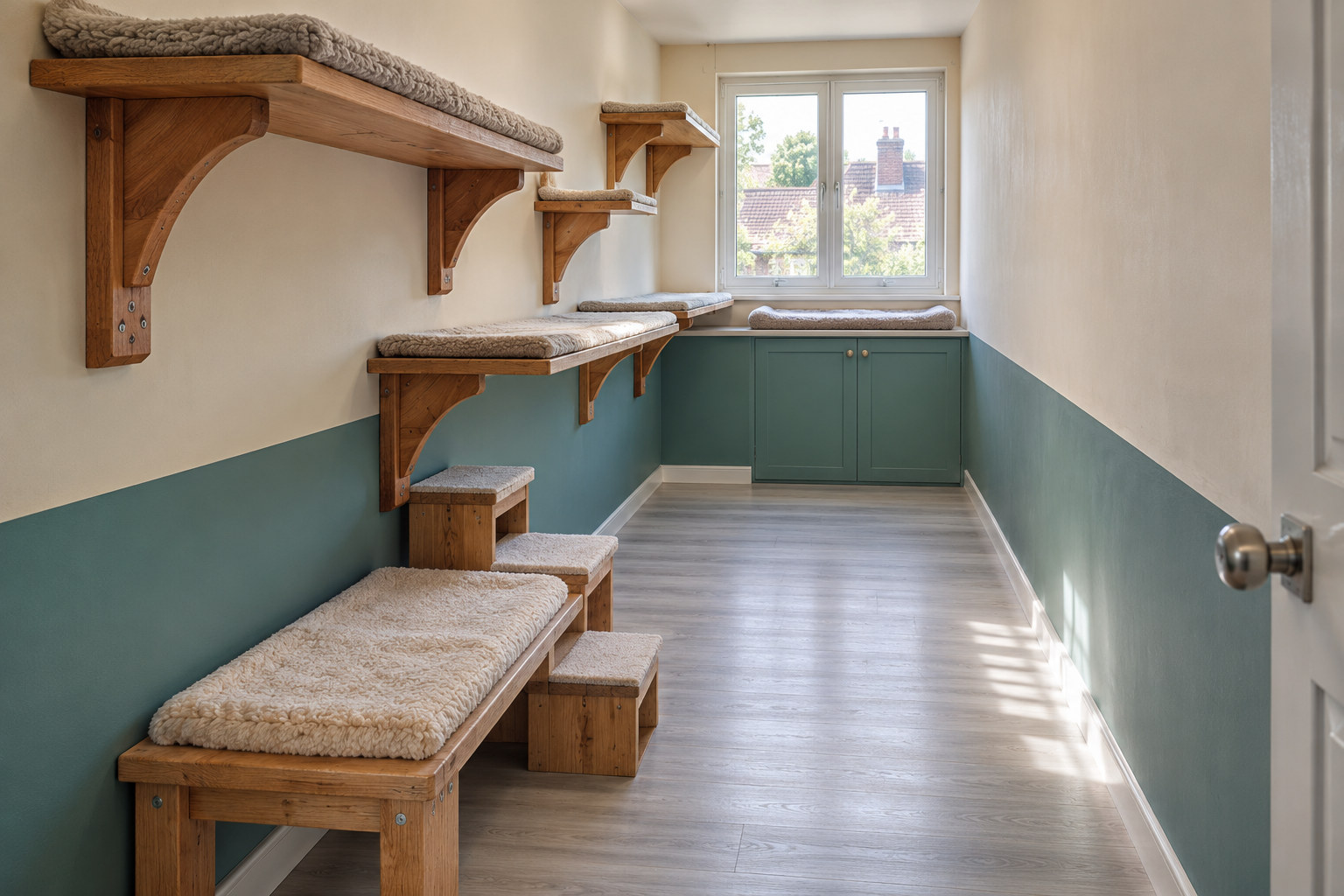
A long narrow room benefits from a simple division: climbing and resting along one wall, a clear passage along the other. This keeps projecting furniture from turning the room into a zigzag route for people and cats.
Mark the depth of each proposed platform on the floor before installing anything. A shelf that looks shallow from the doorway may extend directly into your shoulder space or cleaning route. Choose fewer usable platforms if the room cannot accommodate several comfortably.
Place lower access points where they do not compete with the doorway. A second way down at the far end can make the arrangement less of a dead end, provided both routes suit the cat. Keep storage shallow and contained. The goal is to use the length of the room while preserving an obvious, uninterrupted path through it.
4. Place Perches Above Low Closed Storage
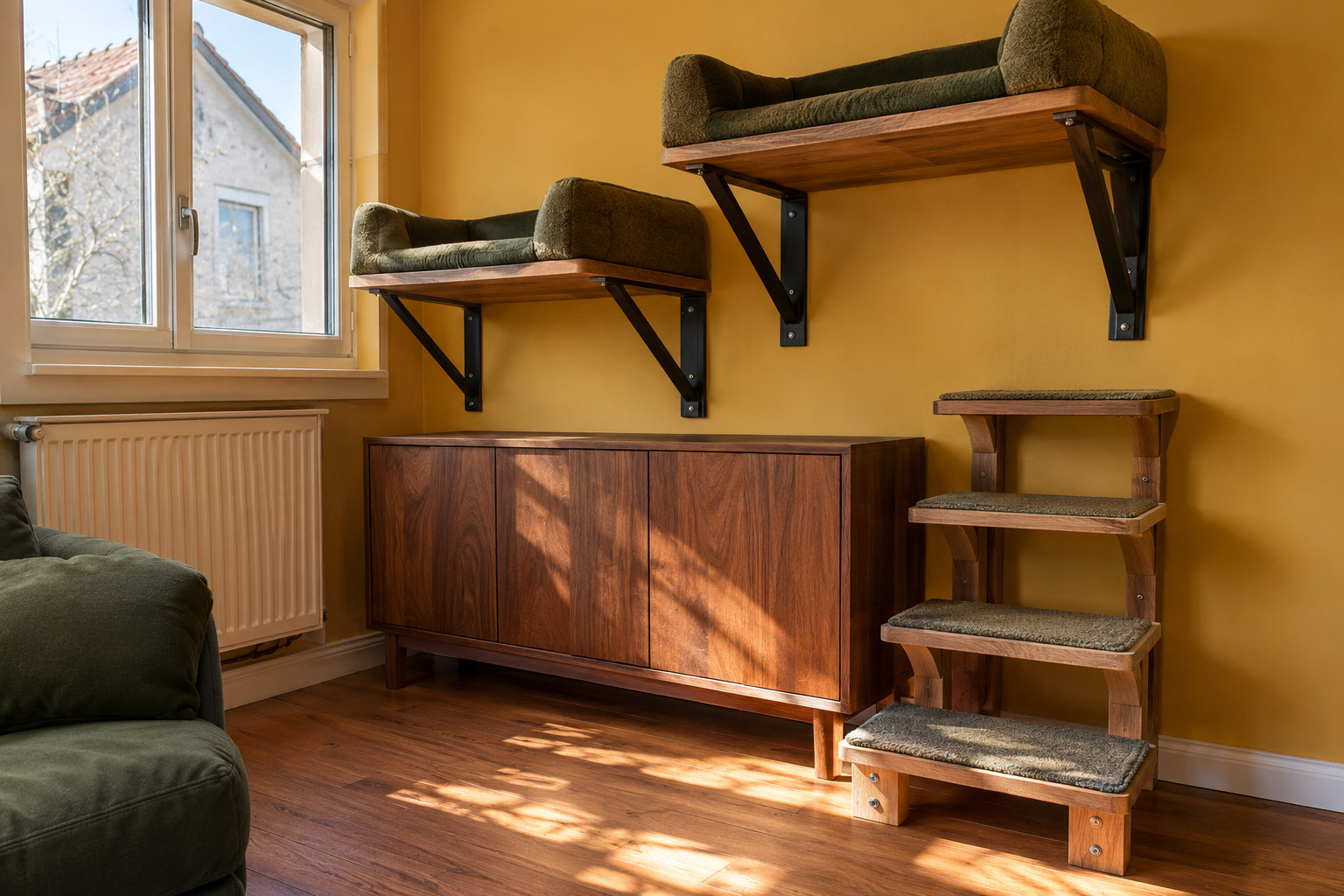
Low closed storage can organize supplies while the wall above provides resting space. The key is to design the two functions separately. The cabinet holds brushes, spare pads, or toys; properly supported shelves provide the cat’s landings.
Give the climbing route its own broad starting step beside the cabinet. Do not rely on a cabinet top that will gradually collect bags and folded laundry. Keep handles, door swings, and anything stored on top outside the cat’s approach.
This arrangement works best with a compact cabinet that leaves enough wall and floor for the shelves to remain generous. Avoid putting a feeding station or litter tray directly beneath a busy landing. A single furniture finish can connect the pieces visually, while the practical separation makes it easier to clean and reorganize supplies without dismantling the cat’s resting area.
5. Give a Window Bay Its Own Stepped Approach
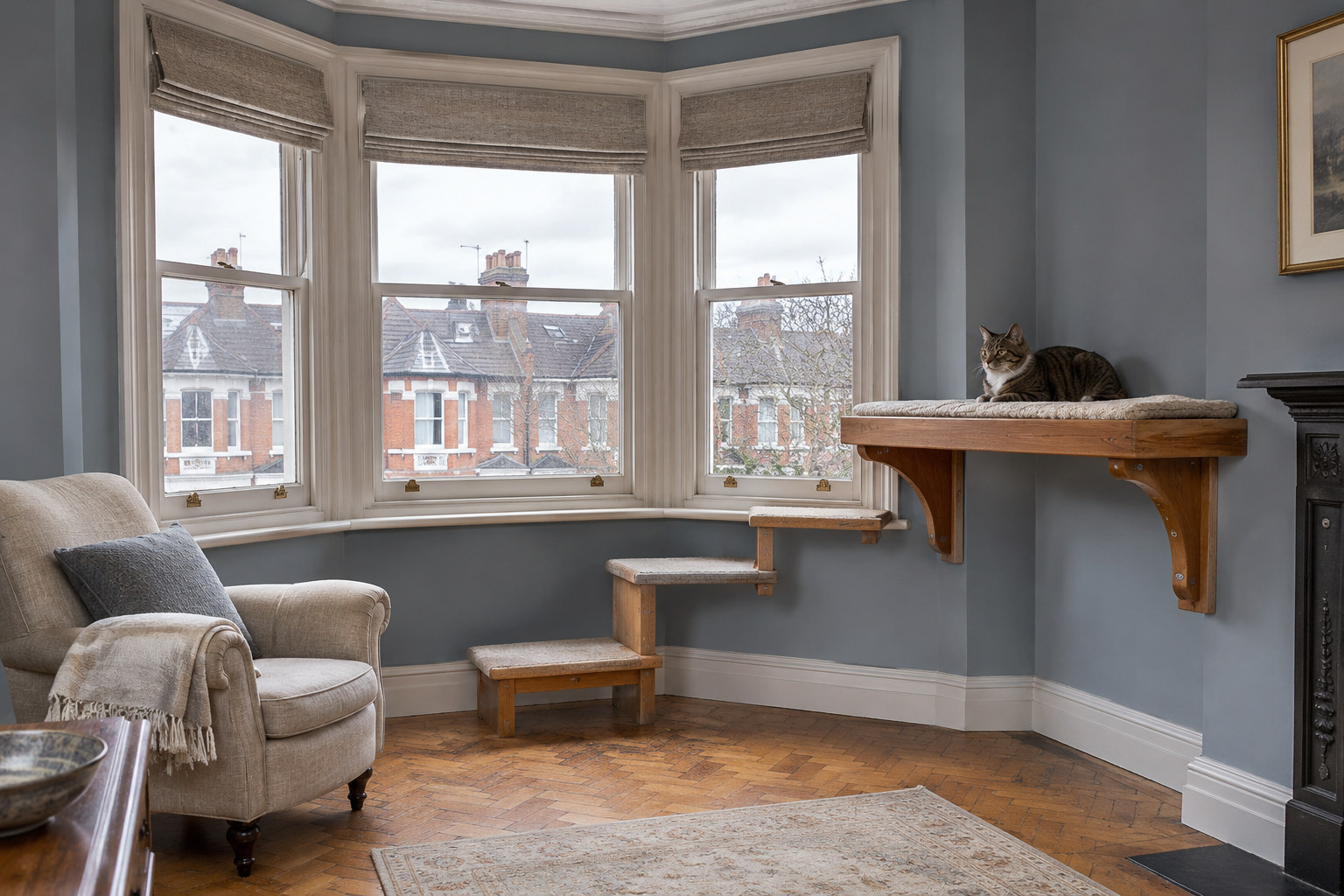
A window bay can offer an appealing resting position without requiring a large tower in the center of the room. A broad perch beside the glazing, reached by a few suitable platforms, keeps the arrangement close to the room’s perimeter.
Assess the window before designing around it. It should remain securely closed or have an appropriate cat-safe containment system. Keep blind cords and trailing curtains out of reach, and avoid locations affected by a radiator or uncomfortable direct sun.
The perch needs independent suitable support; the window frame is not automatically an attachment point. Leave enough space to open any permitted window fittings, clean the glass, and operate the blind. Observe the light throughout the day. A second shaded resting place elsewhere in the home gives your cat another option when the window corner becomes less inviting.
6. Share an Office Without Sharing the Desk
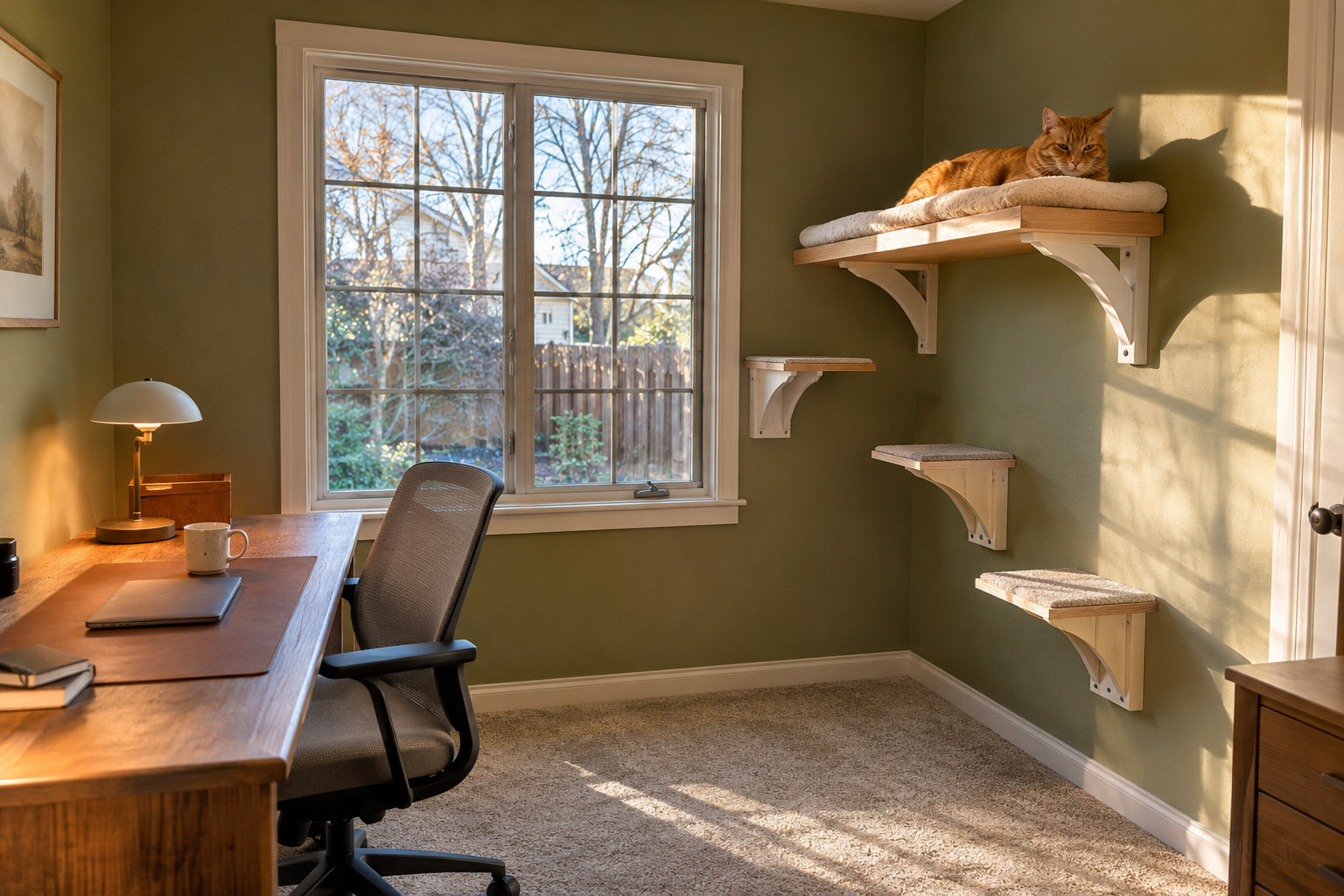
A compact office can include a vertical cat area beside the workspace without turning the keyboard into the main resting platform. Give the cat a defined corner with its own starting step and a broad shelf at a comfortable height.
Draw the chair’s full movement before choosing the first landing. The route should stay clear when you roll backward, open drawers, or sit with your feet beneath the desk. Keep cables, power strips, and printer equipment outside the climbing area.
Use a finish that relates to the desk so the room feels coordinated, but resist joining everything into one continuous surface. Separate functions are easier to adjust. During a normal working day, notice whether calls, printing, and door closures make the position suitable. Your cat should still have access to another resting spot when the office becomes busy.
7. Use the Wall Beside the Sofa
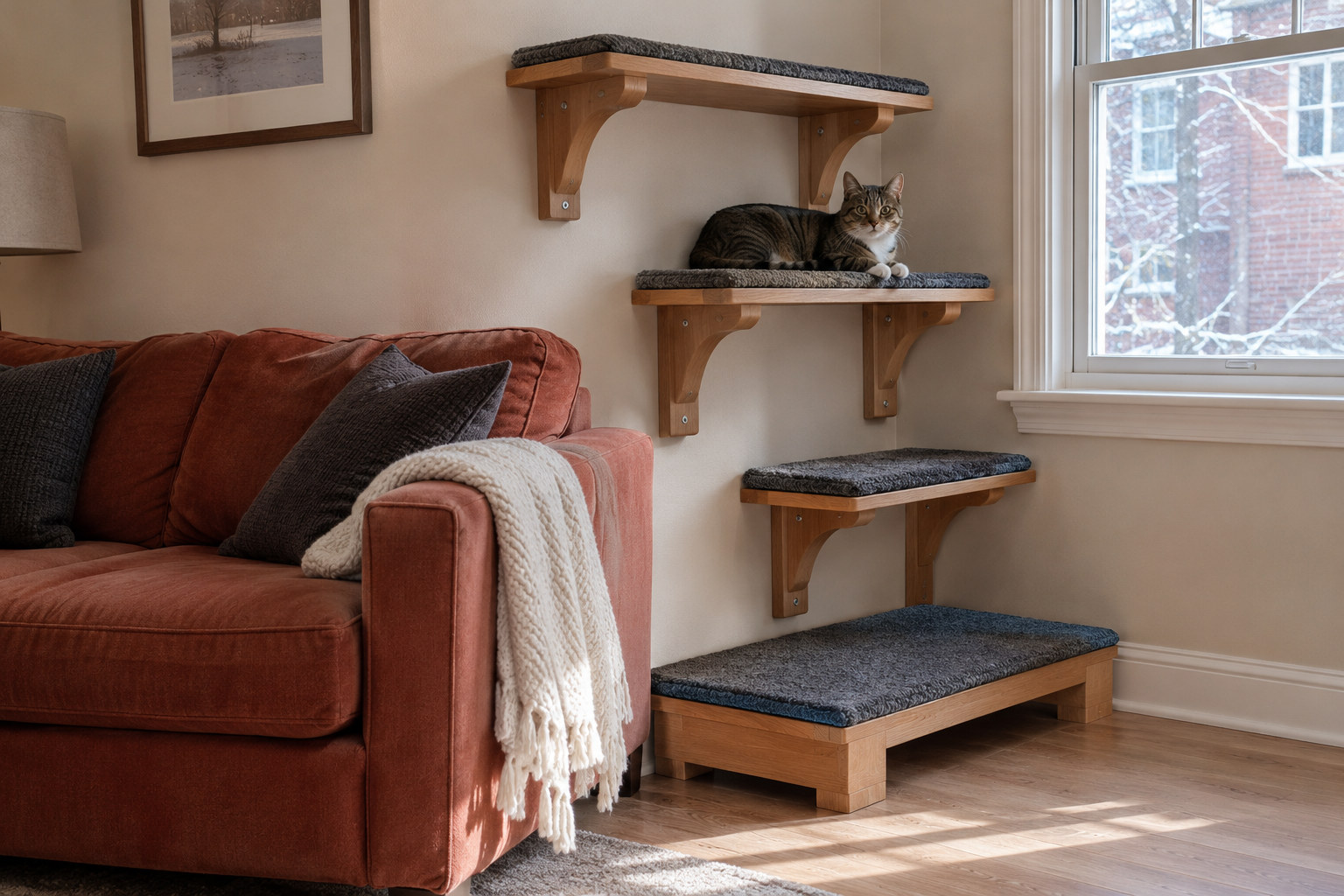
The short wall beside a sofa often offers a more workable climbing location than the wall directly above the seating. A compact group of supported platforms can occupy that end zone while leaving the main living room open.
Measure the route with the sofa in its usual position, including side tables and any reclining mechanism. Keep the first platform clear of a table lamp, charging lead, or floor basket. The design should not require a cat to launch across someone’s head to get down.
Choose broad, modestly spaced landings that fit the available wall rather than copying a much taller installation from another home. Repeat a cushion color from the sofa if you want a coordinated look. The arrangement can become part of the room’s furniture without taking over the seat or narrowing the walkway beside it.
8. Use a Wide Wall Pier Beside the Door
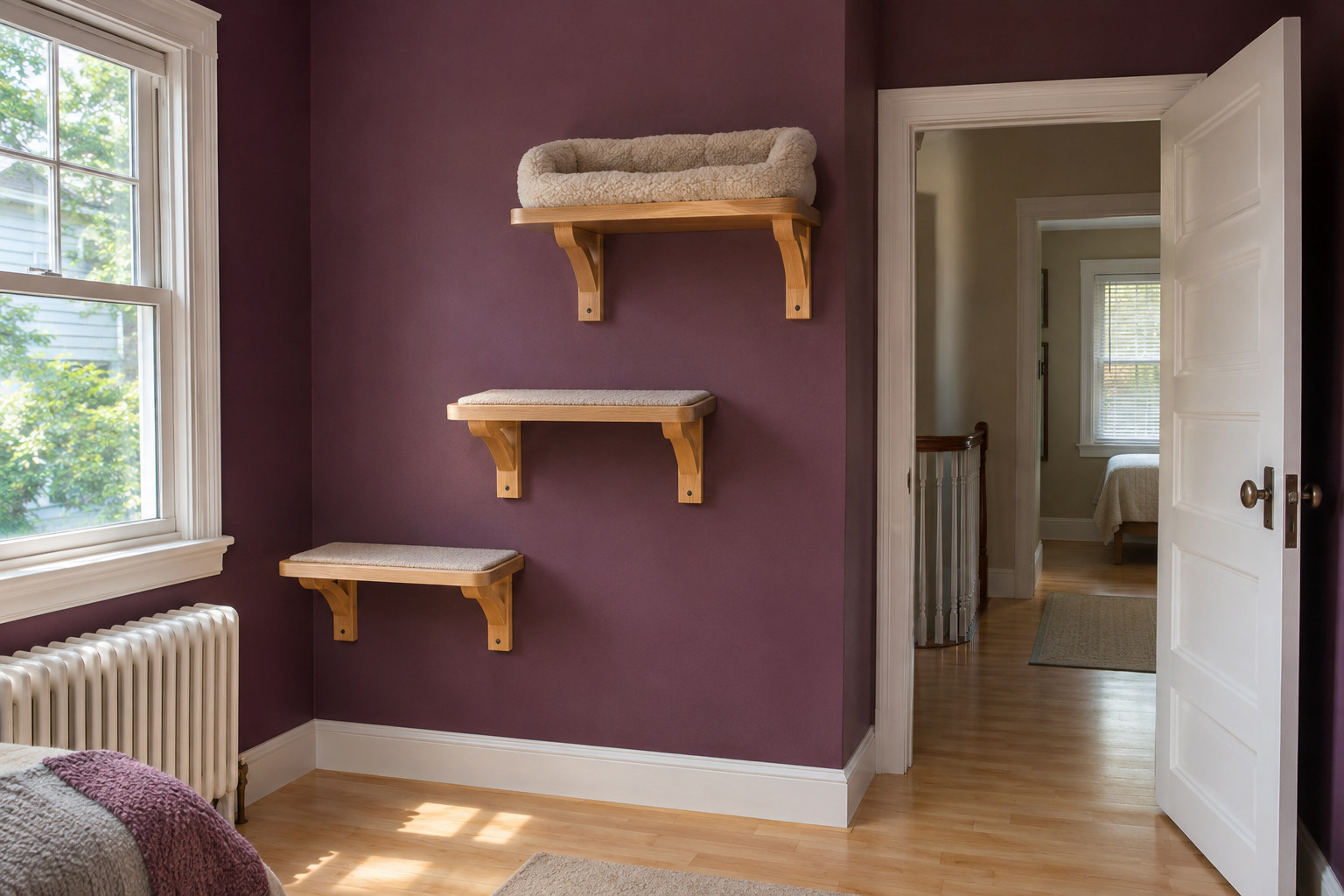
A broad section of wall beside a doorway can support a compact vertical zone when the door and walking route remain clear. This can be useful in a small room where the longer walls are already occupied by furniture.
Check the door in every position. A handle, doorstop, or coat hanging on the back can change the usable area. Keep the cat platforms away from the swing and avoid using the space immediately above the doorway as the only resting destination.
The floor approach matters just as much as the wall. Shoes and bags should have another home, particularly when the room doubles as a household drop zone. Keep the platforms broad enough for the cat to use comfortably. If the wall pier is too narrow to accommodate suitable landings, leave it for human storage and choose a different cat location.
9. Give an Open Alcove a Compact Cat Arrangement
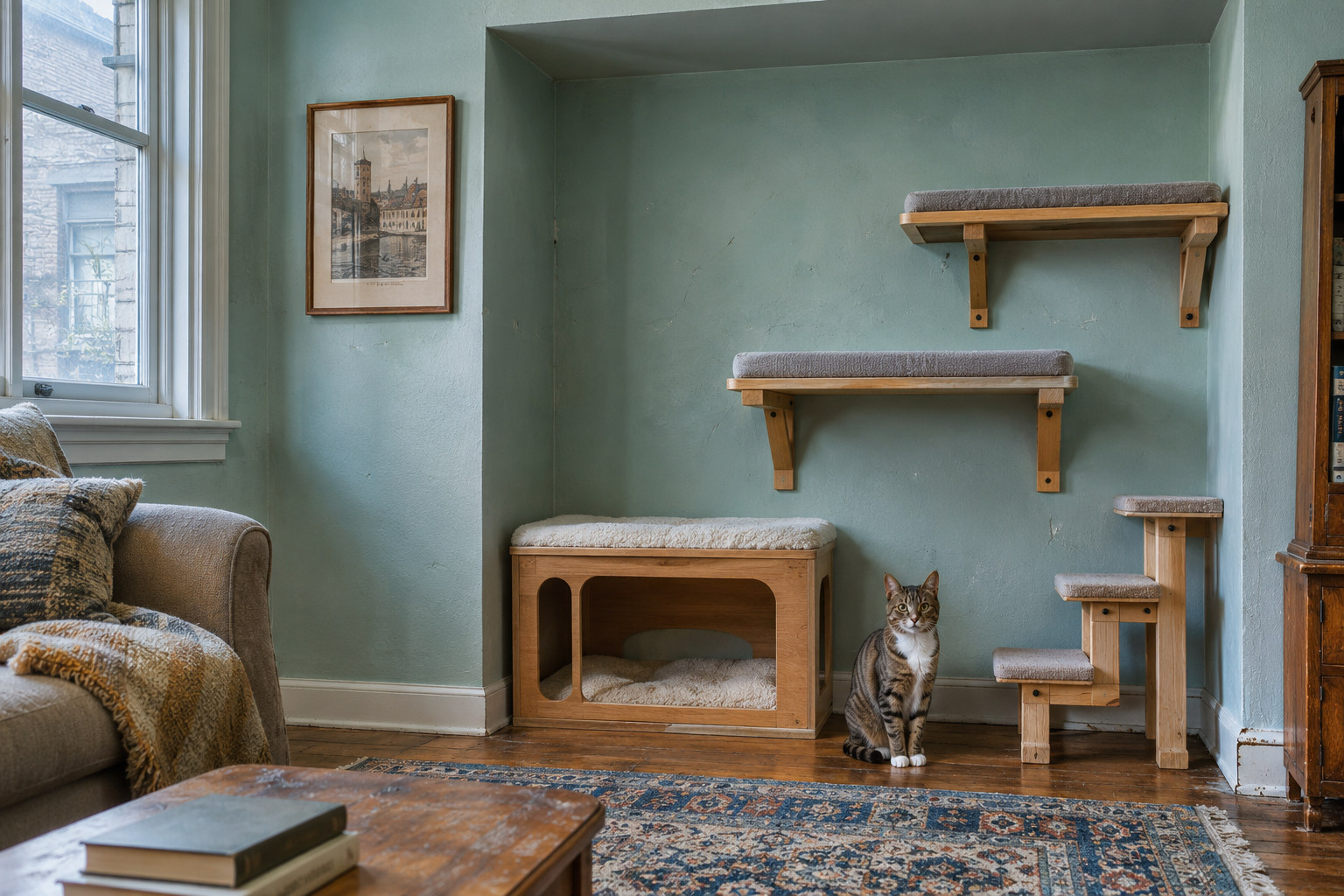
A broad open alcove can hold a low hiding spot with a few supported perches beside it. The recess helps define the cat’s area without needing a screen or a large separate piece of furniture in the middle of the room.
Use an alcove with normal headroom and dependable access. A cramped cupboard or a space that becomes closed storage is a different proposition. Leave the front open and keep the interior straightforward to reach for cleaning.
Arrange the hide and shelves so one does not block the other. A cat resting inside the lower box should not have to move whenever another cat uses the upper route. Keep supplies outside the approach. A slightly different wall color can give the alcove an intentional finish, while a simple layout prevents the recess from becoming visually and physically overfilled.
10. Keep the Vertical Route Low for Easier Access
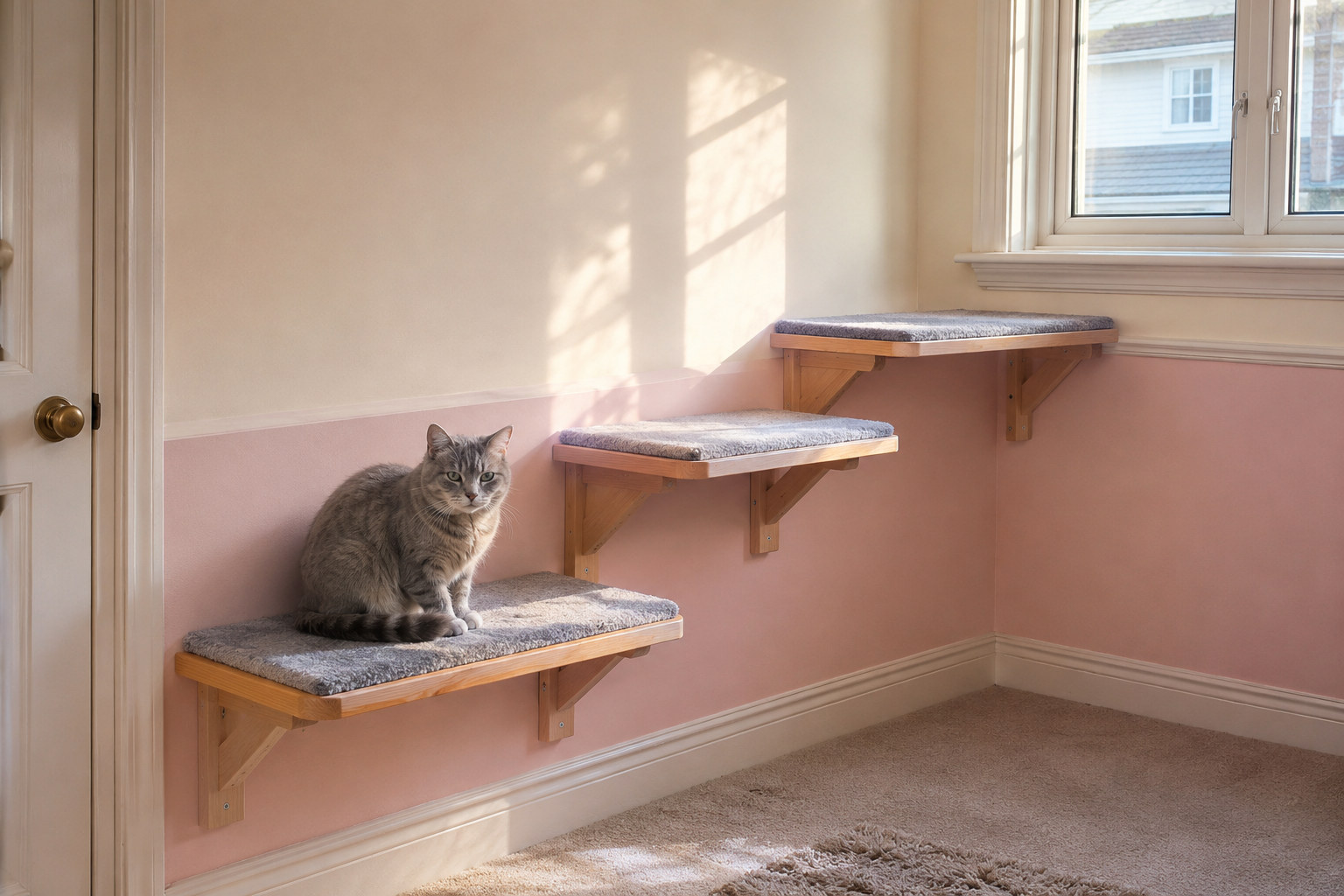
Vertical space does not have to mean a route near the ceiling. A sequence of low, broad platforms can provide changes in level while keeping the approach manageable for a cat that prefers smaller movements.
Start with what your cat comfortably uses now. Plan generous landings, small transitions, and a direct return to the floor. Leave enough room to turn without stepping around ornaments or a sharply projecting bracket. Securely fitted pads should remain flat when the cat steps onto them.
A low arrangement can work beside a bedroom wall, below a window, or in a quiet living room corner. Keep everyday resources easy to reach on the floor. If your cat’s movement has changed, ask your veterinarian about its needs before treating a new layout as the answer. The useful height is the one your cat can choose comfortably.
11. Give Two Cats Separate Ways Up
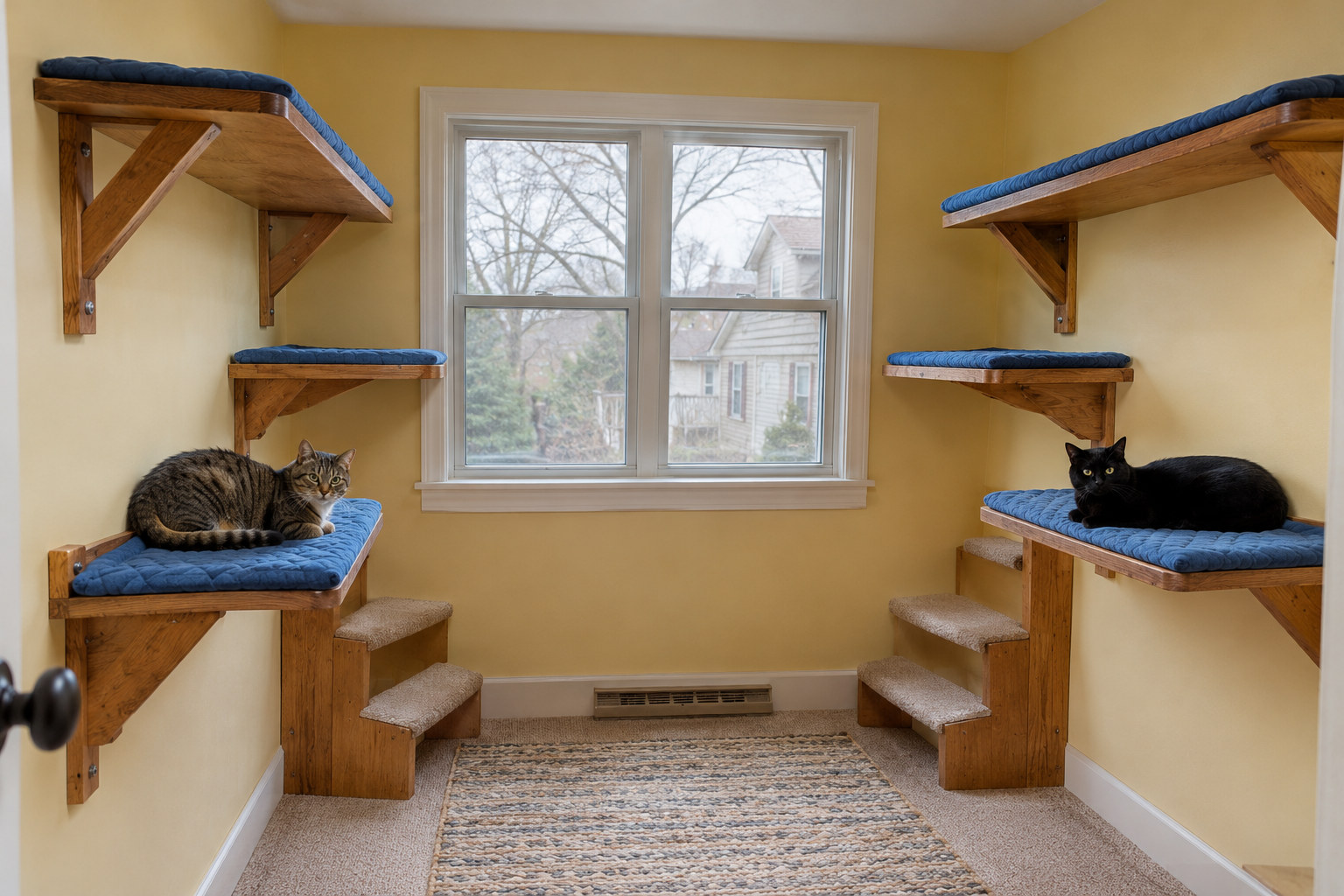
In a shared small room, one narrow climbing route can become the only passage to every desirable perch. Where the space allows, two separate approaches give the layout more flexibility. They can occupy opposite walls or two widely separated sections of one wall.
Evaluate each route as a complete arrangement. Both need usable lower landings and a place to rest, rather than one attractive route and a token second step. Watch how your cats actually share the space before deciding that adjacent upper beds will suit them.
Keep the center open and avoid connecting the routes with a bridge that fills the room. Separate resting choices may be more useful than one elaborate circuit. The room also needs an appropriate wider plan for food, water, litter, and hiding places; extra shelves alone cannot supply every resource that a multicat home requires.
12. Choose a Compact Floor-Supported Tower
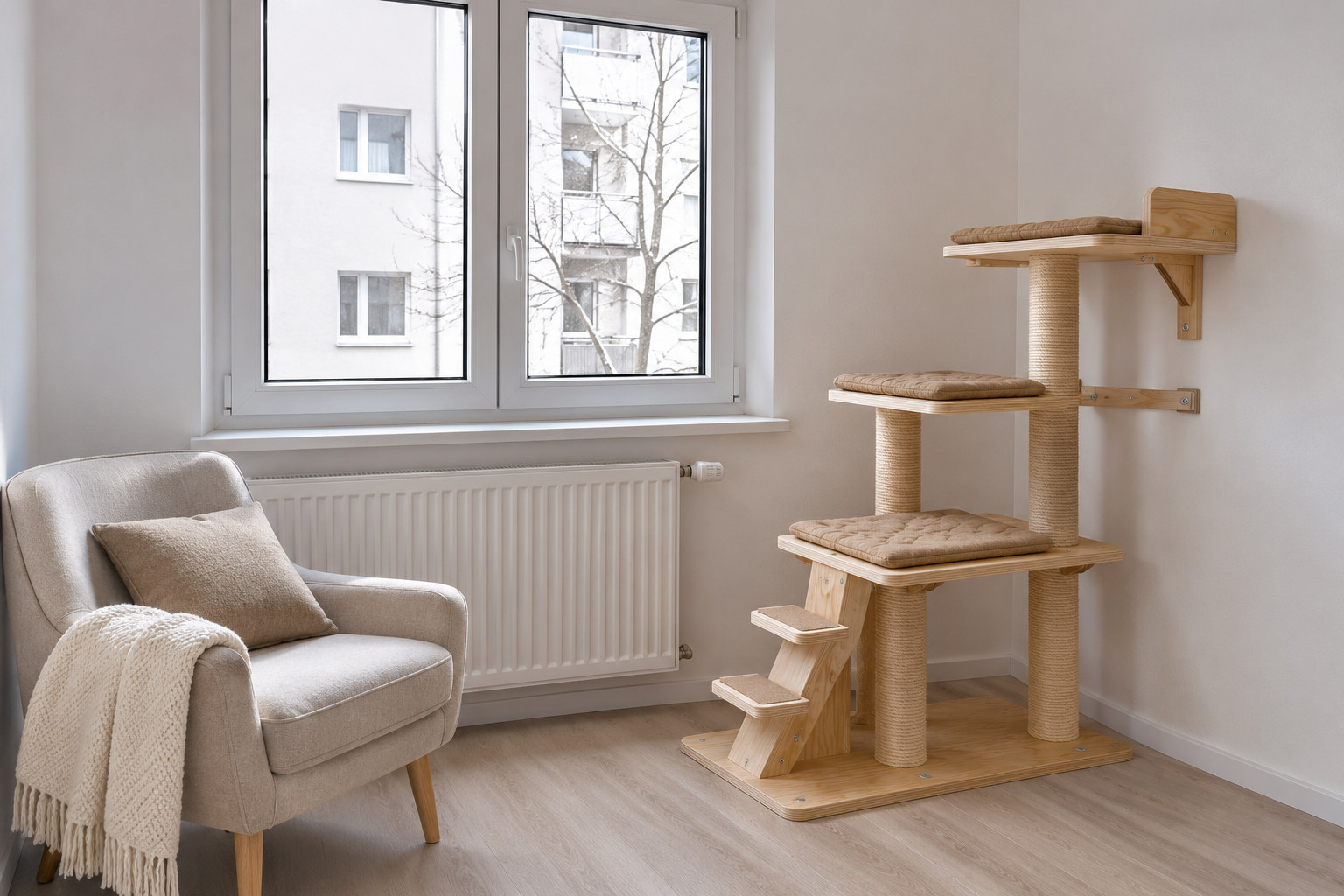
When the wall layout is unsuitable for several shelves, a compact tower can use height within one defined footprint. Look for broad resting surfaces, a substantial base, and a route that suits your cat rather than choosing the narrowest possible product.
Place the tower where it does not block a door or window operation. Check the actual floor beneath it: an uneven surface or thick shifting rug can change how a piece sits. Follow the maker’s assembly and anti-tip instructions, including any required wall fixing.
For a rental, discuss required attachments with the owner before buying. Freestanding appearance does not mean every tower can safely be used without anchoring. Leave enough open floor to clean around the base. A practical tower should simplify the room’s layout, not force you to squeeze past it each time you enter.
13. Keep Cat Access Clear When the Guest Bed Opens
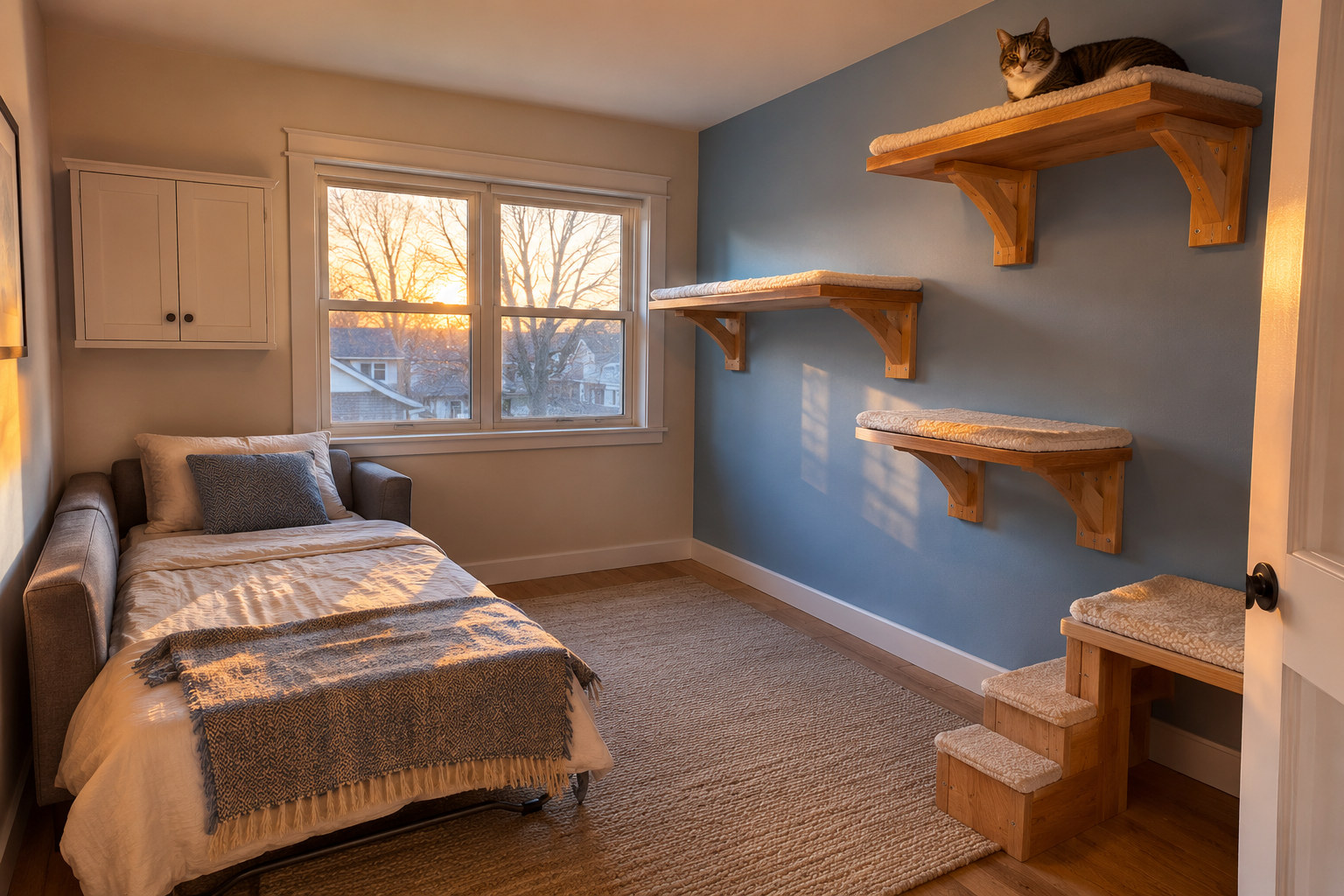
A guest room can share space with cats if their route works when the room is occupied. Plan around the sofa bed or folding bed in its fully open position, not just the compact daytime arrangement shown in a furniture listing.
Keep the climbing zone on a wall that remains accessible beside the opened bed. Check where a suitcase, bedside chair, and charging lead will go. Those temporary belongings can consume the exact floor space intended for the cat’s approach.
Our small bedroom furniture ideas can help you compare compact human furniture before committing to the layout. Keep familiar resting choices elsewhere in the home too. If guests need the bedroom door closed, the cat should not lose access to essential resources. A shared room works best when both its occupied and everyday arrangements have been considered.
14. Use the Tall Wall in a Room With Sloping Ceilings
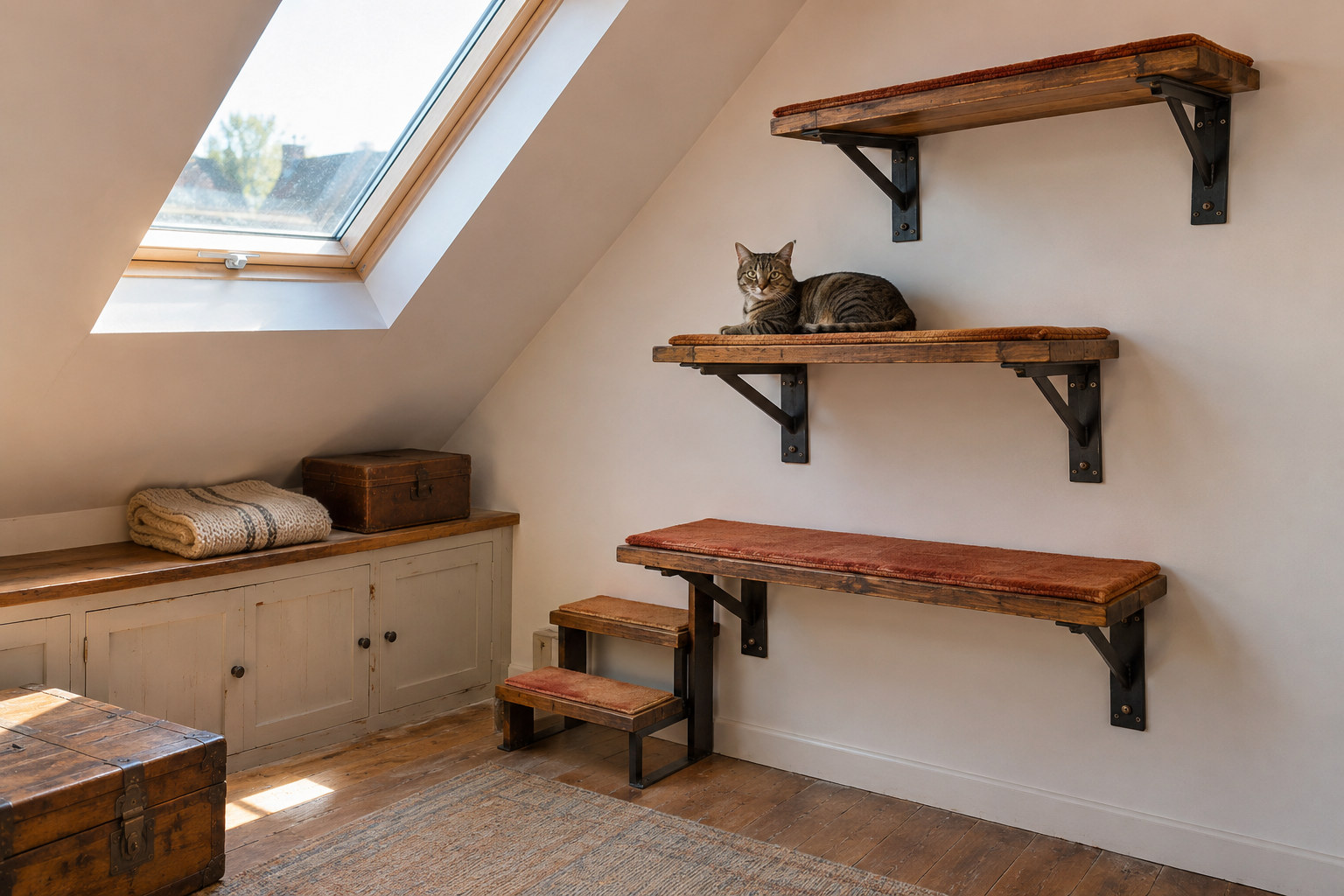
An attic room may have plenty of floor along the eaves but limited usable height. Place the climbing arrangement on a suitable full-height wall, where the cat can sit and turn without the ceiling crowding the upper platform.
Keep low storage beneath the slope instead of pushing the resting shelf into the narrowest corner. Measure the finished clearance over every landing, including the thickness of cushions. The highest shelf should be a comfortable destination rather than the last point the brackets happen to reach.
Watch the room’s temperature and light as well as its geometry. An attic space needs to remain suitable for normal use. A modest arrangement on the taller wall can preserve the room’s center, while the eaves hold contained supplies. Leave skylight controls and any ventilation equipment accessible without moving the cat furniture.
15. Reserve a Cat Zone Beside a Wardrobe
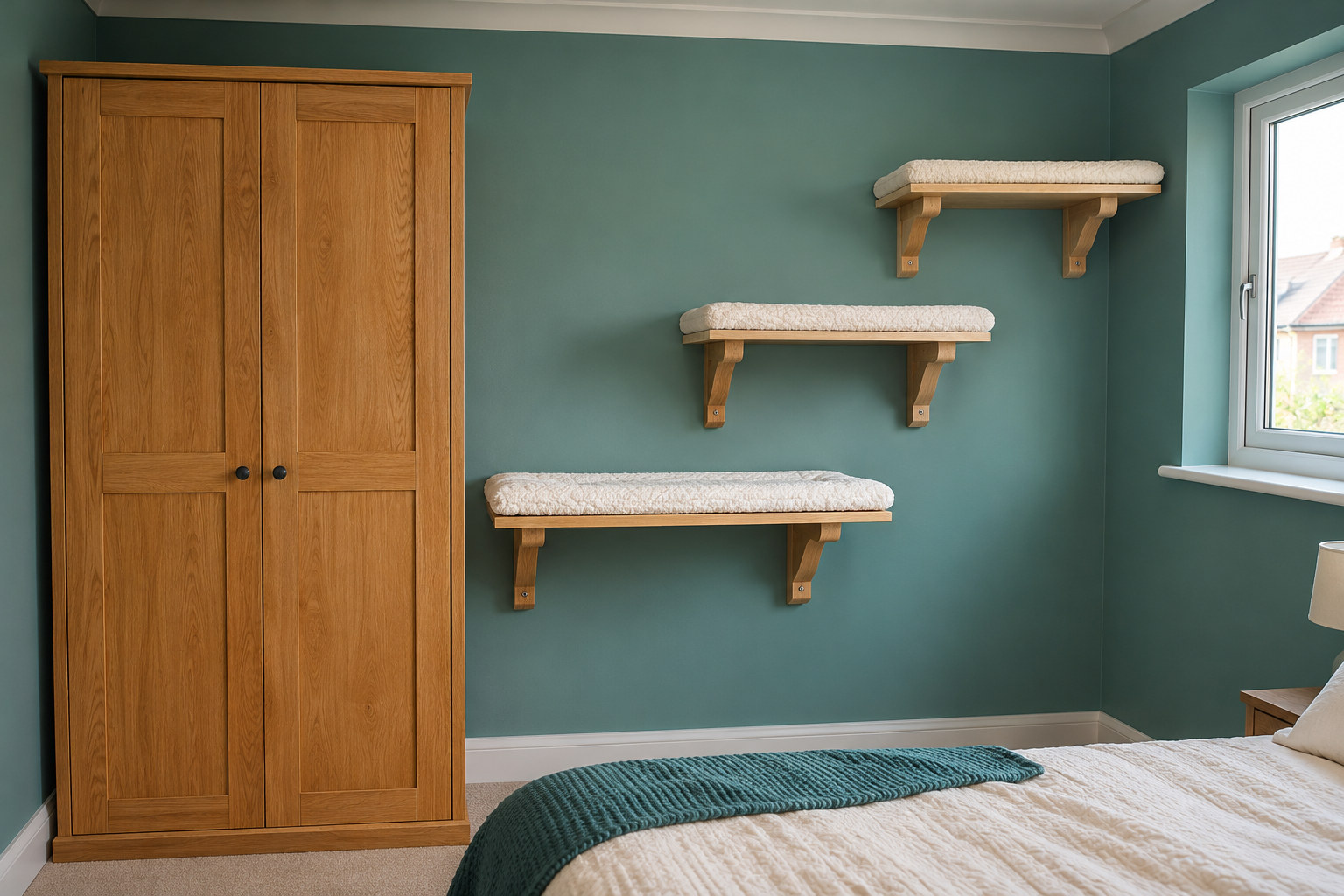
A blank section beside a wardrobe can hold a vertical cat arrangement while the wardrobe continues to do its original job. The distinction is useful: the cat’s route belongs beside the furniture, with its own supports and approach, rather than depending on stored clothing or a crowded cabinet top.
Open the wardrobe doors and pull out any drawers before marking platforms. Leave room for dressing, carrying laundry, and cleaning the floor. Avoid turning the gap between furniture and wall into a narrow trap-like route.
A separate paint color can define the cat corner without adding more objects. Our guide to dividing a wall with two paint colors offers ideas for that visual boundary. Finish the decorating before installing the cat furniture, and follow product directions before returning the room to normal use.
Plan the Floor Before Filling the Wall
Map Three Different Kinds of Space
Mark the human walking route, the cat’s approach to each resting place, and the locations of everyday resources. These areas may overlap in places, but they should not depend on furniture constantly being moved. Include doors, drawers, chair travel, and cleaning access on the same sketch.
Then decide what can leave the room. A rarely used chair or oversized storage basket may be consuming more useful floor than the cat furniture. Vertical arrangements work best when they accompany thoughtful furniture choices, rather than adding another layer to an already crowded room.
Keep the Essential Resources Practical
Cats Protection’s indoor-cat guidance emphasizes appropriate resources and opportunities for cats to spend time apart. Its resource-placement guidance also recommends separating food, water, and litter locations. Use the wider home when one small room cannot sensibly hold everything.
Do not turn a litter tray into a narrow under-shelf installation simply to free the center. Keep the approach and cleaning space usable. A room can provide excellent climbing and resting choices without becoming the only place where the cat eats, drinks, sleeps, and toilets.
Get the Fail-Safe Paint Color Playbook (Free PDF)
36 proven colors • 8 ready palettes • trim & sheen guide • printable testing cards.
Establish Support Before Choosing a Pattern
The wall type, shelf design, fittings, and cat all affect what is appropriate. Catastrophic Creations’ installation instructions illustrate how a particular furniture system depends on suitable structural attachment points. They are instructions for that system, not a universal fixing recipe for homemade shelves.
Have uncertain walls or mounting arrangements assessed before installation. Avoid treating a decorative bracket, a familiar wall plug, or an attractive photo as proof of suitability. Start with a sound support plan, then choose the arrangement and finish around it.
Small Cat Room Questions
How High Should the Shelves Go?
There is no useful universal height for every room and cat. Consider the approach, landing size, turning room, descent, and your ability to clean and inspect the shelf. Ohio State’s perch guidance describes elevated places as opportunities to rest and observe. The highest available wall space is not automatically the best destination.
Can Paint Help the Room Feel More Organized?
Yes. Repeating a wall or cushion color can connect separate pieces, and a simple painted shape can define the cat area. Our wall paint designs using tape offer starting points. Keep the treatment uncomplicated so the platforms remain easy to see, and follow finishing-product instructions before the cat returns.
What Should You Add First?
Begin with one well-positioned resting place and an appropriate approach. Observe how the cat uses it before adding more levels. Keep familiar resting options available during the change. A small room becomes more useful through a few well-chosen additions, clear floor space, and an arrangement you can maintain easily.
Source Notes
- Cats Protection: Indoor Cats. Resources, home hazards, and individual resting choices.
- Cats Protection: Essential Resources and Placement. Separation of food, water, and litter locations.
- Ohio State University: Perches. Elevated resting and viewing opportunities.
- Catastrophic Creations: Installation. Product-specific mounting guidance. The room arrangements are design concepts, not engineered installation plans.