
15 Small Dog-Friendly Backyard Ideas with Room to Relax
A small backyard can feel crowded long before it runs out of square footage. A dining set, a few pots, a dog bed and an awkward door swing can leave you both walking through an obstacle course. The most useful small dog-friendly backyard ideas start with the routes and resting places you actually need.
Here, “small” describes the yard. These layouts can work with different dogs, provided the available space, surfaces and boundaries suit the individual animal. The aim is a comfortable place to share time outdoors, with a simple arrangement you can keep tidy and adapt through the seasons.
Get the Fail-Safe Paint Color Playbook (Free PDF)
36 proven colors • 8 ready palettes • trim & sheen guide • printable testing cards.
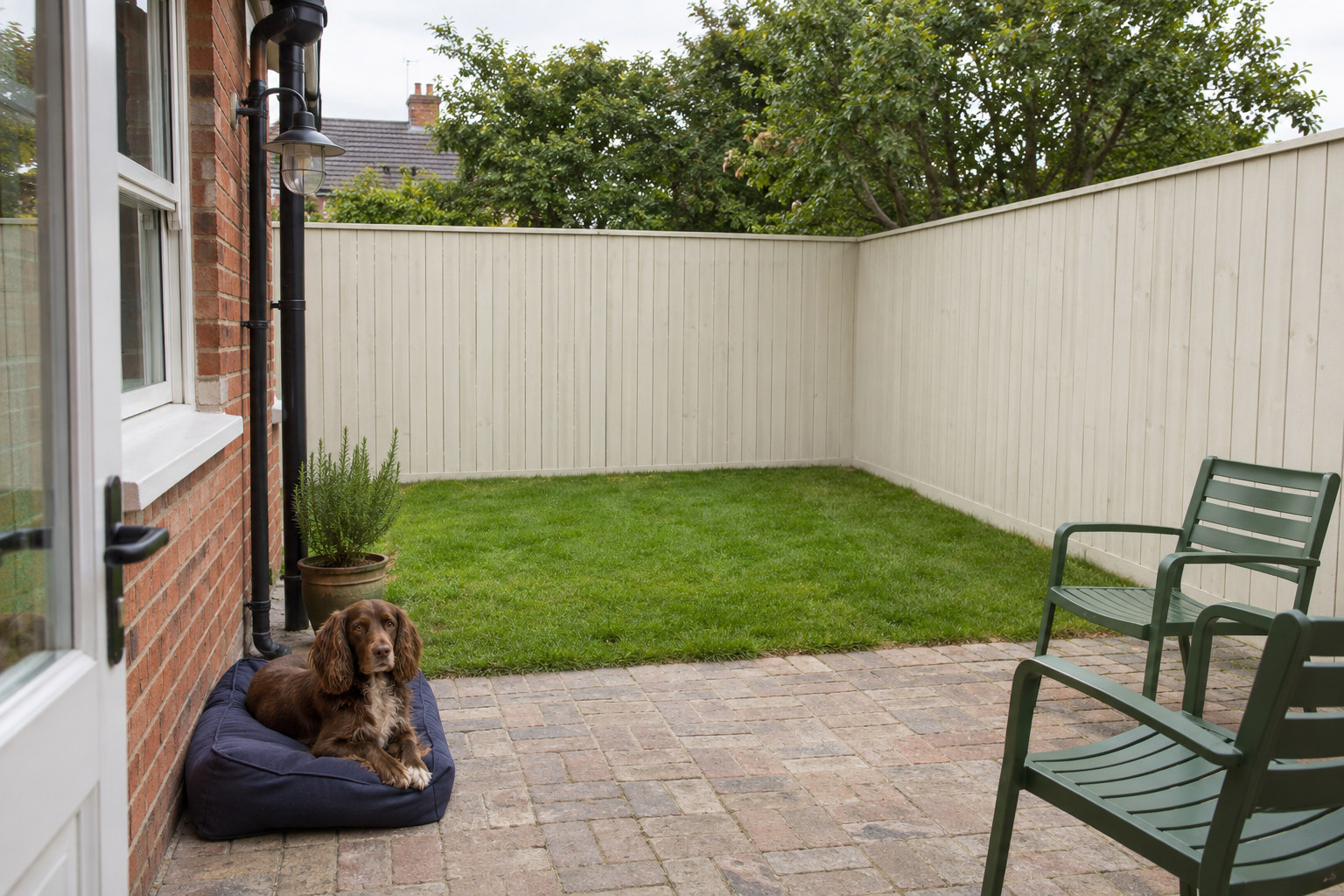
1. Keep One Open Center Instead of Several Tiny Zones
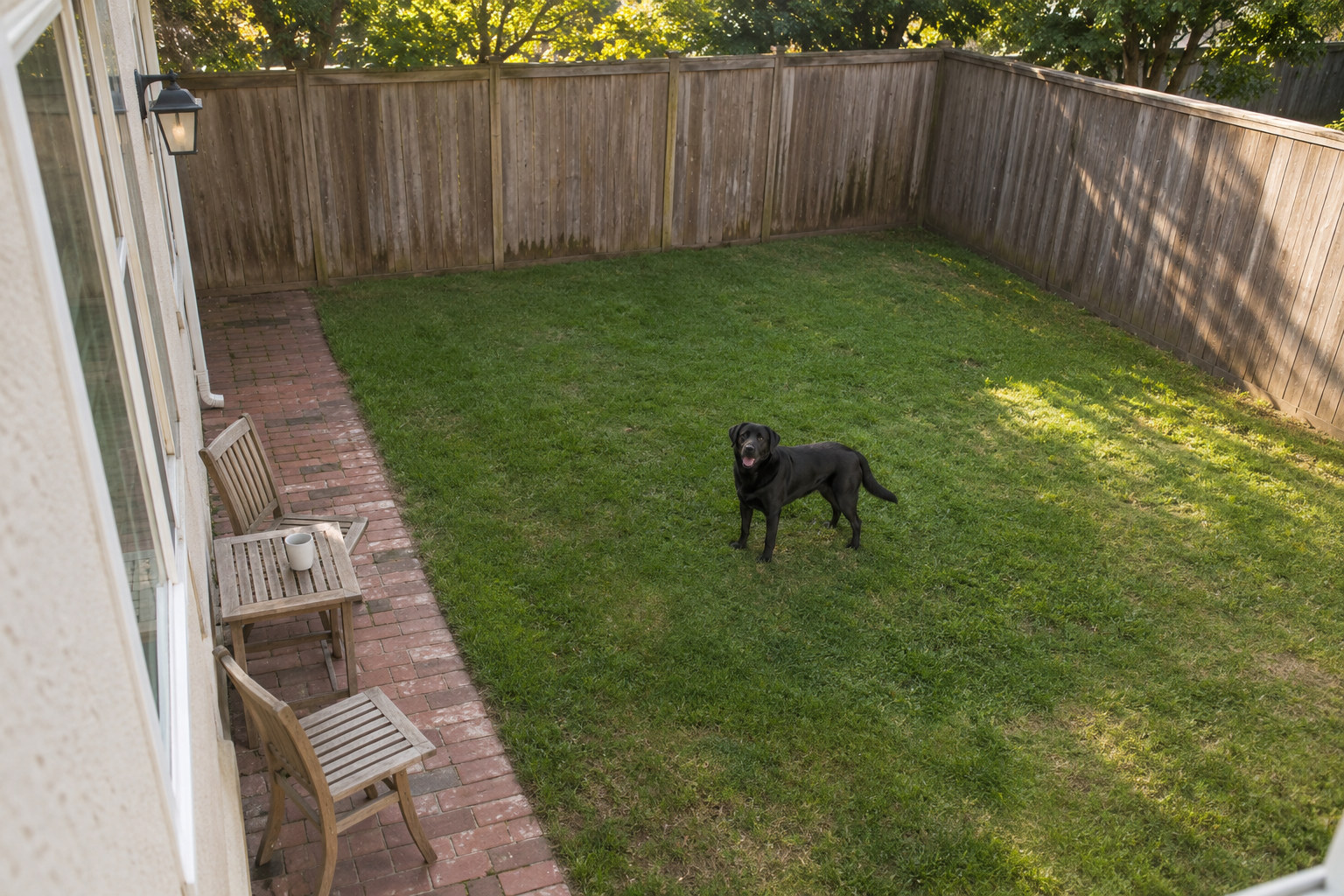
Start by choosing one useful open area and arranging everything else around it. In a rectangular yard, that might be a simple lawn with chairs on a paved strip beside the house. In a courtyard, it could be an uncluttered rectangle of paving with the dog’s resting place at one edge.
Resist dividing a tiny plot into a dining room, lounge, play zone and decorative garden at the same time. Each extra border or furniture group takes space from the routes connecting them. An open center also gives you somewhere to turn while carrying a tray or bringing a chair outside.
Mark the proposed furniture footprints with temporary chalk before buying anything. Walk through with the back door fully open and a chair pulled out. For more ways to judge scale and circulation, browse these small backyard layout ideas, then adapt the arrangement to your dog’s habits.
2. Tuck a Corner Bench into a Courtyard
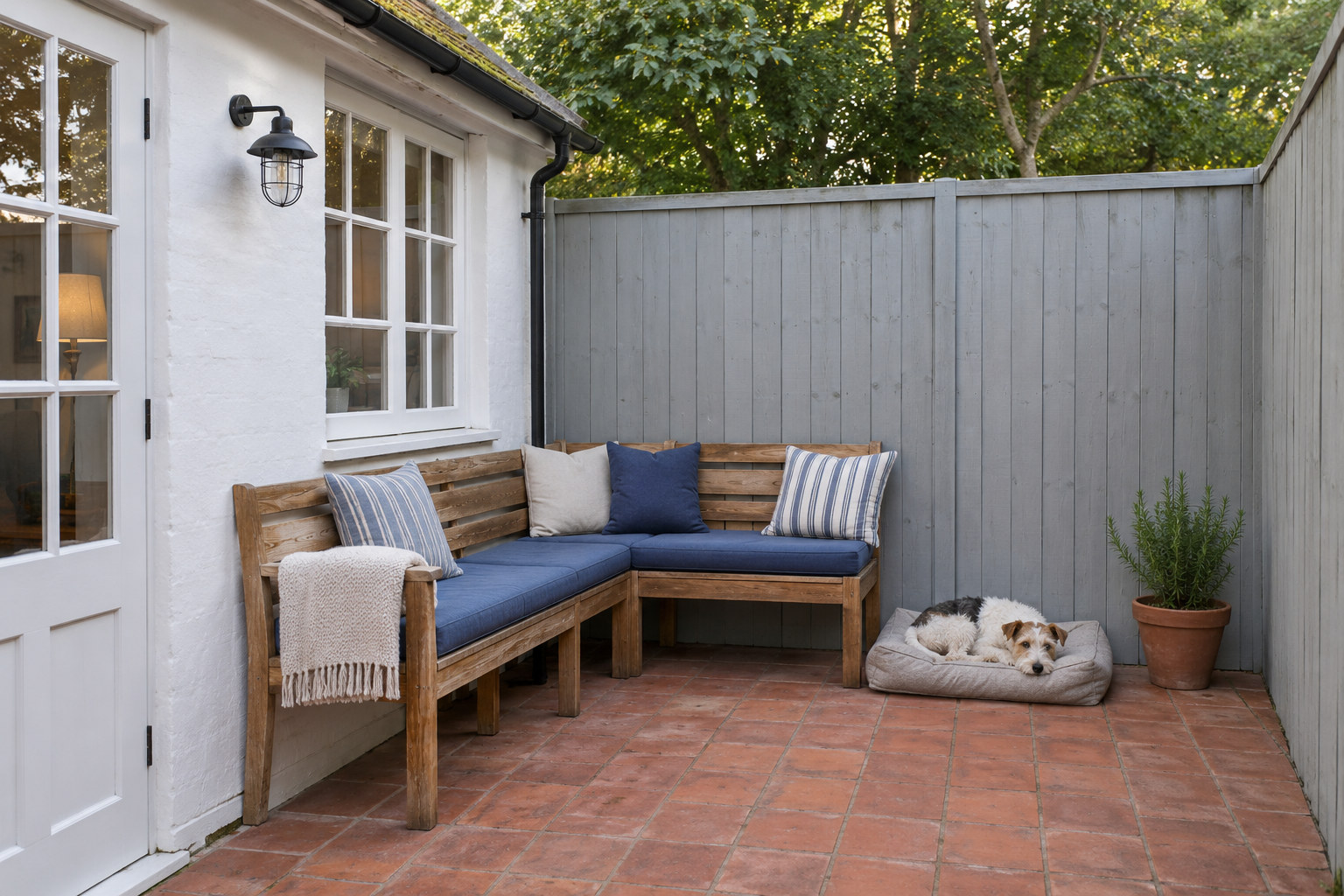
A corner bench can make an awkward courtyard feel settled because it gathers the seating into one footprint. Position it against the house or another suitable interior wall, with a low dog cushion beside the seat rather than beneath people’s feet. Leave enough room for your dog to stand, turn and move away comfortably.
Keep the table modest. A large square coffee table often consumes the very space the corner seating saved. A small movable side table can hold a drink and move indoors when you need the floor clear.
Check where the bench sits relative to the property boundary. Seating and storage boxes should not provide a convenient launch point over a fence. A slim bench by the house can be a better fit than deep seating at the far boundary, especially where the yard narrows. Choose a location you can sweep behind without dismantling the whole arrangement.
3. Divide a Narrow Yard Across Its Width
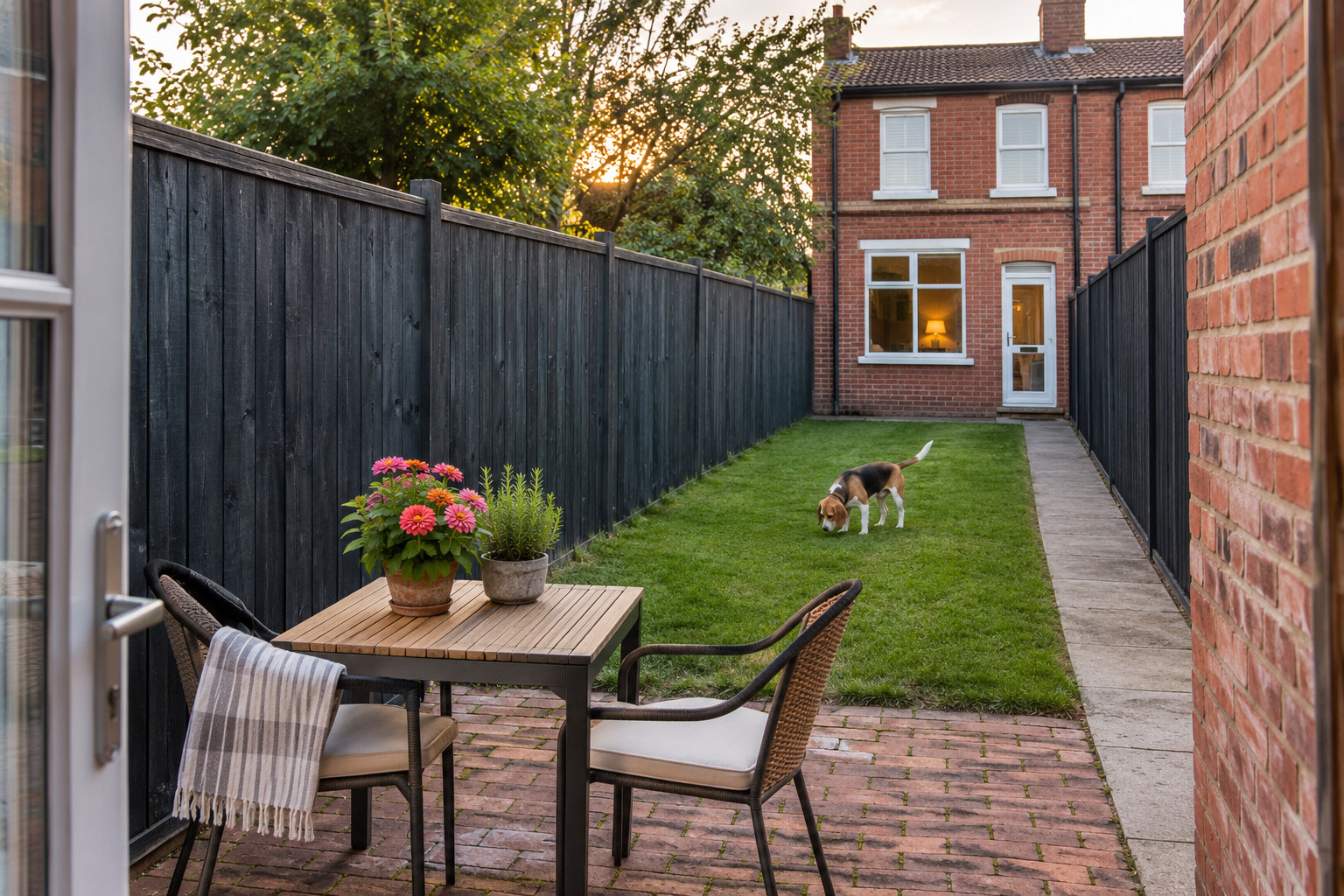
Long, narrow backyards often work best as two simple sections placed one behind the other. Put the activity that needs furniture near the house, then leave the farther section relatively open. A compact dining patio followed by a lawn is easier to read than several little seating stops along the length.
The connection between these areas matters as much as their size. A chair should not block the only route to the grass when someone sits down. Keep one side clear, and allow for the full swing of the back door and any access gate.
You do not need an internal fence or raised platform to show the change in use. A flush change from paving to grass can do that quietly. Look down the yard from indoors before finalizing the plan: fewer interruptions let you see the dog, the gate and the useful outdoor space together.
4. Choose Dining Furniture That Folds Away
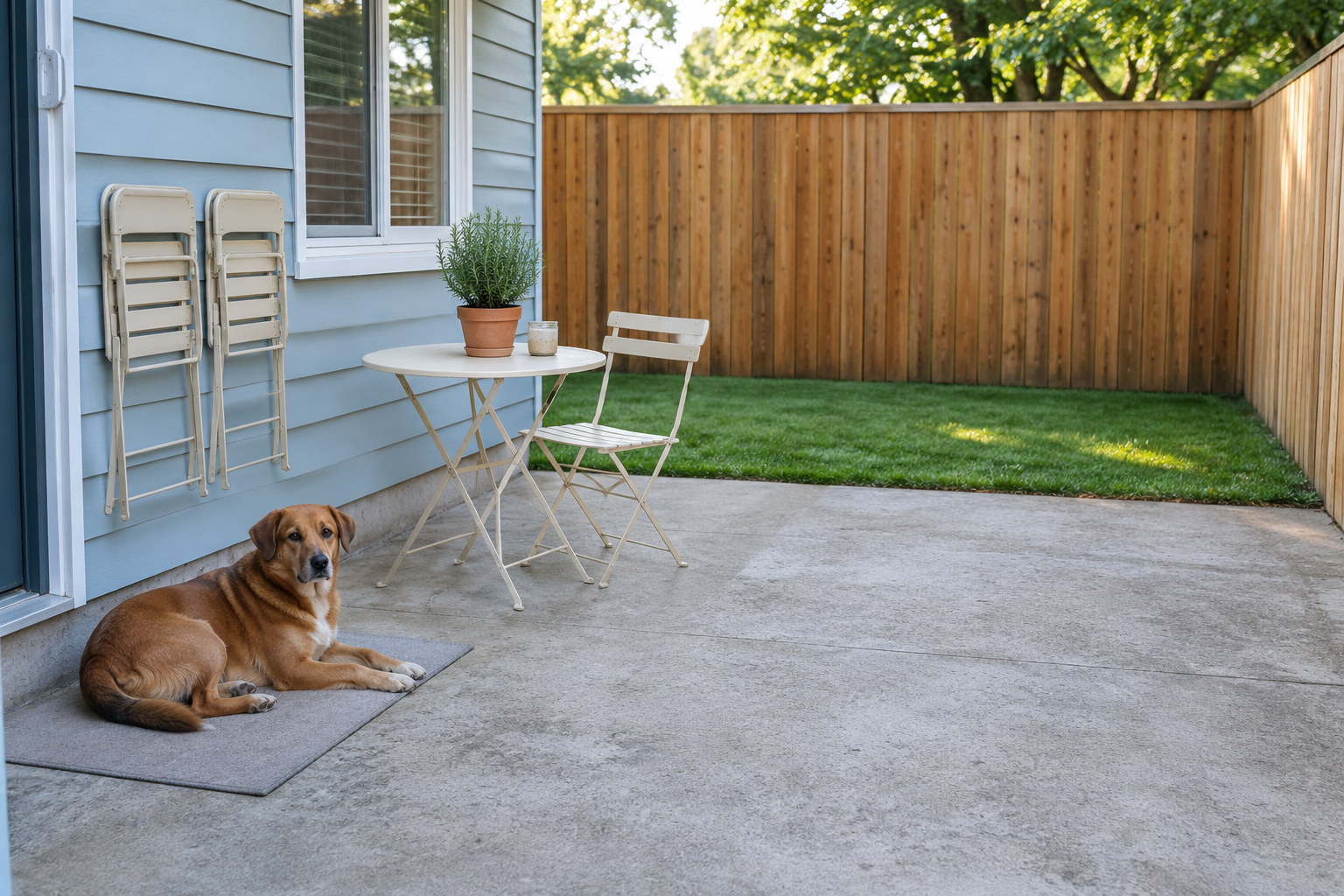
If you eat outside occasionally, let the furniture match that schedule. A folding bistro set can provide a proper place for lunch and return the courtyard to open space afterward. Choose pieces that are stable when opened and manageable enough that you will actually put them away.
Decide on the storage location before buying the set. Chairs leaning loose against a fence can fall or become something to climb. A secure house-wall storage position or a closed shed is more useful, with folding mechanisms kept away from curious paws during setup.
Measure the furniture in use, including the space behind each chair. A tabletop that fits neatly into a corner may leave no room for a person to sit down. Keep your dog’s mat outside the chair movement area and give it a consistent position, so rearranging the table does not remove the dog’s familiar resting place.
5. Bring Shade Out from the House Wall
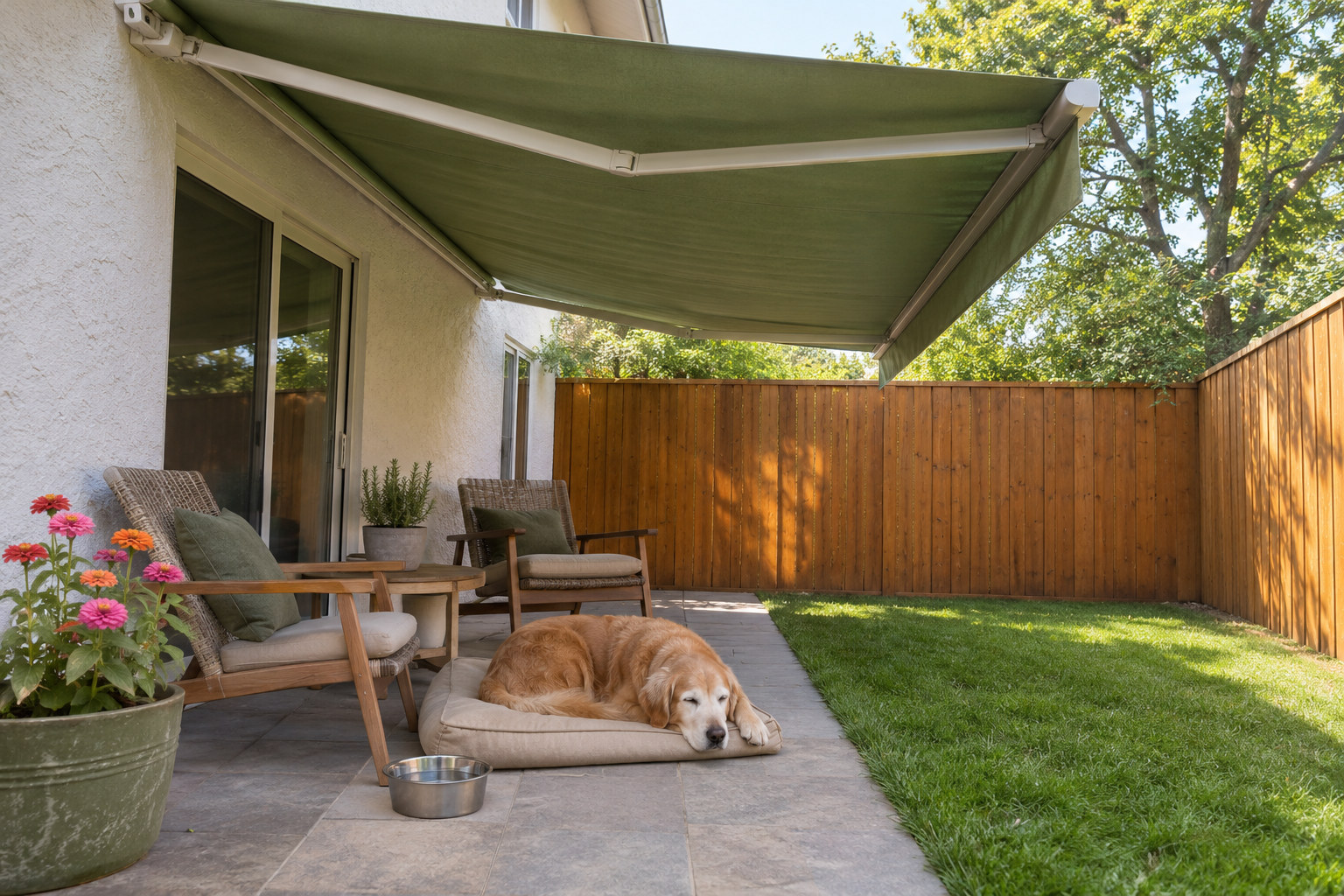
Shade becomes easier to fit into a small yard when it comes from the building. A suitable wall-mounted awning can cover a shallow patio without adding a large umbrella base in the middle of the floor. The important question is where its shadow falls during the hours you use the space.
Check that pattern on several days before choosing the coverage. A chair may be shaded while the dog’s cushion beside it remains in direct sun. Place drinking water within the shaded area and keep the route back indoors open during supervised garden time.
An awning needs appropriate fixings and wind management for its product and the wall construction. Treat that as an installation decision, not a decorative shortcut. Compare the shapes in these patio roof extension ideas if you are considering permanent cover, then have the structure and drainage assessed for your particular home.
6. Run One Clear Path Along the Edge
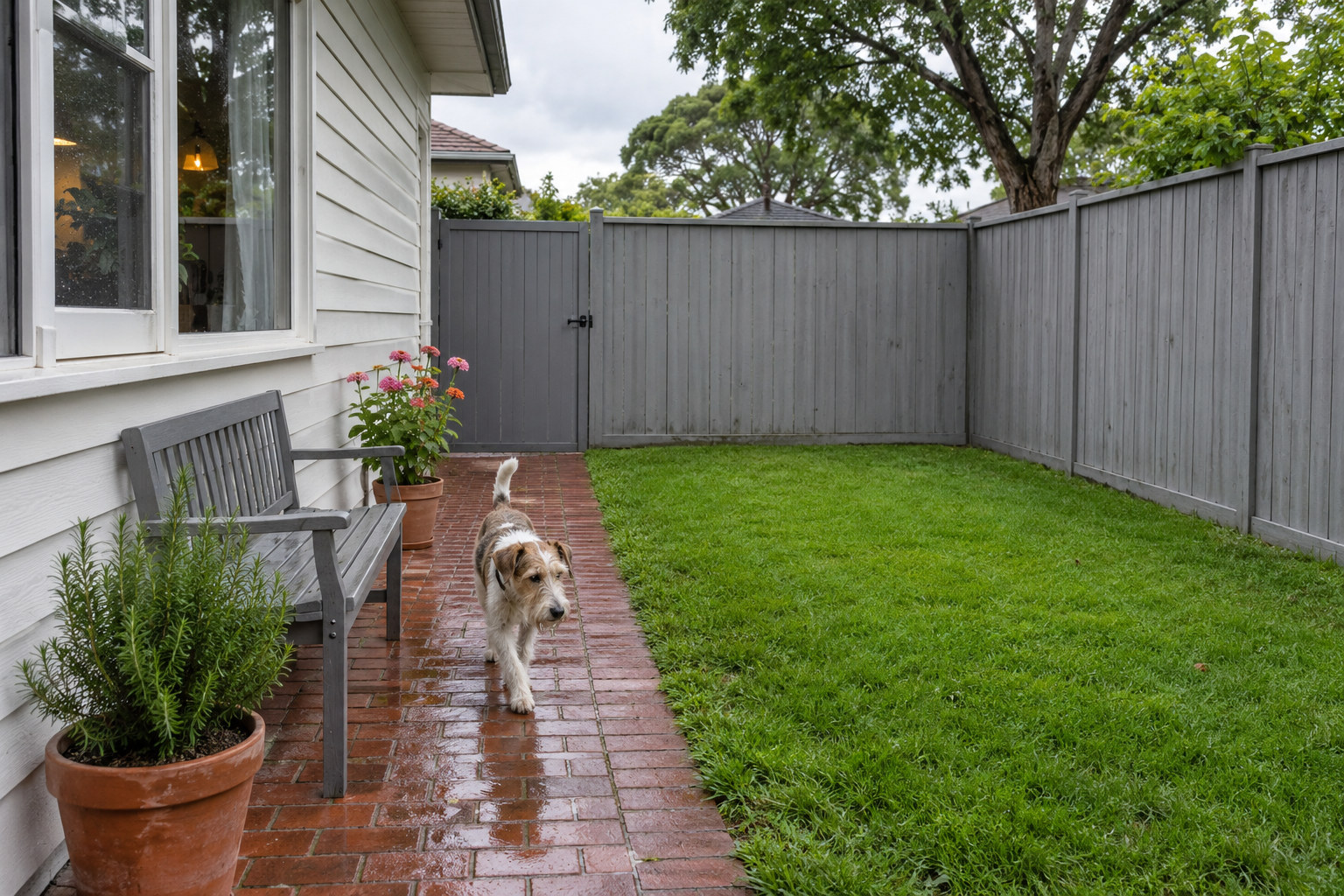
One continuous path can do more for a little yard than several stepping-stone routes. Place it where people already walk between the house, gate and useful garden area. Running it along an edge often leaves a larger, more usable patch of lawn beside it.
Make the route comfortable for your household, including anyone carrying laundry or walking alongside the dog. Choose a width by testing the movement, not by squeezing the path into whatever space remains after planting. Keep pots and garden ornaments out of that allowance.
Aim for secure, even paving and clearly finished transitions. If your dog picks up loose stones, a gravel-filled route deserves particular caution; PDSA’s garden guidance notes the problems stones can cause. Inspect the path after rain and during hot weather, because a neat photograph cannot tell you how the actual surface behaves.
7. Concentrate Flowers in One Shallow Bed
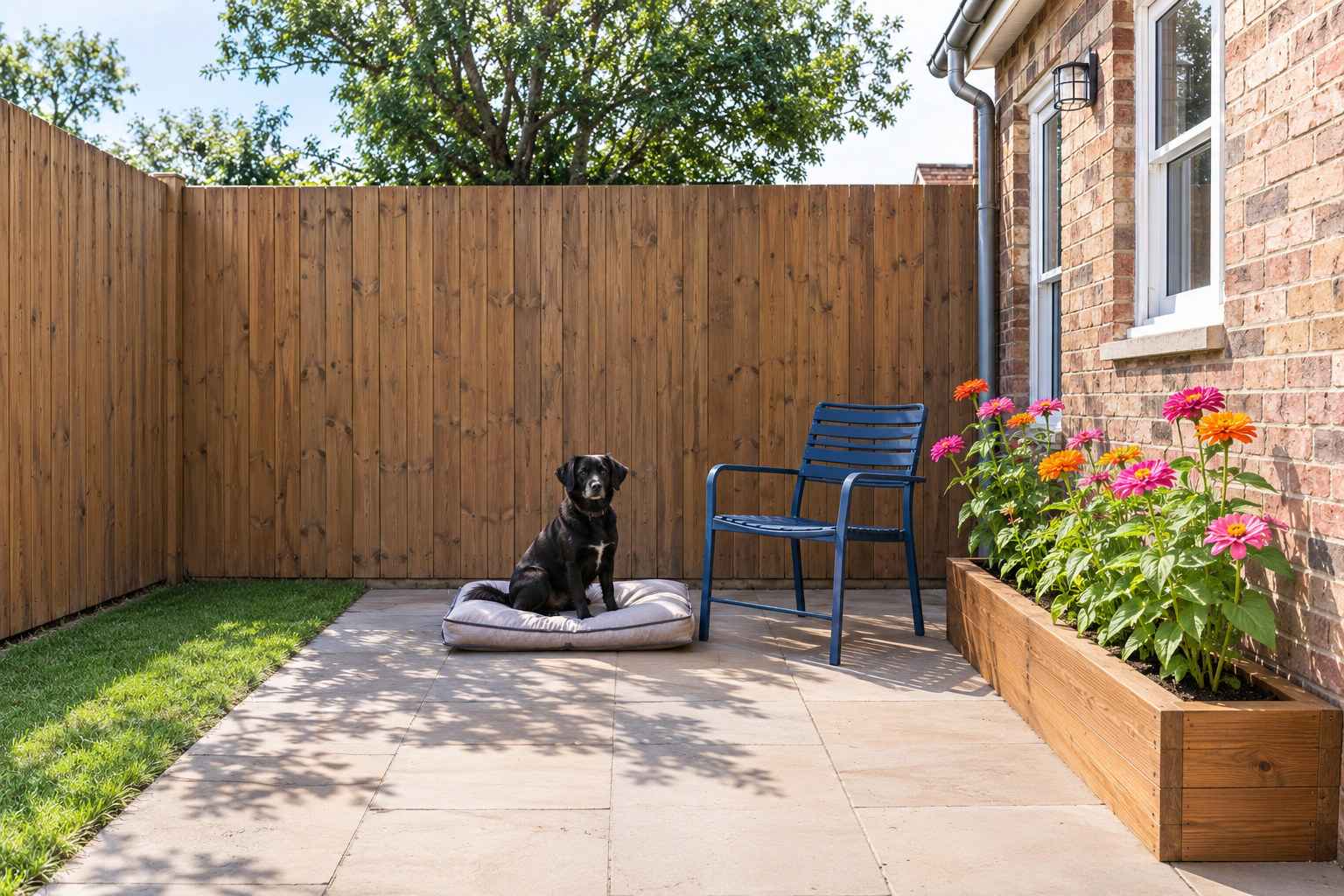
A small yard can have flowers without borders running around every side. Concentrate planting into one shallow bed where it will be easy to water and maintain. A bed beside the house can leave the main floor open while creating a clear backdrop to the seating.
Choose the plants by exact identity before choosing their colors. For example, the ASPCA lists zinnia species as non-toxic to dogs. That classification does not make a flower bed a snack station, and you still need to consider fertilizers, treatments and the dog’s interest in digging.
Keep the bed’s edges smooth and out of the main turning area. Check the mature spread of the plants so they will not close the route later. Avoid placing a tall bed where it becomes a step toward the boundary. One well-positioned bed is usually easier to manage than several containers squeezing every corner.
8. Let One Bench Hold Outdoor Supplies
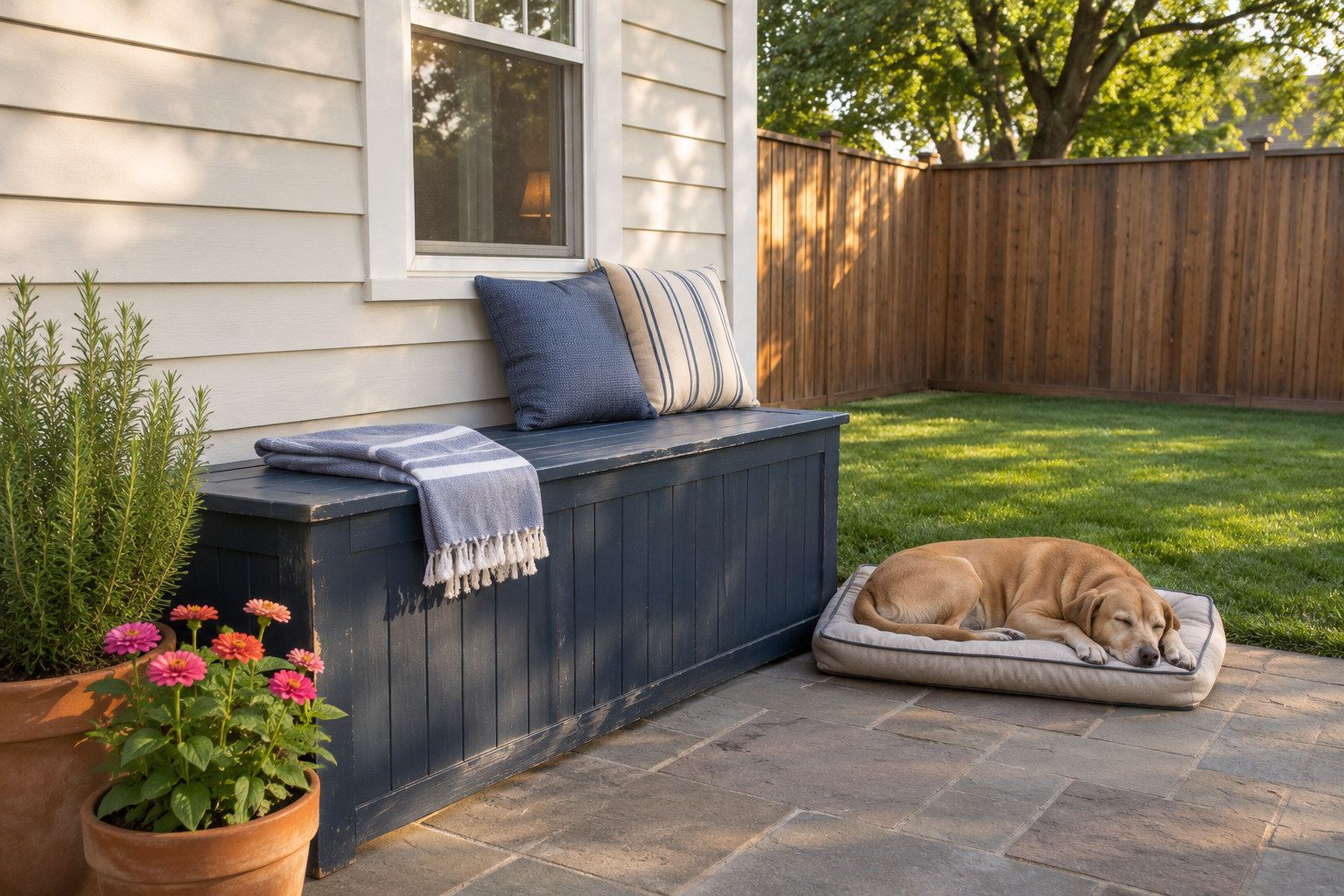
Outdoor clutter becomes more noticeable when the yard is small. A storage bench can gather cushions and clean towels into one piece of furniture instead of adding a separate chair and box. Choose it for the things you will store, including the opening size and whether the interior stays dry in your conditions.
Keep chemicals, garden tools and other hazardous items in separate secure storage. The bench is most useful for ordinary seating supplies that can go away quickly when rain starts. Check its lid mechanism and keep the dog clear while opening and closing it.
Position the bench where you can use both functions comfortably. If it holds the cushion you need every morning, you should not have to move a heavy table to reach the lid. A spot beside the house also keeps storage near the door while leaving the lawn or paved center available for movement.
9. Screen a Quiet Resting Nook
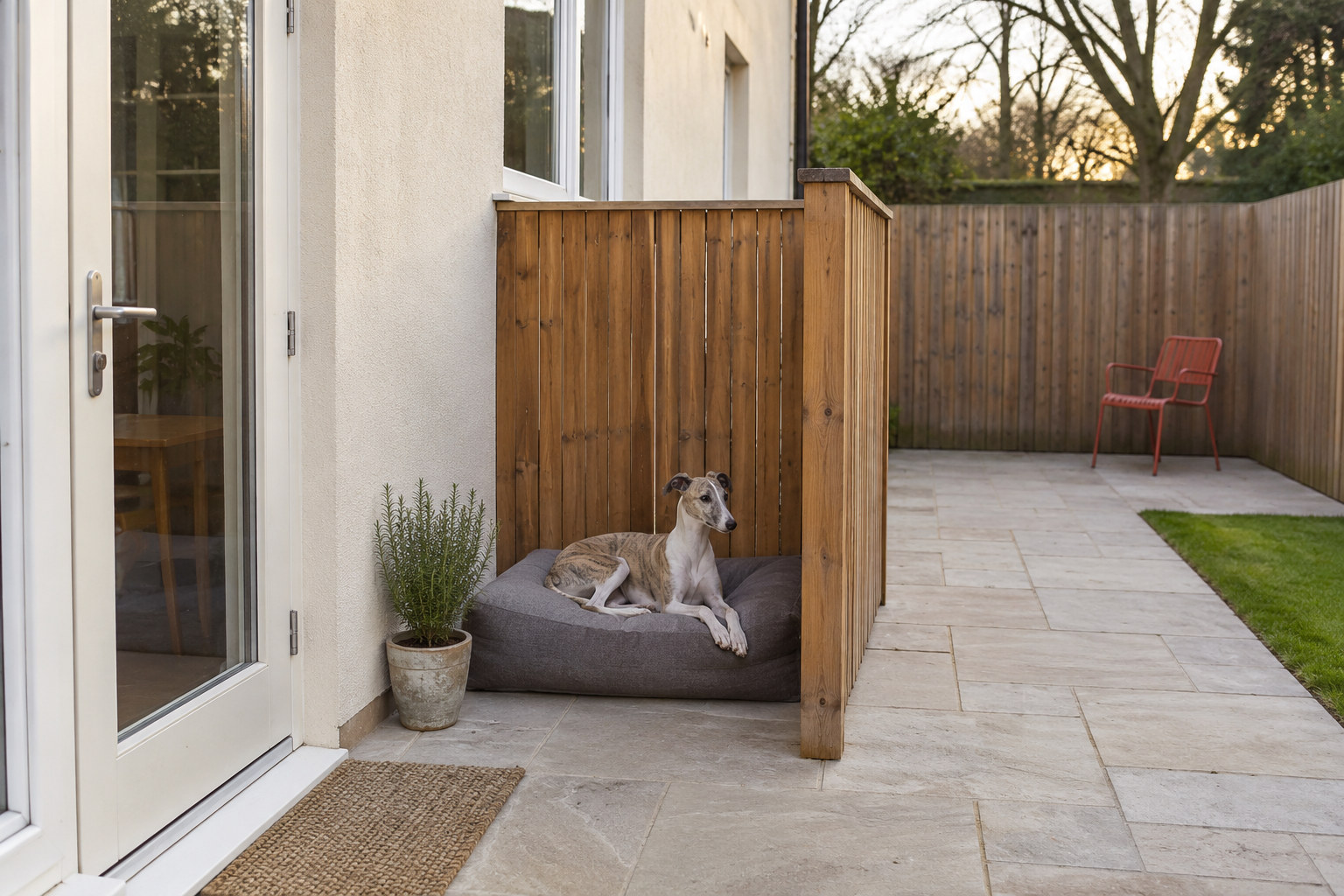
Some dogs settle more readily in a location with less passing activity. In a compact yard, a short interior screen can create a resting nook without dividing the whole space. Position it to interrupt a busy view, then leave a generous open route around the side.
Use the screen as part of a comfortable arrangement, not as a substitute for supervision or a secure boundary. The dog should be able to leave the resting place freely. Before adding a panel, try moving the bed and chair to see whether a quieter position already solves the problem.
Consider shade and air movement as well as privacy. A small nook that catches the afternoon sun or traps heat will not be a good retreat. Keep the panel securely supported, avoid narrow dead ends, and preserve your own view of the dog. The best screen improves one sightline while keeping the yard easy to navigate.
10. Keep Patio and Lawn on a Simple Level Route
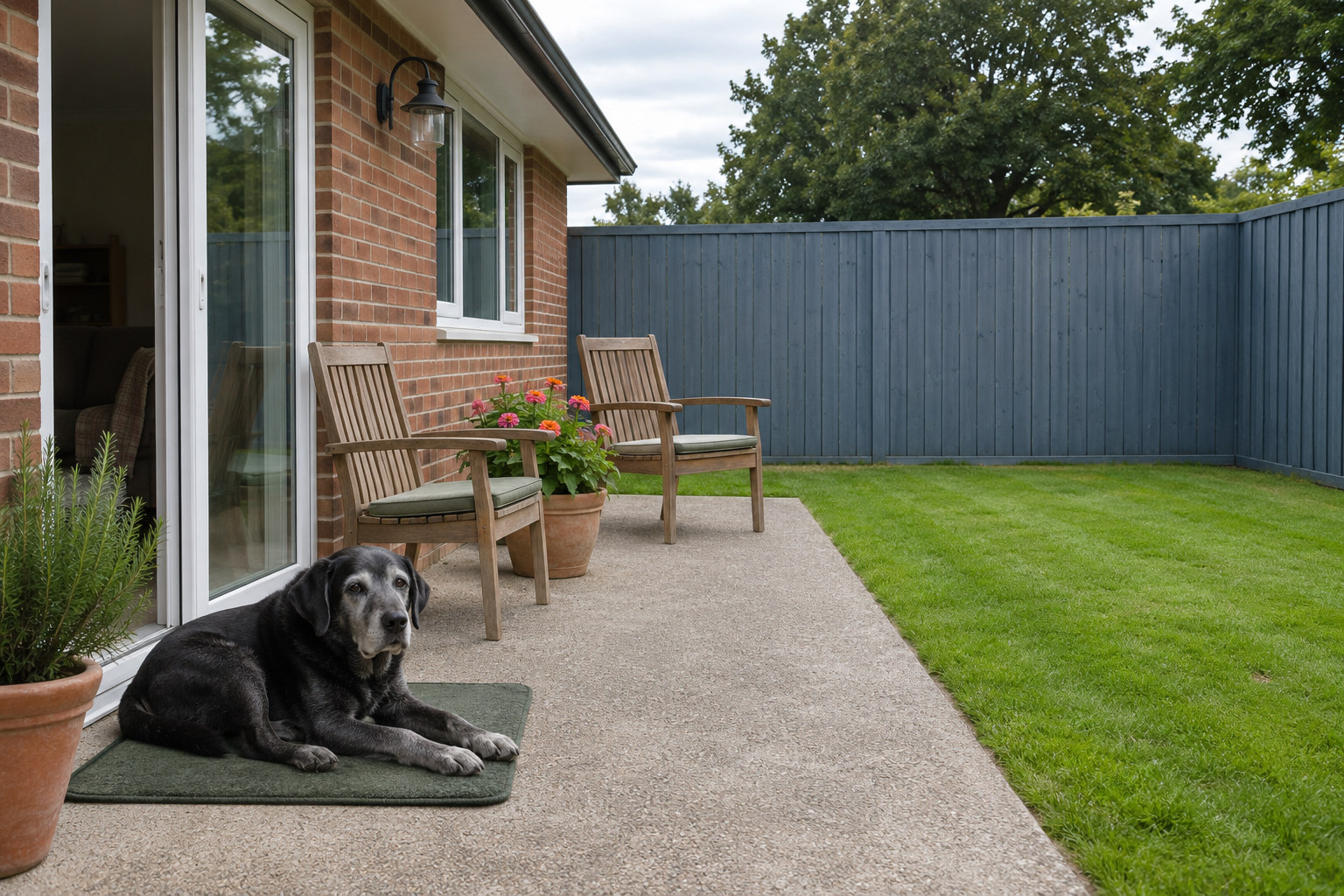
A single uncomplicated route from the back door to the yard can be a valuable improvement, especially when a dog prefers smaller steps. Look for a layout that keeps the main resting place, water and usable outdoor ground connected without unnecessary level changes.
This does not mean covering an entire garden in paving. A modest patio meeting a lawn with a carefully finished transition can be enough. Avoid adding a raised deck solely to mark a seating zone if a change of furniture position could do the same job.
Check the actual doorway threshold, drainage and surface grip before planning alterations. Changes around a house opening may need a professional to preserve weather protection and safe access. For a dog with a mobility problem, ask your vet what movement arrangements suit them. Design the ordinary route around that advice rather than assuming one generic ramp or step will work for every dog.
11. Use an Existing Covered Porch as the Lounge
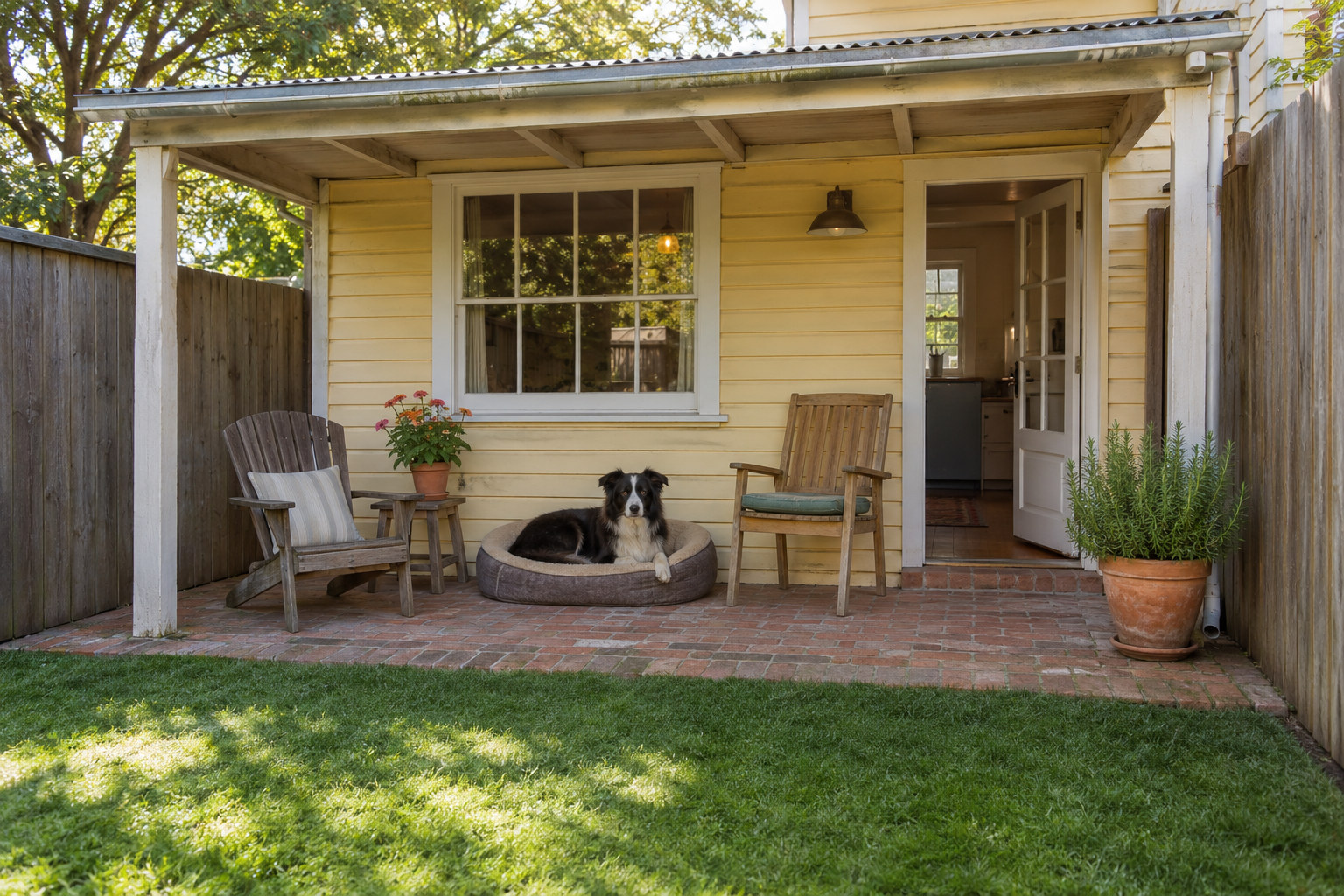
An existing covered porch may already provide the space you are trying to create elsewhere. Put the main seating beneath it and let the little yard beyond remain open. A low dog bed beside the chairs makes the porch part of the shared living area, provided it stays outside the doorway and foot traffic.
Use furniture sized for the porch depth. Two slim chairs can be more workable than an outdoor sofa that forces everyone to squeeze past. If the porch is raised, account for its steps, edges and any required guards before encouraging a dog to use it.
Watch how rain enters the space. A roof does not guarantee that a bed near the edge will remain dry, especially in wind. Choose a resting position you can monitor from indoors and move the bedding in when needed. This layout works particularly well when the yard itself is too small for another complete seating group.
12. Group a Few Pots Instead of Adding More Borders
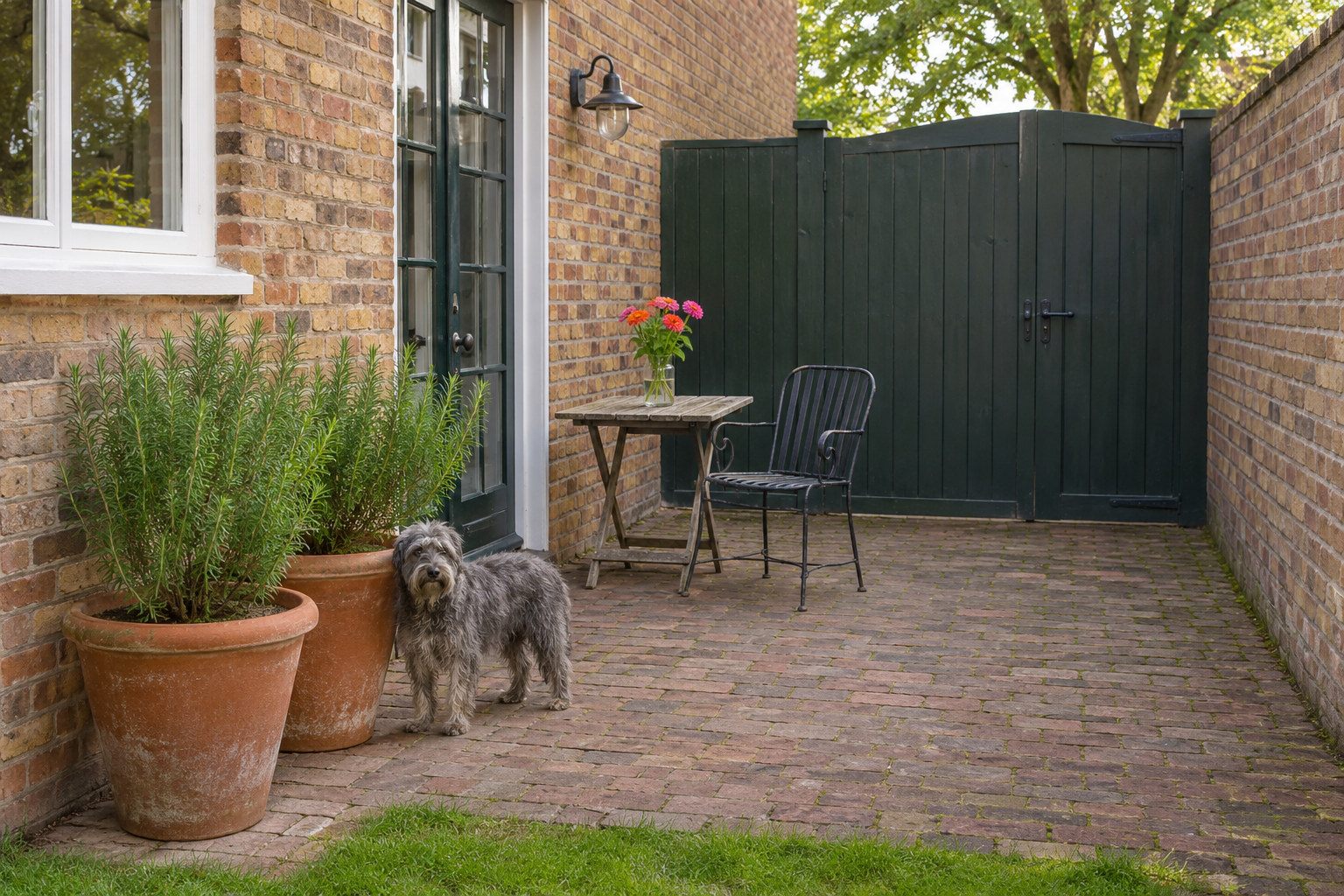
A pair of substantial pots can supply greenery while keeping the layout adjustable. Group them where they frame a chair or soften a house wall, instead of scattering containers across the floor. Fewer locations also make watering and sweeping less awkward.
Choose stable containers with finished edges and a plant identity you can verify. The ASPCA lists rosemary, Rosmarinus officinalis, as non-toxic to dogs. Match its growing needs to your climate and light, and prevent the dog from chewing the plant or rooting through treated potting material.
Keep the pots outside the door swing and away from spots where they could become climbing steps beside a fence. Consider their mature foliage as part of the footprint. A pot may fit neatly today while its plant later occupies the walkway. Move empty or light containers only when the dog is elsewhere, and settle them securely before reopening the area.
13. Put Daily Dog Supplies Beside the Back Door
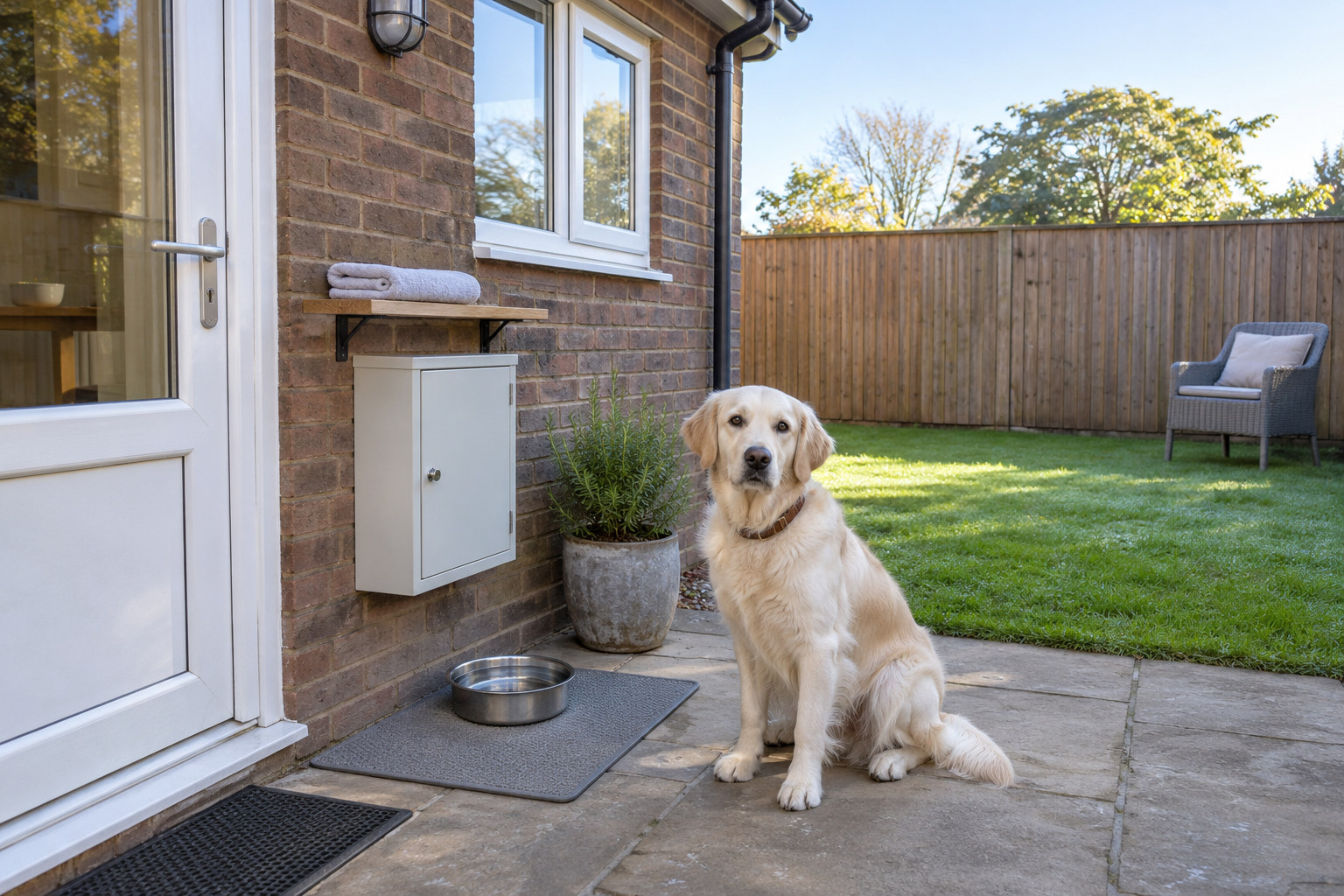
A modest back-door service corner can keep routine dog supplies from spreading around the yard. You might need only a closed outdoor cabinet, a towel storage spot and a water bowl placed in shade. Keep the floor clear enough that entering and leaving the house remains easy.
Separate the water bowl from the doorway landing and busy chair area so it is less likely to be kicked. Store leashes and towels where they stay dry and out of chewing reach. Cleaning products belong in secure storage according to their labels, not on an open shelf above the dog.
The same principles used in small entryway organization can help you arrange the indoor side of the door. Decide which items need to live outdoors and which are better kept just inside. That division often saves more space than buying a larger garden cabinet.
14. Leave a Flexible Patch for Quiet Activities
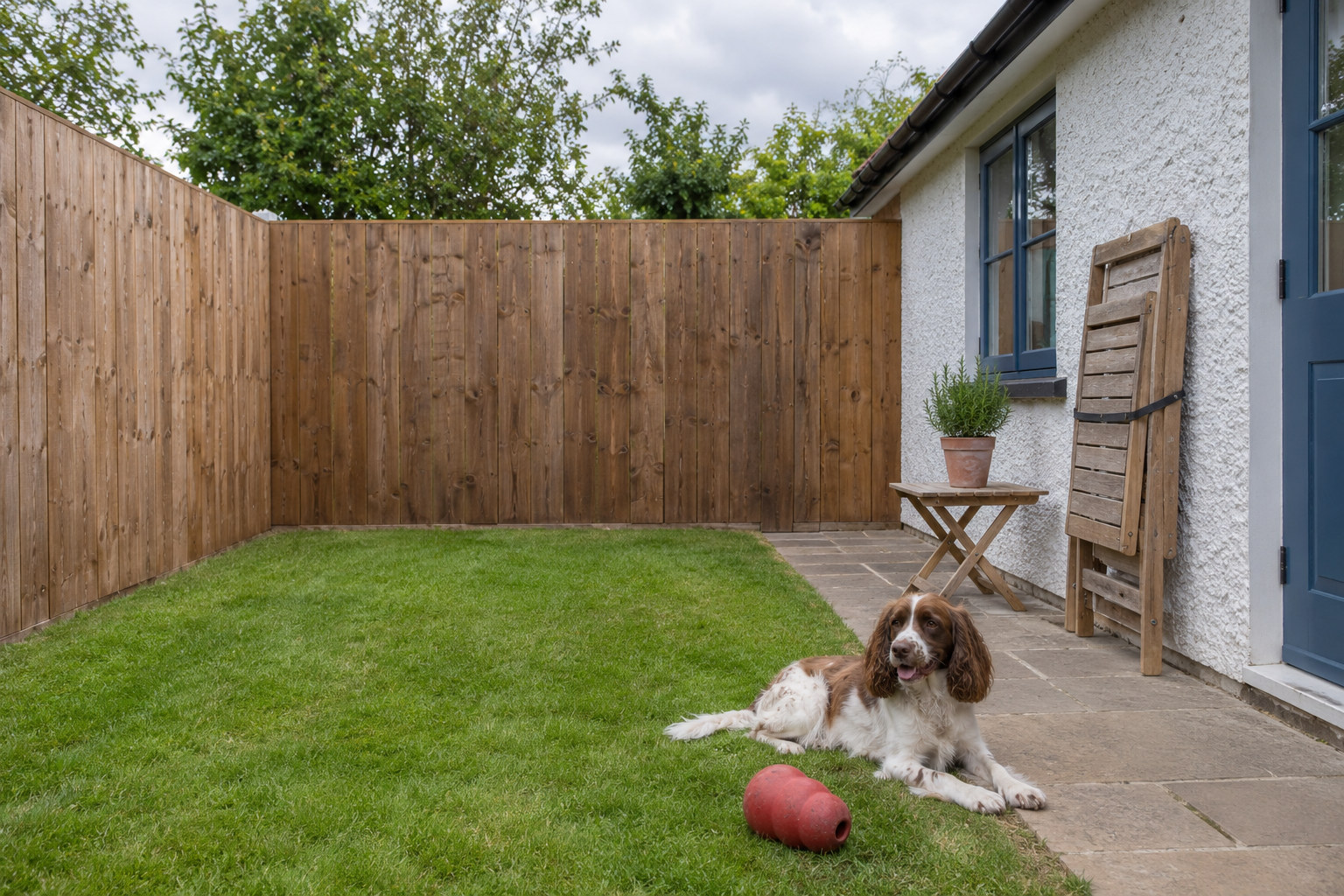
A small yard does not need a permanent structure for every activity. Keep one useful patch open, then bring out an appropriate toy or a mat for a short supervised session when you need it. A chair or lounger that stores neatly lets the space change with the day.
Choose activities that fit the available stopping and turning room. A compact courtyard may suit a quiet sniffing game better than fast ball chasing. Remove temporary equipment afterward so it does not become another obstacle between the house and the dog’s resting place.
Think about cleanup as part of the setup. If a toy is left outdoors, check its condition before the next session and put it away when it is no longer suitable. Keep garden time within a broader routine of exercise and enrichment suited to your dog. The useful feature here is the clear, flexible space, not a collection of miniature playground equipment.
15. Make an Awkward Wedge into a Useful Retreat
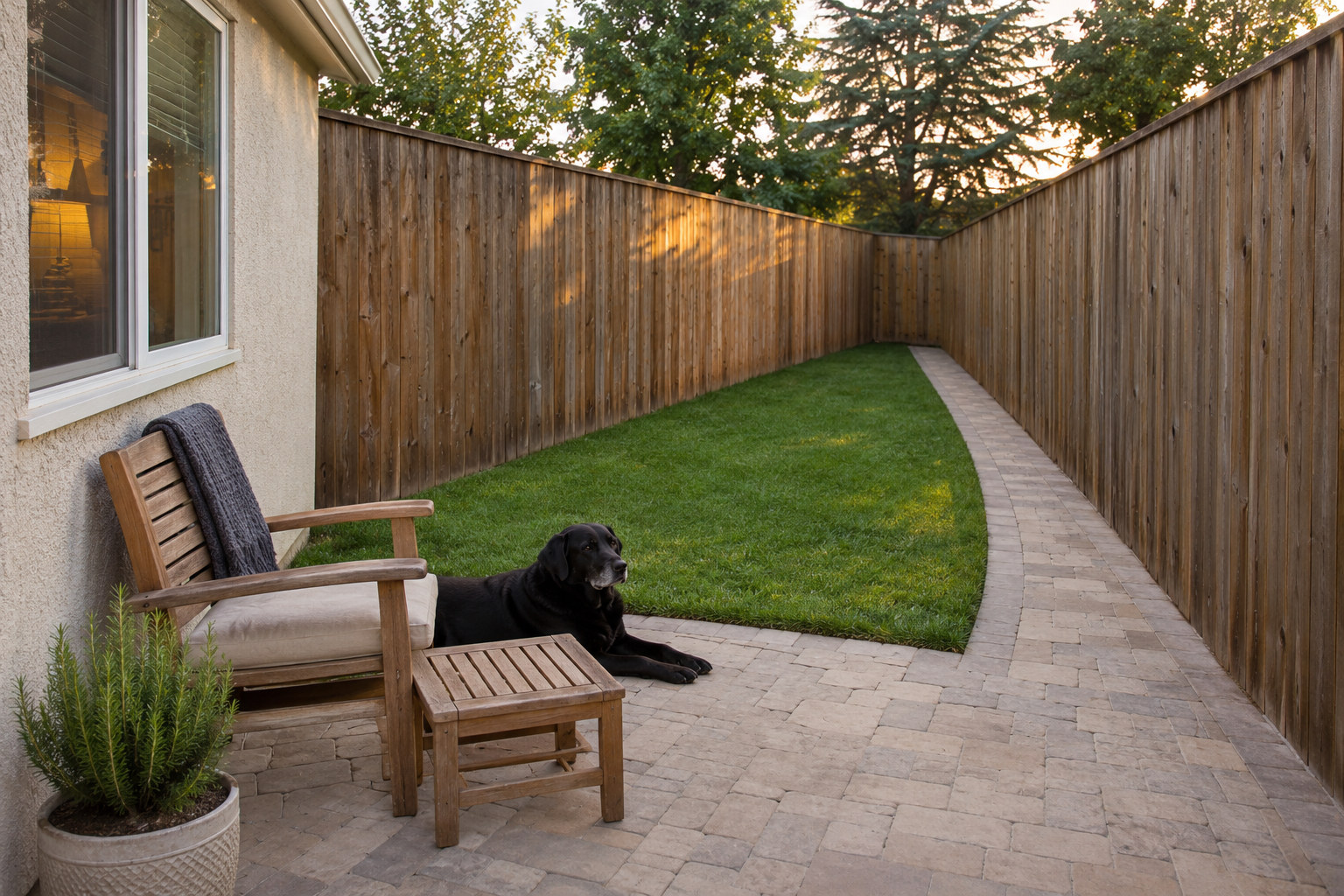
A wedge-shaped yard can be easier to use when its widest part holds the activities that need movement. Put the main chair or small table near the house, where you have room to sit, stand and walk around it. Let the narrow end remain simple instead of forcing furniture into the point.
Use the taper to guide a lawn edge or modest planted area, while keeping the practical route straightforward. A dog bed belongs where the dog can stretch and move away without being squeezed between furniture and fencing. Check that the whole boundary remains accessible for inspection.
Photograph the yard from the doorway and draw the proposed footprints over the image. This helps reveal whether a small table steals more circulation than expected. Choose the version with fewer pinch points. An unusual outline does not need an unusual amount of furniture; it needs the useful pieces placed where the space can support them.
Measure the Layout Before Buying Furniture
Start with a simple sketch of the yard, then add the back door, gate, drain covers, outdoor taps and existing changes of level. Mark how far doors and gates open. These are fixed demands on the floor, even when a photograph makes the area look empty.
Next, measure the furniture you already own in use. Include space for a chair to pull out and a person to pass behind it. Put a temporary marker around the dog’s bed while the dog is elsewhere, allowing for a comfortable resting position and an easy exit. The remaining space is your real design budget.
Test the sketch with an ordinary routine: take a drink outside, walk to the gate, bring a towel back in and sweep the patio. If each task requires moving a pot, simplify the plan. A layout that feels slightly spare on paper may be much more comfortable in everyday use.
Get the Fail-Safe Paint Color Playbook (Free PDF)
36 proven colors • 8 ready palettes • trim & sheen guide • printable testing cards.
Check Boundaries, Shade and Materials Together
Before decorating, inspect the entire enclosure. Dogs Trust’s garden guidance recommends supervision and checks for damaged fencing or gaps, as well as access to shade and water. Match the height, strength and gate arrangements to your individual dog’s behavior; a fence that suits one household may not suit another.
Check shade where the dog will actually rest, at the time you intend to use the garden. Include somewhere to move if the shaded patch shifts, and return indoors when conditions are unsuitable. Shade structures and landscaping features need secure installation, with maintenance access preserved around them.
Do not judge a surface by its appearance alone. Feel it in the conditions you expect, observe it after rain, and consider your dog’s tendency to dig or pick things up. Artificial turf still needs product-specific assessment, cleaning and temperature checks. Its green color does not tell you whether the installed surface suits your dog or your climate.
Build the Yard in a Practical Order
Deal with boundary repairs and drainage issues before buying decorative pieces. After those essentials, establish a clear route and a comfortable resting place. Add the main human seat next, then decide how much planting or storage the remaining space can realistically hold.
Live with that arrangement through a few ordinary days before adding another feature. Notice where the dog chooses to lie, where chair legs block movement and where water collects. Those observations are more useful than filling every corner immediately. A small backyard feels generous when its parts work together and daily use remains easy.